The Law Offices of Anidjar and Levine helps victims preserve key evidence, investigate trip data and company records, identify liable parties, and evaluate civil claims involving drivers, rideshare companies, and insurers.
A Florida Sexual Assault Lawyer can address negligent hiring, supervision, safety failures, insurance coverage, and damages for medical care, counseling, lost income, pain, and emotional distress.
Prompt legal guidance can support reporting, protect rights, and strengthen a compensation claim. The sections below explain these issues in greater detail.
Main Takeaways
- A Florida rideshare sexual assault lawyer investigates the incident, identifies liable parties, and preserves critical app, GPS, trip, and communication evidence.
- They evaluate civil claims against the driver, rideshare company, and other parties based on negligence, supervision, safety practices, and insurance coverage.
- Prompt legal help supports reporting to law enforcement and the rideshare company while protecting time-sensitive evidence and documentation.
- Survivors may seek compensation for medical care, counseling, lost income, pain and suffering, and other related damages.
- A trauma-informed attorney can guide next steps, protect privacy, and coordinate respectful access to medical, legal, and advocacy resources.
How We Can Help With Your Florida Rideshare Sexual Assault Claim
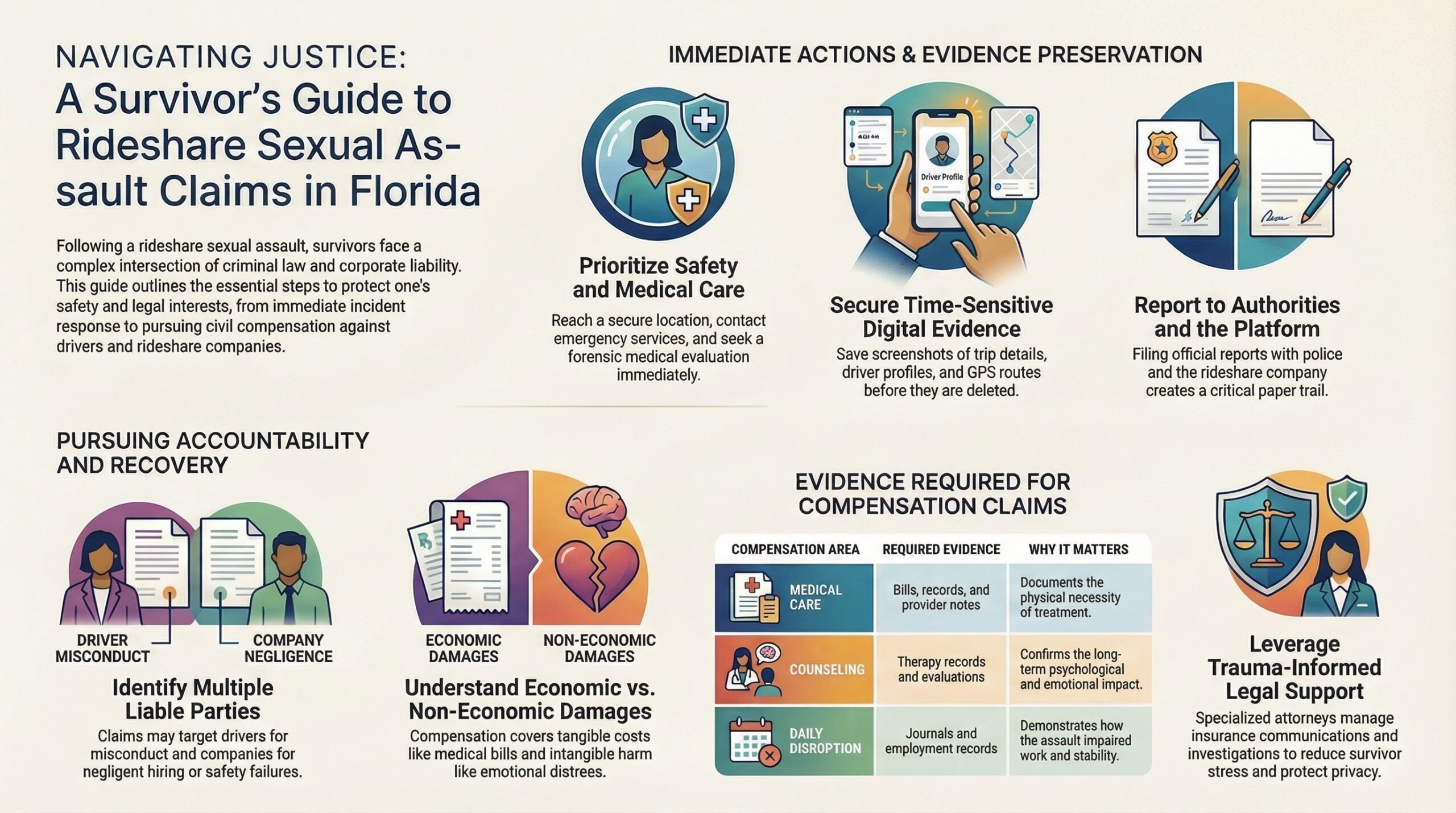
When a person is sexually assaulted during a rideshare trip in Florida, legal counsel can help by investigating the incident, identifying all liable parties, and building a claim supported by evidence. Attorneys may coordinate prompt Victim documentation, preserve digital records, obtain trip data, and communicate with insurers or corporate representatives. This support allows survivors and their families to focus on safety, recuperation, and practical next steps.


A law firm serving injured people can also guide on reporting options, arrange an independent review of evidence, and seek compensation for medical care, counseling, lost income, and other related harms. Through survivor advocacy, counsel can help protect privacy, reduce unnecessary stress, and promote informed decisions at each stage of the claim. They may work with investigators, medical professionals, and trauma-informed resources to strengthen the case and ensure respectful treatment.
Careful preparation, consistent communication, and disciplined case management can provide meaningful support for those pursuing accountability and relief after a rideshare assault.
Understanding Rideshare Sexual Assault Cases in Florida
OUR CONSULTATIONSARE FREE
START YOUR FREE CASE REVIEW

Because these claims arise at the intersection of personal injury law, corporate liability, and criminal conduct, rideshare sexual assault cases in Florida often involve legal and factual issues that differ from ordinary assault matters. These matters may require review of app data, ride records, communications, and company policies, along with evidence concerning notice, supervision, and safety practices.
Florida law may recognize both criminal wrongdoing and civil liability, which means a survivor may pursue accountability beyond any criminal prosecution. Central issues often include Consent boundaries, Driver responsibility, negligent hiring, retention, and failures in screening or response. In many cases, the rideshare company’s role, insurance structure, and driver classification are important in determining which claims are available.
A careful evaluation can help advocates, families, and community-minded supporters understand what protections may exist and what proof may be needed. This understanding allows those assisting survivors to respond with greater care, dignity, and informed purpose throughout the legal process.
Common Scenarios When Rideshare Sexual Assault Might Take Place in Florida


Common scenarios in Florida rideshare sexual assault cases often involve late-night pickups, when visibility is lower, and passengers may be traveling alone. Risk may also increase when a driver deviates from the expected route or when an impaired passenger is less able to recognize danger, respond, or seek help. In addition, encounters with an unmatched driver, rather than the person listed in the rideshare app, can present serious safety concerns that warrant careful attention.
During Late-Night Pickups
Although late-night rides are often sought for convenience and safety, they can present elevated risks in certain circumstances. Reduced visibility, fatigue, alcohol use, and isolated pickup locations may create conditions in which misconduct is harder to recognize, interrupt, or report promptly.
Service-minded advocates often encourage Caller safety planning before evening travel, including confirming vehicle details, sharing trip information, and identifying safer, well-lit pickup points. When an incident is alleged, prompt evidence preservation may support accountability and protect others from similar harm. This can include screenshots, ride receipts, communications, surveillance inquiries, medical documentation, and contemporaneous notes about time, location, and observable behavior.
A careful, trauma-informed response helps survivors access support, informs responsible intervention, and strengthens efforts to promote safer rideshare practices throughout Florida communities statewide.
Driver Route Deviations
When a rideshare driver departs from the expected route without a clear and legitimate reason, that change may create conditions in which a passenger becomes more vulnerable to isolation, confusion, and loss of control over the trip. In Florida, unexplained detours, canceled navigation, or stops in secluded areas may raise serious safety concerns and warrant immediate review.
Such incidents often require careful preservation of evidence. Driver app logs, GPS data, messages, and trip timelines may help show when a deviation occurred and whether passenger consent was requested or ignored. A service-minded legal review may also consider prior complaints, company monitoring practices, and response times. These facts can affect carrier liability when a platform fails to address foreseeable risks or enforce reasonable safety standards designed to protect passengers during transportation services.
Impaired Passenger Vulnerability
Passenger impairment can substantially increase the risk of rideshare sexual assault in Florida, particularly in situations involving alcohol, prescription medication, illness, fatigue, or diminished awareness after a night out. In these circumstances, a passenger may struggle to monitor surroundings, communicate clearly, or seek immediate help. Service-oriented advocates often emphasize that impairment never reduces another person’s duty to act lawfully and respectfully.
Florida consent standards remain central in evaluating these incidents, because meaningful agreement cannot be inferred from confusion, unconsciousness, or limited capacity. Subtopic bias should also be avoided, as assumptions about nightlife, clothing, or prior behavior can unfairly distort accountability. Careful documentation, prompt reporting, and trauma-informed support may help protect vulnerable passengers, preserve evidence, and promote community safety, dignity, and access to justice for survivors statewide.
Unmatched Driver Encounters
In some Florida rideshare assault cases, risk arises during encounters with individuals who are not the assigned driver shown in the app. A passenger may enter a vehicle matching the pickup location or description, only to discover too late that the person behind the wheel was unauthorized. These situations can create immediate safety threats, especially when isolation, confusion, or pressure undermines informed decision-making and heightens consent issues.
For those seeking to protect others, awareness matters. Riders can compare the app’s photo, license plate, and name before entering. If misconduct occurs, prompt evidence preservation may support accountability. Screenshots, trip records, surveillance footage, witness information, and medical evaluations can help document what happened. Careful reporting to law enforcement, the rideshare company, and legal counsel may strengthen a survivor’s path toward protection and justice.
Legal Rights of Rideshare Sexual Assault Victims in Florida
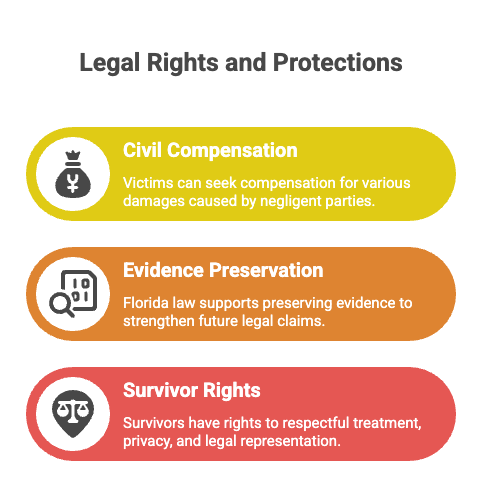
Although the aftermath of a rideshare sexual assault can leave a victim feeling powerless, Florida law provides important legal rights designed to protect personal safety, preserve evidence, and support claims for compensation. These rights recognize dignity, accountability, and community responsibility, while helping survivors pursue justice through civil and criminal systems with informed support.
- Victims may seek civil compensation for medical costs, counseling, lost income, pain and suffering, and other damages caused by negligent drivers, companies, or third parties.
- Florida law also supports evidence preservation, including rideshare records, digital communications, surveillance footage, and witness statements that may strengthen a future claim.
- Survivors have the right to respectful treatment, privacy protections in certain proceedings, and access to advocates and attorneys who can explain available legal options.
When institutions honor these rights, they serve not only individual survivors but also the broader public good by promoting safer transportation practices, stronger reporting standards, and meaningful accountability across communities statewide.
Steps to Take After a Rideshare Sexual Assault Incident in Florida
After a rideshare sexual assault incident in Florida, the immediate priorities generally include reaching a safe location, obtaining medical attention if needed, and contacting trusted support. It is also important to preserve crucial evidence, including clothing, ride records, messages, and any details that may help establish what occurred. Prompt reporting to law enforcement, the rideshare company, and other appropriate parties can play a significant role in protecting the victim’s safety and supporting any future legal claim.
Seek Immediate Safety
When a rideshare sexual assault occurs, the first priority is to reach a safe location away from the driver or any immediate threat. This may include entering a public business, contacting 911, or going directly to a nearby police station, hospital, or trusted residence. If possible, the survivor should call an Emergency contact who can provide immediate assistance and remain on the line until help arrives.
Once physical safety is secured, the survivor may seek trusted advocacy through a crisis hotline, community organization, or hospital-based response team. These resources often provide victim-centered support, help coordinate transportation, and explain options for safe reporting. A calm, secure environment can reduce immediate danger and allow informed decisions about next steps, while preserving the survivor’s dignity, autonomy, and wellbeing.
Preserve Key Evidence
Once immediate safety has been secured, attention should turn to preserving any evidence that may help establish what occurred during the rideshare assault. This includes saving screenshots of trip details, receipts, app messages, and any communication with the driver or company. Clothing, personal items, and photographs of visible injuries may also hold important evidentiary value.
A careful record of dates, times, locations, and observations can support later legal review. Preserving device logs may help confirm app activity, calls, texts, and location history around the incident. Securing GPS data from the rideshare application or mobile device can further clarify the route, stops, and timing. Witness names and contact information should be retained when available. Thoughtful evidence preservation can strengthen efforts to protect others and pursue accountability under Florida law.
Report The Assault
Why does reporting matter so greatly in the aftermath of a rideshare sexual assault in Florida? Prompt reporting helps protect the survivor, preserves public safety, and creates an official record that may support a civil or criminal case. A prompt report to law enforcement, the rideshare company, and medical providers can help preserve time-sensitive evidence and identify other passengers who were harmed.
Those assisting survivors should encourage careful, factual reporting without pressure or judgment. Important details include the driver’s name, trip information, location history, and any communications through the app. Witness statements, photographs, and medical records may strengthen the account. If immediate danger remains, emergency services should be contacted at once.
Survivors may also ask about self-defense options and safety planning, while recognizing that reporting decisions should remain informed, voluntary, and centered on recovery.

How a Florida Rideshare Sexual Assault Lawyer Can Help You Initiate a Case
In the early stages of a claim, a Florida rideshare sexual assault lawyer can help establish the legal foundation of the case by identifying liable parties, preserving essential evidence, and explaining the procedures that govern civil action.
They may guide the claimant through practical steps that protect the integrity of a future lawsuit while promoting dignified victim support. Early Evidence preservation can include securing rideshare records, communications, surveillance footage, and medical documentation before materials are lost. Counsel may also evaluate insurance coverage issues involving the driver, the rideshare company, and other responsible entities.
Careful attention to statute timing helps prevent avoidable filing delays.
- Assess facts, parties, and potential civil claims.
- Preserve documents, digital records, and witness information.
- Coordinate notices, filings, and insurance communications.
Long Term Effects of Rideshare Sexual Assault Trauma
Rideshare sexual assault trauma can produce lasting emotional and psychological effects, including anxiety, depression, and persistent fear in everyday settings. It may also disrupt personal relationships, as trust challenges often affect interactions with partners, family members, and others. In many cases, these consequences extend into work and daily life, impairing concentration, routine functioning, and overall stability.
Emotional And Psychological Impact
Often, the long-term effects of rideshare sexual assault extend well beyond the incident itself, affecting a survivor’s emotional stability, sense of safety, and ability to function in daily life. Many experience trauma symptoms such as anxiety, hypervigilance, depression, panic episodes, sleep disruption, and intrusive memories that interfere with work, school, and community involvement.
These psychological injuries may persist for months or years, especially when untreated or minimized by others. Service-oriented advocates often encourage prompt clinical evaluation because treatment records can support restoration while also contributing to legal documentation. In some cases, witness statements, medical assessments, and counseling notes help illustrate the depth of emotional harm.
Survivors may also struggle with concentration, motivation, and confidence, requiring sustained therapeutic care, patient support, and informed legal guidance to promote long-term recovery and stability.
Relationship And Trust Challenges
Psychological trauma from a rideshare sexual assault can also disrupt a survivor’s ability to form, maintain, or restore trust in personal and professional relationships. Family members, friends, and intimate partners may observe withdrawal, guarded communication, heightened suspicion, or difficulty feeling safe during ordinary interactions. These changes often reflect protective responses rather than indifference or hostility.
Supportive communities can help by responding with patience, consistency, and respect for autonomy. Careful attention to victim credibility is important because disbelief or blame can deepen isolation and erode trust further. Early evidence preservation may also strengthen a survivor’s sense of control by supporting accountability and reducing fears that the truth will be dismissed. Over time, trauma-informed counseling and reliable advocacy can assist survivors in rebuilding connection, boundaries, and confidence in others.
Work And Daily Struggles
Beyond the immediate aftermath, trauma from a rideshare sexual assault can substantially impair a survivor’s ability to function at work and manage ordinary daily responsibilities. Concentration may decline, sleep disruption may increase fatigue, and routine interactions can trigger fear, hypervigilance, or panic. As a result, attendance, productivity, and confidence may suffer over time.
Supportive employers, counselors, and advocates often encourage Workplace safety planning to reduce risk and restore a measure of control. Adjusted schedules, secure transportation options, and clearly reported concerns may help a survivor remain employed while protecting well-being. Outside work, daily stress management can include structured routines, therapy, rest, and practical assistance with childcare, errands, or appointments.
These measures do not erase harm, but they can support stability, dignity, and gradual recovery over time.
What to Expect During a Florida Rideshare Sexual Assault Claim Process
A Florida rideshare sexual assault claim often begins with immediate protective measures, followed by prompt reporting and careful preservation of available evidence. The process may then involve questions of insurance coverage, company liability, and the extent to which multiple parties may be held liable based on the facts of the case. Claimants should also be prepared for a timeline that can vary, as investigations, negotiations, and possible litigation may affect both the pace and the potential outcome.
Immediate Steps After Assault
Seek immediate safety and medical attention after a rideshare sexual assault, as these steps can support both health and the integrity of a future legal claim in Florida. A survivor may move to a secure location, contact a trusted person, and request urgent care from a hospital or clinic without delay.
Early care often addresses injuries, reduces medical risks, and connects the survivor with compassionate professionals trained to respond appropriately. Trauma support resources, including counselors, crisis advocates, and community service organizations, can help restore a sense of stability and provide practical guidance during a difficult period. Reviewing the rideshare platform reporting steps may also help a survivor understand available safety features and account options.
In many cases, speaking with an attorney soon afterward helps clarify rights, timelines, and protective measures available under Florida law.
Reporting And Evidence Collection
When a rideshare sexual assault is reported in Florida, the claim process typically begins with documenting the incident through law enforcement, medical providers, and the rideshare company’s internal reporting system. Prompt reporting helps preserve facts and supports those working to protect community safety. Evidence collection may include medical records, photographs, ride receipts, surveillance footage, and communications within the app or by text.
Investigators and counsel often review Eyewitness statements, trip histories, GPS data, and device metadata to establish timing, location, and contact between the parties. They may also seek clothing, forensic results, and notes describing visible injuries or emotional distress. Careful recordkeeping can strengthen credibility, reduce gaps in the timeline, and assist advocates and professionals who aim to serve survivors with diligence, respect, and informed guidance throughout each procedural step.
Insurance And Liability Issues
Because liability and insurance coverage often overlap in complex ways, this stage of a Florida rideshare sexual assault claim typically involves a close review of the driver’s status, the rideshare company’s policies, and any other available insurance. Coverage may depend on whether the driver was logged into the app, transporting a passenger, or acting outside approved duties.
Attorneys and insurers commonly examine corporate responsibility, negligent hiring or retention issues, and policy exclusions that may affect recovery. Evidence preservation is especially important, since app data, trip records, surveillance footage, and internal communications can influence both liability findings and available coverage. Witness statements may also help clarify where the incident occurred, who had control, and whether prior safety concerns were ignored.
Careful analysis at this stage supports accountability and helps protect those seeking justice.
Claim Timeline And Outcomes
A Florida rideshare sexual assault claim often unfolds over several stages, and the timeline can vary widely based on the facts, the available evidence, and the willingness of insurers or corporate defendants to respond. Early steps often include medical documentation, reporting, witness interviews, and preservation of digital records. Counsel then evaluates negligence proof, policy terms, and possible defendants.
Once the claim is prepared, negotiations may begin with a careful settlement strategy focused on accountability and fair compensation for the Victim. Some matters resolve within months, while others require extended investigation, formal litigation, discovery, and expert review. During this period, the claimant may be asked for statements, records, or deposition testimony. Outcomes differ, but may include settlement funds, trial verdicts, or structured resolutions that support treatment, stability, and a broader sense of safety and justice.
Compensation for Florida Rideshare Sexual Assault Damages
Although no civil recovery can erase the harm caused by a rideshare sexual assault, Florida law permits survivors to pursue compensation for the full scope of their damages. Careful evidence preservation can strengthen a claim, while documentation often reflects medical needs, counseling, safety measures, and long term trauma. In service-oriented advocacy, the goal is accountability, practical support, and resources that help survivors rebuild stability and dignity.
| Area | What Supports It | Why It Matters |
|---|---|---|
| Medical care | Records, bills, provider notes | Shows treatment needs |
| Counseling support | Therapy records, evaluations | Confirms emotional impact |
| Safety responses | Relocation costs, security expenses | Reflects protective steps |
| Daily disruption | Journals, witness statements, employer records | Demonstrates life changes |
An attorney may also seek compensation connected to pain, suffering, and diminished quality of life. Each case depends on facts, available proof, and the lasting effects on the survivor’s health, relationships, and ability to serve family and community.
Economic vs Non-Economic Damages in Florida Rideshare Sexual Assault Cases
Florida rideshare sexual assault claims may involve both economic damages, such as medical expenses, lost wages, and therapy costs, and non-economic damages, including pain and suffering, emotional distress, and loss of enjoyment of life. The distinction matters because these categories are valued differently: economic losses are often supported by bills and records, whereas non-economic harm requires a careful assessment of the survivor’s personal impact. In Florida, proving either form of damage typically depends on credible documentation, witness testimony, and evidence that connects the assault to the claimed losses.
Economic Damages Explained
Economic damages address the measurable financial losses that arise after a rideshare sexual assault, while non-economic damages compensate for harms that do not come with a fixed dollar amount, such as pain, emotional distress, and loss of enjoyment of life. In Florida claims, economic damages may include Medical expenses for emergency care, hospital treatment, counseling, medications, transportation to appointments, and other documented services.
They may also cover employment interruptions, including lost wages, reduced hours, diminished earning capacity, and missed professional opportunities caused by recovery needs or participation in legal proceedings. Property replacement, security costs, and necessary household assistance can also qualify when supported by records.
For those committed to helping survivors rebuild stability, understanding these categories supports careful documentation, stronger advocacy, and more informed decisions throughout a Florida rideshare sexual assault case, with practical guidance.
Non-Economic Losses Valued
Non-economic losses reflect the human impact of a rideshare sexual assault, addressing injuries that are real and substantial even when they cannot be proven through invoices or payroll records.
In Florida cases, these damages often include pain and suffering, emotional distress, humiliation, loss of dignity, anxiety, depression, and diminished enjoyment of daily life. They recognize how trauma can alter relationships, personal security, sleep, concentration, and the ability to participate fully in work, education, faith, or family responsibilities. Although distinct from financial losses, they may represent a significant part of a survivor’s recovery.
In especially egregious circumstances, punitive damages may also be considered to address wrongful conduct. Courts and parties may also consider the broader human consequences described in expert testimony when carefully evaluating the full scope of harm.
Proving Damages In Florida
Once the full range of harm has been identified, the next issue is how those losses are established with competent evidence under Florida law. Economic damages are commonly shown through billing records, wage statements, treatment estimates, and testimony connecting the assault to measurable financial consequences. Non-economic damages, while less exact, still require credible proof of pain, trauma, fear, and disruption of daily life.
In these cases, careful preservation of evidence often strengthens both categories of damages. Medical documentation can confirm injuries, counseling needs, medications, and the duration of symptoms. Journals, witness accounts, employment records, and expert opinions may also help demonstrate how the incident affected functioning, relationships, and future stability. A thorough presentation of damages helps decision-makers understand the survivor’s losses and supports a claim that seeks accountability and meaningful recovery.

When a Florida Rideshare Sexual Assault Case Goes to Trial vs Settlement
Although many Florida rideshare sexual assault claims resolve through settlement, some proceed to trial when liability is disputed, the extent of the harm is challenged, or the parties cannot agree on fair compensation. In evaluating this path, counsel often emphasizes Evidence preservation and witness testimony, since these factors can strongly affect leverage during negotiations and credibility before a jury.
Settlement may offer privacy, quicker resolution, and reduced emotional strain for survivors seeking stability and resources for restoration. Trial, however, may become necessary when defendants deny misconduct, minimize injuries, or refuse meaningful accountability. A courtroom can provide a structured forum for presenting documents, expert analysis, and survivor narratives to decision-makers.
Even so, trials usually involve longer timelines, broader disclosure, and greater uncertainty. Attorneys thus assess risks, costs, and likely outcomes with care, aiming to protect the survivor’s interests while advancing a result that reflects dignity, service, and just compensation for profound harm suffered.
The Statute of Limitations for Florida Rideshare Sexual Assault Cases
Timing also shapes the value of a Florida rideshare sexual assault claim, because the statute of limitations sets firm deadlines for filing suit and preserving the right to seek civil recovery. These deadlines can vary based on the survivor’s age, the legal theory asserted, and whether related criminal conduct affects the timeline. Careful review of applicable statutes is critical because missing a filing deadline may bar otherwise valid claims.
In service-centered cases, prompt attention supports both accountability and community protection. Evidence Preservation is especially important since digital trip records, app communications, surveillance footage, medical documentation, and witness memories may fade or disappear over time. Questions involving Consent and Liability also often depend on timely collected facts, including the driver’s conduct, the company’s safety practices, and notice of prior misconduct.
A clear understanding of limitation periods helps survivors and those assisting them protect legal rights while promoting safer transportation standards across Florida communities.
When to Contact a Rideshare Sexual Assault Lawyer in Florida
Because early legal guidance can materially affect both case strategy and evidence preservation, contact with a Florida rideshare sexual assault lawyer should be considered as soon as there is concern about misconduct during or connected to a trip. Prompt outreach can help protect records that may otherwise disappear, including app data, driver information, communications, surveillance footage, and location history.
A lawyer may also help a survivor or supportive family understand practical next steps without adding unnecessary pressure during a difficult time. This is often important when questions arise about medical care, internal rideshare complaints, witness identification, and police report timing. Early communication can support careful documentation and reduce the risk of avoidable gaps in the factual record.
It may also help preserve the ability to respond appropriately if the rideshare company, insurer, or another party reaches out. Timely attention serves both accountability and the broader goal of protecting others from preventable harm.
Why You Need an Experienced Florida Rideshare Sexual Assault Lawyer
When misconduct occurs in the rideshare setting, an experienced Florida rideshare sexual assault lawyer provides more than general legal assistance, as these cases often involve overlapping issues of corporate liability, digital evidence, insurance coverage, and personal injury law. Such representation helps protect a survivor’s rights while addressing the practical demands of an intricate claim.
A knowledgeable attorney can coordinate Evidence preservation, including app records, driver histories, trip data, communications, and surveillance footage, before pivotal materials are lost or destroyed. Experience also matters when identifying all potentially responsible parties, evaluating damages, and responding to corporate insurers that may attempt to minimize accountability.
In addition, effective counsel supports Victim advocacy by promoting respectful communication, reducing unnecessary stress, and helping survivors pursue justice in ways that honor dignity and safety. For those committed to protecting others and strengthening community accountability, experienced legal representation serves both individual recovery and the broader public interest through careful action.
How to Choose the Right Rideshare Sexual Assault Lawyer for Your Case in Florida
Selecting the right Florida rideshare sexual assault lawyer is a practical step that can shape both the strength of a claim and the survivor’s overall experience during the legal process. When choosing counsel, survivors should evaluate whether the attorney has handled sexual assault and rideshare liability matters, understands Florida civil procedure, and communicates with steadiness, respect, and clarity.
A careful review of reputation, case results, and client feedback can help identify lawyers who approach these cases with diligence and compassion. It also helps to ask how the attorney investigates evidence, coordinates with experts, and addresses privacy concerns. A clear discussion of contingency fees is important because it allows survivors to understand costs before representation begins. Availability matters as well, since timely updates and consistent guidance can reduce confusion during a difficult period.
Ultimately, the right lawyer should combine legal knowledge, responsiveness, and a service-minded commitment to pursuing accountability while protecting the survivor’s interests throughout each stage.
About The Law Offices of Anidjar & Levine
Among Florida personal injury firms, The Law Offices of Anidjar & Levine presents itself as a client-focused practice that handles detailed injury matters with close attention to communication, preparation, and case management.
In sensitive rideshare sexual assault claims, the firm emphasizes client-focused advocacy, timely updates, and careful documentation so survivors and their families can make informed decisions while pursuing accountability and safer community standards.
The firm also highlights compassionate support throughout each stage of representation, recognizing that trauma-informed communication is critical when legal action follows deeply personal harm.
Its approach includes case strategy planning tailored to the facts, available evidence, and long-term needs of the injured person.
y coordinating investigations, gathering records, and engaging with insurers or opposing parties, the firm seeks practical results grounded in service.
For readers evaluating representation, legal experience matters because challenging claims often require disciplined preparation, credibility, and consistent attention to both justice and recovery for clients statewide.
Frequently Asked Questions
Can Minors File Rideshare Sexual Assault Claims in Florida?
Yes, minors can file rideshare sexual assault claims in Florida, typically through a parent, guardian, or other court-appointed representative. Florida minors’ standing is generally protected by laws that recognize a child’s inability to litigate alone. Courts also consider the statutory limitations window, which may be extended or tolled for minors depending on the facts. Careful legal review helps families protect the child’s interests and pursue accountability with appropriate support.
Are Rideshare Companies Required to Conduct Driver Background Checks?
Yes, rideshare companies are generally required to conduct background checks on drivers before allowing them to accept passengers. These screenings often review a background report, driving history, and disqualifying criminal records. When a company fails to use reasonable care in screening or retaining unsafe drivers, questions of negligent hiring may arise. Such requirements are intended to protect the public and support safer transportation services for communities seeking reliable, responsible assistance.
Can Deleted App Data Be Recovered for a Claim?
Yes, deleted app data can sometimes be recovered for a claim, though recovery limits often depend on timing, device use, and provider retention policies. Effective evidence preservation is crucial because overwritten or remotely removed information may become unavailable. Through the legal process, attorneys may seek records from phones, cloud backups, or company servers. A careful review helps determine what app data remains accessible and how it may support those seeking accountability.
What if the Assault Occurred During a Shared Rideshare Trip?
If an assault occurred during a shared rideshare trip, Liability During the ride may extend to the assailant, the driver, or the company, depending on notice, supervision, and safety failures. Rideshare Consent to transportation never implies consent to sexual contact. Strong evidence collection, including app records, rider identities, timestamps, and witness statements, can support survivor reporting and any civil claim. Prompt medical care and legal guidance often strengthen the evaluation of the case.
Can Tourists Pursue Florida Rideshare Sexual Assault Claims After Returning Home?
Yes, tourists may pursue Florida rideshare sexual assault claims after returning home. Their location rarely prevents action, although Jurisdiction issues can affect where a case is filed and how evidence is gathered. Florida law, including applicable statute of limitations, still governs many claims arising from misconduct occurring there. Prompt reporting, document preservation, and consultation with qualified counsel help survivors protect their rights and support accountability, even after they reside outside Florida.
—————————
Victims of rideshare sexual assault in Florida have legal options that merit careful attention and informed action.
A qualified attorney can evaluate the facts, protect the victim’s rights, and pursue compensation from all responsible parties.
Florida Sexual Assault Lawyer services from the Law Offices of Anidjar and Levine can provide focused guidance through each stage of the claims process.
With prompt legal support, victims may strengthen their cases, preserve essential evidence, and move forward with greater clarity, protection, and confidence.