A Daytona Beach Car Accident Lawyer from The Law Offices of Anidjar and Levine helps injured drivers, passengers, pedestrians, and cyclists pursue compensation after preventable crashes.
Legal support may include proving fault, preserving evidence, reviewing medical records and wage losses, handling insurers, and evaluating future care needs.
These claims often involve distracted driving, speeding, impairment, failure to yield, or disputed liability under Florida comparative fault rules.
The sections below explain essential rights, evidence, deadlines, damages, and how legal guidance may support recovery.
Main Takeaways
- A Daytona Beach local road car accident lawyer helps prove fault, document injuries, and identify available insurance coverage.
- Legal support includes organizing records, preserving evidence, and communicating with insurers after a crash.
- Important evidence may include crash reports, medical records, photographs, witness statements, and roadway conditions.
- Compensation may cover medical bills, vehicle damage, lost wages, future care needs, and impacts on daily life.
- Timely medical care and documentation are important because Florida PIP timelines can affect the benefits available.


How We Can Help With Your Daytona Beach Local Road Car Accident Injury Claim
After a crash on a local road in Daytona Beach, an injured person may face medical treatment, vehicle damage, missed work, and pressure from insurance adjusters. A lawyer can help by organizing records, preserving evidence, and communicating with insurers so the injured person can focus on recovery and daily responsibilities.
Legal support may include reviewing medical bills, wage records, repair estimates, and future care needs. Damages calculation is handled carefully, with attention to documented losses and the broader effect of the injury on the person’s life. This process can help present a claim that reflects both immediate and continuing harm.
Counsel may also address comparative fault rules, which can affect the amount recovered if fault is disputed. By examining reports, witness statements, photographs, and available video footage, the legal team can address unfair blame and advocate for a fair resolution that serves the injured person’s practical needs after the collision.
OUR CONSULTATIONSARE FREE
START YOUR FREE CASE REVIEW

Understanding Daytona Beach Local Road Car Accident Injury Cases
Understanding how local road-injury cases arise in Daytona Beach helps put the claims process in proper context. These cases often involve residents, visitors, workers, pedestrians, cyclists, and families whose daily responsibilities are disrupted by preventable harm. A legal claim generally focuses on proving fault, documenting injuries, identifying available insurance coverage, and measuring losses with care and accuracy.
For those committed to serving others, these cases also reflect the broader impact of an injury on caregiving, employment, mobility, and household stability. Medical records, wage documentation, witness statements, and roadway evidence may all help establish the full extent of damages. Severe collisions may also lead to Wrongful Death Claims, requiring careful attention to surviving family members’ financial and personal losses.
Settlement Timeline Estimates depend on injury severity, treatment progress, insurance cooperation, and disputed liability. Each case requires patient evaluation, disciplined documentation, and a clear strategy designed to pursue fair compensation responsibly.
Common Causes of Daytona Beach Local Road Car Accident
Daytona Beach local road car accidents commonly arise from preventable conduct, including distracted driving, speeding, impaired driving, and failure to yield. Each factor can reduce a driver’s ability to respond safely to traffic signals, pedestrians, intersections, and changing road conditions. Understanding these causes helps clarify how negligence may contribute to collisions and resulting injury claims.
Distracted Driving
Why does distracted driving remain a leading cause of collisions on local roads in Daytona Beach? On community streets, even brief inattention can prevent a driver from noticing pedestrians, cyclists, turning vehicles, or changing traffic conditions. Phone Use is a frequent concern, including texting, viewing maps, or handling calls while moving through intersections and neighborhood corridors.
Other distractions include eating, adjusting controls, speaking with passengers, or focusing on events outside the vehicle. These behaviors create Distracted Signals, such as delayed braking, drifting lanes, missed stop signs, or failure to yield. For those committed to serving injured residents and families, identifying distraction can be crucial to understanding how a preventable crash occurred. Evidence may include witness accounts, vehicle data, camera footage, and phone records reviewed within legal and ethical limits.
Speeding On Local Roads
Inattention is not the only driver behavior that places local motorists, pedestrians, and cyclists at risk, as excessive speed can also turn ordinary traffic conditions into serious collisions. On Daytona Beach streets, drivers who exceed local speed limits reduce the time available to notice crosswalks, turning vehicles, stopped traffic, or children near residential areas. Higher speeds also increase stopping distance, making otherwise avoidable crashes more severe.
Aggressive driving, including tailgating, rapid lane changes, and racing through intersections, often involves speeding and can endanger people who rely on careful sharing of the road. When collisions occur on neighborhood roads, business corridors, or beachside routes, investigators may examine traffic patterns, posted limits, skid marks, and witness accounts. Such evidence can help clarify whether unsafe speed contributed to preventable harm and accountability.
Impaired Driving
Although many crashes involve momentary mistakes, impaired driving presents a particularly dangerous threat on local roads because it weakens the judgment, reaction time, coordination, and awareness needed for safe vehicle operation. In Daytona Beach, impairment may involve alcohol, illegal drugs, prescription medication, or fatigue combined with substance use, creating risks for pedestrians, cyclists, passengers, and other motorists.
Those who serve injured people often recognize that these collisions require careful attention to evidence, including police reports, toxicology findings, witness accounts, and vehicle data. Record preservation can help clarify how impairment contributed to the crash and support fair accountability. Medical documentation is also important, since symptoms may develop or worsen after the collision. Future injury proof may assist in demonstrating lasting harm, the need for treatment, and the full impact on daily life.
Failure To Yield
When drivers disregard another person’s lawful right of way, a routine trip through Daytona Beach can quickly become a serious collision. Failure to yield often occurs at stop signs, left turns, crosswalks, parking lot exits, and merge points, where attentive driving protects neighbors, visitors, and pedestrians. Intersection right-of-way rules help establish who should proceed, but crash investigations may require witness statements, traffic camera footage, vehicle damage analysis, and police observations.
Failure-to-yield enforcement can support an injured person’s claim, yet citations alone may not establish fault. Insurers may raise Comparative negligence arguments, asserting that the injured driver, cyclist, or pedestrian also acted carelessly. Effective case review anticipates liability defense strategies, including disputed visibility, unclear signage, or sudden movement, while focusing on accountability and community safety.


Legal Rights of Daytona Beach Local Road Car Accident Injury Victims
After a collision on a local road in Daytona Beach, injured victims may have important legal rights under Florida law, including the right to seek medical care, document losses, and pursue compensation from responsible parties.
These rights can support recovery while allowing families, caregivers, and community advocates to respond with order and compassion.
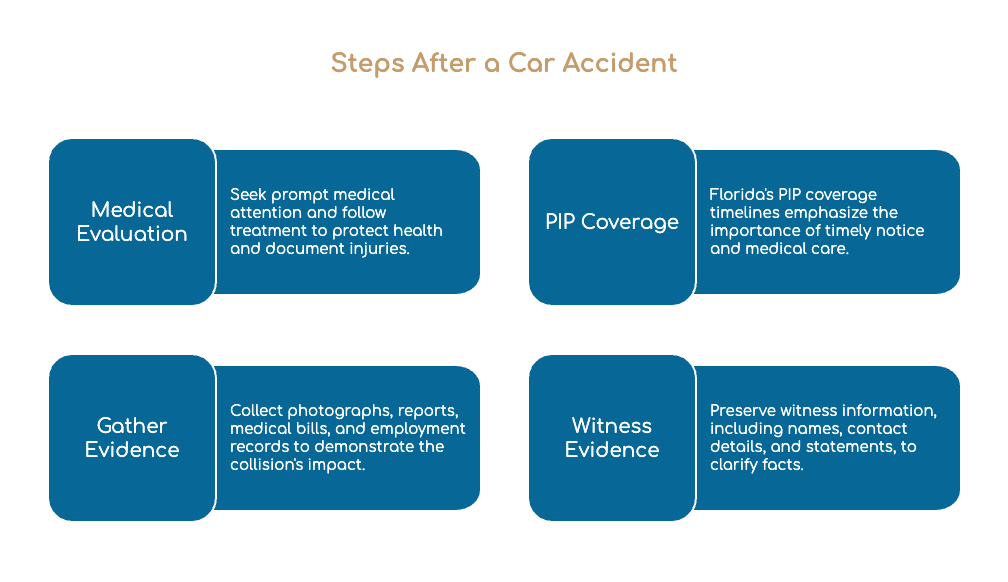
- Victims may obtain prompt medical evaluation and follow treatment recommendations, which help protect their health and support a clear record of injury.
- Florida’s PIP coverage timelines may affect the benefits available, making timely notice and medical attention important after the crash.
- Injured persons may gather photographs, reports, medical bills, and employment records to show the effect of the collision on daily life.
- Preserving witness evidence, including names, contact information, and statements, may help clarify disputed facts and promote accountability.
These steps can help injured people pursue lawful compensation while maintaining dignity, fairness, and responsible service to those affected.
Why Do Local Road Car Accident Injuries Happen in Daytona Beach?
Why do serious injuries occur on local roads in Daytona Beach, even during routine trips? They often result from ordinary traffic conditions becoming unsafe through careless choices, poor visibility, road design issues, or distracted driving. Intersections, parking lot exits, beachside corridors, and neighborhood streets can create conflict points where drivers, cyclists, and pedestrians must make quick judgments.
Injury severity may increase when motorists speed, follow too closely, fail to yield, ignore traffic controls, or drive while impaired. Local congestion, tourism traffic, unfamiliar routes, and sudden stops can also raise the risk of harm. For those committed to serving injured people, understanding these causes helps identify how preventable conduct affects families and communities.
Insurance claim timelines and comparative negligence factors may later depend on how an injury occurred and whether multiple parties contributed. A clear review of roadway conditions, driver behavior, and available evidence can help explain why a seemingly routine crash produced lasting medical, financial, and personal consequences.
What Should You Do After a Local Road Car Accident Injury in Daytona Beach?
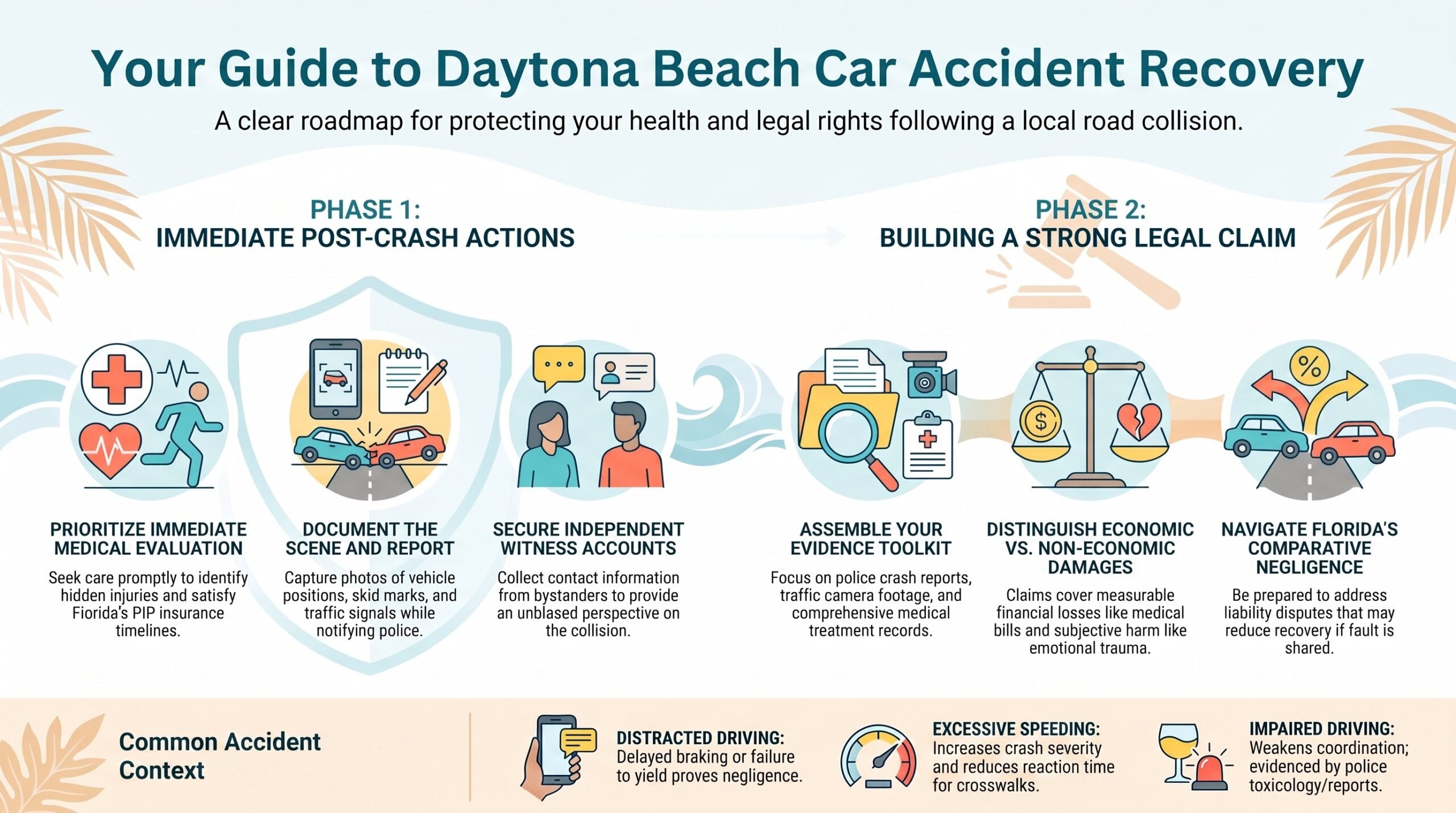
After a local Daytona Beach road car accident injury, the injured person should seek immediate medical care, even if symptoms seem minor at first. The crash scene should be documented with photographs, witness information, and relevant details when it is safe to do so. A car accident lawyer may then evaluate the circumstances, explain available legal options, and help protect the injured person’s claim.
Seek Immediate Medical Care
When a collision occurs on a local road in Daytona Beach, prompt medical evaluation should be a priority, even if the injury appears minor at first. Medical professionals can identify hidden conditions, including concussion, internal injury, soft tissue damage, or delayed pain patterns that may worsen without care. Timely treatment also creates Emergency Documentation, which may help clarify the connection between the crash and the injury.
A person focused on protecting family members, passengers, or others involved should encourage evaluation without delay and follow all discharge instructions carefully. If emergency personnel respond, accurate symptom reporting is important. While Witness Contact may later support a claim, immediate health needs should remain the central concern. Delayed care can complicate recovery, treatment planning, and injury evaluation.
Document The Crash Scene
If it can be done safely, documenting the crash scene may help preserve important details before vehicles are moved, debris is cleared, or road conditions change. A person assisting after a local road collision in Daytona Beach should gather clear photographs and brief notes without interfering with emergency responders. Photographing vehicle positions, skid marks, broken glass, roadway defects, weather conditions, and visible injuries may provide context for later review.
Preserving traffic signals is also important, including noting whether lights were red, yellow, green, flashing, obstructed, or malfunctioning. Witness names, phone numbers, and short statements should be recorded respectfully, when possible. Nearby businesses or residences may have cameras facing the roadway. Careful documentation supports accuracy, protects injured parties, and helps those responsible for evaluating the crash understand what occurred.
Contact A Car Accident Lawyer
In the days following a local road car accident in Daytona Beach, contacting a car accident lawyer may help an injured person understand available legal options, insurance obligations, and important deadlines. Legal guidance can support orderly decision-making while the injured person focuses on medical care, family needs, and responsible recovery. An attorney may review crash reports, medical records, photographs, witness statements, and insurance communications to assess the strength of a claim.
This review can help Identify Fault Determination when multiple drivers, unsafe road conditions, or conflicting accounts complicate responsibility. Counsel may also communicate with insurers, protect the person from premature statements, and Mediate Insurance Disputes when coverage, liability, or settlement value is contested. Prompt consultation may preserve evidence, clarify next steps, and promote a more informed path toward fair compensation.
Critical Evidence in a Daytona Beach Local Road Car Accident Injury Case
In a local Daytona Beach road car accident injury case, essential evidence helps establish fault, confirm damages, and preserve the accuracy of the record of events. Important materials may include:
- Police crash reports
- Traffic camera footage
- Witness statements
- Medical treatment records
Each category can strengthen a claim by connecting the collision, the injuries, and the responsible party through objective documentation.
Police Crash Reports
After a collision on a local road in Daytona Beach, the police crash report is often one of the first important records reviewed in an injury claim. This report may identify involved drivers, vehicles, insurance details, roadway conditions, witness information, and any citations issued. Its Police Narrative can help clarify how the responding officer understood the sequence of events, especially when accounts differ.
Although the report is not always conclusive, it may guide further investigation and support fair service to injured people seeking accountability. A careful review can reveal errors, missing facts, or references to Dashcam Evidence that should be preserved promptly. Attorneys may compare the report with medical records, photographs, and witness statements to develop a responsible, well-supported claim rooted in accuracy and care for all parties.
Traffic Camera Footage
Along local roads in Daytona Beach, traffic camera footage can provide crucial, time-sensitive evidence in a car accident injury case. Cameras positioned near intersections, school zones, and busy corridors may record vehicle speed, lane position, turning movements, and Traffic signal violations. This footage can help clarify how a collision occurred, especially when physical evidence is limited or quickly removed.
Because many systems overwrite recordings within days, requests to preserve prompts are important. An attorney may seek footage from city agencies, nearby businesses, or transportation departments to support crash scene documentation and liability analysis. For injured individuals, this evidence can strengthen a claim by showing actions that contributed to harm. Careful review also helps make certain responsibility is assessed fairly, serving both the injured person and the broader community.
Witness Statements
Traffic camera footage may show the mechanics of a collision, but witness statements can explain details that video does not capture. In a local road accident in Daytona Beach, bystanders may describe driver behavior, traffic signal timing, vehicle speed, lane position, or statements made after impact. These accounts can help clarify disputed facts and support a fair evaluation of responsibility. Attorneys serving injured individuals often seek prompt witness identification, since memories fade and contact information may be lost.
A clear statement can also strengthen insurance communication by providing an independent account that supports the claimant’s position. When considered with photographs, police findings, and Medical documentation, witness testimony may provide meaningful context. Careful collection and preservation of these statements helps protect the injured person’s ability to pursue appropriate compensation.
Medical Treatment Records
Medical treatment records often serve as a foundation for proving the nature, extent, and cause of injuries suffered in a Daytona Beach local road car accident. These records may include emergency reports, diagnostic imaging, physician notes, therapy plans, prescriptions, and professional evaluations. Treatment Timing can be essential because prompt care helps connect the injury to the crash and reduces disputes about unrelated causes.
Gaps in care, missed appointments, or delayed diagnoses may affect how insurers and courts evaluate the claim. Accurate documentation also supports Evidence Preservation, ensuring that symptoms, medical opinions, and recovery limitations are recorded before memories fade or conditions change. When maintained carefully, these records help legal advocates present the injured person’s needs with accuracy, dignity, and a commitment to responsible service.
Long-Term Effects of Daytona Beach Local Road Car Accident Injuries
Local road collisions in Daytona Beach may leave injured individuals with chronic pain complications that persist well beyond initial medical treatment. These injuries can also create limits on mobility and function, affecting work capacity, daily routines, and overall independence. Emotional trauma effects, including anxiety and distress after a crash, may further influence recovery and the long-term value of an injury claim.
Chronic Pain Complications
Although many crash injuries appear to stabilize within weeks, chronic pain complications can persist long after a Daytona Beach car accident and interfere with work, mobility, sleep, and daily routines. Persistent neck, back, nerve, or joint pain may require coordinated medical care, careful documentation, and regular reassessment to determine whether treatment remains effective. Service-minded advocates often recognize that unmanaged pain can affect caregiving duties, employment stability, and community participation.
When medication is prescribed, providers may address Overdose prevention and opioid risk through monitoring, education, and safer treatment alternatives. Employers, insurers, and medical professionals may also consider workplace mediation and return-to-work planning when pain limits job performance. These efforts can support responsible recovery while preserving evidence of ongoing harm and practical needs. For injured residents.
Mobility And Function Limits
When a collision affects the spine, hips, knees, shoulders, or nervous system, mobility and functional limits may continue well beyond the initial recovery period. An injured person may struggle with walking, lifting, reaching, driving, standing through a work shift, or caring for family members who rely on daily support. These restrictions can alter employment options, household duties, and community involvement, especially when service to others is central to the person’s routine.
Medical records, therapy notes, and expert evaluations help define the severity and expected duration of these limitations. Vehicle property damage may also help demonstrate impact forces, though insurers may raise comparative negligence arguments to reduce liability. Careful documentation connects physical limits to the crash, supporting a fair assessment of long-term needs and losses.
Emotional Trauma Effects
Emotional trauma often remains after physical injuries begin to recover, particularly after a serious crash on Daytona Beach roads or nearby highways. Survivors may experience anxiety, sleep disruption, irritability, driving avoidance, or recurring memories that affect work, caregiving, and community responsibilities. These effects can also strain family relationships, especially when the injured person becomes withdrawn or fearful.
Effective post-crash coping strategies may include counseling, medical evaluation, support groups, gradual return to driving, and consistent routines. Service-minded relatives, advocates, and care providers can help by listening, encouraging treatment, and respecting recovery timelines. For legal purposes, compensation claim documentation should include therapy records, physician notes, medication history, journals describing symptoms, and statements from those who observe daily limitations. Accurate records help show how emotional harm continues beyond the collision.
Proving Liability in Daytona Beach Local Road Car Accident Injury Cases
Proving liability in a Daytona Beach local road accident case requires a careful analysis of how the collision occurred, who failed to follow applicable traffic rules, and whether that failure caused the injured person’s losses. This process often begins with Florida traffic evidence, including crash reports, roadway conditions, witness statements, vehicle damage, and available camera footage. Each item may help show whether a driver ran a light, failed to yield, followed too closely, or acted with unsafe disregard for others.
Establishing fault causation also requires connecting the negligent act to specific injuries and financial harm. The injured person carries the burden of proof, meaning the evidence must show that the other party’s conduct more likely than not caused the damages claimed. Comparative negligence may reduce recovery when more than one person contributed to the crash. A careful liability review supports fair accountability while honoring the needs of injured community members.
Dealing With Insurance Companies After a Daytona Beach Local Road Car Accident Injury
After liability evidence begins to determine who caused a Daytona Beach local road accident, the insurance claim process often becomes the next major issue. Injured individuals may face requests for documented statements, early settlement offers, extensive medical authorizations, or disputes over treatment needs. These Florida insurance tactics can place pressure on people already managing pain, work disruption, and family responsibilities.
A careful approach helps protect the claim while allowing the injured person to focus on recovery and service to others. Communications should remain precise, limited, and supported by documentation. Medical bills, wage records, photographs, repair estimates, and witness information can help counter attempts to minimize losses. When an insurer delays, misstates coverage, or refuses a reasonable assessment, bad-faith claims may become relevant under Florida law. Legal guidance can help ensure insurers address the injury claim fairly, rather than shifting responsibility onto a person harmed by another driver’s careless conduct on local roads.
What to Expect During a Daytona Beach Local Road Car Accident Injury Claim Process
A Daytona Beach local road car accident injury claim typically begins with reporting the crash, identifying responsible parties, and preserving crucial evidence. The process then focuses on gathering medical records, documenting injury-related losses, and negotiating with insurance carriers for fair compensation. If negotiations do not produce an appropriate resolution, filing a lawsuit may become necessary to protect the injured party’s rights.
Reporting The Crash
On a Daytona Beach local road, reporting the crash is the first formal step in creating an official record of what occurred. A driver should notify law enforcement when injuries, significant damage, or traffic hazards are present. Officers may document involved parties, locations, and preliminary observations, which can later guide insurers and attorneys.
This report also supports accountability, helping injured people and their families seek fair treatment during a difficult period. Online legal resources may explain reporting duties, but they should not replace careful compliance with police instructions. After the report is made, the case evaluation process may begin with a review of basic facts, timelines, and available records. Prompt reporting protects accuracy, supports public safety, and helps preserve the integrity of a potential injury claim.
Gathering Injury Evidence
Once the crash has been reported, the focus often turns to documenting the injuries and linking them to the local road accident in Daytona Beach. Medical evaluation should occur promptly, even when symptoms appear minor, because delayed pain may still reflect significant harm. Records from emergency care, diagnostic imaging, therapy, prescriptions, and follow-up visits help establish the nature and progression of the injuries.
Evidence may also include photographs of visible wounds, vehicle damage, roadway conditions, and safety equipment. Accurate damage documentation supports a clearer account of how the collision affected the occupants. Statements from passengers, nearby residents, or bystanders may assist, especially when Eyewitness credibility is supported by consistency and direct observation. Careful collection of these materials helps serve the injured person’s needs with diligence and accountability.
Negotiating Insurance Claims
After medical evidence has been organized, the injury claim typically moves into communication with the insurance companies involved. Adjusters review claim documentation, assess liability, and compare treatment records with available coverage. During this stage, careful responses are important because incomplete statements may affect compensation. A Daytona Beach local road car accident lawyer may evaluate policy exclusions, identify coverage limits, and address delays that prevent fair review.
Wrongful denial may arise when an insurer overlooks evidence, misapplies policy language, or undervalues the harm suffered. Settlement deadlines also require attention, as missed dates can reduce recovery options. Negotiation often involves written demands, counteroffers, and clarification of medical needs. The goal is to pursue a resolution that supports the injured person’s care, stability, and continued service to others.
Filing A Lawsuit
Filing a lawsuit may be necessary when insurance negotiations do not yield a fair resolution or when liability remains in dispute. In a local Daytona Beach car accident claim, litigation begins with a complaint that identifies the negligent parties, the injuries, and the damages sought. The defendant then responds, and both sides exchange evidence through discovery. This stage may include medical records, witness statements, expert opinions, and crash-related documentation.
A lawsuit can also strengthen an insurance dispute strategy by demonstrating readiness to prove fault in court. For families serving an injured loved one, or pursuing Wrongful death damages after a fatal crash, the process can provide structure and accountability. Many cases still settle before trial, but preparation remains crucial to protect the injured person’s rights.
Compensation for Daytona Beach Local Road Car Accident Injury Damages
When a collision on a local road in Daytona Beach causes injury, compensation may be available for both financial losses and the personal impact of the harm suffered. A claim may address medical care, lost income, reduced earning capacity, vehicle repair, and other consequences resulting from the crash. For injured residents, visitors, and families, the process can support recovery while helping responsible parties meet their legal obligations.
Insurance claim timelines often affect how quickly benefits are reviewed, disputed, or paid. Delays may occur when insurers request records, investigate fault, or challenge the extent of injury. Careful documentation can help protect a claimant’s position and preserve important evidence.
Negotiating settlement amounts requires attention to medical progress, future needs, policy limits, and available proof. A lawyer may communicate with insurers, evaluate offers, and pursue fair resolution. This guidance can help injured individuals focus on rehabilitation, family stability, and service to others.
Economic vs Non-Economic Damages in Daytona Beach Local Road Car Accident Cases
In Daytona Beach local road car accident cases, damages are generally divided into economic and non-economic losses, each serving a distinct role in valuing a claim. Economic damages may include medical bills, lost wages, and repair costs, while non-economic damages address pain, suffering, emotional distress, and reduced quality of life. Proving these losses requires clear documentation, credible evidence, and a careful connection between the crash and the harm claimed.
Economic Damages Explained
After a Daytona Beach car accident, economic damages are the measurable financial losses resulting from the crash. These losses may include emergency treatment, hospital bills, rehabilitation, prescription costs, vehicle repairs, replacement transportation, and lost income during recovery. They may also include reduced earning capacity when injuries prevent a person from returning to the same work. Careful Insurance Documentation supports these claims, including invoices, pay records, repair estimates, medical statements, and employer letters.
A clear record helps establish what was paid, what remains owed, and what future costs are reasonably expected. For advocates serving injured individuals, accurate valuation is crucial to a sound Negotiation Strategy. Economic damages provide the financial foundation of a claim, allowing responsible parties and insurers to evaluate compensation with accountability.
Non-Economic Damage Examples
Economic damages account for documented financial losses, while non-economic damages address the personal harm that cannot be measured in monetary terms. In Daytona Beach local road car accident cases, these losses may include pain, emotional distress, loss of enjoyment of life, inconvenience, disfigurement, and reduced dignity after serious injury. A person who once cared for family members, volunteered, or served the community may face limitations that affect their sense of purpose and independence in daily life.
Under Florida negligence law, non-economic damages depend on the nature, severity, and lasting effects of the injury. Proof of physical impairment may support claims involving restricted movement, chronic discomfort, or permanent functional loss. These damages recognize that a crash can harm more than income, property, or medical budgets; it can alter ordinary human life.
Proving Accident Losses
To prove accident losses, a claimant must connect each claimed harm to the local road collision in Daytona Beach through reliable evidence, consistent documentation, and a clear account of how the injuries affected daily life. Economic damages often require medical bills, repair estimates, wage records, and expert opinions showing future care needs or reduced earning capacity. Non-economic damages depend on credible testimony, treatment notes, photographs, and emotional distress documentation that explains pain, anxiety, sleep disruption, or loss of enjoyment.
Careful records also assist when Insurance coverage disputes arise, especially if an insurer questions causation, necessity of care, or the severity of injuries. A well-prepared claim helps decision-makers understand both measurable costs and human impact, supporting a fair recovery while honoring the claimant’s need for stability.
When a Daytona Beach Local Road Car Accident Injury Case Goes to Trial vs Settlement
When a Daytona Beach local road car accident injury claim cannot be resolved through negotiations, the case may proceed toward trial, although many claims settle before a jury is ever involved. A careful overview of trial strategy helps injured parties understand how evidence, witness testimony, medical records, and accident reconstruction may be presented in court. Trial preparation often requires disciplined organization, clear communication, and a service-minded focus on showing how the collision affected daily life, work, and care needs.
Settlement may remain possible before, during, or even after formal litigation steps begin. Practical Settlement negotiation tips include documenting all losses, responding promptly to reasonable requests, and evaluating offers against future medical needs and financial harm. A lawyer may compare the certainty of settlement with the risks, time, and expense of trial. This balanced assessment can help an injured person pursue fair compensation while protecting dignity, stability, and long-term recovery goals.
Florida Laws That May Affect Your Daytona Beach Local Road Car Accident Case
Although every collision has unique facts, Florida law can strongly influence how a Daytona Beach local road car accident claim is investigated, valued, and resolved. These rules help determine available benefits, fault allocation, and the evidence needed to support an injured person’s recovery.
- Florida No Fault Law generally requires injured motorists to first seek certain medical and wage benefits through personal injury protection coverage, regardless of who caused the crash.
- Comparative Negligence may reduce compensation when an injured person shares responsibility, making careful evaluation of traffic conduct, visibility, and driver decisions important.
- Serious injury requirements can affect whether a claim may proceed beyond no-fault benefits to seek broader damages against an at-fault driver.
- Insurance duties require timely notice, cooperation, and accurate documentation, allowing families, caregivers, and advocates to protect the injured person’s position while supporting fair accountability and responsible resolution after a local road collision.
The Statute of Limitations for Daytona Beach Local Road Car Accident Injury Cases
Because filing deadlines can control whether compensation remains available, the statute of limitations is a critical issue in Daytona Beach local road car accident injury cases. Under Florida law, injured persons generally have a limited period to file a personal injury lawsuit after a crash. If that period expires, a court may dismiss the claim, even when injuries are serious and liability appears clear.
This deadline supports fairness by encouraging timely action while memories, roadway conditions, and records remain reliable. Gathering evidence soon after a collision can preserve medical documentation, vehicle damage information, traffic camera footage, and other materials that may help explain what occurred. Prompt attention also supports witness protection, since witnesses may relocate, forget details, or become difficult to identify over time.
Certain circumstances may affect the applicable deadline, including claims involving government entities or wrongful death. Careful attention to timing helps injured community members protect their right to pursue lawful recovery.
How a Daytona Beach Local Road Car Accident Lawyer Can Help You
After a local road collision, a Daytona Beach car accident lawyer can help an injured person understand available legal options, protect important evidence, and manage communications with insurance companies. This support allows the injured person to focus on recovery, family responsibilities, and community obligations while the legal matter is handled with care.
Legal guidance can protect evidence, ease insurance communication, and help injured people focus on recovery.
- Case evaluation: The lawyer reviews police reports, medical records, witness statements, and Liability Evidence to determine how fault may be established.
- Claim preparation: The lawyer organizes documentation of injuries, treatment costs, lost income, and other losses connected to the collision.
- Insurance Disputes: The lawyer addresses denied claims, low settlement offers, delayed responses, and unfair interpretations of policy coverage.
- Settlement and litigation guidance: The lawyer explains the practical risks and benefits of negotiation or court action, helping the injured person make informed decisions.
Through these services, legal counsel provides structure, advocacy, and steady direction during a difficult process.
When to Contact a Daytona Beach Local Road Car Accident Lawyer
When injuries, vehicle damage, or disputed fault arise from a local road collision, contacting a Daytona Beach car accident lawyer promptly can help protect the injured person’s position. Early contact is especially important when medical treatment is needed, insurance adjusters request statements, or another driver denies responsibility. A timely consultation may help preserve records, photographs, witness information, and repair estimates before details fade or become harder to verify.
Contact should also be considered when symptoms appear days after the crash, when a crash involves pedestrians, cyclists, rideshare vehicles, commercial drivers, or multiple vehicles, or when insurance coverage is unclear. Florida no-fault impacts may affect initial benefits and deadlines, while Comparative negligence rules may influence how responsibility is evaluated. For those committed to serving injured family members, neighbors, or community members, encouraging early legal guidance can support orderly decision-making, reduce preventable mistakes, and help ensure that important rights are not overlooked.
Why You Need an Experienced Daytona Beach Local Road Car Accident Lawyer
A Daytona Beach local road car accident lawyer with experience handling Florida injury claims can evaluate the collision from multiple perspectives, including liability, insurance coverage, medical documentation, and long-term damages. This matters when injured residents, families, caregivers, and community members are trying to restore stability while also meeting legal obligations.
Experienced counsel helps identify responsible parties, review crash reports, assess roadway conditions, and address issues involving distracted driving, speeding, impaired driving, or unsafe turns. Careful attention to Liability Evidence Preservation can protect photographs, witness statements, vehicle data, surveillance footage, and medical records before they are lost or weakened.
A lawyer also monitors Insurance Claim Deadlines, communicates with insurers, and helps prevent statements or incomplete documentation from harming the claim. By clearly organizing evidence and damages, legal representation supports a fair process for those seeking recovery while they continue to care for their families, workplaces, and community responsibilities after a serious local road collision.
How to Choose the Right Daytona Beach Local Road Car Accident Lawyer for Your Case
Selecting the right Daytona Beach local road car accident lawyer requires attention to experience, case strategy, communication practices, and familiarity with Florida personal injury procedures. A careful selection process helps injured people protect their rights while allowing families and caregivers to focus on recovery and support.
Relevant experience should include handling collisions on local roads, dealing with insurers, examining medical evidence, and calculating damages tied to treatment, lost income, and future needs. Reviewing legal fee structures is also important, because clear contingency terms, cost responsibilities, and case expenses can prevent confusion later.
Evaluating attorney communication can reveal whether the lawyer provides timely updates, explains options plainly, and treats client concerns with respect. A suitable lawyer should demonstrate preparation, ethical judgment, and a service-minded approach to advocacy. Consultations may help compare legal strategies, expected timelines, and the firm’s ability to manage negotiations or litigation with diligence, compassion, and professional discipline throughout the claim.
About The Law Offices of Anidjar & Levine
For individuals injured in Daytona Beach collisions, The Law Offices of Anidjar & Levine provides legal representation focused on personal injury claims, insurance disputes, and accident-related damages.
The firm assists clients with evaluating liability, documenting losses, and communicating with insurers after crashes on local roads, highways, and neighborhood streets.
Its legal team approaches each case with a focus on service, recognizing that injured people often need clear guidance, organized support, and timely answers.
By explaining available Daytona legal resources, the firm helps clients understand medical documentation, police reports, repair records, and other evidence that may affect recovery.
The firm also provides direction on the Injury claim timeline, including notice requirements, investigation stages, settlement discussions, and potential litigation.
This structured approach helps clients make informed decisions while focusing on wellness, family responsibilities, and community obligations.
Through professional advocacy, the firm seeks accountability and fair compensation for eligible damages after Daytona Beach accidents.
Frequently Asked Questions
Can Tourists File Claims After Local Road Accidents in Daytona Beach?
Yes, tourists may file claims after local road accidents in Daytona Beach when another party’s negligence caused harm. They should observe Jurisdiction Limitations, pursue Timely Reporting with police and insurers, and preserve medical records, photographs, witness details, and travel documents for Evidence Collection. Insurance Coordination may involve out-of-state policies, rental coverage, or Florida no-fault rules. A qualified representative can help protect rights while supporting fair resolution.
What if a Rental Car Was Involved in the Crash?
If a rental car was involved, responsibility may hinge on the driver’s policy, the rental agreement, and any purchased protection. Rental car coverage can intersect with personal auto insurance, credit card benefits, or commercial policies. Insurance disputes often arise over exclusions, liability, and payment priority. A careful review helps protect injured persons, foster fair recovery, and ensure that those serving affected travelers understand all available sources of compensation.
Do Bicycle or Scooter Crashes Qualify as Local Road Accidents?
Yes, bicycle or scooter crashes may qualify as local road accidents when they occur on public streets, at intersections, in bike lanes, or on similar roadways. Bicycle accident evidence often includes traffic camera footage, witness accounts, vehicle damage, and medical records. Scooter helmet defenses may arise when insurers argue injury severity was increased by nonuse. Those assisting injured riders should promptly preserve evidence, document conditions, and evaluate liability under applicable traffic laws.
Can Poor Road Design Affect My Daytona Beach Accident Case?
Yes, poor road design can affect an accident case by showing that unsafe conditions contributed to the crash. A poor intersection layout, inadequate signage, limited visibility, or confusion over lane splitting may support arguments involving shared fault, municipal responsibility, or negligent planning. An attorney may review traffic patterns, crash history, and engineering records to identify liable parties. This analysis helps injured people pursue accountability and support safer roads for the community.
Are Rideshare Accidents Handled Differently on Local Roads in Daytona Beach?
Yes, rideshare accidents may be handled differently because Rideshare insurance depends on the driver’s app status, trip phase, and available personal coverage. Investigators often examine unique liability issues involving the driver, rideshare company, other motorists, or third parties. Driver violations, including distraction or unsafe pickup actions, may affect fault. Evidence preservation is critical, including app data, trip records, witness accounts, and vehicle information, to support those seeking fair resolution.
—————————
A Daytona Beach local road car accident can leave victims facing medical bills, lost income, and lasting uncertainty.
Legal guidance may help protect their rights, establish liability, and pursue fair compensation through insurance claims or litigation.
The Law Offices of Anidjar and Levine represents injured clients with focused attention and experienced advocacy from a Daytona Beach Car Accident Lawyer.
Those harmed in a local road collision should consider prompt legal support to preserve evidence, meet deadlines, and move forward with greater confidence.