A Florida daycare sexual abuse lawyer, including Law Offices of Anidjar and Levine, helps families protect a child’s safety, report suspected abuse to proper authorities, preserve records and other evidence, and evaluate whether the daycare or other parties failed in supervision or protection.
Counsel may review incident reports, witness statements, surveillance, staffing records, and medical documentation while guiding the family through claims, deadlines, and potential compensation.
The sections below explain key legal considerations, immediate steps, and how the process typically unfolds with support from a Florida Sexual Assault Lawyer.
Main Takeaways
- A Florida daycare sexual abuse lawyer helps protect your child, explains legal options, and pursues accountability from the daycare and responsible individuals.
- Immediate steps include removing the child from the daycare, stopping contact with the suspected person, and reporting suspected abuse to Florida authorities.
- Strong cases often depend on preserving evidence, including clothing, photos, messages, medical records, incident reports, and possible surveillance footage.
- Legal review may examine supervision failures, staffing background checks, prior complaints, compliance with mandatory reporting, and other aspects of daycare negligence.
- Counsel can help organize records, communicate with investigators and insurers, protect privacy, and document treatment needs and daily-life disruptions.


How We Can Help With Your Florida Daycare Sexual Abuse Claim
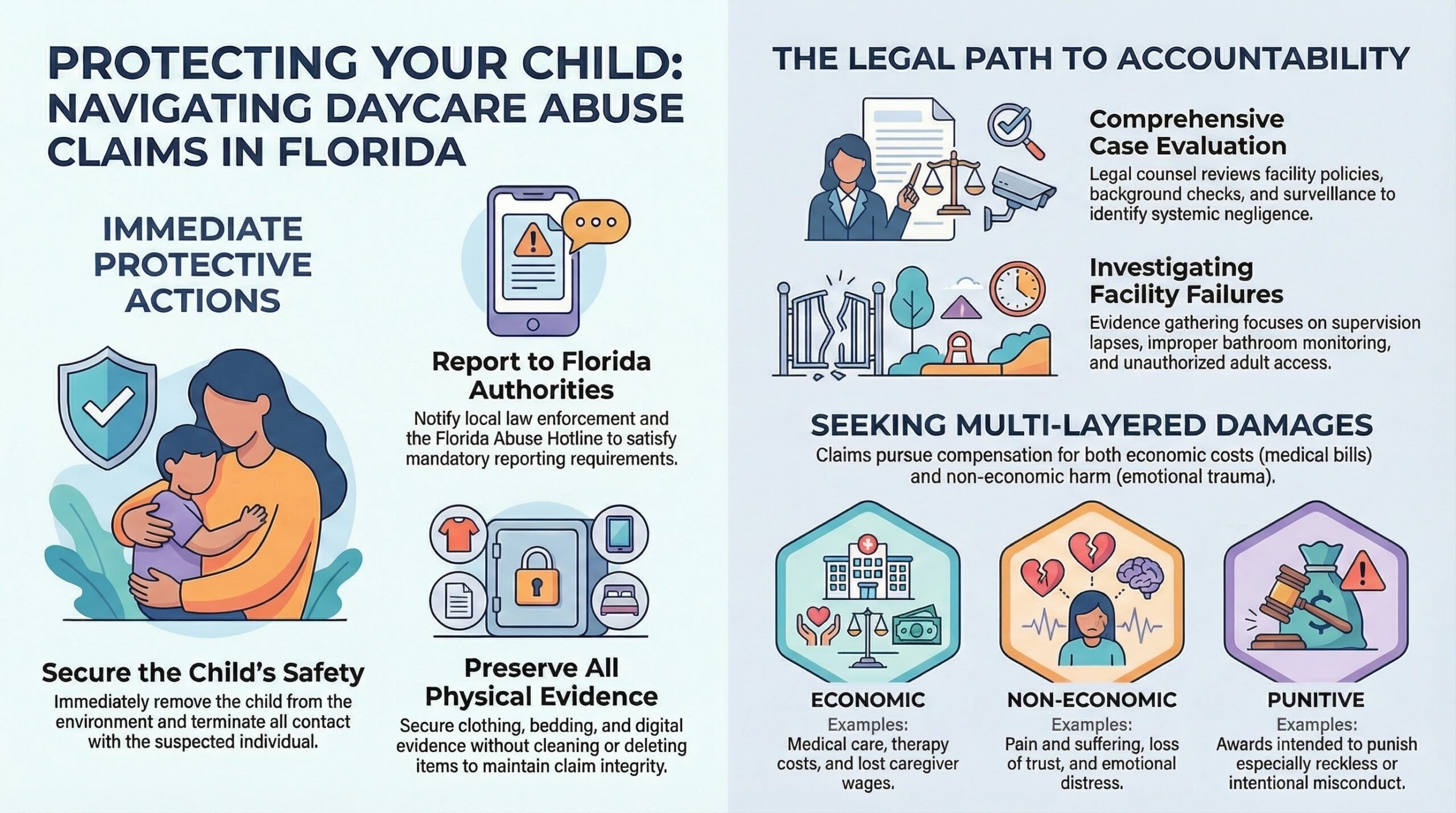
When a child has been harmed in a daycare setting, a Florida daycare sexual abuse lawyer can help the family evaluate the legal options available and take prompt action to protect the child’s interests. Counsel may coordinate immediate protective measures, gather crucial records, and communicate with relevant institutions so caregivers can focus on the child’s well-being and stability.
The attorney’s role often includes a careful factual inquiry designed to preserve evidence and identify failures in oversight. This may involve reviewing incident reports, conducting witness interviews, examining Staffing background checks, and requesting a thorough video surveillance review. Legal counsel may also help families document expenses, treatment needs, and related disruptions affecting daily life.
Throughout the process, the lawyer can provide steady guidance, explain each step clearly, and hold responsible parties accountable. A service-centered approach emphasizes dignity, safety, and practical support, helping families make informed decisions while protecting the child’s privacy and promoting long-term recovery and trust.
OUR CONSULTATIONSARE FREE
START YOUR FREE CASE REVIEW

Understanding Daycare Sexual Abuse Cases in Florida
Beyond the immediate legal support a family may need, it is also helpful to understand how daycare sexual abuse cases arise and are evaluated under Florida law. These cases often involve questions about supervision, hiring, reporting duties, and whether a provider ignored warning signs that should have protected a child from harm.
Florida law generally examines the conduct of the alleged abuser and the responsibilities of the daycare itself. Investigators and attorneys may review records, witness statements, surveillance footage, and prior complaints to determine whether abuse occurred and whether negligence contributed to it. Consent and boundaries are central concepts because children cannot lawfully consent to sexual conduct, and caregivers hold positions of trust.
Staff training failures may also become important when employees are not properly instructed on child protection, mandatory reporting, or professional limits. A careful legal review helps families seek accountability, strengthen safety standards, and support the well-being of other children in care.
Common Scenarios When Daycare Sexual Abuse Might Take Place in Florida
Certain conditions within a daycare setting may create opportunities for sexual abuse to occur in Florida. Common examples include inadequate staff supervision, isolated nap time areas, improper bathroom monitoring, and unauthorized adult access to children. Identifying these scenarios helps clarify how lapses in safety protocols and facility oversight may contribute to preventable harm.
Inadequate Staff Supervision
Although daycare facilities are expected to maintain constant oversight of children and staff, inadequate supervision can create conditions in which sexual abuse occurs without timely detection or intervention. Risks may increase when administrators fail to monitor employee conduct, ignore policy violations, or allow workers unsupervised access beyond appropriate duties.
Effective prevention often depends on consistent staff training, clear reporting protocols, and meaningful caregiver accountability at every level of the organization. Facilities that operate with understaffing, weak leadership, or poor documentation may miss warning signs, including boundary violations, secrecy, or unusual favoritism toward a child.
In the service of child safety, proper supervision requires active management, regular performance reviews, and immediate responses to concerns. When these safeguards are absent, vulnerable children may face preventable harm, and families may remain unaware until serious misconduct emerges.
Isolated Nap Time Areas
Risks associated with weak supervision may be especially pronounced during nap periods, when children are expected to rest in quieter, less visible spaces and staffing levels may be lower. In some Florida daycare settings, mats or cots may be arranged in corners, separate rooms, or partitioned areas, limiting direct observation. Those conditions can create opportunities for misconduct, especially when policies are unclear or consistently unenforced.
A service-minded review often considers whether sightlines were blocked, whether staff moved freely without accountability, and whether access controls were adequate. Child Consent is not a defense to sexual misconduct involving minors, and caregivers are expected to understand that duty. Unsafe Storage of bedding, barriers, or monitoring equipment may also contribute to disorder, reducing visibility and weakening safeguards intended to protect resting children during scheduled quiet periods.
Improper Bathroom Monitoring
In bathroom areas, supervision failures can become especially serious because children may be taken out of the main classroom and placed in spaces with limited visibility, reduced staff oversight, and fewer immediate witnesses. When centers do not enforce consistent escort procedures, line-of-sight monitoring, or age-appropriate separation, opportunities for harm may increase.
A provider’s duty includes maintaining privacy without abandoning protective observation, a balance requiring training, clear policies, and prompt intervention. In some matters, allegations involve misconduct between children, raising questions under peer liability theories as well as broader concerns about staff negligence. Facilities that ignore prior warning signs, permit repeated unsupervised bathroom trips, or fail to document incidents may expose vulnerable children to preventable risks. Careful staffing practices and attentive supervision help support safety, dignity, and accountability for every child.
Unauthorized Adult Access
How unauthorized adults gain access to a daycare facility often reveals serious weaknesses in security, supervision, and policy enforcement. In Florida, these incidents may occur when entry points are left unsecured, identification procedures are ignored, or staff members assume another employee has verified a visitor’s purpose. Such lapses can create opportunities for abuse during drop-off, pickup, transfer, or other busy periods.
Effective prevention depends on strict visitor screening, controlled access systems, and consistent caregiver accountability. Facilities that serve children and families responsibly should maintain updated authorization lists, require identification, and document every non-parent entry. Equally important are clear Safety reporting protocols, so staff members know how to respond to suspicious behavior, policy violations, or unexplained access. Careful enforcement helps protect children, support families, and strengthen trust in care environments across communities.


Legal Rights of Daycare Sexual Abuse Victims in Florida
Although the aftermath of daycare sexual abuse can be overwhelming, Florida law provides important legal protections for child victims and their families. These rights are designed to uphold safety, accountability, and access to justice for those seeking to protect vulnerable children. Florida statutes impose mandated reporting duties on certain professionals, and failures may support civil liability when harm could have been prevented.
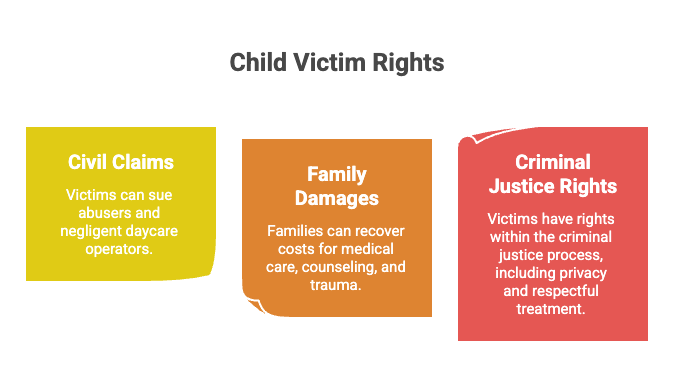
Florida law helps protect child victims and families by promoting safety, accountability, and access to justice after abuse.
- Child victims may have the right to pursue civil claims against abusers and, in some cases, daycare operators whose negligence allowed abuse to occur.
- Families may seek damages for medical care, counseling, trauma, and other losses connected to the abuse and its lasting effects.
- Victims also have rights within the criminal justice process, including protections for privacy, respectful treatment, and consideration of their welfare during proceedings.
These legal protections reflect Florida’s broader commitment to safeguarding children and supporting families who act in the service of a child’s recovery and future.
Steps to Take After a Daycare Sexual Abuse Incident in Florida
After a daycare sexual abuse incident in Florida, immediate action is necessary to protect the child and support any future investigation. Initial steps generally include ensuring the child’s safety, reporting the abuse to the proper authorities, and preserving essential evidence such as records, communications, and relevant observations. Taken promptly and carefully, these measures can help safeguard the child’s well-being while strengthening the factual basis of any legal claim.
Ensure Child Safety
When daycare sexual abuse is suspected or confirmed, the child’s immediate safety must remain the first priority. Caregivers should remove the child from the environment at once and ensure there is no further contact with the suspected individual. A calm, supportive setting can help the child feel protected and reduce additional distress.
Trusted adults should stay attentive to the child’s physical and emotional needs while preserving stability in daily routines when possible. Safe supervision arrangements should be confirmed before any return to childcare is considered. Families may also review the facility’s Background check policies and staff training practices to identify whether broader safety failures exist. Thoughtful documentation of behavioral changes, visible injuries, and relevant interactions may support future protective decisions while keeping the focus on the child’s well-being, dignity, and ongoing security.
Report The Abuse
Protecting the child from further contact should be followed promptly by reporting the suspected abuse to the proper authorities in Florida. Caregivers, staff members, and concerned adults should contact local law enforcement, the Florida Abuse Hotline, or child protective services without delay. Florida’s mandatory reporting laws require certain individuals to report known or suspected abuse, and prompt action may help protect other children as well.
When making a report, it is helpful to provide clear facts, including the child disclosure, observed behaviors, dates, and the identities of involved persons. Any available witness statements should be shared accurately and without speculation. Thoughtful documentation steps, such as noting who was contacted and when, can support an organized response. Timely reporting reflects responsible service, accountability, and care for vulnerable children everywhere.
Preserve Key Evidence
Because evidence can be lost or altered quickly, careful preservation should begin as soon as abuse is suspected in a Florida daycare setting. Caregivers should secure clothing, bedding, photographs, messages, and medical documentation without cleaning, deleting, or changing anything. Prompt Digital video preservation is also important, especially where surveillance footage may be routinely overwritten or access restricted.
A clear written timeline can help professionals understand what occurred, when concerns arose, and who was present. Families should save emails, incident reports, and notes from conversations with daycare staff, investigators, and medical providers. Maintaining accurate witness contact records allows authorities and attorneys to reach those who may confirm troubling conduct or unsafe conditions. Thoughtful evidence preservation supports accountability, protects other children, and helps service-minded families pursue justice with care, diligence, and integrity.
How a Florida Daycare Sexual Abuse Lawyer Can Help You Initiate a Case
Although the decision to pursue legal action may feel intimidating, a Florida daycare sexual abuse lawyer can help initiate a case by evaluating the facts, identifying potentially liable parties, and explaining the legal options available under state law. Counsel may outline confidentiality options, begin evidence gathering, and coordinate therapist referrals when appropriate, while prioritizing child advocacy and careful communication with families and authorities.
- The lawyer may review incident reports, medical records, witness accounts, and facility policies to assess whether a claim against staff, supervisors, or the daycare itself is supported.
- The lawyer may prepare required notices, communicate with insurers or investigators, and advise families on deadlines, reporting obligations, and procedural steps under Florida law.
- The lawyer may help organize documents, preserve records, and connect families with community resources that support informed decisions and responsible action in the service of the child’s safety and legal interests.
Long-Term Effects of Daycare Sexual Abuse Trauma
Daycare sexual abuse trauma may produce enduring consequences that extend well beyond childhood and affect multiple areas of a survivor’s development. These effects often include emotional and behavioral disruptions, academic and social difficulties, and patterns of distress that interfere with daily functioning over time. In many cases, the trauma is also associated with lasting mental health effects that require careful evaluation and long-term support.
Emotional And Behavioral Impacts
Following sexual abuse in a daycare setting, children may experience long-term emotional and behavioral effects that extend well beyond the initial trauma. Many develop persistent anxiety, sleep disruption, hypervigilance, sudden mood changes, or intense fear around routines that once felt safe. Some display regression, irritability, aggression, withdrawal, or unusual secrecy, often without understanding why these reactions continue.
These effects may deepen when warning signs are overlooked due to shortcomings in teacher training or delays in parent reporting. In service-oriented communities, informed adults can recognize patterns early and support trauma-responsive care. Professional counseling, stable caregiving, and careful documentation often help alleviate distress and restore a sense of safety. Even so, healing is rarely immediate, and many children require sustained emotional support, patient observation, and coordinated intervention from trusted caregivers and professionals.
Academic And Social Struggles
Long-term trauma from sexual abuse in a daycare setting often extends into the classroom and peer environment, where its effects may become more visible over time. A child may struggle to concentrate, follow instructions, or consistently complete assignments, even when support is available. Educators and caregivers may notice declining grades, disrupted participation, or uneven attendance patterns. Socially, trust difficulties can interfere with the formation of healthy friendships and cooperative behavior.
Some children become vulnerable within Bullying dynamics, while others withdraw in response to peer exclusion or perceived rejection. These challenges can limit confidence, reduce school engagement, and hinder age-appropriate development. For families and advocates seeking to serve children well, early recognition of academic and social disruption is crucial, as timely intervention can help restore stability, strengthen supportive relationships, and improve educational outcomes over time.
Lasting Mental Health Effects
Often, the psychological effects of sexual abuse in a daycare setting persist well beyond childhood, shaping emotional health in ways that may not be immediately recognized. Survivors may later experience anxiety, depression, mistrust, sleep disturbance, panic responses, or difficulty forming safe relationships. Some struggle with self-worth, emotional regulation, and trauma triggers that surface during adolescence or adulthood.
For those committed to helping a child repair, early recognition and steady intervention are crucial. Therapy support options may include trauma-informed counseling, behavioral therapy, and psychiatric care when appropriate. Family coping strategies often focus on creating stability, reinforcing safety, and encouraging consistent, non-pressured communication. With informed support, many survivors can build resilience, restore functioning, and, over time, move toward healthier emotional development with dignity and hope.
What to Expect During a Florida Daycare Sexual Abuse Claim Process
A Florida daycare sexual abuse claim generally begins with an initial case evaluation, during which the facts, potential liability, and available legal options are assessed. If the matter moves forward, the claim is filed and supported through investigation and evidence gathering, including records, witness statements, and other relevant documentation. The process may then conclude through settlement negotiations or, when necessary, proceed to trial for a judicial determination.
Initial Case Evaluation
When a Florida daycare sexual abuse claim begins, the initial case evaluation is designed to determine whether the available facts support legal action and what steps should follow. During this stage, counsel reviews reports, medical records, communications, and daycare policies to identify possible liability and urgent protective needs. The evaluation may also consider Child witness interviews, while taking care to avoid repeated questioning that could burden a child or affect accuracy.
Attorneys often explain the statute of limitations timeline because timing can influence available remedies and the preservation of evidence. Families are typically advised on documentation, reporting options, and supportive resources that protect the child’s welfare. This early assessment aims to provide clear guidance, promote informed decisions, and help those seeking accountability proceed in a careful, service-minded, and legally grounded manner.
Filing The Claim
After the initial case evaluation, the filing phase officially initiates the legal process and notifies the daycare, its insurers, and other potentially responsible parties of the allegations. Counsel typically drafts the complaint, identifies the defendants, and ensures that every deadline and procedural requirement under Florida law is met.
During this phase, the priority is to properly initiate the claim and safeguard the child’s interests. The filing may also include requests relating to evidence preservation, so relevant records are not misplaced, modified, or tampered with. Basic witness statements may be identified to help substantiate the allegations and specify who should be included in the case.
Once submitted, the defendants are served and provided an opportunity to reply. This step establishes a defined route toward accountability, safety, and meaningful assistance for the affected family.
Investigation And Evidence
During the investigation and evidence stage, counsel works to build a clear factual record of what occurred, how the abuse was permitted, and which parties may bear legal responsibility. This effort commonly includes witness interviews with staff, parents, and other caregivers, as well as careful review of surveillance footage, employee records, and incident reports. Counsel may also seek daycare policies, licensing history, prior complaints, and communications that reveal negligent supervision, unsafe hiring, or ignored warning signs.
Medical records, forensic findings, and expert input can help clarify timing, harm, and institutional failures. Throughout this process, the legal team aims to protect the child’s dignity while preserving essential proof. A thorough investigation serves families by identifying accountable parties and creating a reliable foundation for the claim under Florida law and applicable regulations.
Settlement Or Trial
Once the factual record has been developed, a Florida daycare sexual abuse claim typically moves toward settlement discussions or, if necessary, trial. During settlement, counsel evaluates damages, liability strength, and the practical value of resolving the matter without prolonged litigation. This stage may help families secure resources for recovery while limiting additional stress.
If a settlement is not achieved, the claim proceeds to trial, where witnesses testify and evidence is examined under courtroom rules. Attorneys prepare carefully for Credibility challenges, especially where abuse occurred without many eyewitnesses. They also assess how jurors may respond to institutional failures, child testimony, and expert opinions, including the possibility of jury sympathy. Regardless of the path taken, legal guidance remains focused on accountability, the protection of vulnerable children, and the achievement of a result that meaningfully serves the child’s long-term interests.
Compensation for Florida Daycare Sexual Abuse Damages
How can compensation address the profound harm caused by daycare sexual abuse in Florida? Compensation can support a survivor’s safety, stability, and access to needed care, while reinforcing accountability within institutions entrusted with children. In evaluating claims, courts and counsel examine liability standards, the quality of evidence preservation, and the connection between misconduct and resulting harm. A careful legal process may help families pursue justice with dignity and a service-centered focus on long-term wellbeing.
| Consideration | Purpose |
|---|---|
| Accountability | Encourages safer childcare practices |
| Documentation | Supports a clear claim record |
| Timely action | Protects access to legal remedies |
Compensation also recognizes that abuse may disrupt education, relationships, and daily functioning for years. A thorough case review can identify responsible parties, including individual wrongdoers and entities whose failures enabled abuse. By pursuing lawful compensation, advocates help survivors obtain practical support and affirm that community care includes protecting vulnerable children and responding decisively when trust is violated.
Economic vs Non-Economic Damages in Florida Daycare Sexual Abuse Cases
In Florida daycare sexual abuse cases, damages are generally divided into economic and non-economic categories, each addressing a different type of harm. Economic damages refer to measurable financial losses, such as medical expenses, therapy costs, and other out-of-pocket expenses, while non-economic damages concern pain and suffering, emotional distress, and related intangible injuries. Determining case value often requires a careful assessment of both categories, based on the severity of the abuse, the long-term effects on the child, and the evidence supporting each claimed loss.
Economic Damages Explained
Although every daycare sexual abuse case presents unique facts, economic damages generally refer to the measurable financial losses a family may face as a result of the abuse, while non-economic damages address the profound personal harm that cannot be calculated with the same precision.
In Florida cases, these losses may include counseling expenses, medical care, prescription costs, transportation to treatment, and other documented out-of-pocket payments. When abuse disrupts a caregiver’s employment, lost wages or reduced earning capacity may also become part of claim valuation. Records, invoices, employment statements, and expert opinions often help establish these amounts with credibility.
Courts and insurers may also examine future anticipated costs when treatment or supervision remains necessary over time. These settlement factors can materially influence the financial recovery sought, particularly when families need resources to support a child’s safety, stability, and continuing care.
Non-Economic Losses
While economic damages focus on documented financial costs, non-economic losses address the deeply personal harm a child and family may endure after daycare sexual abuse. These injuries may include fear, shame, disrupted sleep, anxiety, depression, loss of trust, and diminished enjoyment of childhood and family life. In Florida, non-economic losses recognize that abuse can alter development, relationships, and a child’s sense of safety long after visible injuries fade.
Emotional distress damages may also reflect the strain placed on parents or guardians who must support recovery while coping with grief and helplessness. A careful legal presentation often uses testimony, treatment records, and behavioral changes to show the seriousness of these harms. This category serves an important purpose by acknowledging suffering that warrants compassion, accountability, and meaningful legal recognition under Florida law.
Calculating Case Value
Case value in a Florida daycare sexual abuse claim is generally assessed by examining both economic and non-economic damages alongside each other, because neither category alone reflects the full extent of the harm alleged. Economic damages may include therapy costs, future treatment, medications, educational support, and other measurable losses affecting the child and family.
Non-economic damages address pain, emotional trauma, loss of trust, and lasting psychological effects that cannot be calculated through receipts alone. A careful medical documentation review often helps connect treatment needs to the abuse alleged and supports a more accurate valuation. In some cases, a punitive damages assessment is also considered when conduct appears especially reckless, intentional, or indifferent to safety. By weighing these elements along, advocates can pursue accountability in a manner centered on protection, dignity, and long-term recovery.
When a Florida Daycare Sexual Abuse Case Goes to Trial vs Settlement
Because each Florida daycare sexual abuse claim turns on its own facts, the path toward trial or settlement depends on the strength of the evidence, the extent of the harm, the availability of insurance coverage, and the willingness of the parties to resolve the matter privately. Settlement may be favored when liability is clear, damages are well documented, and a prompt resolution can provide resources for treatment and family support.
A case may proceed to trial when fault is disputed, insurers deny responsibility, or the defense minimizes the child’s injuries. Trial Preparation often includes collecting records, consulting experts, and planning a careful presentation of Child Witnesses to reduce further trauma. Courts and counsel may use protective procedures that place the child’s welfare at the center of the process. While settlement can offer privacy and certainty, a trial may be necessary to secure full accountability and a just result. Each approach should be evaluated with attention to service, dignity, and the child’s long-term recovery needs.
The Statute of Limitations for Florida Daycare Sexual Abuse Cases
Although filing deadlines vary based on the legal claims asserted and the age of the survivor, the statute of limitations in Florida daycare sexual abuse cases is a critical issue that can directly affect whether a claim may proceed. Florida law may allow different deadlines for civil actions, depending on whether the claim involves intentional abuse, negligence, or institutional wrongdoing by a daycare or related parties.
In many situations, the survivor’s age, delayed discovery of harm, and specific statutory exceptions can influence the filing period. Careful review of the facts is often necessary because records, witness availability, and agency findings may become harder to obtain over time.
Mandatory reporting laws and child protective investigations can create documentation that later helps clarify timelines, but those processes do not automatically extend filing deadlines. For families focused on protecting children and supporting recovery, understanding these limits helps preserve accountability and ensures that potential claims are evaluated within the time allowed by Florida law.
When to Contact a Daycare Sexual Abuse Lawyer in Florida
Questions about filing deadlines often lead directly to another practical concern, namely, when legal counsel should be consulted after suspected daycare sexual abuse in Florida. In many situations, contact should occur as soon as a caregiver notices behavioral changes, receives a disclosure, or learns facts suggesting misconduct. Early guidance can help families respond responsibly while protecting the child’s immediate well-being and supporting appropriate reporting channels.
Prompt consultation also matters because Statute limits can affect available legal options, even when uncertainty remains about what occurred. Delays may complicate evidence preservation, including records, communications, surveillance footage, medical findings, and witness recollections.
Counsel can also help organize documentation of dates, symptoms, conversations, and daycare responses in a clear and useful manner. This early step may reduce avoidable mistakes and support informed decisions that place the child’s safety first. Seeking timely legal input often serves both accountability and the broader protection of other vulnerable children in care settings.
Why You Need an Experienced Florida Daycare Sexual Abuse Lawyer
When sexual abuse is suspected in a daycare setting, an experienced Florida daycare sexual abuse lawyer can provide focused guidance at a time when legal, procedural, and practical issues often arise at once. Such counsel helps families preserve important information, understand reporting obligations, and avoid steps that could unintentionally affect later claims.
Experience also matters because these cases often involve sensitive evidence, institutional records, and multiple responsible parties. A seasoned lawyer can explain how to document injuries, collect relevant communications, and coordinate with investigators while protecting the child’s interests.
Careful legal guidance may also help identify whether a daycare, employee, supervisor, or third party failed in a duty of care. In addition, families and caregivers often need direction beyond the courtroom. An experienced advocate can point them toward appropriate emotional support resources, helping them pursue accountability while also addressing immediate safety, stability, and informed decision-making for everyone involved during a difficult time.
How to Choose the Right Daycare Sexual Abuse Lawyer for Your Case in Florida
Selecting the right Florida daycare sexual abuse lawyer requires careful attention to experience, case focus, and professional judgment, since these matters often involve both profound sensitivity and detailed liability issues. Families benefit from selecting legal counsel that regularly handles child injury and abuse claims, understands Florida reporting rules, and can coordinate with investigators, therapists, and child advocates.
A careful review of credentials, trial history, and settlement experience can reveal whether an attorney is prepared for detailed daycare negligence cases. Clear communication also matters. A suitable lawyer explains options plainly, responds promptly, and approaches children and caregivers with respect.
During consultations, it is useful to ask about case strategy, anticipated timelines, and evidence-preservation tips, including how to protect records, messages, surveillance footage, and incident reports. Fee structure, courtroom readiness, and access to support resources should also be considered. Thoughtful evaluation helps families choose representation equipped to pursue accountability and protect a child’s future.
About The Law Offices of Anidjar & Levine
The Law Offices of Anidjar & Levine represents individuals and families across Florida in serious personal injury matters, including claims involving harm to children in daycare settings.
The firm approaches these cases with careful attention, recognizing the profound trust families place in caregivers and legal advocates.
Its attorneys work to protect vulnerable clients, pursue accountability, and help families understand their options under Florida law.
The firm is known for responsive client service, thorough investigation, and steady guidance during difficult circumstances.
Through Confidential Consultations and Free Case Reviews, it offers an accessible starting point for those seeking answers after suspected abuse or neglect.
The legal team examines records, identifies responsible parties, and builds claims designed to seek compensation and promote safer practices.
By combining practical experience with a service-centered approach, The Law Offices of Anidjar & Levine aims to support families with professionalism, respect, and a clear commitment to justice for harmed children and their guardians statewide.
Frequently Asked Questions
How Are Florida Daycares Licensed and Inspected for Child Safety Compliance?
Florida daycares are regulated through state licensing requirements administered primarily by the Department of Children and Families, with some counties retaining local authority. They must meet standards for staffing, training, supervision, sanitation, and emergency preparedness. Compliance is verified through routine inspections, complaint investigations, and periodic monitoring. Providers that fail to satisfy child safety rules may face corrective action, fines, probation, suspension, or license revocation to protect children and families.
What Background Checks Are Required for Florida Daycare Employees and Volunteers?
Florida requires daycare employees to complete Level 2 background screening, ensuring fingerprint-based Criminal Checks through state and federal databases, prior to working with children. This process assesses disqualifying offenses related to abuse, violence, and exploitation. Volunteer Screening may also be required when volunteers have unsupervised access or significant contact with children. Facilities serving families and communities must maintain compliance, document screenings, and ensure that all personnel meet statutory standards for child safety.
Can Surveillance Footage From a Daycare Be Preserved After Suspected Abuse?
Yes, surveillance footage from a daycare can often be preserved after suspected abuse, and prompt action is critical. Through proper evidence-preservation efforts, a facility may be directed to retain video footage before it is routinely deleted. A lawyer or an investigative authority can request preservation and, when necessary, use legal procedures to secure access. Taking these steps helps protect vulnerable children, supports accountability, and assists those seeking to serve affected families responsibly.
Are Daycare Owners Liable for Abuse Committed by Third-Party Contractors?
Yes, daycare owners may be liable for abuse by third-party contractors, depending on their control, foreseeability, and failure to prevent. A Vicarious liability overview shows that liability is less automatic for independent contractors, yet negligent hiring, supervision, or retention can still create responsibility. Contractor misconduct scope also matters, especially when abuse occurred during assigned duties or on-site. Care-focused organizations should assess contracts, screening practices, reporting systems, and safety oversight with diligence.
How Can Parents Verify Prior Complaints Against a Florida Daycare Facility?
Parents can verify prior complaints against a Florida daycare facility by reviewing state inspection reports, licensing records, and disciplinary actions through the Florida Department of Children and Families. They may also submit public records requests to obtain additional documents not readily available online. Careful complaint history checks with local agencies, including law enforcement and child protective services, can further identify reported concerns, helping families make informed decisions that protect children and serve community safety.
—————————
Florida daycare sexual abuse claims require prompt action, careful documentation, and knowledgeable legal guidance.
Victims and their families may have important rights under Florida law, including the right to seek accountability from negligent daycare providers and other responsible parties.
The Law Offices of Anidjar & Levine can evaluate the circumstances, explain available legal options, and pursue appropriate compensation as experienced Florida Sexual Assault Lawyer advocates.
A qualified Florida daycare sexual abuse lawyer can help protect a child’s interests while guiding the family through each stage of the process.