The Law Offices of Anidjar and Levine can investigate whether speeding, running a red light, failure to yield, or another traffic violation contributed to a crash in Miami. A lawyer may review police reports, witness accounts, photographs, traffic-camera footage, and medical records to assess liability and document injuries and losses. A citation alone does not establish civil fault, and shared responsibility may affect compensation. Prompt guidance can help preserve evidence and clarify options. Learn more from a Miami Personal Injury Lawyer. The following sections explain relevant claims and legal rights.
Main Takeaways
- A Miami car accident lawyer can investigate whether speeding or another traffic violation contributed to a crash and resulting injuries.
- Police reports, citations, witness accounts, photographs, and physical evidence can help clarify how a collision occurred.
- A traffic citation may support a claim but does not automatically establish civil liability.
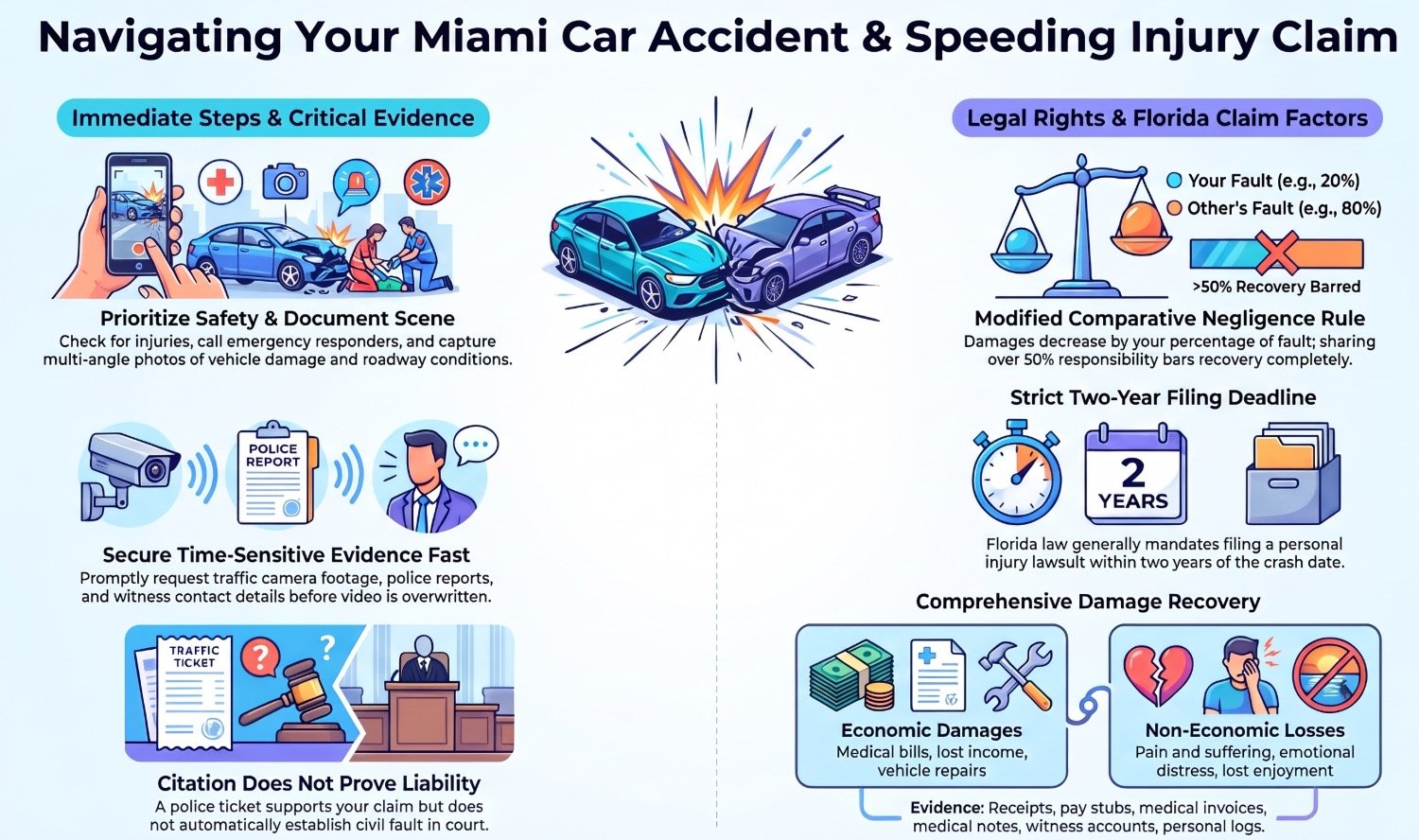
- Promptly preserve traffic-camera footage, which may be overwritten, and keep medical, insurance, and repair records together.
- A lawyer can assess potential claims, communicate with insurers, document losses, and explain options for negotiation or court.
How We Can Help With Your Miami Car Accident Traffic Violations & Speeding Injury Claim
A Miami car accident lawyer can investigate whether speeding or another traffic violation contributed to a crash, identify the parties who may be legally responsible, and gather evidence to support an injury claim. The lawyer can also review medical records, document financial losses, and organize information about how the injuries affect daily responsibilities. This work helps injured people seek fair treatment while allowing them to focus on recovery and family needs.
Claim Preparation may include collecting photographs, witness statements, repair estimates, and relevant insurance documents. Counsel can communicate with insurers, respond to requests for information, and explain available options in clear terms. A careful Legal Strategy is shaped by the facts, the client’s goals, and the evidence supporting the claimed losses. When appropriate, the lawyer may negotiate a resolution or prepare to present the matter in court. Throughout the process, consistent updates and thoughtful guidance can help clients make informed decisions and pursue accountability without adding unnecessary burdens during a difficult period.
Understanding Miami Car Accident Traffic Violations & Speeding Injury Cases
When a Miami crash involves speeding or another traffic violation, understanding how the conduct contributed to the collision is central to evaluating an injury claim. A violation may show negligence, but its connection to the crash and resulting harm must also be established. The analysis considers applicable traffic rules, available records, physical evidence, and the accounts of those involved.
Crash reconstruction can help clarify vehicle movement, impact points, and timing. Investigators may compare this evidence with police reports, photographs, witness statements, and medical documentation. The review also considers whether roadway design, visibility, signage, or traffic controls affected what drivers could reasonably perceive or do. These details can help distinguish a contributing violation from conduct unrelated to the collision.
For injured people and their families, a careful evaluation supports informed decisions and fair consideration of documented losses. Each case depends on its specific facts, the quality of available evidence, and the applicable legal standards. A thorough, impartial review can help identify unanswered questions and preserve relevant information.
Don’t Wait. Call Our Florida Personal Injury Lawyers Now!
Common Causes of Miami Car Accident Traffic Violations & Speeding
Common causes of Miami traffic violations and related crashes include speeding and reckless driving, which can reduce reaction time and increase collision severity. Distracted driving, failure to yield, and running red lights also create serious risks, particularly at busy intersections. Identifying the conduct that contributed to a crash can help clarify how liability may be assessed.
Speeding And Reckless Driving
Speeding and reckless driving are frequent causes of serious traffic violations and car accidents in Miami. Exceeding posted limits reduces the time drivers have to respond to changing road conditions and increases the force of a collision. Aggressive acts, such as unsafe passing or weaving through traffic, can place passengers, pedestrians, and other motorists at risk.
Florida law may impose fines, license consequences, and speeding penalty points for speeding violations. More dangerous conduct may result in reckless driving citations, particularly when a driver shows disregard for the safety of people or property. These penalties can affect a driver’s record and may carry additional consequences after a crash. Promptly documenting the circumstances and seeking appropriate legal guidance can help injured people understand their options and pursue accountability while supporting safer roads for the broader Miami community.
Distracted Driving
Distracted driving is a significant cause of traffic violations and collisions in Miami, where heavy traffic demands consistent attention. Phone distraction can occur when drivers read messages, make calls, or use navigation apps while moving. Even a brief glance away from the road may prevent a driver from noticing changing signals, stopped vehicles, or pedestrians. Cognitive distraction also creates risk when a driver’s thoughts are focused on a conversation, work concern, or other matter rather than driving. These distractions can delay reactions and contribute to unsafe lane changes, missed traffic controls, and rear-end crashes. Drivers who remain attentive help protect passengers, other motorists, cyclists, and pedestrians. After a collision, evidence such as phone records, witness accounts, and vehicle data may help clarify whether distraction contributed to the incident and any resulting traffic violation.
Failure To Yield
Even attentive drivers can cause collisions when they fail to yield the right of way. In Miami, these crashes often occur when motorists enter intersections without allowing approaching traffic to pass, merge without checking for vehicles already in a lane, or turn across another road user’s path. Yield sign violations can create sudden conflicts, particularly where visibility is limited or traffic is moving quickly. Drivers also have a duty to respect pedestrian right of way at marked crossings and other locations where pedestrians are legally entitled to proceed. Failure to yield may injure people who have little protection from impact, including pedestrians, cyclists, and occupants of smaller vehicles. Careful observation, reduced speed, and patience can help prevent these collisions and protect everyone sharing the roadway.
Running Red Lights
Running a red light can turn an intersection into a serious collision site, especially when cross traffic or pedestrians have already begun moving. In Miami, drivers may enter after the signal changes because of distraction, impatience, speeding, or misjudging stopping distance. These choices can expose people in other vehicles, cyclists, and pedestrians to preventable harm.
Intersection Timing may affect how drivers perceive a changing signal, but it does not excuse entering an intersection against a red light. Drivers should approach cautiously, obey signals, and stop when safe rather than accelerate to beat a light. Red Light Cameras may document certain violations, while witness accounts and other evidence can help clarify what occurred. A careful review can identify contributing factors and support fair accountability after a crash.
Legal Rights of Miami Car Accident Traffic Violations & Speeding Injury Victims
When a traffic violation or excessive speed causes a Miami car accident, injured victims may have the right to seek compensation from the responsible driver. Florida law allows an injured person to pursue damages when another party’s negligence caused harm. A traffic citation may provide relevant evidence, but it does not automatically establish civil liability. Victims can document losses and request fair consideration of their claims while protecting their ability to recover.
Potential rights and steps include:
- Seeking payment for medical expenses and future treatment.
- Claiming lost income and reduced earning capacity.
- Requesting compensation for pain, disability, and other documented losses.
- Preserving crash reports, photographs, witness details, and medical records.
- Consulting qualified counsel about deadlines and insurance communications.
Ticket consequences and license points generally concern the driver cited, not the injured person’s civil claim. However, citation records may help clarify the circumstances. Florida’s comparative negligence rules can reduce recovery if a claimant shares responsibility. Prompt, accurate documentation supports a careful evaluation and helps victims make informed decisions while pursuing accountability through lawful channels.
Why Do Miami Car Accident Traffic Violations & Speeding Injuries Happen?
Miami car accidents involving traffic violations or speeding often occur when drivers disregard traffic laws, misjudge road conditions, or fail to respond promptly to changing hazards. Common violations include running red lights, failing to yield, following too closely, and making unsafe turns. Speeding reduces the time available to recognize danger and increases impact force, making severe injuries more likely.
Urban road design can contribute to collisions when busy intersections, limited sightlines, construction zones, and changing traffic patterns demand careful attention. Congestion may prompt impatient drivers to weave between lanes or accelerate through gaps, while unfamiliar routes can lead to sudden braking or missed signals. Rain, glare, and wet pavement further affect visibility and vehicle control.
Pedestrian exposure is also significant in areas with frequent crossings, transit stops, and commercial activity. Drivers who speed or ignore crossing signals put pedestrians and cyclists at particular risk. These crashes often reflect preventable choices, hazardous conditions, or both, with consequences extending to families and communities.
What Should You Do After a Miami Car Accident Traffic Violations & Speeding Injury?
After a Miami crash involving a traffic violation or speeding, injured people should first check for injuries and call 911 if needed. They should document the scene, gather relevant information, and preserve evidence when it is safe to do so. Contacting a lawyer can help clarify legal options and protect potential claims.
Check for Injuries
Following a Miami car accident involving a traffic violation or speeding, checking for injuries should be an immediate priority. Immediate safety begins with determining whether anyone is hurt and whether approaching the vehicles or roadway presents further danger. If it is safe, occupants should remain still until serious injuries can be evaluated, particularly when neck, back, or head trauma is possible. A person who appears uninjured may still have an injury that is not immediately apparent.
Emergency symptoms include difficulty breathing, heavy bleeding, confusion, loss of consciousness, severe pain, or weakness. If you observe these signs, call 911 promptly and describe the person’s condition and location. They should avoid moving an injured person unless an immediate hazard, such as fire, requires it. Calm reassurance and practical assistance can help protect everyone involved until trained responders arrive.
Document the Crash
When it is safe to do so, documenting the crash can preserve important evidence about how a traffic violation or speeding contributed to the collision. A careful record may also help clarify events for insurers, investigators, and others who need accurate information.
Scene photographs should show vehicle positions, road conditions, traffic signs, signals, skid marks, debris, and visible injuries, if appropriate. Images taken from several angles can provide useful context without requiring anyone to enter an unsafe area. Damage documentation should include close and wide views of each vehicle, along with notes describing the location and extent of visible damage. The driver can record the time, location, weather, and names and contact details of witnesses. Keeping copies of reports and related records in one secure place can support a clear, reliable account of the collision.
Contact a Lawyer
A Miami car accident lawyer can help an injured person assess how speeding or another traffic violation may affect an insurance claim or potential legal action. After seeking medical care and documenting the crash, the injured person can arrange a Free consultation to discuss the circumstances and possible next steps. The lawyer may review police reports, witness statements, photographs, and treatment records to identify relevant evidence and explain applicable deadlines. Before choosing counsel, the injured person should verify attorney credentials, including experience with traffic-related injury claims and familiarity with Florida law. Clear communication about fees, case strategy, and expected responsibilities can support an informed decision. Prompt legal guidance may also help preserve evidence and reduce avoidable errors in communications with insurers. A careful review can clarify options while supporting a fair resolution.
Critical Evidence in a Miami Car Accident Traffic Violations & Speeding Injury Case
Evidence can help establish how a Miami crash occurred, whether traffic violations or speeding contributed, and the extent of resulting injuries. Relevant records and accounts should be preserved promptly, as footage may be overwritten and witness recollections can fade.
Crucial evidence may include:
- Police accident reports documenting the scene, statements, and cited violations
- Traffic camera footage showing vehicle movements and road conditions
- Witness statements describing the collision and events leading up to it
- Medical records connecting injuries to the crash and documenting treatment
- Photographs of vehicle damage, road conditions, and visible injuries
Police Accident Reports
How can a police accident report affect a Miami car accident injury claim involving speeding or another traffic violation? The report may document the responding officer’s observations, statements from drivers and witnesses, roadway conditions, and any citations issued. This information can help establish how the collision occurred and identify evidence that requires further review. However, a report is not a final determination of fault, and its conclusions may be incomplete or disputed. Injured people should preserve related records and provide accurate information to support a fair assessment of their claim. Report access procedures can vary, so parties may need to request the document from the appropriate law enforcement agency. If factual errors appear, parties may request report amendments through the agency, although changes are not guaranteed. A lawyer can evaluate the report alongside other available evidence.
Traffic Camera Footage
When available, traffic camera footage can provide an independent record of a Miami collision involving speeding or another traffic violation. The video may show vehicle movements, signal phases, road conditions, and the timing of events before impact. These details can help clarify whether a driver failed to obey a traffic signal or traveled at an unsafe speed. Because public and private systems may overwrite recordings quickly, Camera preservation should be addressed promptly through appropriate requests to the responsible agency or property owner. The footage must also be reviewed for completeness and reliability. Footage authentication may involve confirming the source, recording date, and whether the file was altered. A careful review can help injured people pursue accountability and support a fair assessment of the evidence in a traffic injury claim.
Witness Statements
After a Miami crash involving alleged speeding or another traffic violation, witness statements can help establish what happened before, during, and after the collision. Independent observers may describe vehicle speed, traffic signals, lane changes, road conditions, and the actions of those involved. Their accounts can clarify disputed details and help determine whether a driver failed to follow traffic laws.
Witness credibility depends on factors such as the person’s vantage point, ability to observe events, and consistency over time. Investigators may compare statements with physical evidence and traffic camera footage. Statement inconsistencies do not automatically make an account unreliable, but they may require careful review to understand differences in perception or memory. Promptly identifying witnesses and preserving their contact information can support a fair assessment. Their observations may help establish responsibility and advance a claim seeking accountability for harm.
Medical Records
Medical records provide compelling evidence in a Miami car accident injury case involving alleged speeding or other traffic violations. They document the injuries, treatment dates, symptoms, and medical opinions that may connect the collision to a person’s condition. Emergency department notes, diagnostic imaging, prescriptions, and follow-up records can help show how the injury developed and affected daily activities. Consistent documentation also allows legal professionals to assess whether the claimed harm is supported by reliable evidence.
Record Retention matters because missing records may leave gaps in the treatment history. Patients can preserve appointment summaries, bills, and discharge instructions, while authorized representatives request complete copies from providers. Provider Coordination helps confirm that physicians, therapists, and experts maintain accurate, consistent documentation. Care should remain focused on recovery; medical decisions belong to qualified clinicians, not the demands of a legal claim.
Long-Term Effects of Miami Car Accident Traffic Violations & Speeding Injuries
Injuries from Miami crashes involving traffic violations or speeding can cause chronic pain and lasting disability, affecting a person’s ability to work and manage daily activities. Ongoing treatment and reduced earning capacity may create substantial financial strain over time. Some individuals also experience emotional and psychological effects, including anxiety or distress related to the collision.
Chronic Pain and Disability
When a Miami car accident results from speeding or another traffic violation, the harm may extend well beyond initial treatment. Persistent pain can disrupt sleep, mobility, concentration, and daily responsibilities. Some injured people experience headaches, back or neck pain, nerve symptoms, or reduced strength long after the collision. These conditions may fluctuate, making ordinary tasks difficult to predict or complete consistently.
Chronic pain management can involve coordinated medical care, rehabilitation, medication oversight, and practical strategies for daily activity. When injuries cause lasting limitations, disability accommodations may help people participate more safely at work, school, and in community settings. Supportive family members, employers, and care providers can assist with treatment plans and accessible routines while respecting the injured person’s independence. Documentation of symptoms and functional changes can help clinicians assess ongoing needs and guide appropriate care.
Lasting Financial Strain
A Miami crash caused by speeding or another traffic violation can create financial pressures that persist long after emergency treatment ends. Ongoing medical care, rehabilitation, prescription costs, and reduced earning capacity may strain a household for months or years. When an injured person cannot return to work, family members may also take unpaid leave to provide vital support. Careful Household Budgeting can help identify urgent expenses, preserve funds for treatment, and plan for changes in income. However, insurance disputes or delayed claims may leave families responsible for bills while compensation remains unresolved. Credit Recovery may take time if medical debt or missed payments have affected a person’s credit history. Organized records of expenses, income losses, and insurance communications can support financial planning and claims. These practical steps may help households meet obligations and maintain stability.
Emotional and Psychological Effects
Beyond physical recovery, a Miami crash caused by speeding or another traffic violation can leave lasting emotional and psychological effects. Some injured people experience post-traumatic stress, including intrusive memories, sleep disruption, or heightened alertness near traffic. Others develop Driving Anxiety that makes commuting, riding as a passenger, or approaching busy intersections difficult. These effects may interfere with work, family responsibilities, and community involvement, even after visible injuries have healed. Recovery may require counseling, medical care, and practical support from relatives, colleagues, or local services. Recognizing these needs can help those around the injured person respond with patience and respect rather than judgment. When emotional symptoms persist, professional assessment can clarify appropriate treatment and document the impact on daily life. Consistent support may help restore confidence and independence over time.
Don’t Wait. Call Our Florida Personal Injury Lawyers Now!
Proving Liability in Miami Car Accident Traffic Violations & Speeding Injury Cases
Establishing liability in a Miami car accident involving speeding or another traffic violation requires evidence that connects the driver’s conduct to the collision and resulting injuries. Investigators may review police reports, witness statements, photographs, traffic-camera footage, and vehicle data to determine how the crash occurred. Citations can support a claim, but they do not automatically establish civil liability. Evidence must show that a driver breached a duty of care and that the breach caused harm.
Medical records and expert opinions can document injuries and link them to the collision. Accident reconstruction experts may assess speed, braking, visibility, and the sequence of events. Other causes may also require examination. Vehicle defect analysis can identify mechanical failures that contributed to the crash, while roadway design liability may arise when unsafe road conditions played a role. A careful, evidence-based investigation helps clarify responsibility and supports fair consideration of injured people’s needs without assuming fault before the facts are established.
Dealing With Insurance Companies After a Miami Car Accident Traffic Violations & Speeding Injury
Once the available evidence begins to clarify how a Miami crash occurred, insurance communications become an important part of pursuing compensation. Insurers may request documents, ask questions, or seek a recorded account of the collision. Before providing Insurer Recorded Statements, an injured person should understand that unclear wording or incomplete recollections may affect how the insurer evaluates the claim. A careful review of relevant facts can help guarantee responses remain accurate and consistent.
Coverage may depend on policy terms, the parties involved, and the circumstances of the crash. Policy Coverage Disputes can arise over exclusions, limits, or whether a particular driver was insured. A lawyer can review the applicable policies, communicate with adjusters, and identify information needed to address coverage concerns. Promptly preserving bills, repair estimates, and correspondence can support clear communication. These steps help injured people protect their interests while allowing insurers to assess documented losses and applicable coverage without unnecessary confusion or avoidable delay.
What to Expect During a Miami Car Accident Traffic Violations & Speeding Injury Claim Process
A Miami car accident injury claim typically begins with an assessment of the collision, the alleged traffic violations, and the resulting injuries. The process then involves gathering evidence and negotiating with insurers to establish responsibility and evaluate damages. If the parties cannot reach a fair settlement, the claim may proceed to trial.
Initial Case Assessment
How does an initial case assessment shape a Miami car accident injury claim involving alleged speeding or other traffic violations? At this stage, counsel reviews the reported circumstances, the injuries described, and the client’s immediate concerns to determine whether the matter warrants further legal action. Crash severity helps frame the potential scope of harm, including treatment needs, time away from work, and lasting limitations. Citation implications also require careful consideration: a traffic citation may inform the claim, but it does not by itself establish civil liability. The assessment considers applicable deadlines, possible insurance coverage, and the practical needs of those affected. Counsel can explain likely procedures, identify issues requiring clarification, and outline options without promising an outcome. This measured review supports informed decisions and helps injured people receive respectful, attentive guidance.
Evidence Collection
As the claim moves beyond its initial assessment, evidence collection helps clarify how the crash occurred and whether alleged speeding or another traffic violation contributed. Investigators may obtain police reports, witness statements, photographs, and available traffic-camera footage. These records can help establish vehicle positions, road conditions, and the sequence of events without relying solely on conflicting recollections.
Vehicle damage analysis may reveal the direction and force of impact, while scene measurements can help assess whether speed or unsafe actions played a role. Preserving electronic data is also important because vehicle systems may record speed, braking, and other information that could be lost or overwritten. Medical records and treatment documentation help connect the collision to reported injuries. Careful collection and organization of this material supports an accurate review and helps protect the interests of those affected.
Injury Claim Negotiation
With the available evidence organized, injury claim negotiations can focus on liability, the extent of the injuries, and the losses caused by the collision. In Miami, traffic citations or evidence of speeding may support a liability argument, but they do not alone establish the full value of an injury claim. A careful Demand letter strategy presents the relevant records, medical expenses, lost income, and documented effects on daily activities. The injured person’s treatment progress and future care needs may also shape discussions. Insurers may question fault, the necessity of treatment, or the amount requested, so clear documentation and measured responses are important. Mediation preparation can help the parties identify disputed issues, organize supporting information, and assess the strength of their positions. Throughout negotiations, accurate communication helps protect the injured person’s interests.
Settlement Or Trial
When negotiations do not produce an acceptable resolution, the injured person may need to weigh whether to accept a settlement or proceed to trial. A settlement can provide compensation sooner and avoid the uncertainty, expense, and public nature of court proceedings. Before agreeing, the claimant should understand the payment terms, release of future claims, and any settlement confidentiality terms. Legal guidance can help assess whether the offer reasonably reflects medical costs, lost income, and other documented harm.
If the case proceeds to trial, both sides present evidence, question witnesses, and make legal arguments before a judge or jury. The outcome is not guaranteed, and Jury deliberation dynamics may affect how jurors interpret disputed facts and injury evidence. A careful decision should consider the strength of the claim, likely delays, and the claimant’s priorities, including the ability to support others.
Compensation for Miami Car Accident Traffic Violations & Speeding Injury Damages
Compensation after a Miami crash caused by speeding or another traffic violation may cover medical expenses, lost income, property damage, and other losses supported by the evidence. A claim may also account for future treatment needs when medical records and qualified assessments establish that care is likely. The injured person generally must show that another party’s conduct caused the collision and resulting harm. Evidence may include crash reports, witness statements, photographs, vehicle data, and treatment records.
Florida’s Comparative Negligence rules can reduce recovery when an injured person shares responsibility for a crash. Fault allocation depends on the facts and applicable law, so a careful investigation can help clarify each party’s role. In limited circumstances, Punitive Damages may be available when evidence demonstrates intentional misconduct or gross negligence; they are distinct from compensation for injury-related losses and are not awarded in every case. A claim’s value depends on documented harm, available insurance, and legal requirements. Prompt preservation of evidence can support a fair assessment and responsible resolution.
Economic vs. Non-Economic Damages in Miami Car Accident Traffic Violations & Speeding Cases
Economic damages may include medical expenses, lost income, and costs related to vehicle damage or future care. Non-economic damages address losses such as pain, emotional distress, and reduced quality of life. Claimants generally must support both categories with relevant records, testimony, and other evidence.
Economic Damage Types
A Miami car accident caused by speeding or another traffic violation can result in both economic and non-economic damages. Economic damages are measurable financial losses supported by records such as bills, receipts, and employment documents. They may include emergency care, hospital treatment, medication, rehabilitation, and future medical services related to the collision. A claim may also account for vehicle repair or replacement, towing, rental transportation, and damaged personal property. Lost wages can reflect income missed during recovery, while diminished earning capacity may apply when lasting injuries limit a person’s ability to perform work or earn at the prior level. Careful documentation helps clarify the financial effect of the crash and supports an accurate assessment. By identifying these costs, injured people and their families can seek compensation that addresses practical needs and promotes stability.
Non-Economic Losses
While economic damages address measurable financial costs, non-economic losses reflect the personal effects of a Miami car accident caused by speeding or another traffic violation. These losses may include physical discomfort, emotional distress, and disruption to a person’s daily life. Pain and suffering can encompass ongoing pain, anxiety, sleep problems, or the strain of adapting to injuries. The impact may extend beyond the injured person, affecting family relationships and the ability to participate in shared responsibilities. A loss of enjoyment may arise when injuries prevent someone from pursuing hobbies, social activities, or ordinary routines that previously brought fulfillment. Unlike medical bills or lost wages, these harms do not have a fixed price. Their recognition reflects the broader human consequences of a crash and the value of restoring dignity and well-being after a preventable injury.
Proving Your Damages
To recover compensation after a Miami crash involving speeding or another traffic violation, an injured person must present evidence connecting the collision to specific losses. Economic damages include measurable costs, such as medical bills, rehabilitation expenses, lost wages, and reduced earning capacity. Damage documentation may include invoices, employment records, repair estimates, and receipts. Medical providers can explain treatment needs and support estimates of future expenses, including continuing care or assistive equipment. Non-economic damages address losses without a fixed price, such as pain, emotional distress, and reduced ability to enjoy daily activities. Consistent treatment records and clear accounts of how injuries affect routine responsibilities can help establish these harms. Traffic citations or crash reports may support the account of fault, but they do not, on their own, prove damages. Organized, credible evidence helps decision-makers assess the full impact.
When a Miami Car Accident Traffic Violations & Speeding Injury Case Goes to Trial vs Settlement
When a speeding or traffic-violation crash causes injuries in Miami, the claim may resolve through settlement or proceed to trial, depending on the evidence, the extent of the losses, and whether the parties can agree on responsibility and compensation.
A settlement can provide a defined recovery without the uncertainty, time, and expense of a courtroom proceeding. Negotiations may involve medical records, repair estimates, wage documentation, and accounts of how the crash affected daily life. Any proposed agreement should be assessed against the injured person’s documented needs and likely future expenses.
If negotiations do not produce an acceptable resolution, a trial allows each side to present evidence to a judge or jury. Witnesses may provide trial testimony about the collision, injuries, and resulting limitations. The jury evaluates the evidence, and Jury deliberations determine the verdict. Trial outcomes are not guaranteed, and preparation can require substantial time. Careful consideration of both paths helps injured people make informed decisions while preserving resources for recovery and family responsibilities.
Florida Laws That May Affect Your Miami Car Accident Traffic Violations & Speeding Case
Florida law can affect how a Miami speeding or traffic-violation crash claim is evaluated, including who may be held responsible and how damages are calculated. Statutory speed limits set maximum speeds, but drivers must also adjust to weather, traffic, and road conditions. A violation may support a negligence claim, though it does not automatically establish liability. Other evidence, including witness accounts and crash reports, may also matter.
Key rules and considerations include:
- Florida comparative negligence may reduce a claimant’s damages according to that person’s share of fault.
- A claimant found more than 50 percent responsible generally cannot recover damages under Florida’s modified comparative negligence rule.
- Traffic citations can provide evidence, but the court considers the full circumstances.
- Drivers must use reasonable care even when traveling below the posted limit.
- Florida’s no-fault insurance system generally requires drivers to seek initial benefits through personal injury protection coverage.
Applying these rules carefully can help injured people understand their options and support fair, accurate claim evaluations. Each case depends on its evidence and circumstances.
The Statute of Limitations for Miami Car Accident Traffic Violations & Speeding Injury Cases
Because filing deadlines can determine whether an injury claim proceeds, people injured in Miami car accidents involving speeding or other traffic violations should promptly identify the applicable statute of limitations. Florida law generally allows two years to file a negligence action for injuries arising from a crash. The period usually begins on the date of the accident, not when a traffic citation is issued or resolved. Missing the deadline may prevent an injured person from seeking compensation through a lawsuit, regardless of the apparent strength of the evidence.
Filing Deadlines can vary when a claim involves a government entity, a fatal accident, or a legally protected claimant, and additional notice requirements may apply. The Discovery Rule may affect when a limitations period begins in certain cases where an injury or its cause was not reasonably apparent. However, it does not automatically extend every deadline. Prompt attention to dates and applicable exceptions helps preserve a fair opportunity to pursue a claim and supports accountability for unsafe driving.
How a Miami Car Accident Traffic Violations & Speeding Lawyer Can Help You
A Miami car accident traffic violations and speeding lawyer can help an injured person assess how a driver’s conduct contributed to a crash and identify the evidence needed to support a claim. An Attorney case review may examine police reports, witness accounts, photographs, medical records, and available vehicle data. This careful work can clarify whether speeding or another traffic violation supports a finding of negligence.
Counsel may also coordinate with professionals and communicate with insurers, helping protect the injured person’s interests while pursuing fair compensation. A focused litigation strategy can guide negotiations or prepare the matter for court if a reasonable resolution is not reached.
A lawyer may assist by:
- Organizing records that document injuries, treatment, and expenses.
- Identifying witnesses and preserving relevant crash evidence.
- Evaluating how traffic violations relate to the collision.
- Addressing insurer questions and reviewing settlement proposals.
- Presenting supported claims through negotiation or litigation.
This assistance can help injured people pursue accountability while allowing them to focus on recovery and their responsibilities to family and community.
When to Contact a Miami Car Accident Traffic Violations & Speeding Lawyer
Prompt legal guidance may help preserve evidence and clarify how a traffic violation contributed to a Miami crash. A driver, passenger, or family member may contact a lawyer soon after a collision, particularly when an officer issues a citation, another party disputes fault, or injuries require ongoing care. Early legal consultation can help identify deadlines and protect access to records, photographs, witness accounts, and other relevant evidence before details become difficult to verify.
Contact is also appropriate when a citation alleges speeding, reckless driving, or another moving violation connected to the crash. A lawyer can review the notice, explain response requirements, and outline a citation defense strategy without assuming that a ticket alone determines civil responsibility. Timely advice may be especially important when a court date, insurance inquiry, or request for a recorded statement is approaching.
Those affected should seek guidance before making statements or accepting a proposed resolution. Prompt attention can support accurate fact-finding and responsible decisions for everyone involved.
Why You Need an Experienced Miami Car Accident Traffic Violations & Speeding Lawyer
An experienced Miami car accident traffic violations and speeding lawyer can assess how a cited violation relates to the collision, the available evidence, and any potential legal consequences. This review may include police reports, witness accounts, roadway conditions, and available video. A careful analysis can help distinguish an actual contributing violation from an allegation that does not reflect the circumstances.
Citation disputes may involve questions about measurement methods, officer observations, or whether the cited conduct caused or contributed to the crash. An attorney can explain applicable procedures, identify relevant evidence, and present a reasoned response on the driver’s behalf. This work can also help protect the interests of injured people seeking fair treatment and accountability.
Potential license consequences may affect a person’s ability to work, care for family, or meet community responsibilities. Counsel can clarify possible penalties and explain how a traffic matter may interact with related claims. With informed guidance, a driver can make decisions based on the facts, legal obligations, and practical effects of the case.
How to Choose the Right Miami Car Accident Traffic Violations & Speeding Lawyer for Your Case
Choosing the right Miami car accident traffic violations and speeding lawyer requires careful consideration of the lawyer’s relevant experience, communication practices, and approach to evidence. A suitable attorney should understand Florida traffic laws and know how speeding allegations, citations, and crash evidence may affect a claim. Reviewing Attorney credentials can help confirm licensing, relevant case experience, and any disciplinary history. Prospective clients should also ask how the lawyer investigates collisions, obtains records, and coordinates with witnesses or experts when needed.
Clear communication supports informed decisions throughout the case. The attorney should explain available options, likely timelines, and potential challenges in language the client can understand. Questions about who will handle routine updates and how promptly calls are returned can clarify expectations.
Before signing an agreement, clients should review fee structures and any case-related costs. Written terms should explain when fees are owed and whether expenses are deducted from a recovery. Comparing these details, while considering the attorney’s responsiveness and judgment, can help clients choose representation that serves their interests responsibly.
About The Law Offices of Anidjar & Levine
The Law Offices of Anidjar & Levine represents people injured in motor vehicle collisions, including Miami drivers facing questions about speeding allegations or traffic violations after a crash. The firm’s work includes helping clients understand how a citation may relate to a collision, injury claims, and available legal options. Its approach emphasizes clear communication and attention to the practical concerns that can arise after an accident.
Firm history provides context for the firm’s services, while attorney credentials help clients assess the legal experience available to address their circumstances. Drivers may benefit from discussing the specific facts of a crash, the documents they have received, and any deadlines that could affect a claim. The firm can explain relevant procedures and identify steps that may support a client’s interests.
For people seeking to assist injured drivers and families, the firm’s role centers on informed guidance and representation. Each matter depends on its evidence, applicable law, and individual circumstances.
Don’t Wait. Call Our Florida Personal Injury Lawyers Now!



Frequently Asked Questions
Can a Speeding Ticket Affect My Florida Driver’s License?
Yes. A speeding ticket can affect a Florida driver’s license by adding points to the driving record, depending on the speed and circumstances. License point penalties may increase insurance costs, and accumulating too many points within a specified period can lead to suspension. License suspension triggers can also include driving substantially above the limit or failing to respond to a citation. Reviewing the ticket and meeting all deadlines helps protect driving privileges and supports responsible road use.
Will I Need to Attend Traffic Court After a Miami Speeding Citation?
Whether attendance is required depends on the citation and the alleged violation. A standard Miami speeding citation may allow the driver to pay the fine, elect traffic school if eligible, or contest the charge without appearing in person. A mandatory court appearance may apply when the citation requires it or the driver disputes the allegation. The notice explains deadlines and options; reviewing it promptly helps guarantee compliance and supports an orderly court hearing process.
Can I Contest a Speeding Ticket if the Radar Reading Was Inaccurate?
A driver may contest a speeding ticket when evidence suggests the radar reading was inaccurate. Relevant issues can include Radar calibration records, proper device operation, and whether the officer completed required training. The driver may request supporting records and present them in traffic court, along with any reliable evidence about the vehicle or conditions. Because procedures and deadlines vary, timely review of the citation and local requirements can help protect the driver’s rights.
Could a Traffic Violation Affect My Car Insurance Premiums?
A traffic violation can affect car insurance premiums, particularly when it adds points to a driver’s record or signals increased risk. Insurers may raise rates at renewal, although the impact depends on the offense, driving history, and company policies. Insurance premium increases are not automatic, and some providers offer violation forgiveness for eligible customers. Drivers should review policy terms, compare available coverage, and confirm how a citation may affect future costs before making decisions.
What Happens if I Receive a Speeding Ticket While Driving a Rental Car?
A speeding ticket in a rental car is generally issued to the driver, who must respond by the stated deadline and address any fines or court requirements. The rental company may be notified if the citation identifies the vehicle or the rental agency receives a notice. The agency may charge rental agreement fees for processing the citation, separate from the fine. The violation may also affect the driver’s record and insurance premiums.
—————————
Traffic violations and speeding can lead to serious crashes, injuries, financial losses, and disputes over fault. Prompt medical care, careful documentation, and legal guidance can help an injured person understand their options. The Law Offices of Anidjar and Levine can review available evidence, explain potential next steps, and handle communications with insurers. Learn more from a Miami Personal Injury Lawyer. Timely action may also help preserve important records and ensure the claim is evaluated under Florida law.