The Law Offices of Anidjar and Levine represent clients in Orlando car accident cases involving traffic violations and speeding. A lawyer evaluates whether speeding, distracted driving, impaired driving, or signal violations contributed to the collision. Counsel identifies responsible parties, preserves reports, photographs, vehicle data, witness accounts, and medical records, then addresses insurers and settlement proposals. Potential compensation may include medical expenses, lost income, property damage, pain, disability, and future care. A citation does not automatically establish civil liability, making timely investigation critical. For additional guidance, visit an Orlando Personal Injury Lawyer.
Main Takeaways
- An Orlando car accident lawyer can evaluate speeding, reckless driving, distracted driving, impairment, or signal violations and their connection to your injuries.
- Liability depends on evidence showing negligence caused specific losses, including medical expenses, lost income, disability, property damage, and future care.
- Important evidence includes police reports, traffic-camera footage, witness statements, vehicle damage, medical records, electronic data, and roadway conditions.
- A traffic citation may support your claim but does not automatically establish fault or guarantee compensation.
- Prompt legal advice can protect driving privileges, address tickets, preserve evidence, and support insurance negotiations after a crash.
How We Can Help With Your Orlando Car Accident Traffic Violations & Speeding Injury Claim
A qualified Orlando car accident and speeding lawyer can evaluate the traffic violations involved, determine how they contributed to the collision, and identify the parties who may be legally responsible for resulting injuries and losses. Counsel can explain legal options, organize relevant records, and develop a practical plan to pursue compensation. Evidence preservation is crucial. The legal team may secure photographs, vehicle damage documentation, medical records, witness accounts, electronic data, and applicable reports before information is lost or altered. A lawyer can also communicate with insurers, evaluate settlement offers, and handle negotiations without adding pressure on an injured person or family. When appropriate, counsel can prepare a claim that accurately presents medical expenses, lost income, property damage, and other recoverable losses. Throughout the process, professional guidance helps protect a claimant’s interests, promote fair treatment, and support informed decisions, allowing the injured individual to focus on recovery and personal responsibilities.
Understanding Orlando Car Accident Traffic Violations & Speeding Injury Cases
When a traffic violation or excessive speed contributes to an Orlando collision, the resulting injury case generally requires evaluating both the conduct and the harm it caused. The intersection of negligence and traffic law may determine whether a driver’s actions support liability. Investigators typically examine reports, witness accounts, roadway conditions, vehicle damage, medical records, and available video evidence. A citation can provide useful evidence, but it does not automatically establish fault or guarantee compensation. Likewise, a driver may raise defenses that challenge the alleged violation, the accuracy of the measurement equipment, or the circumstances surrounding the stop. Injury cases also require proof connecting the conduct to specific losses, such as treatment expenses, lost income, disability, and continuing care. Because multiple parties or legal theories may be involved, an informed review can help clarify rights, responsibilities, and potential remedies. Careful evaluation supports fair treatment for injured individuals while preserving due process for every person involved.
Don’t Wait. Call Our Florida Personal Injury Lawyers Now!
Common Causes of Orlando Car Accident Traffic Violations & Speeding Injuries


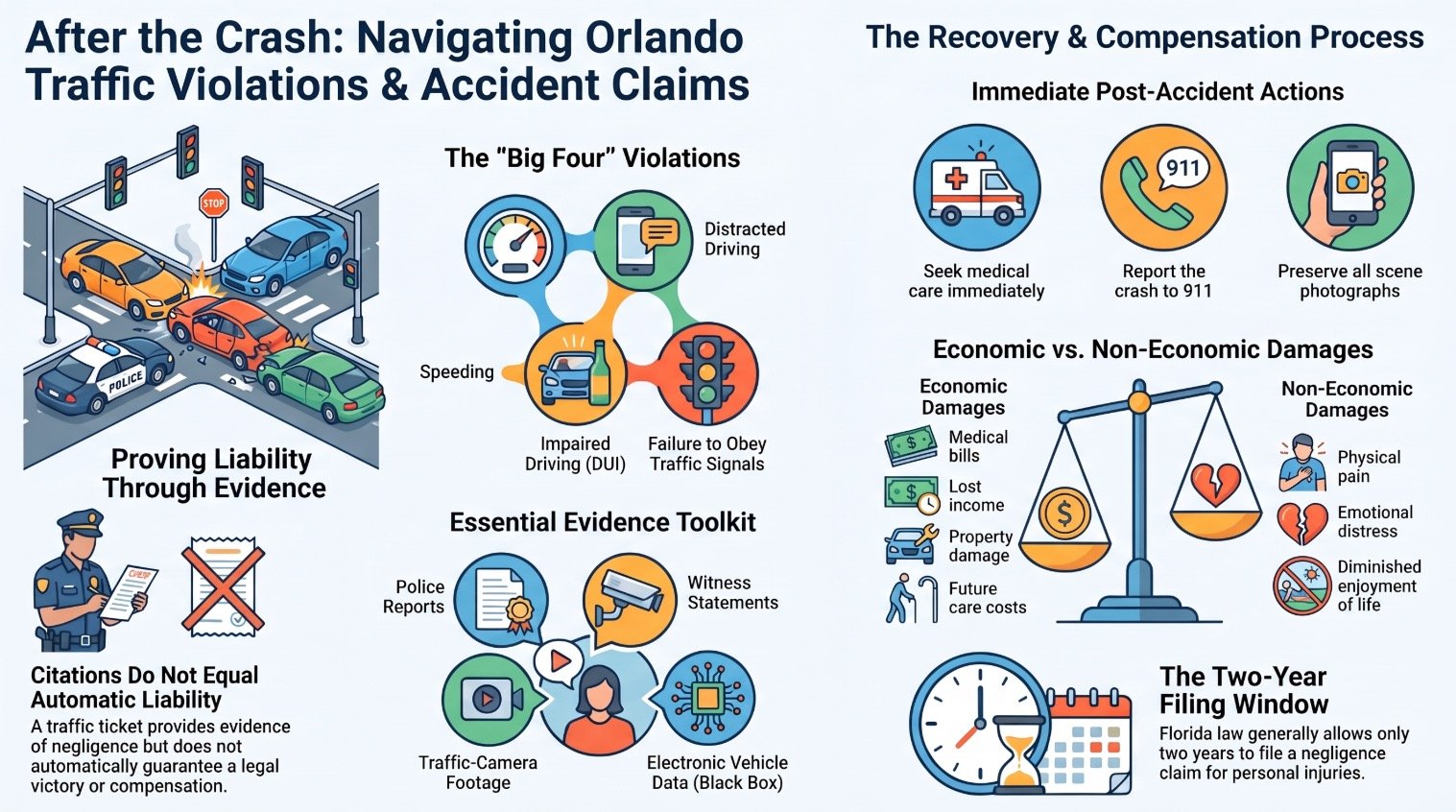
Common causes of Orlando car accident traffic violations include speeding, reckless driving, and other conduct that disregards roadway safety. Distracted driving, impaired driving, and failure to obey traffic signals can also increase collision risks and lead to serious legal consequences. These violations can provide strong evidence when determining liability for resulting injuries and property damage.
Speeding And Reckless Driving
OUR CONSULTATIONSARE FREE
START YOUR FREE CASE REVIEW

Speeding and reckless driving are leading causes of Orlando car accidents and often result in serious traffic violations. Excessive speed reduces reaction time, increases stopping distance, and magnifies crash forces, placing drivers, passengers, pedestrians, and bicyclists at greater risk. Reckless conduct may include aggressive passing, racing, tailgating, ignoring signals, or driving far above posted limits. Road rage triggers can intensify these behaviors, particularly when congestion, frustration, or perceived discourtesy leads to intimidation or sudden actions. Such violations may support citations, license consequences, insurance increases, civil liability, or criminal charges, depending on the circumstances and resulting harm. Drivers and families seeking to serve affected individuals should also recognize traffic fine myths, including assumptions that every citation is minor or automatically establishes fault in a related injury claim.
Distracted Driving Behaviors
Distracted driving is another frequent cause of Orlando car accidents and related traffic violations, diverting a driver’s attention from roadway conditions, traffic controls, and nearby vehicles. Cellphone use remains a major concern, especially when drivers text, send emails, use navigation apps, or take calls while driving. Other distractions include adjusting music, eating, grooming, reaching for objects, and engaging with passengers. Even brief visual, manual, or cognitive distractions can delay braking and impair a driver’s ability to maintain lane position or respond to changing traffic. These behaviors may contribute to rear-end collisions, intersection crashes, and violations involving careless operation or failure to maintain control. A lawyer can assess available evidence, including witness accounts, vehicle data, and citations, while helping injured individuals understand potential claims and available legal protections.
Impaired Driving Offenses


Impaired driving offenses arise when alcohol, prescription medication, illegal drugs, or other substances reduce a driver’s judgment, coordination, reaction time, or ability to operate a vehicle safely. These violations can cause collisions, serious injuries, and substantial disruption for passengers, pedestrians, families, and emergency responders. Law enforcement may investigate suspected impairment through Blood Alcohol Tests, drug screening, observations of driving behavior, and Field Sobriety evaluations. Evidence may include chemical test results, officer statements, toxicology reports, and available witness accounts. Florida penalties can involve criminal charges, license consequences, fines, treatment requirements, and increased insurance costs. A person affected by an impaired driver may benefit from prompt medical attention, careful documentation, and consultation with a qualified Orlando attorney. Legal guidance can help preserve evidence, explain available remedies, and support accountability while protecting the injured person’s interests.
Failure To Obey Signals
Failure to obey traffic signals is a common cause of Orlando car accidents and may involve running a red light, disregarding a stop sign, or proceeding through an intersection before a signal permits movement. Such conduct can place pedestrians, cyclists, and other motorists at immediate risk, particularly where visibility is limited or traffic moves at high speed. Red light compliance requires drivers to stop fully, remain attentive, and proceed only when authorized. Intersection safety rules also require drivers to yield appropriately, use turn signals, and obey posted signs when lights are absent or malfunctioning. Investigators may review camera footage, witness accounts, vehicle damage, and signal timing to determine whether a violation contributed to a collision. Legal guidance can help affected individuals understand evidence, liability, and available remedies while supporting safer roadway practices.
Legal Rights of Orlando Car Accident Traffic Violations & Speeding Injury Victims
When a speeding or other traffic violation causes a collision, injured victims may have the legal right to seek compensation from the responsible driver and any other liable parties. Recoverable damages may include medical expenses, lost income, property damage, pain, and future care needs. Evidence such as crash reports, witness statements, photographs, and medical records can support an insurance claim or civil action.
Victims should understand that:
- Traffic citation myths should not determine legal strategy. A citation may help establish negligence, but its absence does not necessarily prevent recovery.
- The Florida points system primarily affects a driver’s license and does not automatically decide civil liability or damages.
- The Payout timeline may extend because insurance claim delays, disputed fault, incomplete records, or serious injuries require careful evaluation.
Prompt medical treatment and organized documentation can protect a victim’s interests. Legal counsel may communicate with insurers, identify all responsible parties, assess comparative fault, and pursue fair compensation while helping injured individuals and families steer the process.
Why Do Orlando Car Accident Traffic Violations & Speeding Injuries Happen?
Orlando car accident traffic violations and speeding injuries often result from driver behavior, roadway conditions, and environmental factors that reduce the time available to recognize and avoid danger. Excessive speed limits a driver’s ability to stop, increases collision force, and may cause loss of control during sudden maneuvers. Distracted driving, impairment, aggressive lane changes, tailgating, and failure to yield can likewise create preventable hazards for motorists, passengers, pedestrians, and cyclists.
Weather and visibility can further complicate safe travel. Heavy rain, standing water, glare, fog, and darkness may obscure signs, lane markings, or nearby vehicles, particularly when drivers fail to adjust speed. Road design flaws, including inadequate lighting, confusing intersections, poor drainage, limited sight distance, and insufficient signage, can increase the likelihood of violations and crashes. Vehicle defects, inadequate maintenance, and unfamiliarity with local roads may also contribute. Understanding these causes helps communities, transportation officials, and service-oriented legal professionals support safer travel and accountability.
What Should You Do After an Orlando Car Accident Involving Traffic Violations & Speeding Injury?
After an Orlando car accident involving traffic violations or speeding, the injured person should seek immediate medical care, even if symptoms seem minor at first. The crash should also be reported to law enforcement, with medical records, photographs, and other relevant evidence preserved. Consulting a traffic lawyer can help protect the individual’s rights and clarify potential claims or defenses.
Seek Immediate Medical Care
Prompt medical evaluation should follow any Orlando car accident involving an apparent traffic violation or excessive speed, even if the injured person initially feels well. Some conditions, including concussions, internal bleeding, and soft-tissue injuries, may develop gradually or remain hidden during the first hours. A qualified clinician can assess potential harm, recommend appropriate testing, and establish a treatment plan based on the person’s symptoms and medical history. Following instructions concerning rest, medication, physical activity, and follow-up appointments supports recovery and reduces avoidable complications. Pain management options may include prescribed medication, over-the-counter remedies, physical therapy, or other clinically appropriate measures. The injured person should prioritize documenting symptoms, treatment recommendations, medication use, and changes in condition. Prompt care also creates a reliable medical record that can assist later injury evaluation.
Report The Crash
When a traffic violation or excessive speed may have contributed to an Orlando car accident, the involved driver should report the crash to law enforcement as soon as it is safe to do so. Call 911 if anyone appears injured, a roadway is blocked, or immediate hazards exist. Officers can secure the scene, arrange medical assistance, identify witnesses, and document conditions that may later clarify what occurred. Drivers should remain nearby unless emergency personnel direct them elsewhere, avoid arguing, and provide accurate identifying and insurance information. The traffic stop process may involve questions, citations, or other enforcement measures, but participants should remain respectful and follow lawful instructions. Each person should ask about accident report procedures and preserve photographs, witness details, and other relevant records.
Consult A Traffic Lawyer
Consulting an Orlando traffic lawyer can help an injured driver understand the legal consequences of a citation, speeding allegation, or other traffic violation connected to the crash. Legal counsel can review the accident report, witness statements, medical records, and available video before advising the driver about potential defenses. A lawyer can explain how to defend traffic tickets without making statements that could harm an injury claim or criminal defense. Counsel also helps the driver understand Florida court procedures, including deadlines, hearings, evidence requirements, and possible penalties. Prompt representation may protect driving privileges, challenge inaccurate allegations, and coordinate traffic and insurance matters. By seeking informed guidance, an injured person can make responsible decisions while preserving evidence and pursuing appropriate compensation. A traffic lawyer can also communicate with prosecutors and insurers on the client’s behalf.
Critical Evidence in an Orlando Car Accident Traffic Violations & Speeding Injury Case
Important evidence may establish whether a traffic violation or speeding caused the Orlando collision and resulting injuries.
Essential sources include:
- Police accident reports and traffic camera footage.
- Witness statements describing vehicle speed, movement, and road conditions.
- Medical and driving records documenting injuries, treatment, and prior driving history.
Police Accident Report
A police accident report can serve as important evidence in an Orlando car accident involving alleged traffic violations or speeding. It may document the responding officer’s observations, roadway conditions, vehicle positions, citations, witness accounts, and statements made at the scene. These details can help clarify how the collision occurred and whether a driver’s conduct contributed to another person’s injuries.
However, a report is not automatically conclusive. Police report inaccuracies may result from limited observations, incomplete information, or misunderstandings during an emergency response. Contradictions in an officer’s statement can also affect the report’s reliability and require careful review against medical records, photographs, and other available evidence. A qualified legal professional can identify omissions, evaluate factual conflicts, and explain the report’s significance while supporting an injured person’s effort to pursue accountability and fair compensation.
Traffic Camera Footage
Traffic camera footage can provide objective evidence in an Orlando car accident involving alleged traffic violations or speeding. It may show vehicle positions, lane movements, signal changes, and roadway conditions immediately before impact. Such footage can help clarify whether a driver exceeded the posted Speed Limit, disregarded a traffic signal, or made an unsafe maneuver. Because many systems automatically overwrite recordings, prompt Evidence Preservation efforts may be necessary. A legal representative can identify potentially relevant cameras operated by municipalities, businesses, or transportation agencies and send timely preservation requests. Investigators may also examine video quality, timestamps, camera angles, and continuity to assess reliability. Properly obtained footage can support a fair evaluation of fault, injuries, and available compensation while helping protect the interests of individuals and families affected by preventable collisions.
Witness Statements
When an Orlando car accident involves alleged traffic violations or speeding, witness statements may provide important evidence about what occurred before, during, and after the collision. Independent observers can describe vehicle positions, estimated speed, traffic signals, lane changes, distractions, and the sequence of impacts. Their accounts may clarify disputed facts when drivers provide conflicting explanations. Investigators may obtain statements at the scene, through recorded interviews, or from written affidavits. Preserving contact information and documenting each witness’s vantage point can help assess reliability. Statements may also support Accident reconstruction by identifying timing, roadway conditions, and movement patterns. Nearby surveillance footage or police bodycam recordings may corroborate, contradict, or supplement witness accounts. A careful legal review can organize this evidence, identify inconsistencies, and present credible information to decision-makers while respecting each witness’s role in seeking accountability.
Medical And Driving Records
Medical and driving records can provide critical evidence in an Orlando car accident involving alleged traffic violations or speeding. Medical records document injuries, treatment dates, diagnoses, and recovery needs, helping show whether claimed harm matches the collision. Prompt, consistent treatment may also clarify causation and rebut arguments that unrelated conditions caused the injuries.
Driving records can reveal license status, prior citations, suspensions, or documented safety violations. When evaluated with accident scene documentation, these records may help establish conduct, notice, and responsibility. Investigators and attorneys can also examine whether a driver complied with restrictions or had a history relevant to the alleged offense.
Accurate records support fair communication with insurers and may help confirm proper insurance coverage. Keeping complete copies helps injured individuals, families, and service professionals pursue accountability while protecting the claim’s integrity.
Long-Term Effects of Orlando Car Accident Traffic Violations & Speeding Injuries
Orlando car accident injuries caused by traffic violations or speeding may produce chronic pain, reduced mobility, and lasting disability. Survivors may also experience emotional and psychological effects, including anxiety, depression, or trauma-related symptoms. These conditions can create ongoing financial challenges through medical expenses, rehabilitation costs, lost income, and diminished earning capacity.
Chronic Pain And Disability
Although some injuries from traffic violations or speeding crashes appear manageable at first, they may develop into chronic pain, reduced mobility, or permanent disability. Persistent back, neck, joint, or nerve symptoms can interfere with work, caregiving, transportation, and ordinary household responsibilities. A qualified medical team may recommend physical therapy, medication, injections, assistive devices, or other Pain management options based on documented clinical findings. Ongoing evaluations can identify whether limitations are temporary, progressive, or permanent. Individuals serving families, clients, or communities may need accommodations, reduced schedules, or vocational assistance while treatment continues. Disability documentation strategies should include complete medical records, functional assessments, treatment histories, physician statements, and records describing missed work or altered duties. Careful documentation helps establish the injury’s duration, severity, and effect on daily life for insurance and legal review.
Emotional And Psychological Effects
Emotional and psychological effects may emerge immediately after a traffic violation or speeding crash or develop as physical injuries persist. Survivors may experience persistent fear, irritability, sadness, or difficulty concentrating, particularly when reminders of the collision disrupt daily routines. Nightmares and flashbacks can disrupt sleep and heighten reactions to traffic, intersections, or sudden sounds. In some cases, anxiety and PTSD interfere with work, relationships, mobility, and participation in ordinary activities. These conditions may remain hidden when attention focuses on visible injuries, yet they can substantially affect recovery and quality of life. A mental health evaluation can identify symptoms, document their progression, and guide appropriate counseling or medical care. Supportive relatives, advocates, and providers can help survivors obtain treatment while respecting their autonomy and individual recovery needs.
Ongoing Financial Challenges
The financial consequences of injuries from Orlando car accident traffic violations or speeding can continue long after emergency treatment ends. Ongoing costs may include rehabilitation, prescription medication, follow-up appointments, transportation, and necessary home modifications. When injuries limit mobility or cognitive function, an individual may be unable to return to the same occupation, reducing income while household expenses remain constant. Caregivers may also miss work to provide assistance, creating additional financial pressure. Careful documentation of medical expenses, lost wages, and future treatment needs can help clarify the full economic impact. Budgeting support from qualified counselors or community organizations may help households prioritize important obligations. Legal guidance may also identify potential sources of medical bill relief and compensation. Early planning can protect access to care and promote greater long-term stability.
Don’t Wait. Call Our Florida Personal Injury Lawyers Now!
Proving Liability in Orlando Car Accident Traffic Violations & Speeding Injury Cases
To prove liability in an Orlando car accident involving traffic violations or speeding, an injured party must establish that the driver breached a legal duty and that the breach caused the collision and resulting damages. Evidence may include crash reports, citations, surveillance footage, vehicle data, photographs, witness statements, and testimony from accident reconstruction professionals. Florida traffic laws can help demonstrate negligence when a driver exceeds the speed limit, disregards a signal, follows too closely, or violates another safety requirement. Medical records and employment documentation may connect the collision to physical injuries, treatment costs, and lost income. The opposing driver may raise self-defense claims or argue that another person caused or contributed to the crash. Comparative fault principles can affect recovery when multiple parties share responsibility. Careful evaluation of the evidence supports informed settlement negotiations and, when necessary, presenting the liability case in court. Serving injured people requires promptly preserving evidence and accurately explaining legal options.
Dealing With Insurance Companies After an Orlando Car Accident Traffic Violations & Speeding Injury
After an Orlando car accident involving alleged traffic violations or speeding, injured individuals should approach insurance companies cautiously and with accurate documentation. Medical records, photographs, witness information, vehicle damage evidence, and correspondence can help establish the seriousness of losses. Statements to adjusters should remain factual and limited, since casual comments may be interpreted as admissions or minimized symptoms.
Insurers may request recorded interviews, authorizations, or detailed explanations before evaluating responsibility and compensation. An injured person should understand each request before responding and should avoid signing a release prematurely. Faulty police reports may contain inaccurate descriptions of speed, road conditions, or witness statements, making prompt review and correction important. Supporting evidence can clarify discrepancies without escalating communications.
Legal counsel can manage insurer contact, protect the injured person’s interests, and apply effective negotiation tactics when an offer does not reflect documented damages. This assistance may also help families focus on medical care while preserving relevant records and communications throughout the insurance discussion.
What to Expect During an Orlando Car Accident Traffic Violations & Speeding Injury Claim Process
An Orlando car accident injury claim typically begins with an initial evaluation of the circumstances, injuries, and potential traffic violations. Lawyers then gather evidence and documentation to support negotiations with the insurance company, including medical records, crash reports, and other relevant proof. The process may conclude with a settlement or proceed to litigation if the parties cannot reach a fair agreement.
Initial Claim Evaluation
When an Orlando car accident claim involves alleged traffic violations or speeding, the initial evaluation focuses on determining liability, injury severity, available insurance coverage, and compliance with Florida’s legal requirements. A legal professional assesses how reported conduct may support fault determination, while considering whether comparative negligence could affect recovery. The review also considers medical circumstances, projected care needs, employment effects, and the client’s immediate priorities. Early evidence preservation is important, although detailed evidence collection belongs to a later stage. Coverage limits, policy exclusions, and possible uninsured or underinsured motorist benefits are examined before communications with carriers proceed. An insurer dispute may require a carefully developed liability strategy, particularly when citations, conflicting accounts, or disputed causation complicate negotiations. The evaluation concludes with realistic options, anticipated challenges, and recommendations for protecting the injured person’s interests.
Evidence And Documentation
Building on the initial claim evaluation, the evidence and documentation stage organizes the information needed to establish how the Orlando collision occurred, which traffic violations or speeding allegations may apply, and how the injuries affected the claimant. The legal team may collect crash reports, citations, photographs, vehicle damage records, medical records, employment documentation, and witness statements. Investigators assess eyewitness credibility by examining each person’s vantage point, consistency, and relationship to the parties. Investigators may also preserve surveillance footage, event data recorder information, and cellphone metadata when legally obtainable and relevant to driver conduct. Medical documentation should connect diagnosed conditions to the collision and describe treatment, limitations, prognosis, and related expenses. Careful organization helps protect accurate accounts, support community members seeking assistance, and identify missing information before the claim proceeds.
Insurance Company Negotiations
Insurance company negotiations typically begin after the claimant’s legal team has reviewed the crash evidence, traffic citations, medical records, and documented losses. Counsel then presents a demand supported by evidence-collection strategies that connect the insured driver’s conduct to the injuries and financial consequences. Adjusters may request additional records, question treatment decisions, or evaluate whether speeding or another violation contributed to the collision. The legal team protects the claimant by responding accurately, preserving deadlines, and preventing informal statements from being misinterpreted. Settlement negotiation tactics may include organizing damages clearly, addressing disputed liability, and explaining future medical needs when supported by professional opinions. Throughout discussions, the claimant generally receives updates regarding offers, requests, and potential resolutions. Careful communication helps preserve the claim’s value while respecting the claimant’s recovery and personal circumstances.
Settlement Or Litigation
Settlement or litigation generally depends on the strength of the evidence, the extent of the injuries, and whether the parties can reach a fair resolution. After reviewing medical records, crash reports, witness statements, and insurance evaluations, counsel may develop a negotiation strategy to secure compensation without unnecessary delay. Evidence preservation remains critical, including photographs, vehicle data, treatment documentation, and communications with insurers. A settlement can provide a predictable outcome, but injured individuals should understand its terms before releasing any claims. If negotiations fail or an insurer disputes liability, litigation may become necessary. During a lawsuit, the parties exchange information, consult qualified experts, and present arguments regarding fault, damages, and applicable traffic violations. Throughout either path, counsel helps protect the claimant’s interests and pursue a fair result for those affected.
Compensation for Orlando Car Accident Traffic Violations & Speeding Injury Damages
When a driver’s traffic violation or excessive speed causes an Orlando collision, the injured person may seek compensation for the resulting losses. Recovery generally depends on proving the driver’s negligence, connecting the violation to the crash, and showing that the injury was a foreseeable result. Helpful evidence may include the police report, citations, photographs, witness statements, vehicle data, medical records, and Insurance claim documentation.
An attorney may investigate roadway conditions, obtain available surveillance footage, and consult qualified professionals when liability or causation remains contested. Fault dispute strategies can address allegations that another driver, the injured person, or an outside condition contributed to the collision. Florida’s comparative negligence rules may affect the amount ultimately recovered, making accurate evidence and timely legal action important.
A representative can communicate with insurers, protect the injured person’s interests during negotiations, and assess whether a proposed resolution reflects the available evidence. Legal guidance also helps preserve deadlines and identify responsible parties.
Economic vs Non-Economic Damages in Orlando Car Accident Traffic Violations & Speeding Cases
Economic damages generally compensate documented financial losses, including medical expenses, lost income, and property damage. Non-economic damages address less tangible harm, such as pain, emotional distress, and diminished quality of life. Comparing these valuations requires evaluating the evidence, injury severity, and lasting effects of the traffic violation or speeding-related collision.
Economic Damages Explained
In Orlando car accident cases involving traffic violations or speeding, economic damages represent the measurable financial losses caused by the collision. These damages commonly include emergency treatment, hospital care, prescriptions, rehabilitation, medical equipment, and other accident-related expenses. Medical billing records, receipts, insurance statements, and provider documentation can help establish the amount and necessity of care. Economic damages may also cover income lost while an injured person recovers. When injuries limit future employment, evidence concerning future wage losses may be relevant, including payroll history, work capacity, career progression, and expert analysis. Property damage, vehicle repairs, rental transportation, and replacement costs may also qualify with reliable documentation. A careful evaluation connects each claimed expense to the crash, the alleged traffic violation, and the resulting physical limitations while helping a legal representative pursue fair compensation for those served.
Non-Economic Damages Considered
Non-economic damages address the personal effects of a collision that cannot be measured solely through bills, receipts, or wage records. In Orlando traffic violation and speeding cases, these damages may involve physical pain, emotional distress, diminished enjoyment of life, inconvenience, and disruption of family relationships. A claimant’s testimony, treatment records, and descriptions from relatives or caregivers can help establish how injuries affected daily living. Evidence should connect those effects to the collision and distinguish ongoing limitations from unrelated conditions. Comparative fault defenses may reduce recovery if the opposing party proves that the injured person contributed to the incident. Independent witness reliability can also influence how fact-finders assess conflicting accounts about the crash and resulting harm. Careful presentation helps decision-makers recognize the human consequences while honoring accurate, responsible advocacy for affected individuals.
Comparing Damage Valuations
A complete valuation compares documented financial losses with the less measurable effects of a collision caused by an alleged traffic violation or speeding. Economic damages may include emergency treatment, rehabilitation, medication, vehicle repairs, lost wages, reduced earning capacity, and necessary household assistance. Records, bills, employment documentation, and expert analysis help establish these amounts.
Non-economic damages address pain, emotional distress, inconvenience, disfigurement, disability, and diminished enjoyment of life. Their value depends on injury severity, recovery duration, lasting limitations, and credible testimony rather than fixed receipts. Insurance coverage impacts available recovery, particularly when liability is disputed or policy limits constrain payment. A careful medical lien strategy can protect claim proceeds while resolving provider balances. Comparing both categories ensures that service-oriented advocates present a complete, fair claim and account for immediate needs, future consequences, and the individual’s overall quality of life.
Don’t Wait. Call Our Florida Personal Injury Lawyers Now!
When an Orlando Car Accident Traffic Violations & Speeding Injury Case Goes to Trial vs Settlement
When a traffic violation or speeding allegation contributes to a car accident injury claim, the parties may resolve the dispute through settlement or proceed to trial. A settlement can provide a defined recovery without the uncertainty, expense, and delay of courtroom proceedings. It may also allow injured individuals and their families to focus on medical care, rehabilitation, and practical support.
Trial may become necessary when liability, injury severity, or damages remain disputed, or when negotiations fail to produce fair terms. Trial preparation includes organizing evidence, reviewing medical records, identifying witnesses, and preparing testimony concerning the collision and its consequences. A settlement strategy evaluates the available proof, anticipated expenses, long-term needs, and risks associated with accepting or rejecting an offer.
Neither option guarantees a particular result. The appropriate path depends on the strength of the evidence, the parties’ objectives, and the likely impact on the injured person’s future. Careful guidance can help preserve dignity, support informed decisions, and help reach a resolution that serves legitimate needs.
Florida Laws That May Affect Your Orlando Car Accident Traffic Violations & Speeding Case
Florida law may affect an Orlando car accident case by determining how traffic violations, speeding, negligence, and comparative fault are evaluated. A violation may provide evidence of careless conduct, but liability generally depends on how that conduct contributed to the collision and resulting harm.
Florida’s modified comparative negligence rules can reduce an injured person’s recovery when they share responsibility.
- Speeding, improper lane changes, distracted driving, and failure to yield may support a negligence claim when supported by crash evidence, citations, witnesses, or roadway data.
- Seatbelt laws may influence injury-related arguments, although failure to use a restraint does not automatically establish responsibility for causing the crash.
- Orlando road safety regulations, including traffic-control requirements and posted speed limits, may help clarify whether a driver departed from reasonable precautions.
Medical records, photographs, vehicle damage, and official reports can assist a careful evaluation. Legal professionals may also help injured individuals understand available remedies while promoting accountability, accurate fact-finding, and service to affected families.
The Statute of Limitations for Orlando Car Accident Traffic Violations & Speeding Injury Cases
Because filing deadlines can determine whether an injured person may pursue compensation, the statute of limitations is a pivotal issue in Orlando car accident cases involving alleged traffic violations or speeding. Florida law generally allows two years to bring a negligence claim for personal injuries, although exceptions and differing deadlines may apply. Wrongful-death claims, property-damage claims, and cases involving governmental entities can follow separate rules. The period may begin on the accident date, but specific facts can affect when time starts or whether it is paused. Missing the applicable deadline can result in dismissal, regardless of the evidence’s strength or the injuries’ severity. Prompt attention also helps preserve records, medical documentation, witness accounts, and traffic-investigation materials. A timely assessment can shape a negotiation strategy and account for court timelines, including filing, service, discovery, and trial scheduling. Individuals should avoid relying on informal assurances and obtain case-specific guidance before the deadline approaches.
How an Orlando Car Accident Traffic Violations & Speeding Lawyer Can Help You
After assessing deadlines and filing requirements, an Orlando car accident traffic violations and speeding lawyer can help identify the evidence needed to establish liability and pursue compensation. The lawyer may evaluate police reports, citations, witness accounts, vehicle damage, medical records, and roadway conditions to clarify how the collision occurred.
An Orlando traffic violations lawyer evaluates crash evidence to establish liability, connect misconduct to injuries, and pursue appropriate compensation.
Key services may include:
- Coordinating crash evidence preservation, including photographs, surveillance footage, electronic vehicle data, and available traffic-camera recordings.
- Reviewing driver conduct, such as speeding, distracted driving, impairment, or violations of traffic-control devices, and connecting those facts to the resulting injuries.
- Addressing Auto insurance defenses by examining policy language, coverage disputes, comparative fault arguments, and efforts to minimize the claim’s value.
The lawyer can also communicate with insurers, organize supporting documentation, consult qualified experts, and present a structured demand for compensation. These efforts help protect the injured person’s interests while promoting a fair, evidence-based resolution. Counsel may further explain available remedies and coordinate with medical providers when appropriate, helping clients serve their families and communities responsibly.
When to Contact an Orlando Car Accident Traffic Violations & Speeding Lawyer
Contacting an Orlando car accident traffic violations and speeding lawyer promptly is advisable when a collision involves significant injuries, disputed fault, a citation, or potential insurance coverage issues. Early consultation can help preserve evidence, identify reporting deadlines, and clarify which records may support a claim or defense. A lawyer may also explain Negligence Basics, including how careless driving, speeding, unsafe lane changes, or failure to yield can affect responsibility. Contact is particularly important when an insurer requests a recorded statement, offers a quick settlement, or questions medical treatment. These situations may create insurance pitfalls, such as incomplete coverage, delayed notice, disputed exclusions, or arguments that an injured person contributed to the crash. People should seek guidance before signing releases, admitting fault, or letting evidence disappear. Prompt communication also helps coordinate support for injured occupants, witnesses, and families managing medical, transportation, and financial concerns after a collision. This approach promotes informed decisions while protecting applicable legal rights.
Why You Need an Experienced Orlando Car Accident Traffic Violations & Speeding Lawyer
An experienced Orlando car accident traffic violations and speeding lawyer provides informed guidance when liability, citations, injuries, or insurance disputes complicate a collision claim. Such counsel can evaluate police reports, roadway conditions, witness accounts, vehicle damage, and applicable traffic laws to clarify how negligence may be established. Early evidence preservation helps protect photographs, surveillance footage, electronic records, medical documentation, and other information that could otherwise disappear or become difficult to obtain.
Experience also supports effective communication with insurers and informed insurance negotiation. A lawyer can assess settlement proposals, identify incomplete investigations, challenge unsupported fault allegations, and seek compensation consistent with documented losses. When a speeding citation or other traffic violation affects the case, counsel can explain its potential significance without assuming that a ticket alone determines civil liability.
Professional representation also reduces administrative burdens, allowing an injured person to focus on treatment and recovery. By addressing deadlines, legal filings, and opposing arguments, an experienced advocate helps protect the client’s interests while pursuing a fair, responsible resolution.
How to Choose the Right Orlando Car Accident Traffic Violations & Speeding Lawyer for Your Case
Selecting the right Orlando car accident traffic violations and speeding lawyer requires careful evaluation of the attorney’s experience, communication practices, and approach to case preparation. A suitable lawyer should know Florida traffic laws, insurance procedures, and personal injury claims involving disputed fault.
Potential clients should ask how the attorney evaluates police reports, citations, witness accounts, medical records, and roadway conditions. The lawyer should also explain Evidence Preservation steps, including securing photographs, video recordings, vehicle data, and relevant communications before materials disappear. Because Florida’s Comparative Negligence rules can affect financial recovery, counsel should identify how each driver’s conduct may influence liability and damages.
Clear communication is equally important. The attorney should provide realistic explanations, describe expected timelines, and promptly address questions without making unsupported promises. Carefully review the fee agreement, litigation experience, available resources, and willingness to serve the client’s interests to choose representation suited to the case’s specific legal and personal needs.
About The Law Offices of Anidjar & Levine
The Law Offices of Anidjar & Levine represents individuals involved in Orlando car accidents, traffic violations, and speeding-related disputes. The firm serves clients seeking informed guidance after collisions, citations, license concerns, or allegations of unsafe driving. Its attorneys evaluate the facts of each case and explain available legal options in plain language.
Representation may include a careful review of police reports, examination of photographs and video, assessment of witness statements, and communication with insurers or opposing parties. These steps can help identify inconsistencies, clarify responsibility, and protect important evidence. When a citation threatens driving privileges, the firm can also address License and penalty issues, including potential points, fines, suspension, or other consequences.
The Law Offices of Anidjar & Levine approaches each case by considering the client’s objectives, applicable rules, and available evidence. Its work is intended to help individuals steer through proceedings responsibly while pursuing fair treatment and appropriate resolutions in Orlando-area traffic and accident matters.
Frequently Asked Questions
Can I Receive a Speeding Ticket After an Accident if Officers Did Not Witness It?
Yes, an officer may issue a speeding citation after an accident without personally witnessing the alleged violation, depending on available evidence and local law. Through police report procedures, officers may document statements, vehicle damage, measurements, surveillance footage, or other circumstances supporting the allegation. Accusation Proof Standards determine whether the evidence sufficiently establishes speeding. The driver may challenge the citation, question evidence, and seek qualified legal guidance regarding available defenses and deadlines.
Will a Traffic Violation Affect My Florida Driver’s License or Insurance Premiums?
A traffic violation may affect a Florida driver’s license through points, suspension risk, or required hearings, depending on the offense and driving history. Traffic violation impacts are generally more serious when violations accumulate or involve collisions, reckless conduct, or failure to appear. Insurance premiums may also change because insurers may review convictions and points when renewing coverage. A driver should promptly verify the citation, deadlines, and available defenses with qualified assistance.
Can Passengers or Pedestrians File Claims After a Speeding-Related Orlando Crash?
Passengers and pedestrians may file claims after a speeding-related Orlando crash if they sustained injuries or losses. Claim Standing generally depends on proving negligence, causation, and damages, rather than determining who caused the collision. Pedestrian Rights may include compensation for medical treatment, lost income, and pain. Passenger Coverage can involve the driver’s insurance or other applicable policies. Nonparty Injuries remain compensable even when the injured individual was not driving.
What Happens if the At-Fault Driver Was Uninsured or Had Insufficient Coverage?
If the at-fault driver was uninsured or carried insufficient coverage, an injured person may pursue Florida no-fault options through personal injury protection benefits, which generally address medical expenses and lost income. Additional recovery may depend on uninsured accident coverage or an underinsured claim process under the injured person’s policy. Counsel should review UM UIM limits, exclusions, notice requirements, and available damages, while coordinating claims to protect every eligible passenger or pedestrian.
Can Dashcam Footage or Smartphone Data Challenge a Speeding Allegation?
Dashcam footage can challenge a speeding allegation when it clearly shows vehicle speed, traffic conditions, timing, or the officer’s observations. Smartphone metadata may corroborate location, movement, and timestamps, although it rarely proves speed independently. An attorney can assess whether recordings are authentic, complete, and properly preserved, then compare them with radar or lidar records and witness accounts. Such evidence may expose measurement errors, misidentification, or reasonable doubt, supporting a fair outcome.
—————————
Orlando traffic violations and speeding can contribute to serious collisions, severe injuries, and complex insurance disputes. Victims may face medical expenses, lost income, and long-term consequences as they determine liability and available compensation. An experienced Orlando car accident lawyer can evaluate the evidence, identify responsible parties, protect legal rights, and pursue appropriate recovery. The Law Offices of Anidjar and Levine provide informed guidance throughout the process, helping injured individuals make careful decisions after a traffic-related accident. For additional assistance, consult an Orlando Personal Injury Lawyer.