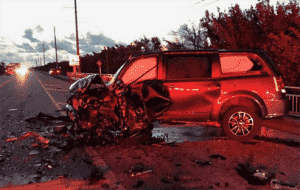
The Law Offices of Anidjar and Levine helps protect a commercial vehicle accident claim from the start by preserving crash evidence, reviewing driver logs, maintenance records, and electronic data, and identifying all potentially liable parties.
Counsel also manages insurer communications, documents medical treatment, and calculates losses, including medical expenses, lost income, and future care needs.
Because commercial cases often involve multiple policies and intricate liability issues, the sections below explain what victims should know and do next. For related guidance, speak with a Miami Car Accident Lawyer.
Main Takeaways
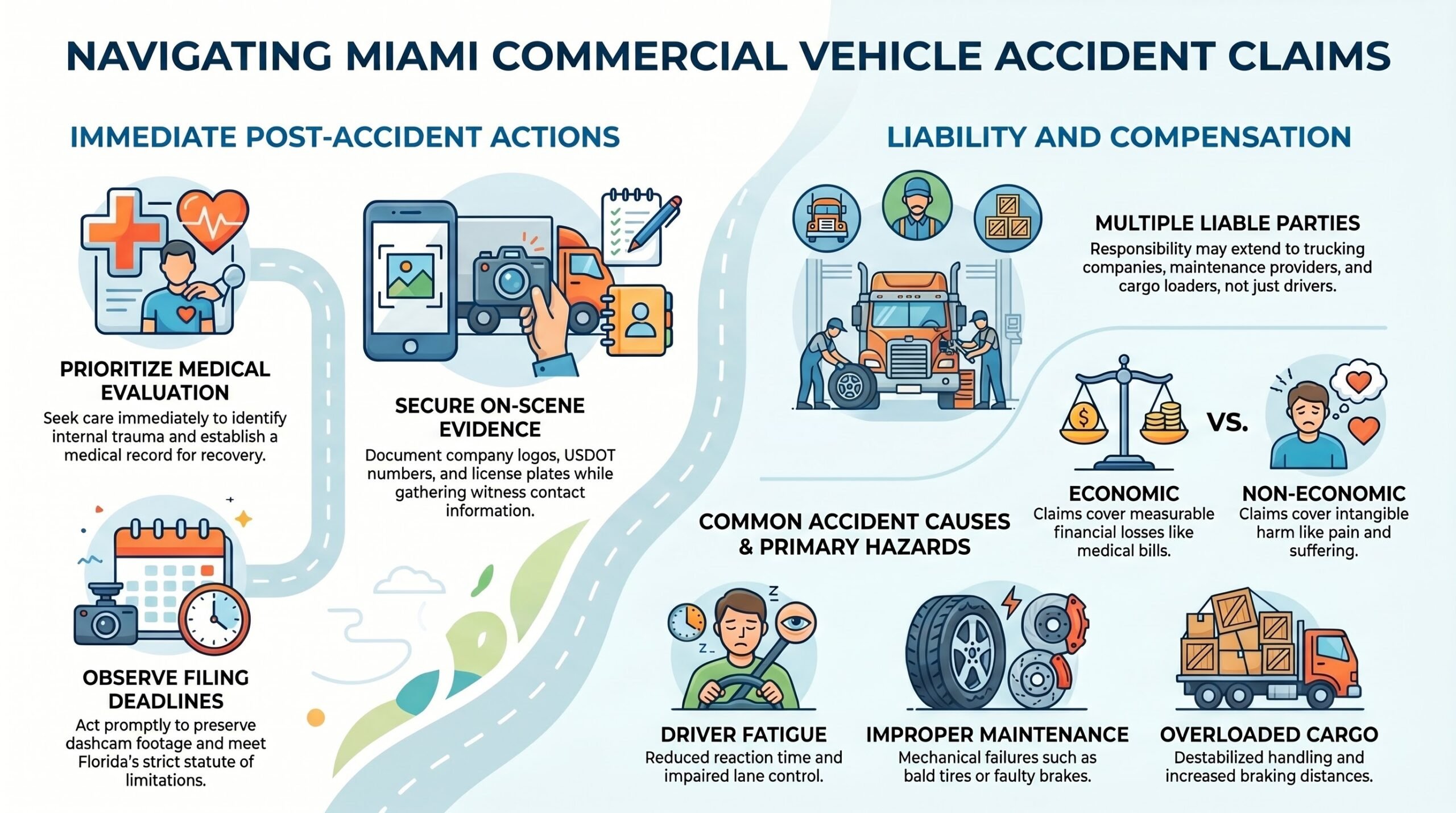
- Seek immediate medical care and document injuries, vehicle damage, road conditions, and commercial identifiers like company logos, license plates, and USDOT numbers.
- Preserve evidence quickly by securing crash reports, witness contacts, dashcam footage, surveillance video, driver logs, and maintenance records.
- A Miami commercial vehicle accident lawyer investigates fatigue, distraction, cargo issues, maintenance failures, and violations of safety regulations to establish liability.
- Legal counsel identifies all responsible parties, including drivers, trucking companies, vehicle owners, maintenance providers, and insurers with layered coverage.
- Contact a lawyer promptly for a free consultation to protect deadlines, avoid harmful insurer communications, and value medical bills, lost income, and damages.


How We Can Help With Your Miami Commercial Vehicle Accident Injury Claim
After a commercial vehicle accident in Miami, injured parties often face immediate medical concerns, lost income, and resistance from insurance carriers or corporate defendants. Legal counsel can provide structured support by protecting evidence, coordinating records, and managing communications so clients can focus on recovery and family responsibilities.
A Miami commercial vehicle accident lawyer helps by evaluating available coverage, identifying responsible parties, and preparing a clear strategy for Insurance negotiation. Counsel also explains the Case timeline, helping clients understand what to expect at each stage and what actions may strengthen the claim. This guidance supports informed decisions and reduces preventable mistakes. The firm may gather employment documentation, medical updates, witness statements, and crash-related materials to present a well-supported demand.
When insurers delay, undervalue, or deny valid losses, counsel can respond with organized advocacy designed to protect the client’s interests. Throughout the process, the representation remains attentive, practical, and committed to securing fair financial recovery promptly.
OUR CONSULTATIONSARE FREE
START YOUR FREE CASE REVIEW

Understanding Miami Commercial Vehicle Accident Injury Cases
Building on the role counsel plays in protecting a claim, it is equally important to understand how Miami commercial vehicle accident injury cases are evaluated from the outset. These matters often begin with a careful review of the collision scene, the vehicles involved, witness accounts, and available electronic data. Early analysis also considers Miami traffic patterns, roadway design, and whether the vehicle’s operation aligned with freight regulations and other safety requirements.
Liability and damages are then assessed through records that show employment relationships, vehicle ownership, maintenance history, driver qualifications, and the extent of physical, financial, and personal harm. Because commercial claims may involve multiple parties and layered insurance coverage, thorough organization is indispensable to protect those seeking accountability and support for recovery. A disciplined case evaluation helps families, workers, and community members understand their options, preserve pivotal evidence, and pursue a result that fully reflects both legal responsibility and the human impact of the incident.
Common Causes of Miami Commercial Vehicle Accidents
Several recurring factors contribute to commercial vehicle accidents in Miami, often creating serious risks for motorists and pedestrians alike. Driver fatigue, distracted commercial driving, and improper vehicle maintenance are frequently associated with preventable collisions involving trucks, vans, and other business-operated vehicles. Overloaded cargo also presents a significant hazard, as excess weight or unsecured loads can reduce vehicle control and increase the likelihood of severe accidents.
Driver Fatigue Risks
Recognizing the danger, transportation safety authorities consistently identify driver fatigue as a major cause of commercial vehicle accidents in Miami. Fatigue reduces reaction time, impairs judgment, and weakens lane control, especially during overnight routes, long hauls, and irregular shifts. Service-minded carriers consequently promote consistent sleep schedules, adequate rest breaks, and realistic delivery demands that protect both drivers and the public.
Commercial vehicle operators may overlook early warning signs, including heavy eyelids, drifting, delayed braking, and reduced microsleep awareness. Even a brief lapse can place nearby motorists, pedestrians, and workers at serious risk. Investigations often examine hours-of-service records, dispatch pressure, and employer safety practices when fatigue-related crashes occur. Careful prevention serves the wider community by supporting safer roads, responsible operations, and more humane working conditions.
Distracted Commercial Driving
Diverted attention remains one of the most persistent hazards in Miami commercial vehicle accidents, because even a momentary lapse can have serious consequences when large trucks, vans, and buses operate in dense traffic. Distraction may arise from dispatch communications, route adjustments, paperwork, eating, passenger interaction, or poorly managed in-cab infotainment systems.
Companies committed to public safety often reduce risk through training, clear smartphone policies, and supervision that reinforces attentive driving habits. Drivers are expected to scan traffic, monitor mirrors, anticipate pedestrians, and respond to changing road conditions without divided focus. When attention shifts away from the roadway, stopping distances increase, lane control weakens, and the potential for harm to families, workers, and community members grows substantially. Careful prevention efforts consequently serve both commercial operations and the broader public.
Improper Vehicle Maintenance
Poor fleet maintenance is a frequent factor in Miami commercial vehicle accidents, because heavy trucks, delivery vans, and buses depend on reliable brakes, tires, lights, guidance components, and cargo securement systems to operate safely. When companies delay repairs or overlook routine service, preventable mechanical failures can place drivers, passengers, pedestrians, and nearby motorists at risk. Worn brake pads, bald tires, faulty steering parts, and broken signals reduce stopping ability and vehicle control, especially in dense traffic or severe weather. Careful maintenance logs and consistent inspection schedules help reveal recurring issues before they cause harm. When businesses commit to timely upkeep, they support safer roads and protect the people who rely on commercial transportation every day. Responsible maintenance reflects a meaningful duty to the public and community safety.
Overloaded Cargo Hazards
Even a modest cargo overload can materially increase the danger posed by a commercial vehicle on Miami roads, because excess weight changes braking distance, handling response, tire pressure, and overall stability. When loading exceeds legal or safe limits, the risk extends beyond the driver to passengers, pedestrians, and nearby motorists who depend on responsible transportation practices.
Overloaded trucks may experience cargo shifting during turns, sudden stops, or on uneven pavement, which can destabilize the trailer and contribute to rollovers or jackknifes. Axle overloading places concentrated stress on tires, brakes, suspension components, and road surfaces, increasing the likelihood of mechanical failure and loss of control. Careful loading procedures, accurate weight distribution, and adherence to safety regulations help protect the public and support a safer commercial transportation environment for everyone.


Legal Rights of Miami Commercial Vehicle Accident Injury Victims
Accountability becomes central when a commercial vehicle accident causes serious injury, because Florida law grants victims specific rights to pursue compensation for medical expenses, lost income, property damage, and pain and suffering. These rights protect both individuals and families whose stability depends on fair financial recovery and responsible conduct from commercial carriers, insurers, and employers. When an injured person was working, Workers’ compensation may provide benefits, yet additional claims may still exist against negligent third parties.
Florida’s Comparative negligence standard can also affect recovery, since compensation may be reduced by a claimant’s share of fault rather than barred entirely.
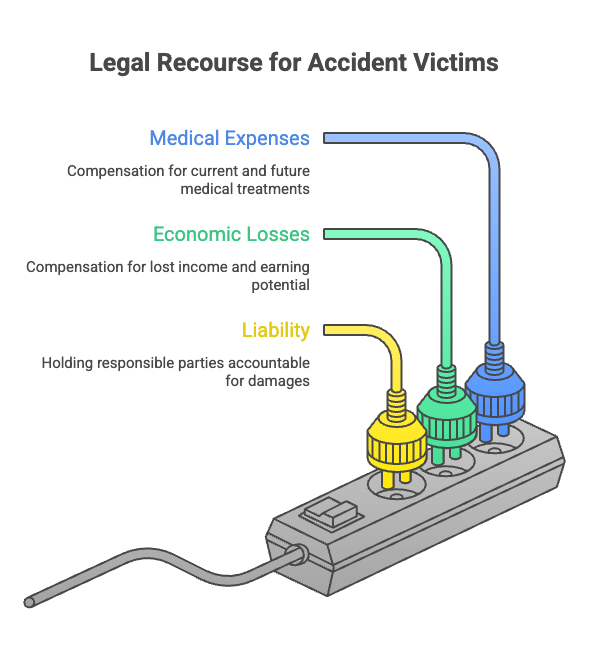
- Victims may seek damages tied to present and future treatment needs.
- They may seek compensation for income losses, diminished earning capacity, and related economic harm.
- They may hold liable drivers, trucking companies, maintenance providers, or other responsible parties.
A clear understanding of these protections supports informed decisions and promotes accountability, safety, and service to the broader community.
Steps to Take After a Miami Commercial Vehicle Accident Injury
After a Miami commercial vehicle accident injury, prompt medical attention is often the first priority, both to safeguard health and to create a clear record of the harm sustained. Important early actions also include gathering available crash evidence, such as photographs, witness information, and official reports, before vital details are lost. Legal guidance from a lawyer may then help guarantee that claims are properly evaluated, deadlines are met, and communication with insurers is handled appropriately.
Seek Immediate Medical Care
In the moments following a Miami commercial vehicle accident, seeking immediate medical care should be a priority, regardless of whether injuries appear minor at first. Prompt evaluation can identify internal trauma, concussions, or spinal damage that may worsen without timely treatment. Medical providers also create records that connect symptoms to the collision and support later care decisions.
Those assisting injured individuals should encourage emergency assessment, compliance with physician instructions, and attendance at all follow-up appointments. Consistent treatment demonstrates concern for recovery and helps prevent complications that could limit a person’s ability to serve family, work, or community. When costs become overwhelming, medical billing advocacy may help patients understand charges, resolve errors, and protect access to necessary care. Early attention strengthens both health outcomes and long-term stability after a serious crash.
Gather Crash Evidence
With safety addressed, preserving evidence from the crash scene is an important next step, as commercial vehicle cases often depend on details that can disappear quickly. If able, a person should photograph vehicle positions, damage, road markings, debris, weather, traffic signals, and any visible injuries. Clear images of company logos, license plates, and USDOT numbers may help identify responsible parties and confirm the vehicle’s commercial status.
Practical recordkeeping also matters. Names and contact information for drivers, passengers, and bystanders should be collected carefully, with witness coordination handled respectfully and efficiently. Notes about the time, location, and statements heard at the scene can support later fact review. When available, dashcam preservation should be requested promptly, since recordings from commercial vehicles or nearby motorists may be overwritten or lost.
Contact A Lawyer
Consulting a lawyer promptly can help protect a claim when a Miami commercial vehicle accident causes injury, because early legal involvement often improves evidence preservation and communication with insurers or trucking companies.
An attorney can evaluate liability, explain deadlines, and guide injured individuals toward decisions that support recovery and accountability. During a free consultation, counsel may review crash reports, medical records, photographs, and witness information to identify practical next steps. Legal guidance also helps prevent harmful statements to insurers and supports organized documentation of losses. Reputable firms often explain fee structures clearly, allowing families to plan responsibly while focusing on healing and service to others affected by the collision. Prompt contact may also help secure surveillance footage, vehicle data, driver logs, and maintenance records before pivotal evidence becomes unavailable or is later contested.
How a Miami Commercial Vehicle Accident Injury Lawyer Can Help You
Securing experienced legal counsel after a commercial vehicle collision can materially affect the outcome of an injury claim. A Miami commercial vehicle accident injury lawyer provides structured guidance, protects procedural rights, and helps injured people pursue accountability in ways that support families, passengers, and the broader community. Through Liability mitigation and careful Settlement negotiation, counsel works to reduce avoidable disputes while advancing a well-documented claim.
Experienced counsel after a commercial vehicle collision protects rights, strengthens claims, and advances accountable, well-documented recovery for injured individuals.
- A lawyer investigates crash reports, driver logs, maintenance records, and witness statements to identify responsible parties and preserve essential evidence.
- Counsel calculates medical costs, lost income, and related damages, then presents a clear demand supported by records, expert opinions, and applicable law.
- If insurers resist fair compensation, the attorney manages communications, counters blame-shifting tactics, and prepares the case for litigation when necessary.
This assistance allows injured individuals to focus on recovery and continued service to others, while a legal advocate handles strategy, deadlines, and negotiations with discipline.
Long-Term Effects of Miami Commercial Vehicle Accident Injuries
Commercial vehicle accident injuries in Miami often produce consequences that extend far beyond the initial period of treatment and recovery. Many individuals face lasting physical limitations, as well as emotional and cognitive effects that can disrupt daily functioning, employment, and overall quality of life. These challenges are frequently compounded by ongoing financial consequences, including continued medical expenses, reduced earning capacity, and other long-term economic burdens.
Lasting Physical Limitations
Life-altering injuries from a Miami commercial vehicle accident often extend far beyond the initial recovery period, leaving an injured person with lasting physical limitations that affect mobility, strength, coordination, and endurance. Some individuals experience a permanent impairment that restricts walking, lifting, standing, or the ability to perform routine household and work-related tasks. Others require surgeries, rehabilitation, and ongoing medical support to preserve function and prevent further decline.
In more serious cases, mobility aids such as canes, walkers, braces, or wheelchairs become necessary for daily independence and personal safety. These limitations frequently alter employment options, self-care routines, and participation in family or community service. A careful legal evaluation may help document the full extent of these physical losses, ensuring that claims reflect current needs, future treatment, and the practical support required for long-term stability.
Emotional And Cognitive Impact
Beyond ongoing physical restrictions, many people injured in a Miami commercial vehicle accident face lasting emotional and cognitive consequences that are less visible but equally disruptive to daily life. Survivors may experience anxiety, depression, irritability, sleep disturbance, or post-traumatic stress that affects relationships, concentration, and the ability to participate consistently in family and community responsibilities.
Some individuals also struggle with memory lapses, slowed processing, reduced attention, and impaired decision-making, especially after head trauma. These changes can undermine confidence and create barriers to independent living and meaningful service to others. Trauma counseling may help address fear, grief, and adjustment difficulties, while Cognitive rehabilitation can support attention, organization, and problem-solving skills. Careful documentation of these effects is often important when evaluating the full impact of a serious commercial vehicle injury.
Ongoing Financial Consequences
Many injured individuals also face persistent financial strain that continues long after initial medical treatment has ended. Lost wages, reduced earning capacity, rehabilitation costs, home modifications, and ongoing transportation needs can create long-term burdens for individuals and families already adapting to major life changes. In severe cases, a person may require continuing assistance with daily tasks, which increases household expenses and limits financial stability.
These consequences often affect the broader community as caregivers adjust work schedules, relatives provide unpaid support, and charitable resources become necessary. Careful financial planning may help families prepare for future obligations, yet many still struggle to meet immediate and long-range needs. A thorough legal evaluation can identify recoverable damages and provide guidance that supports stability, accountability, and the injured person’s ability to receive proper care.
Proving Liability in Miami Commercial Vehicle Accident Injury Cases
Establishing liability in a Miami commercial vehicle accident injury case requires a careful analysis of how the collision occurred, who controlled the vehicle, and whether any party failed to meet a legal duty of care. This process often begins with police reports, scene photographs, driver logs, maintenance records, and electronic data that may reveal speed, braking, and hours of service.
Attorneys and investigators then examine regulatory compliance, including federal trucking rules, cargo securement standards, and vehicle inspection requirements. They also assess eyewitness credibility, because clear, consistent testimony can strengthen or weaken competing accounts of the event. In many cases, liability extends beyond the driver to an employer, maintenance provider, cargo loader, or another negligent third party. Evidence of poor hiring, inadequate training, delayed repairs, or unsafe scheduling may show broader responsibility. A thorough investigation helps injured people and their families pursue accountability, promote safer practices, and protect others in the community from similar preventable harm and future losses.
Dealing With Insurance Companies After a Miami Commercial Vehicle Accident Injury
Often, insurance issues are among the most consequential parts of a Miami commercial vehicle accident injury claim, because insurers typically begin evaluating their exposure shortly after the collision. Adjusters may contact injured parties quickly, request recorded statements, or seek broad medical authorizations that can affect how losses are interpreted and valued.
A careful approach helps protect both legal rights and the broader goal of securing resources needed for recovery and continued service to family and community. Thorough documentation, measured communication, and disciplined claim negotiation often influence whether an insurer responds fairly to medical expenses, lost income, and long-term limitations. Particular attention may be warranted when commercial policies, multiple carriers, or layered coverage apply, because these matters can complicate responsibility and valuation. If an insurer unreasonably delays, misrepresents coverage, or minimizes clear damages, those actions may raise concerns about bad-faith practices. Sound legal guidance often helps injured individuals respond strategically while avoiding preventable mistakes after a serious commercial vehicle collision.
What to Expect During a Miami Commercial Vehicle Accident Injury Claim Process
A Miami commercial vehicle accident injury claim often begins with the initial filing, followed by a structured investigation into liability and the parties involved. The process typically includes a careful review of medical records, treatment history, and other evidence used to measure the extent of the injuries and related losses. From there, the claim may proceed to settlement negotiations or, when necessary, advance to litigation for formal resolution.
Initial Claim Filing
At the outset of a Miami commercial vehicle accident injury claim, the filing process generally begins by notifying the appropriate insurance carriers and gathering the basic facts surrounding the collision, the parties involved, and the reported injuries. This stage often includes submitting initial paperwork, such as claim forms, medical records, crash reports, and wage information, so that insurers can open a file and begin administrative review.
Careful attention to filing deadlines is crucial because missed dates may delay benefits or affect the ability to pursue compensation. A claimant is typically asked to provide clear, consistent information, maintain organized records, and respond promptly to requests for additional documentation. When handled thoroughly and with service-minded diligence, this early step helps protect the injured person’s interests and supports a more orderly claims process for everyone involved thereafter.
Liability Investigation Steps
Following the initial filing, the liability investigation focuses on how the crash occurred, who bears legal responsibility, and whether multiple parties may share fault. Attorneys and investigators gather police reports, driver logs, maintenance records, dispatch communications, surveillance footage, and witness statements. They assess whether the commercial driver, trucking company, cargo loader, maintenance vendor, or another motorist contributed to unsafe conditions or rule violations.
In more intricate cases, the inquiry may include forensic reconstruction, vehicle data downloads, and analysis of cellphone metadata to determine timing, speed, braking, route choices, and possible distraction. Investigators also examine employer supervision, hiring practices, and compliance with federal and Florida safety regulations. This careful process helps build accountability, supports fair outcomes, and promotes safer conduct that can protect other drivers, passengers, pedestrians, and families throughout Miami communities.
Medical Evidence Review
Medical evidence review establishes the connection between the collision and the injuries claimed, making it a central part of a Miami commercial vehicle accident injury claim. This review typically begins with collecting medical records from emergency care, hospital treatment, clinicians, and rehabilitation providers. Attorneys and experts examine physician notes, diagnoses, prescriptions, and treatment timelines to confirm consistency and severity.
Diagnostic imaging, including X-rays, MRIs, and CT scans, often helps document fractures, soft tissue damage, and internal injuries that may not be visible immediately after impact. Reviewers also consider prior conditions, gaps in care, and recommendations for future treatment. A careful analysis supports an accurate understanding of how the injuries affect daily responsibilities, work capacity, and the ability to continue serving family, community, and others with strength, safety, and dignity.
Settlement And Litigation
Settlement and litigation shape the path of a Miami commercial vehicle accident injury claim once the available evidence, medical records, and loss documentation have been assembled. Counsel typically presents a demand, evaluates insurer responses, and measures whether proposed terms fairly address medical costs, lost income, and future care needs.
If negotiations do not produce a reasonable result, formal litigation may begin through filing, discovery, depositions, and pretrial motions. Throughout this stage, attorneys often remain attentive to opportunities for resolution that protect injured people and support family stability. Trial preparation requires careful witness development, expert analysis, and attention to Verdict dynamics before a judge or jury. After judgment, post-trial motions may arise, and Appeal strategies can become important when legal error, inadequate compensation, or disputed liability affects the final outcome.
Compensation for Miami Commercial Vehicle Accident Injury Damages
Accountability often begins with a clear assessment of the losses caused by a commercial vehicle accident. In Miami, compensation is intended to address the practical harm an injured person and family may face after a collision involving a truck, van, bus, or other business-operated vehicle. A careful review typically includes medical bills, rehabilitation costs, lost wages, reduced earning capacity, and the cost of future care when lasting injuries require ongoing support.
A commercial vehicle accident lawyer may gather records, consult qualified professionals, and identify every responsible party so the claim reflects the full extent of the damage. This process can be especially important when injuries interrupt a person’s ability to work, provide care, or continue serving the community in familiar ways. By documenting treatment needs, household burdens, and long-term limitations, legal counsel helps present a complete demand for compensation and supports a more stable recovery path for those affected and their loved ones.
Economic vs Non-Economic Damages in Miami Commercial Vehicle Accident Cases
Miami commercial vehicle accident claims often involve both economic damages, such as medical expenses, lost wages, and property loss, and non-economic damages, including pain, suffering, and diminished quality of life. A clear understanding of these categories helps explain how compensation is assessed after a serious crash. In Miami cases, proving damages generally requires medical records, employment records, expert opinions, and other evidence that directly connects the losses to the accident.
Economic Damage Categories
In commercial vehicle accident cases, damages are generally divided into economic and non-economic categories, each serving a distinct purpose in valuing the injured party’s losses. Economic damages address measurable financial harm caused by the collision. These commonly include medical expenses, rehabilitation costs, prescription expenses, and future treatment needs supported by records or expert evaluation. They also include lost wages when injuries prevent a person from working, as well as diminished earning capacity if long-term limitations affect future employment.
Property damage is another core category, covering repair or replacement of vehicles and other personal items damaged in the crash. In service to fair recovery, careful documentation of bills, estimates, payroll records, and professional opinions helps establish the full value of these losses and supports responsible legal advocacy for injured individuals.
Non-Economic Losses Explained
Recognition of non-economic losses is vital because serious commercial vehicle collisions often cause harm that does not appear on bills or wage statements. These damages address human consequences such as physical pain, emotional distress, loss of enjoyment, and reduced independence after a crash.
In Miami commercial vehicle cases, non-economic damages account for how injuries can alter relationships, daily routines, and overall quality of life. A person may struggle to sleep, participate in family responsibilities, or continue community service in the same meaningful way. Pain valuation thus considers more than discomfort alone; it reflects the broader impact of suffering on ordinary living. While these losses are less tangible than medical expenses or lost income, they remain indispensable to a full understanding of injury-related harm and the needs of those working to care for others.
Proving Damages In Miami
Clarity is vital when proving damages in a Miami commercial vehicle accident case, because compensation depends not only on the existence of an injury but also on the quality of the evidence showing its financial and personal effects. Economic damages are typically established through medical records, wage statements, repair invoices, and expert testimony, supporting a careful economic valuation of present and future losses.
Non-economic damages require a different showing, often relying on treatment history, physician opinions, family observations, and evidence of daily impact to support responsible Pain quantification. Courts and insurers examine whether the documentation connects the crash to physical suffering, emotional strain, and reduced quality of life. Thorough proof helps guarantee that recovery reflects both measurable costs and human harm, allowing injured parties and their families to move forward with stability and dignity.
When a Miami Commercial Vehicle Accident Injury Case Goes to Trial vs Settlement
Whether a Miami commercial vehicle accident injury case proceeds to trial or resolves through settlement depends on the strength of the evidence, the extent of the injuries, and the parties’ willingness to accept a fair outcome. Settlement is often preferred when liability is clear, and insurers recognize the need to compensate an injured person fully and responsibly.
A trial may become necessary when fault is disputed, damages are minimized, or settlement offers do not reflect medical needs, lost income, and future care. In those situations, presenting the case before a judge or jury can help secure accountability and protect the resources needed for recovery. Depending on the circumstances, the matter may proceed by jury or bench trial, each requiring careful preparation and credible testimony. While settlement can reduce delay and expense, a trial can provide a path toward justice when negotiations fail. A thoughtful legal strategy evaluates both options with service, dignity, and the injured person’s long-term well-being in mind.
The Statute of Limitations for Miami Commercial Vehicle Accident Injury Cases
After a Miami commercial vehicle accident, the time allowed to file an injury claim is governed by Florida’s statute of limitations, and missing that deadline can jeopardize the right to seek compensation altogether. In many cases, injured parties have a limited number of years to initiate legal action, and careful attention to filing deadlines is vital to preserving a valid claim.
This legal time limit promotes fairness by encouraging timely investigation, preserving evidence, and protecting the integrity of witness testimony. However, not every case follows the same schedule. Certain deadline exceptions may apply, including situations involving delayed discovery of injuries, claims involving minors, or matters connected to governmental entities, which often require additional notice procedures. For community members focused on protecting others and acting responsibly, understanding these rules supports informed decisions and respectful stewardship of legal rights. Because case-specific facts can affect the applicable period, accurate documentation and prompt review of accident details remain crucially important.
When to Contact a Miami Commercial Vehicle Accident Injury Lawyer
Prompt legal guidance is often advisable when a Miami commercial vehicle accident results in significant injuries, disputed liability, or uncertainty about insurance coverage, particularly because filing deadlines and evidentiary issues can begin affecting a claim almost immediately. After emergency care is secured, attention to post-accident timing may help preserve records, witness accounts, vehicle data, and other information that can support an accurate understanding of what occurred.
Early consultations may also be appropriate when an insurer requests statements, offers a rapid settlement, or questions medical treatment. Families seeking to protect an injured person’s well-being often benefit from timely direction on documentation, communication, and compliance with applicable deadlines. Contact may also be prudent when multiple parties could share responsibility, such as trucking companies, maintenance providers, or cargo handlers. In service-minded communities, prompt action can help reduce confusion, support informed decisions, and keep the focus on recovery, accountability, and the practical needs of those affected.
Why You Need an Experienced Miami Commercial Vehicle Accident Injury Lawyer
In complex commercial vehicle accident claims, an experienced Miami commercial vehicle accident injury lawyer can provide vital value by identifying the legal and factual issues that often determine a case’s outcome. Commercial crashes often involve multiple liable parties, including drivers, employers, contractors, maintenance providers, and cargo handlers, which makes careful investigation indispensable.
Experienced counsel can secure driver logs, electronic data, inspection records, and witness statements before pivotal evidence disappears. Such representation also helps injured people and their families understand Miami regulations that may affect liability, safety compliance, and filing requirements. In addition, nuances in insurance policies often create disputes over coverage limits, exclusions, and overlapping responsibilities among several insurers.
A seasoned lawyer can coordinate expert analysis, calculate long-term damages, and present a clear claim that reflects the full extent of loss. This guidance supports accountability, protects community members, and helps injured individuals pursue resources needed for recovery and future stability.
How to Choose the Right Miami Commercial Vehicle Accident Injury Lawyer for Your Case
Choosing the right Miami commercial vehicle accident injury lawyer requires careful attention to qualifications, case experience, and the ability to manage detailed litigation against commercial defendants and insurers. A careful selection process helps injured individuals protect their interests while pursuing accountability that may benefit families, workers, and the broader community after a serious collision.
Important considerations include courtroom experience, knowledge of federal transportation regulations, and a record of handling commercial insurance disputes. During Client Interviews, prospective clients should assess the attorney’s communication style, responsiveness, and clarity in explaining legal options with respect. Reviewing Fee Structures is also vital, since transparent terms help prevent confusion and allow families to plan responsibly. It is also wise to examine professional reputation, available resources, and access to investigators or experts who can strengthen complicated claims. An attorney who combines skill, discipline, and client-centered service is often better positioned to pursue full compensation and meaningful legal relief.
About The Law Offices of Anidjar & Levine
After considering the qualities that distinguish effective legal representation, attention may be directed to The Law Offices of Anidjar & Levine and its role in commercial vehicle accident litigation in Miami. The firm is recognized for assisting injured individuals and families while maintaining a service-centered approach that values responsiveness, preparation, and clear communication throughout each stage of a claim.
Its firm history reflects sustained work in personal injury matters, including cases involving trucks, delivery vans, buses, and other commercial vehicles. This background supports informed case development, careful review of evidence, and practical guidance for those seeking accountability after serious collisions. Publicly available client testimonials often emphasize accessibility, compassion, and consistent updates, qualities that may matter to people focused on protecting others in their households and communities.
By combining experience with attentive support, The Law Offices of Anidjar & Levine presents a professional resource for Miami residents pursuing fair compensation and a measure of stability after a commercial vehicle accident.
Frequently Asked Questions
Can I Sue if the Commercial Driver Was an Independent Contractor?
Yes, a person may still sue if the commercial driver was an independent contractor. Liability often depends on the facts, including the company’s control over the work, negligent hiring, and possible vicarious liability under limited exceptions. Although businesses may argue for contractor immunity, that defense is not absolute. A careful legal review can identify responsible parties and help the injured person pursue compensation that supports recovery, accountability, and broader community safety.
Are Commercial Vehicle Accident Settlements Taxable in Florida?
Commercial vehicle accident settlements in Florida are not automatically taxable. Amounts for physical injuries are generally excluded, while taxable damages may include interest, punitive damages, and compensation tied to previously deducted medical expenses or lost wages in some circumstances. Because settlement taxation depends on how each payment is classified, careful review is vital. Sound guidance helps injured people protect recovery funds and make informed decisions that responsibly serve their households and communities.
What if a Government-Owned Commercial Vehicle Caused the Crash?
When a government-owned commercial vehicle causes the crash, the claim usually proceeds under sovereign immunity rules rather than ordinary negligence procedures. An immunity waiver may permit recovery, but strict notice deadlines, damage caps, and agency-specific filing requirements often apply. A careful review helps protect the injured person’s ability to serve family and community while pursuing compensation. Prompt documentation, official reports, and timely legal guidance are especially important in these cases.
Can Out-Of-State Commercial Trucking Companies Be Sued in Miami?
Yes, out-of-state commercial trucking companies can often be sued in Miami when their operations, drivers, or conduct caused harm there. Courts examine Jurisdiction challenges by reviewing business activity, accident location, and the company’s ties to Florida. Proper Service procedures must also be followed to lawfully notify the company. This process helps injured parties pursue accountability, secure needed support, and protect the broader public from unsafe commercial transportation practices.
How Are Black Box Data and Dashcams Preserved After a Crash?
Black box data and dashcam footage are preserved by sending immediate spoliation notices, securing the vehicle, and preventing overwriting or tampering. Qualified experts then perform data extraction using validated methods, while maintaining strict chain of custody recording for each device and file. This process helps protect vital evidence, supports accurate reconstruction, and serves all affected parties by promoting accountability, transparency, and a reliable factual record after a serious crash.
—————————
Commercial vehicle accidents in Miami often involve serious injuries, multiple liable parties, and substantial financial losses. A clear understanding of the legal process, prompt action after a collision, and careful evaluation of available evidence can materially affect the outcome of a claim. With informed legal guidance, injured parties may better protect their rights and pursue appropriate compensation.
The Law Offices of Anidjar and Levine provides representation focused on accountability, case preparation, and the recovery of damages under Florida law. Those seeking additional information about related motor vehicle injury claims can also consult a Miami Car Accident Lawyer.