The Law Offices of Anidjar and Levine can help victims preserve evidence, evaluate liability, and document damages after a serious commercial vehicle collision. These claims may involve drivers, employers, insurers, maintenance contractors, or cargo-loading companies.
Important proof can include crash reports, medical records, wage records, driver logs, maintenance files, photographs, and witness statements.
Prompt action matters because evidence can disappear and legal deadlines apply.
For related guidance, visit our Florida Car Accident Lawyer page.
The sections below explain the main rights, causes, claim steps, and compensation issues in greater detail.
Main Takeaways
- A Florida commercial vehicle accident lawyer can evaluate liability involving drivers, employers, carriers, insurers, and other responsible parties.
- Preserving evidence quickly, including photos, witness statements, driver logs, maintenance records, and electronic data, can strengthen an injury claim.
- Compensation may include medical expenses, lost income, reduced earning capacity, pain, and reduced mobility after a commercial vehicle collision.
- Florida comparative negligence rules may reduce recovery if an injured person shares fault for the accident.
- Florida injury claims have strict deadlines, so prompt legal review can help protect evidence, rights, and potential compensation.


How We Can Help With Your Florida Commercial Vehicle Accident Injury Claim
A commercial vehicle collision can leave an injured person facing medical treatment, lost income, insurance disputes, and questions about who may be legally responsible. A Florida commercial vehicle accident injury lawyer can provide organized guidance while the injured person focuses on recovery and family needs.
The lawyer may coordinate Evidence preservation steps, including securing photographs, vehicle data, witness information, maintenance records, and available surveillance footage before important proof is lost. This service can help protect the integrity of a claim and support a fair review by insurers or opposing parties.
Legal support also includes careful documentation of damages, such as medical bills, wage records, treatment plans, and evidence of reduced daily functioning. By assembling these materials, counsel can present the full impact of the injury with clarity and purpose. For individuals committed to serving others, dependable legal help can reduce burdens, promote accountability, and allow attention to remain on recuperation and responsibilities.
OUR CONSULTATIONSARE FREE
START YOUR FREE CASE REVIEW

Understanding Florida Commercial Vehicle Accident Injury Cases
Beyond the immediate need for legal guidance, understanding how Florida commercial vehicle accident injury cases are evaluated can help clarify the issues that often shape a claim. These cases often involve layered responsibilities, including the driver’s conduct, the employer’s role, and the condition of relevant records.
A careful review helps determine whether injured individuals, families, or caretakers may seek compensation for medical care, lost income, reduced mobility, and other documented losses.
A Comparative negligence overview is also important because Florida law may reduce recovery when an injured person shares fault. This assessment requires fair attention to facts, not assumptions. Evidence preservation tips include securing photographs, witness information, medical records, vehicle data, inspection materials, and communications before they are lost or altered.
Timely documentation supports accountability and helps protect those who may depend on a recovery to continue serving their households, workplaces, and communities with stability.
Common Causes of Florida Commercial Vehicle Accidents
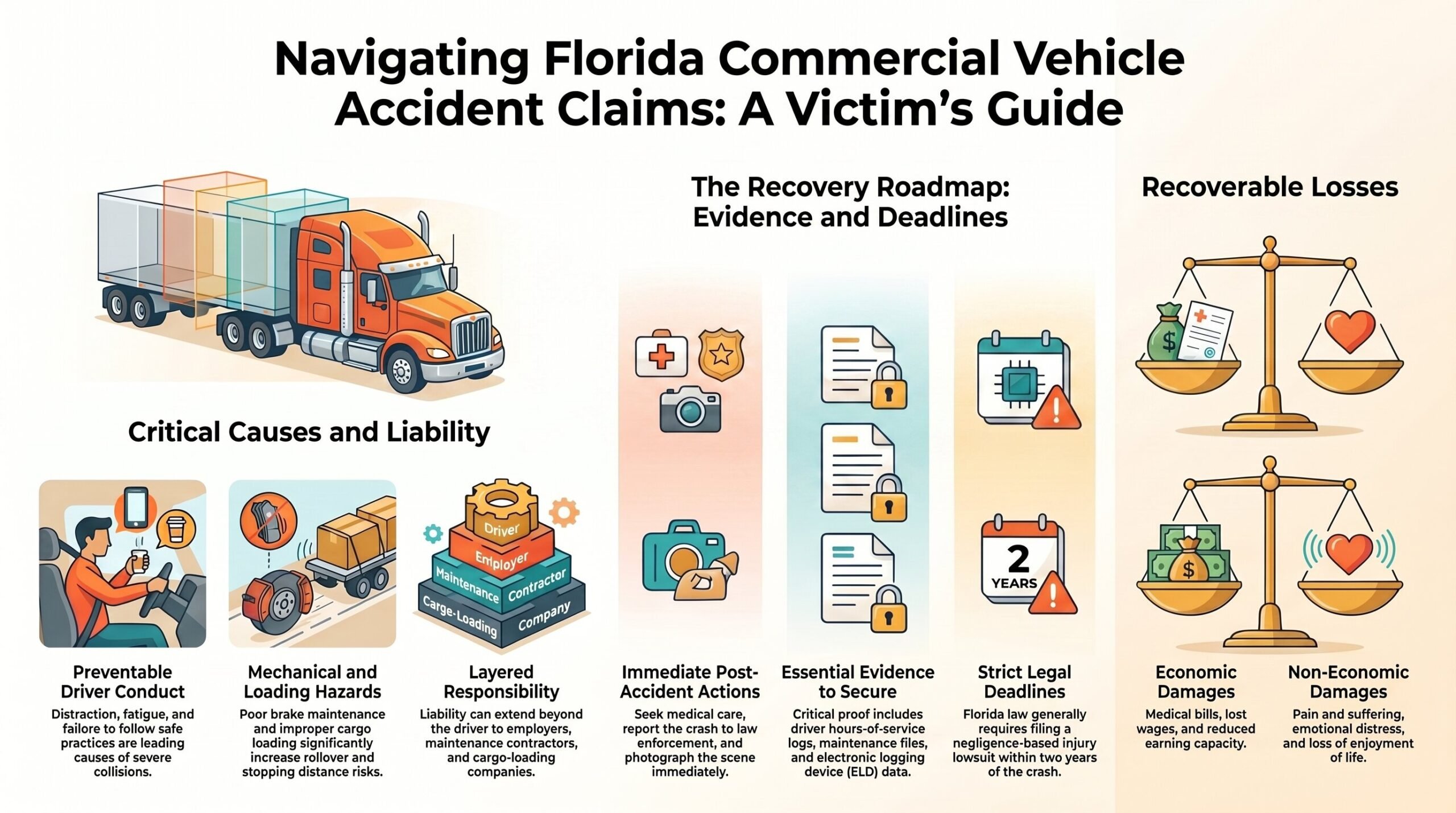
Commercial vehicle accidents in Florida often stem from preventable conduct, including distracted driving, driver fatigue, and failure to follow safe operating practices. Improper vehicle maintenance can increase the risk of brake failures, tire blowouts, and mechanical defects that contribute to serious collisions. Unsafe cargo loading may also affect vehicle stability, creating hazards for motorists, passengers, and pedestrians.
Distracted Driver Behavior
When drivers divide their attention between the road and another task, the size and weight of a commercial vehicle can turn a brief lapse into a severe collision. Distracted driver behavior may include reading dispatch messages, adjusting navigation systems, eating, or reaching for items inside the cab. Cellphone distraction is especially dangerous because it can remove the driver’s eyes, hands, and judgment from safe vehicle control.
In Florida traffic, a delayed response may prevent adequate braking, safe lane positioning, or timely awareness of roadside hazards. Commercial drivers are entrusted with protecting passengers, motorists, pedestrians, and workers near travel lanes. When distraction contributes to a crash, investigators may review phone records, onboard data, delivery schedules, and witness accounts to determine whether preventable inattention placed others at risk.
Driver Fatigue Risks
Inattention is not the only form of impaired awareness that can endanger others on Florida roads; driver fatigue may similarly reduce alertness, reaction time, and judgment. Commercial drivers often work long schedules, travel overnight routes, and face delivery pressures that can interfere with proper rest. A sleep disorder, an untreated chronic health condition, or an irregular shift pattern may increase the likelihood of dangerous exhaustion behind the wheel.
Responsible carriers can reduce these risks through fatigue training, realistic scheduling, and policies that encourage drivers to report tiredness without fear of punishment. A workplace culture that values safety over speed helps protect passengers, pedestrians, and other motorists. When fatigue contributes to a crash, careful review of logs, schedules, and company practices may reveal preventable failures.
Improper Vehicle Maintenance
Although safe driving practices are important, a poorly maintained vehicle can create hazards that no amount of skill can fully control. Commercial trucks, vans, and buses require consistent inspection because worn components can fail suddenly in traffic. Brake Failure may prevent a driver from slowing in time to protect nearby motorists, pedestrians, or passengers. Tire Wear can reduce traction, increase stopping distance, and contribute to a loss of control during rain or on highways.
Maintenance records, inspection reports, and repair histories often help determine whether a carrier acted responsibly. When companies delay service to reduce costs or keep vehicles operating, they may place the public at unnecessary risk. Careful accountability encourages safer fleets and supports those harmed while traveling, working, or serving their communities. Regular oversight remains critical.
Unsafe Cargo Loading
Because commercial vehicles often carry heavy or irregular loads, unsafe cargo loading can create serious hazards before a trip even begins. Improper weight distribution may affect braking, turning, and rollover risk, especially on Florida highways with sudden stops or sharp lane changes. Inadequate cargo securement can allow freight to shift, fall, or spill, endangering motorists, pedestrians, and emergency responders.
Responsible carriers, loaders, and drivers are expected to follow federal safety rules and internal trucking policies designed to protect the public. When these standards are ignored, a preventable collision may cause severe injuries and lasting hardship. Careful investigation can determine whether negligent loading practices contributed to a crash, helping injured individuals and their families pursue accountability while supporting safer transportation practices for the broader community across Florida.


Legal Rights of Florida Commercial Vehicle Accident Injury Victims
After a collision involving a commercial vehicle in Florida, injury victims may have important legal rights to compensation, investigation, and accountability. These rights may include seeking payment for medical care, lost income, reduced earning capacity, and pain arising from the crash. When the injured person was working, Workplace benefits may also apply, including workers’ compensation or disability coverage, depending on the circumstances.
Victims and their families often serve one another best by preserving evidence and obtaining timely legal guidance.
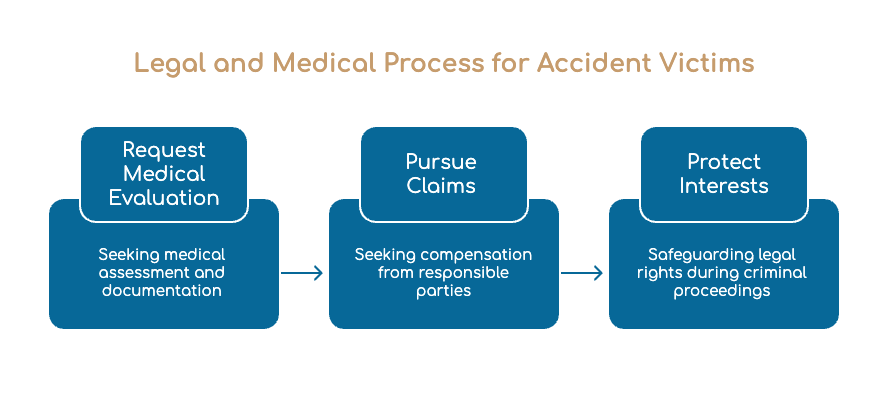
Their rights may include:
- Requesting medical evaluation, treatment records, and documentation of ongoing limitations.
- Pursuing claims against responsible drivers, employers, insurers, or other accountable parties.
- Protecting interests when criminal matters, such as DUI defense, affect related proceedings.
Florida law imposes deadlines and procedural duties, so delay can weaken a claim. A lawyer may help clarify available remedies, communicate with insurers, and support a fair recovery process.
Why Do Florida Commercial Vehicle Accident Injuries Happen?
Understanding an injured person’s legal rights often begins with identifying why the commercial vehicle crash occurred. In Florida, these injuries may result from driver fatigue, distracted driving, speeding, impaired operation, or inadequate vehicle maintenance. Commercial drivers often work under demanding schedules, and pressure to meet delivery deadlines can contribute to unsafe decisions. Employers, carriers, maintenance contractors, and loading companies may each play a role when safety duties are ignored.
Some crashes stem from preventable organizational failures. Preventive training programs help drivers recognize hazards, follow federal and state regulations, and respond responsibly in traffic. When companies neglect meaningful instruction, unsafe habits may continue unchecked.
Cargo securing compliance is also critical because shifting, overloaded, or unsecured freight can cause rollovers, jackknife collisions, or loss of vehicle control. Mechanical failures, poor hiring practices, and weak supervision can further increase risk. Identifying these causes helps clarify responsibility
What Should You Do After a Florida Commercial Vehicle Accident Injury?
After a Florida commercial vehicle accident injury, the injured party should take prompt, organized steps to protect health, safety, and any potential legal claim. Immediate medical care, a timely accident report, and preservation of key evidence can substantially affect the strength of a case. These measures help document the injury, establish the facts, and support a clear record of what occurred.
Seek Immediate Medical Care
When a commercial vehicle accident occurs, immediate medical evaluation should be treated as a priority, even if the injured person believes the symptoms are minor. Some injuries, including internal trauma, concussions, and soft tissue damage, may develop gradually and require prompt assessment. Post-accident treatment helps protect health, supports recovery, and creates a reliable record of care. Medical professionals can assist by accurately documenting symptoms, treatment needs, physical limitations, and follow-up recommendations.
These records may later help address insurance claim delays, especially when questions arise about the timing, cause, or severity of injuries. Medical billing records also provide important proof of expenses connected to the collision. Seeking care promptly reflects responsible stewardship of one’s well-being and helps preserve vital information for any injury claim.
Report The Accident
At the scene or as soon as safely possible, a Florida commercial vehicle accident should be reported to law enforcement so an official crash record can be established. This report helps document the parties involved, road conditions, apparent injuries, and the responding officer’s observations. For injured individuals and those assisting them, prompt reporting supports accountability and helps ensure that needed services are directed to the scene.
Reporting delays can create questions about when the collision occurred, how injuries developed, or whether important facts were accurately recalled. If anyone saw the crash, Witness statements should be obtained by the officer, as neutral observations may help clarify disputed events. A timely police report also provides insurers, medical providers, and legal representatives with a dependable starting point for evaluating the claim.
Preserve Crucial Evidence
Because evidence can disappear quickly after a Florida commercial vehicle accident, injured parties should take reasonable steps to preserve information that may help establish how the crash occurred and who may be responsible. Photographs of vehicle damage, road conditions, skid marks, traffic signs, and visible injuries can provide meaningful context for later review.
A prompt Witness statement may also assist by recording observations before memories fade or details become uncertain. Injured parties should keep medical records, repair estimates, insurance communications, and any available dash camera or surveillance footage. When appropriate, a vehicle inspection can identify mechanical failures, maintenance concerns, or cargo issues that contributed to the collision. Preserving evidence supports accountability, protects the injured person’s interests, and helps advocates serve the broader goal of safer commercial transportation.
Critical Evidence in a Florida Commercial Vehicle Accident Injury Case
Critical evidence in a Florida commercial vehicle accident injury case can determine whether negligence, regulatory violations, or unsafe business practices contributed to the crash. Key materials often include:
- Driver qualification records and hours of service logs
- Vehicle maintenance evidence and inspection reports
- Crash scene documentation, including photos, measurements, and witness details
Driver Qualification Records
When a commercial vehicle crash occurs in Florida, driver qualification records can reveal whether the motor carrier placed a properly trained, licensed, and medically fit driver behind the wheel. These files may include license history, medical examiner certificates, road test results, prior employment checks, safety performance inquiries, and records of required training. For injured individuals and families seeking accountability, such documents help determine whether preventable risks were ignored before the driver was entrusted with service to the public.
Missing, incomplete, or altered records may serve as evidence of a violation, especially when federal or state safety rules require careful screening. An attorney may seek these materials through preservation demands and subpoena compliance procedures, ensuring carriers cannot withhold facts needed to evaluate negligent hiring, retention, supervision, or entrustment claims in Florida courts.
Hours Of Service Logs
After a serious commercial vehicle collision in Florida, hours-of-service logs may provide key evidence of whether driver fatigue contributed to the crash. These records show driving time, rest periods, on-duty hours, and possible violations of federal safety limits. Electronic logging device data, paper logs, dispatch records, fuel receipts, toll records, and delivery documents may be compared to identify inconsistencies.
How evidence is gathered can affect whether essential proof is preserved before it is altered, lost, or routinely deleted. Careful review may reveal pressure from a motor carrier, unrealistic schedules, or patterns of noncompliance. When violations appear, they may support claims involving negligence, negligent supervision, or unsafe company practices. Hours of service regulations enforcement actions may also provide context, helping injured people seek accountability through accurate, disciplined investigation.
Vehicle Maintenance Evidence
Because mechanical condition can directly affect crash causation, vehicle maintenance evidence is often central in a Florida commercial vehicle accident injury case. Attorneys may review inspection reports, repair records, brake service documentation, tire replacement histories, and records of reported defects. These materials can show whether a carrier acted responsibly or whether unsafe equipment remained in service despite known risks.
Maintenance evidence may also clarify whether a mechanical failure contributed to the collision, especially when compared with driver statements, Eyewitness testimony, and surveillance footage showing vehicle behavior before impact. For individuals committed to protecting others, this evidence supports accountability and encourages safer commercial practices. Promptly preserving these records is important because they may reveal neglect, delayed repairs, or violations of required safety standards.
Crash Scene Documentation
Crash scene documentation can provide a detailed record of physical conditions before vehicles are moved, debris is cleared, or roadway evidence is lost. In a Florida commercial vehicle accident injury case, photographs, video, measurements, and diagrams may help preserve lane positions, skid marks, cargo spills, sight obstructions, and weather-related hazards.
This evidence can assist those serving injured individuals by clarifying how the collision occurred and who may bear responsibility. Promptly gathered witness statements may capture observations that fade over time, such as traffic signals, driver conduct, or vehicle movements. Later vehicle inspections may then be compared with scene evidence to identify brake issues, lighting failures, tire damage, or underride impacts. Accurate documentation supports a careful investigation, strengthens claim evaluation, and helps ensure that injured persons receive informed advocacy grounded in reliable proof.
Long-Term Effects of Florida Commercial Vehicle Accident Injuries
Commercial vehicle accident injuries in Florida may create lasting consequences, including chronic pain complications that interfere with daily function and quality of life. These injuries can also reduce earning capacity when physical limitations, cognitive impairments, or treatment schedules affect a person’s ability to work. Ongoing medical needs, such as rehabilitation, surgery, medication, and professional care, often become central issues in evaluating the full value of an injury claim.
Chronic Pain Complications
After a serious commercial vehicle accident in Florida, chronic pain may persist long after fractures, soft tissue injuries, or surgical wounds appear to have recovered. Persistent back, neck, shoulder, or nerve pain can limit mobility, disrupt sleep, and interfere with daily caregiving, household duties, and community service. Whiplash symptoms may also develop gradually, creating headaches, stiffness, dizziness, or radiating discomfort that requires continued medical evaluation.
Chronic pain often involves ongoing therapy, diagnostic testing, medication management, and referrals to experts who can document the condition with care and precision. These records help explain the injury’s lasting impact without overstating its severity. In legal claims, settlement strategies should account for future treatment needs, pain management, and reduced quality of life, while preserving the injured person’s dignity, stability, and access to support.
Reduced Earning Capacity
Long-term pain and physical limitations can also impact an injured person’s ability to earn a living, especially when job duties require driving, lifting, standing, coordination, or sustained focus. After a Florida commercial vehicle accident, reduced earning capacity may result when injuries prevent a return to prior work or limit advancement in a chosen field. Vocational rehab can help identify realistic job options, transferable skills, and required accommodations.
A disability evaluation may clarify functional limits, while pain management records can show how symptoms interfere with dependable performance. These factors are often used to assess future income losses, including missed promotions, reduced hours, or a permanent shift to lower-paying work. Careful documentation helps ensure that the person’s service, dignity, and financial stability are fairly considered.
Ongoing Medical Needs
Over time, serious injuries from a Florida commercial vehicle accident may require continued medical care that extends well beyond the initial emergency treatment. Victims may need follow-up surgeries, professional visits, diagnostic testing, medication management, and assistive devices to maintain stability and function. Rehab expenses can become substantial when physical, occupational, or speech therapy is needed for months or years.
Ongoing care may also include treatment for mental health, including anxiety, depression, post-traumatic stress, or sleep disruption after a severe crash. These needs can affect family responsibilities, employment, and the ability to serve others in daily life. A careful evaluation of future medical costs helps repair the full impact of the injury, supporting a claim that reflects both present treatment and anticipated long-term care.
Proving Liability in Florida Commercial Vehicle Accident Injury Cases
In Florida commercial vehicle accident injury cases, proving liability requires a careful review of the crash facts, the conduct of each party, and the legal duties that applied at the time of the collision. Evidence may include police reports, witness statements, photographs, vehicle damage, roadway conditions, driver logs, maintenance records, and electronic data from the commercial vehicle. Each source can help show whether a driver, employer, contractor, or maintenance provider failed to act with reasonable care.
A thorough legal review also considers whether safety rules, hiring standards, training requirements, or inspection duties were violated. To support the full scope of harm, the injured person’s representatives may inspect medical records, document wage losses, and connect those losses to the crash. This process serves the injured party by building a clear, responsible account of what happened. Strong liability proof can also promote accountability and help prevent unsafe commercial practices from harming others.
Dealing With Insurance Companies After a Florida Commercial Vehicle Accident Injury
After a Florida commercial vehicle accident, insurance companies often begin investigating quickly to mitigate financial exposure and shape the claim narrative. Their adjusters may request statements, authorizations, or early documentation before the injured person fully understands the extent of harm. Careful communication is crucial because inaccurate details can affect liability evidence, driver negligence, medical records, and the settlement timeline.
A lawyer may help guarantee that insurers receive necessary information without exposing the claimant to unfair interpretations. This includes reviewing policy issues, preserving correspondence, and preventing broad medical releases that reach beyond relevant treatment. Commercial carriers and their insurers often have coordinated response teams, so injured individuals benefit from disciplined advocacy focused on accuracy and service to the truth. By managing communications, counsel can protect the claimant’s dignity, support a fair evaluation, and enable medical providers, family members, and community caregivers to focus on recovery rather than on adversarial insurance tactics during a difficult period.
What to Expect During a Florida Commercial Vehicle Accident Injury Claim Process
A Florida commercial vehicle accident injury claim typically begins with prompt reporting of the accident and careful documentation of medical treatment. Insurers then investigate liability, damages, vehicle records, driver conduct, and other evidence relevant to the claim. Depending on the findings, the matter may proceed toward settlement negotiations or, when necessary, litigation.
Reporting The Accident
Once a commercial vehicle accident occurs, prompt and accurate reporting becomes an essential first step in protecting the injured person’s claim. Law enforcement should be notified so an official crash report can document location, parties, vehicles, and initial observations. Employers, carriers, or vehicle owners may also have internal reporting duties that affect the liability timeline.
Early notice supports preservation of evidence, including driver logs, vehicle data, maintenance records, and dispatch information. Care should be taken during insurance communication because statements may later influence fault determinations or compensation decisions. Medical documentation may be referenced only to confirm that injuries were reported, while detailed treatment records belong in later stages. Responsible reporting helps preserve truth, accountability, and the injured person’s ability to pursue lawful recovery with dignity.
Medical Treatment Documentation
Medical treatment documentation serves as the foundation for a claim in a Florida commercial vehicle accident injury case because it connects reported injuries to the collision through clear, timely records. Medical providers record diagnoses, symptoms, referrals, restrictions, and follow-up needs, creating a treatment timeline that helps explain recovery and limitations.
An accurate injury statement at each appointment supports consistency, especially when pain changes or new symptoms appear. Medication consistency also matters, as adherence to the prescribed regimen, side effects, and changes may indicate the seriousness of the condition and the patient’s effort to recover. Evidence photos of visible injuries, assistive devices, or treatment progress may supplement written records. Careful documentation helps caregivers, advocates, and legal professionals understand needs, preserve dignity, and present the injured person’s condition accurately and responsibly throughout the claim.
Insurance Claim Investigation
During an insurance claim investigation after a Florida commercial vehicle accident, insurers examine liability, damages, coverage, and the credibility of the reported injuries. Adjusters may request police reports, medical records, driver logs, maintenance files, photographs, witness statements, and employment details. Their review often considers whether the driver acted within the scope of work, whether safety rules were followed, and whether multiple insurance policies apply.
Those serving injured individuals should understand that insurers may issue coverage denial letters if exclusions, late notice, or disputed employment status are alleged. Careful organization of records helps preserve an accurate account of harm and responsibility. The investigation may also identify available policy limits, which can affect policy-limit negotiations, especially when injuries are severe and documented losses exceed available coverage.
Settlement Or Litigation
After the insurer completes its claim investigation, the case typically moves toward either settlement discussions or formal litigation. At this stage, the injured person’s counsel evaluates medical records, lost income, liability evidence, and future care needs to determine fair compensation. An insurance adjuster’s strategy may involve minimizing damages, disputing fault, or pressuring for an early resolution before the full impact is known.
Careful Evidence preservation steps remain important, including maintaining driver logs, inspection records, black box data, photographs, and witness statements. If negotiations serve the client’s interests, settlement can provide timely resources for recovery and family stability. When the insurer refuses a reasonable outcome, litigation may be necessary. Filing suit allows formal discovery, sworn testimony, expert review, and, if required, trial before a judge or jury.
Compensation for Florida Commercial Vehicle Accident Injury Damages
When a commercial vehicle collision causes injury in Florida, compensation can depend on the severity of the harm, the available insurance coverage, and the legal responsibility of each party involved. Claims may involve drivers, trucking companies, contractors, maintenance providers, or other entities whose conduct contributed to the crash. A careful review helps identify all sources of recovery, allowing injured persons and their families to pursue support with dignity.
Compensation may address the broader impact of the incident, including long-term care needs, reduced independence, and harm affecting family stability. In the most serious cases, Wrongful death claims may allow surviving relatives to seek accountability after a preventable loss. When conduct shows intentional misconduct or gross negligence, punitive damages may also be considered, though they are reserved for limited circumstances. Legal guidance can help ensure that claims are organized, documented, and presented in a manner that serves the injured person’s future.
Economic vs Non-Economic Damages in Florida Commercial Vehicle Accident Cases
In Florida commercial vehicle accident cases, damages are generally classified as economic or non-economic, each requiring a different method of evaluation. Economic losses may include medical expenses, lost income, and reduced earning capacity, while non-economic damages address pain, emotional distress, and loss of enjoyment of life. Proving these claims often requires organized records, credible testimony, and clear evidence connecting the injuries to the commercial vehicle accident.
Calculating Economic Losses
For victims of commercial vehicle accidents in Florida, calculating economic losses requires a careful review of measurable financial harm tied directly to the crash. These losses may include emergency care, hospitalization, surgery, rehabilitation, medication, assistive devices, and future medical expenses supported by professional evaluations. Lost wages are also examined, including missed work, reduced hours, diminished earning capacity, and lost employment benefits.
When injuries prevent a return to prior work, vocational retraining may become a necessary component of the claim. Documentation is important, including medical bills, payroll records, tax returns, employer statements, and expert opinions. A thorough calculation helps present the financial burden accurately, allowing advocates to serve injured individuals responsibly and pursue compensation that reflects actual needs rather than speculation. This process supports recovery planning and accountability.
Valuing Emotional Harm
Economic losses capture the measurable financial impact of a commercial vehicle accident, but emotional harm reflects a different category of damages that may be just as significant. In Florida, non-economic damages may account for pain, anxiety, humiliation, loss of enjoyment, and the strain placed on family relationships after serious injury. Calculating non-economic loss requires careful attention to the severity, duration, and daily consequences of the suffering involved.
Unlike medical bills or missed wages, these losses do not have a fixed market value, so fair valuation depends on reasoned judgment and the human impact of the injury. Emotional damages limits may affect certain claims, depending on the circumstances and applicable law. A service-minded legal approach recognizes both the injured person’s dignity and the broader need for responsible accountability.
Proving Damage Claims
After a serious commercial vehicle accident, proving damages requires more than describing the injury or presenting a total dollar amount. Florida claims should distinguish economic losses, such as medical bills, rehabilitation costs, lost wages, and reduced earning capacity, from non-economic losses, including pain, mental distress, and diminished quality of life. Serious damages documentation helps show how the crash affected health, work, and daily responsibilities.
Records from physicians, employers, therapists, and caregivers may support a complete picture of need and recovery. Negligence evidence also matters because liability and damages must be connected by clear facts. Service-minded legal guidance can help injured people gather records, preserve testimony, and present losses with dignity. Careful proof allows insurers, judges, or juries to evaluate compensation fairly under Florida law.
When a Florida Commercial Vehicle Accident Injury Case Goes to Trial vs Settlement
Although many Florida commercial vehicle accident injury cases resolve through settlement, some proceed to trial when liability, causation, damages, or insurance coverage remains disputed. Settlement may provide a structured path toward compensation, allowing injured persons and their families to avoid uncertainty, delay, and the burden of courtroom proceedings. Trial may become necessary when responsible parties deny fault, minimize injuries, contest medical opinions, or refuse a fair valuation.
Preparation for either outcome requires disciplined case development. Liability Proofs may include crash reports, witness statements, vehicle data, safety records, photographs, and expert analysis. Damage calculation may involve medical expenses, lost income, reduced earning capacity, rehabilitation needs, and the long-term impact on daily functioning in family, work, and community. A well-prepared case often encourages meaningful settlement discussions, yet also positions the injured party to present credible evidence before a judge or jury when resolution cannot be reached through negotiation.
Florida Laws That May Affect Your Florida Commercial Vehicle Accident Case
Whether a commercial vehicle accident case is resolved by settlement or proceeds to trial, Florida law governs how liability is established, how damages are measured, and how insurance coverage may apply. These rules help protect injured people while encouraging responsible conduct from drivers, employers, and insurers.
Key legal issues may include:
- Florida’s comparative fault system, which can reduce compensation when an injured person is found partly responsible for the crash.
- Duties imposed on commercial drivers and companies, including vehicle maintenance, driver qualification, and compliance with Federal trucking regulations.
- Insurance investigation timelines, which may affect how quickly coverage decisions, document requests, and claim evaluations occur.
A careful legal review may also examine employer responsibility, negligent hiring, cargo loading practices, and required safety records. For those committed to helping injured individuals rebuild, understanding these laws supports better advocacy, clearer communication, and more informed decisions throughout the claim process. Proper documentation also strengthens trust and accountability.
The Statute of Limitations for Florida Commercial Vehicle Accident Injury Cases
In Florida, the statute of limitations sets a strict deadline for filing a commercial vehicle accident injury lawsuit. For most negligence-based injury claims, an injured person generally has two years from the date of the crash to file suit. Missing this deadline can prevent recovery, regardless of the severity of injuries or the clarity of liability.
This time limit also affects how promptly evidence should be preserved. Commercial vehicle cases may involve driver logs, inspection records, dash camera footage, maintenance files, and electronic data. Delays can increase the risk of Evidence Spoliation, especially when records are overwritten, discarded, or altered before review.
Florida’s Comparative Fault rules may also influence the value of a timely claim, as compensation can be reduced by the injured person’s percentage of responsibility. For individuals and families seeking stability after harm, understanding these deadlines helps ensure orderly decision-making, protects legal rights, and promotes accountability within the civil justice process.
How a Florida Commercial Vehicle Accident Injury Lawyer Can Help You
After the filing deadline is understood, the next concern is how an injured person can protect the claim while managing medical treatment, financial pressure, and contact from insurers. A Florida commercial vehicle accident injury lawyer can organize evidence, identify responsible parties, and guide the claimant through the basics of insurance claims with consistent attention to service and fairness.
Protecting a claim means preserving evidence, reducing pressure, and keeping the injured person’s recovery needs in focus.
- Reviews crash reports, medical records, driver logs, and company policies to clarify what happened.
- Communicates with insurers, employers, and defense representatives to reduce confusion and pressure.
- Performs financial loss calculation, including medical bills, lost income, reduced earning ability, and care needs.
This support helps preserve the injured person’s dignity while the claim moves forward. In commercial vehicle cases, liability may involve drivers, trucking companies, contractors, maintenance providers, or cargo handlers. Legal guidance can connect these facts to applicable Florida law, helping the claim reflect the full harm sustained and the future assistance reasonably required.
When to Contact a Florida Commercial Vehicle Accident Injury Lawyer
When should legal guidance be sought after a commercial vehicle crash in Florida? Contact is generally appropriate once urgent medical needs are addressed and safety concerns are mitigated. Early consultation can support evidence preservation, building a case before records are lost, vehicles are repaired, or witness memories fade. Commercial crashes may involve drivers, employers, maintenance contractors, insurers, and public agencies, so timely review helps identify which information should be requested and protected.
A person injured in such a crash should also prioritize medical documentation, including examinations, follow-up care, imaging, prescriptions, and treatment notes. These records may clarify the connection between the collision and physical limitations, missed work, or ongoing care needs. Prompt communication with counsel may also help families, caregivers, and community-minded supporters understand practical next steps while avoiding unnecessary misstatements. Seeking guidance early is not inherently adversarial; it is a disciplined step toward accountability, order, and informed decision-making.
Why You Need an Experienced Florida Commercial Vehicle Accident Injury Lawyer
Early contact with counsel is most effective when the lawyer has specific experience with Florida commercial vehicle collisions and the legal issues they commonly present. These cases often involve layered responsibility, including drivers, motor carriers, maintenance providers, brokers, and vehicle manufacturers. An experienced lawyer understands how to preserve evidence, review safety records, and evaluate whether federal and state regulations were violated.
Commercial vehicle claims also require careful attention to damages. Medical billing audits may reveal inaccurate charges, disputed coding, or treatment costs that require clear explanation during settlement discussions or litigation. When vehicle condition is at issue, truck defect analysis can help determine whether brake failure, tire problems, lighting defects, or maintenance neglect contributed to the crash.
For injured people, this experience supports orderly case development and fair accountability. It also helps families, caregivers, and community members focus on recovery while legal duties, deadlines, and insurer communications are managed with discipline, accuracy, and purpose.
How to Choose the Right Florida Commercial Vehicle Accident Injury Lawyer for Your Case
How should an injured person evaluate a lawyer after a serious commercial vehicle collision in Florida? The decision should begin with experience handling crashes involving delivery trucks, buses, vans, rideshare vehicles, and corporate fleets. A qualified lawyer should understand insurance layers, employer responsibility, vehicle maintenance records, driver logs, and the evidence needed to protect the injured person’s claim.
A sound Hiring strategy includes reviewing case focus, trial readiness, available resources, and the lawyer’s approach to investigation. The injured person should also consider whether the lawyer treats the case with respect for the client’s health, family duties, and long-term stability.
Strong client communication is equally important. The lawyer should explain legal options clearly, provide timely updates, answer questions directly, and prepare the client for each stage of the process. A careful selection helps secure that the claim is managed with diligence, compassion, and service-minded attention to the client’s recovery.
About The Law Offices of Anidjar & Levine
The Law Offices of Anidjar & Levine represents injured people throughout Florida in cases involving commercial vehicle collisions, including crashes with trucks, delivery vehicles, rideshare cars, buses, and company-operated fleets.
The firm’s work reflects a service-focused approach, helping clients address medical care, insurance communications, lost income, and the practical burdens that often follow serious accidents.
Its attorneys evaluate each claim with attention to liability, available coverage, injury documentation, and long-term damages.
Through case strategy planning, the firm identifies evidence, preserves records, consults experts when needed, and prepares claims for negotiation or litigation.
This organized process supports clients who need clear guidance while they focus on recovery and family responsibilities.
The firm also explains its Legal fee structure before representation begins, allowing clients to understand how fees are handled.
By combining client service with disciplined legal preparation, The Law Offices of Anidjar & Levine provides steady support in intricate commercial vehicle accident cases.
Frequently Asked Questions
Can I Sue if a Commercial Vehicle Damaged My Parked Car?
Yes, a person may sue if a commercial vehicle damaged a parked car, especially when negligence caused the collision. Fault determination rules help identify whether the driver, employer, or another party is responsible. Insurance coverage options may include the company’s liability policy, the vehicle owner’s coverage, or the injured party’s property damage coverage. Careful documentation, repair estimates, photographs, and witness information can support a fair resolution of the claim.
Are Rideshare Drivers Considered Commercial Vehicle Operators in Florida?
Yes, rideshare drivers in Florida may be treated as commercial vehicle operators when they are logged into the app or transporting passengers. Their status affects insurance coverage, liability, and available claims after a crash. Platforms may face limited vicarious liability, depending on driver activity and legal circumstances. Those seeking to serve injured individuals should carefully document the app status, trip details, and policy information to accurately assess responsibility.
What if the Commercial Vehicle Driver Was From Another State?
If the commercial vehicle driver was from another state, the claim may still proceed in Florida when the crash occurred there. Jurisdiction rules determine where the case may be filed and which laws apply. Investigators may review licenses, employment history, safety violations, and out-of-state records to assess responsibility. Those serving injured persons should preserve evidence promptly, because carrier documentation and driver qualifications may affect accountability and compensation.
Do Commercial Vehicle Accidents Involve Different Medical Billing Issues?
Yes, commercial vehicle accidents can involve Various Billing issues because multiple insurance sources, employer coverage, liens, and federal or interstate policies may impact payment. Providers may bill at standard charges, while insurers later apply Agreed Rates, creating confusion for injured persons and those assisting them. Thorough review helps ensure medical costs are attributed correctly, improper balances are challenged, and available benefits are preserved for recovery and continued care.
Can Undocumented Immigrants File Commercial Vehicle Accident Claims in Florida?
Yes, undocumented immigrants may file commercial vehicle accident claims in Florida. Immigration status does not generally bar an injured person from seeking compensation for negligence. The insurance claim process may require careful documentation of injuries, wages, and losses, while protecting sensitive personal information. If the crash occurred during employment, workers’ compensation issues may also arise. Service providers should respond with accuracy, dignity, and lawful support for injured individuals.
—————————
Commercial vehicle accident claims in Florida often involve intricate evidence, multiple liable parties, and strict legal deadlines.
Injured victims may benefit from guidance that protects their rights, documents their losses, and pursues fair compensation through negotiation or litigation.
A qualified Florida Car Accident Lawyer can evaluate the case, address insurer tactics, and build a claim based on the facts.
The Law Offices of Anidjar and Levine provides experienced legal support for victims seeking accountability.