The Law Offices of Anidjar and Levine assists survivors and families with protecting a child’s safety, reporting suspected abuse, preserving evidence, and evaluating possible civil claims with the support of a Florida Sexual Assault Lawyer.
These cases may involve misconduct during practices, travel, private training, or electronic communications, and may also expose schools, leagues, or other organizations to liability.
Counsel can explain Florida law, deadlines, damages, and filing options while carefully handling communications.
The sections below outline important steps, rights, and considerations.
Main Takeaways
- A Florida youth sports coach sexual abuse lawyer can confidentially evaluate facts, explain civil claims, and identify evidence supporting a survivor’s account.
- Abuse may occur during practices, travel, private lessons, locker rooms, or electronic communications involving grooming, secrecy, or boundary violations.
- Potentially liable parties may include the coach, the sports organization, the school, or others responsible for hiring, supervision, retention, or the response to complaints.
- Immediate priorities include removing the child from danger, obtaining medical care if needed, preserving evidence, and reporting to law enforcement or Florida DCF.
- Florida law may allow civil lawsuits and criminal prosecution, but filing deadlines and reporting duties can affect rights, safety, and next steps.
How We Can Help With Your Florida Youth Sports Coach Sexual Abuse Claim
When a Florida youth sports coach sexual abuse claim arises, legal counsel can assist by evaluating the underlying facts, identifying all potentially liable parties, and explaining the civil remedies that may be available under state law. Attorneys may guide survivors and their families with steady, service-oriented support while protecting privacy and dignity at every stage.
This assistance often includes Confidential interviews designed to gather information carefully, reduce unnecessary stress, and help clients make informed decisions. Counsel may coordinate evidence-preservation efforts to ensure that records, communications, photographs, digital data, and witness accounts are secured before they are lost or altered. Lawyers may also manage correspondence with institutions, insurers, and opposing parties, allowing clients to focus on safety, recovery, and family responsibilities.
In addition, they may consult qualified professionals, assess damages, prepare filings, and advocate for accountability in a manner that respects the client’s goals. The overall purpose is practical guidance, protection, and compassionate legal service for those seeking meaningful help.
Understanding Youth Sports Coach Sexual Abuse Cases in Florida


In the context of Florida youth sports, sexual abuse cases often involve allegations that a coach used a position of trust, authority, or access to exploit a minor during practices, travel, private instruction, electronic communications, or other team-related activities. These matters are serious because they may affect a child’s safety, emotional health, education, and long-term well-being.
OUR CONSULTATIONSARE FREE
START YOUR FREE CASE REVIEW

Florida law may permit both civil claims and criminal prosecution, depending on the facts, available evidence, and applicable deadlines. A case may involve the coach’s conduct, an organization’s supervision, hiring, retention, or response after concerns were raised. Mandatory reporting obligations can also become important when schools, leagues, medical professionals, or other responsible adults learn of suspected abuse.
Failure to act appropriately may increase risk to others and may create additional legal exposure. In some situations, criminal liability may arise not only from abusive acts themselves, but also from related misconduct, concealment, or obstruction under Florida law.
Common Scenarios When Youth Sports Coach Sexual Abuse Might Take Place in Florida
Youth sports coach sexual abuse in Florida may arise in several recurring settings where access, authority, and privacy intersect. Common examples include locker room misconduct, private training sessions conducted without adequate supervision, and incidents that occur during team travel away from parents or guardians. In addition, electronic grooming tactics through text messages, social media, or other digital platforms may create opportunities for manipulation and abuse.
Locker Room Misconduct


Although locker rooms are intended to provide privacy for changing and preparation, they can become settings where boundaries are ignored, and sexual abuse occurs outside the view of parents, staff, or other safeguards. Misconduct may involve inappropriate observation, sexual comments, exposure, unwanted touching, or efforts to isolate a young athlete before or after practices and games.
When concerns arise, organizations serving children are expected to respond promptly through clear supervision policies, documentation, and immediate protective action. Parent Guardian Reporting and Law Enforcement Notifications may be necessary when a child describes misconduct, displays sudden fear of team spaces, or reports invasive behavior by a coach.
Careful review of staff access, locker room monitoring, and complaint procedures can help communities protect athletes, support families, and reinforce accountability within youth sports programs.
Private Training Sessions
Programs that seek to protect children often emphasize Boundary-setting strategies, consent education, parent communication, and coaching accountability. These measures may include visible training locations, open-door policies, scheduled check-ins, and clear limits on physical contact, electronic messaging, and gifts. Parents and organizations serving young athletes are often encouraged to document concerns, promptly report policy violations, and respond seriously to changes in a child’s behavior, comfort level, or willingness to attend private instruction sessions.
Team Travel Incidents
When teams travel for tournaments, camps, or overnight competitions, the structure and supervision that exist at regular practices can weaken, creating conditions in which abuse may occur. During travel, athletes may be separated from parents, assigned hotel rooms, or left in small groups with limited oversight. A supervision breakdown can arise during check-ins, curfew enforcement, late-night meetings, or unscheduled stops.
Risk may also increase during team bus incidents, especially when adults isolate a player in the back, remain alone after others have exited, or control seating without accountability. Shared lodging, locker-room access at unfamiliar facilities, and one-on-one transportation between venues can create additional opportunities. Those seeking to protect young athletes often examine whether policies were followed, whether reporting channels existed, and whether adults intervened promptly when boundaries were crossed.
Electronic Grooming Tactics
As communication increasingly shifts to phones, messaging apps, and social media, electronic grooming can become a significant setting in which abuse develops outside the view of parents and other adults. A coach may begin with praise, private check-ins, or late-night messages that appear supportive, then gradually test limits through secrecy, favoritism, and increasingly personal discussions. In some Florida youth sports settings, Social Media Abuse may involve direct messages, disappearing content, or requests for photos unrelated to athletics.
Online Boundary Misuse can also include isolating a young athlete from family oversight, discouraging disclosure, or framing private contact as necessary for performance and trust. Those who serve children should recognize abrupt changes in communication patterns, hidden accounts, and pressure to keep conversations confidential as warning signs that warrant immediate attention and reporting.
Legal Rights of Youth Sports Coach Sexual Abuse Victims in Florida
Many victims of youth sports coach sexual abuse in Florida have enforceable legal rights that extend beyond the criminal process and into the civil justice system. Florida law recognizes protections involving Consent and Capacity, Confidentiality Laws, and the distinction between Criminal vs Civil proceedings.
Survivors may seek accountability from individual offenders and, in some cases, institutions whose failures enabled abuse.
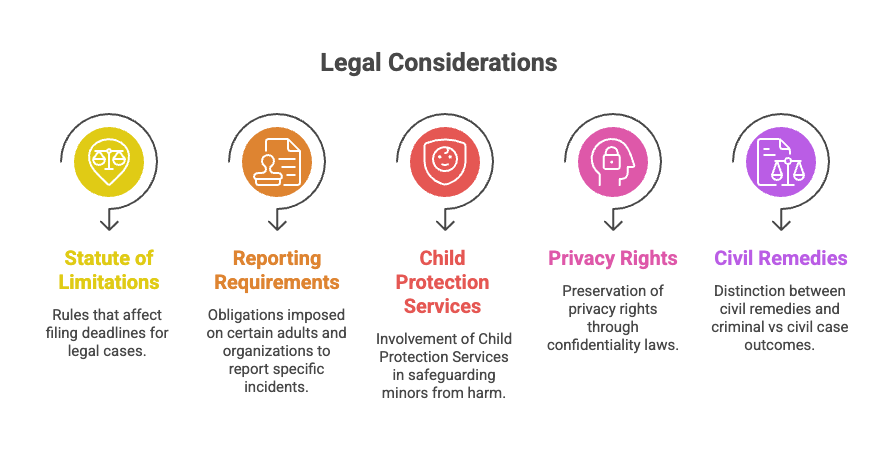
Important legal concepts often include:
- Statute of Limitations rules that affect filing deadlines
- Reporting Requirements imposed on certain adults and organizations
- Child Protection Services’ involvement in safeguarding minors
- Privacy rights preserved through Confidentiality Laws
- Civil remedies are distinct from Criminal vs Civil case outcomes
These rights exist to protect dignity, promote safety, and support recovery-oriented justice. Even where criminal charges are unavailable or unresolved, civil claims may still address harm, financial losses, and institutional negligence. Florida courts may also consider whether a minor had legal Consent and Capacity, which often cannot be given in abusive coach-athlete relationships.
Steps to Take After a Youth Sports Coach Sexual Abuse Incident in Florida
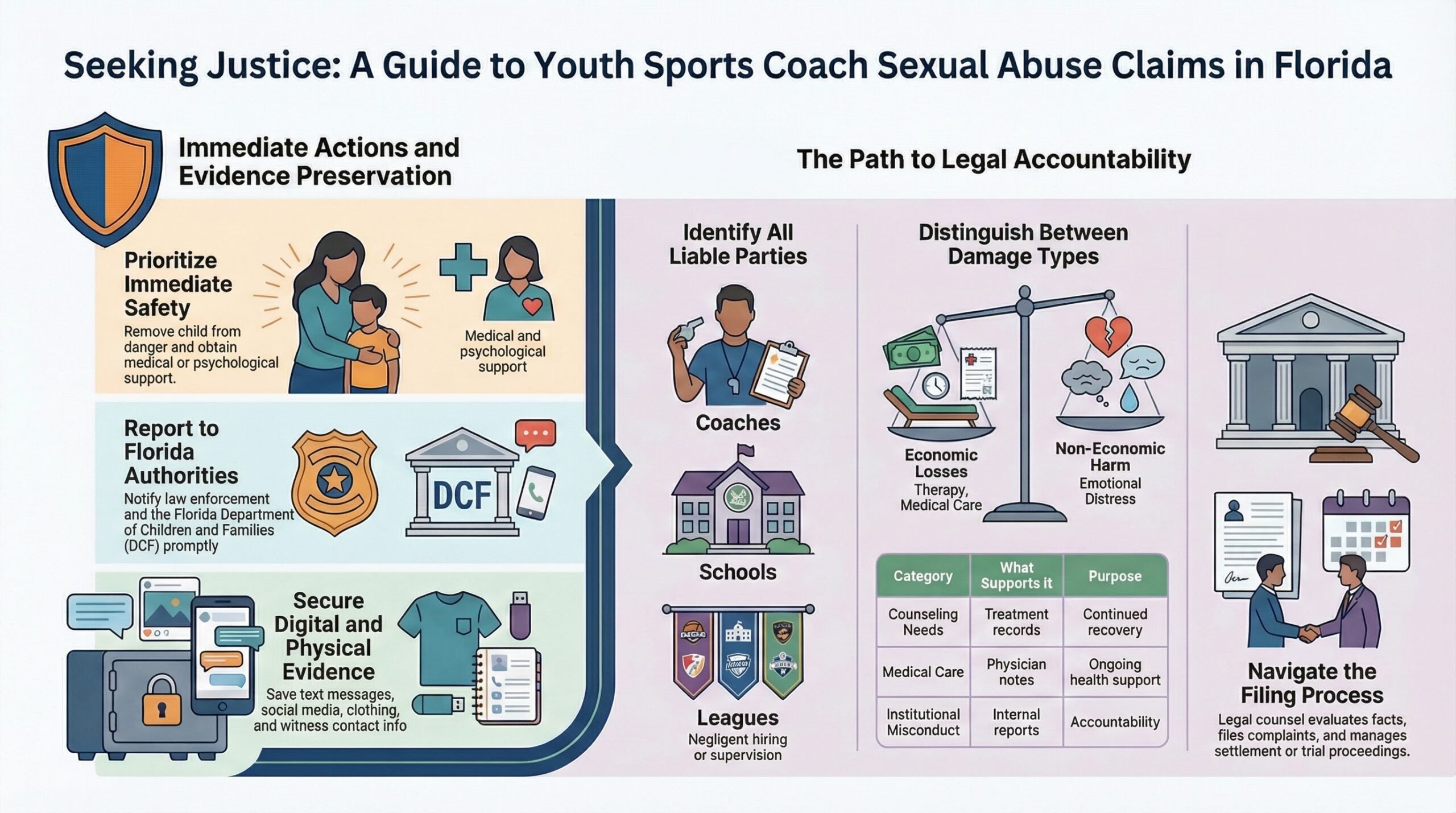
After a youth sports coach’s sexual abuse incident in Florida, immediate safety should be secured first by removing the child from harm and obtaining appropriate medical or psychological support. The abuse should then be reported to law enforcement, child protective authorities, or other designated officials so that a formal response can begin without unnecessary delay.
It is also important to preserve vital evidence, including communications, clothing, photographs, and written accounts, as these materials may support both a criminal investigation and any future civil claim.
Ensure Immediate Safety
In the immediate aftermath of suspected sexual abuse by a youth sports coach, the first priority is to protect the child from any further contact with the accused individual and any setting that could place the child at continued risk. Caregivers and responsible adults should calmly remove the child, ensure supervision by trusted adults, and maintain a stable environment that supports safety and dignity. If there are injuries, pain, or signs of trauma, Immediate medical help should be obtained without delay so the child’s health needs are addressed.
Adults serving youth should also understand their mandatory reporting duties, while maintaining the current focus on protection rather than investigation. Reassurance, privacy, and careful attention to the child’s immediate needs can reduce further harm and create conditions for appropriate professional support in the next steps ahead.
Report The Abuse
Once the child is safe, the suspected abuse should be reported promptly to the appropriate authorities so protective action can begin and the matter can be documented through proper channels. In Florida, a report may be made to law enforcement, the Department of Children and Families, or both, depending on the circumstances and urgency.
Adults who work with youth should understand Mandatory reporting obligations and act without delay when abuse is suspected. Clear, factual information should be provided, including the child’s identity, the coach’s name, and any immediate safety concerns. The sports organization should also be notified, when appropriate, through its designated safeguarding procedures. Families may benefit from victim advocacy services, which can help them traverse reporting steps, support the child, and connect with community resources during a highly difficult period.
Preserve Key Evidence
Because critical details can be lost quickly, preserving major evidence should begin as soon as the child is safe and a report has been made. Caregivers should save clothing, messages, photographs, and any items connected to the incident, while avoiding alteration or unnecessary handling.
Accurate documentation can strengthen efforts to protect the child and support accountability. Witness accounts should be recorded promptly, including names, dates, and exact observations. Medical records should be requested and stored securely, as they may confirm injuries, treatment, or disclosures. Incident logs can help track contacts with schools, leagues, law enforcement, and child protection agencies.
Digital preservation is also important for items such as screenshots, emails, texts, social media posts, and voicemail files. Organized evidence may assist investigators, attorneys, and service providers responding to the child’s needs.
How a Florida Youth Sports Coach Sexual Abuse Lawyer Can Help You Initiate a Case
When a survivor or family is prepared to take legal action, a Florida youth sports coach sexual abuse lawyer can provide the structure and guidance needed to begin the case properly. Counsel often explains the legal process, identifies viable claims, and helps protect the survivor’s rights from the outset. Early representation also supports evidence preservation, careful documentation, and compliance with statute deadlines, which can affect whether a claim may proceed.
Early legal guidance helps survivors preserve evidence, understand viable claims, and protect their rights as a case begins.
A lawyer may assist by helping survivors and families:
- Evaluate facts and potential defendants carefully
- Gather records, messages, and witness information
- Coordinate reporting to the appropriate authorities when needed
- Explain filing steps, timelines, and court expectations
- Connect families with victim support resources
This early guidance can reduce confusion and strengthen accountability efforts. By organizing information and advising on each step, counsel helps survivors and families pursue action in an orderly, informed manner focused on protection, service, and justice for others.
Long-Term Effects of Youth Sports Coach Sexual Abuse Trauma
Youth sports coach sexual abuse trauma can produce lasting emotional injuries, including anxiety, depression, and persistent feelings of shame or fear. Survivors may also experience significant relationship and trust struggles, particularly in authority-based settings and close personal connections. In many cases, these effects extend into school and later employment, disrupting academic performance, career development, and long-term stability.
Lasting Emotional Injuries
Although the abuse may end, its psychological impact often extends well into adulthood, affecting far more than a survivor’s memories of the misconduct itself. Many experience persistent anxiety, shame, hypervigilance, depression, sleep disruption, and difficulty concentrating, all of which can interfere with education, employment, and daily functioning. Emotional injuries may also appear as chronic guilt, self-blame, panic responses, or numbness that limits a person’s sense of safety and stability.
For those committed to helping survivors recover, it is important to recognize that recovery often requires structured support. Trauma therapy can help address intrusive thoughts, emotional dysregulation, and deeply rooted fear. Healthy coping strategies, including routine, mindfulness, and professional counseling, may strengthen resilience over time. With informed care, survivors can gradually regain emotional balance, confidence, and hope.
Relationship And Trust Struggles
Because sexual abuse by a trusted coach distorts the normal boundaries of mentorship, many survivors face serious difficulties forming and sustaining healthy relationships long after the abuse has ended. Trust may feel unsafe, even with caring family members, friends, spouses, or helpers. Boundaries breakdowns often leave survivors uncertain about what respect, consent, and protection should look like in ordinary human connections.
Many survivors become guarded, hypervigilant, or emotionally distant, while others may tolerate harmful behavior because grooming and manipulation have trained them to confuse control with care. Acts of kindness can trigger suspicion, shame, or fear of hidden motives. In service-oriented settings, compassionate supporters should understand that these struggles are trauma responses, not character flaws. Patient, consistent, and informed support can help survivors recover, recognize safe relationships, and reclaim personal agency over time.
Academic And Career Impact
The disruption of trust and personal boundaries often extends into school and work, where concentration, confidence, and long-term planning may be substantially affected. Survivors may experience declining grades, disrupted attendance, or difficulty participating in team-based academic settings. In adulthood, similar effects can hinder job performance, professional advancement, and the ability to pursue meaningful service-oriented careers.
These consequences are not signs of weakness but indicators of unresolved trauma that require careful attention. Guidance for recovery can support academic stability, workplace functioning, and renewed self-direction over time. Educators, employers, and advocates who understand trauma may help create safer environments and appropriate accommodations. When misconduct is suspected or disclosed, informed reporting options can also protect others, preserve evidence, and support accountability while respecting the survivor’s pace, privacy, and welfare.
What to Expect During a Florida Youth Sports Coach Sexual Abuse Claim Process
A Florida youth sports coach sexual abuse claim process generally begins with an initial case evaluation, during which the facts, potential defendants, and applicable deadlines are reviewed. It then proceeds through the collection of evidence and documentation, followed by the formal filing of the claim against the responsible parties. Depending on the strength of the evidence and the responses of those involved, the matter may conclude through settlement or advance to trial.
Initial Case Evaluation
Begin by understanding that an initial case evaluation in a Florida youth sports coach sexual abuse claim is designed to assess the known facts, identify potential legal claims, and determine what evidence may support the survivor’s account. During this meeting, counsel generally listens carefully, outlines a confidential attorney-client relationship, and explains how Florida law may apply to the circumstances presented.
The evaluation often reviews timelines, the organizations involved, reporting history, and potential civil defendants, while remaining focused on the survivor’s safety, dignity, and long-term well-being. It may also introduce an Evidence preservation strategy, so relevant information is not lost while options are considered. This stage helps families and advocates make informed decisions, understand likely next steps, and pursue accountability in a manner centered on service, protection, and justice for others.
Evidence And Documentation
Because evidence can shape both liability and damages, documentation in a Florida youth sports coach sexual abuse claim is typically gathered as early as possible and reviewed with care. Relevant materials may include medical records, counseling notes, team policies, disciplinary files, and digital data that helps establish patterns, access, and harm.
Attorneys often examine Witness accounts, timestamped messages, training schedules, and email communications to compare recollections with objective records. They may also preserve photographs, social media content, facility logs, travel documents, and prior complaints involving the same coach or organization. Clear timelines are especially important because they can show opportunities, supervision failures, and notice to responsible parties.
Thoughtful documentation supports those seeking accountability, helps professionals assess credibility, and creates a more reliable foundation for informed legal guidance and survivor-centered decision-making.
Filing The Claim
Once available records and timelines have been arranged, the claim process generally moves to filing and formal notification. Counsel typically prepares a civil complaint that identifies the parties, describes alleged misconduct, and states the legal basis for relief. The filing is submitted to the appropriate Florida court, after which defendants are formally served, and response deadlines begin.
During this phase, attention often centers on precision, procedural adherence, and safeguarding sensitive information. Confidentiality concerns may affect how personal details are presented, whether initials are used, and what records are filed publicly. Counsel also explains civil court timelines, including service requirements, pleading deadlines, and early case management obligations. A careful, well-structured approach helps survivors and supportive families participate responsibly, preserve dignity, and ensure the claim proceeds in an orderly, informed manner.
Settlement Or Trial
Although many civil claims resolve before a courtroom verdict, the period after filing often involves active settlement discussions, ongoing review of evidence, and preparation for trial. Counsel may assess damages, interview witnesses, consult experts, and evaluate institutional responsibility while guiding survivors and families with steadiness and respect. In considering mediation vs. litigation, parties examine privacy concerns, timing, costs, and the potential value of a negotiated resolution.
Mediation can sometimes reduce strain and promote timely accountability, but it does not guarantee fair terms. If settlement efforts fail, attorneys refine trial strategy, organize exhibits, prepare testimony, and address procedural motions. A trial may require public presentation of painful facts, yet it can also provide a structured path toward justice, transparency, and protection for other children in the community.
Compensation for Florida Youth Sports Coach Sexual Abuse Damages
When a Florida youth sports coach sexual abuse claim is established, compensation may be available for both the immediate and long-term harm the survivor has suffered. A careful review may consider medical documentation, therapy costs, and the need for emotional support. Claims can also address wrongful denial by insurers or institutions that failed to respond responsibly.
The objective is to secure resources that help survivors recover stability, safety, and access to care.
| Category | What may support it | Service-focused purpose |
|---|---|---|
| Counseling needs | Treatment records | Continued recovery |
| Medical care | Physician notes | Ongoing health support |
| Educational disruption | School records | Restored opportunity |
| Protective measures | Safety planning | Future well-being |
| Institutional misconduct | Internal reports | Accountability |
Compensation decisions often depend on credible evidence, consistent reporting, and the surrounding facts. Legal counsel may assemble records, expert opinions, and witness information so survivors and families can pursue relief with dignity, practical guidance, and a clear plan for recovery ahead.
Economic vs Non-Economic Damages in Florida Youth Sports Coach Sexual Abuse Cases
In Florida youth sports coach sexual abuse cases, damages are often divided into economic and non-economic categories, each addressing a different aspect of the harm suffered. Economic damages generally refer to measurable financial losses, while non-economic damages concern injuries such as pain, emotional distress, and other intangible effects. Establishing full compensation often requires clear evidence of both forms of loss, so that the claim reflects the survivor’s complete damages.
Economic Damages Explained
Because civil claims arising from youth sports coach sexual abuse often involve both immediate financial losses and profound personal harm, Florida law generally recognizes two broad categories of compensation: economic damages and non-economic damages. Economic damages address measurable monetary harm tied to the abuse and its aftermath. They may include therapy costs, medical treatment, prescription expenses, transportation for care, lost wages, diminished earning capacity, and other out-of-pocket losses borne by survivors or supportive family members.
In these cases, the calculation of economic damages depends on reliable records and careful documentation. Proof of financial loss may come from invoices, receipts, employment records, expert opinions, and insurance statements. A thorough presentation of these losses helps courts and juries understand the practical burdens placed on survivors and the resources needed to support recovery and long-term stability.
Non-Economic Loss Categories
Economic losses address the measurable financial effects of abuse, while non-economic damages concern the personal harm that cannot be reduced to bills or receipts. In Florida youth sports coach sexual abuse cases, these losses often include pain and suffering, emotional harm, humiliation, anxiety, depression, and loss of enjoyment of life.
They may also reflect damaged trust, impaired relationships, sleep disturbance, fear, and the lasting effects of trauma on daily functioning. For families committed to supporting trauma recovery, understanding these categories helps clarify how the law recognizes the profound human consequences that extend beyond direct expenses. Non-economic losses acknowledge that abuse can alter a young person’s sense of safety, identity, and ability to participate fully in school, sports, and community life. This distinction is important when evaluating the full scope of injury.
Proving Full Compensation
Although full compensation is the goal in Florida youth sports coach sexual abuse cases, proving it requires clear evidence of both financial losses and the broader personal harm caused by the abuse. Economic damages may include therapy costs, medical care, lost educational opportunities, and reduced earning capacity, all of which are supported by records, expert opinions, and other evidence.
Non-economic damages are harder to measure, yet they remain important to serving survivors and families. Courts may consider pain, emotional distress, loss of trust, and lasting psychological injury. Consent and capacity are often central because minors cannot legally agree to sexual conduct with authority figures. A lawyer may also connect the claim to the relevant statute, preserve testimony, and present witness accounts, treatment histories, and expert evaluations to show how abuse altered the survivor’s life and future.
When a Florida Youth Sports Coach Sexual Abuse Case Goes to Trial vs Settlement
When a Florida youth sports coach sexual abuse case proceeds through the civil justice system, the decision to resolve it by settlement or take it to trial depends on several legal and practical factors. Counsel evaluates evidence preservation, the strength of witness testimony, the availability of documents, and likely liability defenses raised by the coach, league, school, or sponsoring organization.
Settlement may offer privacy, faster financial relief, and reduced emotional strain for survivors and families seeking to protect others from future harm. Trial may become necessary when defendants deny responsibility, minimize institutional failures, or refuse meaningful compensation. In that setting, jury selection, expert testimony, and courtroom credibility can materially shape the outcome. Strong preparation often improves settlement leverage, because defendants may reassess risk after damaging facts emerge in discovery.
A careful attorney weighs accountability, compensation, confidentiality concerns, and the survivor’s readiness for public proceedings. The most appropriate path is the one that advances safety, dignity, and justice under the specific facts presented.
The Statute of Limitations for Florida Youth Sports Coach Sexual Abuse Cases
Because filing deadlines can determine whether a survivor may pursue a civil claim at all, the statute of limitations is a central issue in Florida youth sports coach sexual abuse cases. Florida law has changed over time, and the applicable statute deadlines may depend on when the abuse occurred, the survivor’s age, and the legal theory asserted in the civil action.
Careful review of the timeline is consequently crucial. In service-oriented advocacy, attention to Mandatory reporting obligations may also matter, especially when schools, leagues, churches, or other institutions allegedly failed to act on warning signs. Evidence preservation is equally important because documents, electronic communications, team records, and witness memories can become harder to obtain as years pass.
Although some survivors may benefit from extended filing periods or statutory exceptions, these rules are highly fact-specific. A precise assessment of dates, institutional involvement, and available records helps protect accountability while honoring the survivor’s interests and the broader safety of children.
When to Contact a Youth Sports Coach Sexual Abuse Lawyer in Florida
If a survivor, parent, or guardian suspects that sexual abuse by a youth sports coach may have occurred, contacting a Florida lawyer as early as possible can help protect both legal rights and crucial evidence. Prompt action may help preserve messages, records, witness information, and other materials that could later support accountability and community safety.
Early legal guidance is often important even when uncertainty remains about what happened, whether the conduct qualifies as abuse, or how the Legal reporting timeline applies. A lawyer can help families understand immediate steps, including documenting concerns, avoiding harmful communications with involved parties, and addressing any mandatory disclosure duties that may arise.
Contact is also appropriate when a school, league, church, or athletic organization appears to have ignored warning signs or failed to respond responsibly. Reaching out promptly can support informed decisions, reduce preventable mistakes, and help those seeking to protect children and serve others with care.
Why You Need an Experienced Florida Youth Sports Coach Sexual Abuse Lawyer
Although these cases often appear straightforward at first, allegations of sexual abuse by a youth sports coach in Florida frequently involve complex questions of evidence, institutional responsibility, reporting obligations, and civil liability. An experienced lawyer helps survivors and families understand how facts, deadlines, and legal standards interact within a case and beyond initial disclosures.
Skilled counsel can examine whether schools, leagues, churches, or private clubs ignored warning signs, failed to enforce Training Protocols, or neglected Reporting Compliance duties required to protect minors. This experience also matters when gathering records, preserving electronic communications, interviewing witnesses, and identifying patterns of misconduct that may reveal broader organizational failures.
A knowledgeable attorney can assess damages, explain available remedies, and pursue accountability from all responsible parties, not only the individual coach. In service-oriented communities, this work supports both individual recovery and broader safety improvements, helping organizations strengthen protections for children and reduce the risk of future harm.
How to Choose the Right Youth Sports Coach Sexual Abuse Lawyer for Your Case in Florida
When selecting a youth sports coach sexual abuse lawyer in Florida, survivors and families should look beyond general personal injury experience and focus on attorneys who have handled child sexual abuse claims involving schools, athletic programs, religious organizations, and other youth-serving institutions. A qualified lawyer should understand trauma-informed representation, reporting issues, and the intricate accountability questions these cases often present.
They should also evaluate whether the attorney offers Confidential consultations, communicates with patience, and explains each step clearly. Strong candidates prioritize evidence protection, including records, electronic communications, witness accounts, and institutional policies that may support the claim. It is also important to replace courtroom experience, negotiation skills, and familiarity with Florida filing deadlines and exceptions affecting minors.
Reviews, professional reputation, and prior case results may provide helpful insight. Above all, the right lawyer should demonstrate diligence, discretion, and a steady commitment to pursuing justice in a manner that respects the survivor’s welfare and long-term recovery.
About The Law Offices of Anidjar & Levine
For survivors and families seeking legal guidance, The Law Offices of Anidjar & Levine provides representation in sensitive injury matters with an emphasis on careful case preparation, clear communication, and client-focused advocacy.
The firm approaches each matter with professionalism, recognizing the importance of trust, privacy, and informed decision-making when serious allegations involve youth sports settings.
Its legal team assists clients by explaining options, organizing legal documentation, and helping preserve facts that may support a claim.
Attention to evidence retention can be significant in cases where records, communications, or witness accounts may later become difficult to obtain.
The firm also understands the broader framework surrounding Mandatory reporting and related institutional responsibilities.
In addition to pursuing civil remedies, it seeks to connect individuals with victim support resources that may assist recovery and stability.
Through responsive service and disciplined preparation, The Law Offices of Anidjar & Levine aims to advance accountability while helping clients protect their rights and long-term interests.
Frequently Asked Questions
Can Schools Be Liable for Abuse by Volunteer Youth Sports Coaches?
Yes, schools can be liable for abuse by volunteer youth sports coaches when they breach the legal duty they owe to protect students. Liability may arise from negligent supervision, careless screening, or failure to respond to warning signs. Courts may also examine mandated reporting violations and whether administrators ignored the risk of retaliation against those who reported concerns. Careful investigation often determines whether institutional accountability and student protection were insufficient.
How Are Anonymous Tips About Coach Abuse Investigated in Florida?
Anonymous tips about coach abuse in Florida are typically reviewed through a confidential reporting process by law enforcement, child protective authorities, or school officials. Investigators assess credibility, gather records, interview witnesses, and determine whether immediate protective action is necessary. Mandatory reporting duties may apply even when the source is unnamed. Florida also recognizes whistleblower protections in certain settings, which can encourage good faith reporting and support safer environments for children.
What Evidence Helps Prove Grooming Behavior by a Youth Sports Coach?
Evidence that helps prove grooming behavior by a youth sports coach often includes grooming patterns shown over time, such as favoritism, secrecy, boundary violations, and isolation from parents or teammates. Investigators also examine digital communications, including texts, direct messages, and deleted content, for manipulation or sexualized language. Witness statements, scheduling records, gifts, transportation arrangements, and prior complaints can further corroborate conduct, helping protect young athletes and support a thorough, service-centered response.
Can Abuse Claims Involve Travel Teams, Private Clubs, or Camps?
Yes, abuse claims can involve a travel team, a private club, or an organized camp allegations. Such settings often create extended access, authority, and isolation, which may support evidence of victim grooming and misconduct. A careful review typically examines supervision practices, communications, travel arrangements, reporting failures, and prior complaints. Those seeking to protect young athletes should understand that liability may extend beyond an individual coach to organizations that enabled abuse.
Do Background Check Failures Strengthen a Case Against Sports Organizations?
Yes, background check failures can strengthen a case against sports organizations by showing negligent hiring, retention, or supervision. Such failures may bolster a victim’s credibility when records reveal overlooked warnings, prior complaints, or disqualifying conduct that reasonable screening should have uncovered. Courts and insurers often view these omissions as evidence of preventable risk. Even so, the statute of limitations remains pivotal, because a strong negligence theory still depends on timely filing and available supporting evidence.
—————————
Victims of youth sports coach sexual abuse in Florida may have important legal options, and timely action can help preserve evidence, protect their rights, and support accountability.
A qualified attorney can evaluate the circumstances, identify responsible parties, and pursue compensation for the harm suffered.
The Florida Sexual Assault Lawyer team at Law Offices of Anidjar & Levine represents survivors with focused legal guidance and a clear understanding of these sensitive claims, helping clients move forward through the civil process with confidence.