

Law Offices of Anidjar and Levine investigates whether delayed treatment, poor hygiene, inadequate wound care, medication errors, or unsafe staffing contributed to preventable harm in a Jacksonville nursing home. Legal review may involve medical records, care plans, staffing data, infection-control logs, and expert opinions. These claims can involve sepsis, hospitalization, disability, decline, or death. Families may pursue accountability and compensation when proper care could have prevented or reduced the harm. For assistance, contact a Jacksonville Personal Injury Lawyer to discuss potential rights and next steps.
Main Takeaways
- A Jacksonville nursing home infection lawyer investigates whether neglect caused preventable harm, hospitalization, decline, sepsis, or lasting complications.
- Key evidence includes medical records, wound notes, medication logs, care plans, staffing records, infection audits, and facility contracts.
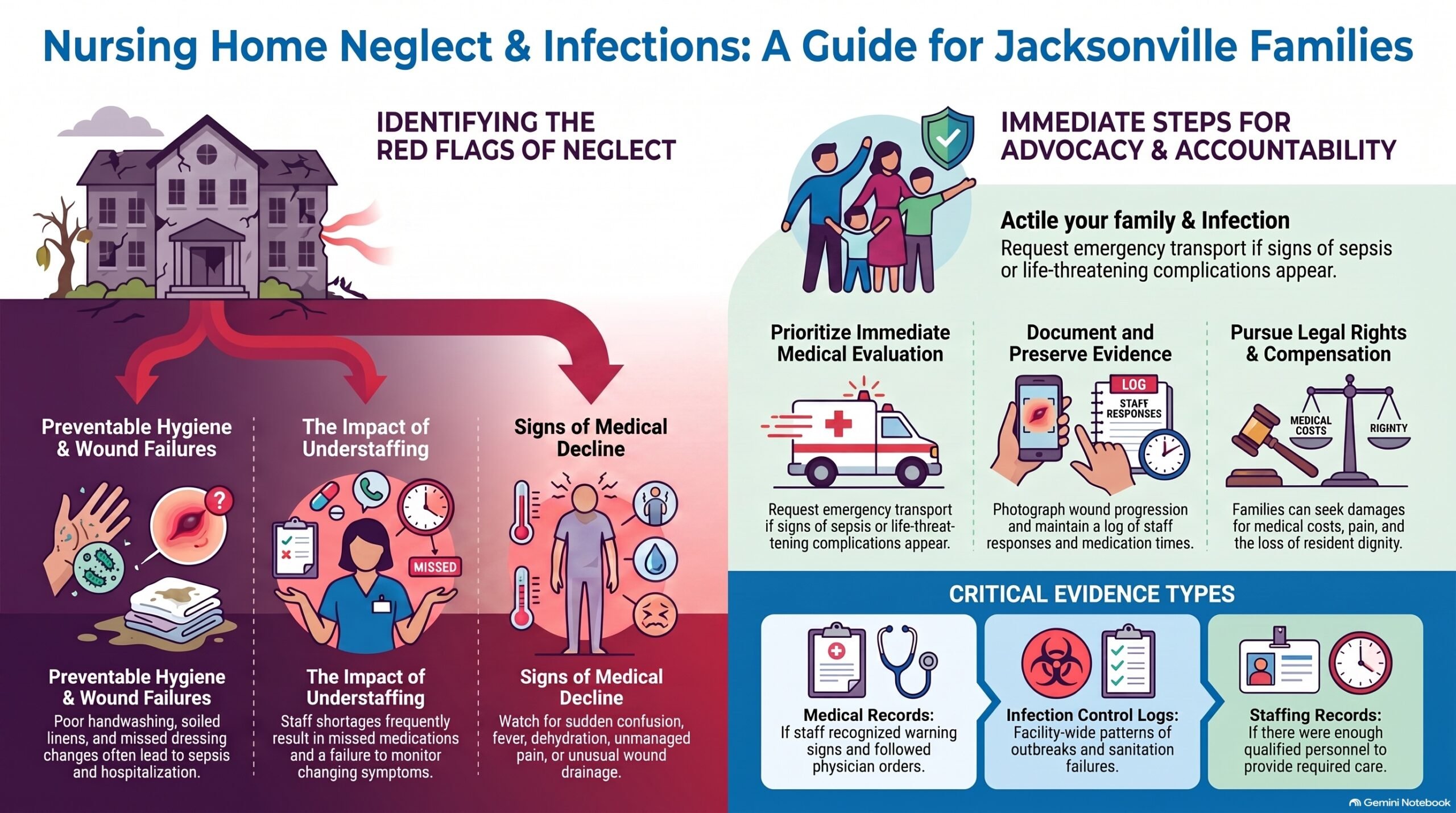
- Common neglect issues include poor wound care, delayed treatment, medication errors, inadequate hygiene, understaffing, and failure to monitor condition changes.
- Families should seek prompt medical evaluation for fever, confusion, weakness, wound drainage, changes in breathing, dehydration, or unmanaged pain.
- Legal claims may pursue compensation for medical costs, pain, disability, loss of dignity, hospitalization, decline, or wrongful death.


How We Can Help With Your Jacksonville Nursing Home Medical Neglect & Infections Injury Claim
When a nursing home resident develops a serious infection or suffers harm from untreated medical needs, the legal claim often depends on identifying where care broke down and who was responsible. A Jacksonville attorney can review records, staffing patterns, medication logs, wound notes, and care plans to determine whether the facility failed in its duties. This process may also include examining Nursing home contracts to identify obligations, limitations, arbitration clauses, and parties involved in decision-making.
Legal counsel can coordinate with medical experts, preserve evidence, interview witnesses, and calculate losses tied to hospitalization, pain, disability, or decline. For families committed to protecting vulnerable residents, the lawyer can also explain resident advocacy strategies, including how to report concerns to oversight agencies and request corrective action. By managing deadlines, communications, and negotiations, the attorney allows caregivers and relatives to focus on the resident’s safety, dignity, and ongoing needs while pursuing accountable compensation.
OUR CONSULTATIONSARE FREE
START YOUR FREE CASE REVIEW

Understanding Jacksonville Nursing Home Medical Neglect & Infections Injury Cases
Although infections can arise even in closely monitored medical settings, Jacksonville nursing home medical neglect cases often involve preventable harm linked to delayed treatment, poor hygiene, inadequate wound care, medication errors, or failure to monitor a resident’s changing condition. These cases focus on whether a facility met accepted standards of care and responded appropriately when warning signs appeared.
A resident may suffer worsening illness, hospitalization, sepsis, or lasting complications when staff overlook symptoms or fail to follow physician instructions. Families often seek answers because they trusted caregivers to protect a vulnerable person with dignity, patience, and skill. Legal review may involve medical records, staffing information, care plans, Resident Rights Advocacy concerns, and Infection Control Audits that show whether safety duties were honored.
Understanding these claims requires attention to both medical facts and the human responsibility owed to each resident. The central issue is whether neglect caused harm that proper care could have avoided or reduced.
Common Causes of Jacksonville Nursing Home Medical Neglect & Infections
Common causes of Jacksonville nursing home medical neglect and infections often involve poor wound care, inadequate hygiene practices, delayed medical treatment, and understaffed nursing facilities. These conditions may allow minor health issues to progress into serious infections, particularly for residents with weakened immune systems or limited mobility. Identifying the cause of neglect is an important step in evaluating whether a facility failed to provide appropriate care.
Poor Wound Care
Failing to provide proper wound care can allow minor skin injuries, surgical sites, or pressure ulcers to develop into serious infections. In Jacksonville nursing homes, caregivers have a duty to monitor wounds, change dressings as ordered, document changes, and alert medical providers when recovery declines. Poor wound care may include missed assessments, contaminated dressings, delayed treatment, or failure to follow physician instructions. Care plan compliance is pivotal because residents with limited mobility, diabetes, or fragile skin often need consistent evaluation and timely intervention. Patient hygiene audits may also reveal whether wound-related routines are being tracked and corrected when standards are not met. When staff members overlook these responsibilities, vulnerable residents may suffer pain, sepsis, hospitalization, or avoidable decline, reflecting preventable medical neglect. Legal review may identify accountable parties.
Inadequate Hygiene Practices
When hygiene routines are inconsistent, nursing home residents may face a heightened risk of infections that could have been prevented through basic care standards. Inadequate handwashing, soiled linens, unclean shared equipment, and poorly maintained restrooms can allow bacteria, viruses, and fungi to spread among vulnerable individuals. Residents who need assistance with bathing, toileting, grooming, or mobility depend on caregivers to preserve cleanliness with dignity and care. Facilities serving this population must promote staff training and accountability to ensure employees understand infection control duties and follow them consistently. Sanitation compliance audits may also reveal whether cleaning schedules, supply availability, and disinfection practices meet required standards. When these safeguards are ignored, hygiene failures can reflect systemic neglect, placing residents at unnecessary risk and undermining the trust families place in the facility.
Delayed Medical Treatment
Poor hygiene can increase exposure to harmful organisms, but the danger often becomes more serious when early signs of infection are not addressed promptly. Delayed medical treatment may allow minor wounds, urinary symptoms, respiratory changes, or fever to progress into severe infection, sepsis, hospitalization, or death. Responsible care requires timely observation, documentation, physician notification, testing, and treatment when a resident’s condition changes. Facility inspection checklists may reveal whether staff followed reporting procedures, monitored symptoms, and responded in accordance with accepted care standards. Infection control compliance also includes recognizing infection risks early, not merely maintaining clean environments. When a facility fails to arrange prompt evaluation or necessary medication, vulnerable residents may suffer preventable harm. Such delays can reflect medical neglect when reasonable intervention would have protected health, dignity, and life.
Understaffed Nursing Facilities
Although staffing shortages may not always be visible to families, they can directly affect whether residents receive timely hygiene assistance, wound recovery, medication, monitoring, and infection response. In understaffed nursing facilities, even devoted caregivers may be forced to choose between urgent needs, leaving vulnerable residents unattended for unsafe periods. Missed repositioning can contribute to pressure ulcers, while delayed bathing or catheter care may increase the risk of infection. Limited Workplace Training can compound these dangers when employees are unfamiliar with warning signs, isolation procedures, or documentation duties. Strong Compliance Oversight helps determine whether staffing plans, supervision, and infection-control practices meet required standards. When a facility accepts responsibility for residents, it must provide sufficient qualified staff to protect residents’ dignity, health, and safety, rather than merely responding after preventable harm occurs.
Don’t Wait. Call Our Florida Personal Injury Lawyers Now!


Legal Rights of Jacksonville Nursing Home Medical Neglect & Infections Injury Victims
In Jacksonville nursing homes, residents who suffer harm from medical neglect or preventable infections may have legal rights under Florida law and federal care standards. These rights protect dignity, access to care, and freedom from avoidable injury. When Infection prevention measures fail, patient safety rules are ignored, or staffing ratios affect required care, a resident or family may seek accountability through civil claims.
Jacksonville nursing home residents harmed by neglect or preventable infections may have rights to accountability under Florida law.
- Right to proper care: Residents are entitled to reasonable medical attention, hygiene, monitoring, and timely treatment for wounds, fever, signs of sepsis, or contagious conditions.
- Right to records and answers: Families may request care plans, medication records, incident reports, and infection-control documentation to understand whether standards were followed.
- Right to pursue compensation: If neglect caused injury, decline, hospitalization, or death, damages may include medical costs, pain, loss of dignity, and related losses.
These rights help protect vulnerable residents and support safer long-term care.
Why Do Jacksonville Nursing Home Medical Neglect & Infections Injuries Happen?
When nursing homes fail to maintain consistent clinical oversight, preventable infections and medical neglect injuries can develop quickly. These harms often arise when care plans are not updated, wounds are not monitored, medications are delayed, or changes in a resident’s condition go unnoticed. Residents who need help with hygiene, nutrition, mobility, and toileting depend on attentive staff to protect their health and dignity.
Common underlying causes include understaffing, poor communication between shifts, staff training gaps, and weak supervision by administrators or clinical leaders. Infection prevention may also suffer when facilities do not follow hand hygiene rules, isolation procedures, equipment cleaning standards, or timely treatment protocols. In some cases, repeated warning signs are minimized until a resident’s condition becomes severe.
Medical neglect and infection-related injuries usually reflect breakdowns in systems meant to safeguard vulnerable people. Understanding these causes helps families, caregivers, and advocates recognize how failures in care settings can endanger those who merit protection.
What Should You Do After a Jacksonville Nursing Home Medical Neglect & Infections Injury?
After a medical neglect or infection injury at a Jacksonville nursing home, the resident should receive immediate medical care to prevent further harm and determine the nature of the condition. Family members should document visible signs, symptoms, treatment delays, communications from the facility, and any changes in the resident’s health. A nursing home lawyer can then review the available evidence, explain potential legal options, and determine whether the facility may be liable.
Seek Immediate Medical Care
Because infections and medical neglect injuries can progress quickly, prompt medical evaluation should be the first priority for any nursing home resident showing signs of decline. A resident with fever, confusion, weakness, changes in breathing, wound drainage, dehydration, or unmanaged pain should be assessed by a qualified medical professional without delay. Staff members, family members, or advocates should request urgent care, emergency transport, or a hospital evaluation when infection warning signs suggest a serious condition. This step protects the resident’s health, supports timely diagnosis, and may prevent sepsis or other life-threatening complications. Caregivers should also communicate known medical history, recent changes, medications, and facility concerns to treating providers. When neglect is suspected, the urgency of caregiver documentation becomes important, but immediate treatment should not be delayed while gathering information or seeking administrative answers.
Document Signs And Symptoms
Once the resident’s immediate medical needs are being addressed, signs and symptoms should be documented as accurately as possible. Careful records can help caregivers, physicians, and family members understand changes in the resident’s condition and respond with appropriate support. Notes should include fever, swelling, drainage, odor, confusion, pain, weakness, appetite changes, or any decline in mobility. A written log should track the symptom timeline, listing dates, times, medications given, staff responses, and statements made by the resident. If visible injuries or infections are present, trusted family members may photograph wound progression with clear, dated images taken under consistent lighting. Clothing, bedding, discharge, or facility notes may also be preserved. This organized documentation helps protect the resident’s dignity while creating a reliable account of what occurred over time.
Contact A Nursing Home Lawyer
When medical neglect or an infection may have caused serious harm, contacting a nursing home lawyer can help the resident and family understand their legal options. Counsel can review medical records, facility notes, photographs, witness accounts, and timelines to determine whether care fell below required standards. During the legal consultation process, families should describe symptoms, treatment delays, staffing concerns, and any prior complaints. A lawyer may also explain deadlines, evidence preservation, and potential claims against the facility or related providers. This guidance supports the basics of patient advocacy by helping loved ones ask informed questions, protect the resident from further harm, and seek appropriate medical evaluation. Early communication with counsel can preserve key proof, reduce uncertainty, and help the family pursue accountability with diligence, compassion, and purpose.
Don’t Wait. Call Our Florida Personal Injury Lawyers Now!
Critical Evidence in a Jacksonville Nursing Home Medical Neglect & Infections Injury Case
Critical evidence in a Jacksonville nursing home medical neglect and infections injury case often determines whether the record shows preventable harm, inadequate care, or a failure to follow accepted standards.
Critical materials may include:
1. Medical records documenting symptoms, treatment, and outcomes; 2. Infection control logs showing sanitation practices, outbreaks, and response measures; 3. Staffing and supervision evidence, supported by expert medical testimony, to assess whether care decisions met professional standards.
Along with these sources, this helps clarify how the infection developed, whether warning signs were ignored, and who may be legally responsible.
Medical Records
Because infection and neglect claims often turn on what staff knew and did, medical records are usually the central evidence in a Jacksonville nursing home case. These records may include physician orders, nursing notes, medication administration records, wound assessments, laboratory results, care plans, hospital transfer records, and family communications. Reviewed carefully, they can show whether staff recognized warning signs, followed treatment orders, updated care plans, and notified providers or loved ones in a timely manner. Records may also reveal gaps, late entries, inconsistencies, or missing documentation that require careful evaluation. Access should be requested in accordance with HIPAA compliance rules, with attention to deadlines, authorization requirements, and the preservation of complete copies. When entries appear incomplete or inaccurate, record correction requests may help clarify the resident’s condition and protect the truth for accountability.
Infection Control Logs
Beyond individual medical records, infection control logs can provide broader evidence of what a Jacksonville nursing home knew about infection risks within the facility. These logs may document wound infections, respiratory illness, urinary tract infections, isolation measures, sanitation concerns, and patterns affecting multiple residents. When reviewed carefully, they can show whether leadership recognized a developing outbreak, responded promptly, or allowed preventable hazards to persist. Infection control logs may also reveal gaps in incident reporting, including delayed entries, incomplete descriptions, or missing follow-up actions. For families seeking accountability while protecting vulnerable residents, these records can help connect individual harm to facility-wide practices. They may also be compared with staffing ratios to determine whether recorded infection trends were consistent with the care environment described by the facility.
Staffing And Supervision
Staffing and supervision records can reveal whether a Jacksonville nursing home had sufficient qualified personnel to prevent, identify, and respond to infection risks. Schedules, assignment sheets, and payroll records may indicate understaffing, excessive overtime, or reliance on temporary workers unfamiliar with residents’ needs. Supervisory notes can indicate whether nurses monitored aides, corrected unsafe practices, and ensured prompt reporting of fever, wounds, respiratory symptoms, or hygiene concerns. A resident’s Care plan should align with staffing assignments, especially when the resident needs wound care, isolation precautions, catheter care, or frequent repositioning. Evidence of staff training is also important, as infection prevention depends on steady instruction and accountability. When records show gaps in coverage, inadequate oversight, or neglected duties, they may support claims that preventable infection-related harm resulted from negligent management.
Expert Medical Testimony
When infection-related harm is disputed, expert medical testimony can explain whether a Jacksonville nursing home met the applicable standard of care. Physicians, nurses, infection preventionists, and wound care experts may review records, medication charts, lab results, and staff notes to identify what should have been done. Their opinions can clarify whether delayed treatment, poor monitoring, unsafe hygiene, or failures in nursing protocols allowed an infection to worsen. Through Root cause analysis, experts may connect a resident’s decline to preventable breakdowns in care rather than unavoidable illness. This evidence can help families, advocates, and courts understand intricate medical events with fairness and accuracy. In serious neglect cases, expert testimony also supports accountability and guides decisions that may protect other vulnerable residents from similar harm in the future.
Long-Term Effects of Jacksonville Nursing Home Medical Neglect & Infection Injuries
Long-term effects of Jacksonville nursing home medical neglect and infection injuries may include chronic pain, lasting disability, and reduced physical independence. Residents may also experience cognitive and emotional decline, particularly when untreated infections, poor monitoring, or repeated medical setbacks disrupt stability. Recurrent infections and hospitalization can further weaken overall health, creating risks that require careful legal and medical evaluation.
Chronic Pain And Disability
Although infection-related injuries may begin as treatable conditions, nursing home medical neglect in Jacksonville can leave residents with chronic pain, reduced mobility, and lasting disability. Untreated wounds, sepsis complications, joint infections, and nerve damage may limit a resident’s ability to stand, walk, bathe, or participate in daily care. These losses often increase dependence on caregivers and place added responsibility on families seeking safe, respectful support.
Long-term harm may require ongoing medical supervision, physical therapy, assistive devices, and appropriate pain management options. When disability prevents normal functioning, families may also need guidance with disability benefits claims and documentation of neglect-related limitations. Careful legal review can help identify whether delayed treatment, poor monitoring, or inadequate infection control contributed to permanent impairment and preventable suffering within the facility.
Cognitive And Emotional Decline
As infections progress without timely diagnosis and treatment, Jacksonville nursing home residents may experience cognitive and emotional decline that extends beyond the initial illness. Confusion, memory loss, withdrawal, anxiety, and depression can develop when infection-related discomfort, fever, dehydration, or inflammation remains unaddressed. These changes may reduce a resident’s ability to report symptoms, follow care instructions, or participate in daily routines.
Neglect may also worsen decline through poor medication management, missed assessments, or delayed physician notification. Family communication gaps can leave loved ones unaware of behavioral changes that signal deterioration. For caregivers committed to serving vulnerable residents, careful observation and timely reporting are crucial. When facilities fail to respond appropriately, cognitive and emotional harm may become a lasting consequence of preventable neglect and inadequate infection care.
Recurrent Infections And Hospitalization
When infections are not fully evaluated or treated, Jacksonville nursing home residents may face repeated illness that weakens the body and increases the risk of hospitalization. Recurrent urinary tract infections, pneumonia, wound infections, or sepsis may signal inadequate monitoring, delayed physician notification, poor hygiene, or incomplete medication administration. Infection timelines can help identify whether symptoms were ignored, whether treatment began promptly, and whether staff followed care plans after discharge. Frequent hospital readmissions may further indicate that the underlying source of infection was never resolved, placing fragile residents at greater risk of organ damage, functional decline, and loss of independence. Caregivers, advocates, and families serving vulnerable residents should review records, observe recurring symptoms, and question repeated transfers to hospitals, especially when preventable patterns suggest continuing neglect or unsafe facility practices.
Proving Liability in Jacksonville Nursing Home Medical Neglect & Infections Injury Cases
Because medical neglect and infection claims often involve layered failures, proving liability in a Jacksonville nursing home case requires a careful review of the resident’s condition, the facility’s duties, and the decisions that led to harm. Attorneys may examine care plans, nursing notes, wound records, medication logs, lab results, and transfer summaries to determine whether staff recognized risks and responded appropriately. Evidence may show delayed treatment, poor hygiene controls, inadequate monitoring, understaffing, or failure to follow physician orders.
A focused investigation also considers the statute of limitations, since missed deadlines can prevent a family from seeking accountability. Expert witness selection is equally important, as qualified medical professionals can explain how proper care should have been delivered and how deviations from that care contributed to infection, decline, or hospitalization. By organizing records, witness accounts, and clinical opinions, a claim can identify preventable failures while honoring the resident’s dignity and the family’s effort to protect others.
Dealing With Insurance Companies After a Jacksonville Nursing Home Medical Neglect & Infections Injury
How should families respond once a nursing home or insurer begins asking questions after a medical neglect or infection injury? They should proceed carefully, with a focus on protecting the resident’s dignity, health, and legal interests. Insurance representatives may seek recorded statements, broad medical authorizations, or early explanations before the full facts are known.
A measured Negotiation Strategy begins with organized documentation and controlled communication. Families should preserve care notes, photographs, medication records, discharge papers, and witness details, while avoiding speculation. Insurers may issue evidence requests that appear routine, yet some requests may be overly broad or designed to limit responsibility.
Reviewing Policy Coverage is also important, because available benefits, exclusions, and liability limits may shape discussions. If an insurer questions fault or minimizes harm, clear denial responses supported by medical records and facility evidence may help prevent unfair conclusions. Careful handling promotes accountability while supporting the injured resident’s needs.
What to Expect During a Jacksonville Nursing Home Medical Neglect & Infections Injury Claim Process
A Jacksonville nursing home medical neglect and infections injury claim generally begins with an initial case evaluation, where the facts, injuries, and potential liability are assessed. The process may then involve a careful review of medical records and evidence gathering to identify signs of neglect, delayed treatment, poor hygiene, or mismanagement of infections. Depending on the strength of the claim, the matter may proceed through settlement negotiations or, when necessary, trial.
Initial Case Evaluation
During the initial case evaluation, a Jacksonville nursing home medical neglect and infections lawyer examines whether the resident’s illness or injury may have resulted from substandard care, delayed treatment, poor hygiene, inadequate wound management, or failure to follow infection-control protocols. The lawyer identifies Patient safety concerns, including signs of worsening infection, dehydration, sepsis risk, medication errors, or unsafe living conditions. Family members may be asked to describe timelines, symptoms, staff responses, and prior complaints to help clarify whether preventable harm occurred. The evaluation also considers the resident’s needs, vulnerability, and dignity, while evaluating whether legal action may protect others from similar harm. Early evidence preservation steps may include securing photographs, witness names, facility correspondence, incident notes, and discharge instructions before details are lost, altered, or forgotten.
Medical Record Review
After the initial facts are gathered, a Jacksonville nursing home medical neglect and infections lawyer typically begins a detailed review of the resident’s medical records to identify what care was provided, what warning signs were documented, and whether staff responded appropriately. This review may include physician notes, nursing entries, wound charts, medication records, lab results, and hospital transfer documents. Through infection timeline mapping, the lawyer can compare symptoms, test results, treatment decisions, and delays in care. The purpose is to determine whether the record reflects timely monitoring, proper hygiene measures, and appropriate escalation to medical providers. Careful analysis may also reveal patterns of staff negligence, such as repeated missed assessments or inconsistent documentation, helping to clarify whether the resident received the attentive support owed to vulnerable individuals.
Neglect Evidence Gathering
Once the medical records have been reviewed, neglect evidence gathering focuses on confirming what occurred in daily practice and whether the facility’s actions aligned with the documented care plan. This stage may include Incident report review, staffing record analysis, wound photographs, infection control logs, medication administration records, and hygiene documentation. The purpose is to identify gaps between required care and actual care, especially when vulnerable residents depended on consistent attention, monitoring, and timely intervention. Witness statement collection may involve family members, staff, visitors, or others who observed changes in condition, delayed responses, or unsafe practices. Each source is evaluated for consistency, relevance, and reliability. Careful evidence gathering helps clarify whether preventable neglect contributed to infection, decline, or injury and supports a disciplined, service-focused assessment of accountability.
Settlement Or Trial
When the evidence has been developed, a Jacksonville nursing home medical neglect and infection injury claim may move toward settlement negotiations or, if necessary, trial preparation. Counsel evaluates medical records, infection timelines, staffing issues, expert opinions, and the resident’s losses to define settlement negotiation goals. These goals often include compensation for medical treatment, pain, disability, and the dignity lost through preventable neglect. If the facility or insurer refuses to reach a fair resolution, the case may proceed to court. Jury trial strategy then becomes central, including witness preparation, exhibit organization, and a clear explanation of how neglect caused harm. Throughout this stage, the process should remain focused on accountability, truthful presentation, and the resident’s well-being. A measured approach helps families pursue justice while honoring compassionate service.
Compensation for Jacksonville Nursing Home Medical Neglect & Infections Injury Damages
Securing compensation for medical neglect and infection-related injuries in a Jacksonville nursing home requires a careful assessment of the resident’s physical harm, financial losses, and diminished quality of life. Claims may involve untreated wounds, sepsis, medication errors, dehydration, or delayed infection control, each requiring documentation that connects negligent care to measurable injury.
A legal evaluation may consider medical records, staffing patterns, facility policies, expert opinions, and family observations. Compensation may address treatment needs, ongoing care, pain, suffering, and the loss of dignity caused by unsafe conditions. When neglect contributes to a resident’s death, Wrongful death damages may support surviving family members with recognized losses under Florida law.
In severe cases involving reckless disregard for resident safety, punitive damages estimates may be examined, although such awards require a higher evidentiary showing. Careful case preparation helps protect vulnerable residents, promotes accountability, and supports families seeking justice with purpose.
Economic vs Non-Economic Damages in Jacksonville Nursing Home Medical Neglect & Infections Cases
In Jacksonville nursing home medical neglect and infection cases, damages are generally divided into economic losses, such as medical bills and related care costs, and non-economic losses, including pain and suffering. Economic damages often depend on records, invoices, and projected treatment needs, while non-economic damages require careful evaluation of the resident’s physical pain, emotional distress, and loss of dignity. Proving the value of damages typically requires clear documentation, credible testimony, and a focused presentation of how the neglect or infection affected the resident’s health and quality of life.
Medical Bills And Costs
Because medical neglect and infection cases often involve prolonged treatment, the financial impact on a Jacksonville nursing home resident can be substantial. Economic damages may include hospital stays, emergency care, wound treatment, laboratory testing, medications, rehabilitation, consultations, and transportation to necessary appointments. Careful documentation helps identify which costs were caused by negligent care rather than ordinary health needs. Families serving an injured resident may also face billing disputes involving Medicare, Medicaid, private insurance, or facility charges that appear improper or duplicated. Reimbursement options should be reviewed with attention to liens, copayments, denied claims, and out-of-pocket expenses. A legal evaluation can organize records, calculate past costs, and estimate future medical needs, supporting a claim seeking accountable payment for care necessitated by neglect.
Pain And Suffering
Medical bills show only part of the harm caused by nursing home neglect or an untreated infection. Pain and suffering address the human losses that do not appear on invoices, including physical discomfort, fear, humiliation, isolation, and loss of dignity. In Jacksonville nursing home cases, these non-economic damages may reflect how untreated wounds, sepsis, medication errors, or delayed care disrupted a resident’s daily life and sense of safety.
For families committed to protecting vulnerable adults, this category recognizes that residents’ rights include respectful treatment, timely care, and freedom from preventable suffering. While economic damages measure costs, non-economic damages consider lived experience. Negligence proof helps connect that suffering to substandard care, but this discussion concerns the type of harm, not the later valuation process.
Proving Damage Value
After an injury has been identified, proving the value of damages requires a careful distinction between measurable financial losses and the human consequences of neglect. Economic damages may include hospital bills, infection treatment, rehabilitation, medication, and added care costs. Non-economic damages address pain, fear, isolation, loss of dignity, and reduced quality of life. Evidence gathering is important and includes medical records, photographs, facility notes, billing statements, and witness accounts. Expert witnesses may explain how neglect caused infection, worsened health, or increased care needs. A reliable damages calculation connects each loss to the resident’s condition and future prognosis. This assessment also guides settlement strategy, helping advocates pursue compensation that reflects both financial harm and personal suffering. In Jacksonville cases, careful valuation supports accountability while honoring vulnerable residents with fairness.
Don’t Wait. Call Our Florida Personal Injury Lawyers Now!
When a Jacksonville Nursing Home Medical Neglect & Infections Injury Case Goes to Trial vs Settlement
When a Jacksonville nursing home medical neglect or infection injury case is evaluated, the decision to pursue settlement or proceed to trial depends on the strength of the evidence, the severity of the harm, and the facility’s willingness to accept responsibility. Settlement negotiation may provide a respectful path toward resolution, especially when liability is clear, and compensation can address medical care, pain, and family losses without further delay.
Trial preparation becomes necessary when the facility disputes fault, minimizes injuries, or refuses fair accountability. In those cases, attorneys focus on evidence preservation, witness testimony, medical records, infection timelines, staffing patterns, and expert opinions. A trial allows a jury to hear how neglect affected a vulnerable resident and whether the nursing home failed in its duty of care.
Both paths require careful judgment. The goal remains service to the injured resident, dignity for the family, and a result that reflects the full extent of the harm caused.
Florida Laws That May Affect Your Jacksonville Nursing Home Medical Neglect & Infections Case
Because nursing home injury claims are shaped by specific state requirements, Florida law can significantly affect a Jacksonville medical neglect or infection case. These laws help define the duties owed to residents, the standards facilities must follow, and the evidence that may support a claim for harm caused by poor care.
Florida law helps define resident protections, facility duties, and the use of evidence in Jacksonville nursing home neglect claims.
- Florida Resident Rights: Residents are entitled to dignity, safe care, appropriate medical attention, and protection from avoidable injury. Violations may indicate that a facility failed to meet its caregiving obligations.
- Nursing Facility Oversight: State and federal regulations require facilities to maintain infection control procedures, adequate staffing, care planning, and accurate records. Inspection findings may help reveal unsafe patterns.
- Pre-suit requirements: Certain claims may require careful notice, record review, and expert evaluation before litigation proceeds. These steps encourage responsible case assessment while preserving focus on the resident’s welfare, accountability, and meaningful protection for vulnerable adults.
The Statute of Limitations for Jacksonville Nursing Home Medical Neglect & Infections Injury Cases
In Jacksonville nursing home medical neglect and infection cases, the statute of limitations determines whether an injured resident or surviving family member may still pursue compensation. Florida law generally sets strict time limits for claims involving medical negligence, personal injury, or wrongful death. These deadlines may begin when the injury was discovered, or when it reasonably should have been discovered through careful attention to the resident’s condition.
Because infections may worsen slowly or be obscured by incomplete records, timing can be difficult. Statute tolling rules may pause the deadline in limited circumstances, such as delayed discovery, incapacity, or certain forms of concealment. Filing deadline extensions may also apply in specific situations, but they are not automatic and should not be assumed.
Families seeking accountability for vulnerable residents should treat every deadline as urgent. Missing the applicable filing period can prevent a claim from being heard, regardless of the seriousness of the neglect.
How a Jacksonville Nursing Home Medical Neglect & Infections Lawyer Can Help You
After a resident develops a serious infection or suffers harm from medical neglect, a Jacksonville nursing home lawyer can evaluate whether the facility failed to meet accepted care standards. Counsel may review clinical records, staffing patterns, wound-care notes, medication logs, and infection-control practices to identify preventable breakdowns. This work supports families, guardians, and advocates seeking accountability for vulnerable residents.
- Case assessment: The lawyer may compare the resident’s condition, symptoms, and treatment history against professional standards and facility policies.
- Evidence preservation: Counsel can seek records, photographs, surveillance materials, witness statements, and internal reports before crucial information is altered or lost.
- Lawsuit timeline: The lawyer can explain procedural steps, expected filings, expert review, settlement discussions, and trial preparation.
Through organized investigation and careful communication, legal representation helps clarify responsibility, measure losses, and pursue compensation that may support medical care, dignity, and safer facility practices for others.
When to Contact a Jacksonville Nursing Home Medical Neglect & Infections Lawyer
Recognizing how legal counsel can investigate medical neglect and infection-related harm also raises an important timing question for families and guardians. Contact should be considered when a resident develops repeated infections, untreated wounds, dehydration, medication errors, or sudden decline without a clear medical explanation. Early communication is also appropriate when caregivers dismiss concerns, delay physician care, or provide records that appear incomplete or inconsistent.
Families caring for a vulnerable elder should act promptly upon signs of Notable caregiver misconduct, such as ignored call lights, poor hygiene, rough handling, or failure to isolate contagious residents. Reports of staff training failures, including improper wound care, unsafe catheter maintenance, or missed infection-control procedures, may also justify legal review. Timely contact can help preserve records, photographs, witness statements, and facility communications before they are lost or changed. A lawyer can assess whether the facts suggest neglect, regulatory violations, or preventable harm that may require further action under Florida law.
Why You Need an Experienced Jacksonville Nursing Home Medical Neglect & Infections Lawyer
When a resident suffers infection-related harm or worsening medical decline, an experienced Jacksonville nursing home medical neglect lawyer can provide the focused legal analysis needed to identify what went wrong and who may be responsible. These cases often involve medication failures, untreated wounds, delayed physician notification, poor hygiene practices, or breakdowns in infection control. A knowledgeable lawyer can examine records, staffing patterns, care plans, and facility policies to determine whether standards of care were ignored.
Legal experience is important because nursing home neglect cases require more than compassion; they require proof, organization, and an understanding of regulatory duties. Through Resident rights advocacy, counsel can help protect vulnerable individuals whose needs may have been dismissed or minimized. Evidence may also reveal whether staff received adequate Infection prevention training and followed required protocols. This legal guidance supports families seeking accountability, promotes safer care practices, and reinforces the dignity every resident merits.
How to Choose the Right Jacksonville Nursing Home Medical Neglect & Infections Lawyer for Your Case
Selecting the right Jacksonville nursing home medical neglect and infections lawyer begins with evaluating whether the attorney has direct experience handling cases involving preventable infections, wound deterioration, medication mismanagement, delayed treatment, and facility-wide care failures. Families should look for a lawyer who understands nursing home regulations, medical records, staffing standards, and the signs of systemic neglect.
A suitable attorney should also demonstrate strong Client communication, offering clear updates, practical explanations, and respectful guidance during a difficult process. This helps families make informed decisions while remaining focused on protecting a vulnerable loved one.
Fee transparency is equally important. A lawyer should explain costs, contingency arrangements, and potential case expenses before representation begins. Families may also consider whether the attorney has access to medical experts, investigators, and evidence preservation resources. Choosing carefully can help ensure the claim is prepared thoroughly, pursued responsibly, and aligned with the goal of improving accountability and resident care.
About The Law Offices of Anidjar & Levine
The Law Offices of Anidjar & Levine represents individuals and families in nursing home medical neglect and infection cases, including claims involving untreated wounds, preventable infections, delayed medical care, and failures in facility oversight.
The firm examines how a resident’s Care Team responded to changes in health, whether staff followed physician orders, and whether facility leadership maintained safe practices.
Its attorneys evaluate Liability Standards that may apply to long-term care providers, administrators, and related parties.
Through careful Documentation Review, they assess medical charts, incident reports, wound records, infection control notes, staffing materials, and communications with families.
This process helps identify when neglect contributed to avoidable harm.
The firm also considers State Regulations governing nursing home operations, resident protection, reporting duties, and infection prevention.
By combining legal analysis with attention to patient dignity, The Law Offices of Anidjar & Levine works to support accountability and meaningful recovery for those affected by negligent care.
Frequently Asked Questions
Can I Move My Loved One During an Active Infection Investigation?
Yes, a loved one may often be moved during an active infection investigation if safe transfer protocols are followed and a receiving facility accepts the patient. Caregivers should request medical records, infection-control details, and discharge orders before relocation. Independent mobility options may affect transport planning. Legal timing considerations also matter because moving the resident could affect evidence preservation, reporting duties, and subsequent claims. Professional guidance helps protect health, dignity, and accountability.
Who Pays for Outside Medical Evaluations After Nursing Home Neglect?
Outside medical evaluations are often paid first by the resident, family, Medicare, Medicaid, or private insurance, depending on Insurance coverage and medical necessity. Billing responsibility may later shift if neglect is proven through records, expert review, or a legal claim. The nursing home, its insurer, or another responsible party may reimburse costs. Caregivers should preserve invoices, referral notes, and test results to support accountability and protect the resident’s wellbeing.
Can Infection Outbreaks Affect Multiple Residents’ Claims at Once?
Yes, infection outbreaks can affect multiple residents’ claims at once when shared failures, such as poor hygiene, delayed isolation, or understaffing, caused preventable harm. Group liability may arise if the same facility-wide conduct injured several residents. Evidentiary patterns, including infection timelines, staffing records, and sanitation logs, can help demonstrate patterns of neglect. Those assisting vulnerable residents should evaluate each claim individually while recognizing the outbreak’s broader implications for proof and accountability.
Should I Report Suspected Neglect to Florida Health Agencies?
Yes, suspected neglect should be reported to appropriate Florida health agencies, especially when resident safety may be at risk. A caregiver or concerned family member should promptly file the incident report, including dates, symptoms, staff responses, and witnesses. They should also preserve evidence, such as photographs, medical records, and communications. Reporting supports vulnerable residents, promotes accountability, and helps investigators determine whether corrective action or further protection is required.
Can Photos or Messages From Staff Support My Loved One’s Case?
Yes, photos or staff messages can support a loved one’s case when they show injuries, unsafe conditions, delayed care, or admissions by caregivers. Photo evidence may document wounds, hygiene issues, or signs of infection over time. Messages can clarify what staff knew and when action occurred. Patient testimony, family observations, and records should be preserved carefully. A qualified advocate can evaluate whether the evidence reliably supports accountability and improved care.
—————————
Medical neglect and infections in Jacksonville nursing homes can cause serious harm when facilities fail to meet required standards of care.
Victims and their families may have legal options to pursue accountability and compensation for related losses.
The Law Offices of Anidjar and Levine can evaluate the circumstances, preserve evidence, and guide the claims process with focused advocacy.
Prompt legal review may help protect important rights and support a stronger nursing home neglect case.
For additional guidance, contact a Jacksonville Personal Injury Lawyer.

