The Law Offices of Anidjar and Levine helps survivors identify legal deadlines, preserve records and communications, and evaluate claims involving professional misconduct, emotional harm, and possible institutional negligence.
Counsel may coordinate reporting to licensing authorities or law enforcement, manage insurer contact, and build evidence from treatment records, billing documents, witness statements, and contemporaneous notes.
Prompt guidance from a Florida Sexual Assault Lawyer can protect rights, reduce avoidable mistakes, and support informed decisions about accountability, compensation, and the steps explained below.
Main Takeaways
- A Florida therapist sexual abuse lawyer can evaluate claims involving boundary violations, exploitation, emotional harm, and negligence by the therapist or supervising institution.
- Early legal help protects deadlines, preserves treatment records, messages, billing documents, and witness information, and helps organize a consistent case strategy.
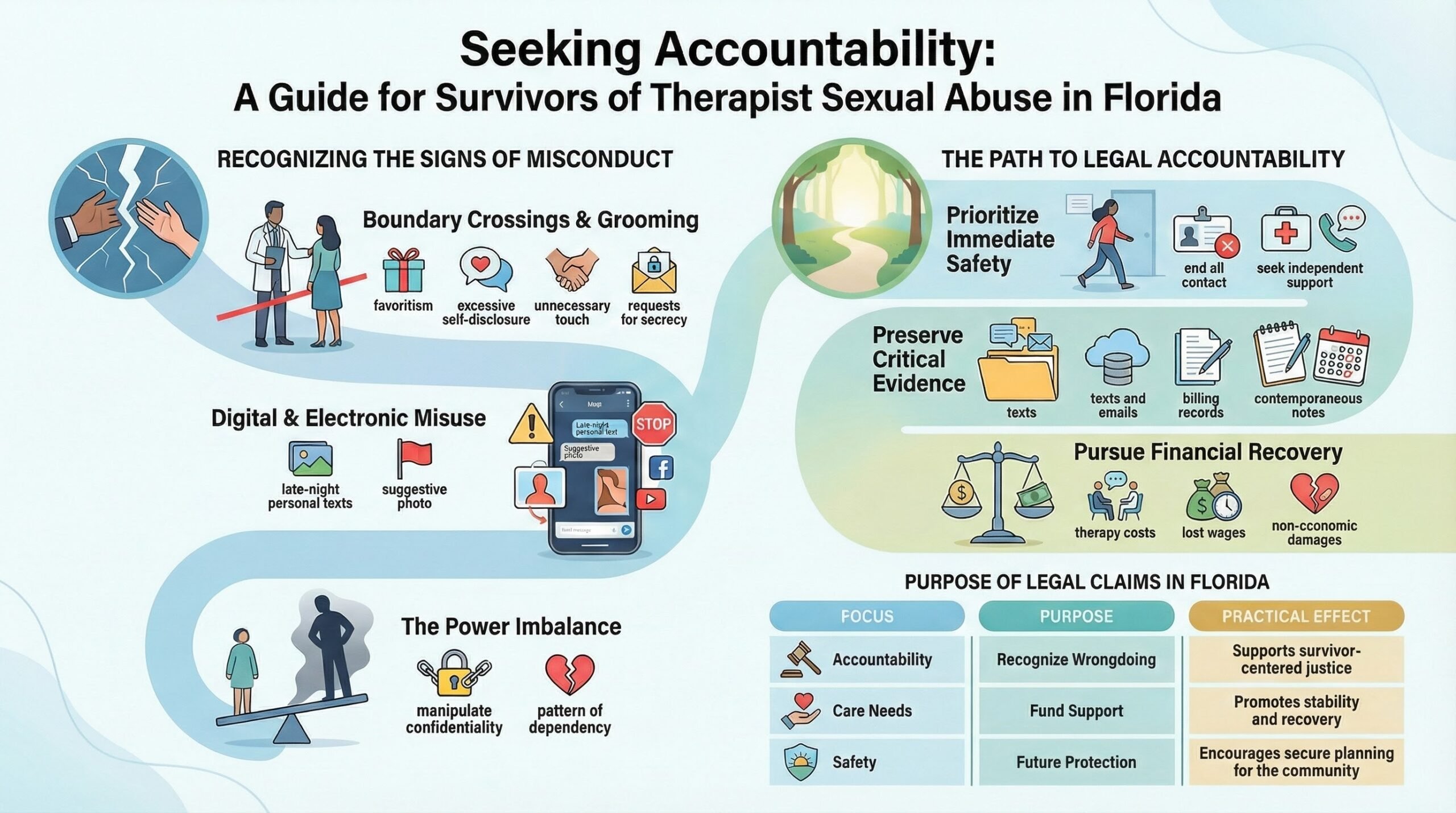
- Common warning signs include secrecy requests, sexual comments, unnecessary touching, favoritism, manipulative confidentiality, and inappropriate late-night electronic communications.
- After an incident, prioritize safety, end contact, seek independent medical or crisis support, and save all texts, emails, notes, and appointment records.
- In Florida, reporting options may include law enforcement, the Department of Health, or the licensing board, while an attorney coordinates communications and evidence.
How We Can Help With Your Florida Therapist Sexual Abuse Claim
When a therapist abuses the trust inherent in a professional relationship, a Florida therapist sexual abuse claim requires careful legal evaluation and a disciplined strategy from the outset. Counsel can support survivors by organizing facts, preserving records, and creating a clear plan that protects both dignity and legal interests. This assistance often begins with listening carefully, identifying legal deadlines, and preparing a practical path forward.


A professional legal team may gather treatment records, communications, billing documents, and witness information, then assess how each item supports the claim. They can also help with drafting client statements that are accurate, consistent, and respectful of the survivor’s well-being. Throughout the process, counsel may manage insurer contact, coordinate documentation, and reduce avoidable stress so survivors can focus on recovery and serving their families and communities.
With disciplined preparation and steady guidance, legal representation can provide structure, accountability, and a stronger foundation for meaningful recovery and future safety.
Understanding Therapist Sexual Abuse Cases in Florida
OUR CONSULTATIONSARE FREE
START YOUR FREE CASE REVIEW

A clear understanding of therapist sexual abuse cases in Florida helps frame how these claims are evaluated and why they differ from many other civil matters. These cases often involve profound power imbalance, professional ethics, and legal duties designed to protect vulnerable patients seeking care and stability.
Florida law and professional standards recognize that therapists occupy positions of trust, authority, and influence. When sexual misconduct is alleged, the analysis may consider licensing rules, treatment records, witness testimony, and whether Confidentiality boundaries were manipulated to isolate or control a patient. Civil claims may also examine negligence, breach of fiduciary duty, emotional harm, and the long-term effect on the patient’s wellbeing and family relationships.


In some matters, Institutional liability becomes relevant if a clinic, practice group, or employer failed to supervise, investigate warning signs, or enforce safeguarding policies. A careful legal review helps communities support accountability, patient protection, and safer therapeutic environments for those in need.
Common Scenarios When Therapist Sexual Abuse Might Take Place in Florida
Therapist sexual abuse in Florida may arise in several settings where trust, isolation, and unequal power create opportunities for misconduct. Common examples include inappropriate conduct during private sessions, escalating boundary violations that begin subtly, and the misuse of electronic communication outside the therapeutic relationship. Risk may also be heightened in residential treatment settings, where patients often have limited privacy, increased dependency, and prolonged contact with providers.
During Private Sessions
Because private counseling sessions often occur without witnesses, they can create conditions in which professional boundaries are more easily crossed, and misconduct may remain concealed for extended periods. In Florida, isolated meetings may allow inappropriate touching, sexual comments, coercive disclosures, or suggestive questioning that serve no therapeutic purpose. These Private session violations can be difficult for clients to identify immediately, particularly when trust and vulnerability are central to treatment.
Service-minded readers should recognize that Confidentiality breaches may also arise during these encounters, especially when a therapist exploits sensitive disclosures to manipulate silence or compliance. Warning signs can include unnecessary physical contact, locked doors, requests for secrecy, or conduct unrelated to clinical goals. Careful documentation, prompt reporting, and informed legal guidance can help protect clients and uphold professional standards within therapeutic settings across Florida communities.
Boundary Crossings Escalate
When professional limits begin to loosen, seemingly minor boundary violations can develop into patterns of grooming that place clients at substantial risk of sexual exploitation. A therapist may begin with favoritism, excessive self-disclosure, unnecessary touch, or meetings that depart from established treatment goals. Because of the Therapy power imbalance, clients may interpret these acts as care rather than misconduct and may feel pressured to accommodate increasing intrusions.
Over time, the therapist may normalize secrecy, dependency, or special status, creating consent violation patterns that undermine voluntary decision-making. For those committed to protecting vulnerable people, these warning signs warrant immediate attention. Ethical care requires firm boundaries, transparent documentation, and supervision that identifies escalation before personal involvement displaces treatment, damages trust, and causes profound harm to clients and families alike.
Electronic Communication Misuse
Digital contact often becomes the next setting in which boundary erosion continues, particularly after a pattern of favoritism, secrecy, or personal overinvolvement has already begun. Texts, direct messages, emails, and video platforms may be used to extend influence beyond sessions, often under the appearance of support or accessibility.
In Florida cases, misuse can include late-night personal conversations, suggestive comments, requests for photos, or pressure to keep exchanges hidden from family, supervisors, or treatment records. Such conduct may create Confidentiality breaches, consent violations, and increased emotional dependency, especially when a client is vulnerable and seeking help. A service-minded community should recognize that digital communication must remain clinically appropriate, documented, and transparent.
When electronic contact becomes intimate, secretive, or coercive, it may signal exploitation rather than care and warrants immediate legal and professional scrutiny.
Residential Treatment Settings
Although residential treatment programs are structured to provide intensive care and supervision, they can also create conditions in which therapist sexual abuse is easier to hide and more difficult for a client to resist or report. Clients may depend on staff for housing, medication, privileges, and contact with family, which can increase vulnerability. Isolated sessions, overnight staffing patterns, and blurred professional boundaries may enable exploitation.
Fear of retaliation, Confidentiality breaches, and disbelief often discourage disclosure, especially when a therapist controls treatment decisions. In these settings, administrators and caregivers are expected to uphold clear policies, supervision, and mandatory reporting, with prompt action when warning signs emerge. Careful documentation, independent complaint channels, and trauma-informed support can help protect residents, preserve dignity, and ensure that allegations receive objective review and timely intervention.
Legal Rights of Therapist Sexual Abuse Victims in Florida
Because Florida law recognizes the profound breach of trust involved in therapist sexual abuse, victims may have important legal rights to pursue accountability and financial recovery. These rights may arise through civil claims, licensing complaints, and other legal remedies intended to protect vulnerable people and uphold professional standards. Courts may consider Trauma disclosure challenges when evaluating delayed reporting, while confidentiality violations may support additional claims where private information was misused.
Florida law may allow therapist sexual abuse survivors to pursue accountability, compensation, and protection when trust, safety, and confidentiality were violated.
- Victims may seek compensation for therapy costs, emotional distress, lost income, and other measurable harms connected to the abuse.
- They may assert that a therapist, clinic, or supervising entity violated professional duties, ignored warning signs, or failed to maintain safe boundaries.
- They may also request protective measures that help preserve dignity, limit unnecessary disclosure, and encourage informed participation in the legal process.
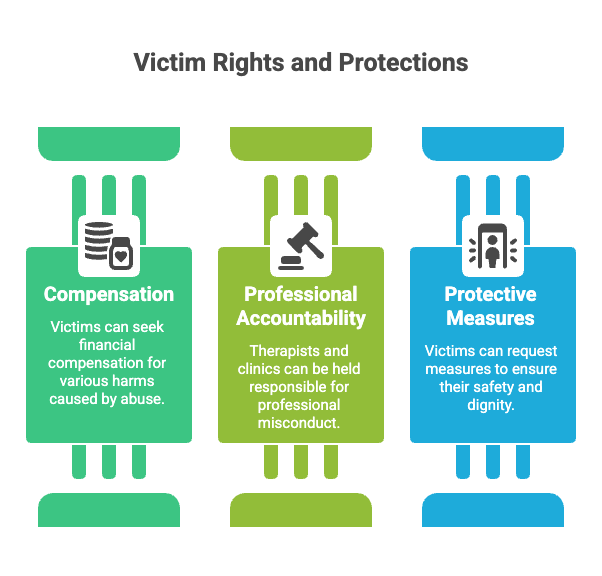
Florida law may also permit claims against institutions whose negligence allowed abuse to continue, affecting clients, families, and communities.
Steps to Take After a Therapist’s Sexual Abuse Incident in Florida
After a therapist’s sexual abuse incident in Florida, the priority is to ensure the victim’s immediate safety and separation from the provider. It is also important to preserve critical evidence, including messages, records, and notes that may support future legal or regulatory action. Prompt reporting to appropriate authorities can help protect the victim’s rights and may prevent further harm to others.
Ensure Immediate Safety
When a therapist engages in sexual abuse, the first priority is the individual’s immediate safety and separation from the therapist’s control or access. Ending all contact, leaving the setting, and seeking a trusted support person can reduce further harm. If danger is urgent, contacting law enforcement or emergency services may be necessary.
Immediate safety also includes obtaining medical or crisis care from qualified professionals unaffiliated with the therapist. A hospital, rape crisis center, or licensed counselor can help stabilize the situation and guide next steps. Because therapist abuse may involve Confidentiality violations, a safe advocate should be chosen carefully. In some circumstances, other professionals may have Mandatory reporting duties under Florida law. A Florida attorney can help identify protective options while prioritizing dignity, safety, and informed decision-making for all.
Preserve Critical Evidence
A careful effort to preserve evidence can greatly affect both personal protection and any later civil, criminal, or licensing action in Florida. After reaching safety, a person may save texts, emails, voicemails, billing records, appointment logs, treatment plans, and portal messages, while avoiding deletion or alteration. Photographs of injuries, clothing, or locations may also help establish timing and context.
Contemporaneous notes can be valuable. Dates, times, exact words, and observed conduct should be recorded as soon as possible. Witness statement preservation matters when friends, relatives, coworkers, or staff noticed changes, disclosures, or surrounding events. Secure copies in a protected location and maintain originals when possible. Because records can disappear, attorney consult urgency is significant when evaluating what should be collected, requested, or formally preserved before it is lost.
Report Abuse Promptly
In many cases, prompt reporting helps protect the affected person and may prevent further harm to others in the therapist’s care. After an incident, a report may be made to law enforcement, the Florida Department of Health, or the therapist’s licensing board, depending on the circumstances. Timely notice can support investigations, preserve credibility, and strengthen access to protective measures.
Those assisting survivors should understand Mandatory reporting laws and available reporting channels, especially when vulnerable adults or minors are involved. Clear documentation of dates, statements, and witnesses can help agencies respond effectively. Prompt reporting also supports safeguarding patient rights by creating an official record and encouraging oversight. A qualified attorney may help evaluate options, coordinate communications, and reduce avoidable errors while the affected person focuses on safety, stability, and recovery.
How a Florida Therapist Sexual Abuse Lawyer Can Help You Initiate a Case
Because the first steps after a therapist’s sexual abuse can feel uncertain, a Florida therapist sexual abuse lawyer helps establish the foundation of a case by evaluating the facts, identifying potential legal claims, and explaining the options available under state law. Counsel may review records, preserve communications, and assess whether Confidentiality violations or breaches of professional duty support civil action.
A lawyer also guides a survivor through practical early decisions that protect both legal rights and community safety:
- Gathering treatment records, messages, billing files, and witness information before evidence is lost.
- Determining whether licensing complaints, civil claims, or other actions should proceed separately.
- Explaining Mandatory reporting requirements and how reports may affect institutions, insurers, and timelines.
Through careful preparation, counsel can communicate with providers, clinics, and investigators, reducing unnecessary burden on the survivor. This support allows the individual to act with dignity, pursue accountability, and make informed choices that may help protect others from similar misconduct in Florida.
Long-Term Effects of Therapist Sexual Abuse Trauma
Therapist sexual abuse can cause lasting emotional harm that continues well beyond the end of treatment, often affecting a person’s sense of safety, self-worth, and stability. Survivors may also experience serious relationship and trust issues, particularly in personal, professional, and medical settings where vulnerability is unavoidable. In many cases, these effects are accompanied by ongoing mental health struggles, including anxiety, depression, trauma-related symptoms, and difficulty functioning in daily life.
Lasting Emotional Harm
How deeply this misconduct can alter a person’s emotional well-being often becomes clear only over time. Survivors may carry persistent emotional distress that affects concentration, sleep, motivation, and daily functioning. In many cases, PTSD symptoms emerge long after the abuse ended, including intrusive memories, panic, hypervigilance, and episodes of numbness. These reactions can disrupt education, employment, and the ability to maintain stability.
Lasting emotional harm may also include depression, shame, self-blame, anxiety, and a diminished sense of personal safety. Some individuals experience grief over lost progress in treatment and the betrayal of a setting meant to provide care. For those seeking accountability and recovery, understanding these long-term effects can help families, advocates, and legal professionals respond with informed compassion and appropriate support, while preserving the survivor’s dignity.
Relationship And Trust Issues
Undermining a person’s sense of safety, sexual abuse by a mental health professional can cause lasting difficulty with trust and close relationships. Survivors may struggle to believe that authority figures, caregivers, or intimate partners will act with honesty and respect. Betrayal within a therapeutic setting often distorts expectations of care, making openness feel dangerous rather than supportive.
As a result, a person may become guarded, withdraw from connection, or tolerate harmful conduct because someone entrusted to protect them violated healthy boundaries. Routine interactions can also awaken trauma triggers, especially when another person holds power, offers reassurance, or seeks emotional closeness. In service-oriented settings, these effects may interfere with collaboration, mentorship, and compassionate support, limiting a survivor’s ability to recuperate and form secure, reciprocal relationships over time.
Ongoing Mental Health Struggles
Beyond the damage to trust and relationships, sexual abuse by a mental health professional can produce persistent psychological harm that extends well after the misconduct ends. Survivors may experience depression, anxiety, dissociation, sleep disturbance, and other Trauma Symptoms that interfere with daily functioning, caregiving, and community involvement. Shame and self-blame often intensify these effects, especially when the abuser manipulated therapeutic authority to silence disclosure.
Ongoing recovery may also be complicated by Therapy Triggers, including clinical settings, intake questions, or discussions about boundaries. These reactions can delay treatment, disrupt employment, and strain a survivor’s ability to offer support to others. In service-oriented communities, understanding these long-term effects helps families, advocates, and care providers respond with patience, consistency, and informed compassion while encouraging safe, trauma-aware paths toward growth and renewed stability.
What to Expect During a Florida Therapist Sexual Abuse Claim Process
A Florida therapist sexual abuse claim process typically begins with an initial evaluation of the facts, followed by a careful review of available evidence and documentation. Once a claim is prepared and filed, the matter generally proceeds through investigation, during which records, witness statements, and other relevant materials may be examined. Depending on the strength of the evidence and the parties’ positions, the case may conclude through settlement or proceed to trial.
Initial Claim Evaluation
Begin with a careful review of the facts, because the initial claim evaluation in a Florida therapist sexual abuse case is designed to determine whether the conduct may support a civil claim and what evidence may be available. During this stage, counsel generally listens to the survivor’s account, identifies relevant dates, relationships, and treatment settings, and considers whether legal deadlines may apply.
The evaluation also helps establish practical next steps that respect the survivor’s wellbeing and desire to protect others. Interview preparation may be discussed so communications remain organized and clear. Potential witness statements can be considered at a general level to assess whether other individuals may confirm patterns of behavior or surrounding circumstances. This early assessment guides informed decisions about whether to proceed with a formal claim in court.
Evidence And Documentation
Once counsel has assessed whether the reported conduct may support a claim, attention typically turns to the evidence and documentation that can substantiate the allegations and clarify the timeline. Relevant materials may include treatment records, appointment logs, billing statements, emails, text messages, journals, and contemporaneous notes from trusted family members or caregivers. Counsel often reviews whether entries are consistent over time and whether independent records support the account.
Medical and counseling records may also assist with emotional distress documentation, especially when symptoms, diagnoses, or care needs changed after the misconduct. In some matters, statements from colleagues, friends, or other patients can provide context, although Witness credibility issues may affect how those accounts are weighed. Careful organization of dates, communications, and observed changes can help present a clear, service-oriented factual picture for those seeking accountability.
Filing And Investigation
After the available records have been organized, the filing and investigation phase generally focuses on how the claim is formally presented and how the underlying facts are examined. Counsel may prepare a civil complaint, preserve deadlines, and identify defendants, witnesses, and relevant treatment records. In some situations, Mandated Reporting duties may trigger parallel notice to licensing boards, law enforcement, or protective agencies.
During review, a Department Investigation may assess professional conduct, patient safety concerns, and compliance with Florida standards. Investigators may request interviews, records, and written statements from providers and institutions. This stage often requires careful coordination because criminal, administrative, and civil matters can proceed simultaneously. Throughout the process, organized documentation and consistent communication help decision makers evaluate credibility, protect vulnerable people, and advance accountability with care.
Settlement Or Trial
As the factual record becomes clearer through filing and investigation, attention often turns to whether the matter can be resolved through settlement or must proceed to trial. During this phase, counsel generally reviews liability issues, Evidence preservation, and damages evaluation to determine an appropriate path. Settlement may offer privacy, faster resolution, and reduced strain, especially when accountability and support for recovery remain central concerns.
If negotiations do not produce fair terms, trial preparation usually intensifies. That process may include depositions, expert testimony, motions, and careful witness planning. A courtroom decision can provide public findings and fuller compensation, but it often requires more time and emotional endurance. Throughout either route, experienced legal guidance helps maintain focus on facts, procedural deadlines, and outcomes that advance protection, dignity, and meaningful accountability for affected individuals.
Compensation for Florida Therapist Sexual Abuse Damages
In Florida therapist sexual abuse cases, compensation is intended to address the full scope of harm caused by a profound breach of professional trust. Florida law allows survivors to pursue damages that reflect personal injury, relational disruption, and the need for continuing support, while liability proof helps connect misconduct to lasting emotional distress and other consequences.
| Focus | Purpose | Practical Effect |
|---|---|---|
| Accountability | Recognize wrongdoing | Supports survivor-centered justice |
| Care needs | Fund therapeutic support | Promotes stability and recovery |
| Safety concerns | Address future protection | Encourages secure planning |
Courts or insurers may consider the duration of abuse, misuse of authority, severity of trauma, and credibility of records or witnesses. Compensation can also acknowledge how misconduct undermined treatment goals, trust in helping professionals, and the survivor’s ability to serve family, community, or others. A careful legal presentation seeks a result that honors dignity, encourages renewal, and reinforces professional boundaries.
Economic vs Non-Economic Damages in Florida Therapist Sexual Abuse Cases
Florida therapist sexual abuse cases often involve both economic damages, such as medical expenses, lost income, and therapy costs, and non-economic damages, including pain and suffering, emotional distress, and loss of enjoyment of life. A clear distinction between these categories helps frame the full scope of harm alleged in a civil claim. Proving damages in Florida typically requires documentation, expert support, and other evidence that connects the abuse to the survivor’s financial losses and personal harm.
Economic Damage Categories
When a therapist’s sexual abuse causes measurable financial loss, economic damages address the concrete costs tied to that harm, while non-economic damages concern the less quantifiable effects on a survivor’s life. In Florida cases, these damages may include therapy expenses, psychiatric care, hospital bills, prescription costs, and transportation for treatment. They can also cover lost wages, diminished earning capacity, and other out-of-pocket expenses directly linked to the abuse and its aftermath.
A careful claim often depends on proof documents, such as invoices, receipts, employment records, tax returns, insurance statements, and expert evaluations. These materials help demonstrate the scope of Financial loss and support a fair accounting of services needed for recovery. By identifying specific monetary consequences, economic damages can provide practical resources that help survivors restore stability and continue receiving appropriate care and support.
Non-Economic Harm Types
Beyond documented financial losses, therapist sexual abuse often produces non-economic harm that cannot be measured by bills or wage records alone. Survivors may experience profound emotional suffering, loss of trust, humiliation, fear, and lasting damage to personal dignity. The Trauma aftermath can affect intimate relationships, family stability, spiritual well-being, and a person’s sense of safety in everyday life.
Non-economic harm also includes anxiety, depression, shame, sleep disturbance, and diminished enjoyment of previously meaningful activities. In many cases, privacy violations deepen the injury, especially when confidential disclosures are exploited for manipulation or control. Those serving survivors should recognize that these losses are deeply human, often persistent, and central to understanding the full impact of abuse. Careful attention to these harms supports compassionate advocacy, informed care, and respectful accountability across legal and helping professions.
Proving Florida Damages
Although damages in therapist sexual abuse cases often include severe emotional injury, establishing compensation in Florida generally requires a clear presentation of both economic and non-economic losses supported by credible evidence. Economic damages may include therapy costs, psychiatric treatment, lost wages, reduced earning capacity, and other measurable expenses arising from the abuse. Non-economic damages often address pain, suffering, humiliation, loss of dignity, and lasting psychological distress.
Demonstrating Causation is central to both categories. Medical records, expert opinions, employment history, and testimony from treating providers can help connect the therapist’s misconduct to specific harm. Calculating Compensation then requires careful review of documented financial losses and a reasoned assessment of ongoing emotional effects. A thorough damages presentation can help survivors pursue accountability while supporting informed, service-oriented legal advocacy and long-term recovery efforts.
When a Florida Therapist Sexual Abuse Case Goes to Trial vs Settlement
Because each therapist’s sexual abuse claim presents unique facts, a Florida case may resolve through settlement or proceed to trial based on the strength of the evidence, the extent of the harm, and the parties’ willingness to accept responsibility and risk.
Settlement may offer privacy, faster compensation, and reduced stress for survivors seeking stability and continued recovery. Counsel often evaluates Evidence preservation, insurance issues, institutional liability, and the credibility of witnesses before recommending negotiation. A fair settlement may reflect therapy costs, income loss, and significant emotional injury without requiring public testimony.
Trial may become necessary when liability is denied, damages are minimized, or a defendant refuses meaningful accountability. In that setting, trial strategy focuses on presenting records, expert opinions, and victim testimony in a clear, respectful manner. Careful deposition preparation can strengthen consistency and reduce unnecessary trauma. Whether through settlement or verdict, the legal process should aim to secure accountability, protect community safety, and support the survivor’s long-term recovery and dignity.
The Statute of Limitations for Florida Therapist Sexual Abuse Cases
When a survivor considers legal action against a therapist in Florida, the statute of limitations becomes a pivotal issue, as filing deadlines can directly affect whether a claim may proceed in court. Florida law may set different deadlines depending on the legal theory asserted, the survivor’s age, and when harm was discovered or reasonably understood. In some matters involving abuse, tolling rules or delayed discovery principles may alter the timeline, though they do not apply uniformly.
Because these cases often involve profound betrayal and delayed recognition of injury, careful review of dates, records, and related facts is critical. Courts may examine when wrongful conduct occurred, when damages became apparent, and whether any exceptions extend the filing period. Seeking a free consultation can help survivors and those supporting them understand general timing issues while preserving confidentiality and privacy.
Accurate evaluation of limitation periods serves the broader goal of accountability, informed decision-making, and protection for others facing similar misconduct in their communities.
When to Contact a Therapist Sexual Abuse Lawyer in Florida
How can a person know the right time to speak with a therapist sexual abuse lawyer in Florida? Contact is often appropriate as soon as misconduct is suspected, disclosed, or discovered. Early legal guidance can help preserve records, identify witnesses, and protect the person’s well-being while decisions are being made. Immediate medical care may be necessary if there has been recent physical contact, and emotional support should be arranged without delay.
Prompt action can also reduce confusion and help trusted supporters respond in a careful, service-minded way.
A lawyer may also be contacted when a person is uncertain about what occurred, fears retaliation, or wants clear reporting options. During an initial investigation, counsel can review timelines, communications, treatment notes, and other available information. Speaking with a lawyer is especially important before documents are lost or memories fade. Timely consultation allows informed choices that respect safety, dignity, and accountability for everyone involved and future protection.
Why You Need an Experienced Florida Therapist Sexual Abuse Lawyer
After a person decides to seek legal guidance, the value of experienced counsel becomes apparent. In therapist sexual abuse matters, a seasoned Florida lawyer understands the sensitive nature of harm, the legal duties owed by providers, and the procedures required to protect Client rights. Experience helps counsel identify liable parties, evaluate institutional failures, and present claims with care and credibility.
An experienced attorney also strengthens evidence preservation from the earliest stage. Records, communications, licensing materials, and witness statements may be important, and delays can jeopardize their availability. Skilled representation helps prevent procedural errors, effectively addresses insurers or defense counsel, and seeks accountability without placing unnecessary burdens on the survivor. Florida law may involve strict deadlines and intricate standards of proof, making informed advocacy especially important.
For those committed to protecting others and promoting ethical care, experienced legal representation supports both individual recovery and broader community safety through careful, principled action and sustained legal oversight.
How to Choose the Right Therapist Sexual Abuse Lawyer for Your Case in Florida
Because therapist sexual abuse claims involve profound trust violations and complex questions of professional accountability, selecting the right Florida lawyer requires careful evaluation rather than a simple review of credentials. A thoughtful selection process helps survivors pursue accountability in a manner that protects dignity and promotes community safety.
Important factors include vetting attorney experience in sexual abuse litigation, licensing board matters, and trauma-informed client communication. A qualified lawyer should explain how they evaluate case credibility, gather documentary evidence, and address statutes of limitation under Florida law. Clear discussion of fees, confidentiality practices, and expected timelines also reflects professionalism.
It is also wise to assess whether counsel listens carefully, communicates respectfully, and can coordinate with experts when needed. Reviews, disciplinary history, courtroom experience, and prior results may offer useful insight, though no outcome can be guaranteed. The strongest choice is often an attorney who combines legal skill, sound judgment, and consistent respect for the survivor’s well-being.
About The Law Offices of Anidjar & Levine
Among Florida law firms handling sensitive injury and abuse matters, The Law Offices of Anidjar & Levine presents itself as a client-focused practice that emphasizes responsiveness, individualized attention, and thorough case preparation.
The firm highlights accessible communication, practical guidance, and disciplined advocacy for people confronting deeply personal harm.
In cases involving therapist sexual abuse, the firm’s approach centers on listening carefully, protecting dignity, and evaluating available legal remedies under Florida law.
Its attorneys assess facts that may include misconduct, coercion, and confidentiality violations, while working to preserve records and identify responsible parties.
The practice also stresses timely action, because the statute of limitations can affect whether a survivor may pursue compensation and accountability.
By combining legal analysis with steady support, the firm seeks to help clients make informed decisions that may serve both personal recovery and broader community safety.
That public-service orientation may appeal to readers committed to protecting vulnerable people and promoting professional accountability statewide.
Frequently Asked Questions
Can Therapist Abuse Occur During Virtual or Text-Based Counseling Sessions?
Yes, therapist abuse can occur during virtual or text-based counseling sessions. Virtual misconduct may include sexualized messages, coercive requests, grooming behavior, or exploitation of confidential disclosures. Consent boundaries remain crucial in any therapeutic setting, including video, chat, email, and texting platforms. Those who support vulnerable individuals should recognize that distance does not eliminate professional duties. Misconduct in digital care can cause serious harm and may warrant reporting, protective intervention, and legal review.
Are Therapy Records Always Confidential in Sexual Abuse Investigations?
No. Therapy records are not always confidential in sexual abuse investigations, because privileged communication limits may yield to legal demands and confidentiality exceptions. Courts, licensing boards, and law enforcement may obtain relevant records when statutes, subpoenas, or mandatory reporting duties apply. A careful review is often needed to protect private information while supporting accountability, safety, and lawful disclosure. The exact scope depends on state law, court orders, and the investigation’s needs.
Can a Therapist Lose Their Professional License After Sexual Misconduct Allegations?
Yes, a therapist can lose a professional license after sexual misconduct allegations if an investigation finds credible evidence or rule violations. Licensing authorities may impose board discipline, including suspension or permanent revocation, to protect patients and uphold ethical standards. Allegations alone may not be sufficient, yet substantiated findings often carry severe consequences. A therapist may also face civil liability, termination of employment, mandatory reporting consequences, and reputational harm that affects future service opportunities.
Does Therapist Sexual Abuse Include Non-Physical or Emotionally Manipulative Behavior?
Yes, therapist sexual abuse can include nonphysical misconduct and emotional manipulation, not only unwanted touching or sexual contact. It may involve coercive comments, boundary violations, grooming, threats, secrecy, or exploiting a client’s dependence for sexualized purposes. Such conduct can cause serious psychological harm, undermine treatment, and violate professional ethics. Those seeking to protect others should recognize that abusive behavior often begins through manipulative, noncontact actions before escalating further.
Can Family Members Report Suspected Therapist Sexual Abuse on Someone’s Behalf?
Yes, family members can often report suspected therapist sexual abuse on another person’s behalf, especially when Mandatory reporting laws apply to minors, vulnerable adults, or licensed professionals. However, adult victims’ rights remain central, and authorities may limit action if a competent adult declines to participate. Concerned relatives should document observations, report to the appropriate licensing board or law enforcement, and prioritize the affected person’s safety, autonomy, and access to support services.
—————————
Therapist sexual abuse can cause profound harm, and Florida law provides victims with important legal remedies.
A knowledgeable attorney can evaluate the facts, protect a victim’s rights, and pursue accountability against the responsible parties.
By acting promptly and choosing experienced legal counsel, victims may strengthen their claims and seek meaningful recovery.
Florida Sexual Assault Lawyer services from the Law Offices of Anidjar and Levine can help individuals in these matters through focused advocacy, careful case preparation, and a commitment to pursuing justice under Florida law.