The Law Offices of Anidjar and Levine assists summer camp sexual abuse survivors and families in Florida with immediate safety measures, prompt reporting, evidence preservation, and evaluation of civil claims against abusers and negligent camps or organizations.
Counsel may review supervision, hiring, training, prior complaints, and compliance with mandated reporting while protecting confidentiality and managing deadlines.
A Florida Sexual Assault Lawyer may pursue compensation for medical care, counseling, emotional distress, and related losses.
The sections that follow explain the legal process, victim rights, and crucial steps in greater detail.
Main Takeaways
- A Florida summer camp sexual abuse lawyer can review the facts, identify liable parties, and explain civil claims against abusers and negligent camp organizations.
- They help preserve key evidence, including texts, emails, incident reports, medical records, photos, witness statements, and camp policies.
- Florida claims often examine camp supervision, hiring, background checks, training, and responses to warnings, disclosures, or prior complaints.
- Lawyers manage filings, deadlines, communications, and investigation steps so families can focus on safety, stability, and recovery.
- Survivors may have rights to confidentiality, dignified treatment, participation in criminal proceedings, and compensation for counseling, medical care, and emotional harm.
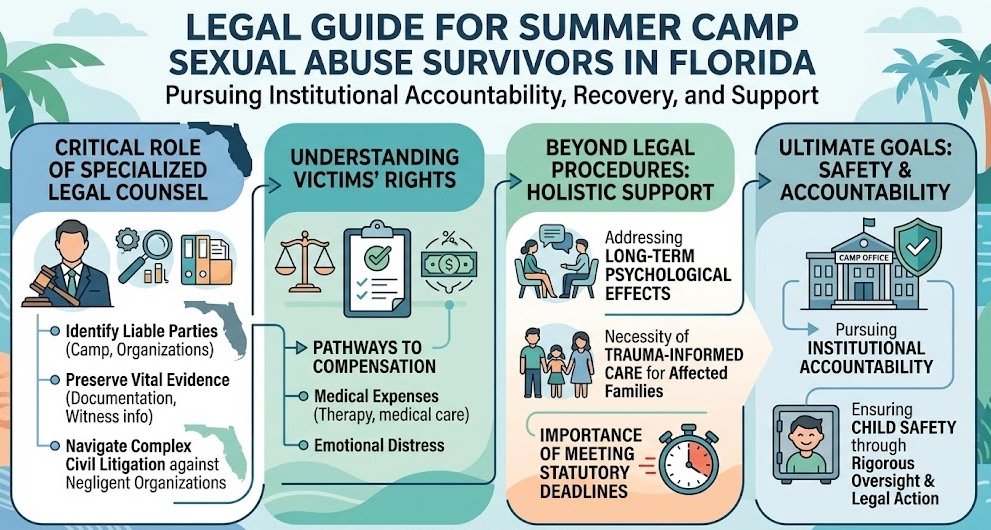
How We Can Help With Your Florida Summer Camp Sexual Abuse Claim
In the aftermath of suspected summer camp sexual abuse, a Florida attorney can help survivors and their families appraise the facts, identify potentially liable parties, and take prompt steps to protect their legal rights. Counsel may organize records, preserve communications, coordinate with appropriate professionals, and manage deadlines so families can focus on safety, recovery, and stability.
Throughout the claim process, the attorney provides compassionate representation grounded in careful preparation and clear communication. Legal support may include conducting an initial case review, gathering documentation, interviewing relevant witnesses, and evaluating available insurance or institutional resources. The attorney may also explain mediation options when a private resolution is appropriate, while remaining prepared to pursue formal litigation if necessary.


By handling correspondence, strategy, and procedural requirements, counsel reduces avoidable stress and helps families make informed decisions. This service-centered approach promotes accountability, protects dignity, and supports the broader goal of preventing harm to other children and families in Florida communities.
Understanding Summer Camp Sexual Abuse Cases in Florida
OUR CONSULTATIONSARE FREE
START YOUR FREE CASE REVIEW

A clear understanding of how summer camp sexual abuse cases arise in Florida helps families recognize their legal options and the issues that may affect a claim. These matters often involve questions about supervision, hiring practices, background checks, training, and whether camp operators responded appropriately to warnings, disclosures, or prior complaints.
Florida law may impose duties tied to Mandatory reporting, prompt internal action, and cooperation with investigators. Civil claims can address negligence by camps, contractors, or affiliated organizations, including situations that overlap with school misconduct standards when educational institutions sponsor programs. A legal review generally considers records, witness statements, policies, communications, and the timing of reports.


Because children may disclose harm gradually, case development often requires careful child advocacy and informed survivor support. Attorneys handling these matters focus on protecting the child’s wellbeing while evaluating liability, damages, and deadlines. A structured approach can help families pursue accountability, safety improvements, and resources that support long-term recovery and community trust.
Common Scenarios When Summer Camp Sexual Abuse Might Take Place in Florida
Summer camp sexual abuse in Florida may occur in settings where supervision is limited, privacy is expected, or authority is easily misused. Common scenarios include misconduct in cabins and dorms, abuse in shower and changing areas, and incidents that arise during off-site trips. In many cases, these situations are accompanied by staff grooming tactics that are designed to build trust, isolate a child, and reduce the likelihood of disclosure.
Cabin And Dorm Misconduct
Because cabins and dormitories often provide privacy, limited visibility, and overnight access, they are among the most common settings where sexual abuse may occur at Florida summer camps. Risks may increase during lights-out hours, counselor rounds, unsupervised room assignments, or situations in which a single adult controls access to sleeping quarters. Younger campers, isolated campers, and those reluctant to report concerns may be particularly vulnerable.
Responsible organizations are expected to implement Training prevention policies that govern staffing ratios, room checks, reporting duties, and prohibitions on one-on-one contact in sleeping areas. When camps ignore warning signs, fail to screen personnel, or do not respond to complaints, civil claims may examine whether the conduct violated accepted liability standards. Careful oversight of cabin and dorm practices can better protect children and support safer camp environments.
Shower And Changing Areas
Why do shower and changing areas present heightened concern at Florida summer camps? These spaces combine privacy, limited supervision, and vulnerable routines, creating conditions where misconduct may be harder to detect. Camp operators committed to protecting children should apply strong facility oversight, including visibility measures, controlled access, and prompt response procedures for boundary violations.
Effective prevention also depends on staff training policies that address supervision ratios, privacy rules, and the prohibition of one-on-one access. When concerns arise, mandated reporting duties require immediate action, not internal minimization or delay. A service-minded approach also includes victim advocacy, ensuring that affected children receive support, protection, and access to appropriate resources. Careful screening, consistent monitoring, and clear reporting channels help camps uphold safety, accountability, and trust within these particularly sensitive environments for all children.
Off-Site Trip Abuse
Risks of sexual abuse at Florida summer camps may also arise during off-site trips, where children are moved away from the camp’s normal facilities, routines, and oversight systems. Excursions to beaches, parks, overnight sites, or community events can create gaps in supervision, inconsistent sleeping arrangements, and reduced accountability for who is responsible at each moment.
These settings may complicate timely reporting and response, especially when transportation delays, unfamiliar locations, or mixed groups interfere with immediate protection. Investigation challenges often increase because witnesses are dispersed and records may be incomplete. Child testimony can be affected by confusion about where events occurred and who was present. Early trauma disclosure should be treated seriously, and evidence preservation should begin promptly, including securing trip logs, staff assignments, electronic communications, photographs, and any available surveillance or receipts.
Staff Grooming Tactics
Although grooming often develops gradually, it can begin in ordinary camp interactions that appear helpful, affectionate, or special to a child. A staff member may offer extra attention, private favors, gifts, or exceptions to rules, and then encourage secrecy and emotional dependence over time.
In many Florida camp settings, staff power imbalances can make these behaviors difficult for children to question and harder for coworkers to confront. Grooming may occur during cabin checks, mentoring, transportation, or one-on-one activity instruction, especially when supervision is inconsistent. Warning signs can include boundary testing, unnecessary physical contact, frequent isolation of a child, and attempts to undermine parental trust.
Mandated reporting failures may allow escalating misconduct to continue, placing more children at risk and preventing timely intervention by administrators, caregivers, and law enforcement authorities.
Legal Rights of Summer Camp Sexual Abuse Victims in Florida
When sexual abuse occurs at a summer camp, Florida law affords victims important legal rights designed to protect their safety, preserve their claims, and hold responsible parties accountable. These rights reflect a public commitment to safeguarding children and supporting families and communities that seek justice through lawful, service-minded action. Mandated reporting laws require certain professionals to report suspected abuse, while victim privacy protections limit unnecessary disclosure of sensitive information.
In some cases, statute tolling may extend filing deadlines for minors or where trauma delayed recognition of harm.
Florida law protects summer camp abuse victims through reporting duties, privacy safeguards, and extended deadlines where trauma or childhood delayed action.
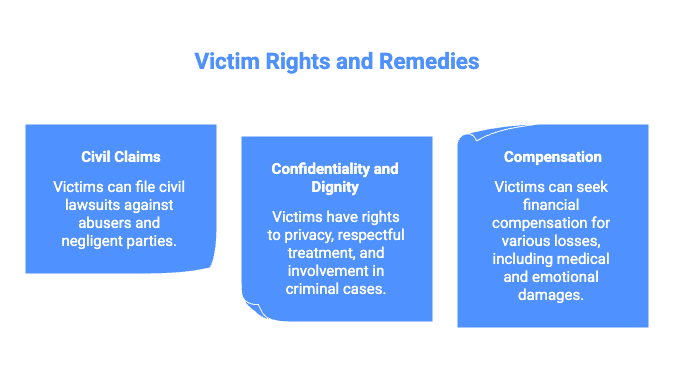
- Victims may pursue civil claims against abusers and negligent camps, supervisors, or organizations.
- Victims have rights related to confidentiality, dignified treatment, and participation in criminal proceedings.
- Victims may seek compensation for medical care, counseling, emotional distress, and other losses.
Florida law also permits accountability for institutional failures, including inadequate screening, supervision, training, or response. These protections help communities serve survivors with integrity, respect, and justice.
Steps to Take After a Summer Camp Sexual Abuse Incident in Florida
After a summer camp sexual abuse incident in Florida, the first priority is to guarantee the child’s immediate safety and remove the child from any continuing risk. The abuse should then be reported promptly to law enforcement, child protective authorities, or other appropriate officials so that an investigation can begin without delay. It is also important to preserve essential evidence, including clothing, messages, photographs, and medical records, as these materials may support both criminal and civil proceedings.
Ensure Immediate Safety
If a child may be in immediate danger, the first priority is to remove the child from contact with the suspected abuser and secure a safe, supervised environment. Trusted adults should remain calm, stay with the child, and limit unnecessary questioning. Immediate medical attention may be appropriate for injuries, pain, or urgent health concerns. Clothing, bedding, or electronic communications should be preserved when possible, without altering or discarding potential evidence.
Those responsible for the child should focus on stability, reassurance, and victim support, while respecting the child’s pace and privacy. Camp administrators and caregivers should understand that mandatory reporting obligations exist, but immediate safety comes first in this stage. Careful documentation of observable facts, times, locations, and involved persons may help protect the child and support later action.
Report The Abuse
Once the child’s immediate safety has been addressed, the next step is to report the abuse to the proper authorities without unnecessary delay. In Florida, a report may be made to law enforcement, the Department of Children and Families, or both, depending on the circumstances and the child’s needs. Certain camp personnel may qualify as a mandatory reporter and must act promptly under state requirements.
Caregivers and advocates should provide clear, factual information, including the child’s identity, the alleged offender, the location, and the time frame. Basic documentation steps may include noting when the report was made, the agency contacted, and the name of the person who received it. Prompt reporting helps protect the child, supports other potential victims, and allows trained authorities to begin an appropriate response.
Preserve Key Evidence
Because physical and documentary proof can be altered or lost quickly, preserving essential evidence should begin as soon as the child’s immediate medical and safety needs have been addressed. Caregivers should save clothing, bedding, digital messages, photographs, and any camp communications in a secure condition. Document preservation may also include incident reports, staff schedules, visitor logs, and prior complaints that could establish notice or patterns of misconduct.
Video safeguards are equally important. Families or advocates may request that surveillance footage, access records, and device data be retained before routine deletion occurs. Prompt collection of witness statements from campers, staff, or medical providers can help preserve memories while they remain clear. Medical records, including examinations, treatment notes, and follow-up recommendations, may provide vital support for both child protection efforts and future legal claims.
How a Florida Summer Camp Sexual Abuse Lawyer Can Help You Initiate a Case
When sexual abuse at a summer camp is suspected, a Florida summer camp sexual abuse lawyer can provide immediate guidance on the steps required to begin a case. Counsel helps families act with purpose, protect a child’s interests, and promptly meet reporting and filing requirements under Florida law.
A lawyer may assist by:
- Evaluating the known facts, identifying potential defendants, and advising whether civil claims, institutional complaints, or related actions should begin first.
- Coordinating Witness Interviewing and Evidence Preservation, including records requests, electronic communications, photographs, incident reports, and relevant camp policies.
- Communicating with investigators, agencies, and insurers while preparing documents, timelines, and notices that support an orderly, service-minded legal response.
This early assistance often reduces confusion and prevents avoidable mistakes. It also helps preserve reliable information, supports accountability, and allows caregivers to focus on safety, stability, and responsible decision-making while the legal process is initiated with care, diligence, and discretion.
Long-Term Effects of Summer Camp Sexual Abuse Trauma
Summer camp sexual abuse trauma can produce long-term emotional and psychological harm, often affecting a survivor’s sense of safety, trust, and overall mental health. It may also contribute to behavioral difficulties and strained relationships, as survivors can experience challenges with boundaries, communication, and interpersonal stability over time. In many cases, these effects extend into academic and career settings, where concentration problems, absenteeism, and reduced confidence may interfere with long-term progress.
Emotional And Psychological Impact
Although the abuse may have occurred during a limited period of time, its emotional and psychological effects often extend far into adolescence and adulthood. Survivors may experience persistent anxiety, shame, confusion, and depression, even when the events are no longer openly discussed. Trauma triggers can arise unexpectedly, including sensory reminders, institutional settings, or seasonal changes associated with camp memories.
These effects may impair concentration, sleep, self-worth, and a general sense of safety. In many cases, survivors internalize responsibility for harm that was never theirs to bear, which can deepen emotional distress over time. Compassionate intervention is often crucial. Access to therapy resources, including trauma-informed counseling and supportive clinical care, may help survivors process painful memories, reduce symptoms, and regain emotional stability while preserving dignity, autonomy, and hope for recovery.
Behavioral And Relationship Challenges
Why do the effects of camp-related sexual abuse so often appear in behavior and relationships long after the underlying events have ended? Survivors may respond to early trauma by becoming withdrawn, hypervigilant, impulsive, or unusually compliant. These patterns are not character flaws. They often reflect learned survival responses to Boundary violations and repeated fear.
In relationships, a survivor may struggle to trust caregivers, friends, partners, or authority figures, especially when grooming red flags were ignored or misunderstood by adults. Some may tolerate harmful treatment, while others avoid closeness entirely. Difficulty asserting needs, reading social cues, or feeling safe with affection can persist for years. For those committed to protecting children and serving families, recognizing these behavioral signs can support compassionate intervention, informed advocacy, and trauma-sensitive care that promotes recovery.
Lasting Academic And Career Effects
When sexual abuse occurs during formative years, its effects can disrupt concentration, memory, and a child’s sense of safety in ways that interfere with learning long after camp has ended. Survivors may experience educational disruption through declining grades, school avoidance, disciplinary issues, or difficulty trusting teachers and peers. These patterns can limit participation in advanced coursework, extracurricular development, and higher education opportunities.
Over time, academic instability may affect career paths, job retention, and professional confidence. Adults harmed as children may struggle with authority figures, workplace boundaries, or stress responses that reduce performance and advancement. Early intervention, consistent advocacy, and Therapy support resources can help restore stability, improve functioning, and protect future goals. For those committed to serving others, recognizing these long-term effects supports informed, compassionate action for survivors and their families.
What to Expect During a Florida Summer Camp Sexual Abuse Claim Process
A Florida summer camp sexual abuse claim process generally begins with filing the initial claim and assembling available evidence and documentation that may support the allegations. The matter then typically proceeds through investigation and related legal steps, which may include reviewing records, interviewing witnesses, and evaluating the conduct of the camp or other responsible parties. Depending on the facts and the strength of the evidence, the claim may ultimately be resolved through settlement negotiations or proceed to trial.
Filing The Initial Claim
After that review, counsel generally prepares and files the formal claim, ensuring that the required allegations are clearly stated and that deadlines are met. The attorney may outline anticipated steps, including Evidence collection and witness statements, so clients know how the process may develop without unnecessary surprise. If the abuse involves a camp employee, volunteer, or third-party contractor, the claim may name multiple entities whose failures enabled the harm.
Throughout the filing, the legal team often emphasizes accountability, safety, and informed decision-making in service to the survivor’s long-term well-being.
Evidence And Documentation
Because the strength of a Florida summer camp sexual abuse claim often depends on the available proof, the evidence and documentation phase is typically one of the most important parts of the process. Helpful materials may include medical records, photographs, written communications, incident reports, and personal notes describing dates, locations, and observed changes in behavior. Witness testimonies from campers, staff, or other adults can also support a clearer understanding of what occurred.
Careful recordkeeping can help those seeking justice protect the integrity of the claim while honoring the wellbeing of the child involved. Families are often encouraged to preserve emails, text messages, camp policies, and billing documents connected to attendance. Organized documentation allows advocates and caregivers to present concerns responsibly, support informed decision-making, and strengthen efforts aimed at accountability, protection, and compassionate service to others.
Investigation And Legal Steps
With records and supporting materials preserved, the claims process typically proceeds to a structured investigation and a series of legal steps designed to assess what occurred and who may be responsible. Counsel commonly reviews camp policies, supervision practices, staff screening, incident reports, and communications, while identifying witnesses and potential institutional failures. Evidence Preservation remains central throughout this stage.
Florida claims may also involve Mandated Reporting issues, including whether camp personnel, medical providers, or other adults fulfilled statutory duties after learning of suspected abuse. Attorneys may coordinate with investigators, request documents, evaluate timelines, and analyze compliance with child protection requirements. They may also examine prior complaints, hiring records, and training materials to determine whether negligence contributed to the harm.
Throughout, the focus remains on accountability, child safety, and informed decision-making.
Settlement Or Trial Process
When a Florida summer camp sexual abuse claim reaches the settlement or trial stage, the process generally shifts from investigation to formal resolution efforts. Attorneys may evaluate a mediation strategy, exchange evidence through pretrial discovery, and prepare for negotiations or court presentation. Throughout this phase, legal timelines shape filings, hearings, and deadlines, requiring careful attention and coordinated advocacy.
If settlement discussions do not produce a fair outcome, the matter may proceed to trial. There, victim testimony can become an important part of establishing harm, credibility, and institutional responsibility. Additional witnesses, expert opinions, and documentary records may also be presented. A service-minded legal team often seeks a result that promotes accountability, financial recovery, and long-term protection for others, while helping survivors and families understand each step with clarity and dignity throughout.
Compensation for Florida Summer Camp Sexual Abuse Damages
Although no financial recovery can restore the harm caused by sexual abuse at a summer camp, compensation in a Florida civil claim may help address the survivor’s medical costs, counseling expenses, emotional suffering, and other losses tied to the abuse. Courts may also consider emotional distress and, in serious cases, punitive damages intended to hold wrongdoers fully accountable and protect others from similar harm.
| Recovery Focus | Purpose |
|---|---|
| Medical care | Supports treatment and ongoing health needs |
| Counseling | Helps fund trauma-informed therapy |
| Accountability | Encourages safer camp practices |
| Future support | Provides stability during recovery |
A careful claim can recognize the survivor’s needs while promoting safety within youth-serving organizations. Evidence such as records, witness statements, and expert evaluations may strengthen the case and clarify the harm suffered. Legal guidance often helps families pursue respectful, informed action that centers on restoring responsibility and the broader duty to protect children in community settings statewide.
Economic vs Non-Economic Damages in Florida Summer Camp Sexual Abuse Cases
Florida summer camp sexual abuse cases often involve both economic loss categories, such as medical treatment, therapy costs, and lost income, and non-economic harms, including pain, suffering, and emotional distress. Because non-economic harm valuation is less concrete, courts and litigants often rely on testimony, treatment records, and other evidence to measure the extent of the injury. Establishing damages in court accordingly requires a clear showing of both financial losses and the broader personal impact of the abuse.
Economic Loss Categories
Because civil recovery in summer camp sexual abuse cases often extends beyond immediate medical bills, damages are generally evaluated in two broad categories: economic and non-economic losses. Economic losses refer to measurable financial harm supported by records, invoices, employment data, and expert projections.
In Florida camp abuse litigation, these categories may include past and future medical treatment, counseling costs, prescription expenses, transportation for care, lost wages, diminished earning capacity, and security or relocation expenses when reasonably necessary. Educational support services may also qualify if abuse disrupts academic progress. Comparative Fault may arise in broader civil litigation, but it does not erase clearly documented monetary losses.
Punitive Damages serve a different purpose, addressing especially wrongful conduct rather than reimbursing financial costs. Careful documentation helps families and advocates pursue accountable, service-oriented legal recovery.
Non-Economic Harm Valuation
A separate category of civil damages addresses the human consequences of summer camp sexual abuse that do not appear on bills or wage records. These non-economic harms include pain, emotional distress, humiliation, loss of enjoyment of life, and damage to relationships, dignity, and personal security.
In Florida civil claims, the valuation of these losses is individualized rather than fixed by receipts. Counsel may consider the severity and duration of trauma, the survivor’s age, disruption to development, and the effect on trust, education, and daily functioning. A thoughtful mediation strategy often recognizes that meaningful resolution requires attention to these enduring injuries, not only measurable expenses.
Effective victim support also informs case planning by identifying therapeutic, family, and community needs. This category reflects the legal system’s effort to acknowledge profound human harm with care and seriousness.
Proving Damages In Court
When damages are contested in court, the strength of the claim often depends on how clearly economic and non-economic losses are documented and connected to the abuse. In Florida summer camp sexual abuse cases, economic damages may include therapy costs, medication, future treatment, and lost educational or earning opportunities. Non-economic damages often address pain, emotional distress, trauma, and loss of enjoyment of life.
Courts evaluate these claims through careful preservation of evidence, reliable medical documentation, and consistent records over time. Witness credibility can affect how judges and juries view the extent of harm, especially when abuse occurred in private settings. Expert testimony from mental health professionals, physicians, and vocational experts may help explain lasting effects and projected needs. A well-supported damages presentation helps survivors pursue accountability and secure resources for recovery and long-term support.
When a Florida Summer Camp Sexual Abuse Case Goes to Trial vs Settlement
Many Florida summer camp sexual abuse claims resolve through settlement, while others proceed to trial if liability, damages, or institutional misconduct remains contested. Settlement can provide privacy, reduce stress, and deliver resources sooner for counseling, medical care, and family support. A careful mediation strategy often shapes these outcomes, especially when insurers, camp operators, or supervising organizations acknowledge serious failures.
Trial becomes more likely when defendants deny knowledge, challenge credibility, or dispute the full extent of harm. In those matters, witness preparation is vital because testimony from survivors, relatives, experts, and former staff may strongly influence the fact finder. Counsel also evaluates jury selection, as community attitudes toward institutions and child safety can affect deliberations. Settlement timelines may shift throughout litigation, and meaningful offers sometimes arise only after discovery reveals records, prior complaints, or policy violations.
Whether a case resolves privately or in court, the process centers on accountability, protection, and informed advocacy for those harmed.
The Statute of Limitations for Florida Summer Camp Sexual Abuse Cases
Determining the statute of limitations is a critical step in any Florida summer camp sexual abuse case, because filing deadlines can affect whether a survivor may pursue compensation against an abuser, camp operator, or related institution. Florida law contains specific timing rules for civil actions involving sexual abuse, and those rules may differ based on the survivor’s age, the type of claim asserted, and when the harm was discovered.
In many cases, careful review of the facts is necessary to identify the correct deadline. Claims against individuals may be treated differently from claims against organizations whose negligence allegedly enabled abuse. Courts may also consider how delayed disclosure, trauma, or memory issues affected reporting. Confidentiality rules can shape how records are handled, while child victim testimony may influence evidentiary issues as a case proceeds.
Because these matters involve public safety and accountability, careful attention to statutory deadlines helps protect legal rights and supports informed, service-minded decision-making.
When to Contact a Summer Camp Sexual Abuse Lawyer in Florida
Prompt legal guidance may be advisable as soon as sexual abuse at a Florida summer camp is suspected, disclosed, or discovered, because early action can help preserve evidence, identify potential defendants, and reduce the risk of avoidable procedural problems.
Contact may also be appropriate before speaking extensively with camp administrators, insurers, or outside investigators. Early consultation can help families understand immediate responsibilities, including safety planning, documentation, and mandated reporting deadlines under Florida law. It can also clarify how medical records, digital communications, witness statements, and internal camp reports may affect a future claim.
Even when uncertainty exists, seeking guidance promptly may help protect a child’s interests and support informed decision-making. Waiting can create obstacles if memories fade, records are lost, or organizations change personnel. Timely attention is also important because civil claims may be affected by the statute of limitations, notice requirements, and other filing rules that influence whether accountability can be pursued effectively later.
Why You Need an Experienced Florida Summer Camp Sexual Abuse Lawyer
Because allegations involving sexual abuse at a Florida summer camp often present urgent safety concerns and complicated legal issues, representation by an experienced lawyer can be crucial to protecting a child’s interests and pursuing accountability effectively. Such counsel can help preserve evidence, identify institutional failures, and address reporting obligations under Florida law with care and precision.
An experienced attorney also understands how camp policies, supervision practices, hiring procedures, and prior complaints may reveal negligence or systemic misconduct. This knowledge supports stronger advocacy for families seeking justice, victim support, and meaningful protective measures for other children. Legal representation may further reduce the burden on caregivers by coordinating investigations, communicating with insurers, and pursuing appropriate civil remedies.
In matters involving Grooming prevention, a knowledgeable lawyer may also help expose warning signs that were ignored and encourage safer practices within youth-serving organizations. Effective legal action can serve both the individual child and the broader community through accountability and prevention.
How to Choose the Right Summer Camp Sexual Abuse Lawyer for Your Case in Florida
Once the value of experienced representation is understood, the next issue is how a family can identify the lawyer best suited to a Florida summer camp sexual abuse case. A careful review should begin with the attorney’s background in abuse litigation, knowledge of Florida procedure, and experience with record-handling institutions such as camps, schools, and youth programs.
Families should also consider whether the lawyer communicates with patience, clarity, and respect for trauma. Strong counsel often explains investigative steps, civil remedies, and possible interactions with law enforcement without pressure. Attention to Victim Support is equally important, as effective representation often involves coordination with counselors, advocates, and other protective resources.
A family may also ask how the lawyer manages records, privacy concerns, and Confidentiality Agreements, especially when sensitive disclosures are involved. Finally, the right choice is often a lawyer whose approach reflects diligence, accountability, and a genuine commitment to protecting vulnerable children and helping families pursue meaningful justice.
About The Law Offices of Anidjar & Levine
In considering legal representation for a Florida summer camp sexual abuse case, many families look to a firm’s experience, resources, and client-focused approach.
The Law Offices of Anidjar & Levine is known for providing responsive support, clear communication, and careful case preparation for individuals seeking accountability and protection for vulnerable children.
The firm approaches these matters with professionalism and attention to the systems that may have enabled abuse.
This includes reviewing camp records, staffing decisions, supervision practices, Training and Policies, and whether proper Background Checks were completed.
By examining both individual misconduct and institutional failures, the firm works to build claims that reflect the full scope of harm.
Its attorneys also assist families in understanding legal options, deadlines, and available damages under Florida law.
Through organized advocacy and steady guidance, The Law Offices of Anidjar & Levine aims to serve clients with diligence, pursue meaningful results, and encourage safer environments for children statewide.
Frequently Asked Questions
Can I Sue a Private or Religious Summer Camp in Florida?
Yes, a person may sue a private or religious summer camp in Florida when wrongful conduct, abuse, or unsafe supervision caused harm. Possible claims include negligence claims against the camp, staff, or affiliated organizations, depending on the facts. Religious status does not automatically prevent liability. However, statute of limitations can affect how long a person has to file. Prompt legal review helps protect rights, preserve evidence, and support accountability for those harmed.
Are Background Checks Required for Florida Summer Camp Employees and Volunteers?
Yes, Florida summer camps often require background checks for employees, and many also apply volunteer eligibility screenings to those serving children. Requirements can vary by camp type, licensing status, and whether the program falls under specific childcare regulations. Criminal history verification is commonly used to promote participant safety and responsible service. A camp’s failure to screen workers or volunteers appropriately may raise serious concerns about supervision, compliance, and child protection.
Can Social Media Messages Be Used as Evidence in Abuse Cases?
Yes, social media messages can be used as evidence in abuse cases when they are properly preserved, authenticated, and shown to be relevant. Courts and investigators may examine them to identify online grooming patterns, threats, coercion, or admissions. Their value often depends on timing, context, and corroboration from other evidence. However, confidentiality issues may affect collection, disclosure, and use, especially when protecting minors and supporting those seeking accountability and safety.
What if the Abuse Happened at an Out-Of-State Camp Involving Florida Residents?
Yes, abuse at an out-of-state camp involving Florida residents may still support legal action in Florida or another proper jurisdiction. The outcome often depends on Long-Distance Liability, where the parties live, where decisions were made, and which court has jurisdiction. Foreign Evidence, including records, messages, and witness statements from another state, can also be used when properly obtained. Careful legal review helps families pursue accountability and protection.
Can Multiple Families File a Joint Lawsuit Against a Summer Camp?
Yes, multiple families may file a joint lawsuit against a summer camp when their allegations involve related facts, similar harm, or shared legal issues. Courts often permit collective claims if doing so improves efficiency and supports consistent outcomes. Joint representation may also reduce litigation burdens and help families pursue accountability together. However, each family’s circumstances must still be carefully reviewed because conflicts of interest, differing damages, and procedural rules can affect viability.
—————————
Summer camp sexual abuse claims in Florida require prompt action, careful documentation, and informed legal guidance.
Victims and their families may have important rights under state law, including the ability to seek accountability from camps, staff, and other responsible parties.
A qualified Florida Sexual Assault Lawyer can evaluate the facts, protect the victim’s interests, and pursue appropriate legal remedies.
Anidjar and Levine provide experienced representation in these sensitive matters.