The Law Offices of Anidjar and Levine helps sextortion victims in Florida respond quickly, preserve digital evidence, protect privacy, and assess available civil or criminal options.
Counsel can guide reporting to platforms and authorities, document threats, payment demands, and account data, and advise against steps that may increase an offender’s leverage.
Early legal involvement also supports safety planning, organized case development, and protection of sensitive records.
The sections that follow explain the process, rights, and practical considerations in greater detail.
For additional legal resources, visit Florida Sexual Assault Lawyer.
Main Takeaways
- A Florida sextortion lawyer can help stop ongoing threats, protect privacy, and guide immediate safety steps after blackmail involving intimate images or messages.
- Preserve all evidence, including screenshots, usernames, payment demands, timestamps, emails, call logs, and account alerts before deleting or changing anything.
- Report sextortion promptly to platforms and Florida law enforcement to create an official record and support investigations or protective action.
- An attorney can assess whether your case involves civil remedies, criminal reporting, or both based on threats, coercion, age, and interstate communications.
- Legal guidance helps organize a timeline, avoid harmful contact with the extortionist, and coordinate cybersecurity steps without losing critical evidence.
How We Can Help With Your Florida Sextortion Claim
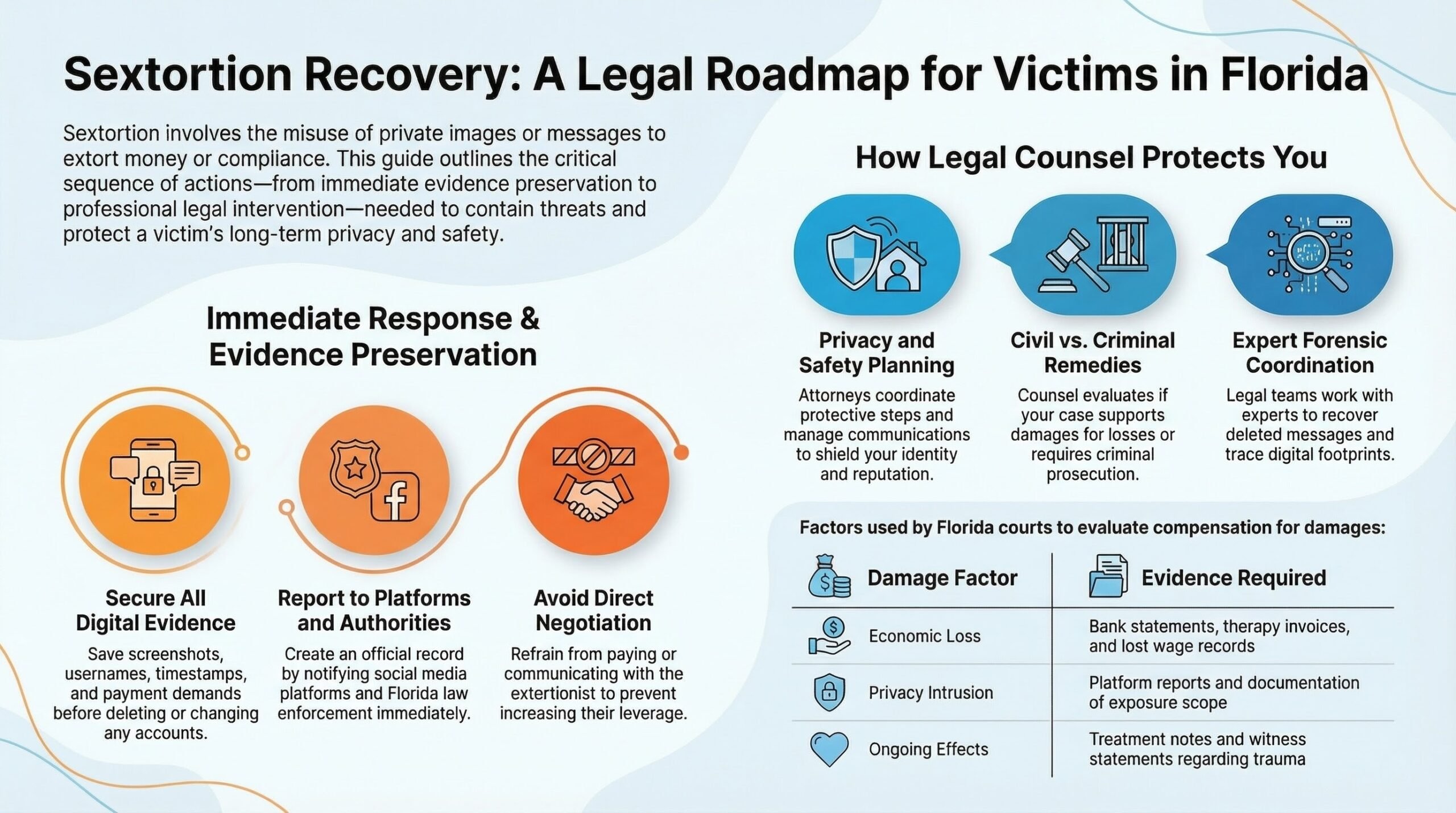
When a person in Florida becomes the target of sextortion, prompt legal intervention can help contain the threat, preserve essential evidence, and create a clear strategy for response. Counsel can coordinate immediate protective steps, advise on secure communications, and implement Victim safety planning that prioritizes dignity, privacy, and stability for the affected individual and family.
Professional assistance often begins with careful documentation of messages, accounts, payment demands, and digital identifiers. Attorneys may prepare Legal evidence requests to platforms, service providers, and other custodians so that critical records are retained before they disappear. They can also manage contact with third parties, reduce harmful exposure, and help clients avoid actions that could strengthen an extortionist’s leverage.
Throughout the process, representation provides structure, discretion, and informed guidance rooted in service. By organizing facts, protecting rights, and supporting timely action, legal counsel helps people pursue a safer path forward with confidence, clarity, and practical direction.
Understanding Sextortion Cases in Florida


Because sextortion can develop through social media, dating platforms, gaming applications, text messages, or email, understanding how these cases arise in Florida is essential to evaluating risk, preserving evidence, and planning an effective response. Florida sextortion matters often involve threats to distribute intimate images or private communications unless money, additional images, or compliance is provided.
OUR CONSULTATIONSARE FREE
START YOUR FREE CASE REVIEW

A clear legal assessment usually examines Consent and coercion, the parties’ ages, the nature of the threats, and whether interstate communications or financial demands are involved. Evidence may include screenshots, account records, payment histories, preserved devices, and metadata that supports timing and identity. Victim reporting is often an important step because early reports can help document conduct, reduce further harm, and support protective measures.
Those assisting others should recognize that delayed reporting does not eliminate credibility. Florida cases require careful handling, attention to privacy, and a disciplined approach that protects both immediate safety and long-term legal options.

Common Scenarios When Sextortion Might Take Place in Florida
Sextortion in Florida may arise in several recurring contexts, each involving the misuse of private communications, images, or personal information to obtain compliance. Common examples include social media blackmail, online dating deception, and the exploitation of hacked private content. In some cases, the conduct also involves impersonation and direct threats, which can intensify the harm and complicate the victim’s response.
Social Media Blackmail


Across social media platforms, blackmail often begins with direct messages, friend requests, or private exchanges that appear harmless at first. An offender may quickly shift from casual conversation to digital extortion, using screenshots, altered images, or prior disclosures as leverage. In many Florida matters, threats involve publicly posting content, sending it to family members, employers, or community leaders, or escalating demands through repeated contact.
A careful response often centers on victim privacy, preserving evidence, and avoiding harmful payment negotiation that encourages further abuse. Legal counsel may also address platform reporting, law enforcement coordination, and concerns about courtroom reporting when formal proceedings become necessary. For people committed to helping others, understanding these patterns supports timely intervention, stronger protection, and a more informed, compassionate response to social media blackmail in practice.
Online Dating Deception
When contact begins through a dating app or matchmaking website, the risk of online dating deception can quickly escalate from apparent mutual interest to coercive pressure. A deceptive person may fabricate identity details, mirror values, and build trust through frequent messages, then request intimate images or videos under the guise of affection and exclusivity.
Once content is shared, the communication may shift toward threats, escalating demands, or pressure to continue despite clearly expressed Consent boundaries. In Florida, these scenarios often exploit urgency, shame, and isolation, making targets feel responsible for preserving another person’s image or emotional well-being. A careful response centers on safety, evidence preservation, and digital privacy.
Professional guidance can help affected individuals protect their interests, limit further manipulation, and pursue lawful options without increasing exposure or distress to loved ones.
Hacked Private Content
Private images and messages may also be obtained through hacked accounts, compromised devices, or unauthorized access to cloud storage, creating a different but equally coercive setting for sextortion in Florida. In these matters, the person targeted may have shared nothing voluntarily, yet stolen content is still used to pressure compliance. This scenario can overlap with Identity theft when passwords, financial details, or personal profiles are taken alongside intimate files.
It may also resemble consent scams, where access is gained through deceptive links or false security requests. A service-minded legal response often emphasizes victim safety, careful preservation of evidence, and prompt reporting. Digital forensics can help trace account access, recover timelines, and identify how the breach occurred, supporting informed decisions while reducing further exposure and harm to affected individuals and families.
Impersonation And Threats
How impersonation and threats develop can vary, but the pattern often begins with a false identity used to gain trust, provoke fear, or create a sense of urgency. In Florida sextortion matters, an offender may pose as a romantic interest, authority figure, or acquaintance, then demand money, images, or compliance.
Victim skepticism is often weakened by convincing profiles, stolen photos, and urgent messages. Once leverage is established, online harassment may follow through repeated calls, fabricated accusations, or threats to expose private material. Threat escalation can occur quickly when demands are ignored, especially if the impersonator claims access to family, employers, or social media contacts.
Early preservation of messages, account details, and payment records can support police reporting and help community-serving advocates guide affected individuals toward safer, informed responses and timely protective action.

Legal Rights of Sextortion Victims in Florida
Under Florida law, victims of sextortion possess enforceable rights to seek protection, report criminal conduct, and pursue remedies designed to limit further harm. These rights reflect the state’s interest in preserving dignity, privacy, and public safety, especially when coercion exploits trust and vulnerability. Civil and criminal laws may support orders restricting contact, claims for damages, and access to financial recovery options after measurable losses.
- A locked door symbolizes the right to legal protection from continued threats, harassment, and disclosure.
- A courthouse hallway reflects the right to seek accountability through criminal investigation and civil action.
- A quiet counseling room represents access to trauma-informed counseling and other supportive services.
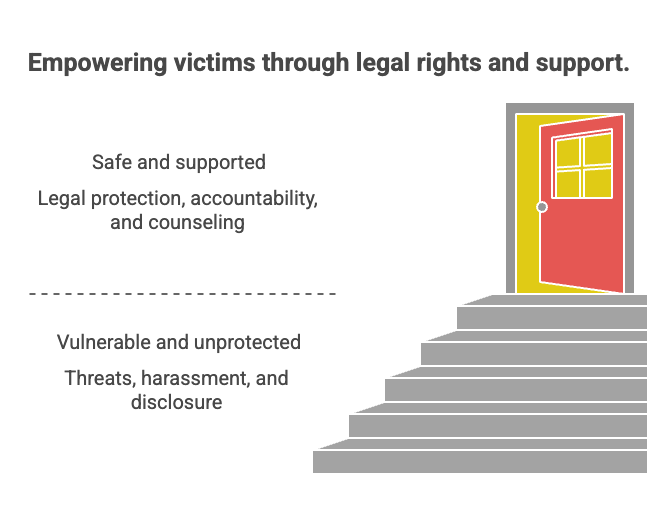
Florida victims may also assert privacy-related interests when intimate images are wrongfully obtained, retained, or shared. In service-oriented communities, understanding these rights helps advocates, families, and professionals respond with steadiness, respect, and lawful care for those affected deeply.
Steps to Take After a Sextortion Incident in Florida
After a sextortion incident in Florida, prompt and organized action can help protect the victim’s interests and support any future legal response. Core initial measures include preserving all digital evidence, reporting the extortion to appropriate authorities or online platforms, and seeking guidance from a Florida lawyer familiar with these matters. Taken together, these steps can strengthen documentation, reduce further harm, and position the victim to make informed decisions.
Preserve Digital Evidence
In the immediate aftermath of a sextortion incident, preserving digital evidence should be treated as a priority because it can support law enforcement investigations, civil claims, and protective legal action in Florida. Affected individuals should avoid deleting messages, images, account notifications, or payment records, even when the content is distressing.
Helpful steps include taking dated screenshots, saving emails, recording usernames, URLs, phone numbers, and transaction details, and securing the original files in a protected folder or on an external drive. Cybersecurity preservation also includes maintaining device logging, call logs, metadata, and login alerts, since these details may help establish timing, identity, and patterns of contact. Password changes may be appropriate, but they should be performed carefully to avoid overwriting valuable information.
Organized records can strengthen legal strategy and support those working to protect others.
Report The Extortion
Because sextortion frequently involves ongoing threats, prompt reporting can be a pivotal step toward stopping further harm and preserving legal options in Florida. A victim should report threats to the appropriate platform, school officials when relevant, and Florida authorities without unnecessary delay. Timely reporting can help investigators identify patterns, secure records, and intervene before images or messages spread further.
When preparing a report, clear, organized information is useful. Dates, usernames, payment requests, screenshots, and account links can help law enforcement and support personnel assess urgency. If the victim is a minor, a parent, guardian, or trusted caregiver should be involved immediately. Reporting also creates an official record, which may strengthen protective measures and support community efforts to prevent similar harm to others across Florida communities.
Contact A Florida Lawyer
Prompt reporting often works best when paired with legal guidance, particularly where sextortion involves repeated threats, minors, interstate communications, or demands for money. A Florida lawyer can evaluate immediate risks, explain available protections, and help structure a response that supports law enforcement without increasing exposure.
During a legal consultation, counsel may advise preserving Digital evidence, avoiding direct negotiation with the offender, and documenting every contact, payment request, and account used. An attorney can also address privacy concerns, assist with platform reports, and determine whether civil remedies or protective measures are appropriate under Florida law. When families, schools, or community leaders are involved, legal guidance helps coordinate communications carefully and in a service-minded manner.
Early representation often improves decision-making, reduces procedural mistakes, and strengthens a victim’s position as the matter proceeds.
How a Florida Sextortion Lawyer Can Help You Initiate a Case
When a victim decides to move forward, a Florida sextortion lawyer can provide the structure needed to initiate a case in a clear and legally sound manner. Counsel often begins by organizing communications, payment records, screenshots, and platform data, then evaluating how Secure consent laws and victim reporting standards may apply under Florida and federal law.
A lawyer may guide the first steps with calm precision:
- Preserve evidence before accounts, messages, or files disappear.
- Coordinate reporting to law enforcement, schools, employers, or online platforms when appropriate.
- Pursue protective action through cease and desist demands, privacy measures, and case strategy.
This support helps victims act carefully while reducing avoidable mistakes. It also allows families, caregivers, and community advocates to serve the affected person with steadiness rather than confusion. By building a documented timeline and identifying urgent risks, counsel creates a practical path toward accountability, protection, and informed legal action from the outset.
Long-Term Effects of Sextortion Trauma
Sextortion trauma can produce lasting emotional and psychological effects, including anxiety, depression, and persistent fear that may continue long after the immediate threat has ended. It may also disrupt personal relationships, as trust issues, social withdrawal, and difficulty forming secure connections often emerge over time. In addition, the consequences can extend to a person’s career and finances, particularly when reputational harm, job instability, or ongoing legal and security costs become factors.
Emotional And Psychological Impact
Although the immediate crisis may pass, the emotional and psychological effects of sextortion often continue long after the threats end. Many individuals experience persistent anxiety, shame, sleep disruption, intrusive thoughts, and difficulty concentrating in daily life. These reactions may intensify when victim stigma concerns discourage disclosure or delay access to supportive care.
Over time, chronic stress can affect work performance, academic progress, physical health, and a person’s general sense of safety. Some individuals withdraw from community activities, and online isolation effects may deepen fear, hopelessness, or depressive symptoms. Others become hypervigilant, expecting renewed exposure or humiliation even when no further contact occurs.
Service-minded professionals, advocates, and legal counsel should recognize these patterns early, encourage trauma-informed support, and help restore stability, dignity, and the capacity for informed decision-making in recovery.
Relationship And Trust Challenges
The effects of sextortion trauma often extend beyond individual distress and begin to alter how a person relates to others. Survivors may become guarded in friendships, intimate relationships, and family settings, especially when betrayal came from someone they trusted. A heightened fear of manipulation can make ordinary vulnerability feel unsafe, limiting connection and mutual support. In many cases, awareness of grooming patterns later reshapes how past interactions are understood, deepening caution and emotional distance.
Trust may also erode when survivors believe others will judge them harshly or fail to protect their dignity. Revenge motivations by perpetrators can further distort a survivor’s sense of safety, leading to suspicion even in caring environments. Compassionate communities should recognize these barriers and respond with patience, consistency, respect, and informed support over time.
Career And Financial Consequences
When sextortion trauma remains unresolved, its effects often reach into employment stability and long-term financial security. Concentration problems, sleep disruption, and persistent fear may reduce performance, increase absences, and limit advancement. In service-oriented professions, these setbacks can hinder a person’s ability to support others effectively and consistently.
Workplace reputations may also suffer if threats, leaked images, or rumors circulate among supervisors, colleagues, or clients. Even unproven allegations can alter professional relationships and create barriers to hiring, licensing, or leadership opportunities. Financial harm often follows through lost wages, legal expenses, counseling costs, and diminished career momentum. In some cases, victims face coerced payments or identity-related losses that deepen instability.
Early legal guidance, coordinated reporting, and trauma-informed care can help protect income, preserve records, and identify Financial recovery options.

What to Expect During a Florida Sextortion Claim Process
A Florida sextortion claim process typically begins with an initial case assessment, during which the facts are reviewed, and the available legal options are identified. From there, the matter often proceeds through evidence collection steps, followed by filing and investigation, each of which can affect the strength and direction of the claim. Depending on the findings and applicable law, possible legal outcomes may include civil remedies, criminal enforcement, or other court-ordered relief.
Initial Case Assessment
Because early evaluation often shapes the direction of a Florida sextortion claim, the initial case assessment typically focuses on identifying the nature of the threats, preserving available digital evidence, and determining whether civil remedies, criminal reporting, or both may be appropriate. During this stage, counsel generally reviews timelines, communication platforms, and the relationship between the parties, while also addressing the victim’s privacy concerns with care and discretion.
Attention is often given to documenting threats in a clear, organized manner so decision-makers can understand urgency, risk, and potential harm to others. A careful assessment also considers immediate safety needs, possible reputational consequences, and whether minors, workplaces, schools, or vulnerable family members may be affected. This early review helps establish a measured, service-oriented strategy for responsible next steps.
Evidence Collection Steps
Although each matter develops differently, evidence collection in a Florida sextortion claim generally begins with preserving communications, images, account information, payment records, and platform data in their original form. This often includes screenshots, metadata, usernames, timestamps, IP-related logs, and any linked financial transactions.
A careful process may also involve the preservation of phone records and text message authentication to help establish the origin, timing, and continuity of the threatening conduct. Service providers, payment platforms, and social media companies may hold useful records, so timely requests can make a difference. Those assisting the affected person typically organize materials chronologically, note missing items, and document how each file was obtained and stored.
This method supports accuracy, protects integrity, and helps ensure that any future legal evaluation rests on reliable, verifiable information while minimizing avoidable disruption to the person affected.
Filing And Investigation
Once available evidence has been preserved and organized, the filing and investigation stage usually begins with a structured legal and factual review of the allegations. Counsel commonly evaluates timelines, communications, digital records, and witness information, and then prepares submissions that align with Florida procedure and applicable reporting-agency processes.
During investigation, attorneys may coordinate with platforms, law enforcement, and forensic professionals to verify identity, trace transmissions, and protect additional victims from harm. They often advise clients on cybersecurity best practices, including account security, password updates, device scans, and controlled communication boundaries. Documentation remains important because each contact, response, and preservation step can support credibility and efficient review. Throughout this phase, the process is generally careful, methodical, and service-oriented, with attention given to safety, accuracy, confidentiality, and responsible cooperation with investigators.
Possible Legal Outcomes
While each matter turns on its facts, the possible legal outcomes in a Florida sextortion claim generally depend on the available evidence, the identity and location of the accused party, and the forum in which the matter proceeds. Outcomes may include criminal charges, injunctions, negotiated resolutions, platform takedowns, or civil damages for losses tied to digital harassment. Strong evidence preservation often improves prospects for enforcement and meaningful recovery.
In some matters, prosecutors decline charges, or jurisdictional barriers delay action when offenders operate anonymously or overseas. Civil cases may also end in settlement, dismissal, or judgment after contested proceedings. Defense strategies can challenge intent, identity, authenticity, or causation, potentially affecting timing and outcomes. Throughout the process, coordinated victim support helps individuals protect safety, comply with requests, and make informed decisions about next steps.
Compensation for Florida Sextortion Damages
Evaluating compensation for Florida sextortion damages requires a careful review of both economic and non-economic harm. Courts and counsel often assess how the misconduct disrupted safety, privacy, reputation, and daily functioning. Effective advocacy commonly begins with evidence preservation, because messages, payment records, screenshots, and platform data can support accountability and informed valuation. In some matters, fraud recovery efforts may also help trace funds that were transferred or reverse unauthorized transactions.
| Factor | Why It Matters | Support Needed |
|---|---|---|
| Digital records | Confirms threats and demands | Screenshots, metadata |
| Financial loss | Shows direct impact | Bank and app statements |
| Privacy intrusion | Demonstrates scope of exposure | Platform reports |
| Ongoing effects | Supports future relief requests | Treatment and witness notes |
A service-minded legal approach focuses on restoring stability and protecting the affected person from further exploitation. Compensation may come through settlement, restitution, or a civil judgment, depending on the available evidence, the defendant’s resources, and the procedural posture.

Economic vs Non-Economic Damages in Florida Sextortion Cases
In Florida sextortion cases, damages are generally divided into economic losses, such as therapy costs, lost income, and security-related expenses, and non-economic harms, including emotional distress, reputational damage, and loss of peace of mind. Because non-economic harm does not carry a fixed market value, its assessment often depends on the severity, duration, and documented impact of the misconduct on the victim’s daily life.
To recover either form of compensation, the plaintiff must present credible evidence that clearly connects the claimed losses to the defendant’s conduct.
Economic Damage Categories
Because damages in Florida sextortion cases can extend far beyond the initial wrongful act, a careful distinction between economic and non-economic losses is often central to evaluating the full scope of a civil claim. Economic damages generally include measurable financial losses supported by records, invoices, or expert review.
These categories may include lost wages, diminished earning capacity, relocation expenses, credit monitoring costs, counseling bills, cybersecurity remediation, and fees associated with identity theft reporting. In some matters, plaintiffs also seek compensation for device replacement, account recovery services, banking losses, and expenses associated with victim privacy protection. When unlawful threats disrupt employment or education, related out-of-pocket losses may also be documented.
A careful accounting of these damages helps advocates, families, and courts respond in practical ways that support recovery and informed decision-making for survivors.
Non-Economic Harm Valuation
Financial records can capture only part of the harm caused by sextortion, while a substantial share of the injury often appears in non-economic form. In Florida cases, non-economic harm may include anxiety, humiliation, sleep disruption, fear, and loss of personal security. These effects often continue long after direct financial losses have been addressed.
A careful valuation of non-economic injury considers the depth, duration, and daily impact of suffering. Emotional distress recovery may reflect persistent trauma, damaged relationships, and reduced ability to participate in work, school, or community service. Privacy invasion can alter how a person interacts with others, especially when trust has been broken by coercive threats. Reputational damage may also weaken standing within professional, family, or faith communities.
Thoughtful assessment helps legal advocates seek remedies that honor the full human cost.
Proving Losses In Court
Although sextortion losses often unfold across both tangible and intangible dimensions, a successful claim in Florida depends on presenting each category of harm with credible, organized proof. Economic damages may include therapy costs, lost income, security expenses, and other measurable financial losses resulting from the misconduct. Non-economic damages may involve emotional distress, reputational injury, humiliation, and ongoing anxiety that affects daily functioning and service to others.
Courts typically expect careful documentation of evidence, including invoices, employment records, treatment notes, digital communications, and witness statements that connect the losses to the wrongful acts. A sound damages calculation helps distinguish immediate costs from projected future harm. When supported by consistent records and reliable testimony, both economic and non-economic claims become easier to evaluate, strengthening the injured party’s position in settlement discussions or at trial.
When a Florida Sextortion Case Goes to Trial vs Settlement
When a Florida sextortion case approaches resolution, the decision between trial and settlement typically turns on the strength of the evidence, the scope of the alleged harm, and the legal objectives of the parties involved. Counsel evaluates trial strategy by reviewing digital records, witness testimony, privacy concerns, and the client’s need for protection, accountability, and efficient closure.
Settlement negotiation may be appropriate when liability appears clear, damages can be documented, and both sides wish to reduce publicity, expense, and emotional strain. In criminal matters, plea bargaining may resolve charges without trial, though prosecutors, victims, and courts still weigh public safety, deterrence, and fairness. A trial becomes more likely when facts are disputed, intent is contested, or a party seeks a public finding of responsibility.
For those focused on serving others, the preferred path often balances legal remedies with dignity, trauma-informed advocacy, and practical outcomes that support recovery, prevention, and community trust.

The Statute of Limitations for Florida Sextortion Cases
Because time limits can determine whether a claim may proceed at all, the statute of limitations is a central issue in Florida sextortion cases. These deadlines differ based on the facts, the parties involved, and whether the matter is pursued through prosecution or a lawsuit. A careful criminal-versus-civil analysis is therefore necessary in every case.
Florida law may apply different filing periods to extortion, cybercrime, privacy, fraud, or intentional tort claims. In some matters, the clock may begin when the conduct occurred, while in others, delayed discovery principles or a victim’s age can affect timing. Courts also expect diligent preservation of evidence, since digital messages, account records, payment histories, and platform data may be lost quickly. Preserving that material supports truth-finding and helps protect both victims and the broader community.
Because limitation rules can be strict and fact-specific, accurate legal evaluation remains crucial before rights are unintentionally barred under Florida law.
When to Contact a Sextortion Lawyer in Florida
If sextortion is suspected, contacting a Florida sextortion lawyer as early as possible is often the most prudent course. Prompt action may be appropriate when threats are escalating, images or messages have been shared, payment demands have been made, or a child may be involved. Early legal guidance can help preserve evidence, reduce harmful communication, and support informed decisions that protect others from further exploitation.
A lawyer may also be contacted when social media, email, banking, or cloud accounts have been compromised, because swift action may help secure account recovery and limit unauthorized access. In many situations, legal counsel can coordinate with families, schools, employers, or law enforcement in a measured manner that prioritizes dignity and stability. Victim safety planning is especially important when there is fear of retaliation, stalking, or repeated extortion attempts.
Seeking help at the first credible sign of coercion often creates the strongest opportunity to contain damage and protect vulnerable individuals.
Why You Need an Experienced Florida Sextortion Lawyer
Why does experience matter so much in a sextortion case in Florida? An experienced lawyer understands how quickly digital evidence can change, how prosecutors build allegations, and how reputations, families, and futures may be affected. That knowledge allows counsel to respond promptly, preserve essential records, and reduce avoidable harm while honoring the dignity of everyone involved.
Experience also strengthens a sound defense strategy. A seasoned Florida sextortion lawyer can identify weaknesses in the evidence, challenge unlawful investigative methods, and address issues involving intent, consent, identity, and online communication. Just as important, experienced counsel recognizes that these cases often involve trauma, fear, and public stigma. Effective representation, therefore, includes careful victim support, respectful communication, and practical guidance through court procedures and related consequences.
For people committed to protecting others and seeking just outcomes, experienced legal counsel provides steady judgment, informed advocacy, and a disciplined approach when the stakes are exceptionally high for all parties involved.
How to Choose the Right Sextortion Lawyer for Your Case in Florida
Selecting the right sextortion lawyer in Florida requires more than confirming years in practice. A careful choice begins with vetting credentials, including disciplinary history, relevant case experience, and familiarity with digital evidence, privacy issues, and Florida criminal procedure. Reviews, professional affiliations, and published work may also help indicate whether counsel approaches sensitive matters with diligence and integrity.
Potential clients should also assess the lawyer’s communication style, because sextortion allegations often require swift decisions and clear guidance. An effective attorney explains options plainly, responds promptly, and treats confidential information with respect. During consultations, attention may be given to listening skills, strategic thinking, and the ability to outline realistic next steps without overstating outcomes.
Fee structures, availability, and support staff can further affect the working relationship. Choosing counsel with proven competence and steady professionalism can help individuals protect their rights while maintaining focus on the well-being of those who depend on them.
About The Law Offices of Anidjar & Levine
When legal matters involve sextortion allegations in Florida, The Law Offices of Anidjar & Levine presents itself as a firm prepared to address sensitive criminal and privacy-related concerns with discretion and care.
The firm is known for evaluating each matter closely, identifying urgent risks, and outlining practical legal responses that reflect the client’s circumstances and community responsibilities.
Its approach emphasizes clear communication, timely action, and steady advocacy during high-pressure situations.
By focusing on privacy protection, the firm seeks to limit unnecessary exposure while helping clients understand investigative procedures, potential charges, and available defense strategies.
It also recognizes that these cases may involve broader personal harm, including reputational damage and emotional strain.
In that context, the firm may help individuals review Victim support options when exploitation, coercion, or digital threats affect safety and well-being.
This service-oriented perspective reflects a commitment to protecting dignity, promoting informed decisions, and delivering disciplined legal representation.

Frequently Asked Questions
Can Minors File Sextortion Claims Through a Parent or Guardian in Florida?
Yes, minors in Florida may file sextortion claims through a parent or legal guardian. Courts generally require parental authorization for related legal decisions, and an adult representative typically acts on the minor’s behalf. Families seeking to protect a child’s welfare should also review applicable time limits, because filing deadlines can affect available remedies. Careful legal guidance helps ensure the claim is timely, properly presented, and focused on the minor’s best interests.
Is Sextortion Involving Dating Apps Handled Differently Under Florida Law?
Yes. In Florida, sextortion arising through dating apps is not governed by a separate offense, yet the platform can affect proof, jurisdiction, and investigative steps. Effective response often turns on the preservation of evidence, including messages, profiles, payment records, and metadata. Police reporting timelines also matter because prompt reporting may improve the identification of suspects and the preservation of evidence. Those assisting victims should act quickly, document all communications, and support coordinated law enforcement contact.
Can Deleted Messages or Screenshots Still Be Recovered as Evidence?
Yes, deleted messages and screenshots can often be recovered as evidence through Forensic Recovery, depending on the device, platform, backups, and preservation of metadata. Investigators may retrieve content from phones, cloud accounts, or service providers, even after apparent deletion. Screenshots can also support timelines and intent. However, Legal Limitations affect access, admissibility, and privacy protections. Prompt preservation efforts help those seeking to protect and serve affected individuals more effectively.
Will Filing a Sextortion Claim Keep My Identity Private?
Filing a sextortion claim may protect identity in some circumstances, but complete privacy is not guaranteed. Courts, law enforcement, and online platforms follow different reporting privacy options, and disclosure may become necessary during investigation or litigation. Attorney confidentiality generally protects communications with counsel, which helps a victim pursue action while limiting unnecessary exposure. Careful legal guidance can help a person serve others by reporting misconduct responsibly and safeguarding sensitive personal information.
Can I Pursue a Claim if the Sextortionist Lives Outside Florida?
Yes, a claim may still be pursued when the sextortionist lives outside Florida. The viability depends on Jurisdiction limits, the defendant’s contacts with Florida, and any related harm suffered there. Courts also examine the choice of law to determine which state’s rules govern the dispute. Careful legal review helps affected individuals protect others, preserve evidence, and identify the proper forum for civil claims, criminal reporting, or coordinated interstate enforcement.
—————————
Sextortion allegations and threats can cause immediate personal, financial, and reputational harm, making prompt legal guidance vital.
A qualified sextortion lawyer in Florida can help victims understand their rights, preserve essential evidence, and pursue appropriate legal remedies.
Florida Sexual Assault Lawyer resources from The Law Offices of Anidjar and Levine may provide valuable guidance for individuals confronting these serious matters.
With experienced counsel, victims may take informed action to protect their privacy, safety, and long-term interests under Florida law.