Law Offices of Anidjar and Levine helps families protect a child’s rights by evaluating the facts, explaining legal options, and identifying possible claims against offenders or negligent institutions.
Counsel also guides reporting to law enforcement or child protection authorities, preserves records and digital evidence, and coordinates medical, counseling, and advocacy support.
Early legal guidance can protect safety, strengthen documentation, and support accountability while maintaining the child’s dignity.
Families seeking support may also learn more by visiting Florida Sexual Assault Lawyer.
The sections below explain these issues more fully.
Main Takeaways
- A Florida minor sexual abuse lawyer evaluates facts, identifies liable individuals or institutions, and explains criminal, child protection, and civil legal options.
- They help preserve evidence such as messages, medical records, photographs, and witness details to support reporting, investigation, and civil claims.
- Florida cases may involve schools, churches, youth programs, online grooming, or trusted adults in homes and other supervised settings.
- Lawyers coordinate with advocates, counselors, and child-focused professionals to protect the child’s dignity, safety, and wellbeing throughout the process.
- They advise on reporting duties, privacy protections, statute of limitations, and claims against institutions that failed to prevent or report abuse.


How We Can Help With Your Florida Minor Sexual Abuse Claim
When a minor has suffered sexual abuse, a Florida lawyer can help by evaluating the facts of the case, identifying all potentially liable parties, and explaining the legal options available under state law. Counsel may coordinate immediate Victim support, helping families locate counseling, advocacy services, and practical resources that protect the child’s well-being during a difficult period. An attorney may also outline reporting options, so caregivers can make informed decisions while meeting applicable obligations and preserving the child’s safety.
Effective assistance often includes guidance on evidence preservation, such as securing communications, photographs, medical records, and witness information before important details are lost. Through prompt legal consultation, families can better understand timelines, documentation needs, and next steps without feeling isolated or overwhelmed. In service to vulnerable children, a lawyer’s role is to provide steady direction, protect dignity, and pursue accountability with care, professionalism, and unwavering attention to the child’s best interests.
OUR CONSULTATIONSARE FREE
START YOUR FREE CASE REVIEW

Understanding Minor Sexual Abuse Cases in Florida
Because these matters involve both profound personal harm and specific legal standards, understanding minor sexual abuse cases in Florida requires careful attention to how abuse is defined, reported, investigated, and pursued in civil court.
Florida law addresses sexual abuse of minors through criminal statutes, child protection procedures, and civil remedies that may hold individuals or institutions accountable. Mandated reporting rules require certain professionals to notify authorities when abuse is suspected, helping protect children and preserve evidence. Investigations may involve law enforcement, child welfare agencies, medical professionals, and forensic interviewers, each serving a distinct role.
In civil cases, the focus often includes damages for trauma, treatment needs, and long-term harm, along with whether negligent supervision, retention, or failure to act contributed to the abuse. Victim advocacy is also important, as survivors and families often benefit from coordinated support, informed guidance, and respectful communication throughout the legal process. These efforts can promote accountability, recovery, and child safety statewide.
Common Scenarios When Minor Sexual Abuse Might Take Place in Florida
Minor sexual abuse in Florida may arise in a range of environments where children interact with authority figures, peers, or adults who have gained access through trust. Common scenarios can include schools and extracurricular programs, religious and youth organizations, online grooming and exploitation, and abuse involving trusted adults in the home. Identifying these settings helps frame how abuse may occur, and why careful legal review of the surrounding circumstances is often necessary.
School And Extracurricular Settings
Although schools and extracurricular programs are designed to provide structure, supervision, and enrichment, these settings can also present opportunities for sexual abuse when adults or older peers exploit access, authority, or privacy. Risks may arise in classrooms, locker rooms, transportation, tutoring sessions, athletic training, or overnight trips where supervision gaps exist. In these environments, understanding consent boundaries is critical, especially because minors may feel unable to challenge authority figures.
Disclosure barriers often include fear, confusion, shame, retaliation, or concern about disrupting valued activities and relationships. Florida schools and youth-serving programs may also face mandatory reporting duties when abuse is suspected or disclosed. When concerns emerge, trauma-informed interviewing helps reduce further harm, supports accurate information gathering, and promotes a careful response centered on student safety, accountability, and long-term well-being.
Religious And Youth Organizations
While religious congregations and youth organizations often provide mentorship, community, and supervision, these settings may also create circumstances in which a child is isolated, pressured, or exploited by clergy, volunteers, staff members, or older youths in positions of trust. Risks may arise during counseling, retreats, transportation, private meetings, overnight stays, or informal supervision within youth programs.
In some cases, church volunteers or leaders may misuse spiritual authority, access, or a family’s confidence to conceal misconduct. Institutions that serve others are generally expected to adopt screening, training, and safety policies that reduce opportunities for misconduct and support accountability. When concerns surface, trauma disclosure by a child may be delayed, partial, or misunderstood. Florida laws on mandatory reporting can be especially important when administrators, ministry leaders, or caregivers fail to act promptly or appropriately.
Online Grooming And Exploitation
As digital communication has become routine in a child’s daily life, online grooming and exploitation can develop through social media platforms, gaming systems, messaging applications, livestreams, and other internet-based services that allow private or repeated contact. Offenders may build trust over time, request explicit images, arrange meetings, or use threats to maintain control. In Florida, these situations may involve complicated reporting requirements for schools, agencies, and service providers who become aware of suspected abuse.
Preserving online evidence, including messages, images, account data, and platform records, can be important for investigations and civil claims. At the same time, careful attention to digital privacy may help reduce further harm to the child. Communities that prioritize victim support can assist families in locating counseling, advocacy resources, and appropriate legal guidance after disclosure.
Trusted Adults In Homes
Because abuse is often committed by someone a child already knows, trusted adults in homes may present some of the most difficult and least visible situations involving minor sexual abuse in Florida. These adults may include relatives, family friends, caregivers, or others with regular access to children and private spaces.
In service-minded communities, prevention often begins with Home safety planning and consistent adult boundary setting. Families may reduce risk by limiting unsupervised access, clarifying expectations for supervision, and teaching children to report discomfort without fear. Warning signs can include secrecy, favoritism, gifts, or efforts to separate a child from others.
When concerns arise, careful documentation and prompt reporting may help protect the child and support accountability. Early action can preserve safety, dignity, and trust for vulnerable children statewide.


Legal Rights of Minor Sexual Abuse Victims in Florida
When a minor is subjected to sexual abuse in Florida, the law affords important protections to help ensure the child’s safety, dignity, and access to justice.
Florida recognizes that minors generally cannot provide a lawful agreement under child consent standards, and its statutes impose Mandatory reporting duties on certain professionals and caregivers to promote accountability and protection.
- A child victim may be protected through privacy safeguards in court records and testimony, reducing unnecessary exposure while allowing the legal process to move forward fairly.
- Criminal laws permit the investigation and prosecution of offenders, while civil law may allow claims for damages against responsible individuals or institutions that failed to uphold a duty of care.
- Supportive rights often include access to victim advocacy services, counseling resources, and accommodations designed to limit retraumatization during legal proceedings.
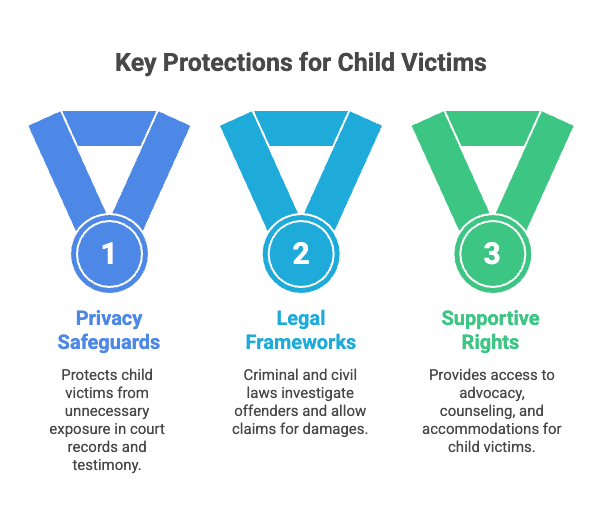
These legal rights reflect a broader public commitment to serve vulnerable children, uphold community responsibility, and to ensure that abuse allegations receive careful, lawful, and compassionate treatment.
Steps to Take After a Minor Sexual Abuse Incident in Florida
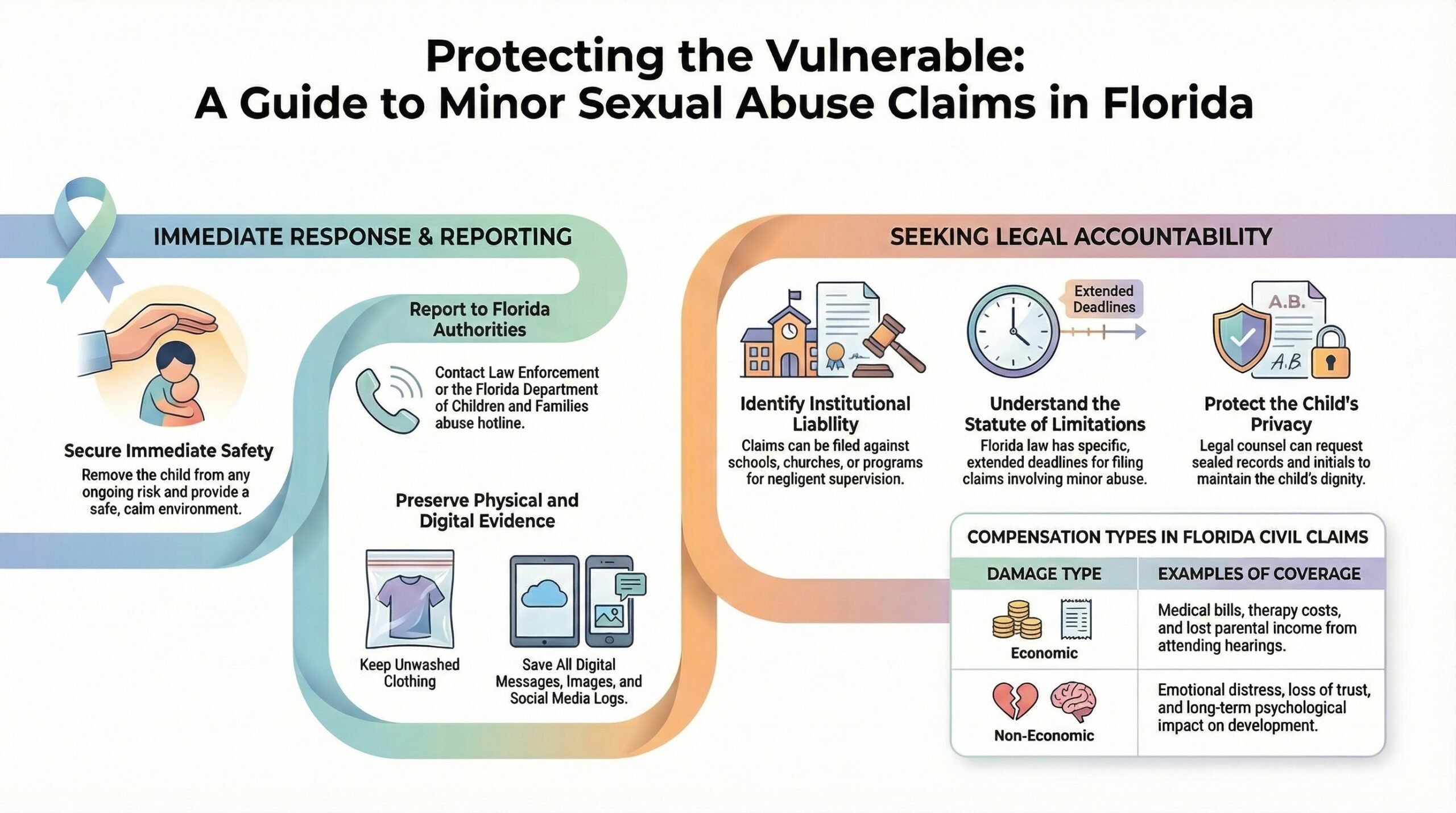
After a minor sexual abuse incident in Florida, the first priority is to guarantee the child’s immediate safety and remove the child from any ongoing risk of harm. The abuse should then be reported promptly to law enforcement, child protective authorities, or other mandated channels, so that an official response can begin without delay. It is also important to preserve crucial evidence, including clothing, messages, photographs, and medical records, because these materials may support both a criminal investigation and any related legal action.
Ensure Immediate Safety
Although the circumstances may be chaotic, the first priority is to secure the child’s immediate safety by removing the minor from any contact with the suspected abuser and bringing the child to a safe, trusted environment. Caregivers and helpers should remain calm, attentive, and focused on the child’s immediate needs, including privacy, reassurance, and supervision by a responsible adult.
Immediate safety also includes preserving the child’s physical and emotional well-being. The child should not be left alone, pressured to speak, or exposed to further conflict. If there is concern about retaliation or intimidation, practical witness protection measures may be considered within the family or care setting. Those serving vulnerable children should also understand that mandatory reporting duties may soon arise, even while the immediate emphasis remains on protection and stability.
Report The Abuse
Once the child is in a secure setting, the next step is to report the suspected abuse to the proper authorities without delay. In Florida, reports may be made to law enforcement, the Department of Children and Families, or the statewide abuse hotline, depending on the circumstances.
Adults who serve children should understand Florida’s mandatory reporting duties, especially teachers, counselors, healthcare providers, and caregivers. A prompt report allows trained professionals to assess danger, begin an investigation, and coordinate trauma-informed support.
When immediate risk remains, authorities may consider protective custody options to prevent further harm. Reporters should provide clear factual information, identify the child and alleged offender if known, and note any urgent safety concerns. Timely action helps safeguard the child and supports a responsible community response for everyone involved.
Preserve Key Evidence
In the period immediately following suspected sexual abuse, preserving crucial evidence can materially affect both child safety planning and any later criminal or civil case. Caregivers and supportive adults should avoid washing clothing, bedding, or personal items that may contain biological material, and should store them separately in clean paper bags.
They should also refrain from deleting messages, images, call logs, emails, or social media content, because Digital communication preservation may help establish contact patterns and intent.
Accurate incident timeline documentation is equally important. A careful record of dates, locations, statements, observed injuries, behavioral changes, and names of possible witnesses can assist investigators and legal counsel. Prompt medical evaluation may document injuries and collect forensic evidence while addressing the child’s immediate health needs and emotional support.
How a Florida Minor Sexual Abuse Lawyer Can Help You Initiate a Case
When a survivor or family decides to pursue legal action, a Florida minor sexual abuse lawyer can provide the structure and guidance needed to begin the case properly.
Counsel typically evaluates the basic facts, explains the Statute of limitations, and identifies immediate steps for preserving records, reports, and witness information within reliable evidence timelines.
- The lawyer organizes an initial review, gathers documentation, and assesses whether civil claims, institutional liability, or reporting obligations may apply.
- The lawyer coordinates with child advocacy professionals when appropriate, helping families approach interviews and records requests in a careful, service-minded manner.
- The lawyer connects survivors and caregivers with victim support resources while preparing filings, notices, and communications that protect privacy and support accountability.
Long-Term Effects of Minor Sexual Abuse Trauma
Minor sexual abuse trauma may produce lasting emotional and psychological effects, including anxiety, depression, and persistent distress that can continue into adulthood. It may also contribute to difficulties with relationships and trust, often affecting a survivor’s sense of safety, boundaries, and ability to form stable connections. In addition, the trauma may be associated with academic setbacks and behavioral challenges, which can interfere with concentration, performance, and social development over time.
Emotional And Psychological Impact
The emotional and psychological impact of sexual abuse during childhood often extends far beyond the abuse itself, affecting development, relationships, and daily functioning for years. Survivors may experience anxiety, depression, shame, hypervigilance, dissociation, and difficulty regulating emotions, even when outward functioning appears stable. In some cases, repressed memories complicate recognition of harm and delay treatment.
Professionals who serve affected children and families often observe how harmful coping strategies emerge as attempts to manage overwhelming fear, confusion, or self-blame. Trauma bonding can further distort a child’s understanding of safety, loyalty, and personal worth, leaving lasting internal conflict. With informed care, survivors may gradually strengthen emotional regulation, restore a sense of agency, and begin trust rebuilding within safe therapeutic environments. Early intervention and consistent support can notably improve long-term recovery outcomes.
Relationship And Trust Struggles
Because childhood sexual abuse can disrupt a young person’s basic sense of safety, long-term relationship and trust struggles often persist into adolescence and adulthood. Survivors may approach closeness with caution, misread care as control, or tolerate harmful dynamics because boundaries were repeatedly violated. Many also struggle to identify Grooming red flags, especially when manipulation was disguised as affection, attention, or protection.
Over time, patterns of trust betrayal can shape friendships, family bonds, and intimate relationships. A survivor may withdraw to avoid vulnerability or become overly accommodating to prevent conflict and abandonment. These reactions are not character flaws; they are learned survival responses rooted in trauma. For those seeking to support others, patient listening, consistent boundaries, and trauma-informed guidance can help recover a safer foundation for healthy connection, mutual respect, and dependable trust.
Academic And Behavioral Challenges
Difficulties with trust and personal safety often extend beyond relationships and appear in the classroom and in everyday behavior. Survivors may struggle to concentrate, retain information, or participate consistently, especially when reminders of past harm interrupt attention and emotional regulation. Trauma impacts academic performance by reducing focus, increasing absences, and making ordinary expectations feel overwhelming.
Adults who seek to serve affected children often observe behavioral changes such as withdrawal, irritability, perfectionism, defiance, or sudden declines in motivation. These responses should be understood as possible signs of distress rather than simple misconduct. Supportive intervention, stable routines, and trauma-informed educational environments can help restore a sense of predictability. When schools and caregivers respond with patience and informed care, children are better positioned to regain confidence, engagement, and long-term stability.
What to Expect During a Florida Minor Sexual Abuse Claim Process
A Florida minor sexual abuse claim process generally begins with an initial case evaluation, during which the facts, potential liability, and legal options are carefully assessed. The matter then typically moves to evidence gathering and investigation, followed by attention to filing requirements and applicable deadlines that may affect the claim’s viability. Depending on the circumstances, the process may conclude through a negotiated settlement or proceed to trial for judicial resolution.
Initial Case Evaluation
Initially, a Florida minor sexual abuse claim begins with a confidential case evaluation in which counsel reviews the reported abuse, the identity of the responsible parties, and the available evidence to determine the legal and factual basis of the matter. During this meeting, counsel explains procedural expectations, potential timelines, and the client’s role in supporting a careful, service-minded legal response.
The evaluation often addresses Mandatory reporting obligations, especially when abuse concerns a child’s current safety or institutional oversight. Counsel may also provide an evidence-preservation checklist, so families and advocates understand practical steps for protecting relevant records, communications, and identifying information. This stage helps clarify whether civil claims may proceed against individuals, organizations, or both, while emphasizing dignity, informed decision-making, confidentiality, and the need to protect vulnerable persons throughout the process.
Evidence And Investigation
Throughout this stage, counsel evaluates the authenticity of evidence, documents the chain of custody, and consults qualified experts when needed. A careful investigation may also uncover negligent supervision, prior complaints, or concealment by organizations. This disciplined process helps families and advocates pursue accountability in a manner centered on protection, truth, and informed service to others.
Filing And Deadlines
When a civil claim is ready to be filed, Florida deadlines and procedural rules become central to the case. Counsel generally reviews limitation periods, notice requirements, and court rules to protect the victim’s rights and preserve the claim. Timing may differ from a criminal statute, because civil and criminal matters follow separate legal tracks.
After filing, the court issues procedural deadlines for service, responses, and early case management. Attorneys typically ensure that pleadings are accurate, parties are correctly identified, and confidential information is handled with care. In matters involving minors, special protections may apply to privacy, guardianship, and records. Careful calendaring is critical because missed dates can limit recovery or delay accountability.
A service-minded approach emphasizes diligence, respect, and timely action, helping survivors and families guide the process with stability and informed support.
Settlement Or Trial
After a claim is filed and early court deadlines are addressed, the case typically moves toward either settlement discussions or trial preparation. Counsel for both sides reviews the evidence, assesses witness credibility, and considers whether an impartial evaluation could help clarify the strengths and risks. In many cases, damage negotiations focus on accountability, long-term care needs, and other losses recognized under Florida law.
If a settlement is not reached, the parties prepare for trial through motions, expert review, and final witness planning. A judge or jury may then determine liability and award damages based on the evidence presented. Throughout this stage, careful legal guidance can support informed decisions and protect the child’s interests. The process often requires patience, discipline, and a steady commitment to truthful presentation and lawful advocacy for justice.
Compensation for Florida Minor Sexual Abuse Damages
Compensation serves as a principal component of civil claims involving minor sexual abuse in Florida, because it is intended to address the profound and often lasting harm caused by the abuse. Courts and insurers may review medical documentation, treatment records, and mental health evaluations to understand the survivor’s needs and the care required over time. A careful claim can support stability, accountability, and access to services that strengthen recovery and protect future well-being.
| Consideration | Purpose | Practical Value |
|---|---|---|
| Medical documentation | Confirms injuries and treatment | Supports a clear factual record |
| Mental health evaluations | Describes trauma effects | Guides appropriate therapeutic care |
| School or caregiver observations | Shows daily impact | Illustrates changes in functioning |
| Expert professional opinions | Explains long-term needs | Assists fair case assessment |
When handled with diligence, compensation can help families secure resources, reinforce safety, and promote informed decisions centered on the child’s welfare throughout legal proceedings.
Economic vs Non-Economic Damages in Florida Minor Sexual Abuse Cases
In Florida minor sexual abuse cases, damages are generally divided into economic and non-economic categories, each addressing a different type of harm. Economic damages refer to measurable financial losses, while non-economic losses concern the personal and lasting effects that do not carry a fixed dollar value. Establishing either form of damages typically requires clear documentation, credible testimony, and evidence linking the abuse to the claimed harm.
Economic Damages Explained
When a Florida minor sexual abuse claim proceeds, damages are generally divided into economic and non-economic categories, each serving a distinct legal purpose. Economic damages address measurable financial losses tied to the abuse and its aftermath. These may include costs for medical treatment, therapy options, prescribed medications, transportation to appointments, educational support, and reasonably expected future care needs.
They can also cover expenses related to survivor support services, relocation for safety, and lost parental income due to attending meetings, court proceedings, or treatment sessions. In some cases, records from a criminal investigation or recommendations from child advocacy professionals help document these losses. By focusing on verifiable expenses, economic damages aim to provide practical resources to help families secure stability, access to treatment, and consistent care for the child’s ongoing recovery and protection.
Non-Economic Losses Defined
Although economic damages focus on measurable financial costs, non-economic losses address the personal harm that cannot be captured through bills, receipts, or wage records. In Florida minor sexual abuse cases, non-economic damages refer to suffering tied to trauma, diminished quality of life, loss of trust, emotional distress, and the enduring Psychological impact on a child’s development and relationships.
These losses do not lend themselves to objective valuation in the same way as medical invoices or documented recovery costs. Instead, they recognize injuries that affect daily functioning, education, family interactions, and a young person’s sense of safety. A service-minded audience should understand that these damages exist to acknowledge the full human consequences of abuse. They reflect harm that is real, serious, and deeply disruptive, even when no direct financial figure can fully express its weight.
Proving Damage Claims
Establishing damages in a Florida minor sexual abuse case requires credible evidence that connects the abuse to both measurable financial losses and the child’s broader personal harm. Economic damages may include medical treatment, counseling, medication, educational support, and future care needs, as documented by records, invoices, and expert opinions. Non-economic damages address pain, trauma, humiliation, loss of enjoyment, and lasting emotional disruption.
Courts and insurers examine whether the proof shows a clear causal link between the abuse and the claimed losses. Witness credibility can affect how fact finders evaluate family members, therapists, teachers, and other observers. Child testimony reliability is also considered, especially when statements remain consistent across interviews and are supported by professional assessments. Careful documentation helps those seeking accountability present claims that protect the child’s interests and support meaningful recovery.
When a Florida Minor Sexual Abuse Case Goes to Trial vs Settlement
Why some Florida minor sexual abuse cases proceed to trial while others resolve through settlement depends on a careful assessment of liability, available evidence, the severity of harm, and the willingness of the parties to accept legal and financial risk. Attorneys evaluate witness credibility, medical records, institutional knowledge, and whether a jury may respond favorably to the facts presented.
Settlement may be preferred when it can provide timely compensation, privacy, and reduced stress for the child and family. Trial may become necessary when responsibility is denied, settlement offers are inadequate, or public accountability is important to protect others. In some matters, custody implications can affect decisions, especially if allegations intersect with family court proceedings.
A sound trial strategy considers expert testimony, documentary support, and the emotional demands of courtroom testimony. The chosen path should reflect the child’s welfare, the family’s long-term needs, and the broader goal of promoting safety, dignity, and meaningful justice for vulnerable individuals.
The Statute of Limitations for Florida Minor Sexual Abuse Cases
Because time limits can greatly affect a survivor’s ability to pursue justice, the statute of limitations is a central issue in Florida minor sexual abuse cases. Florida law has changed over time, and the applicable deadline may depend on the survivor’s age, the date of the abuse, and whether the claim is criminal or civil.
In many situations, claims involving abuse of a minor receive extended filing periods, recognizing that trauma can delay disclosure. Even so, deadlines should never be assumed. Courts closely examine when the abuse occurred, when harm was discovered, and whether any statutory exception applies. Reporting Requirements may also affect how institutions respond once concerns are raised, particularly schools, churches, healthcare providers, and Child Protective Services agencies.
These timelines exist alongside mandatory reporting duties and investigative procedures. A careful review of the governing law is thus important, since missing a filing deadline can prevent a case from moving forward entirely in court.
When to Contact a Minor Sexual Abuse Lawyer in Florida
Questions about filing deadlines often lead directly to another practical issue, namely, when legal counsel should be consulted. In Florida minor sexual abuse matters, contact with an attorney is often advisable as soon as abuse is suspected, disclosed, or discovered through records, behavior changes, or third-party reports. Early guidance can help families, guardians, and community advocates protect the child, preserve documents, and understand immediate options.
Prompt consultation may also clarify the intricacies of Consent law, especially where age, authority, coercion, or online communication affects how conduct is evaluated under Florida law. It can further help responsible adults address Legal reporting duties to law enforcement, child protective authorities, schools, or care institutions without unnecessary delay.
In service-oriented settings such as churches, youth programs, healthcare facilities, and schools, timely legal direction supports a careful response centered on safety, documentation, and compliance. Waiting can create avoidable confusion, weaken available evidence, and hinder collaboration with investigators and supportive professionals for everyone involved.
Why You Need an Experienced Florida Minor Sexual Abuse Lawyer
An experienced Florida minor sexual abuse lawyer provides more than general legal guidance, offering informed judgment on child-protection issues, evidentiary concerns, institutional liability, and the procedural rules that often shape these cases from the outset. Such counsel helps families and concerned supporters respond with care, discipline, and respect for the child’s well-being.
Experience matters because these matters may involve parallel investigations, mandatory reporting duties, Criminal Defense strategies raised by opposing parties, and potential Civil Claims against individuals or institutions. A seasoned lawyer can coordinate with Victim Advocacy professionals, protect sensitive records, and support access to Trauma Counseling without losing sight of legal deadlines or proof requirements.
This level of representation also helps preserve testimony, address school or organizational misconduct, and reduce avoidable harm during interviews or court proceedings. For those seeking to serve and protect vulnerable children, experienced legal representation offers structure, accountability, and a clearer path toward safety, justice, and meaningful long-term recovery for survivors.
How to Choose the Right Minor Sexual Abuse Lawyer for Your Case in Florida
Selecting the right minor sexual abuse lawyer in Florida requires a careful review of qualifications, case experience, and the attorney’s approach to protecting a child’s interests throughout the legal process. Families and caregivers should examine whether the lawyer has handled comparable claims, understands Florida procedures, and demonstrates sensitivity when working with vulnerable children and those supporting them.
A sound evaluation also includes Client communication, since timely updates and clear explanations help decision makers act with confidence and care. Attention should be given to case strategy, including how the attorney plans to investigate facts, identify liable parties, and pursue appropriate remedies. Evidence handling is equally important because these matters often depend on the precise preservation of records, witness statements, and expert input.
Courtroom readiness should not be overlooked, as some cases require firm advocacy before a judge or jury. A thoughtful selection process helps support accountability, safety, and informed legal action for children.
About The Law Offices of Anidjar & Levine
The Law Offices of Anidjar & Levine represents individuals and families in Florida with a focus on responsive client service and thorough case preparation.
The firm approaches sensitive matters with professionalism, discretion, and respect for those seeking justice after harm to a child.
Its attorneys and staff emphasize clear communication, careful documentation, and timely action at every stage of representation.
Through confidential consultations, the firm helps families understand legal options and the steps involved in pursuing accountability.
This guidance is grounded in victim advocacy, with attention to safety, privacy, and the long-term needs of minors and their caregivers.
The practice seeks to reduce uncertainty by explaining procedures, coordinating evidence, and addressing concerns consistently and with care.
By combining legal knowledge with service-oriented support, The Law Offices of Anidjar & Levine aims to provide dependable counsel to people navigating difficult circumstances and to protect the well-being of vulnerable children across communities statewide in Florida.
Frequently Asked Questions
Can I Switch Lawyers During My Florida Minor Sexual Abuse Case?
Yes, a person may request a lawyer change during a Florida case, provided that the case consent rules and court requirements are followed. The substitution process usually requires written notice, possible court approval, and coordination between current and new counsel. A detached review of fees, deadlines, and strategy is prudent before changing representation. If the matter involves a minor, the court may scrutinize the change carefully to protect the child’s interests.
Will My Identity Remain Private in a Florida Minor Sexual Abuse Claim?
Yes, identity may remain private in a Florida minor sexual abuse claim, though complete anonymity is not guaranteed in every matter. Courts often protect minors through sealed filings, initials, and restricted public access, depending on the circumstances. Confidentiality inquiries should be directed to counsel promptly because protective measures are often requested early. Court record privacy depends on judicial orders, applicable statutes, and the manner in which the claim is filed and litigated.
Can Family Members Attend Meetings With My Florida Minor Sexual Abuse Lawyer?
Yes, family members may attend meetings if the client and attorney agree, especially when their presence supports the client’s well-being. However, counsel usually explains how a third party can affect attorney communication and confidentiality protections. In matters involving emergency custody or urgent safety planning, a lawyer may recommend limiting attendance to preserve privacy and strategy. Each decision is typically guided by the client’s best interests, legal needs, and informed consent.
Do Florida Minor Sexual Abuse Lawyers Offer Virtual Consultations?
Yes, many Florida minor sexual abuse lawyers offer virtual consultations, including telehealth appointments and a remote case review, to improve access and privacy. This option helps families, advocates, and caregivers seek guidance while reducing travel burdens and scheduling barriers. Availability varies by firm, so direct confirmation is advisable. Attorneys typically explain secure communication methods, intake requirements, and next steps, enabling concerned parties to make informed decisions in the best interests of the child.
What Documents Should I Bring to an Initial Case Consultation?
One should bring any materials that clarify the timeline, parties involved, and resulting harm. Helpful documents often include Police reports, school records, medical records, photographs, messages, emails, prior complaints, and notes describing incidents or witnesses. Identification and insurance information may also assist. Organized records enable counsel to assess facts efficiently, identify urgent protections, and recommend practical next steps that support accountability, safety, and the well-being of those affected.
—————————
Florida minor sexual abuse claims require careful legal evaluation, prompt action, and a clear understanding of a victim’s rights.
An experienced attorney can help preserve evidence, identify liable parties, and pursue compensation through every available legal avenue.
The Florida Sexual Assault Lawyer at Law Offices of Anidjar & Levine provides focused guidance for families seeking accountability and protection under Florida law.
With informed legal support, victims and their families can move forward while pursuing justice, financial recovery, and greater stability after abuse.