Law Offices of Anidjar and Levine helps survivors preserve evidence, organize medical and counseling records, and assess potential civil claims arising from psychological harm and related losses.
Counsel explains legal rights, manages deadlines, and addresses privacy and safety concerns while communicating with insurers, institutions, or opposing parties.
These cases often depend on credibility, documentation, and trauma-informed case development, especially when reporting was delayed.
The sections below outline rights, steps, damages, and how legal support may assist through a Florida Sexual Assault Lawyer.
Main Takeaways
- A Florida emotional trauma sexual abuse lawyer evaluates facts, identifies liable parties, and explains legal options with sensitivity to survivor privacy and safety.
- Counsel helps preserve key evidence, including messages, photos, medical records, therapy notes, clothing, receipts, and a written incident timeline.
- These claims often depend on proving injury, causation, credibility, and timelines, including trauma-informed explanations for delayed reporting.
- A lawyer manages deadlines, filings, insurer communications, and protective measures while organizing documentation for settlement discussions or trial.
- Florida compensation may include therapy costs, medical expenses, lost income, and non-economic damages like pain, suffering, mental anguish, and loss of dignity.


How We Can Help With Your Florida Emotional Trauma Sexual Abuse Claim
Steer the legal process with counsel that understands both the evidentiary demands of a civil claim and the sensitive nature of emotional trauma arising from sexual abuse. Such representation helps survivors and families pursue accountability while preserving dignity, privacy, and orderly case development throughout proceedings in Florida.
An attorney can assess facts, identify liable parties, preserve records, and organize Trauma documentation that supports the claim. Counsel also manages deadlines, prepares filings, communicates with insurers and defense counsel, and seeks protective measures when privacy concerns arise. In many matters, the legal team coordinates with victim support services to ensure clients receive practical assistance as the case progresses.
This integrated approach can reduce procedural burdens and allow survivors to focus on stability, treatment, and trusted community relationships. By building a careful record and presenting it clearly, counsel serves both the individual claimant and the broader public interest in safety, accountability, and responsible institutional conduct. It supports informed decisions at every stage.
OUR CONSULTATIONSARE FREE
START YOUR FREE CASE REVIEW

Understanding Emotional Trauma Sexual Abuse Cases in Florida
Because these claims often involve both profound psychological harm and disputed factual records, understanding emotional trauma sexual abuse cases in Florida requires careful attention to the legal standards, the available evidence, and the context in which the abuse occurred. These matters often turn on how courts evaluate injury, causation, notice, and damages.
Florida cases may involve civil claims supported by medical records, therapy notes, witness accounts, digital communications, and expert opinions addressing trauma responses. In many matters, the central issue is proof vs timelines, since delayed reporting may reflect trauma rather than fabrication. Careful review of credibility evidence is key, especially where records are incomplete or memories have developed over time.
A service-minded legal approach emphasizes dignity, accuracy, and protection of vulnerable individuals while pursuing accountability under Florida law. Objective case assessment helps determine whether the evidence can support liability, demonstrate emotional harm, and connect that harm to wrongful conduct in a legally persuasive manner.
Common Scenarios When Emotional Trauma and Sexual Abuse Might Take Place in Florida
Emotional trauma from sexual abuse in Florida may arise in several settings where trust, authority, or access can be misused. Common examples include workplace abuse incidents, school and campus abuse, religious institution misconduct, and online grooming and exploitation. Each scenario presents distinct legal and factual issues that may affect how a claim is evaluated and pursued.
Workplace Abuse Incidents
Although workplaces are expected to maintain professional boundaries and comply with safety laws, abuse can still occur in environments where power imbalances, inadequate oversight, or a culture of silence allow misconduct to continue.
In Florida, workplace abuse incidents may involve supervisors, coworkers, clients, or vendors who exploit authority, dependency, or fear of job loss. Emotional trauma can follow coercive sexual comments, unwanted touching, threats, stalking, or pressure tied to scheduling, promotions, or continued employment. Some individuals remain silent due to workplace retaliation, financial strain, immigration concerns, or damage to their professional standing.
Responsible intervention often includes prompt reporting, documentation, witness identification, and employee safety planning tailored to immediate risks. A legal review may help determine whether civil remedies are available and whether an employer failed to prevent, investigate, or stop known workplace misconduct.
School And Campus Abuse
When schools and college campuses fail to enforce clear safeguards, sexual abuse may occur in settings where students are expected to learn, live, and participate in daily activities under the supervision of adults or institutional authorities. Such misconduct may involve teachers, coaches, staff members, volunteers, or older students who exploit trust, access, or power. Incidents may arise in classrooms, dormitories, locker rooms, transportation, athletic programs, or private meetings disguised as mentorship.
Institutions serving young people are often expected to recognize childhood abuse patterns, respond promptly to disclosures, and comply with school reporting obligations under Florida law. When administrators ignore warning signs, discourage complaints, or fail to investigate credible reports, serious emotional trauma may follow. Careful legal review can help affected individuals and families pursue accountability, protection, and informed support services.
Religious Institution Misconduct
In what circumstances might sexual abuse within a religious institution lead to lasting emotional trauma in Florida? Harm may arise when trusted clergy, staff, or volunteers exploit spiritual authority, private counseling, youth programs, or confession-like settings to isolate and abuse a child or vulnerable adult. The betrayal of faith, community trust, and personal dignity can intensify shame, fear, and long-term psychological injury.
In many cases, institutions worsen trauma when leaders ignore warning signs, discourage disclosure, or fail to satisfy Reporting obligations under Florida law. Survivors may struggle with anxiety, depression, disrupted relationships, and loss of spiritual security. Civil claims may examine negligent supervision, retention, and clergy liability, particularly where prior complaints existed. For families and advocates committed to serving others, accountability can support protection, validation, and meaningful steps toward recovery.
Online Grooming And Exploitation
Because digital communication can provide offenders with continuous and private access, online grooming and exploitation often create severe emotional trauma in Florida, especially where a child or vulnerable person is manipulated through social media, gaming platforms, messaging applications, or live-streaming services.
These situations may involve trust-building, secrecy, coercion, threats, or requests for explicit images, all designed to erode consent boundaries through persistent digital manipulation. In many cases, offenders pose as peers, mentors, or romantic interests, then isolate the victim and normalize abusive conduct. The resulting harm can include fear, shame, anxiety, disrupted development, and long-term difficulty with relationships and safety.
Families, caregivers, and community advocates often play an essential role by recognizing behavioral changes, maintaining communication, and helping survivors access protective support, trauma-informed care, and guidance on legal options under Florida law.


Legal Rights of Emotional Trauma Sexual Abuse Victims in Florida
Although the effects of sexual abuse often extend far beyond physical injury, Florida law recognizes that victims of emotional trauma have important legal rights that may be enforced through both civil and criminal processes. Those rights may include compensation for therapy, pain and suffering, lost income, and other measurable harms, even when injuries are primarily psychological.
Courts may consider corroborating evidence and witness testimony when evaluating claims and accountability.
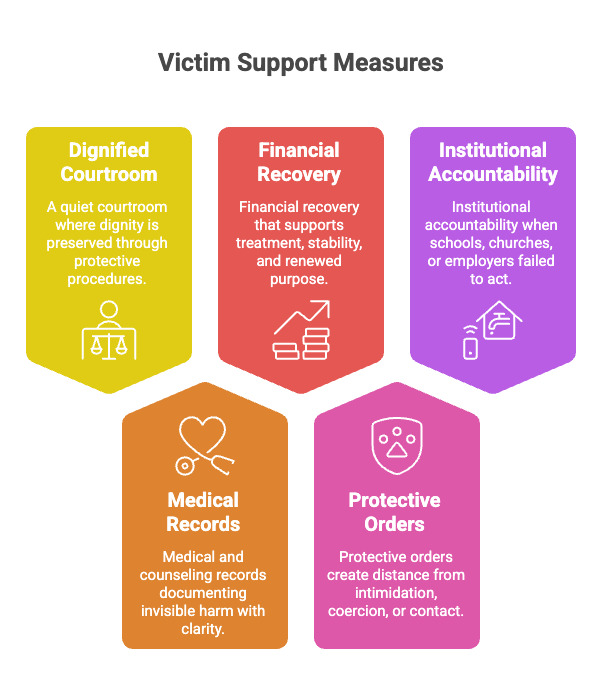
- A quiet courtroom where dignity is preserved through protective procedures
- Medical and counseling records documenting invisible harm with clarity
- Financial recovery that supports treatment, stability, and renewed purpose
- Protective orders create distance from intimidation, coercion, or contact
- Institutional accountability when schools, churches, or employers failed to act
Florida law also provides rights related to privacy, participation, and notice in criminal proceedings. In civil matters, survivors may pursue claims against perpetrators and negligent third parties, helping promote safety, accountability, and compassionate service to others.
Steps to Take After an Emotional Trauma Sexual Abuse Incident in Florida
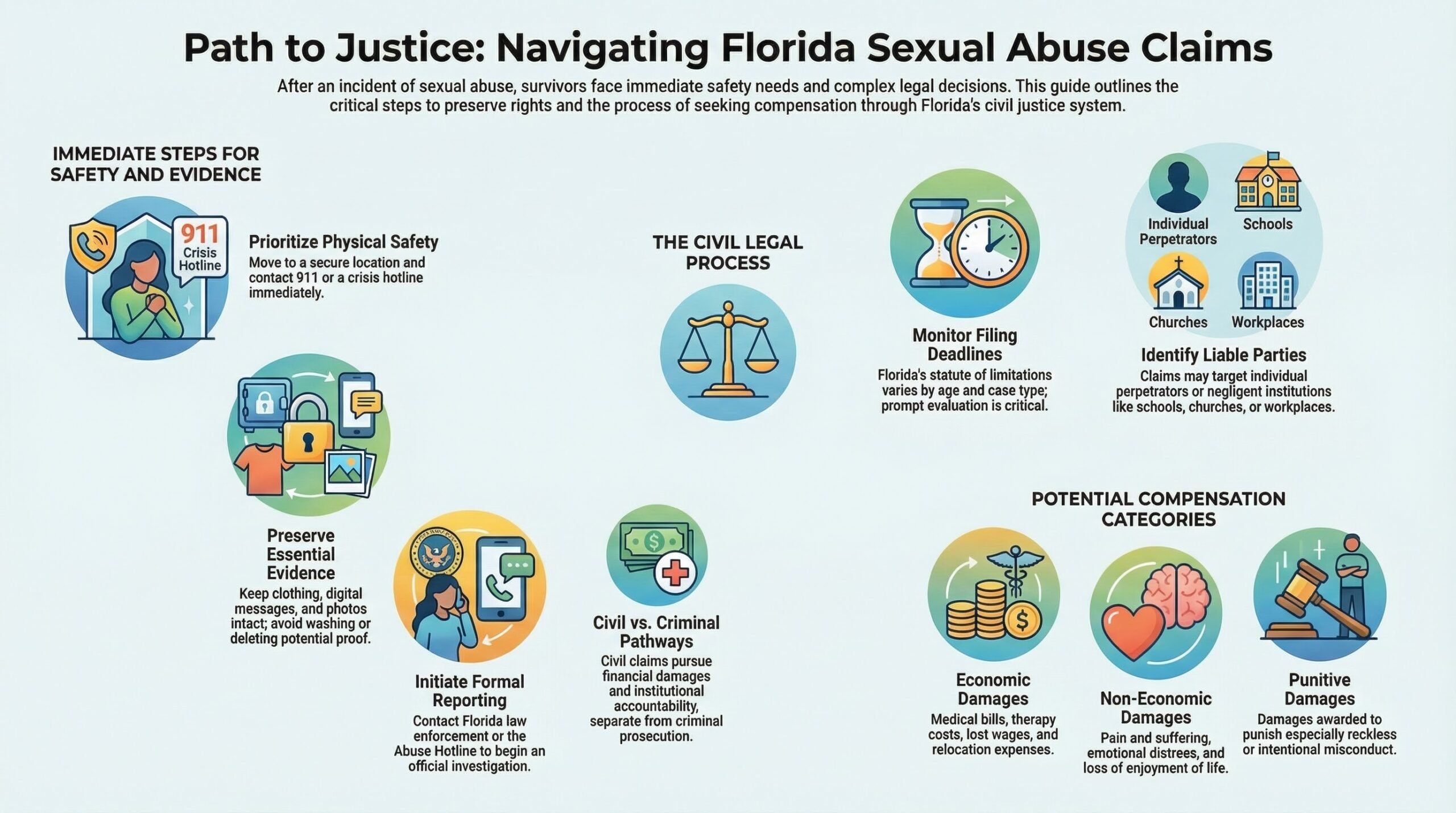
After an emotional trauma sexual abuse incident in Florida, the first priority is to secure immediate safety and obtain necessary medical or crisis support. It is also important to preserve crucial evidence, including communications, clothing, photographs, and medical records, because these materials may support both criminal and civil proceedings. Prompt contact with Florida law enforcement or other appropriate authorities can help initiate an official report and protect the victim’s legal interests.
Seek Immediate Safety
When personal safety is in question, the first priority is to move to a secure location away from the alleged abuser and any immediate threat. This may include a trusted home, hospital, shelter, or public setting where supportive individuals are present, and emergency assistance is available if needed.
Once immediate danger has been reduced, a survivor may benefit from contacting trusted people who can help coordinate transportation, child care, or short-term housing. Crisis support options, including Florida hotlines, community advocates, and victim service providers, can offer calm guidance during early decisions. Safe reporting steps may involve calling 911 during an emergency or notifying law enforcement from a protected setting. In all circumstances, the focus should remain on stabilizing the survivor, protecting dependents, and reducing further risk to nearby others.
Preserve Key Evidence
Because evidence can deteriorate quickly, a survivor in Florida may strengthen any future criminal or civil case by preserving relevant materials as early as possible from a safe location. Helpful steps may include saving digital communications, photographs, clothing, bedding, receipts, and location data without altering originals. A written incident timeline can record dates, times, surrounding circumstances, and any physical or emotional effects observed afterward.
If others witnessed events or relevant conditions, their names and potential eyewitness accounts may be noted for later reference. Medical paperwork, counseling notes, and therapy records may also help document trauma and ongoing harm when maintained in an organized file. When possible, items should be stored securely, backed up, and kept confidential. Careful preservation can support accountability and assist those working to protect vulnerable people and communities.
Contact Florida Authorities
Preserved evidence can be more effective when paired with prompt reporting to the appropriate Florida authorities. A survivor, or a trusted supporter acting in service, may contact local law enforcement, the Florida Abuse Hotline, or emergency responders when immediate danger exists. Timely reporting helps initiate investigations, supports Mandatory reporting duties for certain professionals, and may strengthen access to legal protections.
Florida agencies and community organizations often coordinate victim advocacy services to guide survivors through interviews, safety planning, and referrals. These professionals can connect individuals with crisis resources, including shelters, counseling, and medical care, and help them understand their options. Reporting does not erase trauma, yet it can create a documented path toward protection, accountability, and informed decisions that prioritize safety, dignity, and long-term recovery for survivors and families.
How a Florida Emotional Trauma Sexual Abuse Lawyer Can Help You Initiate a Case
Although initiating a case after sexual abuse can feel overwhelming, a Florida emotional trauma sexual abuse lawyer can provide the structure and legal guidance needed to move the matter forward. Counsel often begins by listening carefully, identifying urgent concerns, and explaining legal options with clarity and respect for the survivor’s goals.
A Florida emotional trauma sexual abuse lawyer offers steady guidance, helping survivors understand options and move forward with clarity and care.
A lawyer may assist through:
- preserving messages, records, and reports for strong evidence preservation
- coordinating with investigators and treatment providers when appropriate
- preparing forms, timelines, and statements for accurate case filing
- shielding the survivor from avoidable contact with opposing parties
- outlining deadlines, possible remedies, and next procedural steps clearly
This support allows the individual and trusted helpers to focus on safety, stability, and service to loved ones, while counsel handles documentation and strategy. By organizing facts early and presenting them responsibly, an attorney helps build a case that reflects truth, protects dignity, and meets Florida procedural requirements with care and professionalism.
Long-Term Effects of Emotional Trauma: Sexual Abuse Trauma
Emotional trauma resulting from sexual abuse often produces lasting mental health consequences, including anxiety, depression, and persistent distress that can continue for years. It also commonly affects a person’s ability to form and maintain healthy relationships, as trust issues may undermine emotional security and interpersonal stability. In addition, long-term physical symptoms and behavioral changes may emerge, reflecting the broad and continuing impact of the abuse on daily functioning.
Lasting Mental Health Impact
When sexual abuse causes deep psychological harm, the effects often extend far beyond the initial period of crisis and can alter a person’s mental health for years. Survivors may experience persistent anxiety, depression, panic symptoms, intrusive memories, and sleep disruption that interfere with daily functioning and long-term stability.
In many cases, the nervous system remains on alert, making ordinary stress feel overwhelming. Concentration, emotional regulation, and self-worth may decline, affecting work, education, and caregiving roles. Effective support often includes therapy restoration planning and practical coping strategies tailored to the survivor’s needs and pace. A careful legal and clinical response can also help document harm, support access to treatment, and promote a more stable path forward. Early recognition of these lasting effects is essential for meaningful service, advocacy, and care.
Relationship And Trust Struggles
Because sexual abuse often disrupts a person’s sense of safety at its core, long-term trauma can greatly impair the ability to form, maintain, and rely on close relationships. Survivors may approach intimacy with caution, uncertainty, or persistent fear, even when others offer genuine care and consistency. Trust can be weakened by earlier experiences involving secrecy, betrayal, coercion, and power imbalance dynamics.
In service-focused settings, it is important to recognize that trauma may alter how a person interprets boundaries, vulnerability, and emotional dependence. Some individuals struggle to identify healthy attachment, while others question their own consent capacity after prolonged manipulation. These difficulties can affect family bonds, friendships, romantic partnerships, and professional interactions. Effective support often begins with patience, predictable communication, respect for autonomy, and trauma-informed guidance over time.
Physical And Behavioral Effects
Although the psychological impact of sexual abuse is often emphasized, long-term trauma may also produce persistent physical symptoms and observable behavioral changes that interfere with daily functioning. Survivors may experience chronic pain, headaches, gastrointestinal distress, fatigue, sleep disruption, and heightened startle responses, even years after the abuse has ended.
Behaviorally, long-term trauma may appear through withdrawal, hypervigilance, avoidance of intimacy, substance misuse, disordered eating, or compulsive overachievement. These patterns often develop as coping mechanisms intended to restore a sense of safety or control. In many cases, prior grooming tactics contributed to confusion, self-blame, and delayed recognition of harm, which can deepen trauma-related behaviors.
For those committed to helping others, recognizing these effects supports informed advocacy, compassionate care, and practical intervention that honors dignity, safety, and long-term recovery.
What to Expect During a Florida Emotional Trauma Sexual Abuse Claim Process
A Florida emotional trauma sexual abuse claim process typically begins with an initial case evaluation, during which the facts, potential liability, and legal options are assessed. It then proceeds through the collection of evidence and documentation, followed by the filing of the claim within applicable legal deadlines. Depending on the strength of the case and the parties’ positions, the matter may conclude through settlement or proceed to trial.
Initial Case Evaluation
During the initial case evaluation, a Florida emotional trauma sexual abuse lawyer generally reviews the known facts, identifies potential legal claims, and explains how the claim process may proceed under state law. This meeting often centers on safety, immediate concerns, and the survivor’s goals for accountability and recovery. Counsel may outline privacy considerations, discuss Trauma documentation in general terms, and address practical issues related to Witness protection when risks are present.
The evaluation also helps determine whether deadlines, jurisdiction, and potential defendants may affect the claim. A lawyer commonly answers questions about communication, expected timelines, and available support resources, including counseling referrals or victim advocacy services. By clarifying responsibilities early, the process can better serve survivors, families, and communities seeking lawful, informed, and compassionate action.
Evidence And Documentation
Because proof often shapes the direction and strength of a civil claim, evidence and documentation are typically gathered as early as possible in a Florida emotional trauma sexual abuse matter. This process may include preserving medical records, therapy notes, photographs, text messages, emails, and other communications that help clarify events and resulting harm. A Witness statement from a family member, counselor, teacher, or colleague may also support consistency and credibility when relevant.
Attorneys often encourage careful timeline documentation so important dates, disclosures, symptoms, and interactions are not lost over time. Organized records can assist professionals who aim to advocate responsibly for survivors while presenting a clear account of damages. When available, employment files, school reports, and prior complaints may also provide context, strengthen corroboration, and help demonstrate the broader impact of abuse.
Filing And Deadlines
When a Florida emotional trauma sexual abuse claim is being considered, filing deadlines often become one of the most important issues to evaluate at the outset. Florida law may impose strict time limits, and those limits can vary depending on the survivor’s age, the nature of the abuse, and when the harm was discovered.
Careful review of possible Statute extensions is often necessary, especially when delayed disclosure, psychological injury, or concealed misconduct affected timely action. Legal counsel commonly helps identify the correct filing window and prepare required documents without avoidable delay.
Early action also supports Evidence preservation, including records, communications, witness information, and treatment history. For those seeking to serve and protect others, timely filing can strengthen accountability efforts while reducing the risk that crucial facts become unavailable with time.
Settlement Or Trial
Although many Florida emotional trauma sexual abuse claims resolve through negotiated settlement, some proceed to trial if liability, damages, or the credibility of evidence remains disputed. During settlement discussions, counsel typically evaluates medical records, witness statements, expert opinions, and long-term effects to shape an informed Negotiation strategy. The objective is to pursue accountability while reducing unnecessary stress on the survivor and preserving resources for recovery and service to others.
If settlement terms remain inadequate, trial preparation becomes key. This stage may include depositions, motions, expert testimony, and careful organization of documentary evidence. A court trial can require more time, public exposure, and emotional endurance, yet it may provide a fuller opportunity to present facts. Each path demands disciplined advocacy, realistic expectations, and a focus on justice and lasting protection.
Compensation for Florida Emotional Trauma Sexual Abuse Damages
While no financial award can repair the harm caused by sexual abuse, Florida law permits survivors to seek compensation for the emotional trauma and related losses that follow. Courts and counsel often rely on careful damage calculations and disciplined evidence-gathering strategies to present the full human impact with dignity, accuracy, and respect.
| Consideration | Purpose | Support |
|---|---|---|
| Treatment history | Show ongoing trauma | Therapy records |
| Expert evaluation | Explain diagnosis | Mental health opinions |
| Survivor testimony | Describe daily effects | Detailed statements |
| Corroborating witnesses | Confirm changes observed | Family or colleagues |
| Case documentation | Strengthen credibility | Reports and communications |
Compensation may reflect psychological suffering, treatment needs, diminished functioning, and other proven consequences tied to the abuse. A thorough claim seeks accountability while helping survivors secure resources for repair, stability, and continued service to their families and communities. Each case depends on reliable proof, thoughtful presentation, and a survivor-centered legal strategy.
Economic vs Non-Economic Damages in Florida Emotional Trauma Sexual Abuse Cases
In Florida emotional trauma sexual abuse cases, damages are generally divided into economic and non-economic categories, each addressing a different type of loss. Economic damages refer to measurable financial harms, such as medical expenses, therapy costs, and lost income, while non-economic losses concern pain and suffering, mental anguish, and diminished quality of life. Establishing trauma-related damages often requires clear documentation, professional evaluations, and other evidence that connects the abuse to the claimant’s financial and emotional harm.
Economic Damages Explained
How are economic damages distinguished from non-economic damages in Florida emotional trauma sexual abuse cases? Economic damages concern measurable financial losses linked to the abuse. They commonly include medical bills, counseling costs, prescription expenses, lost wages, reduced earning capacity, and other out-of-pocket losses. These damages may arise from workplace incidents, childhood abuse, or online exploitation, provided the claimant can connect the expense to the wrongful conduct.
Their calculation depends on records, invoices, employment documents, and expert opinions. Prompt evidence preservation often strengthens these claims by protecting receipts, treatment histories, digital records, and employment files. The statute of limitations also matters because filing deadlines can affect whether compensation remains available. In service-oriented advocacy, clear documentation helps counsel pursue resources that support treatment, stability, and practical recovery needs for survivors and families.
Non-Economic Losses Overview
Non-economic damages address the human impact of sexual abuse that does not appear on bills, pay stubs, or receipts. In Florida cases, these losses commonly include pain, suffering, mental anguish, humiliation, loss of dignity, and disruption of relationships. They recognize how abuse can alter daily functioning, trust, sleep, concentration, and a survivor’s sense of safety. Such damages also reflect barriers to access to therapy, the value of victim support, and the practical role of basic documentation in understanding lived consequences.
Unlike economic losses, they are not measured by fixed invoices or wage records. Instead, they address profound personal harm and the lasting effects on quality of life. For service-minded readers, this distinction underscores why compassionate legal advocacy considers both financial burdens and the deeply personal losses survivors may continue carrying forward.
Proving Trauma-Related Damages
Because trauma-related damages often extend beyond what standard financial records can show, proving them in a Florida sexual abuse case usually requires a structured presentation of both economic and non-economic evidence. Economic losses may include therapy costs, medication, lost income, reduced earning capacity, and other measurable expenses, as supported by Trauma documentation and careful damage calculation.
Non-economic harm, including pain, humiliation, anxiety, and loss of enjoyment of life, is commonly established through consistent treatment records, personal accounts, and corroborating credibility evidence. In many cases, expert testimony from mental health professionals helps explain how abuse affected functioning, relationships, and daily stability over time. When presented clearly, this evidence can help courts and insurers recognize the full scope of injury, supporting fair recovery and practical resources for restoration, protection, and future service to others.
When a Florida Emotional Trauma Sexual Abuse Case Goes to Trial vs Settlement
Although many Florida emotional trauma sexual abuse claims resolve through negotiated settlement, some proceed to trial when liability is disputed, damages are contested, or the parties hold widely different views of the evidence. In these matters, counsel evaluates Witness credibility, available records, and expert testimony to determine whether a negotiated outcome would better protect the survivor’s interests and conserve emotional resources.
A careful settlement strategy may provide privacy, faster compensation, and greater control over terms that support healing and future care. However, if an insurer, institution, or defendant minimizes harm or denies responsibility, trial preparation becomes necessary. Trial can allow a court or jury to weigh testimony, assess accountability, and award damages based on the full record. It also requires more time, expense, and emotional endurance. Effective representation involves balancing legal strength with the survivor’s well-being, while pursuing a path that promotes accountability, dignity, and meaningful support for recovery and long-term stability.
The Statute of Limitations for Florida Emotional Trauma Sexual Abuse Cases
When a survivor considers civil action arising from sexual abuse and resulting emotional trauma, the applicable statute of limitations becomes a critical part of the case analysis. Florida law has changed over time, so the filing period may depend on when the abuse occurred, the survivor’s age, and whether the claim involves childhood sexual abuse or adult misconduct.
In service-focused legal review, careful attention is given to statutory limits, Consent age standards, and the facts showing delayed discovery of harm. Certain claims may be affected by reporting requirements in related criminal or institutional contexts, although civil deadlines are distinct. Courts may also examine whether concealment, incapacity, or other circumstances altered the timeline. Because victim protections have expanded across many settings, both historical and current law must be evaluated.
A precise limitations analysis helps organizations, families, and advocates understand whether a claim may still proceed and what records may support accountability, recovery, and informed community response efforts.
When to Contact an Emotional Trauma Sexual Abuse Lawyer in Florida
How soon a survivor or concerned family member should contact an emotional trauma sexual abuse lawyer in Florida often depends on the need to protect legal rights, preserve evidence, and assess immediate safety and support concerns. Early guidance can help a household respond with care, organization, and respect for the survivor’s choices during a deeply sensitive period.
Contact may be appropriate as soon as there is a reasonable concern that abuse occurred, even if full details are not yet known. Prompt action may support documentation, identify relevant records, and clarify Reporting timeframes, which can affect available legal options. If there are urgent health issues, seeking medical attention should remain a first priority, along with securing emotional support and protection from further harm.
Families, caregivers, clergy, educators, and other service-minded individuals may also reach out when they need direction on preserving communications, reporting concerns through proper channels, and coordinating next steps without disrupting ongoing investigations or supportive care.
Why You Need an Experienced Florida Emotional Trauma Sexual Abuse Lawyer
Because these matters involve sensitive facts, strict legal deadlines, and the risk of lasting emotional harm, an experienced Florida emotional trauma sexual abuse lawyer can provide important guidance that protects both the survivor’s interests and the integrity of a potential claim. Counsel with relevant experience understands how trauma may affect memory, communication, and decision-making, and can structure the legal process to reduce unnecessary strain while preserving evidence.
Experienced representation also helps survivors pursue accountability without losing sight of broader care needs. A knowledgeable attorney may coordinate documentation, explain reporting options, and support informed choices regarding civil actions, confidentiality concerns, and damages. This work often intersects with Therapy support planning and survivor safety strategies, both of which can strengthen stability during a difficult period. For families, caregivers, and community advocates seeking to serve others well, experienced legal counsel offers a steady framework for protection, dignity, and lawful recovery under Florida law.
How to Choose the Right Emotional Trauma Sexual Abuse Lawyer for Your Case in Florida
Selecting counsel requires more than confirming a lawyer handles abuse-related claims in Florida. A careful review should consider whether the attorney demonstrates trauma-informed judgment, respect for dignity, and a disciplined approach to confidential representation. For families and advocates seeking justice that may also protect others, these qualities matter greatly.
A strong candidate typically explains Client communication practices clearly, including response times, points of contact, and preparation for difficult conversations. Attention should also be given to case strategy, particularly how the lawyer evaluates liability, damages, deadlines, and potential institutional accountability. Questions about evidence preservation are equally important because records, witness statements, electronic messages, and medical documentation can become harder to secure over time.
It is also wise to ask how therapy coordination is handled, so legal steps do not unnecessarily interfere with treatment or recovery goals. Ultimately, the right lawyer combines competence, steadiness, and a service-centered commitment to the client’s long-term well-being.
About The Law Offices of Anidjar & Levine
The Law Offices of Anidjar & Levine represents injury victims and survivors throughout Florida with an approach that emphasizes responsiveness, preparation, and client-centered advocacy.
The firm is known for providing legal representation that is attentive to each client’s circumstances, while maintaining clear communication and practical guidance during difficult periods.
In matters involving emotional trauma and sexual abuse, the firm’s work reflects a commitment to victim advocacy, accountability, and dignity.
Attorneys and staff focus on understanding the harm suffered, identifying available legal options, and pursuing remedies that support safety, stability, and recovery.
Their service model emphasizes accessibility, timely updates, and careful case development, which can be especially important for survivors facing overwhelming emotional and procedural challenges.
For individuals, families, and community-minded advocates seeking counsel in Florida, the firm presents a structured and compassionate resource.
Its reputation is built on disciplined advocacy, professional integrity, and a sustained dedication to serving those harmed by wrongful conduct.
Frequently Asked Questions
Can I Pursue a Claim if the Abuse Happened Decades Ago?
Yes, a claim may still be pursued if the abuse happened decades ago, though the outcome depends on the Statute of limitations and any legal exceptions. Courts may allow older claims under specific circumstances, especially when later discovery or statutory changes apply. Evidentiary challenges often arise, including lost records, faded memories, and unavailable witnesses. A careful legal review helps determine whether a claim can proceed and how best to support accountability and protection.
Will My Identity Remain Confidential During a Florida Sexual Abuse Case?
Yes, identity may remain partly confidential in a Florida sexual abuse case, but confidentiality limits apply. Courts sometimes allow initials, pseudonyms, or sealed records to protect privacy and support the public interest in justice. Still, court disclosure can occur when due process requires sharing information with the opposing party or the judge. A careful legal strategy helps preserve dignity, encourage accountability, and protect others while complying with procedural obligations.
Can I File a Claim if the Abuser Was Never Criminally Charged?
Yes, a person may file a Civil Claim even if the abuser was never criminally charged. Civil cases rely on Noncriminal Proof, which differs from the standards used in criminal court. Useful Evidence Options may include medical records, witness statements, communications, and expert evaluations. A careful review of Florida Limitations is important because filing deadlines and exceptions can affect whether the claim may proceed and support accountability and community safety.
Are Therapy Records Required to Prove Emotional Trauma in Florida?
No, therapy records are not always required to prove emotional trauma in Florida. Courts may accept other Florida evidence, including testimony from the injured person, relatives, friends, or qualified experts who observed behavioral and psychological changes. Therapy necessity depends on the facts, the claimed damages, and available supporting proof. Still, treatment records can strengthen credibility and document severity, duration, and the practical effects of trauma on daily functioning over time.
Can Family Members Recover Damages Related to a Victim’s Trauma?
Yes, family members may recover damages in limited circumstances when a victim’s trauma causes independent, legally recognized harm to them. Trauma damages for relatives often depend on Florida law, the nature of the relationship, and whether emotional or financial losses can be directly proven. Family recovery is not automatic, and courts generally require clear evidence linking the victim’s trauma to the claimant’s own measurable damages, especially in derivative or wrongful death-related claims.
—————————
Victims of emotional trauma and sexual abuse in Florida may face lasting personal and legal challenges, but informed action can protect their rights and support recovery.
A qualified attorney can evaluate the circumstances, explain available legal options, and pursue accountability from responsible parties.
The Florida Sexual Assault Lawyer at Law Offices of Anidjar & Levine provides focused legal guidance for those confronting these serious matters.
Prompt legal support may strengthen a claim and help victims move forward with greater security and confidence.