Law Offices of Anidjar and Levine reviews reported misconduct in medical settings, explains legal options, and helps preserve records, communications, witness details, and other evidence.
Counsel may pursue civil claims, licensing board complaints, and coordination with law enforcement when appropriate.
Representation often includes evaluating issues related to informed consent, clinical boundary violations, damages, and filing requirements under Florida law.
Survivors may also seek compensation for medical costs, emotional harm, and lost income with help from a Florida Sexual Assault Lawyer.
The sections below outline these points.
Main Takeaways
- A Florida doctor sexual abuse lawyer evaluates misconduct during exams, treatment, consultations, or sedation to identify civil, licensing, and possible criminal issues.
- Early legal help preserves evidence, such as medical records, billing records, messages, witness names, notes, and surveillance requests, before materials are lost.
- Lawyers assess informed consent, medical necessity, power imbalance, and clinical boundary violations to determine whether professional misconduct or abuse occurred.
- Survivors may pursue compensation for physical, emotional, and financial harm, while also seeking licensing board discipline and law enforcement investigation.
- After ensuring safety, promptly document what happened, avoid further contact with the provider, and request a confidential evaluation of the case in Florida.


How We Can Help With Your Florida Doctor Sexual Abuse Claim
Many survivors are uncertain where to begin after misconduct by a medical professional, particularly when the abuse occurred in a setting that should have been safe and trustworthy. Legal counsel can provide structured guidance, careful listening, and practical support from the first conversation onward.
A firm handling these claims can assess the facts, preserve records, identify witnesses, and explain options in clear terms. It can review whether Informed Consent was ignored, whether a Clinical Boundary was crossed, and whether institutions failed in supervision or response. Counsel may coordinate with trauma-informed professionals, communicate with insurers, and shield survivors from unnecessary contact with the accused. It can also prepare a claim that accurately and respectfully reflects medical, emotional, and financial harm.
Throughout the process, the focus remains on service, accountability, and the protection of others who may be at risk. This assistance helps survivors pursue stability, answers, and a measure of justice with confidence.
OUR CONSULTATIONSARE FREE
START YOUR FREE CASE REVIEW

Understanding Doctor Sexual Abuse Cases in Florida
After outlining the practical support available to survivors, it is helpful to clarify what doctor sexual abuse cases involve under Florida law. These cases generally arise when a physician or other medical professional uses a position of trust, authority, or access to engage in sexual misconduct during care, examinations, consultations, or treatment relationships.
Florida law may address such conduct through civil claims, professional discipline, and, in some situations, criminal investigation. A careful legal review often examines consent, the medical purpose of the contact, power imbalance, and whether professional standards were violated. For those focused on protecting others, understanding the legal framework can help identify misconduct and support accountability.
Recognizing grooming behaviors may also be important because manipulation can develop gradually and undermine a patient’s ability to object. Documenting appointment details, communications, witnesses, and resulting harm can help preserve relevant facts. Clear records may strengthen reports to licensing authorities, healthcare institutions, and legal counsel for survivors.
Common Scenarios When Doctor Sexual Abuse Might Take Place in Florida
Doctor sexual abuse in Florida may occur in several medical settings where patients are especially vulnerable, and professional boundaries should be strictly observed. Common scenarios include misconduct during physical examinations, while a patient is under sedation or anesthesia, and in private consultation rooms where oversight may be limited. It may also arise during follow-up appointments, when a patient reasonably expects continued care and trusts the provider’s authority.
During Physical Examinations
Although physical examinations are a routine part of medical care, they are also a setting in which sexual abuse may occur when a physician exceeds legitimate clinical boundaries or performs intimate contact without medical necessity, informed consent, or proper explanation. In Florida, warning signs may include unnecessary touching, refusal to explain procedures, dismissing questions, or conducting intimate exams without gloves, chaperones, or documented reasons.
These acts can involve consent violations and reflect a clear power imbalance between patient and physician. A professional response requires transparency, respect, and attention to patient dignity at every stage of care. When conduct departs from accepted standards, survivors may benefit from careful documentation, witness statements, and legal guidance. Such measures can help protect others, encourage accountability, and support safer medical environments for all patients statewide.
Under Sedation Or Anesthesia
When a patient is under sedation or anesthesia, the inability to observe, resist, or later recall events can create conditions in which sexual abuse is more difficult to detect and report. In these circumstances, caregivers and institutions are expected to uphold strict safeguards, document all contact, and ensure appropriate supervision throughout treatment. Questions involving consent and coercion may arise when a patient cannot meaningfully agree, withdraw permission, or describe misconduct afterward.
For those seeking to protect vulnerable individuals, careful attention to medical records, witness accounts, and facility policies may help clarify whether boundaries were violated. Reporting procedures are also important because timely internal complaints, licensing board reports, and law enforcement notifications can preserve evidence and support accountability. A Florida attorney may help families evaluate options and next steps after suspected abuse.
In Private Consultation Rooms
Because private consultation rooms often limit visibility and reduce the presence of witnesses, they may present circumstances in which professional boundaries are more difficult to monitor and enforce. In these settings, improper touching, unnecessary disrobing requests, or sexually suggestive remarks may occur under the appearance of routine medical care.
A careful review of Consent and boundaries is often critical when evaluating whether conduct exceeded legitimate examination needs. Service-minded advocates may help survivors recognize warning signs, document details, and seek accountability through appropriate legal channels.
Medical records, room protocols, and staff access patterns can provide important context in determining what occurred. Throughout this process, victim confidentiality remains a central concern, helping to protect dignity while supporting informed decisions about reporting, civil claims, and access to trauma-informed professional assistance.
During Follow-Up Appointments
Follow-up appointments may create conditions in which misconduct is harder to recognize, as returning patients often expect a degree of familiarity and may be less likely to question changes in tone, procedure, or physical contact. In these settings, patient trust can be exploited through gradual shifts that appear routine or medically justified.
A provider may misuse medical power by extending examinations beyond what the visit requires, minimizing questions, or discouraging a support person from remaining present. Consent boundaries can become blurred when explanations are incomplete or when prior visits are used to imply ongoing permission. In some cases, follow-up coercion may involve pressure to accept unnecessary touching, invasive comments, or isolated scheduling practices. Careful documentation, clear communication, and independent reporting channels help protect patients and support accountability for everyone.


Legal Rights of Doctor Sexual Abuse Victims in Florida
How are the legal rights of doctor sexual abuse victims in Florida defined and protected under the law? Florida law recognizes a patient’s right to bodily autonomy, dignity, and safety during medical care. These protections are reinforced through civil remedies, criminal statutes, licensing rules, and standards governing Informed Consent and Medical Records.
Victims are entitled to pursue accountability while helping protect future patients from similar misconduct.
- Civil rights: A victim may seek damages for physical, emotional, and financial harm caused by abusive medical conduct.
- Criminal protections: Prosecutors may pursue charges when a physician’s conduct violates Florida criminal law or constitutes unlawful sexual activity.
- Professional discipline: State licensing boards may investigate complaints, impose sanctions, and restrict or revoke a doctor’s license.
- Privacy and documentation rights: Patients retain important rights involving confidential treatment information, access to records, and truthful documentation of examinations and procedures.
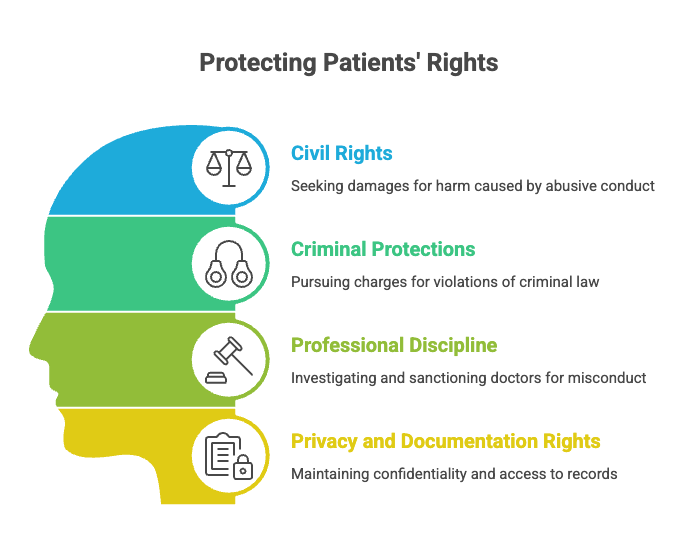
These legal protections reflect a broader commitment to patient welfare, public trust, and ethical medical service.
Steps to Take After a Doctor’s Sexual Abuse Incident in Florida
After a doctor’s sexual abuse incident in Florida, the first priority is to guarantee immediate safety and remove the affected individual from any further contact with the provider. The incident should then be reported to the appropriate authorities, as timely reporting may support both protection and accountability. It is also important to preserve vital evidence, including medical records, communications, and personal notes, because these materials may be essential in any future investigation or legal claim.
Ensure Immediate Safety
Because personal safety is the immediate priority, a person who has experienced sexual abuse by a doctor in Florida should leave the examination room, office, or medical facility as soon as it can be done safely. If needed, that person may move to a public area, contact a trusted friend or family member, or request immediate assistance from staff who are not connected to the incident.
Once away from danger, attention should turn to physical and emotional stabilization. If there is any urgent medical concern, emergency care should be obtained without delay. Clean clothing may be preserved, and personal notes may be made privately to support memory. Consent and boundaries should be recognized as violated, and patient advocate resources may help a survivor find safe support and guidance in the immediate aftermath.
Report The Abuse
If immediate safety has been secured, the next step is to report the abuse to the appropriate authorities as soon as practicable. In Florida, a person may report to authorities by contacting local law enforcement, the Florida Department of Health, or a hospital or clinic compliance office. Prompt reporting can protect other patients and support institutional accountability.
A trusted advocate, family member, or community leader may assist with communications if needed. The individual should provide a clear factual account, including dates, locations, and the identities of those involved, while avoiding speculation. It may also be appropriate to seek medical records from the provider or facility to understand treatment history and support informed reporting. When possible, written confirmation of each report should be requested and retained for future reference.
Preserve Key Evidence
Preserving critical evidence should begin as soon as a report is made, or earlier when circumstances allow, because documentation and physical items can be lost, altered, or discarded over time. Those assisting a survivor should capture digital records, including call logs, photographs, emails, portal entries, and billing statements. They should preserve electronic messages exactly as received, without editing, deleting, or forwarding content in ways that change metadata.
It is also important to save medical documentation, such as exam summaries, prescriptions, discharge papers, and test results, because these materials may confirm dates, treatment, and provider involvement. Supporters should maintain appointment notes that identify who was present, what occurred, and when concerns arose. Clothing or personal items connected to the incident should be stored carefully in clean paper containers rather than plastic bags for later review.
How a Florida Doctor Sexual Abuse Lawyer Can Help You Initiate a Case
When a patient is ready to take action, a Florida doctor sexual abuse lawyer can provide the structure and guidance needed to begin the legal process in a clear and informed manner. Early guidance often includes medical record retrieval, documentation review, and connection to Victim support resources that help meet immediate needs while legal planning begins.
Early legal guidance can help a patient organize records, understand options, and access support resources as they prepare to take informed action.
A lawyer may assist by:
- Evaluating facts, timelines, and available evidence.
- Identifying potential defendants and legal claims.
- Explaining filing deadlines and procedural requirements.
- Coordinating records, witness information, and agency reports.
This support helps a patient move from uncertainty toward an organized response that protects both legal rights and personal dignity. Counsel can also manage communications with insurers, healthcare institutions, and investigators, reducing preventable errors during the first stages of a case. By building a careful foundation, the lawyer enables informed decision-making and responsible next steps, which can serve the broader goal of accountability and protection for others.
Long-Term Effects of Doctor Sexual Abuse Trauma
Doctor sexual abuse trauma may cause lasting emotional and psychological harm, including anxiety, depression, and diminished trust in professionals. These effects can disrupt daily life by impairing relationships, work performance, and overall stability. They may also create significant barriers to future medical care, as survivors often struggle to seek treatment or feel safe in clinical settings.
Emotional And Psychological Harm
Although the physical violation may end after a single encounter or a pattern of misconduct, the emotional and psychological harm often continues for years and can alter nearly every aspect of a survivor’s life. Many survivors develop trauma symptoms such as anxiety, intrusive memories, shame, depression, and hypervigilance. These reactions may persist even after the abuse has ended.
The injury often extends to a person’s sense of safety, dignity, and trust in professionals. Trust issues may emerge in therapeutic, medical, and personal settings, making disclosure and support more difficult. Some survivors also experience healthcare fear, especially when examinations or authority figures trigger distress. In many cases, long-term counseling becomes an important part of recovery, helping survivors process violations, strengthen emotional stability, and begin restoring confidence in human care and professional accountability.
Impact On Daily Life
The effects of physician sexual abuse frequently extend far beyond the period of misconduct and become embedded in daily life. Survivors may struggle with concentration, sleep disruption, and heightened vigilance, which can interfere with routines, employment, and relationships. Ordinary settings, comments, or procedures may act as trauma triggers, producing anxiety that appears sudden to others but is deeply rooted in prior harm.
Daily responsibilities can also become harder to manage when trust, personal boundaries, and confidence have been damaged. In professional environments, Workplace power dynamics may intensify distress, especially where authority, evaluation, or physical proximity are involved. Family roles, parenting tasks, and social participation may likewise be affected, as survivors work to maintain stability while carrying persistent stress. These impacts often require patient support, practical accommodations, and informed advocacy over time.
Barriers To Future Care
Because medical trauma can reshape a person’s sense of safety, survivors of physician sexual abuse may face substantial barriers to future care long after the misconduct ends. Distrust of providers may delay screenings, treatment, and preventive services, even when urgent needs are present. Many survivors also struggle with Therapy access, especially when targeted support is limited, or reimbursement barriers restrict consistent attendance.
Concerns about medical records can intensify fear, particularly if survivors worry that sensitive information will be mishandled, misunderstood, or viewed without respect. In clinical settings, consent documentation may trigger distress by recalling prior violations of bodily autonomy. Service-oriented professionals should recognize these obstacles with patience, transparency, and trauma-informed practices, helping survivors reenter care gradually, restore confidence in ethical treatment, and receive necessary services without additional harm.
What to Expect During a Florida Doctor Sexual Abuse Claim Process
A Florida doctor sexual abuse claim typically begins with an initial case evaluation, during which counsel reviews the reported conduct, potential legal issues, and the available facts. The process then turns to gathering evidence and documentation, followed by filing the claim in accordance with applicable procedural and statutory requirements. Depending on the strength of the evidence and the parties’ positions, the matter may be resolved through settlement or proceed to trial.
Initial Case Evaluation
What should a survivor expect during an initial case evaluation in a Florida doctor sexual abuse claim? During this meeting, an attorney generally listens carefully, outlines the legal process, and assesses whether the facts may support a civil claim. The discussion usually centers on timelines, treatment relationships, and immediate concerns involving safety, privacy, and well-being.
The evaluation also introduces Confidential legal options, explains attorney-client protections, and reviews practical next steps. Counsel may ask focused questions about communications, witnesses, and medical record documentation, while avoiding unnecessary intrusion. At this stage, the purpose is to provide clear guidance, identify potential legal duties, and help the survivor make informed decisions that may protect others. A careful evaluation creates structure, preserves dignity, and establishes whether further action should proceed in Florida courts.
Evidence And Documentation
Preserving evidence early can materially affect the strength of a Florida doctor’s sexual abuse claim. Clear, organized documentation helps advocates, counsel, and support professionals understand what occurred and protect the interests of those seeking accountability and safer care for others.
Useful materials may include contemporaneous notes, appointment records, billing statements, photographs, text messages, emails, and witness information. Medical consent forms can help clarify what procedures were authorized and whether boundaries were exceeded. Requests may also be made to preserve surveillance footage from hallways, entrances, or reception areas before it is routinely deleted. In addition, treatment timelines, provider names, and communications with clinics can help establish context.
Careful recordkeeping supports credibility, reduces confusion, and allows professionals assisting survivors to assess facts responsibly, with attention to dignity, privacy, and community protection.
Filing The Claim
Once sufficient information has been gathered, filing a Florida doctor sexual abuse claim typically begins with a structured review of the facts, the available records, and the legal grounds that may support civil action. Counsel generally confirms timelines, identifies responsible parties, and completes required notices or pleadings in accordance with Florida procedure. During this stage, crucial evidence preservation remains essential because records, communications, and witness details may affect the claim’s strength.
A careful medical record review often helps clarify treatment history, provider interactions, and potential inconsistencies. The formal filing then places the matter before the court and establishes deadlines for subsequent steps. Throughout the process, a service-minded legal team may help survivors understand documentation requests, procedural obligations, and privacy concerns, while maintaining an orderly, respectful approach focused on accountability and informed decision-making.
Settlement Or Trial
After a Florida doctor sexual abuse claim is filed, the case generally proceeds toward either a negotiated resolution or a trial, depending on the evidence, the parties’ positions, and the willingness to resolve disputed issues outside the courtroom. Counsel evaluates evidentiary strength, witness credibility, damages, and records to assess risk and potential recovery. Strong proof can improve negotiation leverage and support a focused mediation strategy aimed at meaningful accountability and compensation. Settlement may offer privacy, faster resolution, and reduced strain, while still advancing the survivor’s welfare and public protection.
If settlement efforts fail, trial preparation intensifies through expert testimony, motions, and careful case presentation. Trial outcomes often depend on jury persuasion, legal rulings, and the clarity with which the facts demonstrate misconduct and harm. Each path requires informed guidance, disciplined advocacy, and service-minded attention to the survivor’s long-term needs.
Compensation for Florida Doctor Sexual Abuse Damages
Evaluating compensation in a Florida doctor sexual abuse case requires a careful review of both the survivor’s tangible losses and the profound personal harm caused by the misconduct. Courts and insurers examine records, testimony, and other Damages Evidence to measure accountability and support informed recovery planning. In criminal vs. civil proceedings, compensation issues arise differently, yet each process may help a survivor pursue safety, dignity, and practical support for future care.
| Consideration | Why It Matters |
|---|---|
| Medical and counseling records | Helps connect treatment needs to the abuse |
| Witness statements and documentation | Strengthens credibility and clarifies impact |
A thorough claim may also consider professional discipline findings, therapy recommendations, and evidence showing how the abuse disrupted daily functioning, relationships, and trust in healthcare. Careful legal preparation can help families, advocates, and community supporters understand what resources may be available, while keeping the survivor’s well-being, privacy, and long-term stability at the center.
Economic vs Non-Economic Damages in Florida Doctor Sexual Abuse Cases
In Florida doctor sexual abuse cases, damages are generally divided into economic and non-economic categories, each addressing different forms of harm. Economic damages concern measurable losses, such as medical expenses, therapy costs, lost income, and other documented financial effects, while non-economic damages address pain and suffering, emotional distress, and related personal injuries. Establishing the value of either category often depends on records, expert analysis, and credible evidence that connects the abuse to the claimed losses.
Economic Damages Explained
Because compensation in Florida doctor sexual abuse cases is designed to address distinct categories of harm, economic damages refer to measurable financial losses, while non-economic damages compensate for intangible injuries such as pain, suffering, mental anguish, and loss of enjoyment of life. In practice, economic damages may include therapy bills, hospital expenses, medication costs, lost wages, diminished earning capacity, and other documented out-of-pocket losses.
These amounts are typically established through records, invoices, employment history, expert opinions, and accepted damage valuation methods. A careful review also considers future treatment needs and long-term vocational effects, especially when trauma disrupts education or employment. Although Medical malpractice defenses may challenge causation or necessity, thorough documentation helps clearly demonstrate the financial impact. This approach supports accountability and helps affected individuals secure resources needed for stability, recovery, and future care.
Non-Economic Losses Overview
Non-economic losses address the human consequences of a doctor’s sexual abuse that do not appear on bills, pay stubs, or other financial records. These losses recognize Trauma impacts that alter daily living, relationships, and a survivor’s sense of safety, dignity, and trust in caregivers.
In Florida doctor sexual abuse cases, non-economic damages commonly include pain, suffering, mental anguish, emotional distress, humiliation, loss of enjoyment of life, and disruption of personal connections. They reflect injuries that may persist long after treatment ends, affecting sleep, concentration, work performance, family participation, and spiritual well-being.
For those committed to helping others, understanding these harms supports compassionate advocacy and informed decision-making. This category acknowledges that abuse can damage the whole person, not merely finances, and that the law recognizes those profound, deeply personal consequences.
Proving Damage Value
When a Florida doctor sexual abuse claim reaches the damages stage, proving value requires more than listing losses, as each category must be supported by reliable evidence that connects the abuse to measurable harm. Economic damages may include therapy costs, medication, lost wages, and future care needs, often established through records, billing statements, and expert testimony. Non-economic damages involve pain, humiliation, emotional distress, and loss of trust, which require careful damage calculation and thoughtful valuation methods.
Counsel often focuses on proving credibility through consistent medical history, witness accounts, and documented behavioral changes after the abuse. Mental health professionals, vocational experts, and economists may help explain long-term consequences and assign supportable values. In service to survivors and community safety, strong proof of damages can promote accountability and encourage informed, compassionate case resolutions under Florida law.
When a Florida Doctor Sexual Abuse Case Goes to Trial vs Settlement
Although many Florida doctor sexual abuse claims resolve through negotiated settlement, the decision to proceed to trial often depends on the strength of the evidence, the extent of the harm, and the parties’ willingness to accept responsibility and risk.
Counsel evaluates trial strategy by examining liability proof, witness credibility, medical records, and expert opinions. Strong evidence readiness may encourage fair settlement negotiation, especially when a defendant seeks to limit public exposure and financial uncertainty. Settlement can provide quicker compensation, privacy, and reduced stress, which may strengthen victim support and promote access to care.
However, if responsibility is denied, damages are disputed, or offers fail to reflect the seriousness of the abuse, a trial may become necessary. A courtroom verdict can hold wrongdoers publicly accountable and may secure fuller compensation, though it also involves delay, expense, and emotional strain. In service-oriented representation, the chosen path should reflect the survivor’s needs, informed consent, and long-term well-being, while pursuing justice diligently.
The Statute of Limitations for Florida Doctor Sexual Abuse Cases
Because filing deadlines can determine whether a civil claim may proceed at all, the statute of limitations is a crucial issue in Florida doctor sexual abuse cases. Florida law may set different deadlines depending on the facts, the survivor’s age, and when the harm was discovered. This makes careful review of the timeline necessary in any potential civil action.
Courts generally expect claims to be filed within the applicable period, and missing that window can bar recovery regardless of the underlying misconduct. For that reason, accurate records, treatment notes, and other forms of Evidence preservation can carry significant importance. Timeliness also affects witness memory and institutional documentation. In some matters, legal rules may pause or extend deadlines, particularly where concealment, delayed discovery, or childhood abuse is involved. A clear understanding of limitations periods can support accountability while also respecting a survivor’s emotional recovery, recognizing that recovery and legal readiness do not always occur on the same schedule.
When to Contact a Doctor Sexual Abuse Lawyer in Florida
If sexual misconduct by a physician is suspected, prompt consultation with a Florida doctor sexual abuse lawyer can help preserve legal options and protect important evidence. Early action is often appropriate when a patient experiences inappropriate touching, sexualized comments, coercion, or conduct that violates Consent and boundaries during an examination or treatment encounter.
Contact may also be warranted when medical records seem incomplete, when witnesses may be identified, or when a facility begins an internal review. A timely legal consultation can support careful documentation of dates, communications, symptoms, and providers involved, while helping safeguard records subject to HIPAA confidentiality. It may also be prudent to seek guidance after reporting concerns to a hospital, a licensing board, a law enforcement agency, or a trusted advocate.
Families, caregivers, and community members who seek to protect others may encourage prompt consultation when vulnerable patients, including minors, elders, or disabled adults, appear unable to describe misconduct clearly or safely.
Why You Need an Experienced Florida Doctor Sexual Abuse Lawyer
When allegations of sexual abuse arise in a medical setting, experienced legal counsel is often vital to evaluate the facts, protect the patient’s rights, and direct the overlapping medical, regulatory, and civil issues involved. An experienced Florida doctor sexual abuse lawyer understands reporting channels, confidentiality concerns, and the standards governing physicians, clinics, hospitals, and licensing authorities.
Such representation can help survivors and families act with clarity during a disorienting period. Counsel may coordinate trauma-informed legal support, reduce unnecessary retraumatization, and assist in communicating with insurers, healthcare entities, and investigators on the patient’s behalf. An informed attorney also provides practical evidence-preservation tips, including guidance on records, messages, witness identities, and timelines that may later support accountability.
Because these matters often involve institutions with substantial resources, careful legal advocacy can level the process and promote safer outcomes for others. Effective representation serves not only the individual patient, but also broader community protection and professional accountability statewide.
How to Choose the Right Doctor Sexual Abuse Lawyer for Your Case in Florida
Although many attorneys advertise experience in sensitive injury matters, selecting the right Florida doctor sexual abuse lawyer requires close attention to the lawyer’s specific background, approach to survivor communication, and ability to handle claims involving both individual physicians and larger healthcare institutions. A careful review should include prior case results, courtroom experience, and familiarity with medical records, licensing procedures, and institutional reporting duties.
A strong candidate will understand how Victim credibility is often challenged and should know how to present clear evidence, supportive witness accounts, and persuasive expert testimony. The lawyer should also explain fee structures clearly, outline realistic timelines, and respect survivors’ needs by using secure communication practices.
Attention should be given to whether the attorney can address confidentiality agreements, internal hospital investigations, and civil claims without losing sight of the survivor’s dignity and broader community protection. Choosing counsel with skill, discipline, and compassion can strengthen accountability and help prevent similar harm to others.
About The Law Offices of Anidjar & Levine
After evaluating the qualities that matter in legal representation, attention may be directed to The Law Offices of Anidjar & Levine and the role the firm may play in cases involving sexual abuse by doctors in Florida.
The firm is positioned to assist survivors and families seeking accountability, guidance, and practical support during a difficult legal process.
Its work may include explaining Patient consent issues, identifying violations of professional boundaries, and advising clients on evidence preservation from the earliest stages of a claim.
The firm may also help individuals understand reporting procedures to licensing boards, healthcare institutions, and law enforcement when appropriate.
Careful attention to documentation requirements can strengthen a case by organizing medical records, communications, witness information, and timelines.
Through a structured approach, the firm may provide steady advocacy while respecting client dignity and community safety.
For those motivated by service and the protection of others, this role may carry significant value in pursuing justice and institutional responsibility.
Frequently Asked Questions
Can I Change Doctors Without Affecting My Sexual Abuse Claim?
Yes, a person can usually change doctors without harming a sexual abuse claim, provided care is handled carefully. The central concerns are preserving records, documenting the reasons for changing providers, and maintaining treatment without unnecessary gaps. A sound medical continuity strategy helps show consistent care and protects credibility. To serve the patient’s best interests, legal counsel and the new provider should promptly coordinate record transfers, appointments, and documentation.
Will Filing a Claim Make My Medical Records Public?
No, filing a claim does not automatically make medical records public. Courts generally protect sensitive health information through HIPAA privacy limits, sealed filings, and protective orders when appropriate. An overview of the discovery process shows that relevant records may be shared with parties, attorneys, experts, and the court, but usually not with the general public. Service-minded claimants should understand that privacy protections exist, although some disclosure may still be necessary.
Can Family Members Attend Meetings With My Lawyer?
Yes, family members often attend meetings with a lawyer, but confidentiality rules can affect who may attend. An attorney usually advises clients carefully, because unnecessary third-party presence may risk the attorney-client privilege. If a relative provides support or helps with communication, attendance may be appropriate. The lawyer will assess the meeting’s purpose, the client’s wishes, and any legal concerns, then recommend the best arrangement to protect confidentiality and effective representation.
Do Florida Doctor Sexual Abuse Lawyers Charge Upfront Fees?
Often, they do not charge upfront fees. Many firms use a contingency fee structure, meaning payment is collected only if compensation is recovered for the client. This approach can help survivors and families pursue accountability while reducing immediate financial strain. Some attorneys also offer free consultations, allowing individuals to ask questions, evaluate their case, and decide whether legal representation aligns with their needs and goals for justice.
Can I File a Complaint Anonymously Against a Doctor?
Yes, a complaint may often be filed anonymously against a doctor, although anonymous complaints can limit an agency’s ability to investigate fully. Many licensing boards allow confidential reporting and take steps to maintain a protected identity when possible. If a doctor’s misconduct poses an immediate danger, providing contact information may better support patient safety and accountability. A reporting party should review the specific board’s rules, because procedures and confidentiality protections vary by state.
—————————
Doctor sexual abuse allegations in Florida demand prompt, informed legal action.
Victims may have the right to pursue compensation, report misconduct, and hold negligent medical providers accountable under state law.
A qualified Florida Sexual Assault Lawyer can assess the facts, protect the victim’s interests, and guide each stage of the claims process.
Law Offices of Anidjar and Levine represents clients with the focus, discretion, and experience these serious matters require.