The Law Offices of Anidjar and Levine can help crash victims understand how collision forces cause nerve trauma, symptoms, and long-term limitations. A Florida Car Accident Lawyer may use medical records, diagnostic testing, accident evidence, expert opinions, and careful insurance communication to support these claims.
Compensation may include medical costs, lost income, pain, disability, and future care, subject to Florida fault rules and available coverage. Understanding the legal process, evidentiary needs, and insurers’ tactics can help protect the claim from the outset.
Main Takeaways
- A Florida car accident nerve damage lawyer helps connect crash mechanics to medical findings and legal responsibility.
- Nerve injuries may involve numbness, tingling, weakness, radiating pain, burning pain, or loss of function.
- Strong claims rely on medical records, diagnostic tests, crash reports, photos, witness statements, and expert opinions.
- Lawyers calculate current and future losses, including treatment costs, reduced earning ability, and daily-life limitations.
- An attorney handles insurer communications, preserves evidence, tracks deadlines, and prepares the claim for settlement or trial.


How We Can Help With Your Florida Nerve Damage Car Accident Injury Claim
After a crash involving nerve damage, a Florida car accident injury lawyer can help establish how the injury occurred, identify all liable parties, and document the full effect of the condition on the injured person’s life. This assistance often begins with a careful review of police reports, insurance communications, treatment records, imaging, and witness accounts. The lawyer may preserve evidence, calculate current and future losses, and communicate with insurers so the injured person can focus on care and recovery.
Working With Experts is often necessary in claims involving intricate symptoms, delayed diagnosis, or disputed impairment. Physicians, neurologists, life-care planners, and vocational professionals may explain Medical Causation, long-term limitations, treatment needs, and reduced earning ability. Their input can help present the claim with accuracy and dignity. By organizing proof, meeting deadlines, and preparing for settlement or trial, counsel supports a fair process while honoring the injured person’s need for stability.
OUR CONSULTATIONSARE FREE
START YOUR FREE CASE REVIEW

Understanding Florida Nerve Damage Car Accident Injury Cases
In the context of a Florida car accident, nerve damage can create complex injury claims because symptoms may appear immediately, develop gradually, or be mistaken for less serious soft-tissue conditions. These cases often require careful medical evaluation, clear documentation, and consistent follow-up care to connect the injury to the collision. For individuals focused on serving and protecting injured people, understanding the claims process helps ensure that no symptom is minimized or overlooked.
Florida nerve damage claims may involve numbness, tingling, weakness, radiating pain, or loss of function, all of which can affect work, caregiving, and daily responsibilities. Proper Car Accident Reporting supports the factual record, while medical records establish the nature and progression of the condition. The Insurance Claim Timeline also matters because delays in treatment, notice, or documentation may affect the availability of benefits. A measured legal approach can help preserve evidence, evaluate damages, and pursue fair compensation.
Common Causes of Florida Nerve Damage in Car Accidents
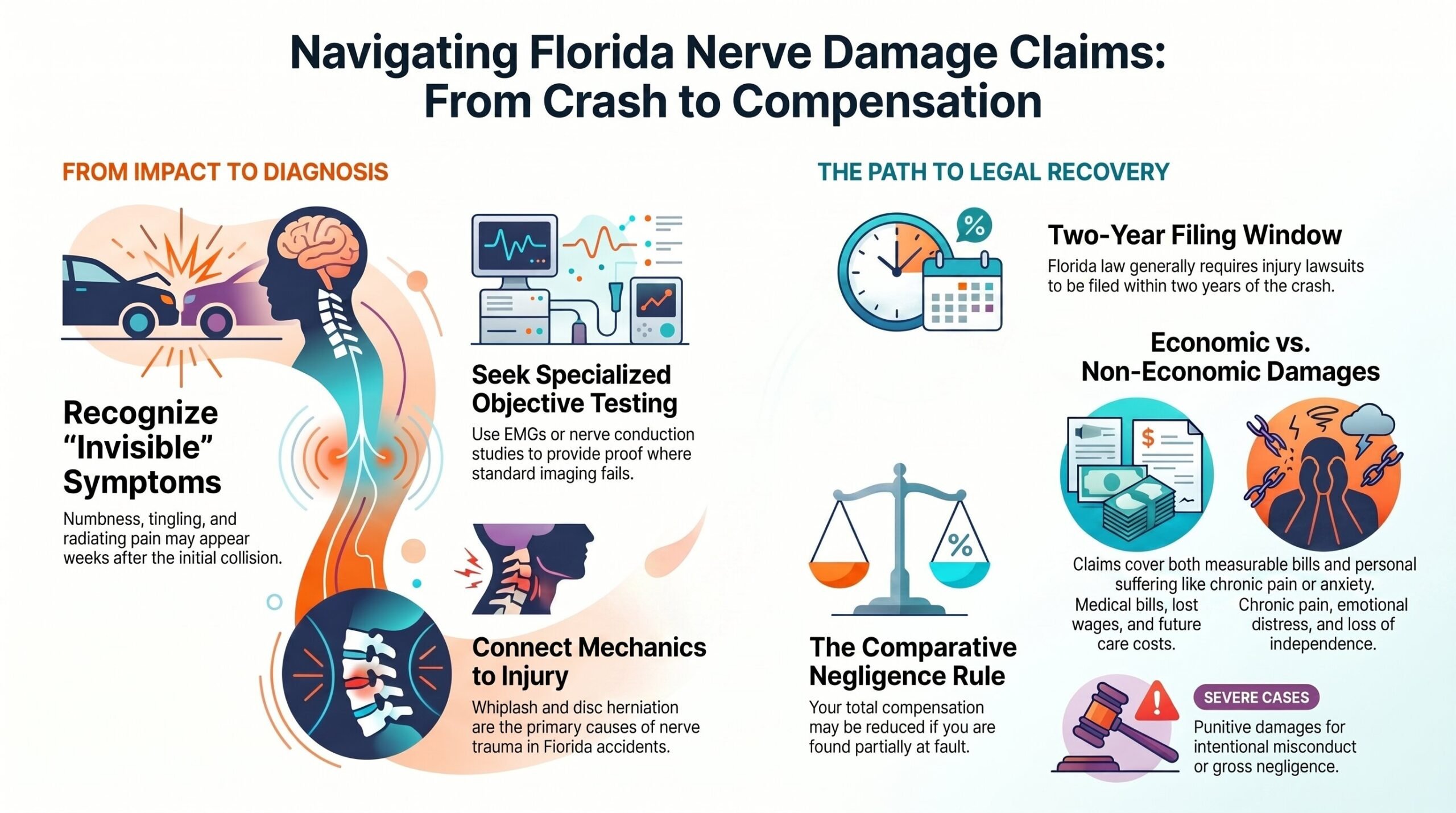
Nerve damage after a Florida car accident often results from forceful trauma that disrupts the neck, spine, or surrounding soft tissue. Common causes include whiplash neck trauma, spinal cord compression, disc herniation injuries, and seatbelt impact damage, each of which may affect nerve function in distinct ways. Identifying the specific cause is essential because it helps link the crash mechanics to the injury, medical treatment, and any potential legal claim.
Whiplash Neck Trauma
When a crash forces the head and neck to move violently beyond their normal range, whiplash neck trauma can damage nerves, soft tissue, and cervical spine structures. In Florida car accidents, this injury often follows rear-end impacts, side collisions, or sudden stops that strain muscles, ligaments, and nerve pathways. Symptoms may include neck pain, headaches, tingling, numbness, and reduced mobility, sometimes appearing hours after impact.
Treating soft tissue injuries promptly helps protect function and supports informed recovery decisions. Medical records, imaging, therapy notes, and provider opinions may also assist in proving negligence when another driver’s unsafe conduct caused the collision. Accurate insurance documentation remains important because insurers often question delayed symptoms or minimized neck injuries. Careful evaluation allows injured individuals to pursue accountability while focusing on restoration and service.
Spinal Cord Compression
Beyond whiplash neck trauma, a Florida car accident may also cause spinal cord compression, a serious condition that can produce significant nerve damage. Compression may occur when crash forces narrow the spinal canal, disturb alignment, or cause swelling around sensitive neural tissue. Victims may report weakness, numbness, coordination problems, radiating pain, or changes in bladder or bowel control.
These concerns may present with whiplash-related symptoms or alongside lumbar strain injuries, necessitating prompt medical evaluation. For caregivers, advocates, and legal professionals serving injured people, recognizing these warning signs supports timely treatment and careful documentation. In Florida injury claims, spinal cord compression may require imaging, expert review, and long-term care planning to address functional limitations, rehabilitation needs, and the person’s future ability to work and live independently.
Disc Herniation Injuries
After a motor vehicle collision, a disc herniation may occur when the force of impact causes the soft inner material of a spinal disc to push through its outer layer and irritate nearby nerves. This injury can cause radiating pain, numbness, weakness, or tingling in the neck, back, arms, or legs, depending on the level of the spine affected. Care providers serving injured patients often evaluate symptoms through physical examination, imaging studies, and neurological testing.
Treatment may begin with rest, targeted rehabilitation, medication, and Pain Management Therapies designed to reduce inflammation and preserve function. When nerve compression remains severe or progressive, Surgical Treatment Options may be considered to relieve pressure and prevent further impairment. Early diagnosis supports appropriate care planning, documentation, and coordinated support for individuals recovering after Florida car accidents.
Seatbelt Impact Damage
Seatbelt impact damage can occur during a Florida car accident when the restraint system tightens suddenly across the chest, shoulder, abdomen, or pelvis, transferring crash forces into soft tissue, joints, and nearby nerves. This pressure may cause bruising, inflammation, shoulder dysfunction, rib trauma, or nerve irritation that radiates into the arms, hands, hips, or legs. Victims may also report neck sprain symptoms, including stiffness, headaches, limited range of motion, or tingling sensations.
Careful medical evaluation helps identify whether nerve involvement is present and whether delayed symptoms require treatment. For individuals seeking to serve injured family members or clients, documentation is critical. Medical records, photographs, and consistent symptom histories may help counter insurance adjuster tactics that minimize seatbelt injuries as minor, temporary, or unrelated to the collision.


Legal Rights of Florida Nerve Damage Car Accident Injury Victims
Under Florida law, individuals who suffer nerve damage in a car accident may have the right to pursue compensation when another party’s negligence caused or contributed to the crash. These rights can include claims for medical costs, lost income, pain, disability, and future damages related to ongoing care or reduced earning capacity.
Florida’s comparative negligence rule may reduce recovery if the injured person shares fault, yet it does not automatically bar a claim.
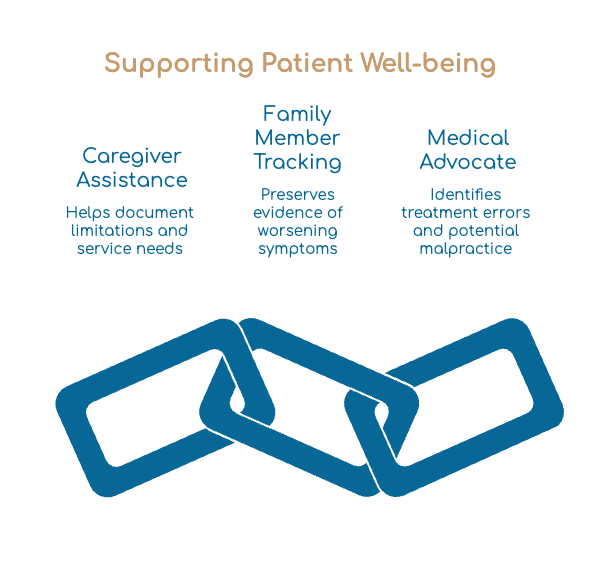
- A caregiver arranging therapy may help document daily limitations and service needs.
- A family member tracking symptoms may preserve evidence of worsening nerve pain.
- A medical advocate may help identify treatment errors that suggest medical malpractice.
In severe cases, punitive damages may be available when the conduct shows intentional misconduct or gross negligence. Legal rights often depend on timely action, accurate records, and clear proof linking the collision to the nerve injury. Counsel may evaluate available insurance, liability, and long-term losses.
Why Do Florida Nerve Damage Car Accident Injuries Happen?
Legal rights and compensation often depend on understanding how the nerve damage occurred and whether the collision forces, vehicle design, or another party’s conduct caused the injury. In crashes in Florida, nerves may be injured when the body is suddenly compressed, twisted, stretched, or struck. Herniated discs can press on spinal nerves, while fractures, deep cuts, burns, or blunt trauma may damage peripheral nerves in the arms, legs, neck, or back.
These injuries often arise from rear-end impacts, side collisions, rollovers, pedestrian crashes, or motorcycle accidents. Negligent speeding, distracted driving, impaired driving, unsafe lane changes, and failure to yield can increase the force and severity of impact. Poorly maintained vehicles or defective safety systems may also contribute.
Preventive driving and defensive techniques reduce risk, but they cannot eliminate another driver’s careless choices. For those serving injured individuals, identifying the crash mechanics helps connect medical findings to legal responsibility and the harm suffered.
What Should You Do After a Florida Nerve Damage Car Accident Injury?
After a Florida car accident involving suspected nerve damage, an injured person should seek immediate medical care, even when symptoms appear mild or delayed. Promptly documenting accident evidence, including photographs, witness information, and medical records, can help preserve important details. Consulting an injury lawyer may also assist in evaluating legal options, protecting deadlines, and pursuing compensation for related losses.
Seek Immediate Medical Care
Seek prompt medical evaluation when nerve damage is suspected after a Florida car accident, even if symptoms appear minor or delayed. Tingling, numbness, burning pain, weakness, or radiating discomfort may indicate nerve trauma requiring timely diagnosis. Medical providers can assess function, order appropriate tests, and begin treatment to help protect mobility and long-term independence.
Delayed symptom reporting can complicate care and may raise questions during communication with insurance adjusters. Accurate patient documentation, including symptom onset, pain levels, physical limitations, and treatment recommendations, helps preserve a clear medical record. Such records also support liability evidence gathering without replacing later investigation. For injured individuals who serve families, workplaces, or communities, early care promotes recovery while reducing avoidable disputes. Prompt treatment demonstrates responsibility, safeguards health, and creates a reliable foundation for any injury claim.
Document Accident Evidence
At the accident scene, careful evidence preservation can help establish how the crash occurred and how nerve damage later affected the injured person’s life. When it is safe, the injured person or a trusted helper should gather photos of the accident scene showing vehicle positions, road conditions, debris, skid marks, traffic signals, and visible injuries.
These images may support a clear timeline and assist medical providers, insurers, and others who serve the person’s recovery needs. Witness statements should also be collected, including names, phone numbers, and brief descriptions of what each witness observed. A police report number, the responding officer’s information, and notes on pain, numbness, weakness, or tingling should be recorded. Organized evidence can preserve important details that may fade quickly after a traumatic crash in Florida.
Contact An Injury Lawyer
A Florida nerve damage car accident injury may involve complex medical proof, disputed fault, and long-term losses, so early contact with an injury lawyer can help protect the injured person’s legal position. Counsel can review medical records, crash reports, witness accounts, and Insurance paperwork to identify missing facts and preserve claims before deadlines pass.
For those committed to caring for an injured family member, legal guidance can reduce confusion and support informed decisions. An attorney may communicate with insurers, evaluate coverage, and explain settlement timelines in relation to treatment progress and future needs. This assistance can help prevent premature agreements that undervalue pain, impairment, lost income, and ongoing care. Prompt legal review also supports orderly documentation, allowing the injured person and caregivers to focus on recovery.
Critical Evidence in a Florida Nerve Damage Car Accident Injury Case
Critical evidence in a Florida nerve damage car accident injury case helps connect the collision to the diagnosed condition, the required treatment, and the long-term impact on the injured person’s life. Strong proof may include:
- Medical records and diagnostic test results showing nerve trauma, symptoms, and treatment progression
- Accident scene evidence, including photographs, vehicle damage, skid marks, and crash reports
- Expert witness testimony explaining causation, prognosis, and the extent of functional limitations
Medical Records
When a Florida car accident causes suspected nerve damage, medical records often become the foundation for proving the injury, its cause, and its long-term impact. These records may include emergency department notes, physician evaluations, therapy summaries, medication histories, referral records, and documented complaints of pain, numbness, weakness, or functional loss.
Careful EMR organization helps counsel trace treatment from the crash forward, identify gaps, and present a clear timeline for insurers, opposing counsel, or a court. Accurate records also show whether the injured person followed medical advice and sought appropriate care, which may affect credibility. Because billing disputes can distract from the injury evidence, consistent documentation of treatment purpose and necessity is important. Complete medical records help preserve truth, support fair evaluation, and serve the injured person’s recovery-focused needs.
Diagnostic Test Results
Because nerve damage may not be visible on routine imaging, diagnostic test results can provide important objective evidence in a Florida car accident injury case. Electromyography, nerve conduction studies, MRI findings, and expert interpretations may help connect symptoms to trauma, treatment needs, and functional limitations. These results can support physicians serving injured patients by documenting conditions that pain descriptions alone may not establish.
In claims involving insurance adjuster tactics, objective testing may reduce disputes over whether numbness, weakness, burning pain, or loss of coordination is real. Diagnostic findings may also assist in proving negligence when they align with the timing of the crash, the patient’s complaints, and the subsequent medical course. Careful review of test results can strengthen the injured person’s case for fair compensation.
Accident Scene Evidence
Although medical testing is essential in a nerve damage claim, accident-scene evidence can help establish how the collision generated the forces that caused or aggravated the injury. Photographs of vehicle damage, skid marks, debris fields, roadway defects, and final resting positions may clarify impact direction and severity. A prompt investigation can preserve surveillance video from nearby businesses, traffic cameras, or residential systems before it is routinely deleted.
Eyewitness statements may also assist by describing speed, lane position, braking, sudden turns, or complaints of pain immediately after impact. Police reports, 911 records, and scene diagrams can further support a consistent account of the crash. For injured persons and the families who serve them, careful evidence preservation helps link the roadway event to subsequent neurological symptoms and treatment needs.
Expert Witness Testimony
In complicated cases of nerve damage, expert witness testimony may be necessary to explain how a car accident caused, aggravated, or revealed a neurological injury. Medical experts can interpret diagnostic studies, clinical findings, and treatment records, helping clarify whether symptoms align with trauma from the crash. Accident reconstruction experts may explain force, vehicle movement, and body mechanics, especially when liability is disputed.
Their opinions can support or challenge Eyewitness testimony, surveillance footage, and other evidence gathered from the scene. For injured individuals and those assisting them, expert analysis can provide structure to complicated facts and reduce confusion. In Florida injury claims, credible experts may also address future care needs, work limitations, and long-term pain, allowing decision-makers to better understand the human impact of nerve damage.
Long-Term Effects of Florida Nerve Damage Car Accident Injuries
Nerve damage after a Florida car accident may produce long-term consequences that extend well beyond the initial trauma. Chronic pain conditions, reduced mobility, muscle weakness, and functional limitations can interfere with work, daily activities, and overall independence. Emotional health impacts may also develop, particularly when persistent symptoms create stress, anxiety, depression, or a reduced quality of life.
Chronic Pain Conditions
Chronic pain often becomes one of the most disruptive long-term effects of nerve damage after a Florida car accident, especially when injured nerves continue sending abnormal pain signals long after the initial trauma. This pain may feel burning, stabbing, tingling, or electric, and it can interfere with sleep, concentration, emotional stability, and daily service to family, work, and community.
Medical providers may recommend treatment alternatives that address nerve sensitivity, inflammation, and pain regulation through medication management, nerve blocks, physical rehabilitation, or coordinated pain care. Non-surgical options may help reduce symptoms, though results often vary depending on injury severity, prompt diagnosis, and consistent follow-up. For injured individuals, careful documentation of ongoing pain can support both medical planning and any related Florida injury claim.
Mobility And Weakness
When damaged nerves disrupt communication between the brain, spinal cord, and affected muscles, mobility problems and weakness may develop after a Florida car accident. Individuals may struggle to walk, stand, grip objects, climb stairs, or maintain balance, which can limit their ability to serve family, work, and community responsibilities. Weakness may appear gradually as inflammation, compression, or trauma interferes with normal nerve signals. Physicians may use diagnostic imaging, nerve conduction studies, and physical examinations to identify the source and extent of impairment.
Care plans often combine rehabilitation, assistive devices, medication, and pain treatment to preserve function and prevent further decline. For injured persons, accurate documentation of reduced mobility can be critical, as these limitations may affect earning capacity, caregiving duties, household tasks, and long-term independence after the collision.
Emotional Health Impacts
Reduced mobility and physical weakness can also affect emotional health, especially when an injured person loses independence or faces ongoing uncertainty after a Florida car accident. Nerve damage may disrupt work, family roles, caregiving duties, and community participation, creating frustration, isolation, or grief. Some individuals develop PTSD and anxiety after painful treatment, collisions, or fear of worsening symptoms. These conditions can interfere with sleep, concentration, decision-making, and consistent medical follow-up.
Supportive care should recognize both physical and emotional needs. Medical providers, counselors, family members, and legal advocates may help document changes that influence daily function and long-term planning. When therapy and recovery include emotional support, injured persons may restore stability, improve coping skills, and participate more fully in rehabilitation and service-centered relationships with others over time.
Proving Liability in Florida Nerve Damage Car Accident Injury Cases
Although nerve damage can be medically complex, proving liability in a Florida car accident case depends on clear evidence to make sure showing how the collision occurred and why another party is legally responsible. Attorneys commonly examine police reports, witness statements, traffic camera footage, vehicle damage, road conditions, and applicable traffic laws. This evidence helps establish duty, breach, causation, and harm, which are critical elements in a negligence claim.
Florida’s comparative negligence rule may affect recovery if the injured person shares responsibility for the crash. Careful analysis can show whether another driver’s speeding, distraction, impairment, or failure to yield caused the impact and resulting nerve injury. Medical records, diagnostic testing, physician opinions, and treatment history also provide damages proof, linking the collision to physical limitations, pain, and long-term care needs. A well-supported liability presentation serves injured individuals by promoting accountability, preserving fairness, and helping to ensure that compensation reflects the true consequences of preventable harm.
Dealing With Insurance Companies After a Florida Nerve Damage Car Accident Injury
After a Florida car accident causes nerve damage, insurance companies often begin evaluating the claim before the full medical impact is known. Adjusters may request recorded statements, broad medical authorizations, or early settlement discussions while symptoms, treatment needs, and work limitations remain uncertain. Careful communication is important, especially when pain, weakness, numbness, or loss of mobility affects daily responsibilities.
A lawyer may help protect the injured person by organizing medical documentation, monitoring insurer requests, and preventing statements from being used unfairly. This support can be particularly valuable when dealing with medical bills, delayed diagnoses, medical referrals, or disputes over whether nerve damage came from the crash. Insurance carriers may also question lost income, caregiving limitations, or the seriousness of long-term impairment.
For those focused on serving family, patients, clients, or communities, accurate documentation matters. Proving disability benefits may require consistent records showing functional limits, treatment compliance, and physician opinions tied to accident-related nerve injury.
What to Expect During a Florida Nerve Damage Car Accident Injury Claim Process
A Florida nerve damage car accident injury claim typically begins with an initial medical evaluation, followed by timely insurance claim filing. The process then focuses on evidence and documentation, including medical records, diagnostic findings, accident reports, and proof of financial losses. Once liability and damages are assessed, settlement negotiations may determine whether the claim resolves without litigation.
Initial Medical Evaluation
When nerve damage is suspected after a Florida car accident, the initial medical evaluation often becomes a key foundation for both diagnosis and any later injury claim. Medical providers may begin with an Emergency room assessment to identify urgent complications, document pain patterns, and evaluate numbness, weakness, burning sensations, or loss of coordination.
Imaging studies, reflex testing, and sensory examinations may help determine whether trauma affected the spinal cord, peripheral nerves, or surrounding tissues. Careful tracking of neurological deficits is important because symptoms can change as swelling develops or injuries progress. Providers may recommend follow-up with neurologists, orthopedic experts, or pain management physicians. For professionals committed to serving injured people, accurate early documentation supports appropriate treatment planning and helps preserve a clear medical record tied to the collision.
Insurance Claim Filing
Once initial medical concerns are documented, the insurance claim filing process usually begins by notifying the appropriate carriers and identifying all available sources of coverage. In Florida, this may include personal injury protection benefits, bodily injury coverage, uninsured motorist coverage, or other applicable policies. A claimant should expect insurers to open claim files, assign adjusters, and request basic information about the collision, treatment, and lost income. Careful communication is important because early statements may affect later evaluations.
When nerve damage involves overlapping care issues, questions related to medical malpractice may arise separately from the auto claim. In severe cases involving reckless conduct, punitive damages may also be considered, although they are not routinely available. The filing stage helps establish orderly communication while preserving the injured person’s rights.
Evidence And Documentation
During the evidence and documentation stage, the strength of a Florida nerve damage car accident injury claim often depends on how clearly the injury, its cause, and its impact are proven. Medical records, diagnostic test results, physicians’ opinions, therapy notes, and pain journals may help establish the nature and duration of nerve impairment. Accident reports, vehicle damage photographs, and roadway images can support how the collision occurred.
Surveillance video may confirm the sequence of events, while witness statements can clarify speed, impact, and visible signs of distress. Employment records and daily activity limitations may indicate how the injury affects service, caregiving, and responsibilities. Careful organization of these materials allows the claim to be reviewed with accuracy, consistency, and respect for the injured person’s needs.
Settlement Negotiations
After the evidence has been collected and reviewed, settlement negotiations often become the stage where the value of a Florida nerve damage car accident injury claim is tested against the insurance company’s position. The injured person’s legal representative may present medical records, expert opinions, wage documentation, and Negligence evidence to support the demand. Insurers may respond with reduced offers, often citing preexisting conditions, disputed treatment needs, or Comparative fault defenses.
Each exchange requires careful evaluation because nerve damage can lead to lasting pain, weakness, and functional limitations. A lawyer serving the client’s interests may explain the risks of accepting, rejecting, or countering an offer. When negotiations are handled with discipline, the process can promote fair compensation while preserving the option of litigation if resolution remains unjust.
Compensation for Florida Nerve Damage Car Accident Injury Damages
When a car accident causes nerve damage, compensation in Florida may address both the immediate medical consequences and the long-term effects on the injured person’s ability to work, function, and maintain daily routines. A claim may require careful documentation of diagnostic testing, physician opinions, therapy recommendations, medication needs, and the progression of symptoms. Because nerve injuries can be difficult to detect, records should link the collision to pain, weakness, numbness, or reduced mobility, with clear medical support.
Insurance denial may occur when carriers question causation, treatment necessity, or the extent of impairment. Billing disputes can also delay access to care, creating additional burdens for an injured person and family. A thoughtful negotiation strategy should present organized evidence, address insurer objections, and seek an injury settlement that reflects the full impact of the condition. This process supports fair accountability while helping the injured person pursue the stability and care they need.
Economic vs Non-Economic Damages in Florida Nerve Damage Car Accident Cases
In Florida, nerve damage car accident cases, damages are generally classified as economic losses, such as medical costs and lost wages, and non-economic losses, such as pain and emotional distress. This distinction helps clarify how financial consequences differ from personal suffering, even when both arise from the same injury. Proving nerve damage losses often requires medical documentation, employment records, and evidence showing how the injury affects daily life.
Medical Costs And Lost Wages
The financial impact of a nerve damage injury after a Florida car accident can extend far beyond the initial emergency room visit. Economic damages may include ambulance fees, diagnostic testing, doctor consultations, medication, surgery, durable medical equipment, and ongoing rehabilitation therapy costs. When symptoms affect mobility, grip strength, coordination, or job performance, the injured person may also lose wages, miss opportunities for advancement, or require reduced hours. Careful documentation helps establish these losses with credibility.
A Florida nerve damage car accident claim may also involve future medical needs and diminished earning capacity. Attorneys often review medical records, employment history, tax documents, and expert opinions to value these damages. If insurers refuse necessary care or compensation, insurance denial appeals may become vital to protect the injured person’s financial stability.
Pain And Emotional Distress
Financial losses are only one part of the harm caused by nerve damage after a Florida car accident, because many injured people also face persistent pain, emotional strain, and reduced quality of life. These non-economic damages may involve burning sensations, numbness, sleep disruption, anxiety, depression, and difficulty performing ordinary acts of service for family or community. Compensation for panic may be considered when fear responses, travel anxiety, or trauma-related symptoms affect daily function after the crash. Florida injury claims may also account for loss of enjoyment, embarrassment, and the burden of living with unpredictable symptoms. Because these losses are personal and not measured by invoices, their value depends on careful presentation of how the injury changes life. Proving long-term suffering requires consistency, credibility, and attention to the human impact.
Proving Nerve Damage Losses
When nerve damage follows a Florida car accident, proving losses requires more than identifying the injury; it requires organized evidence that separates measurable expenses from personal consequences. Economic damages may include medical billing records, rehabilitation costs, lost wages, reduced earning capacity, and future care needs. Non-economic damages address pain, numbness, weakness, sleep disruption, loss of independence, and diminished daily function. Strong injury documentation helps connect these losses to the collision, treatment course, and long-term prognosis.
Providers, caregivers, and advocates serving the injured should preserve records, timelines, and functional observations. Statute deadlines also shape claim strategy, since delayed action can limit recovery. Careful proof is especially important when insurance claim tactics question causation, minimize symptoms, or classify nerve injuries as temporary. Evidence turns suffering into legally supportable damages.
When a Florida Nerve Damage Car Accident Injury Case Goes to Trial vs Settlement
Although many Florida nerve damage car accident injury claims resolve through settlement, some cases proceed to trial when liability, causation, or the value of long-term damages remains disputed. Settlement may serve an injured person’s needs when evidence is strong, future care is documented, and the insurer makes a fair offer that supports recovery and stability.
Trial becomes more likely when insurance tactics minimize symptoms, dispute diagnostic findings, or ignore how nerve pain limits work, mobility, and daily service to family or community. Counsel may evaluate settlement posture by comparing medical proof, expert opinions, witness testimony, and the risks of delay.
Trial strategy often focuses on explaining invisible injuries clearly, using treating physicians and functional evidence to demonstrate lasting harm. Jury selection is also important because jurors must be willing to consider pain, numbness, weakness, and reduced independence even when injuries are not obvious. Each path should reflect the client’s needs and evidence.
Florida Laws That May Affect Your Florida Nerve Damage Car Accident Case
The decision to settle or try a nerve damage car accident case is shaped not only by the evidence, but also by Florida law. Several legal rules may influence fault, compensation, and the practical value of pursuing recovery. A careful review helps protect injured people while honoring the service-minded goal of restoring stability.
- Comparative negligence rules may reduce compensation if the injured person is found partly responsible for the crash, making accurate fault analysis crucial.
- Florida insurance requirements and coverage disputes may affect available funds for medical care, lost income, and long-term support.
- Attorney fee limits may govern how legal fees are structured, helping make certain that representation remains fair and aligned with the client’s recovery.
These laws can affect settlement negotiations, trial strategy, and the evaluation of damages tied to chronic pain, weakness, or sensory loss. A knowledgeable lawyer can interpret these rules and guide the case with discipline, care, and accountability.
The Statute of Limitations for Florida Nerve Damage Car Accident Injury Cases
How quickly must an injured person act after nerve damage from a Florida car accident? In most Florida negligence cases, the statute of limitations requires a lawsuit to be filed within two years from the date of the crash. Missing this deadline can prevent recovery, even when the harm is serious and ongoing.
Nerve damage may develop or become fully understood over time, but delayed symptoms do not usually stop the legal clock. For those helping an injured person protect stability, early attention to medical documentation is critical. Records of pain, numbness, weakness, diagnostic testing, and treatment help connect the condition to the collision.
Insurance deadlines may also arise long before the lawsuit deadline, including notice requirements and claim submissions. Prior jury verdicts show that timely evidence often affects how nerve injuries are evaluated. Acting within the required period preserves the opportunity to seek accountability, support care needs, and protect the injured person’s future.
How a Florida Nerve Damage Car Accident Injury Lawyer Can Help You
When nerve damage follows a Florida car accident, a lawyer can help by identifying the evidence needed to prove both the injury and its connection to the collision. This support may include reviewing medical records, consulting medical experts, and organizing proof of pain, weakness, numbness, or functional loss. Proving causation is often central, particularly when symptoms develop gradually, or insurers argue that a condition is unrelated.
- Medical documentation can show diagnoses, treatments, limitations, and the effects on daily functioning, work, and caregiving.
- Accident evidence, such as crash reports, photographs, and witness accounts, can connect the trauma to the nerve injury.
- Damages analysis can address medical costs, lost income, rehabilitation, and reduced ability to assist family or community.
A lawyer may also manage insurance disputes, respond to claim denials, and present a structured demand for compensation. This allows the injured person to focus on recovery and responsibilities to others.
When to Contact a Florida Nerve Damage Car Accident Injury Lawyer
After understanding how legal support can strengthen a nerve damage claim, timing becomes an important factor in protecting that claim. An injured person should consider contacting a Florida nerve damage car accident injury lawyer as soon as symptoms appear, especially when numbness, weakness, burning pain, or loss of function continues after medical care begins. Early contact helps preserve records, identify insurance deadlines, and reduce the risk of overlooked evidence.
Prompt legal guidance is also important because Florida’s statute of limitations restricts how long an injured person has to pursue compensation. Waiting too long may limit available options, even when the injury is serious.
Those caring for family members, dependents, or community responsibilities may benefit from understanding their rights before financial pressure increases. Many firms offer contingency fee options, allowing a person to seek legal review without paying attorney fees upfront. Timely action supports informed decisions and helps protect the injured person’s future stability.
Why You Need an Experienced Florida Nerve Damage Car Accident Injury Lawyer
An experienced Florida nerve damage car accident injury lawyer can provide focused guidance in a claim that often involves complex medical evidence, disputed symptoms, and aggressive insurance defenses. Nerve injuries may not appear clearly on standard imaging, yet they can limit work, caregiving, mobility, and daily service to family or community. Counsel helps connect medical findings, treatment records, and functional losses to the crash in a clear, organized manner.
Post-accident documentation is crucial because insurers often question delayed pain, numbness, weakness, or radiating symptoms. A lawyer can help preserve records, identify missing proof, and present the full impact of the injury.
Comparative negligence defenses may also reduce compensation if fault is unfairly shifted onto the injured person. Experienced representation responds with evidence, witness information, and accident analysis. This support allows the injured individual to focus on treatment, responsibilities, and serving others while the legal claim is handled with discipline.
How to Choose the Right Florida Nerve Damage Car Accident Injury Lawyer for Your Case
Choosing the right Florida nerve damage car accident injury lawyer requires careful evaluation of the attorney’s experience with neurological injuries, insurance disputes, and Florida personal injury law. A suitable lawyer should understand how nerve damage affects mobility, employment, caregiving duties, and daily service to family or community. This knowledge supports a case strategy that reflects both medical evidence and long-term personal needs.
Prospective clients should review the lawyer’s record with intricate injury claims, including negotiation and litigation experience. Client communication is also important, as injured individuals often need clear updates, respectful guidance, and timely answers while focusing on recovery. The lawyer should explain contingency fees in plain terms, including costs, percentages, and when payment is owed.
A careful selection process should also include discussion of settlement timelines, evidence collection, expert opinions, and trial readiness. The right attorney will provide realistic expectations while pursuing compensation with discipline, compassion, and professional accountability.
About The Law Offices of Anidjar & Levine
For individuals seeking legal representation after nerve damage from a Florida car accident, The Law Offices of Anidjar & Levine offers personal injury services focused on protecting clients’ rights and pursuing financial recovery.
The firm assists injured people by reviewing accident details, identifying liable parties, and documenting losses that may affect long-term stability, medical care, and family responsibilities.
Its attorneys provide Local case consultations to help clients understand available legal options without unnecessary confusion.
Their approach includes gathering medical records, accident reports, witness statements, and expert opinions to build well-supported claims.
When insurers undervalue nerve damage injuries, the firm may use aggressive settlement tactics designed to seek fair compensation while preparing for litigation when appropriate.
The Law Offices of Anidjar & Levine also emphasizes client support, including communication, case updates, and practical guidance.
This service-minded approach allows injured individuals to focus on recovery while their legal team handles negotiations and claim development.
Frequently Asked Questions
Can Nerve Damage Symptoms Appear Weeks After a Florida Car Accident?
Yes, nerve damage symptoms can appear weeks after a Florida car accident. Delayed symptom onset may occur when swelling, inflammation, or spinal irritation gradually affects nerves. Numbness, tingling, weakness, or burning pain should be documented promptly and evaluated by a medical professional. For those assisting injured individuals, early care supports accurate diagnosis, treatment planning, and the injury-claim timeline, helping to preserve evidence connecting the condition to the crash.
Which Medical Specialists Treat Car Accident-Related Nerve Damage?
Medical experts who treat car accident-related nerve damage include emergency physicians, neurologists, orthopedic surgeons, physiatrists, pain management doctors, and physical therapists. Emergency pain management may stabilize acute symptoms, while a neurologist evaluation can identify nerve compression, neuropathy, or traumatic injury. These professionals coordinate imaging, electrodiagnostic testing, medication, rehabilitation, and referrals. Their work supports injured individuals by clarifying diagnoses, reducing suffering, and guiding responsible recovery planning after a serious collision.
Can Pre-Existing Neuropathy Affect My Florida Injury Claim?
Yes, pre-existing neuropathy can affect a Florida injury claim, but it does not automatically bar recovery. The pivotal issue is whether the accident aggravated the condition or caused new symptoms. Medical records, expert opinions, Insurance settlement documentation, and consistent treatment history may help separate prior limitations from crash-related harm. Pain management options should also be documented, so responsible parties can understand the claimant’s needs and support fair compensation.
Are Diagnostic Nerve Tests Covered in My Accident Claim?
Diagnostic nerve tests may be covered when they are medically necessary, accident-related, and properly documented by treating providers. In Florida, PIP benefits often pay initial medical expenses, subject to policy limits and statutory requirements. Medicare coverage may apply if the patient qualifies, though coordination and reimbursement rules can affect payment. A careful claim review helps ensure testing costs are presented accurately, supporting responsible care for injured persons and fair recovery efforts.
Can Nerve Damage From a Crash Become Permanent?
Yes, nerve damage from a crash can become permanent when trauma severely injures nerves or delays proper treatment. Medical providers often assess symptoms, imaging, and diagnostic test results within a causal timeline to link the crash to lasting impairment. Permanent nerve injury may affect mobility, sensation, strength, and daily service to others. In serious cases, it can support claims involving long-term disability, future care needs, and reduced earning capacity.
—————————
Nerve damage after a Florida car accident can create lasting medical, financial, and personal consequences.
A qualified Florida Car Accident Lawyer can evaluate liability, document losses, manage insurance communications, and pursue fair compensation through settlement or litigation.
The Law Offices of Anidjar and Levine provides focused legal support for injured clients seeking accountability after serious collisions.
Prompt legal guidance can help preserve evidence, protect rights, and position a claim for the strongest possible recovery under Florida law.