The Law Offices of Anidjar and Levine helps injured people organize evidence, assess fault, handle insurer communications, and pursue compensation under Florida law after a front-end crash.
A Florida Car Accident Lawyer may assist with collecting crash reports, medical records, witness statements, photographs, repair evidence, and wage loss documentation.
Counsel can address disputed liability, comparative negligence, coverage issues, and settlement pressure. Early guidance also helps preserve deadlines and document long-term injuries.
The sections below explain the main steps: rights, causes, evidence, and claim.
Main Takeaways
- A Florida front-end crash injury lawyer helps preserve evidence, document injuries, and organize claims after a collision.
- Legal guidance can identify liable parties, including drivers, owners, employers, or others who failed to use reasonable care.
- Evidence such as crash reports, photos, medical records, witness statements, and repair estimates supports fault and damages claims.
- A lawyer can handle insurer communications, monitor deadlines, and help avoid incomplete statements or premature settlements.
- Compensation may include medical expenses, lost wages, pain, disability, and future treatment needs, even when comparative fault applies.
How We Can Help With Your Florida Front-End Crash Injury Claim
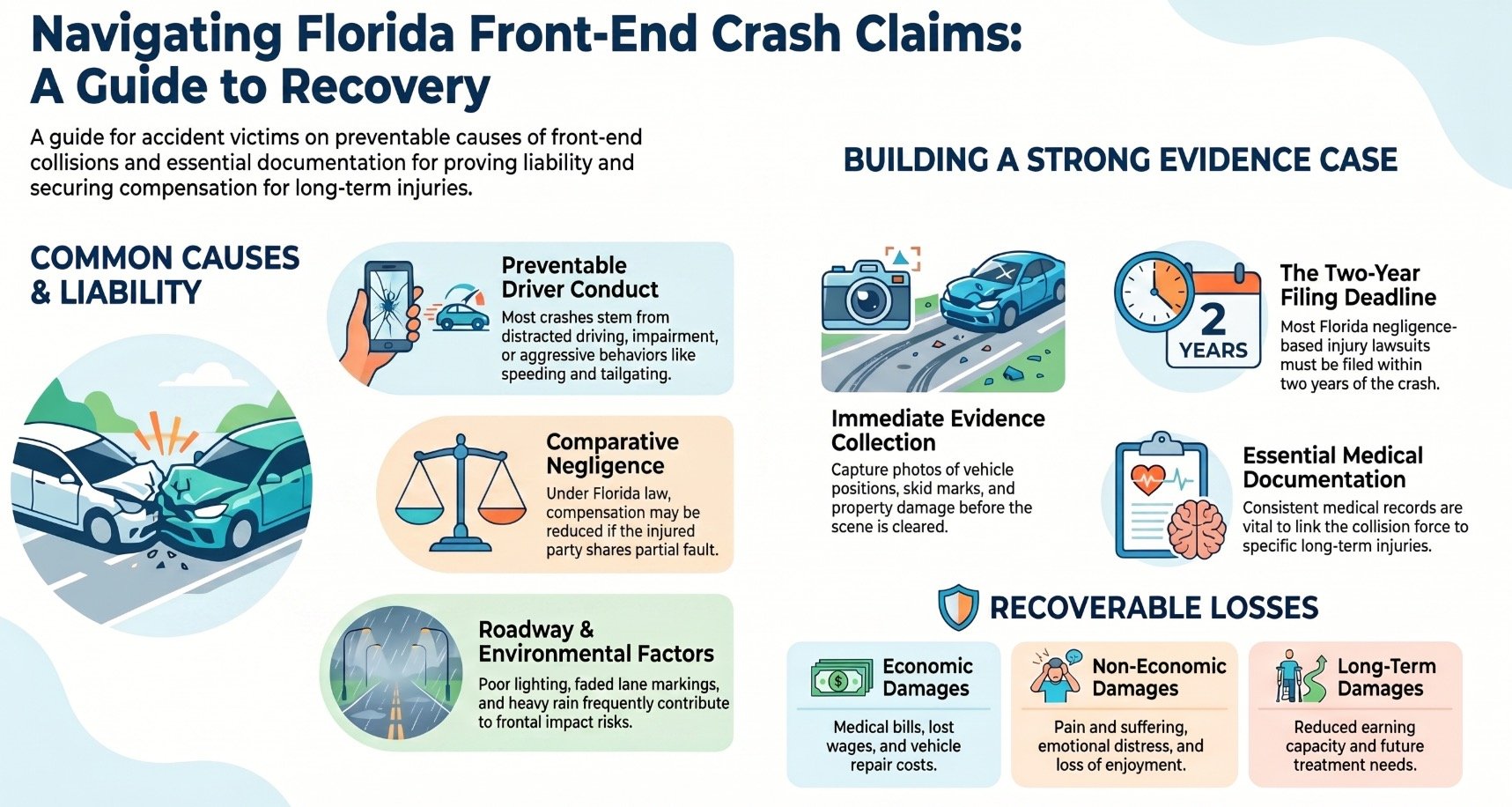
After a front-end crash in Florida, an injured person may face disputed liability, complex insurance rules, medical expenses, lost income, and pressure from insurers to resolve the claim quickly. A Florida front-end crash injury lawyer can provide organized guidance, helping the client protect rights while focusing on recovery and family responsibilities. Counsel may gather crash reports, medical records, witness statements, photographs, and repair evidence to support a complete claim. When fault determination disputes arise, the lawyer can address conflicting accounts, evaluate roadway conditions, and consult appropriate experts.
The lawyer may also monitor insurance claim timelines, prepare required notices, and respond to insurer requests with accurate documentation. This assistance can reduce missed deadlines and limit statements that may weaken the claim. If settlement discussions do not reflect the injury’s full impact, counsel may pursue further negotiation or litigation, always seeking a result that supports the injured person’s stability, dignity, and long-term care needs.
Understanding Florida Front-End Crash Injury Cases


A clear understanding of Florida front-end crash injury cases helps explain why these claims often require careful review of the evidence and informed legal analysis. These collisions may involve serious physical harm, vehicle damage, lost income, and long-term medical needs. For injured individuals and those assisting them, the claim process often begins with identifying responsible parties and preserving reliable documentation.
OUR CONSULTATIONSARE FREE
START YOUR FREE CASE REVIEW

Liability basics focus on whether a driver, vehicle owner, employer, or other party failed to act with reasonable care under Florida law. Police reports, photographs, medical records, witness statements, and repair estimates may help clarify what occurred and who may bear legal responsibility. Damages proof is equally important because compensation depends on establishing the nature, extent, and financial impact of the injuries.
A well-prepared case connects fault, injury, and loss through organized evidence. This approach supports fair evaluation while helping injured people receive attentive, respectful guidance during a difficult recovery period after a crash.
Common Causes of Florida Front-End Crashes
Front-end crashes in Florida often arise from preventable driver conduct, roadway decisions, and failures to follow traffic laws. Common causes include distracted driving, impaired driving, speeding and tailgating, and failure to yield at intersections or during turns. Understanding these factors helps clarify how liability may be assessed after a serious frontal collision.
Distracted Driving


When a driver’s attention shifts away from traffic conditions, even briefly, the risk of a front-end crash increases substantially. In Florida, distracted driving often involves phone use, navigation systems, eating, or conversations that divert visual, manual, or mental focus from the roadway. Texting accidents are especially dangerous because they combine all three forms of distraction, leaving little time to recognize stopped traffic, drifting vehicles, or sudden lane changes. Front end impacts may also occur when drivers fail to yield, cross centerlines, or enter intersections without adequate awareness. Distracted pedestrians can further complicate traffic environments, requiring attentive drivers to respond quickly and responsibly. For those committed to public safety, recognizing distraction as a preventable behavior supports stronger accountability, safer driving habits, and protection for injured community members.
Impaired Driving
Beyond distraction, impaired driving remains one of the most dangerous causes of Florida front-end crashes because it directly weakens judgment, reaction time, coordination, and hazard recognition. Alcohol, illegal drugs, and certain medications can cause a driver to drift across lanes, misjudge gaps, or enter opposing traffic. Drunk driving is especially dangerous when combined with reduced nighttime visibility, unfamiliar roads, or poorly lit intersections. For communities committed to serving others, these collisions reveal the need for accountability, prevention, and careful support for injured people. Impaired drivers may fail to recognize traffic signals, oncoming vehicles, pedestrians, or emergency conditions until impact is unavoidable. In legal claims, evidence such as police reports, toxicology results, witness statements, and crash reconstruction may help establish impairment and responsibility for the harm caused.
Speeding And Tailgating
Speeding and tailgating are frequent causes of Florida front-end crashes because they reduce the time and space a driver needs to recognize danger, brake safely, or execute an alternative maneuver around an oncoming vehicle. When traffic suddenly slows, an aggressive or impatient motorist may be unable to stop before crossing lanes, striking a lead vehicle, or forcing another driver into a hazardous maneuver. These risks increase when Driver distraction habits, such as looking at a phone or adjusting navigation, combine with excessive speed and close following distance. For injured persons and those assisting them, careful documentation of speed, braking marks, vehicle damage, and witness accounts can support accountability. Disputed fault may contribute to Insurance settlement delays, making timely evidence preservation and professional legal evaluation especially important after a serious collision.
Failure To Yield
Although many intersection collisions appear sudden, failure to yield is often the result of a preventable decision made before impact. A driver may misjudge oncoming traffic, enter a roadway without sufficient clearance, or proceed through a stop sign while others have priority. In Florida, these errors frequently occur during an intersection right turn, when a motorist focuses on merging quickly rather than protecting pedestrians, cyclists, or approaching vehicles. Failure to yield may also combine with a wrongful lane change, creating a direct front-end impact when another driver cannot avoid the hazard. Those who serve injured people should recognize that rules of the road exist to preserve order and protect life. Careful investigation of signals, traffic patterns, vehicle positions, and witness accounts can help identify negligent conduct and support accountability.
Legal Rights of Florida Front-End Crash Injury Victims
After a front-end crash in Florida, an injured victim may have several legal rights that depend on the severity of the injuries, the available insurance coverage, and the facts showing how the collision occurred. These rights may include seeking medical benefits, lost income, and compensation when another party’s conduct caused harm. Under Comparative Negligence, recovery may be reduced when fault is shared, but a claim may still be available. Evidence should not be framed in the passive voice when clear responsibility can be shown.
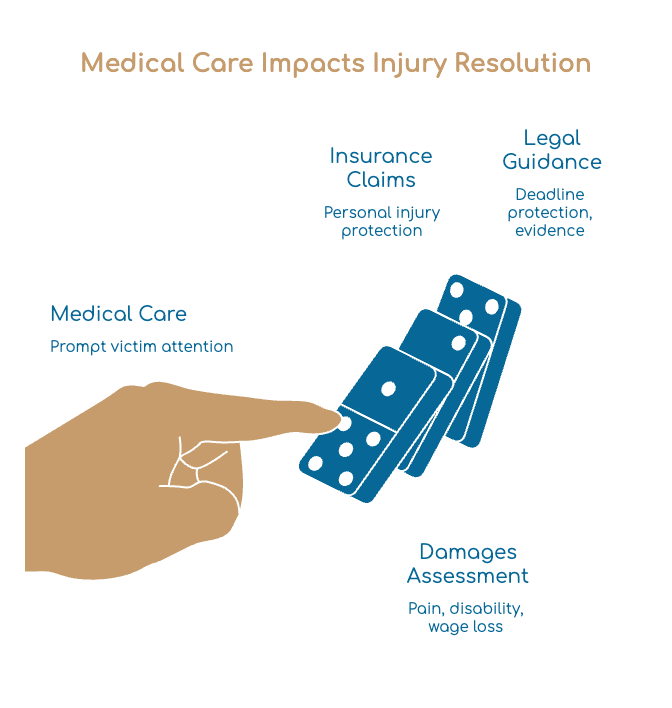
- Medical care may be pursued promptly, allowing the victim’s needs to be documented and served.
- Insurance claims may be presented for personal injury protection and other applicable coverage.
- Damages may include pain, disability, wage loss, and future treatment needs.
- Legal guidance may help protect deadlines, preserve evidence, and support fair resolution.
These rights help restore stability while honoring the victim’s dignity and long-term wellbeing.
Why Do Florida Front-End Crash Injuries Happen?
Why do front-end crash injuries happen in Florida? These collisions often arise when a vehicle’s front section absorbs force from another vehicle, fixed object, cyclist, or person in the roadway. Driver inattention, speeding, impaired driving, unsafe turns, and failure to yield can create sudden conflicts that leave little time to react. Weather-related hazards, including heavy rain, standing water, fog, and reduced visibility, also increase stopping distances and reduce control.
Roadway maintenance may contribute when faded lane markings, missing signs, potholes, malfunctioning signals, or poor lighting make safe travel more difficult. Although rear-end collisions involve a different impact pattern, they may push a vehicle forward into cross traffic, barriers, or pedestrians, causing front-end damage and serious injuries. Pedestrian impacts can occur at intersections, in parking areas, and at marked crossings when drivers overlook vulnerable road users. Understanding these causes helps communities promote safer roads and more attentive driving practices.
What Should You Do After a Florida Front-End Crash Injury?
After a Florida front-end crash injury, the injured person should first prioritize medical attention, even when symptoms appear limited or delayed. Once immediate health concerns are addressed, documenting crash evidence can help preserve important facts related to fault, vehicle damage, and injuries. Contacting an injury lawyer promptly may also help protect legal rights, manage insurance communications, and assess potential compensation.
Prioritize Medical Attention
Seek medical attention immediately when a front-end crash causes injury, even if symptoms appear minor or delayed. Prompt evaluation supports safety, preserves health, and helps caregivers identify conditions that may worsen without treatment. In Florida collisions, emergency response personnel may perform car accident triage, assessing breathing, bleeding, head trauma, spinal concerns, and signs of shock. An injured person should follow medical instructions, accept transport when advised, and disclose all pain, dizziness, numbness, or confusion. Compassionate attention to passengers, children, older adults, and vulnerable individuals can ensure no one is overlooked during urgent care. Medical records also establish the timing and nature of injuries, which may later help a Florida front-end crash injury lawyer understand treatment needs and related losses. Delays can complicate recovery and obscure injury progression.
Document Crash Evidence
When it is safe to remain at the scene, documenting crash evidence can help preserve important details before vehicles are moved, debris is cleared, or witness memories fade. Photographs should capture vehicle positions, roadway damage, airbag deployment, license plates, weather conditions, and visible injuries, while also showing the wider intersection or roadway layout. Preserving skidmarks may assist in later review of speed, braking, and impact direction. Names and contact information for witnesses should be recorded respectfully, recognizing that their observations may help clarify what occurred. Collecting traffic camera footage, securing event footage from nearby businesses or residences, and noting surveillance locations can help create a complete record. Maintaining evidence timeline details, including when photos, videos, and statements were gathered, helps protect accuracy and reliability.
Contact An Injury Lawyer
Why should legal guidance be considered early in a Florida front-end crash injury claim? An attorney can help preserve rights, assess fault, and guide injured individuals through decisions that affect recovery. Early documentation of medical care, vehicle damage, witness accounts, and financial losses may strengthen an insurance claim and reduce disputes later. Legal counsel can also communicate with insurers, helping prevent incomplete statements or premature settlements that fail to address long-term needs. For those committed to serving family, coworkers, and community, timely representation may provide stability while treatment continues. A Florida front-end crash injury lawyer can evaluate available coverage, identify liable parties, and pursue fair compensation with discipline. Prompt contact allows the claim to be organized carefully, responsibly, and in alignment with legal deadlines.
Critical Evidence in a Florida Front-End Crash Injury Case
Critical evidence in a Florida front-end crash injury case often shapes liability, damages, and the overall strength of a claim. Key materials may include: 1. Police Accident Reports, 2. Vehicle Damage Photos, 3. Witness Statements, 4. Medical Treatment Records. Each item can help establish how the collision occurred, the severity of impact, and the connection between the crash and the claimed injuries.
Police Accident Reports
Although a police accident report is not the only evidence in a Florida front-end crash injury case, it often serves as a key starting point for determining how the collision occurred and who may be legally responsible. The report may identify drivers, witnesses, traffic citations, roadway conditions, and the officer’s initial observations. For those serving injured clients, this document helps organize facts with care and discipline, while guiding further investigation. It may also support an Independent medical evaluation by clarifying crash dynamics and reported injuries. Attorneys may compare the report with witness statements, medical records, and insurance communications to assess liability. When used carefully, it can strengthen a settlement negotiation strategy, promote accountability, and help pursue fair compensation for the injured person under Florida law.
Vehicle Damage Photos
After the police accident report identifies the basic facts of a front-end collision, vehicle damage photos often provide a direct visual record of the forces involved. Clear images of crushed bumpers, bent frames, deployed airbags, broken headlights, and intrusion into the passenger area may help explain how the impact occurred and why injuries followed. In Florida injury cases, these photographs can support careful evaluation by attorneys, insurers, and medical professionals seeking to serve the injured with accuracy and fairness. Photos should capture multiple angles, lighting conditions, skid-related marks, fluid leaks, and, when safely possible, final vehicle positions. Common parking lot impacts and rear-end collisions may show different damage patterns, making comparison important. Preserved images can strengthen accountability, reduce disputes, and assist in the just resolution of a claim.
Witness Statements
When a front-end crash occurs, witness statements can provide an independent account of how the collision developed before, during, and immediately after impact. These accounts may clarify traffic signals, lane positions, vehicle speed, evasive actions, and driver behavior that photographs alone cannot explain. Eyewitness credibility is assessed through consistency, vantage point, timing, and lack of bias. Prompt statement preservation helps protect details before memory fades or witnesses become difficult to locate. In Florida injury claims, reliable statements may assist attorneys when insurance denial is based on disputed facts or incomplete police findings. They can also support fair evaluation during liability contests, especially when each driver offers a different version of events. Careful collection of witness information serves injured persons by strengthening truth, accountability, and a just resolution.
Medical Treatment Records
In a Florida front-end crash injury case, medical treatment records are among the most important pieces of evidence because they link the collision to the injuries claimed. These records may include emergency room notes, diagnostic imaging, physician evaluations, therapy reports, prescriptions, and expert referrals. They help show the timing, severity, and progression of an injured person’s condition, which can support a fair assessment of damages. When reviewed alongside witness statements, dashcam footage, and vehicle maintenance records, medical documentation can provide a clearer picture of how the crash caused harm. Consistent treatment also demonstrates that the injured person acted responsibly by seeking care and following medical advice. For those serving injured individuals, careful collection and organization of these records strengthen the claim and support informed advocacy throughout the legal process.
Long-Term Effects of Florida Front-End Crash Injuries
Front-end crash injuries in Florida may cause lasting consequences that extend well beyond initial emergency treatment. Chronic pain conditions, traumatic brain injuries, and reduced earning capacity can profoundly affect medical needs, daily functioning, and financial stability. These long-term effects often become central issues when evaluating the full value of an injury claim.
Chronic Pain Conditions
Although some injuries appear to improve after initial treatment, chronic pain can persist for months or years after a Florida front-end crash. Persistent neck, back, shoulder, or joint pain may limit mobility, reduce work capacity, and interfere with caregiving, household responsibilities, and community service. These conditions often require careful evaluation because pain may fluctuate, worsen with activity, or arise from soft tissue damage, nerve irritation, or aggravated prior injuries.
Pain management options may include physical therapy, medication, injections, expert referrals, or structured rehabilitation. Consistent medical documentation is essential, as it links ongoing symptoms to the collision and documents the impact on daily functioning. For individuals committed to supporting others, proper treatment and records help mend health, stability, and the ability to remain dependable in important roles.
Traumatic Brain Injuries
Chronic pain is not the only condition that may emerge or persist after a serious collision, as traumatic brain injuries can also produce lasting consequences after a Florida front-end crash. A sudden impact can cause the brain to move forcefully within the skull, leading to headaches, memory problems, dizziness, mood changes, sleep disruption, or reduced concentration. These symptoms may appear immediately or develop gradually as daily responsibilities resume. Medical evaluation is important, especially when confusion, nausea, vision changes, or unusual behavior follows the crash. Caregivers, advocates, and legal professionals may support recovery by encouraging treatment compliance, evidence preservation, and consistent pain documentation. Records from physicians, therapists, and family observations can help demonstrate the injury’s progression and the continuing need for appropriate care.
Reduced Earning Capacity
A serious collision can limit a person’s ability to earn income long after the initial injuries begin to stabilize. Front-end crash injuries may leave a person unable to return to prior duties, especially when pain, cognitive limits, mobility loss, or permanent restrictions affect daily performance. Reduced earning capacity considers not only missed paychecks, but also diminished career advancement, fewer work hours, and the need to accept lower-paying employment.
In Florida injury claims, evidence may include medical opinions, employment records, tax documents, and expert analysis. Vocational rehabilitation may help identify suitable work, retraining needs, or practical barriers to reemployment. Future wage loss calculations can then measure the financial impact over time. Careful documentation supports fair compensation, helping injured individuals preserve stability while continuing to provide for themselves and others.
Proving Liability in Florida Front-End Crash Injury Cases
Often, proving liability in a Florida front-end crash injury case requires a careful review of how the collision occurred, which driver had the right of way, and whether any traffic laws were violated. Evidence may include police reports, witness statements, vehicle damage patterns, traffic camera footage, and reconstruction findings. A lawyer may examine whether speeding, distracted driving, unsafe passing, impairment, or failure to yield caused the impact.
Florida’s fault rules can affect recovery, especially when comparative negligence defenses are raised to argue that the injured person shared responsibility. Liability analysis may also consider PIP coverage, which can provide initial benefits regardless of fault, while other losses may depend on proving another party’s negligence. Insurance claim limits may affect the available compensation, but they do not eliminate the need for clear evidence of liability. Careful proof helps protect injured individuals and supports fair accountability for harm caused by careless driving.
Dealing With Insurance Companies After a Florida Front-End Crash Injury
After liability evidence is identified, insurance communications become a significant part of a Florida front-end crash injury claim. Insurers may request statements, medical records, repair estimates, and wage information, often while evaluating damages and policy limits. Careful handling of these requests helps protect the injured person’s interests and supports fair consideration of the harm suffered.
Adjusters may question causation, minimize treatment needs, or issue coverage denials based on policy language or disputed facts. Prompt, accurate responses can reduce confusion, while organized documentation can strengthen the presentation of the claim. Those assisting an injured person should understand that even courteous conversations can affect valuation, especially when recorded statements are involved.
A lawyer can manage communications, monitor the claim timeline, and address insurer demands with appropriate evidence. This guidance allows the injured person and supporting family members to focus on recovery, caregiving, and crucial responsibilities while the insurance issues are handled with diligence and professional care.
What to Expect During a Florida Front-End Crash Injury Claim Process
A Florida front-end crash injury claim typically begins with reporting the collision, documenting the scene, and identifying all involved parties. The injured person must then gather medical evidence, track treatment, and present records that connect the injuries to the crash. If negotiations with insurers do not result in fair compensation, the claim may proceed to filing a lawsuit within the applicable legal deadlines.
Reporting The Collision
When a front-end collision occurs in Florida, the injury claim process typically begins with prompt reporting to law enforcement, the insurance carrier, and any other required parties. Officers may document roadway conditions, vehicle positions, witness information, and apparent violations, creating a report that later assists claim review. Timely notice also helps preserve insurance coverage, since policies often require cooperation and early communication after a crash. A careful report should state facts clearly, without unnecessary speculation about fault or injuries. Florida’s Comparative negligence rules may affect recovery when responsibility is shared, so accurate initial details matter. Those serving injured individuals should encourage the maintenance of organized records, including report numbers, insurer contacts, and correspondence dates, while ensuring that communications remain truthful, respectful, and consistent throughout the claim.
Gathering Medical Evidence
During the early stages of a Florida front-end crash injury claim, medical evidence becomes one of the most important foundations for evaluating damages and causation. Health records, diagnostic images, physician notes, therapy plans, and medication histories help document the nature and progression of injuries. Prompt treatment also connects the collision to the harm suffered, which may assist in Proving Liability when fault is disputed. A careful attorney may review emergency room records, expert assessments, and future care recommendations to understand how the crash affected the injured person’s daily life and ability to serve family, work, and community. This evidence also prepares the claim for later Insurance Negotiations without prematurely addressing settlement strategy. Accurate documentation supports fair assessment, responsible advocacy, and informed decisions throughout the legal process.
Negotiating With Insurers
Once medical evidence and liability facts are sufficiently developed, insurer negotiations typically become a central stage in a Florida front-end crash injury claim. At this point, the injured person’s representative may present a demand package that explains injuries, treatment, wage loss, vehicle damage, and future needs. Insurers usually review liability evidence, compare medical records with policy limits, and evaluate whether claimed losses are supported. The settlement timeline can vary, especially when treatment is ongoing, fault is disputed, or multiple insurers are involved. Negotiations may include written offers, counteroffers, and requests for clarification. A careful approach helps protect the injured person from accepting an undervalued resolution. For those committed to serving others, patience and documentation remain critical, while fair compensation is pursued diligently.
Filing A Lawsuit
A lawsuit may become necessary in a Florida front-end crash injury claim if settlement negotiations do not produce a fair resolution, liability remains contested, or the insurer refuses to fully account for the injured person’s damages. Filing begins with a complaint that identifies the parties, sets forth factual allegations, articulates legal claims, and seeks compensation. This step supports Negligence proof by placing fault, causation, and damages before the court. Counsel may also focus on evidence preservation, including vehicle data, photographs, medical records, witness accounts, and repair documentation. During litigation, insurance disputes may continue through discovery, motions, and mediation. A thoughtful settlement strategy remains important because many cases resolve before trial. The process is meant to promote accountability, protect injured individuals, and serve the broader interest of public safety.
Compensation for Florida Front-End Crash Injury Damages
When a front-end collision causes injury in Florida, compensation may be available for the financial and personal losses connected to the crash. A claim may involve payment for medical care, lost income, reduced earning ability, vehicle damage, and the human impact of pain, disability, or disruption to family life. Careful claim handling is important because insurers may dispute fault, argue that injury limits restrict recovery, or compare the crash to a rear-end impact to minimize severity.
In severe cases, compensation may also cover long-term treatment, home assistance, or ongoing support when an injured person can no longer support dependents or the community as before. Wrongful death claims may arise when a loved one dies from the collision, allowing eligible survivors to seek lawful recovery. A Florida front-end crash injury lawyer may help organize evidence, evaluate coverage, and pursue a resolution that reflects the harm caused.
Economic vs Non-Economic Damages in Florida Front-End Crash Cases
Florida front-end crash claims often involve both economic damages, such as medical expenses, lost wages, and repair costs, and non-economic losses, including pain, suffering, and reduced quality of life. Each category requires careful evaluation because financial records may establish measurable losses, while personal hardships often depend on medical evidence, testimony, and the severity of the injury. Proving crash damages in Florida requires organized documentation, credible support, and a clear connection between the collision and the claimed harm.
Economic Damages Explained
Because front-end collisions often cause immediate financial strain, economic damages serve as the measurable basis for many Florida injury claims. These losses include emergency care, hospitalization, diagnostic testing, rehabilitation, medication, lost wages, reduced earning capacity, vehicle repair, and necessary household assistance. Medical records help confirm the nature, cost, and connection of treatment to the crash, while employment documents establish income disruption. When ongoing treatment is required, future expenses may be projected through provider opinions and documented care plans. Economic damages also influence insurance negotiations because adjusters often evaluate verified bills, wage statements, and repair estimates before addressing broader claim value. A clear record of financial loss can support a more accurate settlement timeline, helping injured persons, families, and advocates pursue responsible recovery with practical accountability.
Non-Economic Losses
Financial records show only part of the harm caused by a front-end crash, since many injuries also affect a person’s comfort, independence, and daily stability in ways that do not appear on an invoice. Non-economic losses address these human consequences, including pain, suffering, Emotional distress, psychological trauma, and disruption to daily life. In Florida front-end crash cases, such losses may reflect chronic discomfort, reduced mobility, sleep problems, anxiety while riding in vehicles, or the loss of ordinary activities once performed with ease. These harms can also affect family roles, caregiving responsibilities, and participation in community service. A careful legal evaluation considers how the injury changes the person’s lived experience, not merely the amount spent on treatment, because dignity and function carry real value.
Proving Crash Damages
When a front-end crash results in injury, proving damages requires evidence linking the collision to both measurable financial losses and personal harm. Economic damages may include medical bills, rehabilitation costs, lost wages, reduced earning capacity, and vehicle repair expenses. Non-economic damages address pain, emotional distress, loss of enjoyment, and the daily limitations that affect dignity and service to others. In Florida cases, evidence preservation is critical, including photographs, medical records, repair estimates, employment documents, and, when available, electronic crash data. Witness credibility also matters because consistent statements from bystanders, medical providers, and family members can support the extent to which the injuries changed a person’s life. Careful documentation helps distinguish temporary inconvenience from lasting harm, allowing a claim to reflect both financial impact and human consequence.
When a Florida Front-End Crash Injury Case Goes to Trial vs Settlement
In a Florida front-end crash injury case, the decision to pursue settlement or proceed to trial often depends on the strength of the evidence, the severity of the injuries, and the insurer’s willingness to offer fair compensation. Settlement factors may include medical costs, lost income, future care needs, liability disputes, and the injured person’s long-term limitations. A careful legal review can help determine whether resolution without trial serves the client’s recovery and stability.
Some cases move toward trial when insurance tactics delay payment, undervalue injuries, or dispute responsibility despite clear proof. Trial timelines can be lengthy, requiring preparation, expert testimony, and continued support for the injured person’s needs. Jury verdicts may provide fuller accountability, but they also involve uncertainty. A lawyer may weigh the risks and benefits, seeking a result that protects the injured person, honors the harm suffered, and supports a fair path forward for recovery.
Florida Laws That May Affect Your Florida Front-End Crash Case
Because Florida law can directly affect liability, insurance recovery, and the value of damages, a front-end crash injury case requires careful attention to the rules governing motor vehicle claims.
These laws help determine how responsibility is assigned, how evidence is evaluated, and how an injured person may seek support while serving family, work, and community obligations.
- Comparative negligence may reduce recovery if the injured party is found partly responsible for the crash, making accurate fault analysis vital.
- Police procedures issues, including report accuracy, citation decisions, and crash scene documentation, can influence later disputes about what occurred.
- Insurance coverage limits may restrict available compensation, even when injuries are severe, and liability appears clear.
- Florida’s no-fault framework may require initial medical billing through personal injury protection, while serious injuries may permit claims against the at-fault driver.
Careful legal review helps align facts with applicable Florida law.
The Statute of Limitations for Florida Front-End Crash Injury Cases
Strict filing deadlines often control whether a Florida front-end crash injury claim can proceed, regardless of how serious the injuries are or how clear the evidence appears. Under Florida law, most negligence-based motor vehicle injury lawsuits must be filed within two years from the date of the crash. If a claim is not filed within that period, the injured person may lose the right to seek compensation through the courts.
Certain circumstances may affect the deadline, including claims involving government entities, minors, or delayed discovery of specific injuries. Fatal front-end crashes may also involve separate time limits for wrongful death actions. Comparative negligence does not extend the filing period, even when fault is disputed among multiple drivers. Claims seeking punitive damages must still comply with the same filing rules. Prompt attention to these deadlines supports orderly resolution, preserves accountability, and helps ensure that injured individuals can pursue lawful recovery.
How a Florida Front-End Crash Injury Lawyer Can Help You
A Florida front-end crash injury lawyer can evaluate the collision, identify all potential sources of liability, and develop a legal strategy based on the facts of the case.
This guidance may support injured people while they focus on recovery, family duties, and continued service to others.
- Reviewing crash reports, vehicle damage, medical records, and witness statements to establish how the impact occurred.
- Explaining Florida auto insurance issues, including no-fault coverage, available benefits, and policy limits.
- Addressing Comparative negligence, when insurers argue that the injured person shared responsibility for the crash.
- Managing communications, documentation, and the settlement timeline to pursue fair compensation with steady oversight.
A lawyer may also calculate damages for medical care, lost income, reduced earning ability, and pain caused by the collision. Through organized advocacy, the lawyer helps present the claim clearly, protect the injured person’s rights, and encourage an informed resolution.
When to Contact a Florida Front-End Crash Injury Lawyer
When should an injured person seek legal guidance after a front-end crash in Florida? Contact should occur as soon as urgent medical needs are addressed and immediate safety concerns are resolved. Early guidance can help protect the injured person’s ability to report the collision accurately, understand the timing of the insurance claim, and avoid missed deadlines that may affect available benefits.
Prompt contact is especially important when injuries appear serious, fault is disputed, vehicles were heavily damaged, or an insurer requests recorded statements. A lawyer can explain what information should be gathered while memories, photographs, witness details, and vehicle evidence remain available. Careful preservation of documents, including medical records, repair estimates, police reports, and correspondence, supports an organized claims process.
If symptoms develop days later, legal consultation may still be appropriate. Timely action allows the injured person and their family to focus on recovery, responsibilities, and service to others while claim-related steps are carefully managed.
Why You Need an Experienced Florida Front-End Crash Injury Lawyer
Early legal contact matters because front-end crash claims often involve complex questions about fault, causation of injury, insurance coverage, and long-term damages. An experienced Florida front-end crash injury lawyer can evaluate police reports, medical records, vehicle damage, and witness accounts to build a clear liability position. This guidance helps injured people and those supporting them understand available remedies while avoiding decisions that may weaken a valid claim.
Effective representation also supports disciplined Insurance negotiation. Insurers may dispute the severity of injuries, blame another driver, or offer payment before the full medical outlook is known. A lawyer can organize evidence, calculate present and future losses, and respond to these tactics with accuracy. A sound settlement strategy considers medical care, lost income, reduced earning ability, pain, and ongoing limitations. When handled with experience, the claim is positioned to pursue fair compensation while allowing the injured person and family to focus on recovery.
How to Choose the Right Florida Front-End Crash Injury Lawyer for Your Case
Choosing the right Florida front-end crash injury lawyer begins with reviewing whether the attorney has direct experience handling collision claims involving serious vehicle damage, disputed fault, and medically complex injuries. A suitable lawyer should understand how crash forces affect injury patterns, how insurers evaluate liability, and how evidence must be preserved to protect an injured person’s claim.
The selection process should also consider Client communication, since injured individuals and their families often need clear updates, prompt answers, and guidance that supports informed decisions. A lawyer who explains each step with patience can help reduce confusion during a difficult recovery period.
Fee transparency is equally important. The attorney should clearly describe costs, contingency arrangements, and any potential case expenses before representation begins. Those seeking to serve an injured loved one should look for professionalism, responsiveness, and a record of pursuing fair compensation with careful preparation and respect for the client’s needs.
About The Law Offices of Anidjar & Levine
For individuals injured in a front-end crash, The Law Offices of Anidjar & Levine provides legal representation focused on protecting clients’ rights and pursuing compensation for accident-related losses. The firm assists clients across Florida with claims involving medical expenses, lost income, vehicle damage, and long-term harm caused by negligent drivers.
A Legal history overview reflects the firm’s continued work in personal injury law, including motor vehicle collision cases that require careful investigation and organized advocacy. Its attorneys and staff support injured individuals by managing communications, gathering evidence, and addressing insurance company tactics that may limit fair recovery.
The firm’s mission statement centers on service, responsiveness, and client care during difficult periods. By offering guidance, regular case updates, and attention to each client’s circumstances, the firm aims to reduce burdens while pursuing lawful compensation. This approach reflects a commitment to helping injured people rebuild stability after serious front-end crashes.
Frequently Asked Questions
Can a Front-End Crash Aggravate a Pre-Existing Medical Condition?
Yes, a front-end crash can aggravate a pre-existing medical condition when impact forces worsen prior pain, instability, or impairment. Evaluators consider how pre-existing injuries and medical records compare before and after the collision. Careful documentation, prompt treatment, and consistent reporting help establish the diagnosis of aggravation. Objective proof, such as imaging, physician opinions, and therapy notes, provides evidence that supports fair assessment, accountability, and service to those harmed while protecting legitimate claims.
Will My Case Be Affected if I Was Not Wearing a Seatbelt?
Yes, a case may be affected if the injured person was not wearing a seatbelt. Under comparative negligence, damages may be reduced if the defense proves the failure to buckle up contributed to the injuries. Insurers often raise seatbelt defenses to limit responsibility, but they must present evidence connecting nonuse to specific harm. Careful legal and medical review helps protect the person’s claim and supports fair service to injured individuals.
Can I Recover Damages if the Other Driver Was Uninsured?
Yes, recovery may be possible when the at-fault driver is uninsured. Uninsured coverage, available remedies, and policy limits will determine whether medical bills, lost income, and pain-related losses can be pursued. Claim filing, Florida requirements, and notice deadlines must be handled carefully to preserve benefits. A person focused on serving others should encourage prompt documentation, medical care, and a review of all insurance policies to identify all lawful sources of compensation.
How Are Rental Car Expenses Handled After a Front-End Crash?
Rental car expenses are typically handled through the at-fault driver’s insurer, personal coverage, or optional rental coverage, depending on liability and policy terms. Insurance reimbursement usually requires prompt notice, reasonable rental duration, and comparable vehicle selection. Documentation requirements include repair estimates, invoices, payment receipts, and proof that the vehicle was unavailable. Rental negotiations may reduce out-of-pocket costs, ensuring the injured person preserves resources while meeting daily obligations responsibly.
Can Passengers File Separate Injury Claims After a Front-End Collision?
Yes, passengers may file separate injury claims after a front-end collision because each person’s injuries, losses, and legal rights are evaluated individually. A claim may be brought against one or more negligent drivers, depending on fault. The Seatbelt defense may reduce recovery if nonuse worsened injuries. Under comparative negligence, any assigned fault can affect damages. Careful documentation helps protect fair compensation while supporting responsible service to injured passengers.
—————————
A Florida front-end crash injury claim can involve serious medical, financial, and legal concerns. Victims may benefit from prompt legal guidance, careful review of evidence, and informed advocacy throughout the claims process.
An experienced Florida Car Accident Lawyer can help protect legal rights, assess available compensation, and address insurer tactics.
The Law Offices of Anidjar and Levine provide knowledgeable representation for injured clients seeking accountability after a preventable collision.