The Law Offices of Anidjar and Levine helps injured people investigate Daytona Beach truck accidents involving driver conduct, trucking-company practices, vehicle maintenance, cargo loading, and roadway conditions.
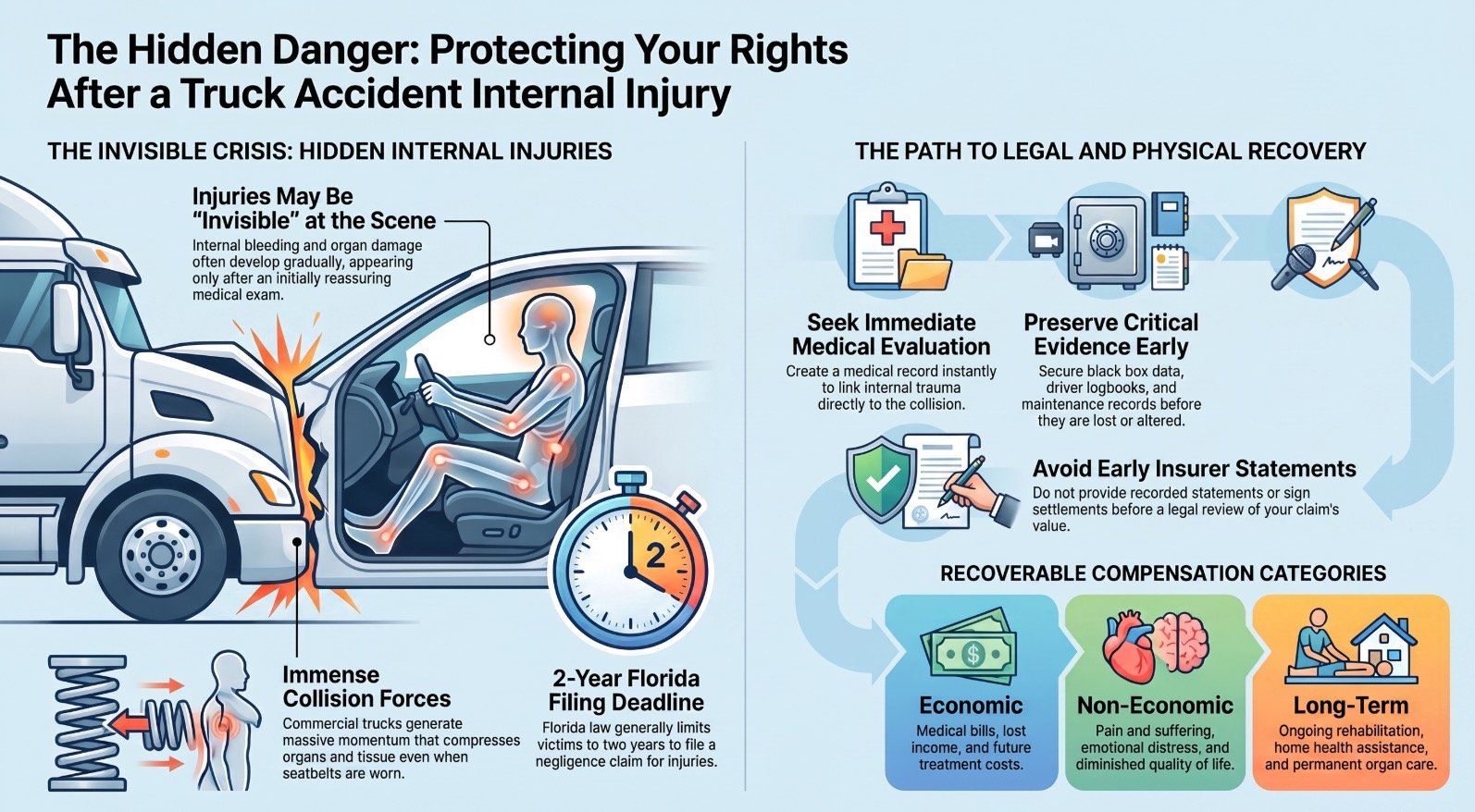
Internal injuries may worsen after an initially reassuring examination, making prompt medical evaluation and careful documentation important.
A Daytona Beach Truck Accident Lawyer can help preserve crash evidence, obtain records and imaging, communicate with insurers, and consult qualified medical experts regarding causation and future care.
Potential compensation may include medical expenses, lost income, reduced earning capacity, pain and suffering, and long-term treatment.
Further information explains these legal protections and case considerations.
Main Takeaways
- A Daytona Beach truck accident lawyer can investigate internal injuries that may worsen after an initially reassuring examination.
- Preserve crash reports, medical records, imaging, photographs, witness information, trucking records, and surveillance footage.
- Avoid recorded insurer statements or settlement agreements until an attorney reviews your rights and potential claim value.
- Liability investigations may examine driver fatigue, distraction, speeding, maintenance failures, cargo loading, company policies, and roadway conditions.
- Follow medical instructions, document symptoms and expenses, and seek prompt legal guidance because Florida filing deadlines may apply.
How We Can Help With Your Daytona Beach Truck Accident Internal Injury Claim
After a Daytona Beach truck accident, an internal injury claim requires careful legal evaluation because serious harm may not be immediately visible. A legal team can help an injured person identify responsible parties, preserve relevant evidence, and communicate with insurers while medical treatment continues. Assistance may include reviewing crash reports, trucking records, witness accounts, and available photographs to clarify how the collision occurred. Counsel can also explain Florida accident procedures, including reporting requirements, claim deadlines, and communications that may affect recovery. Because internal injuries can develop or worsen over time, organized medical records are important.


Useful injury documentation tips include attending recommended appointments, following treatment instructions, recording symptoms, and retaining bills, prescriptions, and employment records. A representative may coordinate documentation, assess available insurance coverage, and seek compensation for medical expenses, lost income, and related losses. This support allows the injured person to focus on recovery while the claim receives thorough, responsible attention. Early consultation can help preserve important options.
Understanding Daytona Beach Truck Accident Internal Injury Cases
OUR CONSULTATIONSARE FREE
START YOUR FREE CASE REVIEW

Understanding a Daytona Beach truck accident internal injury case requires recognizing that fundamental harm may exist even when external symptoms appear limited. Internal bleeding, organ damage, spinal trauma, and other conditions may develop gradually, making prompt medical evaluation vital. Medical records, diagnostic imaging, treatment notes, and physician opinions can help establish the injury’s nature and connection to the collision.
A case may also involve prolonged rehabilitation, reduced earning capacity, continuing medical needs, and limitations on ordinary activities. An attorney serving injured individuals may organize evidence, communicate with insurers, and protect the claimant from premature settlement decisions. Compensation Calculations should account for documented financial losses and reasonably anticipated expenses rather than relying solely on immediate bills.


Non-economic damages may address pain, emotional distress, diminished quality of life, and loss of normal functioning. Their assessment requires careful attention to medical evidence and personal impact. Each claim depends on its facts, applicable Florida law, and the strength of supporting documentation.
Don’t Wait. Call Our Daytona Beach Truck Accident Lawyers Now.
Common Causes of Daytona Beach Truck Accident Internal Injuries
Internal injuries in Daytona Beach truck crashes may result from driver fatigue or distraction, excessive speed, and reckless driving decisions. Improperly loaded cargo can shift or fall, increasing collision forces and the risk of serious harm. Vehicle maintenance failures, including defective brakes or worn tires, may also contribute to these accidents.
Driver Fatigue And Distraction
Driver fatigue and distraction are significant contributors to truck accidents in Daytona Beach, where commercial vehicles share busy highways and local roads with passenger traffic. Extended shifts, insufficient rest, and demanding delivery schedules can impair reaction time, judgment, and attention. Distractions may include mobile devices, dispatch communications, navigation systems, eating, or adjustments inside the cab. When these conditions affect a commercial driver, nearby motorists and pedestrians may face serious harm. Accident investigations can examine logbooks, employer policies, vehicle maintenance records, and available surveillance footage to determine whether fatigue or distraction played a role.
Eyewitness testimony may describe unusual driving behavior or delayed responses. Black box data can provide information about braking, guidance, and vehicle activity before impact. Such evidence may help clarify responsibility and support injured individuals seeking appropriate assistance.
Speeding And Reckless Driving
When commercial truck operators exceed posted speed limits or drive aggressively, they may have less time to identify hazards and control a heavily loaded vehicle. Speeding can increase stopping distances, intensify collisions, and reduce a driver’s ability to respond to changing traffic conditions. Reckless driving may include unsafe lane changes, tailgating, passing improperly, or disregarding signals. Although Distracted driving is a separate concern, it can compound the danger created by excessive speed or aggressive conduct. Road rage may further encourage unsafe actions and confrontations with other motorists. Consistent speeding enforcement can discourage violations and promote safer commercial transportation.
When crashes occur, investigators may examine driving records, electronic data, witness accounts, and roadway conditions. Reckless driving penalties may include fines, license consequences, employer discipline, and civil liability, while injured individuals may need support pursuing appropriate remedies.
Improper Cargo Loading
Improper cargo loading can make a commercial truck unstable and considerably increase the risk of a crash. When freight is placed unevenly, unsecured, or beyond permitted limits, shifting weight may impair guidance, braking, and overall control. Sudden lane changes, turns, or emergency stops can intensify these dangers, potentially causing rollovers, jackknifing, or collisions with nearby vehicles.
Responsible carriers and loaders should follow Cargo securing best practices, including selecting appropriate restraints, inspecting tie-downs, and confirming that cargo cannot slide, topple, or fall. Load weight distribution also requires careful attention, because excessive weight on one axle can reduce traction and create dangerous handling conditions. Documentation, supervisory checks, and compliance with applicable safety regulations help identify loading errors before departure, protecting drivers, passengers, and other road users throughout Daytona Beach.
Vehicle Maintenance Failures
Beyond cargo-loading errors, vehicle maintenance failures can leave a commercial truck unsafe before it reaches the road. A weakened Brake System, worn tires, defective lights, or directing problems may reduce a driver’s ability to respond to changing traffic conditions. Engine Overheating can also cause sudden breakdowns, smoke, or loss of vehicle control, particularly during extended highway travel.
Maintenance Neglect may develop when carriers postpone repairs, overlook manufacturer recommendations, or assign inspections without adequate follow-up. Inspection Records can help determine whether required servicing occurred, which defects were identified, and whether corrective work was completed. Missing, incomplete, or inconsistent records may raise concerns about a company’s safety practices after a collision. A careful review of maintenance histories, repair invoices, driver reports, and electronic inspection data can help clarify preventable conditions and support efforts to protect injured individuals and other roadway users.
Legal Rights of Daytona Beach Truck Accident Internal Injury Victims
Victims of truck crashes in Daytona Beach who suffer internal injuries may have the right to pursue compensation for medical treatment, lost income, diminished earning capacity, pain and suffering, and other legally recognized losses. Because these injuries may not be immediately visible, timely medical evaluation and thorough documentation of hidden injuries can support a claim.
Timely medical evaluation and thorough documentation can help protect compensation claims for hidden injuries after a Daytona Beach truck crash.
- A victim may seek damages from responsible parties, including a negligent driver, trucking company, or insurer, depending on the evidence and applicable law.
- Preserving Essential Evidence, such as medical records, photographs, incident reports, and witness information, can help establish liability and the injury’s consequences.
- Florida deadlines may limit the time available to file a personal injury action, making prompt legal guidance important.
A qualified attorney can review insurance coverage, assess settlement offers, communicate with opposing parties, and protect the injured person’s interests. Supportive representation also helps families understand available remedies while medical care remains the priority. Each claim requires an individualized evaluation because liability, damages, and procedural requirements vary.
Why Do Daytona Beach Truck Accident Internal Injuries Happen?
Truck accident internal injuries often occur because the force of a collision damages organs, blood vessels, bones, or soft tissue without immediately affecting the skin’s appearance. Large commercial vehicles generate substantial momentum, and sudden deceleration can compress the chest, abdomen, or pelvis against restraints and interior surfaces. Seatbelt effectiveness reduces certain fatal risks, but belts may also concentrate force across vulnerable areas during severe impacts. Intrusions from a truck’s cab, cargo, or roadside objects can cause additional crushing injuries. Rollover events may produce repeated impacts and unusual twisting forces, while unsecured cargo can strike occupants or other road users.
Driver fatigue, impairment, speeding, inadequate training, and defective maintenance may increase crash severity. Employer workplace policies can influence inspection practices, loading procedures, and compliance with safety rules. Post-accident interviews may clarify conditions and conduct, although a traffic citation impact does not alone establish civil liability. These factors can combine, leaving injuries hidden until internal bleeding or organ damage progresses.
What Should You Do After a Daytona Beach Truck Accident Internal Injury?
After a Daytona Beach truck accident, the injured person should seek immediate medical care, even if internal injury symptoms initially appear minor. Detailed records of pain, swelling, dizziness, and other symptoms can help establish the injury’s progression and support a potential claim. Consulting a truck accident lawyer may clarify legal rights, evidence requirements, and available compensation.
Seek Immediate Medical Care
If internal injury is suspected following a Daytona Beach truck accident, immediate medical evaluation is essential, even when no visible wounds or severe pain are present. Internal bleeding, organ damage, or other trauma may worsen without obvious warning. Emergency responders should be contacted, and the injured person should remain still unless movement is necessary to avoid immediate danger. Immediate safety steps include moving away from traffic when possible, accepting ambulance transportation, and following medical professionals’ instructions. A hospital evaluation creates an early medical record and allows timely treatment, which may support long-term recovery.
Medical personnel should be informed about the collision, symptoms, medications, and any loss of consciousness. Insurance claim timing should not delay emergency care; treatment decisions must center on safety and recovery. Legal guidance can address expenses afterward.
Document Internal Injury Symptoms
Accurate symptom documentation can help medical providers identify changing conditions and establish a clear record of injuries following a Daytona Beach truck accident. The injured person should record pain locations, intensity, swelling, bruising, dizziness, nausea, breathing changes, and abdominal tenderness. Notes should include when each symptom began, whether it worsens with movement, and any medication taken. Photographs can document visible bruising or discoloration, while preserving discharge instructions and appointment records may support continuity of care. Spinal injury red flags include numbness, weakness, loss of coordination, severe neck or back pain, and changes in bladder or bowel control.
Any such symptom requires prompt medical attention. Delayed symptom reporting can allow internal injuries to recover unnoticed, so updates should be communicated to healthcare professionals even when initial examinations appeared reassuring.
Consult A Truck Accident Lawyer
When an internal injury follows a Daytona Beach truck accident, consulting a truck accident lawyer can help protect the injured person’s legal rights while medical treatment continues. A lawyer can explain reporting obligations, preserve essential evidence, and communicate with insurers without disrupting recovery. Early legal guidance may support a negligence investigation by examining driver conduct, vehicle maintenance, loading practices, company policies, and roadway conditions. The lawyer may also obtain crash reports, medical records, electronic data, photographs, and witness statements before information is lost or memories fade. Injured individuals should avoid recorded insurer interviews or settlement agreements until receiving informed advice.
A qualified representative can assess potential liability, identify responsible parties, and pursue compensation for medical expenses, lost income, continuing care, and other legally recognized losses while treating the injured person with dignity.
Critical Evidence in a Daytona Beach Truck Accident Internal Injury Case
A Daytona Beach truck accident internal injury case may depend on medical records, diagnostic imaging, scene documentation, maintenance records, and qualified expert testimony.
- Medical evidence can establish the injury’s nature, timing, and required treatment.
- Photographs, witness accounts, vehicle data, and maintenance files may clarify how the collision occurred and whether equipment failures contributed.
- Medical and accident-reconstruction experts can connect the crash to internal injuries and explain their ongoing effects.
Medical Records And Imaging
Medical records and imaging provide essential evidence of the internal injuries a truck-accident victim sustained, the treatment required, and the likely connection between those injuries and the collision. Emergency-room notes, diagnostic scans, surgical reports, medication records, and follow-up evaluations can establish the injury’s timing, severity, and continuing effects. Consistent documentation may also explain delayed symptoms, which commonly occur with internal trauma. During liability evidence collection, these materials should be organized with witness statements and other relevant information without altering the medical record. A legal representative may request complete records, preserve imaging files, and obtain opinions from qualified medical professionals. Attention to insurance claim deadlines helps protect the victim’s opportunity to seek compensation.
Thorough documentation can also support settlement negotiation strategies by demonstrating necessary care, projected treatment, disability, and related financial losses.
Accident Scene Documentation
Beyond medical records and imaging, accident scene documentation can help establish how a Daytona Beach truck collision occurred and whether it caused the reported internal injuries. Prompt photo evidence collection may preserve vehicle positions, roadway conditions, debris patterns, traffic controls, lighting, and visible damage before the scene changes. Images should include wide perspectives and detailed views, with reliable dates and locations when available. Witness statement preservation is similarly important. Names, contact information, observations, and accounts of timing or vehicle movements should be recorded accurately, preferably before memories fade or witnesses become difficult to locate.
Official crash reports, measurements, diagrams, and nearby surveillance footage may provide additional context. Careful documentation can assist injured individuals, families, insurers, and courts in evaluating responsibility while supporting a fair and service-oriented response to the collision.
Truck Maintenance Records
When a truck’s mechanical condition is disputed, maintenance records can provide critical evidence in a Daytona Beach collision involving internal injuries. Service invoices, inspection reports, repair orders, and electronic maintenance data may show whether required safety work was completed before the crash. Truck inspection findings can identify worn brakes, defective tires, guidance problems, lighting failures, or other conditions that may have contributed to the collision. Records may also establish when a carrier received notice of a defect and whether it responded promptly. Maintenance log gaps can raise questions about missing inspections, delayed repairs, or inaccurate recordkeeping. Attorneys may obtain these materials from the trucking company, repair facilities, leasing entities, and regulatory databases.
Preserving and comparing records can help clarify responsibility while supporting a careful, service-oriented investigation for injured individuals and families.
Expert Injury Testimony
Expert injury testimony can help explain how a Daytona Beach truck collision caused internal injuries that were not immediately apparent. Qualified physicians may connect diagnostic findings, treatment requirements, and future limitations to the forces involved in the crash. Their opinions can clarify why symptoms developed gradually and why prompt medical evaluation remains important.
Expert witness credibility depends on appropriate qualifications, reliable medical reasoning, and consistency with the patient’s records. Counsel may review the expert’s experience, methodology, and relationship to the case before presenting testimony. A carefully planned deposition strategy can identify weaknesses in opposing opinions, preserve important explanations, and prepare the injured person for questioning. Clear testimony may assist courts and juries in evaluating causation, damages, and continuing care needs. Such evidence supports fair consideration of individuals seeking recovery after serious collisions.
Long-Term Effects of Daytona Beach Truck Accident Internal Injuries
Long-term internal injuries from a Daytona Beach truck accident may result in chronic pain conditions that limit mobility, work capacity, and daily activities. Some victims sustain permanent organ damage requiring continuing treatment, monitoring, or lifestyle adjustments. These consequences may also create ongoing medical expenses, including rehabilitation, medication, expert care, and future procedures.
Chronic Pain Conditions
Chronic pain may develop after internal injuries sustained in a Daytona Beach truck accident, particularly when damage to muscles, nerves, organs, or the spinal structures does not fully resolve. Persistent discomfort can restrict mobility, disrupt sleep, and interfere with employment, family responsibilities, and community service. Treatment may involve medication, physical therapy, behavioral support, and continuing evaluations, with outcomes varying according to the injury and individual recovery. Detailed medical records can connect symptoms to the collision and document treatment needs over time. Insurance delays may complicate access to care, while emotional distress can intensify perceived pain and reduce daily functioning.
Comparative negligence may affect recovery if evidence suggests shared fault. Witness statements, collision reports, and consistent symptom documentation can help clarify how the truck accident caused ongoing limitations and required assistance.
Permanent Organ Damage
Permanent organ damage can result when internal injuries from a Daytona Beach truck accident disrupt the function of the liver, kidneys, spleen, lungs, heart, or other critical structures. Such harm may impair circulation, filtration, breathing, digestion, or immune response, sometimes requiring lifelong monitoring and substantial lifestyle changes. Affected individuals may experience reduced capacity for employment, daily activities, or caregiving responsibilities. Medical records, diagnostic testing, and specialist opinions can help establish the injury’s permanence and its connection to the collision. Legal professionals may assist with Victim medical billing documentation and insurance dispute handling while protecting the injured person’s interests. Early evaluation is important because organ damage may worsen silently after trauma. A careful review of prognosis and functional limitations supports informed decisions regarding accountability and compensation.
Ongoing Medical Expenses
Ongoing medical expenses may arise when internal injuries from a Daytona Beach truck accident require continued treatment, monitoring, medication, rehabilitation, or corrective procedures. These costs can persist for months or years, particularly when organ damage, internal bleeding, or related complications impair daily functioning. A patient may need medical consultations, diagnostic imaging, home health assistance, or future surgery. Medical records, physician statements, treatment plans, and billing documentation can help establish the necessity and anticipated duration of care. During damages calculations, legal professionals may evaluate both past expenses and reasonably projected costs, including inflation and changes in medical needs.
If responsibility or future treatment remains disputed, evidentiary hearings may address expert testimony and supporting records. Careful documentation can help protect injured individuals and support fair compensation for continuing medical recovery obligations.
Don’t Wait. Call Our Daytona Beach Truck Accident Lawyers Now.
Proving Liability in Daytona Beach Truck Accident Internal Injury Cases
Proving liability in a Daytona Beach truck accident involving internal injuries requires establishing that another party’s negligence caused the crash and resulting harm. Evidence may include police reports, traffic-camera footage, photographs, witness statements, electronic logging data, and vehicle inspection records. Medical documentation must connect the collision to internal bleeding, organ damage, fractures, or other injuries that may not appear immediately.
Potentially responsible parties can include the truck driver, motor carrier, maintenance provider, cargo loader, or manufacturer. Investigators may examine distracted driving, fatigue, speeding, inadequate training, defective equipment, and violations of trucking company policies. Comparative negligence defenses may allege that the injured person contributed to the collision or failed to take reasonable precautions. Establishing the facts requires careful preservation of evidence and attention to federal and Florida safety requirements. A Daytona Beach truck accident internal lawyer can coordinate accident reconstruction, consult medical professionals, and identify inconsistencies in testimony. This process supports accountability while helping affected individuals pursue a fair legal resolution.
Dealing With Insurance Companies After a Daytona Beach Truck Accident Internal Injury
After a Daytona Beach truck accident causes internal injuries, interactions with insurance companies require careful documentation and measured communication. Injured individuals should preserve medical records, billing statements, wage information, photographs, and written accounts describing symptoms and limitations. These materials can help establish the seriousness of injuries without overstating their effects.
When dealing with adjusters, claimants should answer factual questions accurately and avoid recorded statements or broad medical authorizations without understanding their scope. An adjuster may seek information that minimizes responsibility or suggests that symptoms arose from another condition. Communication strategies should include keeping conversations focused, requesting important decisions in writing, and maintaining a detailed contact log.
If an insurer issues a low offer or explains how claims denied, the claimant should review the stated reasons carefully. Appeal options may include submitting additional medical evidence, correcting factual errors, requesting supervisory review, or pursuing legal assistance. A Daytona Beach truck accident internal lawyer can help protect the injured person’s interests while communications remain respectful and purposeful.
What to Expect During a Daytona Beach Truck Accident Internal Injury Claim Process
A Daytona Beach truck accident internal injury claim typically begins with thorough medical documentation establishing the diagnosis, treatment, and anticipated recovery. The insurer then investigates the accident and damages, while settlement negotiations assess liability, medical costs, lost income, and other losses. If negotiations fail to produce a fair resolution, litigation may proceed through court review, discovery, and trial or another final settlement.
Initial Medical Documentation
When a Daytona Beach truck collision may have caused internal injuries, initial medical documentation becomes a key part of the claim process. Prompt evaluation can identify conditions that are not immediately visible, including internal bleeding, organ damage, or spinal complications. Medical providers typically record reported symptoms, examination findings, diagnostic imaging, treatment recommendations, and changes in condition. These records help establish the connection between the collision and the injuries while creating a reliable account of necessary care. Treatment Timeline Planning may assist with organizing appointments, follow-up evaluations, expert referrals, and anticipated recovery needs.
Patients should describe symptoms accurately and follow prescribed instructions. Evidence Preservation Tips include requesting complete medical records, retaining discharge papers, documenting medication use, and maintaining a symptom journal. Consistent documentation can support informed legal guidance and compassionate service to injured individuals.
Insurance Claim Investigation
An insurance claim investigation examines how the Daytona Beach truck accident occurred, the parties responsible, and the extent of the claimant’s internal injuries. Investigators review police reports, driver logs, vehicle maintenance records, witness statements, and Surveillance footage to establish a reliable sequence of events. They may request a loss disclosure identifying applicable commercial policies, coverage limits, and other potentially responsible insurers. Medical records and medical coding are examined to connect internal injuries with the collision, document treatment, and distinguish prior conditions from accident-related harm. The claimant may be asked to provide a recorded statement, authorize relevant records, and explain symptoms consistently.
Counsel can help protect accurate disclosures, address insurer documentation requests, and identify questionable negotiation tactics without prematurely evaluating settlement terms or making concessions.
Settlement Negotiation Process
Once the investigation establishes liability and documents the claimant’s internal injuries, settlement negotiations typically begin with a demand supported by medical records, billing information, lost-income documentation, and evidence of the truck operator’s or carrier’s responsibility. Causation evidence, including diagnostic findings and physician opinions, connects the collision to the internal injury and helps establish future treatment needs. The attorney may present a Negotiation strategy that accounts for pain, functional limitations, household assistance, and continuing medical expenses. The insurer typically reviews the demand, requests clarification, and responds with an offer that may not reflect the claim’s full value. Counsel evaluates each proposal with the injured person, explains potential risks, and seeks terms that fairly address documented losses. Clear communication and patience can support a responsible, informed resolution.
Litigation And Resolution
Litigation may become necessary if the insurer refuses to provide a fair settlement or disputes liability, causation, or the extent of the internal injuries. The process generally begins with filing a complaint, serving the responsible parties, and exchanging information through discovery. Medical records, diagnostic imaging, employment documentation, witness statements, and accident reports may establish the injury’s seriousness and financial consequences. Evidence preservation is crucial because damaged vehicles, electronic records, and roadway evidence can become unavailable over time. A careful Negotiation strategy may continue during litigation, often through mediation or settlement conferences.
If resolution remains impossible, the matter proceeds to trial, where each side presents evidence and arguments. The court or jury then determines liability and damages. Legal guidance helps protect the claimant’s interests while supporting a fair, orderly resolution.
Compensation for Daytona Beach Truck Accident Internal Injury Damages
Compensation for internal injuries sustained in a Daytona Beach truck accident may include medical expenses, lost income, reduced future earning capacity, and pain and suffering. Internal trauma can require emergency treatment, surgery, rehabilitation, medication, and continuing medical monitoring. A claim may also address transportation for care and necessary assistance during recovery, when supported by reliable documentation.
The injured person generally must establish that another party’s negligence caused the collision and resulting harm. Medical records, diagnostic imaging, physician opinions, employment documentation, and testimony from informed witnesses can help connect injuries to the crash and demonstrate their lasting effects. Comparative negligence disputes may reduce recovery if an insurer alleges that the injured person contributed to the accident.
Insurer bad faith tactics, including unreasonable delays, inadequate investigations, or pressure to accept an unfair settlement, can complicate the process. A Daytona Beach truck accident lawyer may evaluate policy coverage, preserve evidence, communicate with insurers, and pursue appropriate legal remedies while protecting the claimant’s dignity and interests.
Economic vs Non-Economic Damages in Daytona Beach Truck Accident Internal Cases
Economic damages generally cover documented financial losses, including medical expenses, lost income, and future treatment costs. Non-economic damages address less tangible harm, such as pain and suffering, emotional distress, and diminished quality of life, which require careful assessment. Comparing these categories helps clarify the full scope of compensation potentially available in Daytona Beach truck accident internal injury cases.
Economic Damages Explained
In a Daytona Beach truck accident case, economic damages represent the measurable financial losses caused by the collision, while non-economic damages address less tangible harm such as pain, emotional distress, and diminished quality of life. Economic damages may include emergency treatment, hospital bills, rehabilitation, prescription costs, property repairs, and transportation expenses. They can also cover documented lost wages and reduced future earning capacity when injuries limit employment. Accurate calculation requires careful evidence gathering, including medical records, payroll information, invoices, repair estimates, and insurance documentation.
During case evaluation, a legal professional may organize these materials, identify responsible parties, and assess whether additional losses are reasonably supported. Presuit deadlines can affect the timing of required notices and claims, making prompt assistance important for protecting a client’s financial recovery and serving the client’s interests responsibly.
Non-Economic Damages Assessed
Although non-economic damages do not appear as itemized bills, they address the human consequences of a Daytona Beach truck accident, including pain, emotional distress, loss of enjoyment of life, and permanent impairment. Assessment typically considers medical testimony, treatment duration, visible injuries, psychological effects, and statements from family members or caregivers. A claimant’s testimony may explain how limitations affect daily routines, relationships, employment capacity, and independence. Evidence preservation is important because photographs, medical records, therapy notes, and witness accounts can document changes that are difficult to measure later.
Punitive damages are distinct and may apply only when the truck operator or company acted with particularly reckless or intentional misconduct. Counsel may also explain settlement timelines, helping injured individuals make informed decisions without accepting compensation that fails to recognize continuing harm.
Comparing Damage Categories
A Daytona Beach truck accident claim may include both economic and non-economic damages, but the categories serve different purposes and require different proof. Economic damages address measurable losses, including emergency treatment, rehabilitation, prescriptions, lost wages, reduced earning capacity, and necessary property repairs. Medical Documentation, employment records, invoices, and expert projections help establish these amounts.
Non-economic damages compensate for pain, emotional distress, disability, disfigurement, loss of enjoyment, and disruption of family relationships. Because these harms lack fixed prices, Injury Severity, recovery duration, permanent limitations, and testimony about daily impacts become important Compensation Factors. The evidence should present the injured person’s needs with accuracy and dignity.
Insurance Disputes may arise when carriers challenge treatment, causation, future losses, or the value of non-economic harm. Careful records and a complete damages analysis support fair resolution.
Don’t Wait. Call Our Daytona Beach Truck Accident Lawyers Now.
When a Daytona Beach Truck Accident Internal Injury Case Goes to Trial vs Settlement
When a Daytona Beach truck accident causes internal injuries, the decision to pursue settlement or proceed to trial depends on the severity of the injuries, the strength of the evidence, the available insurance coverage, and the parties’ willingness to negotiate. Settlement may provide a faster, more predictable resolution, helping an injured person address medical care, lost income, and household needs without prolonged litigation. However, an offer may not adequately reflect future treatment, permanent limitations, or the full effect on family responsibilities.
Trial strategy considerations include witness credibility, medical documentation, expert opinions, and the risk that a jury may accept or reject disputed claims. During court evidence presentation, attorneys may introduce imaging studies, surgical records, testimony from treating providers, accident reconstruction analysis, and evidence concerning the truck driver’s conduct. A trial can produce greater compensation but also involves delay, expense, uncertainty, and public proceedings. Careful evaluation enables counsel to recommend the path that best supports recovery and serves the injured person’s long-term interests.
Florida Laws That May Affect Your Daytona Beach Truck Accident Internal Case
Florida laws governing a Daytona Beach truck accident internal injury case may determine whether a claim succeeds and how much compensation is available.
Several rules affect injured people, families, insurers, and those seeking fair accountability.
- Comparative negligence rules may reduce an award when an injured person shares responsibility for the collision. Evidence concerning speeding, distraction, seat-belt use, and roadway conduct can in turn influence recovery.
- Florida’s trucking regulations may support claims involving driver qualifications, service-hour violations, cargo loading, vehicle maintenance, or inadequate supervision. Federal requirements may also apply, particularly when commercial carriers operate across state lines.
- Damage rules may distinguish economic losses, such as medical treatment and lost income, from noneconomic harm, including pain, disability, and reduced quality of life. Available insurance coverage and responsible parties can affect practical recovery.
Accurate medical documentation, crash evidence, and employment records help present the injury’s full impact. Statute deadlines also require prompt legal evaluation, although specific filing periods depend on the parties and claim type. Serving injured individuals responsibly requires careful preservation of evidence and informed guidance.
The Statute of Limitations for Daytona Beach Truck Accident Internal Injury Cases
How long an injured person has to file a Daytona Beach truck accident internal injury claim depends on the applicable statute of limitations, the parties involved, and the legal basis for recovery. Florida generally allows two years for negligence claims arising from accidents, though exceptions may alter that period. Claims involving government entities can require earlier notice and shorter deadlines, while wrongful-death actions and certain insurance disputes follow distinct rules.
Internal injuries may not appear immediately, making timely medical evaluation and documentation especially important. Delay can complicate causation, permit Evidence Spoliation, and weaken the ability to establish damages. Comparative Fault Laws may also reduce recovery when an injured person bears part of the responsibility.
Settlement discussions do not necessarily extend the filing deadline. Negotiating Settlement Terms should thus occur with awareness of the limitations period. Insurance Bad Faith claims may involve separate deadlines and legal requirements. Preserving records, identifying responsible parties, and confirming the precise deadline supports informed decisions and protects the interests of those seeking compensation for serious harm.
How a Daytona Beach Truck Accident Internal Injury Lawyer Can Help You
A Daytona Beach truck accident internal lawyer can provide focused legal guidance from the initial investigation through resolution of the claim. The lawyer may organize medical records, evaluate injury documentation, identify responsible parties, and communicate with insurers on the claimant’s behalf. This assistance supports informed decisions while preserving the claimant’s ability to serve family, coworkers, and community responsibilities.
- The lawyer can investigate crash reports, vehicle maintenance records, driver qualifications, and available witness accounts to establish how negligence contributed to the internal injuries.
- A documented Settlement negotiation timeline can clarify demands, insurer responses, medical developments, and potential resolution strategies. Counsel can present losses accurately, including treatment costs, income disruption, and continuing care needs.
- A litigation risk assessment can compare settlement options with courtroom uncertainties, evidentiary challenges, and potential recovery. The lawyer can explain procedural consequences in precise terms, helping the injured person pursue accountability without unnecessary conflict.
Throughout the process, counsel can protect legal interests, coordinate communications, and seek a fair outcome consistent with the evidence and applicable Florida law.
When to Contact a Daytona Beach Truck Accident Internal Injury Lawyer
Timely contact with a Daytona Beach truck accident internal attorney can safeguard evidence, preserve legal options, and support a well-documented injury claim. A consultation should occur as soon as medical needs are addressed, particularly when injuries, fatalities, contested responsibility, or commercial vehicles are involved. Early guidance can help identify applicable deadlines and prevent statements or decisions that may unintentionally weaken a claim.
Preserving evidence is especially important because electronic data, vehicle components, maintenance records, dispatch information, and surveillance footage may change or disappear. A lawyer can help request relevant materials while they remain available. Gathering witness statements promptly may also provide clearer accounts before memories fade or contact information becomes difficult to obtain. Photographs, medical records, insurance correspondence, and employment documentation should be retained and organized.
Individuals should consider contacting counsel before accepting a settlement, signing releases, or providing detailed recorded statements to insurers. Prompt communication allows the circumstances to be reviewed methodically and helps ensure that injured people and their families receive informed support while pursuing appropriate accountability.
Why You Need an Experienced Daytona Beach Truck Accident Internal Lawyer
Because commercial truck collisions often involve multiple parties, complex regulations, and extensive evidence, an experienced Daytona Beach truck accident internal lawyer can provide crucial legal guidance. Such counsel helps injured individuals and families understand available remedies while protecting their ability to serve their own interests during a difficult recovery.
Truck cases may involve drivers, motor carriers, brokers, maintenance providers, manufacturers, and insurers. An experienced lawyer can investigate each relationship, preserve hidden evidence, and determine which negligence standards apply. This work may include reviewing electronic logging data, inspection records, employment files, vehicle systems, photographs, and witness accounts before information disappears.
Insurance company tactics can include quick settlement offers, disputed liability, and efforts to minimize medical consequences. Legal representation can help evaluate those offers and present a documented claim based on medical costs, lost income, continuing needs, and other legally recognized damages. Counsel also monitors filing deadlines and procedural requirements, reducing the risk that an otherwise valid claim becomes unenforceable.
How to Choose the Right Daytona Beach Truck Accident Internal Lawyer for Your Case
Selecting the right Daytona Beach truck accident internal lawyer requires careful evaluation of the attorney’s experience, investigative resources, and approach to complex commercial vehicle claims. A qualified lawyer should understand federal trucking regulations, driver qualification requirements, maintenance records, and insurance coverage issues that may influence liability.
Potential clients should examine prior experience with serious truck crashes and assess whether the attorney can identify all responsible parties, including carriers, contractors, manufacturers, or maintenance providers. Effective Client communication is also critical. The lawyer should explain developments clearly, respond within reasonable periods, and respect the client’s need for informed decisions.
During an initial consultation, the attorney should present a practical case strategy supported by evidence rather than unsupported assurances. Questions may address investigation procedures, anticipated challenges, litigation experience, and fee arrangements. A suitable advocate demonstrates preparation, compassion, and professional accountability while remaining focused on protecting the injured person’s interests and supporting a fair resolution.
About The Law Offices of Anidjar & Levine
The Law Offices of Anidjar & Levine represents individuals injured in truck crashes and other serious accidents throughout Florida, including Daytona Beach. The firm’s attorneys evaluate collision circumstances, identify potentially responsible parties, and pursue compensation for medical expenses, lost income, property damage, and other legally recognized losses.
Its Client intake process generally begins with a confidential consultation concerning the incident, available evidence, injuries, and insurance communications. This review helps determine whether the matter may support a legal claim and allows the firm to explain possible next steps. Because truck cases can involve drivers, carriers, maintenance providers, and insurers, careful investigation is often necessary.
The firm commonly uses a contingency fee structure for qualifying injury matters, meaning clients generally do not pay attorney fees unless compensation is recovered. Specific terms should be reviewed during consultation. Individuals seeking assistance may benefit from preserving records, avoiding recorded statements without guidance, and promptly discussing deadlines with qualified counsel familiar with Florida truck accident litigation and the needs of injured families.
Frequently Asked Questions
Can I Afford a Daytona Beach Truck Accident Internal Injury Lawyer?
A person may be able to afford a Daytona Beach truck accident internal injury lawyer even without upfront funds. Many attorneys offer contingency fees, receiving payment only if compensation is recovered. Available payment options should be reviewed during an initial consultation, including case expenses, percentage rates, and responsibility for costs if the claim is unsuccessful. The injured individual should compare qualified counsel, ask clear questions, and select representation aligned with serving others through responsible advocacy.
Will My Case Remain Confidential During the Legal Process?
A client’s case generally remains confidential during the legal process. Attorney-client privilege protects most private communications between the individual and legal counsel when made for obtaining or providing legal advice. However, confidentiality limits apply, including required disclosures under certain laws, threats of imminent harm, court orders, or information shared with unauthorized parties. Counsel should explain these boundaries, secure records, and obtain informed consent before discussing case details with others.
Can Family Members File Claims for Fatal Truck Accident Injuries?
Family members may file claims after fatal truck accident injuries, but eligibility depends on state law, relationship, and statutory priority. Wrongful death standing commonly belongs to a surviving spouse, children, or designated representative, while other relatives may qualify under limited circumstances. The family claim process typically involves appointing a personal representative, establishing liability, and documenting financial and personal losses. Legal guidance helps protect beneficiaries’ rights and coordinate claims respectfully.
What Happens if I Was Partially Responsible for the Truck Accident?
Partial responsibility does not necessarily prevent recovery. Under comparative negligence, a claimant’s compensation may be reduced by the percentage of fault assigned to that person. For example, if damages total $100,000 and responsibility is assessed at 25 percent, the recoverable amount may be $75,000, subject to applicable state law. Damage allocation considers each participant’s conduct, evidence, and legal responsibility. Prompt investigation and accurate documentation help protect fair outcomes for injured individuals and families.
Can Undocumented Accident Victims Pursue Compensation in Florida?
Undocumented victims may pursue compensation in Florida after a truck accident, regardless of immigration status. Florida law generally protects injured individuals seeking recovery for medical expenses, lost income, property damage, and other losses, provided evidence supports liability. Available compensation options can include insurance coverage, negotiated settlements, or civil claims. Legal rights may depend on comparative fault, deadlines, and case facts. Qualified counsel can explain procedures confidentially and help protect each victim’s interests.
—————————
Truck accident internal injuries can result in significant medical expenses, delayed symptoms, and complex liability issues. Victims in Daytona Beach should seek prompt medical attention, document their injuries and losses, and consider obtaining legal guidance before speaking with insurance companies. An experienced truck accident attorney can investigate the crash, identify potentially responsible parties, evaluate available damages, and pursue an appropriate claim. Daytona Beach Truck Accident Lawyer services from The Law Offices of Anidjar and Levine can help injured individuals understand their rights and potential legal options.