The Law Offices of Anidjar and Levine helps Daytona Beach tow truck accident victims investigate fault, preserve key evidence, and protect their legal rights.
Liability may involve the tow operator, the towing company, equipment providers, or other responsible parties.
Potential compensation can include medical expenses, lost income, property damage, pain and suffering, and future care, subject to Florida’s insurance and comparative negligence rules.
For assistance, visit our Daytona Beach Truck Accident Lawyer resource.
Prompt medical treatment and careful communication with insurers are important.
The following information explains available legal options, evidence, and factors for selecting qualified representation.
Main Takeaways
- A Daytona Beach tow truck accident lawyer can investigate driver error, unsafe towing procedures, equipment failures, and hazardous roadway conditions.
- Evidence such as accident reports, photographs, witness statements, vehicle data, medical records, and repair estimates can support your claim.
- Florida PIP benefits may cover initial losses, while serious injuries can support additional fault-based compensation.
- Potential recovery may include medical expenses, lost income, property damage, future care, and pain-related losses.
- Prompt legal guidance can protect evidence, address insurers, evaluate comparative negligence, and monitor filing or notification deadlines.
How We Can Help With Your Daytona Beach Tow Truck Accident Injury Claim
When a tow truck accident causes physical injuries, financial losses, or lasting emotional harm, an experienced Daytona Beach personal injury attorney can provide focused legal guidance throughout the claim process. The attorney may begin by organizing incident information, identifying responsible parties, and explaining available legal options without placing additional burdens on an injured person or family.
A careful medical record strategy can connect reported symptoms, treatment decisions, and recovery limitations to the collision. Counsel may also coordinate with healthcare providers, preserve relevant bills, employment records, photographs, and communications, and monitor deadlines that could affect the claim.


Effective insurance negotiation tips include presenting a supported demand, addressing inaccurate statements, evaluating settlement offers, and communicating with adjusters on the client’s behalf. If negotiations do not produce a fair resolution, the attorney can explain potential next steps and prepare appropriate legal documents. Throughout the process, professional representation helps protect the claimant’s interests while allowing attention to remain on medical care, household responsibilities, and recovery.
Understanding Daytona Beach Tow Truck Accident Injury Cases
OUR CONSULTATIONSARE FREE
START YOUR FREE CASE REVIEW

Understanding a Daytona Beach tow truck accident injury case requires examining how the collision occurred, which parties may be legally responsible, and how the resulting harm can be documented. A case may involve a tow operator, trucking company, vehicle owner, maintenance provider, or another responsible entity. Liability depends on available facts, applicable safety duties, and the connection between the conduct and the claimant’s injuries.
Medical records, photographs, witness statements, employment documentation, and accident reports can help establish the nature and financial impact of the harm. Evidence preservation is crucial, particularly when vehicle conditions, electronic records, or surveillance footage may change or disappear. Prompt evaluation also helps identify filing deadlines and appropriate claims.


During insurance negotiation, insurers may review medical history, treatment decisions, and alleged responsibility before making an offer. A careful assessment should address current expenses, future care, lost income, and nonfinancial effects. Legal guidance can help injured individuals pursue accountability while protecting their ability to recover fair compensation.
Common Causes of Daytona Beach Tow Truck Accident
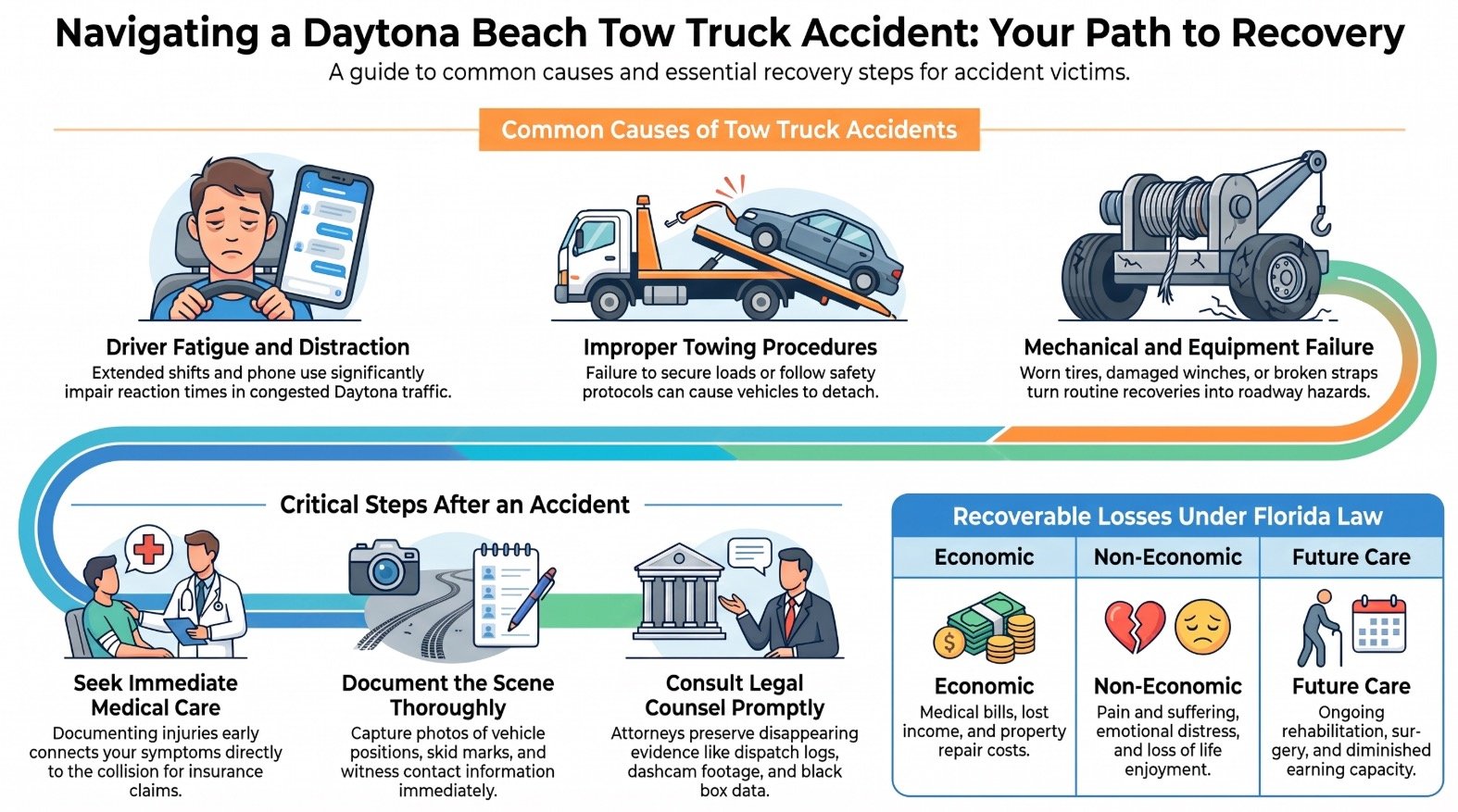
Daytona Beach tow truck accidents may result from driver distraction or fatigue, which can impair judgment and reaction time. Improper towing procedures, equipment failure, and inadequate maintenance may also create serious roadway hazards. Speeding and unsafe operations further increase the risk of collisions, particularly when towing disabled vehicles in congested areas.
Driver Distraction and Fatigue
Driver distraction and fatigue are significant contributors to tow truck accidents in Daytona Beach, particularly because these vehicles operate in congested traffic, along busy highways, and near roadside emergencies. A driver who looks away to use a phone, adjust equipment, or respond to a message may fail to recognize slowing traffic, pedestrians, or changing signals. Cell Phone Records can help establish whether device use contributed to a collision. Fatigue creates comparable risks by slowing reaction time, impairing judgment, and reducing attention during extended shifts or overnight calls. Employers and drivers may also face concerns when inadequate scheduling or Route Planning Errors produce excessive hours behind the wheel.
Careful review of work schedules, dispatch communications, vehicle data, and witness accounts may clarify whether distraction or exhaustion undermined the driver’s duty to protect motorists needing assistance.
Improper Towing Procedures
Improper towing procedures can cause serious collisions when a tow truck operator fails to secure a vehicle, uses unsuitable equipment, or ignores required safety protocols. In Daytona Beach, inadequate attachment methods may allow a disabled vehicle to shift, detach, or obstruct nearby traffic. Operators may also create hazards by positioning a towed vehicle improperly, failing to use required warning signals, or neglecting safe procedures during roadside recovery.
Effective Safety compliance policies should establish clear steps for inspection, connection, loading, transport, and release. Consistent tow driver training helps personnel understand weight distribution, securement requirements, traffic awareness, and communication with motorists. When companies disregard these safeguards, preventable crashes may result, placing customers, pedestrians, and other drivers at risk. Legal review can help affected individuals evaluate responsibility and available remedies.
Equipment Failure and Maintenance
When tow truck equipment is defective or poorly maintained, a routine recovery can become a serious roadway hazard. Brake failure may prevent a driver from stopping safely, while worn tires, damaged winches, broken straps, or malfunctioning lights can compromise control and visibility. These conditions may result from inadequate inspections, delayed repairs, defective replacement parts, or operator neglect. Tow companies generally have a responsibility to maintain vehicles and recovery tools in serviceable condition, train personnel to identify hazards, and remove unsafe equipment from operation.
Maintenance records, inspection reports, repair invoices, and service schedules may help establish whether a dangerous defect was known or reasonably discoverable. When equipment failure contributes to a collision, affected individuals may benefit from preserving evidence and consulting a qualified Daytona Beach tow truck accident lawyer about potential claims and responsible parties.
Speeding and Unsafe Maneuvers
Beyond equipment-related hazards, speeding and unsafe driving are common causes of Daytona Beach tow truck accidents. Tow operators may face pressure to reach disabled motorists quickly, but excessive speed can reduce stopping distance and vehicle control, particularly when towing heavy loads. Traffic signal violations and failure to yield can create dangerous intersections where smaller vehicles and pedestrians are especially vulnerable. Unsafe lane changes may occur when a tow truck has limited visibility or a wide turning radius, increasing the risk of sideswipes and sudden collisions.
Improper following distance is another significant concern because a loaded tow truck may require substantially more time to stop. Identifying these behaviors can help injured individuals and their families understand potential negligence, preserve relevant evidence, and pursue accountability while promoting safer service for the broader community.
Legal Rights of Daytona Beach Tow Truck Accident Injury Victims
Daytona Beach tow truck accident injury victims may have legal rights to pursue compensation when another party’s negligence caused or contributed to the collision. Potential claims can include medical expenses, lost income, property damage, and pain-related losses, subject to applicable Florida law and available proof.
Daytona Beach tow truck accident victims may pursue compensation for medical expenses, lost income, property damage, and pain-related losses.
- Insurance benefits: Florida no-fault coverage may provide initial personal injury protection benefits, even when responsibility remains disputed. Serious injuries may permit claims beyond those benefits.
- Fault-based recovery: Comparative negligence can reduce compensation when an injured person shares responsibility. A careful evaluation of conduct, vehicle records, and applicable traffic duties may clarify liability.
- Claim protection: Evidence preservation is important. Medical records, photographs, witness information, repair estimates, employment documentation, and insurer communications can support a claim. Accident victims may also have deadlines for filing suit or notifying insurers.
A qualified legal professional can explain available remedies, communicate with insurers, and help protect an injured person’s interests while treating all involved parties with fairness and respect. Early guidance may also help preserve accurate evidence before conditions change.
Why Do Daytona Beach Tow Truck Accident Injuries Happen?
Tow truck accident injuries may result from a combination of driver error, unsafe equipment, hazardous roadway conditions, and inadequate vehicle maintenance. Fatigued, distracted, or improperly trained operators may misjudge distances, exceed safe speeds, or fail to secure a disabled vehicle. These failures can cause sudden movement, equipment detachment, or collisions with nearby motorists and pedestrians.
Safety standards are intended to reduce such dangers, but violations may occur when companies neglect inspections, employee training, or load limits. Poor towing compliance can involve defective chains, worn cables, improper lighting, or failure to follow applicable regulations. Traffic signaling also plays an important role. Missing, blocked, or confusing warning signals can leave approaching drivers unaware of a tow operation.
External conditions contribute as well. Rain, darkness, congestion, uneven pavement, and limited shoulders create roadway hazards that increase stopping distances and reduce visibility. When multiple factors overlap, the likelihood and severity of injuries may rise, particularly for people assisting stranded motorists or traveling through active work areas.
What Should You Do After a Daytona Beach Tow Truck Accident Injury?
After a Daytona Beach tow truck accident injury, the injured person should seek immediate medical care, even if symptoms initially appear minor. The accident scene should be documented through photographs, witness information, and relevant records. A Daytona Beach lawyer can then evaluate the circumstances and explain available legal options.
Seek Immediate Medical Care
Prompt medical evaluation is essential for anyone injured in a tow truck collision, even when symptoms initially appear minor or absent. A qualified healthcare professional can identify concussions, internal injuries, soft-tissue damage, or spinal problems that may worsen without treatment. The injured person should describe all symptoms accurately and disclose any medical history that may affect care. Compliance with recommended Follow up treatments supports recovery and creates a reliable record of the injury’s progression.
Medical records, bills, prescriptions, and appointment information should be retained for insurance paperwork and potential lawyer consultation. These materials may help establish the extent of harm and necessary expenses. Evidence preservation should include healthcare documentation, without delaying urgent treatment for any reason. Prompt care also demonstrates responsible attention to health and recovery.
Document the Accident Scene
If conditions permit, the injured person or a companion should document the Daytona Beach tow truck accident scene before vehicles or property are moved. Clear photographs and video can show vehicle positions, roadway conditions, traffic controls, visible damage, debris, skid marks, and relevant lighting or weather conditions. Images should be taken from several angles without entering unsafe areas or interfering with emergency personnel. Witness identification is also important. Names and reliable contact information should be recorded, along with brief descriptions of what each person observed. If available, dashboard camera footage should be preserved promptly, since recording systems may overwrite older files.
The injured person should avoid altering, repairing, or discarding damaged property until its condition has been documented. Organized records can help accurately preserve evidence and support a clear account of events.
Contact a Daytona Beach Lawyer
Because tow truck accident claims may involve commercial operators, employers, insurers, and disputed accounts of fault, the injured person should consult a Daytona Beach lawyer as soon as reasonably possible. Counsel can preserve evidence, identify responsible parties, and conduct a focused Liability Investigation before records, vehicle conditions, or witness recollections change. A lawyer may also communicate with insurers, helping prevent statements or settlements that could undermine a valid claim.
The injured person should provide complete Medical Documentation, including emergency records, diagnostic results, treatment plans, and information about ongoing limitations. These materials can help establish the injury’s connection to the collision and demonstrate its effect on daily responsibilities. By seeking guidance promptly, the injured person supports an orderly process and helps protect resources needed for recovery, family obligations, and continued service to others.
Critical Evidence in a Daytona Beach Tow Truck Accident Injury Case
A Daytona Beach tow truck accident injury case may depend on preserving reliable evidence that establishes liability and documents resulting losses.
Essential evidence generally includes:
- Accident scene photographs and police or crash reports.
- Medical records and bills documenting treatment and expenses.
- Witness statements and testimony describing how the collision occurred.
Together, these materials can help clarify disputed facts and support an injured person’s claim.
Accident Scene Photos
When safely possible after a tow truck collision in Daytona Beach, photographs of the accident scene can preserve critical evidence before vehicles, debris, and road conditions are changed or removed. Images should capture vehicle positions, impact damage, skid marks, scattered equipment, roadway defects, weather conditions, and nearby signs. Wide views can establish context, while closer photographs may document broken lights, damaged tow components, visible injuries, and property loss. A person assisting at the scene should avoid entering traffic or disturbing evidence and should respect privacy when photographing injured individuals. Cell Phone Usage may provide useful time-stamped images, but the device should not be used while driving or in an unsafe location. Photographs can also help evaluate Traffic Signal Compliance by showing signal positions, lane markings, and sight obstructions. Witness contact information should be preserved separately.
Police And Crash Reports
Police and crash reports can provide an objective starting point for measuring a tow truck accident injury claim in Daytona Beach. Prepared by responding officers, these records may identify roadway conditions, vehicle positions, apparent violations, citations, and statements made near the collision. They can also preserve witness contacts, helping investigators locate individuals whose observations clarify how the crash occurred. Although a report is not a final determination of liability, inconsistencies or omissions may warrant further investigation and comparison with other evidence. Early access can assist counsel in measuring legal theories, preserving relevant records, and anticipating settlement timelines. The report may also document emergency responses and circumstances that support later Medical documentation, without replacing it. Careful review helps explain long term impacts when evaluating responsibility and available remedies for injured parties.
Medical Records And Bills
Medical records and bills provide key evidence for evaluating injuries after a Daytona Beach tow truck accident. They document diagnoses, symptoms, treatment recommendations, and the timing of medical care. Emergency department notes, imaging results, physician evaluations, therapy records, and prescription information can establish the severity and progression of harm.
Itemized bills help identify treatment costs, outstanding balances, and related financial losses. With these materials, they may support negligence proof by connecting the collision with documented injuries and necessary care. Prompt evidence preservation is vital because incomplete records can create uncertainty about causation, treatment, or recovery. The injured person should follow medical advice, attend scheduled appointments, and maintain copies of every record and receipt. Organized documentation helps legal professionals evaluate damages accurately and present a clear, service-focused claim for appropriate compensation.
Witness Statements And Testimony
Witness statements and testimony can provide critical evidence in a Daytona Beach tow truck accident injury case by describing how the collision occurred and identifying conduct that may establish negligence. Independent observers may clarify traffic signals, vehicle positions, speed, sudden driving actions, and whether proper warnings were used near a disabled vehicle. Collecting witness contact information at the scene can help preserve access to people whose memories may change or become difficult to verify.
A careful record should include names, telephone numbers, addresses, and each person’s immediate description of events. Recording video details, including visible damage, roadway conditions, lighting, signage, and tow equipment, may further support consistent accounts. Attorneys can interview witnesses, compare statements with physical evidence, and prepare testimony for negotiations or trial while treating every participant respectfully and preserving accurate information for the injured person’s claim.
Long-Term Effects of Daytona Beach Tow Truck Accident Injuries
Daytona Beach tow truck accident injuries may produce chronic pain, reduced mobility, or permanent disability that affects a person’s ability to work and manage daily activities. Survivors may also experience emotional and psychological trauma, including anxiety, depression, or post-traumatic stress symptoms. Ongoing medical expenses for treatment, rehabilitation, medication, and supportive care can create substantial long-term financial burdens.
Chronic Pain and Disability
Although some injuries from a Daytona Beach tow truck accident improve with treatment, others may cause chronic pain, reduced mobility, or permanent disability. These conditions can limit a person’s ability to work, provide for dependents, and participate in daily responsibilities. Treatment may include surgery, physical therapy, medication, mobility devices, or ongoing expert care. Medical documentation should clearly describe diagnoses, restrictions, expected duration, and necessary future treatment. This evidence can support applications for disability benefits and help establish the financial impact of lasting impairment. During insurance negotiations, an insurer may question whether symptoms are accident-related or permanent. A carefully developed settlement strategy should account for medical expenses, lost income, diminished earning capacity, adaptive equipment, and future care. Legal guidance may help injured individuals pursue resources that preserve stability and independence.
Emotional and Psychological Trauma
Emotional and psychological trauma can persist long after physical injuries from a Daytona Beach tow truck accident have begun to recover. Survivors may experience anxiety, depression, sleep disruption, intrusive memories, or fear of driving and roadside work. These symptoms can interfere with employment, family responsibilities, and a person’s ability to serve others effectively. A qualified mental health professional can evaluate these conditions and recommend counseling, coping strategies, or appropriate treatment.
Medical records should describe symptoms, diagnoses, treatment progress, and medication side effects because such documentation may help establish the accident’s lasting impact. Supportive relatives and advocates can encourage consistent care without minimizing distress. Careful financial planning may also help survivors manage reduced income and household obligations while pursuing relief, preserving stability during a difficult healing without focusing on future medical expenses.
Ongoing Medical Expenses
Ongoing medical expenses can remain a significant consequence of injuries sustained in a Daytona Beach tow truck accident, particularly when treatment involves surgery, rehabilitation, prescription medication, or expert care. These costs may continue for months or years, especially when injuries cause permanent limitations, chronic pain, or reduced mobility. A thorough claim may account for past bills, projected treatment, assistive equipment, necessary home modifications, and anticipated income loss during continuing care. Medical records, treatment plans, physician opinions, and life-care assessments can help establish the likely value of future expenses. Insurance Disputes may arise when carriers challenge the necessity or duration of treatment. Comparative Negligence may also affect recovery if another party alleges shared responsibility. Careful documentation and informed legal guidance can help protect an injured individual’s ability to obtain appropriate long-term care.
Proving Liability in Daytona Beach Tow Truck Accident Injury Cases
Proving liability in a Daytona Beach tow truck accident injury case requires evidence showing who caused the collision and whether that party breached a legal duty of care. The analysis typically addresses the Liability Elements: duty, breach, causation, and damages. A tow truck operator may face scrutiny for speeding, unsafe lane changes, distracted driving, improper loading, inadequate warnings, or violations of traffic and safety regulations. The towing company may also bear responsibility for negligent hiring, training, supervision, maintenance, or dispatch practices.
The Evidence Burden generally rests with the injured person, who must establish each required element by a preponderance of the evidence. Useful evidence can include crash reports, photographs, vehicle data, surveillance footage, witness statements, employment records, inspection documents, and qualified expert opinions. Medical records can connect the collision to documented injuries and related losses. Prompt preservation of evidence is important because vehicles, electronic data, and roadside recordings may be altered, lost, or destroyed before liability is fully evaluated.
Dealing With Insurance Companies After a Daytona Beach Tow Truck Accident Injury
After a Daytona Beach tow truck accident injury, insurance companies may promptly investigate the collision and seek statements, records, and other information from the injured person. An injured individual should provide accurate information while avoiding speculation, recorded statements, or social media posts that could be misinterpreted. Insurers may request broad medical authorizations, evaluate treatment, and compare reported limitations with prior records. Careful review can help preserve privacy and prevent unrelated history from influencing the assessment. A representative may communicate with adjusters, organize documentation, and address disputed responsibility or inadequate settlement offers. If an insurer unreasonably delays payment, misrepresents coverage, or refuses to investigate relevant evidence, those actions may raise concerns involving insurance bad faith. Medical lien negotiation can also help resolve healthcare providers’ repayment claims while preserving more of an eventual recovery for necessary expenses and ongoing care. Prompt attention to deadlines, policy provisions, and available coverage supports fair, respectful advocacy for injured people and their families.
What to Expect During a Daytona Beach Tow Truck Accident Injury Claim Process
A Daytona Beach tow truck accident injury claim typically begins with an initial case evaluation to assess liability, damages, and available legal options. The process may include collecting accident reports, medical records, witness statements, and other evidence before insurance claim negotiations begin. If the parties cannot reach a fair settlement, the injured person may proceed toward trial with legal guidance.
Initial Case Evaluation
Typically, the initial case evaluation determines whether an injured person has a viable claim arising from a Daytona Beach tow truck accident. During a preliminary case intake, an attorney or trained staff member may ask about the collision, reported injuries, medical treatment, insurance communications, and immediate losses. This discussion helps identify potential parties, applicable deadlines, and issues that could affect recovery. The injured person may also learn about the attorney’s role, possible fee arrangements, and anticipated stages of the claim process. Evidence preservation is addressed at a general level so important records, photographs, correspondence, and damaged property are not carelessly discarded. The evaluation should provide a realistic assessment rather than a promise of results, while ensuring that the injured person receives respectful guidance and understands the recommended next steps.
Evidence Collection Process
During the evidence collection process, the attorney’s team works to preserve and organize information that may establish how the Daytona Beach tow truck accident occurred and the extent of the resulting injuries. Evidence preservation timing is important because vehicle damage, roadway conditions, surveillance recordings, and electronic data can change or disappear. The team may obtain crash reports, photographs, medical records, employment documentation, and tow company records. Investigators can inspect involved vehicles and document traffic signals, signage, lighting, and visibility conditions. They may also identify witnesses and record accurate witness contact information before memories fade. The injured individual may be asked to provide a detailed account, maintain treatment records, and avoid altering relevant evidence. This organized process helps clarify responsibility, injury progression, and the practical consequences of the collision.
Insurance Claim Negotiations
After the evidence is organized, insurance claim negotiations address the financial responsibility arising from the Daytona Beach tow truck accident. The injured person’s representative may notify relevant insurers, identify applicable coverage, and present documentation supporting liability and damages. Medical records, wage information, repair estimates, and other verified expenses help establish the claim’s value. Demand letters typically summarize the collision, explain the injuries, and request payment based on documented losses. Insurers may respond with questions, reservations, or proposed adjustments, requiring careful review of policy terms and factual evidence.
Attorneys negotiate settlements by communicating with adjusters, correcting inaccurate assumptions, and protecting the claimant from premature concessions. Throughout this process, timely updates, organized records, and respectful communication help advance the claim while preserving the injured person’s interests and dignity.
Settlement Or Trial
When insurance claim negotiations do not produce a fair resolution, the injured person may choose between accepting a settlement and pursuing the Daytona Beach tow truck accident claim in court. A settlement provides defined compensation without trial uncertainty, but its terms should reflect medical expenses, lost income, ongoing treatment, and other damages. Counsel may examine liability proof, comparative negligence allegations, and damages valuation before recommending acceptance. A negotiation strategy should account for evidentiary strengths, litigation costs, and the claimant’s recovery needs. If negotiations fail, filing suit may permit formal discovery, expert testimony, and judicial review. Trial can produce greater compensation, but it also involves delay, expense, and the possibility of an unfavorable verdict. Each decision should be based on informed advice and the injured person’s long-term interests.
Compensation for Daytona Beach Tow Truck Accident Injury Damages
Compensation for Daytona Beach tow truck accident injuries may cover medical expenses, lost income, reduced earning capacity, property damage, and the physical pain and emotional distress caused by the collision. A claim may also address ongoing treatment, rehabilitation, necessary assistance, and losses affecting a person’s ability to support family or serve the community. Documentation is crucial. Medical records, employment information, repair estimates, photographs, witness accounts, and insurance communications can help establish the harm and its connection to the crash.
Insurance coverage limits may restrict the amount available, particularly when a commercial towing company, multiple vehicles, or several injured parties are involved. Identifying all potentially responsible parties and applicable policies may consequently be important. Comparative negligence disputes can also reduce recovery if an insurer alleges that the injured person contributed to the collision. A Daytona Beach tow truck accident lawyer may evaluate evidence, challenge unsupported allegations, and pursue compensation through appropriate negotiations or litigation.
Economic vs Non-Economic Damages in Daytona Beach Tow Truck Accident Cases
Economic damages compensate measurable financial losses, including medical expenses, lost income, property damage, and future care costs. Non-economic damages address less tangible harm, such as pain and suffering, emotional distress, and reduced quality of life. Comparing these categories requires evaluating documented losses alongside the injury’s personal and lasting effects.
Economic Damages Explained
In Daytona Beach tow truck accident cases, economic damages refer to the objectively measurable financial losses caused by the collision. These damages may include emergency transportation, hospital treatment, medication, rehabilitation, property repairs, and other documented expenses linked to the crash. Future medical care can also qualify when reliable evidence establishes its expected cost. Lost wage calculations may account for missed work, reduced earning capacity, and employment benefits lost during recovery. Records such as pay statements, tax documents, employer verification, invoices, and medical evaluations help establish the amount claimed. When an insurer undervalues or rejects these losses, Insurance denial appeals may require organized supporting documentation and a clear explanation of liability and causation. Careful evaluation helps protect an injured person’s ability to obtain necessary services without shifting legitimate financial burdens to others.
Non-Economic Damages Explained
Beyond documented financial losses, non-economic damages address the personal effects of a tow truck collision that do not have a fixed price. These damages may include physical pain, emotional distress, diminished enjoyment of life, disfigurement, and lasting impairment. They recognize how injuries can disrupt family relationships, community participation, independence, and the ability to serve others. In Daytona Beach cases, the severity and duration of these effects may depend on the collision’s circumstances, including Faulty Tow Equipment or Traffic Law Violations. Non-economic harm can also encompass anxiety, sleep disruption, trauma, and reduced confidence after a serious crash. Unlike medical bills or lost wages, these losses lack invoices, yet they remain significant components of a personal injury claim. Careful documentation and testimony can help present their effect clearly while respecting the injured person’s dignity.
Comparing Damage Calculations
A tow truck accident claim in Daytona Beach may combine economic and non-economic damages, but each category is calculated differently. Economic damages are supported by documentation, including treatment invoices, lost-wage records, repair estimates, and projected medical expenses. A medical bill review can identify duplicate charges, unrelated services, or costs requiring further proof. Non-economic damages address pain, emotional distress, reduced quality of life, disfigurement, and loss of companionship. Because these losses lack fixed invoices, evidence may include medical testimony, personal accounts, and descriptions of daily limitations. Florida law and the facts of the injury influence how a court evaluates both categories. An Insurance coverage dispute may affect available payment without changing the underlying damages. Careful calculations help protect injured individuals and support fair outcomes for families and communities served by legal advocates.
When a Daytona Beach Tow Truck Accident Injury Case Goes to Trial vs Settlement
When liability, medical evidence, and damages are reasonably clear, a Daytona Beach tow truck accident injury case may resolve through settlement rather than proceed to trial. Settlement can provide timely compensation, reduce uncertainty, and spare an injured person and family from extended litigation demands. Negotiations typically consider medical expenses, lost income, future care, pain, and the available insurance coverage. Careful damages valuation helps determine whether an offer fairly reflects the injury’s lasting effects.
Trial may become necessary when responsibility is disputed, evidence is conflicting, or insurers refuse reasonable compensation. A trial strategy may include presenting medical testimony, documenting treatment limitations, questioning witnesses, and explaining how the collision affected daily responsibilities. The court, rather than the parties, determines the outcome, and no result is guaranteed. Legal counsel may evaluate settlement offers against litigation risks, anticipated costs, preparation time, and the client’s goals. Throughout either process, informed decisions can protect an injured person’s interests while supporting a fair resolution.
Florida Laws That May Affect Your Daytona Beach Tow Truck Accident Case
Florida law can influence liability, insurance coverage, filing deadlines, and the damages available after a Daytona Beach tow truck accident. Several legal principles may shape how an injured person, family, or community advocate evaluates a claim and seeks responsible assistance.
Florida law can shape liability, insurance coverage, filing deadlines, and potential damages after a Daytona Beach tow truck accident.
- Comparative negligence rules may reduce compensation when an injured party shares responsibility for the collision. Evidence concerning driving behavior, visibility, vehicle maintenance, and roadway conditions can affect each party’s assigned percentage of fault.
- Florida insurance requirements and commercial-vehicle regulations may affect available coverage. Investigators may examine the tow company’s policies, driver qualifications, inspection records, employment status, and compliance with traffic and safety requirements.
- Florida jury standards may influence how evidence is presented if disputed facts require a jury’s consideration. Jurors may assess credibility, medical documentation, economic losses, and the reasonableness of claimed damages under applicable legal instructions.
A knowledgeable legal professional can help preserve evidence, communicate with insurers, and explain these rules while treating injured individuals with dignity and care. Fault and coverage questions commonly require prompt, methodical review.
The Statute of Limitations for Daytona Beach Tow Truck Accident Injury Cases
Although injury claims arising from Daytona Beach tow truck accidents may involve extensive medical and insurance issues, they must also comply with Florida’s statute of limitations. Generally, Florida law allows four years to file a personal injury lawsuit, although exceptions may shorten or extend that period. Claims involving wrongful death, government entities, or specific contractual issues can follow different deadlines. Missing the applicable deadline may permanently bar recovery, regardless of fault or injury severity.
The limitations period makes early attention important. An Insurance denial does not necessarily stop the filing deadline, and settlement timelines can consume valuable time while medical treatment continues. Prompt documentation supports informed decisions before evidence becomes unavailable. Vehicle inspection records, tow dispatch information, photographs, medical records, witness accounts, and electronic communications may clarify how the collision occurred and who may bear responsibility. Evidence preservation is therefore critical from the outset.
Because deadlines depend on facts, parties, and defendants, affected individuals should promptly identify the governing period and protect their legal interests through appropriate channels.
How a Daytona Beach Tow Truck Accident Lawyer Can Help You
A Daytona Beach tow truck accident lawyer can help protect an injured person’s rights while investigating the collision, identifying responsible parties, and pursuing available compensation. The lawyer may coordinate medical records, inspect vehicles, interview witnesses, and preserve photographs, dispatch logs, and electronic data before key evidence disappears.
- Clarifying liability: Counsel can analyze driver conduct, maintenance failures, improper loading, and tow company negligence to determine which parties may bear responsibility. This work is especially important in Liability disputes involving multiple insurers or businesses.
- Addressing defenses: A lawyer can evaluate Florida negligence defenses, including comparative fault allegations, and respond with evidence supporting the injured person’s account.
- Protecting the claim: Counsel can communicate with insurers, calculate medical expenses, lost income, and other damages, and seek a fair resolution through negotiation or litigation. Prompt preservation requests may also help prevent evidence tampering and expose inconsistencies in accident reports.
Through careful advocacy, a Daytona Beach tow truck accident lawyer can reduce administrative burdens and help an injured person make informed decisions while preserving accountability for preventable harm.
When to Contact a Daytona Beach Tow Truck Accident Lawyer
Prompt contact with a Daytona Beach tow truck accident lawyer is generally advisable after a collision involving serious injuries, disputed fault, significant property damage, or potential violations of state and federal safety rules. Early guidance may help preserve relevant evidence, including photographs, vehicle data, dispatch records, medical documentation, and witness accounts. A consultation is also appropriate when insurance representatives request statements, offer a settlement, or suggest that an injured person bears responsibility.
Families should seek legal assistance promptly when a crash causes a fatality, as Wrongful Death Claims may involve funeral expenses, lost financial support, and other legally recognized losses. Contact may likewise be warranted when multiple Negligent Parties contributed to the incident, such as a tow operator, trucking company, maintenance provider, or another motorist. Prompt attention can help identify applicable deadlines and protect the interests of injured individuals and their families while allowing them to focus on recovery and service to those who depend on them.
Why You Need an Experienced Daytona Beach Tow Truck Accident Lawyer
Because tow truck collisions often involve commercial vehicles, specialized equipment, and multiple potentially responsible parties, an experienced Daytona Beach tow truck accident lawyer can provide critical legal guidance. Such counsel can evaluate whether the tow operator, trucking company, vehicle owner, maintenance provider, or another party contributed to the crash. A lawyer can also explain available remedies for medical expenses, lost income, property damage, and long-term care needs while protecting the injured person’s interests during difficult circumstances.
Prompt action supports evidence preservation. Counsel may secure photographs, inspection records, dispatch information, driver logs, video footage, and witness statements before those materials disappear or become disputed. Legal representation also helps manage Insurance deadlines, required notices, and communications with carriers that may attempt to limit responsibility or settlement value. By coordinating the claim and investigating its causes, an experienced lawyer allows the injured individual to focus on recovery and family responsibilities while pursuing a fair, properly supported resolution through negotiation or litigation when necessary.
How to Choose the Right Daytona Beach Tow Truck Accident Lawyer for Your Case
Choosing the right Daytona Beach tow truck accident lawyer requires careful consideration of the attorney’s experience with commercial vehicle collisions, liability investigations, and injury claims. A qualified lawyer should understand towing regulations, maintenance records, driver conduct, insurance coverage, and the multiple parties that may share responsibility.
A Client vetting checklist can help prospective clients compare courtroom experience, communication practices, investigative resources, and prior handling of serious injury cases. It should also address whether the attorney has access to accident reconstruction professionals and medical consultants when evidence requires expertise review. During an initial consultation, the lawyer should explain possible legal strategies without promising a particular outcome.
Fee structure transparency is equally important. The attorney should clearly describe contingency percentages, case-related expenses, potential liens, and circumstances that could affect the client’s recovery. Responsiveness, professional judgment, and a demonstrated commitment to protecting injured people can further distinguish suitable counsel. Careful selection supports informed decisions and helps families pursue accountability with dignity.
About The Law Offices of Anidjar & Levine
After evaluating experience, resources, and communication practices, prospective clients may consider how the Law Offices of Anidjar & Levine handles tow truck accident claims in Daytona Beach. The firm represents injured individuals and families seeking accountability after collisions involving towing vehicles, roadside assistance operations, or improperly secured loads.
Its attorneys may investigate driver conduct, vehicle maintenance, company policies, insurance coverage, and roadway conditions when reviewing Tow Truck Liability. This review can help identify potentially responsible parties and preserve evidence relevant to negligence and damages. The firm also explains the Injury Claim Timeline, including medical treatment, documentation, negotiations, and potential litigation, so clients can make informed decisions throughout the process.
A service-oriented approach emphasizes communication, preparation, and attention to each client’s circumstances. Attorneys may coordinate with medical providers, gather records, consult qualified experts, and address insurer communications while pursuing lawful compensation. Prospective clients should discuss case facts, deadlines, fees, and representation procedures directly with the firm before selecting counsel for a Daytona Beach claim.
Frequently Asked Questions
Can I Afford a Daytona Beach Tow Truck Accident Lawyer Without Upfront Payment?
A person may afford legal representation without upfront payment, depending on the lawyer’s fee arrangement. Many Daytona Beach attorneys handle tow truck accident claims through contingency fees, receiving payment only if compensation is recovered. Others may offer payment plans for costs not covered by that arrangement. The prospective client should request a written agreement explaining fees, expenses, case responsibilities, and circumstances requiring payment, then compare terms before proceeding.
What Happens if the At-Fault Tow Truck Driver Was Uninsured?
If the at-fault tow truck driver was uninsured, the injured person may pursue compensation through personal uninsured motorists coverage, if available. Insurance verification should confirm whether the driver, towing company, or vehicle carried any applicable policy. The claims process may involve reporting the collision promptly, documenting injuries and losses, and negotiating with the claimant’s insurer. A qualified attorney can evaluate coverage options, identify responsible parties, and help protect the injured person’s rights.
Can Family Members File a Wrongful Death Claim After a Tow Truck Accident?
Yes, eligible family members may file a wrongful death claim after a tow truck accident, though requirements vary by state. Family eligibility commonly includes a surviving spouse, children, or parents, while other relatives may qualify under specific circumstances. The claimant must generally establish negligence, causation, and damages. Wrongful death evidence may include crash reports, medical records, witness statements, employment information, and financial documentation. Prompt legal guidance helps preserve evidence and protect statutory deadlines.
Will My Tow Truck Accident Case Affect My Immigration Status?
A tow truck accident case generally does not affect a person’s immigration status merely because compensation is sought. Immigration consequences may arise, however, if the case involves alleged criminal conduct, fraud, or inconsistent statements that conflict with immigration filings. Evidence for admissibility, including medical records, accident reports, and sworn testimony, should remain accurate and consistent. An immigration attorney can evaluate risks, while a personal injury lawyer protects lawful recovery.
Can I Switch Lawyers During My Daytona Beach Tow Truck Accident Case?
Yes, an injured person can generally change attorneys during a pending tow truck accident case, although the timing and procedure matter. Switching lawyers typically requires notifying current counsel, reviewing fee agreements, and ensuring that deadlines, evidence, and court filings remain protected. A new attorney should assess the existing case strategy before accepting representation. The client may still owe fees or litigation costs, so written clarification can prevent disputes and support a smooth transfer.
—————————
Tow truck accidents can result in serious injuries, complex liability issues, and substantial financial losses. Prompt legal guidance can help preserve evidence, determine who may be responsible, and seek compensation for medical expenses, lost income, and other damages. Daytona Beach victims should consult an experienced Daytona Beach Truck Accident Lawyer before accepting an insurance settlement or making statements that could affect their claim. The Law Offices of Anidjar and Levine can review the circumstances and provide informed representation throughout the legal process.