The Law Offices of Anidjar and Levine helps injured victims manage insurance claims, preserve evidence, prove fault, and pursue compensation after a side-impact crash.
A Daytona Beach Car Accident Lawyer can assist with cases involving serious injuries, disputed right-of-way, traffic signals, witness accounts, vehicle damage, and Florida comparative negligence rules.
Legal guidance can support claims for medical care, lost income, pain, future treatment, and property damage.
The following sections explain central issues, evidence needs, and steps that may protect a claim.
Main Takeaways
- A Daytona Beach T-bone car accident lawyer manages evidence, insurance communications, claim valuation, and settlement negotiations.
- T-bone crashes often involve serious head, neck, back, chest, hip, shoulder, or leg injuries.
- Common causes include red-light running, failure to yield, distracted driving, impaired driving, poor visibility, and unsafe intersection decisions.
- Strong claims rely on police reports, medical records, witness statements, photos, traffic camera footage, and vehicle damage analysis.
- Florida comparative negligence rules may reduce compensation if multiple parties share fault for the crash.


How We Can Help With Your Daytona Beach T-Bone Car Accident Injury Claim
When a side-impact collision causes serious injuries, a Daytona Beach T-bone car accident lawyer can help an injured person pursue compensation by managing the legal, evidentiary, and insurance-related demands of the claim. Counsel may gather crash reports, medical records, witness statements, photographs, and expert input to present the harm clearly and responsibly. This support allows the injured person and family members to focus on care, recovery, and community obligations.
A lawyer may also identify available Insurance coverage limits, evaluate losses, and communicate with insurers in a measured, documented manner. Through a careful Settlements negotiation strategy, counsel can address medical expenses, lost income, pain, future care needs, and other recoverable damages. If an insurer undervalues the claim, legal representation can prepare the matter for litigation while continuing to seek a fair resolution. This guidance serves the injured person by protecting rights, reducing confusion, and promoting an orderly path toward compensation.
OUR CONSULTATIONSARE FREE
START YOUR FREE CASE REVIEW

Understanding Daytona Beach T-Bone Car Accident Injury Cases
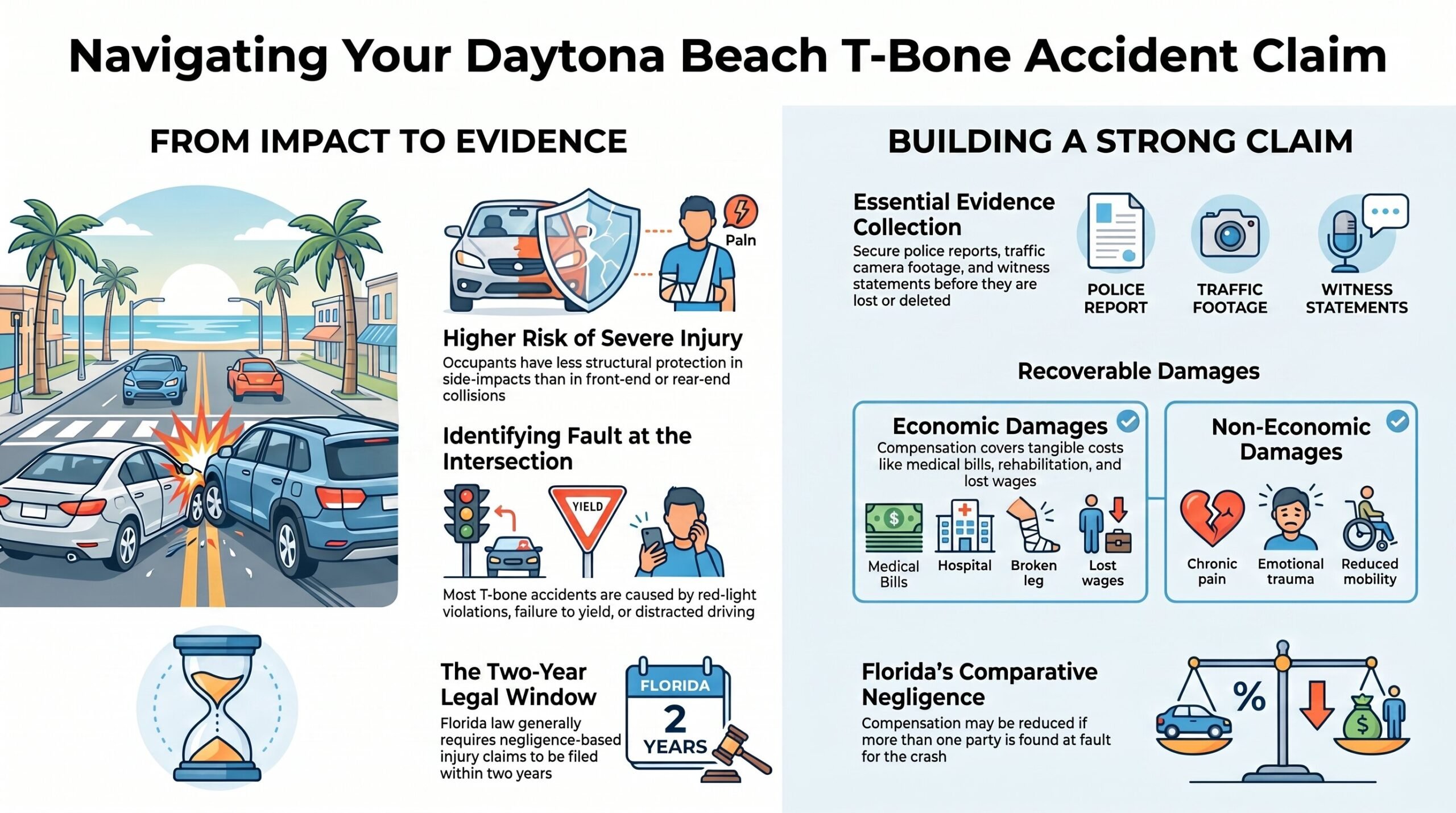
Although every crash depends on its specific facts, Daytona Beach T-bone car accident injury cases often involve severe force directed into the side of a vehicle, where occupants have less structural protection than in front-end or rear-end impacts. These cases may involve head, neck, back, chest, hip, shoulder, or leg injuries, along with trauma that affects daily caregiving, employment, and family responsibilities.
A careful legal review considers medical records, vehicle damage, witness statements, roadway conditions, and available video footage. Florida’s comparative negligence rules may affect compensation if more than one party is assigned fault, making accurate documentation especially important.
Injured people, families, and advocates should follow practical evidence-preservation tips, such as photographing vehicles, saving medical records, retaining repair estimates, and recording symptom changes. Prompt evaluation can help protect the claim while supporting informed decisions that serve the injured person’s recovery, stability, and long-term needs after a serious side-impact collision.
Common Causes of Daytona Beach T-Bone Car Accident
Common causes of Daytona Beach T-bone car accidents often involve dangerous conduct at intersections, where timing and right-of-way rules are important. Drivers who run red lights, fail to yield, drive while distracted, or operate a vehicle while impaired can place others at serious risk of side-impact collisions. Identifying the cause of the crash is necessary, as it may help establish liability and support an injury claim.
Running Red Lights
Running red lights is a leading cause of T-bone accidents in Daytona Beach because it places vehicles directly in the path of lawful cross-traffic. When a driver enters an intersection after the light has turned red, the side of another vehicle may absorb the collision, often leaving occupants with limited protection. Signal timing, traffic volume, and driver distraction can all influence how these crashes occur, but responsibility often centers on the motorist who ignored the traffic control device.
The impact speed may be substantial, especially on wider roads or during late-light acceleration. For those committed to serving injured individuals, careful review of camera footage, witness accounts, and intersection data can help clarify fault, support accountability, and promote safer driving practices throughout the community after serious crashes.
Failing To Yield
When a driver fails to yield at an intersection, driveway, parking lot exit, or turn lane, a T-bone collision may occur because another vehicle is already occupying the lawful path of travel. These crashes often arise when motorists misjudge gaps, overlook posted signs, or misunderstand intersection right-of-way rules. In Daytona Beach, such conduct can place families, workers, visitors, and service-minded community members at serious risk during routine travel.
Establishing liability may require a careful review of the elements of failing yield, including traffic control devices, lane position, vehicle damage, witness accounts, and applicable Florida statutes. A driver who enters cross traffic without proper clearance may be held responsible for resulting injuries and losses. Careful investigation helps protect injured persons and supports fair accountability after a side-impact crash.
Distracted Driving
Driver inattention can cause the same right-of-way violations discussed above, but it often reflects a preventable loss of focus rather than simple misjudgment. Distracted driving is especially dangerous at Daytona Beach intersections, where a brief glance away can cause a driver to miss a red light, stop sign, or turning vehicle. Cellphone usage behaviors, including texting, dialing, reading messages, or checking navigation, can delay braking and reduce awareness of cross traffic.
Other multitasking risks, such as eating, adjusting controls, or speaking with passengers, may also divide attention during pivotal seconds. For those committed to protecting others on the road, these choices matter. When distraction contributes to a T-bone crash, records, witness accounts, and vehicle data may help clarify how attention was diverted.
Impaired Driving
Impaired driving remains a serious cause of T-bone collisions in Daytona Beach because alcohol, drugs, and certain medications can reduce judgment, reaction time, and lane control. When an impaired driver approaches an intersection, the ability to recognize traffic signals, yield properly, or judge another vehicle’s speed may be compromised. These failures can place innocent motorists, passengers, pedestrians, and cyclists at significant risk.
Law enforcement may rely on alcohol detection procedures, field sobriety observations, witness statements, and crash evidence to determine whether impairment contributed to the collision. For those committed to serving injured people, careful review of these details can help identify preventable conduct and support accountability. Impaired driving cases often require prompt investigation, because evidence may fade quickly after the crash and scene conditions can change.


Legal Rights of Daytona Beach T-Bone Car Accident Injury Victims
After a T-bone collision in Daytona Beach, an injured victim may have the right to seek compensation from any party whose negligence caused or contributed to the crash. These rights may include recovery for medical care, rehabilitation, property damage, Lost Income, and pain caused by the collision. Protecting a claim often depends on Documenting Evidence early, including photographs, witness statements, crash reports, and records of the damaged vehicle.
Early evidence can help protect a T-bone collision claim and support an injured victim’s right to compensation.
Injury victims may also rely on Medical Records to connect their physical harm to the crash and demonstrate the need for ongoing treatment.
If Insurance Denials occur, legal action may help challenge unfair decisions and pursue available compensation.
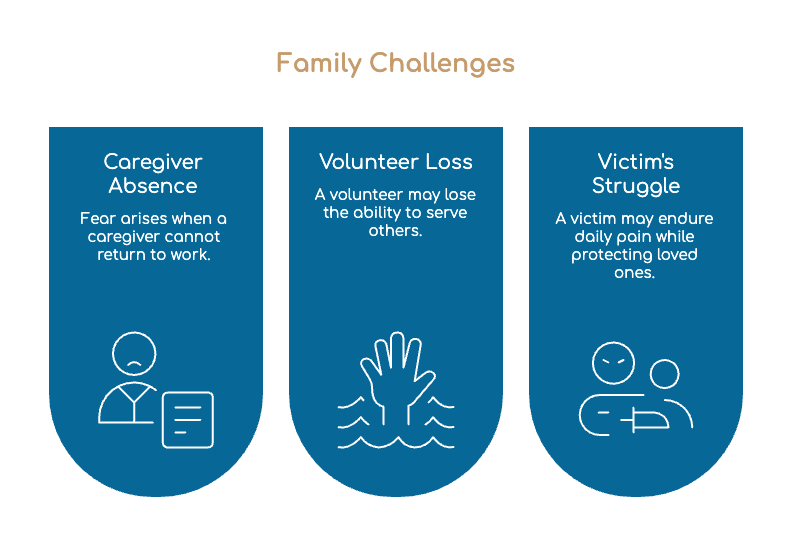
- A family may face fear when a caregiver cannot return to work.
- A volunteer may lose the ability to serve others in the community.
- A victim may endure daily pain while trying to protect loved ones.
These rights exist to promote accountability, recovery, and dignity.
Why Do T-Bone Car Accident Injuries Happen at Daytona Beach?
Because T-bone collisions often occur when one vehicle enters the path of another, injuries in Daytona Beach frequently result from failures to yield, red-light violations, stop sign violations, distracted driving, speeding, or impaired operation. These crashes are especially harmful because the side of a vehicle offers less structural protection than the front or rear, leaving occupants exposed to direct impact forces.
Intersection signal timing may also contribute when drivers misread changing lights, proceed aggressively, or assume cross traffic will stop. Vehicle speed misjudgment can worsen the danger, particularly when a driver turns left across traffic, enters from a side street, or accelerates through an intersection without adequate clearance. Poor visibility, roadway congestion, weather conditions, and unfamiliar traffic patterns can further increase risk.
For communities committed to protecting others, understanding these causes supports safer choices, responsible driving, and greater accountability when preventable harm occurs on Daytona Beach roads and nearby intersections each day.
What Should You Do After a T-Bone Car Accident Injury in Daytona Beach?
After a Daytona Beach T-bone car accident, an injured person should seek medical attention promptly, even if symptoms seem minor. The crash should also be documented through photographs, witness information, police reports, and records of all related losses. Once immediate medical and evidentiary steps are underway, contacting an attorney can help protect legal rights and preserve a potential claim for injury.
Seek Medical Attention
When a T-bone collision occurs in Daytona Beach, prompt medical attention is urgent, even if injuries are not immediately obvious. Emergency evaluation can identify internal trauma, concussions, fractures, or soft tissue injuries that may worsen without care. A timely visit also supports responsible recovery, allowing injured individuals to protect their health while reducing burdens on family members, caregivers, and community helpers.
Medical providers should receive a clear account of symptoms, pain levels, and physical limitations. Follow-up appointments, therapy, and prescribed restrictions should be observed carefully. Delayed care may invite Garbage in myths, where assumptions replace medical facts, and can complicate Settlement timeline planning. Consistent treatment creates a reliable health record, helps guide recovery decisions, and allows legal representatives to understand the injury’s seriousness with greater accuracy.
Document The Crash
Once medical needs have been addressed, careful documentation of the crash can help preserve facts that may otherwise be disputed or lost. A responsible person may photograph vehicle damage, skid marks, debris fields, traffic signals, roadway conditions, and visible injuries, while ensuring that emergency responders are not obstructed. Vehicle positioning diagrams can also help clarify impact angles, lane placement, and points of rest after a side-impact collision.
Names, phone numbers, and brief statements from witnesses should be recorded promptly, along with Witness credibility factors such as vantage point, lighting, distractions, and whether the person observed the entire event. Police report numbers, insurance details, and tow information should be saved in one secure location. Organized documentation supports accuracy, accountability, and fair treatment for everyone affected by the collision.
Contact An Attorney
In the days following a Daytona Beach T-bone car accident, contacting an attorney can help an injured person protect legal rights before essential evidence disappears or insurance disputes develop. Legal counsel can review police reports, medical records, witness information, and available insurance coverage to determine whether a claim may support recovery for treatment costs, lost income, and related losses. Free consultation options allow injured individuals and families to ask informed questions without adding financial pressure during recovery.
Through an Immediate case assessment, an attorney can identify urgent deadlines, liability issues, and evidence needs. Clear guidance on next steps may also help caregivers, relatives, or support professionals assist the injured person responsibly. Transparent fee structures further allow clients to understand costs before representation begins, promoting trust and informed decision-making.
Critical Evidence in a Daytona Beach T-Bone Car Accident Injury Case
Critical evidence can determine how fault is proven after a Daytona Beach T-bone collision, especially when injuries are severe and liability is disputed.
- Police crash reports may preserve the first official account of a frightening and chaotic scene.
- Traffic camera footage and witness statements can reveal the moments that changed a victim’s life.
- Vehicle damage analysis may show the force, angle, and severity of the impact.
Police Crash Reports
After a Daytona Beach T-bone collision, the police crash report is often among the first records used to determine how the accident occurred and who may be responsible. This report may identify drivers, passengers, witnesses, road conditions, vehicle damage, citations, and the officer’s observations at the scene. Although it is not always conclusive, it can guide further investigation and help protect the injured person’s interests.
In a Florida evidence review, the report may be compared with medical records, photographs, repair estimates, and witness statements to assess consistency. Attorneys and support professionals may use these details to serve injured clients with accuracy, care, and accountability. Promptly obtaining the report can also preserve crucial information before memories fade or records become harder to locate.
Traffic Camera Footage
A police crash report may outline the officer’s findings, but traffic camera footage can provide a more direct view of the moments before, during, and after a Daytona Beach T-bone collision. Footage from city cameras, business security systems, or red light cameras may show signal timing, vehicle movement, lane position, and driver conduct at the intersection.
This information can support careful evaluation of intersection liability, especially when accounts conflict or a turning driver disputes fault. Prompt evidence preservation is critical, because many systems overwrite recordings within days. An attorney may help identify camera locations, send preservation requests, and coordinate with public agencies or private owners. Video may also assist with witness identification, allowing injured people and their advocates to locate individuals who can clarify what occurred.
Vehicle Damage Analysis
Vehicle damage patterns can reveal how a Daytona Beach T-bone collision occurred, including the angle of impact, point of contact, and relative force involved. Investigators may examine door intrusion, frame deformation, broken glass, airbag deployment, and transfer marks to connect the physical evidence with the reported injuries. Vehicle crush depth can help estimate collision severity, especially when one vehicle struck the side of another at an intersection.
This analysis may also clarify whether the occupant’s body moved consistently with seatbelt restraint forces, helping determine how injuries developed. For those committed to serving injured individuals, careful review of damages supports fair accountability and informed case preparation. Photographs, repair estimates, and expert inspections may preserve details that later assist negotiations or courtroom presentation with accuracy, dignity, and purpose.
Witness Statements
Physical evidence may show where and how a side-impact collision occurred, but witness statements can explain what happened in the moments before impact. In a Daytona Beach T-bone injury case, promptly identifying eyewitnesses may help clarify the traffic signal status, vehicle speed, lane position, and driver conduct. Neutral observers, including pedestrians, passengers, nearby workers, or other motorists, can provide details that support a fair evaluation of fault.
Preserving statements early is important because memories fade, witnesses relocate, and important details may be lost. Witness credibility also matters, as insurers may examine consistency, vantage point, and any relationship to the parties. Documenting injuries alongside witness accounts can connect the crash event to visible harm, emergency response, and the injured person’s condition, helping those responsible for assisting victims pursue a well-supported claim.
Long-Term Effects of Daytona Beach T-Bone Car Accident Injuries
The long-term effects of Daytona Beach T-bone car accident injuries may extend well beyond the initial medical treatment period. Chronic pain conditions, reduced mobility, and lasting physical limitations can interfere with employment, daily routines, and overall independence. Emotional trauma impacts, including anxiety, sleep disruption, and fear of driving, may also require careful evaluation when considering the full consequences of the crash.
Chronic Pain Conditions
After a Daytona Beach T-bone collision, chronic pain can develop when injuries to the neck, back, shoulders, hips, or limbs fail to recover as expected. Persistent discomfort may stem from nerve irritation, soft tissue damage, joint trauma, or spinal injury. For those serving injured individuals, recognizing chronic pain is required because it can affect sleep, concentration, mood, and daily responsibilities. Medical documentation is often important in demonstrating that pain persisted beyond the initial emergency care.
Medication management may be needed to safely control symptoms, while treatment adherence helps demonstrate consistent efforts toward restoration. Physicians, therapists, and pain experts may coordinate care through evaluations, imaging, injections, or rehabilitation plans. Legal assessment may consider the duration, severity, and medical support for these continuing pain-related losses after the crash.
Reduced Mobility
When a Daytona Beach T-bone collision causes lasting injury, reduced mobility may arise from damage to the spine, joints, muscles, ligaments, or nerves. These limitations can affect walking, standing, lifting, bending, and safely transferring between surfaces. For individuals who serve families, clients, patients, or community members, restricted movement may interfere with dependable caregiving, transportation, household duties, and workplace responsibilities.
Medical evaluations often document range-of-motion loss, weakness, instability, balance problems, or impaired coordination. Rehabilitation planning may include physical therapy, occupational therapy, home modifications, and gradual strengthening programs designed to preserve independence. Assistive device needs, such as braces, canes, walkers, or wheelchairs, may also become part of long-term care. Careful documentation helps establish how mobility restrictions affect daily function, earning capacity, and future support requirements after the crash.
Emotional Trauma Impacts
Reduced mobility is not the only enduring consequence of a severe side-impact crash, as emotional trauma may continue long after visible injuries start to improve. Survivors may experience PTSD symptoms, including intrusive memories, sleep disruption, heightened vigilance, and avoidance of driving or intersections. These effects can interfere with employment, caregiving, worship, volunteer service, and daily responsibilities. Family members may also struggle as they provide support while managing fear, frustration, or uncertainty.
In fatal or catastrophic crashes, grief recovery may require structured counseling, community support, and time away from normal obligations. A careful legal assessment may consider these psychological harms when documenting the collision’s full impact. Recognizing emotional trauma helps ensure that injured individuals receive compassionate care, appropriate treatment, and a more complete pursuit of accountability.
Proving Liability in Daytona Beach T-Bone Car Accident Injury Cases
In a Daytona Beach T-bone collision case, proving liability requires a careful review of how the crash occurred, which driver had the right of way, and whether any traffic laws were violated. Investigators may examine police reports, intersection camera footage, vehicle damage patterns, skid marks, witness statements, and traffic signal timing. These details can show whether a driver ran a red light, failed to yield, made an unsafe turn, or drove while distracted.
Liability analysis also considers whether the injured person’s conduct may be questioned through a Comparative negligence defense. If fault is shared, compensation may be reduced according to each party’s responsibility. A thorough evidentiary record helps protect injured individuals and supports a settlement negotiation strategy grounded in facts, not assumptions. For those committed to serving families after serious harm, careful liability proof promotes accountability, fair recovery, and a more stable path toward medical care, financial repair, and personal restoration.
Dealing With Insurance Companies After a Daytona Beach T-Bone Car Accident Injury
After a Daytona Beach T-bone car accident, insurance companies often begin assessing the claim before the injured person fully understands the extent of medical harm, lost income, and long-term recovery needs. Adjusters may request recorded statements, broad medical authorizations, or quick settlement discussions, each of which can affect fair recovery. Insurance communication tactics may appear routine, but they can frame responsibility, minimize symptoms, or question the necessity of treatment.
A careful approach helps protect the injured person’s dignity while supporting accurate evaluation of the claim. Communications should remain factual, limited, and consistent with medical records, crash reports, and documented expenses. When an insurer disputes fault, undervalues injuries, or refuses payment, Claim denial appeals may require organized evidence and clear legal arguments. A Daytona Beach T-bone car accident lawyer can manage contact with insurers, reduce pressure on the injured person, and help ensure the claim reflects the full harm suffered. This support serves both accountability and recovery.
What to Expect During a Daytona Beach T-Bone Car Accident Injury Claim Process
A Daytona Beach T-bone car accident injury claim typically begins with an initial case evaluation, where liability, damages, and available insurance coverage are reviewed. The process then moves through evidence gathering, including crash reports, medical records, witness statements, and vehicle damage documentation, before insurance claim negotiations begin. If a fair settlement cannot be reached, the claim may proceed toward litigation, where settlement discussions can continue, or the case may be prepared for trial.
Initial Case Evaluation
When a person injured in a Daytona Beach T-bone collision begins the claims process, the initial case evaluation identifies the facts, injuries, insurance coverage, and legal issues that may affect the claim. During this review, an attorney considers how the crash occurred, the reported medical concerns, available policy limits, and any deadlines that require prompt attention. Insurance coverage basics are explained so the injured person can understand potential sources of recovery, including personal injury protection and liability coverage.
The evaluation also addresses Liability evidence preservation, ensuring important records are not lost before the claim develops. This early assessment helps define priorities, protect the injured person’s position, and guide responsible decisions. It also allows legal counsel to serve the client with order, diligence, and care.
Evidence Gathering Steps
Evidence gathering is an early and critical phase of a Daytona Beach T-bone car accident injury claim because it helps establish how the collision occurred, who may be legally responsible, and how the injuries affected the claimant’s life. This stage may include collecting police reports, crash-scene photographs, traffic-camera footage, witness statements, vehicle-damage records, and roadway-condition information.
Careful Medical Documentation is also vital, including emergency records, diagnostic results, treatment notes, prescriptions, and physician recommendations. These materials help clarify the severity of harm and the care needed for recovery. Under Insurance Claim Basics, organized records support accurate reporting and prevent avoidable gaps. A legal team may preserve evidence, request records, and review timelines with diligence, promoting a service-minded process centered on accountability and informed guidance.
Insurance Claim Negotiations
After records, photographs, medical documentation, and witness accounts are organized, the injury claim often moves into insurance claim negotiations with the at-fault driver’s insurer and, in some cases, the injured person’s own carrier. During this stage, adjusters review liability, injuries, treatment needs, wage loss, and vehicle damage. Careful documentation of damage helps present the full impact of the collision, including losses affecting family responsibilities and daily service to others.
Negotiation tactics may include requests for recorded statements, delayed responses, or early offers that do not reflect all harm. A disciplined settlement strategy relies on accurate records, consistent communication, and well-supported valuation. Strong claim support can help address disputes, correct incomplete assessments, and keep the process focused on fair accountability. Counsel may also manage insurer communications to reduce pressure.
Settlement Or Trial Options
As negotiations progress, a Daytona Beach T-bone car accident injury claim may be resolved through settlement or proceed to litigation if the insurer refuses to offer fair compensation. Settlement can provide closure, reduce delay, and help injured people access resources needed for medical care, household stability, and community responsibilities. In some matters, disputed liability, severe injuries, or undervalued losses lead to Insurance Disputes requiring stronger evidence and formal court action.
A lawyer may compare projected trial outcomes with the certainty of settlement, including any Caribbean Settlement references only when relevant to policy history or party background. If trial becomes necessary, preparation may involve witnesses, medical experts, accident reconstruction, and documentation of damages. Each option should be evaluated carefully, with attention to justice, service, and the injured person’s long-term recovery needs.
Compensation for Daytona Beach T-Bone Car Accident Injury Damages
When a T-bone collision in Daytona Beach causes injury, the resulting damages may extend far beyond immediate medical bills. Compensation may address the full effect of the crash on the injured person’s recovery, stability, and ability to receive necessary support. A careful claim presentation often begins with documented medical treatment, physician opinions, crash evidence, and records showing how the injury changed daily responsibilities.
A Daytona Beach T-bone car accident lawyer may help organize this information so that insurers can evaluate the claim accurately and fairly. Insurance negotiation often requires firm communication, because adjusters may question fault, treatment length, or the seriousness of the injuries. In serving injured clients, legal counsel may pursue compensation that reflects the harm proven by reliable evidence and the practical needs created by the collision. This process can support accountability while helping the injured person move forward with greater security, dignity, and access to continued care after a serious crash.
Economic vs Non-Economic Damages in Daytona Beach T-Bone Car Accident Cases
Economic damages in Daytona Beach T-bone car accident cases often include medical bills, rehabilitation costs, lost wages, and reduced earning capacity. Non-economic damages address less tangible losses, such as pain and suffering, emotional distress, and loss of enjoyment of life. Proving the value of each category requires careful documentation, credible evidence, and a clear connection between the collision and the claimed harm.
Medical Bills And Wages
After a T-bone collision in Daytona Beach, medical bills and lost wages often form the foundation of a personal injury claim. These economic damages may include ambulance transport, emergency care, surgery, rehabilitation, medication, follow-up visits, and necessary medical equipment. Wage losses may cover missed work, reduced earning capacity, and employment benefits affected by the injury. When long-term disability prevents a person from returning to prior duties, documentation from physicians, employers, and financial records becomes especially important.
Families devoted to caring for others may also face added household service costs when an injured person can no longer contribute as before. While Loss of companionship is a separate consideration, economic records can show how an injury changed family responsibilities. Accurate valuation helps pursue fair compensation with diligence.
Pain And Suffering
Beyond medical bills and wage losses, a Daytona Beach T-bone car accident claim may also include pain and suffering, which falls under non-economic damages. These losses reflect the human impact of an injury, including physical discomfort, reduced mobility, disrupted sleep, and limitations on daily responsibilities. For individuals devoted to caring for family, community, or work obligations, these consequences can affect their ability to serve others with consistency and dignity.
Non-economic damages may also involve emotional distress claims, especially when anxiety, fear of driving, or trauma follows the collision. In severe cases, a permanent impairment evaluation may help identify lasting restrictions that change a person’s quality of life. Unlike economic damages, these harms do not have fixed bills, but they remain legally significant after the crash.
Proving Damage Value
When a Daytona Beach T-bone car accident claim is evaluated, the value of damages depends on evidence that separates measurable financial losses from more personal, non-economic harm. Economic damages may include hospital bills, rehabilitation costs, lost wages, reduced earning capacity, and property damage. These losses are often proven through invoices, employment records, repair estimates, and medical documentation that connects treatment to the collision.
Non-economic damages address pain, emotional distress, loss of mobility, and reduced quality of life. Their value requires careful support, because these harms are not shown by a receipt. Providers, caregivers, and family members may describe how injuries affect daily service, responsibilities, and independence. A well-supported claim presents both categories clearly, helping insurers, judges, or juries understand the full human and financial impact.
When a Daytona Beach T-Bone Car Accident Injury Case Goes to Trial vs Settlement
Most Daytona Beach T-bone car accident injury cases resolve through settlement, but certain disputes may require trial when liability, damages, or insurance coverage cannot be resolved through negotiation. Settlement may provide a faster, less burdensome path for injured individuals, especially when evidence clearly supports the claim and the insurer evaluates losses fairly. It can also reduce uncertainty, allowing families to focus on recovery and caregiving needs.
A trial may become necessary when an opposing party denies fault, minimizes injuries, challenges medical treatment, or offers compensation that does not reflect proven harm. In those circumstances, preparation of trial strategy becomes critical. Attorneys may evaluate witnesses, medical records, crash analysis, photographs, repair documentation, and the effect of injuries on daily service to others. Courtroom evidence presentation then helps explain how the collision occurred and how the injuries changed the person’s life. Each path depends on risk, proof, timing, and the client’s goals.
Florida Laws That May Affect Your Daytona Beach T-Bone Car Accident Case
The decision to settle or proceed to trial often depends on how Florida law applies to the facts of a Daytona Beach T-bone collision. Florida No Fault rules generally require injured occupants to first seek benefits through personal injury protection coverage, regardless of who caused the crash. However, serious injuries may allow a claim against the at-fault driver for losses beyond those benefits.
Florida No-Fault benefits may apply first, but serious injuries can open the door to additional claims.
Comparative Negligence may also affect recovery. If evidence shows that one driver entered an intersection unlawfully, but the other was speeding or distracted, fault may be divided between them. Compensation can then be reduced based on each party’s percentage of responsibility.
- Families may face medical decisions as they try to protect an injured loved one’s dignity.
- Caregivers may need clear legal guidance to continue serving dependents.
- Community members may seek accountability after preventable harm disrupts daily life.
These laws shape liability, insurance negotiations, and the value of a case after a side-impact crash.
The Statute of Limitations for Daytona Beach T-Bone Car Accident Injury Cases
A strict filing deadline applies to Daytona Beach T-bone car accident injury cases, and missing it can prevent an injured person from pursuing compensation in court. Under Florida law, most negligence-based injury claims must be filed within 2 years of the crash. This deadline promotes timely resolution, preserves evidence, and supports fair service to all parties affected by the collision.
Certain circumstances may alter how the deadline is calculated, but exceptions are limited and should not be assumed. Claims involving government vehicles, fatal injuries, or delayed discovery of harm may raise separate timing concerns. Comparative negligence can also affect recovery, because an injured person’s share of fault may reduce compensation or bar recovery when fault is too high. Damages caps may apply in limited categories of claims, depending on the nature of the losses and defendants involved. Careful attention to filing requirements helps protect the injured person’s ability to seek lawful relief.
How a Daytona Beach T-Bone Car Accident Lawyer Can Help You
After a side-impact collision, a Daytona Beach T-bone car accident lawyer can help by determining liability, preserving important evidence, and guiding the injured person through each stage of the claim process. This support may include reviewing crash reports, locating witnesses, determining medical records, and identifying all available insurance coverage.
A lawyer may also provide insurance timeline reviews to determine whether carriers are delaying, undervaluing, or mishandling the claim. Through careful documentation and Negotiation strategies, legal counsel can present the full impact of the collision, including treatment needs, lost income, and long-term limitations.
- Protection for families facing uncertainty, financial strain, and painful recovery.
- Advocacy for injured people who need stability, dignity, and fair consideration.
- Support for caregivers serving loved ones while managing medical and practical demands.
When to Contact a Daytona Beach T-Bone Car Accident Lawyer
Prompt legal guidance can make a significant difference when a side-impact collision causes injuries, disputed fault, or pressure from insurance carriers. A Daytona Beach T-bone car accident lawyer should be contacted as soon as medical needs are addressed, especially when crash details may affect liability. Early involvement supports 24-hour documentation of vehicle damage, roadway conditions, traffic signals, and visible injuries before evidence changes or disappears.
Contact may also be appropriate when an injured person has emergency room notes, missed work, or ongoing symptoms that require careful organization. A lawyer can help preserve witness contact information and review early communications before statements are provided. Insurance statement review is particularly important when adjusters request recorded comments, broad medical authorizations, or quick settlement discussions.
Families, caregivers, and community-minded helpers often seek guidance to protect an injured person’s stability. Timely contact allows the claim to be handled with order, dignity, and attention to vital deadlines.
Why You Need an Experienced Daytona Beach T-Bone Car Accident Lawyer
Many T-bone collisions involve overlapping issues of driver conduct, traffic control devices, vehicle speed, and injury severity, making experienced legal guidance especially important. A seasoned Daytona Beach attorney can evaluate how the crash occurred, preserve essential evidence, and identify every party whose choices contributed to harm. This careful work supports injured people while also promoting accountability within the community.
Investigating Liability often requires more than reviewing a police report. It may include analyzing signal timing, vehicle damage, roadway design, phone records, impairment concerns, and whether a driver failed to yield or ran a red light. Gathering Eyewitnesses is also important because neutral observations can clarify the direction of impact, vehicle movements, and driver behavior before the collision.
An experienced lawyer can organize medical records, communicate with insurers, and document losses with accuracy. This allows victims and their families to focus on recovery, caregiving, and service to others while the legal process moves forward.
How to Choose the Right Daytona Beach T-Bone Car Accident Lawyer for Your Case
Selecting the right Daytona Beach T-bone car accident lawyer begins with understanding the demands of the case and the attorney’s ability to meet them. A careful choice involves reviewing experience with side-impact collisions, knowledge of Florida traffic laws, and skill in proving fault through evidence such as crash reports, witness statements, and vehicle damage analysis.
A service-minded attorney should also respect the injured person’s need for guidance during a difficult recovery. Client communication expectations should be discussed early, including response times, case updates, and preferred contact methods. Clear communication helps clients make informed decisions and reduces unnecessary confusion.
A contingency fee evaluation is also important. The injured person should understand when fees apply, what costs may be deducted, and how payment depends on the outcome. By comparing qualifications, availability, and fee terms, a person can choose counsel prepared to pursue fair compensation with diligence and care.
About The Law Offices of Anidjar & Levine
The Law Offices of Anidjar & Levine provides legal representation for injured people in Daytona Beach and throughout Florida, including those harmed in T-bone car accidents.
The firm assists clients with claims involving medical expenses, lost income, vehicle damage, and long-term recovery needs after serious collisions.
Its legal team approaches each case with careful preparation, service-minded communication, and attention to the facts.
Attorneys may review crash reports, medical records, insurance policies, photographs, and roadway conditions, while using a Daytona evidence checklist to identify information that may support liability and damages.
The firm also understands the importance of preserving witness statements before memories fade or contact information becomes difficult to confirm.
For clients focused on restoring stability and caring for their families, the firm manages legal tasks and insurance communications.
This support allows injured people to concentrate on treatment, recovery, and the responsibilities that matter most.
Frequently Asked Questions
Can Passengers File Separate Claims After a Daytona Beach T-Bone Crash?
Yes. Passengers may file separate claims after a Daytona Beach T-bone crash when they suffer individual injuries and losses. Each passenger’s claim can address medical expenses, pain, lost income, and related damages. Joint insurance claims may be possible in limited situations, but separate claims often protect each person’s interests. Medical records support the connection between the collision and injuries, helping insurers, attorneys, and courts evaluate responsibility and fair compensation.
Do Rental Cars Affect T-Bone Accident Injury Claims?
Rental cars can affect T-bone accident injury claims by adding layers of Rental car coverage, policy exclusions, and insurance liability. The injured person’s recovery may involve the at-fault driver’s insurer, the rental company’s optional coverage, or personal auto policies. Each source must be reviewed carefully, especially when serving injured passengers or families. Proper documentation, prompt notice, and clear evidence of fault help determine compensation and prevent avoidable claim delays.
What if the Other Driver Was Visiting From Another State?
If the other driver was visiting from another state, the claim may still proceed under Florida law, depending on where the crash occurred. Out-of-state proof, including license, registration, and insurance details, should be preserved promptly. Medical records remain vital for connecting injuries to the collision. Those assisting the injured should document communications carefully, verify coverage, and ensure deadlines are respected, so accountability is pursued with accuracy and care.
Can Traffic Camera Footage Help My T-Bone Accident Case?
Yes, traffic camera footage can strongly support a T-bone accident case by showing signal timing, vehicle positions, speed, and right-of-way violations. The value of traffic camera footage is greatest when it is preserved quickly, before routine deletion occurs. For those seeking fair outcomes and responsible service to injured parties, such recordings may clarify fault. The insurance evidence potential is significant, because objective video can strengthen claims, counter disputes, and guide settlement evaluation.
Are T-Bone Crashes More Common at Intersections in Daytona Beach?
Yes, T-bone crashes can be common at Daytona Beach intersections, especially where heavy traffic, tourist driving, and turning movements converge. Intersection design, signal timing, and driver compliance strongly influence collision risk. These crashes often create serious injury concerns because side impacts offer limited protection. Agencies focused on pedestrian safety and public service should evaluate sightlines, turn lanes, and timing patterns to reduce preventable harm and improve roadway safety in the community.
—————————
A Daytona Beach T-bone car accident can leave victims facing serious injuries, financial losses, and complicated insurance issues.
Prompt legal guidance may help protect your rights, preserve important evidence, and pursue fair compensation.
The Law Offices of Anidjar and Levine provides experienced representation for injured clients and understands the challenges these collisions create.
Those harmed in a side-impact crash should consider contacting a qualified Daytona Beach Car Accident Lawyer to discuss their potential claim.