

The Law Offices of Anidjar and Levine, a Pensacola road and highway conditions car accident lawyer, assesses whether unsafe pavement, poor maintenance, weather hazards, faulty signals, or construction zone conditions contributed to a crash. The review may include photos, witness statements, medical records, maintenance histories, and notice issues to identify potentially liable drivers, contractors, or public entities. Because Florida fault rules can affect recovery, prompt legal evaluation is important. Learn more from a Pensacola Personal Injury Lawyer about how these cases are investigated, documented, and pursued.
Main Takeaways
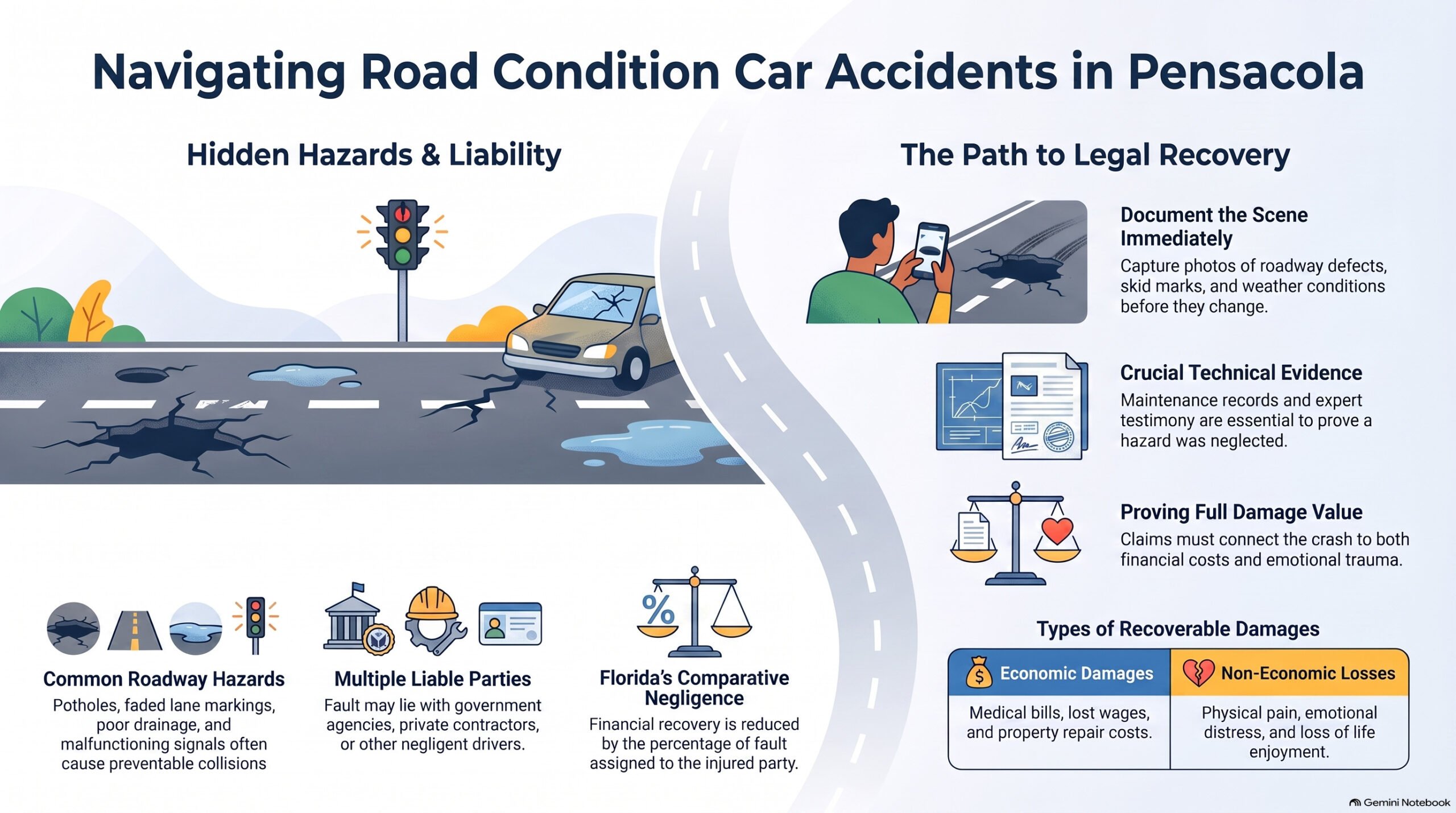
- A Pensacola road-condition accident lawyer investigates whether potholes, poor drainage, faded markings, or inadequate warnings contributed to the crash.
- Liability may involve drivers, contractors, or government agencies, and Florida comparative negligence rules can reduce recovery by the assigned fault percentage.
- Strong claims often rely on photos, witness statements, crash reports, maintenance records, inspection histories, and construction zone documentation.
- Medical records, repair estimates, and wage-loss evidence help show the full financial and physical impact of the collision.
- Lawyers handle insurers, evaluate notice and immunity issues, and prepare litigation when settlement efforts do not adequately resolve the claim.


How We Can Help With Your Pensacola Road & Highway Conditions Car Accident Injury Claim
When hazardous road or highway conditions contribute to a collision in Pensacola, a careful legal review is often necessary to determine how the crash occurred and which parties may be responsible. A law firm serving injured people can assist by organizing evidence, protecting deadlines, and presenting a clear claim that supports accountability and recovery.
Its role often includes gathering Crash witness statements, photographs, repair estimates, and official reports, then evaluating how those materials support the injured person’s position. Counsel may also collect medical billing documentation, treatment records, and wage-loss information to demonstrate the full impact of the collision on the individual and household. Through steady communication with insurers and other involved parties, the firm works to reduce confusion and help clients make informed decisions. If settlement efforts do not adequately address the harm suffered, the attorney may prepare the matter for litigation while continuing to advocate for a fair and service-minded outcome.
OUR CONSULTATIONSARE FREE
START YOUR FREE CASE REVIEW

Understanding Pensacola Road & Highway Conditions Car Accident Injury Cases
Road and highway condition accident claims in Pensacola often require more than a standard review of driver conduct, because the condition of the roadway itself may be a substantial factor in how a collision occurred. These cases commonly involve careful analysis of maintenance records, inspection histories, construction activity, warning devices, and notice to the responsible public or private entity.
A thorough claim evaluation also considers medical documentation, property damage, and the full effect of injuries on the injured person’s family, livelihood, and ability to serve others. Comparing negligence shares may be important when several parties contributed to the event, including drivers, contractors, or government agencies. Florida law may limit recovery depending on the assigned percentage of fault. When a fatal crash occurs, attorneys may also examine Wrongful death eligibility, including who may bring the claim and what losses may be recoverable. Effective case preparation depends on evidence preservation, prompt investigation, and a disciplined understanding of procedural requirements.
Common Causes of Pensacola Road & Highway Conditions Car Accident
Several factors commonly contribute to car accidents on Pensacola roads and highways, often creating risks that drivers cannot reasonably avoid. Poor road maintenance, hazardous weather conditions, and inadequate traffic control can each undermine safe travel and increase the likelihood of serious collisions. Construction zone dangers also present a significant concern, as sudden lane shifts, debris, and unclear warnings may place motorists in hazardous situations.
Poor Road Maintenance
Although drivers often focus on speed, traffic, or weather, poor road maintenance remains a significant cause of serious car accidents in Pensacola. Cracked pavement, potholes, uneven shoulders, and faded lane markings can reduce vehicle control and increase the risk of collisions on busy roads and highways.
Public safety depends on timely repairs and consistent inspections. When local agencies fail to address deteriorating surfaces or neglect clear signage, motorists may receive insufficient warning before dangerous curves, merging lanes, or work zones. These conditions can endanger families, visitors, and service professionals traveling throughout the community. Poor maintenance may also contribute to tire damage, sudden swerving, and chain-reaction crashes. Careful documentation of roadway defects often becomes important after a collision, especially when injured individuals seek accountability and support for recovery and future stability.
Hazardous Weather Conditions
During periods of heavy rain, dense fog, or sudden coastal storms, driving conditions in Pensacola can deteriorate quickly, creating serious accident risks on local roads and highways. Reduced visibility, standing water, and slick pavement can limit braking ability and increase the likelihood of hydroplaning, lane departure, and rear-end collisions. Even careful motorists may face danger when others fail to adjust speed, following distance, or headlights to changing conditions. Driver distraction can further intensify these hazards, particularly when drivers divide attention between the roadway and mobile devices. In service to injured individuals and families, legal professionals often evaluate whether weather combined with negligent conduct caused preventable harm. Although slip-and-fall liability concerns separate legal issues, the same commitment to public safety supports careful roadway behavior during severe weather events.
Inadequate Traffic Control
Roadway danger in Pensacola is not limited to weather-related visibility and traction problems, because inadequate traffic control can also create conditions that lead to serious collisions. Missing signs, obscured lane markings, malfunctioning signals, and poorly timed lights may leave drivers without clear guidance at essential moments. Intersection signaling issues are especially hazardous when motorists must make quick judgments about right-of-way, turning movements, and stopping distance.
These failures can compound ordinary driver-distraction factors, increasing the likelihood of side-impact crashes, rear-end collisions, and pedestrian injuries. In the service of public safety, roads should communicate expectations clearly and consistently to all users. When traffic control devices are neglected, confusion replaces predictability, and preventable crashes become more likely. Careful maintenance and prompt correction remain essential safeguards for Pensacola travelers and nearby communities.
Construction Zone Dangers
Along Pensacola roads and highways, construction zones can introduce abrupt and hazardous changes that increase the risk of serious collisions. Narrowed lanes, uneven pavement, shifting traffic patterns, and limited shoulder space often reduce a driver’s margin for error. When warning signs are unclear, or barriers are poorly placed, motorists may react too late to stopped traffic or sudden merges.
These dangers become more severe when Driver fatigue or distracted driving affects attention and judgment. Large equipment, roadside workers, and temporary detours demand careful observation and reduced speed at all times. Commercial vehicles and unfamiliar travelers may face added difficulty maneuvering safely in constrained areas. In service to public safety, construction planners, contractors, and drivers share responsibility for maintaining caution, following posted guidance, and protecting workers, passengers, and surrounding communities from preventable harm.
Don’t Wait. Call Our Florida Personal Injury Lawyers Now!


Legal Rights of Pensacola Road & Highway Conditions Car Accident Injury Victims
When hazardous road or highway conditions contribute to a crash in Pensacola, injured victims may have important legal rights to pursue compensation for their losses. Those rights may extend beyond claims against another driver and can include responsible public entities or contractors, depending on notice requirements, immunity rules, and evidence of unsafe maintenance or design. Careful legal review often examines Federal highway standards, inspection records, and repair histories.
A service-minded community often recognizes the human weight behind these claims:
- Medical bills can overwhelm families already focused on recovering.
- Lost income may disrupt a household’s ability to care for others.
- Lasting pain can limit a victim’s independence and daily dignity.
- Accountability can help protect future travelers from similar harm.
Even when Comparative negligence defenses are raised, Florida law may still permit recovery based on each party’s share of fault. Prompt investigation preserves proof and helps victims protect meaningful legal remedies.
Why Do Pensacola Road & Highway Conditions Car Accident Injuries Happen?
Because vehicle travel depends on safe pavement, clear markings, reliable drainage, and adequate maintenance, car accident injuries in Pensacola often occur when one or more of these conditions fail, leaving drivers too little time or space to react. Potholes, loose gravel, standing water, uneven shoulders, obscured signs, and malfunctioning signals can quickly turn routine travel into a serious hazard for careful drivers and passengers alike.
In many cases, hazardous road conditions combine with speed, distraction, fatigue, or Driver Negligence, increasing the force of impact and the likelihood of severe harm. Coastal weather, heavy tourism traffic, and aging infrastructure may further reduce visibility, traction, and stopping distance on local roads and highways. When these factors are ignored, collisions may involve rollovers, rear-end crashes, lane departures, or multivehicle impacts. These injury cases also become more complicated when liability is disputed, documentation is incomplete, or Insurance Denials obscure the connection between roadway defects and the resulting losses.
What Should You Do After a Pensacola Road & Highway Conditions Car Accident Injury?
After a Pensacola road or highway conditions car accident injury, the injured person should first seek immediate medical care to restore health and create a clear record of treatment. It is also important to document the crash scene by gathering photographs, witness information, and any visible roadway hazards that may have contributed to the collision. Prompt contact with a car accident lawyer can then help preserve evidence, assess liability, and protect the injured party’s legal interests.
Seek Immediate Medical Care
Seek prompt medical attention, even if the injury appears minor at first. After a Pensacola road or highway collision, early evaluation helps identify hidden injuries, including concussions, internal trauma, and soft tissue damage that may worsen without timely care. Prompt treatment also supports recovery, protects long-term health, and reduces the risk of complications that could limit one’s ability to serve family, coworkers, or the broader community.
Medical providers can document symptoms, diagnoses, treatment recommendations, and follow-up needs in a clear record. These materials help document medical records accurately and consistently from the beginning. They may also strengthen an insurance claim strategy by linking the injury to the crash and demonstrating the severity of the harm suffered. Following all medical advice demonstrates responsibility and promotes the best possible outcome for everyone involved.
Document Crash Scene
When conditions permit, the crash scene should be documented as thoroughly as possible before vehicles are moved and physical evidence disappears. Photographs should capture vehicle positions, roadway defects, skid marks, debris, weather, signage, and visible injuries from multiple angles. Individuals present should calmly record names, contact information, and brief observations from witnesses who may later help clarify events.
If available, dashcam recordings should be preserved immediately, along with cellphone photos and videos that reflect conditions at the time of impact. Notes should include the date, time, location, lane positions, lighting, and any concerns involving traffic signal timing. Service-minded families often find that careful documentation supports accurate reporting, protects everyone involved, and helps public agencies identify hazardous road or highway conditions that may endanger others traveling through Pensacola.
Contact A Car Accident Lawyer
Why does early legal guidance matter in a Pensacola road or highway conditions car accident case? Prompt legal advice helps protect evidence, identify liable parties, and prevent mistakes that could weaken a claim. Counsel can review police reports, roadway maintenance records, witness statements, and photographs to determine whether hazardous conditions contributed to the collision.
After the Initial medical steps are completed, contacting a car accident lawyer helps an injured person receive structured guidance on deadlines, documentation, and communication. An attorney can also assist with Filing insurance claim materials accurately, valuing losses, and addressing disputes over fault or damages. This support serves injured individuals and their families by promoting accountability, preserving rights, and helping them access the resources needed for recovery, stability, and ongoing care after a serious accident.
Critical Evidence in a Pensacola Road & Highway Conditions Car Accident Injury Case
In a Pensacola road or highway conditions car accident injury case, the strength of a claim often depends on whether the evidence clearly shows how a preventable hazard caused lasting harm.
Important proof commonly includes: 1. Road Hazard Documentation 2. Scene Photo Evidence 3. Maintenance Record Proof 4. Witness And Expert Testimony. When preserved promptly and presented effectively, these materials can turn confusion, pain, and uncertainty into a clear account of fault and responsibility.
Road Hazard Documentation
Because hazardous roadway conditions can change quickly after a collision, prompt and thorough documentation often becomes crucial evidence in a Pensacola road and highway conditions car accident injury case. Helpful records may include measurements of pothole depth, shoulder drop-offs, standing water, loose gravel, malfunctioning signals, construction zone irregularities, and maintenance histories from responsible agencies. Investigators may also preserve weather data, dispatch logs, repair requests, and witness observations to determine whether a dangerous condition existed long enough to warrant corrective action. In some cases, evidence of brake failure and lane-marking analysis help distinguish roadway defects from vehicle-related causes or driver error. Careful documentation supports accountability, protects injured people seeking justice, and helps legal advocates present a clear, service-focused explanation of how preventable hazards contributed to serious harm.
Scene Photo Evidence
Capturing clear, immediate photographs of the scene often provides some of the most persuasive evidence in a Pensacola road and highway conditions car accident injury case. Images can preserve roadway debris, standing water, faded lane markings, missing signs, skid marks, shoulder drop-offs, and vehicle positions before weather, traffic, or cleanup crews alter conditions.
Such photographs may also reveal visibility issues, obstructed intersections, and traffic signal malfunctions that contributed to the collision. Close and wide-angle images together can help show scale, distance, and the relationship between hazards and injuries. In Brake failure litigation, photographs of impact points, crushed components, and fluid patterns may support broader causation analysis without relying solely on witness memory. For those seeking accountability and safer roads for others, timely visual documentation can strengthen a claim and help present conditions fairly and accurately.
Maintenance Record Proof
Beyond photographs and witness accounts, maintenance records often provide some of the strongest proof in a Pensacola road and highway conditions car accident injury case. These documents can show when a roadway was inspected, whether hazards were reported, and how long a dangerous condition remained unresolved. Repair logs, work orders, and agency communications may reveal delayed responses to potholes, drainage failures, broken signage, or obscured lane markings.
When reviewed alongside a dashcam timeline, maintenance records help establish whether a public entity or contractor had notice of the problem before the collision. Traffic signal records may also confirm malfunctions, outage history, or ignored service requests. For families seeking accountability and safer roads for others, this evidence can clarify responsibility and support a well-documented claim grounded in measurable facts and public safety concerns.
Witness And Expert Testimony
When physical evidence leaves unanswered questions, witness and expert testimony often provides the context needed to explain how unsafe road or highway conditions contributed to a Pensacola collision. Eyewitnesses may describe obscured signs, standing water, missing lane markings, or sudden pavement defects. Their observations can strengthen evidence in Crash scene cases when timing, weather, and traffic patterns are disputed, though careful evaluation of witness credibility remains crucial. Experts add technical analysis through reconstruction, engineering review, and human factors assessment. A sound expert report methodology connects roadway conditions to vehicle movements, driver response, and foreseeable hazards. This testimony also helps identify liability gaps, especially when multiple contractors, maintenance agencies, or governmental entities share responsibility. Together, witnesses and experts help present a clearer account that supports fair outcomes for injured people and their families.
Don’t Wait. Call Our Florida Personal Injury Lawyers Now!
Long-Term Effects of Pensacola Road & Highway Conditions Car Accident Injuries
Road and highway accidents in Pensacola may cause injuries that require treatment extending well beyond the initial collision, often affecting daily function and long-term health. Common long-term consequences include chronic pain challenges and lasting mobility loss, both of which can limit a person’s ability to work, travel, and manage routine activities. These injuries may also carry a significant emotional trauma impact, creating psychological burdens that complicate recovery and reduce overall quality of life.
Chronic Pain Challenges
Although some collision injuries appear to recover after initial treatment, poor highway conditions in Pensacola can contribute to crashes that leave victims with chronic pain lasting for months or even years. This Chronic recovery often involves recurring back, neck, nerve, or joint symptoms that interfere with work, sleep, and daily caregiving responsibilities. Effective Pain management may require coordinated medical care, therapy, medication oversight, and regular reassessment by qualified providers. During this process, insurance delays can create additional hardship by postponing approvals, access to treatment, or reimbursement for necessary care. Careful recordkeeping supports both health decisions and legal claims, especially when symptoms fluctuate over time. Helpful documentation tips include maintaining pain journals, preserving appointment records, tracking medication changes, and noting how symptoms affect household service, employment duties, and community involvement over time.
Lasting Mobility Loss
For many Pensacola crash victims, lasting mobility loss becomes one of the most disruptive long-term consequences of a highway collision linked to unsafe road conditions. Injuries affecting the spine, hips, knees, or legs may permanently reduce strength, balance, and coordination, limiting a person’s ability to walk, drive, work, or manage basic household responsibilities independently each day.
These limitations often require ongoing rehabilitation, assistive devices, home modifications, and consistent help from family members or caregivers. When mobility loss occurs alongside Limited vision, routine activities can become even more hazardous and time-consuming. In many households, spousal support becomes one of the most crucial supports for transportation, medical scheduling, meal preparation, and personal care. A careful legal evaluation can help families pursue resources that protect dignity, safety, long-term independence, and meaningful quality of life.
Emotional Trauma Impact
Beyond physical limitations, many Pensacola highway collision victims experience lasting emotional trauma that affects daily functioning, relationships, and overall recovery. These psychological injuries may appear gradually, often disrupting concentration, employment, parenting responsibilities, and the ability to feel safe in ordinary routines. Insomnia, recurring fear, irritability, and PTSD symptoms, can follow a serious crash long after visible wounds begin to recover.
In service-oriented communities, recognizing these effects matters because emotional suffering can hinder a victim’s willingness to seek treatment, accept support, or reengage with others. Professional counseling, consistent medical care, and compassionate advocacy often play an important role in restoring stability. When trauma remains unaddressed, recovery may stall, personal connections may weaken, and the injured person may face a diminished quality of life for years after the collision.
Proving Liability in Pensacola Road & Highway Conditions Car Accident Injury Cases
When a collision is linked to unsafe road or highway conditions in Pensacola, proving liability requires more than showing that a hazard existed at the scene. A successful claim usually depends on demonstrating how the defect contributed to the crash, who knew or should have known about it, and whether reasonable corrective action was neglected. Careful car crash evidence preservation supports this process through photographs, roadway measurements, maintenance records, witness statements, and expert analysis.
Liability may rest with a government entity, contractor, property owner, or another driver whose conduct interacted with the dangerous condition. Attorneys often examine prior complaints, repair histories, traffic control failures, and weather-related response efforts to identify breaches of duty. They also prepare for comparative negligence defenses, which may argue that the injured person shared fault. Clear proof of causation, notice, and damages helps families pursue accountability while honoring a broader commitment to community safety and responsible public stewardship.
Dealing With Insurance Companies After a Pensacola Road & Highway Conditions Car Accident Injury
Because insurance carriers often move quickly to limit exposure after a crash tied to hazardous road or highway conditions, injured parties in Pensacola benefit from approaching all communications with caution and careful documentation. Statements to adjusters should remain factual, brief, and consistent with medical records, photographs, and witness information. Special attention to the accuracy of accident reports can help prevent insurers from minimizing dangerous roadway factors or unfairly shifting blame.
Those assisting an injured person should encourage the keeping of organized records of expenses, treatment updates, missed work, and repair estimates. Reviewing policy terms is also important, especially regarding Underinsured coverage options when another driver’s limits do not fully cover losses. Early settlement offers may appear helpful, yet they can overlook ongoing care needs and community responsibilities the injured person hopes to resume. Careful review of releases, payment terms, and any timeline after settlement helps protect long-term interests while preserving the ability to support loved ones and others.
What to Expect During a Pensacola Road & Highway Conditions Car Accident Injury Claim Process
A Pensacola road and highway conditions car accident injury claim typically begins with formal filing steps, followed by the collection of medical records, accident reports, photographs, and other supporting documentation. The process often continues through an insurance negotiation timeline in which liability, damages, and policy limits are evaluated and disputed as necessary. If a fair resolution is not reached, the matter may proceed to settlement discussions or litigation, depending on the strength of the evidence and the extent of the losses.
Claim Filing Steps
After a collision linked to unsafe road or highway conditions in Pensacola, the injury claim process typically begins with gathering core evidence, identifying all potentially responsible parties, and providing notice to the appropriate insurance carriers. Formal claim submission often follows, with attention to policy deadlines, government notice requirements, and clear statements of damages being pursued for the injured person’s benefit.
Once claims are opened, insurers usually review liability positions, treatment progress, and medical expense timelines before evaluating value. Counsel may communicate with adjusters, respond to requests, and monitor procedural obligations to ensure the matter continues to move in an orderly manner. If liability is disputed, additional legal steps may be initiated within filing deadlines. Settlement negotiations may occur at several points, always guided by fairness, accountability, and the goal of supporting recovery and long-term stability.
Evidence And Documentation
When unsafe road design, poor maintenance, inadequate signage, or roadway debris may have contributed to a Pensacola collision, the evidence and documentation phase becomes central to proving how the crash occurred and who may bear responsibility. Counsel typically gathers crash reports, scene photographs, witness statements, vehicle damage images, medical records, and maintenance histories for the roadway involved. Prompt evidence preservation may also include surveillance footage, event data recorder information, weather records, and prior complaints about the same hazard. In matters involving public agencies or contractors, Spoliation prevention measures can be especially important, because road conditions may be repaired quickly and records may change. A careful, service-minded approach helps protect facts that support injured people, promotes accountability, and provides a reliable foundation for evaluating roadway negligence claims under Florida law and related standards.
Insurance Negotiation Timeline
Typically, the insurance negotiation timeline in a Pensacola road or highway conditions car accident injury claim begins only after enough evidence has been assembled to present a clear account of liability, damages, and the roadway hazard involved. Insurers usually review medical records, repair estimates, witness statements, and photographs before responding. During this period, Claim value assessment helps determine a fair range based on injury severity, treatment needs, lost income, and the effect on daily responsibilities.
The length of negotiations often depends on Settlement pace factors, including document completeness, disputed fault, policy limits, and whether additional expert review is needed. Prompt communication and organized records can support a steadier process. For families focused on helping others and restoring stability, understanding this timeline can foster patience, informed decision-making, and careful preparation throughout the claims process.
Settlement Or Litigation
Although many Pensacola road and highway accident injury claims resolve through settlement, some proceed to litigation if liability, roadway responsibility, or the extent of damages remain contested. During insurance negotiations, counsel generally presents medical records, repair estimates, and proof of lost income while continuing evidence preservation for roadway photos, maintenance logs, and witness statements. If fair terms are offered, settlement can provide timely compensation and reduce strain on injured individuals and their families. When negotiations stall, filing suit may become necessary to secure accountability and resources for recovery. Litigation may involve discovery, depositions, expert analysis, and court hearings focused on hazardous conditions, notice, and causation. Throughout either path, careful preparation helps protect the injured person’s interests and supports a resolution that serves both justice and community safety for all.
Compensation for Pensacola Road & Highway Conditions Car Accident Injury Damages
Because hazardous road and highway conditions in Pensacola can cause severe collisions, injured parties may be entitled to pursue compensation for a broad range of damages arising from the accident. Recovery often depends on careful documentation, credible medical evidence, and a clear presentation of how the unsafe condition contributed to the crash and resulting injuries.
A thorough claim evaluation may consider insurance coverage, available policy limits, and a sound Negotiation strategy designed to protect the injured person’s interests while encouraging fair resolution. In some matters, Comparative negligence and fault apportionment can affect the amount ultimately recovered, especially when multiple drivers, contractors, or public entities may share responsibility. Legal counsel commonly gathers maintenance records, crash reports, witness statements, and expert analysis to strengthen the claim and demonstrate accountability. By pursuing compensation in a disciplined and service-minded manner, injured individuals may secure resources that support stability, treatment, and the practical needs that follow a serious Pensacola roadway accident.
Economic vs Non-Economic Damages in Pensacola Road & Highway Conditions Car Accident Cases
In Pensacola road and highway conditions car accident cases, damages often fall into two primary categories: economic and non-economic losses. Economic damages typically include measurable financial harm such as medical expenses, lost income, and future treatment costs, while non-economic losses address pain and suffering, emotional distress, and reduced quality of life. The value of either category generally depends on the strength of the evidence, including bills, records, expert opinions, and other proof that connects the losses to the crash.
Economic Damage Categories
Often, the most immediate losses in a Pensacola road or highway conditions car accident case are economic damages, which refer to the measurable financial costs tied to the collision and its aftermath. These categories commonly include emergency care, hospital bills, rehabilitation expenses, medication costs, and necessary medical equipment.
Economic damages may also cover lost income during recovery, Future wage loss when injuries limit long-term employment, and transportation costs for treatment. In addition, property damage recovery may address vehicle repairs, replacement value, towing, storage fees, and damage to personal items inside the vehicle. When roadway defects or unsafe highway conditions contribute to a crash, careful documentation of invoices, estimates, pay records, and expert evaluations helps establish the full extent of these losses and supports a fair financial claim for injured individuals.
Non-Economic Losses
Financial records and repair estimates show only part of the harm caused by a Pensacola road or highway conditions car accident. Non-economic losses address the human consequences that do not appear on invoices, including physical pain, emotional distress, loss of enjoyment of life, inconvenience, and changes in family relationships. These harms often affect a person’s ability to serve loved ones, remain active in the community, and carry out daily responsibilities with dignity.
Because these losses are less visible, insurer tactics may question their seriousness or continuity. Careful medical documentation can help connect symptoms to the collision, while credible pain evidence may reflect limitations, sleep disruption, anxiety, or reduced independence. Clear attention to these losses may also strengthen settlement leverage in a claim while fully honoring the impact of the injury.
Proving Damage Value
To establish damage value in a Pensacola road or highway conditions car accident case, each category of loss must be supported by reliable evidence and tied directly to the crash. Economic damages often require wage records, repair estimates, and proof of medical expenses showing the necessity of treatment, its cost, and its relation to the collision. Non-economic damages, including pain, emotional distress, and diminished quality of life, are commonly shown through treatment notes, personal observations, and consistent documentation over time. Accurate photographs, expert opinions, and testimony from caregivers may strengthen both categories. Attention to insurance claim timelines also matters, because delayed reporting or incomplete records can weaken otherwise valid losses. A careful presentation of facts helps insurers, courts, and opposing parties assess value fairly, while promoting accountability and support for those harmed through dangerous roadway conditions.
When a Pensacola Road & Highway Conditions Car Accident Injury Case Goes to Trial vs Settlement
A Pensacola road or highway conditions car accident injury case may resolve through settlement when liability is reasonably clear, damages can be documented with credible evidence, and the parties are willing to negotiate from informed positions. In these matters, a sound negotiation strategy often focuses on medical records, repair estimates, expert opinions, and the practical needs of injured people seeking stability and timely support.
A case may proceed to trial when fault is disputed, damages are contested, or a fair offer is not made after meaningful discussions. A trial may be necessary when public entities, contractors, drivers, or insurers deny responsibility for dangerous roadway conditions or downplay lasting harm. Even so, careful evaluation of the risks of a jury trial remains critical, because verdicts can vary and litigation may require more time, expense, and emotional energy. Counsel typically compares likely settlement value against probable trial outcomes, always weighing accountability, community service, and the injured person’s long-term well-being before recommending a path.
Don’t Wait. Call Our Florida Personal Injury Lawyers Now!
Florida Laws That May Affect Your Pensacola Road & Highway Conditions Car Accident Case
Which Florida laws matter most in a Pensacola road or highway conditions car accident case often depends on who controlled the roadway, how the hazard developed, and when notice of the claim was given. Liability may turn on Comparative negligence and Florida’s modified comparative negligence, especially when a driver, contractor, or public entity each contributed to harm. When a government agency maintained the road, Sovereign immunity and state liability limits can sharply affect recovery and case strategy.
Key legal concerns often include:
- Whether a county, city, or state agency had control over the dangerous condition.
- Whether prior complaints, inspections, or repairs showed notice and a chance to protect others.
- Whether the injured person’s conduct reduces damages under Comparative negligence rules.
- Whether Sovereign immunity and state liability limits restrict payment despite serious loss.
These laws shape how advocates pursue accountability while honoring a broader duty to protect families, travelers, and the communities they serve daily.
The Statute of Limitations for Pensacola Road & Highway Conditions Car Accident Injury Cases
Determining the filing deadline is often crucial in a Pensacola road or highway conditions car accident injury case, because a valid claim can be lost entirely if suit is not brought on time. Florida law generally imposes strict time limits for personal injury actions, and special notice rules may apply when a governmental entity allegedly failed to maintain safe roads.
Prompt action also supports faithful stewardship of evidence that may protect injured people and the broader public. Early preservation of dashcam evidence can help establish hazardous pavement, poor drainage, missing signage, or inadequate warnings before conditions change. Medical records, photographs, and witness statements are also easier to secure when gathered promptly.
Missing the applicable deadline can end a claim regardless of its worthiness. In addition, delayed filing may strengthen Comparative fault defenses by allowing opposing parties to argue that memories have faded or physical evidence has disappeared. Careful attention to timing, as a result, serves both accountability and community safety.
How a Pensacola Road & Highway Conditions Car Accident Lawyer Can Help You
Once filing deadlines and preservation concerns are understood, the practical value of legal representation becomes clearer. A Pensacola road and highway conditions car accident lawyer assists by building a clear, service-oriented case that supports recovery and accountability. Counsel focuses on documenting injuries, gathering records, and connecting medical proof to dangerous roadway conditions. The attorney also strengthens claims by proving negligence, using maintenance histories, crash reports, witness statements, and expert safety analysis to explain how preventable hazards caused harm.
Effective legal counsel documents harm, connects medical evidence to roadway hazards, and proves negligence through disciplined, service-oriented advocacy.
- Families often need reassurance that suffering will be seen, respected, and carefully presented.
- Injured people benefit when facts are organized with compassion and discipline.
- Communities are better served when unsafe conditions are brought to light responsibly.
- Defendants frequently raise liability defenses, and effective counsel responds with evidence, precision, and steady advocacy.
Through thorough preparation, legal representation helps injured individuals pursue fair outcomes while encouraging safer roads for everyone in Pensacola.
When to Contact a Pensacola Road & Highway Conditions Car Accident Lawyer
Although many people wait to seek legal advice until bills mount or insurers dispute fault, contacting a Pensacola road and highway conditions car accident lawyer early often provides the strongest opportunity to protect a claim. Early contact helps preserve photographs, witness accounts, roadway reports, and vehicle data before important details are lost or altered.
Prompt consultation is especially important after serious injuries, commercial vehicle collisions, hazardous roadway incidents, or any crash involving uncertain liability. It can also be appropriate when families have questions about Wrongful death eligibility after a fatal collision. Legal guidance may be useful when medical treatment is ongoing, when work has been interrupted, or when a public agency could share responsibility for unsafe road conditions.
Early communication also supports organized service to others by helping injured people meet deadlines, respond carefully to insurers, and avoid mistakes during Florida insurance disputes. In many cases, the best time to make contact is soon after emergency needs have been addressed.
Why You Need an Experienced Pensacola Road & Highway Conditions Car Accident Lawyer
Because road and highway condition cases often involve overlapping issues of driver conduct, roadway maintenance, weather, and public agency responsibility, an experienced Pensacola road and highway conditions car accident lawyer can provide important value from the outset.
Such representation helps injured people and their families pursue accountability in a way that protects the broader community. Counsel can manage Evidence Preservation by securing photographs, repair records, traffic reports, surveillance footage, and witness statements before important details are lost. This early work also supports Proving Negligence when liability may be shared among a driver, a contractor, a municipality, or a state agency.
An experienced lawyer understands procedural rules, notice requirements, and the challenges of claims involving dangerous roadway design, poor drainage, debris, missing signage, or inadequate maintenance. By organizing facts, consulting qualified experts, and presenting a clear theory of causation, counsel strengthens the claim and helps clients seek compensation that supports medical care, financial stability, and continued service to their families.
How to Choose the Right Pensacola Road & Highway Conditions Car Accident Lawyer for Your Case
How should an injured person evaluate legal counsel when a crash may involve hazardous road conditions, deficient maintenance, or public agency responsibility? A careful review should begin with the lawyer’s experience handling claims involving roadway defects, government notice requirements, and evidence preservation. An attorney should demonstrate an ability to investigate maintenance records, weather data, crash reports, and contractor involvement with diligence and purpose.
The selection process should also consider Client communication and fee transparency. Clear explanations help injured people make informed decisions that protect both their interests and the well-being of those who depend on them. A qualified lawyer should outline case strategy, likely obstacles, and realistic timelines without exaggeration. Professional reputation, courtroom readiness, and access to qualified experts may also matter when liability is contested. By comparing credentials, responsiveness, and ethical standards, an injured person can choose counsel prepared to pursue accountability and support recovery through faithful, integrity-driven legal service.
About The Law Offices of Anidjar & Levine
After evaluating the qualities that matter in legal representation, attention may turn to the Law Offices of Anidjar & Levine and the role the firm may play in roadway-condition accident claims in Pensacola.
The firm is known for assisting injured people and their families with organized guidance, clear communication, and a service-centered approach during difficult times.
In matters involving unsafe roads, damaged signage, or poor maintenance, the firm may help clients understand Auto insurance basics and legal timelines.
Its work often includes gathering records, preserving evidence, and developing Liability proof tied to public or private negligence.
Attorneys may also explain factors in compensation calculations, including medical costs, lost income, future care, and pain-related losses.
By presenting clear information and structured support, the firm may help clients make informed decisions while pursuing accountability.
This approach can benefit individuals who value advocacy that protects both personal recovery and the community’s broader well-being.
Frequently Asked Questions
Can Weather Data Strengthen a Road-Condition Accident Claim in Pensacola?
Yes, weather data can strengthen a road-condition accident claim in Pensacola when it shows hazardous conditions existed at the relevant time and place. Precipitation records may help establish reduced visibility, standing water, or slick pavement. Traffic incident logs can further support patterns of danger, delays, or official responses in the area. Used carefully, this evidence may help demonstrate foreseeability, corroborate witness accounts, and support efforts to secure fair recovery for those harmed.
Who Maintains Accident-Prone Highways in Pensacola and Nearby Escambia County?
Accident-prone highways in Pensacola and nearby Escambia County are maintained by different public entities, depending on roadway classification. Florida’s Department of Transportation generally handles state roads and interstates, while Escambia County manages many local roads through Escambia County oversight. City streets in Pensacola are usually under municipal responsibility. Determining the correct agency is critical when evaluating hazards, repair duties, and potential state liability, especially when public safety and community service are concerns.
Are Tourist-Season Traffic Patterns Relevant in Pensacola Crash Investigations?
Yes, tourist-season traffic patterns are relevant in Pensacola crash investigations. Investigators may examine season travel volumes, roadway familiarity, rental vehicle use, and signal congestion near beaches, hotels, and major corridors. These conditions can affect driver expectations, stopping distances, lane changes, and reaction times. Careful review helps determine whether traffic density, timing issues, or foreseeable seasonal conditions contributed to the collision, supporting fair accountability and informed service to those affected.
Can Dashcam Footage Help Prove Unsafe Highway Conditions Caused My Crash?
Yes, dashcam footage can help prove that unsafe highway conditions contributed to a crash, especially when it clearly shows hazards, visibility, traffic flow, or missing warnings. Its value depends on video authenticity, accurate timestamps, and whether the recording fairly captures the scene. However, dashcam limitations may affect perspective, lighting, and depth perception. A careful review, alongside witness statements and roadway records, often provides the most reliable support for those seeking accountability.
Do Road Construction Zones in Pensacola Create Special Accident Claim Issues?
Yes, road construction zones in Pensacola can create unique accident-claim issues. Liability may extend beyond drivers to contractors, government entities, or maintenance crews when defects in road signage or confusion over lane closures contribute to a crash. Evidence often disappears quickly as work progresses, so prompt investigation serves injured people and the broader public interest. Claims may also involve notice requirements, contract records, traffic control plans, and disputes over comparative fault.
—————————
Road and highway accidents in Pensacola can involve complex liability and injury issues that require careful legal evaluation.
Injured motorists may have claims against negligent drivers, contractors, or government entities, depending on the circumstances.
The Law Offices of Anidjar and Levine offer focused guidance, investigate contributing conditions, and pursue fair compensation for medical expenses, lost income, and related damages.
Prompt legal action can help preserve evidence and strengthen a claim under Florida law.
For assistance, contact a Pensacola Personal Injury Lawyer.

