The Law Offices of Anidjar and Levine helps injured victims in steering failure crashes preserve vehicle evidence, obtain inspection and repair records, and identify liable parties such as manufacturers, repair shops, fleet owners, or negligent drivers. These cases often require analysis of power steering systems, tie rods, steering columns, maintenance history, and crash evidence.
Legal support from a Daytona Beach Car Accident Lawyer can also address insurer disputes over causation, injuries, and claim value.
The sections below explain how these claims are evaluated and pursued.
Main Takeaways
- A Daytona Beach steering failure car accident lawyer can investigate mechanical defects, maintenance neglect, improper repairs, and unsafe vehicle design.
- Key evidence includes inspection reports, repair history, maintenance records, crash scene photos, witness statements, and police reports.
- Potentially liable parties may include negligent drivers, repair shops, parts manufacturers, vehicle manufacturers, or fleet operators.
- Legal support helps challenge insurer claims that minimize injuries, dispute causation, or blame the driver for missed warning signs.
- After a steering-failure crash, seek medical care, document symptoms, preserve vehicle evidence, and avoid making early statements without legal guidance.


How We Can Help With Your Daytona Beach Steering Failure Car Accident Injury Claim
When a crash is linked to steering failure, the injury claim often requires a careful investigation into vehicle maintenance, component defects, repair history, and the actions of each involved driver. A Daytona Beach attorney can assist by preserving evidence, securing inspection reports, and identifying responsible parties, including negligent motorists, repair shops, manufacturers, or fleet operators. This support allows injured individuals and their families to focus on recovery while the legal process is handled with diligence.
The firm may gather medical bills, Medication Records, wage information, and Insurance Documentation, then evaluate how the injuries affect daily responsibilities, caregiving duties, and future service to others. Counsel can communicate with insurers, challenge unfair claim valuations, and prepare the case for settlement discussions or litigation. By organizing evidence, meeting filing deadlines, and presenting losses accurately, legal representation helps protect the claimant’s rights and supports a disciplined pursuit of fair compensation.
OUR CONSULTATIONSARE FREE
START YOUR FREE CASE REVIEW

Understanding Daytona Beach Steering Failure Car Accident Injury Cases
Because guiding failure can occur suddenly and leave little time for correction, these injury cases often depend on a detailed review of both the crash sequence and the vehicle’s mechanical condition. In Daytona Beach, an injury claim may require careful evaluation of driver conduct, roadway conditions, passenger statements, and available maintenance records. Investigators may also consider Seatbelt Usage, since proper restraint can affect both injury patterns and disputed damage assessments.
These cases often involve people who were traveling to work, assisting family members, or providing transportation services to others. When a commercial or app-based vehicle is involved, Rideshare Liability, may become relevant, especially when identifying insurance coverage and responsible parties. A lawyer reviewing the matter generally examines medical documentation, vehicle inspection findings, witness accounts, and police reports to determine how the driving issue affected control. This structured approach supports accountability while helping injured individuals pursue recovery with dignity and purpose after a serious collision.
Common Causes of Daytona Beach Steering Failure Car Accident
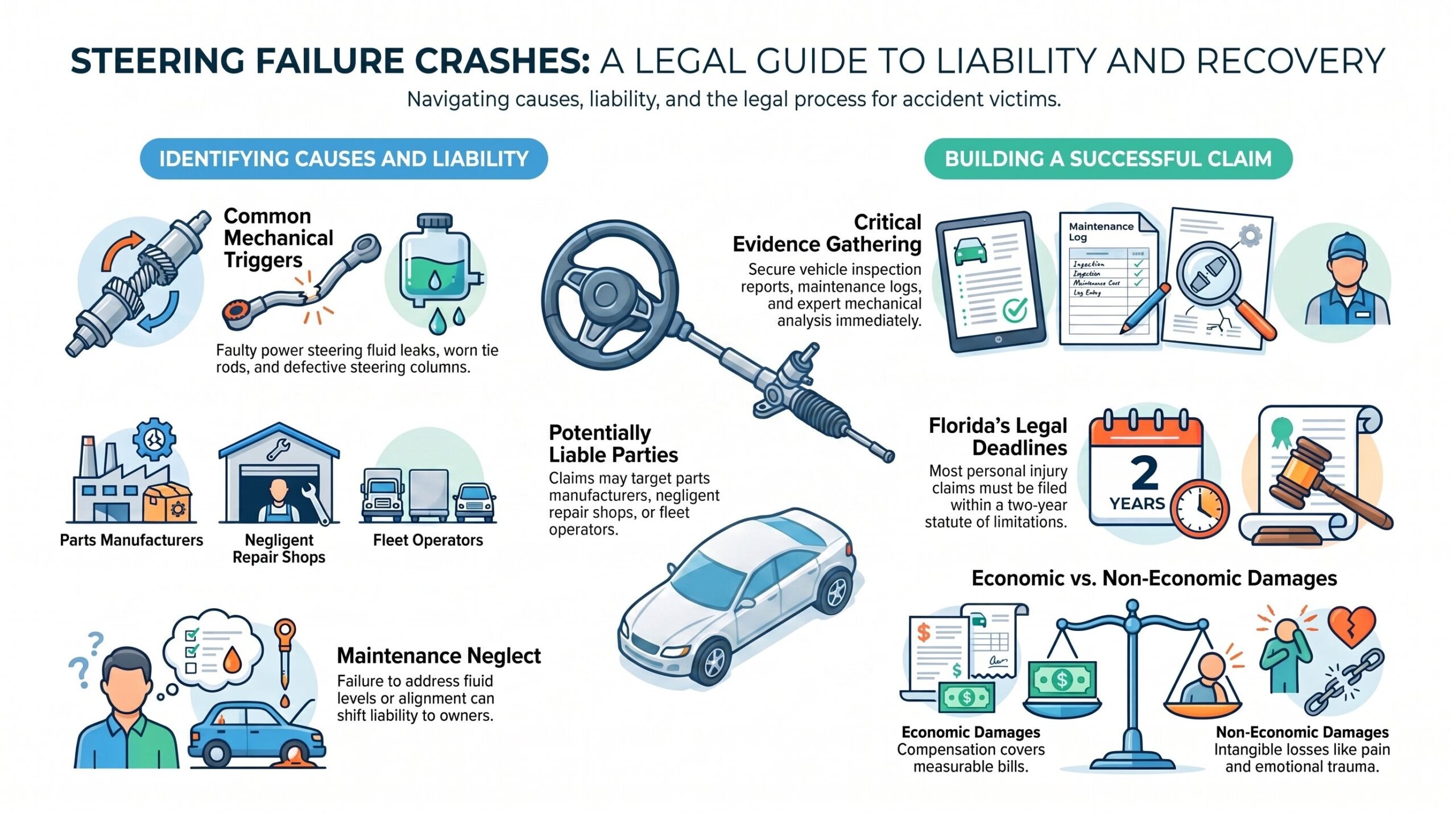
Steering failure crashes in Daytona Beach often arise from mechanical or maintenance-related problems that impair a driver’s ability to control the vehicle. Common causes include power steering fluid leaks, worn steering components, defective steering columns, and poor vehicle maintenance. Identifying the precise cause is essential, since liability may lie with a driver, a repair facility, a parts manufacturer, or another responsible party.
Power Steering Fluid Leaks
Although often overlooked during routine vehicle use, a power-assist fluid leak can pose a serious risk of loss of control on Daytona Beach roads. When fluid escapes from hoses, seals, reservoirs, or pumps, steering effort can increase suddenly, especially during turns, lane changes, or parking maneuvers. This hazard may place occupants, pedestrians, and responding helpers in immediate danger.
Investigators may examine Failed Steering Maintenance records, repair invoices, fluid residue, and dashcam Evidence to determine whether the leak developed gradually or resulted from negligent service. Accurate documentation also supports Insurance Denials Appeals when carriers dispute causation or blame the driver. Because police Report Errors can misstate mechanical conditions, careful follow-up may be necessary to protect injured people and promote accountability after a preventable steering failure.
Worn Steering Components
Fluid leaks are not the only mechanical condition that can compromise control, as worn guiding components may also lead to sudden or progressive failure on Daytona Beach roads. Tie rods, ball joints, bushings, and control arms endure constant stress from turning, braking, road debris, and coastal driving conditions. When these parts loosen or deteriorate, a vehicle may wander, pull, vibrate, or respond unpredictably during evasive actions.
Such defects can become especially dangerous when paired with Tire Blowouts or a weakened Brake System, leaving occupants and nearby motorists with little time to react. Careful inspection records, repair histories, and post-crash evaluations may help identify whether neglect or improper maintenance contributed to the loss of control, supporting accountability for those harmed by preventable mechanical failure.
Defective Steering Columns
When the column connecting the steering wheel to the steering gear is defective, a driver may lose the ability to steer the vehicle with the precision needed to avoid a crash. A defective steering column may involve faulty joints, collapsing mechanisms, ignition lock defects, or misaligned internal parts that restrict movement or cause sudden looseness.
In Daytona Beach traffic, even a brief loss of steering response can endanger occupants, pedestrians, cyclists, and nearby motorists. Investigators may review recall records, design specifications, crash data, and component inspections to determine whether a manufacturer, distributor, or repair facility contributed to the failure. For injured individuals and those assisting them, Aftercare navigation can support treatment coordination, while understanding the compensation timeline helps clarify claims, evidence deadlines, and potential recovery options.
Poor Vehicle Maintenance
Because guiding systems depend on regular inspection and timely service, poor vehicle maintenance can turn minor wear into a serious safety hazard on Daytona Beach roads. Neglected tie rods, low power steering fluid, worn belts, or uneven wheel alignment may reduce control without warning, especially during emergency operations or heavy traffic. Routine tire inspections help identify uneven tread wear, improper inflation, and suspension issues that can contribute to pulling, vibration, or loss of response.
Brake system diagnostics also matter, because braking imbalance can place additional stress on steering components and affect vehicle stability. When owners, fleet operators, or service providers overlook maintenance duties, preventable failures may place drivers, passengers, pedestrians, and first responders at risk, creating serious questions about responsibility after a crash.


Legal Rights of Daytona Beach Steering Failure Car Accident Injury Victims
Injured motorists and passengers in Daytona Beach have the right to pursue compensation when a steering failure contributes to a collision, particularly if the failure resulted from negligent maintenance, defective parts, improper repairs, or unsafe vehicle design. These rights may include recovery for medical care, lost income, reduced earning ability, pain, and future support needs.
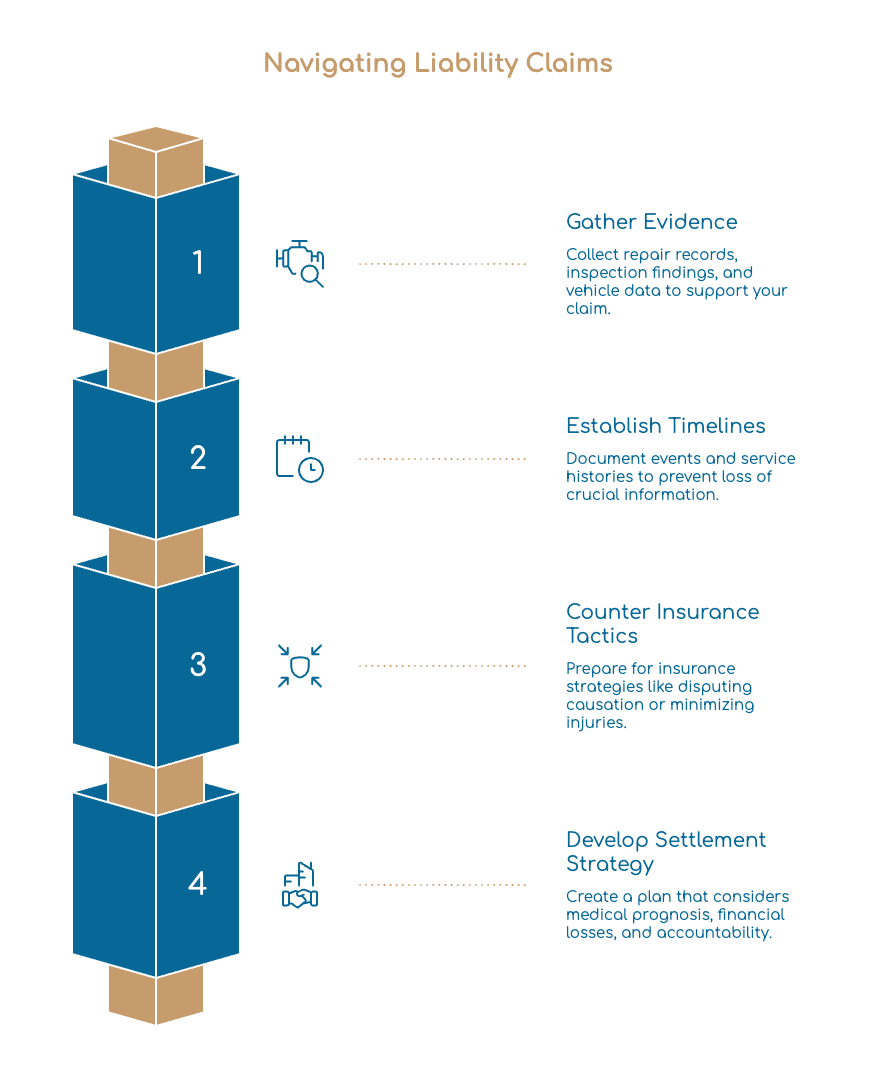
Legal evaluation often focuses on preserving facts and protecting the injured person from unfair blame.
- Liability proof may involve repair records, inspection findings, expert review, and vehicle data.
- Evidence timelines are important because damaged parts, service histories, and witness accounts can disappear quickly.
- Insurance tactics may include disputing causation, minimizing injuries, or pressing for early statements.
- A settlement strategy should reflect medical prognosis, financial losses, and the responsibility of every accountable party.
Through careful advocacy, injury victims may seek resources that help restore stability and allow families, caregivers, and communities to continue serving one another with dignity.
Why Do Daytona Beach Steering Failure Car Accident Injuries Happen?
Understanding an injury victim’s legal rights also requires examining why steering failure accidents occur in the first place. In Daytona Beach, these crashes may result from neglected maintenance, defective steering components, improper repairs, or unsafe vehicle design. When tie rods, power steering systems, steering columns, or suspension parts fail, a driver may lose control with little warning, placing passengers, pedestrians, and nearby motorists at serious risk.
Other vehicle problems can contribute to the danger. Faulty brake mechanisms may prevent a driver from slowing or stopping once steering control is compromised. Road hazards, worn tires, and poor alignment can also make a steering defect more severe. In some cases, distracted driving worsens the outcome because the driver fails to notice warning signs, changes in traffic, or the vehicle’s instability. Understanding these causes helps identify responsible parties and supports accountability for those harmed, while promoting safer roads for the community.
What Should You Do After a Daytona Beach Steering Failure Car Accident Injury?
After a Daytona Beach steering failure car accident injury, an injured person should seek immediate medical care to address urgent conditions and create a clear treatment record. The accident scene should be documented through photographs, witness information, and relevant vehicle details when it is safe to do so. A car lawyer may then evaluate the circumstances, preserve crucial evidence, and identify potential claims against negligent drivers, repair providers, or manufacturers.
Seek Immediate Medical Care
Prompt medical evaluation is critical after a Daytona Beach driving failure car accident, even when injuries appear minor at the scene. A guidance failure crash can cause delayed symptoms, including neck trauma, back strain, concussion, or internal injury. Seeking care promptly mends the injured person’s health and creates Emergency room documentation that may later clarify the cause, timing, and severity of harm.
Medical providers can identify conditions that may not be obvious to bystanders, first responders, or family members. The injured person should clearly and respectfully describe pain, dizziness, numbness, and movement limitations. Follow-up appointments, therapy referrals, and prescribed restrictions should be observed carefully. While collecting witness statements may assist the broader claims process, medical treatment remains the immediate priority after safely leaving the crash site.
Document The Accident Scene
When it is safe to remain near the scene, careful documentation can help preserve important evidence after a Daytona Beach guidance failure car accident. An injured person, or a trusted helper, should photograph vehicle positions, skid marks, damaged drivetrain components, debris, traffic signs, weather conditions, and visible injuries. Images of Tire Blowouts, fluid leaks, and broken roadway materials may help explain how control was lost.
Notes should include the time, location, lane direction, and any Highway Hazards, such as potholes, construction zones, or fallen objects. Witness names and contact details should be recorded respectfully, without pressuring anyone. Police report numbers, tow company information, and nearby camera locations may also be useful. Clear records can support truthful accountability, protect others, and assist later review.
Consult A Car Lawyer
Careful scene documentation may preserve facts, but legal guidance can help determine how those facts should be evaluated and protected. After a Daytona Beach guidance failure injury, an injured person may benefit from consulting a car accident lawyer who can review maintenance records, crash reports, repair histories, and witness accounts. Counsel may determine whether negligence involved a driver, a repair facility, a parts manufacturer, or another responsible party.
Legal support also helps families serve the injured with order, ensuring deadlines, evidence requests, and communications are handled properly. A lawyer may provide Vehicle maintenance tips that clarify what records to preserve and what inspections to avoid before expert review. If a claim is challenged, counsel can develop Insurance denial appeal strategies based on policy language, medical proof, and liability evidence.
Critical Evidence in a Daytona Beach Steering Failure Car Accident Injury Case
Evidence in a Daytona Beach car-handling failure injury case must be promptly preserved and evaluated because mechanical issues can be altered, repaired, or lost after a crash. Core materials may include:
- Vehicle inspection reports
- Maintenance and repair records
- Crash scene evidence
- Expert mechanical analysis
Together, these records and findings can help determine whether a steering defect, poor maintenance, or another failure contributed to the collision.
Vehicle Inspection Reports
Several vehicle inspection reports can be central to a Daytona Beach vehicle failure car accident injury case, especially when they document the condition of the vehicle’s systems before, during, or after the crash. These records may identify damage to steering components, fluid loss, abnormal wear, or signs that a defect existed before impact. Condition reports prepared by law enforcement, insurers, rental agencies, or independent inspectors can help clarify whether steering failure contributed to the collision.
When reviewed with witness statements, inspection findings may support a timeline showing how the vehicle behaved before the driver lost control. This evidence can assist injured parties, families, and advocates seeking accountability while serving the broader interest of roadway safety. Quickly preserving inspection reports helps prevent alteration, loss, or incomplete documentation after the crash.
Maintenance And Repair Records
When a guidance failure is suspected, maintenance and repair records may provide key insight into whether the vehicle had known mechanical problems before the crash. These records can show prior steering complaints, replacement of worn components, unresolved service recommendations, or missed inspections. They may also reveal whether a repair facility, fleet operator, or vehicle owner acted responsibly after learning of a safety concern.
In some cases, entries involving alignment problems, fluid leaks, or recurring noises help distinguish mechanical failure from Driver direction or other conduct. Records may also identify related issues, such as brake failure, that affected vehicle control and injury severity. Careful review allows injured people and their advocates to understand what was known, what was ignored, and who may bear responsibility for preventable harm.
Crash Scene Evidence
At the crash scene, physical conditions may help determine whether a guiding failure occurred before impact or whether the damage resulted from the collision itself. Tire marks, vehicle resting positions, debris patterns, roadway defects, and impact locations can provide important context for those assisting an injured person. Scene photo documentation may preserve details that later disappear, including skid marks, broken components, fluid trails, or displaced roadway materials.
Eyewitness statements can also help clarify whether the vehicle drifted, failed to respond to handling input, or moved unpredictably before the crash. Prompt collection of this information supports a careful investigation and protects the injured party’s ability to seek accountability. In a Daytona Beach steering-failure case, organized scene evidence may serve as a valuable foundation for evaluating fault and resulting harm.
Expert Mechanical Analysis
Scene evidence may identify signs of a guiding-related problem, but expert mechanical analysis is often needed to determine what those signs mean. A qualified examiner can inspect guiding columns, linkages, power steering components, tires, suspension parts, and electronic control systems to identify defects, wear, or improper repairs. This review may include measurements, component testing, and preservation of parts for later use in litigation.
A Safety device overview can also show whether airbags, seatbelts, and stability controls operated as intended. When appropriate, brake system diagnostics may help separate steering failure from stopping-distance or hydraulic issues. These findings assist injured people, insurers, and courts by clarifying whether neglect, defective parts, or poor maintenance contributed to the crash, supporting fair accountability and responsible community protection efforts.
Long-Term Effects of Daytona Beach Steering Failure Car Accident Injuries
Steering failure accidents in Daytona Beach can cause injuries that persist long after the initial crash, often affecting daily function and quality of life. Chronic pain conditions, reduced mobility, and emotional trauma may require ongoing medical care, rehabilitation, and psychological support. These long-term effects are important when evaluating the full extent of an injury claim and the compensation needed for future losses.
Chronic Pain Conditions
When a guidance failure crash causes significant trauma, chronic pain may continue long after the initial injuries appear to recover. Persistent neck, back, shoulder, or nerve pain can affect concentration, sleep, work duties, and family responsibilities. These conditions may require ongoing diagnostic care, therapy, medication, injections, or expert treatment, increasing medical expenses over time.
Careful documentation supports fault determination by connecting the direction failure, collision forces, and lasting symptoms. Evidence preservation remains important, including vehicle components, repair records, medical reports, and witness accounts. For injured individuals and those helping them, consistent follow-up care can show the true burden of pain. Chronic pain also influences settlement timelines, because future treatment needs and symptom progression may not be clear immediately after the crash. Legal evaluation may help protect recovery.
Reduced Mobility
Persistent pain after a Daytona Beach guiding failure collision may also limit movement, especially when injuries affect the spine, hips, knees, shoulders, or major muscle groups. Reduced mobility can interfere with bathing, dressing, driving, household duties, caregiving, and returning to service-oriented work. When poor Wheel Control contributes to a crash, victims may require physical therapy, assistive devices, home modifications, or long-term medical support to maintain independence.
Limited range of motion may also prevent safe lifting, standing, walking, or reaching, creating practical barriers in daily routines. Medical records, therapy notes, functional evaluations, and physician restrictions often become important Compensation Factors. These materials help illustrate how reduced mobility affects earning capacity, personal responsibilities, and the ability to assist others consistently, with dignity and safety over time.
Emotional Trauma
Often, the psychological impact of a Daytona Beach guidance failure collision can remain long after physical injuries begin to improve. Survivors may experience anxiety while riding in vehicles, intrusive memories, sleep disruption, irritability, or avoidance of familiar roads. These reactions can affect work, caregiving, worship, and community service, limiting the person’s ability to support others with steadiness and confidence.
Families may also carry stress as they assist with appointments, transportation, and daily reassurance. Early evaluation by qualified mental health professionals can identify needs and guide post-traumatic symptoms management. Appropriate treatment may include counseling, trauma-focused therapy, medical assessment, and structured coping strategies. Access to emotional support resources, including victim advocates and support groups, can help injured individuals rebuild stability as they pursue recovery and accountability.
Proving Liability in Daytona Beach Steering Failure Car Accident Injury Cases
Several parties may share responsibility for a Daytona Beach steering failure accident, depending on how the defect occurred and whether proper maintenance, repairs, or warnings were ignored. Liability may rest with a vehicle manufacturer, parts supplier, repair shop, dealership, fleet owner, or negligent driver. Investigators often examine service records, recall notices, damaged steering components, event data, photographs, and witness statements to determine when the failure developed and who had the ability to prevent harm.
Clear documentation supports those serving injured victims with accuracy and care. Important evidence-preservation tips include securing the vehicle, avoiding repairs before inspection, retaining invoices, and promptly recording the accident scene. Expert analysis may connect a defective rack, tie rod, column, pump, or electronic steering system to the crash. Comparative fault defenses may arise if a driver ignored warning signs or delayed maintenance. Strong proof helps establish accountability while addressing claims that responsibility should be reduced or shifted.
Dealing With Insurance Companies After a Daytona Beach Steering Failure Car Accident Injury
After a steering failure crash in Daytona Beach, insurance companies may investigate the claim quickly, but their interests are not the same as those of the injured person. Adjusters often seek recorded statements, repair cost estimates, medical records, and explanations about how the steering system failed. These requests may appear routine, yet each response can affect compensation for treatment, lost income, and long-term support.
A careful approach helps protect an injured person’s dignity and financial stability. Denied medical bills may arise when an insurer disputes necessity, causation, or coverage. Policy limits can also restrict available recovery, especially when severe injuries involve surgery, rehabilitation, or ongoing care.
Insurance representatives may compare property damage with reported injuries, even when steering failure causes harm beyond visible vehicle damage. Legal guidance can help ensure communications remain accurate, deadlines are respected, and vulnerable claimants are not pressured into unfair settlements before the full impact of the injury is understood.
What to Expect During a Daytona Beach Steering Failure Car Accident Injury Claim Process
A Daytona Beach steering-failure car accident injury claim typically begins with an initial case evaluation, during which liability, damages, and available insurance coverage are assessed. The process then moves into evidence gathering, including vehicle inspections, maintenance records, crash reports, medical documentation, and witness statements. Depending on the strength of the claim and the insurer’s response, the matter may proceed through insurance negotiations, settlement discussions, or litigation.
Initial Case Evaluation
Typically, the initial case evaluation in a Daytona Beach steering failure car accident claim focuses on identifying how the mechanical failure occurred, who may be legally responsible, and what evidence is needed to support the injury claim. During this review, counsel considers the vehicle’s history, repair records, recall information, and the circumstances surrounding the crash.
The evaluation also addresses Evidence preservation steps, including protecting the vehicle from alteration or disposal, so later analysis remains meaningful. Medical documentation needs are reviewed to link injuries to the collision and clarify treatment, limitations, and future care requirements. This early assessment helps determine whether responsibility may lie with a manufacturer, mechanic, parts supplier, or another party, while providing the injured person with informed guidance for the next stage.
Evidence Gathering Steps
Once the initial case evaluation identifies the likely issues, evidence gathering begins with a focused effort to secure materials that may prove why the guiding failure occurred and how it contributed to the crash. A Daytona Beach legal team may seek police reports, repair records, recall notices, maintenance invoices, and vehicle inspection results. Photography documentation can preserve the roadway, skid marks, damaged components, warning lights, and injury-related conditions before they change.
Witness statement collection may include drivers, passengers, pedestrians, first responders, and nearby workers who observed vehicle behavior or heard unusual sounds before impact. Medical records are also reviewed to connect injuries with the collision sequence. Each step supports a reliable record of claims, helping injured people pursue accountability while protecting the broader community from preventable harm.
Insurance Claim Negotiations
After the evidence record begins to take shape, insurance claim negotiations often focus on liability, causation, and the full value of the injured person’s losses. In a Daytona Beach helping failure claim, an insurer may review repair findings, medical records, Dashboard documentation, and witness statement collection to evaluate whether mechanical failure, maintenance neglect, or another driver’s conduct caused the crash.
Representatives for the injured person may present organized proof of emergency treatment, follow-up care, lost income, vehicle damage, and future needs. They may also respond to arguments that blame the driver or minimize the injuries. Clear communication can guide the claimant’s dignity while encouraging fair review. For service-minded families, this process may also provide structure during a difficult period, helping ensure that care, accountability, and practical recovery remain central.
Settlement Or Litigation
When negotiations do not fully resolve the dispute, a Daytona Beach vehicle guidance failure car accident injury claim may move toward settlement review or formal litigation. At this stage, counsel may evaluate medical records, repair history, witness accounts, and inspection findings to determine whether a proposed resolution fairly serves the injured person’s needs. Allegations of faulty guidance often require expert mechanics to explain how a defect, poor maintenance, or improper repair contributed to the crash.
If litigation becomes necessary, the process may involve pleadings, discovery, depositions, and court-ordered mediation. Each step is used to strengthen liability proof and clarify damages. A well-prepared claim can encourage fair settlement, yet trial preparation remains important when insurers or opposing parties refuse accountability, especially where community safety and responsible conduct are at stake.
Compensation for Daytona Beach Steering Failure Car Accident Injury Damages
Because a driving failure crash can leave victims with severe injuries, lost income, and lasting physical limitations, compensation in a Daytona Beach car accident claim should reflect the full scope of the harm caused. When driving failure contributes to a collision, injured individuals may need compensation that addresses immediate needs and future burdens connected to recovery, stability, and care.
A lawyer can evaluate available evidence, identify responsible parties, and present documented losses during insurance negotiations. This may include repair records, crash reports, witness statements, medical opinions, and proof of medical treatment costs. Careful documentation helps show how the guiding defect or maintenance failure affected the victim’s health, work capacity, and daily responsibilities.
Compensation also supports families who serve as caregivers, arrange transportation, or manage household obligations after the crash. A well-prepared claim can help protect the injured person’s dignity, promote accountability, and provide the resources needed for a safer, more secure recovery.
Economic vs Non-Economic Damages in Daytona Beach Steering Failure Car Accident Cases
Damages in Daytona Beach guidance failure car accident cases are generally divided into economic and non-economic categories. Economic damages may include medical bills, lost income, vehicle repairs, and other measurable financial losses, while non-economic damages address pain, suffering, and reduced quality of life. Establishing the value of each category requires clear documentation, credible evidence, and a careful assessment of how the failure of the guidance affected the injured party.
Economic Damage Categories
Economic losses in Daytona Beach guiding failure car accident cases typically include the measurable financial harm tied to the crash, the injury, and the resulting interruption to daily life. These categories may include emergency treatment, hospital care, rehabilitation, medication, medical equipment, and future health expenses, all supported by records and professional assessments. Income-related losses may include missed work, reduced earning capacity, and benefits affected by recovery time, often requiring lost-wage documentation from employers, payroll records, or tax materials.
Vehicle repair or replacement costs also matter, along with towing, storage, rental transportation, and other out-of-pocket expenses. Strong property-damage evidence, including estimates, photographs, invoices, and valuation reports, helps clarify the financial impact. Accurate documentation allows responsible parties and insurers to evaluate the claim fairly and hold injured residents accountable.
Non-Economic Losses
Non-economic losses in Daytona Beach guiding failure car accident cases address the personal harm that cannot be measured through receipts, invoices, or wage records. These losses may include pain, emotional distress, loss of enjoyment of life, disfigurement, inconvenience, and strain placed on family relationships. When steering failure causes a sudden crash, the injured person may face fear, reduced independence, and lasting changes in daily routines.
For those committed to serving others, recognizing these losses affirms the dignity of the injured person beyond financial accounting. While medical costs recovery focuses on documented treatment expenses, non-economic damages reflect the human consequences of unsafe vehicles or negligent maintenance. Attorneys may consider these harms in settlement negotiations, ensuring discussions account for the suffering, disruption, and broader personal impact of the collision.
Proving Damage Value
After identifying the personal harm caused by a guidance-failure crash, the next issue is how to value and prove that harm. Economic damages require organized proof, including repair bills, wage records, Medical treatment documentation, and receipts for rehabilitation expenses. These records help show the financial burden placed on an injured person and support a fair calculation of past and future losses.
Non-economic damages require a different form of proof. Pain, emotional distress, loss of mobility, and reduced enjoyment of life may be shown through medical opinions, daily limitation records, and testimony from those who provide care or support. In Daytona Beach steering-failure cases, clear evidence helps link each loss to the crash, allowing insurers, courts, or juries to evaluate the claim fairly and diligently.
When a Daytona Beach Steering Failure Car Accident Injury Case Goes to Trial vs Settlement
A Daytona Beach steering failure car accident injury case may resolve through settlement when liability, causation, and damages can be established through reliable evidence, but it may proceed to trial when the parties dispute who caused the crash, the extent of the injuries, or the role of a defective steering component. Careful review of repair records, crash data, medical documentation, and witness testimony helps determine the proper path.
Settlement discussions often involve Insurance adjuster tactics, including low initial offers, delayed responses, or challenges to medical necessity. Settlement timeframes may depend on treatment progress, expert analysis, and the insurer’s willingness to fairly assess harm.
A trial may become necessary when negotiations do not adequately address the injured person’s losses. Jury verdict factors can include credibility, injury severity, vehicle condition, and the clarity of expert opinions. A trial risk assessment helps counsel weigh uncertainty, expense, delay, and the opportunity to present the case publicly and carefully.
Florida Laws That May Affect Your Daytona Beach Steering Failure Car Accident Case
Whether a guidance failure case settles or proceeds to trial, Florida law shapes the value, strategy, and available claims in a Daytona Beach car accident case. Counsel may evaluate several rules before presenting evidence, negotiating with insurers, or identifying every responsible party.
Florida law can influence fault, evidence, negotiations, and available recovery in a Daytona Beach guidance failure crash.
- Under Florida’s Comparative Negligence system, an injured person’s recovery may be reduced by any assigned share of fault, including allegations of poor maintenance or unsafe driving.
- A relevant Florida Statute may affect claims against drivers, vehicle owners, repair facilities, manufacturers, or commercial operators involved in the failure.
- No-fault insurance rules may require injured occupants to first seek benefits through personal injury protection coverage, depending on the injuries and policy terms.
- Product liability principles may support claims when defective steering components, inadequate warnings, or negligent repairs contributed to the crash.
These laws help determine accountability, protect community safety, and support fair compensation for those harmed by preventable vehicle failures in Daytona Beach.
The Statute of Limitations for Daytona Beach Steering Failure Car Accident Injury Cases
Because filing deadlines can affect the right to seek compensation, the statute of limitations is a crucial issue in Daytona Beach, particularly in failure-to-warn car accident injury cases. In Florida, most personal injury claims arising from vehicle crashes must be filed within two years of the accident date. If a lawsuit is not filed on time, the injured person may lose the ability to recover damages, even when the steering defect or negligent maintenance appears clear.
Certain facts may affect how the deadline is evaluated, including delayed discovery of a mechanical defect, claims involving government vehicles, or a fatal injury. Timely action also helps preserve repair records, inspection reports, vehicle data, and witness accounts. These materials may support fair accountability and responsible service to the injured. The impact of comparative fault should be considered early, especially when driver conduct and vehicle failure are disputed. A timely insurance dispute strategy may also protect available recovery before deadlines expire.
How a Daytona Beach Steering Failure Car Accident Lawyer Can Help You
After the filing deadline is identified, the focus often shifts to proving how the steering failure occurred and who may be legally responsible. A Daytona Beach car accident lawyer can organize the evidence, evaluate liability, and protect the injured person’s ability to pursue fair compensation.
- Examining vehicle maintenance records, repair histories, recall notices, and component defects to identify whether negligence caused the steering failure.
- Consulting accident reconstruction professionals, mechanics, and safety specialists to explain how the loss of control contributed to the crash.
- Reviewing insurance coverage, employer involvement, and third-party responsibility, including claims arising from a Workplace Collision.
- Documenting medical treatment, reduced earning capacity, and Lost Wages Claims so the financial harm is presented clearly.
This legal guidance allows injured individuals and families to focus on recovery, caregiving, and community obligations while the claim is developed with diligence, accuracy, and respect for the seriousness of the harm suffered.
When to Contact a Daytona Beach Steering Failure Car Accident Lawyer
Prompt legal guidance should be sought as soon as a steering failure is suspected, especially when the crash involves serious injuries, disputed fault, commercial vehicles, or an unclear maintenance history. Early action helps preserve evidence that may otherwise be repaired, discarded, or overwritten, including vehicle components, inspection records, towing reports, and electronic data.
A person involved in a Florida car accident should seek medical attention immediately and maintain complete medical documentation, even when symptoms appear delayed. These records may clarify the connection between the collision and resulting injuries, while also supporting accurate evaluation of losses.
Contact is also advisable when an insurer requests recorded statements, assigns partial blame, or questions whether steering failure caused the crash. Families assisting an injured loved one may help by organizing repair invoices, photographs, witness information, and treatment records. Timely consultation allows important deadlines to be monitored and prevents avoidable gaps in the factual record.
Why You Need an Experienced Daytona Beach Steering Failure Car Accident Lawyer
When a crash may have resulted from handling failure, an experienced Daytona Beach car accident lawyer can help determine whether the cause involves defective parts, negligent maintenance, improper repairs, or another driver’s conduct. Guidance failure cases often require careful review of vehicle condition, service history, roadway evidence, and the sequence of events leading to impact.
A lawyer can coordinate preservation of vital evidence before it is lost or altered. This may include securing inspection records, photographs, electronic data, and post-accident repair documentation. Witness statement collection may also clarify whether the vehicle drifted, locked, pulled sharply, or became uncontrollable before the collision.
For injured people, families, and caregivers seeking to protect others from similar harm, legal guidance supports accountability. An experienced lawyer can identify responsible parties, communicate with insurers, and develop a claim grounded in facts, expert analysis, and applicable law. This assistance can strengthen recovery efforts while promoting public safety.
How to Choose the Right Daytona Beach Steering Failure Car Accident Lawyer for Your Case
Selecting the right Daytona Beach steering failure car accident lawyer begins with evaluating whether the attorney has direct experience with vehicle defect, negligent maintenance, and complex crash investigation claims. The lawyer should understand how failed steering components affect liability, damages, and the preservation of crucial evidence. A careful review of prior case results, client communication practices, and familiarity with expert witnesses can help injured individuals make a measured decision.
A qualified attorney should clearly explain the Vehicle Inspection Steps, including securing the vehicle, documenting damage, reviewing repair history, and consulting technical specialists when needed. The firm should also provide consistent Insurance Claim Updates, so clients understand deadlines, insurer positions, and requested documentation.
Compassionate representation matters, because many clients are focused on recovery, family stability, and returning to meaningful service in their communities. The right lawyer combines technical knowledge, disciplined case management, and respectful guidance throughout the legal process after a steering failure crash.
About The Law Offices of Anidjar & Levine
With a focus on client service and careful case preparation, The Law Offices of Anidjar & Levine represents injured people in Daytona Beach and throughout Florida after serious car accidents, including crashes involving control failure.
The firm helps clients address medical care, insurance communication, vehicle evidence, and financial losses while they focus on recovery and family responsibilities.
Its attorneys evaluate steering failure claims by reviewing maintenance records, repair histories, crash reports, witness accounts, and expert findings.
They also consider Comparative Negligence issues that may affect liability when another driver, repair shop, parts manufacturer, or vehicle owner shares responsibility.
A clear Documentation Checklist can help clients preserve photographs, medical bills, towing invoices, recall notices, and correspondence with insurers.
The firm’s approach reflects a service-minded commitment to injured individuals who need guidance, accountability, and steady advocacy.
Through organized investigation and responsive representation, it seeks compensation that reflects each client’s injuries, lost income, and long-term needs after a preventable crash.
Frequently Asked Questions
Can a Recall Notice Affect My Steering Failure Accident Claim?
Yes, a recall notice can affect a steering failure accident claim. It may support evidence of faulty design, manufacturer notice, or ignored repair obligations. Investigators may review whether the owner received the notice, acted reasonably, and met insurance duties after the crash. The legal timeline also matters, because delays can affect claims. A careful review helps determine responsibility, preserve proof, and support fair service to injured parties.
Should I Preserve My Damaged Vehicle After a Crash Caused by a Steering Failure?
Yes, the damaged vehicle should be preserved after a direction failure crash, because it may contain key evidence of mechanical defects, maintenance issues, or product failures. The owner should avoid repairs, disposal, or alterations until inspection occurs. Take photos immediately to preserve evidence. Document repair estimates for insurance review. Careful preservation supports investigators, insurers, and legal advocates in serving injured persons through accurate, fair, and responsible claim evaluation.
Can Aftermarket Parts Contribute to Steering Failure Accidents?
Yes, aftermarket parts can contribute to steering failure accidents when compatibility issues, installation errors, or low-quality components affect steering control. Investigators often review maintenance records, receipts, Aftermarket warranties, and failure documentation to determine whether a part, installer, or supplier played a role. Those assisting injured individuals should preserve the vehicle and related parts, because careful inspection may reveal defects or improper service that caused or worsened the crash.
What if Steering Failed in a Rental Car?
If steering failed in a rental car, the driver should prioritize emergency response, seek medical care, and preserve evidence. A completed Safety checklist, photographs, maintenance records, and witness information may show whether the rental company, manufacturer, or repair provider failed others through negligence. The rental contract and liability documents should be reviewed carefully because they may affect claims, insurance obligations, and liability for damages after the crash.
Can Poor Road Conditions Worsen a Steering Failure Crash?
Yes. Poor road conditions can worsen a driving failure crash by reducing control, increasing stopping distance, and complicating crash causation. A damaged Road surface, loose gravel, potholes, or standing water may alter driver perception during an emergency, making it harder to respond safely. These factors can create liability challenges, especially when vehicle defects, maintenance failures, roadway neglect, and driver actions all require careful evaluation by those committed to protecting injured people.
—————————
A steering failure crash can leave victims facing serious injuries, financial strain, and complicated liability questions.
A Daytona Beach Car Accident Lawyer can evaluate the evidence, identify responsible parties, and pursue fair compensation through negotiation or litigation.
Anidjar & Levine provides focused legal guidance for injured clients and their families.
Prompt action can help protect vital evidence, preserve legal rights, and support a stronger injury claim