The Law Offices of Anidjar and Levine help injured victims connect spinal damage to a crash through medical records, imaging, physician opinions, and evidence from the scene.
A Daytona Beach Car Accident Lawyer may assist with identifying liable parties, addressing insurer arguments about degeneration or delayed treatment, and valuing losses such as medical bills, lost income, reduced earning capacity, and pain and suffering.
The sections below explain how these claims are built, evaluated, and pursued under Florida law.
Main Takeaways
- A Daytona Beach herniated disc car accident lawyer can help prove crash-related spinal injury and identify liable parties.
- Strong claims rely on medical records, MRI or CT imaging, crash reports, witness statements, and expert physician opinions.
- Lawyers address insurer arguments about preexisting degeneration, delayed symptoms, or unrelated causes of back and neck pain.
- Compensation may include medical bills, lost wages, reduced earning capacity, pain and suffering, and future treatment needs.
- Prompt medical care and evidence preservation can strengthen a herniated disc claim after a Daytona Beach crash.


How We Can Help With Your Daytona Beach Herniated Disc Car Accident Injury Claim
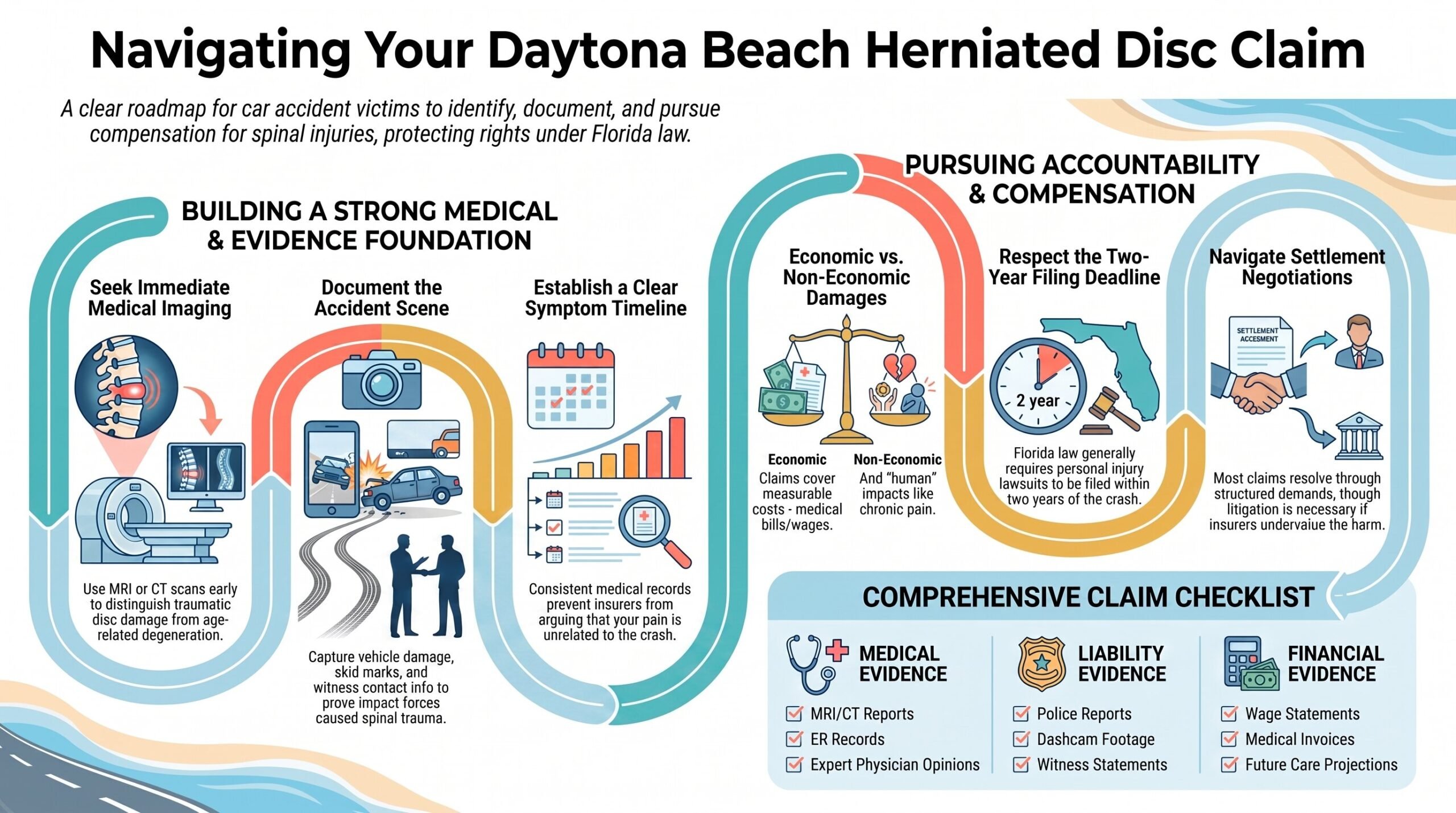
A herniated disc after a Daytona Beach car accident can lead to lasting pain, reduced mobility, and substantial medical expenses. A dedicated legal team can help by evaluating available evidence, identifying liable parties, and organizing medical documentation that supports the injury claim. This assistance allows injured individuals and their families to focus on care, recovery, and service to those who depend on them.
Counsel may coordinate with treating providers, review crash reports, calculate financial losses, and pursue compensation for medical bills, lost income, and related damages. Effective Settlement negotiation strategies may involve presenting clear proof of injury severity, treatment needs, and the accident’s effect on daily responsibilities.
Regular client communication updates help ensure informed decisions at each stage, reducing uncertainty and promoting trust. Through disciplined case preparation and professional advocacy, a lawyer can protect the claimant’s interests while pursuing a fair resolution from insurers or responsible parties in Daytona Beach.
OUR CONSULTATIONSARE FREE
START YOUR FREE CASE REVIEW

Understanding Daytona Beach Herniated Disc Car Accident Injury Cases
Effective legal help begins with a clear understanding of how herniated disc injuries arise, how they are diagnosed, and why they often become disputed in Daytona Beach car accident claims. A herniated disc may involve pain, numbness, weakness, or limited mobility, yet symptoms can appear gradually and may overlap with prior spinal conditions. For that reason, careful medical review is vital.
These cases often turn on Causation proof, including treatment records, imaging studies, physician opinions, and a documented timeline linking the crash to the injury. Insurers may argue degeneration, delayed care, or unrelated activity caused the condition. A thorough legal assessment helps identify and answer those challenges with organized evidence.
When a work vehicle or on-duty driver is involved, Employer negligence may also require evaluation. Responsible handling of these claims supports injured individuals, protects families from avoidable financial strain, and promotes accountability for conduct that places others at risk on the roads of Daytona Beach.
Common Causes of Daytona Beach Herniated Disc Car Accident
Herniated disc injuries in Daytona Beach car accidents often result from forces that place sudden pressure on the spine. Rear-end collisions, high-speed impacts, distracted driving crashes, and intersection accidents are among the most common scenarios linked to these injuries. Each cause may affect liability, medical evidence, and the legal strategy for evaluating a potential injury claim.
Rear-End Collisions
Because rear-end collisions often force the body forward and backward in a sudden, uncontrolled motion, they are a common cause of herniated disc injuries in Daytona Beach car accidents. This abrupt movement may strain the neck and back, placing pressure on spinal discs that support daily function and service to others. Even low-speed impacts can produce pain, numbness, weakness, or limited mobility that interferes with caregiving, work, and community responsibilities.
Rear-end liability disputes may arise when drivers question following distance, braking, or preexisting conditions, making careful evidence review important. Whiplash symptom documentation, including medical visits, imaging, pain journals, and therapy notes, can help connect the collision to spinal harm. Prompt evaluation supports accurate diagnosis, appropriate treatment, and a clearer path toward accountable recovery.
High-Speed Impacts
In high-speed impacts, the force transferred through the vehicle and into the body can place severe stress on the spine, making these crashes a significant cause of herniated disc injuries in Daytona Beach car accidents. When vehicles collide at elevated speeds, sudden compression, twisting, and violent forward movement may damage spinal discs, especially in the neck and lower back.
These collisions may occur on highways, at major intersections, or on coastal roads, where unsafe speeds reduce reaction time. Road Rage can further increase danger when aggressive driving leads to forceful crashes. Severe Pedestrian Impacts may also involve rapid deceleration and blunt force, creating similar spinal trauma. For those committed to helping injured community members, understanding these crash dynamics supports careful evaluation, responsible guidance, and timely access to appropriate medical and legal assistance.
Distracted Driving Crashes
Distraction behind the wheel is a frequent factor in Daytona Beach car accidents that lead to herniated disc injuries, especially when a driver fails to react before impact. Cellphone distraction can divert visual, manual, and mental attention from the roadway, leaving little time to brake, reduce speed, or avoid a developing hazard. These crashes may involve rear-end impacts, sudden traffic lane changes, or drifting into another vehicle’s path.
When the spine is forced forward, twisted, or compressed during a collision, the discs between vertebrae may rupture or bulge, causing significant pain and reduced mobility. Those who serve injured individuals often recognize how preventable these crashes can be. Careful documentation of evidence of distraction may help connect the negligent conduct to the resulting disc injury.
Intersection Accidents
When traffic signals, turning movements, and competing right-of-way decisions converge, intersection accidents can create violent forces that contribute to herniated disc injuries in Daytona Beach car crashes. Side-impact collisions, rear-end crashes at red lights, and left-turn impacts may compress or twist the spine, placing severe strain on vulnerable discs. These events often involve driver inattention, speeding, impaired judgment, or failure to yield. Pedestrian accidents near crosswalks may also trigger abrupt evasive actions, causing secondary collisions and spinal trauma.
Roadway hazards, including poor signal visibility, confusing lane markings, or obstructed sightlines, can increase the risk of serious harm. For those committed to serving injured individuals, careful review of police reports, camera footage, medical records, and witness accounts helps identify responsibility and support meaningful recovery efforts after an intersection crash.


Legal Rights of Daytona Beach Herniated Disc Car Accident Injury Victims
After a car accident in Daytona Beach, a person diagnosed with a herniated disc may have the right to seek compensation for medical expenses, lost income, reduced earning capacity, pain and suffering, and other losses caused by the crash. Under Florida negligence basics, the injured person must generally show that another party breached a duty of care and caused harm. Legal rights may also involve insurance claims, evidence preservation, medical documentation, and deadlines that affect recovery.
If an insurer unreasonably delays, denies, or undervalues a valid claim, insurance bad faith concerns may arise.
- A parent may struggle to lift a child without pain.
- A caregiver may lose the strength needed to serve others.
- A worker may face fear when income suddenly stops.
- A family may carry stress while treatment continues.
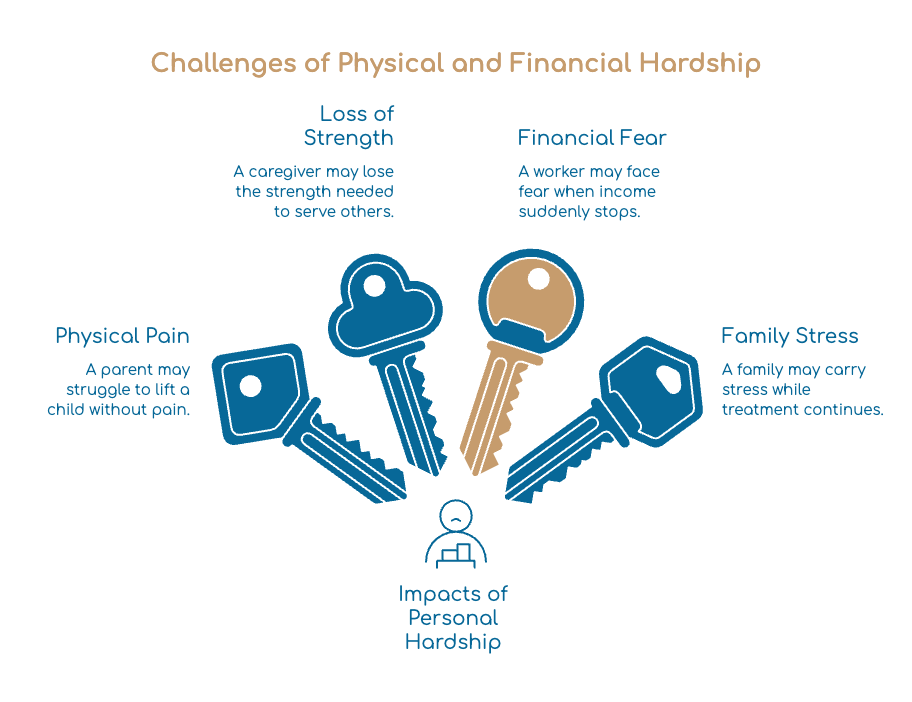
These rights help protect injured people seeking stability, dignity, and fair support after a life-disrupting spinal injury.
Why Do Herniated Disc Car Accident Injuries Happen at Daytona Beach?
Why do herniated disc injuries occur so often in Daytona Beach car accidents? The spine is vulnerable when a collision forces the body to twist, compress, or jolt beyond normal limits. Rear-end impacts, side-impact crashes, and sudden stops can place intense pressure on the discs between vertebrae, causing the soft inner material to protrude and irritate nearby nerves. Even moderate crashes may aggravate age-related disc weakness, making symptoms appear quickly or worsen over time.
These injuries often affect people who serve families, patients, customers, or communities because pain, numbness, and reduced mobility can limit their ability to function reliably on a daily basis. Workplace consequences may include missed shifts, restricted duties, lower productivity, or difficulty lifting, standing, driving, or sitting for long periods.
The recovery timeline depends on injury severity, medical history, job demands, and treatment response. Some individuals improve with conservative care, while others face prolonged impairment requiring more structured medical intervention.
What Should You Do After a Daytona Beach Herniated Disc Car Accident Injury?
After a Daytona Beach car accident involving a suspected herniated disc, the injured person should seek prompt medical treatment to identify the injury and begin proper care. Relevant evidence, including photographs, witness information, medical records, and accident reports, should also be preserved. Because these claims can involve disputed fault and intricate medical issues, contacting a lawyer may help protect the injured person’s rights.
Seek Medical Treatment
When a herniated disc is suspected after a Daytona Beach car accident, prompt medical treatment is necessary to protect the injured person’s health and document the cause and severity of the injury. Evaluation by emergency providers, primary physicians, or orthopedic experts can identify nerve compression, pain patterns, weakness, or mobility limits.
Consistent care also helps make certain that symptoms are not dismissed as minor strain, especially when discomfort worsens over time. Treatment may involve medication, physical therapy, injections, or referral to a spine doctor. Second opinions may be appropriate when symptoms persist, treatment is ineffective, or surgery is recommended. Imaging follow-ups, including MRI or CT studies, can clarify changes in the disc and guide responsible care. Timely attention supports recovery and helps caregivers coordinate appropriate medical decisions.
Document Accident Evidence
Medical care establishes the nature of a herniated disc injury, but accident evidence helps show how the injury occurred and who may be liable. The injured person, or a trusted helper, should photograph vehicle damage, skid marks, road conditions, traffic signs, debris, and visible injuries before conditions change. Names, phone numbers, and brief observations from bystanders can support the preservation of witness statements, especially when memories may fade.
Nearby businesses, residences, traffic cameras, and parking lots may contain relevant video, making prompt collection of CCTV footage important before recordings are erased. Copies of the crash report, insurance exchanges, towing records, and repair estimates should be kept in an organized file. Careful documentation protects the accuracy of the event and helps ensure that responsible parties can be evaluated fairly.
Contact A Lawyer
Because herniated disc claims often involve disputed causation, delayed symptoms, and complex insurance issues, contacting a Daytona Beach car accident lawyer promptly can help protect the injured person’s legal position. Counsel can review medical records, crash reports, and insurer communications to identify deadlines and potential sources of recovery.
A lawyer may also preserve evidence, including vehicle damage, witness statements, imaging results, and surveillance footage, before it is lost or altered. This careful work supports a fair evaluation of pain, treatment needs, lost income, and future limitations. Legal guidance can also reduce the burden on family members or caregivers who are trying to serve the injured person well. When appropriate, counsel can negotiate a settlement with insurers while preparing the claim for litigation if accountability remains contested.
Critical Evidence in a Daytona Beach Herniated Disc Car Accident Injury Case
Critical evidence can determine whether a Daytona Beach herniated disc injury claim is taken seriously by insurers, defense attorneys, and medical reviewers. The strongest cases often connect the crash to the spinal injury through clear records, objective findings, and qualified professional analysis.
- Medical imaging results showing the painful reality of spinal damage
- Emergency treatment records capturing the first signs of trauma
- Accident scene evidence preserving the force and circumstances of the crash
- Expert medical opinions explaining how the injury may affect a person’s future
Medical Imaging Results
In many Daytona Beach herniated disc car accident cases, imaging results provide the objective foundation for proving the nature, location, and severity of a spinal injury. MRI scans, CT scans, and X-rays may help distinguish traumatic disc damage from age-related changes, allowing evaluators to connect the injury to the collision with greater confidence. Careful MRI report interpretation can identify nerve compression, disc protrusion, extrusion, or annular tears that explain ongoing pain and functional limits.
When reviewed alongside imaging timeline follow-ups, these records may show whether the condition worsened, stabilized, or required additional medical attention. For attorneys, insurers, and care providers, accurate imaging evidence supports fair assessment of loss, guides responsible advocacy, and helps ensure the injured person’s needs are understood with dignity and precision.
Emergency Treatment Records
After imaging identifies the spinal injury, emergency treatment records often show how the medical picture first developed immediately after the collision. These records may include ambulance notes, triage observations, pain complaints, neurological findings, medications, referrals, and discharge instructions. In a herniated disc claim, they help establish the timing and severity, and whether symptoms were reported before treatment began.
Attorneys may compare emergency department findings with chiropractic documentation, expert evaluations, and therapy notes to assess consistency across the care timeline. Accurate records can restore the injured person’s account, while gaps or conflicting descriptions may require careful explanation. Record privacy concerns also matter, because sensitive health information must be requested, reviewed, and shared lawfully. Proper handling preserves dignity, protects confidentiality, and helps present the medical evidence responsibly for fair case evaluation.
Accident Scene Evidence
When a herniated disc is linked to a Daytona Beach car accident, evidence from the collision scene can help explain how the force of impact affected the spine. Photographs of vehicle damage, skid marks, debris fields, traffic signals, and roadway conditions may clarify the direction, speed, and severity of the crash. Witness statements can describe the moments before impact, including unsafe lane changes, sudden stops, or distracted driving.
Dashcam footage may provide an objective view of the collision sequence, supporting a clear timeline and reducing disputes over fault. Police reports, 911 records, and scene diagrams can further connect the crash mechanics to the claimed injury. Careful preservation of this evidence helps those assisting an injured person present a truthful, organized account of what occurred.
Expert Medical Opinions
Scene evidence may explain how a Daytona Beach collision occurred, but expert medical opinions are often needed to connect that crash to a diagnosed herniated disc. Physicians, radiologists, and spine consultants can explain whether symptoms, examination findings, and imaging are consistent with traumatic disc injury. Their analysis may address timing, prior degeneration, nerve involvement, and the expected need for treatment.
A careful MRI interpretation can clarify the location and severity of the disc herniation, helping others understand the injury’s effect on daily function and service to family, work, and community. A Second opinion may also strengthen or refine the medical record when causation is disputed. In a legal claim, these opinions help establish credibility, guide fair valuation, and support decisions grounded in reliable medical evidence.
Long-Term Effects of Daytona Beach Herniated Disc Car Accident Injuries
A herniated disc from a Daytona Beach car accident may cause long-term consequences, including chronic pain, stiffness, and recurring nerve-related symptoms. These injuries can limit mobility and daily activities, affecting work, household tasks, driving, and other routine functions. Future medical treatment, such as physical therapy, injections, pain management, or surgery, may become a significant part of the injury claim.
Chronic Pain And Stiffness
Chronic pain and stiffness after a Daytona Beach car accident can indicate that a herniated disc is continuing to irritate nearby nerves, restrict spinal movement, or place added stress on surrounding muscles and joints. These symptoms may persist for months, affecting sleep, concentration, and the ability to provide dependable support to family, coworkers, or community members. Medical documentation is often important because ongoing discomfort may indicate that the injury has not fully stabilized.
Treatment may involve medication, therapy, injections, or Alternative treatment plans when standard care does not provide sufficient relief. Workplace adjustment strategies may also be considered when prolonged sitting, lifting, or repetitive tasks worsen symptoms. A legal evaluation can help connect persistent pain to the collision and clarify damages related to future care.
Mobility And Activity Limits
When a herniated disc limits spinal movement after a Daytona Beach car accident, everyday activities may become difficult, painful, or unsafe. Bending, lifting, sitting, standing, or walking for extended periods can place added stress on the spine, reducing independence and reliability. These restrictions may disrupt daily routines, affecting household duties, caregiving responsibilities, errands, and participation in community or faith-based service.
Mobility limits can also produce Work capacity limitations, especially for individuals whose jobs require physical effort, prolonged posture, driving, or repetitive motion. Even modified tasks may require careful pacing to avoid worsening symptoms. For those committed to serving family, coworkers, clients, or neighbors, reduced activity tolerance can be particularly burdensome. Documenting these limitations helps show how the injury affects function, responsibility, and long-term quality of life.
Future Medical Treatment
Although some herniated disc symptoms improve with conservative care, future medical treatment may remain necessary after a Daytona Beach car accident when pain, nerve irritation, or mobility restrictions persist. Ongoing care may include expert evaluations, diagnostic imaging, medication management, and supervised physical therapy. Non-surgical options, such as epidural steroid injections, chiropractic care, or structured rehabilitation, may help preserve function and reduce reliance on invasive procedures.
When symptoms interfere with service-oriented duties, physicians may recommend work accommodations, including lifting limits, modified schedules, or reduced standing periods. In more severe cases, surgical consultation may be needed to address worsening nerve compression. Future treatment planning helps clarify long-term medical needs, expected costs, and the support an injured person requires to continue meaningful daily and professional responsibilities.
Proving Liability in Daytona Beach Herniated Disc Car Accident Injury Cases
In a Daytona Beach herniated disc car accident case, proving liability requires clear evidence that another party’s negligence caused the collision and contributed to the spinal injury. This process may involve police reports, witness statements, crash-scene photographs, medical evaluations, and expert analysis linking the impact to the disc damage. When a driver violates traffic laws, drives distracted, follows too closely, or fails to yield, those facts may support a negligence claim.
Attorneys also examine vehicle maintenance records when defective brakes, worn tires, or ignored safety issues may have contributed to the crash. A Comparative fault defense may arise if the injured person is accused of sharing responsibility, making accurate evidence especially important.
Careful liability analysis helps ensure that those harmed receive fair consideration, while also promoting accountability and safer conduct within the community. Each documented fact can strengthen the claim and clarify how the crash occurred for the court or opposing parties.
Dealing With Insurance Companies After a Daytona Beach Herniated Disc Car Accident Injury
After a Daytona Beach car accident causes a herniated disc, insurance companies often start assessing the claim before the full extent of the injury is known. Adjusters may request records, question treatment choices, or suggest that pain existed prior to the crash. Careful communication helps protect the injured person while enabling the responsible sharing of accurate information.
A recorded statement strategy is important because casual answers may later be used to limit compensation. Counsel can help ensure statements are accurate, focused, and not based on uncertainty or speculation. Medical documentation, consistent reporting, and attention to work limitations may also support a clearer presentation of harm.
If an insurer disputes causation, delays payment, or undervalues care, a claim denial response should address the stated reasons with evidence rather than emotion. This approach serves injured clients by preserving dignity, reducing confusion, and keeping attention on fair accountability for accident-related spinal injuries.
What to Expect During a Daytona Beach Herniated Disc Car Accident Injury Claim Process
A Daytona Beach herniated disc car accident injury claim typically begins with an initial medical evaluation, which helps confirm the nature, severity, and cause of the spinal injury. The process then moves to filing an insurance claim, supported by evidence and documentation such as medical records, crash reports, imaging results, and proof of damage. Depending on liability disputes, injury severity, and insurer response, the claim may resolve through settlement negotiations or proceed into litigation.
Initial Medical Evaluation
When a herniated disc is suspected after a Daytona Beach car accident, the initial medical evaluation becomes a crucial step in both treatment and claim documentation. A physician may review symptoms, accident details, prior spinal history, and functional limits, then perform neurological and range-of-motion testing. Imaging, such as MRI or CT scans, may be ordered when clinical findings suggest disc involvement or nerve compression.
Clear records help show how the injury affects daily responsibilities, caregiving duties, and community service roles. The provider may also address pain control, physical therapy referrals, and follow-up care. Work restrictions should be documented with specific limits on lifting, standing, bending, or driving. Return-to-work planning may begin early, especially when modified duties can support recovery while preserving stability for the injured person and dependents.
Insurance Claim Filing
Filing an insurance claim for a herniated disc after a Daytona Beach car accident typically begins with prompt notice to the appropriate insurers, including the injured person’s own PIP carrier and, when fault is disputed or damages exceed available benefits, the at-fault driver’s liability carrier. The claim process often involves confirming active coverage, identifying Coverage limits, and reviewing policy exclusions that may affect available compensation. Adjusters may request statements, authorization forms, and basic claim information before evaluating payment responsibilities.
A careful response helps protect the injured person while supporting fair treatment under Florida insurance rules. When lawyers assist, they often coordinate communications, monitor deadlines, and prevent premature settlement discussions. This orderly approach helps injured individuals, families, and caregivers focus on recovery while the claim moves forward.
Evidence And Documentation
After the initial insurance claim is opened, the focus often shifts to evidence and documentation supporting the cause, severity, and financial impact of the herniated disc injury. Medical records, diagnostic imaging, physicians’ opinions, and treatment notes help demonstrate how the crash affected spinal health and daily functioning. Police reports, photographs of vehicle damage, and crash-scene details may clarify impact forces and fault-related issues. Witness availability should be assessed promptly, as memories can fade and contact information may change.
Video recordings, including dashcam footage, surveillance footage, or traffic camera footage, may also help confirm how the collision occurred. Employment records, wage statements, and receipts for care-related expenses further document losses, helping advocates present the claim with accuracy, compassion, and responsible attention to the injured person’s needs.
Settlement Or Litigation
As the evidence becomes more complete, a Daytona Beach herniated disc car accident claim may move toward settlement talks or, if necessary, formal litigation. A careful settlement strategy considers medical findings, disability, lost income, future care, and the insurer’s view of fault. Counsel may present a demand package designed to encourage fair resolution while protecting the injured person’s dignity and long-term needs.
If negotiations do not produce a just result, litigation may begin through a filed complaint, discovery, depositions, and court hearings. Throughout this stage, trial risk analysis helps weigh the strength of medical proof, witness trustworthiness, jury expectations, and potential delays. This balanced approach supports responsible decision-making, preserves accountability, and helps ensure the claim is handled with diligence, respect, and service-focused purpose for all affected.
Compensation for Daytona Beach Herniated Disc Car Accident Injury Damages
A herniated disc caused by a Daytona Beach car accident may lead to compensation for both financial losses and the personal impact of the injury. The process often begins with careful documentation, as insurers and opposing parties assess evidence before assigning a value. A strong Medical record strategy may include emergency records, diagnostic imaging, physician notes, treatment plans, and work restrictions. These materials help show how the collision caused or worsened the spinal condition.
Attorneys serving injured clients often use damage calculation methods to organize treatment costs, projected care needs, lost income information, and evidence of daily limitations. This structured approach supports a demand that reflects the full effect of the injury, not merely the first medical bill. Compensation may also depend on evidence of liability, insurance coverage, prior medical history, and the injured person’s response to treatment. Clear presentation of these facts can help protect the client’s dignity and practical recovery needs.
Economic vs Non-Economic Damages in Daytona Beach Herniated Disc Car Accident Cases
In Daytona Beach herniated disc car accident cases, damages are generally separated into economic losses, such as medical bills and lost wages, and non-economic losses, such as pain and emotional harm. Economic damages can often be supported through records, invoices, and employment documentation, while non-economic damages require evidence showing how the injury affects daily life. Proving these losses with clear, organized documentation is important to presenting a credible claim for compensation.
Medical Bills And Wages
After a Daytona Beach crash, medical bills and lost wages often form the foundation of a herniated disc injury claim because they show the financial impact of the collision in measurable terms. These losses may include emergency care, diagnostic imaging, expert visits, physical therapy, medication, injections, surgery, and future treatment needs. Wage losses may reflect missed shifts, reduced hours, lost benefits, or diminished earning capacity when spinal limitations affect work duties. Careful recordkeeping helps attorneys, insurers, and courts evaluate the claim fairly and accurately.
This includes collecting invoices, pay records, employer statements, tax documents, and physician work restrictions. While exploring insurance options, injured individuals may also strengthen their economic proof by documenting pain symptoms that explain the frequency of treatment, work absences, and the need for ongoing care.
Pain And Emotional Harm
Financial records explain part of a herniated disc claim, but pain and emotional harm address the losses that do not appear neatly on invoices or wage statements. In Daytona Beach car accident cases, these non-economic damages may include persistent back or leg pain, reduced mobility, sleep disruption, and limits on family, work, or community service. Emotional distress can also arise when an injured person faces uncertainty, dependence on others, or the loss of valued daily routines.
These harms are evaluated separately from medical expenses and lost income, yet they often shape the full value of a claim. Settlement proof for non-economic damages must connect the injury to real human consequences, while respecting the dignity of the injured person and the caregiving role of those who help them.
Proving Your Losses
Every herniated disc claim requires proof that separates measurable financial losses from the personal consequences of pain, limitation, and disruption. Economic damages may include emergency care, diagnostic imaging, therapy, medication, lost wages, and reduced earning ability. Records, invoices, employment documents, and physician opinions help establish these losses with precision. Non-economic damages address suffering, sleep disturbance, mobility restrictions, and the loss of meaningful daily activities. These harms often require testimony from the injured person, family members, caregivers, or treating providers.
In serious crashes involving Broken Bones, disc injuries, or stress-worsening symptoms, careful documentation can show how one condition affects another. A Daytona Beach legal team may organize this proof so insurers, judges, or juries can understand both the financial burden and the human impact of the injury.
When a Daytona Beach Herniated Disc Car Accident Injury Case Goes to Trial vs Settlement
When a herniated disc injury from a Daytona Beach car accident becomes the subject of a legal claim, the case may resolve through settlement or proceed to trial depending on the evidence, the severity of the injury, and the insurance company’s position. Settlement often serves the injured person by reducing delay, limiting uncertainty, and providing resources for medical care, lost income, and daily needs.
Settlement offer tactics may include presenting medical records, physicians’ opinions, imaging studies, and documentation of functional limitations in a clear demand package. If the insurer undervalues the harm, litigation may become necessary to seek fair accountability. Trial preparation focuses on witness credibility, expert testimony, and the practical effect of the spinal injury on work, mobility, and family responsibilities.
Jury selection strategy also matters, because jurors must fairly assess pain, treatment history, and future limitations. A thoughtful lawyer weighs risks carefully before recommending settlement or trial.
Florida Laws That May Affect Your Daytona Beach Herniated Disc Car Accident Case
Florida law can substantially affect how a Daytona Beach herniated disc car accident case is evaluated, pursued, and resolved. No-fault insurance rules may require initial medical benefits through personal injury protection coverage, while serious injury findings can influence whether broader damages are available. Florida negligence defenses may also shape liability disputes, especially when insurers argue that the injured person delayed treatment, had a preexisting condition, or contributed to the crash. Under comparative fault rules, compensation may be reduced if responsibility is shared, making careful evidence development vital.
Florida injury rules make timely care, clear evidence, and liability documentation essential after a herniated disc crash.
- A caregiver may feel powerless when pain limits daily service to family, patients, or community.
- A worker may fear losing dignity when a spinal injury threatens dependable employment.
- A volunteer may struggle emotionally when mobility limits their ability to provide meaningful service.
- A family may carry hidden burdens while helping an injured loved one recover.
These laws make accurate documentation, medical consistency, and liability analysis central to a well-prepared case.
The Statute of Limitations for Daytona Beach Herniated Disc Car Accident Injury Cases
Because legal deadlines can determine whether a claim may proceed, the statute of limitations is a crucial issue in Daytona Beach herniated disc car accident injury cases. Florida injury deadlines generally require personal injury lawsuits to be filed within two years of the crash, though specific circumstances may affect the calculation. Missing filing deadlines can prevent an injured person from seeking compensation, even when the medical evidence shows serious spinal harm.
Certain tolling exceptions may pause or extend the deadline, such as when a defendant cannot be located, or when legally recognized incapacity affects the claimant. However, these exceptions are narrow and should not be assumed. Discovery rule applicability may also be limited, because many car accident injuries are tied to a known event, even if symptoms worsen later. Careful attention to timing supports responsible decision-making, protects the integrity of the claim, and helps injured individuals preserve resources needed for recovery and service to others.
How a Daytona Beach Herniated Disc Car Accident Lawyer Can Help You
After legal deadlines are considered, the next concern is how an injured person can protect the value of a herniated disc claim and manage the demands of the legal process. A Daytona Beach herniated disc car accident lawyer may investigate fault, preserve medical evidence, assess long-term impairment, and calculate losses tied to treatment, missed work, and Rehabilitation Costs. Legal guidance can also address Car Insurance Disputes, including denied claims, low settlement offers, or arguments that symptoms were preexisting.
- Supporting a client’s effort to regain stability while pain limits daily service to family and community.
- Documenting medical needs so future care is not overlooked or minimized.
- Reducing pressure from insurers, allowing focus on healing and responsible obligations.
- Presenting the human impact of spinal injury with dignity, accuracy, and purpose.
Through organized advocacy, the lawyer helps align evidence, damages, and negotiation strategy with the injured person’s lawful recovery goals.
When to Contact a Daytona Beach Herniated Disc Car Accident Lawyer
When neck or back pain persists, worsens, or begins to interfere with work and daily activity following a collision, an injured person should consider contacting a Daytona Beach herniated disc car accident lawyer as soon as possible. Early legal consultation can help preserve important evidence, clarify reporting deadlines, and support a responsible path forward for the injured person and those who depend on them.
Urgent symptoms, such as numbness, weakness, radiating pain, loss of coordination, or bladder and bowel changes, should prompt immediate medical attention. Aftercare is underway; legal guidance may help organize medical documentation, treatment records, wage information, and accident details in a timely manner.
This preparation can be especially important when symptoms develop gradually or when an insurance carrier questions the connection between the crash and the spinal injury. A thoughtful insurance strategy may reduce avoidable delays, protect the claim’s value, and promote informed decisions during recovery.
Why You Need an Experienced Daytona Beach Herniated Disc Car Accident Lawyer
In a herniated disc claim arising from a Daytona Beach car accident, experienced legal representation can be important because these injuries often involve complex medical evidence, disputed causation, and long-term financial consequences. A lawyer familiar with spinal injury claims can help organize symptom documentation, connect the injury timeline to the collision, and address allegations that pain came from aging or prior conditions.
Careful legal strategy may also support fair evaluation of lost income, future treatment, mobility limits, and daily care needs. Through coordination with medical experts, the claim can include relevant opinions from physicians, surgeons, therapists, or diagnostic professionals who understand disc trauma and nerve involvement.
Insurance negotiation is often necessary because insurers may minimize complaints, question treatment gaps, or undervalue non-visible injuries. Experienced counsel can present the claim with structure, accuracy, and purpose, helping injured individuals pursue compensation while allowing them to focus on recovery, family responsibilities, and service to their community.
How to Choose the Right Daytona Beach Herniated Disc Car Accident Lawyer for Your Case
Selecting the right Daytona Beach herniated disc car accident lawyer begins with examining whether the attorney has specific experience handling spinal injury claims linked to motor vehicle collisions. A suitable lawyer should understand medical documentation, long-term treatment needs, lost income, and the practical burdens placed on injured clients and their families.
The selection process should also consider Client communication preferences. Some clients may need frequent updates, written explanations, or careful guidance through each stage because they are also managing pain, caregiving duties, and recovery obligations. A lawyer who respects those needs can help reduce confusion and support informed decisions.
Contingency fee considerations are also important. Injured individuals should understand when fees apply, what costs may be deducted, and how payment is handled if no recovery occurs. Careful review of experience, communication practices, and fee terms can help a client choose counsel prepared to pursue fair compensation responsibly.
About The Law Offices of Anidjar & Levine
The Law Offices of Anidjar & Levine represents injured clients in Daytona Beach and throughout Florida in car accident claims involving serious conditions such as herniated discs.
The firm provides focused legal support for individuals whose injuries affect their work, mobility, and ability to care for others. Its attorneys evaluate liability, medical documentation, lost income, and long-term treatment needs with careful attention to detail.
The firm’s work includes Evidence preservation, such as securing crash reports, witness statements, vehicle data, photographs, and medical records before pivotal information is lost.
It also manages insurance negotiations with carriers seeking to limit compensation, presenting documented claims that reflect the full impact of the injury.
Through consistent communication and organized case preparation, the firm helps clients understand each stage of the legal process.
Its approach is structured, service-minded, and directed toward pursuing compensation that supports recovery, stability, and continued responsibility to family and community.
Frequently Asked Questions
Can a Herniated Disc Appear Weeks After a Daytona Beach Crash?
Yes, a herniated disc can appear or become noticeable weeks after a crash. Delayed symptom emergence may occur when swelling, tissue irritation, or an inflammatory nerve response develops gradually after spinal trauma. A person serving injured others should recognize worsening back pain, radiating leg pain, numbness, or weakness as serious warning signs. Medical evaluation, diagnostic imaging, and careful documentation help connect the condition to the collision and guide appropriate care.
Should I Avoid Social Media During My Herniated Disc Claim?
Yes, a claimant should generally avoid social media during a herniated disc claim. The privacy risk is significant because posts, photos, and comments may be reviewed in the course of insurance claims. Even service-oriented updates can be misread as proof of normal activity. Careful symptom tracking should remain private, consistent, and shared only with medical providers or counsel. Social media disclosure, even unintentional, may weaken credibility and reduce fair compensation.
Can Pre-Existing Back Problems Affect My Car Accident Case?
Yes. Pre-existing back problems can affect a car accident case, but they do not automatically prevent recovery. Courts often examine Impact Evidence to determine whether the crash aggravated an existing condition or caused new harm. Medical records, imaging, and physician opinions are important. Insurance Liability may be disputed, so accurate documentation helps protect the injured person’s claim and supports fair service to those harmed by another’s negligence.
What Medical Specialists Treat Crash-Related Herniated Discs?
Crash-related herniated discs are commonly treated by emergency physicians, primary care doctors, orthopedic spine experts, neurosurgeons, physiatrists, physical therapists, and pain management physicians. An orthopedic evaluation helps assess structural injury, stability, and treatment options. A neurologist consultation may identify nerve involvement, weakness, numbness, or radiating pain. These experts support recovery-focused care, document functional limitations, and guide treatment plans that help injured individuals restore health and continue serving others responsibly.
Will My Herniated Disc Injury Require Surgery?
Surgery is not always required for a herniated disc injury. A physician may first review imaging tests, symptoms, nerve function, and recovery timelines before recommending treatment. Many individuals improve with physical therapy, activity modification, and medications that reduce pain or inflammation. Surgery may be considered when weakness, severe nerve compression, or unresolved pain limits service to others and daily responsibilities despite appropriate conservative care under medical supervision.
—————————
A herniated disc after a Daytona Beach car accident can require extensive medical care, time away from work, and a focused legal strategy.
Injury victims should understand their rights, preserve evidence, and seek qualified legal guidance as early as possible.
A Daytona Beach Car Accident Lawyer can evaluate liability, calculate damages, and pursue fair compensation through negotiations or litigation.
The Law Offices of Anidjar and Levine provides informed representation for those seeking accountability and recovery.