The Law Offices of Anidjar and Levine helps injured victims pursue compensation after crashes involving company cars, delivery vans, service trucks, shuttles, or other business vehicles. These claims may involve drivers, employers, owners, maintenance providers, and multiple insurers.
A Daytona Beach Car Accident Lawyer can preserve evidence, review logs, maintenance records, dispatch data, and insurance coverage, calculate damages, and respond to fault disputes.
The sections below explain how these cases work, what evidence matters, and when legal help may be needed.
Main Takeaways
- A Daytona Beach fleet vehicle accident lawyer identifies liable drivers, employers, vehicle owners, maintenance providers, and insurers.
- Fleet accident claims often require crash reports, GPS data, maintenance records, dispatch logs, witness statements, and insurance documents.
- A lawyer can pursue compensation for medical bills, lost income, reduced earning capacity, pain, suffering, and long-term care.
- Common causes of fleet crashes include distracted driving, poor maintenance, speeding, fatigue, inadequate training, and unsafe company policies.
- Prompt legal help preserves evidence, protects deadlines, counters insurer disputes, and supports a fair settlement or injury claim.


How We Can Help With Your Daytona Beach Fleet Vehicle Accident Injury Claim
After a serious collision involving a company vehicle, an injured person may face complicated questions about insurance coverage, employer liability, and the true value of the claim. A Daytona Beach fleet vehicle accident lawyer can provide structured guidance, meet deadlines, and gather evidence to support medical needs, lost income, and long-term recovery. The firm may review crash reports, employment records, maintenance documents, dispatch data, and available policy limits to identify responsible parties.
It can also coordinate medical documentation, calculate damages, and pursue docked wage recovery when missed work reduces financial stability. A careful Insurance negotiation strategy helps counter low settlement offers and positions the claim for fair resolution. When insurers dispute fault, injuries, or expenses, legal counsel can respond with clear evidence and measured advocacy. This support allows injured individuals and their families to focus on mending, service, and daily obligations while their claims are handled with discipline.
OUR CONSULTATIONSARE FREE
START YOUR FREE CASE REVIEW

Understanding Daytona Beach Fleet Vehicle Accident Injury Cases
When a crash involving a fleet vehicle occurs in Daytona Beach, the injury case often involves more than a standard two-car accident. These claims may include a company owner, a driver, an insurer, and maintenance or management records that can affect responsibility. For an injured person seeking fair support, the process requires careful attention to medical treatment, documented losses, and the broader impact on daily service to family, work, and community.
Fleet vehicle cases also demand prompt Evidence preservation because important information may be controlled by a business or third-party provider. Records related to vehicle use, driver status, insurance coverage, and internal reporting can help clarify the claim. Witness statements may also provide an independent account of what occurred, especially when accounts differ or injuries develop over time. A careful review of these materials helps establish the connection between the collision, the injuries, and the losses that should be addressed through the legal process.
Common Causes of Daytona Beach Fleet Vehicle Accident
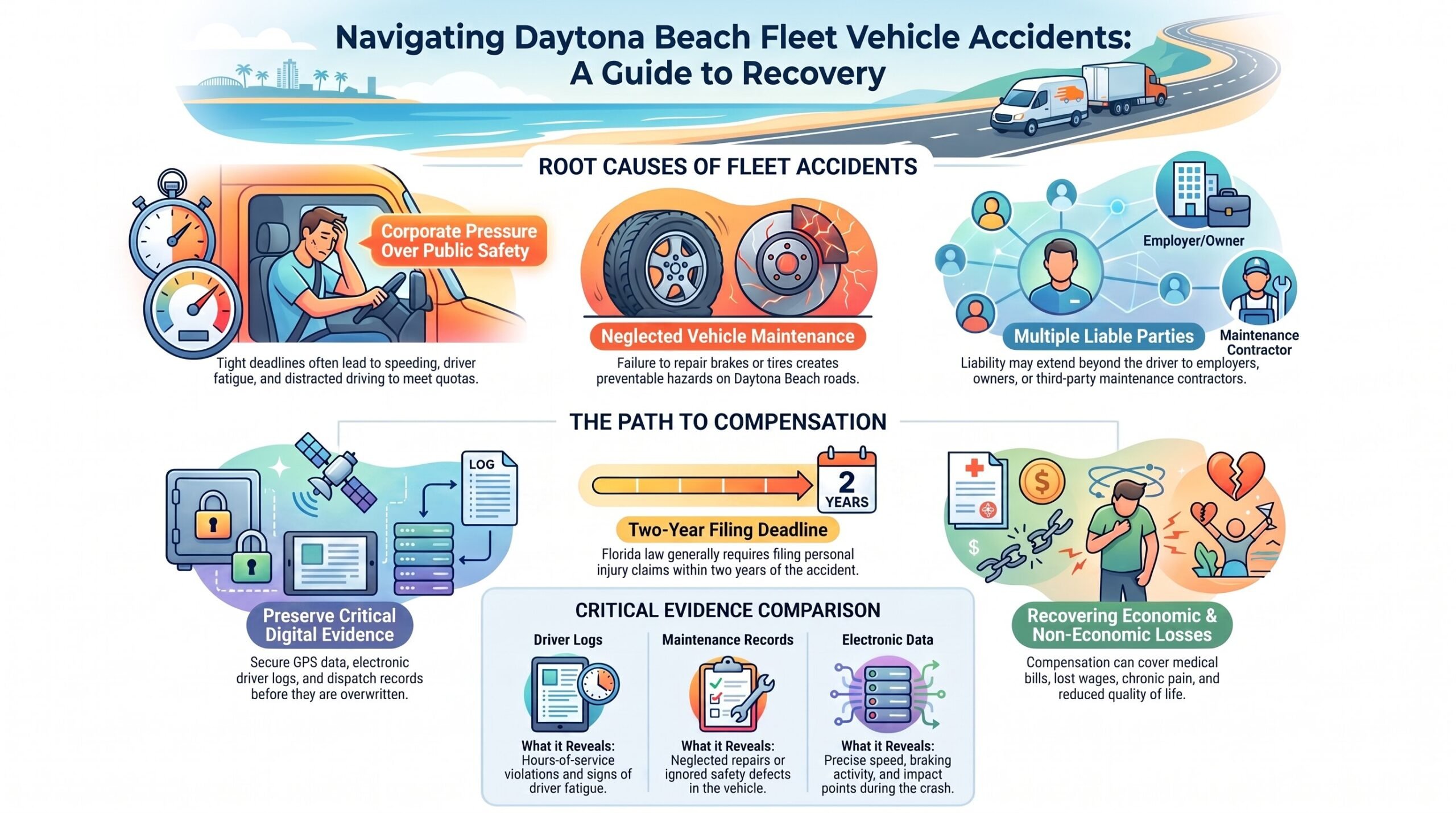
Fleet vehicle accidents in Daytona Beach often arise from preventable factors, including distracted fleet drivers, poor vehicle maintenance, speeding to meet deadlines, and inadequate driver training. These causes may reflect broader operational failures, particularly when companies place efficiency above safety and compliance. Identifying the cause of a crash is critical because it can determine whether liability rests with the driver, the employer, a maintenance provider, or another responsible party.
Distracted Fleet Drivers
Many fleet vehicle accidents in Daytona Beach occur because drivers are distracted by tasks that compete with the safe operation of a commercial vehicle. Dispatch messages, navigation changes, delivery confirmations, and customer communications can divert attention from traffic, pedestrians, and changing road conditions. When companies pressure drivers to remain constantly available, even brief glances at a device may create serious risk.
Driver fatigue can intensify distraction, reducing judgment and slowing response time when hazards appear. Wrongful routing, especially through congested areas or unfamiliar streets, may also force drivers to consult screens or make sudden decisions. Organizations committed to serving the public should promote focused driving policies, adequate scheduling, and clear communication procedures. These measures help protect vulnerable road users and support accountability after preventable fleet collisions.
Poor Vehicle Maintenance
Poor vehicle maintenance is a frequent cause of fleet vehicle accidents in Daytona Beach, particularly when companies fail to inspect, repair, or replace critical parts before they become unsafe. Worn brakes, bald tires, defective lights, guidance problems, and neglected safety systems can place drivers, passengers, and the public at serious risk. In some cases, Driver negligence may combine with poor maintenance when warning signs are ignored or inspection reports are incomplete.
After a crash, records, repair invoices, traffic control data, and eyewitness testimony may help show whether a vehicle should have been removed from service. Maintenance failures can also create insurance disputes, especially when carriers question responsibility between the driver, employer, and service provider. Careful review helps injured people and families pursue accountability with dignity.
Speeding And Deadlines
When delivery schedules are unrealistic or workplace policies reward speed over safety, fleet drivers in Daytona Beach may feel pressure to exceed posted limits or drive too fast for traffic, weather, or road conditions. Speeding reduces reaction time, increases stopping distance, and can turn a preventable collision into a severe crash involving pedestrians, cyclists, passengers, or other motorists.
Tight deadlines may also contribute to Fatigue and hours concerns, especially when drivers continue operating after long shifts or insufficient rest. In those circumstances, Driver distraction can become more dangerous, as a brief lapse at higher speeds leaves little time to correct errors. Responsible fleet operations should prioritize safe arrival, lawful driving, and community protection over rapid route completion, because service to others requires caution, patience, and accountability.
Inadequate Driver Training
Because fleet vehicles are often larger, heavier, or more difficult to operate than personal cars, inadequate driver training can create serious risks on Daytona Beach roads. Drivers may be asked to manage delivery vans, service trucks, or company cars without proper instruction on braking distance, blind spots, turning radius, load balance, or defensive driving. When employers fail to provide meaningful training, they place the public, workers, and vulnerable road users in danger.
Responsible organizations should encourage safe reporting of training gaps, vehicle concerns, and unsafe policies. If a driver raises concerns and then faces Wrongful termination, corporate retaliation, or reduced hours, those actions may reveal deeper safety failures. Careful investigation can show whether inadequate preparation contributed to a collision involving a fleet vehicle and to preventable harm to others.


Legal Rights of Daytona Beach Fleet Vehicle Accident Injury Victims
After a collision involving a fleet vehicle in Daytona Beach, injured victims may have the right to pursue compensation from any party whose negligence contributed to the crash. These rights may include claims for medical expenses, lost income, reduced earning capacity, pain, suffering, and long-term care needs. A careful review of insurance documentation can help identify available coverage, policy limits, and responsible entities.
Florida’s Comparative negligence rules may reduce compensation if an injured person shares fault.
However, partial responsibility does not automatically prevent recovery when evidence supports the claim.
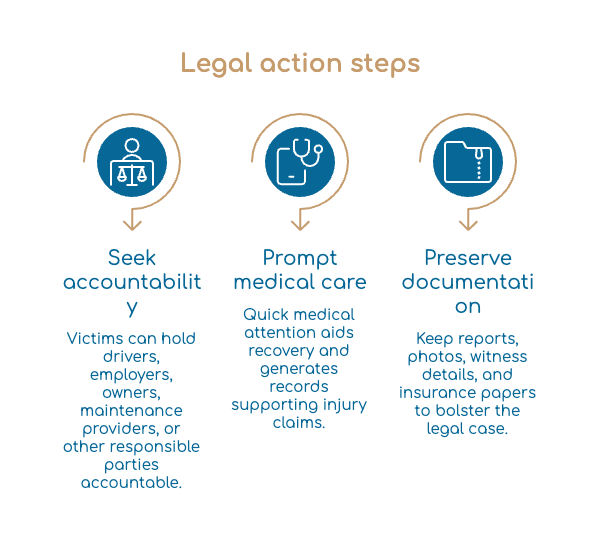
- Victims may seek accountability from drivers, employers, vehicle owners, maintenance providers, or other responsible parties.
- Prompt medical care helps recover health while creating records that support the injury claim.
- Preserving reports, photographs, witness information, and insurance documentation can strengthen the legal process.
These rights help injured individuals restore stability, meet family responsibilities, and continue serving their communities with dignity after a serious fleet vehicle accident.
Why Do Fleet Vehicle Accidents Happen at Daytona Beach?
Although fleet vehicles are essential to commerce, public services, and daily transportation in Daytona Beach, injuries often occur because these vehicles operate under demanding conditions that increase the risk of crashes. Delivery vans, service trucks, shuttles, buses, and company cars may be driven on tight schedules, through congested corridors, and during poor weather or heavy tourist traffic. These pressures can contribute to speeding, fatigue, distraction, and unsafe lane changes.
Fleet-related injuries may also stem from weak supervision, inadequate training, or inconsistent enforcement of Safety Protocols. When companies fail to inspect vehicles, repair worn brakes, monitor tire condition, or address repeated complaints, preventable hazards can remain on the road. Poor Driver Recordkeeping may further allow unsafe drivers to continue operating vehicles without timely review or correction. In some cases, unclear routes, overloaded vehicles, or unrealistic service expectations create additional risks. These failures can endanger passengers, pedestrians, cyclists, and other motorists who rely on responsible fleet operations.
What Should You Do After a Daytona Beach Fleet Vehicle Accident Injury?
After a Daytona Beach fleet vehicle accident injury, the injured person should seek medical care promptly, even when symptoms appear minor. Careful documentation of the accident, including photographs, witness information, and relevant records, may help preserve important evidence. Contacting an attorney can also help protect the injured person’s rights, especially when multiple parties, insurance companies, or employer-owned vehicles are involved.
Seek Medical Care
When injuries may have occurred in a Daytona Beach fleet vehicle accident, prompt medical evaluation should be a priority. A person should seek care even when symptoms appear minor, because pain, dizziness, or internal injury may develop gradually. Medical professionals can assess trauma, recommend treatment, and identify limitations that may affect daily responsibilities, including the ability to serve family, clients, or the community safely.
Immediate medical documentation can also establish a clear connection between the collision and any diagnosed condition. This record may later help clarify the nature and seriousness of the injury. Accurate communication with healthcare providers is equally important, including a full description of symptoms, prior conditions, and changes after the crash. Following medical advice supports recovery and promotes responsible decision-making after the accident.
Document The Accident
Medical care creates an important record of physical harm, but accident documentation helps preserve the facts surrounding the collision itself. After a Daytona Beach fleet vehicle accident, an injured person should gather details as safely as possible, while respecting emergency responders and others at the scene. Photographs of vehicle positions, property damage, road conditions, traffic signals, license plates, and visible injuries may help clarify what occurred.
Witness statements can also provide valuable perspectives, especially when fleet drivers, employers, or insurers later dispute responsibility. If available, dashcam footage from involved vehicles, nearby motorists, or commercial fleets may capture pivotal moments before impact. Copies of crash reports, exchange information, and any written notes should be kept in an organized manner to support a clear account of events.
Contact An Attorney
Why should legal counsel be contacted promptly after a Daytona Beach fleet vehicle accident injury? An attorney can help protect the injured person’s rights while preserving information that may assist those responsible for care, recovery, and support. Fleet accidents often involve employers, commercial insurers, maintenance contractors, and drivers, making early guidance important.
Counsel may explain insurance basics, request medical records, and review Recordkeeping basics so that treatment dates, expenses, missed work, and communications are organized. An attorney can also seek witness statements before memories fade and evaluate whether company policies, vehicle logs, or driver conduct contributed to the harm. Prompt legal contact allows the injured person and supportive family members to focus on mending while a qualified advocate addresses deadlines, evidence, and communication with involved parties.
Critical Evidence in a Daytona Beach Fleet Vehicle Accident Injury Case
Critical evidence in a Daytona Beach fleet vehicle accident injury case often determines how fault, notice, and preventable risk are established. Key records and physical proof may show whether the driver, employer, or maintenance provider failed to meet required safety standards.
- Driver logs may reveal hours-of-service violations, route history, or signs of fatigue.
- Vehicle maintenance records can identify neglected repairs, inspection failures, or recurring mechanical issues.
- Electronic control data and accident-scene evidence may clarify speed, braking, impact points, and vehicle movement prior to the crash.
Driver Logs
In a Daytona Beach fleet vehicle accident injury case, driver logs can help establish whether the operator complied with company policies, scheduling requirements, and federal or state safety rules. These records may show hours worked, rest periods, delivery timelines, route assignments, and deviations from expected practices. When reviewed carefully, they can reveal Driver fatigue, rushed scheduling, or pressure to meet deadlines that placed others at risk.
Driver logs also support accident reconstruction by helping investigators compare recorded activity with crash timing, witness accounts, GPS data, and roadway conditions. Accurate logs may clarify whether a driver was alert, properly assigned, and operating within lawful limits. Inconsistent or missing entries may indicate deeper compliance concerns, allowing injured individuals and their advocates to pursue accountability with focus and care.
Vehicle Maintenance Records
When a fleet vehicle is involved in a grave collision, maintenance records may provide essential insight into whether the vehicle was safe to operate before the crash. These records can show inspection dates, repair histories, tire replacement, brake service, and unresolved mechanical concerns. In a Daytona Beach fleet vehicle accident injury case, such documentation may reveal whether a company honored its duty to protect drivers, passengers, and the public.
Careful review of the police report may identify mechanical issues noted at the scene, while gathering witness statements can support claims that the lights, brakes, guidance, or tires appeared defective before impact. If maintenance was delayed, ignored, or poorly documented, the records may help establish negligence. Preserving these materials early can assist injured individuals and those serving their recovery.
Electronic Control Data
Electronic control data can provide a detailed record of how a fleet vehicle performed in the moments before, during, and after a serious crash. This information may include speed, braking activity, throttle position, engine status, seat belt use, and sudden direction inputs. In a Daytona Beach fleet vehicle injury case, such data can help establish proof of driver negligence when a driver denies speeding, distraction, or unsafe operation.
It may also show whether a company ignored warning systems or failed to monitor risky driving patterns. Prompt preservation is important because data may be overwritten, altered, or lost through routine vehicle use. Legal review can address insurance company tactics that minimize electronic findings, dispute interpretation, or delay disclosure. Accurate analysis supports fair accountability for injured people and their families.
Accident Scene Evidence
After a crash involving a fleet vehicle, the accident scene may contain evidence that explains how the collision occurred and who may be legally responsible. Skid marks, debris fields, vehicle resting positions, roadway defects, traffic signals, lighting conditions, and weather can help reconstruct events with greater accuracy. Prompt photo documentation may preserve these details before cleanup crews, weather, or traffic changes the scene. Witness interviews are also important, because drivers, passengers, pedestrians, and nearby workers may describe vehicle speed, lane changes, braking, or distracted driving. In fleet cases, scene evidence may show whether a company driver followed safety policies or ignored roadway conditions. Careful collection supports injured individuals, families, insurers, and legal professionals seeking fair accountability. Accurate preservation of this evidence helps protect those harmed and promotes safer commercial driving practices.
Long-Term Effects of Daytona Beach Fleet Vehicle Accident Injuries
Fleet vehicle accident injuries in Daytona Beach may lead to lasting consequences, including chronic pain conditions that affect daily function and quality of life. Reduced mobility can limit employment, household responsibilities, and personal independence, especially when injuries involve the spine, joints, or lower extremities. Ongoing medical costs, such as rehabilitation, expert care, and pain management, often become a central issue in evaluating the full value of an injury claim.
Chronic Pain Conditions
When injuries from a Daytona Beach fleet vehicle accident do not fully recover, chronic pain can become a lasting and disruptive medical condition. Persistent neck, back, shoulder, or nerve pain may affect work duties, caregiving responsibilities, and daily service to others. These conditions often require ongoing treatment, expert evaluations, medication management, and careful monitoring.
Medical documentation is critical because pain that persists after visible injuries have healed can be questioned by insurers. An effective Insurance claim strategy should connect treatment records, diagnostic findings, and physician opinions to the accident. Evidence preservation also remains important, including vehicle data, crash reports, and witness accounts that support fault determination. By clearly presenting the duration, severity, and cause of chronic pain, an injured person’s legal claim may better reflect the harm sustained.
Reduced Mobility
Reduced mobility can be one of the most significant long-term effects of injuries sustained in a Daytona Beach fleet vehicle accident. Spinal damage, fractures, joint injuries, and nerve trauma may limit walking, standing, lifting, or safely operating a vehicle. These limitations can affect employment, caregiving duties, community involvement, and daily independence.
For organizations committed to serving others, mobility-related injuries also highlight the importance of accessible environments. Wheelchair accessibility, ramp compliance, and thoughtful curb cut design can help injured individuals enter buildings, cross streets, and reach critical services with dignity. Fleet operators may also reduce future harm through driver training that emphasizes safe spacing, cautious turns, pedestrian awareness, and careful loading areas. When reduced mobility follows a fleet crash, its impact often extends beyond physical movement into autonomy and participation.
Ongoing Medical Costs
Physical limitations after a Daytona Beach fleet vehicle accident often lead to continuing medical expenses that extend well beyond emergency treatment. Injured individuals may require therapy, imaging, medication, mobility devices, consultative visits, or future surgery. These needs can create a Painful future when care is delayed, inconsistent, or financially out of reach.
Accurate medical documentation helps demonstrate how injuries affect daily functioning, work capacity, and the ability to serve family, clients, or the community. Treatment coordination among physicians, therapists, and insurers may reduce gaps in care and support a clearer recovery plan. Because ongoing care can influence the settlement timeline, projected costs should be evaluated before resolution. A careful assessment helps preserve resources for necessary treatment, rather than leaving long-term burdens unaddressed after a claim is closed.
Proving Liability in Daytona Beach Fleet Vehicle Accident Injury Cases
In Daytona Beach fleet vehicle accident injury cases, proving liability often requires a detailed review of the driver’s conduct, the employer’s responsibilities, and the condition and use of the commercial vehicle. A careful investigation may examine whether the driver violated traffic laws, acted while distracted, exceeded safe driving hours, or failed to follow company safety policies. The employer’s role may also be relevant when hiring, training, supervision, routing, maintenance, or vehicle assignment contributed to the collision.
Evidence preservation is essential because fleet vehicles may contain electronic logs, GPS data, dash camera footage, maintenance records, and inspection reports. These materials can clarify how the crash occurred and whether preventable risks were ignored. Witness statements may also help establish speed, lane position, signaling, braking, or driver behavior before impact. By organizing these facts with care, injured individuals and their advocates can pursue accountability while supporting safer practices that protect the broader Daytona Beach community.
Dealing With Insurance Companies After a Daytona Beach Fleet Vehicle Accident Injury
After liability evidence is identified, the focus often shifts to how insurance companies evaluate and respond to the injury claim. In fleet vehicle accidents, multiple insurers may be involved, including the driver’s carrier, the employer’s commercial insurer, or a third-party administrator. Each may seek recorded statements, medical authorizations, or early settlement discussions that do not fully reflect the injured person’s losses.
Careful Policyholder communication is important because statements made to an insurer can affect coverage positions and valuation. Adjusters may compare treatment history, wage records, crash reports, and company policies while assessing payment responsibility. A claim denial strategy may involve disputing causation, challenging the severity of injuries, or arguing that another party bears responsibility.
For those committed to serving injured individuals, organized documentation and measured responses help protect the claim. Legal guidance can reduce confusion, preserve dignity, and ensure communications remain accurate, complete, and aligned with the evidence.
What to Expect During a Daytona Beach Fleet Vehicle Accident Injury Claim Process
A Daytona Beach fleet vehicle accident injury claim typically begins with an initial case review, followed by a structured investigation into liability, vehicle ownership, driver conduct, and applicable insurance coverage. The process often includes insurance claim negotiations, in which evidence, damages, and responsibility are presented to secure fair compensation. If a reasonable settlement cannot be reached, the claim may proceed to litigation, which requires formal legal action and continued case preparation.
Initial Case Review
When a fleet vehicle crash results in injury, the initial case review focuses on identifying the parties involved, the available evidence, and the legal issues that may affect recovery. This review typically includes the injured person’s account, medical concerns, vehicle information, employer or company details, and any early documentation from the scene. Careful attention is given to deadlines, coverage questions, and the practical needs of those harmed, especially when ongoing treatment or lost income affects a household.
At this stage, counsel may address witness statement preservation and communication with the insurance adjuster to ensure important information is protected and discussions remain accurate. The review also helps determine which records to gather first, allowing the claims process to begin in an organized, service-focused manner without prematurely assigning responsibility.
Liability Investigation Steps
With the initial case review completed, the liability investigation begins by examining how the crash involving the fleet vehicle occurred, who was in control of the vehicle, and whether any company policies or driver conduct contributed to the collision. Investigators may review police reports, driver logs, maintenance records, GPS data, dispatch instructions, and vehicle inspection histories to identify preventable failures.
Witness statements help confirm traffic movements, signals, speeds, and each party’s conduct before impact. Prompt scene security can preserve skid marks, debris fields, camera footage, and roadway conditions before evidence is lost. The inquiry may also consider hiring practices, training, supervision, and compliance with safety rules. Each step supports a fair assessment of responsibility, helping injured individuals, families, and community caregivers understand how accountability may be established.
Insurance Claim Negotiations
After liability evidence is organized, insurance claim negotiations usually begin with notice to all potentially responsible insurers and a careful review of available coverage. Adjusters may request medical records, wage documentation, vehicle data, and reports concerning driver conduct. A claimant’s representatives often prepare a demand package that explains injuries, treatment needs, lost income, and the service responsibilities disrupted by the crash.
Evidence preservation remains important, because fleet maintenance files, dispatch records, electronic logs, and hiring materials may affect valuation. If Negligent hiring appears relevant, insurers may assess whether the company failed to screen, train, or supervise the driver. Throughout negotiations, communication should remain accurate, documented, and measured. The goal is to present verified losses clearly, respond to coverage questions, and maintain pressure for a fair evaluation of the claim.
Settlement Or Litigation
If negotiations do not produce a fair resolution, the claim may proceed toward litigation, where the evidence is tested through formal procedures and court deadlines. In a Daytona Beach fleet vehicle injury claim, this stage may involve filing a lawsuit, exchanging records, taking sworn testimony, and presenting expert analysis. Counsel may evaluate whether Insurance adjuster tactics have minimized liability, delayed payment, or pressured an injured person into accepting less than the harm requires.
Careful review also helps prevent settlement valuation mistakes involving future medical care, lost earning capacity, vehicle policies, and corporate responsibility. Litigation does not always mean trial, since many cases resolve after stronger evidence is developed. Still, preparation for court can protect the claimant’s dignity, promote accountability, and support a recovery that serves long-term needs.
Compensation for Daytona Beach Fleet Vehicle Accident Injury Damages
Compensation for injuries caused by a Daytona Beach fleet vehicle accident may include payment for medical expenses, lost income, reduced earning capacity, property damage, and pain and suffering. These damages are intended to support recovery, preserve household stability, and help injured persons regain independence after a preventable collision involving a business-owned or government-operated vehicle.
A claim may cover emergency care, hospital treatment, rehabilitation, follow-up visits, assistive devices, and medication, with documentation confirming ongoing medical needs. When injuries prevent a person from working, compensation may address lost wages and future limitations, as supported by employment and medical records. Vehicle repair or replacement costs may also be included when property loss results from the crash.
In fatal cases, surviving family members may seek wrongful death benefits for funeral costs, lost support, and related losses recognized by Florida law. Careful documentation helps present the full impact of the injury with accuracy and dignity.
Economic vs Non-Economic Damages in Daytona Beach Fleet Vehicle Accident Cases
Damages in Daytona Beach fleet vehicle accident cases are typically separated into economic losses and non-economic harm, each requiring distinct proof and analysis. Economic losses may include medical expenses, lost income, and repair costs, while non-economic harm addresses pain, suffering, emotional distress, and reduced quality of life. Damage valuation factors often include injury severity, recovery time, liability evidence, insurance limits, and the long-term impact on the injured person’s daily activities.
Economic Losses
Many fleet vehicle accident claims in Daytona Beach involve economic losses, which are the measurable financial costs caused by the crash. These losses may include ambulance charges, hospital bills, rehabilitation expenses, vehicle repair or replacement, rental transportation, and out-of-pocket costs needed to support recovery. When injuries disrupt employment, careful wage loss calculations help document missed income, reduced hours, lost benefits, and diminished earning capacity.
Serious cases may also require future medical forecasting to estimate ongoing treatment, therapy, medication, or assistive care. Accurate records can strengthen settlement negotiations and reduce disputes over necessary compensation. However, insurance claim denials may arise when documentation is incomplete, causation is challenged, or expenses are considered unreasonable. Clear proof helps protect injured people and those who depend on their service.
Non-Economic Harm
Although economic losses can be verified through bills, receipts, and wage records, non-economic harm encompasses the personal consequences of a Daytona Beach fleet vehicle accident that lack a fixed market value. These harms may include physical pain, emotional distress, loss of enjoyment, inconvenience, and the strain placed on family relationships or daily responsibilities.
In cases involving company-owned vehicles, documentation from medical providers, counselors, caregivers, and close observers may help describe how injuries affect the person’s ability to serve, work, and participate in community life. Proving liability factors remains critical, because insurers often challenge the connection between the collision and these personal losses. A careful insurance dispute strategy may present consistent records, credible testimony, and clear timelines to support fair consideration of non-economic harm.
Damage Valuation Factors
When a collision involving a fleet vehicle causes injury in Daytona Beach, the damage valuation often depends on how clearly the losses can be sorted, logged, and linked to the crash. Economic damages include medical bills, rehabilitation costs, lost wages, reduced earning capacity, property loss, and future care needs. Non-economic damages address pain, emotional distress, inconvenience, loss of enjoyment, and the everyday burden placed on the injured person and family.
In fleet cases, records from employers, insurers, medical providers, and vehicle maintenance sources may affect value. Insurance negotiation should account for both measurable expenses and human impact, while avoiding undervaluation caused by incomplete documentation. A sound settlement strategy compares liability evidence, treatment history, prognosis, and policy limits, helping to ensure that compensation reflects the full extent of the harm caused.
When a Daytona Beach Fleet Vehicle Accident Injury Case Goes to Trial vs Settlement
Because fleet vehicle accident claims often involve corporate defendants, commercial insurers, and detailed employment records, the decision to settle or proceed to trial requires careful case evaluation. Settlement may serve injured individuals by providing timely compensation, reducing uncertainty, and avoiding the strain of litigation. A fair resolution often depends on documented medical needs, wage losses, vehicle data, driver history, and evidence preservation from the fleet operator.
Trial may become necessary when liability is disputed, damages are undervalued, or an insurer refuses to account for the full harm caused. Issues involving Comparative Fault can also influence strategy, especially when defendants attempt to shift responsibility onto the injured person or another party.
Legal counsel may assess witness credibility, expert testimony, corporate safety practices, and the strength of records before recommending trial. The goal remains practical and service-focused: pursuing accountability while protecting the injured person’s long-term recovery, dignity, and financial stability through measured advocacy.
Florida Laws That May Affect Your Daytona Beach Fleet Vehicle Accident Case
The choice between settlement and trial is shaped not only by the evidence but also by Florida law governing fault, insurance coverage, filing deadlines, and recoverable damages. In fleet vehicle cases, Florida’s comparative fault rules may reduce compensation when an injured person shares responsibility.
Insurance requirements can also affect recovery, especially when a commercial policy, employer coverage, or permissive vehicle use is involved. Road Safety duties may support liability when a company failed to train drivers, maintain vehicles, or enforce safe operating practices.
Florida fleet accident claims often turn on fault, insurance coverage, deadlines, and company safety responsibilities.
- Florida negligence law examines whether each party acted with reasonable care.
- Commercial vehicle cases may involve Federal Regulations governing driver qualifications, service hours, inspections, and maintenance.
- Damages may include medical expenses, lost income, pain, suffering, and long-term care needs.
These legal standards help determine accountability while encouraging responsible fleet operations that protect workers, passengers, and the broader Daytona Beach community.
The Statute of Limitations for Daytona Beach Fleet Vehicle Accident Injury Cases
Although liability and damages are central to a fleet vehicle accident claim, filing deadlines can determine whether an injured person may pursue compensation at all. In Florida, personal injury claims generally must be filed within 2 years of the crash. If the deadline passes, the court may dismiss the case, regardless of the severity of the injuries or the strength of the claim.
Fleet vehicle cases may involve employers, government entities, contractors, insurers, and maintenance providers. These layers can make timing especially important, because early review supports Evidence preservation, including driver logs, vehicle data, inspection records, and company policies. Prompt attention also helps protect witnesses from memory fading and from unavailable documents.
The statute of limitations also affects Negotiation strategy. Responsible parties and insurers often assess whether a claimant can still file suit. A timely claim preserves leverage, supports orderly resolution, and helps injured persons seek lawful compensation while honoring their responsibilities to family and community.
How a Daytona Beach Fleet Vehicle Accident Lawyer Can Help You
After a fleet vehicle crash, a Daytona Beach fleet vehicle accident lawyer can help an injured person identify liable parties, evaluate insurance coverage, and preserve evidence before it is lost or altered. This support may include reviewing driver logs, company safety policies, maintenance records, dispatch data, and employment relationships to determine whether a business, contractor, driver, or maintenance provider bears responsibility.
Early legal guidance can help preserve evidence, clarify liability, and protect an injured person’s claim after a crash involving a fleet vehicle.
A lawyer may also coordinate a vehicle inspection, analyze crash reports, and consult qualified experts when fault or causation is disputed. Careful attention to Insurance timeframes helps protect claims from avoidable delays, denials, or missed notice requirements.
- Investigates whether company practices placed public safety at risk.
- Organizes medical, wage, and care-related documentation accurately.
- Communicates with insurers so the injured person can focus on recovery.
Through this guidance, the legal process can support accountability, responsible service, and fair compensation for harm caused by fleet operations in Daytona Beach.
When to Contact a Daytona Beach Fleet Vehicle Accident Lawyer
Knowing how legal support can protect a claim, an injured person should consider contacting a Daytona Beach fleet vehicle accident lawyer as soon as possible following a crash involving a company-owned, leased, or commercially operated vehicle. Early contact is important when medical needs, work duties, family responsibilities, and community service commitments are disrupted by injuries or the loss of a vehicle.
A lawyer may be contacted before giving recorded statements, signing releases, or responding to carrier requests, especially when Insurance paperwork pitfalls could affect compensation. Prompt guidance can help preserve photos, witness names, driver information, maintenance records, delivery logs, and employer details before they become difficult to obtain.
Legal contact is also appropriate when fault is disputed, injuries worsen, multiple vehicles are involved, or an insurer suggests quick payment. Questions about Settlements vs trial should be raised early, so the injured person can make informed decisions while remaining focused on recovery and continuing to serve others responsibly.
Why You Need an Experienced Daytona Beach Fleet Vehicle Accident Lawyer
Because fleet vehicle collisions often involve employers, insurers, vehicle owners, and commercial policies, experienced legal representation can be critical to identifying all responsible parties and available sources of compensation. These cases may require careful review of driver conduct, maintenance records, route assignments, hiring practices, and company safety policies. A lawyer familiar with fleet accident claims can preserve evidence, assess liability, and protect the injured person from tactics that unfairly shift blame.
Effective advocacy also helps injured individuals and families focus on recovery, caregiving, and service to their communities. An informed Insurance negotiation strategy considers medical treatment, lost income, future care needs, pain, disability, and other settlement value factors. Without that analysis, an insurer may undervalue the harm or overlook long-term consequences. Experienced counsel can present a documented claim, respond to disputes, and pursue accountability with diligence, helping guarantee that compensation reflects both immediate losses and future needs.
How to Choose the Right Daytona Beach Fleet Vehicle Accident Lawyer for Your Case
When selecting counsel after a fleet vehicle collision, the injured party should look for a lawyer with direct experience handling commercial vehicle claims, employer liability issues, and insurance disputes involving business-owned or managed vehicles. The right attorney should understand how to investigate driver logs, maintenance records, company policies, dispatch data, and crash reports while preserving evidence that may support the claim.
A careful choice also involves reviewing communication, preparation, and the lawyer’s ability to explain legal options with respect and clarity. Because clients often seek justice not only for themselves but to protect others from unsafe practices, counsel should approach the case with diligence and purpose.
Strong evaluation of Witness credibility can affect liability findings, damages, and negotiation strategy. A lawyer who can document losses, identify all responsible parties, and present compelling evidence may improve settlement leverage and help pursue a fair result through negotiation or litigation.
About The Law Offices of Anidjar & Levine
The Law Offices of Anidjar & Levine represents injured clients in Daytona Beach and throughout Florida in claims involving fleet vehicles, commercial drivers, and business-owned transportation.
The firm assists people harmed by delivery vans, service trucks, rideshare fleets, and other company vehicles, with a focus on accountability, thorough investigation, and client-centered support.
Its legal team reviews crash reports, insurance coverage, maintenance records, Fleet Safety Policies, and evidence of Driver Discipline to determine whether a company failed to prevent foreseeable harm.
This work may reveal unsafe hiring practices, inadequate training, ignored complaints, or pressure on drivers to meet demanding schedules.
The firm’s approach reflects a commitment to helping injured individuals regain stability while pursuing compensation for medical care, lost income, pain, and other damages.
By managing communication with insurers and responsible businesses, the team allows clients to focus on recovery.
Its service-oriented representation aims to protect rights, promote safer practices, and seek meaningful results.
Frequently Asked Questions
Can I Sue a Fleet Vehicle’s Maintenance Contractor?
Yes, an injured person may sue a fleet vehicle’s maintenance contractor if evidence shows negligent inspections, improper repairs, or ignored safety defects contributed to the crash. Liability depends on the contractor’s duties, service records, and foreseeability of harm. Those serving injured parties should preserve maintenance documents promptly, because liability coverage limits may affect recovery. A qualified attorney can evaluate fault, identify responsible entities, and pursue compensation through appropriate claims.
What if the Fleet Driver Was an Independent Contractor?
If the fleet driver was an independent contractor, liability may still extend beyond the driver, depending on the level of control, hiring practices, and safety oversight. Independent contractor liability can arise when a company directs routes, schedules, vehicle use, or delivery methods. Agency relationship evidence, such as uniforms, branding, dispatch records, and customer representations, may show the driver acted on the company’s behalf. Careful investigation helps protect injured people and promote accountability.
Are Rental Company Fleets Treated Differently After Accidents?
Yes, rental company fleets are often treated differently after accidents because ownership, rental agreements, and layered policies affect responsibility. Investigators may review insurance coverage handling, contract terms, driver authorization, and maintenance records. Rental companies also follow strict incident reporting rules, which can influence claim timing and evidence preservation. Those assisting injured individuals should carefully evaluate all responsible parties, ensuring accountability is pursued through a disciplined, service-focused approach.
Can GPS Fleet Data Be Used in My Case?
Yes, GPS fleet data can aid a case by showing location, speed, route, stops, and timing before a collision. Such information may confirm unsafe driving, poor supervision, or delayed maintenance response. However, fleet records must be preserved quickly, and reliability challenges may arise from device errors, gaps, or improper handling. A careful legal review helps ensure the evidence serves injured people seeking accountability and fair compensation after serious harm.
Do Fleet Vehicle Cases Involve Federal Safety Regulations?
Yes, fleet vehicle cases may involve federal safety regulations, particularly when vehicles operate in interstate commerce or meet commercial size-and-use thresholds. Applicable rules can address driver qualifications, hours of service, maintenance records, and safety inspection duties. FMCSA exemptions may affect certain vehicles or operations, so careful review is required. For those seeking to protect injured persons, these standards can reveal preventable failures and support accountability.
—————————
A Daytona Beach fleet vehicle accident can create intricate legal and financial challenges for injured victims.
Determining liability, managing insurance issues, and proving damages often require focused legal guidance.
An experienced attorney can protect the victim’s rights, investigate the crash, and pursue fair compensation for medical care, lost income, and other losses.
The Law Offices of Anidjar and Levine provides knowledgeable representation, and a Daytona Beach Car Accident Lawyer can help those seeking accountability after a collision involving a fleet vehicle in Daytona Beach.