The Law Offices of Anidjar and Levine help injured victims preserve phone records, vehicle data, witness statements, camera footage, and crash-scene evidence before it is lost.
A Daytona Beach Car Accident Lawyer can help prove distracted conduct, link injuries to the collision, handle insurance delays or low offers, and pursue compensation for medical care, lost income, property damage, pain, and long-term needs.
The sections below explain key rights, evidence, causes, and claim steps in greater detail.
Main Takeaways
- A Daytona Beach distracted driving lawyer can preserve phone records, vehicle data, camera footage, witness statements, and crash scene evidence.
- Legal review can determine whether texting, in-car technology, eating, passengers, or other distractions contributed to the crash.
- Evidence may connect distracted conduct to injuries, medical bills, lost income, property damage, and pain and suffering.
- An attorney can communicate with insurers, respond to low settlement offers, and prepare claims for negotiation or litigation.
- Prompt legal help protects evidence, supports liability evaluation, and addresses comparative fault issues in Florida insurance claims.


How We Can Help With Your Daytona Beach Distracted Driving Car Accident Injury Claim
Investigating a distracted-driving collision requires prompt action, careful preservation of evidence, and a clear understanding of Florida injury law. A Daytona Beach distracted driving car accident lawyer can coordinate Immediate evidence preservation by seeking vehicle data, phone records, witness statements, traffic camera footage, and crash scene documentation before essential proof is lost. This support allows injured people and their families to focus on recovery, caregiving, and practical needs after a serious disruption.
Counsel also evaluates medical records, lost income, property damage, and long-term care concerns to present a complete claim. When Florida insurance disputes arise, legal representation can address delayed responses, low settlement offers, disputed liability, or challenges to the severity of injury.
The lawyer communicates with insurers, organizes documentation, consults experts when needed, and prepares the matter for negotiation or litigation. Through disciplined advocacy, the claim is positioned to seek accountability and fair compensation under applicable Florida law.
OUR CONSULTATIONSARE FREE
START YOUR FREE CASE REVIEW

Understanding Daytona Beach Distracted Driving Car Accident Injury Cases
In Daytona Beach, distracted driving injury cases often turn on whether a driver’s attention was diverted by a phone, navigation system, passenger, food, or another activity at the moment a collision occurred. These claims require careful review because even brief inattention can affect reaction time, braking, lane position, and the ability to protect others on the road.
A thorough case assessment may examine crash reports, vehicle damage, roadway conditions, medical treatment, and witness documentation. This evidence helps connect the distracted conduct to the injuries suffered and supports a fair evaluation of losses. Common causes may be referenced only to identify the type of distraction involved, not to replace detailed proof of fault.
Because injured people often face pain, appointments, missed work, and uncertainty, a well-prepared claim can bring order to a difficult process. During insurance negotiations, clear evidence and consistent records help demonstrate responsibility, damages, and the need for appropriate compensation.
Common Causes of Daytona Beach Distracted Driving Car Accident
Distracted driving crashes in Daytona Beach often arise from routine behaviors that divert attention from the road. Common causes include texting while driving, in-car technology use, eating while driving, and passenger distractions, each of which can reduce reaction time and impair judgment. Understanding these causes helps clarify how preventable conduct may contribute to serious collisions and resulting injury claims.
Texting While Driving
Texting while driving remains one of the most dangerous forms of driver distraction because it simultaneously diverts visual, manual, and cognitive attention from the road. In Daytona Beach, a brief message can prevent a driver from noticing slowing traffic, traffic signals, cyclists, or distracted pedestrians near crosswalks and busy tourist areas.
This conduct may combine with Speeding violations, creating a heightened risk of rear-end collisions, lane departures, and intersection crashes. Those who serve injured individuals, families, and communities often recognize that texting-related crashes can cause preventable harm with lasting consequences. Evidence may include phone records, witness statements, crash data, and roadway camera footage. Careful review helps determine whether a driver’s decision to text contributed to unsafe driving and avoidable injury.
In-Car Technology Use
Although modern vehicle systems are designed for convenience, in-car technology can become a serious source of distraction when drivers interact with touchscreens, navigation menus, voice commands, climate controls, or entertainment features while the vehicle is moving. In Daytona Beach, even brief shifts in attention can endanger pedestrians, cyclists, passengers, and other motorists who depend on careful driving.
Distracted Driving may occur when a driver looks away to select a route, adjust audio settings, or respond to system prompts, rather than monitoring traffic conditions. Hands-free options can reduce some physical handling, yet they do not eliminate cognitive distraction when a driver is mentally engaged with commands or settings. Responsible use requires programming systems before departure and placing safety above convenience, especially in heavy coastal traffic.
Eating Behind Wheel
Fast-food stops and hurried meals can create serious roadway hazards when drivers eat while driving instead of keeping both attention and control focused on traffic. Reaching for drinks, opening wrappers, or cleaning spills may pull a driver’s eyes, hands, and mind from the road. In Daytona Beach traffic, even brief lapses can reduce reaction time near crosswalks, intersections, beach access roads, and congested commercial areas.
Food-related distraction may combine with other unsafe habits, including headphone use, which can limit awareness of horns, sirens, or changing traffic conditions. While distracted passengers are a separate concern, a driver who chooses to eat must still be fully responsible for safe vehicle operation. Careful drivers protect others by delaying meals until they are parked in a safe, lawful location, reducing the risk of preventable crashes.
Passenger Distractions
When passengers demand attention, argue loudly, move around the cabin, or interfere with vehicle controls, they can create dangerous distractions for drivers in Daytona Beach traffic. Such conduct may divert a driver’s eyes, hands, or focus at the precise moment careful judgment is required. Children, intoxicated adults, rideshare occupants, or aggressive companions can increase risk near intersections, beach access roads, and crowded entertainment areas.
These distractions may also threaten pedestrian safety when drivers fail to notice people crossing near hotels, schools, or public events. After a collision, investigators may review witness statements, phone records, vehicle data, and dashcam footage to determine whether passenger behavior contributed to the crash. Attorneys serving injured people may evaluate these facts to identify negligence and pursue accountable parties.


Legal Rights of Daytona Beach Distracted Driving Car Accident Injury Victims
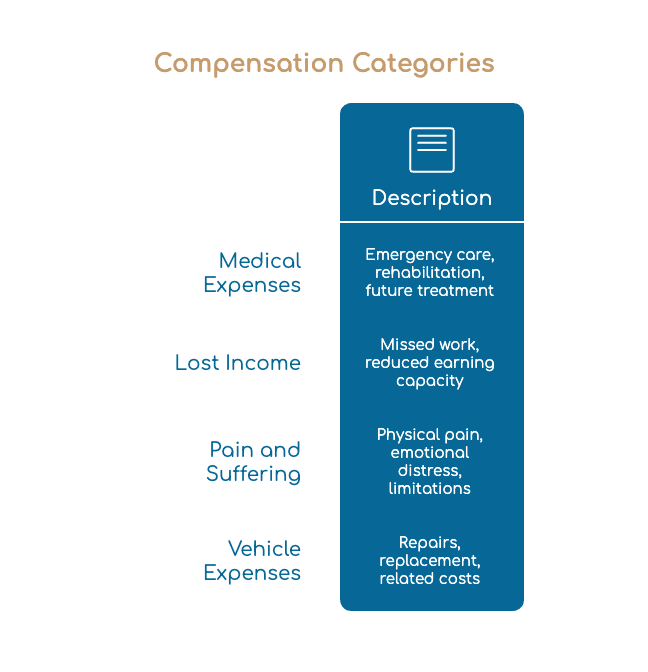
Injured victims of distracted driving crashes in Daytona Beach have legal rights that may allow them to seek compensation for medical expenses, lost income, property damage, pain and suffering, and other related losses. These rights help restore stability while supporting families, caregivers, and communities affected by preventable harm.
A claim may require proof of liability rather than negligence, including evidence that another driver failed to exercise reasonable care. Insurance companies may also raise a Comparative Fault Defense, arguing the injured person shares responsibility. Careful documentation helps protect a victim’s position.
Key rights may include:
- Seeking payment for emergency care, rehabilitation, and future treatment
- Recovering income losses caused by missed work or reduced earning capacity
- Pursuing compensation for physical pain, emotional distress, and daily limitations
- Receiving fair consideration of vehicle repairs, replacement costs, and related expenses
Legal guidance may help victims preserve evidence, meet deadlines, and pursue accountable compensation.
Why Do Distracted Driving Car Accident Injuries Happen at Daytona Beach?
Understanding legal rights also requires examining the conditions that lead to distracted-driving injuries in Daytona Beach. These collisions often arise when drivers divide their attention among the road, phones, navigation systems, passengers, food, or in-vehicle controls. Even brief inattention can prevent a motorist from noticing stopped traffic, pedestrians, cyclists, or sudden lane changes.
Local conditions may increase the danger. Congested tourist routes, unfamiliar drivers, beach traffic, motorcycles, and frequent intersections can reduce reaction time. The Impact of road hazards, including poor lighting, debris, uneven pavement, and obstructed signage, may further intensify the consequences when a distracted driver fails to respond appropriately.
Injury patterns often reflect the speed, angle, and timing of impact. Victims may face medical treatment, missed work, and uncertainty while insurance claim timelines develop. Understanding these causes helps community members, caregivers, and advocates recognize how preventable distractions place others at risk and why accountability remains important.
What Should You Do After a Distracted-Driving Car Accident in Daytona Beach?
After a Daytona Beach distracted driving car accident injury, the injured person should seek prompt medical care, even when symptoms appear minor. Crash evidence should be documented as soon as possible, including photos, witness information, and any details suggesting driver distraction. An attorney may then help evaluate liability, preserve important records, and protect the injured person’s claim.
Seek Medical Care
When a distracted driving crash occurs in Daytona Beach, prompt medical care is one of the most important steps an injury victim can take. Emergency response personnel can evaluate urgent conditions, stabilize serious injuries, and determine whether hospital treatment is necessary. Even when pain seems minor, a physician should assess possible concussions, internal injuries, soft tissue damage, or delayed symptoms.
Consistent treatment supports recovery and shows respect for the responsibilities that families, caregivers, and community members often continue to carry after a collision. Medical records also provide critical injury documentation, which may later help explain the nature, timing, and severity of harm. Careful symptom tracking, including changes in pain, mobility, sleep, or concentration, can guide treatment. These records may also assist with insurance paperwork and related claim review.
Document Crash Evidence
Because evidence can disappear quickly, an injured person should preserve as much information as possible following a distracted driving crash in Daytona Beach. Photographs should capture vehicle positions, roadway marks, traffic signals, weather conditions, debris, and visible injuries. Clear photos of vehicle damage may help show impact angles and crash severity, especially before towing, storage, or repairs change the vehicle’s condition.
Witness names, phone numbers, and brief statements should be recorded when possible, since memories may fade. The injured person should also keep medical discharge papers, prescriptions, work absence records, and all Repair documentation. Saving dashcam footage, rideshare records, phone screenshots, and insurance communications may also support a careful review. Organized evidence helps responsible parties, insurers, and service providers understand what occurred and how the injury affected daily life.
Contact An Attorney
In the days following a distracted driving injury in Daytona Beach, contacting an attorney can help an injured person understand legal deadlines, insurance issues, and the value of available evidence. Counsel may review police reports, medical records, witness accounts, and phone-use evidence to determine whether another driver’s inattention caused the crash. An attorney can also assess No-Fault Eligibility, explain available personal injury protection benefits, and address issues involving delayed payments or Claim Denials.
This guidance supports informed decisions while the injured person focuses on treatment, family responsibilities, and recovery. Legal counsel may communicate with insurers, preserve records, and evaluate whether a claim against the distracted driver is warranted. Early advice can protect rights and promote a more orderly path toward financial accountability after serious harm.
Critical Evidence in a Daytona Beach Distracted Driving Car Accident Injury Case
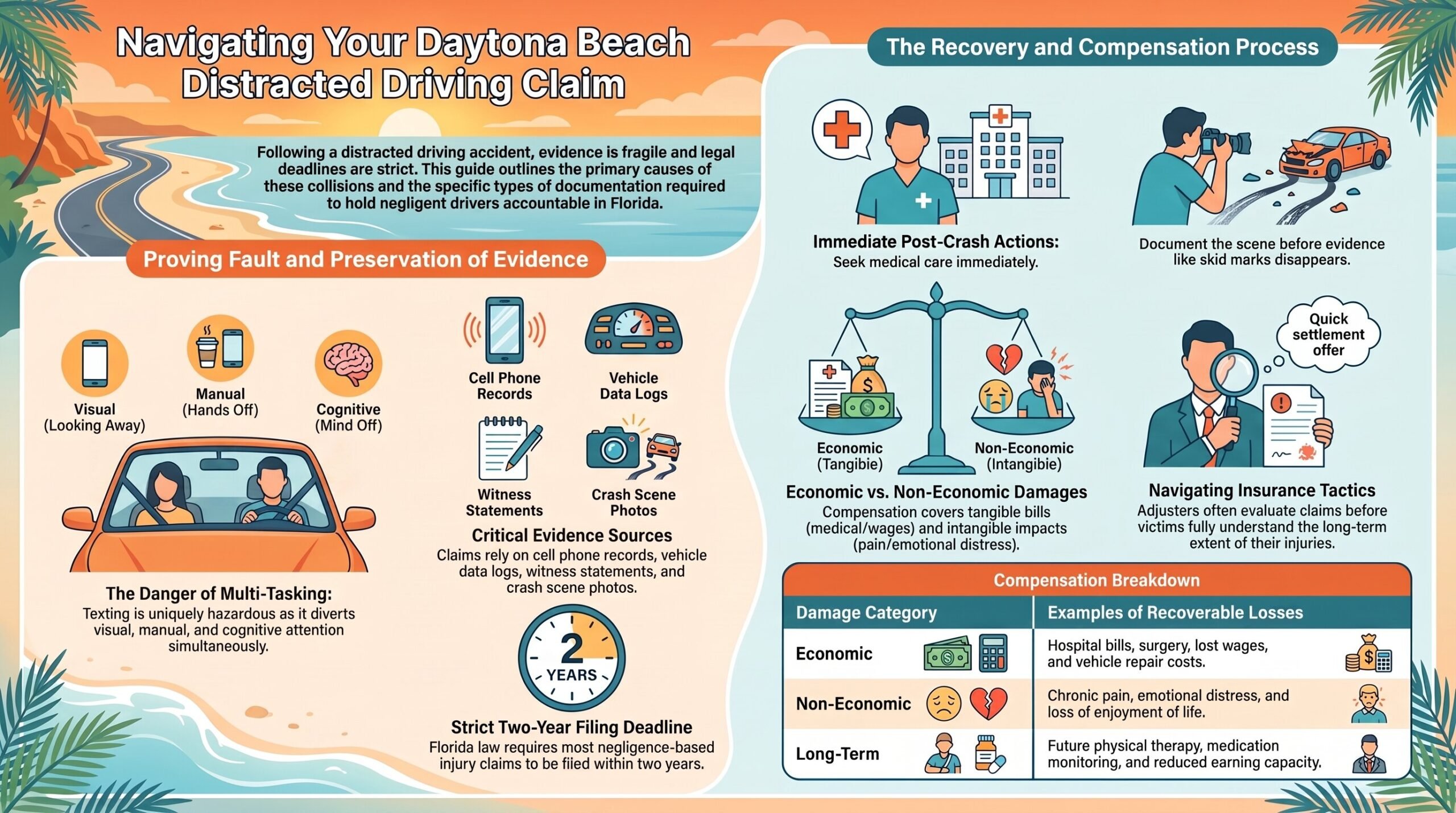
Critical evidence in a Daytona Beach distracted driving car accident injury case may establish whether a driver’s attention was diverted before impact. Investigators and attorneys often evaluate multiple sources to confirm distraction, reconstruct the crash, and connect negligent conduct to the injuries claimed. Important evidence may include:
- Cell phone records
- Vehicle data logs
- Witness statements
- Crash scene evidence
Cell Phone Records
After a serious collision, cell phone records can help establish whether a driver was texting, calling, browsing, or using an app in the moments before impact. These records may show time-stamped activity that aligns with witness statements, police reports, and crash timelines. In a Daytona Beach distracted driving injury case, this evidence can support accountability when a victim faces medical treatment, Emotional trauma, or brain injury recovery.
Attorneys may seek records through lawful discovery or subpoenas, ensuring that private data is handled within proper legal boundaries. The information can also clarify whether a driver denied using a phone despite objective evidence. For injured individuals and families, carefully obtained cell phone records may help demonstrate negligence and support a claim for compensation tied to physical, emotional, and financial harm.
Vehicle Data Logs
Beyond cell phone records, vehicle data logs can provide an additional source of objective evidence in a Daytona Beach distracted-driving car accident injury case. Event data recorders and onboard systems may reveal speed, braking, steering, throttle use, seat belt status, and sudden actions before impact. This information can help clarify whether a driver reacted late, failed to slow, or operated the vehicle in a manner inconsistent with safe roadway conduct.
For injured people and those assisting them, these records can support a careful pursuit of accountability while reducing reliance on Distracted Driving Myths. Prompt preservation is important, because some data may be overwritten or lost. Compared with Defensive Driving Tips, vehicle data logs may show whether reasonable caution was disregarded during moments when attention should have remained on the road.
Witness Statements
When a distracted driving crash occurs, witness statements can provide important context that physical evidence alone may not fully explain. Bystanders, passengers, or nearby motorists may describe whether a driver looked down, held a device, drifted between lanes, or reacted late to traffic conditions. These accounts can help attorneys evaluate phone usage patterns and determine whether distraction contributed to the collision.
Eyewitness credibility remains critical. A careful review considers the witness’s location, attention, lighting, timing, and ability to observe events without bias. Consistent statements from multiple witnesses may strengthen an injury claim and support a clearer understanding of responsibility. In service to injured individuals and their families, properly gathered witness information can preserve important details, guide further investigation, and help ensure the case reflects the full human impact of negligent driving.
Crash Scene Evidence
At the collision site, physical evidence can reveal how a distracted driving crash unfolded before memories fade or vehicles are removed. Skid marks, debris fields, vehicle resting positions, traffic signal status, road conditions, and damage patterns may show speed, braking, lane position, and impact angle. Photographs, measurements, surveillance footage, and police diagrams help preserve these details for later review.
In a Daytona Beach injury case, careful evidence collection supports fair evaluation of fault and harm while respecting Privacy rights, case confidentiality, and the dignity of all involved. A lawyer may coordinate with investigators, obtain public records, and seek nearby camera footage before it is erased. Prompt preservation can protect injured persons, assist insurers and courts, and promote accountable service to the community following a preventable distracted-driving collision.
Long-Term Effects of Daytona Beach Distracted Driving Car Accident Injuries
Distracted driving collisions in Daytona Beach can cause injuries that extend well beyond the initial emergency treatment and insurance claim. Chronic pain conditions, cognitive limitations, and emotional distress may interfere with work, mobility, and daily routines for months or years. Future medical needs, including therapy, medication, expert care, and possible procedures, often become central issues when evaluating the full value of an injury case.
Chronic Pain Conditions
A serious distracted driving collision in Daytona Beach can leave an injured person with chronic pain that persists long after fractures, soft tissue injuries, or nerve damage should have recovered. Persistent neck, back, shoulder, or limb pain may limit mobility, sleep, work capacity, and the ability to assist family or community members. Rear-end injuries often produce lingering spinal strain, disc complications, or nerve irritation that require ongoing medical care.
For those serving others, untreated pain can reduce reliability and independence, making careful documentation critical. Medical records, pain management plans, therapy notes, and physician opinions help connect the condition to the crash. A thoughtful compensation strategy may address future treatment, reduced earning ability, household limitations, and the long-term burden of daily pain. Such claims require disciplined evidence and steady advocacy.
Cognitive And Emotional Impacts
Physical pain is not the only long-term consequence of a Daytona Beach distracted driving collision, as cognitive and emotional changes may also interfere with daily life. Survivors may experience memory lapses, reduced concentration, slower decision-making, or difficulty managing ordinary responsibilities. These changes can affect employment, caregiving, volunteer service, and relationships that depend on patience and reliability. Emotional effects may include anxiety, depression, irritability, or fear of driving, especially when the crash involved sudden danger or Road Rage.
Sleep Deprivation can intensify these problems, making recovery harder and increasing frustration during routine tasks. Family members, coworkers, and community caregivers may notice personality changes before the injured person recognizes them. Careful documentation of these impacts can help show how the collision altered daily functioning, independence, and the person’s ability to serve others.
Future Medical Needs
As recovery progresses, some Daytona Beach distracted driving accident injuries may require medical care far beyond the initial emergency treatment. Ongoing needs may include orthopedic follow-up, neurological evaluations, pain management, physical therapy, counseling, and medication monitoring. When Driver Distraction causes severe impact trauma, victims may face complications involving mobility, cognition, or emotional stability, each requiring coordinated support. Sleep Deprivation can also interfere with healing, increase pain sensitivity, and worsen concentration, making careful medical oversight critical.
Future care plans may address surgeries, assistive devices, home modifications, and vocational limitations. For those serving injured individuals, accurate documentation of projected treatment helps protect access to necessary resources. A long-term medical assessment can clarify anticipated expenses, functional restrictions, and supportive services, ensuring recovery planning reflects the full consequences of the accident.
Proving Liability in Daytona Beach Distracted Driving Car Accident Injury Cases
When a distracted-driving crash occurs, proving liability requires evidence that the other driver failed to use reasonable care and that this failure caused the victim’s injuries. In Daytona Beach, this may involve phone records, witness statements, traffic camera footage, vehicle data, and police reports. Each source can help establish whether the driver was texting, adjusting navigation, eating, or otherwise inattentive before impact.
Liability may also depend on surrounding factors. Negligent vehicle maintenance, such as faulty brakes or worn tires, can worsen a collision and identify additional responsible parties. Emergency response delays may affect injury severity, requiring careful review of medical timelines and accident scene records.
A thorough investigation connects the distraction to the crash, the crash to the harm, and the harm to measurable losses. This process supports accountability, helps protect injured community members, and promotes safer conduct for others who share the roads of Daytona Beach and their families.
Dealing With Insurance Companies After a Daytona Beach Distracted Driving Car Accident Injury
After a distracted-driving collision in Daytona Beach, insurance companies often begin evaluating the claim before the injured person fully understands the extent of their losses. Adjusters may request statements, seek broad medical releases, or question treatment decisions, while presenting their role as routine and helpful. Careful communication protects the injured person’s interests and supports fair review of the harm caused.
Evidence preservation is especially important when distraction is suspected, because phone activity, witness accounts, vehicle data, and scene information may influence negotiations. Police reports can provide useful initial details, though they may not capture all the facts needed to assess responsibility. Medical documentation also carries significant weight, since consistent records connect the crash to physical limitations, treatment needs, and future concerns.
When appropriate, doctor referrals may help identify experts who can thoroughly evaluate injuries. Legal guidance can reduce pressure, organize information, and help ensure that service-focused decisions do not weaken the claim.
What to Expect During a Daytona Beach Distracted Driving Car Accident Injury Claim Process
A Daytona Beach distracted-driving car accident injury claim typically begins with an initial case evaluation, during which the facts, injuries, and available legal options are reviewed. The process may then involve collecting evidence, documenting losses, and presenting the claim to the insurance company through structured negotiation steps. If a fair settlement cannot be reached, the claim may proceed toward a potential legal resolution, including litigation when appropriate.
Initial Case Evaluation
How a case begins often determines the strength and direction of a distracted driving injury claim in Daytona Beach. During the initial case evaluation, an attorney reviews the circumstances of the crash, reported injuries, medical treatment, employment impact, and available insurance coverage. This early review helps identify urgent needs, including medical continuity, transportation concerns, and financial strain affecting the injured person and family.
The evaluation also includes a preliminary liability investigation, focused on whether distraction contributed to the collision and who may bear legal responsibility. Damages assessment begins by considering medical expenses, lost income, pain, functional limitations, and future care needs. Counsel may also address evidence preservation, ensuring pivotal information is not lost before formal requests begin. This structured review allows the claim to move forward with purpose, accuracy, and service-minded care.
Evidence Collection Process
Once the initial case evaluation identifies the likely issues in dispute, the evidence collection process begins with a focused effort to secure proof before it becomes unavailable. Attorneys may obtain police reports, medical records, photographs of vehicle damage, and witness statements to clarify how distraction contributed to the crash. Surveillance footage from nearby businesses, traffic cameras, or residences can help establish movement, timing, and driver conduct. Digital timelines may also be developed from phone records, vehicle data, navigation history, and emergency response information.
Each item is reviewed for accuracy, relevance, and consistency with the injured person’s account. This careful process supports truthful presentation, protects the client’s dignity, and helps responsible parties understand the harm caused through inattentive driving and preventable choices in Daytona Beach injury claims.
Insurance Negotiation Steps
During insurance negotiations, the claim typically moves from evidence development to a structured presentation of liability, damages, and the injured person’s losses. A Daytona Beach distracted-driving car accident lawyer may organize Claim documentation, including medical records, proof of wage loss, repair estimates, and crash evidence, so the insurer can evaluate responsibility accurately.
The attorney may also review Policy limits, available coverage, and any comparative fault arguments that could affect the value of the claim. A careful settlement strategy often includes a demand package, a reasoned damages calculation, and responses to insurer objections. Negotiation tactics may involve clarifying the driver’s distraction, correcting undervalued medical needs, and emphasizing long-term consequences. Throughout this stage, the focus remains on informed advocacy and fair compensation.
Potential Legal Resolution
When settlement discussions do not fully resolve the claim, the legal process may continue toward a more formal resolution through litigation, mediation, arbitration, or trial. Each path requires careful preparation, organized evidence, and a clear explanation of how distracted driving caused harm. Settlement negotiation may continue even after a lawsuit is filed, allowing parties to resolve the matter without trial when responsibility and compensation become clearer.
Damages calculation remains central, including medical costs, lost income, reduced earning ability, pain, and long-term care needs. Mediation can help both sides seek a fair outcome through guided discussion, while arbitration or trial may place the decision in the hands of a neutral decision-maker. Throughout this stage, the claim is advanced with diligence, accountability, and respect for the injured person’s recovery.
Compensation for Daytona Beach Distracted Driving Car Accident Injury Damages
After a distracted-driving crash in Daytona Beach, an injured person may seek compensation for financial and personal losses resulting from the collision. The process often depends on proving how the driver’s inattention led to the harm, and on presenting Liability evidence that supports a clear demand for recovery. Phone records, witness accounts, crash reports, vehicle data, and scene photographs may help establish fault and guide responsible decision-making.
Florida’s comparative negligence rules can affect the amount recovered if the injured person is alleged to share responsibility. For that reason, careful documentation and consistent communication are important. Insurance claim denials may occur when carriers dispute causation, fault, policy coverage, or the severity of injuries.
A lawyer may respond by organizing evidence, addressing the insurer’s arguments, and pursuing settlement negotiations with a focus on fair accountability. This process can help protect the injured person’s rights while supporting stability, dignity, and ongoing care after the crash.
Economic vs Non-Economic Damages in Daytona Beach Distracted Driving Car Accident Cases
Damages in Daytona Beach distracted driving car accident cases generally fall into two categories: economic losses and non-economic losses. Economic damages may include medical bills, lost wages, and repair costs, while non-economic damages may address pain, emotional distress, and reduced quality of life. Proving these losses requires organized evidence, credible documentation, and a clear connection between the distracted driving collision and the resulting harm.
Economic Damage Examples
Hospital bills often provide the clearest starting point for understanding economic damages in a Daytona Beach distracted driving car accident case. These damages may include emergency transport, surgery, diagnostic testing, medication, rehabilitation, follow-up care, and anticipated future treatment. Economic loss proof may also include receipts for medical devices, travel to appointments, vehicle repair estimates, rental car costs, and household services reasonably needed during recovery.
When injuries prevent an individual from working, Wage statement documentation can help establish missed income, reduced hours, lost bonuses, or diminished earning capacity. Tax records, employer letters, benefit statements, and invoices may further support the calculation. Careful documentation allows insurers, attorneys, and courts to measure financial harm accurately, helping injured people secure the resources needed to restore stability and continue supporting their families and communities.
Non-Economic Damage Examples
How can a crash affect a person beyond receipts, invoices, and wage records? Non-economic damages address harms that are real, yet not measured by bills. In Daytona Beach distracted driving cases, these losses may include physical pain, reduced mobility, sleep disruption, loss of enjoyment, and strain within family relationships. Emotional distress impacts may appear as fear of driving, irritability, grief, or persistent anxiety after the collision.
Some injured people also face depression, isolation, or changes in identity when daily service to family, work, or community becomes harder. PTSD recovery timelines can vary widely, depending on trauma severity, medical support, and personal resilience. These damages recognize that a crash may diminish dignity, independence, and peace, even when financial records capture only part of the suffering endured.
Proving Your Losses
Often, the strength of a distracted-driving injury claim depends on how clearly each loss is documented and linked to the crash. Economic damages may be shown through medical bills, wage records, repair estimates, and expert opinions about future care or reduced earning capacity. Non-economic damages also require careful proof, including treatment notes, pain journals, family observations, and testimony describing daily limitations.
In Daytona Beach cases, organized records help advocates present the full impact of the collision accurately and with respect for those harmed. Witness interviews may confirm how the crash occurred and how injuries changed the person’s life. During insurance negotiations, this evidence helps counter low valuations and unsupported denials. Clear proof allows decision-makers to evaluate both financial hardship and human suffering fairly.
When a Daytona Beach Distracted Driving Car Accident Injury Case Goes to Trial vs Settlement
When a Daytona Beach distracted driving car accident injury case is evaluated for settlement or trial, the decision usually turns on the strength of the evidence, the severity of the injuries, and the insurance company’s willingness to offer fair compensation.
Attorneys assess medical records, witness accounts, phone-use evidence, crash reports, and expert opinions to determine settlement valuation. This process helps identify whether Damage negotiation can fully address the injured person’s losses, including care needs, income disruption, and long-term limitations.
Settlement may serve the client well when liability is clear, and the insurer makes a responsible offer. Trial may become necessary when fault is disputed, injuries are minimized, or compensation is unfairly restricted. A careful trial strategy includes preparing testimony, organizing exhibits, anticipating defenses, and clearly explaining losses. If the case proceeds to court, jury selection becomes important because jurors must fairly evaluate evidence and the human impact of distracted driving.
Florida Laws That May Affect Your Daytona Beach Distracted Driving Car Accident Case
Florida law can substantially influence the direction and value of a Daytona Beach distracted driving car accident case, particularly through rules governing fault, insurance coverage, evidence, and deadlines. Courts may evaluate whether a driver violated statutes related to handheld device use, careless driving, Traffic Signal Violations, or duties owed to pedestrians and cyclists. These rules can help establish negligence and support a claim for medical costs, lost income, and other losses.
Key legal considerations may include:
- Comparative fault, which can reduce recovery when an injured person shares responsibility.
- Personal injury protection coverage, which may apply regardless of fault.
- Evidence of phone use, witness statements, and crash data supporting liability.
- Pedestrian Safety duties, including yielding where required and exercising reasonable care.
For individuals committed to protecting families and promoting community well-being, understanding these laws can clarify accountability, preserve important evidence, and promote safer conduct on Daytona Beach roads following a distracted-driving collision.
The Statute of Limitations for Daytona Beach Distracted Driving Car Accident Injury Cases
After a distracted-driving collision in Daytona Beach, the statute of limitations imposes a strict deadline for filing a personal injury lawsuit. In Florida, most negligence-based injury claims arising from car accidents must be filed within two years of the crash. Missing this deadline can prevent an injured person from seeking compensation through the court system, even when liability appears clear.
Timely action also supports the careful preservation of information. Medical records, wage-loss records, repair estimates, and other documented damages may become harder to obtain over time. Accident photo evidence can also be lost, deleted, or become less useful if not preserved promptly. For individuals and families committed to protecting others from the consequences of unsafe driving, observing this deadline helps maintain accountability within the legal process. Certain exceptions may apply, but they are limited and fact-specific. Each case should be evaluated with attention to the exact date, injuries, and available evidence.
How a Daytona Beach Distracted Driving Car Accident Lawyer Can Help You
Because distracted driving claims often depend on details that are easy to overlook, a Daytona Beach distracted driving car accident lawyer can help by investigating the collision, identifying liable parties, and preserving evidence before it is lost or disputed. This support allows injured people and their families to focus on recovery, caregiving, and continued service to those who rely on them.
A lawyer may assist by organizing facts, communicating with insurers, and evaluating whether driver inattention was the only cause. In some cases, vehicle defect claims may also require review.
- Coordinating roadside evidence collection, including photos, debris, skid marks, and witness information.
- Reviewing phone records, police reports, traffic cameras, and vehicle data.
- Managing Insurance claim timelines, notices, forms, and insurer communications.
- Calculating medical costs, lost income, future needs, and community-related losses.
Through careful case preparation, legal counsel helps pursue fair compensation while protecting the client’s dignity and practical responsibilities.
When to Contact a Daytona Beach Distracted Driving Car Accident Lawyer
When injuries, vehicle damage, or disputed fault are present, it is prudent to contact a Daytona Beach distracted driving car accident lawyer as soon as possible. Early contact helps preserve important details, including witness accounts, crash reports, photographs, medical records, and insurance documentation. This timing is especially important when a driver’s phone use, inattention, or other forms of distraction may have contributed to the collision.
A person should also seek guidance before giving recorded statements, accepting settlement offers, or signing releases. These decisions can affect the ability to support a claim and serve the needs of an injured individual and the family relying on that recovery. Prompt legal consultation may also assist with the calculation of damages, including medical expenses, lost income, property loss, and future care needs.
When uncertainty exists about fault, injuries, or insurer requests, timely communication with counsel can provide structure, protect deadlines, and promote a more orderly path forward.
Why You Need an Experienced Daytona Beach Distracted Driving Car Accident Lawyer
Although many collisions appear straightforward at first, distracted driving claims often require careful investigation and a clear understanding of how negligence is proven. An experienced Daytona Beach distracted-driving car accident lawyer can identify evidence that may otherwise be overlooked, including phone records, witness statements, traffic camera footage, and vehicle data. This careful approach supports injured people who need resources to recover and continue serving their families, workplaces, and communities.
Legal guidance is also important because insurers may question fault, minimize injuries, or delay payment. Insurance claim deadlines must be tracked closely, since missed dates can weaken or bar recovery. In Florida insurance disputes, a lawyer can address unfair evaluations, incomplete investigations, and settlement offers that fail to reflect medical costs, lost income, and future needs.
Skilled representation helps protect the injured person’s rights while creating a structured path toward accountability, financial stability, and responsible resolution after a preventable crash.
How to Choose the Right Daytona Beach Distracted Driving Car Accident Lawyer for Your Case
Evaluate a Daytona Beach distracted-driving car accident lawyer by focusing on experience, case strategy, and a demonstrated ability to handle disputed liability cases. The selection process should begin with a thorough case evaluation, including the lawyer’s assessment of fault, injuries, insurance coverage, and potential damages. A qualified attorney should explain how evidence preservation will be handled, including phone records, witness statements, crash reports, and vehicle data.
Client communication is also important. Injured individuals often benefit from counsel who provides clear updates, answers questions promptly, and treats each case with respect and steady attention. The lawyer’s approach should reflect service, responsibility, and a commitment to helping the injured person move forward.
Legal fees should be reviewed before representation begins. A prospective client should understand whether the lawyer works on a contingency basis, what costs may arise, and how payment is handled if compensation is recovered through settlement or litigation.
About The Law Offices of Anidjar & Levine
The Law Offices of Anidjar & Levine represents injured people in Daytona Beach and throughout Florida in car accident cases involving distracted driving, negligence, and disputed fault.
The firm focuses on helping clients pursue compensation while reducing the burdens that often follow a serious collision.
Its legal team provides a Free Consultation and Case Evaluation for individuals who need informed guidance before choosing Attorney representation.
This process allows injured parties to understand potential claims, available evidence, and the steps involved in seeking accountability from negligent drivers.
The firm emphasizes Client Communication, recognizing that consistent updates and clear explanations help clients make informed decisions during difficult circumstances.
Its attorneys and staff handle insurance contact, documentation, negotiations, and litigation preparation, allowing clients to focus on recovery and family responsibilities.
Through organized case management and a service-centered approach, The Law Offices of Anidjar & Levine supports injured people with professional advocacy and practical assistance.
Frequently Asked Questions
Can Passengers File Claims After a Distracted Driving Crash?
Yes, passengers may file claims after a distracted driving crash when they suffer injuries caused by another party’s negligence. They may seek compensation for medical costs, lost income, and related losses. Comparative Fault may affect recovery if multiple parties contributed to the collision. In fatal cases, eligible survivors may pursue Wrongful Death Claims. Such claims help protect injured passengers and support responsible service to those harmed by preventable misconduct.
What if the Distracted Driver Was Working?
If the distracted driver was working, the employer may share responsibility when the crash occurred within the scope of employment. Company liability can arise from unsafe policies, poor supervision, or pressure to communicate while driving. Employer obligations include training, reasonable scheduling, and enforcing hands-free or no-phone rules. Injured passengers may pursue claims against the driver, employer, or insurer, helping protect others by encouraging safer workplace driving practices.
Are Texting Records Always Available After a Crash?
No, texting records are not always available after a crash. Access often depends on carrier retention policies, court orders, privacy rules, and whether the data still exists. Investigators may also face device compatibility issues when extracting information from phones or apps. For those serving injured persons, timely pursuit of evidence is critical, because delays can result in lost messages, incomplete logs, or unavailable metadata needed to evaluate distraction and responsibility.
Can Tourists File Accident Claims in Daytona Beach?
Yes, tourists may file accident claims in Daytona Beach when Jurisdiction eligibility is satisfied, usually because the crash occurred in Florida. Claims may involve local insurers, rental companies, or at-fault drivers. Tourist documentation, including passports, travel records, medical reports, rental agreements, and police reports, helps confirm identity, damages, and timelines. A qualified legal representative can guide visitors, protect deadlines, and support fair recovery while serving their needs responsibly.
Do Distracted Driving Cases Require Expert Witnesses?
Distracted driving cases do not always require specialist witnesses, but expert testimony often strengthens disputed claims. Evidence preservation is essential, including phone records, vehicle data, surveillance footage, and witness statements. Electronic forensics may help determine device use, timing, and driver attention. When liability is contested, specialists can clearly explain Accident causation to insurers, courts, and injured people seeking just outcomes. Their role supports accurate findings and responsible service to affected communities.
—————————
Distracted driving collisions in Daytona Beach can leave victims facing medical costs, lost income, and lasting uncertainty.
A qualified Daytona Beach Car Accident Lawyer can evaluate liability, preserve evidence, handle insurers, and pursue full compensation under Florida law.
Anidjar & Levine offers focused legal guidance for injured victims and their families.
Prompt legal action can protect important rights and strengthen a claim from the beginning, especially when evidence may quickly disappear.