

The Law Offices of Anidjar and Levine, a Boca Raton Personal Injury Lawyer firm, evaluates whether cracked pavement, wet surfaces, inadequate lighting, defective construction, or structural deterioration caused an accident.
The review may address property ownership, maintenance practices, prior complaints, warnings, surveillance, witnesses, and comparative fault.
Counsel can help preserve evidence, organize medical documentation, communicate with insurers, and assess potential damages, including long-term treatment and mobility limitations.
Understanding these issues helps injured individuals make informed decisions about pursuing a premises liability claim and the legal protections available.
Main Takeaways
- A Boca Raton walkway injury lawyer evaluates whether unsafe maintenance, poor lighting, slippery surfaces, or structural defects caused your accident.
- Potentially responsible parties may include property owners, managers, contractors, maintenance companies, or other premises controllers.
- Evidence can include photographs, incident reports, medical records, witness details, inspection records, and documentation of the hazard’s duration.
- Prompt medical care and reporting can help document injuries while preserving important evidence before repairs or cleanup occur.
- A lawyer can communicate with insurers, assess comparative fault, explain deadlines, and pursue compensation without guaranteeing a specific result.
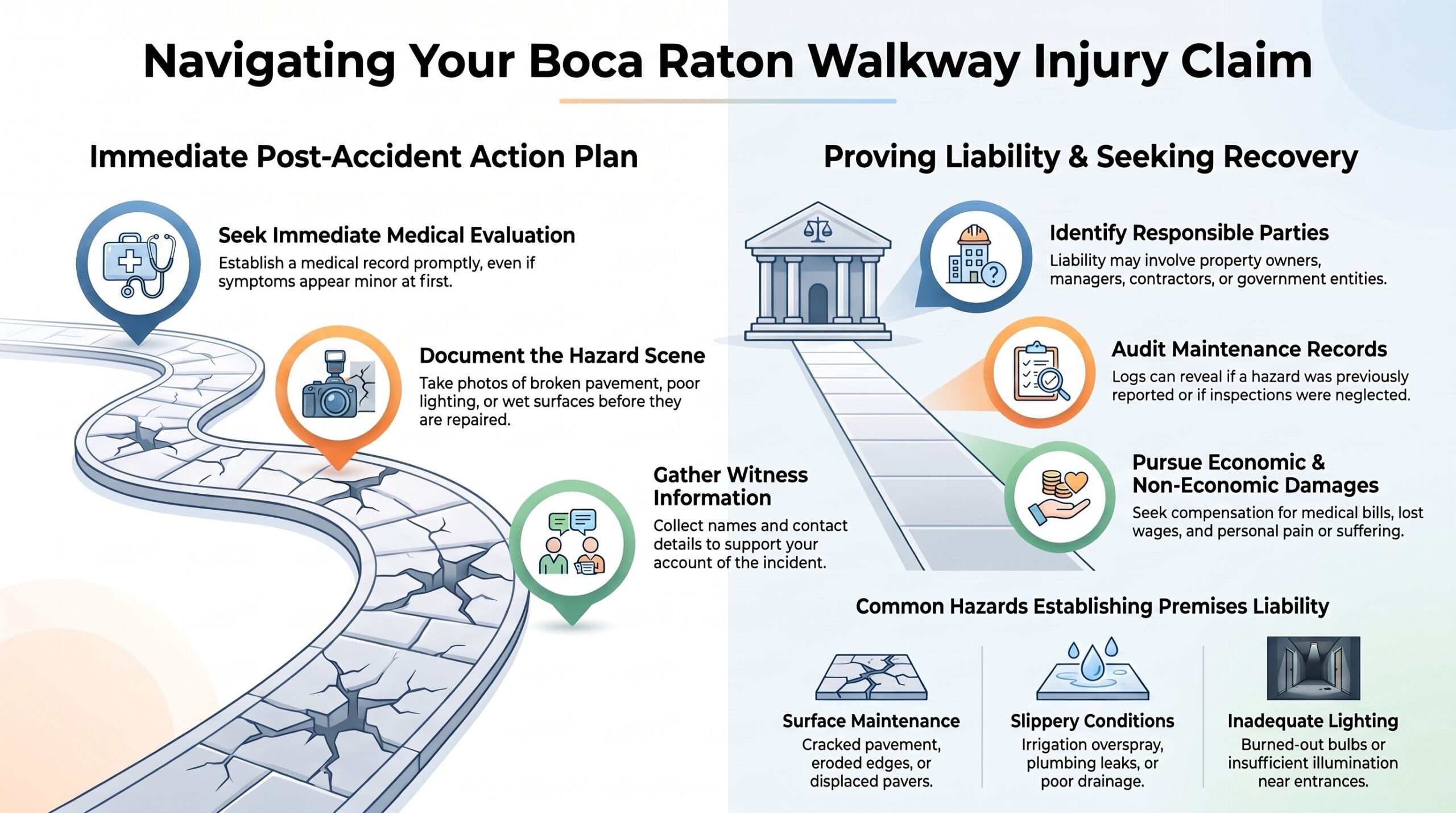


How We Can Help With Your Boca Raton Walkways & Structures Injury Claim
When a dangerous walkway or structural defect causes an injury in Boca Raton, an experienced injury lawyer can evaluate the circumstances and determine whether another party may be legally responsible. A lawyer can help preserve evidence, identify potentially responsible property owners or maintenance providers, and organize medical records, incident reports, photographs, and witness information. This assistance allows an injured person to focus on recovery while the claim is developed carefully and efficiently.
Legal representation may include communication with insurers, review of settlement proposals, and preparation of documentation supporting medical expenses, lost income, and related losses. Counsel can also explain procedural requirements, applicable deadlines, and potential options without making unsupported promises about results. When appropriate, negotiation may seek compensation that reflects both current needs and long-term compensation concerns arising from lasting limitations or continued treatment.
OUR CONSULTATIONSARE FREE
START YOUR FREE CASE REVIEW

Understanding Boca Raton Walkways & Structures Injury Cases
Understanding a Boca Raton walkway and structure injury case requires examining how the accident occurred, whether a hazardous condition contributed to it, and which party was responsible for identifying or correcting the danger. A Premises liability overview generally considers the property owner’s or occupier’s duty to maintain reasonably safe conditions, provide appropriate warnings, and address known or reasonably discoverable hazards. The legal analysis may also involve whether the injured person was lawfully present and whether the responsible party had sufficient notice of the condition. Evidence such as photographs, incident reports, maintenance records, witness accounts, and medical documentation can help establish what happened and the resulting harm.
Comparative fault considerations may affect recovery if the injured person’s conduct is alleged to have contributed to the accident. Because responsibility can involve owners, tenants, managers, contractors, or governmental entities, a careful review of control, notice, and applicable deadlines is crucial. Qualified legal guidance can help protect the injured person’s interests while pursuing accountability and appropriate compensation.
Common Causes of Boca Raton Walkways & Structures
Walkway and structural injuries in Boca Raton commonly arise from poor surface maintenance, wet or slippery conditions, and inadequate lighting. Structural defects, including cracks, uneven surfaces, and weakened components, may also create significant hazards. Identifying these conditions is crucial when evaluating the circumstances surrounding an injury claim.
Poor Surface Maintenance
Poor surface maintenance is a frequent contributor to unsafe walkways and structures in Boca Raton. Cracked pavement, broken pavers, eroded edges, and unrepaired structural defects can create unexpected changes in elevation, increasing the risk of trips and falls. A negligent sidewalk may reflect inadequate inspections, delayed repairs, or failure to address hazards reported by residents and visitors. Property owners, municipalities, and managers may have responsibilities to monitor these areas and arrange timely maintenance, depending on the location and applicable duties. Weather-related hazards, including prolonged heat, heavy rainfall, and storm activity, can accelerate deterioration and expose existing weaknesses. Clear documentation of the condition, location, and duration of a defect may help establish how the hazard developed and whether responsible parties had reasonable opportunities to correct it.
Wet Or Slippery Conditions
When water, oil, algae, or other substances accumulate on a Boca Raton walkway or structure, the surface may become dangerously slippery and difficult to travel on safely. These conditions can develop after rain, plumbing leaks, irrigation overspray, cleaning activities, or inadequate drainage. Property owners, managers, and maintenance personnel may be responsible for identifying hazards, removing contaminants, and providing timely warnings or barriers.
Effective parking garage maintenance is particularly important because vehicle fluids, rainwater, and accumulated debris can create hidden slip hazards on ramps, stairs, and pedestrian paths. Slip-resistant footwear may reduce the likelihood of a fall, but it does not eliminate a property’s obligation to maintain reasonably safe premises. A person injured in a fall may require a medical evaluation and should promptly document the condition for potential legal review.
Inadequate Lighting
Inadequate lighting can prevent visitors from seeing changes in elevation, damaged surfaces, debris, wet areas, or other hazards on Boca Raton walkways and structures. Poorly positioned fixtures, burned-out bulbs, blocked light sources, and insufficient illumination near entrances may leave routes difficult to travel after sunset. These conditions can contribute to a Slip-and-Trip incident when pedestrians cannot identify obstacles or judge distances accurately. Uneven Sidewalks, curbs, stairs, ramps, and changes between surfaces may become especially dangerous in shadowed areas.
Property owners, managers, and responsible maintenance personnel should generally evaluate lighting regularly, replace failed bulbs promptly, and address dark areas identified during inspections or in visitor reports. Clear illumination supports safer access for residents, guests, employees, and members of the public, while documentation may help establish how an unsafe condition developed.
Structural Defects
Structural defects can create hazards that remain present regardless of lighting conditions. Uneven walkway surfaces, cracked concrete, displaced pavers, and deteriorated railings may result from poor construction, aging materials, shifting soil, or inadequate maintenance. Improper water drainage can accelerate erosion, weaken foundations, and leave slippery areas after rainfall. In structures such as stairs, ramps, and elevated walkways, missing supports or unstable connections can increase the likelihood of collapse or serious falls.
Property owners, managers, and contractors are responsible for identifying these conditions and addressing them promptly. Regular inspections, appropriate repairs, and effective trip prevention measures can reduce risks for residents, visitors, employees, and other members of the community. When a dangerous defect causes injury, documentation of the condition and repair history may help establish how the hazard developed and whether responsible parties received adequate notice.


Legal Rights of Boca Raton Walkways & Structures Injury Victims
Boca Raton walkway and structure injury victims may have legal rights when hazardous conditions, negligent maintenance, or construction defects contribute to an accident. Under premises liability principles, an injured person may pursue compensation when a property owner, manager, contractor, or other responsible party fails to meet a reasonable safety obligation. Potential recovery can include medical expenses, lost income, rehabilitation costs, and non-economic losses, subject to evidence and applicable deadlines.
Boca Raton walkway and structure injury victims may pursue compensation for medical costs, lost income, and other damages caused by unsafe conditions.
- Victims may seek accountability rather than bear financial burdens created by another party’s conduct.
- Families may obtain support for treatment, caregiving, and long-term needs following a serious injury.
- Survivors may protect their ability to serve loved ones and communities while pursuing a fair legal remedy.
Property owners and insurers may assert negligence defenses, including lack of notice, comparative fault, or disputed causation. Prompt documentation, witness information, medical records, and professional legal guidance can help preserve rights. Florida filing deadlines and claim procedures require careful attention.
Why Do Boca Raton Walkways & Structures Injuries Happen?
Walkway and structural injuries in Boca Raton often result from neglected maintenance, unsafe design, construction defects, or hazardous conditions that property owners and other responsible parties failed to identify and correct. Cracked pavement, uneven surfaces, broken handrails, inadequate lighting, and deteriorating stairs can create serious risks for visitors, tenants, employees, and passersby. Water intrusion, corrosion, shifting foundations, and improperly completed repairs may also weaken structures without obvious warning. Under premises liability principles, responsibility typically depends on whether a property controller knew, or reasonably should have known, about a dangerous condition and failed to address it.
Negligence standards assess the level of care expected under the circumstances, including inspection practices, warnings, repairs, and compliance with applicable building codes. Comparative fault may affect recovery when an injured person’s conduct contributed to an incident. Effective risk awareness, regular inspections, prompt maintenance, and clear warnings can help property owners and communities prevent avoidable injuries while protecting those who rely on safe walkways and structures.
Don’t Wait. Call Our Florida Personal Injury Lawyers Now!
What Should You Do After a Boca Raton Walkways & Structures Injury?
After a Boca Raton walkway or structure injury, the injured person should seek immediate medical care, even if symptoms initially appear minor. The accident scene should be documented with photographs, witness information, and details of any relevant property. Consulting a personal injury lawyer can help preserve evidence, assess liability, and protect the individual’s legal rights.
Seek Immediate Medical Care
If an injury occurs on a Boca Raton walkway or other structure, the injured person should seek prompt medical care, even when symptoms initially appear minor. A healthcare professional can identify fractures, head trauma, soft-tissue damage, or other conditions that may worsen without treatment. An Emergency room evaluation may be appropriate for severe pain, bleeding, dizziness, loss of consciousness, difficulty breathing, or suspected spinal injury.
For less urgent symptoms, an appointment with a physician or urgent-care provider can establish a timely medical record and support appropriate treatment. The injured person should follow all medical instructions, attend recommended follow-up visits, and explain how the incident occurred. Once immediate care is arranged, the person or a responsible companion should report to the property manager, when feasible, so the condition receives prompt attention.
Document The Accident Scene
A person injured on a Boca Raton walkway or structure should document the accident scene as soon as medical needs have been addressed. Photographs can preserve conditions that may change quickly, including broken pavement, loose railings, inadequate lighting, standing water, debris, and missing warning signs. Images should show both close-up details and wider views establishing the location. Documenting injuries may include photographs of visible harm, damaged clothing, and swelling, provided this does not interfere with treatment.
Weather conditions should also be recorded, including rain, wind, flooding, or poor visibility, because they may help explain the scene. A person should note the date, time, exact location, and sequence of events while memories remain clear. Names and contact information for witnesses should be collected, and relevant surveillance cameras should be identified promptly.
Consult A Personal Injury Lawyer
Prompt legal guidance can help preserve a claim arising from an injury on a Boca Raton walkway or structure. A personal injury lawyer can evaluate whether premises liability applies and identify potentially responsible parties, such as property owners, contractors, or managers. Counsel may investigate Building code compliance, inspection records, repair histories, and warnings that could reveal hazardous design or maintenance negligence.
Early consultation also supports evidence preservation by securing photographs, medical records, surveillance footage, witness accounts, and incident reports before they disappear. A lawyer can explain deadlines, communicate with insurers, and help prevent statements or settlements that compromise recovery. For individuals focused on serving others, obtaining qualified representation can also clarify options for supporting injured residents and promoting safer public and private spaces throughout the community. This guidance permits informed decisions while protecting accountability.
Critical Evidence in a Boca Raton Walkways & Structures Injury Case
Critical evidence can determine whether an injured person receives accountability or faces an unsupported claim.
Critical materials may include:
- Incident-scene photographs that preserve hazards before they are repaired or removed.
- Medical records and witness statements, which connect the injury to the incident and document its consequences.
- Property maintenance logs, which may reveal prior notice, inspections, or neglected repairs.
Incident Scene Photos
Photographs taken at a walkway or structure accident scene can preserve conditions that may change, be repaired, or disappear before a claim is investigated. Evidentiary photos should show the entire area, including lighting, surface conditions, stairs, railings, warning signs, and surrounding obstacles. Close images can document cracks, uneven elevations, loose materials, water, or other conditions relevant to how the incident occurred. Time-stamped images and multiple angles may help establish scale and location.
If available, security footage can supplement photographs by showing activity, visibility, and conditions before or after the event. Witness recollection may also be compared with the visual record, helping clarify disputed details. Separate injury documentation should be maintained to connect visible harm with the reported incident, while preserving original files and identifying who captured each image.
Medical Treatment Records
Medical treatment records can provide objective evidence of the injuries allegedly sustained in a Boca Raton walkway or structure accident and the care required afterward. These records may include emergency evaluations, diagnostic imaging, physician notes, expert consultations, physical therapy reports, and billing statements. Expert consultations can establish when symptoms appeared, how conditions progressed, and whether treatment was medically necessary. Consistent treatment documentation may help link reported limitations to the accident and identify other conditions that could affect an assessment.
Records can also reflect Medication adherence, prescribed restrictions, and compliance with recommended rehabilitation. Delays, gaps, or unexplained changes in care may receive careful review because they can influence the evaluation of causation and damages. Preserving complete records allows responsible advocates to present an accurate account and support appropriate assistance for the injured person.
Witness Statements
Witness statements can provide important firsthand accounts of accidents on Boca Raton walkways or involving Boca Raton structures, particularly when the circumstances are disputed. Incident eyewitnesses may describe what they observed before, during, and after the event, including conditions that affected a person’s ability to walk safely. Their recollections can help clarify disputed facts and support a consistent account of the injury.
Written statements should identify the witness, record relevant details, and preserve observations while memories remain fresh. Counsel may assess witness credibility by considering the person’s opportunity to observe, consistency, neutrality, and relationship to those involved. A reliable account can strengthen efforts to serve an injured individual fairly and responsibly. When testimony is expected, deposition preparation helps witnesses understand the procedure, review their recollections accurately, and answer questions clearly without speculation or exaggeration.
Property Maintenance Logs
Property maintenance logs can provide a detailed record of how a Boca Raton property owner, manager, or maintenance contractor inspected and addressed walkways, stairs, ramps, railings, and other structures before an accident. These records may identify recurring hazards, requested repairs, completed work, inspection dates, and the individuals responsible for each task. They can also reveal whether management documented tenant notification about dangerous conditions or restricted access while repairs were pending.
Missing entries, vague descriptions, or unexplained delays may support questions about whether reasonable safety procedures were followed. Compliance audits, work orders, photographs, and vendor invoices can help verify the accuracy of reported maintenance. A thorough review may clarify notice, responsibility, and the timeline leading up to an injury, helping advocates pursue appropriate relief while promoting safer conditions for residents, visitors, and staff.
Don’t Wait. Call Our Florida Personal Injury Lawyers Now!
Long-Term Effects of Boca Raton Walkways & Structures Injuries
Walkway and structural injuries may produce chronic pain, reduced mobility, and lasting limitations on daily activities. Emotional and psychological effects, including anxiety or diminished quality of life, can also persist after physical wounds appear to recover. Ongoing medical treatment, rehabilitation, assistive services, and related financial needs may create substantial long-term burdens.
Chronic Pain and Mobility Loss
Chronic pain and reduced mobility can remain long after an injury caused by a dangerous walkway, stairway, or other structure in Boca Raton. Fractures, torn ligaments, nerve damage, and improperly repaired wounds may create persistent discomfort that interferes with standing, walking, or completing ordinary tasks. Some individuals experience Phantom Pain after an amputation or severe nerve injury, while others develop Gait Instability that increases the risk of additional falls. Limited mobility can require canes, walkers, home modifications, transportation assistance, or ongoing physical therapy.
These needs may affect employment, caregiving responsibilities, and a person’s ability to serve family members or community organizations. Medical records, rehabilitation recommendations, and documented changes in daily functioning can help establish the injury’s continuing impact and the support required for long-term recovery.
Emotional and Psychological Effects
Emotional and psychological effects may develop alongside the physical limitations caused by a walkway or structural injury. Persistent discomfort, reduced independence, and uncertainty about recovery can contribute to anxiety, depression, irritability, or sleep disruption. Some injured individuals may avoid public spaces or activities associated with the incident, while others experience intrusive memories, heightened alertness, or diminished confidence. These reactions can affect relationships, communication, and participation in community life.
A compassionate support network may help identify meaningful changes in behavior and encourage appropriate professional evaluation. Mental health treatment can include counseling, behavioral strategies, and coordinated pain management options when physical symptoms intensify emotional distress. Individuals returning to employment may also benefit from workplace trauma counseling, particularly when fear or concentration difficulties interfere with duties. Early recognition supports dignity, stability, and continued connection.
Ongoing Medical and Financial Needs
When injuries involving Boca Raton walkways or structures result in lasting limitations, an individual may require ongoing medical care and financial support long after initial treatment ends. Ongoing needs can include expert appointments, rehabilitation, assistive equipment, prescription medications, and periodic evaluations. Medication side effects may create additional health concerns, requiring adjustments and careful monitoring by qualified providers.
Lost earning capacity, reduced work hours, and transportation expenses can place sustained pressure on household finances. Disability accommodations at home or work may also be necessary to support safety, independence, and continued participation in daily activities. Documenting treatment, expenses, functional limitations, and employment changes can help clarify the injury’s long-term impact on recovery. Legal guidance may assist injured individuals and their families in identifying available compensation and planning for future care with diligence.
Proving Liability in Boca Raton Walkways & Structures Injury Cases
Proving liability in Boca Raton walkway and structures injury cases requires evidence establishing that a property owner, manager, or other responsible party failed to maintain reasonably safe conditions. Under the basics of premises liability, the injured person generally must show that a dangerous condition existed, that the responsible party knew or should have known about it, and that the condition caused the injury. Useful evidence may include photographs, surveillance footage, incident reports, maintenance records, inspection logs, and witness statements. Documentation of prior complaints can help demonstrate notice, while records showing recurring defects may support an argument that reasonable precautions were not taken.
Safety inspection standards can provide an objective basis for evaluating whether inspections, repairs, warnings, or barriers were adequate. Medical records and timely injury reports may connect the incident to the hazardous condition. A careful investigation preserves evidence, identifies responsible entities, and clarifies applicable duties, helping injured individuals pursue accountability while supporting fair treatment for all involved.
Dealing With Insurance Companies After a Boca Raton Walkways & Structures Injury
After liability evidence has been preserved, communication with insurance companies becomes an important part of protecting a Boca Raton injury claim. Insurers may request recorded statements, medical authorizations, photographs, or detailed accounts of the incident. Each response should remain accurate, limited to known facts, and consistent with available documentation. An injured person should avoid speculation, minimizing symptoms, or signing releases before understanding the scope.
Insurance delay tactics can include repeated requests for information, slow claim evaluations, or attempts to shift responsibility. Careful records of calls, letters, and deadlines help identify these practices and preserve accountability. A qualified representative may handle communications, organize supporting materials, and protect the claimant from statements that could be misinterpreted.
Effective settlement communication strategies focus on documented medical needs, demonstrated losses, and the responsible party’s conduct. Written communications should be professional and evidence-based rather than driven by frustration. Throughout this process, respectful advocacy helps preserve resources for recovery and supports fair treatment for the injured individual.
What to Expect During a Boca Raton Walkways & Structures Injury Claim Process
A Boca Raton walkways and structures injury claim generally begins with an initial case evaluation to assess liability, injuries, and available legal remedies. The process may then involve gathering photographs, medical records, witness statements, maintenance reports, and other evidence, followed by negotiations with the responsible party’s insurance company. If negotiations do not produce a fair resolution, the matter may proceed to settlement discussions or trial.
Initial Case Evaluation
During an initial case evaluation, a Boca Raton injury lawyer reviews how the walkway or structure was maintained, identifies the parties responsible for the condition, and examines the circumstances surrounding the incident. The discussion generally addresses the injury’s apparent seriousness, medical treatment, work limitations, and immediate needs. The lawyer may explain the basics of the claim timeline, including potential filing deadlines, notice requirements, communication with insurers, and the stages of a possible claim.
Evidence checklist requirements are also outlined at a general level, helping the injured person understand which records and information may support an informed evaluation without beginning the formal evidence-gathering process. The lawyer then considers whether negligence, property-control issues, or other legal factors could support a claim and explains realistic options, expected responsibilities, and appropriate next steps for protecting the person’s interests.
Evidence Gathering Process
Once representation begins, the evidence-gathering process focuses on establishing how the walkway or structure became hazardous, who controlled or maintained it, and how the condition contributed to the injury. Counsel may inspect the location, photograph surface conditions, measure defects, and document drainage, handrails, stairs, or barriers. Surveillance footage review can identify the incident, preceding maintenance activity, lighting conditions, and the conduct of nearby individuals.
Lighting defect detection may involve examining fixtures, illumination levels, electrical components, and records showing whether inadequate visibility existed before the event. Investigators may obtain incident reports, inspection logs, repair requests, maintenance contracts, weather data, and applicable safety standards. Witness interviews can clarify what was observed and when. Medical records and expert evaluations may then connect the documented hazard to the reported injuries.
Insurance Company Negotiations
Insurance company negotiations generally begin after the claim’s supporting evidence has been organized and liability is presented to the responsible party’s insurer. In a walkway or structure injury matter, the insurer typically reviews incident reports, photographs, medical records, witness accounts, and applicable premises liability duties. A representative may request additional documentation, examine how the incident occurred, or assess whether maintenance practices contributed to the injuries.
Counsel can help present the claim accurately, safeguard the injured person’s interests, and respond to communications without speculation. Evidence preservation remains important because photographs, inspection records, surveillance footage, and repair histories may clarify conditions that existed at the time. Negotiations may involve evaluating damages, treatment needs, lost income, and ongoing limitations. Careful documentation and measured communication help ensure the claim receives responsible, informed consideration.
Settlement Or Trial
Settlement discussions may resolve a Boca Raton walkways or structures injury claim without the time and uncertainty of a trial, but the decision requires a careful assessment of liability, medical evidence, financial losses, and future limitations. A lawyer may present a demand supported by photographs, maintenance records, witness statements, and medical documentation. The negotiation strategy should account for disputed responsibility, available insurance coverage, and the injured person’s continuing care needs.
If negotiations fail to produce fair compensation, the claim may proceed toward litigation. Trial preparation can include depositions, expert evaluations, document review, and development of testimony concerning the hazardous condition and resulting harm. A court will then evaluate the evidence and determine liability and damages. Throughout either path, careful guidance helps protect the claimant’s interests while supporting a fair resolution for the community.
Compensation for Boca Raton Walkways & Structures Injury Damages
Compensation for injuries caused by defective or unsafe walkways and structures in Boca Raton may include medical expenses, lost wages, reduced earning capacity, and pain and suffering. Under Premises liability principles, an injured person may pursue recovery when a property owner or manager fails to identify, repair, or warn about a dangerous condition. Documentation can help establish the incident, including photographs, witness information, maintenance records, and medical reports.
The available compensation may also address rehabilitation, necessary transportation, household assistance, and future care connected to the injury. A claim’s value depends on the severity of harm, the duration of recovery, and the evidence linking the condition to the responsible party. Comparative negligence may reduce recovery if the injured person’s conduct contributed to the event. Insurance coverage, notice requirements, and applicable filing deadlines can also influence the claim. A Boca Raton injury lawyer may evaluate these factors and pursue a fair resolution through negotiation or litigation while helping protect the claimant’s interests.
Economic vs Non-Economic Damages in Boca Raton Walkways & Structures Cases
Economic damages may include medical expenses, lost wages, rehabilitation costs, and other measurable financial losses resulting from walkway or structural injuries. Non-economic losses can involve pain and suffering, emotional distress, diminished quality of life, and permanent impairment. Calculating total compensation requires evaluating both categories, supporting documentation, injury severity, and the effects on the injured person’s daily life and future earning capacity.
Economic Damage Categories
In Boca Raton walkway and structural injury cases, economic damages compensate for objectively measurable financial losses caused by the incident. Recoverable categories may include emergency treatment, hospitalization, physician visits, medication, rehabilitation, and anticipated future medical care. Documentation such as invoices, receipts, medical records, and expert projections helps establish the amount and necessity of these expenses. Lost wages may also be claimed when injuries prevent work, reduce earning capacity, or require missed time for treatment.
A careful review can determine Workers’ compensation eligibility if the incident occurred during employment and whether other benefits apply. The Comparative fault assessment may affect the final recovery if multiple parties contributed to the occurrence. Transportation expenses, household assistance, and other directly attributable costs may qualify when supported by reliable evidence and applicable law.
Non-Economic Losses
Although economic damages cover documented financial losses, non-economic damages address the personal impact of an injury that cannot be measured by bills or receipts. In Boca Raton walkway and structure cases, these losses may include physical pain, emotional distress, anxiety, diminished enjoyment of life, inconvenience, and lasting impairment. They can also reflect disruption to family relationships, community participation, and the ability to serve or support others. Evidence may include medical observations, personal accounts, witness testimony, and documentation describing daily limitations.
Comparative negligence can affect whether a defendant is responsible for these harms when the injured person’s conduct is alleged to have contributed to the incident. Counsel may also address claim denial reasons, particularly when an insurer disputes injury severity, causation, or policy coverage. Non-economic losses recognize human consequences beyond financial documentation.
Calculating Injury Compensation
A structured compensation analysis separates documented economic losses from non-economic damages tied to the injury’s personal consequences. Economic damages may include emergency care, rehabilitation, medication, lost wages, reduced earning capacity, transportation, and necessary household assistance. Records, invoices, employment documentation, and medical opinions help establish these amounts and connect them to the walkway or structure incident.
Non-economic damages address pain, emotional distress, disfigurement, disability, loss of enjoyment, and diminished quality of life. Their value depends on injury severity, recovery duration, permanence, and credible evidence describing daily limitations. Insurance policy limits can affect the amount of recovery available, even when proven losses are greater. Settlement strategies should account for liability, comparative fault, future expenses, and litigation risks. A careful evaluation supports fair negotiations and helps preserve resources for injured individuals and families who require continued care.
When a Boca Raton Walkways & Structures Injury Case Goes to Trial vs Settlement
When liability for a dangerous walkway or structure is disputed, a Boca Raton injury case may proceed to trial rather than be resolved through settlement. Settlement discussions allow both sides to evaluate evidence, medical documentation, repair records, and projected losses while avoiding the expense and uncertainty of courtroom proceedings. A fair agreement may provide timely support for injured individuals and reduce stress for families serving their loved ones.
A trial becomes more likely when insurers deny responsibility, undervalue the harm, or refuse to address disputed facts. Attorneys may present witness testimony, photographs, expert opinions, and maintenance evidence to establish how the incident occurred. A Comparative fault strategy may become important when the defense argues that the injured person contributed to the accident. Counsel may also assess punitive damages eligibility when conduct appears particularly reckless or intentional. The decision between settlement and trial depends on the strength of the evidence, recovery needs, litigation risks, and the opposing party’s willingness to negotiate in good faith.
Florida Laws That May Affect Your Boca Raton Walkways & Structures Case
Florida premises-liability laws may determine whether a property owner or other responsible party must compensate someone injured on a walkway or structure in Boca Raton. These rules generally require proof that a hazardous condition existed, that the responsible party knew or should have known about it, and that reasonable care was not taken to correct or warn of the danger.
Important considerations include:
- Notice and maintenance: Inspection records, repair requests, photographs, and witness accounts may show whether an unsafe condition was ignored.
- Comparative Negligence: Florida may reduce an injured person’s recovery if that person’s actions contributed to the incident, making careful review of evidence critical.
- Premises Liability: Duties can vary according to whether the injured individual was invited, permitted to enter, or otherwise present lawfully.
Building owners, managers, contractors, and maintenance companies may share responsibility when their conduct contributed to harm. A thorough evaluation can clarify accountability and support a fair resolution for an injured person and the affected community.
Don’t Wait. Call Our Florida Personal Injury Lawyers Now!
The Statute of Limitations for Boca Raton Walkways & Structures Injury Cases
Strict filing deadlines may determine whether an injured person can pursue compensation for an accident involving a Boca Raton walkway or structure. Florida law generally requires a negligence or premises liability lawsuit to be filed within a specified period after the injury occurs. The applicable deadline may vary depending on the defendant, the nature of the claim, and whether a governmental entity owns or controls the property. Government claims may require earlier notice and additional procedural compliance.
Missing the limitations period can result in dismissal, even when hazardous conditions caused substantial harm. Certain circumstances may pause, shorten, or otherwise affect the deadline, making accurate evaluation important. Evidence concerning inspections, maintenance, warnings, and medical treatment should be preserved promptly, as delays can affect both filing rights and proof.
Comparative fault rules may reduce recovery if the injured person is found responsible. Premises liability defenses may also affect whether a claim remains viable. Understanding these legal time limits supports informed decisions and protects access to accountability.
How a Boca Raton Walkways & Structures Injury Lawyer Can Help You
A Boca Raton walkways and structures injury lawyer can evaluate the circumstances of an accident, identify potentially responsible parties, and determine which legal claims may be available. Through a clear Premises liability overview, counsel can explain duties owed by property owners, occupiers, contractors, or maintenance companies and assess whether negligence contributed to the harm.
A lawyer may also coordinate crucial case preparation, including:
- Preserving photographs, surveillance footage, incident reports, medical records, and witness accounts before valuable evidence disappears.
- Communicating with insurers and opposing parties so an injured person is not pressured into an inadequate resolution.
- Calculating medical expenses, lost income, rehabilitation needs, and the personal impact of pain or disability to present a complete claim.
Effective Evidence preservation strategies can clarify disputed conditions and protect the interests of individuals who may be unable to advocate fully for themselves. Counsel can organize documentation, consult appropriate experts, and pursue accountability while treating the injured person and affected family members with dignity, patience, and respect.
When to Contact a Boca Raton Walkways & Structures Injury Lawyer
Prompt legal attention can be important after a walkway or structural accident, particularly when injuries require medical attention, prevent normal work, or may have lasting effects. A Boca Raton attorney may be contacted as soon as practical, especially before statements are given to insurers or property representatives. Early guidance can help preserve relevant records, photographs, maintenance histories, and incident reports. Post-accident healthcare should remain the immediate priority, with medical evaluations and recommended treatment documented carefully. Legal consultation may also be appropriate when responsibility is disputed, hazardous conditions were corrected after the incident, or multiple parties may share responsibility.
Factual witness gathering becomes more difficult as memories fade, so names and contact information should be preserved promptly. Individuals serving clients, customers, residents, or community members may need assistance understanding reporting deadlines and available options. Prompt contact does not require a decision to file a lawsuit; it provides an opportunity to protect information and evaluate the circumstances.
Why You Need an Experienced Boca Raton Walkways & Structures Injury Lawyer
Experience can significantly affect how a walkway or structure injury claim is evaluated and developed. An experienced Boca Raton attorney can identify responsible parties, investigate hazardous conditions, and explain how Premises liability rules apply to the circumstances. This guidance helps injured individuals and their families pursue accountability while protecting their ability to serve others and recover from unexpected harm.
Skilled counsel also supports evidence preservation by securing photographs, maintenance records, surveillance footage, inspection reports, witness statements, and medical documentation before information vanishes. A lawyer who knows local claims can analyze applicable negligence standards, including notice requirements, duty of care, causation, and comparative fault. This analysis may clarify whether a property owner, manager, contractor, or another party contributed to the incident.
Experience further bolsters compensation calculation. An attorney can assess medical expenses, lost income, rehabilitation needs, pain, reduced quality of life, and future damages. Thorough preparation promotes informed decisions and helps ensure that a claim reflects the injury’s full personal and financial consequences.
How to Choose the Right Boca Raton Walkways & Structures Injury Lawyer for Your Case
Selecting the right Boca Raton walkways and structures injury lawyer requires careful consideration of the attorney’s experience, investigative resources, communication practices, and record-keeping in handling premises liability claims. A qualified lawyer should understand how defective surfaces, inadequate lighting, railings, stairs, and structural hazards cause injuries and should know how to preserve evidence before conditions change. During the Client consultation, the prospective client can ask who will manage the case, how updates are provided, and whether the attorney has handled comparable claims. The lawyer should explain potential legal theories, available damages, deadlines, and realistic challenges without promising a particular outcome.
A clear discussion of contingency fees is also critical, including the percentage charged, case expenses, and circumstances that may incur additional costs. References to professional standing, disciplinary history, and prior results may assist evaluation, although past outcomes do not guarantee success. Selecting counsel who listens carefully and treats every client with respect supports informed decisions and effective advocacy.
About The Law Offices of Anidjar & Levine
Among the firms a prospective client may evaluate, the Law Offices of Anidjar & Levine represents individuals seeking compensation for injuries resulting from unsafe walkways, stairs, railings, lighting, or other structural conditions.
The firm’s attorneys assess whether property owners, managers, contractors, or other responsible parties failed to address hazards or provide reasonable warnings.
Their work may involve premises liability claims arising from falls, inadequate maintenance, defective construction, or dangerous access areas.
A careful review can include incident reports, photographs, surveillance footage, maintenance records, witness accounts, and medical documentation.
Evidence preservation is important because conditions may change quickly after an accident, potentially affecting the ability to establish how the injury occurred.
The firm may communicate with insurers, investigate applicable safety standards, and pursue a resolution consistent with the client’s documented losses.
Potential clients can discuss their circumstances with the firm to understand available legal options, applicable deadlines, and the information needed to evaluate a claim responsibly.
Each matter receives case-specific consideration rather than a predetermined outcome.

Frequently Asked Questions
Can I Pursue a Claim if the Walkway Hazard Was Temporarily Created by Construction?
A claim may be pursued when a temporarily created construction hazard causes injury, particularly if responsible parties failed to provide warnings, barriers, lighting, or safe alternatives. Liability may involve negligent repairs or construction oversight, depending on who created, controlled, or should have discovered the danger. Evidence such as photographs, incident reports, medical records, witness accounts, and project documentation can support the matter. A qualified attorney can assess deadlines, responsibility, and available remedies.
Are Walkway Injury Claims Available to Tourists or Visitors From Outside Florida?
Tourists and other out-of-state visitors may pursue walkway injury claims in Florida when hazardous conditions cause compensable harm. Eligibility generally depends on proving negligence, notice, causation, and timely filing under applicable Florida law. Liability limits may affect the amount of recovery available, particularly when governmental entities, contractors, property owners, or insurance policies are involved. Because jurisdictional rules and evidence requirements can vary, an injured visitor should promptly preserve records and seek qualified legal guidance.
Can I Recover Damages if I Was Injured While Using a Privately Owned Walkway?
A person injured on a privately owned walkway may recover damages if the owner’s negligent maintenance created a dangerous condition and the owner knew, or reasonably should have known, about it. Homeowner responsibility may include repairing defects, providing warnings, or restricting access when hazards exist. Recovery typically depends on proving liability, causation, and actual losses, while comparative fault may reduce compensation. Prompt documentation and legal evaluation can preserve available claims.
Does a Walkway Owner’s Bankruptcy Affect My Ability to Recover Compensation?
A walkway owner’s bankruptcy can affect how an injured person pursues compensation, but it does not automatically eliminate claim eligibility. The bankruptcy court may impose an automatic stay, delaying lawsuits and collection efforts. The injury claim might proceed through the bankruptcy case, require filing a proof of claim, or be covered by available insurance. Legal counsel can assess deadlines, exemptions, and creditor priorities, then help protect the injured person’s rights while respecting the court’s process.
Can I File a Claim for Injuries Caused by Inadequate Lighting or Security Structures?
An injured person may file a claim when inadequate lighting or deficient security structures contributed to harm. Liability generally depends on proving that an owner or manager knew, or reasonably should have known, about the hazard and failed to correct it or warn visitors. Evidence may include photographs, incident reports, surveillance footage, maintenance records, and witness statements. Claims can involve negligent maintenance, insufficient lighting, security breaches, or dangerous design, subject to applicable deadlines and defenses.
—————————
Walkway and structural hazards can lead to serious injuries, significant expenses, and lasting disruption.
Victims in Boca Raton may have legal options when negligent property owners, managers, or other responsible parties fail to correct dangerous conditions.
The Law Offices of Anidjar and Levine can assess the circumstances, identify potentially liable parties, preserve evidence, and pursue appropriate compensation.
Consulting a Boca Raton Personal Injury Lawyer promptly can help protect essential rights and support informed decisions throughout the claims process.

