The Law Offices of Anidjar and Levine helps victims of drunk driving crashes pursue compensation, preserve evidence, and manage insurance claims after an impaired driver causes a collision.
Legal support may include reviewing police reports, breath test records, medical documentation, witness statements, and available coverage, including PIP, liability, and uninsured motorist benefits.
Counsel can also address damages for medical care, lost income, pain, and long-term impairment.
Learn more about working with a Florida Car Accident Lawyer.
The sections below explain important rights, deadlines, and case considerations.
Main Takeaways
- A Florida drunk-driving injury lawyer helps organize medical records, lost-wage documentation, repair estimates, and insurance claim documentation.
- Civil injury claims are separate from criminal DUI cases and focus on recovering compensation for crash-related losses.
- Key evidence may include police reports, breath tests, witness statements, photos, surveillance footage, and vehicle data.
- Injured victims may seek damages beyond PIP when Florida’s statutory injury thresholds are met.
- A lawyer can negotiate with insurers, evaluate UM/UIM coverage, and pursue punitive damages when legally supported.


How We Can Help With Your Florida Drunk Driving Car Accident Injury Claim
After a drunk-driving crash, an injured person may face medical treatment, lost income, vehicle damage, insurance disputes, and uncertainty about how Florida law applies to the claim. A Florida drunk-driving car accident injury lawyer can provide organized guidance while protecting the injured person’s dignity and practical needs. Counsel may coordinate claim documentation, review medical records, communicate with providers, and identify losses that affect the person’s ability to work, serve family, and support the community.
Early evidence preservation can be essential, including photographs, witness information, crash reports, surveillance footage, and vehicle data. Legal representation also helps manage insurance negotiations, reducing pressure on the injured person to accept an inadequate offer. The lawyer can present the claim clearly, address insurer objections, and pursue compensation through settlement or litigation when necessary. This support allows the injured person to focus on recovery while the legal team advances the claim with care and discipline.
OUR CONSULTATIONSARE FREE
START YOUR FREE CASE REVIEW

Understanding Florida Drunk Driving Car Accident Injury Cases
Effective legal help begins with a clear understanding of how Florida drunk driving car accident injury cases are evaluated under state law. These matters often involve both criminal proceedings and separate civil claims, each serving a distinct purpose. The criminal case addresses public accountability, while the injury claim focuses on restoring losses suffered by harmed individuals and families.
A careful review may include police reports, chemical test records, medical documentation, witness statements, insurance coverage, and the long-term effects of injuries. Attorneys serving injured clients must recognize how a criminal defense strategy may influence available evidence, timelines, and settlement discussions. They also assess the risk of civil penalties, including punitive damages, when conduct shows intentional disregard for the safety of others.
For service-minded advocates, the goal is not only compensation but orderly guidance through a difficult process. Sound evaluation helps protect rights, preserve evidence, and pursue a result grounded in Florida law.
Common Causes of Florida Drunk Driving Car Accidents
Common causes of a Florida drunk driving car accident often involve impaired driver judgment, which can lead to unsafe decisions behind the wheel. Alcohol may also cause delayed reaction times, making it difficult for a driver to respond to traffic signals, pedestrians, or sudden hazards. Excessive speeding and wrong-way driving further increase the risk of severe collisions, particularly on highways and busy Florida roadways.
Impaired Driver Judgment
When alcohol affects the brain’s ability to process information, an impaired driver may misjudge speed, distance, traffic signals, and the movements of nearby vehicles. This impaired driver judgment can lead to unsafe lane changes, improper turns, following too closely, or entering intersections without adequate caution. In Florida, these choices may place pedestrians, passengers, bicyclists, and other motorists at serious risk.
Alcohol consumption patterns, including rapid drinking, binge drinking, or driving after repeated drinks over several hours, can increase the likelihood of poor decision-making behind the wheel. Attorneys and safety advocates often examine impaired driver judgment, negligent driving behaviors, and surrounding facts to understand how a preventable crash occurred. Careful review of these issues helps support accountability, victim protection, and community-centered efforts to reduce alcohol-related roadway harm.
Delayed Reaction Times
After alcohol enters the bloodstream, a driver’s ability to perceive danger and respond promptly can decline in ways that make ordinary traffic conditions hazardous. Slower reflexes may delay braking, guiding, or recognizing a pedestrian, cyclist, emergency vehicle, or stopped traffic ahead. In Florida, where roadways often include tourists, workers, and families, this impairment can turn a manageable situation into a severe collision.
Delayed reaction times may also resemble Distracted Driving because the driver fails to process changing conditions quickly and accurately. Alcohol affects attention, coordination, and judgment, along with increasing Crash Risk even when the driver appears to be traveling normally. For those committed to serving injured people, recognizing this cause helps explain how preventable harm occurs and why accountability may be necessary after a drunk-driving crash.
Excessive Speeding
Alcohol-related delayed reaction times become even more dangerous when paired with excessive speeding, because higher speeds reduce the time available to recognize hazards and avoid impact. In Florida, impaired drivers who speed may fail to adjust to traffic flow, sudden congestion, or vehicles slowing for intersections. Weather impacts, including rain and standing water, can further reduce visibility and vehicle traction, increasing the likelihood of losing control.
At elevated speeds, collisions often produce more severe injuries, especially when vehicles strike roadside barriers, trees, or other fixed objects. Those serving injured individuals should recognize that speeding can transform a preventable impaired-driving incident into a catastrophic event. Careful investigation may reveal skid marks, crash data, witness accounts, and roadway conditions that help establish how excessive speed contributed to the harm.
Wrong-Way Driving
Because intoxication can impair judgment, perception, and spatial awareness, wrong-way driving is a serious hazard in Florida drunk-driving crashes. Impaired motorists may enter highways from exit ramps, cross medians, or travel against traffic on one-way streets, creating conditions for severe head-on collisions. These crashes often occur at night, when visibility is reduced and response time is limited. Distracted driving can worsen the danger, particularly when an impaired driver fails to notice warning signs, road markings, or oncoming headlights.
The risk becomes greater when commercial trucks are involved, because their size and weight can magnify the force of impact. Careful investigation may help identify alcohol impairment, roadway design issues, and other contributing factors, supporting accountability while helping injured people seek necessary medical care, stability, and protection.


Legal Rights of Florida Drunk Driving Car Accident Injury Victims
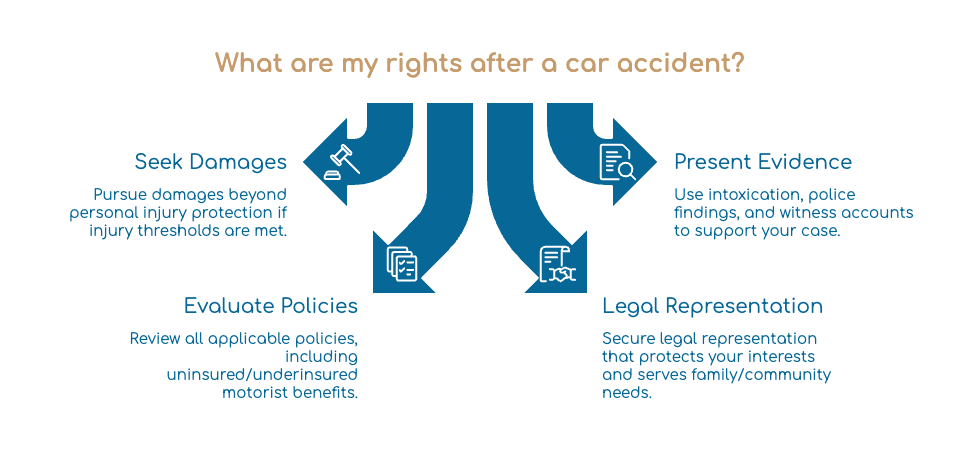
Victims injured by drunk drivers in Florida have legal rights that may extend beyond standard no-fault insurance benefits. When injuries are serious, they may pursue compensation from the impaired driver and other responsible parties. Legal action can help address medical bills, lost income, long-term care, pain, and diminished quality of life. Comparative fault may affect recovery if conduct by any party contributed to the crash, but drunk driving evidence can be significant. Available insurance coverage also influences the practical value of a claim.
Key rights and considerations include:
- The right to seek damages beyond personal injury protection when statutory injury thresholds are met.
- The right to present evidence of intoxication, police findings, and witness accounts.
- The right to evaluate all applicable policies, including uninsured or underinsured motorist benefits.
- The right to legal representation that protects the injured person’s interests while serving family and community needs.
Why Do Florida Drunk Driving Car Accident Injuries Happen?
Drunk driving car accident injuries in Florida often happen when impaired drivers lose the ability to judge distance, react to traffic conditions, maintain lane position, or make safe decisions behind the wheel. Alcohol can slow reflexes, blur vision, reduce coordination, and increase risky behavior, making routine driving situations dangerous for passengers, pedestrians, cyclists, and other motorists. These crashes may occur at intersections, on highways, near entertainment districts, or on local roads where families and workers travel daily.
Florida’s tourism, nightlife, and heavy traffic can increase exposure to impaired drivers, while enforcement challenges may limit the ability to prevent every dangerous trip. Some drivers underestimate their intoxication, ignore prior warnings, or choose to drive after being served alcohol in social or commercial settings. Legal advocacy helps identify these contributing factors, promote accountability, and support safer communities by addressing conduct that places vulnerable people at unnecessary risk of serious harm and lasting consequences.
What Should You Do After a Florida Drunk Driving Car Accident Injury?
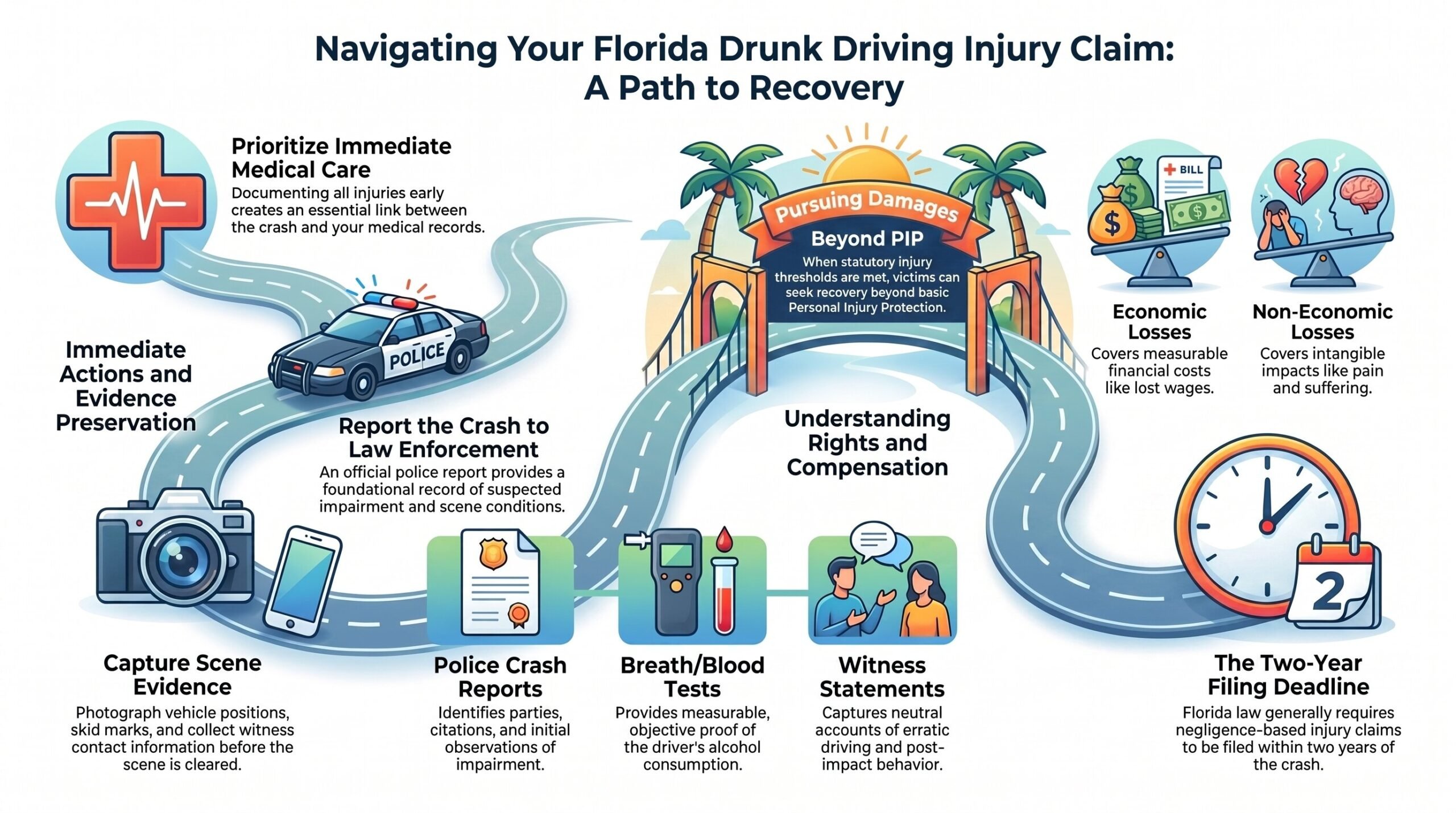
After a Florida drunk-driving car accident injury, the injured person’s first priority should be seeking immediate medical care, even when symptoms appear minor. The crash should also be reported to law enforcement, as an official record may become important in any later injury claim. Preserving critical evidence, including photographs, witness information, and medical records, can help protect the injured person’s legal position.
Seek Immediate Medical Care
Seek medical attention as soon as possible, even when injuries appear minor or symptoms seem delayed. After a drunk-driving collision, prompt evaluation helps identify concussions, internal injuries, soft tissue damage, or complications that may worsen without care. A person committed to protecting family members, passengers, and the wider community should treat medical care as a responsible first step rather than an optional measure.
Treatment documentation also creates a clear record linking injuries to the crash, including diagnoses, prescribed care, follow-up instructions, and work restrictions. These records may support later insurance communication by providing objective proof of harm and necessary expenses. Delays can allow insurers to question the cause or severity of the injury. Continued appointments, therapy, and consulting referrals should be followed carefully to support health and preserve important evidence.
Report The Crash
At the scene, the crash must be reported to law enforcement as soon as it is safe to do so, especially when a driver appears impaired, anyone is injured, property damage is significant, or a vehicle cannot be moved. A prompt report helps protect the injured, supports public safety, and creates Emergency documentation that may later clarify what occurred.
The caller should provide the Accident location, visible hazards, the number of vehicles involved, and whether Medical triage is needed for drivers, passengers, pedestrians, or responders. If possible, calm assistance should be offered without obstructing police, fire, or emergency medical personnel. Witness contact information may be shared with officers so accounts can be recorded properly. Cooperation with law enforcement helps ensure an organized, responsible response after the crash.
Preserve Key Evidence
Once the crash has been reported and emergency needs are being addressed, preserving critical evidence can help establish how the collision occurred and whether impairment contributed to it. Injured persons, helpers, or responding family members should photograph vehicle positions, skid marks, debris, roadway conditions, visible injuries, and open containers if safely possible. Contact information for witnesses should be gathered because later evaluations of their credibility may affect how strongly their accounts support the claim.
Medical records, repair estimates, towing receipts, and police report details should be organized promptly. Damaged vehicles should not be repaired or released before documentation is complete. This careful approach supports honest service to the injured and can limit Insurance negotiation tactics that minimize fault, dispute damages, or question the seriousness of harm caused by the impaired driver.
Critical Evidence in a Florida Drunk Driving Car Accident Injury Case
Critical evidence in a Florida drunk driving car accident injury case may determine liability, damages, and the strength of any insurance or legal claim.
Critical materials often include:
1. Police crash reports, 2. Breath test results, 3. Witness statements, 4. Crash scene evidence. Each category can help establish impairment, fault, and the full impact of the collision.
Police Crash Reports
When a drunk-driving collision occurs in Florida, the police crash report often becomes one of the first important records used to evaluate what happened and who may be legally responsible. This report may identify drivers, passengers, witnesses, insurance information, roadway conditions, citations, and the officer’s initial observations. It may also note suspected impairment, field sobriety tests, arrests, and facts relevant to Florida DUI penalties.
For injured people and those serving them, the report can guide requests for DMV records, medical documentation, photographs, and witness statements. Although it is not the final word on liability, it can provide a structured starting point for investigation. Careful review may reveal inconsistencies, missing details, or references to BAC cutoffs, which can affect civil claims and accountability.
Breath Test Results
Breath-test evidence can play a central role in a Florida drunk driving car accident injury case because it may provide a measurable indication of alcohol impairment near the time of the collision. For injured persons seeking accountability and community safety, these results can help clarify whether a driver’s conduct violated legal standards.
Proper interpretation of the BAC threshold is crucial, since the reported number must be evaluated in light of Florida law, testing procedures, timing, and any recognized margin of error. The reliability of the result also depends on the evidentiary chain of custody, including documentation of the device, operator, calibration, and record handling. When preserved and analyzed carefully, breath-test results may support a civil injury claim by linking impaired driving to the harm caused.
Witness Statements
Although physical evidence often receives significant attention, witness statements can provide important context in a Florida drunk-driving car accident injury case. Neutral observers may describe erratic driving, slurred speech, odor of alcohol, confusion, or admissions made after impact. Passengers, nearby motorists, pedestrians, and responding individuals may also identify timelines that support liability and damages.
Prompt interviews assist in evidence preservation because memories can fade, witnesses may relocate, and later statements may become less precise. An injury lawyer may gather written or recorded accounts, compare them with official records, and carefully evaluate their credibility. Insurance cooperation may require disclosing relevant witness information, yet statements should be handled strategically to protect the injured person’s interests. Reliable testimony can help present the harm suffered with dignity, accuracy, and responsible advocacy.
Crash Scene Evidence
Witness accounts often gain strength when they align with conditions documented at the crash scene. In a Florida drunk driving injury case, photographs, skid marks, vehicle positions, roadway debris, lighting, weather, and traffic control devices may help clarify how the collision occurred. Officers, investigators, and assisting professionals may preserve these details before cleanup, repairs, or fading conditions diminish their value. This evidence can support service to the injured by identifying unsafe conduct, confirming impairment-related driving patterns, and separating disputed facts from speculation.
Crash scene evidence also informs liability vs. damages, as it may show both fault and the force of the impact. During insurance negotiation, clear documentation can limit unsupported defenses, bolster settlement positions, and help ensure that recovery efforts reflect the actual harm caused.
Long-Term Effects of Florida Drunk Driving Car Accident Injuries
The long-term effects of Florida drunk driving car accident injuries may extend far beyond the initial medical emergency. Victims can face chronic pain conditions, lasting brain injuries, and reduced physical function that interfere with work, independence, and daily routines. These injuries may also create ongoing financial burdens, including future medical care, lost earning capacity, and other lasting economic losses.
Chronic Pain Conditions
Persistent pain after a Florida drunk-driving crash can extend far beyond the initial emergency treatment and disrupt nearly every part of an injured person’s daily life. Chronic neck, back, shoulder, or joint pain may limit mobility, interfere with sleep, and reduce the ability to work, care for family, or serve the community. These conditions can resemble pain patterns seen in Slip and Fall, Premises Liability, Workers’ Compensation, and Medical Malpractice matters, yet drunk driving crashes often involve sudden force and intricate recovery needs.
Ongoing treatment may include therapy, medication, injections, or expert care. Careful documentation helps show how persistent pain affects daily function, income, and independence. Legal evaluation may assist injured individuals in pursuing resources needed for long-term care, stability, and meaningful recovery after harm.
Lasting Brain Injuries
Lasting brain injuries after a Florida drunk-driving crash can affect memory, concentration, speech, mood, balance, and decision-making long after visible wounds have recovered. These impairments may alter how an injured person communicates, works, studies, or participates in family and community responsibilities. In severe car crashes, including motorcycle collisions, traumatic brain injuries may require neurological evaluation, cognitive testing, therapy, and ongoing supervision.
Symptoms can emerge gradually, making careful documentation crucial when negligence disputes arise over causation or severity. Caregivers, advocates, and service-minded professionals often recognize subtle changes before others do, helping injured individuals obtain appropriate support. A Florida drunk driving injury lawyer may review medical records, crash evidence, and expert opinions to show how impaired driving caused lasting neurological harm and diminished daily functioning for years after the collision.
Ongoing Financial Burdens
Often, the financial consequences of a Florida drunk driving crash continue long after emergency treatment, creating pressure that affects medical care, housing stability, employment, and family obligations. Injured individuals may face rising medical bills for surgery, rehabilitation, medication, assistive devices, and follow-up care, while insurance payments may not fully address continuing needs. At the same time, wage loss can reduce a household’s ability to meet basic expenses, especially when injuries limit regular work or require a career change.
Families often absorb additional costs for transportation, home modifications, childcare, or caregiving support. For those committed to serving and supporting others, these burdens can be especially disruptive, limiting both independence and community involvement. Careful legal evaluation may help identify recoverable damages and pursue resources needed for long-term stability after losses.
Proving Liability in Florida Drunk Driving Car Accident Injury Cases
Establishing liability in a Florida drunk driving car accident case requires proof that the impaired driver owed a duty of care, breached that duty, and caused injuries or losses as a result. Evidence may include crash reports, field sobriety test results, breath or blood test results, witness statements, traffic camera footage, and medical records linking the collision to the harm suffered.
A careful liability review also considers whether any other party contributed to the crash, such as a vehicle owner, employer, or negligent driver. Comparative negligence may reduce recovery if an injured person is assigned a portion of fault, making accurate preservation of evidence necessary. Insurance coverage can affect the practical source of compensation, but liability still depends on proving conduct, causation, and damages.
For individuals committed to helping injured people regain stability, a well-documented claim can support accountability, protect dignity, and promote responsible care after preventable harm caused by impaired driving.
Dealing With Insurance Companies After a Florida Drunk Driving Car Accident Injury
Several insurance issues may arise after a Florida drunk driving car accident, including personal injury protection benefits, bodily injury liability coverage, uninsured or underinsured motorist coverage, and property damage claims. Insurers may request statements, medical records, repair estimates, and details about lost income, and may also review police reports and crash footage. Injured individuals and those assisting them should recognize that insurance representatives serve company interests, even when communications appear courteous and supportive.
Careful documentation supports fair consideration of losses and helps prevent avoidable disputes. A liability investigation may examine evidence of intoxication, traffic violations, witness accounts, vehicle damage, and available video footage from nearby businesses or roadway cameras. Prompt notice to insurers is important, but broad recorded statements or premature settlement discussions may create concerns.
Those serving an injured person should encourage the maintenance of organized records, consistent communication, and thoughtful review before forms are signed. Insurance dealings require patience, accuracy, and steady attention to the injured person’s needs and dignity.
What to Expect During a Florida Drunk Driving Car Accident Injury Claim Process
A Florida drunk-driving car accident injury claim typically begins with reporting the crash, documenting injuries, and preserving evidence that may establish fault and damages. The process then moves to gathering vital records, filing insurance claims, and responding to insurers’ requests in a timely and accurate manner. As the claim develops, negotiations over compensation may address medical expenses, lost income, pain and suffering, and other losses tied to the collision.
Reporting The Crash
After a suspected drunk-driving crash in Florida, reporting the collision promptly creates the initial official record of what occurred. The injured person, or a responsible helper, should contact 911 immediately, request law enforcement, and seek medical assistance when needed. These Emergency contact steps help safeguard everyone at the scene and allow officers to assess possible impairment.
A formal crash report may later support an injury claim, particularly when it identifies the parties, the location, and the basic circumstances. The timing of insurance notification also matters because most policies require timely notice after a crash. Reporting should be factual, limited, and consistent, without speculation about fault or injuries. When service-minded family members assist, they can help ensure necessary calls are made while the injured person receives appropriate care and direction.
Gathering Key Evidence
Why does evidence become so important so quickly in a Florida drunk-driving injury claim? Crucial details can disappear, memories may fade, and damaged vehicles may be repaired or destroyed. Attorneys and investigators typically gather police reports, crash-scene photographs, witness statements, body-camera footage, toxicology results, and bar or restaurant information when relevant.
This work supports a clear understanding of fault, injury causation, and the full harm suffered. A careful review of medical records can link treatment, diagnoses, and future care needs to the collision. For those committed to serving injured people diligently, organized evidence helps ensure fairness and accountability. It also informs an early insurance claim strategy, without prematurely addressing formal claim filing, settlement demands, or negotiations. Prompt preservation can strengthen every later stage.
Filing Insurance Claims
In a Florida drunk-driving injury claim, filing an insurance claim typically begins by identifying all available sources of coverage and providing timely notice to the appropriate insurers. This may include personal injury protection, bodily injury liability, uninsured motorist coverage, or other applicable policies. Claim representatives generally request Medical Documentation, Treatment Records, wage information, and basic accident details to evaluate coverage and damages.
Accurate submissions help protect the injured person’s interests while supporting a fair and orderly review process. Evidence gathered earlier, including Crash Scene Photos, police reports, and statements, may also assist insurers in understanding fault and the severity of harm. Witness Credibility can be important when insurers compare accounts of the collision. Careful organization, adherence to deadlines, and complete records enable advocates to serve clients with diligence and accountability.
Negotiating Your Compensation
Once insurance claims are filed and supporting records are submitted, the focus often turns to negotiating the value of the injury claim. In Florida drunk-driving cases, this stage may involve a careful review of liability evidence, injury severity, lost wages, and future care needs. A lawyer may address Insurance negotiation tactics used to reduce payouts, including disputes over the necessity of treatment or claims of preexisting conditions. Clear medical bill documentation helps connect the crash to the person’s losses and supports a fair demand.
The process should remain organized, respectful, and service-minded, recognizing that compensation can help an injured person regain stability and meet family responsibilities. If settlement discussions fail to reflect the harm caused, the claim may be prepared for litigation while negotiations continue. Counsel guides decisions with discipline.
Compensation for Florida Drunk Driving Car Accident Injury Damages
After a drunk-driving crash in Florida, injured victims can seek compensation for losses that affect their recovery, finances, and daily stability. A claim may address medical expenses, rehabilitation needs, lost income, reduced earning ability, property damage, and related costs caused by the impaired driver’s conduct. Because Florida uses no-fault insurance rules, available benefits may start with personal injury protection, but serious injuries may justify pursuing additional recovery from the at-fault driver.
A lawyer may review insurance coverage, crash evidence, treatment records, wage documentation, and police findings to determine the value of a claim. This process helps ensure that the injured person’s needs are presented clearly and supported with reliable proof. In cases involving intoxicated drivers, compensation efforts may also reflect the harm’s preventable nature. Careful legal guidance can help victims and their families seek resources needed to restore order, maintain dignity, and continue serving those who depend on them.
Economic vs Non-Economic Damages in Florida Drunk Driving Car Accident Cases
In Florida drunk-driving car accident cases, damages are commonly separated into economic and non-economic categories, each serving a distinct role in evaluating compensation. Economic damages reflect measurable financial losses, while non-economic losses address the human impact of pain, suffering, and reduced quality of life. Proving damage value requires clear documentation, credible evidence, and a careful presentation of how the crash affected the injured person’s finances and daily life.
Economic Damages Explained
Economic damages in a Florida drunk driving car accident case refer to the measurable financial losses that arise from the crash, including medical expenses, lost income, reduced earning capacity, property damage, and related out-of-pocket costs. These losses are typically proven through documentation of damage, such as hospital bills, wage records, repair estimates, receipts, and expert evaluations. Careful organization helps injured people, families, and advocates present a clear financial picture while serving the broader goal of accountability.
Insurance claim timelines can affect when records must be gathered, submitted, and reviewed, making prompt action important. Economic damages may also include future treatment costs or long-term work limitations when supported by reliable evidence. Accurate valuation ensures that practical needs are addressed and that recovery efforts reflect the true financial impact.
Non-Economic Losses
Financial records can show the direct monetary harm caused by a drunk-driving crash, but they do not capture the full scope of an injured person’s losses. Non-economic damages address the human consequences that follow serious injury, including physical discomfort, emotional distress, and changes in daily life. Pain and suffering may involve ongoing symptoms, anxiety, sleep disruption, or the strain of medical recovery.
Loss of enjoyment refers to the diminished ability to participate in family activities, community service, hobbies, or meaningful routines that once supported dignity and purpose. In Florida drunk-driving cases, these losses recognize that an impaired driver’s choices may affect more than income or bills. They reflect the personal burdens borne by injured individuals and families and deserve careful attention in any claim.
Proving Damage Value
Because every injury claim must be supported by evidence, proving damage value in a Florida drunk-driving car accident case requires more than identifying the impaired driver’s misconduct. Economic damages often depend on medical documentation, wage records, repair invoices, and expert analysis showing past and future financial harm. Non-economic damages require careful presentation of pain, disability, emotional distress, and reduced quality of life through consistent records and credible testimony.
Evidence preservation helps protect photographs, crash data, treatment notes, and other proof before it is lost. Witness credibility also affects how insurers, judges, or juries evaluate the harm suffered. When an insurance dispute arises, organized evidence can demonstrate the full extent of loss and support fair accountability for the injured party. This process serves both truth and responsible compensation.
When a Florida Drunk Driving Car Accident Injury Case Goes to Trial vs Settlement
When a Florida drunk driving car accident injury case advances beyond the initial investigation and insurance claim process, the central question often becomes whether the matter should settle or proceed to trial. Settlement may serve injured people by providing timely compensation, reduced uncertainty, and privacy, especially when liability and damages are well documented. Trial may become necessary when insurers undervalue medical needs, lost income, pain, or long-term care, or when responsibility is disputed.
A trial requires careful preparation, including evaluation of police findings, medical proof, expert opinions, and testimony from all involved parties. Witness credibility challenges can affect how jurors view the crash, intoxication evidence, and the injured person’s losses. DUI defense strategies may also influence negotiations, particularly if the impaired driver disputes observations, testing, or causation. A lawyer’s role is to assess risk, protect the client’s dignity, and pursue the path most likely to achieve fair accountability.
Florida Laws That May Affect Your Florida Drunk Driving Car Accident Case
Florida law can shape nearly every stage of a drunk-driving car accident injury case, from fault determinations to the amount of compensation an injured person may recover. These laws help protect injured individuals, support accountability, and guide those who serve victims through difficult recovery periods.
Florida law plays a critical role in determining fault, compensation, and accountability after a drunk-driving crash.
Key legal issues may include:
- Comparative fault: Compensation may be reduced if the injured person is found partly responsible for the crash.
- DUI evidence: Breath tests, field sobriety results, police reports, and witness statements may help establish negligence.
- Consent search issues: Evidence gathered during a consent search may be reviewed to determine whether proper procedures were followed.
- Administrative penalties: A driver’s license suspension may support the broader record of impaired driving conduct.
Florida’s no-fault insurance rules, bodily injury claims, and potential punitive damages may also affect case value. Each legal factor can influence strategy, negotiations, and the pursuit of fair recovery.
The Statute of Limitations for Florida Drunk Driving Car Accident Injury Cases
After a drunk-driving crash, strict filing deadlines can determine whether an injured person preserves the right to seek compensation in court. In Florida, most negligence-based injury claims arising from motor vehicle collisions must be filed within two years of the accident. If the crash causes death, a wrongful death action generally must be brought within two years from the date of death. These Legal deadlines protect the orderly administration of justice, but they can also bar deserving claims when missed.
Timely action also supports evidence preservation. Crash reports, medical records, vehicle damage, witness recollections, surveillance footage, and toxicology reports may become harder to obtain over time. For people committed to caring for injured family members or helping a community respond responsibly, awareness of these deadlines is crucial. Certain circumstances may affect the applicable period, so careful attention to dates, documents, and official notices can help protect a claim from procedural dismissal.
How a Florida Drunk Driving Car Accident Injury Lawyer Can Help You
Meeting the filing deadline is only one part of protecting a drunk driving accident claim, since the strength of the case often depends on early investigation, accurate documentation, and informed legal strategy. A Florida drunk-driving car accident injury lawyer can help injured people, families, and service-minded caregivers understand how liability, damages, and insurance issues connect.
Strong drunk driving claims depend on timely evidence, clear documentation, and informed legal guidance.
Legal counsel may provide support through:
- Creating an Evidence collection strategy that preserves crash reports, witness accounts, video, medical records, and impairment evidence.
- Evaluating medical treatment, lost income, caregiving needs, and long-term limitations with careful documentation.
- Managing communication with insurers, while tracking Insurance dispute timelines and responding to requests or denials.
- Preparing settlement demands or litigation materials that clearly explain harm, responsibility, and financial impact.
This assistance can reduce confusion, promote fair evaluation, and allow injured individuals to focus on recovery, family stability, and community obligations after a serious impaired driving collision.
When to Contact a Florida Drunk Driving Car Accident Injury Lawyer
When injuries, disputed fault, or insurance pressure arise after an impaired driving collision, legal guidance should be sought as early as possible. Prompt contact helps protect the injured person’s interests while allowing family members, caregivers, and community supporters to focus on immediate needs. Early consultation is especially important when medical treatment is ongoing, a crash report is incomplete, or the impaired driver’s conduct may affect available claims.
A lawyer should also be contacted when Insurance settlement delays prevent timely recovery, when adjusters request recorded statements, or when bills begin exceeding available coverage. These moments can create avoidable hardship for people already trying to care for others and restore stability.
Timely legal contact also supports the basics of evidence preservation, including safeguarding photographs, witness information, vehicle damage records, medical documentation, and available video footage. Because important proof can disappear quickly, early action helps maintain clarity, accuracy, and accountability throughout the claim process, from initial review to resolution.
Why You Need an Experienced Florida Drunk Driving Car Accident Injury Lawyer
Because impaired driving crashes often involve criminal proceedings, insurance disputes, and significant medical consequences, an experienced Florida drunk driving car accident injury lawyer can provide essential direction from the outset. Such counsel helps injured individuals and those supporting them understand how civil claims may proceed while criminal charges are pending. This guidance can protect access to compensation for medical care, lost income, rehabilitation, and long-term support.
An experienced lawyer can identify liable parties, secure police reports, evaluate toxicology evidence, and address Comparative negligence defenses raised by insurers seeking to reduce responsibility. Counsel may also act quickly under Evidence spoliation laws, helping preserve vehicle data, surveillance footage, bar receipts, witness statements, and roadway evidence before it is lost. In service to recovery and accountability, legal representation can coordinate documentation, communicate with insurers, and present damages with care. This support allows injured people and families to focus on recovery while their rights are actively protected.
How to Choose the Right Florida Drunk Driving Car Accident Injury Lawyer for Your Case
Selecting the right Florida DUI car accident injury lawyer requires careful attention to experience, assets, and case strategy. A qualified attorney should have a strong record handling impaired driving claims, including cases involving serious injuries, insurance disputes, and evidence from criminal proceedings. This background helps ensure the victim’s needs are addressed with diligence, respect, and informed judgment.
Client communication should also guide the decision. The lawyer should explain rights clearly, provide timely updates, and remain attentive to the client’s medical, financial, and personal concerns. Compassionate service matters, especially when families are seeking stability after preventable harm.
Effective case strategy planning is equally important. The attorney should investigate liability, preserve evidence, assess damages, and prepare for settlement or trial as needed. Selecting counsel with these qualities allows injured individuals to pursue accountability while receiving steady guidance through a difficult legal process in Florida courts and negotiations with insurers.
About The Law Offices of Anidjar & Levine
For individuals injured by impaired drivers in Florida, The Law Offices of Anidjar & Levine provides legal representation focused on accountability, financial recovery, and client support.
The firm serves clients by managing legal burdens while they focus on medical care, family responsibilities, and recuperation.
Its attorneys understand how drunk driving collisions can affect health, income, and long-term stability.
The firm uses a proactive case strategy to identify liable parties, assess damages, and pursue available sources of compensation.
Prompt evidence preservation may include crash reports, witness statements, medical records, vehicle damage, and impairment-related documentation.
Consistent attorney communication helps clients understand the progress of their case, legal options, and important deadlines.
The Law Offices of Anidjar & Levine also handles insurance negotiations with attention to policy limits, disputed liability, and the full value of losses.
Through organized preparation and careful advocacy, the firm seeks outcomes that support injured people and the communities they serve.
Frequently Asked Questions
Can a Bar Be Sued for Overserving the Drunk Driver?
Yes, a bar may be sued for overserving a drunk driver, but liability is limited under Florida dram shop liability. A claim generally requires showing that the bar knowingly served a person habitually addicted to alcohol or served someone underage. Proving overservice negligence often depends on receipts, witness accounts, surveillance, and staff conduct. Those assisting injured people should promptly document facts and seek qualified legal guidance to evaluate liability.
Does a DUI Conviction Guarantee Compensation in My Injury Case?
No, a DUI conviction does not guarantee compensation in an injury case. It may strongly support a claim for fault, yet the injured person must still prove causation, damages, and recoverable losses. Comparative negligence may reduce compensation if the injured person shared responsibility. Immunity exceptions, insurance limits, and available evidence can also affect recovery. A careful legal review helps protect the harmed person’s interests and supports a responsible path toward accountability.
What if the Drunk Driver Was Uninsured or Underinsured?
If the drunk driver was uninsured or underinsured, recovery may depend on uninsured coverage within the injured person’s own policy. Insurers will review claim limitations, medical evidence, and available liability coverage before payment. When losses exceed the at-fault driver’s policy, the underinsured threshold may determine whether additional benefits apply. Damages options may include medical expenses, lost income, pain and suffering, and other proven losses, serving the injured person’s practical needs.
Can Passengers Sue After a Florida Drunk Driving Crash?
Yes, passengers may sue after a Florida drunk-driving crash when another person’s negligence caused their injuries. Claims may proceed against the impaired driver, and in some cases, third-party liability may apply to vehicle owners, employers, or others who contributed to the danger. Negligent entrustment may arise when someone knowingly allows an unsafe driver to use a vehicle. These actions help injured passengers seek accountability and needed support.
Will My Case Involve Punitive Damages Against the Drunk Driver?
Yes, a case may involve punitive damages if the facts satisfy Florida’s Punitive damages standard. Courts require evidence of recklessness, such as intoxication, dangerous driving, prior misconduct, or conscious disregard for others’ safety. These damages are not automatic, and they require careful proof. A legal advocate can evaluate the record, preserve essential evidence, and pursue accountability in ways that support public safety and those harmed.
—————————
A Florida drunk-driving car accident injury claim requires careful investigation, clear evidence, and strong legal guidance.
Victims may have the right to seek compensation for medical costs, lost income, pain, and other losses.
An experienced Florida Car Accident Lawyer can evaluate liability, negotiate with insurers, and pursue the recovery the case warrants.
The Law Offices of Anidjar and Levine provides knowledgeable representation for injured victims, helping them protect their rights and move forward after a serious collision.