We’re the Law Offices of Anidjar and Levine, a Jacksonville I‑10 car accident law firm that safeguards your rights, preserves vital evidence, and steers insurance negotiations to secure maximum compensation.
Our team promptly documents the scene, gathers medical records, and files claims within statutory deadlines, while protecting you from lowball offers and procedural pitfalls.
We handle intricate damage calculations, including future earnings and non‑economic losses, and are prepared to litigate when settlements fall short.
Continue to discover how our proficiency translates into a stronger, more successful claim. For more information, visit our Jacksonville Car Accident Lawyer page.
Main Takeaways
- Choose a Jacksonville I‑10 car accident lawyer experienced in personal‑injury litigation and familiar with local traffic laws.
- Verify the attorney’s track record of successful settlements and verdicts for similar vehicle‑collision cases.
- Ensure the lawyer offers a free initial consultation and works on a contingency fee basis, minimizing upfront costs.
- Confirm the attorney can promptly gather police reports, dash‑cam footage, witness statements, and medical documentation to build a strong claim.
- Look for a lawyer who communicates clearly, provides regular case updates, and negotiates strategically with insurers to protect your compensation.


How We Can Help With Your Jacksonville I-10 Car Accident Claim
We’ll guide you through every step of your Jacksonville I‑10 car accident claim, ensuring that evidence is collected, deadlines are met, and your rights are protected.
Our team coordinates with medical providers, police departments, and witnesses to assemble a thorough record that strengthens your position. We assess the full scope of damages, including medical expenses, lost wages, and pain‑and‑suffering, to develop a realistic settlement timeline.
Coordinating with medical providers, police, and witnesses to build a comprehensive record and realistic settlement timeline.
When insurers present offers, we engage in strategic insurance negotiations, leveraging the evidence gathered to counter lowball proposals and protect your financial interests. Throughout the process, we keep you informed of each milestone, explaining how procedural deadlines affect your case and what actions are required to preserve your claim.
Our know‑how allows us to anticipate common objections and respond promptly, ensuring that the settlement timeline remains on track. By prioritizing diligent preparation and clear communication, we aim to secure a fair resolution that accurately reflects the accident’s impact on your life.
OUR CONSULTATIONSARE FREE
START YOUR FREE CASE REVIEW

Understanding Jacksonville I-10 Car Accident Cases
Having collected evidence and outlined a settlement strategy, we now turn our focus to the core elements that define Jacksonville I‑10 car accident cases.
We examine how traffic patterns on this major corridor influence the likelihood of collisions, noting peak‑hour congestion, frequent lane changes, and the mix of commuter, commercial, and tourist vehicles. These dynamics create zones of heightened risk where drivers must anticipate abrupt stops and merges.
Simultaneously, we assess weather impacts that alter road conditions, such as sudden rain showers, high humidity, and occasional tropical storms that reduce visibility and traction. By correlating accident timing with meteorological data, we identify patterns that affect driver behavior and vehicle control.
Understanding these factors enables us to construct strong arguments for liability, accurately quantify damages, and guide clients toward informed decisions. Our analysis remains grounded in factual observation, ensuring that each case receives the precise, expert attention it merits.
Common Causes of Jacksonville I-10 Car Accidents
We see that speeding and aggressive driving, distracted or impaired drivers, faulty roadway conditions, and inadequate vehicle maintenance all contribute markedly to I‑10 collisions in Jacksonville.
These factors often intersect, creating hazardous situations that overwhelm even cautious motorists.
Speeding and Aggressive Driving
Driving at excessive speeds and engaging in aggressive maneuvers are among the most frequent contributors to collisions on Jacksonville’s I‑10 corridor. We understand that tailgating can lead to rear‑end crashes, loss of control, and severe injuries that could be avoided with proper following distance.
When drivers let frustration dictate behavior, road rage prevention becomes crucial; calm communication and adherence to traffic laws reduce the likelihood of sudden lane changes or reckless overtaking. Our experience shows that speed limits exist to match road design, traffic volume, and weather conditions, so exceeding them shortens reaction time and amplifies impact forces.
Distracted or Impaired Drivers
Recognizing that distracted or impaired drivers account for a significant share of collisions on Jacksonville’s I‑10, we emphasize how even brief lapses in attention or reduced coordination can trigger severe accidents.
We explain that cellphone addiction often leads drivers to glance at screens, compromising lane positioning and reaction time. Likewise, prescription misuse can impair judgment, slow response, and distort perception of speed and distance.
Our team highlights that these behaviors not only endanger the driver but also jeopardize passengers, pedestrians, and other motorists who rely on safe road sharing. By identifying these risk factors early, we help victims secure rightful compensation while advocating for stronger public awareness and preventive measures that protect our community.
Faulty Roadway Conditions
Potholes, uneven pavement, and inadequate drainage regularly turn Jacksonville’s I‑10 into a hazardous corridor, and we’ve seen how these flaws directly contribute to serious collisions.
We recognize that pothole liability often hinges on the municipality’s duty to maintain safe roadways, and when that duty is neglected, drivers bear unnecessary risk.
Drainage failures compound the danger, creating hydroplaning conditions that can overwhelm even the most attentive motorists.
Our team evaluates each incident, documenting surface defects, water accumulation, and related injuries to build a compelling case.
Inadequate Vehicle Maintenance
Neglecting routine vehicle upkeep often turns a routine commute on Jacksonville’s I‑10 into a preventable disaster, and we’ve observed how worn brakes, tire deficiencies, and faulty steering systems directly precipitate collisions.
We emphasize that regular vehicle inspections are vital; they uncover worn rotors, cracked brake lines, and uneven tire wear before they become hazardous.
When manufacturers issue brake recalls, we advise immediate compliance because delayed action can compromise stopping distance, especially on high‑speed segments of I‑10.
Our experience shows that drivers who neglect maintenance not only endanger themselves but also other road users. By prioritizing proactive service, we protect families, coworkers, and neighbors, reducing the likelihood of preventable accidents and fostering a safer community for all.


Legal Rights of Jacksonville I-10 Car Accident Victims
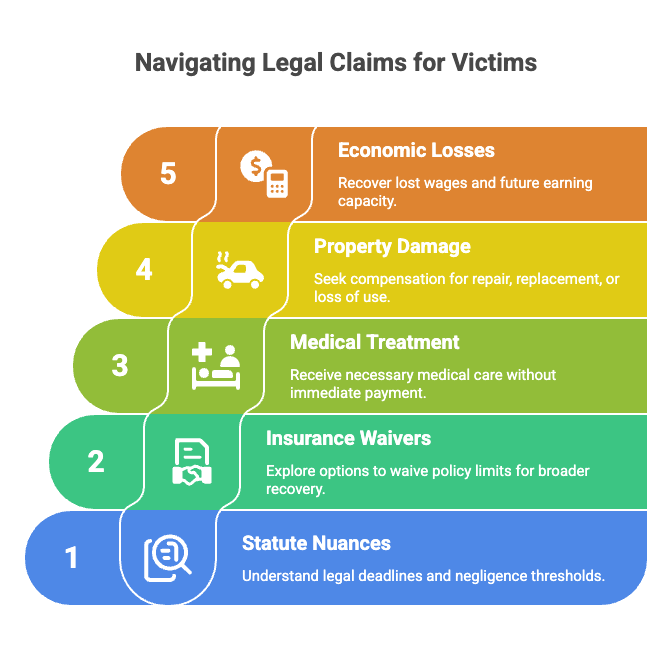
When a collision occurs on Jacksonville’s I‑10, we must understand that victims are entitled to specific legal protections that safeguard their right to compensation for injuries, property damage, and related losses. These protections arise from Florida’s statutes, which contain nuanced provisions that can affect the value of claims, and from insurance waivers that may limit or expand coverage.
Victims on Jacksonville’s I‑10 receive statutory protections and insurance waiver benefits for comprehensive compensation.
By recognizing our collective responsibility to serve those affected, we can steer the process with confidence and ensure that victims receive the support they merit.
- Statute nuances dictate deadlines for filing claims and define comparative negligence thresholds.
- Insurance waivers may waive certain policy limits, allowing broader recovery options.
- Victims have the right to medical treatment without immediate payment, with costs later reimbursed.
- Property damage compensation includes repair, replacement, and loss of use.
- Economic losses, such as lost wages and future earning capacity, are recoverable under Florida law.
Steps to Take After a Jacksonville I-10 Car Accident
We should first assess any immediate medical injuries and seek care right away, because health takes priority over paperwork.
Next, we document the scene thoroughly, taking photos, gathering witness statements, and recording details while they’re fresh.
Finally, we promptly notify our insurer, providing an accurate account to ensure a smooth claims process.
Secure Medical Immediate Injuries
Following a Jacksonville I‑10 car accident, securing prompt medical attention for any injuries is vital to safeguard both health and legal rights.
We advise immediate stabilization of the injured party, applying pressure to bleeding wounds, immobilizing suspected fractures, and keeping the person calm while awaiting professional help.
Once stabilized, arrange secure transport to a qualified medical facility; call emergency services or use a trusted medical transport provider if the situation permits.
Document the time and nature of the care received, as this will support future legal claims.
We emphasize that swift, organized action not only protects the victim’s well‑being but also preserves necessary evidence for any subsequent compensation proceedings.
Our guidance ensures that caring for others aligns with the preservation of their legal interests.
Document the scene thoroughly
In the chaotic aftermath of a Jacksonville I‑10 collision, we must act swiftly to preserve every detail that could influence a future claim.
First, we secure the scene by turning on hazard lights and, if safe, placing reflective triangles to protect other drivers.
Then we begin evidence preservation: photograph vehicle damage from multiple angles, capture road conditions, signage, and any skid marks, and record the exact location with a GPS‑enabled device.
We also document the weather and lighting, noting any factors that may have contributed to the crash.
Next, we conduct witness canvassing, politely approaching nearby motorists, pedestrians, and bystanders to obtain their statements and contact information.
We encourage each witness to write a brief account while memories are fresh, ensuring their testimony remains reliable for later use.
Notify Insurance Promptly
Typically, we should contact our insurers within the first 24 hours after a Jacksonville I‑10 collision to ensure our coverage remains intact and to avoid potential disputes. Prompt notification demonstrates responsibility and safeguards our claims timeline, ensuring the adjuster can open a file without delay.
We gather the police report, photos, and witness statements, then call our agent to provide a concise summary of the incident and the parties involved. We confirm the claim number, ask about required documentation, and request a copy of the insurer’s investigation form.
How a Jacksonville I-10 Car Accident Lawyer Can Help You
When you’re involved in a collision on Jacksonville’s I‑10 corridor, we step in to steer through the elaborate legal landscape and safeguard your rights. Our team coordinates emergency towing promptly, ensuring your vehicle is removed safely while we begin case preparation. We also guarantee language access for non‑English speakers, providing translators and bilingual staff so every client fully understands each step.
We guide I‑10 collision victims, coordinating emergency towing and multilingual support while protecting their legal rights.
By handling negotiations, documentation, and court filings, we relieve you of administrative burdens so you can focus on recovery.
Our proficiency translates complicated statutes into clear actions, protecting your interests from insurers and liable parties alike.
- Conduct thorough investigations and gather evidence
- Negotiate with insurance adjusters for fair settlements
- Draft and file legal pleadings accurately and timely
- Provide multilingual support and language access throughout the process
- Advocate fiercely in court to secure maximum compensation
Long-Term Effects of Jacksonville I-10 Car Accident Injuries
We appreciate that chronic pain often becomes a daily reality after a Jacksonville I‑10 collision, and we’ll explain how effective management strategies can mitigate its impact.
We also recognize the emotional and psychological toll such accidents can impose, and we’ll outline the support options that help patients regain mental resilience.
Finally, we’ll address long‑term mobility limitations, describing how adaptive measures and ongoing care can preserve independence and quality of life.
Chronic Pain Management
While many victims of the Jacksonville I‑10 car accident initially focus on acute injuries, the lingering reality is that chronic pain often becomes the most debilitating long‑term effect. We appreciate that persistent discomfort can erode quality of life, so we guide patients toward thorough chronic rehabilitation programs that integrate physical therapy, targeted exercises, and adaptive modalities.
By applying pain psychology principles, we help individuals reframe their perception of pain, reducing fear-avoidant behaviors and promoting active coping strategies. Our approach emphasizes interdisciplinary collaboration, ensuring that each treatment component aligns with the client’s functional goals.
We also monitor progress through regular assessments, adjusting interventions to sustain improvement and prevent escalation. Ultimately, our commitment is to empower survivors to regain independence while minimizing the lasting impact of their injuries.
Emotional and Psychological Impact
Chronic pain often masks deeper emotional wounds that persist long after the physical injuries recover, and we’ve seen how anxiety, depression, and post‑traumatic stress can erode a survivor’s sense of safety and well‑being.
We recognize that these psychological sequelae demand as much attention as physical rehab, and we guide clients toward trauma counseling that addresses fear, guilt, and intrusive memories.
Persistent sleep disturbances further degrade recovery, impairing cognition and emotional regulation.
By integrating mental‑health referrals into our case strategy, we help survivors rebuild confidence and regain stability.
Our approach emphasizes early intervention, consistent monitoring, and collaborative support networks, ensuring that emotional health receives the same rigorous advocacy as any other injury claim.
This all‑encompassing care safeguards long‑term recovery.
Long‑Term Mobility Limitations
When a Jacksonville I‑10 collision results in severe injuries, the resulting mobility limitations often persist far beyond the initial recovery period. We recognize that chronic pain, reduced range of motion, and nerve damage can hinder daily activities and diminish independence.
To address these challenges, we guide clients toward assistive devices such as walkers, wheelchairs, and customized braces that restore functional movement. We also recommend home modifications—including ramps, grab bars, and widened doorways—to create a safe environment that supports long‑term mobility.
Proving Liability in Jacksonville I-10 Car Accident Injury Cases
Establishing liability in Jacksonville I‑10 car‑accident cases requires a systematic examination of fault, causation, and damages.
Establishing liability in Jacksonville I‑10 car‑accident cases demands systematic analysis of fault, causation, and damages.
We begin by gathering police reports, dash‑cam footage, and eyewitness statements to reconstruct the sequence of events. Witness credibility is vital; we assess consistency, proximity, and potential bias to determine how reliably a witness can recount the collision.
Traffic signalization at the intersection is scrutinized, noting whether signals were functioning, if any amber or red lights were ignored, and whether the timing complied with municipal standards. We compare vehicle positions and skid marks with signal phases to identify the negligent party.
Medical records and repair estimates quantify injuries and property loss, linking them directly to the defendant’s actions. By correlating these elements, we build a clear, persuasive narrative that demonstrates the defendant’s breach of duty, the causal link to the accident, and the resulting damages, thereby strengthening our client’s claim for just compensation.
Dealing With Insurance Companies After a Jacksonville I-10 Car Accident
We typically begin by promptly notifying the insurer of the incident, because early communication establishes a clear record and prevents the company from claiming ignorance.
We then gather all relevant documentation—police reports, medical bills, repair estimates—and share them in an organized manner, reinforcing the factual basis of our claim.
When the insurer presents settlement offers, we evaluate each offer against the totality of our losses and refuse lowball proposals that ignore future medical expenses or loss of earnings.
If we encounter claim denials, we request a detailed explanation, review the policy language, and prepare a rebuttal highlighting any contractual obligations the insurer has overlooked.
Throughout this process, we maintain consistent, professional dialogue, ensuring that every correspondence is logged and timed.
What to Expect During a Jacksonville I-10 Car Accident Claim Process
We’ll guide you through filing the initial report and gathering documentation, keep you informed on how insurers will communicate and request information, and outline the medical evaluation timeline and pivotal settlement negotiation strategies to expect.
Initial Report Documentation
When you begin a Jacksonville I‑10 car accident claim, the first step is to gather and preserve all initial report documentation, which includes the police report, accident scene photos, and any eyewitness statements.
We advise securing initial witness statements promptly, as memory fades quickly, and recommend obtaining timestamped photos capturing vehicle positions, road conditions, and any visible damage.
These records form the backbone of your claim, enabling us to demonstrate liability and accurately quantify losses.
We also advise preserving any medical records or repair estimates that arise shortly after the incident.
Insurance Company Communication
Gathering the initial report documentation sets the stage for the next phase: communicating with the insurance company. We advise you to prepare a concise summary of facts, photos, and medical records before the first call, because insurers often test your readiness.
When the adjuster contacts you, expect a scripted interview designed to assess liability and the value of the damage. We’ll explain claim tactics that can protect your interests, such as requesting written statements and avoiding premature admissions.
Common adjuster myths—like the belief that a quick settlement always benefits the claimant—must be challenged with data and legal insight. By maintaining clear, documented exchanges, we preserve credibility and assure the insurer’s offers align with actual losses, ultimately supporting a fair resolution.
Medical Evaluation Timeline
Evaluating medical injuries promptly after a Jacksonville I‑10 car accident is vital for establishing a clear timeline that supports your claim. We advise you to seek initial care within 24 hours and to document every symptom and treatment.
Our team coordinates follow-up scheduling to make certain that each appointment aligns with the legal deadline for evidence collection. When diagnostic delays occur, we document the cause and impact, preserving records that demonstrate the injury’s progression.
We also obtain medical opinions that link the accident to ongoing conditions, reinforcing causation. Throughout the process, we monitor the schedule, adjusting as needed to avoid gaps that could weaken your case. By maintaining a disciplined timeline, we protect your rights and strengthen the foundation of your claim.
Settlement Negotiation Strategies
We’ll guide you through the settlement negotiation phase of a Jacksonville I‑10 car accident claim, outlining each step and what you can realistically anticipate.
First, we establish anchor points based on medical expenses, lost wages, and property damage, ensuring our demand reflects the full scope of losses.
Next, we present the initial offer and anticipate the insurer’s counter‑proposal, maintaining clear, professional communication.
Throughout discussions, we monitor for bluffing risks and avoid premature concessions that could undermine fair compensation.
We advise you to remain patient, document every interaction, and request written confirmations of any agreements.
Compensation for Jacksonville I-10 Car Accident Damages
We begin by documenting every bill, prescription, and therapy session to establish a clear total of medical expenses. Next, we calculate lost wages by reviewing pay stubs, tax records, and employer statements to quantify income missed due to injury and recovery time.
We also gather evidence for rental reimbursement, showing the cost of a temporary vehicle while your car is being repaired. Property repair costs are itemized through estimates from reputable shops and photographs of damage.
Economic vs Non-Economic Damages in Jacksonville I-10 Car Accident Cases
We’ll start by outlining how economic loss calculations—such as medical bills, lost wages, and property damage—are quantified in Jacksonville I‑10 car accident cases.
Next, we’ll explain the role of physical injury compensation and how it intersects with non‑economic damages like pain and suffering.
Finally, we’ll clarify when punitive damages may be awarded and what standards must be met for those additional penalties.
Economic Loss Calculations
Understanding how to quantify economic loss is essential when evaluating damages in Jacksonville I‑10 car accident cases. We calculate lost wages by reviewing pay stubs, tax records, and employer statements to determine the exact income forfeited during recovery.
Future earnings require projecting the victim’s career trajectory, accounting for age, experience, and industry trends, then discounting to present value. We also assess medical bills, rehabilitation costs, and transportation expenses, ensuring each figure reflects actual out‑of‑pocket spending.
Physical Injury Compensation
When a client suffers a physical injury on Jacksonville’s I‑10, we distinguish between economic and non‑economic damages to guarantee the full scope of loss is addressed.
Economic damages include medical bills, rehabilitation costs, and lost future earnings, which we quantify through detailed financial analysis and expert testimony.
Non‑economic damages reflect pain valuation, emotional distress, and loss of enjoyment of life, requiring careful consideration of the injury’s impact on daily activities.
We assess each category separately, yet present them jointly to illustrate the total burden.
Punitive Damages Explained
If a driver’s conduct on Jacksonville’s I‑10 is reckless or willful, the court may award punitive damages in addition to economic and non‑economic losses. We explain that punitive damages differ from ordinary compensation; they serve an exemplary punishment and deterrent purpose, aiming to discourage egregious behavior.
Economic damages cover medical bills, lost wages, and property repair, while non‑economic damages address pain, suffering, and emotional distress. Punitive damages, however, target the actor’s misconduct itself, not the victim’s loss.
In Jacksonville I‑10 cases, courts assess the severity of the driver’s intent and the need to protect the public. By understanding this distinction, we help victims pursue full redress and promote safer road conduct.
When a Jacksonville I-10 Car Accident Case Goes to Trial vs Settlement
In many Jacksonville I‑10 car‑accident cases, the decision to proceed to trial rather than accept a settlement hinges on the strength of the evidence and the parties’ willingness to negotiate. We evaluate trial dynamics by assessing witness credibility, expert testimony, and the likelihood that a jury award will exceed the settlement offer.
When we determine that a trial can secure a fair recovery, we prepare for the rigorous pre‑trial discovery and motion practice that shape the case’s trajectory. If a settlement is reached, we make certain the agreement addresses all damages and releases, protecting our client’s interests.
Should the case advance to trial, we remain vigilant about the appeals process, recognizing that a post‑trial judgment may be contested and could extend the resolution timeline. Our focus stays on securing the best possible outcome while adhering to procedural safeguards and ethical standards.
The Statute of Limitations for the Jacksonville I-10 Car Accident Case
Our analysis of trial versus settlement considerations naturally leads to the timing constraints that govern any Jacksonville I‑10 car‑accident claim. In Florida, the basic statute of limitations for personal injury actions is two years from the date of injury, but we must recognize nuances in the statute that affect when a claim can be filed. For example, if the accident involves a government entity, the filing deadline may be shortened, and we must also consider Toll exceptions that pause the clock under certain conditions, such as the plaintiff’s minor status or mental incapacity.
These exceptions can extend the period, but only if proper notice is given within the original timeframe. Understanding these deadlines is crucial for protecting our clients’ rights and ensuring we act promptly to preserve evidence and witness testimony. By staying vigilant about these limits,
When to Contact a Jacksonville I-10 Car Accident Lawyer After a Jacksonville I-10 Car Accident
Contacting a Jacksonville I‑10 car accident lawyer promptly after a collision is essential to safeguard your legal rights and preserve critical evidence. We advise reaching out within 24 to 48 hours because the post-accident timeline determines which information remains reliable and which documentation can still be obtained.
Early communication allows us to guide you in gathering police reports, medical records, and witness statements before memories fade or records are altered. It also enables us to assess liability and damages while insurers are still negotiating, which strengthens your negotiating position.
Our claim evaluation tips include documenting every expense, photographing vehicle damage, and noting any missed work or pain levels. By acting quickly, you protect the integrity of your case and give us the best foundation for a thorough claim evaluation, ensuring that your rights are fully represented throughout the process.
Why You Need an Experienced Jacksonville I-10 Car Accident Lawyer
Choosing an experienced Jacksonville I‑10 car‑accident lawyer means securing the know‑how needed to steer elaborate liability issues, negotiate with seasoned insurers, and protect our clients’ rights throughout litigation.
Securing seasoned Jacksonville I‑10 car‑accident counsel ensures expert liability navigation and vigilant protection of client rights.
We appreciate that traffic patterns on the I‑10 corridor often involve high‑speed flows, lane merges, and sudden congestion, all of which can create complex fault scenarios. Our team evaluates these dynamics to establish clear causation and to counter defense arguments that rely on ambiguous driver behavior.
By crafting a tailored litigation strategy, we prioritize evidence collection, expert testimony, and timely filing of claims, ensuring that each procedural step aligns with the client’s best interests. Our experience enables us to anticipate insurer tactics, preserve vital documentation, and present a compelling narrative to the court.
Ultimately, our dedicated approach safeguards the client’s compensation and reinforces accountability on Jacksonville’s busiest thoroughfare.
How to Choose the Right Jacksonville I-10 Car Accident Lawyer for Your Case
When faced with a Jacksonville I‑10 car‑accident claim, you’ll want a lawyer who combines deep local knowledge with proven litigation skill.
We recommend beginning with the firm’s local reputation; ask peers, read client testimonials, and verify community involvement to gauge trustworthiness.
Next, evaluate fee transparency—ensure the attorney outlines costs, contingency percentages, and any ancillary expenses in writing before you sign.
Compare several candidates, focusing on those who communicate clearly and demonstrate empathy for your situation.
Look for a track record of settlements and verdicts that reflect competence in similar cases.
Confirm that the lawyer’s office is accessible, offering flexible appointments and responsive updates.
Finally, trust your instincts: a professional who listens attentively and respects your goals will likely advocate fiercely on your behalf.
About The Law Offices of Anidjar & Levine
The Law Offices of Anidjar & Levine combine decades of litigation experience with a deep focus on personal injury and car accident cases throughout Jacksonville and the surrounding I‑10 corridor.
We’ve built a firm history rooted in diligent advocacy and a commitment to serving victims who need decisive legal support.
Our team works collaboratively, ensuring each client receives personalized attention while we leverage our extensive courtroom know‑how.
Client testimonials repeatedly highlight our responsiveness, strategic insight, and the compassion we bring to every case.
By maintaining transparent communication, we empower clients to make informed decisions throughout the recovery process.
Our attorneys remain active in local legal organizations, reinforcing our dedication to community service and continuous improvement.
This blend of seasoned knowledge, proven results, and a client‑first philosophy positions us as a trusted partner for anyone steering the intricacies of a Jacksonville I‑10 car accident claim.
Frequently Asked Questions
Can I Claim for Pain You’re Suffering if I’m Not Fully Disabled?
We can claim for pain and suffering even if you’re not fully disabled, because the law recognizes non‑economic damages that address emotional and physical distress.
You’ll receive partial compensation for the diminished quality of life, not just lost wages. Our team evaluates the severity of your symptoms, the documentation, and the impact on your daily activities to quantify this loss.
How Long Does It Take to Receive a Settlement After Filing?
We typically see settlements arrive within three to six months after filing, though the exact timeline depends on settlement factors such as liability clarity, insurance cooperation, and claim intricacy.
We prioritize thorough documentation and proactive communication to accelerate the process, while recognizing that negotiations, medical evaluations, and court docket constraints can extend the period.
Will My Insurance Premiums Increase After Filing a Claim?
We can expect insurance hikes after filing a claim, though the increase varies by carrier and policy.
Rate mitigation strategies—such as maintaining a clean driving record, promptly completing repairs, and disputing unjustified charges—can help limit those hikes.
We advise reviewing your policy’s non‑fault provisions, communicating transparently with your insurer, and consulting an experienced attorney to protect your interests while minimizing the impact on your premium.
Do I Need a Medical Expert to Testify About My Injuries?
We advise that medical testimony is often crucial when substantiating injury claims, but the need for an expert depends on the case’s intricacy.
If your injuries are straightforward and well‑documented, a treating physician’s records may suffice. However, when damages are contested, long‑term effects are involved, or causation is disputed, an independent medical expert can provide objective analysis, strengthen credibility, and help the court understand the full impact of your injuries.
Can I Sue a Government Agency for an I‑10 Accident?
We can tell you that you may sue a government agency for an I‑10 accident, but sovereign immunity and governmental immunity often limit recovery.
We explain that the agency must have waived immunity, typically through a statutory provision, and that you must file a claim within a strict deadline.
We advise gathering evidence, consulting an experienced attorney, and pursuing any available administrative remedies to preserve your rights and maximize potential compensation.
—————————
The Law Offices of Anidjar and Levine stand ready to protect your rights and secure the compensation you merit after a Jacksonville I‑10 car accident.
Our team’s deep understanding of local statutes, thorough investigative methods, and proven litigation strategies guarantees that every facet of your claim is meticulously managed.
By partnering with our Jacksonville Car Accident Lawyer team, you benefit from experienced advocacy, strategic guidance, and unwavering dedication to achieving the best possible outcome for your case.
Trust our know-how to steer through the intricacies of your claim with confidence.