
The Law Offices of Anidjar and Levine help Alafaya crash victims pursue compensation when impaired or distracted driving causes serious injuries, lost income, property damage, or lasting emotional harm.
Our team investigates phone use, alcohol or drug impairment, roadway conditions, traffic signals, witness accounts, vehicle data, and medical records to establish fault and causation.
We communicate with insurers, preserve essential evidence, and assess comparative fault before addressing settlement or litigation.
Learn more from an Alafaya Personal Injury Lawyer about how your rights can be protected and your claim evaluated.
Main Takeaways
- An Alafaya impaired and distracted driving injury lawyer investigates alcohol, drugs, texting, phone use, fatigue, and other negligent behaviors causing crashes.
- Your attorney preserves crash reports, photographs, vehicle data, medical records, phone evidence, video, and witness statements before they disappear.
- Legal counsel connects the collision to your injuries, treatment, limitations, lost income, property damage, and other compensable losses.
- Florida comparative fault rules may affect recovery, while attorneys challenge unfair insurer denials, inadequate offers, and disputed liability.
- Seek immediate medical care, report the crash, avoid speculating about fault, and consult a lawyer before discussing settlement with insurers.


How We Can Help With Your Alafaya Impaired & Distracted Driving Injury Claim
When an impaired or distracted driver causes your injuries, we can help you pursue the compensation you are rightfully under Florida law. We’ll listen carefully to your account, explain your options, and develop a Claim strategy that reflects your medical needs, financial losses, and recovery goals. Our team will coordinate evidence preservation by securing crash reports, photographs, vehicle data, medical records, and other information before it disappears or becomes difficult to obtain. We’ll also handle legal documentation, including insurance communications, claim forms, and settlement materials, so your rights remain protected throughout the process.
If witnesses can clarify what happened, we’ll assist with witness recovery by identifying, contacting, and preserving their statements. We’ll communicate with insurers and opposing parties on your behalf, allowing you to focus on rehabilitating and supporting those who depend on you. Through careful preparation and responsive guidance, we’ll pursue a fair resolution while treating your concerns with respect, accountability, and personal attention.
OUR CONSULTATIONSARE FREE
START YOUR FREE CASE REVIEW

Understanding Alafaya Impaired & Distracted Driving Injury Cases
Impaired and distracted driving cases in Alafaya require us to examine how a driver’s conduct caused the crash and contributed to your injuries. We evaluate whether the evidence establishes negligence, including the driver’s duty to operate the vehicle with reasonable care and the consequences of breaching that duty. Crash scene evidence may include photographs, vehicle damage, traffic signals, road conditions, witness statements, and available video recordings. Medical records and testimony help connect the collision to your physical limitations, treatment, and financial losses.
We also consider fault determination factors, such as each driver’s actions, visibility, timing, and compliance with traffic laws. Florida’s comparative fault rules can affect the compensation available when more than one person contributed to an accident. By carefully organizing these facts, we can present your experience clearly and hold people accountable. Our goal is to serve you responsibly while protecting your rights, communicating developments, and preparing a claim that reflects the full effect of your injuries.
Common Causes of Alafaya Impaired & Distracted Driving
We’ll examine how texting while driving, alcohol-impaired driving, and drug-impaired driving can compromise judgment, attention, and vehicle control. We’ll also consider how eating or grooming behind the wheel creates dangerous distractions, even when drivers don’t recognize the risk. Understanding these common causes can help us identify negligence and evaluate the circumstances of an Alafaya injury claim.
Texting While Driving
Texting while driving remains one of the most common forms of distracted driving because it diverts our eyes, hands, and attention from the road. Even a brief message can prevent us from noticing a stopped vehicle, pedestrian, cyclist, or changing traffic signal. Reading notifications, composing replies, and searching for contact information create similar dangers, whether we’re traveling through Alafaya neighborhoods or along busy highways. We can protect others by practicing safe driving habits, including silencing our phones, storing them out of reach, and setting navigation before departure.
Effective distracted driving prevention also requires planning how we’ll handle urgent communications. If a message requires attention, we should pull over in a lawful, secure location before using the device. By consistently choosing these measures, we help reduce preventable collisions and protect everyone who shares our roads.
Alcohol-Impaired Driving
When alcohol enters the bloodstream, it can impair judgment, coordination, vision, and reaction time before a driver recognizes any noticeable change. Even moderate consumption may cause speeding, unsafe lane changes, delayed braking, or failure to yield. We encourage you to prioritize everyone’s safety by arranging a sober ride and preventing an impaired person from driving. After a collision, we can help preserve evidence of responsibility, including witness statements, business surveillance, medical records, and available testing results.
Crash scene photos may document vehicle positions, roadway conditions, visible damage, and other details that support a clear account of what occurred. Prompt medical care remains important, even when injuries seem minor. By reporting suspected impairment and cooperating with investigators, we can help protect injured people and promote accountability while preserving information needed to pursue appropriate compensation.
Drug-Impaired Driving
Drug-impaired driving can result from marijuana, prescription medications, illegal substances, or combinations of drugs that affect alertness, coordination, perception, and reaction time. Even legally prescribed medication may create risks when warnings address drowsiness or impaired judgment. We encourage you to recognize that impairment can occur without visible intoxication, making careful observation and responsible intervention critical for protecting others. Law enforcement may investigate suspected impairment through behavior, driving patterns, field evaluations, toxicology analysis, or roadside drug testing.
However, test results and observations don’t always establish when, how, or whether a substance affected driving ability. If you’ve been injured, we can examine medical records, collision evidence, witness accounts, and testing procedures. Our legal team can develop drugged driving defenses while pursuing accountability and compensation for your injuries, treatment, lost income, and continuing needs.
Eating And Grooming
Eating, drinking, and grooming may seem routine, but these activities can divert a driver’s hands, eyes, and attention from the roadway. Reaching for a coffee, unwrapping food, applying makeup, or adjusting a razor can delay braking and weaken lane control. When a driver chooses convenience over focus, everyone nearby—including passengers, pedestrians, cyclists, and other motorists—faces increased danger. We encourage you to practice safe driving habits by completing meals, grooming, and personal tasks before leaving or after parking.
If you must address an immediate need, pull into a safe, lawful location rather than stopping in traffic or on a shoulder. Vehicle dashcams may document a driver’s conduct after a collision, helping clarify how distraction contributed to injuries. We’re prepared to help affected families understand their rights and pursue accountability.
Don’t Wait. Call Our Florida Personal Injury Lawyers Now!


Legal Rights of Alafaya Impaired & Distracted Driving Injury Victims
Alafaya victims injured by impaired or distracted drivers have the right to pursue compensation for medical expenses, lost income, property damage, and pain and suffering. We can help you protect those rights by documenting losses, identifying responsible parties, and preserving evidence before it disappears. You shouldn’t accept an insurer’s first offer without understanding your claim’s full value.
Your legal protections may include:
- Requesting collision reports, medical records, and witness statements
- Seeking compensation for current and anticipated treatment
- Challenging an Insurance coverage denial or unfair settlement
- Filing a lawsuit within Florida’s applicable deadline
We’ll communicate with insurers on your behalf and work to prevent statements or agreements from undermining your recovery. When liability or damages remain disputed, trial strategy planning helps us present organized evidence, credible testimony, and persuasive legal arguments. Our goal is to serve you with diligence while pursuing accountability and fair compensation. Consult qualified counsel promptly so we can evaluate your circumstances and explain the options available.
Why Do Alafaya Impaired & Distracted Driving Injuries Happen?
Impaired and distracted driving injuries happen when alcohol, drugs, fatigue, phones, or other distractions prevent motorists from making safe decisions and reacting to changing traffic conditions. A driver may speed, drift across lanes, follow too closely, or fail to yield because attention and judgment have deteriorated. Even brief phone use can delay braking long enough to cause a serious collision.
Some crashes also involve overlapping hazards. Poor roadway design, confusing signs, inadequate lighting, or malfunctioning signals can increase danger, particularly when drivers are already careless. Traffic Signal Negligence may contribute when a governmental entity fails to maintain or operate signals reasonably, although evidence must establish the specific safety violation.
We can use Accident Reconstruction to examine vehicle damage, skid marks, surveillance footage, electronic data, witness accounts, and timing evidence. This analysis may clarify speed, visibility, driver reactions, and signal phases. Understanding these causes helps us serve injured people and families by identifying responsible conduct, recognizing preventable risks, and pursuing accountability through careful, fact-based evaluation.
What Should You Do After an Alafaya Impaired & Distracted Driving Injury?
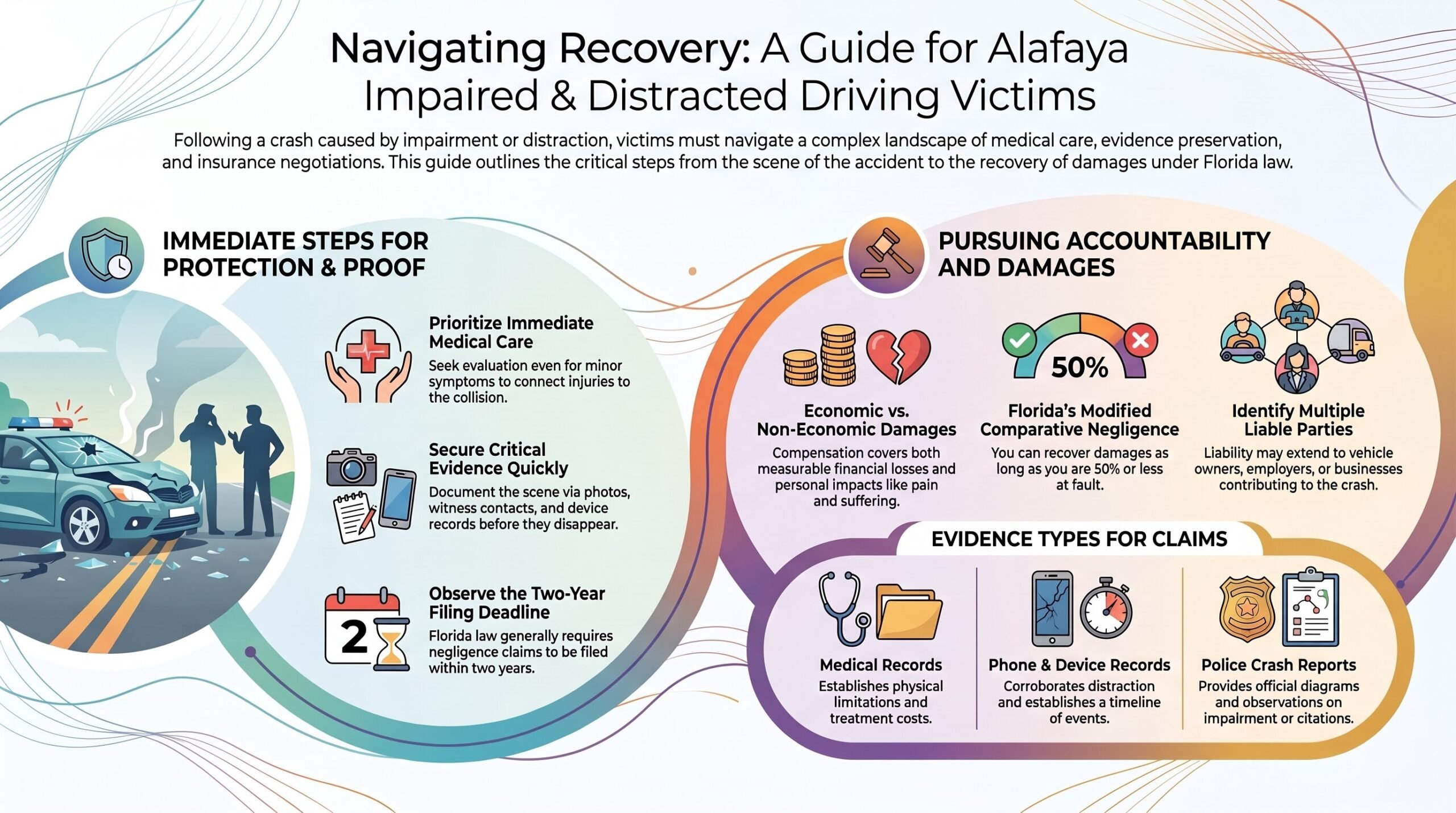
After an Alafaya impaired or distracted driving injury, we should seek immediate medical care, even when symptoms initially seem minor. We must report the crash to law enforcement and provide accurate information without speculating about fault. We should also document the evidence, including photographs, witness details, medical records, and relevant communications.
Seek Immediate Medical Care
Seek immediate medical care, even if you believe your injuries appear minor, because some conditions may not produce noticeable symptoms right away. We should allow a qualified healthcare professional to evaluate us for concussions, internal injuries, strains, or other trauma that could worsen without treatment. Follow all medical instructions, attend recommended appointments, and keep records of diagnoses, prescriptions, bills, and missed work.
These records can support our recovery and help establish the injury’s connection to the collision. Prompt treatment also demonstrates that we take our health seriously rather than ignoring symptoms that may worsen. As we assist others involved, we should encourage them to obtain care without interfering with medical decisions. Detailed medical documentation may later inform insurance negotiation strategies, while documenting witness accounts should remain a separate, careful task handled when appropriate.
Report the Crash
Once medical care has been addressed, we should promptly report the crash to law enforcement, particularly if impairment or distraction is suspected as a contributing factor. Calling 911 allows officers to secure the roadway, arrange necessary assistance, and evaluate whether impaired driving or phone distraction impacts the collision. We should provide a clear, factual account without guessing, exaggerating, or arguing with other involved individuals. If injuries prevent an immediate statement, we can explain that limitation and cooperate when medically able.
We should request the incident or report number and ask how to obtain the completed report. Accurate reporting supports public safety and helps preserve an official account of what occurred. We should also notify our insurer as required, while avoiding recorded statements about fault until we comprehend our medical documentation needs and legal rights.
Document the Evidence
We should document the evidence as soon as we can do so safely, because physical conditions and digital records may change quickly. If our well-being permits, we should photograph vehicle positions, road markings, traffic signals, visible injuries, property damage, and surrounding conditions. Crash Scene Photos should include wide views and close-up details, while preserving timestamps and original files whenever possible. We should avoid moving vehicles or disturbing debris unless safety requires it.
We can request nearby surveillance footage before businesses overwrite recordings, and we should preserve relevant messages, call logs, navigation data, and social media content without editing anything. We should collect Witness Contact Info, including names, telephone numbers, and email addresses, and ask witnesses to describe only what they personally observed. A careful record can help protect everyone’s rights and support a fair investigation.
Critical Evidence in an Alafaya Impaired & Distracted Driving Injury Case
We’ll evaluate the evidence that can establish impairment, distraction, fault, and the extent of your injuries.
Crucial sources may include:
- Police crash reports
- Eyewitness statements
- Phone and device records
- Medical treatment documentation
We’ll help preserve and interpret these records so they accurately support your claim.
Police Crash Reports
When an impaired or distracted driver causes a collision in Alafaya, the police crash report can provide critical evidence about what happened and who may be responsible. We review this official record for diagrams, vehicle positions, roadway conditions, citations, admissions, and observations concerning possible impairment or phone use. Although the report may not establish liability on its own, it can guide our investigation and help us identify inconsistencies in the opposing driver’s account.
We may also compare its findings with a Dashcam video, photographs, medical records, and available electronic data. Careful analysis strengthens witness credibility assessments without replacing direct testimony. Because reports can contain errors or incomplete information, we act promptly to preserve related evidence, request corrections when appropriate, and present a clear, accurate account that supports injured clients and their families.
Eyewitness Statements
Eyewitness statements can provide crucial, independent evidence in an Alafaya impaired or distracted driving injury case, particularly when the drivers’ accounts conflict. We’ll seek witnesses who observed traffic signals, vehicle movements, speed, driving behavior, or signs of impairment before and during the collision. We’ll document each account promptly, preserve contact information, and assess witness reliability by considering vantage point, attention, consistency, and possible bias.
These statements can strengthen the police investigation and support insurance negotiations when physical evidence remains incomplete. Witnesses may also describe smartphone distraction without relying on device records, while investigators can compare observations with the vehicle black box and scene evidence. Carefully corroborated testimony can clarify fault, establish causation, and support a fair damages calculation. By presenting accurate accounts respectfully, we help protect injured people and promote accountability.
Phone And Device Records
Phone and device records can corroborate witness accounts and reveal whether a driver was texting, calling, using an app, or otherwise handling a device before the crash. We can seek relevant call logs, message timestamps, application activity, and hands-free connection data through lawful investigative methods. These records may establish a timeline that supports the observed symptoms of distracted driving, such as delayed reactions, lane drifting, or failure to recognize hazards.
We’ll also pursue evidence preservation promptly because carriers and applications may retain detailed information for limited periods. Our team can request that potentially relevant data remain intact and coordinate appropriate subpoenas when necessary. We’ll evaluate the records alongside scene evidence and testimony, helping you present a reliable account that advances accountability and protects the interests of those injured.
Medical Treatment Documentation
Medical treatment documentation can connect an impaired or distracted driver’s conduct to the injuries you suffered in the crash. We encourage you to obtain emergency department records, diagnostic images, physician notes, prescriptions, and rehabilitation reports. These materials establish when symptoms began, how providers evaluated them, and whether your condition requires continuing care. Consistent treatment also helps demonstrate that you followed medical advice and did not ignore preventable complications.
We’ll compare your records with Crash Scene Evidence, police reports, and Witness Contact Info to develop a clear account of what happened. Keep appointment summaries, bills, work restrictions, and correspondence from insurers in one organized file. Don’t minimize pain or delay care without discussing concerns with your provider. With complete documentation, we can present your needs accurately and pursue resources that support recovery and accountability.
Long-Term Effects of Alafaya Impaired & Distracted Driving Injuries
We’ll examine how impaired or distracted driving injuries can cause chronic physical pain that affects your mobility, work, and daily activities. We’ll also address emotional and psychological trauma, including anxiety, depression, and post-traumatic stress that may continue long after the collision. Finally, we’ll consider ongoing medical expenses, rehabilitation needs, and other costs that may require compensation.
Chronic Physical Pain
When an impaired or distracted driver causes a collision in Alafaya, the resulting injuries can produce chronic physical pain that continues long after the initial treatment ends. We may experience persistent back, neck, joint, or nerve pain that limits movement, sleep, employment, and daily responsibilities. These symptoms can require ongoing medical visits, prescription or nonprescription medication, physical therapy, injections, or additional procedures. We should follow medical guidance and document every limitation, treatment, expense, and change in symptoms.
Detailed records help establish how the collision affects our quality of life and whether it has created a workplace injury or reduced our ability to earn income. Through careful recovery planning, we can coordinate treatment, evaluate lasting needs, and pursue compensation that supports continued care, rehabilitation, necessary accommodations, and crucial services without sacrificing financial stability.
Emotional and Psychological Trauma
Persistent physical pain can also contribute to emotional and psychological trauma after an impaired or distracted driving collision in Alafaya. We may experience anxiety, depression, irritability, sleep disruption, or fear of driving, even after visible injuries improve. These symptoms can affect relationships, employment, and our ability to participate in daily responsibilities. We shouldn’t dismiss emotional distress as weakness or assume it will resolve without attention.
A qualified mental health professional can evaluate our needs and explain Trauma counseling options, including individual therapy, trauma-focused treatment, and support groups. Loved ones can provide coping strategies support by listening without judgment, encouraging healthy routines, and recognizing changes in mood or behavior. By documenting these effects and seeking appropriate care, we can protect our well-being while pursuing accountability for the collision’s lasting impact.
Ongoing Medical Expenses
Ongoing medical expenses can continue long after an impaired or distracted driving collision in Alafaya, particularly when our injuries require rehabilitation, follow-up appointments, prescription medications, or future procedures. We should document every bill, mileage expense, insurance statement, and treatment recommendation to establish the full financial impact of our recovery. Physicians may also identify continuing care needs, including physical therapy, pain management strategies, assistive equipment, or corrective surgery.
These projected costs merit careful evaluation rather than reliance on current invoices alone. A knowledgeable legal team can help us preserve medical records, consult appropriate experts, and assess how injuries may affect our ability to work. Understanding the basics of settlement negotiation also matters because a settlement should account for reasonably anticipated expenses, not merely the treatment we’ve already received.
Proving Liability in Alafaya Impaired & Distracted Driving Injury Cases
To prove liability in an Alafaya impaired or distracted driving injury case, we must establish that the driver breached a legal duty of care and that the violation caused your injuries and financial losses. We may use crash reports, witness statements, cellphone records, surveillance footage, toxicology results, and expert analysis to demonstrate impairment, inattention, speed, or unsafe driving. Your medical records and testimony can connect the collision to treatment, disability, lost income, and other measurable harm.
We’ll also examine whether traffic violations, admissions, or testing support a claim of negligence under Florida law. The opposing side may raise Comparative fault defenses, arguing that your conduct contributed to the collision. We’ll carefully assess that claim and present evidence addressing it. Because insurance coverage limits can affect available recovery, we’ll identify all potentially responsible parties and applicable policies without minimizing your damages. Our role is to pursue accountability while helping protect your family’s stability, dignity, and future during a difficult period.
Dealing With Insurance Companies After an Alafaya Impaired & Distracted Driving Injury
Insurance companies may contact you soon after an impaired or distracted driving crash, but their early requests and settlement offers may not reflect the full value of your claim. We should respond carefully, recognizing that adjusters represent insurers and seek information that may limit payment. Avoid giving a recorded statement, signing a broad medical release, or accepting money before we comprehend your injuries, expenses, and future needs. Preserve photographs, bills, treatment records, witness information, and other evidence.
Understanding police reports can help us evaluate how officers documented impairment, distraction, roadway conditions, and contributing conduct, although a report may not resolve every liability question. We should provide accurate, consistent information and promptly correct material errors. Avoiding social media is also prudent because posts, photographs, and comments can be taken out of context and used to challenge your injuries or recovery. By communicating through counsel, we can protect your interests while pursuing fair compensation and preserving resources for your family and community.
What to Expect During an Alafaya Impaired & Distracted Driving Injury Claim Process
We’ll begin with an initial case evaluation to assess your injuries, losses, and legal options. Next, we’ll collect evidence, communicate with insurers, and negotiate for fair compensation on your behalf. If negotiations don’t produce an acceptable resolution, we’ll prepare to pursue your claim at trial.
Initial Case Evaluation
When you contact our Alafaya impaired and distracted driving injury lawyers, we’ll begin with a detailed evaluation of the crash, your injuries, and the losses you’ve sustained. We’ll listen carefully to your account, identify responsible parties, and assess how impaired or distracted conduct may support your claim. We’ll also explain potential deadlines, available compensation, and the steps you can take to protect your interests. During our evidence timeline review, we’ll organize known events and determine which facts require further confirmation, without asking you to manage the investigation alone.
If an insurer disputes responsibility or minimizes your injuries, we’ll develop an Insurance denial strategy tailored to the circumstances. Throughout this process, we’ll communicate clearly, answer your questions, and pursue a fair resolution that helps you and your family move forward.
Evidence Collection
Building a strong impaired or distracted driving claim requires timely collection and careful preservation of evidence. We’ll gather the crash report, photographs, traffic-camera footage, witness statements, phone records, and available information about impairment or distraction. We’ll also request medical records, billing documents, employment verification, and statements describing how injuries affect daily responsibilities. Preserving the vehicle and damaged property may help clarify impact forces and support causation.
We’ll organize this material according to the basics of insurance claims, while documenting deadlines and identifying responsible parties. Medical evaluations and treatment records provide critical support for a damages calculation involving current expenses, future care, lost income, and other legally recoverable losses. We’ll explain what evidence matters, coordinate requests when appropriate, and protect your information throughout the process, so your account remains accurate and complete.
Insurance Negotiations
Once we’ve documented your injuries, losses, and the other driver’s impairment or distraction, we’ll present a well-supported demand to the insurance company. Our demand will explain liability, medical treatment, lost income, property damage, and the continuing effects on your life. When necessary, we’ll include crash reconstruction findings, witness statements, phone records, and other evidence that clarifies how the collision occurred. If a loved one died, we’ll carefully calculate Wrongful death damages, including funeral expenses, lost financial support, and the family’s loss of companionship.
We’ll communicate with adjusters, answer appropriate questions, and protect you from tactics that minimize valid losses. Throughout negotiations, we’ll keep you informed, evaluate each response, and pursue fair compensation that supports your recovery while honoring the needs of everyone affected by the crash.
Settlement Or Trial
We’ll assess whether settlement or trial best serves your interests after reviewing the evidence, medical prognosis, financial losses, and the strength of the liability case. A settlement may provide timely compensation, reduce uncertainty, and help you focus on recovery and supporting those who depend on you. We’ll evaluate every offer against your long-term needs, not short-term pressure.
If negotiations fail, we’ll prepare your case for trial by presenting witness testimony, medical documentation, accident evidence, and expert opinions. We’ll also address Comparative negligence defenses, which could reduce your recovery if the insurer claims you contributed to the collision. Where the conduct involved egregious impairment or distraction, we’ll examine eligibility for punitive damages under applicable law. Throughout the process, we’ll explain risks, preserve your voice, and pursue accountability while protecting your legal interests.
Compensation for Alafaya Impaired & Distracted Driving Injury Damages
When an impaired or distracted driver causes a crash in Alafaya, we can pursue compensation for the full range of injuries and losses you’ve sustained. We’ll begin by identifying every responsible party, preserving evidence, and documenting how the collision has affected your daily life, responsibilities, and ability to serve those who depend on you.
Our team can manage communications with insurers, track the insurance claim timeline, and protect you from premature settlement offers. Medical records, employment documentation, witness statements, photographs, and crash reports can help establish the connection between the driver’s conduct and your losses. We’ll also work with appropriate professionals when necessary to support proving damages’ value and presenting a complete claim.
Although no financial recovery can undo the crash, compensation may help you obtain medical care, maintain stability, and address continuing needs. We’ll explain each step clearly, respond promptly to your concerns, and pursue a resolution that reflects the seriousness of your injuries and the responsibilities you carry.
Don’t Wait. Call Our Florida Personal Injury Lawyers Now!
Economic vs Non-Economic Damages in Alafaya Impaired & Distracted Driving Cases
We’ll distinguish economic damages, such as medical expenses and lost income, from non-economic damages, including pain, emotional distress, and reduced quality of life. We’ll also explain how records, expert testimony, and other evidence can establish the value of each category. Understanding these distinctions helps us present a complete and well-supported injury claim.
Economic Damages
Economic damages compensate us for the measurable financial losses caused by an impaired or distracted driving collision. We can seek reimbursement for emergency treatment, hospital care, medication, rehabilitation, medical equipment, and related transportation costs. Future medical expenses may also qualify when qualified professionals establish the treatment we’ll reasonably need.
Lost Income includes wages we couldn’t earn while recovering, reduced earning capacity, and missed employment opportunities caused by lasting physical limitations. We should preserve pay stubs, tax returns, employment records, and employer documentation to support these claims. In some cases, family members or caregivers also sustain verifiable financial losses while helping us manage necessary care.
Proof of Value requires organized evidence connecting each expense or income loss to the collision. We can help collect invoices, receipts, medical opinions, and employment records so insurers and courts can accurately assess the full financial impact.
Non-Economic Damages
Non-economic damages address the personal consequences of an impaired or distracted driving collision that don’t come with a precise bill or receipt. We may pursue compensation for physical pain, emotional distress, mental anguish, disfigurement, and reduced enjoyment of life. These losses can affect relationships, routines, confidence, and our ability to participate in meaningful activities. Unlike medical expenses or lost wages, they don’t appear on invoices, yet they can profoundly shape recovery.
We’ll explain how the crash has changed daily life and present those effects clearly when communicating with insurers or opposing counsel. In Car insurance disputes, adjusters may minimize these harms or question their seriousness. Although proof of fault establishes responsibility, it doesn’t by itself resolve the full impact of an injury. We’ll advocate for recognition of these personal losses.
Proving Damage Value
After identifying the personal consequences of a crash, we must connect those losses to a defensible damage value. We’ll document economic damages with medical records, invoices, wage statements, employment evidence, and projections for future treatment or reduced earning capacity. These materials show how impaired or distracted driving affected your finances and daily stability.
Non-economic damages require a different explanation. We’ll describe pain, emotional distress, disability, loss of enjoyment, and changes in family relationships through your testimony, treatment notes, and observations from people who know you. Liability evidence, including collision reports, surveillance, phone records, and toxicology results, strengthens the connection between the conduct and your injuries.
During insurance negotiation, we’ll present organized proof, challenge unsupported arguments, and evaluate settlement offers against your documented needs. Our goal is fair compensation that supports recovery.
When an Alafaya Impaired & Distracted Driving Injury Case Goes to Trial vs Settlement
When an impaired or distracted driving injury case can’t be resolved through negotiations, we may take it to trial so a jury can determine liability and damages. We’ll first evaluate the evidence, witnesses, medical documentation, and likely settlement value. A fair settlement can provide earlier financial support, reduce uncertainty, and help you focus on recovery and serving those who depend on you.
If a trial becomes necessary, we’ll explain the case timeline, prepare you for testimony, and develop a trial strategy centered on clear, persuasive evidence. Jury selection allows us to seek impartial jurors who can carefully evaluate the facts. During trial, we’ll present arguments, question witnesses, and address challenges raised by the opposing side. Although a verdict can provide accountability, it also involves delay, expense, and uncertainty. We’ll discuss these considerations openly, compare the potential benefits and risks of each option, and support the decision that best protects your future and advances your responsibilities to others.
Don’t Wait. Call Our Florida Personal Injury Lawyers Now!
Florida Laws That May Affect Your Alafaya Impaired & Distracted Driving Case
Florida law can significantly affect an Alafaya impaired or distracted driving injury case by establishing liability standards, evidence requirements, and potential limits on compensation. We can evaluate how statutes and court decisions apply to your injuries while pursuing accountability and protecting your ability to serve your family and community.
Florida law shapes impaired and distracted driving injury claims, from proving liability to addressing insurance coverage and potential compensation limits.
- Impaired-driving violations may support negligence claims, but we must still establish a causal link between the conduct and your injuries.
- Evidence of distracted driving can include phone records, witness statements, traffic footage, and vehicle data.
- Florida seatbelt laws may affect damages if a party claims that using a seatbelt would have reduced the harm.
- Comparative negligence defenses may reduce compensation if the defense attributes part of the responsibility to you.
Florida’s no-fault insurance system may require initial medical-benefit claims through personal injury protection coverage, while serious injuries can permit a claim against the at-fault driver. We’ll also assess insurance policy limits, medical documentation, and applicable safety laws. These rules can shape negotiations, trial strategy, and the evidence needed to present a complete, responsible account of your losses.
The Statute of Limitations for Alafaya Impaired & Distracted Driving Injury Cases
Because strict filing deadlines can determine whether a claim proceeds, we’ll identify the statute of limitations that applies to your Alafaya impaired or distracted driving injury case as early as possible. In Florida, injured people generally have two years to file a negligence claim after a crash. These two-year deadlines can vary when a death, a government entity, a minor, or a delayed injury affects the facts. Recent legal changes may also influence which deadline governs, so we shouldn’t rely on assumptions or outdated information.
We’ll examine when the injury occurred, identify potentially responsible parties, and evaluate required notices and other filing requirements. Missing the applicable deadline may prevent a court from hearing the claim, regardless of the seriousness of the harm or the driver’s impairment. Preserving records, medical documentation, witness information, and crash reports can support an accurate timeline. Because every case presents distinct circumstances, we should assess the limitation period promptly and account for exceptions that may shorten or extend it. Acting carefully helps protect your opportunity to seek accountability and support those affected.
How an Alafaya Impaired & Distracted Driving Injury Lawyer Can Help You
A Alafaya impaired and distracted driving injury lawyer can investigate the crash, identify all potentially responsible parties, and build a claim supported by reliable evidence. We can serve your interests by coordinating medical documentation, communicating with insurers, and pursuing full compensation without compromising your recovery.
Our assistance may include:
- Applying evidence preservation steps to secure photographs, recordings, vehicle data, witness accounts, and relevant phone records.
- Reviewing police reports, medical bills, lost-income records, and expert opinions to establish liability and damages.
- Developing an Insurance negotiation strategy that addresses disputed fault, inadequate offers, and the long-term effects of your injuries.
- Identifying additional liable parties, including negligent employers, vehicle owners, or businesses that contributed to the collision.
We can also organize deadlines, manage correspondence, and explain each decision in clear terms. When negotiations fail to provide a fair result, we can prepare the matter for litigation and present persuasive evidence in court. Throughout the process, we’ll protect your rights, reduce administrative burdens, and help your family pursue accountability while focusing on necessary care and service to others.
When to Contact an Alafaya Impaired & Distracted Driving Injury Lawyer
Contacting an Alafaya impaired and distracted driving injury lawyer promptly can help preserve evidence and protect your ability to pursue compensation. We should reach out after receiving medical attention, even if symptoms initially seem minor. Early guidance can help us document injuries, treatment, lost income, and daily limitations while records remain available.
We should also seek legal assistance when an insurer requests a recorded statement, medical authorization, or settlement decision. Before signing anything, we can have the proposed terms reviewed to understand potential consequences and avoid unintentionally limiting our recovery. Evidence timelines matter because surveillance footage, phone records, vehicle data, witness recollections, and accident-scene conditions may change or disappear.
A lawyer can organize this information and support a careful damages calculation based on current losses and reasonably anticipated expenses. We shouldn’t wait until bills accumulate or deadlines approach. Prompt contact allows us to protect our interests, communicate accurately, and focus on recovery while pursuing a fair resolution for everyone affected.
Why You Need an Experienced Alafaya Impaired & Distracted Driving Injury Lawyer
When impaired or distracted driving causes an injury, we need an experienced Alafaya lawyer who can identify responsible parties, preserve essential evidence, and build a claim supported by medical and financial records. Legal experience helps us evaluate police reports, witness accounts, vehicle data, surveillance footage, and toxicology results before evidence disappears or becomes disputed.
Through Case strategy planning, we can connect the collision to your injuries, calculate medical expenses and lost income, and address future rehabilitation or caregiving needs. We can also communicate with insurers, challenge unfair settlement positions, and pursue accountability when another driver’s conduct harms you.
Our evidence-preservation tips may include photographing the scene, saving medical documentation, recording symptoms, and promptly identifying witnesses. These steps strengthen the factual foundation of a claim while you focus on recovery and serving your family’s needs. With informed guidance, we can protect your rights, organize intricate information, and seek compensation that reflects your losses and supports your long-term stability.
How to Choose the Right Alafaya Impaired & Distracted Driving Injury Lawyer for Your Case
Choosing the right Alafaya impaired and distracted driving injury lawyer starts with evaluating their experience, communication skills, and a proven record of handling cases involving serious crashes. We should seek counsel who understands impaired-driving evidence, phone records, insurance disputes, and the medical consequences of traumatic injuries.
During an initial consultation, we can ask how the lawyer will investigate the collision, preserve evidence, identify responsible parties, and pursue compensation for medical care, lost income, and future needs. Strong Client communication matters because timely updates and clear explanations help us make informed decisions throughout the case.
We should also request fee transparency before signing an agreement. A reputable lawyer will explain contingency fees, case expenses, possible costs, and our responsibilities in understandable terms. We can review the proposed contract carefully and ask questions without hesitation.
Finally, we should choose someone who listens respectfully, values our goals, and demonstrates professional judgment. The right advocate will prepare thoroughly, diligently serve our interests, and remain focused on securing a fair resolution.
About The Law Offices of Anidjar & Levine
The Law Offices of Anidjar & Levine represent people injured in Alafaya crashes involving impaired or distracted drivers.
We acknowledge that a collision can disrupt your health, employment, finances, and family responsibilities.
Our role is to help you pursue accountability while addressing your concerns with respect and care.
We begin with a thorough Crash investigation, reviewing reports, vehicle damage, medical records, phone data, witness accounts, and other relevant information.
We prioritize evidence preservation so important materials remain available to support your claim.
Throughout the process, client communication guides our work.
We explain developments, answer questions, and help you make informed decisions without unnecessary confusion.
Our attorneys also evaluate insurance coverage, liability, and the full extent of your losses.
We develop a settlement strategy based on the evidence and your recovery needs, while preparing to pursue appropriate legal action if negotiations do not produce a fair result.
We’re committed to serving injured clients with diligence, integrity, and focused representation.
Frequently Asked Questions
Can I Recover Damages if I Was Partially at Fault for the Crash?
Yes, we may recover damages even if you’re partially at fault, because Florida follows modified Comparative negligence. Your Florida damages eligibility depends on your percentage of responsibility: if you’re 50% or less at fault, we can generally pursue compensation reduced by that percentage; if you’re more than 50% responsible, recovery may be barred. We should preserve evidence, assess competing fault claims, and file within applicable deadlines to protect your rights.
What Happens if the Impaired Driver Fled the Accident Scene?
If an impaired driver flees, we should report the crash immediately, seek medical care, and preserve every available detail. Call Traffic authorities and provide the vehicle description, direction, and license information if known. We’ll investigate insurance coverage, witnesses, surveillance, and Ghosting Evidence, including deleted messages or location data. A hit-and-run may support additional legal remedies, but deadlines and proof requirements apply. We should avoid pursuing the driver ourselves and document all losses carefully.
Can Family Members Pursue a Wrongful Death Claim After a Fatal Collision?
Yes, family members can pursue a wrongful death claim after a fatal collision, but eligibility depends on state law and the survivor’s relationship to the deceased. We’ll evaluate spousal eligibility, children’s rights, and whether a personal representative must file. The estate may also seek Survival damages for losses the deceased sustained before death. We’ll help preserve evidence, identify responsible parties, and pursue compensation while honoring your family’s needs and legal interests.
Will a Criminal DUI Case Affect My Civil Injury Claim?
A criminal DUI case can affect your civil injury claim, but it doesn’t determine the outcome. We can use police reports, chemical-test results, witness accounts, and admissions from the criminal case to support liability. However, impaired evidence issues, dismissed charges, plea agreements, or acquittals may limit what we can establish. Criminal outcomes influence negotiations and the presentation of evidence, while civil claims use a lower burden of proof. We’ll protect your interests throughout both proceedings.
Can I afford a Lawyer if I Cannot Pay Upfront?
You may be able to afford a lawyer without paying upfront. We often handle injury claims on a contingency fee basis, meaning you pay attorney fees only if we recover compensation for you. Depending on your circumstances, payment plans may address case expenses or other costs. During a consultation, we can explain the agreement, identify any potential charges, and help you understand your options before deciding whether representation serves your interests.
—————————
If you or a loved one has suffered injuries in an Alafaya impaired or distracted driving crash, we’re prepared to help you pursue accountability and compensation.
We can investigate the collision, identify liable parties, communicate with insurers, and protect your legal rights throughout the process.
Because important evidence and deadlines may affect your claim, contacting us promptly can strengthen your position.
The Law Offices of Anidjar and Levine will evaluate your circumstances and explain your options during a confidential consultation.
Learn more from an Alafaya Personal Injury Lawyer.