The Law Offices of Anidjar and Levine can evaluate fault, preserve evidence, and pursue compensation after a collision in a retail, apartment, office, or medical parking area.
These claims may involve careless drivers, unsafe lot design, poor lighting, faded markings, or inadequate signage.
Evidence such as photos, surveillance footage, witness statements, police reports, and medical records can support a claim for liability and damages.
Learn more from a Florida Car Accident Lawyer.
The sections below explain legal rights, the steps to claim, and how counsel may assist.
Main Takeaways
- A Florida parking lot accident lawyer can evaluate fault, injuries, insurance coverage, and possible liable parties.
- Compensation may include medical expenses, lost wages, pain and suffering, and other accident-related losses.
- Florida no-fault insurance may provide initial medical and wage benefits regardless of who caused the crash.
- Key evidence may include photos, surveillance video, witness statements, police reports, and medical records.
- Liability may involve careless drivers, distracted driving, unsafe backing, failure to yield, or dangerous property conditions.


How We Can Help With Your Florida Parking Lot Car Accident Injury Claim
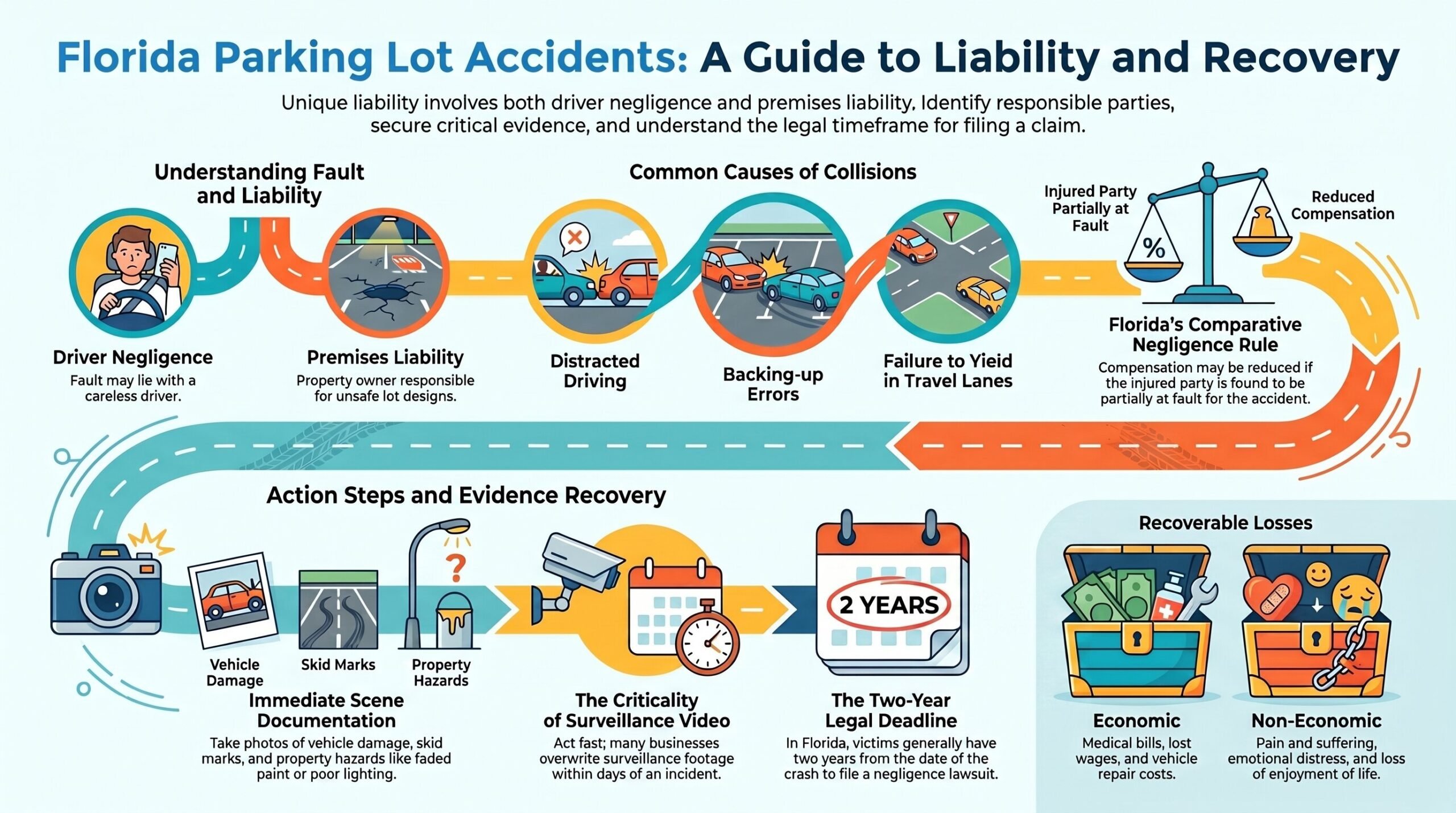
When a parking lot collision causes injuries, a Florida car accident lawyer can help evaluate the claim, identify liable parties, and pursue compensation for medical costs, lost income, pain and suffering, and other damages. Legal support often begins with a careful review of photographs, witness statements, vehicle damage, surveillance footage, and medical records. Counsel may also examine parking lot signage, traffic flow markings, lighting, and maintenance conditions to determine whether a driver, property owner, business, or another party contributed to the harm.
For injured clients and families focused on recovery and serving their communities, this guidance can reduce confusion and protect important rights. An attorney can manage insurer communications, preserve evidence, calculate losses, and prepare a claim supported by clear documentation. Through careful fault determination, the legal team can present the facts in a structured manner and seek a fair resolution through negotiation or, when necessary, litigation in court.
OUR CONSULTATIONSARE FREE
START YOUR FREE CASE REVIEW

Understanding Florida Parking Lot Car Accident Injury Cases
A clear understanding of Florida parking lot car accident injury cases begins with recognizing that these collisions often differ from roadway crashes in both evidence and liability. These matters may involve drivers, property owners, management companies, security providers, or maintenance contractors, depending on the facts. Careful review helps determine who owed a duty of care and whether that duty was breached.
Florida law may require analysis of premises liability basics when unsafe property conditions contributed to an injury. Attorneys often examine incident reports, surveillance footage, lighting records, signage, traffic flow design, and prior complaints. Medical documentation also helps connect the injury to the event and measure the harm sustained.
Insurance issues may include auto policies, commercial coverage, or visitor insurance coverage connected to the property. Because multiple insurers may dispute responsibility, organized evidence is crucial. A thorough legal evaluation supports fair accountability while helping injured individuals protect their health, dignity, and financial stability after the incident.
Common Causes of Florida Parking Lot Car Accidents
Common causes of Florida parking lot car accidents often include distracted driving, backing-up collisions, failure to yield, and hazardous lot design. These incidents may occur in low-speed environments, but they can still result in significant injuries and disputed liability. Identifying the cause of the crash is critical, as it helps determine fault, available evidence, and the potential value of an injury claim.
Distracted Driving
Distracted driving is often a major factor in Florida parking lot car accidents because drivers must process multiple hazards in a confined, unpredictable space. Even brief inattention can prevent a motorist from noticing shoppers, carts, lane markings, vehicles, or changing traffic patterns. Texting phone distractions are especially dangerous because they take the driver’s eyes, hands, and attention away from safe navigation.
In areas serving families, seniors, workers, and visitors, pedestrian hazard awareness becomes crucial to protecting those who may be walking between parked vehicles or moving toward storefronts. A careful investigation may examine phone use, witness statements, surveillance footage, and driver conduct to determine whether distraction contributed to the collision. Identifying these factors helps injured individuals pursue accountability and supports safer community spaces for everyone.
Backing-Up Collisions
Beyond distraction, backing-up collisions are among the most frequent causes of car accidents in Florida parking lots, particularly in crowded retail centers, apartment complexes, medical facilities, and office lots. These crashes often occur when a driver reverses out of a space without fully checking the vehicle’s blind spots, mirrors, rear cameras, or the area behind the vehicle.
Pedestrians, cyclists, service workers, and other motorists may be at risk within seconds, especially when traffic is tight or visibility is limited. Parking lot signage can help guide movement, but drivers remain responsible for reversing cautiously and responding to changing conditions. Careful investigation may examine camera footage, witness accounts, property layout, lighting, and vehicle damage. For injured persons and those assisting them, understanding how backing-up collisions occur supports safer conduct and informed legal decisions.
Failure To Yield
When drivers ignore right-of-way rules in parking lots, failure-to-yield collisions can occur in travel lanes, at intersections, in crosswalks, and near store entrances. These crashes often involve motorists turning without caution, rolling through stop controls, or proceeding before pedestrians and other vehicles have cleared the path. In Florida, such conduct may support a finding of negligence when a driver fails to act with reasonable care under the circumstances.
Negligent signage may further complicate fault if faded, hidden, or missing signs contribute to confusion about priority. Consistent parking enforcement can also reduce risky behavior by discouraging speeding, improper stopping, and disregard for marked crossings. For injured individuals, careful review of witness statements, video footage, vehicle positions, and maintenance records may help identify responsible parties.
Poor Lot Design
Poor lot design can create hazards even where drivers attempt to follow right-of-way rules. In Florida parking areas, confusing traffic flow, narrow travel lanes, limited sightlines, and poorly placed entrances may increase the risk of collisions. Drivers, pedestrians, and service workers can face preventable danger when a property lacks adequate directional signs, safe pedestrian paths, or effective speed controls.
After a crash, investigators may examine lane marking clarity, lighting conditions, obstruction placement, and whether the layout encouraged unsafe turning or backing movements. Skid mark collection can also help show how drivers reacted before impact, especially near blind corners or congested aisles. A careful review may identify whether property owners, managers, or maintenance contractors failed to correct design-related risks that placed visitors and community members in harm’s way.


Legal Rights of Florida Parking Lot Car Accident Injury Victims
Although many parking lot collisions occur at low speeds, injured victims in Florida may still have important legal rights to medical benefits, lost income coverage, and compensation for losses caused by another party’s negligence. These rights may apply when a driver, property owner, business operator, or tenant’s negligence contributes to unsafe conditions or harmful conduct.
Victims may protect their interests by understanding critical legal considerations:
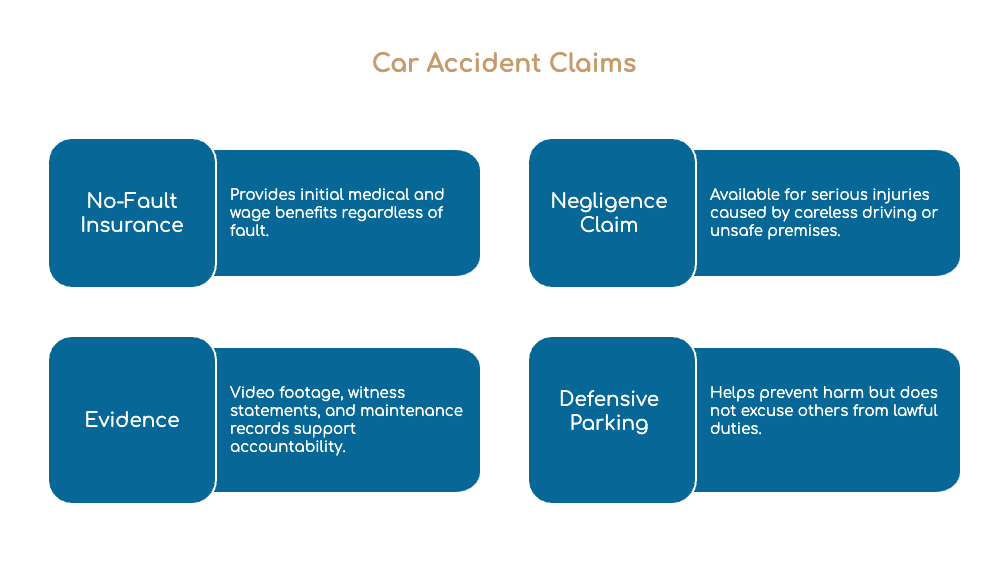
- Florida no-fault insurance may provide initial medical and wage benefits, regardless of who caused the crash.
- A negligence claim may be available when serious injuries result from careless driving or unsafe premises.
- Evidence, including video footage, witness statements, and maintenance records, can support accountability.
- Defensive parking practices may help prevent harm, but they do not excuse others from lawful duties.
For service-minded families, pursuing a claim can promote recovery, responsibility, and safer shared spaces for the broader community.
Why Do Florida Parking Lot Car Accident Injuries Happen?
Because parking lots combine pedestrians, vehicles, limited visibility, and frequent turning movements, injuries often occur even during brief, low-speed encounters. Drivers may back out without carefully checking their mirrors, cross pedestrian paths, or become distracted while searching for parking spaces. Shoppers, employees, delivery workers, and visitors can also face danger when traffic patterns are unclear or walkways are poorly marked.
Parking lot hazards may include faded striping, inadequate lighting, obstructed sightlines, potholes, loose gravel, confusing signage, and poorly designed entrances or exits. These conditions can increase the risk of falls, collisions, and impacts between vehicles and pedestrians. Larger vehicles may create blind spots, while crowded lots can reduce reaction time for everyone nearby.
Injury causes often require careful review because harm may result from driver negligence, property conditions, or both. Medical documentation can help connect physical symptoms to the incident, supporting a clearer understanding of how the injury occurred.
What Should You Do After a Florida Parking Lot Car Accident Injury?
After a Florida parking lot car accident injury, the immediate response can affect both medical recovery and any future legal claim. An injured person should first check for injuries, then document the scene with photographs, witness information, and relevant details. Promptly contacting an attorney may also help preserve evidence, address insurance issues, and protect the injured person’s rights.
Check For Injuries
In the moments following a Florida parking lot car accident, the first priority is to check for injuries among drivers, passengers, pedestrians, bicyclists, and anyone else nearby. A calm safety checklist should begin with asking whether anyone feels pain, dizziness, numbness, confusion, or difficulty breathing. Those who can move safely may assist by keeping injured persons still and away from additional hazards, such as moving vehicles or blocked traffic lanes.
If injuries appear serious, or symptoms are uncertain, emergency medical services should be called immediately. Even minor impacts can cause delayed pain, head injuries, or soft tissue damage, making a prompt medical assessment important. Compassionate attention, steady communication, and respect for each person’s condition help protect health while supporting an orderly response. Records of symptoms may also guide later care.
Document The Scene
Once immediate medical needs have been addressed, the scene should be carefully documented before vehicles are moved, if safe to do so. Photographs and videos should capture vehicle positions, damage, skid marks, debris, lighting, weather, and any visible injuries. The surrounding parking lot layout should also be recorded, including entrances, exits, traffic arrows, crosswalks, curbs, blind spots, and pedestrian pathways.
If nearby Safety signs maintenance appears neglected, such as faded markings, missing stop signs, or obstructed warnings, those conditions should be documented clearly. Witness names and contact information should be gathered respectfully, without pressuring anyone. A written account should note the time, location, and sequence of events while memories remain fresh. Thorough documentation may help preserve facts and support a fair evaluation of responsibility later.
Contact An Attorney
When legal questions arise, an injured person should consider contacting a Florida parking lot car accident injury attorney as soon as practical. Counsel may help protect the person’s interests, explain available claims, and coordinate necessary steps with care and discipline. Early guidance can support preservation of evidence, including photographs, surveillance video, incident reports, and witness information that may otherwise be lost.
An attorney may also encourage prompt medical evaluation, which can identify hidden injuries and create reliable documentation of the harm suffered. For those committed to serving family, clients, or community, timely legal assistance can reduce confusion and support responsible decision-making. The attorney can communicate with insurers, review liability issues, and help the injured person pursue fair recovery while focusing on health, stability, and obligations.
Critical Evidence in a Florida Parking Lot Car Accident Injury Case
Critical evidence can determine whether liability is clearly established after a Florida parking lot car accident, especially when fault is disputed or injuries are contested.
Critical evidence may include:
- Surveillance camera footage
- Witness contact information
- Police accident reports
- Vehicle damage photos
Each item can help document how the collision occurred, preserve important details, and support a stronger injury claim.
Surveillance Camera Footage
How can surveillance camera footage affect a Florida parking lot car accident injury case? Video from store, garage, or traffic cameras may show vehicle speed, pedestrian movement, lighting, signage, and the sequence of events leading up to the impact. This evidence can help a lawyer evaluate fault, counter inaccurate reports, and support a claim for medical costs, lost income, and pain-related damages. When injuries are fatal, footage may also assist families pursuing Wrongful death claims by preserving an objective record of what occurred.
Prompt action is important because many businesses overwrite recordings within days. A preservation request can help secure relevant video before it is lost. If an insurer ignores clear footage, delays payment, or misrepresents its meaning, the conduct may support allegations of insurance bad faith under Florida law.
Witness Contact Information
Why can witness contact information become pivotal after a Florida parking lot car accident? Independent observers may notice vehicle movement, pedestrian conduct, visibility limits, distracted driving, or unsafe conditions before and after impact. Their names, phone numbers, email addresses, and brief location details should be preserved promptly, because memories fade and helpful people may become difficult to locate.
Witness statements can confirm timelines, refute inaccurate accounts, and support a just evaluation of fault and damages. For injured persons, careful collection of this information also serves the broader purpose of protecting truth, accountability, and responsible care. When shared with counsel, witness details may assist with insurance verification, claim presentation, and settlement discussions. Accurate contact records help ensure that credible voices remain available when their perspective is needed most later.
Police Accident Reports
After a Florida parking lot collision, a police accident report can be an important source of early, organized case information. It may identify drivers, passengers, witnesses, insurance details, location, weather, and the officer’s initial observations. Although the report is not always conclusive proof of fault, it can help attorneys evaluate liability standards and compare statements made soon after the incident.
In parking lot cases, the report may also note traffic control signs, lane markings, lighting concerns, or reported hazards that relate to premises negligence. This information can guide further investigation and help preserve facts before memories fade. For injured people seeking fair treatment, a complete report supports careful case preparation, responsible claims handling, and a clearer understanding of what conduct may have contributed to the collision.
Vehicle Damage Photos
Vehicle damage photos can preserve important physical evidence before repairs, towing, weather, or continued vehicle use changes the condition of the cars involved. In a Florida parking lot collision, these images may show impact points, paint transfer, broken lights, bumper compression, and vehicle positioning. Clear Property damage documentation can help connect the visible damage to the reported mechanism of injury, especially when speed or fault is disputed.
Photographs should include wide views, close-up details, license plates, surrounding landmarks, skid marks, debris, and any relevant parking lines or signs. Time-stamped images may assist attorneys, adjusters, and medical providers in understanding the event. In Insurance claim disputes, accurate photos can challenge unfair damage assessments, support liability arguments, and help protect an injured person’s right to meaningful recovery.
Long-Term Effects of Florida Parking Lot Car Accident Injuries
Parking lot collisions in Florida can cause injuries that continue well beyond the initial treatment period, including chronic pain conditions that affect daily activity and work capacity. Reduced mobility and impaired physical function may also develop, particularly when soft tissue injuries, fractures, or joint damage are not fully resolved. Emotional trauma, including anxiety, sleep disruption, or fear of driving, may further complicate recovery and influence the long-term value of an injury claim.
Chronic Pain Conditions
When injuries from a Florida parking lot car accident do not resolve as expected, chronic pain may become a lasting and disruptive medical condition. Persistent neck, back, shoulder, or nerve pain can follow low-speed impacts, pedestrian collisions, or trauma occurring near a Work Zone. These conditions may require ongoing evaluation, imaging, therapy, medication management, or referrals to experts.
Pain can also be complicated when the incident involves a Slip and Fall, uneven pavement, poor lighting, or multiple contributing hazards. For injured individuals, careful documentation helps caregivers, insurers, and legal advocates understand the full burden of the condition. Medical records, pain journals, and treatment recommendations may clarify whether symptoms are related to the accident. A compassionate legal review can support fair consideration of long-term care needs.
Mobility And Function
A lasting loss of mobility after a Florida parking lot car accident can affect nearly every part of daily life, from walking across a store entrance to standing at work or climbing stairs at home. Injuries to knees, hips, ankles, shoulders, or the spine may limit balance, strength, and range of motion. These limits can reduce independence and increase reliance on family members, coworkers, or caregivers who serve practical daily needs.
Long-term functional problems may require therapy, assistive devices, home modifications, or job changes. When shared negligence is alleged, careful documentation of medical restrictions and physical limitations may help clarify responsibility. Available insurance coverage can also influence access to rehabilitation, mobility equipment, and future care. A thorough evaluation helps establish a link between the injury and ongoing functional loss.
Emotional Trauma Impacts
Although physical injuries often receive the most immediate attention, emotional trauma after a Florida parking lot car accident can produce lasting effects that interfere with daily stability and recovery. Victims may experience Trauma symptoms such as anxiety, sleep disruption, irritability, avoidance of driving areas, or heightened fear in public spaces.
These effects can limit work performance, family responsibilities, and the ability to serve others consistently and with care. When symptoms persist, PTSD treatment may become necessary through counseling, therapy, or supervised medical support. Proper documentation of emotional distress is important, including clinical notes, treatment records, and personal impact statements. Insurance claim delays can worsen stress, especially when needed care is postponed. Thorough legal guidance helps protect the injured person’s dignity, recovery needs, and long-term well-being after such incidents.
Proving Liability in Florida Parking Lot Car Accident Injury Cases
Establishing liability in a Florida parking lot car accident requires a careful review of how the collision occurred, which traffic rules or property conditions applied, and whether any party failed to act with reasonable care. Evidence may include surveillance footage, photographs, witness statements, vehicle damage patterns, lighting conditions, traffic markings, and maintenance records.
Drivers may be responsible for speeding, failing to yield, backing without caution, ignoring stop signs, or driving distracted. Property owners or managers may share fault when poor design, obstructed visibility, inadequate signage, or unsafe pavement contribute to the crash.
A careful liability analysis also considers Comparative negligence defenses, since Florida law may reduce recovery when an injured person is partly at fault. Insurance coverage verification helps identify available policies, responsible parties, and potential limits before claims are evaluated. Through organized evidence review, injured individuals and their advocates can pursue accountability while supporting fair outcomes for those harmed.
Dealing With Insurance Companies After a Florida Parking Lot Car Accident Injury
After a Florida parking lot car accident, insurance companies often begin evaluating the claim quickly, sometimes before the full extent of injuries or liability is clear. Injured individuals may face requests for recorded statements, medical authorizations, or early settlement discussions, each of which can affect available compensation. Careful Policy coverage verification helps determine applicable benefits, exclusions, and limits under personal injury protection, bodily injury, or uninsured motorist provisions.
Effective insurer documentation should include photographs, medical records, repair estimates, witness information, and correspondence, organized to support an accurate assessment. During payout negotiations, the value of medical care, lost income, pain, and future needs should be presented with restraint and supported by evidence. If an insurer undervalues or rejects a valid claim, denial appeals may require a clear response that addresses stated reasons and any missing information. A lawyer can manage these communications, protecting the injured person while allowing families and caregivers to focus on recovery and service.
What to Expect During a Florida Parking Lot Car Accident Injury Claim Process
A Florida parking lot car accident injury claim typically begins with prompt reporting of the incident, followed by careful collection of evidence, including photographs, witness statements, and medical records. The process then moves into insurance claim handling, where liability, coverage, and the extent of injuries are closely evaluated. Resolution may involve negotiated compensation for medical expenses, lost income, and other damages, depending on the facts and available proof.
Reporting The Accident
Reporting a parking lot accident promptly is an important first step in creating a clear record of what occurred, especially when injuries, vehicle damage, or disputed fault may be involved. The injured person, or someone assisting, should notify law enforcement when appropriate and inform the property owner, store manager, or parking lot operator.
If anyone appears to be hurt, emergency medical care should be requested without delay, reflecting responsible concern for safety and community well-being. A written incident report may identify the date, time, location, parties involved, and basic circumstances. Insurance carriers should also be notified as required by policy terms. When witness statements collected at the scene are mentioned in a report, they may help preserve early accounts without replacing later investigation or evidence review for accuracy.
Gathering Key Evidence
Once the accident has been reported, gathering strong evidence becomes central to a Florida parking lot car accident injury claim. The injured person or a trusted representative should take photographs of vehicle positions, property damage, skid marks, lighting conditions, traffic signs, and nearby obstructions. Witness names, contact information, and brief statements may help clarify how the collision occurred.
Medical records, treatment notes, and documented symptoms also provide crucial support, especially when Health insurance issues affect access to care. Receipts, records of missed work, and notes on transportation needs, including rental car arrangements, should be organized carefully. When evidence is collected promptly, it helps present a clear account of harm suffered and assists those seeking fair accountability while serving the injured person’s repair, dignity, and practical needs.
Handling Insurance Claims
Expect insurance communications to begin soon after a Florida parking lot collision, often before the injured person fully understands the extent of the injuries or available coverage. Adjusters may request statements, vehicle details, photographs, medical documentation, and information about prior conditions. Each response should be precise, limited, and consistent with known facts. A careful review of liability basics helps clarify whether fault involves a reversing driver, a distracted pedestrian, poor signage, unsafe traffic flow, or shared responsibility.
Because parking lot crashes may involve private property, commercial policies, or multiple insurers, claim handling requires organized records and timely notice. Those supporting an injured person should encourage prompt medical care, preserve all communications, and avoid speculation. Professional guidance can help ensure the claim proceeds with discipline and fairness.
Resolving Injury Compensation
The resolution of injury compensation after a Florida parking lot car accident usually depends on documented damages, available insurance coverage, and the strength of liability evidence. Claimants often move toward settlement after medical needs are evaluated, vehicle damage is reviewed, and fault is assessed through photographs, witness statements, and reports.
Documenting medical treatment remains crucial because consistent records help connect the injury to the collision and support fair payment for care, lost income, and related losses.
Insurance coverage disputes may arise when carriers question fault, policy limits, exclusions, or the severity of injuries. In such circumstances, careful negotiation can protect the injured person’s interests while promoting responsible resolution. If settlement cannot be reached, litigation may become necessary to pursue full compensation.
Compensation for Florida Parking Lot Car Accident Injury Damages
After a parking lot crash in Florida, compensation for injury damages may include medical expenses, lost income, reduced earning capacity, property damage, and pain and suffering when the facts support those claims. The evaluation often turns on liability, insurance coverage, injury documentation, and whether negligent driving, unsafe traffic design, poor lighting, or inadequate maintenance contributed to harm.
A careful claim review may also consider Premises liability defenses, including arguments that the danger was open and obvious, that the property owner lacked notice, or that another driver caused the loss. Evidence preservation tips can help protect a valid claim by saving photographs, incident reports, witness names, medical records, repair estimates, and surveillance requests. Prompt action may serve injured people by reducing uncertainty and supporting fair accountability. When damages are documented with care, an attorney can present the claim in a manner that reflects the full impact of the collision.
Economic vs Non-Economic Damages in Florida Parking Lot Car Accident Cases
In Florida parking lot car accident cases, damages are generally divided into economic and non-economic categories, each requiring careful evaluation. Economic damages may include medical bills, lost wages, and vehicle repair costs, while non-economic damages may include pain and suffering, emotional distress, and loss of enjoyment of life. Proving the value of these damages often depends on medical records, wage documentation, repair estimates, expert opinions, and other evidence connecting the losses to the accident.
Economic Damage Categories
When a parking lot collision causes injury, economic damages represent the measurable financial losses tied to the crash. These losses may include emergency care, diagnostic testing, surgery, therapy, medication, medical equipment, and follow-up treatment. Medical cost calculation often requires reviewing bills, provider records, insurance statements, and anticipated future care needs. Lost wages may also qualify, including missed work, reduced hours, or diminished earning capacity when injuries limit future employment.
Other recoverable categories can include transportation to medical appointments, vehicle repair or replacement, rental car expenses, and necessary household assistance. Economic damages proof should be organized through receipts, invoices, payroll records, tax documents, repair estimates, and professional evaluations. Clear documentation helps establish the financial impact, supporting fair recovery while serving the injured person’s practical needs after the accident.
Non-Economic Damage Examples
Beyond documented bills and wage records, a Florida parking lot car accident may also cause losses that are personal, subjective, and harder to measure. Non-economic damages may include physical pain, emotional suffering, anxiety near traffic, sleep disruption, scarring, or embarrassment caused by visible injuries. A person who once assisted family, volunteered, attended worship, or supported neighbors may experience loss of enjoyment when injuries limit those meaningful roles.
These damages can also include inconvenience, reduced independence, strain in household relationships, and frustration with relying on others for ordinary tasks. In parking lot collisions, even low-speed impacts may produce lingering discomfort or fear that affects daily routines. Recognizing these losses helps reflect the full human impact of an injury, not only its financial consequences for victims.
Proving Damage Value
To establish the value of damages after a Florida parking lot car accident, evidence must connect the collision to both measurable financial losses and personal consequences. Economic damages may be proven through medical bills, repair estimates, wage records, pharmacy receipts, and documentation of transportation or caregiving needs. Valuation evidence should be organized to show what has been paid, what remains owed, and which expenses are reasonably related to the crash.
For serious injuries, future cost estimation may include projected treatment, rehabilitation, reduced earning capacity, or long-term support. Non-economic damages require different proof, including medical opinions, pain journals, witness statements, and records showing limits on mobility, work, family duties, or service to others. A clear presentation helps insurers, judges, or juries assess compensation fairly.
When a Florida Parking Lot Car Accident Injury Case Goes to Trial vs Settlement
Although many Florida parking lot car accident injury claims resolve through settlement, some proceed to trial when liability, causation, injury severity, or damages remain disputed. Settlement may serve injured individuals by reducing delay, expense, and uncertainty, particularly when medical records, witness accounts, and expert opinions support a fair result. An effective Insurance negotiation strategy often presents the claim clearly, documents losses thoroughly, and addresses weaknesses before the insurer uses them to reduce payment.
Trial becomes more likely when the parties value the case differently, when surveillance or accident reconstruction is contested, or when an insurer refuses to recognize the full impact of the harm. At trial, attorneys prepare evidence, examine witnesses, and guide the injured party through each stage with care. The Trial jury selection process is important because jurors must evaluate credibility, responsibility, and damages impartially. A well-prepared trial posture can also encourage meaningful settlement discussions before verdict.
Florida Laws That May Affect Your Florida Parking Lot Car Accident Case
Whether a Florida parking lot car accident case is resolved by settlement or proceeds to trial, the governing law often shapes the value, strategy, and outcome of the claim. Several Florida rules may influence how responsibility is assigned and how recovery is pursued after injury.
- Comparative Negligence: Florida law may reduce compensation when an injured person shares fault, such as by speeding, distraction, or failing to yield.
- Premises Liability: A property owner or business may be held responsible when unsafe design, poor lighting, missing signs, or neglected maintenance contributes to harm.
- Traffic and Right-of-Way Rules: Even in private lots, driver conduct, posted signs, lane markings, and reasonable care standards can guide fault analysis.
- Insurance Requirements: Available coverage, including bodily injury, uninsured motorist, or medical benefits, may affect practical recovery.
These laws help protect injured people while encouraging accountable conduct by drivers, businesses, and property owners.
The Statute of Limitations for Florida Parking Lot Car Accident Injury Cases
Because legal deadlines can control the right to recover compensation, the statute of limitations is an essential issue in Florida parking lot car accident injury cases. In many negligence claims, Florida law gives an injured person two years from the date of the crash to file a lawsuit. If that deadline passes, the court may dismiss the case, even when the injuries are serious and responsibility appears clear.
This filing deadline is separate from the Insurance claims process, which may begin soon after the accident. Insurance discussions do not automatically extend the time to sue. For that reason, injured individuals and their families should treat the limitation period with careful attention, especially when medical needs, caregiving duties, or service to others may delay action.
Timely preservation of evidence of liability is also important. Parking lot video, witness accounts, vehicle damage records, and incident reports can become unavailable long before the statutory period expires.
How a Florida Parking Lot Car Accident Injury Lawyer Can Help You
After a parking lot crash causes injury, a Florida parking lot car accident injury lawyer can help evaluate the legal issues, identify responsible parties, and protect the injured person’s claim from early mistakes. Legal guidance may be especially important when parking lot negligence involves poor lighting, unsafe traffic flow, missing signs, careless drivers, or inadequate property maintenance.
Early legal guidance can help protect an injured person’s parking lot accident claim from costly mistakes.
- Investigating the crash: The lawyer may gather video footage, witness statements, photographs, incident reports, and maintenance records to clarify what occurred.
- Identifying liable parties: Responsibility may involve a driver, property owner, management company, security contractor, or business operator.
- Managing insurance issues: Counsel can address insurance claim delays, incomplete responses, disputed fault, and requests for recorded statements.
- Documenting damages: Medical costs, lost income, reduced mobility, and long-term care needs can be organized into a supported claim.
This work helps injured people pursue accountability while preserving resources needed for recovery, stability, and service to others.
When to Contact a Florida Parking Lot Car Accident Injury Lawyer
When injuries, contested fault, or unsafe property conditions are involved, an injured person should contact a Florida parking lot car accident injury lawyer as soon as reasonably possible. Early contact helps preserve evidence, identify responsible parties, and ensure that medical documentation supports the full extent of harm suffered.
Legal guidance is especially important when a crash involves pedestrians, backing vehicles, poor lighting, missing signs, negligent security, or unclear right-of-way issues. Witness memories can fade, surveillance footage may be erased, and maintenance records may become harder to obtain. Prompt action can also protect a claim from Urgent legal deadlines that may limit the time available to seek compensation.
A lawyer should also be contacted when Insurance claim disputes arise, including denied claims, low settlement offers, delayed responses, or attempts to shift blame. Timely counsel allows the injured person to focus on recovery while responsible action is taken to protect rights and support a just resolution.
Why You Need an Experienced Florida Parking Lot Car Accident Injury Lawyer
Although parking lot collisions may appear minor at first, they often involve complex questions of fault, insurance coverage, property maintenance, and injury causation. An experienced Florida parking lot car accident injury lawyer helps injured individuals and their families pursue accountability while protecting their ability to obtain the support they need. These cases may involve distracted drivers, unclear traffic patterns, poor lighting, obstructed signage, or negligent security and maintenance practices.
Legal counsel can identify responsible parties, evaluate medical documentation, and address Insurance claim tactics that may minimize injuries or shift blame. Prompt evidence preservation is also essential because surveillance footage, witness memories, and physical conditions can disappear quickly. A lawyer familiar with these claims can coordinate investigations, communicate with insurers, and present damages clearly.
For those committed to caring for others after an injury, skilled representation provides structure, protection, and guidance. It allows victims to focus on recovery while legal and financial issues are handled with diligence.
How to Choose the Right Florida Parking Lot Car Accident Injury Lawyer for Your Case
In selecting legal representation, an injured person should consider whether the attorney has specific experience handling Florida parking lot accident claims, not merely general car accident cases. These matters may involve unclear traffic patterns, negligent drivers, poor lighting, inadequate signage, distracted pedestrians, or unsafe property conditions. A qualified lawyer should understand how to identify responsible parties and preserve evidence before it is lost.
The selection process should include careful review of the lawyer’s case results, communication practices, and willingness to explain the legal process. Client consultations can help an injured person assess whether the attorney listens carefully, answers questions directly, and shows respect for the person’s recovery goals.
Payment options also merit attention, especially when medical bills and missed income create financial strain. A suitable attorney should provide clear fee information, practical guidance, and steady advocacy. The right choice supports accountability while helping the injured person seek fair compensation with dignity.
About The Law Offices of Anidjar & Levine
The Law Offices of Anidjar & Levine represents injured people throughout Florida, including those hurt in parking lot car accidents caused by negligent drivers, unsafe property conditions, or other preventable hazards.
The firm focuses on helping clients pursue compensation for medical care, lost income, pain and suffering, and other accident-related losses.
Its attorneys understand that injured individuals often need guidance, structure, and steady communication during a difficult recovery period.
The Client consultation process is designed to identify the facts, review the available evidence, and explain legal options clearly.
This approach helps clients make informed decisions while the firm handles insurance communications, documentation, and case development.
The firm also offers contingency fee options, allowing injured clients to seek legal representation without paying attorney’s fees upfront.
Through attentive service and diligent advocacy, The Law Offices of Anidjar & Levine works to support accident victims and promote accountability for preventable harm.
Frequently Asked Questions
Can I Recover Compensation if I Was Hit While Walking in a Parking Lot?
Yes, compensation may be available when a person is hit while walking in a parking lot if another party’s negligence caused the harm. A driver, property owner, or maintenance company may be responsible, depending on unsafe conditions or careless conduct. Recoverable pedestrian damages may include medical costs, lost wages, and pain. Related slip-and-fall claims may also arise when hazardous surfaces contributed to the incident.
Who Is Responsible for Potholes or Poor Lighting in a Parking Lot?
Responsibility usually rests with the parking lot owner, property manager, tenant, or maintenance contractor, depending on who controls repairs, lighting, and inspections. Negligent maintenance may support a premises liability claim when potholes, broken pavement, or poor lighting create foreseeable dangers. Those entrusted with public spaces should act reasonably to protect visitors, workers, and pedestrians. Liability depends on notice, control, and whether timely corrective action or warnings were provided.
Do Parking Lot Accidents Affect My Driving Record in Florida?
Parking lot accidents may affect a Florida driver’s record if law enforcement issues citations, such as careless driving or leaving the scene. When no citation is issued, the crash may still affect an insurance claim, including a premium review or a fault assessment. A person seeking to serve injured parties responsibly should document the scene, exchange information, report injuries, and promptly address any citations or claims through proper channels.
Can I File a Claim for a Hit-And-Run Parking Lot Accident?
Yes, a person may file a claim for a hit-and-run parking lot accident. Evidence collection should begin promptly, including photographs, witness names, surveillance sources, and vehicle damage details. A police report is important, even when injuries appear minor. Insurance coverage may apply through collision benefits, medical payments, or uninsured motorists protection. The claimant should report the loss promptly, preserving information that helps insurers assess liability and support a fair recovery.
What if a Delivery Truck Hit My Car in a Parking Lot?
A delivery truck striking a parked or occupied vehicle may give rise to a claim against the driver, employer, or commercial insurer. The injured person should document the scene, identify witnesses, request incident reports, and seek medical care promptly. Insurance coverage may involve commercial policies with higher limits, but disputes can arise. Medical expenses, lost income, and property damage should be carefully recorded so that responsibility is assessed fairly and service to the injured continues.
—————————
A Florida parking lot car accident can cause serious injuries, disputed liability, and complex insurance issues.
Victims may have the right to seek compensation for medical expenses, lost income, pain and suffering, and related damages.
A knowledgeable Florida Car Accident Lawyer can investigate the crash, identify liable parties, and manage negotiations with insurers.
Anidjar & Levine provides experienced legal guidance for injured claimants, helping them pursue accountability and fair recovery under Florida law.