
Florida rideshare accident lawyers help injured people identify every potentially responsible party, including the driver, another motorist, an employer, or the rideshare company. The Law Offices of Anidjar and Levine examines driver conduct, app status, trip records, vehicle ownership, and applicable insurance policies to determine coverage at the time of the crash. Attorneys also preserve evidence, document medical and financial losses, communicate with insurers, and pursue compensation for legally recognized damages. Learn more from a Florida Personal Injury Lawyer about liability, evidence, deadlines, and selecting qualified legal representation.
Main Takeaways
- A Florida rideshare accident lawyer identifies potentially liable parties, including the driver, rideshare company, other motorists, employers, and insurers.
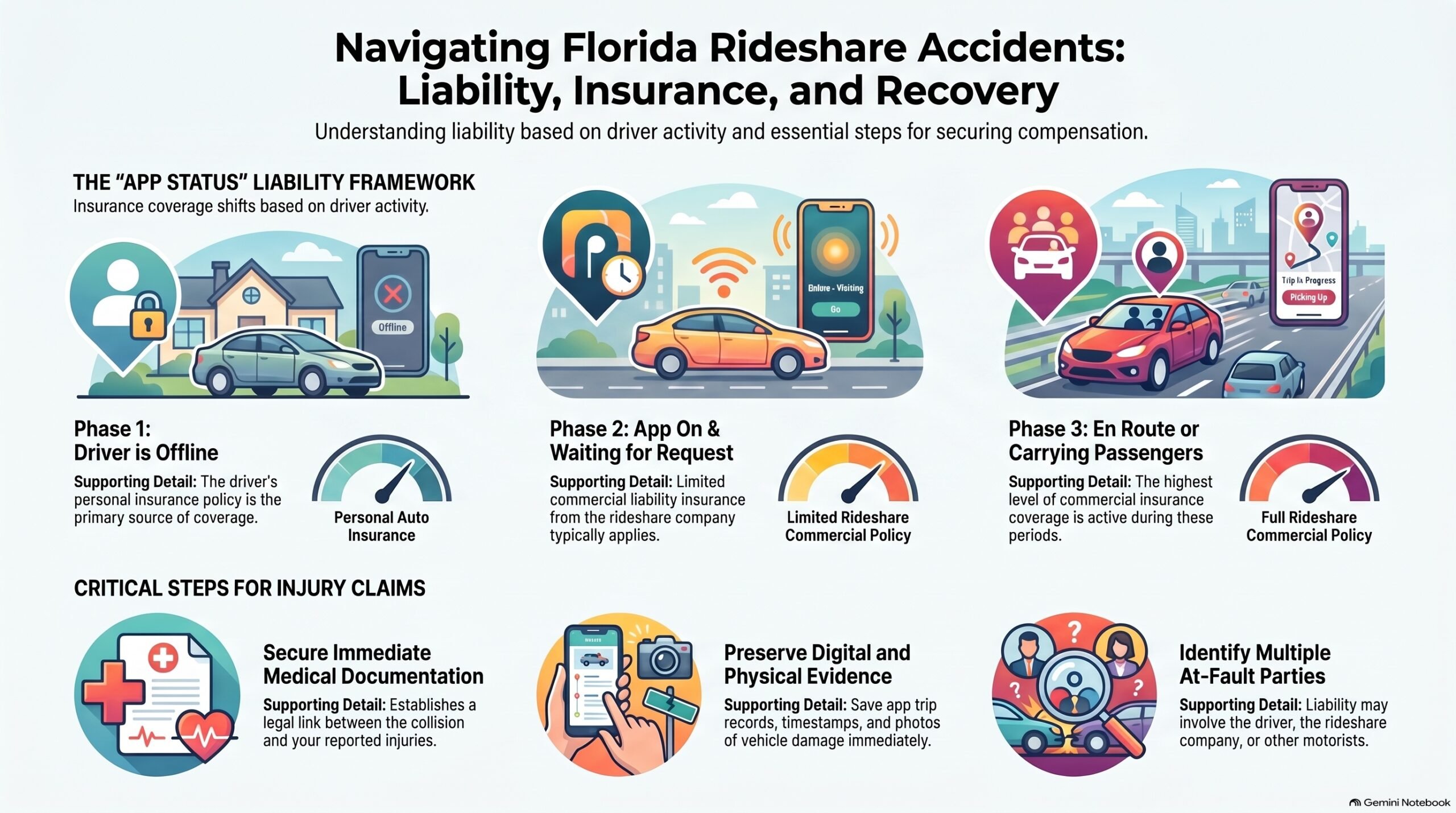
- Liability and insurance coverage may depend on whether the driver was offline, awaiting requests, traveling to a passenger, or transporting a passenger.
- Attorneys review app records, trip timestamps, vehicle ownership, police reports, witness statements, footage, and medical documentation to establish responsibility.
- Promptly preserving photographs, crash reports, medical records, witness contacts, and electronic trip data can protect important evidence.
- Legal representation can handle insurers and pursue compensation for medical expenses, lost income, property damage, and other recognized losses.


How We Can Help With Your Florida Car Accident Rideshare At-Fault Parties Injury Claim
Our legal team helps injured people pursue compensation after Florida rideshare crashes by identifying every potentially responsible party and applicable insurance policy. The firm evaluates available records, consults relevant professionals, and organizes evidence that may support an injury claim. This process can clarify how the collision affected medical needs, employment, transportation, and daily responsibilities.
Counsel examines Rideshare insurance coverage, including policies connected to the driver’s personal vehicle and the transportation platform. The applicable protection may depend on whether the driver was offline, available for requests, traveling to a passenger, or carrying a passenger. Attorneys also address App data preservation by promptly requesting trip details, status records, communications, and related electronic information before it becomes unavailable.
The legal team communicates with insurers, reviews settlement proposals, and prepares necessary documentation while protecting the client’s interests. By handling these responsibilities, the firm allows injured individuals and their families to concentrate on recovery and community obligations rather than managing complex claim procedures alone.
OUR CONSULTATIONSARE FREE
START YOUR FREE CASE REVIEW

Understanding Florida Car Accident Rideshare At-Fault Parties Injury Cases
When a rideshare collision occurs in Florida, determining who may be legally responsible requires an examination of the driver’s conduct, the involvement of the rideshare company, and the insurance coverage available at the time of the crash. Rideshare Liability may involve the driver, another motorist, or the transportation network company, depending on the driver’s status and activity at the time of the incident. Insurance Coverage can change while the driver is available for requests, traveling to a passenger, or transporting a passenger. A careful review of app records, trip information, vehicle ownership, and applicable policies helps clarify potential responsibility. Evidence Preservation is important because photographs, witness accounts, electronic records, and vehicle data can help establish how the collision occurred and identify responsible parties. Medical Documentation should connect reported injuries to the crash and record treatment, prognosis, and related expenses. A thorough evaluation enables informed guidance, supports injured individuals, and promotes accountability while protecting each person’s opportunity to pursue lawful compensation.
Common Causes of Florida Car Accident Rideshare At-Fault Parties
Common causes of Florida rideshare car accidents include distracted driving, speeding, and other reckless driving behaviors. Impaired driving may further compromise a driver’s judgment, reaction time, and ability to operate the vehicle safely. Inadequate vehicle maintenance, including neglected brakes or worn tires, can also contribute to collisions and potential liability.
Distracted Driving
Distracted driving is a significant cause of Florida rideshare accidents, particularly when drivers use smartphones, adjust navigation systems, communicate with passengers, or focus on other activities instead of the roadway. These distractions can delay braking, obscure traffic signals, and prevent drivers from recognizing hazards affecting passengers, pedestrians, and other motorists. Florida’s phone distraction limits and texting conduct enforcement are intended to discourage conduct that diverts attention from safe vehicle operation. However, rideshare drivers may face additional distractions because their work depends on applications, trip notifications, route changes, and frequent passenger interactions. Investigators may review phone records, application data, vehicle cameras, witness accounts, and crash evidence when determining whether distraction contributed to a collision. Establishing this conduct can help injured individuals identify responsible parties and pursue appropriate compensation through applicable insurance coverage.
Speeding And Reckless Driving
Speeding and reckless driving can make a Florida rideshare collision more likely and increase the severity of resulting injuries. Excessive speed reduces reaction time, lengthens stopping distance, and may magnify the force transferred during impact. Reckless behavior, including unsafe passing, tailgating, or disregarding signals, can also create hazards for passengers, pedestrians, and other motorists. Establishing liability may require proof of speeding from vehicle data, roadway evidence, witness accounts, or surveillance footage. A traffic citation can support a claim, although it does not automatically determine civil responsibility. Investigators and attorneys may examine whether the driver violated traffic rules and whether that violation caused the crash. The high violation can affect injury severity, property damage, and available compensation. Prompt evidence preservation helps protect affected individuals and promotes fair accountability for preventable rideshare collisions.
Impaired Driving
When alcohol, cannabis, prescription medication, or other impairing substances affect a rideshare driver, the resulting loss of judgment, coordination, and reaction time can create a substantial risk of collision. Alcohol impairment may cause unsafe lane changes, delayed braking, and reduced awareness of passengers, pedestrians, and surrounding traffic. Drugged driving can produce comparable dangers, even when substances are lawfully prescribed or consumed before accepting a trip. Some medications may cause drowsiness, dizziness, or confusion, while cannabis can impair perception and decision-making. A rideshare driver who operates while impaired may violate Florida traffic laws and breach the duty to transport passengers with reasonable care. Evidence may include toxicology results, witness observations, admissions, surveillance footage, or ride records. Establishing impairment can help identify liability and support injured individuals seeking appropriate compensation.
Inadequate Vehicle Maintenance
Inadequate vehicle maintenance can make a rideshare vehicle unsafe and contribute directly to a collision. Drivers and rideshare companies may overlook inspections, repairs, or manufacturer-recommended service in favor of passenger availability. Worn brake components can reduce stopping ability, and Brake failure may prevent a driver from responding to traffic conditions, pedestrians, or sudden hazards. Neglected tires can lose air pressure, tread, or structural integrity, increasing the risk of blowouts at highway speeds. Defective lights, steering systems, suspension parts, and windshield wipers may also impair visibility or vehicle control. After a crash, maintenance records, inspection reports, repair invoices, and electronic vehicle data can help identify whether preventable neglect contributed to the event. Establishing responsibility may require reviewing the driver’s conduct, the company’s policies, and any third-party repair provider’s work to protect injured passengers and other road users.
Don’t Wait. Call Our Florida Personal Injury Lawyers Now!


Legal Rights of Florida Car Accident Rideshare At-Fault Parties Injury Victims
Florida rideshare accident victims may have legal rights against the driver, rideshare company, or another at-fault party, depending on the circumstances of the collision and the driver’s status in the rideshare application. Rideshare liability basics require examining whether the driver was offline, available for requests, en route to a passenger, or transporting a passenger. Coverage may differ at each stage, and evidence can clarify applicable responsibility.
Victims may pursue compensation for medical care, lost income, property damage, and other legally recognized losses.
A careful Insurance dispute strategy can address incomplete investigations, conflicting statements, or insufficient settlement offers.
- Preserve photographs, medical records, and crash reports.
- Identify the driver’s application status when possible.
- Notify relevant insurers without providing speculative statements.
- Document expenses, treatment, employment effects, and communications.
- Consult qualified counsel before accepting a settlement.
Legal guidance can help victims serve their families and communities by protecting recovery rights while respecting all involved parties and pursuing accountability through lawful procedures.
Why Do Florida Car Accident Rideshare At-Fault Parties Injuries Happen?
Understanding why rideshare injuries occur helps clarify which parties may bear responsibility and what evidence may support an injury claim. Crashes commonly result from distracted driving, speeding, impaired judgment, fatigue, unsafe lane changes, or failure to yield. Rideshare work can intensify these risks because drivers may find their way in unfamiliar areas, monitor applications, accept trip requests, or hurry between passengers. Vehicle defects, poorly maintained cars, hazardous road conditions, and negligent motorists can also contribute.
Responsibility may involve the rideshare driver, another motorist, a vehicle owner, a maintenance provider, or the rideshare company, depending on the facts. The driver’s trip status often affects available insurance, creating significant Insurance coverage disputes. Questions involving rider-versus-driver liability may arise when a passenger alleges unsafe driving, while the driver attributes the collision to another party. Establishing causation generally requires examining the collision circumstances, vehicle damage, medical records, application data, witness accounts, and applicable insurance policies to determine how each contributing factor led to the reported injuries.
What Should You Do After a Florida Car Accident Rideshare At-Fault Parties Injury?
After a Florida rideshare accident injury, the injured person should seek immediate medical care, even if symptoms initially appear minor. They should document the accident by preserving photographs, witness information, medical records, and relevant rideshare details. Promptly contacting a rideshare lawyer can help identify potentially responsible parties and protect available legal claims.
Seek Immediate Medical Care
Prompt medical evaluation is essential following a Florida rideshare collision, even when an injury initially appears minor. Some conditions, including concussions, internal bleeding, and soft-tissue damage, may develop symptoms gradually. Affected passengers, drivers, pedestrians, and other injured individuals should accept Emergency response assistance and obtain assessment from qualified medical professionals as soon as possible.
Medical personnel can identify urgent conditions, provide appropriate treatment, and explain necessary recovery care. Consistent with post-accident safety, an injured person should avoid unnecessary movement when neck, back, or head trauma is suspected. If emergency transport is recommended, it should not be declined because symptoms seem manageable. Preserving health and reducing additional harm benefits the injured individual and those assisting at the scene. Prompt care also creates a contemporaneous medical record connecting reported symptoms to the collision.
Document The Accident
Promptly documenting the accident can preserve critical evidence in a Florida rideshare injury claim. A person should photograph the vehicles, roadway, traffic controls, visible injuries, and surrounding conditions when safety permits. Scene photos may reveal impact positions, debris, lighting, weather, and other details that later change or disappear. Written notes should record the date, time, location, travel direction, passenger status, statements made, and events before and after the collision. This information supports timeline reconstruction and helps clarify how the crash developed. Witness identification is also important; names, phone numbers, and brief descriptions of observations should be preserved whenever possible. Rideshare passengers should retain trip receipts, driver information, and messages. App location data, including pickup and drop-off records, may help establish vehicle movements and the relevant ride period.
Contact A Rideshare Lawyer
A Florida rideshare injury claim may involve the rideshare driver, another motorist, the rideshare company, or multiple insurance carriers, depending on the circumstances and the driver’s app status. After medical evaluation, an injured person should contact a rideshare lawyer promptly. Counsel can preserve app records, vehicle data, photographs, witness information, and communications that may clarify responsibility. The lawyer can also review available policies, identify coverage disputes, and communicate with insurers on the claimant’s behalf. Early guidance helps prevent statements or settlements that could undermine recovery. A legal representative may document injuries through medical records, treatment histories, employment documentation, and expert evaluations. Counsel can then assess liability, calculate economic and non-economic losses, and negotiate damages based on the evidence. Prompt representation also helps protect filing deadlines and supports a fair, organized claim.
Don’t Wait. Call Our Florida Personal Injury Lawyers Now!
Critical Evidence in a Florida Car Accident Rideshare At-Fault Parties Injury Case
Critical evidence can help establish how the Florida rideshare collision occurred, who may be legally responsible, and the extent of the resulting injuries. Relevant materials may include digital records, official reports, medical documentation, witness accounts, and available video or photographic footage.
A careful review of the following evidence can clarify disputed facts and support an injury claim:
- Rideshare app records showing trip status, driver activity, route, and timing
- Police accident reports documenting statements, citations, road conditions, and collision details
- Medical treatment documentation linking injuries to the crash and recording related expenses
- Witness statements describing vehicle movements, traffic conditions, and observed conduct
- Dashcam, surveillance, cellphone, or other footage capturing the accident or its aftermath
Rideshare App Records
How can rideshare app records clarify who may be responsible after a Florida car accident? These digital records can show whether a driver was offline, available for a request, traveling to pick up a passenger, or transporting someone when the collision occurred. They may also identify the assigned vehicle, trip route, timestamps, passenger status, and communications connected with the ride. This information can help distinguish potential responsibility among the rideshare driver, another motorist, and applicable insurance providers. Avoiding common misconceptions requires recognizing that app status alone may not determine liability; surrounding facts and policy terms remain important. Preserving records promptly can prevent data loss and assist an attorney in evaluating indicators of rideshare fraud, inaccurate trip descriptions, or unauthorized account use. Such evidence may support a fair, service-oriented resolution for injured individuals.
Police Accident Reports
Police accident reports can provide important evidence when determining which parties may be responsible for a Florida rideshare collision. Officers may document vehicle positions, roadway conditions, statements from drivers and witnesses, citations, and apparent violations of traffic laws. Although a report is not conclusive proof, its observations can guide Liability determination and identify disputed facts requiring further investigation. The report may also record the rideshare driver’s status, vehicle information, and relevant insurance details to support analysis of insurance coverage. Parties should obtain the report promptly and preserve related photographs, dispatch records, and witness contact information. Careful review can reveal inconsistencies between accounts and official observations. An attorney serving injured individuals may use this evidence to evaluate potential claims against the rideshare driver, another motorist, an employer, or applicable insurers.
Medical Treatment Documentation
When a rideshare collision causes injury, medical treatment documentation can establish the nature, timing, and extent of the harm claimed. Records should include emergency evaluations, diagnostic imaging, physician notes, therapy plans, expert opinions, and billing statements. Consistent documentation can connect symptoms to the crash and demonstrate whether treatment was reasonable, necessary, and ongoing. The injured person should provide providers with an accurate account of symptoms, limitations, and changes in condition. Accident scene documentation may support the initial history recorded in medical files, but treatment records independently show how injuries affected daily activities and recovery. Medication record retention is also important and should include prescriptions, dosage instructions, pharmacy receipts, and documented side effects. Organized records help the legal team present a clear claim, protect continuity of care, and assist fair evaluation by insurers, courts, and other responsible parties.
Witness Statements and Footage
Witness statements and available footage can clarify how a Florida rideshare collision occurred and help identify each potentially responsible party. Independent witnesses may describe traffic signals, vehicle speeds, lane positions, driver behavior, and events immediately before impact. Their contact information and prompt, consistent accounts can preserve details that become difficult to recall later. Dashcam recordings, surveillance video, traffic cameras, and vehicle systems may corroborate those accounts, although footage should be secured before routine deletion. A Passenger negligence proof assessment can determine whether a rider’s conduct contributed to the injuries without improperly shifting responsibility. An App accountability review may reveal trip records, driver communications, route data, and platform notices concerning safety concerns. Attorneys may seek preservation requests and appropriate subpoenas to obtain relevant evidence, while protecting witnesses from unnecessary involvement and respecting their willingness to assist.
Long-Term Effects of Florida Car Accident Rideshare At-Fault Parties Injuries
Long-term injuries from Florida rideshare collisions may produce chronic pain, reduced mobility, or permanent disability that affects daily activities and earning capacity. Emotional and psychological effects, including anxiety, depression, and trauma-related symptoms, may also require sustained treatment. Victims may face ongoing medical care, rehabilitation expenses, assistive needs, and financial losses that complicate recovery and legal claims.
Chronic Pain and Disability
Chronic pain and disability can persist long after a Florida rideshare accident, affecting mobility, employment, household responsibilities, and overall quality of life. Injured individuals may require continuing medical care, physical therapy, assistive devices, or modified activities. Limitations can interfere with standing, lifting, driving, concentration, and other essential job functions, reducing earning capacity and independence. Detailed Work injury documentation should describe diagnoses, treatment, restrictions, expected duration, and how symptoms affect ordinary tasks. Medical records, employment statements, and functional assessments may help establish the scope of lasting impairment. A carefully developed plan for returning to work can identify reasonable accommodations, graduated duties, or the need for vocational assistance. Legal evaluation may address medical expenses, lost income, reduced future earning capacity, and life-care needs. Prompt documentation helps protect the individual’s interests while supporting informed decisions and service to others.
Emotional and Psychological Effects
Emotional and psychological effects may continue after a Florida rideshare accident, even when visible injuries have improved. Survivors may experience traumatic stress, anxiety, irritability, sleep disruption, or difficulty concentrating. Some may avoid driving, riding in vehicles, or visiting locations associated with the collision. These reactions can interfere with relationships, employment, and ordinary responsibilities, particularly when symptoms persist without appropriate support.
Post-traumatic symptoms may develop gradually, and their seriousness should not be judged solely by physical appearance. A person’s emotional recovery may require counseling, supportive care, and patience from family, employers, and community members. Mental health concerns can also affect confidence in daily activities and willingness to seek assistance. Compassionate documentation of these effects can help clarify the accident’s broader consequences while respecting the survivor’s dignity and privacy.
Ongoing Medical and Financial Needs
Recovery after a Florida rideshare accident may involve continuing medical care and financial needs well beyond the initial treatment period. Injured individuals may require surgeries, rehabilitation, prescription medication, mobility assistance, or counseling as conditions evolve. These services can create substantial expenses while preventing a return to prior employment or household responsibilities. Careful insurance claim documentation should include medical records, treatment plans, invoices, wage information, and evidence of anticipated future needs. A lawyer may evaluate available coverage, including applicable rideshare policies, and pursue compensation from each responsible party. Effective fault party negotiation requires a clear assessment of liability, damages, and long-term consequences. When disputes persist, litigation may provide a structured path toward recovery. Supportive legal guidance can help protect access to care and preserve resources for dependents during an uncertain future.
Proving Liability in Florida Car Accident Rideshare At-Fault Parties Injury Cases
Proving liability in a Florida rideshare accident requires identifying each party whose conduct contributed to the collision and establishing the legal basis for responsibility. Evidence may include crash reports, photographs, vehicle damage, surveillance footage, witness statements, electronic trip records, and available phone data. A driver may be responsible for speeding, distraction, impairment, unsafe lane changes, or other negligent conduct. In some cases, another motorist, a vehicle owner, an employer, or a maintenance provider may share responsibility when separate negligence contributed to the injuries.
Florida’s comparative negligence rules can reduce recovery when an injured person is found partly at fault, making accurate fact development crucial. The rideshare driver’s status during the trip may also affect which insurance coverage applies, although coverage questions require careful review of the applicable policies and circumstances. Medical records should connect diagnosed conditions to the collision, while testimony can explain functional limitations and financial losses. Preserving evidence promptly supports a fair evaluation and helps protect the interests of injured individuals and their families.
Dealing With Insurance Companies After a Florida Car Accident Rideshare At-Fault Parties Injury
After liability evidence is gathered, dealing with insurance companies becomes a separate concern in a Florida rideshare injury case. Multiple policies may apply, including the rideshare company’s coverage, the driver’s personal policy, and potentially another motorist’s insurance. Each insurer may evaluate responsibility, coverage limits, exclusions, and policy defenses before offering payment.
Multiple insurers may be involved in a Florida rideshare injury claim, each evaluating responsibility, coverage limits, exclusions, and potential policy defenses.
An injured person should avoid recorded statements without understanding how responses could affect coverage or fault assessments. Insurers may request medical records, employment information, photographs, and other documentation. Prompt, accurate communication helps preserve credibility while preventing unnecessary disclosure.
When the responsible driver lacks adequate coverage, counsel may investigate uninsured motorist recovery or underinsured motorist benefits available through applicable policies. Policy language, exclusions, and coverage periods require careful review, particularly when the driver’s rideshare status changes protection.
Careful attention to claim timelines is also important. Notice requirements, proof-of-loss provisions, and statutory deadlines can affect available remedies. A lawyer serving an injured client can communicate with insurers, protect the client’s interests, and seek a fair resolution without allowing pressure to dictate decisions.
What to Expect During a Florida Car Accident Rideshare At-Fault Parties Injury Claim Process
A Florida rideshare injury claim typically begins by identifying each potentially at-fault party and collecting evidence such as crash reports, photographs, witness statements, and medical records. The process then requires determining which insurance policies apply, including the driver’s personal coverage and any rideshare company policy. Finally, the parties negotiate injury compensation based on liability, damages, available coverage, and the claimant’s documented losses.
Identify At-Fault Parties
Determining which parties may be legally responsible is an essential first step in a Florida rideshare accident injury claim. A careful review may identify the rideshare driver, another motorist, the transportation company, a vehicle owner, or an insurer whose policy applies. The claims process commonly involves mapping insurance coverage to determine which policy responds based on the driver’s status, app activity, and available personal coverage. It may also require proof of driver negligence, such as showing unsafe driving, distraction, impairment, or a violation of traffic laws, obtained from legally permissible sources. Responsibility can be shared under Florida’s comparative-fault rules, meaning each party’s conduct may affect compensation. A qualified legal professional can coordinate with injured individuals, explain potential claims, and help guarantee that responsible parties are evaluated fairly and promptly.
Gather Accident Evidence
Once potential at-fault parties have been identified, preserving accident evidence helps establish how the collision occurred and which insurance coverage may apply. Claimants should preserve crash evidence by photographing vehicle positions, roadway conditions, traffic signals, visible injuries, and property damage when safely possible. Witness names, contact information, and written observations can help clarify disputed events. Medical records, treatment instructions, employment documentation, and a dated symptom journal may demonstrate the collision’s physical and financial effects. Rideshare application records, trip details, driver communications, and relevant vehicle information should also be retained without altering or deleting digital material. Investigators may obtain surveillance footage, event data, police reports, and vehicle inspection findings. Prompt organization allows legal representatives to establish liability quickly, preserve reliable testimony, and identify inconsistencies before evidence disappears or memories become less precise.
Determine Insurance Coverage
Because rideshare coverage changes according to the driver’s application status and the circumstances of the collision, insurance coverage must be evaluated before a claim is presented. The review generally identifies whether the driver was offline, available for a trip, en route to a passenger, or transporting that passenger. Each stage may involve different insurer responsibilities and policy limits. Records from the rideshare company, the driver’s personal carrier, and any other involved vehicle can clarify available coverage. If the responsible driver lacks adequate insurance, Uninsured motorists protection may apply, depending on the injured person’s policy and Florida requirements. Counsel may also examine exclusions, reporting obligations, and overlapping policies. Early verification helps identify coverage disputes and establishes which parties should receive notice before settlement negotiations begin.
Negotiate Injury Compensation
When liability and available insurance coverage have been established, the injury claim can proceed toward compensation negotiations. The claimant’s representative typically prepares a demand supported by medical documentation, wage records, accident reports, photographs, and other evidence preservation materials. The demand should explain the injuries, treatment, expected recovery, financial losses, and applicable non-economic damages.
An insurer may accept the demand, reject it, or respond with a lower counteroffer. Negotiations can involve several exchanges while the parties evaluate liability, policy limits, medical causation, and future needs. A careful representative protects the claimant from premature settlement decisions and identifies whether additional evidence is necessary. If negotiations fail, formal litigation may become appropriate, although settlement discussions can continue. Throughout the process, accurate communication and patient guidance help protect the claimant’s interests while supporting a fair resolution for all affected parties.
Compensation for Florida Car Accident Rideshare At-Fault Parties Injury Damages
Compensation for injuries in a Florida rideshare accident may come from the at-fault driver, the rideshare company’s insurance policy, or another applicable insurer, depending on the driver’s status at the time of the crash and the circumstances of the collision. Determining the responsible coverage requires reviewing whether the driver was offline, awaiting a request, en route to a passenger, or transporting a passenger. Insurance denial tactics may include disputing fault, questioning medical necessity, asserting delayed treatment, or claiming that another policy must respond. A careful claim presentation should address these arguments with collision evidence, medical documentation, witness accounts, and records showing the driver’s rideshare activity. Payout calculation methods should be supported by documented losses, treatment requirements, prognosis, and the effect of injuries on daily responsibilities. An attorney may identify all potentially liable parties, preserve evidence, communicate with insurers, and pursue a fair resolution while protecting the injured person’s interests throughout the process.
Economic vs Non-Economic Damages in Florida Car Accident Rideshare At-Fault Parties Cases
Economic damages compensate measurable financial losses, including medical expenses, lost income, property damage, and future care needs. Non-economic damages address harm that is less readily quantifiable, such as pain, emotional distress, disability, and diminished quality of life. Establishing rideshare accident losses generally requires medical records, financial documentation, expert testimony, and evidence connecting each claimed loss to the collision.
Economic Damages Explained
In Florida rideshare car accident cases, economic damages refer to the measurable financial losses caused by the collision, while non-economic damages address less tangible harm such as pain, emotional distress, and reduced quality of life. Economic damages may include emergency treatment, hospitalization, medication, rehabilitation, follow-up care, and other documented medical expenses. A medical cost breakdown can organize invoices, insurance payments, deductibles, and outstanding balances, helping clarify the amount to be recovered. These damages may also cover lost wages, reduced future earning capacity, property damage, transportation expenses, and necessary household assistance. Careful budget planning allows an injured person and supporting family members to identify immediate obligations and anticipated costs. Receipts, pay records, repair estimates, and medical documentation can substantiate the claim. An attorney may evaluate available rideshare insurance coverage and responsible parties.
Non-Economic Damages Considered
When a rideshare collision causes harm that cannot be measured through bills or pay records, non-economic damages may address the human consequences of the injury. In Florida, these damages can include physical discomfort, emotional distress, mental anguish, disfigurement, disability, loss of enjoyment, and reduced quality of life. Pain and suffering may affect an injured person’s relationships, independence, and ability to participate in meaningful activities. The seriousness and duration of these effects generally influence the value assigned to a claim. Non-economic damages differ from economic damages because they do not correspond to a specific financial transaction. In limited circumstances, punitive damages may also be available when a responsible party’s conduct was particularly wrongful or showed intentional misconduct or gross negligence. A qualified attorney can explain how these categories may apply to a rideshare case.
Proving Rideshare Accident Losses
Establishing rideshare accident losses requires clear proof of both financial harm and the injury’s personal effects. Economic damages may include medical bills, rehabilitation costs, lost wages, reduced earning capacity, transportation expenses, and necessary household assistance. Records should connect each expense to the collision and document amounts paid or reasonably expected.
Non-economic damages address pain, emotional distress, inconvenience, disability, disfigurement, and diminished enjoyment of life. Medical evaluations, treatment notes, personal journals, testimony from relatives, and evidence describing changes in daily activities may support these losses. Evidence preservation is critical and includes photographs, vehicle data, application records, witness information, and communications concerning the trip. Such materials may clarify rideshare liability and identify responsible parties. Organized documentation helps injured individuals present their needs accurately and supports fair compensation while serving the interests of justice and accountability.
Don’t Wait. Call Our Florida Personal Injury Lawyers Now!
When a Florida Car Accident Rideshare At-Fault Parties Injury Case Goes to Trial vs. Settlement
Although many Florida rideshare injury claims resolve through negotiated settlements, some proceed to trial when the parties cannot agree on liability, damages, or the applicable insurance coverage. A settlement may provide a faster, more predictable resolution, allowing an injured person to receive compensation without the uncertainty, expense, and delay of courtroom proceedings. Negotiations can address medical expenses, lost income, future care, and other documented losses while preserving privacy.
Trial becomes more likely when insurers dispute fault, challenge the severity of injuries, or offer inadequate compensation. Counsel may undertake Jury Trial Preparation by organizing testimony, retaining qualified experts, developing exhibits, and preparing the claimant for questioning. Evidence Preservation remains critical, including securing photographs, vehicle data, app records, medical documentation, witness information, and communications before they are lost or altered. The decision to settle or proceed should reflect the strength of the evidence, projected recovery, litigation risks, and the claimant’s practical needs. A careful evaluation helps protect injured individuals and supports a fair resolution.
Florida Laws That May Affect Your Florida Car Accident Rideshare At-Fault Parties Case
Florida law can affect nearly every aspect of a rideshare injury claim, including fault, insurance coverage, comparative negligence, damages, and filing deadlines. Understanding these rules helps injured people pursue fair treatment and supports those committed to serving others.
- Comparative Negligence: A claimant’s recovery may be reduced by the percentage of responsibility assigned to that claimant.
- Insurance Thresholds: Available coverage can depend on the driver’s rideshare status, app activity, personal policy, and applicable commercial coverage.
- No-Fault Benefits: Personal Injury Protection may address initial medical expenses and lost income, subject to policy requirements and statutory conditions.
- Vicarious Responsibility: Evidence may determine whether a driver, rideshare company, vehicle owner, or another party bears legal responsibility.
- Damage Evidence: Medical records, employment documentation, repair estimates, and testimony can support economic and non-economic damages.
Florida law may also impose requirements concerning reporting, evidence preservation, settlement communications, and claims against governmental entities. Because coverage layers and liability standards can overlap, careful investigation is critical. A qualified attorney can explain how these laws apply to the specific facts and protect the claimant’s interests.
The Statute of Limitations for Florida Car Accident Rideshare At-Fault Parties Injury Cases
Timely filing is essential in Florida rideshare injury cases because the statute of limitations can bar a claim before liability or insurance issues are fully resolved. Generally, Florida law allows a 4-year period to bring a personal injury claim based on negligence. However, shorter deadlines may apply when a government entity is involved, requiring earlier notice requirements and specific procedures. Wrongful-death claims generally carry a two-year limitation period. The filing period may depend on the date of the crash, the injury’s legal classification, and facts affecting when the claim accrued. Rideshare cases can involve drivers, transportation companies, insurers, and other potentially responsible parties, making early deadline analysis important. Comparative negligence may reduce compensation but ordinarily does not extend the filing period. Evidence can also disappear while a claim remains unfiled, including vehicle data, app records, photographs, and witness recollections. Missing a deadline can permanently eliminate otherwise valid rights, so careful attention to applicable limitation rules supports fair treatment of injured individuals.
How a Florida Car Accident Rideshare At-Fault Parties Lawyer Can Help You
A Florida car accident rideshare at-fault parties lawyer can identify the individuals and entities legally responsible for a crash, evaluate the applicable insurance coverage, and protect an injured person’s claim from procedural errors.
The lawyer may coordinate with insurers, rideshare companies, drivers, and medical providers while pursuing information needed to clarify liability.
- Conducts a focused review of collision reports, vehicle data, and witness accounts.
- Handles Evidence preservation, including photographs, electronic records, and surveillance requests.
- Performs a careful Damages assessment covering treatment costs, lost income, and future needs.
- Explains available insurance policies, exclusions, and potential coverage conflicts.
- Communicates with opposing parties to reduce confusion and protect the injured person’s interests.
When to Contact a Florida Car Accident Rideshare At-Fault Parties Lawyer
When a rideshare collision causes injury, promptly contacting a Florida car accident rideshare at-fault-party lawyer can help preserve evidence and clarify which parties may bear legal responsibility. Early guidance is particularly important when injuries require treatment, fault is disputed, or a rideshare driver was logged into an application. A lawyer can identify potentially responsible drivers, vehicle owners, rideshare companies, and insurers without delaying necessary care.
The injured person should complete the emergency contact steps first: call 911, request medical assistance, exchange information when it is safe, photograph the scene, and obtain witness details. Medical evaluation should occur promptly, even when symptoms initially appear minor. The person should also preserve receipts, discharge instructions, photographs, app records, and communications related to the trip.
Insurance claim deadlines may differ among policies and legal claims, making prompt consultation prudent. Early contact allows a lawyer to review notices, protect relevant records, and help the injured individual communicate accurately with insurers while focusing on recovery and supporting family responsibilities.
Why You Need an Experienced Florida Car Accident Rideshare At-Fault Parties Lawyer
Because rideshare collisions can involve overlapping insurance policies and multiple potentially responsible parties, an experienced Florida car accident rideshare at-fault-party lawyer is key to accurately evaluating the claim. Such counsel can examine driver conduct, vehicle maintenance, roadway conditions, and the rideshare driver’s status at the time of the crash. This analysis may identify whether responsibility rests with the driver, another motorist, a rideshare company, a vehicle owner, or additional parties.
A lawyer also supports prompt preservation of witness evidence, including collecting statements, photographs, video recordings, electronic trip information, and relevant vehicle data before materials disappear or become difficult to authenticate. A thorough insurance coverage review can determine which policies may apply, identify coverage gaps, and address disputes concerning policy limits or priority. By coordinating these efforts, counsel can present a clear, supported claim while protecting an injured person’s interests. This assistance enables families and communities to pursue accountability and needed compensation without bearing the investigative burden alone.
How to Choose the Right Florida Car Accident Rideshare At-Fault Parties Lawyer for Your Case
Selecting the right Florida car accident rideshare at-fault parties lawyer requires careful review of the attorney’s experience with complex liability and insurance issues. Prospective clients should assess whether the lawyer regularly handles collisions involving rideshare companies, drivers, personal insurers, and commercial coverage. This background may help identify all potentially responsible parties and support a thorough claim strategy.
Clients should evaluate the firm’s track record by reviewing representative outcomes, professional credentials, peer recognition, and client feedback. Results cannot guarantee success, but they may demonstrate preparation, negotiation ability, and familiarity with Florida procedures. It is also important to verify attorney availability before signing an agreement. A lawyer who explains communication practices, expected response times, and case updates can provide greater clarity throughout the process.
The attorney should listen carefully, explain legal options in understandable terms, and demonstrate commitment to protecting injured individuals and their families. Clear fee arrangements, written engagement terms, and a respectful consultation can further help clients choose effective representation for serving others through difficult circumstances.
About The Law Offices of Anidjar & Levine
The Law Offices of Anidjar & Levine represents individuals injured in Florida motor vehicle and rideshare collisions.
Its attorneys assist clients in identifying potentially responsible parties, including rideshare drivers, transportation companies, employers, and insurers.
The firm evaluates the circumstances of the accident, applicable coverage, and available legal remedies to help injured individuals make informed decisions.
The legal team can investigate collision reports, medical records, electronic trip data, witness accounts, and other evidence relevant to liability and damages.
It may also provide Evidence Preservation Tips, such as photographing injuries and property damage, saving app communications, and obtaining prompt medical documentation.
Understanding Insurance Claim Timelines is equally important because delayed reporting or incomplete submissions may affect recovery.

Frequently Asked Questions
Can I Sue Uber or Lyft if the Rideshare Driver Was Not Logged Into the App?
A claimant may sue Uber or Lyft, but liability is often limited when the driver was not logged into the app. The central issue is to Determine Liability by examining whether the driver was acting for personal purposes or performing rideshare services. App Login records, trip data, and witness evidence are important. Rideshare Platform Requirements and Florida insurance law may determine available coverage. Legal counsel can promptly identify responsible parties and preserve evidence.
What Happens if Multiple Vehicles Contributed to My Florida Rideshare Accident?
When multiple vehicles contribute to a Florida rideshare accident, investigators and insurers assess each driver’s percentage of fault. Under comparative negligence rules, an injured person’s compensation may be reduced by that person’s assigned share of responsibility. Potentially responsible parties can include rideshare drivers, other motorists, vehicle owners, employers, and insurers. A lawyer may pursue third-party liability claims, preserve evidence, and coordinate coverage disputes to help protect the injured individual’s recovery.
Are Rideshare Passengers Covered if the At-Fault Driver Had No Insurance?
Yes, rideshare passengers may have protection when the at-fault driver is uninsured, but coverage depends on the driver’s policy, rideshare insurer, and the driver’s status during the collision. Florida No-Fault benefits may initially cover medical expenses and some lost income. Uninsured Rideshare coverage can provide additional compensation, subject to policy limits and exclusions. A passenger may pursue direct Claims against responsible parties, with legal guidance helping preserve applicable passenger Coverage.
Can Undocumented Passengers Pursue Compensation After a Florida Rideshare Accident?
Undocumented passengers may pursue compensation after a Florida rideshare accident; immigration status generally does not eliminate injury claims. Recovery may involve the rideshare company’s coverage, the driver’s policy, or uninsured liability protection when the responsible motorist lacks adequate insurance. A passenger should obtain prompt medical care, preserve medical documentation, report the collision, and consult qualified counsel. Legal advice can clarify deadlines, available coverage, and procedural protections while safeguarding the passenger’s rights throughout the claim.
Will Accepting a Rideshare Settlement Affect My Eligibility for Government Benefits?
Accepting a rideshare settlement may affect eligibility for needs-based government benefits, depending on the settlement amount, timing, and program rules. Medicaid eligibility impacts can arise if proceeds increase countable resources or income, which may require reporting and careful planning. Social Security benefits generally remain available, particularly retirement or disability payments, although Supplemental Security Income has strict financial limits. A benefits attorney or qualified counselor should review the settlement before acceptance to help ensure necessary assistance is preserved.
—————————
Rideshare accident claims in Florida may involve multiple at-fault parties, insurance policies, and disputed liability issues.
A thorough investigation is essential to identify responsible drivers, preserve evidence, and pursue compensation for medical expenses, lost income, and other damages.
Because available coverage may depend on the driver’s status when the collision occurred, injured individuals should seek legal guidance promptly.
The Law Offices of Anidjar and Levine can evaluate the circumstances and protect each client’s legal interests with help from a Florida Personal Injury Lawyer.