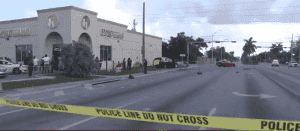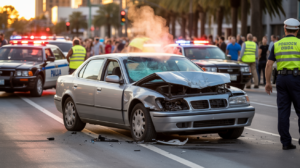
A Florida car accident collision types lawyer from The Law Offices of Anidjar and Levine evaluates whether a rear-end, side-impact, head-on, or rollover crash caused documented injuries and financial losses. The lawyer reviews police reports, photographs, vehicle damage, witness accounts, medical records, and available video to establish liability and causation. Representation may also address insurance communications, comparative negligence, lost income, future care, and applicable deadlines. Prompt legal guidance helps preserve evidence and protect potential claims. For additional information, visit a Florida Personal Injury Lawyer.
Main Takeaways
- A Florida car accident lawyer can evaluate rear-end, head-on, side-impact, rollover, and other types of collisions.
- Attorneys investigate driver conduct, roadway conditions, vehicle defects, and evidence supporting fault and causation.
- Medical records, photographs, vehicle damage, witness statements, and surveillance footage can link collision forces to claimed injuries.
- Lawyers address comparative negligence, insurance communications, medical expenses, lost income, and future care needs.
- Prompt evidence preservation and timely legal advice help protect injury claims from disputed facts and deadlines.


How We Can Help With Your Florida Car Accident Collision Types Injury Claim
When a Florida car accident involves a specific type of collision, the resulting injuries and legal issues may require a detailed evaluation of the circumstances of the crash. A qualified legal team can help an injured person document medical treatment, preserve evidence, identify responsible parties, and communicate with insurers, all while protecting the claim from premature settlement. Counsel may review police reports, photographs, vehicle damage, witness accounts, and available roadway or surveillance evidence to assess liability and damages. Comparative negligence defenses may arise when another party alleges that the injured person contributed to the crash. Careful analysis can help address those allegations with relevant facts and applicable Florida law. Attorneys can also develop settlement negotiation strategies that account for medical expenses, lost income, future care, and other documented losses. When litigation becomes necessary, representation can support organized preparation, procedural compliance, and clear presentation of the claim. This assistance allows clients to pursue accountability while focusing on recovery and personal responsibilities.
OUR CONSULTATIONSARE FREE
START YOUR FREE CASE REVIEW

Understanding Florida Car Accident Collision Types Injury Cases
Understanding a Florida car accident injury case begins with identifying the type of collision and examining how the impact occurred. A rear-end, side-impact, head-on, or rollover collision may produce different injury patterns and raise distinct questions about fault, causation, and damages. Medical records, photographs, witness accounts, vehicle inspections, and Insurance claims documentation can help establish the relationship between the impact and reported conditions.
An evaluation also considers whether injuries were diagnosed promptly, whether treatment followed medical guidance, and whether prior conditions affect the claimed damages. Florida’s comparative negligence rules may reduce recovery when an injured person is assigned a share of responsibility, making comparative negligence defenses an important issue in some cases. A careful review should address lost income, future medical needs, pain, and lasting limitations without relying on assumptions. Legal professionals serving injured individuals typically organize evidence, communicate with insurers, and protect applicable deadlines. Each case requires an individualized assessment based on collision evidence, medical proof, and the parties’ respective conduct.
Common Causes of Florida Car Accident Collision Types
Florida car accidents may result from distracted driving, speeding, reckless conduct, or impaired operation of a vehicle. Poor road conditions, including inadequate maintenance, defective signage, and hazardous surfaces, can also contribute to collisions. Identifying the cause is important when evaluating liability and the resulting injuries.
Distracted Driving
Distracted driving is a common cause of car accidents in Florida, including rear-end crashes, sideswipe collisions, and intersection accidents. Drivers may divert attention by texting, adjusting navigation, eating, or handling passengers while operating a vehicle. Texting and liability often become central issues when electronic records, witness statements, or vehicle data indicate that a message preceded the collision. App-based negligence may also arise when rideshare or delivery drivers interact with a platform, accept requests, or review instructions while driving. These actions can prevent timely observation and appropriate responses to surrounding traffic. Investigators may examine phone records, application activity, surveillance footage, and testimony to determine whether distraction contributed to the injuries. A careful evaluation can help affected individuals understand available remedies and support efforts to protect other road users.
Speeding And Reckless Driving
When drivers exceed safe speed limits or operate vehicles recklessly, they reduce the time available to observe hazards, respond to traffic conditions, and avoid a collision. Speeding can increase stopping distances and collision force, while aggressive maneuvering, unsafe lane changes, tailgating, and disregard for signals may place everyone nearby at risk. Following an accident, a review of the police crash report can help identify reported speeds, roadway conditions, witness statements, citations, and other evidence relevant to determining responsibility. Photographs, vehicle data, surveillance footage, and medical records may further clarify how reckless conduct contributed to the injuries or property damage. An attorney can also evaluate insurance coverage options, including applicable liability policies and potential claims involving multiple responsible parties. Prompt evidence preservation helps protect affected individuals and supports fair compensation.
Impaired Driving
Driving under the influence of alcohol, drugs, or certain prescription medications can impair judgment, coordination, reaction time, and the ability to maintain a lane or respond to traffic hazards. These impairments may cause a driver to disregard signals, misjudge distances, follow too closely, or drift across lanes. The resulting crashes can involve multiple vehicles and create severe consequences for occupants and other road users. A pedestrian collision may occur when an impaired driver fails to recognize a crosswalk, a pedestrian, or a changing traffic signal. Likewise, motorcycle accidents may result when reduced awareness prevents timely detection of a smaller vehicle. Individuals affected by these crashes may require immediate medical care, transportation assistance, and support with insurance or legal concerns. Evidence such as toxicology results, witness accounts, and video recordings can help establish responsibility.
Poor Road Conditions
Poor road conditions can contribute to car accidents in Florida by reducing tire traction, limiting visibility, or interfering with a driver’s ability to maintain control. Potholes, uneven pavement, inadequate drainage, and faded lane markings may create hazards, particularly during rain or heavy traffic. Roadway debris, including damaged vehicle parts, fallen branches, or unsecured cargo, can force sudden braking or evasive maneuvers. Construction zones may also present confusing detours, narrowed lanes, and shifting traffic patterns when warnings are insufficient. In some circumstances, neglect of maintenance may indicate that a responsible public or private entity failed to address a known danger within a reasonable time. Investigators may examine inspection records, repair notices, photographs, witness accounts, and roadway design. Those harmed may benefit from promptly preserving evidence and seeking guidance on available legal remedies.
Don’t Wait. Call Our Florida Personal Injury Lawyers Now!


Legal Rights of Florida Car Accident Collision Types Injury Victims
Understanding the legal rights of Florida car accident injury victims begins with identifying the type of collision, the responsible parties, and the damages sustained. Victims may seek compensation for medical care, lost income, property damage, pain, and future needs.
Prompt guidance can protect evidence and preserve meaningful recovery.
- Victims have the right to report injuries, obtain medical evaluation, and document losses without minimizing their suffering.
- They may pursue an insurance claim while monitoring Insurance settlement timelines and refusing pressure to accept inadequate payment.
- Insurers may raise comparative negligence defenses, but responsibility should be assessed on the basis of evidence rather than assumption.
- A qualified attorney can communicate with insurers, evaluate legal deadlines, and advocate for fair treatment.
Florida’s no-fault system may provide personal injury protection benefits, while serious injuries can support a claim against an at-fault party. Families and community advocates serving injured individuals should encourage careful documentation and informed legal advice. Each case requires individualized review because coverage, fault, damages, and procedural requirements vary.
Why Do Florida Car Accident Collision Types Injuries Happen?
Florida car accident injuries occur for many reasons, including distracted driving, speeding, impaired driving, unsafe lane changes, and failure to yield. Each behavior can prevent a driver from recognizing hazards, accurately judging distance, or reacting before impact. Collision severity also depends on vehicle size, travel speed, roadway design, weather, and whether occupants use appropriate restraints.
Rear-end crashes commonly result from following too closely or failing to anticipate changes in traffic. Head-on collisions may result from drifting across the center line, while side-impact crashes often result from intersection violations. Rollover injuries can occur when vehicles leave the roadway, strike curbs, or take turns at excessive speed. Mechanical defects, poor maintenance, and inadequate lighting may further contribute.
Understanding causation helps injured individuals and their advocates evaluate the Insurance claims process fairly. It also identifies relevant evidence collection steps, including reviewing crash reports, vehicle damage, medical records, witness accounts, and available surveillance footage. These facts can clarify responsibility and support accurate injury assessments.
What Should You Do After a Florida Car Accident Collision Injury?
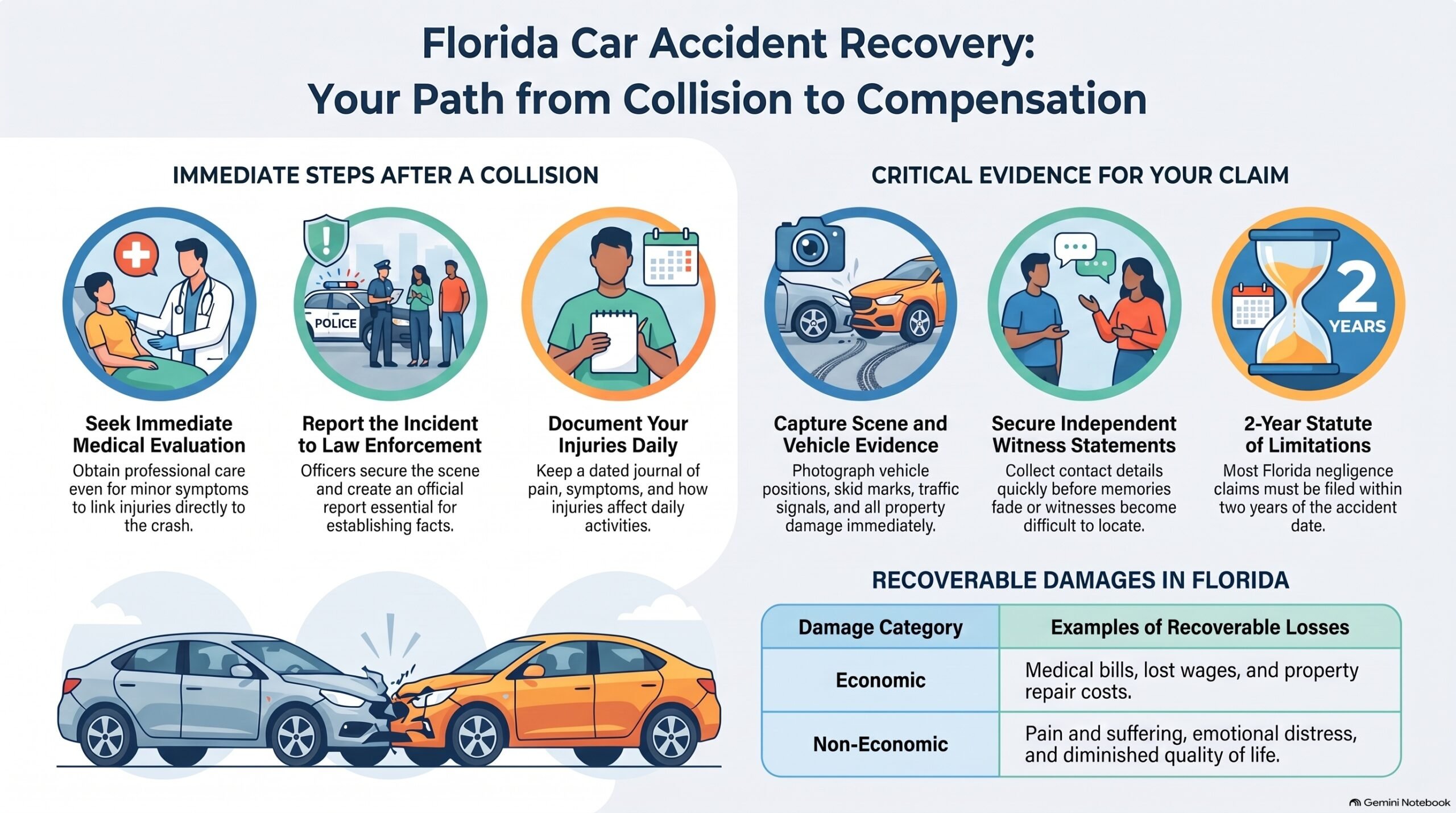
After a Florida car accident collision injury, the injured party should seek immediate medical care, even if symptoms initially appear minor. The accident should be reported to law enforcement, and relevant details should be preserved through photographs, medical records, and witness information. Thorough documentation of injuries and treatment can help establish the extent of harm and support any potential legal claim.
Seek Immediate Medical Care
Prompt medical evaluation should be obtained after any car accident, even when visible injuries appear minor or delayed symptoms have not yet developed. A qualified healthcare professional can identify concussions, internal injuries, soft-tissue damage, or other conditions that may worsen without treatment. Individuals should follow recommended testing, disclose all symptoms, and explain whether pain, dizziness, numbness, or confusion develops later. Immediate care also creates a contemporaneous medical record connecting reported conditions with the collision, which can support car accident documentation and protect the injured person’s interests. Keeping appointment records, discharge instructions, prescriptions, and related expenses may assist those serving the injured individual. When symptoms persist, worsen, or remain unclear, seeking expert evaluation from an appropriate medical provider is prudent. Emergency symptoms require immediate emergency services and should never be delayed for convenience.
Report The Accident
Once immediate medical needs have been addressed, the collision should be reported to the appropriate authorities without unnecessary delay. In Florida, contacting law enforcement is generally advisable when injuries, significant property damage, disputed facts, or suspected impairment are involved. Officers can secure the scene, identify the involved parties, and prepare an official account.
The injured person or a designated representative should provide clear, factual information without speculating about fault. Police report accuracy depends on reviewing the recorded details when possible and promptly correcting material misunderstandings through appropriate channels. The parties should obtain the report number and learn how to request a copy.
Witnesses can preserve valuable evidence, making it important to document witness details. Names, telephone numbers, and brief observations should be recorded respectfully. Timely reporting supports public safety and helps others respond responsibly after a collision.
Document Your Injuries
Because some collision injuries may not become apparent immediately, the injured person should obtain a medical evaluation as soon as reasonably possible and follow the provider’s recommendations. Records should identify symptoms, diagnoses, prescribed treatment, referrals, and restrictions affecting work or daily activities. The injured person should preserve medical bills, receipts, imaging reports, discharge instructions, and correspondence with providers. A dated journal can support documentation of pain and treatment timelines by recording discomfort, medication effects, sleep disruption, and changes in physical function. Photographs of visible injuries should be taken periodically, using consistent lighting when practical. These materials can assist an attorney’s Insurance adjuster negotiation strategy by connecting the collision to documented conditions and demonstrating compliance with medical advice. Personal accounts should remain accurate, objective, and consistent with information provided to healthcare professionals and insurers.
Don’t Wait. Call Our Florida Personal Injury Lawyers Now!
Critical Evidence in a Florida Car Accident Collision Types Injury Case
Critical evidence can preserve the truth of a Florida collision before memories fade, records disappear, or responsibility is disputed.
Key materials include:
- Accident scene evidence
- Medical records and bills
- Witness statements and testimony
- Vehicle damage documentation
Together, these materials can clarify how the crash occurred, establish the injuries suffered, and support a claim for compensation.
Accident Scene Evidence
Accident scene evidence can establish how a collision occurred, identify the parties involved, and support the extent of the resulting injuries in a Florida car accident case. Photographs should document vehicle positions, roadway conditions, traffic signals, skid marks, debris, and visible damage before the scene changes. A responding officer’s report may preserve observations, statements, diagrams, and citations, although it does not determine civil liability by itself. Witness names and contact information should be collected promptly because Eyewitness reliability may decline as memories fade or accounts are influenced by later events. Nearby businesses, residences, intersections, or vehicles may have video surveillance systems that capture impact dynamics or traffic conditions. Preserving electronic footage quickly is crucial because recording systems commonly overwrite data. Counsel can help organize, authenticate, and present this evidence responsibly.
Medical Records And Bills
Medical records and bills provide essential evidence of the injuries sustained in a Florida car accident and the healing required afterward. Physician notes, diagnostic images, prescriptions, therapy records, and itemized invoices can connect reported symptoms to the collision and document financial losses. Prompt medical evaluation also demonstrates responsible attention to health, even when initial discomfort appears minor. During accident reporting, treatment information should be recorded accurately without exaggeration or omission. Consistent care helps an insurance investigation evaluate causation, severity, prognosis, and necessary expenses. Records should be preserved chronologically, including referrals, documentation of missed work, and receipts for related costs. Legal representation can help obtain complete files, address disputed charges, and protect private medical information. Proper documentation supports fair assistance for injured individuals while clarifying the claim’s actual scope.
Witness Statements And Testimony
When available, witness statements and testimony can provide an independent account of how a Florida car accident occurred and who may bear responsibility. Witnesses may describe traffic signals, vehicle movements, roadway conditions, driver behavior, and events immediately following the collision. Their observations can help clarify disputed facts when involved parties remember events differently or have competing interests. Prompt interviews and written statements support preservation of evidence, particularly when memories may fade or witnesses become difficult to locate. A credibility assessment considers each witness’s opportunity to observe, consistency, neutrality, and relationship to the parties. Investigators may also compare accounts with emergency records, photographs, and other admissible information. Individuals who witnessed the incident should provide truthful details without speculation. Accurate testimony can assist injured people, insurers, attorneys, and courts in pursuing a fair resolution.
Vehicle Damage Documentation
Vehicle damage documentation can provide objective evidence that complements witness accounts in a Florida car accident injury case. Photographing vehicle damage should occur promptly, before repairs or salvage work alter the vehicles’ condition. Images should capture wide views, close-ups, license plates, road debris, skid marks, and relevant surroundings. Consistent lighting and multiple angles can help preserve details concerning impact location and severity. Repair estimate evidence may further identify damaged components, projected costs, and whether the reported collision mechanism is consistent with the physical findings. Invoices, inspection reports, towing records, and photographs taken by insurers or repair facilities may also support the documentation. Careful preservation of these materials can assist medical professionals, investigators, and legal representatives in evaluating causation, property loss, and the relationship between vehicle forces and claimed injuries. Original files should be retained securely.
Long-Term Effects of Florida Car Accident Collision Types Injuries
Florida car accident collision-type injuries may result in chronic pain, permanent disability, or reduced ability to work and perform daily activities. Emotional and psychological trauma, including anxiety, depression, and post-traumatic stress, may continue long after physical treatment ends. Ongoing medical care, rehabilitation, medication, and lost income can also create substantial financial costs for injured individuals and their families.
Chronic Pain And Disability
Chronic pain and disability can develop after many Florida car accident collision types, including rear-end crashes, side-impact collisions, rollovers, and head-on impacts. Injuries involving the spine, joints, nerves, or limbs may limit mobility, reduce endurance, and interfere with employment or ordinary responsibilities. Persistent symptoms often require coordinated medical evaluation, physical therapy, medication, assistive devices, and pain management. A treating provider’s records can explain diagnosis, prognosis, functional restrictions, and the need for future care. During auto insurance disputes, evidence preservation is crucial. Crash reports, photographs, witness information, diagnostic studies, treatment records, and employment documentation may help establish causation and the injury’s continuing effects. Disability claims may require detailed proof of lost income, reduced earning capacity, and limitations affecting daily activities. Early legal guidance can help preserve rights and connect injured individuals with appropriate support.
Emotional And Psychological Trauma
Emotional and psychological trauma can follow rear-end crashes, side-impact collisions, rollovers, and head-on impacts, even when physical injuries initially appear limited. Survivors may experience post-traumatic stress, intrusive memories, sleep disruption, irritability, or avoidance of driving. Anxiety Symptoms can affect concentration, relationships, employment, and ordinary activities, sometimes emerging weeks or months after the collision. Recognizing these changes allows families, advocates, and attorneys to respond with patience and appropriate referrals rather than dismissing distress as temporary. Therapy Support from qualified mental health professionals may help individuals recover from the event, develop coping strategies, and regain confidence. Treatment records, personal accounts, and professional assessments can provide Legal Documentation of psychological harm. A Florida attorney may help preserve this information while respecting privacy and ensuring the survivor’s experience receives serious consideration.
Ongoing Medical And Financial Costs
When injuries from a rear-end crash, side-impact collision, rollover, or head-on impact require continuing care, the related medical and financial consequences may extend well beyond the initial treatment period. Ongoing expenses can include surgeries, rehabilitation, prescription medication, assistive equipment, transportation, and future expert visits. Serious injuries may also reduce earning capacity, limit household contributions, and require family members to provide unpaid support. Accurate records of treatment, invoices, missed work, and projected medical needs can help establish the full scope of damages. Insurance companies may dispute necessity, causation, or future costs, making informed Insurance Denial Strategies important when coverage is refused or delayed. Effective Settlement Negotiation Tips include presenting organized evidence, accounting for lasting limitations, and avoiding premature agreements. Legal guidance may help injured individuals and their families pursue fair compensation while protecting required care.
Proving Liability in Florida Car Accident Collision Types Injury Cases
Proving liability in a Florida car accident case requires establishing that another driver’s negligence caused the collision and resulting injuries. The injured party generally must show that the driver owed a duty of reasonable care, violated that duty, and directly caused measurable harm. Police reports, photographs, vehicle damage, traffic-camera footage, witness statements, and medical records may help connect the driver’s conduct to the injuries.
Evidence preservation strategies should begin promptly. Relevant evidence can disappear when vehicles are repaired, surveillance recordings are overwritten, or witnesses’ recollections fade. Preserving photographs, electronic records, accident data, repair estimates, and communications can strengthen the factual record. An attorney may also inspect the crash scene, consult expert professionals, and obtain sworn witness testimony when necessary.
Comparative fault disputes may arise if the opposing party claims the injured person contributed to the collision or worsened the harm. Florida’s comparative negligence rules can reduce recoverable damages according to the assigned percentage of responsibility, making accurate evidence and careful legal analysis necessary.
Dealing With Insurance Companies After a Florida Car Accident Collision Types Injury
Insurance companies often begin evaluating a Florida car accident claim soon after the collision, making early communication and evidence preservation important. Injured individuals should provide accurate facts while avoiding recorded statements or settlement agreements before understanding the injury’s full impact. Medical records, photographs, witness information, repair estimates, and employment documentation can help establish damages and support a fair evaluation.
Florida’s no-fault system may require an injured person to seek personal injury protection benefits promptly, while additional claims can involve negligence, bodily injury coverage, or uninsured motorist protection. Careful attention to insurance claim deadlines helps preserve available benefits and prevents avoidable disputes. Policy language should be reviewed for exclusions, limits, notice requirements, and coordination between insurers.
When an insurer questions responsibility, medical causation, or policy coverage, counsel may develop coverage dispute strategies, communicate through formal correspondence, and request relevant claim information. A lawyer can also help protect the injured person from premature concessions while pursuing available compensation. These efforts serve the client’s interests through organized, ethical, and informed advocacy.
What to Expect During a Florida Car Accident Collision Types Injury Claim Process
A Florida car accident injury claim generally begins with filing the claim and gathering records that establish the collision, injuries, and resulting losses. The process may include investigating the accident, documenting liability, and negotiating compensation with the responsible insurer. If negotiations fail to produce a fair resolution, the injured party may pursue a lawsuit.
Filing Your Injury Claim
When a person suffers injuries in a Florida car accident, filing a claim requires timely action, thorough documentation, and careful communication with insurers. The injured person generally begins by notifying the appropriate insurer and submitting medical records, bills, wage information, and policy details. Florida’s No Fault Coverage may address initial medical expenses and lost income through personal injury protection, regardless of who caused the collision. A claim may also proceed against another driver when injuries meet applicable legal thresholds. Because Comparative Negligence can reduce recovery according to an injured person’s share of responsibility, statements to insurers should remain accurate and carefully limited. Claimants should track treatment, expenses, missed work, and correspondence while observing policy deadlines. A lawyer may help protect legal rights, evaluate settlement proposals, and communicate respectfully on the claimant’s behalf.
Investigating The Collision
Investigating the collision is a pivotal step in evaluating a Florida car accident injury claim, because the available evidence may establish how the crash occurred, who contributed to it, and the extent of the resulting harm. The investigation may include reviewing crash reports, photographs, surveillance footage, witness accounts, medical records, and vehicle damage. Counsel may examine whether negligent maintenance, roadway conditions, or mechanical failure played a role. A vehicle inspection can identify defective components, impact patterns, or evidence that clarifies the sequence of events. Investigators may also research the driver’s history and prior incidents when those facts relate to notice, unsafe conduct, or regulatory violations. Preserving evidence promptly helps protect the interests of injured individuals and supports a careful, objective assessment of liability, causation, and documented injuries.
Negotiating Insurance Compensation
During negotiations, an injured person’s legal representative typically presents documented evidence of liability, medical treatment, financial losses, and the anticipated impact of the injuries. This information supports a careful valuation of the claim based on applicable insurance coverage, injury severity, recovery needs, lost income, and related expenses. Insurers may review records, question liability, or propose an amount below the documented losses. The representative evaluates each response, identifies unsupported reductions, and communicates a reasoned counteroffer. Settlement leverage may come from clear collision evidence, consistent medical documentation, credible expert opinions, and proof that damages may continue. Communication should remain professional while protecting the claimant from premature concessions or statements that could weaken the claim. A settlement is considered only after its terms, payment structure, and potential future medical needs are carefully reviewed.
Pursuing A Lawsuit
Pursuing a lawsuit may become necessary when an insurer denies liability, offers inadequate compensation, or fails to account for the full extent of an injured person’s losses. The process generally begins with filing a complaint, serving the responsible parties, and exchanging evidence during discovery. Medical records, collision reports, witness statements, and expert evaluations may establish fault and document damages. An attorney can also develop an Insurance denial strategy that addresses disputed coverage or liability positions. Settlement vs trial decisions depend on the strength of the evidence, projected expenses, anticipated recovery, and the injured person’s objectives. Many cases resolve through negotiated settlement, while others proceed to mediation or trial. Throughout litigation, counsel should protect deadlines, communicate developments clearly, and pursue compensation that supports the injured person’s medical, financial, and personal needs.
Compensation for Florida Car Accident Collision Types Injury Damages
When a Florida car accident causes bodily injury, the type of collision and surrounding circumstances may significantly affect the compensation available to an injured person. Rear-end crashes, intersection collisions, sideswipes, and multi-vehicle impacts can present different evidence and liability questions. Medical records, photographs, witness accounts, vehicle damage, and crash reports may help establish how the event occurred and who should be held responsible.
An injured person may pursue compensation through an insurance claim or civil action, depending on the available coverage and disputed facts. The Insurance claim timeline can involve prompt notice, investigation, medical documentation, settlement discussions, and statutory filing deadlines. During fault dispute negotiations, insurers may challenge liability, the severity of injuries, or the causal link between the collision and the claimed harm. Careful documentation and consistent medical treatment can support a fair evaluation. A qualified Florida car accident lawyer may assess applicable insurance policies, preserve evidence, communicate with adjusters, and pursue appropriate relief while protecting the injured person’s interests throughout the process.
Economic vs Non-Economic Damages in Florida Car Accident Collision Types Cases
Economic damages compensate documented financial losses, including medical expenses, lost wages, property damage, and future treatment costs. Non-economic damages address less tangible harm, such as pain, emotional distress, disability, and diminished quality of life, which require careful valuation. Proving either category generally depends on medical records, financial documentation, expert testimony, and evidence connecting the losses to the collision.
Economic Damages Explained
After a car accident in Florida, damages are generally divided into economic and non-economic categories, each addressing a different type of harm caused by the collision. Economic damages represent measurable financial losses supported by records, invoices, and other documentation. They may include emergency treatment, hospital bills, follow-up care, prescription costs, rehabilitation, and necessary medical equipment. If injuries prevent someone from working, recoverable losses may also include past and reasonably provable future lost wages. Property damage, rental transportation, towing, and other accident-related expenses can likewise qualify. A careful review of Insurance coverage options helps identify available sources of payment, including applicable personal injury protection and liability benefits. Attorneys may use settlement negotiation strategies grounded in documented losses, policy limits, and evidence establishing fault and causation.
Non-Economic Losses Valued
Non-economic losses address the personal effects of a Florida car accident that do not have a fixed market value, including pain and suffering, emotional distress, disfigurement, disability, and diminished quality of life. Their valuation considers the injury’s severity, expected duration, treatment burden, permanency, and effect on relationships, work, independence, and daily activities. Florida law does not impose a universal formula, so comparable circumstances and credible assessments may influence the amount sought. Comparative negligence impacts can reduce an injured person’s recovery when responsibility is allocated to that person under applicable Florida rules. Insurance dispute strategy should accordingly account for how adjusters may challenge the extent, duration, or connection of claimed suffering. A fair evaluation recognizes that non-economic compensation serves an important purpose: acknowledging losses that financial records alone cannot measure and supporting meaningful recovery.
Proving Damage Claims
How damage claims are proven in Florida car accident collision cases depends on separating measurable financial losses from personal harms that require reasoned evaluation. Economic damages may include medical bills, rehabilitation costs, property repairs, lost wages, and diminished earning capacity. Claimants generally support these amounts with invoices, employment records, expert opinions, and consistent medical documentation. Non-economic damages, including pain, emotional distress, inconvenience, and reduced quality of life, require evidence describing the injury’s duration and effect on daily activities. Photographs, witness testimony, treatment notes, and personal journals may help establish those consequences. Careful preservation of evidence is vital, particularly when injuries develop gradually. Attorneys also examine police report discrepancies, insurance statements, and vehicle damage to address disputed fault or causation. A complete, organized presentation allows decision-makers to evaluate losses fairly and pursue appropriate compensation for affected individuals.
Don’t Wait. Call Our Florida Personal Injury Lawyers Now!
When a Florida Car Accident Collision Types Injury Case Goes to Trial vs Settlement
When a Florida car accident injury claim cannot be resolved through negotiations, the injured party may proceed to trial, although many cases conclude through settlement. A settlement provides a negotiated resolution without requiring testimony before a judge or jury. It may offer greater predictability, lower costs, and a faster resolution, but the injured party must evaluate whether the proposed amount adequately addresses documented losses and ongoing needs.
Trial preparation involves organizing medical records, employment information, witness testimony, photographs, and expert opinions. Counsel must also comply with court deadlines, exchange required information, and prepare the injured party for questioning. Jury selection is an important stage because potential jurors are evaluated for impartiality and their ability to consider the evidence fairly. At trial, each side presents opening statements, evidence, and closing arguments before the jury determines responsibility and damages. The process can require more time and create uncertainty, yet it may be appropriate when negotiations fail or a fair settlement cannot be reached. Professional guidance helps protect the injured party’s interests.
Florida Laws That May Affect Your Florida Car Accident Collision Types Case
Florida law may materially affect a car accident injury claim by establishing deadlines, liability standards, insurance requirements, and available forms of compensation.
Important considerations include:
- Comparative fault rules: A person’s recovery may be reduced if evidence shows that person contributed to the collision or resulting injuries. Accurate evidence can protect a fair outcome.
- No-fault insurance requirements: Florida generally requires personal injury protection coverage, which may provide initial benefits for medical expenses and lost income regardless of fault, subject to policy terms and statutory conditions.
- Bodily injury liability: A claim against another driver may depend on proving negligence and, in certain circumstances, meeting Florida’s threshold for serious injury.
- Damage documentation: Medical records, wage information, repair estimates, and witness accounts can help establish losses and support responsible advocacy.
These rules may affect injured individuals, families, and those assisting them through difficult recovery decisions. Because insurance policies and collision facts vary, qualified legal review can clarify available protections and promote a fair, orderly resolution without unnecessary conflict.
The Statute of Limitations for Florida Car Accident Collision Types Injury Cases
Although the filing deadline depends on the collision date, the injury involved, and the parties in the claim, Florida law generally requires a car accident injury lawsuit to be filed within a specified statute of limitations period. For many negligence claims, the deadline is two years from the date of the accident, although exceptions can alter when the period begins or ends. Claims involving wrongful death, governmental entities, uninsured motorists, or minors may follow different rules and notice requirements. Florida’s no-fault system also imposes prompt reporting requirements for injuries and for seeking qualifying medical care, which can affect personal injury protection benefits. Comparative negligence basics remain important because a claimant’s share of fault may reduce recoverable damages, even when the lawsuit is timely. Insurance dispute timelines may differ from court deadlines, and settlement discussions generally do not extend the limitations period. Preserving records, identifying applicable deadlines, and evaluating exceptions can help protect injured individuals and support fair treatment throughout the process.
How a Florida Car Accident Collision Types Lawyer Can Help You
A Florida car accident collision types lawyer can help protect an injured person’s rights from the initial investigation through settlement negotiations or trial. The lawyer may evaluate crash evidence, identify responsible parties, and explain how Florida law applies to the person’s injuries and losses. Dedicated legal guidance can help families pursue accountability while preserving resources needed for recovery.
- Documenting vehicle damage, medical records, witness statements, and roadway conditions to clarify what happened.
- Calculating medical expenses, lost income, rehabilitation needs, pain, and other damages supported by evidence.
- Handling Insurance Disputes by challenging inadequate offers, disputed liability, or improper claim practices.
- Pursuing Wrongful Death Claims with respect for surviving relatives and the value of the life lost.
A lawyer can also coordinate communications with insurers and opposing counsel, reducing pressure on an injured person while protecting the claim’s legal position. Through careful preparation, counsel presents a coherent case designed to support fair compensation and meaningful service to affected individuals and families.
When to Contact a Florida Car Accident Collision Types Lawyer
When injuries, disputed fault, or significant property damage follow a collision, contacting a Florida car accident collision types lawyer promptly can help preserve evidence and protect legal rights. Early guidance may be appropriate when an insurer requests a recorded statement, offers a settlement, or questions medical treatment. It can also assist when the crash involves multiple vehicles, a commercial driver, an uninsured motorist, or allegations of speeding, distraction, or impairment.
When to seek counsel may depend on the severity of injuries, the clarity of liability, and the likelihood of future losses. A consultation can help identify applicable deadlines, required documentation, and responsible parties without obligating an injured person to pursue litigation. Individuals should avoid signing releases or accepting payment before understanding potential consequences.
Choosing legal representation requires attention to communication practices, relevant experience, fee arrangements, and the firm’s ability to serve clients respectfully. Prompt contact allows counsel to evaluate available information while witnesses, photographs, vehicle data, and medical records remain accessible.
Why You Need an Experienced Florida Car Accident Collision Types Lawyer
Selecting experienced legal counsel is particularly important because Florida car accidents may involve varied collision patterns, insurance rules, and disputed accounts of what occurred. A knowledgeable attorney can examine photographs, vehicle damage, witness statements, traffic laws, and available records to clarify how a crash developed. This analysis may help identify responsible parties and address arguments involving comparative fault.
Experienced representation also supports practical decisions after an injury. Immediate medical evaluation can document symptoms and guide treatment, while counsel can help preserve evidence, communicate with insurers, and pursue appropriate compensation for medical care, lost income, property damage, and lasting impairment. An attorney may also explain deadlines and procedural obligations that could affect a claim.
Serving injured people requires careful attention to their circumstances, dignity, and recovery. A transparent Legal fee structure allows clients to understand potential costs, payment arrangements, and case-related expenses before proceeding. Skilled advocacy can reduce confusion and help ensure that an injured person’s interests receive sustained, informed protection throughout the claim.
How to Choose the Right Florida Car Accident Collision Types Lawyer for Your Case
The right Florida car accident collision types lawyer should have demonstrated experience handling crashes similar to the client’s, including rear-end, side-impact, head-on, and multi-vehicle collisions. This experience helps counsel identify liability issues, preserve relevant evidence, and address injuries that may develop over time.
When finding a Lawyer, prospective clients should review professional qualifications, courtroom experience, communication practices, and familiarity with Florida’s insurance and negligence laws. A lawyer should explain the legal process clearly, answer questions directly, and demonstrate a commitment to serving the client’s interests with diligence.
An initial Case Evaluation can help determine whether the attorney understands the collision, the available evidence, the insurance coverage, and the potential sources of compensation. During that meeting, the client should provide medical records, crash reports, photographs, witness information, and insurer correspondence when available. The lawyer should offer a realistic assessment without promising a particular result. Careful comparison of experience, transparency, resources, and professional judgment can support an informed decision.
About The Law Offices of Anidjar & Levine
With a focus on Florida personal injury law, The Law Offices of Anidjar & Levine represents individuals involved in various car accidents, including rear-end, side-impact, head-on, and multi-vehicle crashes.
The firm assists injured clients and families seeking guidance after collisions involving vehicle damage, medical expenses, lost income, or lasting impairments.
Its attorneys evaluate available evidence, communicate with insurers, and develop claims based on the circumstances and applicable Florida law.
The Client intake process typically involves discussing the collision, treatment history, insurance coverage, and potential legal concerns.
This information helps the firm determine appropriate next steps while allowing prospective clients to understand their options.
A Free case evaluation may provide an initial assessment of liability, damages, and available avenues for compensation without requiring an immediate commitment to representation.
Through case preparation, negotiation, and, when necessary, litigation, the firm aims to protect clients’ interests.
Its services are structured to provide informed support to people maneuvering the practical and legal consequences of serious car accidents.
Frequently Asked Questions
Can I File a Claim if the At-Fault Driver Fled the Accident Scene?
A person may file a claim after an at-fault driver flees, although the ability to recover depends on available insurance and evidence. Claim eligibility commonly involves uninsured motorist coverage, which may apply to an uninsured crash when the driver cannot be identified or lacks insurance. The injured party should promptly report the collision, seek medical evaluation, preserve photographs and witness information, and notify the insurer. Legal guidance can clarify deadlines, coverage requirements, and procedural obligations.
How Do Collision Types Affect Vehicle Damage Assessments and Repair Decisions?
Collision type directly affects how professionals assess vehicle damage and select appropriate repairs. Rear-end, side-impact, rollover, and head-on crashes produce different stress patterns, including hidden damage to the frame, suspension, electrical systems, and safety systems. Speed Impact helps explain the severity of deformation, while inspection findings determine whether restoration is safe and economically reasonable. Repair Valuation should include parts, labor, calibration, diminished value, and potential total-loss thresholds to support fair decisions for affected vehicle owners.
Can Passengers Pursue Separate Claims After a Florida Car Accident?
Yes, passengers may pursue separate claims after a car accident in Florida, particularly for medical expenses, lost income, and pain and suffering. Their rights generally do not depend on the driver’s claim, and Passenger independent negligence may affect recovery only if the passenger contributed to the injuries. Multiple defendants’ liability can arise when several drivers, vehicle owners, or other parties share fault. Each claim requires evidence, timely filing, and careful coordination with insurers.
What Happens if Multiple Vehicles Contributed to the Same Collision?
When multiple vehicles contribute to one collision, each driver’s conduct is examined to determine causation and fault. Comparative negligence may allocate responsibility among the drivers according to their respective percentages of fault, reducing each injured person’s recovery by that share. Multiple liability can arise when several negligent parties contributed to the same harm, potentially requiring coordinated claims against different insurers. Evidence such as vehicle damage, witness accounts, and crash reports becomes essential.
Are Rental Car Expenses Covered While My Vehicle Is Being Repaired?
Rental car expenses may be covered while a vehicle is being repaired, but coverage depends on the applicable insurance policy and the circumstances of the collision. Coverage eligibility often requires rental reimbursement benefits, fault by another driver, or authorization under a claim. The insurer’s determination may depend on repair duration, policy limits, and available documentation. Claimants should preserve estimates, receipts, and communications while seeking guidance to support fair treatment for all parties involved.
—————————
Florida car accident collisions can result in serious physical, financial, and emotional consequences, regardless of how they occur.
Victims may have the right to seek compensation for medical expenses, lost income, property damage, and other losses.
Prompt medical attention, careful documentation, and timely legal guidance may help protect those rights.
The Law Offices of Anidjar and Levine can evaluate the circumstances, identify potentially responsible parties, and pursue an appropriate claim while providing informed representation throughout the legal process.
Learn more from a Florida Personal Injury Lawyer.