The Law Offices of Anidjar and Levine helps injured victims preserve evidence, prove liability, and pursue compensation after a high-speed collision. Legal support may include reviewing police reports, medical records, witness statements, traffic camera footage, vehicle damage, and insurance communications.
These cases often involve serious injuries, disputed fault, delayed claims, and long-term losses such as future treatment or reduced income.
Learn more about how a Daytona Beach Car Accident Lawyer may protect a claim and support recovery.
Main Takeaways
- A Daytona Beach speeding car accident lawyer can help preserve crash evidence, police reports, vehicle damage records, and witness information.
- Speeding crash claims often require proof of liability using medical records, surveillance footage, electronic data, and physical evidence.
- Prompt medical treatment documents injuries such as concussions, fractures, spinal trauma, internal injuries, and soft tissue damage.
- Legal representation can address insurance delays, low settlement offers, causation disputes, and attempts to shift blame.
- Compensation may include medical expenses, future treatment, lost income, reduced earning ability, and long-term injury impacts.


How We Can Help With Your Daytona Beach Speeding Car Accident Injury Claim
Investigating a speeding-related crash in Daytona Beach requires prompt action, careful review of evidence, and a clear understanding of Florida injury law. A dedicated legal team can preserve crash reports, vehicle damage evidence, medical records, surveillance footage, and electronic data that may help establish liability and damages. Their role includes organizing the claim, identifying all responsible parties, and documenting how injuries affect the client’s work, health, and daily responsibilities.
They may also address challenges to witness credibility by comparing statements with physical evidence, timelines, and officer findings. This careful review helps protect the claim from unsupported disputes. During settlement discussions, counsel can apply Insurance negotiation tactics that confront delay, undervaluation, and attempts to shift blame. By managing communications and deadlines, the team enables injured people and their families to focus on recovery, caregiving, and community obligations while the legal process proceeds with discipline.
OUR CONSULTATIONSARE FREE
START YOUR FREE CASE REVIEW

Understanding Daytona Beach Speeding Car Accident Injury Cases
When a driver exceeds the speed limit or travels too fast for traffic, weather, or road conditions, the risk of a severe crash in Daytona Beach increases substantially. Speeding collisions often produce injuries that affect mobility, cognition, employment, and daily caregiving responsibilities. Victims may require emergency treatment, surgery, diagnostic imaging, medication, and Therapeutic Rehabilitation to regain function and stability.
These cases require careful evaluation because higher speeds can intensify impact forces, increase medical costs, and complicate recovery timelines. A legal review typically considers medical records, crash reports, witness statements, vehicle damage, and the long-term effect of impairment on service to family, work, and community. Insurance Claim Denials may arise when insurers dispute causation, the necessity of treatment, or the seriousness of injuries. For that reason, thorough documentation is critical. A well-supported claim helps clarify the harm suffered, the care required, and the accountability necessary to pursue fair compensation.
Common Causes of Daytona Beach Speeding Car Accident
Speeding accidents in Daytona Beach often arise from driver conduct and roadway conditions that increase the risk of losing control. Distracted driving, aggressive lane changes, impaired driving, and heavy traffic conditions can each contribute to collisions, with excessive speed magnifying the severity of impact. Identifying these causes is crucial when evaluating fault, liability, and the full scope of damages in an injury claim.
Distracted Driving
On busy Daytona Beach roads, distracted driving often combines with excessive speed to create severe and preventable crashes. When a driver travels too fast, even a brief lapse in attention can leave too little time to notice traffic signals, pedestrians, cyclists, or stopped vehicles. Cell phone use remains a frequent source of distraction, especially when drivers read messages, adjust navigation, or make calls while moving through congested areas.
Texting while driving is particularly dangerous because it diverts the eyes, hands, and mind simultaneously. For those committed to protecting the public and assisting injured people, these crashes show why careful investigation matters. Evidence such as phone records, witness statements, and vehicle data may help determine whether distraction and speed contributed to a preventable collision.
Aggressive Lane Changes
As traffic density increases along Daytona Beach corridors, aggressive lane changes can turn speeding into an immediate risk of collision. Drivers who weave between vehicles, follow too closely, or force entry into limited gaps reduce the time others have to respond safely. These actions often lead to sideswipe impacts, rear-end crashes, or loss of control when nearby motorists brake or swerve to avoid contact.
In speeding cases, lane-merging failures may indicate that a driver disregarded roadway conditions and the safety needs of surrounding travelers. Distracted merges can create similar hazards, especially when a driver changes lanes without checking mirrors, blind spots, or traffic flow. Careful review of witness statements, vehicle damage, and roadway evidence can help identify reckless lane movement and support accountability for injured people.
Impaired Driving
Aggressive lane changes become even more dangerous when a driver is impaired by alcohol, drugs, or certain medications. Impairment slows reaction time, distorts judgment, and reduces the ability to control speed before a collision occurs. In Daytona Beach, investigators may rely on Alcohol testing, field sobriety observations, witness statements, and crash evidence to determine whether impairment contributed to a speeding accident.
These findings can affect both civil liability and potential criminal charges, especially when injuries or fatalities result. For injured individuals and families seeking to serve their community through accountability, accurate documentation is vital. A related prosecution may result in a sentence, but the civil claim focuses on compensation for medical care, lost income, and other losses caused by negligent conduct. Impaired speeding endangers everyone nearby, including passengers, pedestrians, and cyclists.
Heavy Traffic Conditions
Congestion can turn ordinary speeding into a serious hazard when drivers misjudge traffic flow, follow too closely, or attempt to gain time in crowded lanes. In Daytona Beach, seasonal tourism, event traffic, and commuter volume can create sudden slowdowns that leave little room for error. A speeding driver may be unable to stop before striking the rear or side of another vehicle, especially when lane changes are abrupt.
Weather effects, such as rain, glare, or reduced visibility, can intensify these risks by decreasing traction and reaction time. Vehicle defects, including worn brakes or tires, may further limit control in dense traffic. Careful investigation helps identify whether unsafe speed, road conditions, or mechanical issues contributed, supporting accountability for injured people and safer community travel.


Legal Rights of Daytona Beach Speeding Car Accident Injury Victims
When a speeding driver causes a crash in Daytona Beach, injured victims may have the right to pursue compensation for medical expenses, lost income, pain and suffering, and other related losses. These rights may arise through insurance claims, settlement negotiations, or civil lawsuits, depending on the facts. Comparative negligence may affect recovery if the injured person shares some responsibility, but it does not automatically bar a claim.
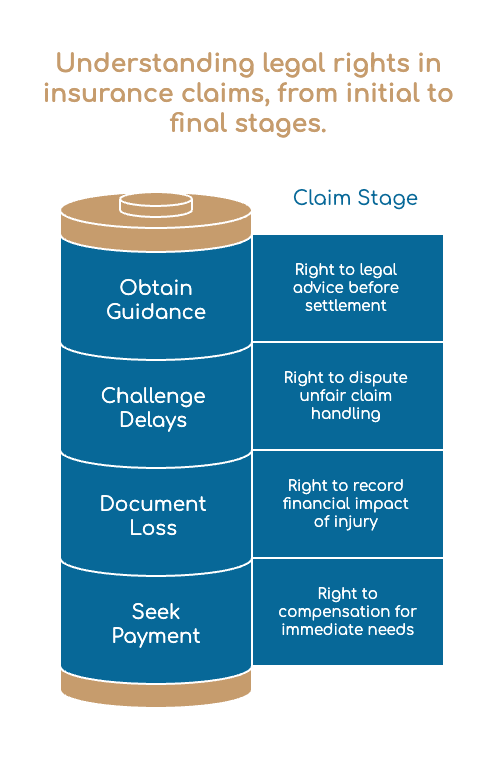
Victims and those assisting them should understand essential protections:
- The right to seek payment for emergency care, rehabilitation, and future treatment.
- The right to document wage loss and reduced earning capacity.
- The right to challenge unfair claim delays, denials, or insurance bad faith.
- The right to obtain legal guidance before accepting any settlement.
A careful review of police reports, medical records, and insurer communications can help protect the injured person’s interests while supporting a fair and service-minded resolution.
Why Do Speeding-Car Accident Injuries Happen at Daytona Beach?
Why do speeding-related injuries occur so often in Daytona Beach crashes? Speed increases both the force of impact and the distance needed to stop, leaving drivers with less time to protect others on the road. In a busy coastal community, traffic patterns may include visitors, commuters, pedestrians, cyclists, and motorcyclists sharing limited space. When one driver travels too fast for the conditions, a routine traffic error can lead to a severe collision.
Speeding myths often suggest that a few miles per hour make little difference, or that skilled drivers can safely manage excessive speed. Crash evidence frequently shows otherwise. Higher speeds can worsen head injuries, spinal trauma, fractures, internal injuries, and long-term disability. Weather, congestion, nighttime visibility, and unfamiliar roads may further increase danger. Because each injury has distinct medical and financial consequences, no single settlement amount can fairly represent every speeding case in Daytona Beach.
What Should You Do After a Daytona Beach Speeding Car Accident Injury?
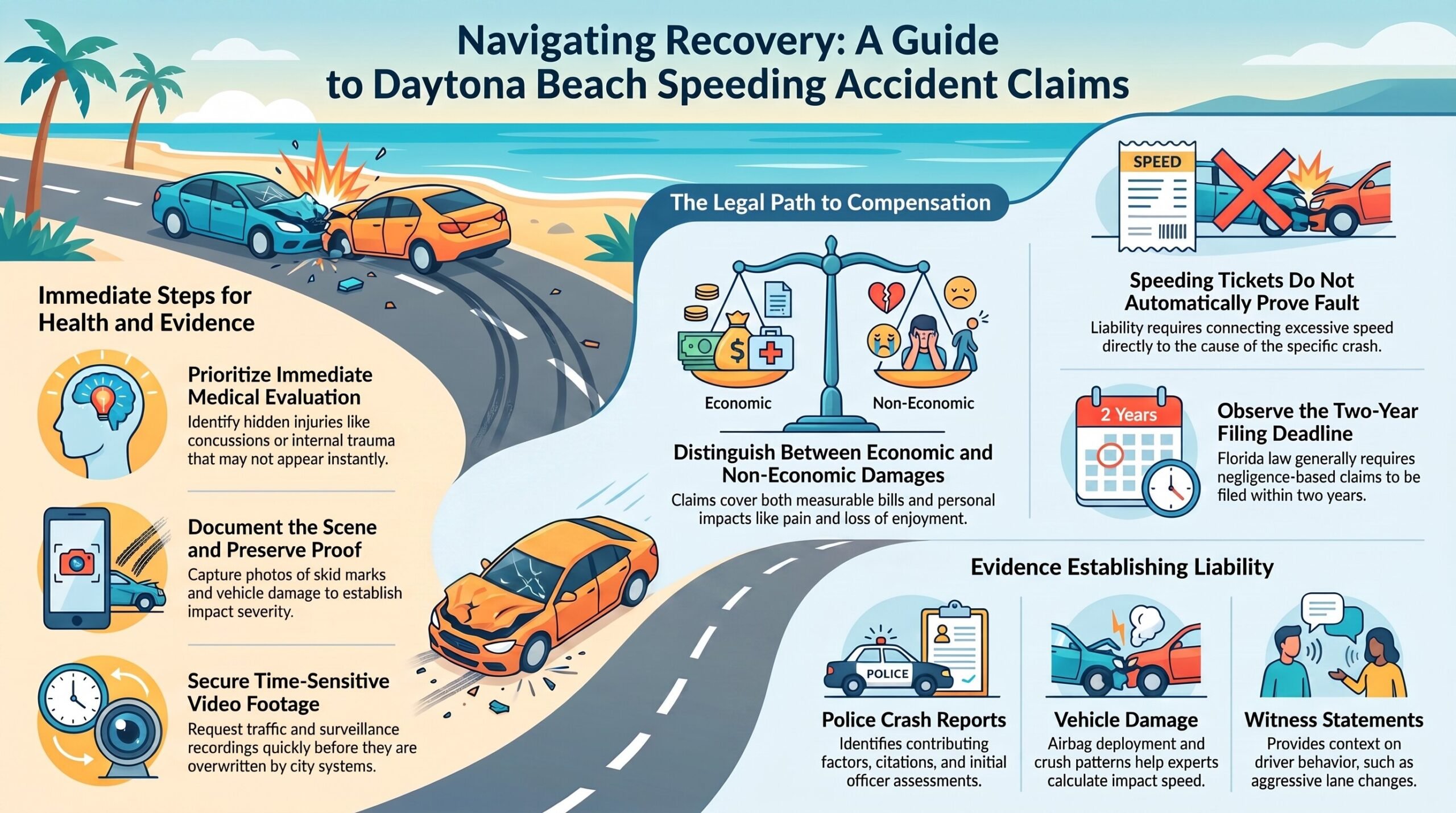
After a speeding car accident in Daytona Beach, an injured person should take prompt steps to protect themselves, recover, preserve evidence, and support any potential claim. Immediate medical care can identify hidden injuries, while careful documentation of the crash scene may help establish how the collision occurred. Contacting a car accident lawyer can provide guidance on legal options, insurance issues, and the protection of important rights.
Seek Immediate Medical Care
Because injuries from speeding collisions can worsen quickly, an injured person should seek immediate medical care even if symptoms seem minor at first. Prompt evaluation can identify concussions, internal injuries, fractures, soft tissue damage, and delayed symptoms that may not be obvious at the scene. Medical professionals can stabilize the patient, provide treatment instructions, and refer the person for follow-up care when needed.
Emergency room documentation also creates an important record linking the injury to the collision. This record may help prevent insurance denial by showing that the injured person acted responsibly and did not ignore medical needs. For those committed to serving others, timely care also helps protect family responsibilities, work duties, and community obligations while preserving health and safety after a serious Daytona Beach crash.
Document The Crash Scene
Once medical needs are addressed and safety permits, documenting the crash scene can help preserve facts that may later be disputed. A responsible person may photograph vehicle positions, visible damage, skid marks, debris, traffic signals, signs, and nearby landmarks. Scene safety should remain the priority, so no one should stand in active lanes or interfere with emergency responders.
Notes about road conditions, lighting, weather, and traffic flow may clarify how speeding affected the collision. If witnesses are present, their names and contact information can be recorded respectfully, without pressuring them for statements. Evidence preservation also includes saving dashcam footage, ride-share records, repair estimates, and communications related to the crash. Careful documentation supports an accurate account and helps those assisting the injured understand what occurred.
Contact A Car Accident Lawyer
For guidance on preserving legal rights, an injured person may benefit from contacting a Daytona Beach car accident lawyer soon after a speeding-related crash. Counsel can assess medical records, police reports, witness accounts, and safety camera footage to establish proof of liability before it is lost or disputed. This support allows the injured person to focus on recovery, family needs, and community responsibilities while legal issues are managed with care.
A lawyer may also craft a Settlement strategy based on damages, future treatment, lost income, and fault issues. During insurance negotiation, legal representation can address low offers, incomplete claim reviews, or attempts to shift blame. Prompt contact may bolster the claim, safeguard deadlines, and help ensure that the injured person receives fair consideration.
Critical Evidence in a Daytona Beach Speeding Car Accident Injury Case
Critical evidence can determine whether a speeding driver is held responsible after a Daytona Beach car accident, especially when liability or the severity of injuries is disputed. Key materials may include:
- Police crash reports
- Traffic camera footage
- Vehicle damage evidence
- Witness statements
Each item can help establish speed, impact force, driver behavior, and the sequence of events leading to the collision.
Police Crash Reports
After a speeding collision in Daytona Beach, a police crash report often becomes one of the first core records reviewed in an injury claim. This report may identify drivers, vehicles, insurers, road conditions, citations, and the officer’s initial assessment of contributing factors. For those serving injured clients, careful review helps confirm timelines, locate inconsistencies, and preserve facts before memories fade.
Scene photograph tips may be compared against the report to determine whether vehicle positions, skid marks, debris fields, and visible damage support the stated findings. Witness contact tracking is also crucial, because listed witnesses may later clarify speed, lane changes, braking, or evasive actions. Although the report is not the complete case, it can guide further investigation and strengthen a well-supported injury claim.
Traffic Camera Footage
At busy intersections and along major corridors, traffic camera footage may provide critical evidence in a Daytona Beach speeding car accident injury case. This footage can help show vehicle movements, traffic signal timing, lane positions, and a driver’s speed-related conduct before impact. Vehicle surveillance from city systems, nearby businesses, or private properties may also capture details not included in a police crash report.
Because many recordings are overwritten quickly, timely preservation requests are important. A legal team may identify possible camera sources, request copies, and review footage for consistency with witness statements and roadway evidence. During an insurance investigation, video evidence may clarify fault, challenge disputed accounts, and support a fair evaluation of injuries. Reliable footage can serve the injured person and promote accountability.
Vehicle Damage Evidence
While video footage may show how a collision unfolded, the physical damage to the vehicles can provide a separate and highly persuasive record of the severity of the impact. Crush patterns, bumper displacement, frame deformation, airbag deployment, and broken safety glass may help experts assess speed, impact angle, and force transfer. Careful documentation should occur after Crash Scene Safety concerns have been addressed, so that injured persons, responders, and bystanders are not placed at additional risk.
Photographs, repair estimates, inspection reports, and preserved vehicle components can support a clear account of how the speeding driver’s conduct caused harm. This evidence may also strengthen Eyewitness Credibility when physical findings align with reported observations. In injury claims, vehicle damage evidence serves both accountability and community protection by helping identify dangerous driving behavior.
Witness Statements
Because speeding collisions often happen in seconds, witness statements can provide important details that physical evidence alone may not fully explain. Independent observers may describe vehicle speed, lane position, traffic signals, braking, or dangerous maneuvers before impact. Their accounts can help clarify whether a driver ignored conditions on Daytona Beach roads and created preventable harm.
Eyewitness identification may also link a specific driver to reckless conduct, especially when vehicles, passengers, or post-crash movements create confusion. Investigators often compare the consistency of statements in daylight accidents, where visibility may support more reliable observations.
When witnesses serve the truth with careful detail, their information can assist injured people, insurers, and courts in reaching fair conclusions. Promptly recorded statements may preserve accuracy before memories fade or outside influence affects recollection.
Long-Term Effects of Daytona Beach Speeding Car Accident Injuries
Speeding collisions in Daytona Beach can leave injured victims with lasting medical and personal consequences, even after the initial emergency care has ended. Chronic pain conditions, reduced mobility, permanent disability, and emotional trauma may affect daily activities, employment, and overall quality of life. These long-term effects often become central issues when evaluating the full value of a car accident injury claim.
Chronic Pain Conditions
After a high-speed collision, chronic pain may develop even when initial injuries appear manageable or have been treated in an emergency setting. Soft tissue trauma, nerve irritation, spinal strain, and joint damage can create persistent discomfort that affects sleep, concentration, caregiving duties, and work performance. For individuals committed to serving family members, clients, or community needs, ongoing pain can limit reliability and increase dependence on others.
Medical documentation is crucial because chronic pain often lacks visible signs. Insurers may use Auto insurance tactics to question severity, argue preexisting conditions, or minimize future care needs. Injury claim delays can further burden injured people seeking treatment, therapy, medication, or specialist evaluation. Careful legal guidance may help preserve evidence, support fair valuation, and protect access to necessary long-term care.
Mobility And Disability
When a collision occurs at high speed, the force transferred through the body can cause injuries that permanently affect mobility and independence. Spinal cord trauma, severe fractures, joint damage, and nerve injuries may limit walking, standing, lifting, or performing daily personal tasks. Some survivors require canes, braces, walkers, or permanent Wheelchair accessibility modifications at home, work, and in public spaces.
These changes may affect employment, caregiving responsibilities, transportation, and community participation. In Daytona Beach, mobility limitations can also increase vulnerability to parking lot injuries, especially where surfaces, ramps, lighting, or traffic flow are unsafe. Service-minded caregivers, medical providers, and legal advocates often evaluate these functional losses carefully, because long-term disability can require ongoing treatment, assistive equipment, home alterations, and support services.
Emotional Trauma Effects
High-speed crashes can leave psychological injuries that persist long after physical wounds begin to recover. Survivors may experience anxiety, depression, nightmares, irritability, or fear of driving, especially when reminders involve traffic, sirens, or damaged vehicles.
In Daytona Beach cases, Nighttime Crash Statistics may help explain why trauma intensifies after dark, when visibility, fatigue, and impaired drivers increase risk. Vehicle Safety Ratings can also become important when evaluating how crash forces, occupant protection, and perceived survivability affect emotional recovery.
Families, caregivers, and service professionals should recognize that trauma can disrupt work, relationships, sleep, and medical compliance. Prompt counseling, consistent documentation, and compassionate support may reduce long-term harm. When emotional trauma follows speeding collisions, careful legal evaluation can help connect treatment needs with accountability and recovery planning.
Proving Liability in Daytona Beach Speeding Car Accident Injury Cases
Although speeding may appear straightforward from a traffic citation, proving liability in a Daytona Beach car accident injury case requires evidence that connects the driver’s excessive speed to the crash and the resulting harm. Investigators may review police reports, skid marks, vehicle damage, traffic camera footage, event data recorders, and witness statements to determine how fast the driver traveled and whether that speed prevented safe stopping or control.
Liability may also involve related factors, including distracted driving, impaired judgment, road conditions, or Negligent Maintenance that made a vehicle unsafe at higher speeds. Medical records help link the collision to physical injuries, while repair estimates and photographs document Property Damage and support the broader account of impact severity.
For injured people and families seeking accountability, careful evidence preservation serves both justice and community safety. A well-supported claim shows not only that speeding occurred, but that it directly caused preventable loss through careless conduct.
Dealing With Insurance Companies After a Daytona Beach Speeding Car Accident Injury
After a speeding car accident in Daytona Beach, insurance companies often begin evaluating the claim before the injured person fully understands the extent of medical treatment, lost income, or long-term effects. Their representatives may request statements, records, or broad authorizations that can shape the value of the claim. Careful communication is important, especially as medical treatment costs continue to rise and future care remains uncertain.
Insurers may also review accident-scene evidence to limit payment or raise comparative-fault defenses. This can affect people who are already focused on recovery, family needs, and service to others in their community. Reliable documentation, including medical records, photographs, repair estimates, and witness information, helps preserve an accurate account of the harm caused.
Florida injury resources may assist with understanding available coverage and obligations. A measured approach can prevent rushed decisions, protect dignity, and support a fair evaluation of losses after a serious speeding collision.
What to Expect During a Daytona Beach Speeding Car Accident Injury Claim Process
A Daytona Beach speeding-car accident injury claim typically begins with an initial case review, in which the facts, injuries, and available legal options are assessed. The process then moves into evidence collection and insurance claim negotiations, including reviewing crash reports, medical records, witness statements, and liability issues. If a fair settlement cannot be reached, the claim may proceed toward litigation, with a potential lawsuit timeline shaped by court deadlines, discovery, and trial preparation.
Initial Case Review
What happens during the initial case review can shape the direction of a Daytona Beach speeding car accident injury claim. During this stage, an attorney evaluates the reported facts, injuries, losses, and potential liability concerns. The review often includes discussion of medical treatment, missed work, vehicle damage, and communication already received from insurers. Insurance documentation may be examined to identify coverage limits, claim numbers, and deadlines that could affect the injured person’s options.
This meeting also helps establish practical goals for service to the client, including protection from premature statements or unfair pressure. The attorney may explain how settlement negotiation could develop after the claim is organized and valued. A careful initial review promotes informed decisions, preserves important rights, and provides direction for the legal process ahead.
Evidence Collection Process
Once the initial case review identifies the main liability and damages issues, the evidence collection process begins to give structure to the claim. Attorneys may gather crash reports, scene photographs, vehicle damage records, medical documentation, and available traffic or surveillance footage. In speeding cases, tire marks, event data recorder information, roadway conditions, and posted speed limits may help clarify how the collision occurred.
Witness Documentation is also important, as neutral accounts can confirm vehicle speed, traffic signals, lane positions, and driver conduct. Each item is organized to support a clear presentation of fault and injury-related losses. This preparation may also assist later Insurance Dispute Resolution by reducing uncertainty and preserving facts before memories fade or records become harder to obtain for injured clients and their families.
Insurance Claim Negotiations
After the evidence has been organized, insurance claim negotiations often begin with a formal demand that explains liability, injuries, medical treatment, lost income, and other documented losses. The insurer reviews the submission, compares it with policy limits, and may request clarification before making an offer. Careful communication supports fairness, especially when advocates aim to serve injured persons with patience and respect.
Preserving medical records remains important because treatment notes, billing statements, and physician opinions help connect the speeding collision to ongoing harm. Negotiations may also involve negotiating medical bills, addressing liens, and confirming whether unpaid charges affect the final recovery. Each response should be measured against the claimant’s documented needs, not the insurer’s convenience. A reasoned counteroffer can clarify damages and encourage responsible resolution.
Potential Lawsuit Timeline
If settlement discussions do not resolve the claim, a lawsuit may be filed with the appropriate Florida court. The defendant is served, then responds, and the case enters discovery. During discovery, both sides exchange records, take depositions, review medical evidence, and evaluate crash-related losses. Evidence Preservation remains important, including vehicle data, photographs, witness statements, and treatment documentation.
Motions may address legal disputes before trial, while mediation often provides another opportunity for resolution. A sound Negotiation Strategy may continue throughout the process, guided by liability, damages, and the strength of available proof. If no agreement is reached, the matter may proceed to trial, where a judge or jury determines responsibility and compensation. Each stage requires careful service to the injured person’s needs.
Compensation for Daytona Beach Speeding Car Accident Injury Damages
For individuals injured in a Daytona Beach speeding-car accident, compensation may address both the immediate financial losses and the long-term consequences of the crash. A claim may involve medical treatment, rehabilitation needs, lost income, reduced earning capacity, property damage, and other documented consequences tied to the speeding driver’s conduct. Careful documentation helps establish how the collision disrupted the injured person’s health, work, family responsibilities, and ability to serve others.
Evidence is central to this process. The police report may identify speeding, traffic violations, witness statements, road conditions, and other details that support a finding of liability. Medical records, repair estimates, photographs, and employment documents can further connect the harm to the crash. Insurance disputes may arise when carriers challenge fault, minimize injuries, or undervalue the claim. In those situations, organized proof and timely legal action can help protect the injured person’s right to fair recovery under Florida law.
Economic vs Non-Economic Damages in Daytona Beach Speeding Car Accident Cases
Damages in a Daytona Beach speeding car accident case are typically divided into economic and non-economic losses, each serving a distinct role in the value of a claim. Economic damages may include medical expenses, lost income, and vehicle repair costs, while non-economic damages may address pain, emotional distress, and reduced quality of life. Proving these losses often requires medical records, financial documentation, expert opinions, and consistent evidence connecting the injuries to the speeding collision.
Economic Damage Examples
After a speeding collision in Daytona Beach, economic damages are the measurable financial losses resulting from the crash. These losses may include emergency transportation, hospital treatment, surgery, rehabilitation, prescription medication, assistive devices, and follow-up care. Medical expenses calculations help identify past bills and reasonably expected future treatment costs, allowing a claim to reflect the full financial burden. Economic damages may also include vehicle repair or replacement, rental car charges, towing fees, and damage to personal property inside the vehicle.
When injuries prevent a person from working, documentation of lost income becomes important. Pay records, tax returns, employer statements, and work schedules may show missed wages, reduced hours, or diminished earning capacity. Careful documentation supports fair compensation and helps responsible advocates serve injured people with accuracy, diligence, and accountability.
Non-Economic Damage Examples
In a Daytona Beach speeding-car accident case, non-economic damages address personal losses that lack a fixed monetary value but may substantially affect an injured person’s life. These damages may include physical pain, emotional distress, anxiety, humiliation, scarring, and diminished dignity following a violent crash. They may also involve a loss of enjoyment, such as being unable to participate in family activities, community service, hobbies, exercise, or daily routines that once provided a sense of purpose.
A person may experience sleep disruption, fear of driving, strained relationships, or reduced independence while recovering. Medical record documentation may reflect symptoms, treatment needs, and observed limitations, but the harm often extends beyond clinical findings. Non-economic damages recognize the human impact of negligent speeding and the need for fair accountability.
Proving Your Losses
Proving losses in a Daytona Beach speeding-car accident case requires clear evidence linking the collision to both measurable financial harm and personal suffering. Economic damages may be shown through Medical treatment documentation, wage records, repair estimates, pharmacy receipts, and proof of transportation or caregiving costs. Non-economic damages require careful presentation of pain, emotional distress, reduced mobility, sleep disruption, and loss of daily function.
Attorneys often work with medical providers, employers, and financial professionals when calculating future expenses, especially when injuries require surgery, therapy, assistive devices, or long-term care. Consistent records help demonstrate how the crash changed the injured person’s ability to work, fulfill family responsibilities, and participate in community life. Strong proof supports fair compensation and helps ensure the claim reflects the full impact of the speeding collision.
When a Daytona Beach Speeding Car Accident Injury Case Goes to Trial vs Settlement
Although many Daytona Beach speeding-car accident injury cases resolve through settlement, some proceed to trial when liability, damages, or insurance coverage remain in dispute. Settlement may allow an injured person to receive compensation without the delay, expense, and uncertainty of a courtroom. Attorneys evaluate medical records, wage loss, crash evidence, and future care needs before reviewing Settlement Offers. A careful Negotiation Strategy can protect the client’s interests while encouraging a fair resolution.
When settlement discussions fail, trial preparation becomes important. Trial Witnesses may include responding officers, treating physicians, passengers, or bystanders who can explain what occurred and how the injuries affected daily life.
Expert Testimony may address vehicle speed, crash mechanics, medical prognosis, or earning capacity. A trial allows a judge or jury to weigh the evidence and determine compensation. The goal remains the same in either setting: to pursue accountability while helping the injured person regain stability.
Florida Laws That May Affect Your Daytona Beach Speeding Car Accident Case
When a speeding crash occurs in Daytona Beach, Florida law can influence nearly every part of the injury claim, from insurance benefits to fault allocation and filing deadlines. Understanding these rules helps injured people, families, and community-minded caregivers make informed decisions after a collision.
- Florida’s personal injury protection system generally pays initial medical bills, regardless of fault, subject to policy limits and treatment requirements.
- Serious injuries may allow claims beyond no-fault benefits, including pain, suffering, and other losses tied to the speeding driver’s conduct.
- Comparative Negligence Rules may reduce compensation if the injured person is found partly responsible for the crash.
- No Fault Coverage Exemptions can affect whether an injured party may pursue damages outside the insurance system.
These laws require careful evaluation of police reports, medical records, witness accounts, and crash evidence. A Daytona Beach speeding car accident case often turns on how these rules apply to the specific facts presented.
The Statute of Limitations for Daytona Beach Speeding Car Accident Injury Cases
Florida’s fault and insurance rules are only part of the analysis after a speeding-related collision in Daytona Beach, because strict filing deadlines can also determine whether an injured person may pursue compensation. In Florida, most negligence-based car accident injury claims must be filed within two years of the crash. If the deadline expires, a court may dismiss the case, regardless of the seriousness of the injuries or the apparent fault of the speeding driver.
This time limit also affects decisions in practical cases. Evidence preservation should begin early, as skid marks, vehicle data, camera footage, and witness memories may disappear quickly. Medical records and crash reports should be organized before insurance negotiations become advanced, so the claim reflects the full impact of the collision. For individuals focused on recovery, family stability, and responsible service to others, understanding the filing deadline helps protect legal rights while encouraging timely, orderly action after a serious Daytona Beach crash.
How a Daytona Beach Speeding Car Accident Lawyer Can Help You
After a serious speeding-related crash, a Daytona Beach speeding car accident lawyer can provide structured guidance by identifying liable parties, preserving critical evidence, and managing communications with insurance companies. This support allows injured individuals and caregiving families to focus on recovery, responsibilities, and service to those who depend on them.
A speeding crash lawyer helps protect evidence, clarify liability, and manage insurance communications during recovery.
- Reviews police reports, medical records, roadway conditions, and witness statements to build a clear picture of liability.
- Provides evidence preservation tips, including securing photos, repair records, dashcam footage, and contact information.
- Addresses Insurance claim delays by tracking deadlines, responding to adjusters, and challenging unsupported denials.
- Calculates losses involving medical care, missed income, reduced mobility, and the practical needs of a household.
A lawyer may also coordinate with experts, evaluate settlement offers, and prepare documentation that reflects the full impact of the crash. This organized advocacy helps protect the injured person’s rights while promoting fair, responsible resolution.
When to Contact a Daytona Beach Speeding Car Accident Lawyer
Because evidence can disappear quickly, an injured person should contact a Daytona Beach speeding car accident lawyer as soon as medical needs are stabilized and the immediate emergency has passed. Early contact helps preserve crash details, identify witnesses, obtain traffic camera footage, and document injuries before memories fade or records become harder to secure.
Prompt legal guidance is also important when an insurer requests a recorded statement, offers a quick payment, or asks for broad medical authorizations. These situations may involve Insurance settlement tactics that can limit fair recovery if addressed without preparation. A lawyer can assess deadlines, organize documentation, and develop a claims negotiation strategy that reflects the full impact of the collision.
For families focused on caring for an injured person, timely consultation provides structure during a stressful period. It allows practical decisions to be made based on reliable information, while protecting the injured person’s interests from the outset of the claim.
Why You Need an Experienced Daytona Beach Speeding Car Accident Lawyer
In a speeding collision, the difference between a routine claim and a fully developed injury case often depends on the lawyer’s experience with proving fault, damages, and insurance responsibility. Speeding crashes can leave injured people, families, and caregivers facing medical needs, lost income, and practical burdens that require organized legal action.
An experienced Daytona Beach speeding car accident lawyer understands how velocity affects impact forces, stopping distance, driver reaction time, and injury severity. Accident scene documentation, including photographs, skid marks, debris patterns, vehicle damage, and witness accounts, can help connect reckless speed to the harm suffered.
Experience also matters when insurers minimize injuries or argue that another factor caused the crash. A focused Insurance negotiation strategy allows the claim to present medical records, wage-loss evidence, and proof of liability in a structured manner. This preparation supports fair recovery, helping injured individuals obtain resources needed for care, stability, and continued service to others.
How to Choose the Right Daytona Beach Speeding Car Accident Lawyer for Your Case
Selecting the right Daytona Beach speeding car accident lawyer requires attention to experience, case preparation, and the lawyer’s ability to prove how excessive speed contributed to the collision. A qualified attorney should understand crash reports, roadway conditions, witness statements, vehicle damage, and available electronic data. These details can help establish liability and support a claim for medical costs, lost income, and other losses.
Careful selection also involves reviewing how the lawyer manages service to injured clients. Client communication expectations should be discussed early, including response times, case updates, and who will handle routine questions. This helps clients feel informed while the legal team pursues the claim with discipline.
Fee agreement transparency is equally important. A clear written agreement should explain costs, contingency fees, and any expenses connected to investigation or litigation. By evaluating these factors, injured individuals can choose counsel prepared to protect their interests with professionalism and care.
About The Law Offices of Anidjar & Levine
When injured individuals need legal guidance after a speeding-related collision, The Law Offices of Anidjar & Levine provides representation focused on accountability, case preparation, and client support.
The firm assists Daytona Beach crash victims by examining Liability basics, identifying negligent conduct, and pursuing compensation through organized legal action.
Its attorneys understand the evidence requirements for speeding crashes, including police reports, witness statements, vehicle damage, roadway conditions, surveillance footage, and available electronic data.
This careful approach helps clarify how excessive speed contributed to injuries, financial losses, and long-term disruption.
The firm also serves clients by managing communications with insurers, tracking deadlines, and explaining each step with professionalism and care.
Its work reflects a commitment to helping injured people protect their rights while they focus on recovery.
For those affected by speeding drivers, The Law Offices of Anidjar & Levine offers structured advocacy grounded in preparation, service, and practical legal judgment.
Frequently Asked Questions
Can Tourists File Speeding Accident Claims in Daytona Beach?
Yes, tourists may file speeding accident claims in Daytona Beach when another party’s negligence caused harm. Tourist eligibility generally depends on fault, injury proof, and lawful presence, not residency. Insurance requirements should be reviewed promptly, including rental, personal auto, and travel coverage. Local claim deadlines still apply, so delay can prejudice recovery. Visitor documentation, such as police reports, medical records, photographs, and travel details, helps preserve an accurate claim.
Do Speeding Tickets Automatically Prove Fault in a Crash?
No, a speeding ticket does not automatically prove fault in a crash. It may serve as evidence, especially when documented in police reports, but liability depends on the full circumstances. Investigators may assess speed, road conditions, witness accounts, and driver conduct. Under Comparative negligence, more than one party may share responsibility. Those assisting injured individuals should understand that a citation supports a claim, yet it does not conclusively establish legal fault.
Can Dashcam Footage Help My Speeding Accident Case?
Yes, dashcam footage can help a speeding accident case by showing vehicle speed, lane position, traffic signals, braking, and driver conduct. Its value depends on the admissibility of the dashcam evidence, including authenticity, relevance, and whether the recording was properly preserved. Video timestamp accuracy also matters, especially when matching footage to police reports, witness accounts, or crash data. Used responsibly, such evidence can support a fair evaluation and help serve injured parties effectively.
What if the Speeding Driver Was Uninsured?
If the speeding driver was uninsured, the injured person may still pursue recovery through available insurance benefits and legal claims. Uninsured liability concerns often require reviewing the victim’s uninsured motorist coverage, medical payments coverage, and other possible sources. Proof of coverage becomes vital, including policy documents, insurer confirmations, and claim records. A careful investigation helps protect resources, support accountability, and serve the injured person’s needs with diligence and precision.
Are Rideshare Speeding Accidents Handled Differently?
Yes, rideshare speeding accidents may be handled differently because multiple coverage layers and company rules can apply. Comparative liability must be assessed among the rideshare driver, other motorists, and potentially the platform’s conduct. Florida insurance requirements depend on whether the driver was offline, waiting, or transporting a passenger. A review of police reports, witness statements, app data, and rideshare protocols helps determine responsibility, supporting fair recovery for those injured.
—————————
Speeding accidents in Daytona Beach can cause serious injuries, financial strain, and complicated legal disputes.
Victims may have the right to pursue compensation for medical care, lost income, property damage, and other losses.
A qualified Daytona Beach Car Accident Lawyer can evaluate liability, preserve evidence, negotiate with insurers, and pursue appropriate legal action.
The Law Offices of Anidjar and Levine provide experienced guidance for injured victims seeking accountability and fair recovery.