The Law Offices of Anidjar and Levine helps crash victims document symptoms, treatment, and crash evidence to connect neck trauma to the collision. A Florida Car Accident Lawyer can assist with neck injuries that may appear hours or days later, making timely medical care and consistent records important.
Legal counsel can address liability, comparative negligence, insurance disputes, medical costs, lost income, future care, and long-term pain or mobility limits.
The sections below explain how these claims are evaluated and what steps may protect recovery.
Main Takeaways
- A Florida car accident neck injury lawyer helps link whiplash, sprains, or disc injuries to the crash through medical documentation.
- Seek prompt medical care if neck pain, stiffness, headaches, dizziness, numbness, or reduced motion appear after a collision.
- Preserve evidence by photographing damage, injuries, road conditions, skid marks, traffic signals, and the surrounding crash scene.
- Strong claims use police reports, witness statements, imaging, therapy records, physician opinions, and symptom timelines.
- Comparative negligence, preexisting conditions, crash dynamics, and treatment consistency can affect liability and settlement value.
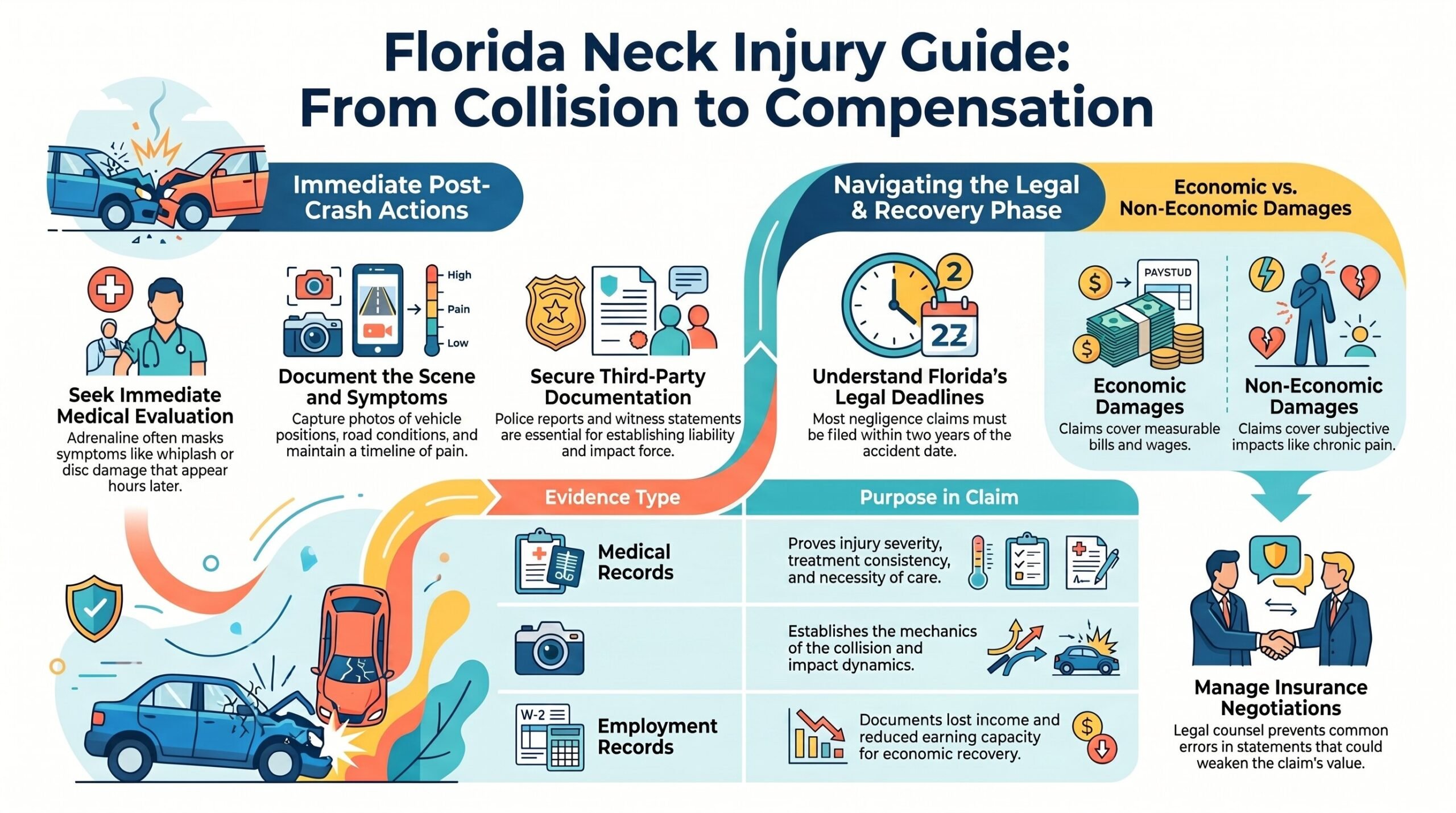


How We Can Help With Your Florida Car Accident Neck Injury Claim
Building a strong Florida car accident neck injury claim requires careful evidence gathering, a clear understanding of state insurance laws, and a focused approach to proving the injury’s impact. A legal team can serve injured clients by organizing medical records, documenting treatment needs, and identifying how pain, limited mobility, and work restrictions affect daily life. They may also communicate with insurers, and help prevent errors in statements or paperwork that could weaken the claim.
Professional guidance also supports accurate information including medical expenses, lost income, reduced earning ability, and necessary future care. Attorneys can consult physicians, review diagnostic findings, and connect the injury to the collision through reliable documentation. They may negotiate with insurers, prepare demand packages, and, when needed, pursue litigation. This support allows the injured person to focus on recovery while the claim is handled with diligence, structure, and respect for the client’s needs.
OUR CONSULTATIONSARE FREE
START YOUR FREE CASE REVIEW

Understanding Florida Car Accident Neck Injury Cases
When a collision causes sudden force to the head, shoulders, or spine, the neck may sustain injuries that are not immediately obvious. In Florida car accident neck injury cases, careful evaluation is critical because symptoms can develop over hours or days. Pain, stiffness, headaches, nerve irritation, and reduced mobility may indicate soft-tissue damage or more serious spinal concerns.
A well-documented claim often depends on timely care, consistent treatment, and clear records. Florida Medical Reporting can help connect the injury to the crash, describe functional limits, and support the need for ongoing care. Medical notes, imaging results, therapy records, and physician opinions may all influence how an insurer evaluates the claim.
The Whiplash Claim Timeline can vary based on recovery, treatment length, and dispute resolution. A lawyer reviewing these matters may assess medical evidence, lost income, pain impact, and future needs, while helping injured persons pursue fair compensation with diligence and respect.
Common Causes of Florida Car Accident Neck
Neck injuries in Florida car accidents often arise from specific crash dynamics, including rear-end collision whiplash and distracted driving impacts. High-speed crash trauma may place severe force on the cervical spine, increasing the risk of lasting injury. Rollover accident injuries can be especially intricate, as sudden rotation, compression, and impact forces may damage soft tissue, discs, nerves, or vertebrae.
Rear-End Collision Whiplash
Rear-end collisions are among the most common causes of whiplash in Florida car accidents, particularly because the force of impact can cause the head and neck to move abruptly beyond their normal range. This sudden motion may strain muscles, ligaments, discs, and nerves, even when vehicle damage appears minor. Care providers often see delayed symptoms, including stiffness, headaches, dizziness, and reduced mobility, which can affect work, caregiving, and community service.
Distracted Driving may contribute to these crashes, but the resulting neck trauma requires separate attention. Documentation of medical treatment, crash reports, and symptom progression can support Injury Compensation requests. When multiple vehicles are involved, Rollover Risk and impact severity may influence Claim Negotiations, making careful evaluation crucial for fair recovery and responsible advocacy after injury.
Distracted Driving Impacts
Often, distracted driving creates the conditions for sudden impacts that place severe stress on the cervical spine, even in crashes that occur at moderate speeds. Cellphone distractions may cause a driver to miss slowing traffic, drift between lanes, or react too late to avoid contact. When the neck is forced forward, backward, or sideways without warning, soft tissues, discs, and nerves may suffer painful injury.
Fatigued driving can create similar dangers, reducing attention, judgment, and reaction time when steady care is most needed. For those committed to serving injured individuals, these causes show why careful investigation matters. Evidence such as phone records, witness accounts, vehicle data, and medical findings may help connect negligent behavior to neck trauma and support a clear, responsible claim for recovery.
High-Speed Crash Trauma
When vehicles collide at high speeds, the force transferred through the body can overwhelm the structures that stabilize the cervical spine. Sudden acceleration and deceleration may strain ligaments, compress discs, irritate nerves, or cause fractures that require prompt medical evaluation. These injuries may not present immediately, complicating treatment planning and documentation for those assisting injured individuals.
High-speed impacts also expose the limitations of safety features. Seat belts, airbags, and head restraints reduce risk, but they cannot eliminate the violent motion imposed on the neck. Biomechanics misconceptions may lead some observers to underestimate injury severity when vehicle damage appears limited or occupants walk away. Careful review of crash forces, symptoms, imaging, and clinical findings helps clarify the relationship between trauma and neck injury and supports informed, service-centered decisions after a serious collision.
Rollover Accident Injuries
Rollover accidents can produce neck injuries that differ from those seen in direct high-speed collisions because the body may be thrown in multiple directions within the vehicle. Occupants may experience violent twisting, compression, or stretching of the cervical spine, especially when seat belts, airbags, or vehicle structures fail to limit movement. These crashes can cause whiplash, herniated discs, nerve irritation, fractures, or spinal cord trauma.
Medical documentation is essential, particularly when symptoms appear gradually after the collision. A Florida neck injury lawyer may examine crash dynamics, roof crush evidence, restraint use, and emergency records to support the injured person’s claim. A careful settlement strategy can help address long-term treatment needs. If an insurer ignores evidence or delays payment, Insurance bad faith concerns may also arise.


Legal Rights of Florida Car Accident Neck Injury Victims
After a Florida car accident causes a neck injury, the injured person may have legal rights that extend beyond basic medical care and insurance reporting. These rights may support recovery when pain, limited movement, treatment costs, or work restrictions affect daily life and the ability to serve family, clients, or community.
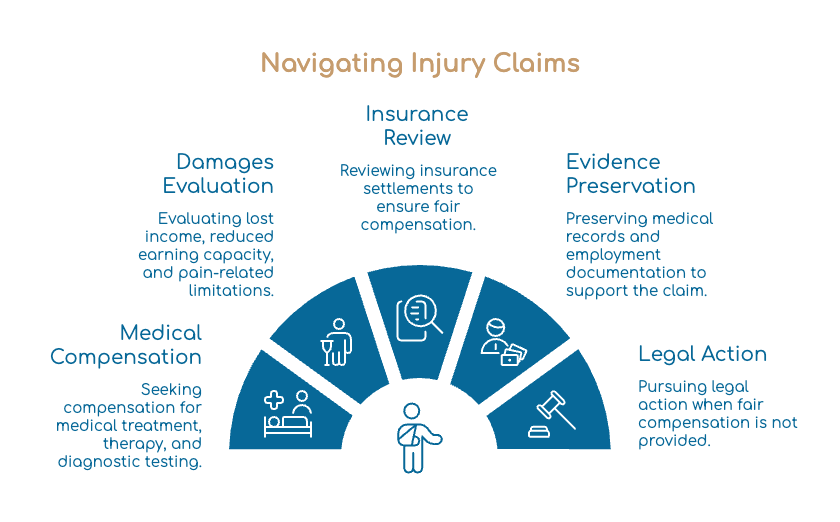
Potential legal protections may include:
- Seeking compensation for medical treatment, therapy, diagnostic testing, and future care.
- Evaluating Types of damages, including lost income, reduced earning capacity, and pain-related limitations.
- Reviewing whether an insurance settlement fairly reflects the injury’s full impact.
- Preserving evidence, medical records, and employment documentation to support the claim.
- Pursuing legal action when responsible parties or insurers fail to provide fair compensation.
Florida law imposes deadlines and procedural requirements, so timely guidance may be important. A careful legal review can help injured individuals make informed decisions while focusing on recovery and continuing responsibilities.
Why Do Florida Car Accident Neck Injuries Happen?
In a Florida car accident, neck injuries often occur because sudden force disrupts the normal alignment and movement of the cervical spine. Rear-end impacts, side collisions, and abrupt stops can cause the head to whip forward, backward, or sideways, straining muscles, ligaments, discs, and nerves. Even a low-speed crash may create significant harm when the neck absorbs force faster than the body can respond.
These injuries may be influenced by seat position, headrest placement, vehicle design, and whether occupants were properly restrained. Preexisting Conditions, such as arthritis, prior disc problems, or earlier neck trauma, may also make a person more vulnerable to serious symptoms after a collision.
In legal evaluations, causation can become more intricate when multiple factors contributed to the injury. Florida’s Comparative Negligence rules may also affect responsibility if more than one party’s conduct helped cause the crash, requiring careful review of evidence and medical findings.
What Should You Do After a Florida Car Accident Neck Injury?
After a Florida car accident causes a neck injury, the injured person should seek immediate medical care to identify and document the harm. Accurate records, photographs, witness information, and insurance details can help preserve vital evidence from the scene. A qualified lawyer may then evaluate liability, insurance coverage, and potential compensation under Florida law.
Seek Immediate Medical Care
Seek medical attention as soon as possible when neck pain, stiffness, headaches, dizziness, numbness, or reduced range of motion appears following a Florida car accident. Prompt evaluation allows physicians to identify whiplash, cervical sprains, nerve compression, or other injuries that may worsen without treatment. Even mild symptoms merit careful assessment, because adrenaline can mask pain during the first hours after impact.
Medical care also supports responsible recovery, helping injured individuals protect their health and meet family, work, and community obligations. Providers may recommend imaging, medication, physical therapy, or consultant referrals based on clinical findings.
While Preventing Whiplash begins with proper driving posture and Safety Seatbelts, post-crash care remains vital. Delayed treatment may complicate healing, increase discomfort, and make later medical decisions more difficult.
Document The Accident
At the crash scene, clear documentation can help preserve important facts related to a Florida car accident neck injury. When safe, an injured person or helper should photograph vehicle damage, roadway conditions, skid marks, traffic signals, visible injuries, and the surrounding area. These Evidence collection steps may support later post crash documentation by creating a reliable record before conditions change.
Names, phone numbers, insurance details, license plates, and witness observations should be written down carefully. A police report number should also be saved, since official records often assist with the basics of insurance claims. Accurate documentation helps clarify the sequence of events, identify contributing conduct, and support liability determination. Organized records also allow medical providers and claims personnel to understand how the neck injury occurred and developed over time.
Contact A Lawyer
For many injured people, contacting a Florida car accident neck injury lawyer is an important step once immediate medical needs and basic documentation have been addressed. Legal guidance can help an injured person understand available claims, applicable coverage, and Insurance claim deadlines that may affect recovery. A lawyer may also assist with preserving accident evidence, including vehicle damage records, medical reports, witness information, and communications with insurers.
This support can reduce confusion for victims and their families, allowing them to focus on recovery and responsibilities to others. Counsel can evaluate whether settlement offers reflect the seriousness of the neck injury, future treatment needs, and lost income. Early contact also helps prevent avoidable mistakes, particularly when insurers request statements, releases, or quick resolutions. Professional advice protects important rights.
Critical Evidence in a Florida Car Accident Neck Injury Case
Essential evidence in a Florida car accident neck injury case helps establish fault, causation, and the extent of physical harm. Important materials may include:
- Crash scene photos
- Medical treatment records
- Witness statements
- Police accident report
- Vehicle damage documentation
Each item can support a more accurate evaluation of liability, medical needs, and potential compensation.
Crash Scene Photos
In the aftermath of a Florida car accident, crash scene photos can preserve details that may later become central to a neck injury claim. Images of vehicle positions, skid marks, debris fields, traffic signals, weather conditions, and roadway hazards may help clarify how force moved through the vehicles. For those seeking to serve injured individuals responsibly, these photos provide objective context before memories fade or repairs occur.
Rear-end evidence, such as bumper intrusion, crushed trunk panels, or displaced headrests, may support the mechanism of a whiplash-type injury. Photographs may also assist counsel when comparing the crash facts with a Medical history review, helping distinguish accident-related complaints from prior conditions. Prompt, thorough documentation can strengthen liability analysis, encourage fair evaluation, and protect the injured person’s right to recovery.
Medical Treatment Records
Medical treatment records often form the backbone of a Florida car accident neck injury claim because they document symptoms, diagnoses, treatment timelines, and medical opinions in a structured and reliable way. These records may include emergency room notes, imaging results, physician evaluations, therapy reports, prescriptions, and follow-up recommendations. For an injured person, they help show how pain, limited mobility, nerve symptoms, or disc injuries affect daily functioning and care needs.
For legal and insurance purposes, consistent records support causation, damages, and the seriousness of the condition. They also guide Insurance negotiation strategies by connecting treatment costs to medical necessity. When recovery is uncertain, these records assist long-term rehabilitation planning, helping caregivers, providers, and advocates pursue fair resources for future treatment, support, and the restoration of quality of life.
Witness Statements
Why can witness statements become decisive after a Florida car accident involving a neck injury? They may describe vehicle motion, impact force, driver behavior, and the injured person’s immediate pain, helping clarify events that medical records cannot fully explain. In service to truth and fair recovery, attorneys often seek statements from passengers, nearby drivers, pedestrians, or bystanders before memories fade.
Eyewitness credibility depends on the person’s viewpoint, consistency, attentiveness, and lack of bias. A careful lawyer may compare each account with photographs, treatment timing, and other available evidence. When litigation is likely, sworn statement requirements may apply, making accuracy and completeness especially important. Reliable witness accounts can support causation, challenge disputed fault, and help ensure the injured person’s needs are evaluated with care and dignity.
Police Accident Report
After a Florida collision that results in a neck injury, the police accident report often becomes one of the most important early records in the claim. This report may identify the drivers, vehicles, insurance information, roadway conditions, and officer observations. It can also note citations, Speed limit violations, lane changes, impact points, and statements made at the scene.
When traffic signals are involved, traffic light timing may help clarify whether a driver entered unlawfully or failed to yield. For injured individuals and those assisting them, the report provides an organized starting point for understanding fault and protecting legal rights. Although it is not always conclusive, a lawyer may compare it with medical records, witness accounts, photographs, and video evidence to build a careful, service-focused claim.
Long-Term Effects of Florida Car Accident Neck Injuries
Neck injuries from Florida car accidents may lead to chronic pain and stiffness, even after initial treatment appears successful. These conditions can reduce mobility, limit daily activities, and interfere with work responsibilities. Ongoing medical needs, including therapy, medication, and professional care, may become central issues in evaluating the full impact of the injury.
Chronic Pain And Stiffness
Chronic pain and stiffness can develop when a Florida car accident causes damage to muscles, ligaments, discs, facet joints, or nearby nerves in the cervical spine. These symptoms may persist beyond the initial recovery period, especially when inflammation, scar tissue, or nerve irritation remains unresolved. Muscle strain recovery often requires careful evaluation, consistent treatment, and attention to daily activities that place stress on the neck.
For caregivers, employers, and family members, recognizing ongoing discomfort can support appropriate accommodations and timely medical follow-up. Posture correction therapy may help reduce strain from guarded movement, poor workstation alignment, or pain compensation. Persistent stiffness can also affect sleep, concentration, and tolerance for routine responsibilities. Legal documentation may include treatment records, pain reports, and provider opinions linking symptoms to the collision.
Reduced Mobility
When cervical spine injuries do not fully resolve, reduced mobility may become a lasting consequence of a Florida car accident. Limited range of motion can affect head turning, looking over a shoulder, driving safely, or performing work and caregiving duties. These restrictions may arise from damaged soft tissue, joint dysfunction, disc injury, or protective muscle tightening after trauma.
Reduced mobility can also change posture and movement patterns, placing added strain on surrounding areas and increasing discomfort during routine activity. In some cases, stiffness may signal a risk of nerve compression, especially when movement triggers radiating symptoms, weakness, or numbness. For individuals committed to serving their families, clients, or communities, such limitations may undermine reliability, independence, and daily responsibilities, making the lasting impact of a neck injury significant.
Ongoing Medical Needs
Reduced mobility can be one sign that a cervical injury requires continued medical attention after a Florida car accident. Ongoing care may include imaging, expert evaluations, physical therapy, pain management, or surgical consultation when symptoms persist. Diagnosis challenges often arise because soft tissue damage, nerve irritation, and spinal instability may not appear immediately. Care providers serving injured individuals should document symptoms carefully, since recovery timelines can vary widely and affect daily responsibilities.
Some neck injuries create long-term disability, limiting work capacity, caregiving duties, and community involvement. Continued treatment records may also become important during insurance disputes, especially when insurers question medical necessity or the connection to the collision. A Florida car accident neck injury lawyer may help evaluate records, address coverage barriers, and support access to needed care.
Proving Liability in Florida Car Accident Neck Injury Cases
Proving liability in a Florida car accident neck injury case requires a careful review of how the collision occurred, who acted negligently, and how that negligence caused the injury. Evidence may include crash reports, witness statements, vehicle damage, roadway conditions, traffic camera footage, and medical findings that connect the neck trauma to the impact. This process supports an accurate account of events and helps protect the injured person’s dignity and lawful interests.
A careful investigation also considers whether more than one party contributed to the collision. Florida’s fault rules may allow a comparative negligence defense, which seeks to reduce compensation by assigning partial responsibility to the injured person.
Counsel may evaluate speed, distraction, impairment, failure to yield, or unsafe lane changes. An insurance coverage review may also identify available sources of recovery, including bodily injury coverage or other applicable policies, without shifting focus from the core issue of fault and causation in dispute.
Dealing With Insurance Companies After a Florida Car Accident Neck Injury
After a Florida car accident causes a neck injury, dealing with insurance companies requires caution, organization, and a clear understanding of how claims are decided. Insurers often review medical records, accident reports, vehicle damage, and recorded statements to limit their financial exposure. Those assisting an injured person should encourage careful documentation, prompt medical follow-up, and consistent communication that avoids speculation.
Understanding the basics of policy coverage is fundamental, including personal injury protection, bodily injury liability, uninsured motorist coverage, and applicable deductibles or limits. A neck injury may require imaging, therapy, medication, or expert attention, so incomplete records can weaken the value of a claim.
Claim denial tactics may include arguing that the injury was preexisting, that treatment was unnecessary, or that symptoms were unrelated to the crash. A lawyer can evaluate insurer communications, preserve evidence, and help guarantee the injured person is treated fairly while pursuing needed support with dignity and care.
What to Expect During a Florida Car Accident Neck Injury Claim Process
A Florida car accident neck injury claim typically begins with an initial medical evaluation, which helps document the injury and establish a connection to the crash. The process then moves to filing an insurance claim, supported by evidence such as medical records, accident reports, photographs, and witness statements. Once documentation is reviewed, settlement negotiations may begin, with the value of the claim often depending on liability, treatment needs, lost income, and long-term impairment.
Initial Medical Evaluation
Usually, the initial medical evaluation is the first significant step in a Florida car accident neck injury claim, because it creates a documented record of the injury, symptoms, and recommended treatment. A physician may assess pain levels, range of motion, neurological signs, muscle spasms, and whether imaging or doctor-level care is appropriate. This visit also helps identify conditions that may not be immediately obvious, including whiplash, disc injuries, or nerve compression.
For those committed to serving an injured person responsibly, prompt care supports safety, recovery, and accurate documentation. Preventing Treatment Delays is important because gaps in care may affect recovery and later questions about causation. Medical providers may also note work limits and daily activity restrictions. Timely evaluation helps preserve records relevant to Insurance Claim Deadlines without addressing filing procedures.
Insurance Claim Filing
When does the insurance claim process begin after a Florida car accident involving a neck injury? It usually starts once the crash is reported to the appropriate insurer, often after a prompt medical evaluation confirms the need for care. The injured person, or a representative acting in service of the person’s wellbeing, provides notice of the accident and identifies available coverage. Early claim filing may help reduce insurance delays, especially when neck pain develops gradually.
Underreporting injuries can weaken the claim because insurers may question later-reported symptoms or the need for treatment. Basic treatment documentation is often referenced during claim intake to show that care began within a reasonable time. Insurers may then review policy limits, no-fault benefits, and liability concerns. Coverage disputes can arise, requiring careful communication and timely responses.
Evidence And Documentation
After the claim is opened, evidence and documentation become the foundation for evaluating a Florida car accident neck injury claim. Medical records, diagnostic imaging, physician opinions, therapy notes, prescriptions, and work restriction statements help show the nature and extent of the injury. Police reports, crash photographs, witness statements, repair estimates, and traffic camera footage may also clarify fault and the severity of the impact.
Careful organization supports accurate review and helps reduce Insurance claim delays caused by missing or inconsistent information. Attorneys may also request employment records, wage documentation, and daily limitation notes to show how the neck injury affects service, caregiving, and ordinary responsibilities. This record-building process informs a future settlement negotiation strategy without prematurely initiating negotiations. Complete documentation gives insurers, counsel, and medical providers a clearer factual basis for evaluation.
Settlement Negotiations
Once the evidence is organized and the injury picture is reasonably developed, settlement negotiations may begin by sending a demand package to the insurance carrier. This package typically outlines medical findings, treatment costs, lost income, pain limitations, and the legal basis for compensation. The insurer then reviews liability, policy limits, and damages before responding.
A comparative fault analysis may affect the offer, especially if the carrier claims the injured person contributed to the crash. Counsel may use negotiation leverage tactics, including medical expert opinions, consistent documentation, and trial readiness, to seek fair value. For those committed to serving injured people, this phase requires patience, accuracy, and disciplined communication. If the insurer refuses to make a reasonable payment, litigation may be necessary to protect the claim.
Compensation for Florida Car Accident Neck Injury Damages
Compensation for neck injuries after a Florida car accident may include medical expenses, lost income, reduced earning capacity, pain and suffering, and other losses tied to the crash. The value of a claim often depends on the severity of the injury, the duration of treatment, and the effect on daily responsibilities, including the ability to care for family members or serve the community.
A lawyer may review emergency care, diagnostic testing, physical therapy, medications, and recommended pain management options to document the full scope of harm. Future treatment needs may also be considered when symptoms persist or worsen.
Compensation may be influenced by available insurance coverage limits, fault determinations, and the quality of medical evidence. Careful documentation helps connect the neck injury to the collision and supports a fair demand. For injured persons seeking stability, the goal is to secure resources that help mend health, independence, and dignity.
Economic vs Non-Economic Damages in Florida Car Accident Neck Cases
In Florida car accident neck injury cases, damages are generally divided into economic and non-economic categories. Economic damages may include medical bills and lost income, while non-economic damages address harms such as pain and suffering. This distinction helps evaluate both the financial losses and the personal impact caused by a neck injury.
Medical Bills
Medical-bill evidence often forms the foundation of the economic damages claim in a Florida car accident neck injury case. These records may include emergency care, diagnostic imaging, expert visits, medication, injections, surgery, and follow-up appointments. Rehabilitation costs, such as physical therapy or chiropractic care, can also show the continuing financial burden caused by the injury.
Careful treatment documentation helps connect each expense to the collision, especially when insurers question whether care was necessary or related. A lawyer may review bills, coding, insurance payments, and outstanding balances to present a clear picture of damages. For injured persons seeking fair resolution, accurate medical records support accountability and responsible compensation. Organized billing proof also helps distinguish measurable financial losses from non-economic harm, such as pain, limitation, and reduced quality of life.
Lost Income
Lost income can become a significant part of the economic damages claim when a Florida car accident neck injury prevents an injured person from working. These losses may include missed wages, reduced hours, lost bonuses, diminished earning capacity, or the loss of employment when physical limits make prior duties impossible. Careful documentation supports the claim, including pay records, tax returns, employer statements, medical work restrictions, and, when needed, vocational evaluations.
Job loss coverage may also be available through insurance benefits, depending on the policy terms and the facts of the injury. When an insurer delays, undervalues, or wrongfully denies a valid wage-loss claim, concerns involving insurance bad faith may arise. A careful legal evaluation can help preserve income-related damages and support financial stability during recovery efforts.
Pain And Suffering
Although pain and suffering damages are harder to measure than medical bills or lost income, they can be a major part of a Florida car accident neck injury claim. These non-economic damages may reflect chronic pain, limited movement, sleep disruption, anxiety, and reduced ability to care for family or serve others. Economic damages are usually supported by records, invoices, and wage documents, while non-economic damages require careful proof through medical opinions, daily limitations, and credible testimony.
Settlement value factors may include injury severity, treatment duration, permanency, prior conditions, and the extent to which the neck injury affects ordinary responsibilities. When an insurer undervalues these losses, insurance dispute resolution may involve negotiation, mediation, or litigation. A lawyer can present evidence that gives fair weight to human impact.
When a Florida Car Accident Neck Injury Case Goes to Trial vs Settlement
When a Florida car accident neck injury claim reaches the point of serious negotiation, the central question often becomes whether settlement can fairly account for the injured person’s medical condition, long-term limitations, and financial losses. Settlement may provide stability, faster support, and reduced stress, especially when evidence clearly shows the injury’s impact on daily life, work, and caregiving responsibilities.
Trial may become necessary when an insurer undervalues medical proof, disputes causation, or refuses to recognize the seriousness of ongoing pain. In that setting, the trial strategy focuses on presenting records, expert opinions, and personal testimony in a clear, organized manner. Effective jury communication helps translate medical details into understandable human consequences, without exaggeration.
Settlement leverage often increases when the opposing side sees that the claim is prepared for court. A lawyer’s role is to protect the injured person’s dignity, pursue accountability, and seek a result that supports recovery and future care.
Florida Laws That May Affect Your Florida Car Accident Neck Case
Several Florida laws can directly affect how a car accident neck injury claim is evaluated, negotiated, and resolved. These rules help determine fault, available compensation, and the practical path toward serving an injured person’s recovery needs.
Florida law can shape fault, compensation, and recovery options after a car accident neck injury.
- Florida comparative negligence may reduce compensation when the injured person shares responsibility for the crash.
- Personal Injury Protection benefits may apply first, regardless of fault, for certain medical expenses and lost income.
- Serious injury requirements can affect whether pain, suffering, and other non-economic damages may be pursued.
- Insurance coverage limits often shape the settlement value, especially when medical care, therapy, or long-term impairment exceeds the available policy limits.
- Evidence rules may influence how medical records, expert opinions, crash reports, and witness testimony are evaluated in support of the neck injury claim.
A careful review of these laws enables advocates to protect the injured person’s interests, promote fair accountability, and pursue compensation that aligns with documented harm and future care needs.
The Statute of Limitations for Florida Car Accident Neck Injury Cases
In Florida car accident neck injury cases, the statute of limitations sets the legal deadline for filing a lawsuit after a crash. For most negligence claims arising from motor vehicle collisions, Florida generally allows two years from the date of the accident. Missing this deadline can prevent an injured person from seeking compensation through the courts, regardless of the seriousness of the neck injury.
Time limits also affect related steps that support a claim. Medical documentation timelines matter because prompt evaluation helps connect the neck injury to the crash and preserves evidence of pain, mobility limits, diagnostic findings, and treatment needs. Delayed care may create disputes about causation or severity. Insurance claim deadlines may be shorter than the lawsuit deadline, especially when policy terms require timely notice or cooperation.
Those serving injured individuals should recognize that early organization, accurate records, and attention to dates help protect the person’s legal options and promote responsible case preparation.
How a Florida Car Accident Neck Injury Lawyer Can Help You
After addressing filing deadlines and early documentation, the next concern is how legal representation can protect and advance a neck injury claim. A Florida car accident neck injury lawyer evaluates the facts, organizes proof, and guides the injured person through each required step with steady care and purpose. This support can help preserve resources for recovery, family responsibilities, and service to others.
Careful legal guidance can help protect a neck injury claim while the injured person focuses on recovery.
- Reviews medical records, diagnostic findings, and treatment plans to show the injury’s effect on daily life.
- Prepares Insurance documentation, including benefit forms, demand materials, and supporting evidence.
- Assists with fault determination by examining crash reports, witness statements, photographs, and available video.
- Communicates with insurers and opposing parties to reduce confusion, delay, and pressure on the injured person.
- Calculates losses, including medical expenses, lost income, future care, and pain-related limitations.
Through organized advocacy, legal counsel helps present a claim clearly and responsibly, with the evidence needed for fair consideration.
When to Contact a Florida Car Accident Neck Injury Lawyer
When should an injured person seek legal guidance after a crash-related neck injury? Contact should occur as soon as medical care begins and the injury’s effects become known. Prompt consultation helps protect the injured person’s ability to pursue compensation while allowing family members, caregivers, or advocates to focus on recovery and practical support.
Quick action is especially important because Florida’s statute of limitations restricts the time available to file a claim. Delaying too long may reduce legal options, even when pain, mobility limits, or neurological symptoms continue. Early communication also supports the preservation of evidence, including vehicle damage records, medical documentation, witness statements, crash reports, and photographs from the scene.
A lawyer may also be reached when insurance representatives request statements, question the seriousness of the neck injury, or present a quick settlement. Timely guidance can help ensure that decisions are made carefully, with attention to future medical needs and financial stability.
Why You Need an Experienced Florida Car Accident Neck Injury Lawyer
Because neck injuries can involve complex medical evidence and long-term financial consequences, an experienced Florida car accident neck injury lawyer can provide necessary guidance from the earliest stages of a claim. Such representation helps ensure that injured individuals, families, and caregivers understand how pain, mobility limitations, therapy needs, and lost income may affect recovery and service to others.
A lawyer experienced in these cases can coordinate a medical records review to link diagnoses, treatment plans, imaging results, and physicians’ opinions to the crash. This careful evaluation supports a more accurate claim for current and future damages. It also helps address disputes over preexisting conditions, delayed symptoms, or the severity of soft-tissue and spinal injuries.
Effective advocacy also requires a sound Insurance negotiation strategy. Insurers may minimize neck injury claims or pressure victims into early settlements. Skilled legal representation can present evidence, challenge undervaluation, and pursue compensation that reflects the full impact of the injury.
How to Choose the Right Florida Car Accident Neck Injury Lawyer for Your Case
Choosing the right Florida car accident neck injury lawyer begins with evaluating whether the attorney has specific experience handling cervical spine, whiplash, disc, nerve, and soft tissue injury claims arising from vehicle collisions. The lawyer should understand medical records, diagnostic imaging, treatment timelines, and how neck injuries affect work, caregiving, and daily service to others.
A suitable attorney should also have a disciplined approach to liability evidence, damages documentation, negotiations, and litigation preparation. Families may need guidance when a severe collision leads to a Wrongful death claim, or when injured people face insurance denial appeals after necessary care is disputed. Clear communication is equally important, including honest case assessments, timely updates, and respect for the client’s goals.
Prospective clients should consider whether the lawyer has the resources to challenge insurers, consult medical experts, and accurately present damages. The right choice supports recovery, accountability, and informed decision-making throughout the legal process.
About The Law Offices of Anidjar & Levine
A law firm’s background, resources, and client service standards can greatly affect how a neck injury claim is managed after a Florida car accident.
The Law Offices of Anidjar & Levine is recognized for representing injured clients across Florida, including those facing medical treatment, lost income, and insurance disputes after serious collisions.
Anidjar & Levine’s history reflects a practice built around personal injury representation, with systems designed to support clients through investigation, documentation, negotiation, and, when required, litigation.
The firm’s approach emphasizes client-first advocacy, which means prioritizing communication, accessibility, and responsive case management.
For individuals serving families, communities, or workplaces while recovering from neck injuries, dependable legal support can help reduce administrative burdens.
The attorneys and staff work to gather evidence, coordinate with medical providers, assess damages, and pursue fair compensation.
This service model allows clients to focus on recovery while their legal interests are handled with discipline and care.
Frequently Asked Questions
Can a Minor Neck Injury Worsen Months After a Florida Crash?
Yes, a minor neck injury can worsen months after a crash. Delayed symptoms may reflect soft tissue damage, nerve irritation, or aggravated spinal conditions. Prompt medical documentation helps connect worsening pain to the incident and supports responsible care planning. Statute of limitations deadlines may limit the available claims, so timely review is important. Insurance communication should remain accurate and cautious, ensuring the injured minor’s needs are served with diligence, clarity, and appropriate protection.
Will Pre-Existing Arthritis Affect My Neck Injury Claim?
Yes, pre-existing arthritis may affect a neck injury claim, but it does not automatically defeat it. Medical records help distinguish prior degeneration from crash-related aggravation, while credibility factors include consistent treatment, accurate symptom reporting, and physician opinions. A claimant serving family, work, and community obligations should carefully document functional changes. Insurers may argue that symptoms were pre-existing, so clear evidence showing the crash worsened the condition becomes crucial for fair evaluation.
Should I Post About My Neck Injury on Social Media?
No, an injured person should avoid posting about a neck injury on social media. Social media risks include insurers reviewing photos, comments, location tags, and Share reporting that may distort recovery facts. Privacy concerns remain even with restricted settings, because others may copy or disclose posts. Any insurance contact should be handled carefully, preferably through counsel. Those seeking to serve others should protect the claim’s integrity with disciplined, private communication only.
Can Passengers File Separate Neck Injury Claims After the Same Crash?
Yes, passengers may file separate passenger claims after the same crash when each person suffered a neck injury and has individual damages. Each claim should document medical treatment, lost income, pain, and future care needs. Shared-fault liability may affect available compensation, especially when multiple drivers, vehicle owners, or insurers are involved. Careful claim preparation helps ensure each injured passenger is treated fairly, while preserving evidence that supports service, accountability, and recovery.
Do I Need a Specialist for a Car Accident Neck Injury?
Yes, a doctor may be necessary when neck pain persists, worsens, or is accompanied by numbness, weakness, or limited movement. Seek professional evaluation, avoid claim delays, and make certain injuries are properly diagnosed and documented. A primary doctor may refer the person to an orthopedist, neurologist, or pain management physician. Prompt care supports recovery, protects medical records, and helps those serving injured individuals make informed, responsible decisions about treatment and related claims.
—————————
A Florida car accident neck injury can create lasting medical, financial, and personal consequences.
Victims should understand their rights, document their losses, and seek legal guidance before accepting any settlement.
An experienced Florida Car Accident Lawyer can evaluate liability, negotiate with insurers, and pursue compensation for medical care, lost income, and related damages.
The Law Offices of Anidjar and Levine provides focused representation for injured clients seeking accountability and recovery after a serious collision.