A head injury changes your thinking, your memory, and your future — all at once. We move fast to preserve evidence and protect your Florida claim.
If you or someone you love is dealing with the aftermath of a car crash that caused a head injury, you already know how disorienting this moment feels. The Law Offices of Anidjar & Levine is here to help protect your rights and pursue the compensation you need to focus on healing. Legal support may include preserving evidence, reviewing medical records, addressing insurance disputes, calculating future care costs, and pursuing compensation from an at-fault party when permitted by Florida law.
A Florida Car Accident Lawyer may provide prompt guidance when symptoms appear gradually or fault is disputed.
Main Takeaways
- A Florida car accident head injury lawyer can help pursue insurance benefits and compensation from an at-fault driver.
- Strong cases often require medical records, crash photos, witness statements, policy details, and wage loss documentation.
- Head injury claims may involve concussions, brain bleeding, skull fractures, memory problems, dizziness, headaches, and long-term impairment.
- Compensation may include emergency care, imaging, rehabilitation, medication, lost income, pain and suffering, future treatment, and reduced quality of life.
- Legal support can help handle insurer disputes, preserve evidence, evaluate future losses, and prepare for litigation if needed.
How We Can Help With Your Florida Car Accident Head Injury Claim
You should not have to navigate insurance disputes and legal deadlines while you are still trying to remember what happened — or figure out why your head still hurts weeks later. After a car accident causes a head injury, the claims process can quickly become overwhelming due to medical uncertainty, insurance disputes, and the need to prove the full extent of harm. A Florida car accident head injury lawyer may assist by gathering records, consulting medical professionals, preserving evidence, and presenting losses in a clear, organized manner. This support allows you and your family to focus on care and recovery while we handle the legal work.


Legal guidance may include documenting cognitive changes, work limitations, treatment needs, and future care costs. Rehabilitation planning can help connect medical recommendations to the financial demands of long-term recovery. Pain management and daily functioning impacts may also be addressed when showing how symptoms have changed your life. By communicating with insurers, evaluating settlement offers, and preparing for litigation when necessary, our counsel helps pursue fair compensation with discipline, compassion, and attention to your practical needs.
Understanding Florida Car Accident Head Injury Cases
OUR CONSULTATIONSARE FREE
START YOUR FREE CASE REVIEW

Head injuries are unlike any other injury — they can change who you are, how you think, and what you are able to do, sometimes gradually and in ways that are difficult to explain to a doctor, an insurer, or even your own family. When a Florida car accident results in a head injury, the case often involves medical, legal, and financial issues that develop over time. Symptoms may appear immediately or gradually, making timely evaluation important for both your health and your legal claim. A careful review of emergency records, diagnostic testing, expert referrals, and recovery progress helps establish medical necessity for treatment.
These cases also require organized insurance documentation, including policy details, billing records, wage loss information, and communications with adjusters. Accurate records allow your needs to be presented clearly and responsibly. Evidence preservation is equally important, as photographs, vehicle data, witness information, and incident reports may help explain the full impact of your injury.
A head injury claim should be assessed with careful attention to long-term care, functional limitations, and future expenses. This approach supports fair consideration of your situation while promoting accountability and informed advocacy throughout the legal process.
Florida Car Accident Head Injury Statistics


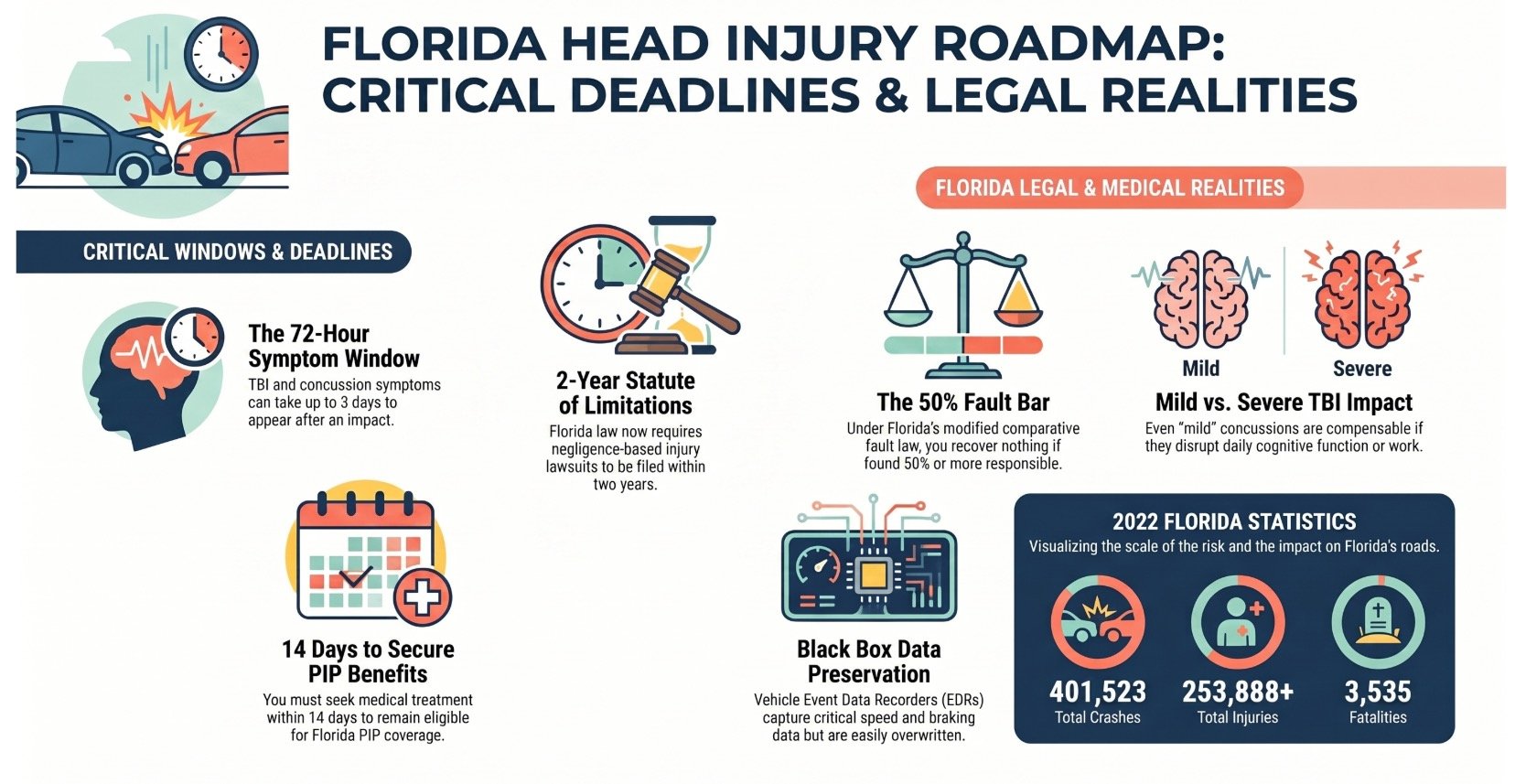
Florida’s roadways are among the most dangerous in the country for head trauma. According to FLHSMV’s 2022 Florida Traffic Crash Facts, Florida recorded 401,523 total crashes, resulting in more than 253,888 injuries and 3,535 fatalities. Head and brain injuries are among the most life-altering consequences of these collisions. The Mayo Clinic notes that traumatic brain injury symptoms can take hours or even days to appear — making prompt medical evaluation critical even when initial symptoms seem mild.
NHTSA reports that distracted driving alone claimed 3,308 lives nationally in 2022, many of which involved head trauma at the moment of impact. When a crash causes a head injury — no matter how minor it initially seems — the stakes are serious, the deadlines are real, and legal guidance matters from day one.
Florida PIP / No-Fault Insurance and Head Injury Claims
Your health comes first — always. Florida is a no-fault state, which means your own Personal Injury Protection (PIP) insurance pays your initial medical bills after a crash, regardless of who caused the accident. Florida requires a minimum of $10,000 in PIP coverage. PIP covers 80% of reasonable medical bills and 60% of lost wages up to the policy limit. For a head injury, this matters immediately: if your neurologist, emergency room physician, or imaging center provides qualifying necessary care, PIP should begin covering those costs without delay.
There is a critical deadline: you must seek treatment within 14 days of the accident to remain eligible for PIP benefits. If an emergency medical condition (EMC) is not diagnosed, your coverage may be capped at $2,500. For head injuries — where symptoms often develop gradually — this window can close faster than you expect. To pursue compensation beyond PIP (such as pain and suffering or full lost wages), your injury must meet Florida’s serious injury threshold: a permanent injury, significant and permanent disfigurement, or death.
For a deeper explanation of how Florida’s no-fault system works and what it means for your claim, read our blog post: Florida PIP Insurance Explained: How No-Fault Really Works.
Event Data Recorder (EDR) / Black Box Evidence in Florida Head Injury Cases
Evidence that could prove exactly what happened to you is already on the clock. Most post-2012 vehicles contain an Event Data Recorder (EDR) — often called a “black box” — that captures critical data in the seconds before and during impact: vehicle speed, braking force, throttle position, steering input, and seat-belt status. In a head injury case, this data can be decisive. It can confirm the speed of impact, refute a driver’s claim that they were moving slowly, and help establish the forces that caused your injury.
The problem is that EDR data can be overwritten when the ignition is turned on after a crash. We send formal evidence-preservation demands immediately upon being retained and work with certified EDR specialists to retrieve recordings before they are lost.
To understand how this data can change the outcome of a case, read: How Black Box Data Can Make or Break Your Florida Truck Accident Case.
Common Causes of Florida Car Accident Head Injuries
Head injuries in Florida car accidents commonly result from rear-end collision impact, side-impact crash forces, distracted driving accidents, and pedestrian vehicle strikes. Each cause can create distinct trauma patterns, depending on vehicle speed, point of impact, restraint use, and the occupant’s position. Understanding these causes helps clarify how liability, medical evidence, and injury severity may be evaluated in a legal claim.
Rear-End Collision Impact
Although rear-end collisions are often viewed as minor crashes, the sudden forward-and-backward motion can place significant force on the head, neck, and brain. This movement may cause the brain to strike the inside of the skull, leading to concussion, dizziness, headaches, memory problems, or delayed cognitive symptoms. In Florida, these injuries may be overlooked when visible damage appears limited — creating a real risk of underreporting during medical evaluations or insurance claims. Careful documentation, prompt treatment, and consistent follow-up can help you protect your health and support an accurate assessment of your claim. Insurance coverage gaps may affect access to diagnostic testing or therapy, which is another reason early legal guidance matters after a rear-end crash involving possible head trauma.
Side-Impact Crash Forces
Side-impact crashes present a different injury pattern than rear-end collisions because the force often enters the vehicle from the side, leaving less structural space between the occupant and the point of impact. In these collisions, the head may strike a window, door frame, pillar, or another occupant, creating risks of concussion, skull fracture, or brain bleeding. Children may face heightened danger when restraints are misused, making car seat safety a critical responsibility for parents, caregivers, and professionals who guide them. Motorcyclists, bicyclists, and scooter riders involved in side impacts may also suffer severe head trauma, where helmet effectiveness can importantly influence survival and recovery outcomes. Careful crash review, medical documentation, and service-focused legal guidance help those injured pursue accountability after a Florida collision.
Distracted Driving Accidents
When a driver looks away from traffic, reaches for a device, or loses focus during ordinary vehicle operation, a collision can occur with little or no opportunity for evasive action. Distracted driving may involve texting, navigation adjustments, eating, grooming, or conversations that reduce awareness of changing traffic conditions. A distracted driver often experiences delayed braking, drifting between lanes, or failure to notice stopped vehicles ahead. These errors can produce sudden impacts that cause the head to strike a window, steering wheel, dashboard, or head restraint. During nighttime driving, reduced visibility can worsen the danger because hazards are harder to detect and reaction time is already limited. Careful investigation may identify phone records, witness accounts, vehicle data, and roadway evidence that explain how inattention contributed to your injury.
Pedestrian Vehicle Strikes
Because pedestrians have little protection against the force of a moving vehicle, a Florida traffic collision can cause severe head trauma even at moderate speeds. These injuries often arise when drivers fail to yield, overlook people in marked crossings, or turn without adequate pedestrian detection. Crosswalk visibility is especially important near schools, transit stops, shopping areas, and intersections with heavy foot traffic. Driver responsibility includes maintaining attention, reducing speed, and anticipating vulnerable road users before entering a crosswalk or driveway. Stop sign compliance also plays a key role, since rolling stops can leave pedestrians with no time to react. Careful review of roadway design, witness accounts, video evidence, and vehicle data can help identify preventable conduct and support fair accountability.
Legal Rights of Florida Car Accident Head Injury Clients
You have more rights than the insurance company wants you to know about. A Florida car accident victim who suffers a head injury may have several legal rights, including the right to seek medical treatment, pursue insurance benefits, and recover compensation from an at-fault party when the law permits. These rights can protect your dignity, stability, and access to care after a life-altering event. Medical expenses may include emergency care, imaging, rehabilitation, medication, and future treatment needs. Insurance coverage may involve personal injury protection, bodily injury claims, or other available benefits.
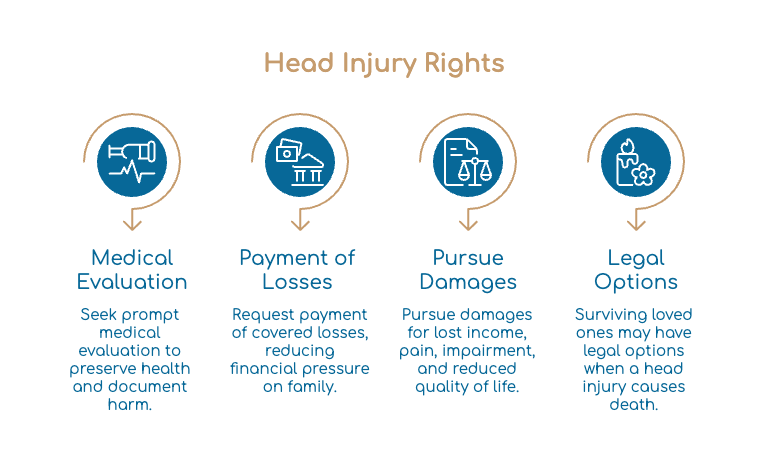
- You may seek prompt medical evaluation to preserve your health and document the harm.
- You may request payment of covered losses, reducing financial pressure on family members who provide support.
- You may pursue damages for lost income, pain, impairment, and reduced quality of life.
- Surviving loved ones may have legal options when a head injury causes death.
These rights exist so that you are not left to bear preventable burdens alone. You did not choose this. But you do get to choose what happens next.
Why Do Florida Car Accident Head Injuries Happen?
Legal rights after a serious collision often depend on how the head injury occurred and who may be responsible for the crash. In Florida, these injuries commonly result from rapid deceleration, direct impact, or violent movement inside the vehicle during rear-end, side-impact, rollover, or high-speed crashes. A driver’s negligence — including speeding, distracted driving, impairment, or failure to yield — may create the force that causes the head to strike a window, steering wheel, dashboard, or headrest.
Some injuries also arise when safety systems fail, road hazards contribute to loss of control, or commercial drivers violate safety duties. Brain injury diagnosis challenges can make the cause and extent of harm less obvious, particularly when symptoms develop gradually. Understanding causation supports accountability and may affect insurance disputes, liability findings, and statute of limitations timelines tied to your potential claim.
What Should You Do After a Florida Car Accident Head Injury?
If you are reading this in the days after an accident, your next steps matter more than you may realize. After a Florida car accident involving a suspected head injury, you should seek immediate medical care, even if symptoms appear mild or delayed. Proper documentation of the crash, injuries, treatment, and related expenses can help preserve important evidence for any potential claim. Contacting an injury lawyer promptly may also help protect your legal rights, address insurance issues, and determine the next steps.
Seek Immediate Medical Care
Your health comes first — always. When a head injury is suspected after a Florida car accident, immediate medical evaluation should be treated as a priority, even if symptoms appear mild or delayed. Emergency professionals can assess urgent risks, stabilize you, and determine whether transport to a hospital is necessary. Prompt care helps identify symptoms such as confusion, dizziness, nausea, headache, blurred vision, memory problems, or unusual fatigue. These signs may worsen over time, particularly when bleeding, swelling, or concussion complications are present. Medical providers can perform appropriate testing, monitor for changes, and provide clear instructions for follow-up care, activity limits, and warning signs that require further treatment. Please do not wait to see how you feel. Go now.
Document the Accident
At the scene and in the days that follow, careful documentation can help preserve important facts about your Florida car accident involving a suspected head injury. If it is safe to do so, gather photographic documentation of vehicle positions, damage, skid marks, traffic signals, road hazards, weather conditions, and visible injuries. Notes should record the time, location, responding officers, emergency medical care, and statements made by involved drivers. Because head injury symptoms may affect your memory, written details can support accurate reporting later.
Independent witness contact information is also valuable — names, phone numbers, and brief observations from bystanders should be collected respectfully. Receipts, medical discharge papers, prescriptions, and missed work records should be stored together to create an organized account that assists your medical providers, insurers, and legal team.
Contact an Injury Lawyer
Why should you reach out to a lawyer soon after a Florida car accident involving a suspected head injury? Prompt counsel helps protect your welfare while preserving evidence needed to support the truth. An attorney may review crash reports, medical records, witness accounts, and vehicle damage before important details fade. Emergency room timing can affect both treatment decisions and the strength of a claim, especially when symptoms appear gradually. Legal guidance also helps you and your family communicate carefully with insurers, employers, and medical providers. Without organized documentation, an insurance claim may be denied due to alleged delay, disputed causation, or incomplete records. A Florida injury lawyer can help identify available coverage, meet deadlines, and pursue compensation that supports your recovery, stability, and care.
Critical Evidence in a Florida Car Accident Head Injury Case
Critical evidence can preserve the truth of a moment that may have changed your life permanently. The strongest claims often depend on accident-scene photos, medical treatment records, witness statements, and crash-reconstruction evidence. Each form of proof may help establish how the collision occurred, how the injury developed, and why fair compensation is necessary.
For a comprehensive overview of which records matter most to your case, read: What Medical Records Matter Most in a Florida Injury Claim.
Accident Scene Photos
Accident scene photos can become central evidence in your case because they preserve details that may disappear within hours — including vehicle positions, roadway conditions, skid marks, debris fields, traffic signals, lighting, weather, and visible injuries. These images may help clarify the force, the direction of impact, and whether a driver failed to exercise proper care. For those seeking to document the truth, prompt photography supports a fuller understanding of what occurred. Photographs can also guide preservation efforts for camera footage by identifying nearby businesses, homes, traffic cameras, or dashcams. When officers later prepare incident report updates, clear images may confirm, correct, or supplement recorded observations. Well-organized photo evidence strengthens accountability while helping your legal team assess fault and protect your claim.
Medical Treatment Records
Medical treatment records often provide the most direct evidence of a head injury after a Florida car accident, because they document symptoms, diagnoses, testing, treatment decisions, and the progression of recovery over time. Emergency room notes, imaging reports, neurological evaluations, therapy records, and physician opinions can connect the collision to cognitive, physical, or emotional impairments. These records may also show whether symptoms appeared promptly, worsened, or required continuing care — which can assist in proving damages with accuracy and compassion. In a legal review, medical documentation helps distinguish pre-existing conditions from trauma-related harm, supporting a fair assessment of your needs.
Witness Statements
After a serious collision, witness statements can help establish what occurred before, during, and after the crash — especially when a head injury affects your memory or ability to describe events clearly. Independent witnesses may describe driver behavior, traffic signals, vehicle movement, visible injuries, confusion, pain, or statements made at the scene. These accounts can support medical records and help show how the injury affected you immediately after impact. Attorneys often review witness statements during evidence disclosure to assess consistency, credibility, and areas that require further inquiry. Timely witness interviews preserve important details, reduce misunderstandings, and strengthen the pursuit of fair compensation under Florida law.
Crash Reconstruction Evidence
When the cause or severity of a collision is disputed, crash reconstruction evidence can provide an objective framework for understanding what happened. Reconstruction experts may evaluate vehicle damage, skid marks, roadway design, event data recorder information, photographs, and debris patterns to determine speed, angles, braking, and force. In a head injury case, these findings can help connect the mechanics of the crash to the trauma you experienced. This evidence may also clarify eyewitness accounts when memories differ or observations were limited by distance, lighting, or stress. It can further identify errors in police reports, including incorrect lane placement, impact points, or fault assumptions. Careful reconstruction grounds your advocacy in facts that protect your dignity, needs, and recovery.
Long-Term Effects of Florida Car Accident Head Injuries
If you are still struggling weeks or months after the crash, you are not being dramatic. Long-term effects of Florida car accident head injuries may include cognitive and memory issues that affect work, daily routines, and personal responsibilities. Emotional and behavioral changes can also develop, creating difficulties in relationships, decision-making, and overall stability. Ongoing medical care is often necessary to monitor symptoms, manage complications, and document the full impact of the injury.
Cognitive and Memory Issues
Although the physical injuries from a Florida car accident may be immediately visible, cognitive and memory problems can emerge gradually and disrupt nearly every part of your life. A head injury may impair attention, processing speed, organization, problem-solving, and short-term recall — making routine responsibilities difficult to complete. Missed appointments, forgotten instructions, and reduced work performance can place substantial strain on you and those helping you. Traumatic brain injury recovery often requires structured rehabilitation, consistent medical follow-up, and practical support from family members, health professionals, or community resources. In serious cases, long-term caregiver needs may include medication reminders, transportation, financial oversight, and help managing daily tasks. Careful documentation of these limitations is important when evaluating future care costs, lost earning capacity, and appropriate legal recovery.
Emotional and Behavioral Changes
Cognitive and memory problems are often accompanied by emotional and behavioral changes that can be equally disruptive after a Florida car accident head injury. You may become irritable, anxious, impulsive, withdrawn, or unusually emotional — even when such traits were not present before the crash. These changes can strain family relationships, employment, caregiving roles, and community involvement. Traumatic brain injury effects may alter judgment, patience, and social awareness, making ordinary interactions more difficult to manage. Loved ones often provide critical observation, structure, and encouragement while you adapt to these challenges.
Effective post-injury support may include calm communication, consistent routines, and recognition that behavior changes can reflect your injury rather than your character. Understanding these effects helps families respond with steadiness, dignity, and informed compassion during recovery.
Ongoing Medical Care
After a serious collision, ongoing medical care may become a central part of managing the long-term effects of a Florida car accident head injury. You may require follow-up visits with neurologists, rehabilitation experts, mental health providers, and primary care physicians to monitor symptoms and adjust your care. These services can help identify changes in memory, balance, mood, or daily functioning before they worsen.
For families and caregivers committed to supporting recovery, careful coordination is often vital. Long-term treatment planning may include therapy schedules, medication management, diagnostic testing, and home-based assistance. As your needs continue, medical expenses can place significant pressure on your household. Thorough documentation of treatment, recommendations, and future care needs may support informed decisions and help protect access to the services you need.
Proving Liability in Florida Car Accident Head Injury Cases
You do not have to prove what happened alone. When a head injury follows a Florida car accident, proving liability requires evidence that connects another party’s careless conduct to the crash and the resulting harm. Attorneys may examine police reports, witness statements, traffic camera footage, vehicle damage, medical records, and expert opinions to establish fault. This process often involves showing that a driver failed to exercise reasonable care — such as speeding, texting, running red lights, or driving impaired.
In serious cases, liability proof must also address the extent of the head injury and its effect on daily function, work capacity, and long-term care needs. Careful documentation helps protect your dignity while supporting a fair claim. When conduct shows intentional misconduct or gross negligence, a punitive damages analysis may be appropriate under Florida law. Strong liability evidence allows us to advocate for you with accuracy and purpose.
Dealing With Insurance Companies After a Florida Car Accident Head Injury
Insurance companies often begin evaluating a Florida car accident head injury claim within days of the crash, seeking statements, medical authorizations, and information that may affect coverage or fault. Their representatives may appear cooperative — but their duty is to protect the insurer’s financial interests, not yours. You are not being dramatic about what you are going through, and you deserve to have someone in your corner who understands that.
Head injuries can involve delayed symptoms, changing diagnoses, and extensive medical expenses. Broad releases, recorded statements, or early settlement offers may fail to reflect the full impact of your injury. A lawyer can help review communications, organize medical documentation, and respond with measured, factual information.
Insurers also review policy limits, comparative fault, and available coverage sources. When you are managing family, work, and recovery all at once, professional guidance can reduce avoidable pressure. This support helps ensure negotiations are based on documented harm — not on assumptions or incomplete information alone.
What to Expect During a Florida Car Accident Head Injury Claim Process
A Florida car accident head injury claim generally begins with an initial medical evaluation, followed by timely filing of an insurance claim. The process requires organized evidence and documentation — including medical records, accident reports, witness statements, and proof of financial losses. Depending on liability, injury severity, and insurer response, the claim may proceed toward settlement negotiations or formal litigation.
Initial Medical Evaluation
After a Florida car accident involving a suspected head injury, the initial medical evaluation serves as a key foundation for both your treatment and any later injury claim. You may be assessed at the emergency room, where medical staff review symptoms such as confusion, vomiting, dizziness, memory loss, or loss of consciousness. Providers may perform neurological checks, document visible injuries, and order medical imaging when bleeding, swelling, or skull fracture is suspected. Additional diagnostic testing may help identify concussion, traumatic brain injury, or related complications that are not immediately obvious. Accurate records from this first evaluation can guide your continuing care and help your legal team understand the seriousness, timing, and potential long-term effects of the head injury.
Insurance Claim Filing
Medical documentation from the initial evaluation often becomes the starting point for filing a Florida car accident head injury claim, as insurers typically look for proof linking the crash to the diagnosed condition. You, or counsel acting on your behalf, generally notifies the appropriate insurer, opens the claim, and confirms available benefits under personal injury protection, bodily injury liability, or other applicable coverage. This stage requires careful attention to deadlines, claim numbers, adjuster communications, and required paperwork. Early review may also reveal policy coverage gaps that affect your recovery options. Clear reporting, consistent communication, and timely filing can reduce disputes and support a more orderly claims process.
Evidence and Documentation
When a Florida car accident head injury claim moves beyond initial filing, evidence and documentation become central to proving the nature, cause, and extent of the injury. Medical records, emergency reports, MRI results, physician notes, and diagnostic findings help show how trauma affected your health and daily function. Consistent follow-up appointments also demonstrate ongoing symptoms, treatment needs, and responsible participation in care. Accident reports, witness statements, photographs, vehicle damage records, and employment documentation may further support your claim. A lawyer typically organizes these materials, identifies missing records, and ensures that information is presented accurately. Careful documentation allows insurers to evaluate the claim with a complete record, while honoring your need for dignity and informed guidance during recovery.
Settlement or Litigation
A complete evidentiary record often shapes whether your Florida car accident head injury claim can be resolved through settlement or must proceed into litigation. Settlement may follow when medical records, expert opinions, crash reports, and wage documentation clearly establish liability and damages. Insurance adjuster tactics, however, may include minimizing symptoms, disputing causation, or pressuring early resolution before your full prognosis is known.
When negotiations fail to reflect your needs, litigation may provide a structured path for accountability. The process can involve pleadings, discovery, depositions, mediation, and — if necessary — trial. Evidence preservation best practices include saving photographs, repair records, medical instructions, witness information, and communication logs. Steady documentation supports fair evaluation and informed decisions at every stage.
Compensation for Florida Car Accident Head Injury Damages
Every limitation you are living with right now — every headache, every moment of confusion, every day of work you have missed — has value in a legal claim. Because head injuries can affect nearly every aspect of a person’s life, compensation in a Florida car accident claim may include both economic and non-economic damages. The value of a claim often depends on the injury’s severity, the recovery timeline, and how the condition limits your daily functioning, work capacity, and family responsibilities.
Medical documentation is central to showing the connection between the crash and your diagnosed injury. Records from emergency care, imaging studies, neurological evaluations, and follow-up treatment can help establish the need for compensation. Long-term symptoms — such as memory problems, headaches, dizziness, mood changes, or cognitive fatigue — may also influence the claim’s value.
Settlement negotiation requires a clear presentation of losses, future needs, and the human impact of the injury. Liability disputes can reduce or delay recovery, especially when insurers challenge fault, causation, or the seriousness of the condition. Careful claim preparation supports a more complete pursuit of what you are owed.
For context on how similar Florida cases resolve, read: Average Personal Injury Settlements in Florida by Case Type.
Economic vs. Non-Economic Damages in Florida Car Accident Head Cases
In Florida car accident head injury cases, damages are generally divided into economic and non-economic categories. Economic damages may include medical bills, lost income, and future care costs, while non-economic damages address pain, suffering, emotional distress, and loss of enjoyment of life. Proving the value of these damages often requires medical records, financial documentation, expert opinions, and clear evidence of how the injury affected your daily life.
Economic Damage Categories
After a Florida car accident involving a head injury, economic damages refer to the measurable financial losses tied to the injury and its consequences. These losses may include emergency care, hospitalization, diagnostic imaging, neurological treatment, rehabilitation, medication, assistive devices, and future medical needs. They may also cover lost wages, reduced earning capacity, transportation to appointments, home health support, and necessary household modifications. Medical evidence preservation helps establish the cost, necessity, and duration of these services, supporting accurate documentation for insurers or courts. Financial records, employment statements, invoices, and physician opinions may clarify the full scope of your loss.
Non-Economic Damage Categories
While economic damages address measurable financial loss, non-economic damages concern the human effects that do not appear on bills, receipts, or wage records. These losses may include pain and suffering, emotional distress, loss of enjoyment of life, inconvenience, disfigurement, and the daily burden of cognitive or physical limitations. In severe cases, a disability evaluation may help describe lasting impairment — but this category ultimately reflects your dignity, your relationships, your independence, and your ability to contribute to your family and community. A head injury settlement may also account for anxiety, personality changes, sleep disruption, or reduced ability to participate in meaningful activities. When injuries are fatal, wrongful death damages may recognize survivors’ grief, loss of companionship, and the absence of guidance once provided by the deceased.
Proving Damage Value
Because head injury losses often combine visible expenses with deeply personal disruption, proving damage value requires evidence that connects the medical condition to both financial harm and daily life consequences. Economic damages may include emergency care, diagnostic imaging, rehabilitation, medication, lost wages, and reduced earning capacity. Non-economic damages may involve pain, cognitive changes, sleep disruption, emotional strain, and loss of normal activities. Careful injury documentation helps show symptom progression, treatment needs, and the effect on your family, work, and responsibilities. Evidence preservation also matters — including medical records, crash reports, photographs, witness statements, employment records, and expert evaluations. In Florida car accident head injury cases, organized evidence supports a fair valuation by showing how the injury changed who you are and what you are able to do.
When a Florida Car Accident Head Injury Case Goes to Trial vs. Settlement
In Florida car accident head injury cases, the decision to settle or proceed to trial often depends on the severity of the injury, the strength of the evidence, the available insurance coverage, and the parties’ willingness to negotiate fairly. Settlement may provide a faster resolution, reduce stress, and help you obtain resources needed for medical care, rehabilitation, and family support. This path can serve you well when liability is clear, and the insurer offers fair compensation.
Trial may become necessary when the defense disputes causation, minimizes long-term impairment, or undervalues your claim. Attorneys may present medical testimony, accident evidence, and life impact documentation to help a jury understand the true extent of harm. Issues such as comparative fault can influence case evaluation during negotiations and trial strategy. Concerns about damage caps may also affect risk assessment. A careful lawyer weighs both paths, seeking the outcome that best protects your future.
Florida Laws That May Affect Your Florida Car Accident Head Case
Several Florida laws may influence how a car accident head injury case is evaluated, negotiated, or litigated — especially when questions arise about fault, insurance coverage, medical treatment, and the deadline to file a lawsuit. These rules can affect compensation, documentation, and the strategy for protecting your future.
Florida law can shape head injury claims from the first medical bill to the final deadline.
- Comparative fault rules may reduce your recovery when evidence suggests you shared responsibility for the crash — and under HB 837 (2023), being 50% or more at fault bars recovery entirely.
- No-fault insurance requirements determine whether initial medical benefits are available, helping you secure care without delay.
- Serious injury thresholds may affect whether pain, suffering, and long-term harm can be pursued beyond the limits of basic PIP coverage.
- The statute of limitations sets a firm deadline — missing it can permanently end your right to pursue compensation in court.
For advocates serving injured people, these laws demand disciplined investigation, timely medical support, and careful communication with insurers, so the legal response reflects both responsibility and compassion.
The Statute of Limitations for Florida Car Accident Head Injury Cases
The statute of limitations sets the legal deadline for filing a Florida car accident head injury lawsuit, and missing that deadline can permanently prevent you from pursuing compensation in court. For most negligence-based car accident injury claims in Florida, the filing period is 2 years from the date of the crash, under Florida’s 2023 tort reform law (HB 837, effective March 24, 2023). Certain circumstances may affect this deadline, including claims involving government entities, minors, or delayed discovery of specific harm.
Because head injuries may develop or worsen over time, careful medical record review can help connect your symptoms, diagnosis, treatment, and long-term limitations to the accident. Timely action also supports evidence preservation — including vehicle damage documentation, crash reports, witness information, photographs, surveillance footage, and electronic data. These materials may become harder to obtain as time passes. Understanding this deadline encourages responsible planning, protects your legal rights, and supports an orderly path toward accountability.
How a Florida Car Accident Head Injury Lawyer Can Help You
When a head injury follows a motor vehicle crash, a Florida car accident head injury lawyer can help evaluate liability, damages, insurance coverage, and the medical evidence needed to support your claim. This assistance may protect your dignity while helping you and your family pursue the resources needed for care, stability, and recovery.
Legal guidance can help families protect dignity, document injuries, and pursue resources after a Florida crash.
- Evidence preservation can secure crash reports, photographs, vehicle data, and witness accounts before they are lost or disputed.
- Medical documentation can connect symptoms, diagnoses, treatment plans, and future care needs to the collision.
- Liability investigation can identify negligent drivers, unsafe companies, roadway hazards, or other responsible parties.
- Insurance negotiation can address claim denials, low settlement offers, and coverage disputes with organized proof.
Through careful case preparation, we can reduce confusion for you and your caregivers. This support allows you and your family to focus on healing while your legal claim is handled with discipline and care.
When to Contact a Florida Car Accident Head Injury Lawyer
After a crash involving any sign of head trauma, contacting a Florida car accident head injury lawyer should be considered as soon as medical needs are stabilized. If you are unsure whether to call, that uncertainty itself is often a sign that the time is now — not after you feel better, not after you see how the insurance process goes. Early guidance can help protect your interests while family members, caregivers, or advocates focus on immediate support, transportation, and follow-up care.
Prompt contact is especially important when symptoms change, diagnostic testing continues, or you cannot manage records alone. Insurance claim timelines may begin quickly, and missed deadlines can affect available benefits. Evidence preservation also matters — including vehicle damage, crash reports, witness information, and medical documentation.
A lawyer may also be contacted when practical concerns begin to interfere with your recovery — including workplace issues, reduced hours, leave requests, or uncertainty about returning to duties safely. Medical billing disputes can also arise before the full extent of injury is known. Timely consultation allows responsible planning without delaying treatment or needed household support.
Why You Need an Experienced Florida Car Accident Head Injury Lawyer
Because head injuries often involve delayed symptoms, disputed diagnoses, and long-term medical needs, an experienced Florida car accident head injury lawyer can provide focused guidance during a complex claims process. Such representation helps you, your family, and your caregivers understand how medical records, expert opinions, and accident evidence may support a claim for necessary care.
A lawyer with experience in these cases can address insurance coverage disputes — including conflicts over policy limits, no-fault benefits, causation, or the seriousness of a traumatic brain injury. This support is especially important when you depend on others for transportation, daily assistance, treatment coordination, and financial stability.
Effective negotiation strategies may also help present the full impact of your injury — including future therapy, lost earning capacity, and diminished independence. By organizing evidence and communicating with insurers, legal counsel can help protect the resources you need for recovery, dignity, and continued service to those who rely on you.
How to Choose the Right Florida Car Accident Head Injury Lawyer for Your Case
Selecting the right Florida car accident head injury lawyer begins with evaluating whether the attorney has specific experience with traumatic brain injury claims, disputed medical evidence, and serious crash investigations. A careful choice supports your recovery, protects your family’s stability, and promotes responsible accountability. The lawyer should understand how head injuries affect memory, work capacity, daily care, and long-term independence.
Review the firm’s case evaluation process — including how evidence is gathered, medical records are analyzed, and liability issues are identified. Strong representation also depends on client communication strategies that keep you informed, prepared, and treated with respect. The attorney should explain potential challenges, deadlines, and damages without creating unrealistic expectations.
It is also appropriate to assess trial readiness, access to expert witnesses, and a record of handling severe injury claims. The right lawyer offers disciplined guidance while placing your well-being at the center of every decision.
Real Reviews From Our Clients!
“Scott Gutstein took my case and from day one he was compassionate, patient, and truly fought for the best outcome for me. I never felt like just another client.”
— Cilla
⭐ Verified Google Review
“Evan was absolutely incredible. He coordinated the best medical care for me and settled my case in less than a year. I could not have asked for better representation.”
— Anna T. (Beowulf Ben)
⭐ Verified Google Review
“Scott Gutstein was thorough, professional, and truly cared about my situation. He helped me coordinate my medical appointments and kept me informed throughout the entire process.”
— Jasmine Ramirez Bembanaste
⭐ Verified Google Review
Reviews reflect genuine client experiences posted on Google. Individual experiences and results vary. Past results do not guarantee a similar outcome in future cases.
About The Law Offices of Anidjar & Levine
Founded in 2005 by Marc Anidjar and Glen Levine, the firm began as a two-person operation working out of a construction office conference room. Over the past 20 years, that modest start has grown into one of Florida’s most recognized personal injury practices — with more than $1 billion recovered in settlements for injury clients across the state. We bring that same determination and depth of experience to every case we handle.
The Law Offices of Anidjar & Levine represents injured people throughout Florida, including clients facing the serious consequences of car accident head injuries. The firm focuses on helping clients pursue compensation while they recover from trauma, medical treatment, and disruption to daily life. Its attorneys understand that head injury cases require careful attention to medical evidence, accident details, and long-term needs.
The firm’s client intake process is designed to identify urgent concerns, gather critical facts, and determine how the legal team can assist. This early review helps ensure that clients receive clear guidance from the beginning. Through case strategy planning, the attorneys evaluate liability, insurance coverage, available damages, and evidence needed to support the claim.
The Law Offices of Anidjar & Levine also emphasizes responsive communication and practical support. Its approach reflects a commitment to service, accountability, and advocacy for injured people seeking justice after preventable collisions.
Frequently Asked Questions
Can a Mild Concussion Still Justify a Florida Injury Claim?
Yes. A mild concussion can justify a Florida injury claim when symptoms affect daily function, work, or caregiving responsibilities. Delayed symptoms may strengthen the need for prompt evaluation, while medical documentation links the injury to the crash. Evidence collection — including records, witness accounts, and impact details — supports accountability. During insurance negotiations, a documented concussion may warrant compensation for treatment, lost income, and suffering, even when imaging appears normal.
Will Pre-Existing Migraines Affect My Head Injury Case?
Yes, pre-existing migraines can affect the case, but they do not automatically prevent recovery. A careful medical history review helps establish the migraine baseline before the collision. Symptom documentation after the crash can show increased frequency, severity, or new neurological concerns. Providers and legal evaluators may assess crash causation by comparing prior records with post-incident changes. This approach supports fair consideration of the injured person’s claim while preserving factual accuracy.
Can Children Recover Differently After Car Accident Head Injuries?
Yes, children can recover differently after car accident head injuries because their brains are still developing. The child concussion timeline may vary widely, with symptoms affecting learning, sleep, mood, and behavior. Caregivers, medical providers, and educators should coordinate school recovery plans that reduce cognitive strain and support gradual return. Those serving the child’s interests should document changes carefully, ensuring treatment, accommodations, and legal considerations reflect the child’s evolving needs.
Should I See a Neurologist After a Florida Car Accident?
Yes. You should see a neurologist after a Florida car accident if symptoms suggest brain or nerve injury. Warning signs include memory loss, dizziness, headaches, confusion, vision changes, weakness, or seizures. Even when broken bones appear more urgent, neurological harm may be delayed or subtle. Prompt evaluation supports accurate diagnosis, appropriate treatment, and documentation that supports both your health and any legal claim.
Can Delayed Symptoms Still Be Linked to My Crash?
Yes, delayed symptoms can still be linked to the crash, especially when documented through a clear medical timeline. Headaches, dizziness, memory issues, mood changes, or vision problems may appear hours or days later. Medical evaluation helps connect symptoms to trauma and supports proper care. Accurate insurance documentation — including treatment records and symptom notes — can help preserve important evidence while serving your recovery needs.
What Is the Statute of Limitations for a Florida Car Accident Head Injury Claim?
Under Florida’s 2023 tort reform law (HB 837, effective March 24, 2023), most negligence-based injury claims — including car accident head injury cases — must be filed within 2 years of the crash date. Missing this deadline can permanently bar your right to pursue compensation in court. Certain exceptions may apply for claims involving government entities, minors, or delayed discovery of harm. Do not wait to seek legal guidance if you are uncertain about your deadline.
How Does Florida’s Modified Comparative Fault Law Affect My Head Injury Case?
Under Florida’s modified comparative fault system (changed by HB 837 in 2023), your recovery is reduced by your percentage of fault — and if you are found 50% or more at fault for the crash, you may be barred from recovering any compensation at all. This makes thorough accident investigation and early preservation of evidence especially important in head injury cases where fault may be disputed.
A Florida car accident head injury claim can involve complicated medical evidence, insurance disputes, and serious long-term consequences. Legal guidance may help you protect your rights, document your losses, and pursue compensation for medical care, lost income, and related damages.
The Law Offices of Anidjar & Levine can evaluate the circumstances of your case, explain available legal options, and provide focused representation as your Florida Car Accident Lawyer. Prompt action may preserve evidence and strengthen the path toward your recovery.
Past results do not guarantee a similar outcome in your case.