The Law Offices of Anidjar and Levine help Tampa car accident victims with head injuries protect their claims, document losses, and pursue compensation from negligent drivers.
Our team manages insurer communications, preserves crash evidence, reviews medical records, and builds proof of symptoms, work limits, future care, and daily limitations.
We also guard against recorded statements, missed deadlines, and low settlement pressure.
If you suffered a concussion or traumatic brain injury, early guidance from a Tampa Car Accident Lawyer can strengthen your case, and the sections below explain what matters next.
Main Takeaways
- A Tampa car accident head injury lawyer can manage insurance communication, deadlines, paperwork, and claim strategy while you focus on recovery.
- Seek immediate medical care for suspected head injuries, including concussions, bleeding, dizziness, confusion, headaches, or memory changes.
- Strong claims rely on accident-scene photos, witness statements, emergency records, imaging, therapy notes, and documented daily limitations.
- A lawyer can challenge insurer arguments about delayed symptoms, normal imaging, preexisting conditions, or minimized cognitive and emotional effects.
- Compensation may address medical bills, future care, missed work, reduced earning capacity, caregiving needs, and long-term functional losses.


How We Can Help With Your Tampa Car Accident Head Injury Claim
After a car accident causes a head injury, we can help you protect your claim from the start. We take immediate steps to preserve evidence, manage deadlines, and reduce the pressure placed on you and your family. While you focus on recovery and supporting those who depend on you, we handle Insurance paperwork, communicate with adjusters, and guard against statements that may weaken your case.
We also prepare a documentation checklist tailored to your medical care, missed work, caregiving needs, and daily limitations. This organized approach helps us identify trauma-specific damages that may not appear in basic records, including cognitive changes, emotional effects, and future treatment needs. If insurers create settlement delays or undervalue your losses, we respond with clear evidence and persistent advocacy. Our goal is to serve you with diligence, protect your rights, and pursue compensation that reflects the full impact of your injury.
OUR CONSULTATIONSARE FREE
START YOUR FREE CASE REVIEW

Understanding Tampa Car Accident Head Injury Cases
When a crash involves a blow, jolt, or violent movement of the head, the resulting injury can affect far more than the initial emergency room visit. We help you understand how symptoms, medical records, and daily limitations shape a Tampa head injury case. A Traumatic brain injury may involve headaches, memory problems, dizziness, mood changes, or reduced work capacity, and these effects often appear or worsen over time.
We examine case timelines carefully because delayed diagnosis, ongoing treatment, and expert referrals can influence the value and direction of a claim. We also review insurance coverage, including available bodily injury benefits, uninsured motorist protection, and policy limits that may restrict recovery. Settlement hurdles often arise when insurers dispute causation, minimize symptoms, or argue that imaging results do not support your condition. By preparing evidence early, we work to protect your claim and support the care, stability, and service you provide to others.
Common Causes of Tampa Car Accident Head Injuries
We often see serious head injuries arise from rear-end collision trauma, distracted driving crashes, drunk driving impacts, and motorcycle collision injuries across Tampa. We’ll help you understand how these crashes occur, why they create significant force, and how they may affect your legal claim. By identifying the cause of your injury, we can better assess liability, damages, and the evidence needed to protect your rights.
Rear-End Collision Trauma
Although rear-end collisions are often dismissed as minor crashes, they can cause serious head trauma when the force of impact snaps the head and neck forward and backward in a sudden motion. We help you recognize how concussions, skull injuries, and cognitive symptoms may appear after the scene clears. Rear-end liability may seem direct, but insurance defenses often question speed, prior conditions, or delayed treatment.
We counter those tactics with strong injury documentation, including emergency records, diagnostic testing, symptom journals, and witness statements. Medical evidence connects your head injury to the collision and supports the care you need. When we serve injured clients, we focus on clearly proving harm, protecting your recovery, and helping you pursue accountability after a Tampa rear-end crash.
Distracted Driving Crashes
Too often, distracted driving crashes leave Tampa victims with head injuries that develop faster than anyone expects. When a driver looks away to read a message, adjust navigation, or respond to an alert, that brief lapse can cause violent impact and serious brain trauma. We help you identify how inattention caused the crash, because clear proof can support your medical care, recovery needs, and service to the people who depend on you.
Cell phone evidence often reveals calls, texts, app activity, or location data near the time of the collision. We examine these records, witness accounts, vehicle data, and roadway facts to establish liability for distracted driving. By building a focused claim, we work to hold negligent drivers accountable and protect your path forward after injury.
Drunk Driving Impacts
When an impaired driver causes a crash, the force of impact can produce head injuries that demand immediate attention and careful legal investigation. We realize that you may be focused on helping an injured loved one receive treatment, transportation, and support after a preventable collision. Alcohol-related crashes often involve Impaired judgment, delayed reactions, excessive speed, and unsafe lane changes, all of which increase the risk of traumatic brain injuries.
We act quickly because Evidence preservation can determine whether justice is possible. Police reports, breath or blood test results, witness statements, crash data, and surveillance footage may show how intoxication contributed to the collision. By identifying all responsible parties, we help you pursue compensation for medical care, lost income, rehabilitation, and the injured person’s long-term needs.
Motorcycle Collision Injuries
Impaired drivers also place motorcyclists at severe risk, but motorcycle collisions can cause devastating head injuries even without alcohol involvement. We often see riders harmed when drivers fail to yield, follow too closely, open doors into traffic, or overlook motorcycles while changing lanes. Because riders lack a vehicle’s frame, even a low-speed crash can throw them onto the pavement or into another vehicle.
Helmet use affects outcomes, yet helmets can’t prevent every concussion, skull fracture, or traumatic brain injury. We also recognize how seat belts impact occupant survivability in cars, while motorcyclists depend on visibility, protective gear, and responsible driving around them. When you’re helping an injured rider, prompt medical care, careful documentation, and legal guidance can protect recovery and accountability after a Tampa collision.


Legal Rights of Tampa Car Accident Head Injury Victims
After a head injury from a Tampa car accident, victims have the right to seek compensation from the party whose negligence caused the crash. We help you understand those rights, protect your claim, and serve your family’s immediate needs with clarity. Negligence standards require proof that another driver failed to use reasonable care. Liability defenses may challenge fault, causation, or the severity of your injuries, so prompt action matters.
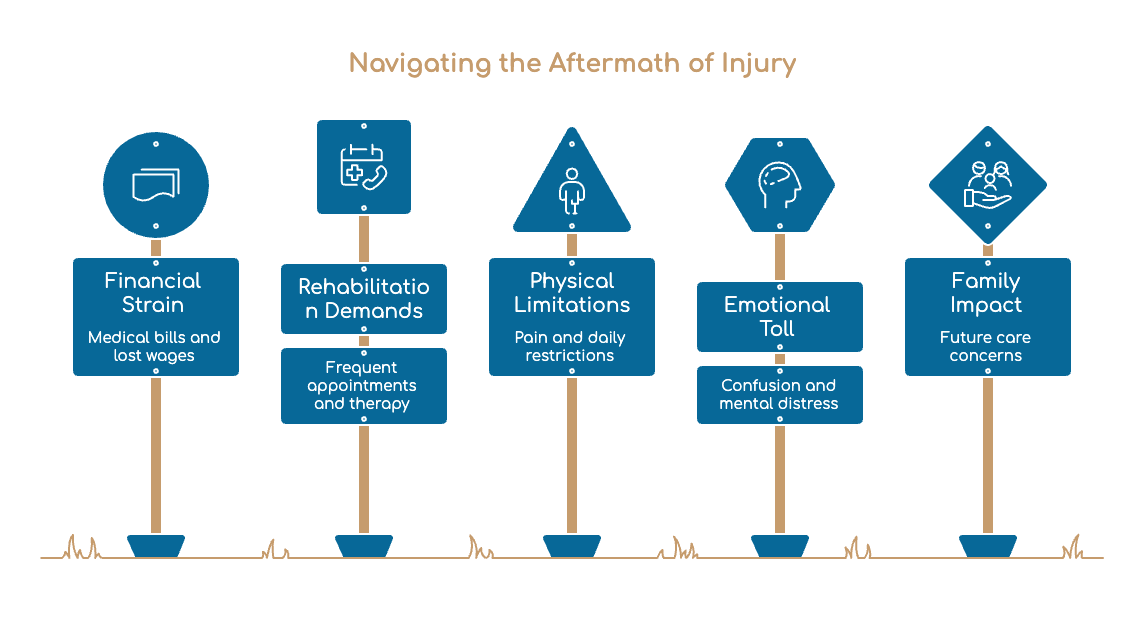
Your legal rights may include pursuing damages for:
- Medical bills stacked beside discharge papers
- Lost wages after missed work shifts
- Rehabilitation appointments filling a calendar
- Pain, confusion, and daily limitations
- Future care needs affecting loved ones
We also work to preserve evidence, communicate with insurers, and ensure deadlines aren’t overlooked. You shouldn’t carry the burden alone while recovering. By asserting your rights, we pursue accountability and support the stability your household, caregiving circle, and community depend on after a serious collision.
Why Do Tampa Car Accident Head Injuries Happen?
Because a collision can force the head and brain to move violently within seconds, Tampa car accident head injuries often happen even when the impact seems moderate. We see these injuries arise from rear-end crashes, side impacts, rollovers, pedestrian collisions, and crashes involving large commercial vehicles. Sudden acceleration, deceleration, or rotation can cause the brain to strike the skull, stretch nerve fibers, or trigger bleeding and swelling.
We also examine preventable causes that place you and others at risk. Speeding, distracted driving, impaired driving, unsafe lane changes, and failure to yield often create the violent forces linked to head trauma. In truck cases, a Truck Blackbox Review may reveal data on braking, speed, and driver actions. Safety Feature Failures, including defective airbags, seatbelts, or collision warning systems, may also contribute. By identifying these causes, we help protect injured people and support safer choices across our Tampa community today.
What Should You Do After a Tampa Car Accident Head Injury?
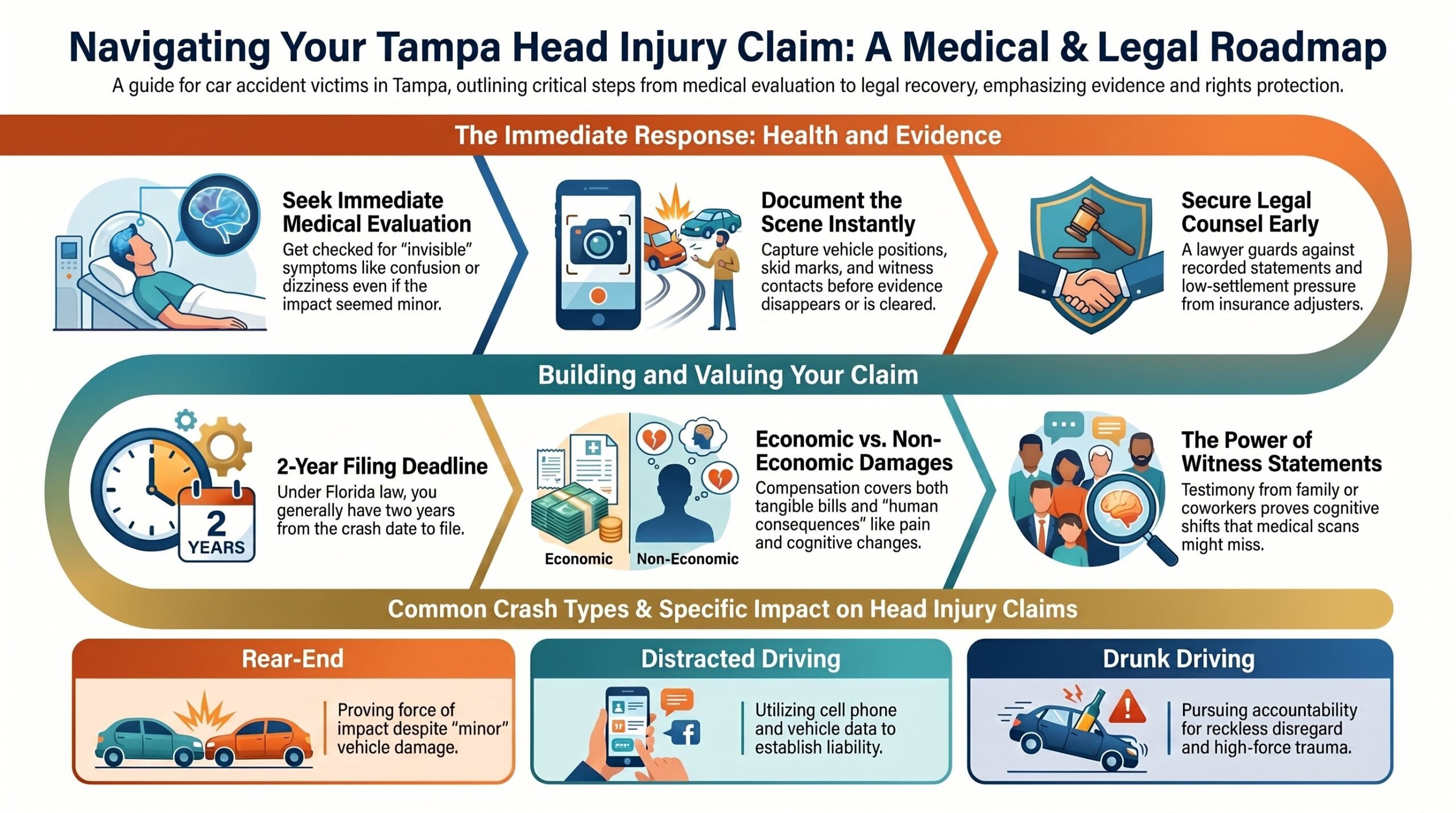
After a Tampa car accident head injury, we must act quickly to protect your health, preserve evidence, and support any legal claim. We recommend that you seek immediate medical care, document the accident scene and your symptoms, and avoid making statements that could harm your case. We can then help you contact a lawyer who understands head injury claims and can guide you through the next steps.
Seek Immediate Medical Care
If you suspect a head injury following a Tampa car accident, seek medical care immediately, even if symptoms seem mild or delayed. We should not wait for confusion, nausea, dizziness, or worsening pain to become severe. A prompt emergency evaluation can identify bleeding, concussion, swelling, or other conditions that require urgent treatment. If you cannot safely travel, call 911 or ask an Emergency contact to help you reach care without delay.
We also recommend telling medical providers exactly what you remember about the impact, your symptoms, and any prior head conditions. After initial treatment, schedule every follow-up assessment your provider recommends. Continued monitoring protects your health, supports recovery, and helps ensure that any developing complications go unnoticed when others may depend on your stability and care.
Document The Accident
At the scene, we should preserve as much evidence as possible without risking your recovery or safety. If you’re able, photograph vehicle positions, skid marks, debris, traffic signals, weather conditions, and visible injuries. We should also note the exact location, time, road conditions, and any hazards that may have contributed to the collision. Gather names and contact information for witnesses, responding officers, and other drivers, but avoid debating fault.
Small details can help others understand what happened, including marks on pavement or clothing that may support Shoeprint analysis. Keep damaged personal items, helmets, glasses, and medical discharge papers. These records may also support damage valuation by connecting the crash to your losses. Careful documentation helps protect truth, accountability, and the people affected by harm.
Contact A Lawyer
Once immediate medical needs and basic documentation are addressed, we should contact a lawyer as soon as possible to protect the head injury claim from early mistakes. We can help you avoid recorded statements, rushed releases, and insurer tactics that minimize symptoms. A prompt pre-suit investigation allows us to identify fault, evaluate insurance coverage, and coordinate with medical providers.
We also focus on evidence preservation, including vehicle data, scene photographs, witness information, and surveillance footage that may disappear quickly. When we act early, we can present the full impact of the injury with discipline and care. We’ll also explain the settlement timeline, so you understand each stage and can make informed decisions while continuing to serve your family, work, and community responsibly.
Critical Evidence in a Tampa Car Accident Head Injury Case
We gather and preserve evidence quickly because head injury claims often turn on details that can disappear within days. Crucial evidence may include:
- Skid marks and shattered glass at the crash scene
- Emergency room records and diagnostic imaging
- Witness statements from drivers, passengers, and bystanders
- Vehicle damage showing the force and angle of impact
- Traffic camera footage, dashcam video, or police reports
We use this evidence to connect the collision to your head injury, establish fault, and pursue the compensation you’re entitled to seek.
Crash Scene Documentation
Preserve the crash scene evidence as quickly as possible because head injury claims often depend on details that disappear within hours or days. We help you identify photographs, videos, skid marks, vehicle positions, debris fields, traffic signals, weather conditions, and nearby camera sources that may support your claim. Emergency response records can also show timing, roadway hazards, and the seriousness of the impact without addressing medical proof. Strong evidence preservation protects witnesses, prevents disputes, and gives investigators a reliable foundation.
We use crash documentation to support a focused liability investigation and to show how another driver’s conduct caused harm. This evidence may also affect insurance coverage decisions, especially when fault is contested. By acting promptly, we serve your recovery by protecting facts before they are lost or altered.
Medical Records
Because head injuries can evolve over time, medical records often become the core evidence that connects the crash to the symptoms, diagnosis, treatment, and long-term impact. We review emergency records, imaging results, physician notes, therapy reports, prescriptions, and follow-up instructions to show how the injury affected your health and daily responsibilities. These records support Claim valuation by documenting medical needs, future care, work limits, and functional losses.
They also guide settlement strategy, because insurers must confront clear, organized proof of the injury’s course. If a fair resolution does not occur, the same records become Trial evidence, helping medical providers explain diagnosis and prognosis with authority. Consistent treatment also strengthens your credibility as a witness by showing that your reported limitations align with clinical findings and responsible recovery practices.
Witness Statements
When a head injury changes how you think, speak, move, or function, witness statements can help prove what medical records alone may not capture. We gather accounts from passengers, bystanders, coworkers, relatives, and caregivers who observed your condition before and after the crash. These statements can describe confusion, memory loss, mood changes, missed work, balance problems, or difficulty handling daily responsibilities.
We use witness testimony to support medical causation, especially when symptoms develop over time or the injury is not immediately visible. Clear observations from people who served, cared for, or worked beside you can strengthen the connection between the crash and your limitations. During settlement evaluation, these accounts help show how the injury affects your independence, relationships, and ability to contribute meaningfully to others every day.
Vehicle Damage Evidence
Although medical evidence proves the injury, vehicle damage evidence can help show how the crash caused injuries to your head, neck, and body. We examine crush patterns, broken glass, airbag deployment, seatback movement, and intrusion into the passenger space to connect the collision to your symptoms. When we serve you well, we quickly preserve the vehicle, request photographs, and involve qualified reconstruction experts when needed.
We also compare damage to repair estimates, event data, roadway conditions, and Lane closure proof when traffic control affected the collision. Vehicle maintenance records may reveal brake, tire, handling, or lighting problems that contributed to the impact. By building this record carefully, we help present a clear, responsible explanation of fault, force, and injury causation in your head injury claim.
Long-Term Effects of Tampa Car Accident Head Injuries
We often see that Tampa car accident head injuries cause lasting problems that affect how you think, work, and manage daily responsibilities. We must account for chronic cognitive challenges, emotional health changes, and ongoing physical limitations when evaluating the full impact of your injury. By identifying these long-term effects, we can better show how the crash continues to affect your life and future needs.
Chronic Cognitive Challenges
Because traumatic brain injuries can disrupt how the brain stores, processes, and retrieves information, many Tampa car accident victims face cognitive problems that last long after the crash scene clears. We often see injured people struggle with attention, memory, planning, word recall, and decision-making, even when they appear physically recovered.
These challenges can affect caregiving, community service, school, and employment, especially when tasks require accuracy or sustained focus. We help you document how cognitive limits affect daily responsibilities, medical care, and future earning capacity. Doctors may recommend work restrictions, reduced hours, assistive tools, or supervision for safety. Some people also need job retraining when they cannot return to prior duties. Clear evidence helps us pursue compensation that reflects these lasting losses and supports practical recovery.
Emotional Health Changes
Cognitive problems often appear alongside emotional changes, and both can reshape daily life after a Tampa car accident head injury. We often see anxiety, depression, irritability, mood swings, and loss of confidence emerge as brain injury symptoms, even when you’re trying to stay strong for others.
These changes can affect patience, relationships, work, and the ability to serve family or community with steadiness. We encourage you to document emotional shifts, counseling needs, medication changes, and the ways symptoms affect your daily responsibilities. Insurers may minimize these losses, especially when they aren’t visible on scans. Before accepting insurance settlement offers, we consider the long-term emotional impact, future treatment needs, and the dignity of your recovery, because fair compensation should reflect the full harm you’ve endured after the crash.
Ongoing Physical Limitations
Over time, a Tampa car accident head injury can leave lasting physical limitations that interfere with movement, balance, stamina, and daily independence. We often see clients struggle with dizziness, weakness, headaches, coordination problems, and fatigue that make ordinary tasks difficult. These limitations can affect your ability to care for family, assist others, attend appointments, or maintain consistent employment.
We help document how these symptoms affect your daily life, medical needs, and future plans. Return-to-work issues may require vocational evidence, physician restrictions, and careful communication with employers. When insurers minimize these limitations, we develop an insurance dispute strategy based on treatment records, expert opinions, and functional assessments. Our goal is to protect your recovery, support your responsibilities, and pursue compensation that reflects your long-term physical challenges.
Proving Liability in Tampa Car Accident Head Injury Cases
To recover compensation after a Tampa car accident involving a head injury, we must prove that another party’s negligence caused the crash and the resulting harm. We build liability by gathering police reports, witness statements, traffic camera footage, vehicle damage evidence, and medical records that connect the collision to your head injury.
We also examine whether the driver violated traffic laws, drove distracted, followed too closely, sped, or failed to yield. When needed, we work with accident reconstruction experts and medical professionals who can explain how the crash occurred and how the injury affects your life.
Clear proof of fault supports your claim before Insurance dispute timelines create pressure. It also strengthens our position when negotiating settlement value, because damages must rest on reliable evidence. Our role is to serve you with diligence, protect your rights, and present the facts in a way that holds the responsible party accountable.
Dealing With Insurance Companies After a Tampa Car Accident Head Injury
After a Tampa car accident causes a head injury, insurance companies often move quickly to limit what they pay. We help you respond with care, discipline, and purpose, so your recovery and responsibilities remain protected. Adjusters may request recorded statements, broad medical releases, or quick settlements before the full impact of your injury is known. We can guide you in avoiding unnecessary admissions, incomplete answers, and decisions made under pressure.
Strong evidence preservation supports fair evaluation. We work to protect medical records, crash reports, photographs, witness details, and documentation of how the injury affects your daily service to family, work, and community. Negotiation strategies also matter. We present losses clearly, challenge unfair conclusions, and insist that insurers consider both present needs and future limitations. By managing communication, we reduce confusion and help you stay focused on recuperation while we pursue the respect and compensation your situation demands.
What to Expect During a Tampa Car Accident Head Injury Claim Process
We’ll guide you through each stage of a Tampa car accident head injury claim, beginning with immediate medical treatment and careful documentation. We’ll explain how the claim investigation unfolds, how insurers evaluate liability and damages, and what you should expect during settlement negotiations. If a fair resolution isn’t possible, we’ll discuss when filing a lawsuit may be necessary to protect your rights.
Immediate Medical Treatment
When a crash involves a possible head injury, immediate medical treatment protects both your health and your injury claim. We encourage you to accept Emergency transport when symptoms include confusion, vomiting, dizziness, loss of consciousness, or severe headache. At the hospital or urgent care facility, providers may perform a signs check, neurological screening, imaging, and concussion evaluation.
These steps help identify bleeding, swelling, or other trauma that may not appear right away. We also advise you to describe every symptom clearly, even if it seems minor, because accurate records support responsible care and future legal review. By seeking treatment promptly, you help physicians respond quickly, aid your recovery, and preserve documentation that reflects the seriousness of your injury after a Tampa car accident.
Claim Investigation Steps
During the claim investigation, we focus on building a clear record of how the crash occurred, how the head injury developed, and how it has affected your daily life. We gather police reports, medical records, imaging results, witness statements, photographs, and proof of lost income. We also review vehicle damage, roadway conditions, and any available surveillance footage to identify every responsible party.
We help you document symptoms, treatment needs, work limits, and caregiving responsibilities because these details show the full impact of the injury. We also monitor insurance company tactics, including requests for broad releases or recorded statements that may weaken your claim. While settlement timeframes depend on medical progress and liability evidence, a thorough investigation helps protect your interests and supports a disciplined, service-focused path forward.
Settlement Negotiation Process
After we complete the investigation and understand the likely course of your medical recovery, we usually begin settlement negotiations by preparing a detailed demand package for the insurance company. We include medical documentation, wage loss proof, crash evidence, and a clear explanation of how the head injury has affected your daily service, work, and responsibilities.
During Insurance negotiations, we address liability disputes directly, using reports, photos, expert input, and witness credibility to support your claim. We also evaluate each offer against your current needs and future care requirements, not just immediate bills. If the insurer minimizes symptoms or questions treatment, we respond with organized evidence and firm advocacy. Our goal is to pursue a fair resolution while helping you remain focused on recovery and serving those who rely on you.
Filing A Lawsuit
If the insurance company won’t make a fair offer, we may file a lawsuit to move your Tampa car accident head injury claim into formal litigation. This step does not mean the trial is certain, but it shows we’re prepared to pursue accountability through the court system. We draft and file the complaint, serve the defendant, and outline how the crash caused your injuries.
During litigation, we focus on proving negligence, Challenging liability arguments, and securing evidence preservation before pivotal information is lost. We may request medical records, accident reports, witness statements, and expert opinions to support your claim. Insurance negotiations can continue after filing, often with stronger pressure on the insurer. We guide you through each stage, so your rights remain protected.
Compensation for Tampa Car Accident Head Injury Damages
When a head injury disrupts your health, work, and daily life, compensation should reflect the full scope of your losses, not just the immediate medical repair bills. We evaluate how the crash changed your ability to function, support your family, and serve the people who rely on you.
We also identify every available source of recovery, including the at-fault driver’s policy, your own coverage, and any responsible third parties. Insurance coverage limits often shape negotiation strategy, but they don’t define the true value of your claim. We gather medical records, expert opinions, and crash evidence to present a complete demand.
In severe cases, we may also conduct a punitive damages analysis when the driver’s conduct shows reckless disregard, such as impaired or aggressive driving. Our goal is to pursue fair compensation with discipline, accuracy, and respect for what you’ve recovered from, while protecting your claim from avoidable undervaluation.
Economic vs Non-Economic Damages in Tampa Car Accident Head Cases
We separate economic damages, such as medical bills and lost wages, from non-economic damages, including pain and suffering, because each requires different proof. We help you connect treatment records, employment losses, and daily limitations to the full value of your head injury claim. We also present clear evidence that supports both the financial costs and the personal impact of the crash.
Medical Bills And Wages
Documenting medical bills and lost wages is a critical part of any Tampa car accident head injury claim because these losses often show the immediate financial impact of the crash. We gather hospital statements, physician invoices, rehabilitation costs, medication expenses, and diagnostic imaging charges to show what your care required. Post-accident pain may lead to follow-up visits, therapy, or expert care, so we track each expense carefully.
We also review payroll records, tax documents, employer letters, and missed work schedules to prove income loss. When insurance coverage applies, we examine policy limits, available benefits, and payment denials. Our goal is to help you present clear economic damages, so those responsible understand the financial burden placed on you and your family after a serious head injury.
Pain And Suffering
Pain and suffering damages address the human consequences of a Tampa car accident head injury that medical bills and wage records don’t fully show. We look at how headaches, dizziness, memory problems, sleep disruption, mood changes, and loss of independence affect your daily life. These non-economic damages differ from economic losses because they focus on reduced comfort, dignity, and ability to serve family, work, and community.
We also consider Long-Term Recovery, since head injuries may change routines, relationships, and future plans. During Insurance Negotiations, we must recognize that suffering is real even when it does not appear on an invoice. By understanding these losses, we help you pursue accountability that accounts for both the financial harm and the personal impact of your injury. This value merits careful legal attention.
Proving Damage Value
When a head injury affects both your finances and your daily life, proving the value of your damages requires organized evidence and a clear legal strategy. We identify economic damages through medical bills, rehabilitation costs, lost income, reduced earning capacity, and future care needs. We also document non-economic damages, including pain, cognitive changes, emotional distress, and loss of normal activities.
Liability evidence helps connect the crash to your injuries, which strengthens every part of the claim. We gather records, expert opinions, witness statements, and treatment histories to show how the injury changed your ability to work, serve your family, and support others. A focused settlement strategy presents these losses clearly to insurers and prepares for litigation if negotiations fail. Our goal is to pursue compensation that reflects your full harm.
When a Tampa Car Accident Head Injury Case Goes to Trial vs Settlement
Although most Tampa car accident head injury claims resolve through settlement, we prepare every case as if a jury may need to decide it. That preparation gives you strength during negotiations and protects your ability to seek full accountability if insurers undervalue the harm.
Settlement may serve you well when liability is clear, medical evidence is strong, and the offer reflects your future care needs, lost income, and daily limitations. A trial may become necessary when an insurer disputes the injury, minimizes the symptoms, or refuses fair compensation. We guide you through both paths with steady judgment and respect for your goals.
Evidence preservation matters from the start, including crash reports, medical records, imaging, witness accounts, and vehicle data. In serious pain valuation cases, we also show how headaches, cognitive changes, and emotional strain affect service to family, work, and community. Our role is to build leverage, pursue resolution, and remain ready for court.
Florida Laws That May Affect Your Tampa Car Accident Head Case
Because Florida law can shape both the value and timing of a head injury claim, we evaluate these rules early and apply them to every stage of your case. We help you understand how legal duties, coverage rules, and required procedures may affect your recovery after a crash in Tampa.
- Comparative fault rules may reduce compensation when insurers argue you share blame.
- Personal injury protection benefits can cover urgent medical care, such as a first-responder kit.
- Insurance claim deadlines require prompt notice, organized records, and steady follow-through.
- Medical documentation must connect headaches, memory loss, or dizziness to the collision.
- Damage limits and coverage disputes can shape negotiations like lanes narrowing in traffic.
We build each claim with service, discipline, and respect for your needs. We gather evidence, coordinate with medical providers, and challenge unfair insurer conclusions. By applying Florida law with care, we protect your opportunity to seek meaningful compensation while you focus on recovery and daily responsibilities.
The Statute of Limitations for Tampa Car Accident Head Injury Cases
Florida’s filing deadlines can determine whether a Tampa car accident head injury claim may proceed in court, even when the evidence shows serious harm. We must treat these deadlines with care, because missing them can bar recovery and limit the ability to seek accountability.
In most Florida negligence cases, injured people generally have 2 years from the date of the crash to file a lawsuit. Certain circumstances may affect this period, including claims involving government vehicles, minors, or delayed discovery of injury-related complications. We encourage prompt attention, especially when symptoms of concussion or traumatic brain injury evolve over time.
A Comparative negligence overview also matters because Florida may reduce recovery if you share fault for the crash. Timely action supports a fair assessment of responsibility.
An Evidence preservation checklist should include medical records, crash reports, photographs, witness information, vehicle data, and communication with insurers. Protecting these materials helps preserve truth and serves everyone involved in the legal process.
How a Tampa Car Accident Head Injury Lawyer Can Help You
When a head injury follows a Tampa car accident, we can help you protect your claim by identifying legal issues, organizing medical evidence, and addressing insurers’ tactics before they weaken your position. We focus on building a clear record that honors your recovery and supports those who depend on your care.
A strong claim starts with clear evidence, timely action, and protection from insurer pressure.
- Medical records arranged like a timeline, showing symptoms, treatment, and limits
- Crash evidence is preserved before skid marks fade and vehicles disappear
- Witness statements gathered while memories remain clear
- Insurance letters reviewed for pressure, delay, or unfair blame
- Damage calculations tied to work, family duties, and future care needs
We handle proving negligence by connecting unsafe driving to your injury through evidence, expert input, and consistent documentation. When conduct shows extreme disregard, we also evaluate punitive damages under Florida law. Our role is to carry the legal burden, so you can focus on recovery and serving your family.
When to Contact a Tampa Car Accident Head Injury Lawyer
After a Tampa crash involving a suspected head injury, you should contact a lawyer as soon as your immediate medical needs are addressed. Make sure your priority is to protect the injured person, support family members, and help everyone make careful decisions. Early legal guidance can help you preserve important records while memories, photographs, and witness details remain available.
You should reach out after emergency care, hospital evaluation, or any concussion-related symptoms, including confusion, dizziness, nausea, headaches, or changes in behavior. Prompt contact also supports emergency response planning for ongoing medical appointments, transportation needs, and family responsibilities.
We understand what information to keep before conversations with insurers become complicated. This includes medical records, crash reports, repair estimates, wage information, and post-accident insurance documentation. If symptoms worsen or new limitations appear, timely communication helps ensure those developments are recorded accurately and connected to the collision from the start.
Why You Need an Experienced Tampa Car Accident Head Injury Lawyer
Because head injuries can affect memory, judgment, work capacity, and long-term health, you need a Tampa car accident head injury lawyer who understands both the medical and legal intricacies of these claims. We help you connect the crash to symptoms that may appear gradually, including confusion, headaches, dizziness, and mood changes.
We also protect the full value of your claim by documenting treatment, neurology follow-ups, diagnostic testing, missed income, and future care needs. Insurance companies may minimize a concussion or traumatic brain injury when outward injuries seem limited. We counter that approach with evidence, careful case preparation, and a clear presentation of how the injury affects your daily responsibilities, family role, and ability to serve others.
When pain management, rehabilitation, and ongoing medical review become necessary, we pursue compensation that reflects those needs. We handle the legal burden so you can focus on recovery, stability, and responsible care.
How to Choose the Right Tampa Car Accident Head Injury Lawyer for Your Case
Although many lawyers handle car accident claims, a head injury case requires counsel who understands traumatic brain injury symptoms, medical documentation, and the tactics insurers use to dispute invisible harm. When we evaluate representation, we look for proven experience with neurological evidence, rehabilitation needs, and long-term damages that affect your family, work, and service to others.
You should ask how the lawyer develops an initial case strategy, including reviewing witnesses, analyzing the crash, collecting medical records, and consulting qualified experts. Strong Client communication also matters. We believe you qualify for clear updates, direct answers, and guidance that helps you make informed decisions while protecting your recovery.
Choose a lawyer who prepares every claim as if litigation may become necessary, even while pursuing fair settlement. The right advocate will respect your goals, document your losses carefully, and act with discipline against insurers that undervalue serious brain injuries after Tampa car accidents.
About The Law Offices of Anidjar & Levine
The Law Offices of Anidjar & Levine represents people injured in serious Tampa car accidents, including those suffering from head injuries and traumatic brain injuries.
We recognize how these injuries can affect your health, work, family, and ability to serve others in your community.
We handle each case with focused attention, clear communication, and a commitment to protecting your rights.
Our team develops a Case Strategy based on your medical needs, the crash facts, and the long-term impact of your injury.
We also manage Evidence Gathering, including police reports, medical records, witness statements, crash-scene details, and expert input as needed.
You can rely on us to deal with insurers, deadlines, and legal procedures while you focus on recovery.
We work to secure compensation for medical care, lost income, pain and suffering, and future needs.
Our goal is to serve you with diligence, respect, and dependable legal guidance.
Frequently Asked Questions
Can Symptoms of a Head Injury Appear Days After a Crash?
Yes, symptoms of a head injury can appear days after a crash. We often see delayed symptom onset when swelling, bleeding, or concussion progression develops gradually. You shouldn’t ignore headaches, confusion, nausea, dizziness, vision changes, mood shifts, or unusual fatigue. We urge you to seek medical care promptly, document changes carefully, and protect your ability to serve others by addressing possible brain trauma before complications worsen.
Should I See a Neurologist After a Tampa Car Accident?
Yes, we recommend you consider an Urgent evaluation if you experienced head impact, confusion, dizziness, worsening headaches, vision changes, or memory problems after a crash. A neurologist consultation can identify concussion, bleeding, nerve injury, or post-traumatic complications that may not appear immediately. We encourage you to protect your health, document symptoms, and seek care promptly, especially if others depend on your ability to recover, serve, work, or provide support.
Can Children Recover Differently From Car Accident Head Injuries?
Yes, children can recover differently from car accident head injuries because their brains are still developing. We urge you to watch for changes in behavior, learning, sleep, or coordination, even after mild symptoms. A brain injury may affect memory, attention, and emotional control over time. We should support School recovery through medical follow-up, academic adjustments, and careful communication with teachers, counselors, and caregivers who serve the child’s best interests.
Will My Head Injury Affect My Ability to Drive?
Yes, your head injury can affect your ability to drive. We encourage you to watch for dizziness, slowed reaction time, confusion, headaches, seizures, or vision concerns before driving. These symptoms can create driving limitations that place you and others at risk, including those you aim to serve. We recommend medical clearance, honest symptom reporting, and strict compliance with restrictions because safe driving requires judgment, coordination, attention, and reliable physical control.
Can I Claim Damages for Personality Changes After a Head Injury?
Yes, you can claim damages for personality changes after a head injury when medical evidence links the behavioral change to the crash. We’d help you document symptoms, treatment, work impact, family strain, and reduced ability to serve others. Compensation eligibility may include medical care, lost income, pain, suffering, and loss of enjoyment. We’d also gather testimony from relatives, coworkers, and clinicians to show how your life changed.
—————————
If you suffered a head injury in a Tampa car accident, The Law Offices of Anidjar and Levine is ready to protect your rights and pursue the compensation you deserve.
Our Tampa Car Accident Lawyer team can investigate the crash, document your injuries, handle insurers, and build a strong claim on your behalf.
You don’t have to manage this process alone.
Contact us today for a free consultation, and let us help you move forward with confidence.