The Law Offices of Anidjar and Levine helps injured taxi passengers, pedestrians, cyclists, and motorists pursue compensation after crashes involving negligent drivers, unsafe lane changes, speeding, distraction, poor maintenance, or commercial transportation failures.
Legal support may include preserving evidence, reviewing insurance coverage, identifying liable parties, documenting medical losses, and addressing Florida comparative negligence rules.
Claims may involve PIP benefits, serious injury damages, future care, lost income, and pain and suffering.
For related guidance, visit a Florida Car Accident Lawyer.
The following sections explain principal rights and claim strategies.
Main Takeaways
- A Florida taxi accident injury lawyer can investigate driver negligence, taxi company responsibility, insurance coverage, and other liable parties.
- Injured victims may seek compensation for medical bills, lost wages, future care, pain, suffering, and lasting impairment.
- Taxi accident claims may involve commercial insurance, Florida no-fault rules, comparative negligence, and serious injury thresholds.
- Important evidence includes crash reports, photos, witness statements, taxi identification, medical records, citations, and camera footage.
- Prompt legal help can protect deadlines, manage insurer communications, preserve evidence, and build a stronger settlement strategy.


How We Can Help With Your Florida Taxi Accident Injury Claim
When a taxi accident disrupts a person’s health, income, and daily routine, a Florida taxi accident injury lawyer can provide focused legal guidance from the outset of the claim. The legal team may begin by listening carefully, preserving evidence, identifying responsible parties, and coordinating documentation that supports the injured person’s needs. This service-centered approach helps protect the claimant while allowing medical providers, family members, and caregivers to focus on recovery.
Counsel may evaluate insurance communications, calculate losses, and prepare a Negotiation strategy that reflects medical costs, wage loss, future care, and the human impact of the injury. Clear guidance can also help clients understand settlement timelines, including factors that may affect resolution, such as treatment progress, documentation, and insurer response. By managing deadlines, records, and advocacy with discipline, the lawyer helps reduce confusion and supports a claim process grounded in responsibility, preparation, and respect for the injured person.
OUR CONSULTATIONSARE FREE
START YOUR FREE CASE REVIEW

Understanding Florida Taxi Accident Injury Cases
Taxi accident injury cases in Florida often involve more than a simple collision between two vehicles, because taxis operate as commercial transportation providers and may be subject to insurance, licensing, and operational requirements that differ from those of ordinary drivers. These matters can affect passengers, pedestrians, cyclists, and other motorists, each of whom may require careful support during recovery.
A claim may require review of driver status, taxi company responsibility, applicable coverage, medical documentation, and the full extent of physical, financial, and personal harm.
Florida’s Comparative Negligence rules may also influence compensation if more than one party shares responsibility. Accurate evaluation helps protect injured people from unfair reductions and ensures their circumstances are presented clearly.
In some cases, treatment-related complications may raise separate Medical Malpractice concerns, requiring attention to whether later harm resulted from negligent healthcare rather than the original crash. Understanding these distinctions allows advocates to serve injured individuals with diligence and informed judgment.
Common Causes of Florida Taxi Accidents
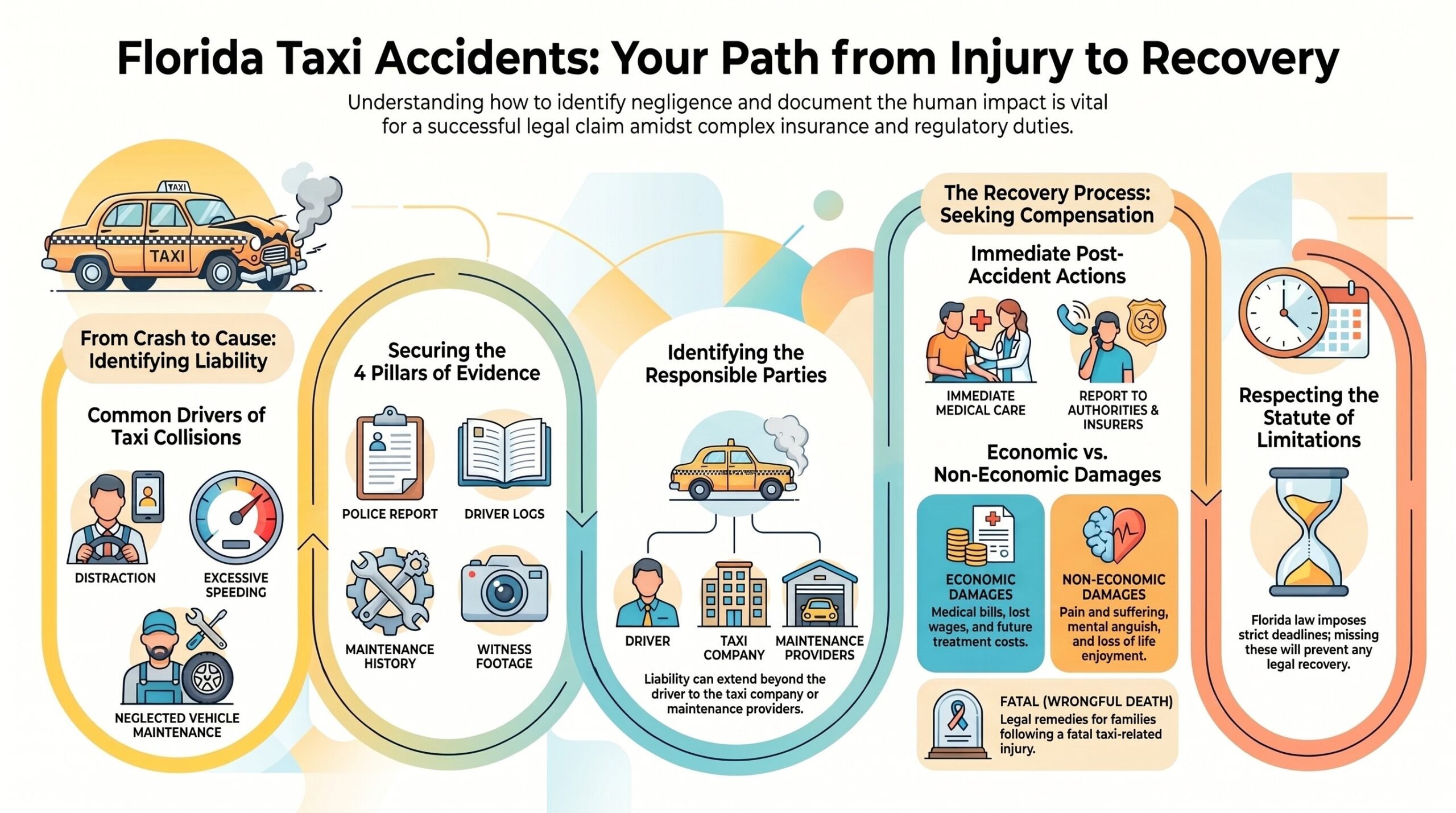
Taxi accidents in Florida often stem from preventable conduct, including distracted driving, speeding, reckless driving, and unsafe lane changes. Poor vehicle maintenance may also contribute to collisions when brakes, tires, lights, or other crucial systems are not properly inspected or repaired. Identifying the cause of a taxi accident is essential because it can help determine liability and support an injured person’s claim for compensation.
Distracted Taxi Drivers
Because taxi drivers often work long shifts in high-traffic areas, distraction poses a serious risk to passengers, pedestrians, cyclists, and other motorists. Common distractions may include mobile phone use, navigation systems, dispatch communications, fare processing, eating, or conversations that divert attention from the roadway. Even brief inattention can prevent a driver from recognizing changing traffic signals, stopped vehicles, or people crossing near hotels, airports, hospitals, and entertainment districts.
When distraction contributes to a collision, injured passengers may seek passenger compensation for medical expenses, lost income, and related losses. In fatal incidents, surviving family members may pursue wrongful death claims when evidence shows that inattentive driving caused the crash. Careful investigation can help identify the causes of distraction and support accountability for those harmed.
Speeding And Reckless Driving
In addition to distraction, excessive speed and reckless driving can considerably increase the likelihood and severity of Florida taxi accidents. Taxi drivers may feel pressure to complete fares quickly, reach airports on time, or drive aggressively through congested streets.
When speed limits are ignored, safe stopping distance decreases, and passengers, pedestrians, cyclists, and other motorists face greater danger. Reckless actions, such as unsafe lane changes, tailgating, or running red lights, may demonstrate a disregard for public safety and passenger care.
After a crash, citations, witness statements, dash camera footage, and collision reports may provide evidence of a traffic violation. This evidence can help clarify fault, especially when insurance claim disputes arise. Careful review of driver conduct supports accountability and helps injured people seek fair compensation for preventable harm.
Poor Vehicle Maintenance
When a vehicle is not properly inspected or repaired, even routine taxi service can become dangerous for passengers and others on Florida roads. Worn brakes, bald tires, defective lights, handling problems, or ignored engine issues may prevent a driver from responding safely to traffic conditions. Taxi companies and vehicle owners have a responsibility to support vehicle safety through regular inspections, timely repairs, and accurate maintenance records.
When they fail in that duty, injured passengers, pedestrians, or occupants of other vehicles may face significant harm. Poor maintenance can also create insurance disputes, especially when carriers question whether a mechanical failure, driver conduct, or company negligence caused the crash. Careful review of repair logs, inspection reports, and service history may help establish responsibility.
Unsafe Lane Changes
Mechanical problems are not the only hazards that place taxi passengers and nearby motorists at risk, as unsafe lane changes are also a common cause of Florida taxi accidents. A taxi driver who changes lanes without signaling, checking blind spots, or allowing adequate space may pose a sudden danger to nearby vehicles. These errors can cause sideswipe crashes, overtaking collisions, or chain reactions when surrounding drivers brake or swerve to avoid impact.
In busy service areas, including airports, hotels, and downtown corridors, rushed lane changes may also combine with intersection violations, increasing the risk to pedestrians, cyclists, and other motorists. Careful investigation may reveal whether the driver acted negligently, violated traffic laws, or failed to operate the taxi with the professional caution expected when transporting others safely.


Legal Rights of Florida Taxi Accident Injury Victims
Although taxi accidents often resemble other motor vehicle collisions, injured passengers, pedestrians, cyclists, and occupants of other vehicles may have distinct legal rights under Florida law. These rights may involve insurance claims, negligence actions, and, in limited circumstances, claims connected to premises liability or wrongful death.
Victims may seek compensation when another party failed to act with reasonable care, including a taxi driver, taxi company, rideshare-related entity, maintenance provider, or other motorist.
Florida’s no-fault insurance rules may affect initial medical benefits, but serious injuries can permit claims beyond personal injury protection coverage.
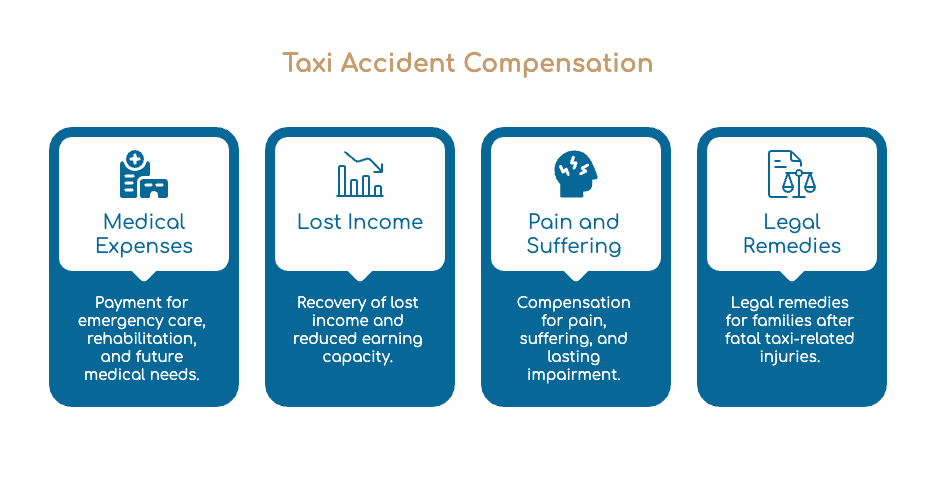
- Payment for emergency care, rehabilitation, and future medical needs
- Recovery of lost income and reduced earning capacity
- Compensation for pain, suffering, and lasting impairment
- Legal remedies for families after fatal taxi-related injuries
A careful legal review can help identify responsible parties, preserve evidence, and support the injured person’s ability to pursue fair recovery while focusing on restoration and service to others.
Why Do Florida Taxi Accident Injuries Happen?
Why do Florida taxi accident injuries happen in a state where professional transportation is expected to follow strict safety standards? These injuries often arise when drivers, companies, passengers, or other motorists fail to meet reasonable duties on busy roadways. Taxi passenger safety depends on attentive driving, proper vehicle maintenance, and compliance with Florida traffic laws, yet lapses can occur during demanding shifts or in congested urban areas.
Common causes include speeding, distracted driving, unsafe lane changes, fatigue, poor route decisions, and failure to yield. Some taxis may also be affected by worn brakes, defective tires, or inadequate inspections. In other cases, another driver’s reckless conduct creates the collision, leaving taxi occupants exposed to harm. Weather, heavy tourism traffic, and unfamiliar roads can further increase risk.
Understanding these causes helps service-minded advocates evaluate responsibility, protect injured individuals, and promote safer transportation practices throughout Florida’s communities for residents, visitors, workers, and vulnerable passengers alike.
What Should You Do After a Florida Taxi Accident Injury?
After a Florida taxi accident injury, the injured person should prioritize medical care, even if symptoms seem minor. The accident should also be reported to the appropriate authorities, the transportation company, or the insurer, depending on the circumstances. Preserving crucial evidence, including photographs, witness information, and medical records, may help protect any future injury claim.
Prioritize Medical Care
When a taxi accident causes injury, immediate medical evaluation should be the first priority, even if symptoms appear minor at the scene. A prompt emergency response can identify hidden trauma, such as concussions, internal injuries, or soft tissue damage, before complications worsen. Medical professionals also create records that clarify the nature, timing, and extent of the injuries.
Injured passengers, drivers, or pedestrians should accept recommended care and avoid minimizing pain out of concern for inconvenience. Those assisting them should encourage calm, practical decisions that protect health and dignity. After initial treatment, follow-up treatment is equally important because symptoms may develop or change over time. Consistent care supports recovery, documents progress, and helps ensure that medical needs are addressed with appropriate seriousness and continuity.
Report The Accident
Once urgent medical needs are being addressed, the taxi accident should be reported to the appropriate authorities as quickly as possible. A passenger, driver, pedestrian, or witness may need to contact emergency services so that police and medical responders can reach the scene, help those harmed, and establish an official record. If injuries are evident or suspected, involved individuals should seek medical attention without delay, even when symptoms appear manageable.
Reporting also promotes public safety by enabling officers to control traffic, identify hazards, and determine whether a formal crash report is required under Florida law. Those supporting an injured person should remain composed, provide precise information, and refrain from speculation. Clear reporting helps ensure proper assistance, prompt documentation, and a responsible response for everyone affected by the collision.
Preserve Key Evidence
As soon as it is safe to do so, evidence from the taxi accident scene should be preserved because important details can disappear quickly. A harmed passenger, driver, or witness may help by taking photographs of vehicle damage, road conditions, traffic signals, skid marks, visible injuries, and taxi identification numbers. Contact information for witnesses, the taxi driver, and any responding officers should also be collected when possible.
Accident documentation, including medical records, police reports, receipts, ride confirmations, and insurance communications, should be kept in an organized file. These materials may support a careful Liability investigation and help identify whether the taxi driver, taxi company, another motorist, or another party contributed to the crash. Preserving evidence also supports fair accountability, which can better serve injured people and their families.
Critical Evidence in a Florida Taxi Accident Injury Case
Critical evidence in a Florida taxi accident injury case helps establish fault, confirm damages, and preserve the factual record before key details are lost. Important materials may include:
- Police accident reports
- Driver log records
- Vehicle maintenance history
- Witness statements and footage
Each item can provide objective support for claims involving negligent driving, unsafe vehicle conditions, or disputed accounts of the collision.
Police Accident Reports
When a taxi collision occurs in Florida, the police accident report often becomes one of the first documents reviewed in an injury claim. It may identify the drivers, passengers, witnesses, insurers, vehicle damage, traffic citations, and the officer’s initial observations. For those serving injured clients, this report helps establish Liability basics by preserving facts before memories fade. It also supports injury documentation, especially when complaints of pain, ambulance transport, or visible trauma are noted at the scene.
While not always admissible as conclusive proof, the report can guide damage calculations by linking the circumstances of the crash to medical treatment, lost income, and property losses. A careful review also shapes insurance claim strategy, helping determine fault arguments, coverage issues, and the additional evidence needed. Its accuracy should be verified promptly.
Driver Log Records
Beyond the police accident report, driver log records can provide a more detailed account of a taxi driver’s activity leading up to a Florida collision. These records may show shift start times, passenger pickups, dispatch communications, breaks, and trip routes. When reviewed carefully, they can help determine whether fatigue, distraction, speeding, or schedule pressure contributed to the crash.
Driver accountability often depends on comparing these entries with witness statements, GPS data, fare receipts, and company policies. In injury claims, attorneys may request logs from taxi companies, dispatch services, or digital platforms to preserve an accurate timeline. Compliance audits can also reveal whether required records were kept consistently and honestly. For injured passengers, pedestrians, or other motorists, these logs may support fair compensation and help promote safer transportation practices.
Vehicle Maintenance History
In a Florida taxi accident injury case, vehicle maintenance history can reveal whether a mechanical defect or neglected repair contributed to the collision. Service records, inspection reports, repair invoices, and fleet maintenance schedules may show whether the taxi company met its duty to keep passengers, drivers, and the public reasonably safe. Evidence of Brake system failures can be especially significant because delayed repairs or ignored warning signs may indicate preventable danger. Similarly, documented tire tread conditions can help determine whether poor traction, uneven wear, or overdue replacement affected stopping distance or vehicle control. Attorneys may examine these records to identify negligent maintenance practices, missed inspections, or repeated complaints. This evidence can support accountability and help injured individuals pursue fair compensation through a carefully prepared claim.
Witness Statements And Footage
Vehicle maintenance records may explain whether a taxi was safe before a crash, but witness statements and footage can show how the accident actually unfolded. Neutral observers may describe speed, traffic signals, lane changes, passenger movement, or driver distraction. Surveillance video, dash camera footage, rideshare recordings, and footage from nearby businesses may confirm or challenge those accounts.
Prompt collection is crucial because memories fade and recordings may be overwritten. For injured passengers, pedestrians, or other motorists, this evidence can help clarify fault and support fair access to Insurance coverage options. Attorneys may also use consistent statements and visual proof to shape a settlement negotiation strategy grounded in documented facts. When gathered carefully, these materials help protect the injured person’s dignity while promoting accountability, public safety, and responsible claims resolution.
Long-Term Effects of Florida Taxi Accident Injuries
Florida taxi accident injuries can produce long-term consequences that extend well beyond the initial medical treatment. Chronic pain complications, reduced mobility, and loss of daily function may affect a person’s ability to work, maintain independence, and manage routine responsibilities. Emotional trauma effects, including anxiety and distress, may also become significant factors in evaluating the full impact of an injury claim.
Chronic Pain Complications
Although many taxi accident injuries appear to stabilize after emergency treatment, chronic pain can continue for months or years and substantially affect an injured person’s daily life. Persistent neck, back, shoulder, or nerve pain may require ongoing care, careful monitoring, and coordinated support from medical providers. Whiplash symptoms can be especially difficult because pain, headaches, and sensitivity may develop gradually after the crash.
Thorough medical documentation helps link these complaints to the taxi collision by documenting treatment history, diagnostic findings, and pain-related limitations. In Florida claims, this record can guide insurance negotiations by demonstrating the continuing burden of the injury. A well-prepared settlement strategy should account for future care, medication, therapy, and the personal strain placed on individuals who may depend on others during recovery.
Mobility And Function Loss
Persistent pain can also lead to reduced mobility, weakened function, and lasting difficulty with routine physical tasks after a taxi accident. Injured passengers, drivers, or pedestrians may struggle with walking, lifting, bending, climbing stairs, or maintaining balance. These limitations can affect personal care, household responsibilities, caregiving duties, and community involvement. Rehabilitation planning often becomes critical, especially when injuries involve the spine, joints, nerves, or soft tissue.
Medical providers may recommend physical therapy, assistive devices, modified activity, or long-term strength restoration. Loss of workplace mobility can also reduce earning capacity when a person cannot stand, drive, carry equipment, or move safely through job sites. Careful documentation of functional decline helps clarify the injury’s practical impact and supports a claim for services, accommodations, and future care needs.
Emotional Trauma Effects
How can the emotional impact of a taxi accident persist after physical injuries begin to recover? Anxiety, sleep disruption, irritability, and fear of travel may continue for months, limiting work, caregiving, and community responsibilities. Some injured passengers experience depression or post-traumatic stress symptoms, especially when pain, medical appointments, or financial pressure remain unresolved.
Post-accident documentation should include counseling records, symptom journals, medication changes, and statements from family members or service colleagues who observe behavioral changes. Such evidence helps connect emotional harm to the crash, not unrelated stressors. Attorneys may use Insurance negotiation strategies that present psychological treatment costs, reduced earning capacity, and diminished daily function with medical support. Careful advocacy can help injured individuals obtain the resources needed for recovery, stability, and renewed service to others.
Proving Liability in Florida Taxi Accident Injury Cases
To prove liability in a Florida taxi accident injury case, the injured party must establish who owed a duty of care, how that duty was breached, and how the breach caused the resulting injuries. Potentially responsible parties may include the taxi driver, taxi company, another motorist, or an entity responsible for vehicle maintenance. Evidence often includes police reports, witness statements, trip records, photographs, video footage, and medical documentation connecting the collision to the harm suffered.
Understanding what to expect can help the injured person and supporting family members preserve important facts with care and purpose. Florida’s comparative negligence rules may affect recovery if fault is shared. A well-prepared Insurance Claim depends on clear proof that negligent conduct, such as speeding, distracted driving, unsafe lane changes, or inadequate vehicle upkeep, directly contributed to the crash. Careful liability analysis supports accountability and helps protect the injured person’s right to pursue lawful compensation.
Dealing With Insurance Companies After a Florida Taxi Accident Injury
Communicating with insurance companies after a Florida taxi accident requires caution, accuracy, and an understanding that each statement may affect the value and direction of the claim. Adjusters may request recorded statements, broad medical authorizations, or quick explanations of injuries and events. An injured passenger, pedestrian, or driver should provide only truthful, limited information and avoid speculation about fault, pain levels, or recovery time.
Insurance carriers often review medical documentation, photographs, witness accounts, and liability evidence to assess responsibility and damages. Complete records help show how the collision affected the injured person’s health, work, and daily responsibilities. When someone is focused on caring for family, serving a community, or returning to meaningful duties, organized information can protect that person’s interests.
A Florida taxi accident injury lawyer may communicate with insurers, respond to requests, and guard against unfair pressure, allowing the injured person to focus on recovery with dignity and steadiness.
What to Expect During a Florida Taxi Accident Injury Claim Process
A Florida taxi accident injury claim typically begins with promptly reporting the accident, then gathering essential evidence, such as medical records, witness statements, and crash documentation. The process also requires determining legal liability, which may involve the taxi driver, taxi company, another motorist, or multiple parties. Once liability and damages are assessed, the injured party may negotiate injury compensation through insurers or, when necessary, pursue formal legal action.
Reporting The Accident
After a Florida taxi accident, prompt reporting creates the foundation for any later injury claim. The injured person should notify law enforcement, the taxi company, and applicable insurers as soon as possible. This step helps establish when and where the collision occurred, identifies involved parties, and confirms that official notice was provided. Accurate reporting also supports later questions about insurance coverage and available benefits.
A claimant serving family, patients, clients, or a community may need clear communication to protect responsibilities while recovering. Early reports should be consistent with medical records, especially when documenting symptoms that may worsen over time. Legal counsel can review notices, address carrier inquiries, and help negotiate settlements when liability and damages become clearer. Timely reporting reduces confusion and strengthens the claim process.
Gathering Key Evidence
Once the accident has been reported, gathering important evidence becomes essential to proving how the taxi collision occurred and how the injuries affected the claimant. Attorneys may collect police reports, medical records, photographs, dashcam footage, ride receipts, and vehicle maintenance documents before they are lost or altered. Prompt Evidence Preservation supports an accurate record, which can guide fair claim evaluation.
Witness Protection also matters, as passengers, pedestrians, or nearby drivers may need careful contact, respectful communication, and secure documentation of their statements. Medical documentation should reflect treatment, limitations, and recovery needs, helping show the human impact of the crash. These materials later support Compensation Strategies and informed Insurance Negotiations, while allowing advocates to serve the injured person with diligence, order, and care throughout the claim process.
Determining Legal Liability
In evaluating legal liability, a Florida taxi accident injury lawyer reviews the evidence to determine which parties may be responsible for the crash and the resulting harm. This assessment may include the taxi driver, another motorist, the taxi company, or a maintenance provider. Driver conduct is examined for speeding, distraction, impairment, or failure to follow traffic laws.
The lawyer may also consider Negligent hiring, especially if the company failed to screen, train, or supervise the driver properly. Employer responsibility can arise when the driver was working within the scope of employment. If several parties contributed, shared fault must be addressed under Florida’s comparative negligence rules. This careful review helps protect injured people and supports fair accountability while encouraging safer transportation practices for the community.
Negotiating Injury Compensation
When liability and damages become clearer, negotiations with insurers or responsible parties often begin with a structured demand for compensation. This demand may include medical expenses, lost income, future treatment needs, pain, and other documented losses. A Florida taxi accident injury lawyer may evaluate coverage limits, compare similar claims, and present records that support a fair resolution.
Careful attention to Evidence preservation tips can strengthen the claim, especially when vehicle data, witness statements, photographs, and medical records remain available. Police report accuracy also matters because errors in names, locations, citations, or crash details may affect fault assessments. Negotiations may involve counteroffers, requests for clarification, or disputes over the severity of injury. The goal is to pursue compensation that responsibly supports recovery, stability, and continued service to others.
Compensation for Florida Taxi Accident Injury Damages
Because taxi accidents can involve serious injuries, multiple insurance policies, and disputed liability, compensation often depends on a careful evaluation of every available source of recovery. An injured passenger, pedestrian, cyclist, or motorist may seek payment through the taxi company’s commercial coverage, the driver’s policy, another negligent driver’s insurer, or applicable uninsured motorist benefits. A Florida taxi accident injury lawyer may examine vehicle ownership, dispatch records, driver status, and compliance with local transportation rules to identify responsible parties.
Compensation may also be affected by the conduct that caused the crash. Evidence of reckless driving, impaired operation, or knowing violations of safety rules can influence settlement discussions and, in limited cases, support punitive damages. When a fatal crash occurs, eligible survivors may pursue wrongful death claims through the estate. Careful case preparation helps protect the injured person’s interests while promoting accountability, public safety, and responsible service within Florida’s transportation community.
Economic vs Non-Economic Damages in Florida Taxi Accident Cases
Florida taxi accident claims often involve both economic damages, such as medical expenses, lost income, and property losses, and non-economic damages, including pain, suffering, and reduced quality of life. These categories serve different purposes because financial losses can often be documented through records, while personal losses require careful explanation and supporting evidence. Proving damages in a claim typically depends on medical documentation, employment records, expert opinions, and clear evidence linking the injuries to the taxi accident.
Types Of Economic Damages
After a taxi accident, economic damages refer to the measurable financial losses an injured person may recover through an insurance claim or personal injury lawsuit. These losses often include emergency care, hospital treatment, surgery, rehabilitation, prescription costs, medical equipment, and future medical needs supported by medical bill documentation. They may also include transportation expenses for treatment, home health assistance, and necessary modifications that help the injured person restore daily function.
When injuries prevent employment, a lost wages calculation may account for missed work, reduced earning capacity, and lost employment benefits. Property damage, including repair or replacement of personal items, may also be considered. Careful records help attorneys, insurers, and courts accurately evaluate the financial burden, supporting fair recovery for the injured person and responsible caregivers.
Non-Economic Losses Explained
While economic damages address measurable financial losses, non-economic damages recognize the personal harm that does not appear on invoices, pay records, or repair estimates. In Florida taxi accident cases, these losses may include pain, suffering, inconvenience, mental anguish, disfigurement, and loss of enjoyment of life. They reflect how an injury changes daily routines, relationships, independence, and the ability to serve family or community needs.
Emotional recovery is often a central concern, especially when trauma, anxiety, or lasting discomfort affects a person’s sense of stability. Unlike punitive damages, which may punish especially wrongful conduct, non-economic damages are intended to address human impact rather than penalize the wrongdoer. Their value depends on the seriousness, duration, and consequences of the injury, viewed with care, dignity, and fairness within each specific case.
Proving Damages In Claims
Understanding the difference between financial losses and personal harm is only the starting point; a taxi accident claim must also show reliable proof of each category of damages. Economic damages are often supported through evidence types such as wage records, repair estimates, receipts, billing statements, and medical documentation. These materials help connect the collision to measurable costs, including treatment expenses and lost income.
Non-economic damages require a different form of proof, because pain, emotional distress, and reduced daily function are not shown by invoices alone. Medical documentation, therapy notes, witness statements, photographs, and personal journals may help demonstrate how injuries changed the claimant’s life. A careful presentation of both categories allows insurers, courts, and advocates to evaluate the full harm with fairness and accountability under Florida law.
When a Florida Taxi Accident Injury Case Goes to Trial vs Settlement
A Florida taxi accident injury case may resolve through settlement or proceed to trial, depending on the strength of the evidence, the severity of the injuries, the insurance coverage available, and whether the parties dispute liability or damages. Settlement often serves injured passengers, pedestrians, or other motorists by providing compensation without the delay, expense, and uncertainty of courtroom litigation. It may be appropriate when medical records, witness accounts, and insurance evaluations support a fair resolution.
Trial may become necessary when an insurer undervalues the claim, denies responsibility, or contests the extent of harm. In that setting, Trial strategy guides how the case is framed, while jury selection helps identify decision-makers who can fairly assess the facts.
Damages calculation must connect medical care, lost income, and lasting limitations to the requested award. Evidence presentation then organizes testimony, records, photographs, and expert opinions clearly, helping the court understand the full impact of the taxi accident.
Florida Laws That May Affect Your Florida Taxi Accident Case
Several Florida laws can shape a taxi accident injury case, from the first insurance claim through any lawsuit filed in court. These rules affect fault, available benefits, and the duties of taxi companies, drivers, insurers, and injured passengers. A careful review helps protect people who rely on safe transportation and those who assist them after harm occurs.
- Florida’s comparative fault system may reduce compensation if an injured person shares responsibility.
- Personal injury protection rules may apply first, depending on vehicle ownership and policy terms.
- Taxi operators may face regulatory duties involving permits, driver screening, and vehicle safety.
- Wrongful death eligibility can determine which survivors may seek damages after a fatal crash.
Insurance coverage denial may arise when insurers dispute policy limits, driver status, notice requirements, or whether the taxi was operating commercially. Florida law requires careful documentation, prompt communication, and evidence-based advocacy to preserve valid claims and support fair recovery for injured individuals.
The Statute of Limitations for Florida Taxi Accident Injury Cases
Often, the statute of limitations is one of the most important deadlines in a Florida taxi accident injury case because it controls how long an injured person has to file a lawsuit. In many negligence cases, Florida law provides a limited filing period, and missing that period can prevent recovery, regardless of the injury’s severity. Claims involving taxi drivers, taxi companies, insurers, or other motorists should be evaluated promptly, since evidence may fade while the deadline continues to run.
The timing can also affect related issues, including Comparative negligence rules, which may reduce compensation if the injured person shares fault. In cases involving reckless conduct, intoxication, or intentional disregard for passenger safety, timely action may preserve facts relevant to exposure to punitive damages.
Families, caregivers, and community members who support injured individuals should recognize that compassionate service includes respecting legal deadlines. Careful attention to timing helps protect the injured person’s opportunity to seek accountability through the courts.
How a Florida Taxi Accident Injury Lawyer Can Help You
After legal deadlines are identified, the next concern is building a claim that is supported by evidence, accurate damage calculations, and a clear theory of liability. A Florida taxi accident injury lawyer can evaluate the conduct of the driver, taxi company, insurer, and other parties, while keeping the injured person’s needs central to the process. This guidance often helps families, caregivers, and service-minded advocates understand liability vs damages without losing focus on recovery.
- Investigates crash reports, dispatch records, driver history, and vehicle maintenance.
- Coordinates evidence preservation, including video, photographs, witness statements, and electronic data.
- Reviews medical records, lost income, future care needs, and other measurable losses.
- Communicates with insurers and opposing parties to reduce confusion and prevent unfair pressure.
Through organized claim development, counsel can present facts with discipline and compassion. This support allows injured individuals and those assisting them to pursue accountability while protecting dignity, stability, and access to necessary care.
When to Contact a Florida Taxi Accident Injury Lawyer
When should an injured passenger, driver, pedestrian, or family member seek legal guidance after a taxi crash in Florida? Contact should occur as soon as urgent medical needs are addressed, especially when injuries, disputed fault, commercial insurance, or missing evidence may affect a claim. Early consultation helps preserve trip records, witness information, dashcam footage, dispatch data, and police reports before they become harder to obtain.
A lawyer may also provide direction when an insurer requests a statement, offers a quick settlement, or raises questions about medical treatment. A careful insurance strategy can protect the injured person from avoidable mistakes while supporting fair documentation of losses. Timely guidance may also assist families with aftercare planning, access to recovery resources, and communication with medical providers.
Negotiation tactics are most effective when facts are gathered promptly and damages are clearly organized. For those seeking to restore stability and serve dependent loved ones, early action can be a prudent step.
Why You Need an Experienced Florida Taxi Accident Injury Lawyer
Why does experience matter in a Florida taxi accident injury claim? Taxi collisions often involve injured passengers, drivers, and pedestrians, as well as insurers, taxi companies, and commercial coverage issues. A knowledgeable Florida taxi accident injury lawyer understands how these parties may share responsibility and how to preserve evidence before it is misplaced. This guidance can help injured people pursue medical support, wage losses, and other lawful damages with care and intention.
Florida’s insurance rules also require careful attention. No-fault claims may provide initial benefits, but serious injuries can justify claims beyond those limits. A skilled lawyer can evaluate medical records, crash reports, witness accounts, and policy language to identify available recovery. In severe cases, including Wrongful death, experience helps ensure that surviving family members receive informed direction during a difficult process.
For those committed to serving others, experienced legal advocacy supports accountability, protects vulnerable victims, and promotes a fair response after preventable harm occurs.
How to Choose the Right Florida Taxi Accident Injury Lawyer for Your Case
Selecting the right Florida taxi accident injury lawyer requires more than a review of advertisements or general injury claims experience. A careful choice begins with evaluating whether the attorney understands taxi regulations, insurance coverage disputes, passenger rights, and commercial drivers’ conduct. The lawyer should demonstrate disciplined case assessment, organized evidence collection, and clear communication with injured clients and their families.
A strong advocate also shows readiness to serve the client’s broader needs, including medical documentation, proof of lost income, and coordination with treatment providers. Trial strategy should be discussed early, even when a negotiated resolution appears likely, because preparation often shapes the value of a claim.
Settlement readiness is equally important, requiring accurate analysis of damages, persuasive demand materials, and the ability to respond firmly to insurers’ tactics. Clients should look for professionalism, accessibility, and a record of handling intricate transportation injury cases with diligence, respect, and purpose.
About The Law Offices of Anidjar & Levine
The Law Offices of Anidjar & Levine represents injured individuals throughout Florida, including those harmed in taxi accidents involving negligent drivers, unsafe vehicles, or disputed insurance coverage.
The firm assists clients by identifying responsible parties, preserving evidence, and pursuing compensation for medical expenses, lost income, pain and suffering, and other recoverable losses.
The process begins with Client intake, designed to understand the facts, injuries, and immediate needs of each person served.
A careful case evaluation follows, allowing the legal team to assess liability, insurance issues, available damages, and the steps needed to protect the client’s position.
Through focused legal representation, the firm communicates with insurers, gathers records, consults experts when needed, and prepares claims for negotiation or litigation.
Its work supports injured people seeking stability after serious harm, while emphasizing accountability, responsive service, and informed guidance throughout the claims process for Florida taxi accident victims and their families.
Florida Taxi Accident Injury Lawyer
Frequently Asked Questions
Can Tourists File Taxi Accident Injury Claims in Florida?
Yes, tourists may file taxi accident injury claims in Florida when negligence caused their harm. Florida visitor coverage may include personal injury protection, liability insurance, or travel insurance, depending on circumstances. Statute limits apply to tourists as they do to residents, so prompt action preserves evidence and rights. A claimant should document injuries, obtain reports, and seek qualified legal guidance. This approach supports fair recovery while respecting service, accountability, and public safety.
What if My Taxi Driver Was Uninsured?
If the taxi driver was uninsured, an injured passenger may still seek compensation through Uninsured motorist coverage, personal injury protection, or claims against other responsible parties. The Florida claims process requires prompt notification, evidence of injuries, and careful examination of all available insurance policies. A service-oriented approach helps ensure medical needs, lost income, and long-term impacts are addressed with dignity, precision, and focused advocacy under Florida law.
Are Rideshare Accidents Handled Like Taxi Accidents?
Rideshare accidents are similar to taxi accidents, but they are not handled the same way. Rideshare liability depends on the driver’s app status, personal insurance, and company coverage, while vs taxi rules often involve commercial licensing, carrier duties, and municipal regulations. A service-focused review should identify all responsible parties, preserve trip records, and assess insurance coverage layers, so that injured passengers, drivers, or pedestrians receive informed guidance and appropriate claims support.
Can I Claim Injuries From a Taxi’s Sudden Stop?
Yes, a person may claim injuries from a taxi’s sudden stop when the taxi driver was negligent. Sudden stop impacts can produce neck, back, shoulder, or head injuries, even without a collision. The claim usually requires prompt medical care, witness details, trip records, and Medical causation evidence connecting the stop to the condition. A careful evaluation helps protect injured passengers and supports fair accountability for unsafe driving or avoidable transit risks.
Do Taxi Companies Owe Passengers Special Safety Duties?
Yes, taxi companies owe passengers heightened safety duties because they profit from transporting people who depend on their care. These passenger-care obligations include hiring qualified drivers, maintaining vehicles, complying with traffic laws, and avoiding unsafe maneuvers. Wrongful injury duties may arise when a company or driver fails to act reasonably and a passenger is harmed. Careful service requires prevention, accountability, and respect for each passenger’s physical well-being during transport.
—————————
A Florida taxi accident injury claim can involve intricate liability issues, insurance disputes, and strict legal deadlines.
Injured passengers, drivers, pedestrians, or cyclists may benefit from legal guidance that protects their rights and supports a full financial recovery.
The Law Offices of Anidjar and Levine provides informed representation for victims seeking accountability after a taxi collision, including support from a Florida Car Accident Lawyer.
Prompt legal assistance can help preserve evidence, assess damages, and pursue compensation with the care and diligence each case requires.