The Law Offices of Anidjar and Levine helps injured passengers, drivers, pedestrians, and others address liability, insurance coverage, and compensation issues after an Uber or Lyft crash.
These cases often turn on app status, trip records, police reports, medical documentation, witness statements, and Florida comparative negligence rules.
Legal support may involve preserving evidence, managing insurer disputes, documenting losses, and preparing settlement demands.
You can also learn more from a Florida Car Accident Lawyer.
The sections below explain crucial claim issues and practical steps after a rideshare accident.
Main Takeaways
- A Florida rideshare accident injury lawyer can help identify liable parties and applicable insurance coverage based on driver app status.
- Key evidence includes app data, trip records, police reports, photographs, witness information, vehicle records, and medical documentation.
- Injured parties may seek compensation for medical expenses, lost income, reduced earning capacity, pain, and related harms.
- Florida’s comparative negligence rules may reduce recovery if the injured person shares fault for the crash.
- Prompt medical care, accident reporting, and evidence preservation help protect claims and support fair settlement negotiations.


How We Can Help With Your Florida Rideshare Accident Injury Claim
A Florida rideshare accident injury claim often involves layered insurance issues, disputed liability, and strict deadlines that can affect an injured person’s ability to recover compensation. Legal counsel can provide structured guidance from the earliest stage, helping the injured person protect rights while focusing on health, family, and service responsibilities.
A lawyer may review Insurance coverage timelines, identify applicable policies, and communicate with insurers to reduce confusion or delay. This support can include documenting losses, coordinating medical records, evaluating wage impacts, and preparing settlement demands with care and accuracy.
An Evidence preservation checklist may also be used to secure photographs, trip data, witness information, vehicle records, and communications before they are lost. Counsel can manage deadlines, assess evidence of fault, and respond to defense arguments. Through careful advocacy, the claim is positioned for fair resolution, whether through negotiation or litigation, while the injured person receives steady, informed support throughout the process.
OUR CONSULTATIONSARE FREE
START YOUR FREE CASE REVIEW

Understanding Florida Rideshare Accident Injury Cases
Rideshare accident injury cases in Florida differ from ordinary vehicle collision claims because liability and insurance coverage may depend on the driver’s app status, the nature of the trip, and the conduct of multiple parties. A passenger, pedestrian, cyclist, or another motorist may face a claim involving the rideshare driver, the company’s insurer, a personal auto insurer, or another responsible party. Each coverage layer may apply differently, depending on whether the driver was offline, waiting for a request, traveling to pick up a rider, or completing a paid trip.
Careful case review supports fairness for injured people and helps those serving them pursue appropriate recovery. Evidence preservation may include trip records, app data, photographs, medical documentation, witness information, and insurance communications. These materials can guide fault analysis, damage evaluation, and settlement negotiation. A disciplined approach helps protect the injured person’s rights while promoting accountable, orderly resolution under Florida law.
Common Causes of Florida Rideshare Accidents
Florida rideshare accidents often result from predictable hazards, including distracted drivers, unsafe pickup locations, speeding between rides, and poor vehicle maintenance. These factors can create dangerous conditions for passengers, other motorists, pedestrians, and cyclists. Determining the cause of a crash is crucial to determining liability and analyzing the full scope of an injury claim.
Distracted Rideshare Drivers
Distracted driving is a significant cause of rideshare accidents, particularly because app-based drivers must often balance navigation, passenger communications, ride requests, and traffic conditions at the same time. When attention shifts from the roadway to a phone screen, even briefly, the risk of rear-end collisions, missed signals, and unsafe lane changes increases.
A careful review may examine app activity, call logs, vehicle data, and witness accounts to determine whether distraction contributed to the crash. Traffic law defenses may arise when a driver claims compliance with signals or speed limits, yet distraction can still show a failure to use reasonable care. Passengers may also raise concerns involving Fares and refunds, though injury claims require separate attention. Responsible legal guidance helps injured people pursue accountability while supporting safer community transportation.
Unsafe Pickup Locations
When a pickup occurs in a poorly chosen location, the risk of a rideshare accident can increase before the passenger ever enters the vehicle. Drivers who stop near intersections, travel lanes, parking lot exits, or areas without clear Sidewalk Access may expose riders, pedestrians, and other motorists to preventable harm. Proper Ride Pickup Safety requires attention to visibility, lawful stopping areas, and safe space for passengers to enter without stepping into active traffic.
In busy Florida communities, inadequate Traffic Control near hotels, airports, venues, or shopping centers can create confusion for drivers and waiting riders. These conditions may increase Pedestrian Hazards, especially when passengers cross between vehicles or stand near curbside congestion. Careful location selection supports public safety and reflects the duty to protect others from avoidable injury.
Speeding Between Rides
Unsafe pickup locations are not the only circumstances that can put rideshare passengers and the public at risk; speeding between rides may also contribute to serious collisions. Drivers may rush to accept new requests, reach high-demand areas, or complete more trips within a limited time. This conduct can reduce reaction time, increase stopping distance, and make intersections, pedestrian areas, and highway merges more dangerous.
Florida traffic citations and speeding penalties may help establish that a driver failed to operate with reasonable care. However, liability proof often requires more than a ticket. Trip records, app data, witness statements, dash camera footage, and crash reconstruction may clarify speed, timing, and driver behavior. Careful investigation can help injured people pursue accountability while supporting safer transportation practices for the community.
Poor Vehicle Maintenance
Although many rideshare collisions involve driver behavior, poor vehicle maintenance can also create serious risks for passengers, pedestrians, and other motorists. Rideshare vehicles often spend long hours on Florida roads, increasing wear on brakes, tires, lights, and guidance systems. When drivers delay inspections or ignore warning signs, preventable hazards may lead to severe crashes.
Brake Failure can reduce stopping distance at intersections, in heavy traffic, or near crosswalks, placing vulnerable people in immediate danger. Tire Blowouts may cause a driver to lose control, especially at highway speeds or during sudden lane changes. Responsible maintenance supports public safety and reflects a duty to protect those who rely on transportation services. After a crash, maintenance records, repair history, and inspection practices may help identify who failed to act responsibly.


Legal Rights of Florida Rideshare Accident Injury Victims
After a rideshare collision in Florida, injured passengers, drivers, pedestrians, and occupants of other vehicles may have the right to seek compensation from the parties responsible for their losses. These rights may include claims for medical expenses, lost income, reduced earning capacity, pain, and other harms. Counsel often evaluates available insurance, the rideshare driver’s status, and any third-party responsibility.
After a Florida rideshare crash, injured parties may seek compensation for medical costs, income loss, and related harms.
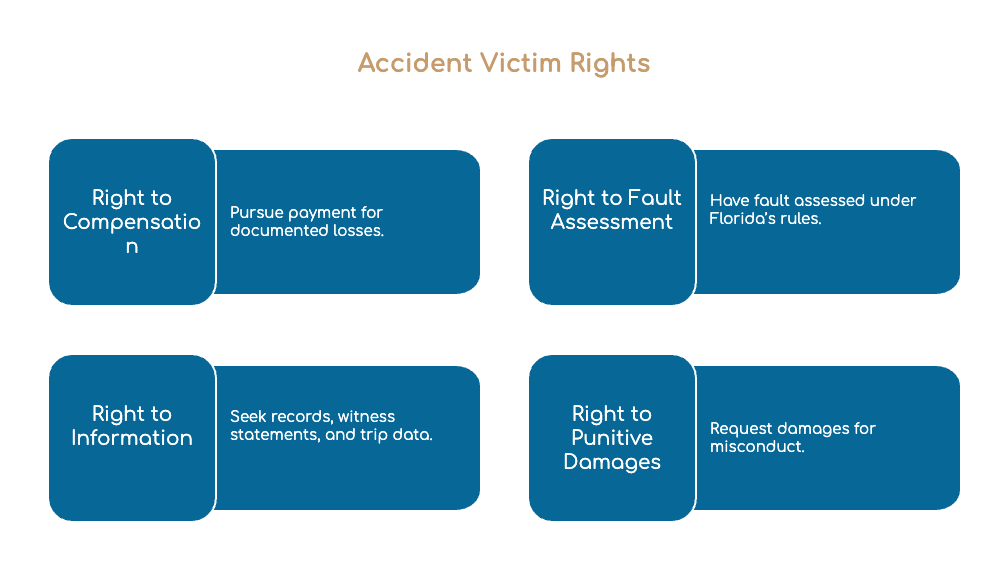
Key legal protections may include:
- The right to pursue payment for documented physical, financial, and emotional losses.
- The right to have fault assessed under Florida’s Comparative Negligence rules.
- The right to seek records, witness statements, and digital trip information.
- The right to request Punitive Damages when misconduct meets Florida’s legal standard.
A careful legal review can help protect vulnerable injury victims, support fair accountability, and promote responsible conduct within the transportation system while serving the broader public interest.
Why Do Florida Rideshare Accident Injuries Happen?
Why do rideshare accident injuries occur so often in Florida’s busy transportation corridors? They often result from a mix of dense traffic, unfamiliar routes, tourist congestion, and driver distraction caused by navigation apps or passenger communications. Rideshare drivers may work long hours, move quickly between fares, or operate in crowded airports, hotels, and entertainment districts where sudden stops and lane changes are common. These conditions can place passengers, pedestrians, cyclists, and other motorists at serious risk.
Injury cases may also become complicated because several parties can be involved, including the rideshare driver, another negligent motorist, and the transportation network company. Passenger Injury Costs may include emergency care, rehabilitation, missed income, and long-term support needs. App Liability Disputes can arise when insurers disagree about whether the driver was logged in, awaiting a ride, or actively transporting a passenger, making fault and coverage harder to determine.
What Should You Do After a Florida Rideshare Accident Injury?
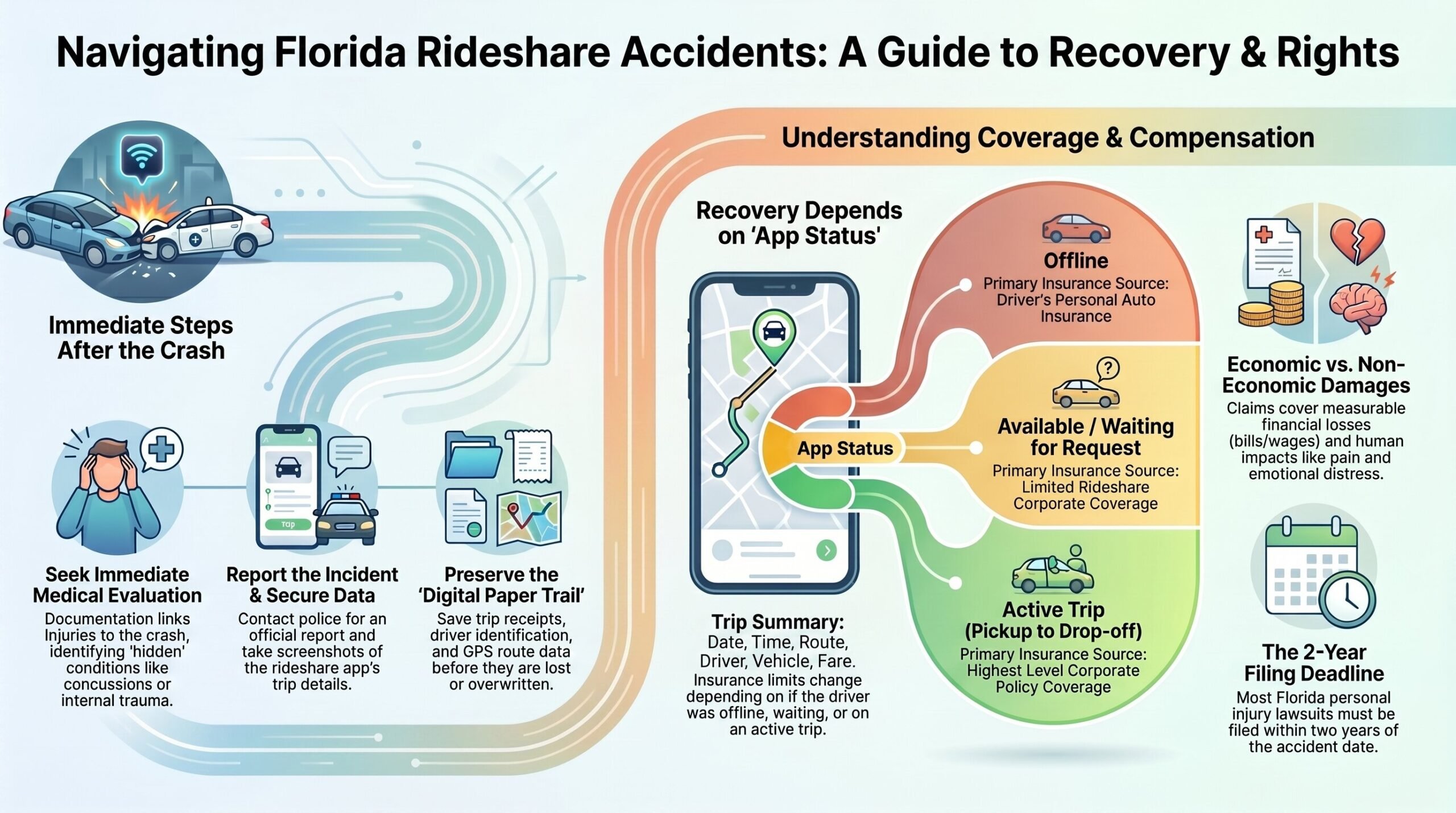
After a Florida rideshare accident injury, the injured person should take immediate steps to protect health, document the incident, and preserve any potential legal claim. Prompt medical care can identify injuries and create a record, while reporting the accident helps establish the circumstances of the crash. Main evidence, including photographs, witness information, trip details, and communications with the rideshare company, may become essential in evaluating liability and damages.
Seek Medical Care
Even when injuries appear minor, prompt medical care is one of the most important steps following a Florida rideshare accident. A medical evaluation can identify conditions that may not be immediately obvious, including concussions, internal injuries, soft tissue damage, or spinal trauma. Delayed symptoms often arise after crashes involving excessive speed or distracted driving, and early treatment helps restore both health and recovery.
Seeking care also creates clear medical documentation that connects injuries to the collision. Physicians, emergency personnel, and experts can record symptoms, diagnoses, treatment plans, and physical limitations. This information may later assist a Florida rideshare accident injury lawyer in evaluating damages. Those who serve injured passengers, drivers, or families should encourage timely care, careful follow-up, and adherence to prescribed medical guidance after the crash.
Report The Accident
At the scene, reporting a Florida rideshare accident to law enforcement helps establish an official record of the collision and the parties involved. Officers can document driver identities, vehicle information, location, apparent injuries, and initial accounts from passengers or bystanders. A Witness statement may also be noted, helping clarify what occurred before memories dim. If available to authorities, dashboard footage may support the report and assist later review.
The injured person should also ensure that medical documentation is consistent with the incident report, especially when care was received soon after the crash. Accurate insurance reporting should follow, including notice to the rideshare company, personal insurers, and any required carrier. Timely reporting supports accountability, protects vulnerable claimants, and helps those assisting them pursue appropriate next steps.
Preserve Key Evidence
In the immediate aftermath of a Florida rideshare accident, preserving essential evidence can help establish how the crash occurred, who was involved, and what losses resulted. Injured riders, drivers, or assisting family members should photograph vehicles, road conditions, visible injuries, traffic signals, and debris before the scene changes. They should also obtain the names of witnesses, police report information, and insurance details from all parties.
It is important to Collect App Records, including trip receipts, driver identification, route data, messages, and screenshots showing pickup and drop-off details. To Preserve Medical Proof, injured individuals should keep emergency records, diagnostic results, prescriptions, and follow-up instructions. Organized evidence supports fair evaluation, protects vulnerable claimants, and helps legal advocates serve accident victims with accuracy, diligence, and accountability.
Critical Evidence in a Florida Rideshare Accident Injury Case
Critical evidence can shape liability, damages, and insurance coverage in a Florida rideshare accident injury case. Key materials often include 1. Rideshare app data, 2. Driver and passenger statements, 3. Police crash reports, and 4. Medical treatment records. Each category may help establish what occurred, who was responsible, and how the injuries affected the claimant.
Rideshare App Data
When a rideshare collision occurs, app data can provide a precise record of the trip status, driver activity, route, timing, and communications surrounding the crash. In Florida injury claims, this information may help identify whether the driver was logged in, waiting for a request, traveling to pick up a rider, or completing an active trip. Geolocation tracking can confirm vehicle movement, location, and speed patterns before impact, supporting a careful review of liability and insurance coverage.
Ride request history may also show when the service relationship began, which can affect the benefits available. Because this evidence is controlled by the rideshare company, prompt preservation requests are important. Careful collection of app records helps protect injured people, supports truthful case evaluation, and promotes accountability in the service of community safety.
Driver And Passenger Statements
After a rideshare crash, statements from the driver, passengers, and other involved parties can become important evidence in determining how the collision occurred. These accounts may identify distractions, unsafe turns, speeding, sudden stops, or confusion about pickup and drop-off locations. In a Florida injury case, careful review of each statement can help clarify Rideshare liability and reveal whether the driver was actively transporting a rider or waiting for a request.
Passenger observations may also support issues involving insurance coverage, especially when timing and app use affect available benefits. Because memories can fade and accounts may change, prompt evidence preservation is crucial. Attorneys may seek written, recorded, or sworn statements to protect accurate details while treating all participants with respect, fairness, and care.
Police Crash Reports
In a Florida rideshare accident injury case, the police crash report often serves as an important starting point for understanding the facts of the collision. This report may identify involved drivers, passengers, witnesses, vehicle positions, road conditions, citations, and the responding officer’s initial assessment. For advocates committed to serving injured people, it helps them organize claims with accuracy and care.
While the report is not the complete case, it can support liability arguments and guide further investigation. Insurance carriers may review it closely when evaluating fault, coverage issues, and settlement timelines. It may also help connect the reported crash circumstances with later Medical documentation, without replacing those records. Careful review allows legal counsel to identify errors, request corrections when appropriate, and preserve evidence necessary for a fair recovery.
Medical Treatment Records
A police crash report may outline how a rideshare collision occurred, but medical treatment records show how the collision affected the injured person’s body, health, and daily functioning. These records may include emergency evaluations, diagnostic imaging, physician notes, therapy reports, surgical recommendations, and discharge instructions. They help establish the nature, timing, and progression of injuries after a Florida rideshare accident.
Consistent documentation also supports the seriousness of harm and the need for ongoing care. Medication compliance, follow-up appointments, and adherence to therapy plans may demonstrate that the injured person acted responsibly to recover. Gaps in treatment can raise questions, so accurate records are indispensable. For those serving an injured claimant, these documents provide a clear foundation for evaluating damages and pursuing fair compensation.
Long-Term Effects of Florida Rideshare Accident Injuries
Florida rideshare accident injuries may lead to lasting consequences, including chronic pain conditions that interfere with daily function and medical stability. Emotional trauma can also persist after the collision, affecting sleep, concentration, relationships, and overall quality of life. When these injuries limit a person’s ability to work, reduced earning capacity may become a central factor in evaluating long-term damages.
Chronic Pain Conditions
When pain continues long after a rideshare crash, the injury may affect far more than the initial emergency treatment or insurance claim. Chronic pain can follow spinal injuries, nerve damage, fractures, soft tissue trauma, or aggravated preexisting conditions. These conditions often require ongoing Pain Management, including medical evaluations, therapy, medication, injections, or other supervised treatment.
For injured passengers, drivers, or third parties, persistent pain may limit mobility, sleep, concentration, and ability to manage daily responsibilities. It can also create Employment Limitations when standing, lifting, driving, or sitting for extended periods becomes difficult. In Florida rideshare claims, documentation of continuing symptoms, treatment history, and functional restrictions may be necessary. A careful legal evaluation can help determine how long-term pain affects damages, future care needs, and overall recovery.
Emotional Trauma
Although physical injuries often receive immediate attention, emotional trauma after a rideshare accident can become a lasting and disruptive consequence. Survivors may experience anxiety, sleep disturbance, flashbacks, depression, or fear of traveling in vehicles, even after medical injuries improve. These conditions can affect family responsibilities, caregiving roles, and the ability to participate in community service or to provide daily support to others.
In severe collisions involving Wrongful Death, grief may compound trauma for passengers, relatives, and witnesses. Documentation from mental health providers, accident reports, and consistent symptom records can help establish the extent of psychological harm. Proof Of Fault remains important when linking emotional injuries to negligent driving, unsafe rideshare practices, or another responsible party, supporting a claim for appropriate recovery under Florida law after the crash.
Reduced Earning Capacity
After a serious rideshare accident, reduced earning capacity may become one of the most significant long-term consequences of a physical or psychological injury. A driver, passenger, or pedestrian may no longer perform prior work, accept full-time hours, or pursue advancement that once supported dependents. When injuries limit concentration, mobility, strength, or emotional stability, future income losses require careful evaluation through medical records, employment history, and vocational evidence.
In severe cases, a claim may also relate to Wrongful Death damages if a family loses the financial support of a loved one. Insurers may challenge these losses, and Insurance Denial can place additional strain on those already serving injured relatives. Thorough legal review helps document diminished earning potential and protects the household’s long-term financial stability with dignity.
Proving Liability in Florida Rideshare Accident Injury Cases
Because rideshare crashes often involve multiple parties and overlapping insurance policies, proving liability in a Florida rideshare accident injury case requires a careful review of the facts, the driver’s app status, and the conduct of everyone involved. Liability may rest with the rideshare driver, another motorist, a vehicle owner, or a negligent maintenance provider, depending on how the crash occurred.
A thorough evidence preservation strategy helps protect information that can clarify responsibility. Relevant evidence may include police reports, photographs, witness statements, dash-camera footage, app data, trip records, vehicle damage, medical documentation, and traffic signal records. Prompt action can prevent important evidence from being lost, altered, or overwritten.
Florida’s Comparative negligence rules may reduce compensation if the injured person shares fault. For those committed to helping injured people regain stability, establishing a clear liability picture is necessary. Careful investigation supports accountability and helps connect the harm suffered to the negligent conduct that caused it.
Dealing With Insurance Companies After a Florida Rideshare Accident Injury
Several insurance companies may become involved after a Florida rideshare accident, and each may have different financial interests, coverage positions, and claim procedures. The driver’s personal insurer, the rideshare company’s insurer, and other motorists’ carriers may review the same event through competing lenses. Careful communication is critical because recorded statements, incomplete descriptions, or casual comments may be used to limit payment.
An injured person benefits when representatives are served with accurate facts, organized records, and respectful but firm responses. Policy documents should be reviewed closely to identify coverage limits, exclusions, and requirements tied to the driver’s app status. Medical records, photographs, repair estimates, and trip data can help clarify disputed issues.
Witness credibility may also influence how insurers evaluate fault and damages, especially when accounts differ. Legal guidance can help protect the claimant’s interests while promoting orderly, honest communication with insurers and preserving the integrity of the injury claim.
What to Expect During a Florida Rideshare Accident Injury Claim Process
A Florida rideshare accident injury claim typically begins with prompt accident reporting, followed by a careful review of which insurance policies may apply. The process then requires organized evidence of injury, including medical records, witness statements, and documentation of financial losses. Once liability, coverage, and damages are evaluated, settlement negotiations may begin with the rideshare company’s insurer, the driver’s insurer, or other responsible parties.
Reporting The Accident
After a Florida rideshare accident, promptly reporting the crash lays the foundation for any injury claim involving Uber, Lyft, another driver, or a third party. The injured person should contact law enforcement, request medical assistance when needed, and ensure that an official crash report is made. Accurate reporting helps preserve facts, identify the parties involved, and document the time, location, vehicles, and visible injuries.
A careful report should include Witness Information, photographs, rideshare trip details, and statements given at the scene. Because Legal Deadlines may affect the ability to seek compensation, delays can create unnecessary risks. The rideshare company should also receive notice through its app or reporting system. Prompt, organized reporting supports accountability, safeguards community safety, and helps representatives assess the claim with reliable information.
Determining Insurance Coverage
Once the accident has been reported, determining insurance coverage becomes a pivotal step in evaluating a Florida rideshare injury claim. Coverage may depend on whether the driver was logged into the app, waiting for a request, traveling to pick up a passenger, or actively transporting one. Each stage can trigger different insurance responsibilities among the rideshare company, the driver’s personal insurer, and any other involved motorist.
A careful review of policy limits helps identify the funds potentially available for medical care, lost income, and related losses. Equally important, coverage exclusions must be examined because insurers may deny benefits when a policy does not apply to commercial activity. This assessment helps injured individuals and those assisting them understand which insurer should respond to the claim.
Gathering Injury Evidence
Once insurance coverage has been identified, gathering evidence of injury becomes the next critical step in documenting the full impact of a Florida rideshare accident. This stage may include medical records, diagnostic results, treatment plans, employment records, and written statements describing pain, limitations, and needed assistance. Careful photo documentation of vehicle damage, visible injuries, road conditions, and the crash scene can help preserve details that may later become disputed.
Witness reliability is also important, especially when accounts differ or rideshare data is incomplete. Witnesses who observed the collision, passenger movements, or driver behavior may provide helpful context. Attorneys may review consistency, timing, and proximity to the event. Thorough evidence collection supports a clear presentation of injury-related losses while honoring the injured person’s need for fair consideration and practical support.
Negotiating Your Settlement
Before settlement discussions begin in a Florida rideshare accident injury claim, the attorney typically evaluates the available evidence, confirms insurance coverage, medical status, and the full scope of claimed losses. This review helps determine whether negotiations should proceed or whether additional evidence preservation is needed to protect the injured person’s position.
The attorney may prepare a demand package that explains liability, documents injuries, and presents wage loss, medical expenses, and future care needs. Insurance adjusters often respond with lower offers, requiring careful analysis and measured counteroffers. Throughout negotiations, the attorney seeks a resolution that supports the injured person’s recovery and stability, while respecting the facts of the claim. If settlement terms remain inadequate, the attorney may advise further legal action to pursue fair compensation through formal proceedings.
Compensation for Florida Rideshare Accident Injury Damages
Although every rideshare accident claim depends on the specific facts, compensation in Florida may include both economic and non-economic damages tied to the injured person’s losses. In a rideshare collision, the value of a claim often hinges on the severity of injuries, available insurance coverage, evidence of liability, and the impact of the harm on daily life. A careful review helps guarantee that no category of loss is overlooked.
Medical Documentation is central to this process because records, diagnoses, treatment plans, and physician opinions help connect the crash to the claimed injuries. Consistent documentation also supports future care needs when recovery remains uncertain. A thoughtful Settlement Strategy considers these materials, the rideshare company’s insurance framework, and the conduct of all involved drivers.
For those serving injured clients or loved ones, organized evidence and timely legal guidance can promote fair recovery while preserving dignity, stability, and practical support during a difficult transition.
Economic vs Non-Economic Damages in Florida Rideshare Accident Cases
In Florida rideshare accident cases, damages are generally divided into economic and non-economic categories, each addressing a different type of loss. Economic damages may include medical expenses, lost income, and other measurable financial harm, while non-economic damages account for pain, suffering, and diminished quality of life. Proving these losses requires clear documentation, credible evidence, and a careful assessment of how the accident affected the injured person’s life.
Economic Damages Explained
When a Florida rideshare accident causes financial loss, economic damages are the measurable costs that can be documented through records, bills, receipts, and evidence of income. These damages may include emergency care, hospital treatment, surgery, rehabilitation, prescription medication, medical equipment, transportation to appointments, and property repair or replacement.
They may also include Lost Wages when injuries prevent a person from working, reduce hours, or limit future earning capacity. For those assisting injured individuals, careful organization of evidence, including pay stubs, tax records, invoices, medical statements, and employer letters, is critical. In rideshare cases, economic damages help establish the practical burden placed on the injured person and household, allowing a claim to reflect verifiable losses tied directly to the collision and resulting medical needs.
Non-Economic Damages
Because financial records do not capture every consequence of a serious collision, non-economic damages address the personal and human losses that may follow a Florida rideshare accident. These damages may include pain, emotional distress, disfigurement, loss of enjoyment of life, and the strain placed on family relationships. In cases involving severe injuries, these losses can affect daily routines, independence, and the ability to serve, care for, or support others.
Florida law allows injured parties to seek compensation for such harm when liability proof supports the claim against a responsible driver, rideshare company, or other negligent party. A careful settlement strategy should account for the depth and duration of these effects, while recognizing that non-economic damages require thoughtful evaluation beyond bills, wages, or repair estimates.
Proving Your Losses
After identifying the types of harm that may follow a rideshare collision, the next issue is how to prove those losses. Economic damages require records that show actual financial impact, including bills, wage statements, repair estimates, and receipts. Non-economic damages require careful proof of pain, disruption, anxiety, and loss of normal activities. A well-maintained Evidence preservation checklist may help protect photographs, app data, witness details, insurance communications, and vehicle information.
A Medical documentation timeline may also connect symptoms, treatment, referrals, and recovery limits to the collision. For those committed to serving injured persons, organized proof supports fair evaluation and accountable decision-making. In Florida rideshare cases, clear documentation helps distinguish temporary inconvenience from lasting harm, allowing damages to be assessed with discipline and integrity.
When a Florida Rideshare Accident Injury Case Goes to Trial vs Settlement
Although many Florida rideshare accident injury cases resolve through settlement, some proceed to trial when liability, insurance coverage, or the value of damages remains disputed. Settlement may allow injured passengers, drivers, or pedestrians to receive compensation without the delay and uncertainty of courtroom proceedings. It can also preserve resources, reduce stress, and help claimants focus on recovery, family responsibilities, and community service.
Trial becomes necessary when insurers or defendants refuse to make a fair offer, challenge medical evidence, or dispute the rideshare driver’s role in the crash. In that setting, trial strategy guides how evidence is presented, witnesses are prepared, and damages are explained. Jury selection also becomes important because impartial decision-makers must evaluate the facts with care. A well-prepared case may still settle before verdict, but readiness for trial can encourage fair negotiations and protect the injured person’s right to full accountability under the circumstances.
Florida Laws That May Affect Your Florida Rideshare Accident Case
Whether a rideshare accident case settles or proceeds to trial, Florida law shapes nearly every stage of the claim, from fault analysis to insurance recovery. Florida’s no-fault system may require injured occupants to first seek personal injury protection benefits, while serious injuries may permit claims against negligent drivers or other responsible parties. Comparative Fault can also reduce recovery when evidence shows the injured person shared responsibility for the crash.
Florida law can affect fault, insurance recovery, and compensation in nearly every rideshare accident claim.
Key legal issues often include:
- The rideshare driver’s app status at the time of impact.
- Available coverage from personal, rideshare, or corporate insurance policies.
- Evidence showing negligence, causation, and the extent of injury.
- Insurance Disputes involving denied, delayed, or undervalued claims.
Those serving injured clients must evaluate these rules carefully, because each decision can affect medical recovery, financial stability, and accountability. A careful legal strategy helps preserve evidence, identify all sources of coverage, and pursue fair compensation under Florida law.
The Statute of Limitations for Florida Rideshare Accident Injury Cases
Because filing deadlines can determine whether an injured person may pursue compensation at all, the statute of limitations is a pivotal issue in Florida rideshare accident injury cases. In many Florida personal injury matters, a lawsuit must be filed within 2 years of the accident, although specific facts may affect the applicable deadline. Missing this period can prevent recovery, regardless of injury severity or financial hardship.
Timely action also supports the accurate preservation of evidence, including trip records, app data, medical documentation, and witness accounts. These materials may influence liability findings, especially when Comparative Negligence is raised to argue that more than one party contributed to the crash. The limitations period also affects practical case evaluation, because Damages Calculation depends on current medical needs, lost income, future care, and lasting impairment. For those committed to helping injured individuals regain stability, respecting the filing deadline is a critical foundation for lawful and responsible claims.
How a Florida Rideshare Accident Injury Lawyer Can Help You
After filing deadlines are considered, the next concern is how an injured rideshare passenger, driver, pedestrian, or motorist can protect a claim from the start. A Florida rideshare accident injury lawyer can guide that process with structure, accuracy, and care for those harmed while serving families, coworkers, and communities.
- Identify all insurance layers, including the driver’s policy, the rideshare company’s coverage, and any available uninsured motorist benefits.
- Direct evidence preservation efforts, such as securing app data, trip records, vehicle damage images, witness statements, and roadway video.
- Evaluate medical records, wage loss, future care needs, and daily limitations to present a complete damages claim.
- Address unfair claim handling, including delays, undervaluation, or potential insurance bad faith by a carrier.
Through these services, counsel can reduce procedural errors, organize proof, and present the injured person’s losses with the seriousness required under Florida law, while supporting a fair recovery process.
When to Contact a Florida Rideshare Accident Injury Lawyer
In the days following a rideshare crash, early legal guidance can be critical when injuries, insurance questions, or disputed fault are present. A person should consider contacting counsel soon after receiving medical care, reporting the incident, and preserving available evidence. Prompt communication may help protect records, witness information, trip data, photographs, and insurance correspondence before they become difficult to obtain.
Legal contact is also important when symptoms worsen, treatment continues, or work is missed. An Economic damages explanation may clarify losses tied to medical bills, rehabilitation, reduced income, and future care needs. If multiple insurers are involved, timely review may help determine which coverage applies at each stage of the ride.
Florida’s Statute of limitations can restrict the time available to pursue a claim. Families seeking to serve an injured loved one should avoid unnecessary delay, especially when responsibility is unclear or the rideshare company, driver, or another motorist may be involved.
Why You Need an Experienced Florida Rideshare Accident Injury Lawyer
When a rideshare collision creates uncertainty about insurance coverage, liability, or the value of an injury claim, experienced legal representation can provide fundamental structure and direction. Rideshare cases often involve drivers, passengers, other motorists, platform policies, and layered insurance terms. A skilled Florida rideshare accident injury lawyer can identify responsible parties, preserve evidence, and organize communications so injured people may focus on recovery and service to their families, workplaces, and communities.
Experience also helps establish a clear Case Timeline, including medical treatment, investigation, demand preparation, negotiation, and potential litigation. This structure reduces confusion and supports disciplined decision-making. An attorney can evaluate medical records, lost income, future care needs, and the broader effect of injuries on daily responsibilities.
With a focused Settlement Strategy, legal counsel may challenge low offers, carefully document damages, and pursue fair compensation within applicable deadlines. This guidance protects the claim from avoidable mistakes and promotes an orderly path forward.
How to Choose the Right Florida Rideshare Accident Injury Lawyer for Your Case
The right Florida rideshare accident injury lawyer should have direct experience handling claims involving rideshare platforms, commercial insurance issues, and disputed liability. This background helps identify which insurer may be responsible, whether the driver was logged into the app, and how Florida law applies to the injured person’s recovery.
A careful selection process should also consider Client Communication. A lawyer should explain legal options clearly, respond with consistency, and help the injured person understand each decision with dignity. For those who value serving others, this approach reflects respect, accountability, and steady guidance during a difficult period.
The lawyer should also provide a realistic Case Timeline. While no outcome can be guaranteed, a clear discussion of investigation, medical documentation, negotiations, and possible litigation helps reduce uncertainty. The right advocate combines legal skill with disciplined preparation, allowing the injured person to focus on recovery and personal responsibilities.
About The Law Offices of Anidjar & Levine
For injured people seeking guidance after a rideshare collision, Law Offices of Anidjar & Levine provides legal representation focused on personal injury claims throughout Florida.
The firm assists clients harmed in Uber, Lyft, and other rideshare accidents, with attention to medical needs, insurance issues, liability questions, and financial recovery.
Its Client intake process is designed to identify urgent concerns, gather critical facts, and determine how the firm may assist.
Staff members review accident details, injuries, available insurance information, and prior communications with insurers to help preserve important evidence from the outset.
Clients may also receive a case timeline overview that explains anticipated stages, such as investigation, medical documentation, demand preparation, negotiation, and, when necessary, litigation.
This structure helps clients understand what service may look like while their legal team pursues accountability.
Through organized communication and practical support, the firm seeks to help injured Floridians move forward after preventable rideshare accidents.
Frequently Asked Questions
Do Uber or Lyft Deactivate Drivers After an Accident?
Yes, Uber or Lyft may deactivate drivers after an accident, depending on Uber Lyft policy, incident severity, and safety concerns. Following incident reporting, the companies often conduct driver reviews, request documentation, and perform safety verification before allowing continued service. Account suspension or app deactivation may occur during investigation, especially when passengers or the public could be at risk. The process is designed to protect riders, drivers, and communities served.
Can I Sue if I Was a Rideshare Passenger?
Yes, a rideshare passenger may sue when injuries result from careless driving, unsafe conduct, or another party’s fault. Negligence liability may apply to the rideshare driver, another motorist, or, in limited circumstances, the company’s insurance coverage. Passenger compensation can include medical expenses, lost income, pain, and related losses. A careful claim review helps protect the injured person’s rights and supports accountability while serving the broader public safety interest.
What if My Rideshare Driver Was off Duty?
If a rideshare driver was off duty, the injured passenger’s claim may proceed against the driver personally, rather than the rideshare company’s insurance. Off-duty liability depends on whether the driver was logged into the app, waiting for a request, or acting independently. Employer Negligence may apply only if the company’s conduct contributed to harm. A careful review of app status, trip records, and insurance coverage is crucial.
Are Accidents on Food Delivery Apps Handled Differently?
Yes, food delivery app accidents are often handled differently because coverage depends on the app’s activity and the delivery phase. Scope of liability may change if the driver was waiting, picking up food, or completing a delivery. Driver employment status also matters, since many platforms classify drivers as independent contractors. Those assisting injured parties should carefully examine app records, insurance layers, and vehicle use to determine the responsible coverage and protect valid claims.
Do Rideshare Accident Claims Affect My Insurance Rates?
Yes, rideshare accident claims may affect insurance rates, depending on fault, policy terms, and claim history. When insurers review insurance claim records, they assess risk and may apply a rate increase if the driver is responsible or claims are frequent. Passengers usually face no premium change. A careful claims strategy helps protect resources, allowing injured individuals to serve their families, communities, and obligations while pursuing fair compensation.
—————————
Rideshare accident claims in Florida can involve complicated liability issues, insurance disputes, and strict legal deadlines.
Injured passengers, drivers, pedestrians, and other motorists may benefit from prompt legal guidance to protect their rights and pursue fair compensation.
An experienced Florida rideshare accident injury lawyer can investigate the crash, identify responsible parties, and manage negotiations with insurers.
The Law Offices of Anidjar and Levine provides knowledgeable representation for victims seeking accountability and financial recovery, including those who may also need a Florida Car Accident Lawyer.