The Law Offices of Anidjar & Levine helps injured people pursue no-fault benefits for medical care, lost wages, and related losses after a Florida personal injury protection (PIP) injury.
Legal support may include reviewing policy terms, organizing treatment records, addressing denial letters, and challenging improper reductions or delayed payments.
These claims often turn on timely medical care, accurate crash reporting, and proof connecting injuries to the collision.
Additional guidance from a Florida Car Accident Lawyer can clarify eligibility, dispute options, and steps needed to protect a claim.
Main Takeaways
- Florida PIP benefits can cover medical expenses and some lost wages after a crash, regardless of fault.
- A Florida PIP injury lawyer can review denials, delayed payments, billing reductions, and policy-limit disputes.
- Timely medical care and proper documentation are critical to preserving eligibility for PIP benefits.
- Evidence such as treatment records, crash reports, wage documents, photos, and insurer correspondence can support a claim.
- PIP disputes often involve medical necessity, missed deadlines, incomplete records, or improper insurer claim handling.
How We Can Help With Your Florida Personal Injury Protection (PIP) Injury Claim
After a motor vehicle collision in Florida, a personal injury protection claim can quickly become complicated when medical bills, policy limits, treatment deadlines, and insurer requests overlap. A law firm serving injured clients can help organize the claim, communicate with insurers, and protect the client’s ability to obtain available benefits. This support may include reviewing denial letters, identifying missing records, and explaining coverage dispute resolution options when payment is delayed or refused.
Attorneys may also provide guidance on evidence collection to help preserve information needed to support the claim, including treatment records, wage documentation, crash reports, and insurer correspondence. By managing deadlines and documentation, legal counsel reduces the burden on injured individuals and those assisting them after a crash. The goal is to pursue benefits efficiently, address improper claim handling, and allow clients to focus on recovery, family responsibilities, and service to others in their community with confidence and stability.
Understanding Florida Personal Injury Protection (PIP) Injury Cases


Because Florida is a no-fault insurance state, personal injury protection benefits often serve as the first source of coverage for medical expenses and certain lost wages following a motor vehicle collision. These claims focus on whether treatment, billing, and reporting meet statutory and policy requirements. PIP benefits eligibility may depend on timely medical care, proper documentation, and the relationship between the injury and the crash.
OUR CONSULTATIONSARE FREE
START YOUR FREE CASE REVIEW

A PIP injury case may involve medical providers, insurers, injured policyholders, and family members seeking stability after disruption. Careful review can help make sure that valid expenses are submitted correctly and that available benefits are not overlooked. When an insurer questions necessity, timing, or the amount owed, coverage dispute resolution becomes important. This process may include reviewing records, explaining policy terms, challenging improper reductions, and pursuing lawful payment. A disciplined approach supports fair treatment, preserves necessary resources, and helps injured people move forward with dignity and confidence during recovery.
For a detailed explanation of how Florida’s no-fault system works — including when PIP applies and when you can step outside it to pursue a direct liability claim — the firm’s blog post Florida PIP Insurance Explained: How No-Fault Really Works provides practical guidance for anyone navigating a PIP claim.
Florida PIP Claims — Statistics and Why They Matter


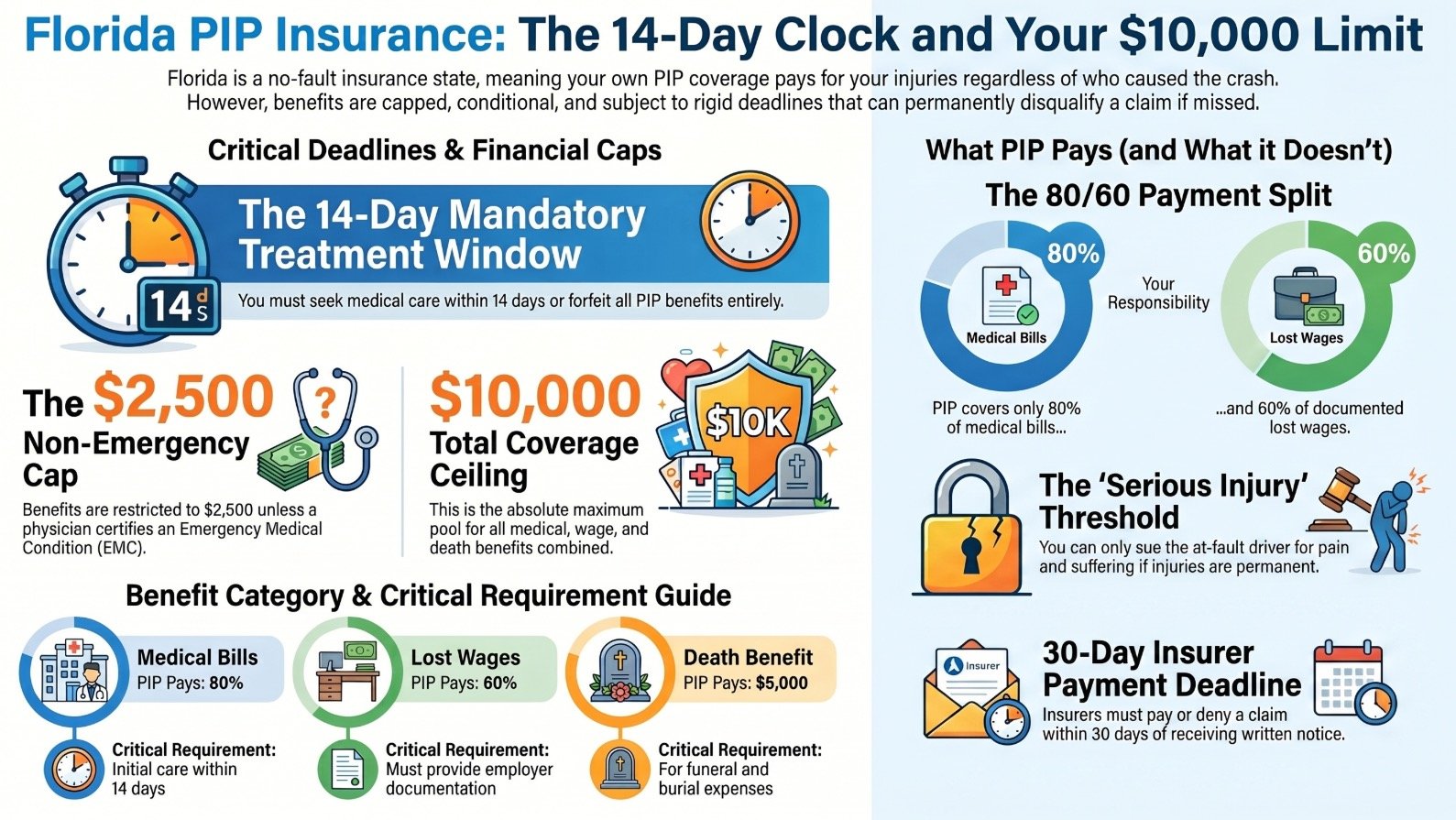
According to the FLHSMV 2022 Florida Traffic Crash Facts, Florida recorded 401,523 total crashes and 253,888 documented injuries in 2022 alone — every one of which potentially triggered a PIP claim. Florida requires all registered vehicle owners to carry a minimum of $10,000 in personal injury protection coverage, and every injured insured must begin treatment within 14 days of the crash to preserve eligibility. For injuries classified as non-emergency conditions, PIP benefits are capped at $2,500 — less than the out-of-pocket cost of a single emergency room visit. That gap between what PIP promises and what it actually pays is where most disputes begin.
Nationally, NHTSA data shows distracted driving claimed 3,308 lives in 2022 — a leading cause of the Florida crashes that generate PIP claims every day. The 14-day treatment clock, the emergency medical condition (EMC) determination, and the insurer’s 30-day payment window are all running simultaneously the moment a crash occurs. Families and injured individuals who understand these deadlines — and contact an attorney quickly — are in a far better position to recover the full benefits Florida law entitles them to.
Florida PIP — What the $10,000 Pays For, What It Doesn’t, and When You Can Go Beyond No-Fault
Florida’s no-fault system sounds simple — PIP pays your bills regardless of fault. In practice, the coverage is capped, conditional, and narrower than most policyholders expect. This chart shows exactly what PIP covers, where it stops, and when the law allows you to pursue the at-fault driver directly.
Florida HB 837 (2023) and PIP claims: While HB 837 did not change PIP coverage amounts, it significantly affected the liability claims that injured people pursue when PIP runs out. Before March 24, 2023, Florida used pure comparative fault — even a driver 99% at fault could recover 1% of damages. HB 837 converted Florida to modified comparative fault: if you are found more than 50% responsible for the crash, you cannot recover anything from the at-fault driver. This makes it more important than ever to build an accurate, evidence-supported liability claim alongside your PIP claim from day one — so that if your injuries exceed PIP limits and you need to sue the at-fault driver, the evidence needed to prevail under the new standard already exists.
Common Causes of Florida Personal Injury Protection (PIP) Claims
PIP claims in Florida often arise from recurring crash scenarios that create immediate medical needs, regardless of fault. Common causes include rear-end collisions, distracted driving crashes, pedestrian accident injuries, and rideshare vehicle accidents. Each circumstance may involve distinct insurance issues, medical documentation requirements, and deadlines that can affect an injured person’s ability to obtain benefits.
Rear-End Collisions
When traffic suddenly slows or a driver follows too closely, a rear-end collision can occur with little time for either motorist to react. In Florida, these crashes often lead to neck, back, and soft tissue injuries requiring prompt evaluation under personal injury protection benefits. Careful medical documentation helps establish the connection between the impact and the need for treatment, supporting injured individuals as they seek necessary care. Evidence preservation, including vehicle damage photographs, crash reports, and witness information, may also be important when insurers question the claim. Coverage disputes can arise over treatment necessity, billing, or policy limits. A wrongful denial may delay critical support, creating added hardship for those recovering. Skilled legal review can help protect access to benefits and promote fair claim handling.
Distracted Driving Crashes
How can a brief distraction lead to serious injuries? In Florida, a momentary lapse can prevent a driver from seeing slowing traffic, stopped vehicles, or changing roadway conditions. Distraction involving a phone — texting, navigation use, or reading notifications — is a frequent factor in crashes that trigger PIP claims. When attention shifts from the road, reaction time declines, and preventable crashes may occur. According to NHTSA’s distracted driving research, thousands of lives are lost each year to inattention on the road.
Distracted driving also includes eating, adjusting controls, speaking with passengers, or failing to observe traffic signals. These incidents often result in injuries that require prompt medical care and careful documentation under personal injury protection coverage. For those helping injured individuals, understanding distraction-related crashes supports timely guidance, accurate claim evaluation, and responsible advocacy after a collision.
Pedestrian Accident Injuries
On Florida roads, pedestrian accidents can cause severe injuries because an unprotected person has little defense against the force of a moving vehicle. These incidents often involve broken bones, traumatic brain injuries, spinal damage, and internal trauma requiring urgent care. Crosswalk safety remains central, yet driver negligence — including speeding, failing to yield, or ignoring traffic signals — frequently places pedestrians at risk. According to the Mayo Clinic, traumatic brain injury symptoms can be delayed by hours or days, making early medical evaluation critical after any pedestrian crash.
Florida personal injury protection benefits may help cover medical expenses and lost wages, but serious injuries can exceed available coverage, creating gaps that require a separate liability claim. When impairment prevents a return to work, disability claims may become necessary to support long-term needs. Legal guidance can help injured pedestrians, caregivers, and service-minded advocates understand coverage, preserve evidence, and pursue available compensation with diligence and dignity after a crash.
Rideshare Vehicle Accidents
Why do rideshare accidents raise distinct concerns under Florida personal injury protection coverage? These crashes often involve layered insurance issues, including the driver’s personal policy, the rideshare company’s coverage, and the injured person’s own PIP benefits. Passengers, pedestrians, and other motorists may need prompt medical care while responsibility is still being evaluated. Accurate rideshare accident reporting can help preserve critical facts, such as app status, trip acceptance, and vehicle information.
Florida PIP may provide initial medical and wage-loss benefits, but coverage disputes can arise when insurers question whether the driver was actively transporting a passenger. In serious cases, uninsured rideshare coverage may also become important. Careful review of all available policies helps injured individuals pursue necessary support while maintaining a service-focused approach to recovery and accountability.
Legal Rights of Florida Personal Injury Protection (PIP) Injury Claimants
After a crash, Florida personal injury protection benefits give injured policyholders important rights, including access to medical treatment and partial wage-loss benefits regardless of who caused the collision.
These rights help stabilize families, support recovery, and allow caregivers to respond promptly to urgent needs.
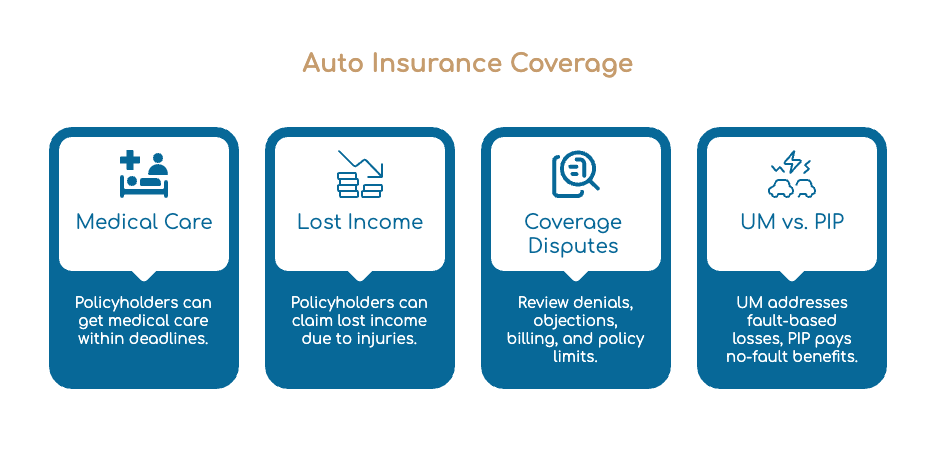
- Policyholders may seek covered medical care within required deadlines, including evaluation, therapy, and necessary follow-up treatment.
- Policyholders may claim a portion of lost income when crash injuries prevent them from performing normal work duties.
- Coverage dispute basics include carefully reviewing denials, medical-necessity objections, billing issues, and policy limits.
- UM and PIP serve different purposes: uninsured motorist coverage addresses fault-based injury losses, while PIP pays limited no-fault benefits first.
Florida law also protects injured persons from unfair delay or improper claim handling. A policyholder’s rights may depend on timely notice, accurate records, and consistent medical proof. Legal guidance can help preserve benefits while serving the injured person’s practical recovery needs.
Why Do Florida Personal Injury Protection (PIP) Injuries Happen?
Florida personal injury protection injuries often happen when sudden roadway forces overwhelm the body’s ability to absorb impact, even in collisions that appear minor at first. Rear-end crashes, side impacts, abrupt stops, and rideshare or delivery-related collisions can strain muscles, joints, discs, and nerves before visible signs appear. These injuries may also arise when vehicle safety systems, seat positioning, or road conditions increase the force transferred to occupants.
For people committed to serving others, delayed pain can be especially concerning because they may continue working, caregiving, or volunteering while symptoms worsen. Medical treatment may reveal soft tissue trauma, concussion symptoms, or spinal injury, yet early evaluations sometimes miss developing conditions. A failure to diagnose can allow manageable injuries to become more serious. Property damage does not always align with physical harm, since low repair costs may still entail significant psychological stress. Insurance underpayment can further complicate recovery by limiting access to appropriate care and support.
What Should You Do After a Florida Personal Injury Protection (PIP) Injury?
After a Florida PIP injury, the injured person should seek prompt medical care, both to address potential injuries and to comply with important insurance deadlines. The crash should be reported to the proper authorities and the insurance carrier, with care taken to provide accurate, consistent information. Evidence should also be preserved, including medical records, photographs, witness details, and repair documentation, because these materials may affect the strength of the PIP claim.
Seek Medical Care
When injuries may be connected to a motor vehicle crash, prompt medical evaluation is one of the most important steps a person can take. A qualified provider can identify conditions that are not immediately apparent, including soft-tissue damage, concussion symptoms, or internal complications. Timely care also helps protect the individual’s health while creating emergency documentation that may support a future PIP claim. Medical professionals can record complaints, findings, treatment recommendations, and a symptoms timeline, which may become important if pain worsens or new limitations appear. Delayed treatment can make recovery harder and may raise questions about whether the injuries relate to the crash. A person should follow all medical instructions, attend appointments, and preserve records, so caregivers and advocates can better understand the harm suffered.
Report the Crash
In the immediate aftermath of a collision, reporting the crash to the proper authorities can be pivotal for both safety and documentation. A person involved should contact law enforcement promptly, especially when anyone is injured, traffic is blocked, or property damage appears significant. Calling 911 allows emergency responders to assess hazards, assist vulnerable occupants, and create documentation that may later confirm the timing, location, and circumstances of the incident. The responding officer may prepare a crash report, record statements, and help coordinate medical transport when needed. Those assisting should remain calm, provide accurate facts, and avoid speculation. If available, dashcam footage should be mentioned to the officer, so relevant recordings are identified early without disrupting emergency response or public safety responsibilities for all.
Preserve Claim Evidence
Because evidence can disappear quickly after a Florida crash, a person seeking personal injury protection benefits should take reasonable steps to preserve information that may support the claim. Photographs of vehicle damage, road conditions, traffic signals, visible injuries, and debris can help clarify how the incident occurred. Medical documentation should be retained carefully, including emergency records, diagnostic results, treatment plans, prescriptions, and billing statements. If possible, the injured person should collect eyewitness statements, names, phone numbers, and addresses before memories fade or witnesses become difficult to locate. Ride service records, work absence notes, and repair estimates may also assist with benefit review. Organized records allow insurers, medical providers, and legal professionals to evaluate claims efficiently while supporting fair access to necessary care and recovery assistance.
Critical Evidence in a Florida Personal Injury Protection (PIP) Injury Case
Critical evidence in a Florida personal injury protection (PIP) injury case helps establish coverage, medical necessity, and the financial impact of the crash. Key materials often include medical treatment records, crash-scene evidence, insurance policy documents, and lost-wage documentation. Each category may affect how benefits are evaluated, disputed, or paid under Florida’s PIP framework.
Medical Treatment Records
After a Florida motor vehicle accident, medical treatment records often become the central evidence in evaluating a personal injury protection claim. These records may show diagnoses, prescribed care, referrals, therapy attendance, imaging results, and physician opinions concerning causation and necessity. A clear treatment timeline helps insurers, attorneys, and medical providers understand when symptoms appeared, how care progressed, and whether treatment complied with Florida PIP requirements. When providers request medical release forms, accurate completion can help obtain records without unnecessary delay and support orderly claim review.
Consistent documentation also assists injured persons who rely on benefits for timely care and financial stability. Gaps, conflicting notes, or incomplete billing records may create disputes. For a practical guide to which medical documents carry the most weight in Florida injury claims — including PIP disputes — the firm’s blog post What Medical Records Matter Most in a Florida Injury Claim explains exactly what providers and attorneys look for when building a strong claim file.
Crash Scene Evidence
When a Florida motor vehicle collision occurs, crash-scene evidence may help explain how the incident occurred, who was involved, and whether the reported injuries are consistent with the circumstances of the impact. This evidence can include vehicle positions, roadway markings, debris patterns, traffic signals, weather conditions, and visible property damage. A careful photographic checklist may help preserve details that later become difficult to verify. Images of license plates, intersections, skid marks, airbags, child seats, and surrounding hazards can support a clearer account of the event. Eyewitness statements may also provide important context, especially when drivers disagree or memories change. For those helping injured persons, organized scene evidence can help connect the collision to the treatment sought under Florida PIP benefits, while promoting accuracy, fairness, and responsible claim evaluation.
Insurance Policy Documents
Crash scene evidence may describe the collision itself, but insurance policy documents often determine how Florida personal injury protection benefits are identified, applied, and disputed. These documents show the named insured, covered vehicles, policy period, exclusions, deductibles, and available PIP limits. Careful policy coverage verification helps confirm whether benefits apply, which carrier must respond, and whether priority issues exist between household, vehicle, or resident-relative coverage. For those assisting injured individuals, organized policy review supports timely care coordination and reduces avoidable claim delays. Insurance declarations, endorsements, application materials, and claim correspondence may also reveal notice requirements or disputed policy terms. When medical records are requested, policy documents help link treatment billing to the appropriate coverage framework, enabling providers, adjusters, and legal representatives to evaluate benefits accurately, fairly, and with accountability.
Lost Wage Documentation
Although medical bills often receive immediate attention, lost wage documentation can be equally important in a Florida personal injury protection claim. Accurate records help show how an injury disrupted a person’s ability to work, serve others, and meet financial duties. Useful evidence may include employer wage statements, recent pay stubs, tax returns, work schedules, disability notes, and written confirmation of missed hours or reduced duties. For self-employed individuals, invoices, profit records, contracts, and client communications may be necessary. Timely collection matters because insurers often enforce strict documentation deadlines when reviewing wage loss benefits. Medical records should also connect the injury to the work limitation, especially when future medical expenses may affect earning capacity. Organized wage documentation supports a fair evaluation and helps prevent avoidable disputes during the claim process.
Event Data Recorder Evidence in Florida PIP and Injury Cases
Most vehicles manufactured after 2012 contain an event data recorder (EDR) — commonly called a black box — that captures speed, braking force, throttle position, steering angle, and seat-belt status in the seconds before and during a crash. In PIP and liability cases, this data can reconstruct exactly what happened at the moment of impact: whether the at-fault driver braked before hitting you, how fast they were going, and whether any evasive action was taken. EDR evidence is particularly valuable when an insurer disputes the severity of the crash or questions whether your injuries are consistent with the force of impact.
EDR data can be permanently overwritten the next time the vehicle’s ignition is turned on after the crash. If the other driver moves their vehicle from the scene or a tow operator starts the engine during recovery, the recording may be lost. Formal preservation demands must be sent immediately — to the other driver’s insurer and, if necessary, the vehicle owner — before evidence disappears. Because PIP cases often involve the same crash evidence used to build the concurrent liability claim, preserving EDR data early protects both the no-fault benefits claim and any direct claim against the at-fault party if your injuries later meet the serious injury threshold.
Long-Term Effects of Florida Personal Injury Protection (PIP) Injuries
Long-term effects from Florida personal injury protection injuries may include chronic pain complications, delayed symptoms, and functional limitations that develop after the initial medical evaluation. These conditions can complicate treatment planning, especially when injuries initially appear minor but later require diagnostic testing, therapy, or expert care. Ongoing medical costs may also become a central issue, as continued treatment can exceed available PIP benefits and affect the injured person’s financial recovery.
Chronic Pain Complications
Chronic pain can develop when injuries covered by Florida personal injury protection benefits do not fully resolve after the initial treatment period. Persistent neck, back, shoulder, or joint pain may limit mobility, reduce work capacity, and interfere with caregiving, household duties, or community service. Medical providers often document ongoing symptoms, functional restrictions, treatment progress, and medication compliance to show whether the injured person is following reasonable care recommendations. This documentation can become important when insurance coverage disputes arise over continued therapy, diagnostic testing, or expert referrals. Chronic pain may also require coordinated care, including physical therapy, pain management, and follow-up evaluations. Careful recordkeeping helps clarify the connection between the crash-related injury and lasting impairment, supporting fair consideration of available PIP benefits. Legal guidance may help protect access to care.
Delayed Injury Symptoms
Pain that persists after a crash may be only one part of a developing injury pattern, as some symptoms do not appear until days or weeks after the collision. Headaches, dizziness, numbness, limited mobility, sleep disruption, or changes in concentration may signal conditions that were not immediately apparent. Those assisting injured individuals should understand that delayed symptoms require careful attention rather than dismissal as minor discomfort. Symptom timelines can help connect emerging problems to the crash, especially when the injured person seeks evaluation promptly and reports changes clearly. Documenting injuries through medical visits, written descriptions, photographs, and daily notes may preserve important details that fade over time. This careful recordkeeping supports accurate care decisions and helps clarify the full impact of a Florida PIP-related injury.
Ongoing Medical Costs
When injuries require care beyond the initial evaluation, medical expenses may continue long after a Florida crash claim begins. Ongoing medical bills may involve therapy, imaging, consultations, specialist visits, prescriptions, or mobility support. For injured individuals and those helping them, careful attention to treatment coverage is essential because PIP benefits may apply only within defined limits. Providers, caregivers, and claim representatives often need accurate records to connect each service to the collision. Insurance deadlines also affect whether benefits remain available, making prompt documentation a practical form of support. As treatment continues, the reimbursement process may require itemized statements, medical opinions, and proof of payment. A Florida PIP injury lawyer can review disputed charges, identify unpaid benefits, and help protect access to necessary care. To understand what typical injury compensation looks like when PIP is exhausted and a direct liability claim is pursued, the firm’s blog post Average Personal Injury Settlements in Florida by Case Type provides useful context for injured people evaluating their options beyond no-fault coverage.
Proving Liability in Florida Personal Injury Protection (PIP) Injury Cases
Although Florida’s personal injury protection system is designed to provide prompt payment of medical benefits regardless of fault, liability can still become a central issue in many injury claims. When injuries exceed PIP limits or meet the serious injury threshold, the injured person may pursue recovery from the at-fault party. Establishing liability requires careful review of police reports, witness statements, photographs, medical records, and traffic laws. A well-organized evidence timeline helps show how the collision occurred, when symptoms developed, and whether the injuries are connected to the crash.
For those committed to helping injured individuals regain stability, accurate proof matters. Liability evidence can support a fair damages calculation, including medical expenses, lost income, and other losses permitted by law. Counsel may evaluate comparative fault, vehicle positions, roadway conditions, and available expert opinions. This disciplined approach helps clarify responsibility, preserve key facts, and support a claim that reflects the injured person’s needs and circumstances.
Dealing With Insurance Companies After a Florida Personal Injury Protection (PIP) Injury
After liability proof is gathered, contact with insurance companies often becomes the next significant stage of a Florida PIP injury claim. Insurers may request medical records, wage information, treatment notes, or statements about the collision. Each response should be accurate, timely, and consistent with the available documentation. Imprecise wording may create confusion, especially when adjusters evaluate coverage, injury severity, or payment obligations.
A structured approach helps protect the injured person while supporting fair review of the claim. Document deadlines should be monitored closely because late submissions may affect benefits or delay consideration. Communication records should also be preserved, including emails, letters, claim numbers, call dates, and the names of representatives involved. This organized recordkeeping serves others by promoting accountability and reducing misunderstandings. When questions arise, legal guidance can help ensure that necessary information is provided without volunteering statements that may be misread, overstated, or used outside their proper context during insurer evaluation.
What to Expect During a Florida Personal Injury Protection (PIP) Injury Claim Process
A Florida PIP injury claim typically begins with timely accident reporting, followed by prompt medical treatment to preserve eligibility for benefits. The injured person must then file the claim with the appropriate insurer, providing medical records, bills, and required documentation. If coverage disputes arise, the process may involve challenging denials, addressing benefit limits, and seeking proper payment under Florida law.
Reporting the Accident
When a motor vehicle accident occurs in Florida, the first step in a personal injury protection claim is to report it properly and promptly. The injured person should notify law enforcement when required, cooperate with the responding officer, and obtain the crash report number when available. Accurate reporting helps protect the record, reduce evidence gaps, and support those responsible for serving injured clients diligently. The insurer should also be notified promptly, because claim deadlines may affect available benefits. Clear facts, including vehicle information, witness names, and accident location, can limit compensation disputes later in the claim. If an insurer delays, misstates coverage, or refuses fair review, concerns about insurance bad faith may arise. Careful documentation at this stage preserves accountability and strengthens the claim process.
Seeking Medical Treatment
Because Florida PIP benefits depend heavily on timely medical care, an injured person should seek treatment as soon as possible after the crash, even if symptoms appear minor at first. Prompt evaluation helps identify hidden injuries, supports appropriate recovery planning, and creates records that reflect the person’s condition close to the time of impact. Emergency room documentation may include pain complaints, diagnostic test results, physician observations, and treatment recommendations. Follow-up care with primary providers, other clinicians, or approved therapy providers can further show the nature and progression of injuries. Chiropractic care may also be considered when soft-tissue pain, mobility limitations, or spinal discomfort is present. Consistent attendance, honest symptom reporting, and careful adherence to medical advice help preserve health, dignity, and a reliable treatment history.
Filing Your Claim
How does the filing process begin after medical care is underway? The injured person or a representative typically notifies the PIP insurer, confirms insurance coverage, and begins submitting forms required by the policy. This step should be handled carefully because accurate information supports timely review and responsible claim administration.
A complete filing usually includes required documentation, such as treatment records, billing statements, accident details, wage loss information, and provider reports. Those assisting the claimant should track deadlines closely, since Florida PIP benefits depend on prompt action and proper submission. Medical providers may also send bills directly to the insurer, but the claimant remains responsible for ensuring the claim file is organized. Careful preparation helps protect benefits, promotes orderly communication, and supports fair consideration of covered losses after a crash.
Resolving Coverage Disputes
Why do coverage disputes arise during a Florida PIP claim? They often develop when an insurer questions medical necessity, billing amounts, eligibility, or the timing of care. Disagreements may also involve policy limits, coverage exclusions, or whether injuries relate to the crash. In these situations, careful claim documentation is crucial, as records, bills, treatment notes, and accident details help clarify which benefits should be paid.
A lawyer may review the policy, identify dispute deadlines, communicate with the insurer, and preserve evidence needed to support payment. This process allows injured individuals and their caregivers to focus on recovery while the legal issues are addressed with order and care. When disputes continue, formal demands, negotiation, or litigation may be used to seek proper benefits under Florida law for the claimant.
Compensation for Florida Personal Injury Protection (PIP) Injury Damages
After a motor vehicle accident, Florida personal injury protection benefits may provide compensation for certain medical expenses, lost income, and related losses regardless of fault, subject to statutory limits and policy terms. This no-fault coverage is intended to promptly support injured persons, helping them obtain necessary care and maintain basic stability as recovery begins.
Compensation may include a percentage of reasonable and necessary medical treatment, partial wage replacement, mileage for medical travel, and limited death benefits when applicable. Proper documentation is important, including treatment records, employment verification, billing statements, and proof of missed work. Insurers may review whether care was timely, related to the crash, and medically necessary.
Claim timelines are important because Florida law imposes strict requirements for seeking initial medical treatment and submitting benefits information. A lawyer may assist by organizing evidence, communicating with insurers, and addressing payment delays, allowing injured persons and caregivers to focus on recovery and responsible support. Results may vary. Prior results do not guarantee a similar outcome.
Economic vs. Non-Economic Damages in Florida Personal Injury Protection (PIP) Cases
In Florida PIP cases, damages are generally evaluated as economic losses, such as medical expenses and lost wages, and non-economic losses, such as pain, suffering, and diminished quality of life. Personal injury protection coverage is primarily designed to address certain economic damages, subject to statutory limits and policy terms. Understanding these distinctions is important because PIP coverage limits may affect the compensation available and whether additional claims can be pursued.
Economic Damages Explained
When an injured person seeks compensation after a Florida motor vehicle accident, economic damages are the measurable financial losses resulting from the injury. These losses may include emergency care, hospital bills, rehabilitation, prescription costs, diagnostic testing, and future medical treatment supported by medical documentation. They may also include lost income when an injured person cannot work, provided wage verification establishes earnings before and after the crash. In Florida PIP cases, accurate records help insurers, attorneys, and courts evaluate the financial impact consistently and fairly. Economic damages may also address out-of-pocket expenses, transportation to appointments, and necessary household aid. Careful documentation serves those harmed by preserving proof, reducing disputes, and helping ensure that available benefits are applied to legitimate, injury-related financial needs after a covered accident.
Non-Economic Damages Explained
Non-economic damages refer to the personal, non-financial harms that may result from a Florida motor vehicle accident, including pain, suffering, emotional distress, physical inconvenience, loss of enjoyment of life, and the lasting effects of impairment or disfigurement. These harms may affect a person’s ability to work, care for family, serve the community, or maintain ordinary daily routines. Unlike medical bills or lost wages, they are not measured by receipts alone. Careful evaluation often depends on medical documentation, treatment history, physician opinions, and credible descriptions of how the injuries changed the person’s life. How PIP settlements address these losses can vary because PIP benefits focus primarily on defined injury-related expenses. Serious injuries may require broader legal review to determine whether additional recovery is appropriate.
PIP Coverage Limits
Because Florida PIP coverage is limited by statute and policy terms, it does not function as full compensation for every loss caused by a motor vehicle accident. PIP generally pays a portion of necessary medical expenses and lost wages, while excluding non-economic damages such as pain, suffering, and reduced quality of life. Careful medical documentation helps establish covered economic losses, supports timely payment, and reduces preventable claim denials. When losses exceed PIP limits, injured persons may need to evaluate other available coverage, including liability insurance or an uninsured/underinsured motorist claim. Coverage disputes often arise when insurers question the necessity of treatment, billing accuracy, or accident causation. A service-focused legal assessment can help protect benefits, clarify available remedies, and guide injured individuals toward responsible recovery options under Florida law and insurance.
When a Florida Personal Injury Protection (PIP) Injury Case Goes to Trial vs. Settlement
In a Florida PIP injury claim, the path toward settlement or trial often depends on the severity of the injuries, the amount of available insurance coverage, and the strength of the evidence supporting the claim. Many matters are resolved through settlement when medical records, wage-loss documentation, and insurer communications support a fair payment without further dispute. Settlement negotiation may include presenting organized treatment summaries, clarifying unpaid benefits, and responding firmly to undervalued offers while preserving a cooperative, service-focused approach.
A case may move toward trial when liability, causation, billing, or the value of damages remains contested. Trial preparation steps often include gathering witness testimony, securing medical opinions, reviewing claim files, and preparing exhibits that clearly explain the harm. For injured persons and those helping them, the central goal is practical resolution. Settlement may provide speed and certainty, while a trial may be necessary when a fair outcome cannot otherwise be reached through negotiation.
Florida Laws That May Affect Your Florida Personal Injury Protection (PIP) Case
Florida PIP disputes are shaped not only by negotiation strategy or trial readiness, but also by statutory rules that control coverage, deadlines, benefits, and insurer obligations.
These laws help injured people obtain prompt medical support while requiring accurate documentation and fair claim handling.
- Florida’s no-fault framework generally requires an injured insured to seek PIP benefits first, regardless of who caused the crash.
- Benefit rules may limit payment for medical care, lost income, and related services, making proper billing and records critical.
- Florida PIP exclusions can affect claims involving certain vehicle uses, coverage gaps, intentional conduct, or noncompliance with policy terms.
- Insurer duties require timely review, reasonable investigation, and written explanations when benefits are reduced, delayed, or denied.
Attorneys evaluating claim denial appeals may examine policy language, medical records, payment logs, and insurer correspondence. Careful legal review supports those working to restore stability for injured clients and their families.
The Statute of Limitations for Florida Personal Injury Protection (PIP) Injury Cases
When a dispute arises over personal injury protection benefits, strict filing deadlines can determine whether an injured person, medical provider, or assignee may pursue unpaid benefits in court. In Florida, many PIP actions are treated as contract claims, and the applicable limitation period depends on the policy, the date of loss, and the nature of the alleged nonpayment. Parties must also consider statutory presuit requirements, demand letters, and insurer response periods, because coverage dispute timelines may affect when litigation becomes ripe.
Timely attention to documentation is critical. Medical record errors, late billing, incomplete assignments of benefits, or unclear proof of treatment can complicate the calculation of deadlines and weaken an otherwise valid claim. For those committed to serving injured people responsibly, awareness of deadlines supports orderly claims handling and reduces avoidable loss of rights. Once the limitations period expires, a court may dismiss the case, regardless of the seriousness of the injury or the amount unpaid. For personal injury claims pursued against the at-fault driver when PIP limits are exceeded, Florida’s two-year statute of limitations (effective March 24, 2023, under HB 837) applies from the date of the crash.
How a Florida Personal Injury Protection (PIP) Injury Lawyer Can Help You
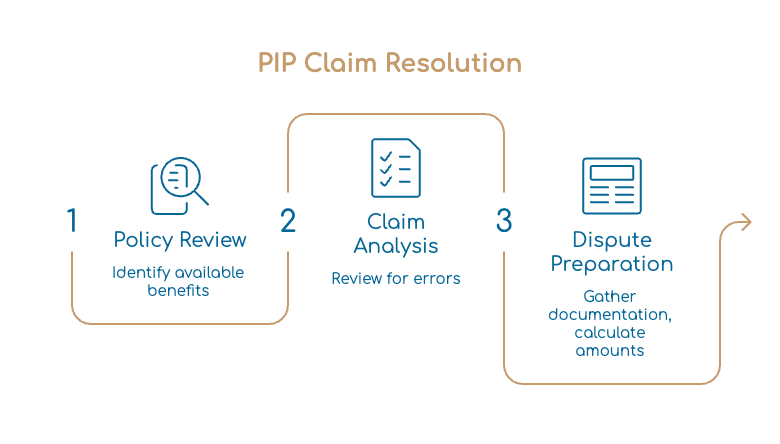
Because PIP disputes often involve policy language, statutory procedures, medical billing rules, and tight response deadlines, a Florida personal injury protection injury lawyer can help evaluate whether benefits were properly denied, reduced, or delayed. This support may be important for injured people, medical providers, and families seeking fair access to coverage after a crash.
- Policy review: The lawyer examines the insurance policy, declarations page, exclusions, and coverage limits to identify available benefits.
- Claim analysis: The lawyer reviews denied PIP claims, payment explanations, medical records, and billing codes for errors or improper reductions.
- Dispute preparation: The lawyer gathers documentation, calculates unpaid amounts, and communicates with the insurer clearly and in an organized manner.
- Accountability: When a wrongful denial appears, the lawyer may pursue available legal remedies to encourage compliance and protect the claimant’s rights.
Through this process, counsel helps promote orderly resolution, responsible advocacy, and service-centered support.
When to Contact a Florida Personal Injury Protection (PIP) Injury Lawyer
After a crash, legal guidance should be considered as soon as questions arise about coverage, medical bills, claim deadlines, or an insurer’s payment decision. A Florida personal injury protection lawyer may be contacted when treatment begins, when benefits are delayed, or when a provider requests assistance with billing issues. Prompt communication helps preserve claim documentation, including accident reports, medical records, wage information, and insurer correspondence.
Contact may also be appropriate when an injured person is unsure whether all required notices have been submitted, or when a statute deadline could affect available benefits. Families, caregivers, and service-minded professionals assisting an injured individual should encourage early review rather than waiting for a denial. Timely involvement can help clarify obligations, organize records, and reduce avoidable confusion during recovery. If an insurer disputes necessity, coding, causation, or payment amounts, legal guidance may provide direction on the next proper steps under Florida PIP procedures and timelines.
Why You Need an Experienced Florida Personal Injury Protection (PIP) Injury Lawyer
Although PIP coverage is intended to provide prompt payment for certain accident-related losses, Florida’s rules can become difficult to administer once medical treatment, billing codes, policy limits, and insurer reviews are involved. An experienced Florida personal injury protection lawyer can help protect an injured person’s access to benefits while reducing confusion during a demanding recovery period.
PIP disputes often involve questions about policy coverage, reasonable medical charges, emergency medical condition findings, and whether the insurer properly handled a claim. Counsel can review documents, communicate with insurers, and identify issues that may affect payment. This guidance is especially important when medical providers, families, and caretakers are trying to support the injured person’s health and stability.
Filing deadlines also require close attention, because missed timelines may limit available benefits or weaken a claim. Experienced legal assistance helps ensure that required notices, records, and responses are handled with care, accuracy, and in a timely manner.
How to Choose the Right Florida Personal Injury Protection (PIP) Injury Lawyer for Your Case
Selecting the right Florida personal injury protection injury lawyer begins with evaluating whether the attorney has focused experience handling PIP claims, insurer disputes, medical billing issues, and Florida’s no-fault insurance requirements. A qualified lawyer should understand how accident-related medical treatment is documented, how benefits are challenged, and how delayed or denied payments affect injured people seeking stability.
The decision should also consider client communication. A lawyer who provides timely updates, clear explanations, and practical guidance can help claimants make informed choices while reducing confusion during an already difficult recovery period. Compassionate service, organized case management, and responsiveness reflect a commitment to helping others with dignity.
Fee transparency is another important factor. Prospective clients should receive clear information about costs, payment arrangements, and what services are included before representation begins. Careful review of credentials, case approach, and professional reputation can help identify counsel prepared to protect available PIP benefits effectively and efficiently.
About The Law Offices of Anidjar & Levine
Founded in 2005 by Marc Anidjar and Glen Levine, the firm began as a two-person operation working out of a construction office conference room. Over the past 20 years, that modest start has grown into one of Florida’s most recognized personal injury practices — with more than $1 billion recovered in settlements for injury clients across the state. We bring that same determination and depth of experience to every case we handle.
For individuals seeking guidance after a Florida auto accident, The Law Offices of Anidjar & Levine provides legal support focused on protecting clients’ rights, pursuing available PIP benefits, and addressing insurance disputes with careful attention to detail. The firm assists injured individuals by reviewing coverage, explaining deadlines, and identifying potential paths for compensation when medical bills, lost income, or denied claims create added strain.
Through client-focused representation, the firm emphasizes communication, preparation, and service to those facing difficult recovery periods. Its legal team works to reduce burdens on clients, allowing them to focus on recovery while the firm manages claim-related responsibilities. The Law Offices of Anidjar & Levine addresses insurer resistance, gathers relevant evidence, and pursues fair outcomes under Florida law. The firm’s approach reflects a commitment to helping injured individuals move forward with informed decisions, steady guidance, and practical legal support after serious collisions.
Frequently Asked Questions
Does PIP Cover Injuries if I Was a Passenger?
Yes, PIP coverage may apply when the injured person was a passenger, depending on passenger eligibility and available policies. Coverage often comes first from the passenger’s own auto policy, or a resident relative’s policy, before the vehicle owner’s policy. If losses exceed PIP benefits, personal injury claims may involve the at-fault driver, subject to liability insurer limits. Careful review helps ensure injured passengers receive proper benefits and support.
Can I Use PIP Benefits Without Health Insurance?
Yes, PIP benefits may be used without health insurance if policy terms and medical eligibility are satisfied. PIP is designed to cover qualifying accident-related medical expenses, regardless of separate health coverage. A passenger, caregiver, or service provider should note PIP access limits, required treatment timelines, and documentation standards. Proper billing, prompt evaluation, and clear injury records help secure benefits while supporting responsible care for injured persons.
Does PIP Cover Chiropractic Treatment in Florida?
Yes, PIP may cover chiropractic treatment in Florida when care is medically necessary and received within required time limits. PIP chiropractic coverage generally applies after a motor vehicle accident, subject to policy limits, deductibles, and documentation. Florida treatment eligibility often requires an initial evaluation within 14 days. A person seeking to help an injured patient should encourage prompt care, accurate records, and compliance with insurer requests to preserve available benefits.
Can Undocumented Immigrants Receive Florida PIP Benefits?
Yes, undocumented immigrants can receive Florida PIP benefits if they were injured in a covered motor vehicle accident and meet policy conditions. Eligibility generally depends on insurance coverage, accident facts, proof of residency, and compliance with documentation requirements, not immigration status alone. Service providers should help gather medical records, billing statements, and timely claim forms. Because insurers may scrutinize claims, careful documentation supports access to legally available benefits.
Will Using PIP Benefits Raise My Insurance Rates?
Using PIP benefits may affect insurance rates, but an increase is not automatic. Insurers review rate impact factors, including fault, injury severity, payment amounts, prior claims, and overall policy history. A single necessary claim may carry limited effect, especially when handled responsibly. Those helping injured people should encourage accurate reporting, timely treatment, and safe practices, since repeated claims often create greater underwriting concern.
How Long Does a Florida PIP Insurer Have to Pay a Claim?
Under Florida Statute §627.736(4), a PIP insurer must pay or deny a claim within 30 days of receiving written notice with supporting documentation. If the insurer requires additional time to investigate, it must notify the claimant within that 30-day window and may not delay beyond 120 days. Failing to comply without a reasonable basis can expose the insurer to bad faith liability. Prompt submission of complete medical records, billing statements, and accident documentation helps insurers meet these deadlines and avoids delays in benefit payment.
What Happens if My Injuries Exceed Florida PIP Limits?
If your injuries exceed Florida’s $10,000 PIP limit, you may be able to step outside the no-fault system and pursue a direct liability claim against the at-fault driver — but only if your injuries meet Florida’s serious injury threshold: a permanent injury within a reasonable degree of medical probability, significant and permanent scarring or disfigurement, or death. If the at-fault driver is uninsured or underinsured, your own UM/UIM coverage may provide an additional layer of recovery. An attorney can evaluate whether your injuries meet the threshold and what additional claims may be available beyond PIP.
A Florida personal injury protection claim can involve strict deadlines, coverage disputes, and medical documentation requirements. An experienced PIP injury lawyer can help protect a client’s rights, address insurer challenges, and pursue the benefits available under Florida law.
The Law Offices of Anidjar & Levine provides focused legal guidance for injured individuals seeking clarity after an accident, including support from a Florida Car Accident Lawyer.
Prompt legal support may improve the handling of a claim and help injured people move forward with confidence. Results may vary. Prior results do not guarantee a similar outcome.