

The Law Offices of Anidjar and Levine help injured people after serious commercial vehicle crashes by preserving evidence, evaluating liability, and managing insurer communications. A Pensacola Personal Injury Lawyer may review crash reports, medical records, witness accounts, electronic logging data, maintenance records, and roadway conditions. Counsel can also assess long-term losses, including future treatment and lost income, while helping clients avoid premature settlement decisions. The sections below explain common causes, legal rights, and factors that may strengthen a claim.
Main Takeaways
- Pensacola truck accident claims often involve road hazards, maintenance failures, and multiple liable parties beyond the truck driver.
- Dangerous local conditions include heavy traffic, highway merging, construction zones, poor drainage, debris, and faded lane markings.
- A lawyer can preserve evidence like crash reports, witness statements, electronic data, maintenance records, and dashcam footage.
- Case value may depend on injury severity, future treatment, lost income, insurance limits, and household impact.
- Early legal guidance can help manage insurers, avoid premature settlements, and protect recovery after a serious truck crash.


How We Can Help With Your Pensacola Roads & Highways Truck Accident Injury Claim
When a truck collision occurs on Pensacola roads or highways, the resulting injury claim often involves far more than a standard traffic accident case. Effective legal support focuses on protecting injured people and families while guiding them toward practical, service-minded solutions. Counsel can evaluate losses, organize medical records, preserve key evidence, and manage communications with insurers so clients can focus on recovery and caring for others.
A disciplined claim strategy also helps prevent costly mistakes. This includes avoiding early settlement pitfalls, especially when long-term treatment needs or diminished earning capacity remain uncertain. Attorneys may identify every available source of recovery, including commercial policies and working with UM/UIM coverage when another party’s insurance is insufficient. They can coordinate expert review, calculate fair compensation, and present a well-supported demand that reflects present and future harm. If negotiations fail, they can prepare the matter for litigation and continue advocating with steadiness, professionalism, and a clear commitment to meaningful recovery.
OUR CONSULTATIONSARE FREE
START YOUR FREE CASE REVIEW

Understanding Pensacola Roads & Highways Truck Accident Injury Cases
A sound claim strategy begins with a clear understanding of how Pensacola roads and highways truck accident injury cases are evaluated. These matters often require careful review of medical records, crash reports, witness statements, and electronic data to measure liability and damages with precision.
A detached legal assessment also considers the severity of injuries, future treatment needs, lost income, and the broader impact on a household’s ability to serve and support others. When a collision proves fatal, wrongful death claims may involve additional losses, including funeral expenses and the loss of companionship and guidance. Attorneys also examine insurance coverage limits, policy exclusions, and the relationship between multiple potentially responsible parties. Because trucking cases can involve commercial carriers, contractors, and maintenance providers, early documentation and organized advocacy are important. A thorough understanding of these factors helps injured people and families pursue accountability, protect financial stability, and make informed decisions throughout the legal process.
Common Causes of Pensacola Roads & Highways Truck Accidents
Several recurring factors are often identified in truck accidents on Pensacola roads and highways, each presenting serious safety concerns for motorists and commercial carriers alike. Common causes include driver fatigue, speeding and reckless driving, improper truck maintenance, and unsafe road conditions, all of which can increase the likelihood of loss of control or delayed reaction. A clear understanding of these issues helps frame how liability and preventability may be evaluated in truck accident claims.
Driver Fatigue Risks
Because long-haul schedules, overnight driving, and irregular rest periods can greatly impair alertness, driver fatigue remains a major cause of truck accidents on Pensacola roads and highways. Fatigued drivers may experience delayed reactions, poor judgment, drifting lanes, and reduced awareness of changing traffic conditions. These impairments place nearby motorists, passengers, and roadside workers at serious risk.
In many cases, preventable warning signs are missed. Sleep disorders overlooked, including sleep apnea, can leave a driver dangerously exhausted despite time off duty. Rest break violations may also undermine federal safety rules designed to protect the public. Carriers, dispatchers, and drivers all share responsibility for recognizing fatigue, honoring legal limits, and supporting practices that prioritize human safety. Careful compliance helps safeguard families, communities, and everyone traveling Pensacola’s roadways each day.
Speeding And Reckless Driving
Speeding and reckless driving present another major threat on Pensacola roads and highways, especially when commercial trucks are involved. Because tractor-trailers require greater stopping distance and wider turning space, excessive speed can quickly transform ordinary traffic conditions into devastating collisions. Reckless behaviors, including abrupt lane changes, tailgating, and aggressive merging, may place smaller vehicles and nearby families at severe risk. In many cases, a careful investigation considers Traffic citation records, witness statements, and electronic data to determine whether a truck driver ignored basic safety obligations. A thorough review of dashcam footage may also reveal unsafe passing, distracted driving, or deliberate disregard for posted limits. For those committed to protecting others, understanding how speeding and reckless driving contribute to truck crashes supports stronger accountability, safer roadway practices, and more informed legal action after a serious incident.
Improper Truck Maintenance
When commercial trucks are not properly inspected and repaired, mechanical failure can create immediate danger on Pensacola roads and highways. Worn tires, damaged handling components, and defective lights can reduce a driver’s ability to respond safely in traffic. Brake system failures are especially serious because a fully loaded truck requires greater stopping distance and stable control. Maintenance neglect may also contribute to load securement issues, as weakened tie-downs, damaged trailers, or faulty coupling equipment can allow cargo to shift unexpectedly. In many cases, these hazards develop over time through missed inspections, delayed repairs, or poor recordkeeping. A careful review of service logs, repair histories, and inspection reports often helps identify whether preventable maintenance failures placed motorists, passengers, and nearby families at unnecessary risk. Such failures can threaten entire communities.
Unsafe Road Conditions
Although commercial truck drivers are expected to adjust to changing conditions, unsafe road surfaces and roadway defects can still create substantial hazards on Pensacola roads and highways. Potholes, uneven pavement, poor drainage, faded lane markings, and debris may reduce traction, limit visibility, and increase stopping distance for fully loaded trucks. In some areas, inadequate Safety signage may fail to warn motorists and truck operators about construction zones, sharp curves, or sudden lane shifts. Dangerous shoulder drop-offs and poorly timed signals can also contribute to intersection hazards, particularly where large trucks require more space to turn or brake safely. When public agencies or contractors neglect roadway maintenance, the risk of serious collisions rises. Identifying these conditions helps families, injured people, and advocates pursue accountability and support safer travel for everyone in the community.
Don’t Wait. Call Our Florida Personal Injury Lawyers Now!


Legal Rights of Pensacola Roads & Highways Truck Accident Injury Victims
Because collisions involving commercial trucks on Pensacola roads and highways often cause severe harm, injured victims generally have important legal rights under Florida law to pursue compensation for medical expenses, lost income, pain and suffering, and other related losses. These rights may also include uninsured motorist coverage and, in fatal cases, Wrongful death eligibility for surviving family members seeking justice and financial stability.
- Victims may pursue claims against negligent drivers, trucking companies, maintenance providers, or other responsible parties.
- They may seek compensation for current and future treatment, reduced earning capacity, rehabilitation needs, and property damage.
- They often have the right to preserve evidence, receive fair treatment from insurers, and obtain legal guidance that protects community well-being.
Florida law also imposes filing deadlines and comparative fault rules, which can affect recovery. Meticulous documentation, timely action, and informed advocacy help ensure injured individuals and families are treated with dignity while pursuing accountability and meaningful support after a devastating truck collision.
Why Do Pensacola Roads & Highways Truck Accident Injuries Happen?
Why do truck accident injuries on Pensacola roads and highways occur so often with such serious consequences? Commercial trucks carry immense weight, require longer stopping distances, and create powerful collision forces when drivers, carriers, or maintenance teams neglect safety obligations. Even a brief lapse can place nearby families, workers, and volunteers in danger.
Many injuries stem from preventable failures in judgment, inspection, and compliance. Driver fatigue, distraction, speeding, impaired visibility, and poor vehicle maintenance can all contribute to catastrophic harm. Violations of Federal FMCSA rules may involve hours-of-service breaches, inadequate training, skipped inspections, or overloaded trailers. Cargo securement failures also create severe risks, because shifting or falling loads can destabilize a truck or strike surrounding vehicles. On Pensacola roads, heavy traffic, highway merging, sudden weather changes, and construction zones can magnify these hazards. When safety systems fail at multiple points, the resulting injuries are often life-changing for those committed to caring for others.
What Should You Do After a Pensacola Roads & Highways Truck Accident Injury?
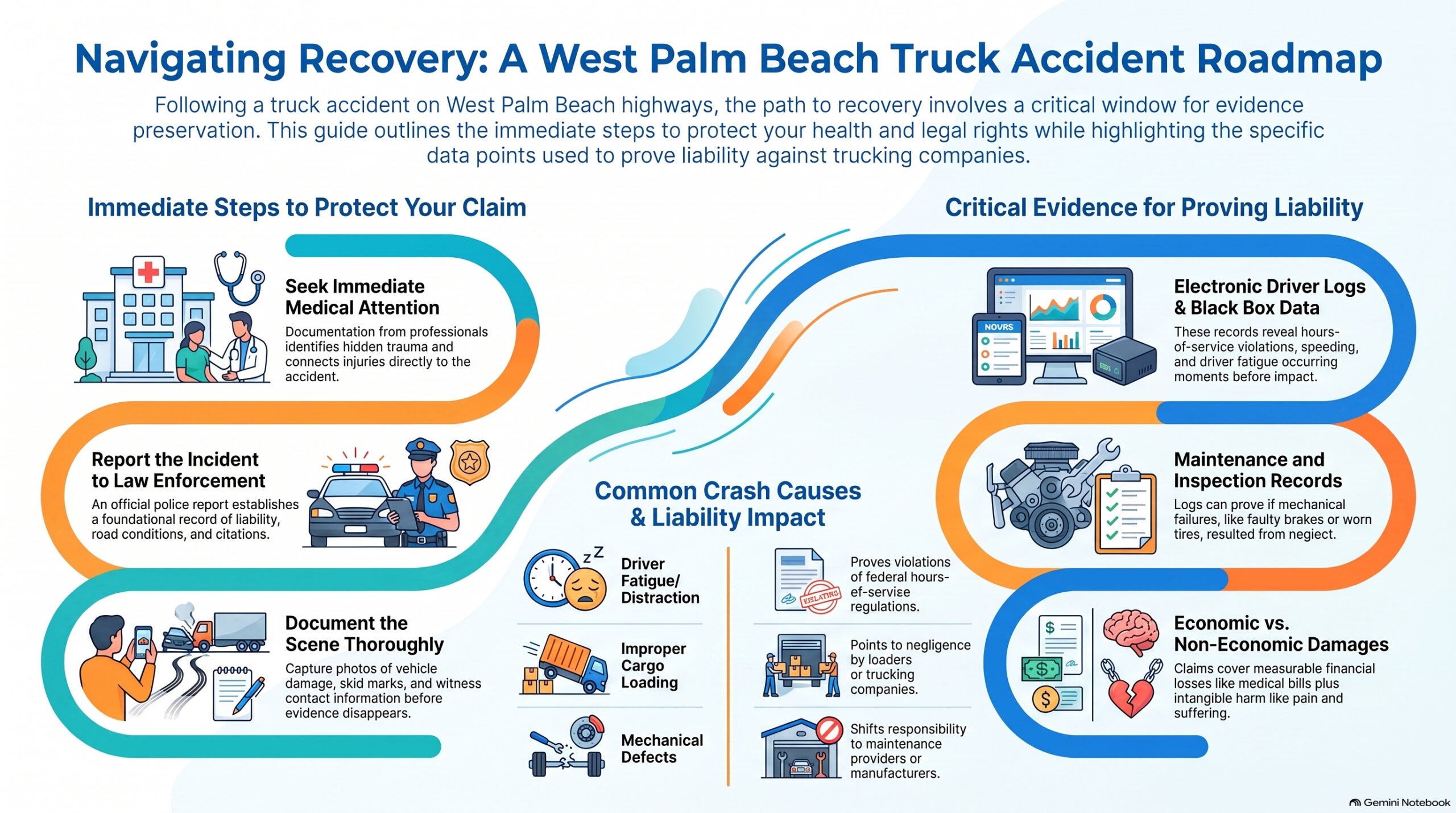
After a Pensacola road or highway truck accident injury, prompt medical evaluation is generally vital to protect both health and the record of harm. Important evidence, including photographs, contact information, and official reports, should also be preserved as early as possible before details are lost. Legal guidance from a truck accident lawyer may then help protect the injured party’s rights and support a more informed response to the claims process.
Seek Immediate Medical Care
Seek immediate medical attention, even when injuries seem minor, as truck accidents on Pensacola roads and highways often cause trauma that is not immediately apparent. Prompt evaluation protects health, supports recovery, and helps ensure hidden conditions, including internal injuries, concussions, and spinal damage, are diagnosed before they worsen.
Timely treatment also creates a clear medical record that may help establish fault liability and document damages without delay. Physicians can link symptoms to the collision, recommend follow-up care, and outline physical limitations affecting work, family responsibilities, and community service. Following medical advice demonstrates a responsible commitment to restoring health and to those who depend on the injured person’s well-being. When emergency symptoms appear, such as severe pain, dizziness, difficulty breathing, or numbness, immediate transport to a hospital is strongly advised.
Preserve Crash Evidence
Medical care should be followed by careful preservation of crash evidence, because the information gathered in the hours and days following a Pensacola truck accident injury can strongly affect any later insurance claim or legal case. If possible, the injured person or a trusted helper should photograph vehicle damage, skid marks, roadway debris, traffic signs, weather conditions, and visible injuries. Names and contact information for all involved parties should be documented accurately.
Prompt collection of Witness statements may help preserve details before memories fade. Efforts toward preserving footage from dash cameras, nearby businesses, traffic cameras, or residential security systems can also prove valuable. Damaged clothing, personal property, medical records, repair estimates, and receipts should be kept in an organized file to support a clear, service-minded account of the event.
Contact A Truck Lawyer
Because truck collision claims often involve multiple insurers, commercial carriers, and time-sensitive evidence, early contact with a Pensacola truck accident lawyer can help protect an injured person’s legal and financial interests. Counsel may guide communication with adjusters, prevent harmful statements, and identify liable parties whose conduct affected others on the road.
A prompt legal review also supports service-minded recovery by preserving facts that may benefit families and the wider community. Through Witness statement collection, dashcam footage review, logbook analysis, and electronic data preservation, an attorney can build a clear record of what occurred. Legal counsel may also evaluate medical documentation, lost income, and future care needs, then pursue fair compensation through negotiation or litigation. Early action often strengthens a claim and reduces avoidable setbacks during an already difficult period.
Critical Evidence in a Pensacola Roads & Highways Truck Accident Injury Case
In a Pensacola roads and highways truck accident injury case, the strength of a claim often depends on whether essential records are identified and preserved early.
Critical evidence may include:
- Electronic Logging Device data and black box evidence
- Driver qualification files
- Scene and roadway documentation
Each category can help establish how the crash occurred, whether safety rules were followed, and which parties may bear legal responsibility.
Electronic Logging Device Data
When a commercial truck collision occurs on Pensacola roads or highways, electronic logging device data often becomes a central source of objective evidence. These records can show driving hours, rest breaks, speed patterns, route history, and sudden changes before impact. In matters involving public safety and accountability, such data may help clarify whether fatigue, delay, or schedule pressure contributed to the event.
Attorneys and investigators often move quickly to preserve this information because it may support witness statements, crash reports, and insurance claim timelines. Proper review can also reveal inconsistencies between recorded activity and other documentation, including Driver qualification records, without relying on speculation. By identifying when the truck was operating and how long the driver had been on duty, electronic logging data can materially strengthen a well-prepared injury case.
Driver Qualification Files
Although electronic records often receive immediate attention after a commercial truck collision, driver qualification files can be equally important in a Pensacola roads and highways truck accident injury case. These files may reveal whether a carrier properly reviewed licensing, training, medical certification, prior violations, and employment history before placing a driver behind the wheel. They can also show whether Trucking compliance checks were meaningful or merely procedural. When examined carefully, qualification records may identify overlooked red flags, patterns of unsafe conduct, or failures in Safety policy enforcement. Such information can help clarify whether preventable risks were ignored, exposing the public to harm. For those committed to protecting others, this evidence may provide a clearer understanding of responsibility and whether the trucking company fulfilled its duty to operate with reasonable care.
Black Box Evidence
A truck’s electronic control module, event data recorder, or other onboard recording system can preserve objective information that is often central to a Pensacola roads and highways truck accident injury case. These systems may capture speed, braking, throttle position, steering input, engine hours, and sudden changes in these parameters shortly before impact. When secured promptly, black box evidence can help clarify whether a truck driver, carrier, or maintenance provider failed in a duty of care. It can also be compared with Witness statements and medical records to test consistency and strengthen a factual timeline. Because digital data can be overwritten, early preservation is often critical. Careful review by qualified experts allows this evidence to guide injured people, support accountability, and promote safer conduct on heavily traveled Pensacola roads and highways for all.
Scene And Roadway Documentation
Because physical conditions can change within hours, thorough scene and roadway documentation often becomes a critical source of proof in a Pensacola roads and highways truck accident injury case. Photographs of skid marks, gouge marks, debris fields, lane closures, weather, lighting, signage, and shoulder conditions may help reconstruct vehicle movement and precisely identify contributing hazards.
Accurate measurements, surveillance footage, and prompt collection of witness statements can preserve details that fade quickly after emergency responders clear the area. This documentation also supports expert analysis of speed, braking, visibility, and roadway design. When combined with careful communication with insurance adjusters, it can reduce disputes over liability and damages. For families seeking to protect others from preventable harm, disciplined documentation often provides a reliable foundation for accountability, informed legal action, and fair case evaluation later on.
Long-Term Effects of Pensacola Roads & Highways Truck Accident Injuries
Truck accident injuries on Pensacola roads and highways often produce consequences that extend well beyond the initial medical emergency. Victims may face chronic pain that disrupts daily function, emotional trauma that affects mental stability, and lasting physical limitations that alter routine responsibilities. These long-term effects can also reduce work capacity, creating financial strain and complicating both recovery and future planning.
Chronic Pain Challenges
When collisions involving large commercial vehicles cause lasting physical harm, chronic pain often becomes one of the most disruptive long-term consequences for injured individuals in Pensacola. Persistent back injuries, nerve damage, joint limitations, and recurring headaches may interfere with daily responsibilities, treatment progress, and the ability to assist loved ones consistently. Over time, pain management can require medication, physical therapy, specialist evaluations, and workplace accommodations, all of which create ongoing financial and practical burdens. Careful attention to insurance claim timelines is important because delayed reporting or incomplete records may weaken a claim. Useful compensation documentation tips include preserving medical bills, physician notes, treatment calendars, mileage records, and statements describing functional limitations. Thorough records help demonstrate how chronic pain affects long-term recovery, employment capacity, and necessary future care needs.
Emotional Trauma Effects
Physical injuries are often accompanied by psychological harm that continues long after a Pensacola roads or highways truck accident has ended. Survivors may experience anxiety, depression, irritability, intrusive memories, and a persistent sense of vulnerability during routine travel. These conditions can disrupt relationships, diminish concentration, and complicate efforts to care for loved ones and participate in community life.
Emotional trauma also appears through Sleep deprivation symptoms, including fatigue, agitation, and impaired judgment. When insurers rely on insurance denial strategies to minimize mental health consequences, injured individuals may feel dismissed or discouraged from seeking appropriate support. Careful documentation, consistent treatment, and informed legal guidance often help establish the seriousness of these invisible injuries. Recognizing emotional trauma as a legitimate long-term effect supports fuller recovery and more responsible advocacy for those harmed.
Reduced Work Capacity
Although many accident victims eventually leave acute treatment, lasting impairments can substantially reduce work capacity long after a Pensacola roads or highways collision. Chronic pain, reduced mobility, nerve damage, and cognitive limitations may prevent a return to prior duties, especially in physically demanding or safety-sensitive roles. Even motivated individuals may need fewer hours, lighter assignments, or retraining.
This diminished earning ability is often described as Vocational impairment, a condition that can affect household stability and future independence. Care-focused advocates often encourage thorough medical documentation, functional assessments, and employment records to show how injuries restrict reliable performance. When recovery does not lead to sustainable employment, disability benefits may become an important source of support, helping injured people maintain their dignity while pursuing treatment, adaptation, and meaningful service to their families and communities.
Proving Liability in Pensacola Roads & Highways Truck Accident Injury Cases
How liability is proven in Pensacola roads and highways truck accident injury cases often depends on a careful review of evidence, applicable traffic laws, and the conduct of each party involved. Investigators may examine police reports, driver logs, electronic data, maintenance records, witness statements, and roadway conditions to determine what happened and why. They may also assess Insurance coverage limits and Florida comparative negligence, because both can affect how responsibility is evaluated.
A careful liability analysis often considers whether a truck driver was speeding, fatigued, distracted, impaired, or improperly trained. It may also address whether a trucking company failed to inspect equipment, enforce safety policies, or comply with cargo loading rules. In some cases, responsibility may extend to maintenance providers, parts manufacturers, or other motorists whose actions contributed to the collision. By identifying every contributing factor, injured people and those seeking to support them can better understand accountability and pursue recovery with a clearer sense of justice.
Dealing With Insurance Companies After a Pensacola Roads & Highways Truck Accident Injury
Often, dealing with insurance companies after a Pensacola roads and highways truck accident injury requires prompt reporting, careful documentation, and a clear understanding of policy terms and claim procedures. Insurers typically evaluate statements, medical records, repair estimates, and other materials closely, so accurate communication with Policyholders can help prevent misunderstandings and protect the injured person’s interests while maintaining a service-minded focus on accountability.
A disciplined approach usually includes organized records, timely notice, and thoughtful disclosure of evidence that supports the extent of injuries and losses without inviting avoidable confusion. When insurers question coverage or minimize damages, careful responses can strengthen positions in claim-denial disputes and encourage fairer review. In many situations, a measured demand letter strategy helps present losses clearly, identify supporting facts, and frame negotiations responsibly. Throughout these interactions, those assisting injured people often emphasize honesty, consistency, and respect, recognizing that faithful advocacy can serve both individual recovery and broader community safety after serious truck collisions.
What to Expect During a Pensacola Roads & Highways Truck Accident Injury Claim Process
A Pensacola roads and highways truck accident injury claim typically begins with an initial evaluation of the facts, damages, and potential liability. It then proceeds to evidence collection and investigation, followed by negotiations with insurers that may determine whether the matter is resolved efficiently. If a fair agreement is not reached, the claim may continue toward settlement discussions or trial, depending on the strength of the evidence and the disputed issues.
Initial Claim Evaluation
Begin the initial claim evaluation by assembling the important facts of the crash, including the location, sequence of events, visible injuries, and the parties involved. This early review helps counsel understand immediate needs and identify who may require support, guidance, and prompt communication after a serious roadway loss.
During this stage, attention often turns to insurance details, medical treatment status, employment disruption, and the basic reporting timeline. The process may include evidence checklist preparation and witness statement collection as organizational steps, without reaching full investigative analysis. A careful evaluator also notes potential commercial vehicle issues, preservation concerns, and whether multiple insurers or employers may be connected. By clarifying these points early, the claim can proceed in an orderly manner that respects injured people, supports families, and promotes responsible action through each following phase.
Evidence And Investigation
Once the initial evaluation clarifies the basic facts, the claim typically moves into evidence gathering and investigation, where the focus shifts to verifying what happened and identifying all sources of evidence. Attorneys and support staff often collect crash reports, medical records, driver logs, maintenance files, and electronic data from the truck. They may also arrange Eyewitness interviews, inspect roadway conditions, and seek surveillance footage from nearby businesses or traffic cameras. In serious collisions, reconstruction experts may review vehicle damage, skid marks, and timing data to form a clearer picture of events. This stage is important because thorough investigation helps protect the injured person, supports accountability, and preserves information that might otherwise disappear. Careful documentation also helps reveal whether multiple parties contributed to the harm and the resulting losses.
Negotiations With Insurers
After the available evidence has been organized, negotiations with insurers usually become the next major phase of a Pensacola roads and highways truck accident injury claim. During this stage, adjusters often review liability, policy limits, and claimed losses, and seek statements or additional supporting documentation. A clear Document timeline helps present events in sequence and reduces opportunities for disputes over fault or damages. Medical records are also central, because they connect injuries, treatment, and future care needs to the collision. Representatives for the injured person generally respond carefully, emphasizing accuracy, consistency, and the broader impact on family responsibilities and community service. Insurers may question causation, the seriousness of injuries, or the reasonableness of expenses. Thoughtful preparation and disciplined communication often improve the quality of discussions and protect the claim’s overall integrity throughout this demanding phase.
Settlement Or Trial
Although many Pensacola road and highway truck accident injury claims are resolved through settlement, some proceed to trial when disagreements over fault, damages, or insurance coverage cannot be resolved through negotiation. During this stage, counsel evaluates offers, witness strength, medical proof, and court risk factors before recommending the most constructive path. Settlement may provide faster compensation, lower expense, and greater privacy, which can help families focus on recovery and service to others. If resolution remains out of reach, formal litigation continues through motions, discovery, and courtroom presentation. Questions involving Mediation vs arbitration may also arise, as each process differs in procedure, cost, and finality. A trial can produce a binding verdict, yet it also introduces uncertainty, delay, and public scrutiny. Careful preparation supports informed decisions and protects long-term interests.
Compensation for Pensacola Roads & Highways Truck Accident Injury Damages
On Pensacola roads and highways, compensation in a truck accident injury claim may include far more than immediate medical bills, because the full value of a case often depends on the extent of physical injuries, lost income, diminished earning capacity, pain and suffering, and the long-term impact on daily life.
A careful claim presentation often relies on Medical expense documentation that shows treatment history, future care needs, and related out-of-pocket costs. It may also require proof of pain and suffering through physician findings, therapy records, and credible testimony describing daily limitations. When employment has been interrupted, a reliable lost-wage calculation can help demonstrate missed earnings, reduced hours, and changes in career trajectory. In more severe matters, long-term disability planning may be necessary to address home modifications, ongoing rehabilitation, and supportive services. By assembling comprehensive evidence, legal counsel can more effectively pursue compensation that reflects the injured person’s needs, preserves dignity, and supports family stability and community well-being over time.
Don’t Wait. Call Our Florida Personal Injury Lawyers Now!
Economic vs Non-Economic Damages in Pensacola Roads & Highways Truck Accident Cases
In Pensacola roads and highways truck accident cases, damages are generally divided into economic and non-economic categories, each addressing a different aspect of the claimant’s loss. Economic damages typically include measurable financial harms such as medical expenses, lost income, and future care costs, while non-economic losses often involve pain and suffering, emotional distress, and diminished quality of life. Establishing the value of either category usually depends on records, expert opinions, and other evidence that connects the extent of the loss to the collision.
Economic Damage Categories
For victims of truck accidents on Pensacola roads and highways, economic damages are the measurable financial losses resulting from the collision. These categories commonly include emergency care, hospitalization, surgery, medication, rehabilitation, assistive devices, and projected medical treatment. They also cover lost wages, diminished earning capacity, property damage, transportation expenses, and other out-of-pocket costs, as documented by bills, invoices, and employment records.
In cases involving catastrophic injury or loss of life, careful calculation serves families and communities by identifying the full scope of financial harm. Wrongful death damages may include funeral and burial expenses, as well as lost financial support. Courts and insurers may also examine the impact on future earnings when injuries prevent a return to prior work. Accurate valuation helps secure resources needed for ongoing responsibilities, care, and long-term financial stability.
Non-Economic Losses
While economic damages account for documented financial losses, non-economic losses address the human consequences of a truck accident that do not appear on receipts or wage statements. These losses may include physical pain, emotional distress, anxiety, loss of enjoyment of daily life, and strain on family relationships after a serious highway collision.
In Pensacola truck accident cases, non-economic losses recognize that recovery involves more than Medical expenses or vehicle repairs. A person may struggle with sleep disruption, depression, limitations on community service, or the inability to care for loved ones as before. These harms often shape settlement discussions and insurance negotiations because they reflect the broader effect of the crash on personal dignity and daily function. Careful legal guidance helps ensure these profound human impacts are not excluded or diminished.
Proving Damage Value
Because the value of a truck accident claim depends on more than the existence of an injury, proving damages on Pensacola roads and highways requires credible evidence that connects each loss to the collision and shows its practical effect over time. Economic damages are often supported by Medical Records, billing statements, Lost Wages documentation, and Repair Estimates for vehicle repairs or replacement. Property Damage must be documented with photographs, invoices, and, when necessary, expert evaluations. Non-economic damages, including pain, emotional distress, and loss of normal daily function, are usually established through treatment history, provider observations, and testimony from family members or others who witness the injured person’s limitations. Careful documentation helps decision-makers understand the full consequences of the crash, supporting fair recovery and promoting accountability for harm caused to others.
When a Pensacola Roads & Highways Truck Accident Injury Case Goes to Trial vs Settlement
In Pensacola roads and highways truck accident injury claims, the decision to resolve a case through settlement or proceed to trial usually depends on the strength of the evidence, the extent of the injuries, and the parties’ willingness to accept a fair valuation of damages. A careful settlement negotiation strategy often begins with a review of medical records, crash reports, witness statements, and expert analysis.
When liability is reasonably clear, and damages are well documented, settlement may provide faster support for an injured person and reduce litigation costs for everyone involved. However, if fault is disputed, insurance representatives minimize losses, or long-term harm remains contested, trial may become necessary to pursue full accountability. A Trial timeline overview typically includes discovery, depositions, pretrial motions, mediation efforts, and courtroom presentation before a judge or jury. Throughout either path, informed preparation helps families make decisions that protect recovery, preserve dignity, and encourage outcomes that responsibly serve both immediate needs and future care.
Florida Laws That May Affect Your Pensacola Roads & Highways Truck Accident Case
A Pensacola roads and highways truck accident case is often shaped by several Florida laws that govern fault, insurance obligations, filing deadlines, and the measure of recoverable damages. Courts and insurers evaluate how each rule applies to the crash, the injuries, and the parties involved, while preserving fair treatment for those seeking to help injured community members rebuild.
- Comparative negligence impacts can reduce compensation when an injured person is found partly responsible for the collision.
- Florida insurance requirements, including bodily injury and commercial coverage issues, may affect available sources of recovery after a truck crash.
- Federal preemption rules may limit certain state-law claims when interstate trucking regulations govern driver qualifications, maintenance duties, or cargo practices.
Other Florida principles may influence the evidence, employer liability, wrongful death damages, and the availability of punitive damages. Because trucking cases often involve multiple defendants and layered regulations, careful legal analysis helps clarify duties, identify responsible parties, and protect the resources needed for recovery and continued service to others.
The Statute of Limitations for Pensacola Roads & Highways Truck Accident Injury Cases
After a truck accident on Pensacola roads or highways, the statute of limitations sets the deadline for filing a personal injury lawsuit, and missing that deadline can bar recovery regardless of the strength of the underlying claim. In Florida, that filing window is generally strict, so injured people and families should act with diligence and care for everyone affected.
Time limits matter for practical reasons as well as legal ones. Vital records, vehicle data, witness recollections, and roadway information can disappear or deteriorate, creating risks of spoliation of evidence that may weaken a compelling case. Early attention also supports a more accurate Comparative fault analysis, especially when multiple vehicles, commercial carriers, or road conditions contributed to the collision. Certain facts may alter the applicable deadline, including wrongful death claims or cases involving government entities. Because these rules can be unforgiving, understanding the timeline is an important step toward responsible planning, accountability, and service to those harmed.
Don’t Wait. Call Our Florida Personal Injury Lawyers Now!
How a Pensacola Roads & Highways Truck Accident Lawyer Can Help You
When a collision with a commercial truck causes serious harm on Pensacola roads or highways, a truck accident lawyer can provide structure, investigation, and advocacy at each stage of the claim. Counsel evaluates liability, identifies responsible parties, and connects losses to medical records, wage disruption, and long-term care needs. This guidance often helps families focus on recovery while protecting the interests of others who depend on them.
A truck accident lawyer helps Pensacola families pursue accountability, document losses, and stay focused on recovery after serious roadway harm.
- Conducts Evidence preservation, including logs, black box data, maintenance records, and witness statements.
- Manages insurance negotiations with carriers that may dispute fault, damages, or policy scope.
- Coordinates experts who explain roadway conditions, trucking rules, injury effects, and future support needs.
A lawyer also prepares a clear demand, measures settlement offers against documented harm, and, when necessary, presents the case in court. Through careful communication and disciplined preparation, legal counsel supports accountability and secures resources to help injured people continue serving their families and communities with stability.
When to Contact a Pensacola Roads & Highways Truck Accident Lawyer
Because highly important evidence can disappear quickly in a commercial vehicle case, contact with a Pensacola roads and highways truck accident lawyer is often most important soon after the collision, particularly where severe injuries, disputed fault, or multiple potentially liable parties are involved. This timing helps preserve records, witness statements, electronic data, and vehicle inspection information before crucial evidence is lost.
For many families, the practical question is when to contact promptly. In general, outreach should occur after medical stabilization, once immediate health needs are addressed and basic facts are known. Early communication can help a household stay organized, respond responsibly to requests, and act to avoid insurer delays that may complicate recovery. Prompt contact is also wise when a trucking company, maintenance provider, cargo loader, or government entity may share responsibility. Taking timely action supports accountability, protects the ability to serve loved ones, and helps ensure the matter moves forward with order, care, and proper attention.
Why You Need an Experienced Pensacola Roads & Highways Truck Accident Lawyer
Although any collision can raise legal questions, a commercial truck crash on Pensacola roads and highways often presents unique layers of liability, regulatory issues, and evidentiary considerations that demand experienced legal review. Multiple parties may share responsibility, including drivers, carriers, maintenance providers, cargo loaders, and manufacturers. An experienced lawyer can identify those relationships and connect the facts to applicable state and federal rules.
Experience also matters because trucking cases often turn on timing, detail, and disciplined preparation. Effective evidence preservation may involve securing driver logs, black box data, inspection records, camera footage, and witness statements before they are altered or lost. A seasoned attorney can also develop a sound Negotiation strategy, measure present and future losses, and respond to insurer tactics designed to reduce payment. For individuals focused on protecting loved ones and restoring stability, experienced representation supports accountability, fair compensation, and the broader goal of promoting safer conduct on community roads for everyone.
How to Choose the Right Pensacola Roads & Highways Truck Accident Lawyer for Your Case
Several practical factors can help distinguish the right Pensacola roads and highways truck accident lawyer for a particular case. A careful review often begins with experience handling commercial vehicle collisions, familiarity with roadway regulations, and a record of organized case preparation. An attorney should also explain Client communication expectations early, including response times, case updates, and who will manage daily contact.
A sound selection process also considers whether counsel acts promptly to protect the interests of injured people and their families. This includes using an evidence-preservation checklist to secure driver logs, black box data, maintenance records, crash-scene images, and witness statements before vital material disappears. Fee structure, courtroom readiness, and the ability to work respectfully with medical providers, insurers, and experts also matter. When a lawyer combines diligence, transparency, and service-minded advocacy, that professional may be better equipped to pursue accountability and support a meaningful recovery after a highway truck collision.
About The Law Offices of Anidjar & Levine
Client-focused representation remains a defining feature of The Law Offices of Anidjar & Levine in truck accident matters.
The firm approaches each case with a service-minded perspective, recognizing that injured people and their families often need practical guidance, steady advocacy, and respectful treatment during a difficult period.
Their work reflects industry-focused legal experience, particularly in claims involving commercial carriers, roadway negligence, and severe collision losses.
Attorneys examine records, preserve evidence, and pursue accountability from all responsible parties.
This method supports clients who seek not only compensation, but also a measure of stability and justice for those affected.
The firm also emphasizes client communication priorities throughout the legal process.
Clear updates, timely responses, and accessible counsel help clients make informed decisions without unnecessary confusion.
In Pensacola truck accident cases, that combination of preparation, responsiveness, and disciplined representation positions The Law Offices of Anidjar & Levine as a reliable legal resource for injured individuals and families.
Frequently Asked Questions
Can Truck Accident Claims Involve Cargo Loaders or Maintenance Contractors?
Yes, truck accident claims can involve cargo loaders or maintenance contractors when evidence shows their work contributed to the crash. Liability may extend to parties responsible for Cargo Scope compliance, proper securement, or timely repairs. Courts and insurers often examine Liability Coverage, contracts, Maintenance Vendors, and documented Safety Inspections. This broader review helps injured people identify all responsible parties and pursue fair compensation while supporting accountability and safer transportation practices.
Are Black Box Recordings Always Available After a Truck Crash?
No, black box recordings are not always available after a truck crash. Their preservation depends on Data Retrieval timing, device condition, and compliance with post-crash procedures. Some systems overwrite information quickly, while impact damage or improper handling may limit access. Those seeking to serve affected individuals should recognize that prompt action often helps preserve essential evidence. Professional review can determine what data exists, whether it remains intact, and how it may support accountability.
How Do Federal Trucking Regulations Affect Interstate Accident Investigations?
Federal trucking regulations shape interstate accident investigations by creating uniform standards for driver logs, vehicle maintenance, cargo securement, and hours-of-service compliance. Investigators rely on FMCSA oversight to compare conduct against these rules and identify safety violations across state lines. The regulations also support the preservation of evidence, requiring records that can confirm patterns of negligence. This structure helps investigators serve affected families and communities with consistent, reliable findings after serious commercial truck crashes.
Can a Truck Driver’s Medical Certification Impact an Injury Claim?
Yes, a truck driver’s medical certification can materially affect an injury claim. If medical paperwork shows the driver lacked valid certification, had undisclosed conditions, or was improperly cleared to operate, that evidence may support negligence and strengthen claims for injury damages. It may also reveal failures by the carrier in hiring, supervision, or compliance. Careful review of certification records often helps injured parties pursue accountability and protect the well-being of others.
What Role Do Accident Reconstruction Experts Play in Truck Crash Cases?
Accident reconstruction experts analyze how a truck crash occurred by examining scene evidence, vehicle damage, electronic data, and roadway conditions. Their findings help clarify speed, braking, visibility, and driver actions, which support liability assessment. They often provide objective opinions that assist attorneys, insurers, and courts in serving injured parties fairly. In intricate cases, their testimony can strengthen a claim by precisely connecting physical facts to the sequence of events.
—————————
Truck accidents on Pensacola roads and highways can leave victims with serious injuries, financial hardship, and complex legal concerns.
A qualified attorney can evaluate liability, preserve critical evidence, and pursue compensation for medical expenses, lost income, and other damages.
The Law Offices of Anidjar and Levine provide injured clients with focused advocacy and informed guidance through every stage of the claim.
For assistance, contact a Pensacola Personal Injury Lawyer.
Prompt legal action may help protect your rights and improve the opportunity to seek a fair recovery under Florida law.

