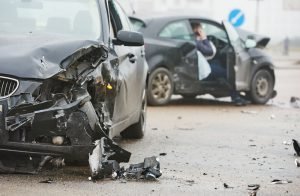
The Law Offices of Anidjar and Levine helps victims address medical needs, insurance disputes, fault issues, and documented losses after side-impact collisions.
These cases often involve red-light violations, failure to yield, distracted driving, serious injuries, and disputed liability.
Legal support may include reviewing crash reports, preserving witness statements, gathering medical records, evaluating PIP and other coverage, and negotiating for lawful compensation.
A Florida Car Accident Lawyer can help you understand essential rights, evidence, claim steps, and lawyer selection factors.
Main Takeaways
- A Florida T-bone accident lawyer can evaluate liability, injuries, insurance coverage, and available compensation after a side-impact crash.
- Common T-bone causes include red-light violations, failure to yield, distracted driving, unsafe left turns, and intersection errors.
- Evidence such as crash reports, medical records, photos, witnesses, and expert opinions can strengthen an injury claim.
- Florida PIP may cover some medical bills and lost wages, while serious injuries may allow additional damages.
- A lawyer can handle insurer communications, comparative fault disputes, settlement negotiations, and claims for future care or lost income.


How We Can Help With Your Florida T-Bone Car Accident Injury Claim
After a side-impact collision, an injured person may face urgent medical needs, vehicle damage, insurance disputes, and uncertainty about who is legally responsible. A Florida T-bone car accident injury lawyer can assist by organizing evidence, communicating with insurers, and protecting the claim from preventable mistakes. This support allows the injured person and family members to focus on treatment, caregiving, and restoring stability.
Legal guidance may include reviewing crash reports, obtaining medical records, preserving witness statements, and consulting professionals when needed. Counsel can also evaluate damages, including future care, lost income, and the daily burdens placed on those who serve and support the injured. The fairness of settlements depends on accurate proof and firm negotiation. Comparative fault rules may reduce recovery if blame is assigned, so careful analysis of traffic signals, right-of-way issues, and driver conduct is vital. The goal is a well-prepared claim that seeks lawful compensation with diligence.
OUR CONSULTATIONSARE FREE
START YOUR FREE CASE REVIEW

Understanding Florida T-Bone Car Accident Injury Cases
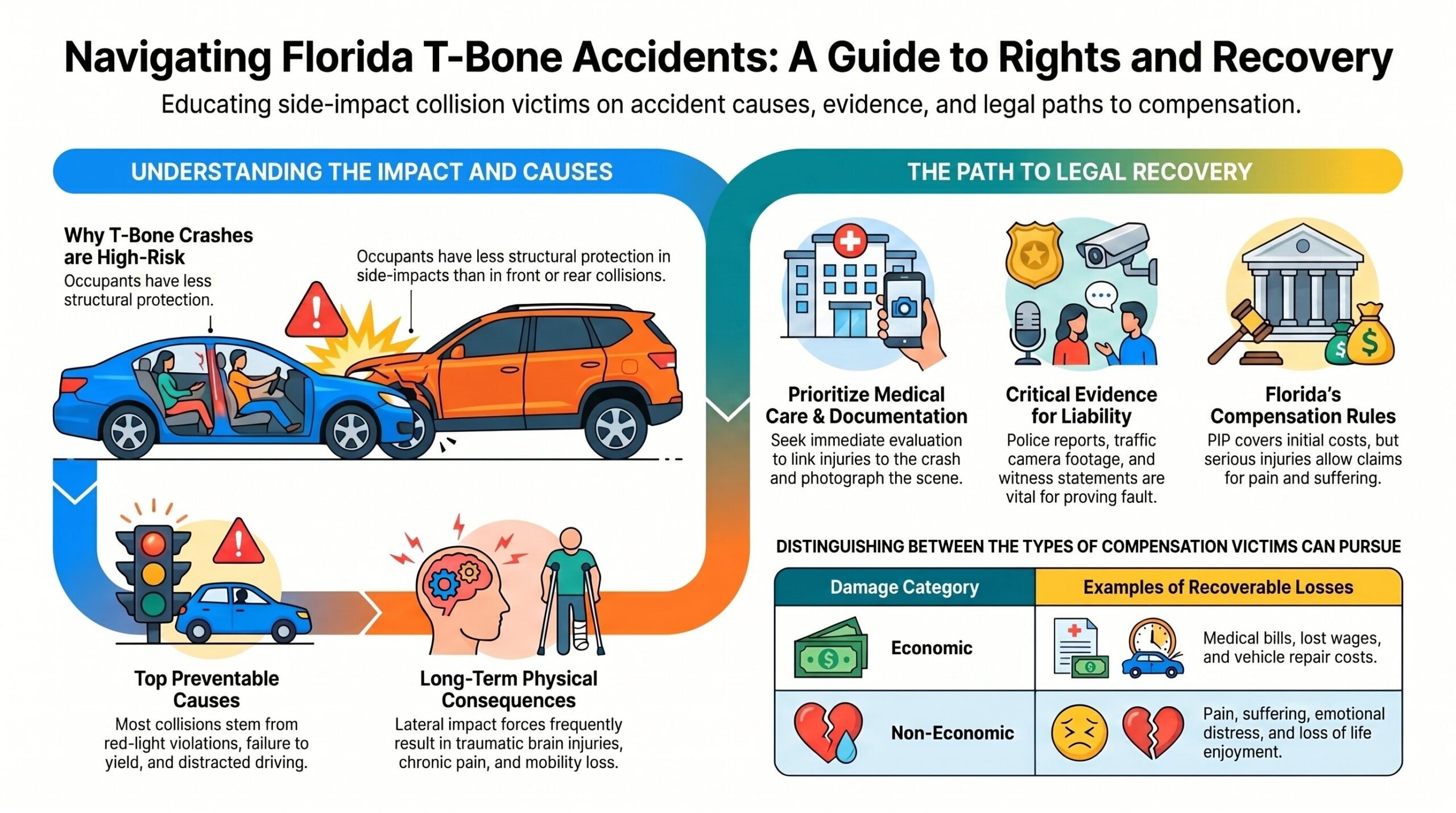
A well-prepared claim begins with a clear understanding of how T-bone collisions occur and why they often cause serious harm. These impacts strike the side of a vehicle, where occupants have less structural protection than in front or rear crashes. In Florida injury cases, legal evaluation focuses on the injured person’s medical condition, documented losses, insurance coverage, and the relationship between the crash and resulting harm.
Personal injury basics include proving duty, breach, causation, and damages through reliable evidence. Medical records, crash reports, witness accounts, photographs, and expert opinions may help clarify the full extent of injury and financial loss. Careful documentation also supports those serving injured clients with accuracy and dignity.
The settlement timeline can vary based on treatment progress, disputed liability, insurance response, and the seriousness of injuries. A thorough review before negotiation helps protect long-term needs, rather than encouraging a rushed resolution that fails to reflect the true impact.
Common Causes of Florida T-Bone Car Accidents
T-bone car accidents in Florida often result from preventable traffic violations and unsafe driving behavior at intersections. Common causes include running red lights, failure to yield, distracted driving, and poor weather conditions that reduce visibility or roadway control. Identifying the cause is vital, as it may determine liability, available evidence, and the strength of an injury claim.
Running Red Lights
At many Florida intersections, running a red light is one of the most dangerous causes of T-bone collisions because it places one vehicle directly in the path of lawful cross traffic. These crashes often occur when a driver accelerates through a stale yellow light, misjudges stopping distance, or ignores a signal after entering the intersection late. Driver distraction, including phone use, navigation adjustments, or inattention to changing traffic signals, can materially increase this risk.
The resulting side-impact force may cause severe injuries to occupants with limited protection along the vehicle’s doors. After such a collision, witness documentation can help clarify signal timing, vehicle speed, and driver conduct. Careful collection of these details supports accountability, protects injured individuals, and assists those working to serve the public interest.
Failure To Yield
When a driver fails to yield the right-of-way, a routine traffic movement can quickly become a severe side-impact collision. These crashes often occur at intersections, private driveways, parking lot exits, and during left turns across oncoming traffic. Florida traffic laws assign clear duties based on Intersection right of way, yet some motorists proceed before it is safe or misjudge another vehicle’s lawful path.
Failure-to-yield violations can expose occupants to direct impact on the side of a vehicle, where protection is more limited than at the front or rear. For injured individuals and those assisting them, careful review of traffic signals, signage, lane position, and witness accounts may help clarify responsibility. Establishing how the yielding error occurred is often important to pursuing accountability after a T-bone crash.
Distracted Driving
Although many intersection crashes occur within seconds, distracted driving often begins well before a vehicle enters another car’s path. In Florida, a driver who looks away to read a message, adjust a device, or respond to an alert may miss a red light, stop sign, or approaching vehicle. Texting while driving is especially dangerous because it combines visual, manual, and mental distraction.
Even a brief phone distraction can prevent a driver from recognizing that another motorist has the right of way. When this conduct leads to a side-impact collision, injured occupants may face emergency care, lost income, and lasting physical limitations. Careful investigation can identify device use, witness accounts, and traffic patterns, helping hold negligent drivers accountable and supporting those harmed.
Poor Weather Conditions
During heavy rain or reduced visibility, Florida intersections can become especially dangerous for drivers who fail to adjust their speed and attention to road conditions. Poor weather can create driver visibility issues that make it harder to judge traffic signals, approaching vehicles, pedestrians, and turning lanes. When motorists proceed without caution, they may enter an intersection against another vehicle’s right of way, causing a T-bone collision with serious consequences.
Rain also increases the hazards at slippery intersections, particularly when oil, debris, or worn pavement reduces tire traction. A driver who brakes too late, accelerates through a yellow light, or turns without adequate control may slide into cross traffic. Careful drivers protect others by slowing down, increasing following distance, using headlights, and treating every intersection with heightened responsibility in adverse weather.


Legal Rights of Florida T-Bone Car Accident Injury Victims
Because side-impact collisions often cause severe injuries and disputed fault issues, Florida T-bone car accident victims may have important legal rights that protect their ability to seek medical care, recover financial losses, and pursue compensation from responsible parties.
These rights can guide families, advocates, and service providers as they help injured people respond with care and order.
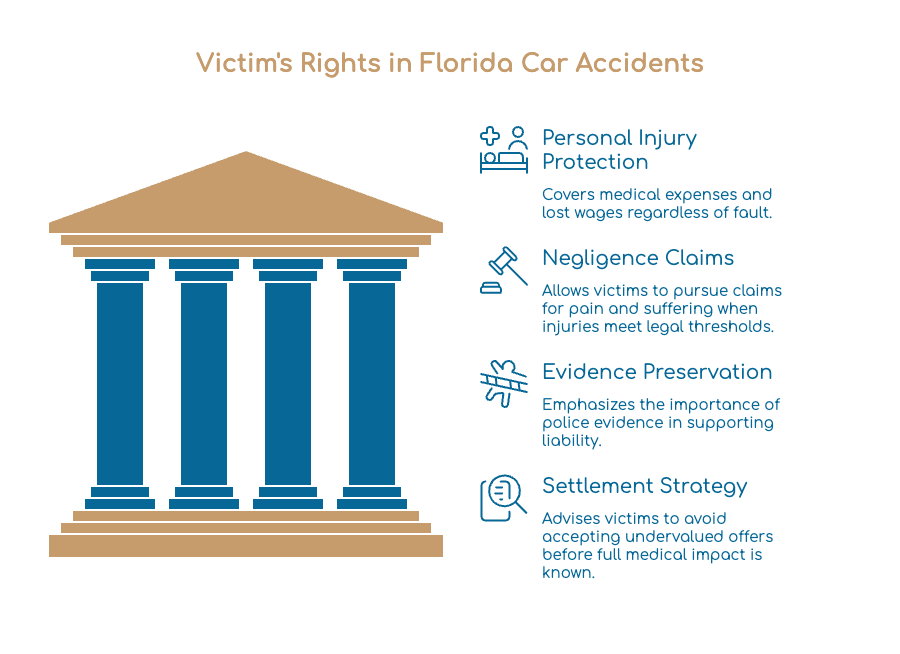
- Victims may seek benefits through personal injury protection coverage, including medical expenses and limited lost wages, regardless of fault.
- When injuries meet Florida’s legal threshold, victims may pursue claims against negligent drivers for pain, suffering, and additional damages.
- Prompt police evidence preservation may support liability, especially when reports, witness statements, traffic camera footage, or vehicle damage patterns clarify disputed facts.
- A careful Insurance settlement strategy can protect victims from accepting undervalued offers before the full medical impact is known.
These protections help promote accountability while supporting recovery after a serious crash in Florida.
Why Do Florida T-Bone Car Accident Injuries Happen?
Understanding the legal rights available after a side-impact crash also requires a clear view of why these collisions happen and why they so often lead to serious injuries. In Florida, many T-bone crashes arise from Driver error, including running red lights, failing to yield, distracted driving, speeding, or misjudging another vehicle’s path. These failures are especially dangerous because intersection impacts often leave occupants with limited structural protection on the struck side.
Injuries may occur when the force of impact drives a door inward, twists the spine, or causes the head, chest, and pelvis to absorb violent pressure. Older adults, children, and individuals serving families or communities may face especially significant disruption after such trauma.
Disputed liability can also lead to insurance denial, particularly when carriers question timing, fault, or injury severity. Clear medical documentation is often crucial for connecting the crash mechanics to diagnosed injuries and establishing the full harm caused.
What Should You Do After a Florida T-Bone Car Accident Injury?
After a Florida T-bone car accident, an injured person should prioritize medical care, even when symptoms appear minor at first. The crash scene should also be documented through photographs, witness information, and available police reports. Once immediate needs are addressed, contacting an attorney can help protect legal rights and preserve important evidence.
Prioritize Medical Care
In the minutes following a Florida T-bone collision, medical care should be the primary concern for every injured person, even when symptoms appear minor. Prompt evaluation protects health, supports recovery, and helps identify internal injuries, concussions, fractures, or soft tissue damage that may worsen without treatment.
Those assisting an injured person should encourage an emergency assessment, follow the physician’s instructions, and ensure prescribed care is not delayed. Consistent treatment also creates reliable proof of the injury’s nature and progression. Patients should obtain medical records from hospitals, clinics, therapists, and experts, then keep detailed records of expenses for prescriptions, mobility aids, travel to appointments, and related care needs. This organized approach helps caregivers, medical providers, and legal professionals understand the full impact of the crash while supporting a responsible path toward recovery.
Document The Crash
At the crash scene, careful documentation can preserve essential evidence before vehicles are moved, debris is cleared, or witnesses leave. Photos should capture vehicle positions, traffic signals, skid marks, roadway conditions, damage patterns, injuries, and any nearby cameras or obstructions. A calm, service-minded approach helps ensure that useful details are gathered without interfering with emergency responders or the care of injured people.
Medical records should be saved from the first evaluation forward, including diagnoses, treatment plans, prescriptions, and follow-up instructions. Timeline documentation is also important, noting when the crash occurred, when symptoms appeared, and when care was received. If names and contact information are available, witness follow-up may help confirm what occurred, especially when fault is disputed or memories fade over time.
Contact An Attorney
When should legal counsel become involved following a Florida T-bone car accident injury? An attorney should be contacted as soon as medical needs are stabilized and crucial crash details are preserved. Early legal guidance helps protect the injured person’s interests, especially when fault is disputed, injuries are significant, or multiple parties may share responsibility.
Counsel can review Insurance paperwork, communicate with insurers, and help prevent statements that may weaken a valid claim. This support allows the injured person and family members to focus on care, recovery, and service to others without unnecessary procedural burdens. An attorney may also explain settlement timelines, evidence requirements, and available compensation under Florida law. Prompt involvement can promote organized decision-making, accurate documentation, and a stronger path toward fair resolution.
Critical Evidence in a Florida T-Bone Car Accident Injury Case
In a Florida T-bone car accident injury case, essential evidence may determine how fault, causation, and damages are evaluated. Important materials often include: 1. Police Crash Reports, 2. Traffic Camera Footage, 3. Witness Statements, and 4. Vehicle Damage Evidence. Each category can help establish the sequence of events, the severity of impact, and the liability issues central to the claim.
Police Crash Reports
A police crash report often becomes one of the most important pieces of evidence in a Florida T-bone car accident injury case because it provides an official record of the collision’s basic facts. The report may identify drivers, passengers, witnesses, vehicle positions, roadway conditions, and apparent contributing factors. It may also note suspected traffic light violations, citations issued, or statements made at the scene.
For injured people and those assisting them, this record can help organize the facts with care and fairness. Officers may reference visible damage, injuries, diagrams, and whether dashboard camera footage was mentioned or preserved by a vehicle owner. Although the report may not determine liability on its own, it can guide further investigation, support insurance claims, and help counsel evaluate responsibility with disciplined judgment.
Traffic Camera Footage
Traffic camera footage can provide a direct, time-stamped view of how a Florida T-bone collision occurred, often confirming or challenging details recorded in a police crash report. Such footage may show signal phases, vehicle speed, lane position, braking, and the precise point of impact. For injured motorists, this evidence can help clarify responsibility and support a fair evaluation of damages.
Accident reconstruction specialists may use the recording to measure movement, compare timing, and explain how the crash developed. Video metadata can also assist by identifying the date, time, camera source, and the file’s integrity. Because many agencies retain footage for limited periods, prompt preservation requests are important. A lawyer may seek this material from traffic authorities, nearby public systems, or other available roadway cameras.
Witness Statements
When a Florida T-bone crash happens at an intersection, witness statements can help establish what each driver did before impact. Neutral observers may describe signal changes, turning movements, lane position, braking, speed, or distracted behavior. Their accounts can support injured people by clarifying facts that might otherwise remain in dispute. Attorneys often compare witness descriptions with police reports, traffic camera footage, and physical evidence to conduct scene timeline analysis.
This process can identify inconsistencies, confirm right-of-way issues, and show whether a driver ignored a red light or stop sign. Eyewitness credibility is also important, including the witness’s location, attention, visibility, and relationship to anyone involved. Promptly recorded statements are especially valuable because memories can fade. Reliable testimony may strengthen a claim and promote fair accountability.
Vehicle Damage Evidence
Beyond witness accounts, vehicle damage evidence can provide an objective record of how a Florida T-bone collision occurred and how force was transferred through the vehicles. Crush patterns, intrusion into the passenger compartment, broken glass, deployed airbags, paint transfer, and tire marks may help establish point of impact, speed, and vehicle positioning. Careful documentation also supports Crash scene safety by showing where hazards developed and how emergency responders protected injured occupants.
Photographs, repair estimates, inspection reports, and data from event recorders may assist in preserving evidence before vehicles are repaired, sold, or destroyed. When evaluated alongside witness interviews, this physical evidence can confirm or challenge accounts of right-of-way, braking, or distraction. A thorough review helps ensure injured persons are served with accurate, reliable proof.
Long-Term Effects of Florida T-Bone Car Accident Injuries
Florida T-bone car accident injuries may create long-term consequences that extend well beyond the initial medical emergency. Chronic pain, reduced mobility, traumatic brain complications, and related limitations can affect a person’s ability to work, manage daily tasks, and maintain independence. These physical outcomes often contribute to emotional distress and financial strain, making a full assessment of future damages important in an injury claim.
Chronic Pain And Mobility
After a serious side-impact collision, chronic pain and reduced mobility can become lasting consequences that affect nearly every part of an injured person’s daily life. Injuries to the neck, back, hips, shoulders, or legs may limit standing, walking, lifting, driving, and caregiving responsibilities. Medical documentation helps establish the source of impairment, the treatment provided, and the relationship between the crash and ongoing limitations.
Physicians may evaluate pain severity through examinations, imaging, therapy notes, and reports of functional loss. Some individuals require assistive devices, home modifications, or continued rehabilitation to preserve independence and dignity. A careful long-term prognosis can clarify future medical needs, work restrictions, and supportive care requirements, allowing advocates, providers, and families to serve the injured person with informed, practical assistance.
Traumatic Brain Complications
When a T-bone collision causes a violent lateral impact, the head may strike the window, door frame, handlebar, or interior surfaces, creating a risk of traumatic brain injury even without an obvious skull fracture. These injuries may involve concussion symptoms, including headaches, dizziness, confusion, nausea, blurred vision, balance problems, and sensitivity to light or sound. In some cases, symptoms appear hours or days after the crash, delaying proper evaluation.
More serious brain trauma may affect memory, concentration, speech, sleep patterns, and decision-making. Long-term cognitive effects can interfere with medical recovery, employment duties, driving, and daily responsibilities. Care providers, family members, and legal advocates often help document these changes, ensuring the injured person’s needs are recognized and addressed with appropriate evidence and coordinated care.
Emotional And Financial Strain
Physical and cognitive injuries from a T-bone collision often create pressures that extend beyond medical symptoms, placing injured individuals and their families under significant emotional and financial strain. Anxiety, depression, sleep disruption, and fear of driving may develop while household responsibilities shift to relatives or caregivers. Lost income, reduced earning capacity, therapy costs, transportation needs, and home assistance are commonly cited damages in Florida injury claims. These losses can affect family stability, caregiving routines, and long-term recovery plans.
Effective settlement negotiation tips include documenting every expense, preserving employment records, tracking emotional symptoms, and obtaining medical opinions that connect the injuries to the crash. Careful preparation helps advocates present the full impact of harm, supporting fair compensation that can restore dignity, security, and practical support.
Proving Liability in Florida T-Bone Car Accident Injury Cases
Establishing liability in a Florida T-bone car accident requires a careful review of how the collision occurred, which driver had the right of way, and whether any traffic laws were violated. Evidence may include crash reports, traffic camera footage, witness statements, vehicle damage patterns, and intersection design. These details help determine whether a driver ran a red light, failed to yield, made an improper turn, or drove while distracted.
Florida’s Comparative negligence rules may also affect recovery when both drivers share fault. A thorough investigation can protect an injured person from unfair blame and support an accurate account of events. Legal professionals serving injured clients often examine medical records, roadway conditions, and expert reconstruction findings to connect negligent conduct with harm suffered.
Careful documentation is especially important because Insurance denial tactics may challenge fault, causation, or the seriousness of injuries. Strong liability proof helps preserve accountability and supports a fair path toward compensation after impact.
Dealing With Insurance Companies After a Florida T-Bone Car Accident Injury
Insurance companies often begin evaluating a Florida T-bone car accident injury claim immediately, sometimes before the injured person fully understands the extent of medical harm or financial loss. Their representatives may request statements, medical authorizations, or quick settlement discussions, while appearing helpful and concerned. Careful communication is important because incomplete remarks can be used to reduce responsibility or question the severity of injuries.
A service-focused legal approach helps protect the injured person’s dignity while preserving essential evidence. Documenting medical bills, collecting witness contact, photographs, repair estimates, and treatment records can support a clearer presentation of damages. Insurance adjusters may also compare claimed losses against policy limits, prior medical history, and accident reports.
A lawyer can manage communications, review settlement offers, and discourage premature resolutions that fail to account for ongoing care. This measured guidance allows injured individuals and their families to focus on recovery, stability, and responsible decision-making after a serious side-impact collision.
What to Expect During a Florida T-Bone Car Accident Injury Claim Process
A Florida T-bone car accident injury claim typically begins with an immediate medical evaluation, followed by timely filing of an insurance claim. The process then moves to a fault investigation, where evidence such as police reports, witness statements, and vehicle damage may be reviewed. Once liability and damages are assessed, settlement negotiations often determine whether a settlement can be reached without litigation.
Immediate Medical Evaluation
Following a Florida T-bone car accident, immediate medical evaluation is vitally important because side-impact collisions often cause injuries that are not fully apparent at the scene. Emergency responders, physicians, and diagnostic providers may identify concussions, internal injuries, fractures, or soft tissue damage before symptoms worsen. Prompt care also helps the injured person receive appropriate treatment, including pain management options that support recovery and daily functioning.
For families, caregivers, and advocates focused on serving others, documenting medical findings early preserves a clear record of the harm sustained. This record may later assist legal professionals in understanding causation, treatment needs, and long-term limitations. Although insurance negotiation tactics arise later in the process, early medical documentation can influence how vitally important each party evaluates the injury’s seriousness and ongoing care requirements.
Insurance Claim Filing
Once medical care has begun and early documentation is in place, the injury claim process typically proceeds to notify the appropriate insurers and open a formal claim. A claimant may report the crash to a personal injury protection carrier, the at-fault driver’s insurer, or other applicable coverage sources. Accurate information, timely notice, and organized records help prevent avoidable delays.
Insurers may request medical bills, treatment summaries, wage records, and proof of other losses. A careful review of available policy limits is also important because coverage may affect recovery options. Counsel can help protect the injured person from premature statements or incomplete submissions. A sound Negotiation strategy, developed after the damages are documented, supports a claim focused on fair compensation and responsible service to the injured person’s needs.
Fault Investigation Process
During the fault investigation process, the claim typically shifts from basic reporting to a detailed review of how the T-bone collision occurred and who may bear legal responsibility. Investigators may examine police reports, traffic signal timing, roadway conditions, vehicle damage, witness statements, medical records, and available video footage. For injured individuals and those assisting them, careful documentation supports a fair and orderly review.
Florida’s comparative fault rules may require close attention to each driver’s speed, right-of-way, distraction, impairment, or failure to obey traffic controls. Insurance denial handling may begin if an insurer disputes liability, causation, or the extent of harm. At this stage, courtroom strategy can also be developed, including preserving evidence, identifying experts, and preparing a clear account of responsibility without addressing settlement demands.
Settlement Negotiation Steps
Settlement negotiation usually begins after liability, medical treatment, damages, and insurance coverage have been sufficiently reviewed. Counsel typically prepares a demand package that presents the crash facts, injuries, treatment costs, lost income, and future needs. Supporting records, photographs, expert opinions, and witness statements may strengthen negotiation leverage by showing how the collision affected the injured person’s daily life and ability to serve family, work, and community.
The insurer may respond with a lower offer, often disputing the severity of the injury, the medical necessity, or Comparative fault. Each response is evaluated against the evidence and Florida law. Counteroffers should remain measured, documented, and aligned with proven damages. If negotiations stall, counsel may recommend mediation or litigation, while continuing to protect deadlines, preserve evidence, and pursue a fair resolution.
Compensation for Florida T-Bone Car Accident Injury Damages
After a side-impact collision, compensation for Florida T-bone car accident injuries may cover a broad range of economic and non-economic damages. A claim often depends on clear documentation showing how the crash changed the injured person’s health, daily functioning, and ability to provide for family or community responsibilities. Medical expense proof, including bills, treatment records, diagnostic results, and physician opinions, helps connect necessary care to the collision.
Attorneys may also gather employment records, repair estimates, caregiver invoices, and transportation receipts to show measurable losses. Pain impact statements can describe limitations, sleep disruption, mobility problems, emotional strain, and reduced participation in meaningful service activities. These statements should remain factual, consistent, and supported by medical findings.
Florida insurance rules, comparative fault issues, and available policy limits may affect recovery. Careful presentation of damages allows insurers, mediators, or courts to understand the full harm caused by the T-bone crash.
Economic vs Non-Economic Damages in Florida T-Bone Car Accident Cases
Florida T-bone accident claims often involve both economic damages, such as medical bills, lost income, and vehicle repair costs, and non-economic losses, including pain, suffering, and diminished quality of life. Each category requires careful documentation because insurers and opposing parties may challenge the extent and cause of the claimed losses. Proving accident damages in Florida generally depends on medical records, employment evidence, expert opinions, and other reliable proof linking the injuries to the collision.
Economic Damages Explained
In a Florida T-bone car accident case, economic damages are the measurable financial losses resulting from the crash, including medical expenses, lost income, reduced earning capacity, rehabilitation costs, and property damage. These losses are supported through bills, wage records, repair estimates, tax documents, and expert assessments. A careful review helps show how the collision disrupted the injured person’s ability to work, obtain treatment, and maintain financial stability.
In insurance negotiations, documented economic losses provide a foundation for requesting fair compensation and resisting undervalued settlement offers. Pain documentation may also assist by linking treatment needs, medication costs, and therapy expenses to the crash. For professionals serving injured individuals, precise records and timely evidence collection are critical to presenting a clear, credible financial claim under Florida law.
Non-Economic Losses
Although economic damages address measurable financial losses, non-economic losses reflect the personal harm that cannot be reduced to bills, receipts, or wage records. In Florida T-bone accident cases, these losses may include pain, suffering, emotional distress, loss of enjoyment of life, disfigurement, and the strain placed on family relationships. Such harm can deeply affect a person’s ability to serve, care for others, work with purpose, and participate in community life.
Florida law allows injured persons to seek fair compensation for these human consequences, even when no exact price can be assigned. Losses mitigation may influence how damages are viewed, particularly when reasonable steps help limit further harm. A jury verdict may ultimately reflect the seriousness, duration, and personal impact of these non-economic injuries.
Proving Accident Damages
After a serious side-impact collision, proving damages requires more than showing that an injury occurred. The injured person must connect financial and personal losses to the crash through clear, organized evidence. Economic damages may include medical bills, rehabilitation costs, lost wages, and reduced earning capacity. Medical documentation is critical because it supports diagnosis, treatment needs, and projections of future care. Non-economic damages, such as pain, emotional distress, and loss of daily function, require careful explanation through testimony, records, and consistent accounts.
In Florida T-bone cases, insurance denials often challenge causation, the necessity of treatment, or the value of suffering. Witness credibility can affect how insurers, judges, or juries view the claim. A thorough damages calculation helps present both measurable losses and human consequences with accuracy, dignity, and purpose.
When a Florida T-Bone Car Accident Injury Case Goes to Trial vs Settlement
When a Florida T-bone car accident injury case cannot be resolved through negotiations, the claim may proceed toward trial, where a judge or jury determines liability, damages, and the amount of compensation owed. Settlement often occurs when both sides recognize the strength of the evidence, the seriousness of the injuries, and the value of avoiding delay. Effective negotiation tactics may involve presenting medical records, expert opinions, repair documentation, and clear accounts of how the crash affected the injured person’s daily life.
Trial may become necessary when an insurer disputes fault, minimizes injuries, or refuses to offer fair compensation. A careful Trial strategy focuses on organizing evidence, preparing witnesses, explaining damages, and presenting the injured person’s experience with dignity. For those committed to serving injured individuals, the decision between settlement and trial should reflect the client’s needs, the available proof, and the likelihood of achieving a just result through either path.
Florida Laws That May Affect Your Florida T-Bone Car Accident Case
Because Florida law shapes nearly every stage of a T-bone car accident claim, injured parties must understand how fault, insurance coverage, deadlines, and rules governing damages may affect the outcome. These rules help determine available compensation, responsible parties, and the evidence needed to serve the injured person’s recovery with diligence.
- Comparative negligence may reduce compensation when an injured party shares responsibility for the crash, such as by speeding or failing to yield.
- No-fault coverage generally requires injured motorists to first seek benefits through their own personal injury protection insurance, regardless of who caused the collision.
- Serious injury requirements may affect whether a claimant can recover damages beyond basic insurance benefits, such as pain and suffering and long-term impairment.
- Evidence and reporting rules influence how police reports, medical records, witness statements, and crash reconstruction materials support liability and damages.
Careful legal review can help protect a valid claim and promote a fair, service-focused resolution.
The Statute of Limitations for Florida T-Bone Car Accident Injury Cases
In Florida T-bone car accident injury cases, the statute of limitations sets a strict deadline for filing a lawsuit and can determine whether an injured person retains the right to seek compensation in court. For most negligence-based injury claims arising from crashes, Florida law generally allows two years from the date of the accident to file suit. If the collision results in death, Wrongful Death claims are also generally subject to a two-year filing period, measured from the date of death.
Missing the applicable deadline can bar recovery, even when the injuries are serious and liability appears clear. Timely action also helps preserve evidence, witness accounts, medical records, and crash details that may become important if Comparative Fault defenses are raised. Because T-bone collisions often involve disputed right-of-way issues, careful attention to filing deadlines supports orderly resolution and protects the legal interests of injured persons, families, and others who serve them.
How a Florida T-Bone Car Accident Injury Lawyer Can Help You
After filing deadlines are identified and protected, the next concern is building a claim that accurately reflects the cause of the crash, the extent of the injuries, and the full scope of recoverable losses. A Florida T-bone car accident injury lawyer may provide structured support that helps an injured person pursue accountability while preserving dignity and stability.
- Investigates the collision, including traffic signals, right-of-way issues, witness accounts, and crash reconstruction evidence.
- Evaluates medical records, work limitations, future care needs, and the practical burdens placed on the injured person and family.
- Addresses Comparative Negligence arguments, including claims that the injured person shared responsibility for the impact.
- Communicates with insurers, organizes documentation, and aligns the claim with the applicable Statute Deadline.
Through these efforts, counsel can help present a clear, service-centered claim that reflects both lawful responsibility and the human consequences of a serious side-impact collision.
When to Contact a Florida T-Bone Car Accident Injury Lawyer
When serious injuries, disputed fault, or insurance pressure arise after a side-impact collision, contacting a Florida T-bone car accident injury attorney promptly can help protect both the claim and the injured person’s position. Early guidance is especially important when emergency care is followed by ongoing pain, missed work, or uncertainty about who had the right of way. A timely consultation can support the careful preservation of photographs, witness details, police reports, and evidence of vehicle damage before memories fade or records become harder to obtain.
Legal contact should also be considered when insurers request statements, offer quick settlements, or question medical care. Insurance deadlines can affect available benefits and required notices, making delay risky for families trying to restore stability. Accurate treatment documentation, including diagnoses, therapy notes, prescriptions, and physician referrals, helps show the full impact of the crash. Prompt action allows responsible support for recovery, accountability, and informed decision-making.
Why You Need an Experienced Florida T-Bone Car Accident Injury Lawyer
Because side-impact collisions often involve complicated evidence and serious injuries, an experienced Florida T-bone car accident injury lawyer can provide critical guidance from the early stages of a claim. These crashes may require careful review of traffic signals, vehicle damage, witness statements, medical records, and accident reconstruction findings. Skilled legal representation helps protect the injured person’s right to pursue compensation while reducing the burden on families, caregivers, and others offering support.
A lawyer can also monitor Insurance claim timelines, respond to insurer requests, and address tactics that may undervalue pain, lost income, or long-term care needs. When liability is disputed, experience becomes especially important, since evidence must be preserved and presented with purpose. A thoughtful Trial preparation strategy can strengthen negotiations and demonstrate readiness for court if a fair resolution is not offered. This disciplined approach serves the client’s recovery, promotes accountability, and supports a more just outcome after a serious Florida T-bone collision.
How to Choose the Right Florida T-Bone Car Accident Injury Lawyer for Your Case
For an injured person facing the consequences of a Florida T-bone collision, choosing the right lawyer should begin with a careful review of experience, case focus, and practical litigation ability. The attorney should understand side-impact crash dynamics, intersection laws, comparative fault, insurance tactics, and the medical consequences that often follow serious collisions.
A suitable lawyer will act promptly to preserve evidence, including vehicle damage, surveillance footage, black box data, crash reports, witness statements, and medical documentation. The ability to coordinate effectively while Hiring Investigators may also be important when liability is disputed, or multiple parties may share responsibility.
The injured person should also consider communication standards, fee structure, trial readiness, and the lawyer’s record of handling comparable claims. A responsible legal advocate should serve the client’s recovery by protecting deadlines, explaining options clearly, and pursuing compensation with diligence, professionalism, and respect for the client’s needs.
About The Law Offices of Anidjar & Levine
The Law Offices of Anidjar & Levine represents injured clients throughout Florida in personal injury claims, including cases involving T-bone collisions and other serious motor vehicle accidents.
The firm assists individuals and families in seeking accountability, medical care, and financial recovery after preventable harm.
Its attorneys manage each stage of the T Bone Claim Process, from investigating crash evidence and identifying liable parties to communicating with insurers and preparing claims for settlement or litigation.
Their work reflects a service-focused approach, intended to reduce burdens on injured people while protecting their legal rights.
The firm also emphasizes Local Office Support, allowing clients to receive guidance from a team familiar with Florida courts, insurance practices, and community needs.
By combining legal experience with attentive client service, The Law Offices of Anidjar & Levine provides structured representation for people facing the physical, financial, and personal consequences of T-bone accidents.
Frequently Asked Questions
Can Passengers File Separate T-Bone Accident Claims in Florida?
Yes, passengers may file Separate Insurance Claims after a T-bone accident in Florida, even when traveling in the same vehicle. Each passenger’s injuries, medical costs, lost income, and suffering are evaluated individually. Comparative Negligence may affect recovery if multiple drivers share fault, but passengers are rarely responsible. Those assisting injured individuals should encourage prompt medical care, documentation, and legal guidance to protect each claimant’s rights and available compensation.
What if the At-Fault Driver Was Visiting Florida?
If the at-fault driver was visiting Florida, claims generally proceed under Florida law, though out-of-state insurance and residency may affect service, coverage, and recovery. Injured parties should document losses, identify all policies, and act promptly to preserve rights. Attorney Considerations include jurisdiction, insurer communications, comparative fault, and potential litigation strategy. A careful legal review helps protect victims, support accountability, and promote fair compensation for those harmed.
Are Rideshare T-Bone Crashes Handled Differently in Florida?
Yes, rideshare T-bone crashes may be handled differently in Florida because Rideshare Liability often depends on the driver’s app status. Insurance Coverage may vary if the driver was offline, waiting for a ride, or transporting a passenger. Injured persons may need to identify multiple responsible parties, including the rideshare company, personal insurers, or other drivers. Careful documentation supports fair resolution and helps protect those harmed.
Can Vehicle Defects Contribute to a T-Bone Accident Claim?
Yes, vehicle defects can contribute to a T-bone accident claim when faulty brakes, guidance, tires, or safety systems affect crash causation or injury severity. An investigation may identify Negligent Maintenance by an owner, fleet operator, or repair provider. It may also reveal Manufacturer Liability if a defective design or part caused the failure. Clear evidence helps protect injured people, assign responsibility, and support fair recovery for their needs.
Will My Prior Injuries Affect My T-Bone Accident Case?
Yes, prior injuries may affect a T-bone accident case, but they do not automatically prevent recovery. Prior injury evidence can help distinguish old limitations from harm caused by the crash. When a collision worsens an existing medical issue, aggravation of a preexisting condition may be compensable. A careful review of records, symptoms, and treatment history helps present the truth clearly, supports fair evaluation, and serves injured persons with integrity and informed advocacy.
—————————
A Florida T-bone accident can leave victims facing serious injuries, medical costs, lost income, and complicated insurance disputes.
Legal guidance from a Florida Car Accident Lawyer may help protect their rights, preserve evidence, and pursue appropriate compensation under Florida law.
An experienced attorney can evaluate liability, manage communications, and build a claim supported by facts and documentation.
The Law Offices of Anidjar and Levine assist injured clients with focused representation, helping them move forward while their legal interests remain protected.