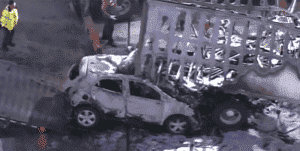
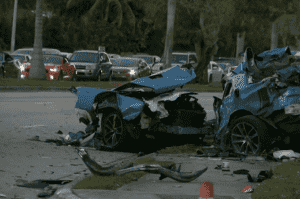
A Miami rental car accident injury lawyer, including Law Offices of Anidjar and Levine, assists injured claimants by preserving evidence, reviewing rental agreements, identifying applicable insurance layers, and managing communications with insurers and rental companies.
Counsel also helps document medical treatment, vehicle damage, wage loss, and long-term effects, while guarding against pitfalls in recorded statements and unfair settlement tactics.
In more disputed matters, counsel prepares litigation to prove liability and damages under Florida law.
For related guidance, see Miami Car Accident Lawyer. The sections below explain these issues in greater detail.
Main Takeaways
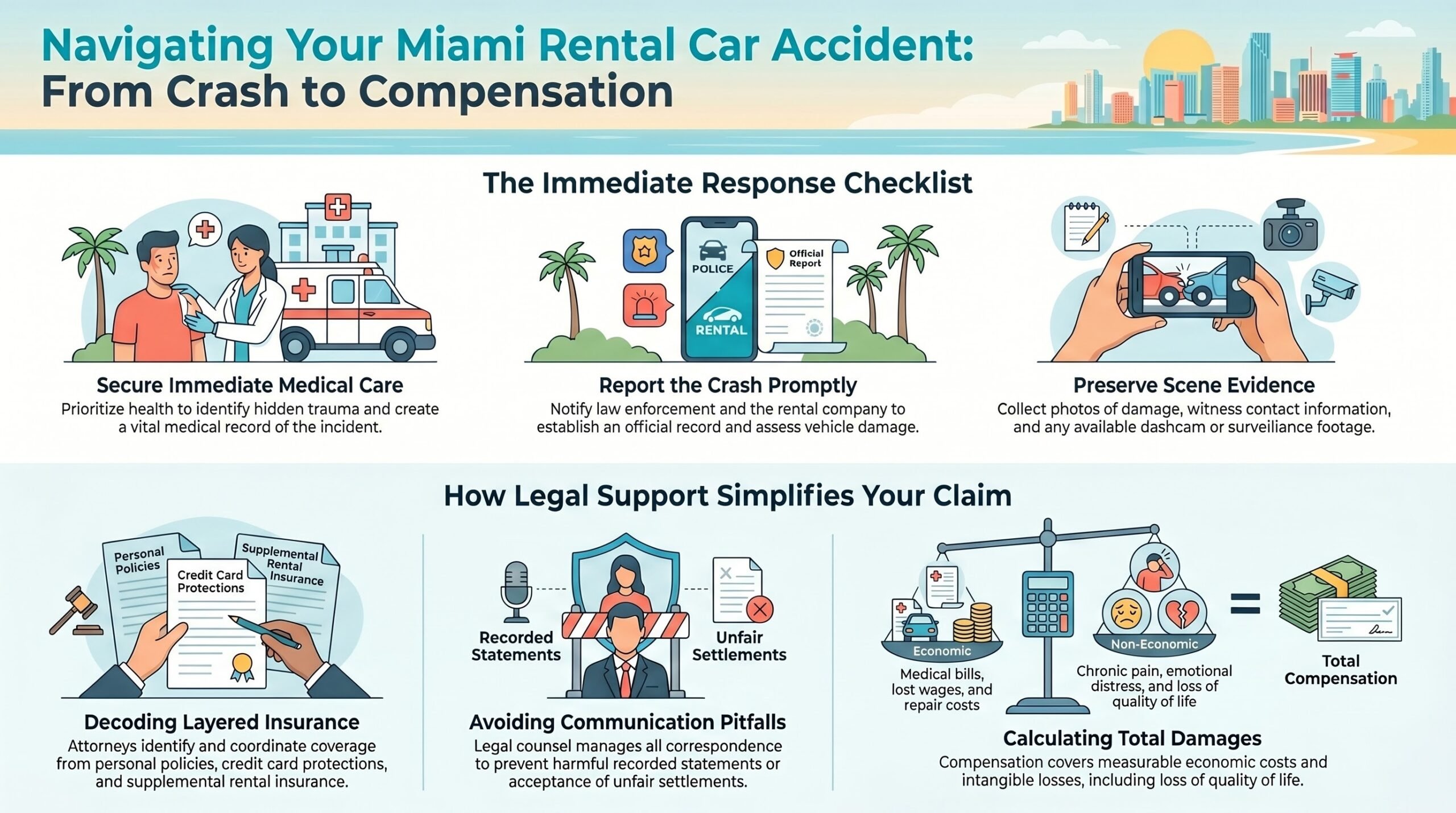
- Seek immediate medical care, call the police, and notify the rental car company promptly to protect your health and document the crash.
- Preserve evidence by collecting photos, witness contacts, police reports, medical records, receipts, and any available surveillance or dashcam footage.
- A Miami rental car accident injury lawyer can review the rental agreement and identify insurance layers, including personal, rental, and credit card coverage.
- Careful communication with insurers and rental agencies helps avoid harmful statements, recorded interviews, unfair settlements, or denied claims.
- An attorney can organize evidence, calculate damages, negotiate compensation, and prepare litigation if insurers or responsible parties dispute liability.


How We Can Help With Your Miami Rental Car Accident Injury Claim
Handling a rental car accident injury claim in Miami often requires prompt legal guidance, careful documentation, and a clear understanding of overlapping insurance obligations. A qualified legal team can organize records, preserve evidence, and communicate with insurers so injured individuals may focus on recuperation and supporting their families and communities.
Counsel can review rental agreements, identify available coverage, and examine credit card protections that may affect payment for losses. They can gather medical records, witness statements, photographs, and repair estimates, then present a well-supported demand that reflects the full scope of harm. When adjusters delay, dispute liability, or minimize injuries, counsel can respond with disciplined advocacy and procedural accuracy. They also help clients avoid costly statements, missed deadlines, and incomplete paperwork. If settlement efforts do not yield a fair result, the firm can prepare the matter for litigation and continue to pursue accountability with diligence, professionalism, and a service-centered commitment to the client’s recovery.
OUR CONSULTATIONSARE FREE
START YOUR FREE CASE REVIEW

Understanding Miami Rental Car Accident Injury Cases
In the context of Miami traffic litigation, rental car accident injury cases often involve a layered analysis of fault, insurance coverage, and contractual obligations. Courts and insurers typically examine each driver’s conduct, the terms of rental agreements, and the extent of available benefits before assigning responsibility for losses.
These matters may include claims by renters, passengers, pedestrians, or occupants of other vehicles. A careful review often determines whether personal auto policies, credit card benefits, supplemental rental protections, or commercial policies apply. Florida law may also affect priority of payment, available damages, and procedural requirements. Because service to injured individuals and families remains a central concern, thorough documentation is vital. Medical records, crash reports, photographs, witness statements, and rental company communications can clarify disputed issues and support a fair recovery. Understanding these cases requires attention to both legal duties and practical realities, so injured parties can make informed decisions while protecting their rights and financial stability.
Common Causes of Miami Rental Car Accidents
Several recurring factors contribute to rental car accidents in Miami, often beginning with unfamiliar roads and dense traffic patterns that challenge visiting drivers. These risks are frequently compounded by distracted or fatigued driving, as well as speeding and aggressive actions made in congested conditions. In addition, poor vehicle maintenance can create preventable hazards that increase the likelihood of a serious collision.
Unfamiliar Roads And Traffic
On Miami’s congested streets, rental drivers often encounter unfamiliar road layouts, dense traffic, abrupt lane changes, and heavy pedestrian activity, all of which can increase the risk of a collision. Visitors may encounter lane confusion when highways split quickly, intersections are intricate, or local driving customs differ from those in their home communities. GPS misguidance can also direct motorists into unsafe merges, restricted turns, or unfamiliar neighborhoods where quick decisions are required.
These conditions may place other drivers, passengers, cyclists, and pedestrians at risk, especially when a rental vehicle is operated without a full understanding of local traffic flow. A careful review of routes, signage, and road rules can help prevent harm. In service to community safety, recognizing these hazards supports more responsible travel and stronger protection for everyone on Miami roads.
Distracted Or Fatigued Driving
Rental car crashes in Miami also frequently stem from distracted or fatigued driving, particularly when visitors are navigating unfamiliar routes while trying to monitor navigation apps, traffic signs, and surrounding vehicles simultaneously. Even brief lapses in attention can lead to missed signals, delayed braking, unsafe lane changes, and preventable collisions that harm passengers, pedestrians, and other motorists.
Mobile distraction often arises when drivers adjust GPS settings, answer calls, or read messages while moving through dense traffic. Drowsy driving presents a separate but equally serious risk, especially after long flights, extended sightseeing, or late-night arrivals. Fatigue can reduce reaction time, impair judgment, and diminish awareness in ways comparable to alcohol impairment. Careful trip planning, rest, and hands-free preparation help reduce these service-impacting dangers for everyone.
Speeding And Aggressive Maneuvers
In many Miami traffic collisions involving rental vehicles, speeding and aggressive maneuvers play a central role. Visitors unfamiliar with local roads may drive too fast due to congestion, weather, or sudden stops, reducing the time available to protect others.
Aggressive conduct often includes tailgating, abrupt lane changes, and risky passing in crowded corridors. These actions create lane-weaving hazards, especially near airport routes, tourist districts, and major expressways. Speed-related aggression can also reflect impatience, pressure to keep schedules, or overconfidence in unfamiliar traffic patterns. When drivers ignore safe following distances and posted limits, the risk of severe impact rises sharply. A careful legal review often examines witness statements, roadway footage, and crash dynamics to determine how excessive speed and hostile driving behavior contributed to injuries, losses, and community safety concerns.
Poor Vehicle Maintenance
Beyond driver behavior, poor vehicle maintenance can be a significant cause of Miami rental car accidents. Rental fleets face heavy use, rapid turnover, and demanding schedules, which can allow worn brakes, failing lights, unsafe tires, or steering defects to go unnoticed. When companies neglect maintenance audits and consistent tire inspections, they may place visitors, families, and other motorists at unnecessary risk.
A service-minded community benefits when rental providers uphold careful safety standards and address mechanical issues before a vehicle returns to the road. Proper recordkeeping, timely repairs, and routine inspections help prevent avoidable collisions and protect everyone who depends on safe transportation. When an accident involves a suspected mechanical failure, a thorough legal and factual review may determine whether inadequate maintenance, ignored warnings, or delayed servicing contributed to the harm suffered by others.


Legal Rights of Miami Rental Car Accident Injury Victims
After a Miami rental car accident, injured victims may possess several legal rights under Florida law, depending on the circumstances of the crash, the insurance policies involved, and the parties responsible. Those rights may include access to personal injury protection benefits, claims against negligent drivers, and, in some cases, actions involving rental companies. Rental agreements can affect coverage questions, while nuances of the statute may influence deadlines, liability standards, and available damages.
A careful review often serves injured people and their families by protecting resources needed for recovery and continued care.
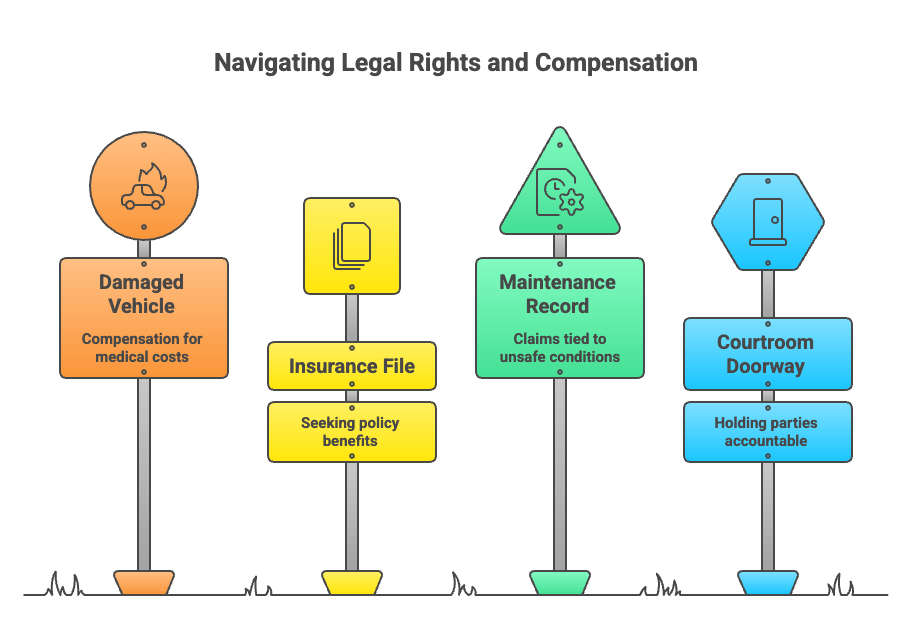
- A damaged vehicle at a busy intersection may symbolize the right to pursue compensation for medical costs and lost income.
- An insurance file may reflect the right to seek policy benefits.
- A maintenance record may suggest claims tied to unsafe conditions.
- A courtroom doorway may represent the right to hold responsible parties accountable, while preserving dignity, stability, and the ability to continue serving others in the community.
Steps to Take After a Miami Rental Car Accident Injury
After a Miami rental car accident injury, prompt medical attention is a vital first step, both to protect health and to document the extent of the harm. The crash and any vehicle damage should then be reported to law enforcement, the rental car company, and, when applicable, the insurer to create an official record of the incident. It is also important to preserve photographs, witness information, medical records, and repair documents, as these materials may support any future insurance claim or legal action.
Secure Immediate Medical Care
In the moments following a Miami rental car accident, securing immediate medical care should be treated as a priority, even when injuries appear minor at first. Prompt evaluation protects health, identifies hidden trauma, and creates a clear record of symptoms and treatment needs.
A measured response often begins with immediate triage at the scene or upon arrival at an emergency facility. Medical professionals can assess pain, bleeding, concussion symptoms, and internal injuries that may worsen without timely intervention. If the injured person cannot drive safely, transportation should be arranged through emergency services, a rideshare service, or a trusted individual focused on safety. Follow-up care also matters. Urgent care, hospital discharge instructions, specialist referrals, and consistent documentation help ensure recovery proceeds responsibly and with proper attention to the injured person’s well-being.
Report Crash And Damage
At the earliest safe opportunity, the crash and all visible vehicle damage should be reported to law enforcement and the rental car company. Prompt notice helps protect public safety, supports accurate incident handling, and allows responders to assist everyone involved. When speaking with officers and the rental provider, provide clear factual information without speculation or assigning blame.
The rental agreement should be reviewed for reporting deadlines, emergency numbers, and instructions concerning towing or vehicle return. A rental inspection may be requested to assess new damage and confirm the vehicle’s condition after the collision. Proper damage documentation is also important so the company can evaluate repair issues and service needs. By following these reporting steps carefully, an injured person better serves passengers, other motorists, and the broader community while reducing avoidable complications later.
Preserve Evidence And Records
With the immediate reporting completed, careful preservation of evidence and records becomes essential to any injury claim arising from a Miami rental car accident. Those assisting the injured person should gather photographs of vehicle damage, road conditions, traffic controls, visible injuries, and weather, while saving timestamps and location data whenever available. Medical records, discharge papers, repair estimates, rental agreements, receipts, and correspondence with insurers should be promptly organized and duplicated.
Witness names and contact information should be secured, and any surveillance footage or dash camera files should be requested before routine deletion occurs. In more serious cases, counsel may recommend forensic preservation measures, including preserving event data recorder information and pursuing digital forensics for phone records, vehicle telematics, or app-based rental activity. Careful documentation helps protect the truth and supports accountable service.
How a Miami Rental Car Accident Injury Lawyer Can Help You
Navigate through the aftermath of a rental car crash carefully, because a Miami rental car accident injury lawyer can provide essential guidance from the outset of a claim. Counsel evaluates rental liability, identifies all responsible parties, and organizes evidence so injured people can focus on recovery and continued service to their families and communities.
- A lawyer maps the crash scene, tracing contracts, insurance layers, and company policies like lanes on a storm-soaked highway.
- Counsel manages claim negotiation, presenting medical records, repair estimates, and witness statements with steady precision.
- An attorney shields clients from harmful statements, preserving credibility when responding to insurers and rental agencies.
- If disputes persist, legal counsel prepares litigation, building a disciplined case file that reflects diligence and respect for the injured person’s needs.
Through each step, representation brings structure, calm judgment, and informed advocacy. That support often helps clients pursue fair compensation while honoring responsibilities to others during a difficult season.
Long-Term Effects of Miami Rental Car Accident Injuries
Miami rental car accident injuries can produce lasting consequences that extend well beyond the initial recovery period. Many individuals face chronic pain challenges and emotional trauma effects that interfere with daily functioning, employment, and overall stability. These injuries may also require ongoing treatment, making future medical costs an important factor in any claim evaluation.
Chronic Pain Challenges
Many rental car accident injuries do not end when the visible wounds recover, as chronic pain can continue for months or become a lasting condition that affects nearly every part of daily life. Persistent neck, back, joint, or nerve pain may limit mobility, reduce stamina, and interfere with household responsibilities, employment duties, and community service. Sleep disruption is also common, leaving injured individuals fatigued and less able to maintain consistent routines that support recovery and care for others.
Treatment often requires ongoing medical evaluation, physical therapy, medication management, and structured changes in activity. In some cases, mind-body therapies may be recommended to help improve pain coping, physical function, and overall resilience. Careful documentation of symptoms, treatment needs, and functional limitations can help demonstrate the full long-term burden of these injuries.
Emotional Trauma Effects
Uncertainty often lingers long after physical injuries begin to mend, and the emotional effects of a rental car accident can become a serious long-term consequence in their own right. Survivors may experience persistent fear, disrupted sleep, irritability, or difficulty concentrating, all of which can affect relationships, work, and daily responsibilities. In many cases, psychological aftereffects emerge gradually, especially when the collision involved severe injury, loss, or helplessness.
Some individuals also develop PTSD symptoms, including intrusive memories, avoidance of driving, heightened vigilance, and distress during routine travel. These challenges may limit a person’s ability to serve family, support coworkers, or participate fully in community life. A careful legal evaluation often recognizes these invisible harms as meaningful damages, particularly when emotional trauma continues to interfere with stability, independence, and overall quality of life.
Future Medical Costs
Permanence often determines the financial impact of serious injuries from a rental car accident, especially when treatment extends well beyond the initial emergency period. Victims may require surgeries, rehabilitation, pain management, assistive devices, home modifications, and recurring specialist evaluations for years.
A careful damage assessment considers not only current bills, but also future treatments that preserve function, reduce suffering, and support daily independence. Physicians, life care planners, and economic experts often project these needs by reviewing prognosis, expected complications, and the likely duration of care. They may also account for inflation adjustments, because medical expenses rarely remain static over time. In service to injured individuals and their families, a thorough legal claim seeks compensation that reflects the likely long-term costs, helping to protect stability, dignity, and access to necessary care.
Proving Liability in Miami Rental Car Accident Injury Cases
Establishing liability in a Miami rental car accident injury case requires a careful review of how the collision occurred, who controlled the vehicle, and whether any party failed to meet a legal duty of care. Attorneys often examine police reports, witness statements, photographs, electronic data, and medical records to link conduct to harm and accurately identify responsible parties.
Key evidence may include the rental agreement, maintenance records, and any applicable liability waivers signed at pickup. These documents help determine permitted drivers, vehicle condition, and contractual responsibilities, while still requiring proof of driver negligence or other wrongful conduct. In some cases, responsibility may extend beyond the renter to a negligent motorist, a vehicle manufacturer, or a maintenance provider, creating potential third-party claims. A thorough investigation serves injured people and their families by clarifying fault, preserving important evidence, and building a factual foundation for accountability. Clear documentation also helps courts fairly evaluate comparative fault under Florida law.
Dealing With Insurance Companies After a Miami Rental Car Accident Injury
Once liability has been established, the next issue often concerns how insurance carriers evaluate the claim and seek to limit their financial exposure. After a Miami rental car accident, insurers may question medical treatment, dispute causation, or issue reservation rights letters that preserve coverage defenses while the matter is reviewed carefully.
A service-minded approach recognizes that injured people often feel pressured by adjuster tactics designed to secure recorded statements, early settlements, or incomplete authorizations. These practices can contribute to unfair valuations, delayed payments, and claim denials that fail to reflect the full extent of the harm suffered. When an insurer ignores clear evidence, misrepresents policy terms, or refuses to communicate reasonably, concerns about bad faith may arise under Florida law. Careful documentation, accurate reporting, and disciplined communication help protect the injured person’s interests while promoting accountability. In many cases, informed legal guidance helps families focus on recovery and continue caring for others despite financial uncertainty and significant stress.
What to Expect During a Miami Rental Car Accident Injury Claim Process
A Miami rental car accident injury claim typically begins with immediate post-crash actions, including medical evaluation, accident reporting, and preservation of evidence. The process then moves into the insurance claim investigation, where liability and damages are assessed through statements, records, and supporting documentation. Depending on the strength of the evidence and the parties’ positions, the matter may conclude through settlement or continue into litigation on a longer timeline.
Immediate Steps After a Crash
In the moments following a rental car crash in Miami, the injury claim process often begins with several practical and legal steps that can affect both personal safety and the strength of any later claim. Those involved are generally advised to call emergency services, seek prompt medical evaluation, and preserve medical documentation from the outset. Photographs, witness names, and a copy of the police report may help create an accurate record for all parties.
The renter should also notify the rental company promptly and review applicable rental policies, including reporting deadlines and vehicle return instructions. Careful communication, respectful conduct, and organized records can support a responsible response that serves everyone affected. When injuries are present, timely follow-up care often helps restore health and document the crash’s immediate physical consequences.
Insurance Claim Investigation
Following initial reporting, the insurance claim investigation typically centers on how the Miami rental car crash occurred, who bears legal responsibility, and the extent of the claimant’s injuries and losses. Adjusters usually review police reports, rental agreements, photographs, witness statements, and available video footage. They may request medical records, repair estimates, and employment information to understand the practical effects on the injured person and family.
In more intricate cases, insurers may consult forensic reconstruction experts or use data analytics to compare timelines, vehicle damage patterns, and electronic records. Communication often continues through recorded statements, document requests, and claim updates. A careful, organized response can help keep the process moving and reduce unnecessary disputes. Throughout this stage, accurate information and respectful cooperation often support a more efficient evaluation and informed next steps.
Proving Liability And Damages
Once the insurer has gathered the available records, the claim process usually turns to proving liability and damages through clear, persuasive evidence. Attorneys and adjusters review police reports, photographs, witness statements, rental agreements, repair estimates, and medical records to identify how the collision occurred and who may be legally responsible.
This stage often requires careful analysis of comparative negligence, especially when multiple drivers share fault. It may also involve third-party liability, such as negligent vehicle maintenance, defective parts, or dangerous roadway conditions. To demonstrate damages, the injured person may present treatment notes, diagnostic imaging, wage loss documentation, and testimony describing pain, limitations, and future care needs. Accurate evidence helps decision makers understand the full impact of the crash and supports a fair evaluation focused on accountability and service to others.
Settlement Or Lawsuit Timeline
From the insurer’s initial review to the potential filing of a lawsuit, a Miami rental car accident injury claim often progresses through several stages that can unfold over weeks or many months, depending on the severity of the injuries, the availability of evidence, and the number of parties involved. Early work often includes medical treatment, document collection, and evaluation of liability and losses.
These steps shape realistic timeline expectations for injured individuals and the families supporting them. If settlement discussions begin, insurers may request recorded statements, bills, and proof of ongoing care. When negotiations stall, counsel may recommend filing suit to protect legal rights. Litigation can involve discovery, depositions, expert review, and court scheduling. Many cases resolve before trial through negotiated settlement or a mediation timeline that encourages service-minded, practical resolution for all parties involved.
Compensation for Miami Rental Car Accident Injury Damages
Accountability often begins with a clear assessment of the damages caused by a Miami rental car accident. Compensation may cover immediate medical needs, ongoing treatment, rehabilitation costs, and documented property damage related to the collision. A careful review of records, invoices, and repair estimates helps establish a reliable foundation for loss valuation, while rental reimbursement may also become relevant when transportation disruptions affect daily responsibilities and community service obligations.
A Miami rental car accident injury lawyer typically gathers evidence demonstrating how the incident imposed measurable financial burdens and practical hardships. This process can include obtaining police reports, medical documentation, witness statements, photographs, and correspondence with insurers or rental companies. By organizing these materials, counsel can present a well-supported claim that reflects the full scope of proven damages. In many cases, prompt action strengthens the claim, preserves important evidence, and supports a fair resolution that honors the injured person’s recovery needs and wider responsibilities.
Economic vs Non-Economic Damages in Miami Rental Car Accident Cases
In Miami rental car accident cases, damages are generally divided into economic and non-economic categories, each addressing a different type of loss. Economic damages refer to measurable financial harm, such as medical expenses, lost income, and property damage, while non-economic damages concern pain and suffering, emotional distress, and other intangible effects. Establishing both forms of damages typically requires clear documentation, credible testimony, and evidence linking the accident to the claimed losses.
Economic Damages Explained
At the outset, economic damages in a Miami rental car accident case refer to the measurable financial losses caused by the collision, while non-economic damages address harms that do not carry a fixed dollar amount. These damages commonly include medical billing, rehabilitation expenses, prescription costs, property damage, transportation costs, and lost wages during recovery.
For individuals committed to protecting others and restoring stability, understanding economic damages helps clarify what compensation may be pursued. Documentation is crucial. Hospital invoices, repair estimates, employment records, and receipts often establish the value of these losses. In more serious cases, economic damages may also include reduced future earning capacity and anticipated medical care. A careful review of these financial effects supports a claim that reflects the actual cost of the accident and the practical needs created by the injury.
Non-Economic Losses Overview
Unlike economic damages, non-economic losses in a Miami rental car accident case compensate for personal harms that do not have a fixed invoice or an exact market value. These damages address the human consequences of injury, including physical pain, emotional suffering, anxiety, loss of enjoyment of daily activities, and diminished quality of life.
In this context, pain valuation considers how an injury affects comfort, independence, relationships, and ordinary routines. Life disruption may include difficulty sleeping, fear of driving, reduced participation in family responsibilities, or an inability to engage in meaningful community service. For people committed to caring for others, these losses can carry profound significance because injury may limit their ability to support loved ones and contribute to their communities. Non-economic damages recognize those deeply personal effects under Florida law.
Proving Both Damage Types
Establishing both economic and non-economic damages in a Miami rental car accident case requires clear evidence that connects the collision to the claimant’s financial losses and personal suffering. Economic damages are commonly proven through medical bills, wage records, repair estimates, and expert opinions regarding future care or reduced earning capacity. Non-economic damages often rely on treatment notes, mental health evaluations, photographs, and testimony from family members, caregivers, or colleagues describing pain, limitations, and emotional distress.
Courts and insurers also examine burden allocation, requiring each party to support disputed facts with credible documentation. They may review mitigation measures, such as timely medical treatment, compliance with care plans, and reasonable efforts to return to work. Careful proof of both categories helps decision-makers value losses fairly and serve injured people with accountability and compassion.
When a Miami Rental Car Accident Injury Case Goes to Trial vs Settlement
In many Miami rental car accident injury cases, the outcome is resolved through settlement rather than trial, because settlement often offers a faster and more predictable path to compensation. A settlement may help injured people secure funds for care, lost income, and daily support without the prolonged demands of the courtroom. It can also reduce uncertainty for families trying to rebuild while continuing to serve others in their homes, workplaces, and communities.
A case may proceed to trial when liability is strongly disputed, damages are minimal, or insurers refuse to make a fair payment. Trial preparation can increase Settlement leverage, especially when medical evidence, witnesses, and documentation are persuasive. Jury dynamics also matter, since jurors may respond differently to contested fault, corporate defendants, and the seriousness of long-term injuries. While a trial can produce a larger award in some matters, it also carries risk, delay, and added expense. Careful evaluation helps determine which path best serves the injured person’s broader recovery and stability.
The Statute of Limitations for Miami Rental Car Accident Injury Cases
After a Miami rental car accident, the time allowed to file an injury lawsuit can materially affect whether compensation remains legally available. Florida law imposes strict filing deadlines, and a missed deadline may bar recovery regardless of how serious the injuries or losses may be. This makes careful attention to dates an important part of protecting the injured person and supporting dependents’ well-being.
In rental car cases, the limitation period can be influenced by several facts, including the date of injury, the parties involved, and whether a wrongful death claim is asserted. Certain tolling exceptions may pause or extend the period in narrow circumstances, but they do not apply automatically. Claims involving government entities, minors, or delayed discovery issues may require additional analysis. Because every day can matter, accurate recordkeeping, prompt preservation of reports, and a clear understanding of statutory time limits help guarantee that valid claims remain capable of serving those harmed.
When to Contact a Miami Rental Car Accident Injury Lawyer
Seek legal guidance as soon as a Miami rental car accident causes injury, disputed liability, or pressure from insurers, because early representation can help protect evidence and prevent avoidable mistakes. Prompt contact is also advisable when a rental agency requests statements, limits access to records, or raises concerns about coverage, vehicle condition, or driver authorization after a collision.
Legal guidance may also be appropriate when medical treatment is ongoing, witnesses are difficult to reach, or police reports contain errors that could affect a claim. In Miami, visitors and residents may face added confusion during peak seasons, when traffic volume increases, and evidence disappears quickly. An attorney can also address contract disputes involving rental terms, added drivers, or damage allegations. Early review is especially important when local ordinances, language barriers, or out-of-state insurance issues complicate communication. Timely action supports accountability, preserves facts, and helps injured people focus on recovery while serving family, passengers, and the broader community.
Why You Need an Experienced Miami Rental Car Accident Injury Lawyer
Many rental car accident claims in Miami involve layered insurance issues, disputed fault, and contractual terms that can quickly place an injured person at a disadvantage. An experienced Miami rental car accident injury lawyer helps protect that person’s rights by identifying liable parties, preserving evidence, and addressing insurer tactics that may reduce the amount of valid compensation.
Such representation is especially important when cases involve tourists, commercial policies, and unfamiliar Local regulations. A seasoned lawyer can interpret rental agreements, compare overlapping coverage, and present damages in a clear, organized manner. This guidance also benefits families seeking resources for medical care, lost income, and long-term recovery after a serious crash.
In a diverse city, Language barriers can further complicate communication with rental companies, police, witnesses, and insurance adjusters. Experienced counsel helps prevent misunderstandings, supports accurate documentation, and promotes a fair process, allowing injured individuals to focus on recuperation and serving those who depend on them daily.
How to Choose the Right Miami Rental Car Accident Injury Lawyer for Your Case
Selecting the right Miami rental car accident injury lawyer requires careful attention to experience, case focus, and the ability to manage the insurance and liability issues that often define these claims. A qualified attorney should understand the nuances of rental agreements, policy exclusions, and the responsibilities of drivers, rental companies, and third parties following a serious collision.
Careful evaluation should include the lawyer’s record with injury litigation, negotiation skills, and willingness to investigate thoroughly. Strong counsel often demonstrates clear communication, timely updates, and respect for clients seeking accountability and recovery. Because outcomes may be shaped by variations across jurisdictions, the attorney should be familiar with Miami courts, judges, and procedural expectations. It is also wise to deem whether the lawyer has access to accident reconstruction experts, medical consultants, and other resources that support a complete claim. By choosing representation with focused knowledge and a service-minded approach, injured individuals place themselves in a stronger position to pursue fair compensation.
About The Law Offices of Anidjar & Levine
At The Law Offices of Anidjar & Levine, clients receive representation grounded in personal injury advocacy and informed by the practical demands of rental car accident litigation in Miami. The firm approaches each matter with careful preparation, prompt communication, and a service model designed to reduce stress for injured individuals and their families.
Its attorneys and staff focus on helping people restore stability after serious collisions, while pursuing compensation through negotiation or litigation when necessary. The firm’s history reflects sustained work in Florida personal injury law, with attention to motor vehicle claims involving intricate insurance issues and multiple liable parties. In evaluating a prospective case, the office emphasizes facts, documentation, and practical guidance tailored to each client’s circumstances.
Public client testimonials frequently highlight responsiveness, accessibility, and a consistent commitment to respectful service. For those seeking legal support that balances professional discipline with concern for community well-being, the firm presents a structured and dependable resource in Miami.
Frequently Asked Questions
Can Tourists File a Miami Rental Car Accident Claim After Returning Home?
Yes, tourists can often file a Miami rental car accident claim after returning home, provided they comply with Florida deadlines and the applicable claims statute. Their location does not automatically bar recovery, though jurisdictional challenges may affect where and how the case proceeds. Careful documentation, prompt notice to insurers and rental agencies, and timely legal guidance help protect rights and support an orderly process that serves all affected parties fairly, with diligence.
Who Pays if an Unauthorized Driver Crashes the Rental Car?
If an unauthorized driver crashed the rental car, payment often falls first on that driver and the renter who allowed access. The rental company may pursue claims for vehicle damage, loss, and liability. An insurance denial is common because most rental agreements exclude any unauthorized driver. However, some personal auto policies, credit card benefits, or state laws may still provide only limited coverage, making prompt review crucial for all parties involved.
Does a Rental Car Company Charge Fees After an Accident?
Yes, a rental car company may charge fees after an accident, depending on the contract, the severity of the damage, and the available coverage. Such charges can include repair costs, loss-of-use fees, towing, administrative expenses, and diminished value. However, liability is not always automatic, especially when insurance disputes arise or maintenance negligence contributed to the crash. Careful review of the rental agreement, accident report, and policy terms helps individuals protect their interests and serve others responsibly.
Can Black Box Data From Rental Cars Be Used as Evidence?
Yes, black box data from rental cars can be used as evidence when it is lawfully preserved and relevant to the crash. Courts and insurers may consider speed, braking, wheel control, and timing information obtained through proper data retrieval. This evidence can help clarify disputed facts and support fair outcomes for injured parties and those they serve. Its value depends on authenticity, chain of custody, and compliance with applicable privacy rules.
What Happens if the Rental Car Was Rented Through a Car-Sharing App?
If a vehicle was rented through a car-sharing app, liability and coverage often depend on the platform’s terms, the owner’s policy, and the driver’s conduct. Careful app insurance verification is essential because coverage may vary by trip status or excluded use. Questions of peer-to-peer liability can become more intricate than with traditional rentals. A thorough review of contracts, insurance layers, and accident facts helps protect all affected parties fairly.
—————————
A Miami rental car accident injury claim often involves complicated insurance issues, liability disputes, and strict filing deadlines. Injured parties benefit from understanding their rights, preserving evidence, and obtaining legal guidance as early as possible. With experienced representation, victims may pursue compensation for medical expenses, lost income, and other damages.
Miami Car Accident Attorney services from The Law Offices of Anidjar & Levine provide informed advocacy tailored to each case’s circumstances, helping clients move forward with greater clarity and confidence after a serious accident.