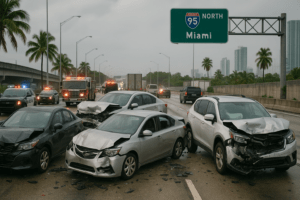
The Law Offices of Anidjar and Levine help victims identify available insurance coverage, preserve evidence, and pursue compensation after a rental car accident in Florida. These cases may involve renters, authorized drivers, rental companies, insurers, and other motorists.
A Florida Car Accident Lawyer can review rental agreements, medical records, police reports, photographs, witness statements, and policy terms while addressing comparative fault or coverage disputes.
Prompt guidance may protect legal rights, meet filing requirements, and support recovery for medical costs, lost income, and more.
Main Takeaways
- A Florida rental car accident injury lawyer can identify liable parties, applicable coverage, and deadlines after a collision.
- Claims may involve personal injury protection, rental insurance, at-fault drivers, and disputed policy exclusions.
- Victims may seek compensation for medical bills, lost income, pain, diminished earning ability, and related damages.
- Evidence such as photos, medical records, rental agreements, vehicle data, and witness statements should be preserved quickly.
- Comparative fault may reduce compensation, so legal guidance can help protect rights and challenge unfair blame.


How We Can Help With Your Florida Rental Car Accident Injury Claim
After a rental car collision in Florida, an injury claim may involve several insurers, disputed coverage terms, and strict filing requirements. Legal counsel can provide orderly guidance, helping the injured person and family focus on recovery and service to dependents, coworkers, and community obligations.
A lawyer may begin with evidence preservation, including photographs, vehicle data, witness information, medical records, rental agreements, and communications with carriers. Careful documentation can reduce confusion, support accountability, and prevent important facts from being overlooked.
Counsel may also review available policies, coordinate required notices, calculate losses, and protect the claimant from statements that could be used unfairly. Through disciplined insurance negotiation tactics, an attorney can address liability disputes, challenge undervalued damages, and seek a resolution that reflects medical needs, lost income, and future care. If settlement efforts fail, the lawyer may prepare the claim for litigation while maintaining professional, purpose-driven representation from start to finish.
OUR CONSULTATIONSARE FREE
START YOUR FREE CASE REVIEW

Understanding Florida Rental Car Accident Injury Cases
Understanding a Florida rental car accident injury case begins with identifying who was driving, what coverage applied, and how the collision caused the claimed injuries. These matters often involve the renter, additional authorized drivers, rental companies, insurers, injured passengers, pedestrians, or occupants of other vehicles. Each party’s duties, policy limits, and available protections must be reviewed carefully to support a fair claim.
Florida law may also require an assessment of Comparative Fault, which can reduce compensation when an injured person shares responsibility. A focused review helps separate disputed allegations from facts that assist recovery. Evidence Preservation is equally important because rental agreements, inspection records, photographs, medical records, electronic data, and witness statements may become difficult to obtain over time.
A lawyer’s role is to organize these issues, protect the injured person’s interests, and pursue compensation in a manner that promotes accountability, stability, and service to those harmed.
Common Causes of Florida Rental Car Accidents
Rental car accidents in Florida often arise from preventable conduct and unfamiliar driving conditions. Common factors include unfamiliar roads, distracted driving, speeding violations, and impaired driving, each of which can complicate liability and injury claims. Understanding these causes helps clarify how negligence may contribute to a crash involving a rental vehicle.
Unfamiliar Roads
When visitors drive in Florida for the first time, unfamiliar roads can materially increase the risk of a rental car accident. Unfamiliar routes may involve sudden lane changes, complex intersections, toll roads, roundabouts, construction zones, or exits that appear with limited warning. These conditions can create Navigation hazards, especially near airports, beaches, theme parks, and urban corridors where traffic patterns change quickly.
A rental driver may misjudge local speed limits, overlook lane-use signs, or hesitate in heavy traffic, placing passengers, pedestrians, cyclists, and other motorists at risk. Those committed to serving injured people should recognize how unfamiliarity with the roadway can affect fault determinations, witness accounts, and insurance evaluations. Careful investigation may identify signage issues, roadway design concerns, or driver errors that contributed to the crash, helping protect the harmed party’s rights.
Distracted Driving
Because a rental driver may be traversing unfamiliar surroundings, distracted driving can become a serious factor in Florida rental car accidents. Navigation systems, passenger conversations, unfamiliar vehicle controls, and urgent travel details may divide attention when careful observation is needed. Texting Handheld activity is especially hazardous, as it removes eyes from the roadway, hands from the wheel, and focus from safe operation.
Phone Distraction may also occur through calls, alerts, rideshare apps, or attempts to confirm directions while moving through traffic. Injured persons, families, and service-oriented advocates should understand that these behaviors can create preventable harm. After a collision, evidence such as phone records, witness accounts, vehicle data, and police reports may help determine whether distraction contributed to the crash and resulting injuries in Florida rental car claims.
Speeding Violations
While travel schedules and unfamiliar roads may create pressure, speeding violations remain a major cause of Florida rental car accidents. Excessive speed reduces reaction time, increases stopping distance, and makes ordinary roadway hazards more dangerous for passengers, pedestrians, and nearby motorists. In rental vehicle cases, investigators may examine Traffic camera records, roadway data, witness statements, and vehicle damage patterns to determine whether speed contributed to the crash.
A careful review of police citations may also reveal prior findings, posted speed limits, or officer observations that support liability assessments. For injured visitors and residents, these details can help clarify how preventable conduct caused harm. Legal evaluation of speeding evidence helps identify responsible parties and supports fair recovery for medical needs, lost income, and other losses after a collision.
Impaired Driving
Beyond speeding, impaired driving is another leading cause of Florida rental car accidents, particularly in areas with heavy tourism, nightlife, and unfamiliar traffic patterns. Visitors may underestimate the effects of alcohol impairment, fatigue, prescription medication, or recreational substances before operating an unfamiliar vehicle. These conditions can slow reaction time, reduce judgment, and increase the likelihood of overlooking roadway hazards, traffic signals, pedestrians, or cyclists.
When an impaired rental driver causes a collision, injured individuals may need careful guidance to protect their health, financial stability, and legal rights. Those serving accident victims often examine police reports, toxicology evidence, rental agreements, and witness statements to determine responsibility. Prompt investigation can help preserve crucial facts, support insurance claims, and pursue accountability for injuries caused by unsafe driving decisions in Florida.


Legal Rights of Florida Rental Car Accident Injury Victims
After a collision involving a rental vehicle, injured victims in Florida may have legal rights that extend beyond a standard insurance claim. These rights may include seeking compensation for medical care, lost income, diminished earning ability, pain, and related losses when another party’s conduct caused harm.
Victims may also face Rental insurance disputes, policy exclusions, or comparative negligence defenses that attempt to reduce recovery.
Careful evaluation helps protect those who serve families, communities, and dependents as they rebuild stability.
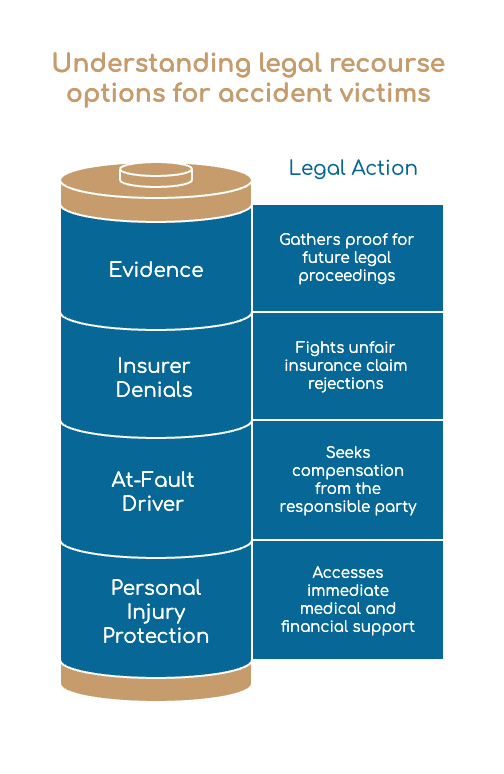
- They may file claims under available personal injury protection benefits.
- They may pursue damages from an at-fault driver when injuries meet Florida’s legal threshold.
- They may challenge improper denials by insurers or rental coverage providers.
- They may preserve evidence supporting liability, damages, and future care needs.
A Florida rental car accident injury lawyer may assess coverage, identify responsible parties, and guide timely action under state deadlines.
Why Do Florida Rental Car Accident Injuries Happen?
Florida rental car accident injuries often occur because unfamiliar vehicles, unfamiliar roads, and time-sensitive travel plans create conditions where driver judgment may decline. Visitors may misread local traffic patterns, underestimate highway speeds, or react late to sudden congestion near airports, beaches, and attractions. Even careful travelers can overlook mirror settings, braking response, blind spots, or dashboard controls when driving a model they do not normally use.
A Safety checklist may reduce risk, yet it is sometimes rushed or ignored during pickup. Rental office staff may provide basic instructions, but they cannot control fatigue, distraction, impairment, or aggressive driver behavior once the vehicle leaves the lot. Accidents may also arise when maintenance issues, worn tires, poor visibility, or confusing insurance terms contribute to unsafe conditions.
After a crash, incomplete claim paperwork can complicate understanding what happened, who was involved, and which party may bear responsibility. These factors often overlap in serious injury cases.
What Should You Do After a Florida Rental Car Accident Injury?
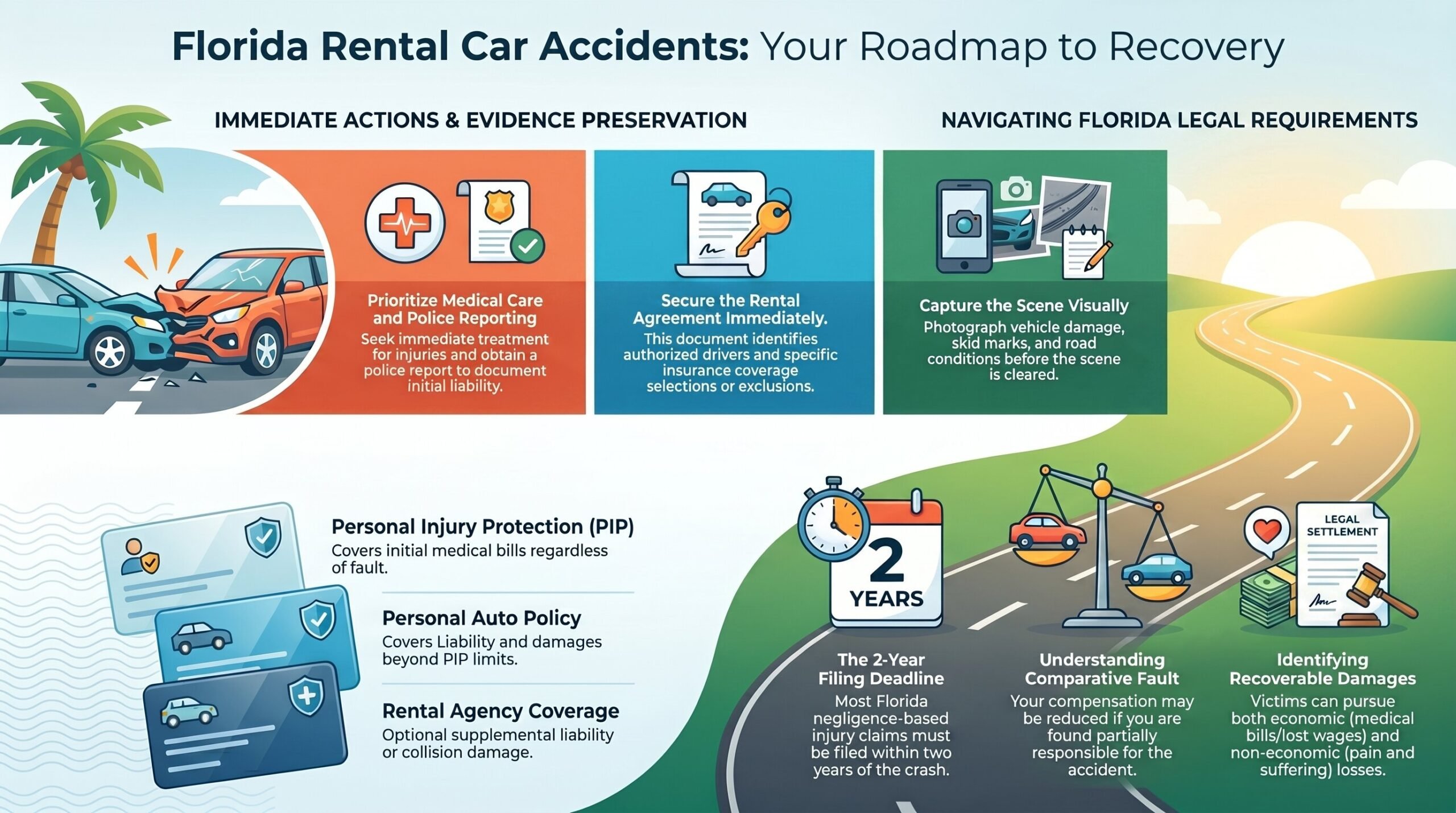
After a Florida rental car accident injury, prompt and organized action can protect both health and potential legal claims. An injured person should seek immediate medical care, document the accident scene and related details, and preserve any records connected to the rental vehicle. Contacting a lawyer early may help clarify insurance issues, liability questions, and available recovery options.
Seek Immediate Medical Care
When a collision involving a rental car causes injury, prompt medical evaluation should be a top priority. Injured occupants should accept emergency assistance, visit an urgent care center, or see a qualified physician as soon as symptoms appear. Early care protects health, supports recovery, and helps identify conditions that may worsen without treatment, including concussion, internal injury, or soft tissue trauma.
Emergency treatment documentation can also help clarify the nature, timing, and severity of injuries, which may become important when insurance carriers review the claim. Individuals serving family members, passengers, or others affected should encourage timely care rather than waiting for pain to intensify. Follow-up care planning is equally important because ongoing treatment, referrals, and medical restrictions may guide recovery and support responsible decision-making after the accident.
Document The Accident
Medical care should be followed by careful documentation of the rental car accident, because the available evidence may change quickly or disappear. An injured person, when able, should preserve photographs of vehicle damage, roadway conditions, traffic signals, debris, skid marks, and visible injuries. Images should also capture Vehicle Safety concerns, such as deployed airbags, broken restraints, or damaged lights.
Written notes can record Location Details, weather, time of day, rental agency information, and the names of responding officers or witnesses. If another trusted person is present, they may assist by gathering information patiently and accurately. Copies of the police report, rental agreement, insurance cards, medical discharge papers, and repair communications should be saved. Careful records support truth, accountability, and fair treatment for all involved.
Contact A Lawyer
Following the initial medical care and documentation, an injured person should consider contacting a Florida rental car accident injury lawyer as soon as practical. A prompt legal consultation can help clarify rights, identify responsible parties, and guide decisions before statements are given to insurers. Through a careful Case evaluation, counsel may assess rental agreements, crash reports, medical records, and available coverage.
This guidance is especially important when multiple insurers, drivers, or rental companies are involved. An attorney can also support evidence preservation, including vehicle data, photographs, witness information, and repair records. For those serving injured family members or community members, timely legal help may reduce confusion and protect the person’s recovery. Counsel can address insurance disputes, monitor deadlines, and pursue fair compensation with disciplined, professional advocacy.
Critical Evidence in a Florida Rental Car Accident Injury Case
Critical evidence can help establish liability, document damages, and clarify the responsibilities of the driver, rental company, and insurers after a Florida rental car accident.
Key materials may include:
- Police accident reports
- Rental agreement records
- Vehicle damage photos
- Witness contact information
Each item should be preserved promptly, as missing or incomplete evidence may weaken an injury claim.
Police Accident Reports
When a rental car crash occurs in Florida, the police accident report often becomes one of the earliest and most important records in the injury claim. It may identify the drivers, passengers, witnesses, insurance information, vehicle details, weather conditions, and incident location. For those assisting injured people, this report can help organize the facts and guide the next steps with care and accuracy.
Officers may record statements, note traffic violations, diagram the collision, and document visible injuries or vehicle damage. The report may also reference dashcam evidence, body camera footage, or nearby surveillance sources. Although not always conclusive, it can support liability analysis and preserve details that may fade quickly. Promptly obtaining and reviewing the report allows advocates to protect the injured person’s interests.
Rental Agreement Records
Rental agreement records can provide important evidence in a Florida rental car accident injury case because they identify who rented the vehicle, who was authorized to drive it, and what contractual terms applied at the time of the crash. These records may show whether the driver complied with age, licensing, payment, and use restrictions, which can affect Rental Agreement Liability. They may also identify additional drivers, insurance selections, rejected protections, and Coverage Limitations that influence available compensation.
For injured people and those assisting them, careful review of these documents can help clarify responsibility, preserve accurate facts, and support a fair claim process. Attorneys may request the complete agreement, amendments, timestamps, and related electronic records to determine whether the rental company, renter, or driver bears legal responsibility under Florida law.
Vehicle Damage Photos
After rental agreement records help identify the parties and coverage issues, vehicle damage photos can help explain how the collision occurred and how force moved through the vehicles involved. Clear images of crushed panels, broken glass, deployed airbags, fluid leaks, and tire damage may support an accident timeline and assist professionals who evaluate injury claims. Photos taken before repairs, towing, or storage changes are often more useful because they preserve the vehicle’s condition near the time of impact.
A careful document retention process should include original digital files, timestamps, repair estimates, and related inspection notes. When handled responsibly, these materials help injured people, insurers, and legal teams assess responsibility more fairly. Consistent photographic records can also reduce disputes over severity, impact location, and vehicle condition.
Witness Contact Information
Because witness accounts can clarify disputed facts, accurate witness contact information is an important form of evidence in a Florida rental car accident injury case. Witness details may include names, phone numbers, addresses, email contacts, and brief notes about what each person observed. These records help attorneys locate individuals who saw the collision, roadway conditions, driver behavior, or immediate injuries.
They also support police statements, record statements, and later insurance interviews by preserving an independent source of information. In rental car cases, witnesses may help distinguish driver negligence from vehicle defects, traffic violations, or misleading reports. Promptly securing this information serves injured persons by protecting truth, accountability, and fair evaluation of claims. Careful documentation allows legal counsel to respond effectively when liability or damages are challenged.
Long-Term Effects of Florida Rental Car Accident Injuries
Long-term injuries from a Florida rental car accident may extend well beyond the initial recovery period, affecting physical health, emotional stability, and financial planning. Chronic pain complications and emotional trauma can interfere with daily activities, employment, and overall quality of life. Future medical needs, including therapy, medical attention, or additional procedures, may become central issues in evaluating the full value of an injury claim.
Chronic Pain Complications
When injuries from a Florida rental car accident do not fully resolve, chronic pain can become a lasting medical and legal concern. Persistent neck, back, joint, or nerve pain may require ongoing treatment, expert evaluations, therapy, and careful documentation. These conditions can limit mobility, reduce endurance, and interfere with ordinary service-oriented duties, including caregiving, transportation, or community support.
Medication side effects may further complicate recovery by affecting alertness, strength, or daily functioning. Work limitations should be clearly identified by medical providers, since restrictions on lifting, standing, driving, or repetitive movement can affect future earning capacity. In injury claims, chronic pain evidence often depends on consistent records, credible symptom reporting, and proof of reasonable treatment needs. A thorough assessment helps link the lasting impairment to the rental car crash and the resulting damages.
Emotional Trauma Effects
After a serious Florida rental car accident, emotional trauma may persist well beyond the initial physical recovery period. Individuals may experience anxiety, sleep disruption, fear of driving, irritability, or withdrawal from family, work, and community responsibilities. These effects can reduce a person’s ability to serve others, maintain routines, and respond calmly to daily obligations.
Careful post-crash documentation may help show when symptoms began, how they changed, and how they affected ordinary activities. Witness statement collection can also provide important context, especially when relatives, coworkers, or caregivers observe behavioral changes after the collision. In Florida injury claims, emotional harm should be evaluated with the same seriousness as visible injuries. Consistent records, compassionate support, and professional guidance can help protect the injured person’s dignity and legal interests.
Future Medical Needs
Emotional trauma is only one part of the broader recovery picture, as many Florida rental car accident injuries also create future medical needs that extend months or years beyond the initial treatment period. These needs may include surgeries, physical therapy, pain management, mobility assistance, neurological care, or follow-up imaging.
A careful evaluation helps identify what treatment will likely be required and how those expenses may affect daily stability, family responsibilities, and long-term service to others. Medical opinions, treatment records, and expert projections can support causation, connecting the crash to future care needs. An insurance coverage review is also important because rental agreements, personal auto policies, and liability coverage may determine available resources. Accurate planning protects injured individuals from accepting settlements that fail to address ongoing medical burdens.
Proving Liability in Florida Rental Car Accident Injury Cases
Establishing liability in a Florida rental car accident requires a careful review of the driver’s conduct, the rental agreement, insurance coverage, and the circumstances surrounding the collision. Responsibility may rest with the rental driver, another motorist, a vehicle owner, or, in limited situations, a company that failed to meet safety obligations. A careful investigation serves injured persons by identifying all responsible parties and protecting the resources needed for recovery.
Evidence Preservation is vital. Police reports, photographs, dash-camera footage, witness statements, rental records, maintenance histories, and electronic vehicle data may help clarify how the crash occurred. Prompt action can prevent important proof from being lost, altered, or overlooked.
Rental Company Defenses often focus on federal liability limits, contract terms, unauthorized drivers, or claims that the vehicle was properly maintained. A thorough legal analysis can address these defenses while presenting facts that show negligence, causation, and the full harm suffered.
Dealing With Insurance Companies After a Florida Rental Car Accident Injury
Liability evidence is only part of the recovery process, as insurance companies often shape how a Florida rental car accident injury claim proceeds. After a collision, multiple insurers may become involved, including the driver’s personal carrier, the rental company’s coverage provider, and any supplemental policy purchased at the counter. Each may request statements, medical records, repair information, or authorization forms, and each request should be reviewed carefully before a response is given.
Insurance adjusters evaluate claims with financial exposure in mind, not solely the injured person’s recovery needs. Accurate communication, timely notice, and organized documentation can help protect the claim while also respecting the serious harm caused.
Claim filing deadlines must be monitored because late notice or missed policy requirements may affect available compensation. Legal evidence preservation is also important, including photographs, rental agreements, medical records, and witness information, so that insurers cannot later dispute critical facts.
What to Expect During a Florida Rental Car Accident Injury Claim Process
A Florida rental car accident injury claim typically begins with immediate post-crash steps, including medical care, documentation, and timely reporting. The process then requires a careful review of insurance coverage, followed by an investigation into liability, damages, and applicable policy limits. Settlement negotiations may occur after evidence is gathered, with the timeline depending on the severity of the injury, insurer responses, and disputed facts.
Immediate Post-Crash Steps
After a rental car accident in Florida, the initial steps can affect medical treatment, insurance coverage, and the strength of any injury claim. Injured persons should seek emergency care, notify law enforcement, and ensure that everyone at the scene receives appropriate assistance. When safe, photographs, vehicle positions, road conditions, and visible injuries should be documented to preserve the scene.
Names, contact details, and victim-witness statements should be collected without argument or blame. The rental company should be informed promptly, while avoiding detailed statements beyond basic facts. A written records request may later help obtain the police report, medical documentation, rental agreement, and repair information. Rental agency insurance should be identified, but coverage questions should be handled carefully. These actions help protect evidence and support a fair, service-focused claim process.
Insurance Coverage Review
When an injury claim involves a Florida rental car, the insurance coverage review often becomes one of the most important early stages of the process. This review identifies every possible source of payment, including the renter’s auto policy, the rental company’s optional coverage, credit card benefits, and any applicable liability insurance. Careful attention to policy limits helps determine whether available coverage may satisfy medical expenses, lost income, and other damages.
In some cases, coverage stacking may increase recovery options when multiple policies apply. Counsel may also evaluate exclusions, notice requirements, and coordination among insurers to prevent avoidable claim denials. For those committed to serving injured people responsibly, this step promotes informed decisions, protects available benefits, and supports a more organized claim process from the outset.
Claim Investigation Process
Gathering proof is the foundation of a Florida rental car accident injury claim investigation, because each fact can affect liability, insurance coverage, and the value of the claim. The process often begins with Scene documentation, including photographs, police reports, witness identities, vehicle damage, road conditions, and rental agreement details. Medical records are then reviewed to link injuries to the collision and to determine the care required. Investigators may examine driver behavior, traffic laws, rental company records, and available insurance policies.
This liability analysis helps determine whether responsibility rests with the renter, another driver, a commercial entity, or multiple parties. Careful investigation supports fair treatment for injured people, protects accountability, and helps ensure that those harmed receive informed guidance during a demanding recovery process in Florida.
Settlement Negotiation Timeline
Once the investigation clarifies liability, damages, and available insurance coverage, settlement negotiations in a Florida rental car accident injury claim typically begin with a formal demand to the appropriate insurer or responsible party. The demand outlines injuries, medical treatment, lost income, pain, and supporting evidence. A careful settlement valuation helps measure fair compensation before discussions advance. Insurers often respond within several weeks, though intricate rental car coverage issues may extend the timeline.
A sound Negotiation strategy considers policy limits, comparative fault, ongoing care, and the injured person’s long-term needs. Counteroffers may continue until the parties reach an agreement or determine that litigation is necessary. Throughout this stage, steady communication, organized documentation, and patient advocacy help protect the claimant’s interests while promoting a resolution that serves recovery and accountability.
Compensation for Florida Rental Car Accident Injury Damages
After a rental car crash in Florida, compensation for injury damages may depend on the severity of the injuries, the available insurance coverage, and the legal responsibility of each party involved. A careful review of the rental agreement, personal auto policy, credit card benefits, and any optional coverage may clarify which sources can respond to a claim.
An injury lawyer may evaluate fault, identify responsible drivers, and address disputes involving rental companies or insurers. Evidence preservation is often vital, including photographs, police reports, medical records, witness information, and vehicle data when available. These materials may support a clear account of how the collision occurred and why compensation is warranted.
A sound Negotiation strategy may involve presenting documented losses, responding to coverage defenses, and seeking a resolution that reflects the harm suffered. For injured persons and those assisting them, organized records and timely action can help protect the claim throughout the process.
Economic vs Non-Economic Damages in Florida Rental Car Accident Cases
Florida rental car accident claims often involve both economic and non-economic damages, each requiring careful documentation and evaluation. Economic damages may include medical bills and expenses, as well as lost income claims tied to missed work or reduced earning capacity. Non-economic damages address pain and suffering, reflecting the physical discomfort, emotional distress, and diminished quality of life caused by the accident.
Medical Bills And Expenses
When a rental car collision causes injury, medical bills are often the most immediate and measurable part of the claim. These expenses may include emergency transport, hospital treatment, diagnostic imaging, surgery, medication, follow-up visits, rehabilitation, and assistive devices. In Florida rental car accident cases, careful documentation helps establish the financial impact of care and supports a request for fair compensation.
Tracking therapy costs is especially important when treatment continues for weeks or months after the crash. Providers, caregivers, and legal professionals may coordinate records to show what services were necessary and reasonable. Accurate billing evidence also helps when negotiating insurance settlements with personal injury protection carriers, rental insurers, or other responsible parties. Clear expense records allow decision makers to evaluate losses with greater fairness and accountability for injured people.
Pain And Suffering
Pain and suffering damages address the human impact of a rental car accident, beyond the medical bills and other financial losses that can be proven with receipts or invoices. In Florida, these non-economic damages may include physical pain, emotional distress, inconvenience, loss of enjoyment of life, and the daily limitations resulting from the injury. A careful claim considers how the crash changed the injured person’s routines, relationships, and ability to consistently serve family, community, or others.
Evidence may include medical records, therapy notes, photographs, personal journals, and testimony from people who observed the effects. Because long-term recovery can involve setbacks, uncertainty, and permanent discomfort, fair evaluation requires attention to both present suffering and future consequences, measured with dignity, accuracy, and respect for the injured person’s experience.
Lost Income Claims
After a rental car accident, lost income claims address the earnings an injured person misses due to the crash preventing normal work or reducing the ability to perform job duties. These claims are economic damages and may include wages, gratuities, commissions, self-employment income, and diminished earning capacity. Careful review of insurance coverage, the rental agreement, and available liability sources helps identify who may be liable for payment.
Employers may provide pay statements, rosters, and leave records to confirm the financial loss. Medical documentation is equally important because it links work restrictions to the injuries caused by the collision. While property damage may indicate the severity of the impact, lost income requires separate evidence. Clear records help ensure that compensation reflects practical needs and supports continued service to family, clients, and community.
When a Florida Rental Car Accident Injury Case Goes to Trial vs Settlement
Although many Florida rental car accident injury claims resolve through settlement, some proceed to trial when liability, damages, insurance coverage, or the value of the claim remains disputed. Settlement may offer privacy, faster resolution, and reduced uncertainty, which can help injured people meet medical, family, and financial needs. Trial may become necessary when an insurer undervalues care, contests fault, or refuses to recognize lasting harm.
Before trial, counsel evaluates Trial strategy, jury selection, evidence preservation, and witness statements with careful attention to credibility and service to the client’s recovery. Medical records, repair documentation, photographs, rental agreements, and testimony may shape whether negotiation remains practical or litigation is warranted. A well-prepared case can encourage a fair settlement because the opposing side understands the risks of trial. If resolution is not reached, a judge or jury determines responsibility and compensation based on the evidence presented in court.
Florida Laws That May Affect Your Florida Rental Car Accident Case
When a rental car accident occurs in Florida, several state laws may influence fault, insurance coverage, available compensation, and the deadlines for bringing a claim. These rules can shape an insurance claim strategy, especially when injured people seek help, stability, and accountability after a preventable crash.
- Florida’s no-fault system generally requires injured parties to first look to Personal Injury Protection benefits, regardless of who caused the collision.
- Comparative fault rules may reduce compensation if an injured person shares responsibility for the accident.
- Insurance policies, credit card coverage, and optional rental protections may affect which insurer must respond.
- Rental agency responsibilities may include maintaining safe vehicles, providing required disclosures, and addressing known mechanical concerns.
A careful legal review can identify all responsible parties, preserve evidence, and coordinate coverage sources. This approach supports fair recovery while helping injured individuals, caregivers, and service-minded families make informed decisions after a serious rental car collision.
The Statute of Limitations for Florida Rental Car Accident Injury Cases
Because filing deadlines can determine whether an injured person may pursue compensation, the statute of limitations is a critical issue in Florida rental car accident injury cases. In Florida, many negligence-based injury claims must be filed within 2 years of the crash, and missing that deadline may bar recovery. When a collision involving a rental vehicle causes harm, timely attention to the filing period protects the injured person’s ability to seek accountability from responsible parties.
Certain circumstances may affect how the deadline is calculated, including claims involving minors, government entities, or delayed discovery of injuries. Comparative negligence may also influence recovery, but it does not extend the time to file. In serious cases involving intentional misconduct or gross recklessness, punitive damages litigation may require additional procedural steps within the same broader case timeline. Observing these deadlines supports fairness, preserves evidence, and helps confirm that those harmed receive a meaningful opportunity to be heard.
How a Florida Rental Car Accident Injury Lawyer Can Help You
After a rental car crash in Florida, an injury lawyer can help identify the legal issues that may affect liability, insurance coverage, and the value of the claim. Counsel may examine the crash facts, rental documents, and available policies to support a fair recovery while helping injured people and their families move forward with dignity.
- Investigates driver conduct, vehicle condition, police reports, witness accounts, and medical records to establish responsibility.
- Handles Rental Agreement Disputes involving fees, restrictions, unauthorized drivers, or alleged contract violations.
- Performs Insurance Contract Review to evaluate personal auto coverage, credit card benefits, rental company options, and third-party policies.
- Calculates damages, including medical expenses, lost income, pain, and future care needs, then communicates with insurers and opposing parties.
Through organized case development, a lawyer can reduce confusion, protect the injured person’s rights, and promote accountability for those affected by preventable harm in Florida rental car collisions.
When to Contact a Florida Rental Car Accident Injury Lawyer
Prompt legal guidance can be important once the immediate safety concerns and medical needs from a Florida rental car crash have been addressed. Contacting a Florida rental car accident injury lawyer early may help preserve documents, clarify reporting duties, and reduce confusion among drivers, rental agencies, insurers, and medical providers.
A person should consider seeking counsel when injuries require follow-up care, when fault is disputed, when the rental agreement is unclear, or when an insurer requests recorded statements. Early communication may also help identify post-crash delays that could affect claim handling, including late police reports, missing photographs, unavailable witnesses, or slow medical documentation. These delays can burden people trying to care for family members, passengers, or others harmed in the collision.
Legal guidance may also be appropriate after a low settlement offer or unexplained claim rejection. Understanding the reasons for insurance denials can help injured individuals respond carefully, meet deadlines, and protect their ability to seek fair compensation.
Why You Need an Experienced Florida Rental Car Accident Injury Lawyer
When a crash involves a rental vehicle, the injury claim may require more analysis than a standard car accident case. Multiple parties may hold relevant responsibilities, including the driver, rental company, insurers, and sometimes an employer or credit card provider. An experienced Florida rental car accident injury lawyer can identify applicable coverage, review contractual terms, and protect an injured person’s ability to pursue fair compensation.
Careful Document retention and Evidence preservation are often vital. Rental agreements, maintenance records, photographs, witness statements, medical documentation, and electronic data may clarify what occurred and who should be accountable. Without prompt action, important proof can be lost or disputed.
Skilled guidance also supports Insurance negotiations, where carriers may shift blame or undervalue losses. A lawyer can evaluate medical costs, lost income, pain, and future needs, then develop a Settlement strategy grounded in evidence. This helps injured people seek recovery while focusing on restoration and serving their families and communities.
How to Choose the Right Florida Rental Car Accident Injury Lawyer for Your Case
Choosing the right Florida rental car accident injury lawyer begins with evaluating whether the attorney has specific experience handling claims involving rental agreements, layered insurance coverage, and disputed liability. These cases often require careful review of rental contracts, personal auto policies, credit card benefits, and the conduct of multiple drivers. A qualified lawyer should understand how to identify all available coverage while protecting the injured person’s right to seek fair compensation.
Prospective clients should also consider the lawyer’s approach to Client Communication. Clear updates, responsive answers, and honest explanations help injured individuals make informed decisions while focusing on recovery and family responsibilities. The attorney should provide a realistic Case Timeline that includes investigation, medical documentation, negotiations, and potential litigation. Compassionate yet disciplined representation allows the client to serve personal obligations without unnecessary confusion. Careful selection supports accountability, preserves evidence, and promotes a structured path toward resolution after a rental car accident in Florida.
About The Law Offices of Anidjar & Levine
For injured individuals seeking guidance after a rental car accident in Florida, The Law Offices of Anidjar & Levine provides legal representation focused on accountability, insurance recovery, and client support.
The firm assists clients facing injuries, vehicle damage, medical expenses, lost income, and disputes involving rental companies, insurers, or negligent drivers.
Its legal team emphasizes careful case development through Evidence Preservation, prompt investigation, and organized documentation of losses.
This approach helps protect the interests of clients who may be managing pain, uncertainty, and financial pressure while trying to restore stability for themselves and their families.
The firm also prepares each matter with attention to Trial Preparation, even when settlement remains possible.
By evaluating liability, insurance coverage, medical records, and damages, the attorneys seek to present each claim with discipline and purpose.
Their work reflects a service-centered commitment to helping injured people pursue fair compensation under Florida law.
Frequently Asked Questions
Can Tourists File Florida Rental Car Accident Injury Claims?
Yes, tourists may file Florida rental car accident injury claims when another party’s negligence caused harm, or when insurance coverage applies. Eligibility for tourists depends on fault, available policies, injury severity, and compliance with Florida law. Filing deadlines are pivotal, because missed limits can bar recovery. Visitors should document injuries, preserve rental and insurance records, seek medical care promptly, and consult qualified counsel to protect claims while serving fairness and accountability.
Does Credit Card Rental Insurance Cover Injury Claims?
Credit card rental insurance usually does not cover injury claims; it primarily addresses vehicle damage or theft. Its credit insurance limitations often exclude medical bills, pain and suffering, lost income, and liability to injured passengers or others. The personal injury scope depends on separate auto, health, travel, or liability coverage. Those assisting injured renters should promptly review policy terms, preserve records, and seek qualified legal guidance to identify available sources of compensation.
Can I Sue a Rental Car Company for Poor Maintenance?
Yes, a person may sue a rental car company if negligent maintenance caused or contributed to a crash and resulting injuries. The claimant must satisfy evidence requirements, including service records, inspection histories, repair complaints, vehicle data, photographs, witness statements, and expert analysis. Those assisting injured people should preserve the vehicle, promptly document defects, and seek legal evaluation because liability depends on proving the company knew or should have known of the hazard.
What if the Rental Agreement Was in Someone Else’s Name?
If the rental agreement was in someone else’s name, legal responsibility may depend on permission, driver authorization, and policy terms. A third-party agreement can generate liability disputes, especially when the driver was not included. An owner omission, such as failing to disclose authorized users, may influence fault analysis. Coverage limitations may also limit payment, requiring careful review to safeguard injured persons and ensure accountable parties fulfill their obligations.
Are Rideshare or Delivery Rentals Treated Differently After Accidents?
Yes. Rideshare or delivery rentals may be treated differently because commercial use can affect coverage, duties, and exclusions. Negligence standards and comparative fault still govern responsibility, but platform policies, rental terms, and the app’s active status may influence claims. Insurance reporting and claims documentation should be prompt, complete, and accurate, especially when assisting injured passengers, drivers, or the public. Each party’s role, authorization, and conduct must be carefully reviewed after the accident.
—————————
A Florida rental car accident injury claim may involve complicated insurance issues, multiple liable parties, and strict legal deadlines.
Qualified legal representation can help injured victims protect their rights, evaluate available compensation, and pursue accountability through a structured claims process.
The Law Offices of Anidjar and Levine offers guidance for those injured in rental car accidents, helping clients understand their options and take informed steps toward recovery while their legal interests remain protected.
An experienced Florida Car Accident Lawyer can also help address the insurance and liability challenges that may arise after a rental car crash.