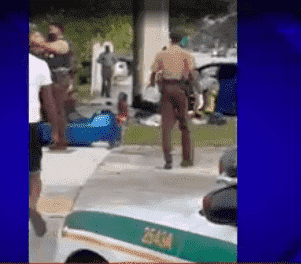
A Miami Car Accident Lawyer at the Law Offices of Anidjar and Levine assists injured delivery drivers and other crash victims by preserving app data, dashcam footage, medical records, and witness evidence soon after a collision.
Counsel evaluates fault, delivery platform control, employer practices, and comparative negligence to identify all liable parties.
Legal guidance also helps document medical care, lost wages, property damage, and future limitations while managing insurer communications and filing deadlines.
The sections below explain these issues in greater detail.
Main Takeaways
- Seek immediate medical care, photograph the scene, gather witnesses, report the crash, and preserve app data, dashcam footage, and repair records.
- A Miami delivery driver accident lawyer investigates driver status, dispatch control, app logs, vehicle ownership, and whether the company shares liability.
- Key evidence includes police reports, witness statements, GPS history, phone records, delivery schedules, and vehicle data showing distraction, speeding, or braking.
- Compensation may cover medical bills, lost wages, reduced earning capacity, rehabilitation costs, property damage, and pain and suffering.
- Prompt legal action helps preserve employer logs, routing data, surveillance footage, and other evidence before it is lost or overwritten.


How We Can Help With Your Miami Delivery Driver Car Accident Injury Claim
Maneuvering a Miami delivery driver car accident injury claim often requires a structured legal approach from the outset. Effective counsel provides organized support so injured drivers and their families can focus on healing while continuing to serve their communities.
A qualified legal team typically gathers records, preserves essential evidence, communicates with insurers, and evaluates losses with care. It also explains Compensation Options clearly, helping clients understand medical expenses, lost income, future treatment needs, and other recoverable damages. Throughout the process, counsel manages deadlines, prepares required filings, and tracks the Claim Timeline so no important step is overlooked. When disputes arise, representation can negotiate firmly for a fair resolution and, if necessary, prepare the matter for court.
This guidance reduces uncertainty and promotes informed decisions. By handling procedural demands with diligence and respect, legal advocates help clients protect their rights, maintain stability, and pursue meaningful financial recovery after a serious delivery-related collision in Miami.
OUR CONSULTATIONSARE FREE
START YOUR FREE CASE REVIEW

Understanding Miami Delivery Driver Car Accident Injury Cases
Case-specific analysis is vital when evaluating Miami delivery driver car accident injury cases, because liability, insurance coverage, and damages often depend on the driver’s work status, the nature of the delivery, and the conduct of each party involved. Courts and insurers often examine whether the driver was an employee, independent contractor, or off duty, since that distinction may affect available policies and employer responsibility.
A careful review also considers Delivery protocols, vehicle ownership, dispatch records, digital app data, and contractual obligations. These details may show whether a company exercised meaningful control over the driver’s actions at the time of the collision. Injury claims may involve medical expenses, lost income, diminished earning capacity, and non-economic harm, all of which require clear documentation. Wage disputes can also intersect with these cases when compensation practices reflect work status or scheduling pressures relevant to the claim. A service-minded legal approach focuses on accountability, truthful evidence, and support for those facing physical, financial, and practical hardship.
Common Causes of Miami Delivery Driver Car Accidents
Several recurring factors contribute to car accidents involving delivery drivers in Miami, often stemming from the demands of fast-paced routes and constant time pressure. Common causes include distracted driving, speeding to meet delivery deadlines, and fatigue, which can impair judgment and reaction time. Unsafe parking maneuvers also play a significant role, particularly in congested areas where quick stops can create hazards for other motorists, cyclists, and pedestrians.
Distracted Driving Risks
Distraction remains one of the most persistent hazards in Miami delivery driver accidents, particularly because delivery work often requires constant attention to navigation, timing, and customer communication. Even well-intentioned drivers may divide focus between the roadway and delivery tasks. Phone distraction can arise from checking directions, confirming drop-offs, or responding to customers and dispatchers. Car infotainment systems may also pull attention away through maps, alerts, or touch screen controls.
For people committed to serving others, this risk warrants careful recognition because a brief lapse can harm pedestrians, cyclists, passengers, and neighboring motorists. Liability may increase when records show a driver interacted with a device just before impact. Evidence often includes phone logs, app activity, dash footage, witness accounts, and vehicle data showing reduced attentiveness.
Speeding Under Pressure
Many collisions involving delivery drivers in Miami stem from the pressure to meet tight deadlines, complete more stops, and avoid negative performance reviews. In that environment, deadline stress can encourage unsafe decisions, including driving above the speed limit, rushing through intersections, and making abrupt lane changes. These choices reduce reaction time and increase stopping distance, placing pedestrians, cyclists, passengers, and other motorists at greater risk.
A service-minded community depends on drivers who act with care, patience, and respect for shared road safety. When companies emphasize speed over caution, that duty can be undermined. Investigations often examine delivery schedules, dispatch communications, GPS data, and braking patterns to determine whether pressure contributed to reckless driving. Identifying those factors can help injured people pursue accountability and support safer practices throughout Miami’s roads.
Fatigued Delivery Drivers
Operating for long hours with limited rest can leave delivery drivers fatigued, a condition that often impairs judgment, slows reaction time, and reduces attention to changing traffic conditions. In Miami, demanding routes, strict deadlines, and inadequate Shift Scheduling can deepen exhaustion and place everyone on the road at risk.
Fatigue may cause missed signals, delayed braking, drifting between lanes, and reduced awareness of pedestrians, cyclists, and surrounding vehicles. Circadian Disruption can further undermine alertness when drivers work early mornings, overnight hours, or rotating schedules that conflict with natural sleep patterns. Companies that prioritize safe staffing, reasonable delivery expectations, and adequate breaks help protect drivers and the communities they serve. When these safeguards are neglected, fatigued driving can become a preventable cause of serious crashes and life-changing injuries.
Unsafe Parking Maneuvers
Unsafe parking maneuvers often occur when delivery drivers stop abruptly, back into tight spaces, or pull over in areas with limited visibility and little room for surrounding traffic to react. In busy Miami neighborhoods, these actions can create immediate hazards for pedestrians, cyclists, and nearby motorists.
When routes are crowded and time demands increase, a driver may choose unsafe locations that lead to blocked driveways, obstructed sightlines, and sudden lane interference. These choices frequently contribute to curbside collisions, sideswipes, and backing accidents near homes or businesses. A careful review of the scene often shows whether proper warnings, signals, or mirrors were used before the vehicle stopped or reversed. Identifying these failures can help injured individuals understand how preventable conduct caused harm and what accountability may be appropriate under the circumstances.


Legal Rights of Miami Delivery Driver Car Accident Injury Victims
Navigating the aftermath of a delivery driver car accident in Miami requires a clear understanding of the legal rights available to an injured victim. Florida law may allow recovery for medical expenses, lost income, pain and suffering, and other losses when another party caused the collision.
Employment status can also affect available remedies, especially where Wage deductions or Union protections influence workplace rights and benefits.
- Injured delivery drivers may pursue compensation through insurance claims or civil actions.
- Victims may seek payment for current and anticipated medical treatment needs.
- Lost wages and diminished earning capacity may be recoverable after serious injuries.
- Employer policies cannot erase statutory protections or excuse negligent conduct.
- Certain cases involve third-party liability beyond a driver, company, or vehicle owner.
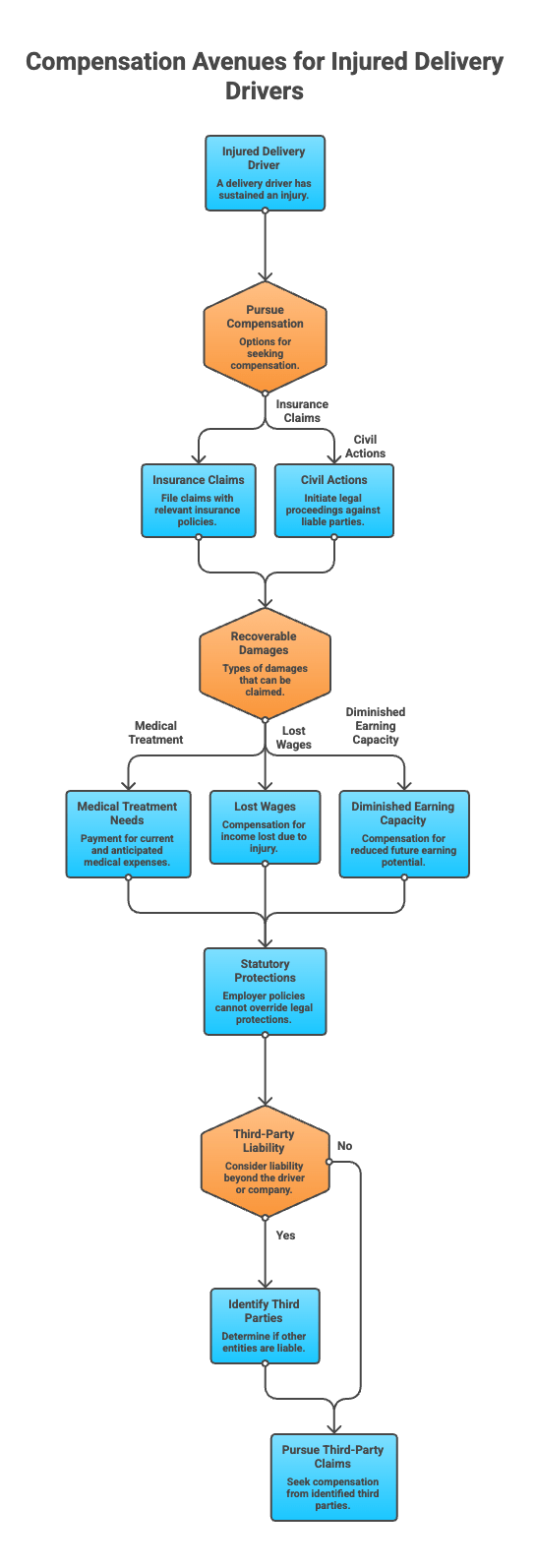
A careful legal review often clarifies whether multiple parties share responsibility. This understanding can help injured victims protect their households, uphold accountability, and continue serving their communities with greater security and dignity after traumatic loss.
Steps to Take After a Miami Delivery Driver Car Accident Injury
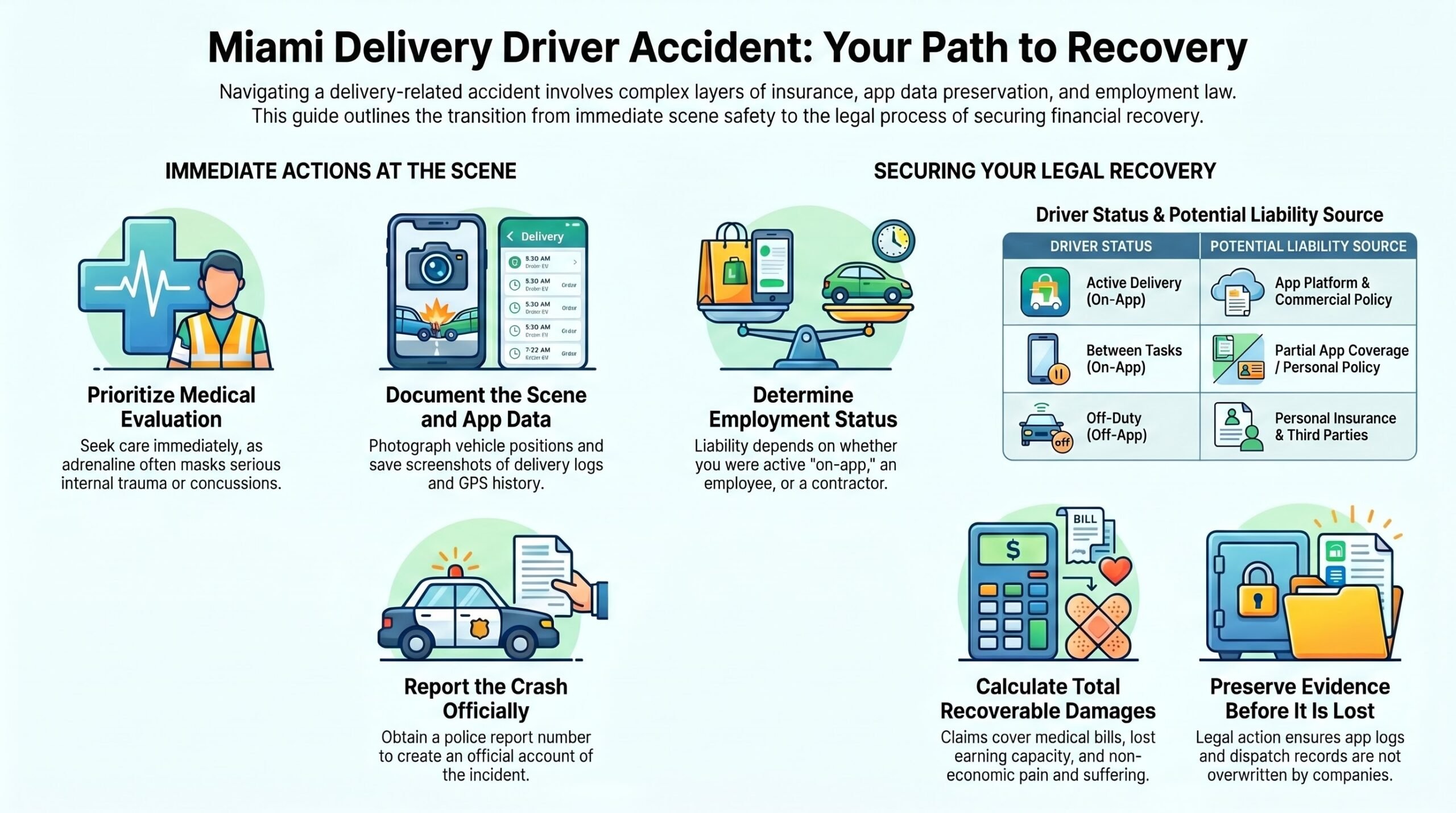
After a Miami delivery driver car accident injury, a prompt medical evaluation is a crucial first step to protect both health and any future claim. The accident scene should also be carefully documented through photographs, witness statements, and other relevant details that may clarify how the collision occurred. In addition, the incident should be reported to the proper parties, and all available evidence should be preserved to support an accurate assessment of liability and damages.
Seek Immediate Medical Care
Prioritize medical evaluation without delay, because prompt care protects both health and the integrity of any future injury claim. After a collision, a delivery driver should obtain urgent evaluation, even when symptoms seem minor, since adrenaline can mask serious injuries. Emergency physicians and primary care providers can identify internal trauma, concussions, soft tissue damage, and other conditions that may worsen without treatment.
Medical guidance should be followed carefully, including prescribed medications, therapy, imaging, and follow-up appointments. Consistent care demonstrates a responsible commitment to recovery and to the well-being of others who rely on that driver’s service. It also creates a clear medical record connecting injuries to the crash. Delays, gaps in treatment, or ignored recommendations can undermine physical restitution and raise questions about the seriousness and cause of the injuries claimed.
Document The Accident Scene
Once medical needs are addressed, careful documentation of the accident scene can preserve facts that may become difficult to prove later. A person should photograph vehicle positions, roadway markings, traffic signals, visible injuries, weather conditions, and any property damage from multiple angles. Strong photographic evidence can help clarify how the collision occurred and whether a delivery driver was working at the time.
If others observed the crash, their names and contact information should be gathered respectfully. Prompt witness statements may capture details that fade quickly, such as vehicle speed, lane changes, or distracted driving. Notes should remain factual and organized, with times, locations, and observations recorded as accurately as possible. Thoughtful documentation supports accountability, protects the injured person’s interests, and helps those assisting the family respond with care, clarity, and purpose.
Report And Preserve Evidence
Report the collision to law enforcement and preserve every available record, because early reporting can create an official account of what occurred and help prevent important evidence from being lost. After emergency needs are addressed, the injured person should request the police report number, keep discharge papers, and save repair estimates, receipts, and communications with insurers or delivery companies. Photographs, dashcam files, app screenshots, and vehicle data should be backed up promptly to support chain preservation.
Names and contact details for bystanders should be collected carefully so that witness interviews can occur before memories fade. If the driver was working for a delivery platform, notice should be sent to preserve logs, routing data, and internal messages. These steps help protect facts, support fair claims, and serve all parties with accuracy and accountability.
How a Miami Delivery Driver Car Accident Injury Lawyer Can Help You
How can a Miami delivery driver car accident injury lawyer help after a serious crash? A lawyer provides steady guidance, protects the injured driver’s rights, and builds a claim that reflects both immediate losses and the practical demands of service work.
Counsel may also examine employer practices, including route-planning pressures and possible wage-theft concerns, when those issues affect the case.
- Investigates police reports, witness statements, app data, and vehicle damage.
- Identifies liable parties, including drivers, employers, contractors, or insurers.
- Calculates medical costs, lost income, and other documented accident-related damages.
- Handles insurer communications, counters unfair blame, and seeks fair settlement terms.
- Prepares the case for litigation when negotiations fail to secure accountability.
This support allows injured delivery drivers to focus on recovery and their continued responsibility to others. In many cases, early legal action preserves evidence, strengthens negotiations, and helps secure compensation consistent with the driver’s work demands and the community’s interest in dependable service.
Long-Term Effects of Miami Delivery Driver Car Accident Injuries
Miami delivery driver car accident injuries can produce lasting consequences that extend well beyond the initial recovery period. These effects often include chronic pain that disrupts daily function, reduced earning capacity caused by physical limitations, and emotional trauma that affects concentration, sleep, and overall stability. A clear understanding of these long-term impacts is important when evaluating the full scope of a delivery driver’s losses.
Chronic Pain Challenges
Often, chronic pain becomes one of the most disruptive long-term consequences of a delivery driver car accident, especially when injuries involve the neck, back, shoulders, or joints. Persistent discomfort may limit mobility, interrupt sleep, and make routine caregiving or community responsibilities far more difficult to sustain.
In many cases, pain continues long after visible injuries appear to have recovered. Individuals may also experience Chronic fatigue, reduced concentration, and emotional strain as the body works to cope with ongoing symptoms. Effective Pain management often requires coordinated medical care, physical therapy, medication oversight, and lifestyle adjustments tailored to the person’s condition. When pain remains untreated or underestimated, it can affect overall health and the ability to participate fully in family, volunteer, and service-oriented roles. Careful documentation helps clarify the full impact over time.
Lost Earning Capacity
Uncertainty can define the financial future after a collision involving a delivery driver causes lasting physical limitations. When injuries reduce strength, mobility, or endurance, a worker may no longer meet the physical demands of loading, driving, and maintaining strict schedules. That change can affect future wages, overtime opportunities, promotions, and the ability to remain in a chosen field of service.
A careful evaluation often considers medical restrictions, prior earnings, age, education, and available work within the local market. In some cases, career retraining becomes necessary so the injured person can shift into safer duties or another occupation. Economists and vocational experts may help measure the difference between pre-injury earning potential and post-injury capacity. This analysis can provide a clearer picture of long-term losses and the resources needed to preserve stability for dependents.
Emotional Trauma Effects
Lingering psychological distress can persist long after visible injuries from a delivery driver collision begin to heal. Survivors may struggle with post-traumatic stress, recurring fear, sleep disruption, and emotional numbness that interfere with work, family relationships, and daily responsibilities. These effects are not always apparent to others, yet they can diminish concentration, patience, and confidence in meaningful service roles.
When untreated, emotional trauma may contribute to isolation, depression, and avoidance of driving or public settings. In a community focused on helping others, these changes can prevent injured individuals from participating fully in caregiving, employment, and civic life. Careful documentation, professional counseling, and consistent medical follow-up often play important roles in demonstrating the full impact of these invisible injuries and in supporting long-term recovery and stability.
Proving Liability in Miami Delivery Driver Car Accident Injury Cases
Establishing liability in a Miami delivery driver car accident case requires a careful analysis of how the collision occurred, who acted negligently, and whether a delivery company or third-party contractor may also bear legal responsibility. Evidence often includes police reports, witness statements, vehicle damage, electronic delivery records, dash camera footage, and cellphone data showing distraction or route demands.
To serve injured people fairly, the legal inquiry examines whether the driver violated traffic laws, drove while fatigued, rushed to meet deadlines, or failed to maintain the vehicle. Employer liability may arise when a company controls schedules, training, supervision, or safety policies, even if the driver worked through an app or subcontractor. Comparative negligence can also affect recovery when more than one party contributed to the crash, including another motorist or the injured person. Medical records and expert reconstruction may connect the impact to specific injuries, helping demonstrate both fault and the full extent of harm suffered.
Dealing With Insurance Companies After a Miami Delivery Driver Car Accident Injury
Once liability has been identified, the focus often shifts to the insurance claims process, where injured parties may face significant resistance from adjusters seeking to limit payouts. In Miami delivery driver injury cases, insurers may question medical necessity, dispute fault percentages, or use claim tactics designed to reduce the value of losses. Careful documentation, consistent treatment, and measured communication can help protect the injured person’s interests and preserve credibility.
A service-minded approach recognizes that fair compensation supports recovery, family stability, and continued care for others. Insurance representatives may request recorded statements, broad medical authorizations, or quick resolutions before the full impact of injuries is known. Caution is often warranted, particularly when settlement timelines are pressured to favor the carrier rather than the claimant. Legal guidance can help evaluate communications, organize supporting evidence, and respond strategically, allowing injured parties to pursue accountability without being overwhelmed by insurer resistance after a serious collision.
What to Expect During a Miami Delivery Driver Car Accident Injury Claim Process
A Miami delivery driver car accident injury claim typically begins with the initial filing, followed by the collection of evidence and supporting documentation to establish liability and damages. The process then often moves into insurance negotiations, where the timeline may vary based on the severity of the injuries, the available records, and the parties involved. If a fair resolution is not reached, the claim may proceed toward settlement discussions or litigation in court.
Initial Claim Filing
In the early stages of a Miami delivery driver car accident injury claim, the filing process typically begins with notice to the appropriate insurance carriers and the collection of basic supporting records. This initial step helps protect rights, open communication, and establish a clear timeline for all involved parties.
A structured Filing checklist often includes policy information, crash details, employer notice, and prompt reporting deadlines. A brief overview of the Statute is also important because Florida law limits the time available to bring certain claims. Early legal guidance may help a delivery driver avoid missed deadlines, incomplete submissions, or statements that could affect recovery. The goal at this stage is orderly compliance, respectful coordination, and timely action that support accountability, promote fair treatment, and preserve the ability to pursue appropriate compensation after a serious collision.
Evidence And Documentation
Documenting the accident and its aftermath is central to a Miami delivery driver’s car accident injury claim, as the strength of the case often depends on the quality and consistency of the evidence collected. Helpful records often include crash reports, photographs, witness statements, medical evaluations, wage records, delivery logs, and vehicle data. Counsel and support staff may guide injured drivers in preserving electronic evidence by carefully preserving metadata, especially for phone images, app activity, GPS history, and dash camera files.
They also work to maintain a clear chain of custody for damaged property, surveillance footage, and downloaded records, which helps protect reliability. Thorough documentation serves not only the injured driver but also the broader goal of accountability, allowing those responsible to be identified and encouraging safer practices within delivery operations and roadway systems.
Insurance Negotiations Timeline
After a Miami delivery driver car accident claim is reported, insurance negotiations usually begin with an initial investigation period rather than an immediate settlement discussion. Adjusters review crash reports, medical records, employment details, and policy limits to understand liability and damages. This early phase often shapes the Claim timeline and helps families plan responsibly while continuing to care for the injured person.
As information is gathered, several Negotiation milestones may appear, including recorded statements, requests for additional documents, and preliminary valuation reviews. Communication may move slowly, especially when injuries are still being treated, and future costs remain unclear. A careful legal representative can organize responses, protect against unfair pressure, and keep the process focused on fairness, accountability, and the resources needed to support recovery and service to others.
Settlement Or Litigation
Once the insurer’s investigation and early negotiations reveal the strength of the evidence, a Miami delivery driver car accident injury claim usually moves toward one of two paths settlement or litigation. Settlement often benefits injured drivers and their families by resolving compensation issues more quickly, reducing expenses, and limiting disruption to medical recovery and daily responsibilities. Counsel typically evaluates medical records, wage loss, proof of liability, and future care needs before recommending acceptance or continued negotiation.
Litigation becomes necessary when fault is denied, damages are minimized, or settlement offers remain unfair. A lawsuit may involve discovery, depositions, motions, mediation, and possibly a trial. In some matters, broader concerns, such as Policy changes or even class-action allegations, may arise if repeated unsafe practices affect numerous delivery workers. Careful preparation supports accountability, fair compensation, and meaningful protection for others.
Compensation for Miami Delivery Driver Car Accident Injury Damages
Accountability is central when evaluating compensation for a Miami delivery driver injured in a car accident, because the full extent of recoverable damages depends on the facts of the collision and the losses that follow. A careful claim may address immediate medical needs, ongoing treatment, wage recovery, and equipment reimbursement when a phone, bicycle, scooter, or other work tools are damaged.
Assessment often turns on records, employer information, and credible proof showing how the injury disrupted the driver’s ability to continue serving customers and supporting dependents. Compensation may also include transportation to appointments, rehabilitation costs, medication expenses, and necessary household assistance during recovery. When injuries affect future work capacity, vocational evidence and medical opinions can help establish the value of continuing losses.
Because delivery work often involves app-based assignments, multiple insurance policies and contracting relationships may influence available compensation. A thorough legal review helps identify responsible parties and pursue a result that reflects documented harm.
Economic vs Non-Economic Damages in Miami Delivery Driver Car Accident Cases
In Miami delivery driver car accident cases, damages generally fall into two categories economic and non-economic losses. Economic damages typically include medical expenses, lost wages, and other measurable financial costs, while non-economic damages address pain and suffering, emotional distress, and reduced quality of life. Establishing either form of loss often requires clear documentation, credible testimony, and evidence connecting the delivery crash to the claimed harm.
Economic Damage Categories
Clarity is essential when evaluating damages in a Miami delivery driver car accident case, because compensation is generally divided into economic and non-economic categories. Economic damages are measurable financial losses supported by records, invoices, and employment documentation. These may include emergency care, hospital bills, rehabilitation expenses, medication costs, and future medical treatment tied to the collision. Lost wages are also central when injuries prevent a delivery driver from working scheduled shifts or returning to prior duties.
In addition, Property damage may cover vehicle repair or replacement, damaged cargo, phones, and other work-related equipment. When properly documented, these losses help establish the practical financial impact of the accident. A careful assessment supports fair recovery and helps injured individuals continue serving their families and communities.
Non-Economic Losses Explained
Perspective matters when evaluating a Miami delivery driver car accident claim, because not every loss appears on a bill or wage statement. Non-economic losses address the human consequences of injury, including physical discomfort, emotional distress, inconvenience, disfigurement, and diminished quality of life. These harms often affect how an injured delivery driver cares for family, supports coworkers, and participates in community responsibilities.
In this context, pain valuation is not a simple arithmetic exercise. It reflects the extent to which injuries alter daily routines, independence, sleep, mobility, and relationships. Non-economic damages consequently recognize suffering that financial records cannot capture, while still honoring the broader impact on service, dignity, and personal well-being. This distinction helps present a fuller understanding of what a serious Miami delivery crash can take from a person.
Proving Delivery Crash Damages
Establishing delivery crash damages requires more than showing that a collision occurred, because a successful Miami claim must connect specific losses to the injuries caused by the event. Economic damages are commonly proved through medical bills, wage records, repair estimates, and documentation of future treatment needs.
Non-economic damages require careful valuation of evidence to establish pain, emotional suffering, disability, and loss of enjoyment of life. These losses are less visible, yet they still affect a person’s ability to care for family, work responsibly, and contribute to the community. Strong claims often rely on treatment notes, photographs, daily journals, and credible witness accounts. In more serious cases, expert testimony from physicians, vocational experts, or economists may help explain long-term limitations and calculate fair compensation that reflects both measurable costs and human consequences.
When a Miami Delivery Driver Car Accident Injury Case Goes to Trial vs Settlement
In many Miami delivery driver car accident injury claims, the decision to proceed to trial or settle depends on the strength of the evidence, the extent of the injuries, and the parties’ willingness to dispute liability or damages. Strong records, credible witnesses, and clear medical findings often improve settlement leverage, especially when insurers recognize meaningful exposure.
A case may go to trial when fault is denied, injuries are minimized, or the insurer refuses fair compensation for medical care, lost income, and future needs. Trial preparation allows counsel to present expert testimony, challenge defense theories, and explain how the crash affected the injured person’s ability to serve family and community. At the same time, jury dynamics can create uncertainty because different jurors may view delivery schedules, driving conduct, and credibility differently. Settlement can offer faster financial support and reduced stress, while a trial may be necessary to pursue full accountability when negotiations do not reflect the claim’s true value.
The Statute of Limitations for Miami Delivery Driver Car Accident Injury Cases
Whether a Miami delivery driver’s car accident injury claim is resolved through settlement or presented at trial, the time allowed to file suit can determine whether compensation remains available at all. Florida law imposes strict filing deadlines, and missing them may bar recovery even when liability and damages are clear.
In delivery driver injury cases, the applicable period can vary depending on the facts, the parties involved, and the legal theories asserted. Claims against private individuals often differ from claims involving businesses or government entities, which may require added notice procedures. Certain circumstances may create toll extensions, but those exceptions are limited and closely applied. Evidence also becomes harder to preserve as time passes, which can affect the ability to prove fault and losses. For people committed to helping injured workers and families regain stability, understanding these timing rules supports responsible action, protects legal rights, and helps assure that a valid claim is not lost through delay.
When to Contact a Miami Delivery Driver Car Accident Injury Lawyer
Soon after a delivery driver collision, contacting a Miami delivery driver car accident injury lawyer is often advisable because early legal involvement can protect evidence, identify all potentially responsible parties, and prevent damaging mistakes in communications with insurers or employers. Immediate consultation is especially important when injuries require medical treatment, fault is disputed, or multiple vehicles, companies, or insurance policies may be involved.
Prompt contact may also be appropriate when a delivery app, employer, or insurer requests a statement, offers a quick settlement, or seeks access to medical records. Evidence preservation often becomes more difficult with each passing day, particularly when vehicle data, surveillance footage, witness memories, and delivery logs can disappear or change. Reaching out early can help an injured person remain focused on recovery, family responsibilities, and community service while important deadlines and records are addressed properly. Legal guidance may also be timely when lost income, serious pain, or long-term limitations begin affecting daily life.
Why You Need an Experienced Miami Delivery Driver Car Accident Injury Lawyer
Because delivery driver accident claims often involve overlapping insurance policies, employment questions, and disputed liability, retaining an experienced Miami delivery driver car accident injury lawyer can be essential to building a strong case. Such counsel understands how to identify responsible parties, preserve evidence, and interpret Industry regulations that may affect commercial drivers, delivery companies, and third-party insurers after serious collisions.
An experienced lawyer also protects injured people from unfair Settlement tactics designed to reduce valid claims. Insurance carriers may challenge medical treatment, fault, or the driver’s work status to limit compensation. Effective legal representation helps organize records, consult qualified experts, and present damages clearly and persuasively. This support is especially important when families are trying to care for loved ones and restore stability after a disruptive accident. By managing negotiations and litigation demands, counsel allows injured individuals to focus on recovery while their rights and service-minded values are respected at every stage of the legal process.
How to Choose the Right Miami Delivery Driver Car Accident Injury Lawyer for Your Case
After recognizing the value of experienced legal representation, the next step is evaluating which Miami delivery driver car accident injury lawyer is best suited to handle the claim. A careful selection process helps injured drivers and their families pursue accountability while protecting resources needed for recovery and future stability.
Important considerations include relevant case history, familiarity with delivery-related liability issues, and a record of clear communication. Client interviews can reveal how an attorney approaches service, listens to concerns, and explains legal options with respect and patience. Reviewing Fee structures is equally important, since transparency regarding costs allows families to plan responsibly and avoid unnecessary strain. It is also wise to assess responsiveness, courtroom readiness, and access to support staff who can manage evidence, insurance communication, and deadlines. By comparing qualifications, professionalism, and dedication to client care, injured individuals can identify counsel prepared to advocate effectively and promote a result that supports healing and long-term well-being.
About The Law Offices of Anidjar & Levine
The Law Offices of Anidjar & Levine provides legal representation to individuals injured in motor vehicle collisions, including delivery drivers whose cases may involve commercial policies, employer-related liability questions, and complex insurance disputes. The firm approaches these matters with a service-centered perspective, recognizing that injured people often need practical guidance, responsive communication, and dependable advocacy during difficult periods.
Its work includes case investigation, evidence collection, insurer negotiations, and litigation when a fair resolution is not offered. The firm’s history reflects sustained attention to personal injury matters and a commitment to helping clients pursue compensation for medical expenses, lost income, and other damages. For readers evaluating legal representation, client testimonials may offer insight into professionalism, accessibility, and case management practices.
In delivery driver accident claims, the firm addresses liability issues involving other motorists, employers, contractors, and insurance carriers. This background may assist injured individuals seeking structured legal support after a serious Miami collision.
Frequently Asked Questions
Can I Still Recover Damages if the Delivery Driver Was Off-App?
Yes, damages may still be recoverable if the delivery driver was off-app. Recovery often depends on off-duty liability, the driver’s negligence, vehicle ownership, and available insurance coverage. App disconnection can limit a company’s responsibility, yet it does not eliminate claims against the driver personally or other liable parties. A careful investigation helps identify sources of coverage, preserve evidence, and support compensation for medical costs, lost income, and related harm.
Do Delivery Driver Accident Claims Differ for Uber Eats, DoorDash, and Instacart?
Yes, delivery driver accident claims can differ among Uber Eats, DoorDash, and Instacart. Their platform policies, insurance terms, and pay structures affect driver status, coverage availability, and liability analysis. A careful review usually considers whether the driver was active on the app, completing a delivery, or between tasks. Those distinctions matter when determining which insurer may respond, what damages may be pursued, and how best to protect injured parties.
What Evidence From a Delivery App Can Support My Accident Claim?
Useful delivery app evidence can include GPS logs, delivery timestamps, route history, order status updates, and in-app chat with customers or dispatch. Such records may help show whether the driver was actively working, following the assigned route, or responding to instructions at the time of the collision. Screenshots, account activity, and payment records can also support the timeline. Promptly preserving this information may strengthen a claim and assist those seeking fair accountability.
Can a Restaurant or Store Share Liability for a Delivery Driver Crash?
Yes, a restaurant or store may share liability when its conduct contributed to the crash. This can arise through vicarious liability, if the driver functioned as an employee, or through negligent scheduling, loading, or supervision. Premises responsibility may also matter if unsafe pickup areas create foreseeable traffic hazards. A careful review of contracts, control over deliveries, and site conditions helps determine whether additional parties should be held liable for the resulting harm.
How Does the Driver’s Employment Status Affect My Injury Claim?
The driver’s employment classification can directly shape an injury claim. If the driver is an employee acting within the scope of their job duties, vicarious liability may allow recovery from the employer, which often has greater insurance coverage. If the driver is an independent contractor, liability may rest primarily with the driver, though exceptions can apply. Careful review of contracts, supervision, and company controls helps determine who should be held accountable for the harm caused.
—————————
A Miami delivery driver car accident injury claim often involves intricate liability issues, serious injuries, and aggressive insurance tactics. Prompt action and informed legal guidance can protect essential evidence and strengthen a victim’s position. The Law Offices of Anidjar & Levine assists injured individuals in pursuing fair compensation for medical costs, lost income, and related damages.
Working with a skilled Miami Car Accident Lawyer can help victims navigate the legal process more effectively and protect their rights after a serious collision.