The Law Offices of Anidjar and Levine helps survivors pursue civil accountability when an individual or institution concealed abuse, discouraged disclosure, delayed reporting, or mishandled evidence.
Counsel evaluates potential claims arising from both the abuse and the concealment, preserves records, identifies liable parties, and protects clients in dealings with schools, churches, employers, insurers, and agencies.
Legal guidance also addresses reporting duties, deadlines, damages, and trauma-informed support.
The sections that follow explain these issues more fully.
For related representation, visit Florida Sexual Assault Lawyer.
Main Takeaways
- A Florida sexual abuse cover-up lawyer evaluates both abuse claims and separate civil liability for concealment, intimidation, destroyed records, or failure to report.
- Counsel helps preserve evidence, review internal communications and prior complaints, and identify whether institutional actions delayed protection or worsened harm.
- Lawyers protect clients in dealings with schools, churches, employers, agencies, or insurers that may pressure survivors or their families to remain silent.
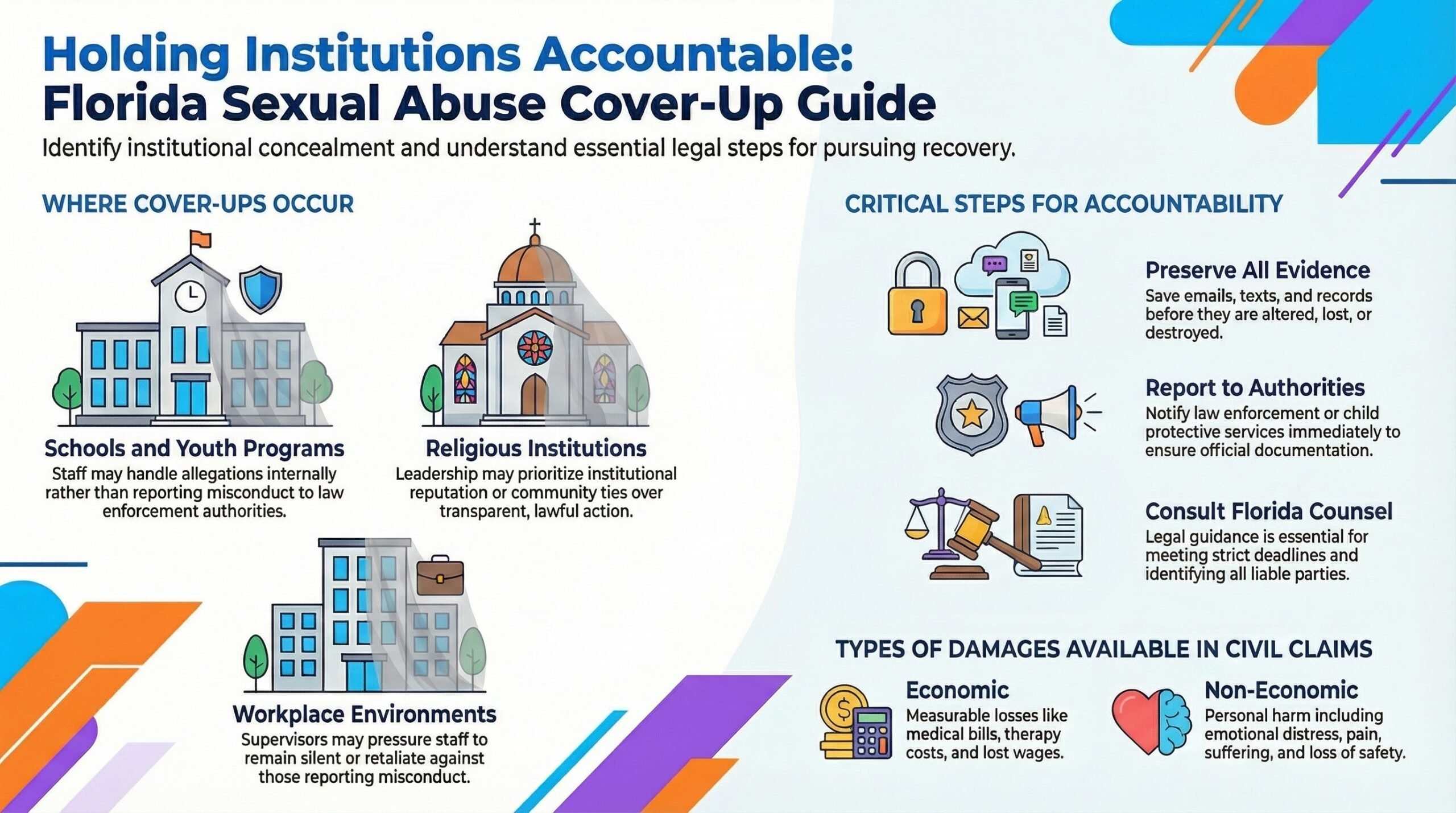
- Common cover-up scenarios involve schools, religious institutions, youth programs, and workplaces handling allegations internally rather than reporting them to authorities.
- Prompt legal guidance in Florida helps meet deadlines, understand reporting duties, secure privacy protections, and pursue accountability that supports recovery and public safety.
How We Can Help With Your Florida Sexual Abuse Cover-Up Claim
When institutions, employers, or other responsible parties conceal sexual abuse, a Florida sexual abuse cover-up lawyer can help victims evaluate their legal options and pursue accountability through the civil justice system. Legal counsel may begin by listening carefully, identifying immediate concerns, and creating a plan that respects safety, dignity, and long-term wellness.
Representation often includes preserving records, guiding evidence handling, and coordinating with trusted professionals who support trauma-informed care. An attorney may review internal reports, communications, policies, and prior complaints to assess whether concealment harmed the victim or others. Counsel can also address confidentiality agreements, explain their limits, and protect clients from unfair pressure during conversations with institutions or insurers.


Throughout the process, the lawyer serves with discipline and purpose, keeping clients informed, meeting deadlines, and advocating for remedies that promote wellness and public protection. This support allows survivors and their families to focus on recovery while the legal work proceeds with care and resolve.
Understanding Sexual Abuse Cover-Up Cases in Florida
OUR CONSULTATIONSARE FREE
START YOUR FREE CASE REVIEW

A clear understanding of sexual abuse cover-up cases in Florida begins with the conduct that turns underlying abuse into a separate basis for civil liability. A cover-up may involve concealment, misleading statements, destruction of records, intimidation, or failures to report known misconduct when a legal or institutional duty exists.
Florida civil claims often focus on whether an individual or organization enabled continued harm by suppressing information or obstructing accountability. That analysis differs from criminal liability, although related investigations may proceed concurrently. Courts may examine internal communications, reporting practices, and treatment of a Child witness to assess whether actions worsened injury or delayed protection.


For those committed to service and recovery, these cases also involve practical concerns about victim support, confidentiality, and informed decision-making. Depending on the dispute, mediation options may be available, but their value depends on safety, transparency, and the survivor’s goals, needs, and legal rights.
Common Scenarios When Sexual Abuse Cover-Up Might Take Place in Florida
Sexual abuse cover-up in Florida may arise in several institutional settings where authority, reputation, or liability concerns influence how allegations are handled. Common examples include concealment by school staff, secrecy within religious institutions, suppression in youth programs, and obstruction of reporting in workplace environments. Each scenario may involve efforts to minimize complaints, discourage disclosure, or prevent outside scrutiny.
School Staff Concealment
Although schools are expected to protect students and report suspected misconduct, concealment can occur when teachers, administrators, counselors, or other staff members minimize warning signs, delay reporting, or handle allegations internally rather than notifying law enforcement or child protection authorities.
In Florida, such conduct may involve failures in Mandatory Reporting, incomplete documentation, discouragement of disclosures, or pressure on families to remain silent. A school may reassign an accused employee, limit access to records, or neglect proper Evidence Preservation, making later review more difficult. Administrators might also shape a Witness Interview to protect the institution rather than the student. When these actions occur, vulnerable children may remain at risk, and other families may be denied the timely information needed to act. Careful legal review can help identify concealment patterns and support accountability, protection, and recovery.
Religious Institution Secrecy
Religious institutions can present similar concealment concerns when allegations arise within a setting shaped by trust, hierarchy, and close community ties. In Florida, secrecy may develop when church leadership handles reports internally, discourages outside review, or prioritizes institutional reputation over transparent action.
Concealment can also involve restricted records, reassignment of accused individuals, or pressure on families to remain silent for the perceived good of the congregation. In some matters, confidentiality clauses appear in settlements or internal agreements, limiting what affected persons feel able to share. A careful legal review may help identify whether reporting duties were ignored, evidence was withheld, or influential decision-makers obstructed accountability. For communities committed to service, transparency, lawful reporting, and protection of vulnerable people remain critical measures when trust has been broken.
Youth Program Suppression
When misconduct allegations arise in youth programs, suppression may occur through delayed reporting, informal handling by program leaders, or efforts to keep concerns within the organization rather than alerting law enforcement or child protection authorities. In Florida, this pattern may appear in camps, sports leagues, mentoring groups, and after-school activities. Adults may minimize disclosures, quietly separate an accused volunteer, or discourage families from pursuing an outside review.
Such actions can undermine child advocacy and leave other children exposed to harm. Proper evidence documentation, timely reporting, and independent investigation are critical safeguards. A detached review often considers whether supervisors ignored warning signs, failed to preserve records, or prioritized institutional reputation over participant safety. Where suppression is suspected, a careful legal assessment may help clarify duties, accountability, and protective options for families.
Workplace Reporting Obstruction
Workplace reporting obstruction presents a similar pattern in employment settings, in which misconduct allegations may be contained internally rather than directed to law enforcement, human resources compliance channels, or, where applicable, child protection authorities. Supervisors or executives may discourage formal complaints, limit documentation, or pressure staff to remain silent to protect institutional interests.
In some Florida workplaces, retaliation may take the form of wrongful termination, demotion, scheduling changes, or negative evaluations after a report is made. Witness intimidation can also arise when coworkers are warned against corroborating accounts or participating in outside investigations. These practices can isolate victims, distort evidence, and delay intervention that could protect others from harm.
A careful legal review may help identify whether obstruction occurred and whether an employer’s response violated reporting duties, whistleblower protections, or broader obligations to workplace safety.
Legal Rights of Sexual Abuse Cover-Up Victims in Florida
Although institutions and individuals may attempt to conceal sexual abuse, Florida law preserves important legal rights for victims harmed by both the abuse itself and the efforts to suppress disclosure. These rights may include civil claims for damages, access to protective court measures, and remedies when employers, schools, churches, or agencies interfere with reporting.
Florida principles involving Consent and Privacy recognize personal dignity, while Victim Protection laws seek to reduce further harm during legal proceedings and related investigations.
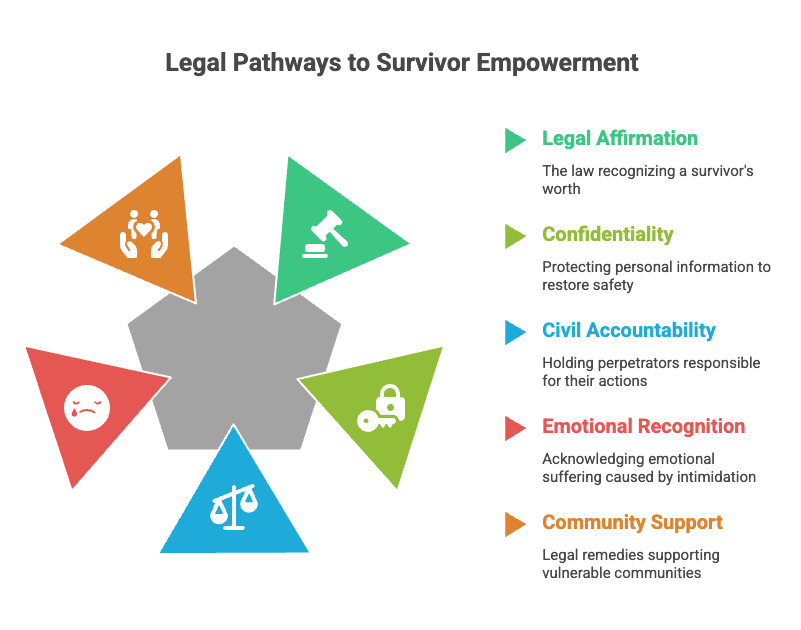
Florida law protects survivors with privacy, civil remedies, and court safeguards when abuse and institutional concealment cause further harm.
- The law can affirm a survivor’s worth when others deny the truth.
- Confidentiality protections may help restore safety, dignity, and control.
- Civil accountability can expose patterns of silence that endanger others.
- Courts may recognize emotional suffering caused by intimidation or retaliation.
- Legal remedies may support communities committed to safeguarding vulnerable people.
In many cases, time limits, institutional duties, and evidence rules shape available claims, making informed legal evaluation especially important for those seeking justice and protection.
Steps to Take After a Sexual Abuse Cover-Up Incident in Florida
After a sexual abuse cover-up incident in Florida, preserving essential evidence is often a critical first step, as records, communications, and witness information may later support both civil and criminal proceedings. Prompt reporting to appropriate authorities can help protect the integrity of the case and may reduce the risk of additional misconduct being concealed or repeated. Consultation with experienced Florida counsel is also important because legal guidance can help a victim understand available options, reporting obligations, and potential claims.
Preserve Critical Evidence
Preserve all available evidence as early as possible, because records that reveal abuse or a subsequent cover-up can be altered, lost, or destroyed within a short period. Careful evidence preservation may include saving emails, text messages, photographs, medical records, personnel files, and internal communications that show misconduct or concealment.
A disciplined approach also protects the integrity of witness statements, timelines, and supporting documents. Digital forensics can help secure metadata, deleted files, surveillance footage, and device activity before information disappears. Record authentication is equally important because courts and investigators often require proof that documents are genuine and unchanged. Those assisting survivors should store originals safely, create organized copies, document when each item was obtained, and limit unnecessary handling.
These practical steps can strengthen future legal review while honoring the needs of vulnerable individuals and communities.
Report Abuse Promptly
Prompt reporting is often one of the most important steps to take when sexual abuse and a related cover-up are suspected in Florida. A timely report can help protect vulnerable individuals, preserve official records, and alert authorities before additional harm occurs. Those who serve children, elders, patients, students, or congregants should understand Florida’s Mandatory Reporting duties and follow them without delay.
Reports may be made to law enforcement, child protective services, adult protective services, or appropriate regulatory bodies, depending on the victim’s age and circumstances. Internal reporting may also be necessary, but it should never replace notice to outside authorities when required. Delays, omissions, or false statements can undermine safety efforts and may expose responsible parties and institutions to serious Legal Consequences under Florida law and professional standards.
Consult Florida Counsel
Because legal and factual issues often become more complicated when misconduct has been concealed, consulting experienced Florida counsel should be treated as a priority following a suspected sexual abuse cover-up. An informed legal advocate can assess timelines, explain reporting duties, and identify whether institutions, supervisors, or third parties may share responsibility under Florida law.
Prompt attorney consultation also helps protect survivors and those assisting them from avoidable mistakes. Counsel may guide careful Evidence collection, including the preservation of messages, records, photographs, witness names, and internal complaints without altering the original materials. Florida counsel can also coordinate with investigators, advise on privacy concerns, and help evaluate civil remedies or other lawful options.
For individuals committed to serving others, timely legal guidance supports accountability, protects vulnerable community members, and strengthens efforts to prevent further harm through informed action.
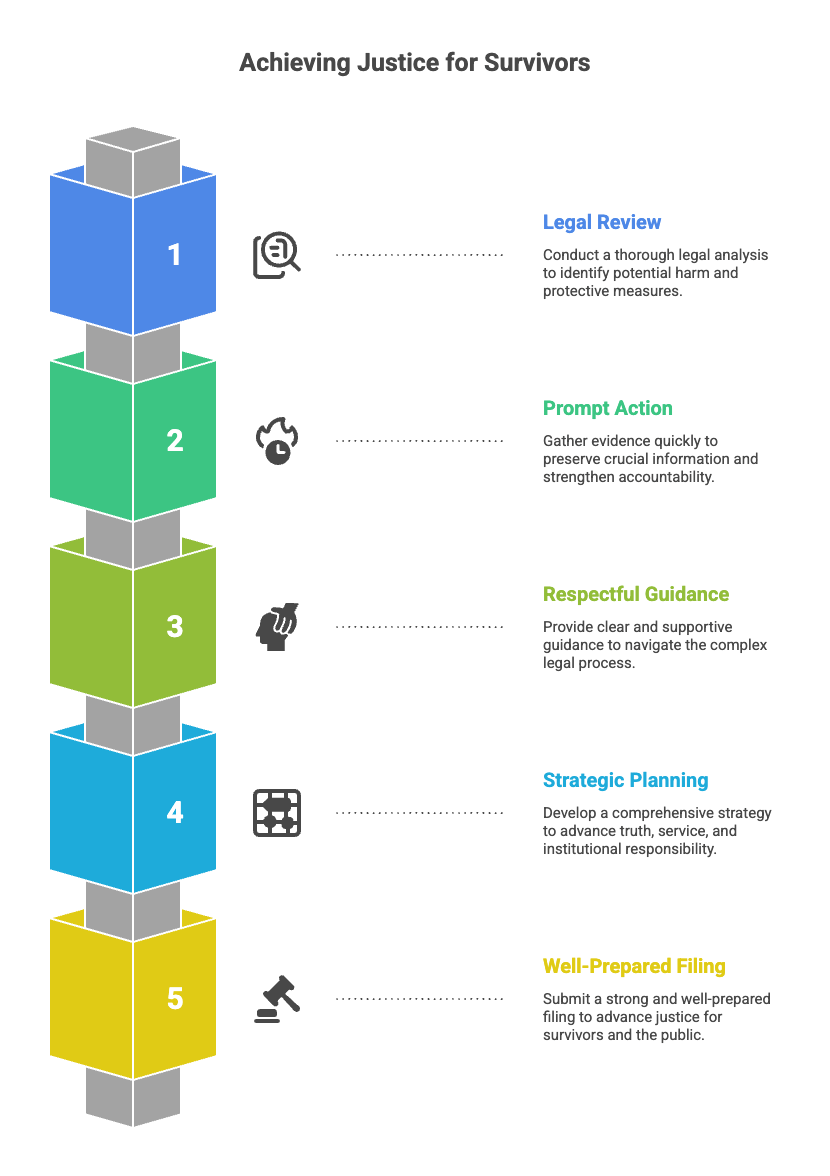
How a Florida Sexual Abuse Cover-Up Lawyer Can Help You Initiate a Case
When allegations of sexual abuse are compounded by efforts to conceal the misconduct, a Florida sexual abuse cover-up lawyer can help initiate a case by evaluating the available facts, identifying potentially liable parties, and determining which legal claims may apply under state law. Through confidential consultations, counsel can assess reports, institutional records, and witness accounts while guiding survivors and families with professionalism.
Early evidence gathering may preserve documents, communications, and other materials before they are lost or altered. Counsel also reviews prosecution timelines, civil filing deadlines, and notice requirements so community-minded clients can act promptly and responsibly.
- A careful legal review can help protect others from preventable harm.
- Prompt action may preserve key proof and strengthen accountability efforts.
- Respectful guidance can bring clarity during a painful, uncertain process.
- Strategic case planning supports truth, service, and institutional responsibility.
- A well-prepared filing can advance justice for survivors and the broader public.
Long-Term Effects of Sexual Abuse Cover-Up Trauma
Sexual abuse cover-up trauma may produce lasting psychological harm that continues well beyond the initial misconduct and concealment. It often affects a person’s ability to form secure relationships, maintain trust in others, and respond to authority without fear or suspicion. Over time, these experiences may also contribute to persistent physical and emotional symptoms, including anxiety, depression, sleep disruption, and chronic stress reactions.
Lasting Psychological Harm
Although a cover-up may obscure abuse from public view, it often deepens the survivor’s long-term psychological harm by reinforcing fear, confusion, and mistrust. Over time, suppressed truth can intensify trauma triggers, leaving ordinary settings, sounds, or reminders capable of provoking panic, numbness, or intrusive memories. Many survivors experience persistent emotional distress, including anxiety, depression, shame, and difficulty concentrating.
When institutions or individuals conceal misconduct, survivors may internalize blame and question their own perceptions. This added burden can complicate recovery, delay disclosure, and undermine a sense of safety in daily life. Service-minded advocates, counselors, and legal professionals should recognize that concealed abuse often produces enduring mental health consequences. Thoughtful support, trauma-informed care, and accountability measures can help reduce further harm and promote long-term recovery for survivors.
Relationship And Trust Issues
Because concealment distorts a survivor’s sense of safety and truth, it often causes lasting relationship and trust issues that extend well beyond the period of abuse itself. When institutions or authority figures deny facts, minimize reports, or attack victim credibility, survivors may struggle to rely on others’ motives, honesty, and protection.
These trauma impacts can affect family bonds, friendships, workplaces, faith communities, and intimate partnerships. A survivor may become guarded, expecting betrayal, secrecy, or disbelief, even in supportive environments. Difficulties with boundaries, communication, and vulnerability often follow, not from personal failure, but from learned self-protection shaped by deception. Service-minded advocates should recognize that trust is not restored through pressure or reassurance alone.
It is rebuilt gradually through consistency, transparency, accountability, and respectful support that honors the survivor’s autonomy and lived experience.
Physical And Emotional Symptoms
When abuse is hidden or denied over time, survivors may develop persistent physical and emotional symptoms that reflect both the original harm and the added trauma of institutional betrayal. Common trauma symptoms include chronic pain, headaches, gastrointestinal problems, sleep disruption, panic responses, and heightened vigilance in ordinary settings. Emotional effects may appear as depression, anxiety, shame, irritability, numbness, or difficulty regulating fear and anger.
Over time, these conditions can interfere with work, caregiving, education, spiritual life, and the ability to serve others consistently. Some survivors also experience dissociation, memory gaps, fatigue, and a weakened sense of safety in their own bodies. Careful legal advocacy and trauma-informed support can help document these injuries, validate lived experience, and connect survivors with resources that promote stability, treatment, accountability, and long-term recovery.
What to Expect During a Florida Sexual Abuse Cover-Up Claim Process
A Florida sexual abuse cover-up claim process generally begins with filing the initial claim and identifying the parties whose actions or omissions may have contributed to the harm. The next stage often involves gathering essential evidence, including records, witness statements, and institutional documents, followed by negotiation and possible settlement discussions. If the matter does not resolve, the court process timeline may include formal discovery, pretrial motions, and trial preparation before a final outcome is reached.
Filing The Initial Claim
Although each case turns on its own facts, filing the initial claim in a Florida sexual abuse cover-up matter generally begins with a careful review of the abuse, the concealment, and the institutions or individuals that may bear legal responsibility. Counsel ordinarily evaluates deadlines, including the statute of limitations, and advises on immediate measures to preserve evidence.
The initial filing often identifies the parties, outlines the alleged misconduct, and states how concealment may have enabled further harm. It may also describe the survivor’s legal basis for relief, and the types of damages sought. In service-oriented matters, the process is approached with dignity, accuracy, and respect for community safety. Early procedural choices can affect notice requirements, venue, and available claims, so careful drafting is essential from the outset for survivors and those supporting healing efforts.
Gathering Key Evidence
Several categories of evidence typically become central once a Florida sexual abuse cover-up claim moves beyond the initial filing. Attorneys generally work to collect materials that clarify what occurred, who knew about it, and whether deliberate concealment allowed further harm. Witness Statements may be gathered from survivors, employees, supervisors, volunteers, or others with direct knowledge of reports, responses, or suspicious conduct.
Documentary evidence often includes internal emails, incident reports, personnel files, policy manuals, and prior complaints involving the same institution or individual. Medical Records may help establish injuries, treatment history, and the timing of disclosure. Counsel may also review digital communications, security footage, and archived records to identify inconsistencies or omissions. Careful evidence collection supports accountability, protects vulnerable people, and helps present a clear, fact-based claim for review.
Negotiation And Settlement
Once evidence has been organized and evaluated, the claim often moves into negotiation and possible settlement discussions. During this stage, counsel for the survivor and the opposing parties exchange positions, assess liability, and consider whether resolution can be reached without prolonged conflict. Effective advocacy depends on clear documentation, thoughtful evidence preservation strategies, and a realistic evaluation of damages and institutional responsibility.
Settlement discussions may address financial compensation, policy reforms, written acknowledgments, and other terms intended to support accountability and community safety. The parties also often consider confidentiality during negotiations, especially when sensitive records or witness concerns are involved. A careful attorney helps protect the survivor’s interests, explains each proposal, and measures offers against the claim’s broader goals, including truth, prevention, and service to others through responsible institutional change.
Court Process Timeline
In Florida sexual abuse cover-up litigation, the court process typically unfolds in defined stages that can extend over many months or longer, depending on the facts, the number of parties involved, and the court’s schedule. A claim often begins with investigation, filing, and formal service on defendants. Early hearings may address scheduling, pleadings, and immediate disputes.
Discovery usually follows, requiring document exchange, written questions, depositions, and motions over confidentiality or scope. Counsel often treats Evidence preservation best practices as critical from the outset. Courts may encourage mediation before trial, though settlement is not guaranteed. If unresolved, pretrial motions, witness preparation, and trial presentation proceed in sequence.
Throughout the process, survivors and families may benefit from emotional support resources while maintaining organized records and coordinated communication with counsel.
Compensation for Florida Sexual Abuse Cover-Up Damages
Although no financial award can undo the harm caused by sexual abuse or a deliberate cover-up, Florida law may allow survivors to pursue compensation for the full scope of their losses. In these claims, counsel often focuses on evidence preservation and expert testimony to show how concealment deepened trauma, delayed reporting, or exposed others to preventable abuse. A careful case presentation can help hold institutions accountable while honoring survivors’ service-minded goals.
| Consideration | Why It Matters |
|---|---|
| Documentation | Supports a clear damages narrative |
| Witness accounts | Corroborates concealment and impact |
| Professional opinions | Explains trauma and institutional failures |
Compensation may also reflect the lasting consequences of a cover-up, including setbacks in personal stability, treatment progress, trust, and community participation. Florida courts evaluate each case on its facts, the strength of proof, and the connection between wrongful conduct and resulting harm. Early legal guidance can protect rights and strengthen a survivor-centered claim.
Economic vs Non-Economic Damages in Florida Sexual Abuse Cover-Up Cases
In Florida sexual abuse cover-up cases, damages generally fall into two categories, economic and non-economic, each addressing different forms of harm. Economic damages concern measurable financial losses such as medical expenses, therapy costs, lost income, and other out-of-pocket consequences, while non-economic damages relate to pain and suffering, emotional distress, and diminished quality of life. Establishing both damage types often requires a combination of records, expert opinions, and other evidence that connects the abuse and concealment to the claimant’s losses.
Economic Damages Explained
When a Florida sexual abuse cover-up claim proceeds, damages are generally divided into two categories: economic and non-economic losses. Economic damages address measurable financial harm tied to the abuse and the concealment. These losses may include medical treatment, counseling expenses, prescription costs, lost wages, diminished earning capacity, and other out-of-pocket expenditures reasonably linked to the misconduct.
In these cases, counsel often focuses on investigating concealed evidence to identify records, communications, or institutional decisions that worsened financial harm or delayed care. This work supports calculating compensation impact with greater accuracy and fairness. Financial experts, employment records, billing statements, and treatment plans may help establish the amount owed.
For organizations and individuals committed to serving others, understanding economic damages can clarify accountability and support informed decisions about legal recovery and future stability.
Non-Economic Losses
A service-minded legal approach treats these harms with seriousness and respect. It may consider the survivor’s need for Consent restoration, the burden of trauma disclosure, and the lasting impact on emotional stability, identity, and sense of safety. Although these losses are not tied to evidence, they remain central to understanding the full human cost of institutional failure. Careful legal evaluation helps ensure that personal suffering is not minimized or overlooked by the civil justice system.
Proving Both Damage Types
Because economic and non-economic damages arise from different forms of harm, each must be supported through distinct but coordinated proof in a Florida sexual abuse cover-up case. Economic claims generally require records showing financial loss, including medical bills, counseling expenses, lost wages, reduced earning capacity, and other measurable costs tied to the abuse and concealment. Non-economic survivor damages depend on persuasive proof of emotional impact, trauma symptoms, diminished quality of life, and ongoing psychological suffering.
Attorneys often rely on evidence preservation, expert evaluations, treatment histories, employment documents, and testimony from survivors, family members, and care providers. When presented jointly, these materials help establish the full scope of harm. A careful, service-oriented legal approach can clarify both categories, support accountability, and strengthen the claim for fair recovery under Florida law.
When a Florida Sexual Abuse Cover-Up Case Goes to Trial vs Settlement
Although many Florida sexual abuse cover-up cases resolve through negotiated settlement, some proceed to trial when the parties sharply disagree over liability, the extent of institutional misconduct, or the value of the harm suffered. Settlement may offer quicker financial support, reduced public exposure, and more control over outcome, which can help survivors and families focus on restoration and service to others.
Trial becomes more likely when defendants deny wrongdoing, minimize organizational knowledge, or refuse meaningful compensation. In those matters, counsel carefully evaluates Trial Strategy, including witness preparation, expert testimony, and Jury Selection. Strong Evidence Preservation is also critical, because internal records, emails, policies, and prior complaints may reveal a pattern of concealment.
Some settlements include Confidentiality Orders or related privacy terms, while trials place disputed facts before a judge or jury. Each path carries burdens and benefits, and a careful legal assessment helps determine whether settlement or trial better advances accountability, protection, and survivor-centered justice for the community.
The Statute of Limitations for Florida Sexual Abuse Cover-Up Cases
Questions of trial versus settlement often lead directly to another time-sensitive issue, the statute of limitations for Florida sexual abuse cover-up cases. Florida law can impose strict filing deadlines, yet these claims often involve concealed facts, delayed reporting, and institutional misconduct that may affect when the legal clock begins.
Courts may examine whether the discovery rule applies, especially when a survivor could not reasonably have known that a cover-up contributed to the harm. Tolling limitations may also arise if fraud, intimidation, or deliberate concealment prevented timely action. These doctrines matter because they can preserve accountability for organizations whose silence endangered others. Even so, limitation periods remain highly fact-specific, and different claims may carry different deadlines.
A careful review of records, internal communications, and the timeline of disclosures is often critical to evaluate whether a claim remains viable. For communities focused on protection and justice, understanding these timing rules helps support informed, responsible action on behalf of survivors.
When to Contact a Sexual Abuse Cover-Up Lawyer in Florida
When signs of institutional concealment emerge, early consultation with a sexual abuse cover-up lawyer in Florida is often necessary to protect legal options and preserve important evidence. Timely action may be appropriate when records appear to have been altered, reports are discouraged, witnesses feel pressured, or leadership minimizes serious allegations. Prompt legal guidance can help individuals and families respond in a careful, service-minded way that supports accountability and community safety.
Contact may also be warranted when Confidentiality concerns arise, especially if an institution requests silence, controls internal communications, or limits access to documents. Early counsel can assist with Evidence preservation, including messages, personnel files, complaint histories, medical records, and surveillance materials that may later become harder to obtain. Consultation is often prudent before speaking extensively with administrators, insurers, or investigators connected to the institution.
It may also be important after learning that similar complaints were previously ignored, misclassified, or quietly resolved without meaningful protective action for others.
Why You Need an Experienced Florida Sexual Abuse Cover-Up Lawyer
Because institutional concealment cases often involve multiple decision-makers, disputed records, and overlapping legal obligations, retaining an experienced Florida sexual abuse cover-up lawyer is often vital to a careful and effective response. Such counsel can chart patterns of concealment, preserve evidence before it is altered or lost, and evaluate how organizational policies affected reporting, supervision, and accountability.
Experienced representation also helps survivors and their supporters navigate confidentiality tactics that may discourage disclosure or limit access to key information. A lawyer familiar with these matters can coordinate investigation strategy, address civil claims, and anticipate resistance from insurers, institutions, and defense counsel. Equally important, seasoned legal guidance may strengthen victim-witness support by reducing unnecessary retraumatization and organizing communications with care.
In service-oriented communities, this level of advocacy can promote transparency, encourage institutional reform, and help protect others from preventable harm while pursuing justice through a disciplined, informed legal process.
How to Choose the Right Sexual Abuse Cover-Up Lawyer for Your Case in Florida
Selecting counsel for a sexual abuse cover-up case in Florida requires a disciplined review of the lawyer’s experience, investigative approach, and ability to manage institution-based claims. A qualified attorney should demonstrate a record of handling sensitive abuse matters, preserving evidence, and identifying patterns of concealment within schools, churches, youth programs, or other organizations.
The selection process should also consider communication practices, litigation resources, and respect for the survivor’s priorities. An effective lawyer explains legal options clearly, responds consistently, and coordinates with professionals who can strengthen Victim Support and promote Emotional Recovery during the legal process. Attention should be given to courtroom readiness, negotiation skills, and knowledge of Florida deadlines and liability standards.
Prospective clients may also evaluate whether the attorney approaches service with integrity, discretion, and a commitment to accountability. Careful comparison of these factors helps ensure representation that protects the survivor’s interests while pursuing meaningful justice for the broader community.
About The Law Offices of Anidjar & Levine
In matters involving allegations of institutional concealment, The Law Offices of Anidjar & Levine presents legal representation focused on careful case development, factual investigation, and client-centered advocacy.
The firm approaches sensitive claims with discipline, respect, and a clear commitment to helping survivors pursue accountability through lawful, structured action.
Its attorneys emphasize a thorough review of records, witness statements, reporting timelines, and organizational conduct.
This method supports Evidence preservation and helps identify whether failures by schools, churches, employers, or other entities contributed to ongoing harm.
The firm also recognizes that survivors often value dignity, stability, and practical guidance while legal issues unfold.
The Law Offices of Anidjar & Levine maintains strict adherence to Confidentiality requirements and communicates with care at every stage of representation.
By combining responsive service with organized legal strategy, the firm seeks to serve clients and families who want responsible counsel, informed decision-making, and meaningful advocacy in difficult Florida sexual abuse cover-up matters.
Frequently Asked Questions
Can I File Anonymously in a Florida Sexual Abuse Cover-Up Case?
Yes, a person may sometimes file anonymously in Florida, but court approval is usually required. Anonymous Filing Procedures depend on the facts of the case, the plaintiff’s safety, privacy interests, and potential prejudice to other parties. Courts may also permit Confidential Reporting measures, such as sealed records or pseudonyms, when a strong justification exists. Because these protections are limited and fact-specific, careful legal guidance is generally necessary before proceeding in such matters.
Will Pursuing a Claim Affect My Immigration Status in Florida?
Pursuing a claim in Florida does not usually change a person’s immigration status by itself. However, Immigration consequences can arise if the case reveals unrelated criminal issues, fraud concerns, or prior immigration violations. Federal enforcement considerations may also matter when information is shared across agencies. A careful legal review helps protect the person’s rights, supports informed decisions, and promotes accountability while reducing avoidable risks during the civil process.
Can Social Media Posts Impact My Sexual Abuse Cover-Up Claim?
Yes, social media posts can affect such a claim by creating significant Evidentiary Impact and Credibility Effects. Courts, insurers, and defense counsel may review statements, photos, messages, and location data for inconsistencies with reported harm or timelines. Even seemingly harmless content may be misunderstood or used to call its reliability into question. Careful preservation of relevant material and restrained online activity generally serve the claimant’s interests and support a more accurate, fair evaluation process.
Are Clergy Abuse Cover-Up Claims Handled Differently Than School Abuse Cases?
Yes, clergy abuse cover-up claims may be handled differently from school abuse cases, although both rely on standard evidence and institutional knowledge. Courts often examine clergy liability in terms of church governance, reporting duties, and internal disciplinary practices, while school cases focus on employment supervision and student safety obligations. Each matter requires careful factual review, because procedural rules, available records, and responsible parties can differ in ways that affect accountability and survivor-centered legal strategy.
Can Family Members Also Recover Damages in a Florida Cover-Up Case?
Yes, family members may recover damages in a Florida cover-up case, but recovery usually depends on family standing and the specific harm alleged. Courts often require clear proof of liability linking the concealment to independent injuries suffered by the relative, rather than to derivative distress alone. Spouses, parents, or estates may have stronger claims in limited circumstances. Careful factual development helps determine whether service to the injured person also supports a valid family claim.
—————————
Victims of sexual abuse cover-ups in Florida may have legal options to pursue accountability against individuals and institutions that concealed misconduct.
A knowledgeable attorney can evaluate the facts, protect a victim’s rights, and guide the case toward meaningful legal action.
The Florida Sexual Assault Lawyer team at Law Offices of Anidjar & Levine assists clients with careful case assessment and informed representation.
Timely legal guidance can help preserve evidence, clarify available remedies, and support a victim’s effort to seek justice and financial recovery.