
Law Offices of Anidjar and Levine helps victims of online sexual exploitation in Florida evaluate potential claims, preserve digital evidence, and identify liable parties under state and federal law. Counsel may coordinate reporting to platforms or law enforcement, seek protective remedies, and pursue compensation for therapy costs, lost income, emotional distress, reputational harm, and future care.
Early action is important because digital records can disappear quickly, and organized documentation often strengthens both safety planning and legal options.
More guidance is available from a Florida Sexual Assault Lawyer.
Main Takeaways
- A Florida online sexual exploitation lawyer evaluates facts, identifies liable parties, and explains civil, criminal, and protective legal options.
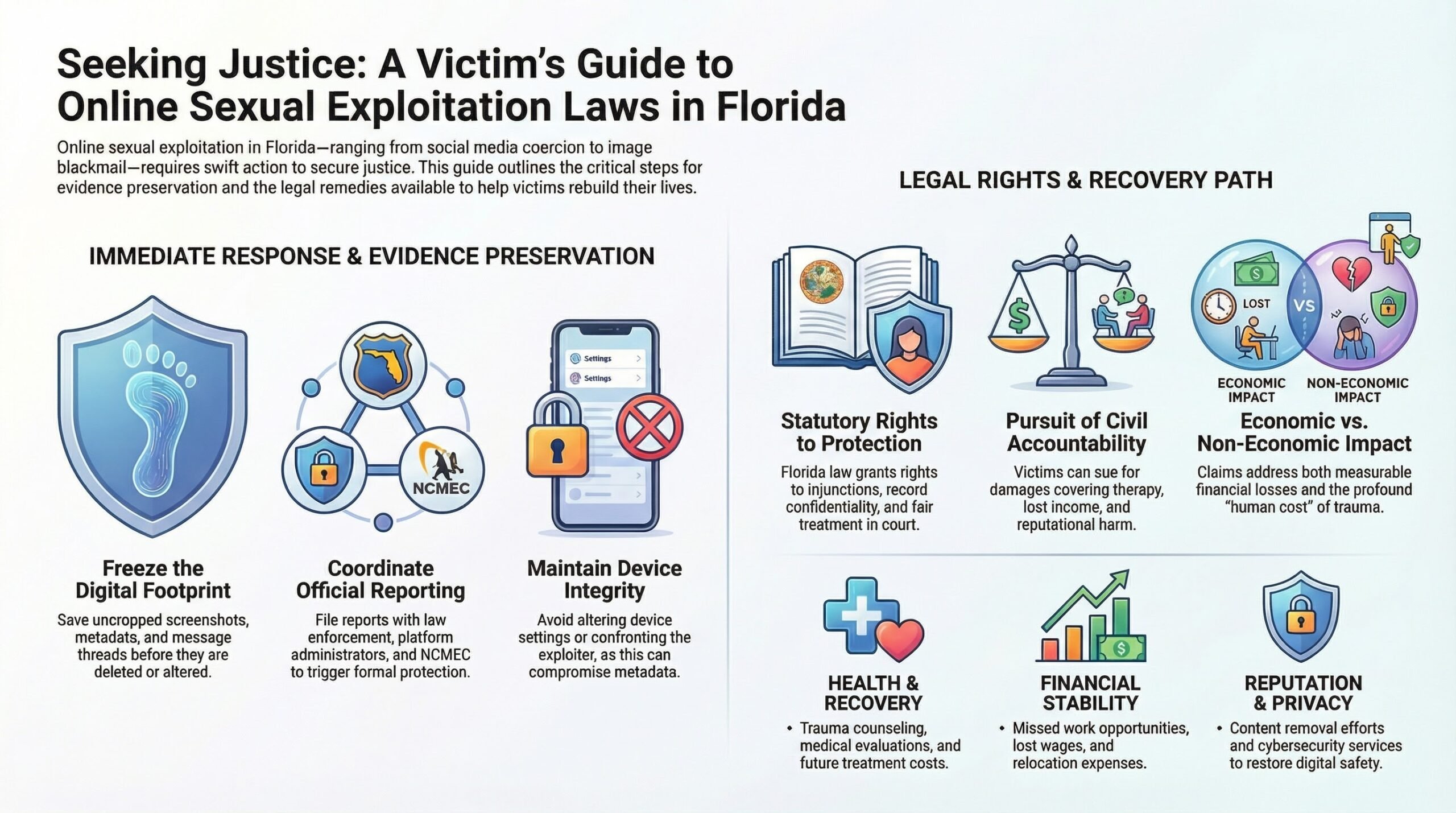
- Immediate evidence preservation is critical; save screenshots, messages, usernames, links, payment records, dates, and devices without altering metadata.
- A lawyer can coordinate reporting to law enforcement, platforms, schools, employers, or NCMEC to reduce ongoing harm.
- Victims in Florida may seek injunctions, confidentiality protections, and damages for emotional distress, treatment costs, reputational harm, and future losses.
- Common cases involve social media coercion, dating app predation, gaming platform grooming, and explicit image blackmail or nonconsensual image sharing.


How We Can Help With Your Florida Online Sexual Exploitation Claim
In these matters, legal counsel can assist by evaluating the facts of the online sexual exploitation claim, identifying all potentially liable parties, and determining which Florida and federal laws may apply. Counsel also helps clients act with purpose, protecting dignity while pursuing practical next steps.
Support often begins with Evidence preservation, including records, platform data, communications, screenshots, and account information that may prove critical later. Attorneys may coordinate a criminal referral when law enforcement involvement could protect the public and strengthen accountability, while keeping the client informed about the process and risk. Through victim advocacy, counsel can communicate with platforms, insurers, schools, employers, or service providers when necessary to reduce further harm.
A thoughtful compensation strategy may address financial losses, emotional distress, treatment costs, reputational damage, and future needs. Throughout representation, the focus remains on steady guidance, careful documentation, and service-oriented action designed to advance safety, justice, and meaningful recovery for those affected.
OUR CONSULTATIONSARE FREE
START YOUR FREE CASE REVIEW

Understanding Online Sexual Exploitation Cases in Florida
Online sexual exploitation cases in Florida require a clear understanding of how abusive conduct occurs through digital platforms, private communications, social media, file sharing, and coercive online interactions. These matters often involve allegations that digital contact, threats, manipulation, or nonconsensual image distribution caused harm and violated Florida law. Careful legal analysis helps distinguish criminal accusations from misunderstandings, false reports, or insufficient evidence.
A service-minded legal approach emphasizes protection, accountability, and due process for all involved. Attorneys review electronic records, platform activity, timelines, and witness statements to assess whether harassment allegations are supported by reliable facts. They also evaluate intent, consent, age-related issues, and the credibility of digital evidence.
In some matters, Cyberstalking defenses may become relevant when online conduct is mischaracterized or lacks the elements required by statute. A clear understanding of these cases allows advocates, families, and community members to respond responsibly while protecting rights and promoting lawful, informed action.

Common Scenarios When Online Sexual Exploitation Might Take Place in Florida
Online sexual exploitation in Florida may arise across several digital settings, often through conduct that begins as ordinary online interaction. Common examples include social media coercion, dating app predation, grooming through gaming platforms, and blackmail involving explicit images. Each scenario can present distinct legal and factual issues, making careful evaluation of the surrounding circumstances critical.
Social Media Coercion
Many incidents of social media coercion begin with direct messages, friend requests, or private chats that appear harmless at first but later turn manipulative. In Florida, this conduct may involve digital manipulation, where an offender builds trust, isolates a target, or pressures someone to share intimate content. A clear power imbalance may develop when the offender is older, holds authority, or exploits emotional vulnerability.
Social media coercion often escalates through threats, blackmail, impersonation, or repeated demands for explicit images or sexual communication. Public platforms and disappearing-message features can make harmful conduct harder to trace, yet the impact on victims and families can be severe. Legal guidance may help communities respond, preserve evidence, protect those affected, and support accountability while prioritizing dignity, safety, and informed service to others.
Dating App Predation
Why do dating apps so often become a setting for sexual exploitation in Florida? Their speed, anonymity, and location-based features can allow offenders to build false trust, pressure users into sharing intimate images, or arrange meetings under deceptive circumstances. In many cases, a person misrepresents age, identity, or intentions, then uses threats, humiliation, or blackmail to obtain sexual content or contact.
A service-minded community benefits from recognizing these patterns early. Dating app consent must be informed, voluntary, and ongoing, yet exploitation often relies on manipulation that undermines meaningful choice. Victim safety may require preserving messages, avoiding in-person meetings after coercive exchanges, and seeking prompt legal guidance. Careful documentation and timely reporting can help protect the individual involved and support broader community protection efforts across Florida.
Gaming Platform Grooming
Because gaming platforms often combine private messaging, voice chat, live streaming, and long-term team play, they can become a setting where sexual exploitation develops gradually and with little immediate detection. An offender may target younger players with gifts, praise, in-game currency, or offers of mentorship, then steer conversations toward secrecy and isolation.
Warning signs can include repeated private contact, age-inappropriate comments, requests for personal details, and pressure to move discussions to less monitored channels. Adults who serve families and communities should recognize that these patterns may appear harmless at first, especially within competitive or cooperative play.
Prompt documentation, preservation of chats, and use of platform Reporting options can support safety planning. Early legal guidance, coordinated with victim advocacy resources, may help protect the affected person and strengthen an appropriate response.
Explicit Image Blackmail
Explicit image blackmail often emerges after online contact has already established trust, secrecy, or dependence, including through social media, messaging apps, dating platforms, and gaming environments. An exploiter may pressure a person to send intimate images, then threaten exposure unless more content, money, or sexual activity is provided. This conduct raises concerns about consent and coercion, as apparent agreement obtained through fear, manipulation, or deception is not meaningful consent.
In Florida, such abuse can affect minors and adults, often causing isolation, panic, and reluctance to seek help. A lawyer serving affected individuals may help preserve evidence, explain reporting options, and advocate for protective measures. Guidance may also address digital privacy rights, unlawful distribution, extortion, and steps to limit further harm across platforms. Timely legal intervention can support safety and accountability.


Legal Rights of Online Sexual Exploitation Victims in Florida
Although online sexual exploitation often occurs in private digital spaces, Florida law affords victims important legal rights designed to protect their safety, privacy, and ability to pursue justice. These protections reflect a broader commitment to human dignity and public service. Victims may assert their rights through criminal proceedings, civil claims, and court orders aimed at protecting victims.
Florida law may also support cyberbullying remedies when exploitation overlaps with harassment, threats, or repeated online abuse.
- Rights to seek injunctions that limit contact, disclosure, or continued harassment
- The right to request confidentiality for sensitive records and identifying information
- Rights to pursue damages for emotional harm, reputational injury, and related losses
- The right to be treated with fairness, respect, and meaningful participation in legal proceedings
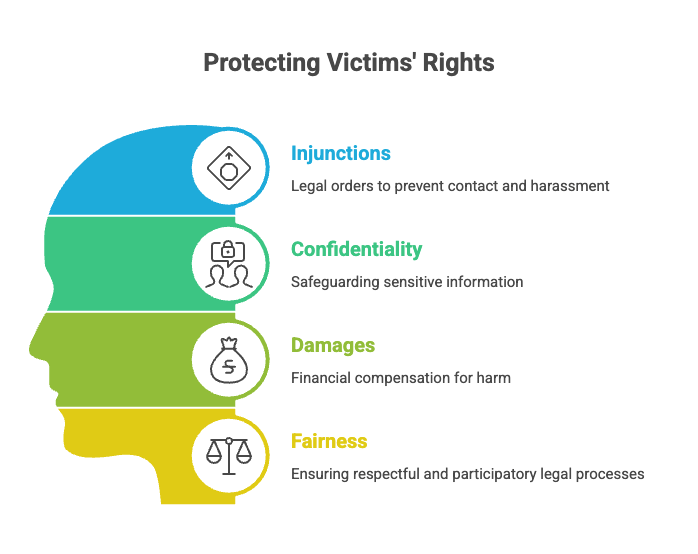
These legal rights help restore stability while reinforcing accountability. For those who serve vulnerable communities, understanding these protections strengthens advocacy, supports informed care, and promotes a safer digital environment for all people statewide.
Steps to Take After an Online Sexual Exploitation Incident in Florida
After an online sexual exploitation incident in Florida, prompt and orderly action can help protect both personal safety and legal interests. Important initial measures generally include preserving digital evidence, reporting the incident to the appropriate platform or law enforcement agency, and documenting all related communications and account activity. It is also often advisable to contact a Florida lawyer, who can assess the circumstances, explain available options, and help guide the next steps.
Preserve Digital Evidence
Because digital communications can be altered, deleted, or overwritten within minutes, preserving electronic evidence should be treated as an immediate priority following an online sexual exploitation incident in Florida. Individuals and those assisting them should save screenshots, messages, emails, usernames, profile links, payment records, and call logs, and note the dates, times, and platform names for clarity.
They should avoid deleting content, confronting the exploiter online, or changing device settings that could affect metadata. Where possible, original files should be copied to secure storage, and devices should be kept in their current condition. Careful preservation supports later Incident Reporting efforts and strengthens documentation without compromising Victim Safety. A service-minded response also includes organizing evidence chronologically, limiting access to trusted helpers, and maintaining confidentiality to protect the affected person from further harm.
Report The Incident
In the immediate aftermath of online sexual exploitation, prompt reporting can help limit further harm, preserve investigative options, and connect the affected person with appropriate protection. Reporting may be made to local law enforcement, cybercrime units, school officials, platform administrators, or the National Center for Missing and Exploited Children, depending on the victim’s age and circumstances.
When possible, the affected person should provide preserved screenshots, account names, dates, URLs, and payment records. Many agencies and service providers offer confidential reporting channels that reduce unnecessary exposure while initiating a formal response. If immediate danger exists, emergency assistance should be requested without delay.
Reporting should also be paired with safety planning, including account security changes, privacy adjustments, and coordinated support from trusted caregivers, advocates, counselors, or victim service professionals.
Contact A Florida Lawyer
Legal guidance should be sought as soon as the incident has been reported and immediate safety concerns have been addressed. A Florida lawyer can explain available protections, preserve digital evidence, and coordinate next steps in ways that strengthen both personal security and future claims. Early counsel also helps prevent harmful contact with the offender and supports informed decisions during police reporting.
An attorney familiar with online sexual exploitation matters can provide Victim support by connecting individuals and families with counselors, advocates, and community resources. Legal confidentiality allows sensitive facts to be discussed privately, which often improves preparation and reduces avoidable mistakes. Counsel can also communicate with platforms, schools, or employers when necessary, helping those affected focus on recovery, service, and the protection of others in the community.
How a Florida Online Sexual Exploitation Lawyer Can Help You Initiate a Case
When online sexual exploitation has disrupted a person’s safety, privacy, and reputation, a Florida lawyer can provide the structure needed to begin a case effectively. Counsel may assess immediate risks, explain legal options, and organize facts in a manner that supports accountability and protection.
Early guidance often strengthens Evidence preservation, identifies digital footprints, and connects individuals with appropriate victim support resources.
- Reviews messages, images, accounts, and platform activity for relevant proof.
- Sends preservation requests to websites, service providers, or other custodians.
- Coordinates reporting to law enforcement and appropriate agencies when warranted.
- Prepares filings and strategies that align with Florida law and client goals.
Long-Term Effects of Online Sexual Exploitation Trauma
Online sexual exploitation trauma can produce enduring emotional and psychological harm, often affecting a person’s sense of safety, self-worth, and daily functioning long after the abuse has ended. It may also contribute to serious relationship and trust issues, as survivors can struggle with intimacy, communication, and confidence in others. In many cases, these effects are accompanied by lasting behavioral changes, including social withdrawal, hypervigilance, or difficulty maintaining routines and responsibilities.
Emotional And Psychological Impact
Although the abuse may occur through a screen, the long-term emotional and psychological effects of online sexual exploitation can be profound and persistent. Survivors may experience anxiety, depression, shame, hypervigilance, sleep disruption, and intrusive thoughts that interfere with daily functioning and service to others. Emotional injuries often remain hidden, yet they can affect concentration, judgment, and a person’s sense of safety for years.
In many cases, recovery requires structured support, including trauma counseling options tailored to digital exploitation. Legal proceedings may also intensify distress, as the emotional effects of the courtroom can trigger renewed fear, helplessness, or panic. Professionals who assist survivors should recognize these patterns and respond with patience, consistency, and informed care. A careful, trauma-aware approach helps protect mental well-being while supporting accountability, stability, and a more sustainable path toward restoration over time.
Relationship And Trust Issues
Because sexual exploitation often involves manipulation, secrecy, and repeated violations of personal boundaries, survivors may face lasting difficulties with trust, intimacy, and emotional security in later relationships. Prior trust breaches can distort expectations of care, leaving individuals alert to perceived threats even in supportive environments. Online coercion may also intensify uncertainty about consent, honesty, and personal autonomy.
These effects can influence how survivors interpret power dynamics with partners, friends, professionals, and caregivers. They may struggle to determine whether affection is genuine or controlling, especially when past exploitation blurred boundaries. In service-focused settings, understanding these relational injuries is critical to promoting victim safety and informed support. Consistent respect, clear communication, and reliable boundaries can help reduce relational harm while honoring dignity, choice, and the survivor’s need for security over time.
Lasting Behavioral Changes
Persistent trust injuries often extend beyond relationships and appear in daily behavior, where survivors may adopt patterns shaped by fear, hypervigilance, shame, or a need to regain control. Over time, these reactions can alter routines, communication, and decision-making. Some become excessively guarded online, while others struggle with impulsive disclosure, secrecy, or people-pleasing responses. Repeated Consent boundary violations may also lead to perfectionism, social withdrawal, disrupted sleep, and heightened sensitivity to criticism or authority.
Professionals serving affected individuals often observe that digital grooming patterns can normalize coercion, making healthy limits harder to recognize. Survivors may avoid technology, monitor others excessively, or seek rigid control over schedules and environments. With informed support, these behaviors can be understood as protective adaptations rather than defects, guiding more compassionate and effective intervention, recovery, care, and long-term accountability.
What to Expect During a Florida Online Sexual Exploitation Claim Process
A Florida online sexual exploitation claim process typically begins with an initial case evaluation, during which the facts, legal options, and potential claims are assessed. It then proceeds through evidence collection, which may include digital records, communications, platform data, and other documentation needed to support the case before filing the claim. After filing, the matter generally follows a court process timeline that may involve investigation, pretrial proceedings, settlement discussions, and, if necessary, trial.
Initial Case Evaluation
When an individual first consults a Florida online sexual exploitation lawyer, the initial case evaluation typically centers on the facts of the alleged conduct, the available evidence, and the procedural posture of the matter. Counsel generally reviews timelines, communications, and immediate legal risks while identifying urgent concerns affecting dignity and community welfare. During this stage, the lawyer may explain Evidence preservation principles, warn against digital tampering, and outline practical boundaries for client conduct.
The evaluation also addresses victim support needs and safety planning, particularly when ongoing contact, threats, or reputational harm may be present. Attorneys commonly discuss possible claims, defenses, reporting considerations, and court deadlines while clarifying what the process may require from the client. This measured review helps establish informed expectations and a service-minded legal strategy moving forward.
Evidence Collection Steps
Because digital material can be altered or removed quickly, evidence collection in a Florida online sexual exploitation claim typically begins with prompt preservation of messages, images, account records, and platform data. Counsel often advises taking secure screenshots, capturing metadata, backing up devices, and creating written timelines that identify dates, usernames, and witnesses. A privacy-first documentation approach helps protect dignity while organizing material for careful review.
Professionals may then request available platform logs, subscriber information, and relevant communications from service providers or other custodians. They also evaluate authenticity, note gaps, and maintain a digital chain of custody so information remains reliable and traceable. When minors or vulnerable adults are involved, special care is taken to limit unnecessary exposure and reduce repeated handling of sensitive content. Thorough collection supports informed legal assessment and coordinated protective action.
Filing The Claim
Initiating a Florida online sexual exploitation claim generally begins with a structured legal review of preserved evidence, potential defendants, and available civil or related remedies under state and federal law. Counsel then evaluates Digital evidence, confirms jurisdiction, and determines whether the facts support privacy, exploitation, negligence, or platform liability claims. Attention is also given to filing deadlines, notice requirements, and whether protective measures are needed to reduce further harm.
A formal complaint is drafted with clear factual allegations, requested relief, and any basis for anonymity where permitted. Supporting records may be organized for submission or later disclosure. Throughout this stage, representatives often coordinate closely with investigators, service providers, and advocates to ensure the claim is filed accurately, respectfully, and in a manner that protects both rights and community safety.
Court Process Timeline
After a claim is filed, the court process typically proceeds through several stages that can extend over months or, in some matters, longer, depending on the facts, the number of parties, and any related criminal investigation.
The defendant is served, responds, and the court may enter scheduling orders. Early hearings address procedure, confidentiality, and Digital evidence preservation. Discovery then begins, with requests for records, platform data, depositions, and expert review. If settlement discussions occur, mediation may be required before trial. Courts may also resolve motions involving dismissal, privilege, or admissibility of electronic communications.
Throughout the matter, counsel continues trial preparation planning, organizes witnesses, and evaluates damages. When no resolution is reached, the case proceeds to trial, where testimony and documentary proof are presented. After judgment, post-trial motions or appeals may follow.
Compensation for Florida Online Sexual Exploitation Damages
In Florida online sexual exploitation cases, compensation may address a wide range of damages, including psychological trauma, reputational harm, medical and counseling expenses, lost income, and other losses tied to the exploitation. Recovery may also involve practical assistance, including Insurance coverage options and social services support, when those resources help mend a survivor’s daily life and promote safety.
| Category | Purpose | Examples |
|---|---|---|
| Counseling care | Support recovery | Therapy, evaluations |
| Medical needs | Address health effects | Treatment, medication |
| Reputation repair | Mitigate public harm | Content removal efforts |
| Income disruption | Restore stability | Missed work, opportunities |
A Florida attorney may document losses through records, expert opinions, and witness statements, then present a clear demand grounded in evidence. This process can help survivors secure resources needed to rebuild routines, protect dignity, and continue serving their families and communities. Thoughtful legal guidance often strengthens accountability and long-term recovery for survivors statewide.
Economic vs Non-Economic Damages in Florida Online Sexual Exploitation Cases
In Florida online sexual exploitation cases, damages are generally divided into economic losses and non-economic harm, each requiring a different method of evaluation. Economic losses often include medical expenses, counseling costs, lost income, and other measurable financial consequences, while non-economic damages address emotional distress, humiliation, and related psychological harm. Establishing both categories in court typically depends on clear documentation, credible testimony, and evidence that connects the exploitation to the claimed losses.
Calculating Economic Losses
Why does calculating economic losses matter so much in a Florida online sexual exploitation case? It helps quantify the financial burden created by the misconduct and supports a claim grounded in measurable facts. Careful accounting also strengthens Proving Liability, because documented losses can connect the wrongful conduct to specific expenses. Evidence Preservation remains crucial since invoices, bank records, employment files, and digital forensic reports may establish the full scope of monetary harm.
Economic losses may include counseling costs, medical treatment, cybersecurity services, relocation expenses, lost wages, diminished earning capacity, and out-of-pocket expenses incurred to protect privacy or restore accounts. In service-minded communities, accurate damage calculations can help survivors obtain resources needed for stability and safety. A Florida lawyer often works with experts to project future costs and present them clearly in settlement talks or court.
Valuing Emotional Harm
Documented financial losses show one part of the damage in a Florida online sexual exploitation case, but they do not capture the full impact of fear, humiliation, anxiety, sleep disruption, and loss of peace that often follow digital abuse. Non-economic harm reflects the human cost of exploitation and recognizes injuries that disrupt daily functioning, relationships, and a survivor’s sense of safety.
In serving affected individuals, a careful evaluation considers Trauma evidence, medical documentation, credibility proof, and expert evaluation as indicators of severity, duration, and life impact. These measures help distinguish temporary distress from profound emotional injury. Florida cases often weigh how deeply the exploitation altered routines, treatment needs, and personal stability. A thoughtful assessment honors lived experience while assigning meaningful value to suffering that cannot be measured by receipts or wages alone.
Proving Damages In Court
Establishing damages in court requires more than describing the misconduct, because Florida claims involving online sexual exploitation depend on competent proof that links the abuse to measurable financial losses and to serious personal harm. Economic damages may include therapy costs, lost income, security expenses, and future treatment needs, all supported by records, expert opinions, and careful Evidence preservation.
Non-economic damages address emotional damages, humiliation, anxiety, and loss of enjoyment of life, which often require testimony from clinicians, family members, and the survivor. Digital proof, including messages, images, platform data, and account records, can strengthen causation and credibility. This documentation influences both court trial presentation and settlement strategy. Thorough preparation helps counsel pursue fair victim compensation while presenting the case with dignity, accuracy, and a service-minded commitment to protection and accountability.
When a Florida Online Sexual Exploitation Case Goes to Trial vs Settlement
A Florida online sexual exploitation case may proceed to trial or resolve through a negotiated settlement, depending on the strength of the evidence, the legal issues in dispute, and the risks each side faces if the matter is presented to a jury.
In evaluating trial vs resolution, counsel typically examines available proof, witness credibility, digital records, and the likely response of jurors to sensitive facts. An effective evidence strategy may support a strong courtroom presentation, but it can also encourage settlement when liability appears clear and damages are well documented. Negotiation leverage often increases when discovery reveals persuasive communications, platform data, or patterns of defendant misconduct.
By contrast, a trial may become necessary when responsibility is denied, causation is challenged, or the parties disagree sharply about compensation and accountability. In service of the harmed person’s interests, the decision usually turns on which path offers greater protection, meaningful recovery, and a more reliable opportunity for justice without unnecessary delay or additional trauma.
The Statute of Limitations for Florida Online Sexual Exploitation Cases
After the choice between trial and settlement is considered, timing often becomes just as important as litigation strategy. In Florida online sexual exploitation cases, the statute of limitations determines how long a civil claim or criminal prosecution may remain legally viable. The applicable period can vary based on the survivor’s age, the specific conduct involved, and whether evidence was discovered later through electronic records.
Because these cases often involve hidden communications, stored images, and evolving technologies, factual review is critical when calculating deadlines. Courts may examine when the harm occurred, when it was reasonably discovered, and whether any legal exceptions extend the filing period. Digital privacy concerns may also shape how evidence is preserved and presented without causing further harm. In service-oriented communities, clear information about deadlines helps supporters respond responsibly.
Victim support resources can assist affected individuals and families in understanding process requirements while preserving dignity, safety, and accurate documentation for any future legal action.
When to Contact an Online Sexual Exploitation Lawyer in Florida
When should legal counsel be consulted in a Florida online sexual exploitation matter? Legal guidance is often appropriate as soon as exploitation is suspected, discovered, or reported. Early consultation can help preserve communications, images, account records, and other evidence before it is altered or deleted. It can also assist families, caregivers, and community advocates in taking prompt steps that support Digital Safety and protect vulnerable individuals from continued harm.
Counsel may also be contacted when a platform fails to respond, when law enforcement requests interviews or devices, or when a school or employer becomes involved. In service-oriented situations, timely advice can help coordinators, guardians, and support professionals understand reporting obligations, privacy concerns, and available protective measures. If exploitation crosses state lines, involves minors, or includes threats, coercion, or financial manipulation, immediate consultation is especially prudent.
Prompt action often strengthens Victim Support efforts and reduces avoidable setbacks during a sensitive, fast-moving matter.
Why You Need an Experienced Florida Online Sexual Exploitation Lawyer
Because online sexual exploitation cases often involve fast-moving digital evidence, overlapping jurisdictions, and sensitive privacy concerns, experienced Florida counsel can provide focused guidance that less seasoned representation may overlook. An experienced lawyer can help preserve Digital Evidence, address urgent safety risks, and coordinate legally sound Police Reporting so important facts are documented without creating avoidable complications.
Seasoned representation also helps protect dignity while advancing accountability. Counsel can communicate with platforms, investigators, and opposing parties in a manner that limits unnecessary exposure and supports informed decision-making. In many matters, legal advocacy works best when paired with Victim Support services that address immediate needs and long-term stability. Experienced attorneys often recognize how legal strategy intersects with Trauma Recovery, including the need for privacy, careful pacing, and reliable updates.
This combination of legal knowledge and practical coordination can reduce confusion, strengthen the case, and help affected individuals and families move forward with greater security and confidence.
How to Choose the Right Online Sexual Exploitation Lawyer for Your Case in Florida
In selecting legal representation for an online sexual exploitation matter in Florida, careful attention should be given to an attorney’s experience with digital evidence, privacy protection, and the procedural demands of cases that may involve both civil and criminal issues. A careful review of credentials, prior case handling, and courtroom or negotiation experience can help identify capable counsel.
It is also important to assess whether the lawyer communicates clearly, responds promptly, and approaches sensitive allegations with professionalism and respect. Knowledge of Evidence preservation is crucial because deleted messages, images, account data, and platform records may affect the outcome. Counsel should also understand consent violations, restraining measures, and available victim resources, including referrals for counseling and safety planning.
A well-chosen attorney will explain realistic options, protect confidentiality, and coordinate next steps in ways that support accountability, legal protection, and informed decision-making for those seeking to help vulnerable individuals.
About The Law Offices of Anidjar & Levine
Although every online sexual exploitation matter presents distinct legal and factual issues, The Law Offices of Anidjar & Levine offers representation focused on protecting clients’ rights, privacy, and long-term interests throughout the legal process.
The firm approaches these sensitive cases with disciplined preparation, careful communication, and a commitment to lawful, ethical advocacy for people facing serious allegations or seeking protection.
Its legal team evaluates digital evidence, charging decisions, and procedural concerns while developing strategies tailored to each client’s circumstances.
This may include advising on Cyberstalking defenses, addressing unlawful searches, and challenging unreliable electronic records. In matters involving harmed individuals, the firm emphasizes victim confidentiality, respectful guidance, and practical steps that support safety and dignity.
The Law Offices of Anidjar & Levine also keeps clients informed, responds to questions promptly, and works to reduce unnecessary disruption to family, employment, and community responsibilities.
That service-centered approach reflects a broader commitment to justice, accountability, and responsible legal counsel.

Frequently Asked Questions
Can Online Sexual Exploitation Cases Involve Anonymous or Fake Online Accounts?
Yes, online sexual exploitation cases can involve an Anonymous Account or a fake profile. Investigators often examine Platform Verification records, IP data, messages, and payment trails to identify who controlled the account. Even when a person hides behind false names or images, digital evidence may still connect conduct to a real individual. Careful reporting, preservation of records, and prompt legal guidance can support accountability and protect others from further harm.
What Digital Evidence Should I Preserve Before Deleting Messages or Images?
One should preserve the full message thread, usernames, profile links, timestamps, email headers, file names, and device information before deleting anything. Preserve Metadata whenever possible, because it helps verify origin, timing, and authenticity. Screenshot Safeguarding should include the entire screen, not cropped excerpts, and should capture dates and account identifiers. A careful person also retains download logs, cloud backups, and records of any reports made to platforms or authorities.
Can Schools or Employers Be Liable for Online Sexual Exploitation Incidents?
Yes, schools and employers may be liable when online sexual exploitation is enabled, ignored, or inadequately addressed. In schools, Title IX may impose duties to respond to known harassment that limits educational access. In workplaces, workplace duties require reasonable prevention and corrective action. Third-party liability can arise when institutions facilitate harm through inaction, and employer negligence may apply where supervision, reporting, or safety measures were plainly insufficient.
How Do Florida Laws Address Exploitation Occurring Across State or National Borders?
Florida laws address exploitation across state or national borders by allowing state prosecutors to act when conduct, harm, or digital contact affects a person in Florida. Jurisdiction issues often require coordination with federal agencies, especially in cross-border crimes involving interstate communications, trafficking, or foreign actors. Courts examine where acts occurred, where victims were located, and which laws apply, helping agencies protect vulnerable people through coordinated enforcement and victim-centered responses.
Will Pursuing a Claim Affect My Online Privacy or Social Media Accounts?
Pursuing a claim may affect online privacy and social media accounts, but privacy rights and legal limits provide important protections. Courts or investigators may seek relevant posts, messages, or account records when necessary. Counsel often advises careful account preservation, stronger security settings, and restraint in public discussion. Responsible action helps protect evidence and personal dignity while supporting others harmed by similar conduct. Thoughtful legal guidance can reduce unnecessary exposure throughout the process.
—————————
Victims of online sexual exploitation in Florida may face lasting personal, emotional, and legal challenges.
A knowledgeable attorney can help protect their rights, preserve crucial evidence, and pursue the appropriate civil remedies.
With a clear understanding of Florida law and the demands of these cases, legal counsel can provide vital guidance at each stage.
The Florida Sexual Assault Lawyer team at Law Offices of Anidjar and Levine represents individuals seeking accountability, support, and a focused strategy for moving forward after exploitation.