The Law Offices of Anidjar and Levine represents individuals evaluating potential claims for Florida medical malpractice, hospital negligence, and provider negligence. A Florida medical malpractice lawyer may assess whether substandard care caused an injury, including misdiagnosis, delayed treatment, medication errors, surgical mistakes, inadequate monitoring, or communication failures. Counsel typically preserves medical records, photographs, billing documents, and witness information while coordinating qualified expert review of duty, breach, causation, and damages. Florida presuit procedures and filing deadlines require careful attention. For additional information, visit a Florida Personal Injury Lawyer to learn about available legal protections and the steps involved in pursuing a claim.
Main Takeaways
- A Florida medical malpractice lawyer evaluates whether a hospital or provider breached the applicable standard of care and caused your injury.
- Potential claims may involve misdiagnosis, delayed treatment, medication errors, surgical mistakes, inadequate monitoring, or communication failures.
- Preserve medical records, prescriptions, diagnostic images, photographs, bills, correspondence, and witness information as soon as possible.
- Florida malpractice claims commonly require presuit investigation, qualified medical opinions, and compliance with statutory notice procedures.
- An attorney can assess causation, treatment costs, lost income, continuing care needs, and other legally recognized damages.


How We Can Help With Your Florida Medical Malpractice Hospital & Provider Negligence Injury Claim
When a patient suffers harm because a hospital, physician, nurse, or other medical provider failed to meet the applicable standard of care, pursuing compensation can require a careful and highly technical legal process. A legal team can help organize the claim, identify responsible parties, and explain available options while treating the patient and family with dignity.
Initial assistance may include Evidence preservation, such as securing medical records, billing documents, photographs, correspondence, and other materials that could become unavailable or altered. Counsel can also coordinate expert review to evaluate whether the provider’s conduct departed from accepted medical standards and whether that departure caused the injury.
The legal team may communicate with insurers, manage procedural deadlines, and prepare required notices and filings. It can calculate losses related to treatment, rehabilitation, lost income, and continuing care, while also considering legally recognized nonfinancial harm. Throughout the process, representatives can provide clear updates, protect the claimant’s interests, and pursue a resolution aligned with the patient’s needs and circumstances.
OUR CONSULTATIONSARE FREE
START YOUR FREE CASE REVIEW

Understanding Florida Medical Malpractice Hospital & Provider Negligence Injury Cases
Florida medical malpractice cases involving hospital and provider negligence require more than an unfavorable medical outcome; they require evidence that a healthcare professional or facility breached the applicable standard of care and caused a patient’s injury. Florida law generally requires proof of the provider duty standards expected under similar circumstances, often supported by qualified medical testimony. The analysis may address whether the provider acted reasonably, whether the facility owed an independent duty, and whether the alleged breach substantially contributed to the harm. Hospital liability basics include distinguishing between direct institutional responsibility and liability arising from an employee’s conduct. A hospital may face exposure when its own obligations are at issue, whereas independent practitioners may be evaluated separately based on the facts and applicable agreements. Injury cases also require attention to damages, causation, and statutory procedures, including presuit investigation and notice requirements. Careful review of medical records, timelines, and expert opinions helps clarify whether a legally actionable claim exists and supports informed service to affected patients and families.
Common Causes of Florida Medical Malpractice Hospital & Provider Negligence
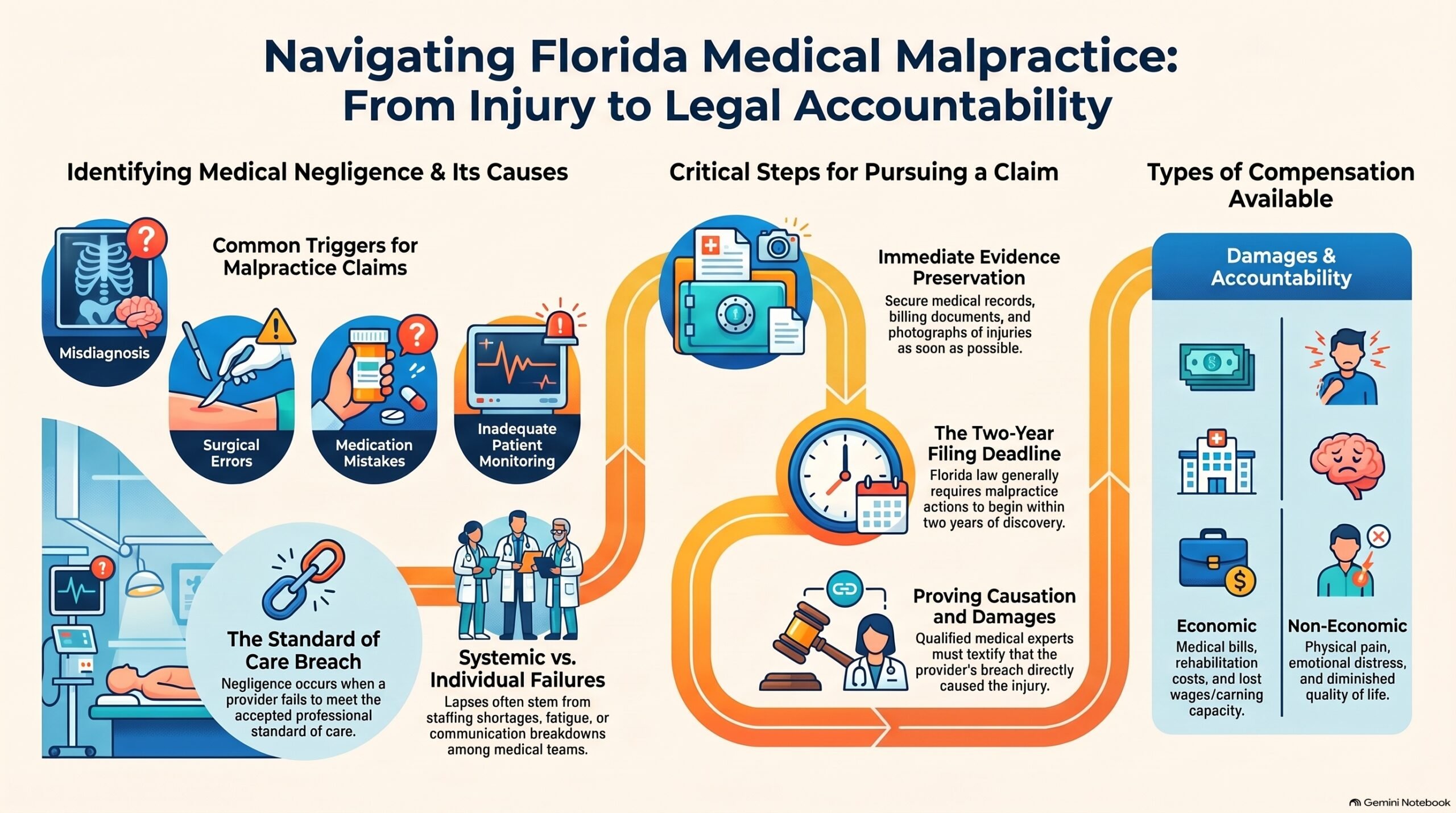
Common causes of medical malpractice and provider negligence in Florida include misdiagnosis or delayed diagnosis, which can delay necessary treatment and worsen a patient’s condition. Surgical errors and medication mistakes may result from inadequate planning, communication failures, or departures from accepted medical standards. Inadequate patient monitoring can also allow complications to progress without timely intervention, potentially causing serious harm.
Misdiagnosis and Delayed Diagnosis
Misdiagnosis and delayed diagnosis can constitute medical negligence when a hospital or health care provider fails to identify a patient’s condition within the timeframe expected of a reasonably competent professional. Such failures may arise when clinicians overlook symptoms, misinterpret test results, disregard relevant medical history, or apply inappropriate Diagnostic Criteria. A delayed referral, inadequate follow-up, or failure to order reasonably indicated testing may allow a condition to worsen before treatment begins. Documentation Errors can also obscure crucial information, including changing symptoms, abnormal findings, medication use, or communicated concerns. Liability generally depends on whether the provider departed from the applicable standard of care and whether that departure caused harm. A careful review of records, timelines, test results, and professional decisions can help clarify whether a patient received appropriate, timely evaluation.
Surgical Errors
When a surgical error occurs, the consequences may extend beyond the operating room, resulting in serious, preventable harm. Examples include operating on the wrong patient or body part, leaving an instrument in the surgical site, causing avoidable organ damage, or failing to recognize complications promptly. These events may arise from inadequate planning, poor communication, insufficient supervision, fatigue, or failure to follow established procedures. Informed consent violations may also occur when providers do not explain material risks, alternatives, or the intended procedure before surgery. Hospitals and surgical centers have responsibilities to maintain appropriate staffing, equipment, sterilization, monitoring, and emergency protocols. Departures from Surgical facility standards can indicate negligence when they contribute to injury. A careful legal review may examine records, witness accounts, and applicable professional guidelines.
Medication Mistakes
Medication mistakes can cause serious, preventable harm when a provider prescribes, dispenses, administers, or monitors a drug improperly. Medication dosage errors may involve excessive amounts, insufficient treatment, incorrect timing, or failure to account for allergies and known drug interactions. Pharmacy dispensing mistakes can result in the wrong medication, strength, or instructions reaching a patient, particularly when names or labels are similar. Hospital negligence may also occur when staff misread an order, document it inaccurately, or administer medication to the wrong patient. These errors can result in poisoning, severe reactions, worsening illness, or other lasting injuries. Providers and facilities are expected to use accurate records, clear communication, identity verification, and established medication-safety procedures. When a preventable mistake causes harm, affected patients may seek information about accountability and legal remedies.
Inadequate Patient Monitoring
Inadequate patient monitoring can allow a preventable medical condition to worsen before providers recognize and address it. Hospitals have a responsibility to monitor patients based on their diagnoses, treatments, and known risks. When staffing ratios are insufficient, nurses and other clinicians may be unable to complete crucial-sign checks, neurological assessments, or postoperative evaluations at appropriate intervals. Monitoring failures can also involve inaccurate documentation, malfunctioning equipment, or inadequate communication during shift changes. A failure to escalate concerning findings may delay diagnostic testing, physician intervention, or transfer to a higher level of care. These lapses can contribute to respiratory distress, infection, internal bleeding, falls, and other serious complications. Careful protocols, timely reassessment, and clear reporting help protect patients. When monitoring falls below accepted standards, legal review may determine whether negligence caused preventable harm.
Don’t Wait. Call Our Florida Personal Injury Lawyers Now!


Legal Rights of Florida Medical Malpractice Hospital & Provider Negligence Injury Victims
In Florida, victims of medical malpractice and hospital or provider negligence may have the right to pursue compensation when substandard medical care causes harm. Florida law may allow an injured patient or authorized representative to seek damages through a negotiated claim or civil action, subject to procedural requirements and applicable deadlines.
Potential rights may include:
- Access to relevant medical records and billing information
- Consultation with qualified legal and medical professionals
- Recovery for medical expenses, lost income, and related losses
- Compensation for pain, disability, or reduced quality of life
Prompt preservation of evidence can support a fair evaluation of the claim. Records, prescriptions, diagnostic images, witness information, and communications should be retained without alteration. A legal representative may assess whether presuit investigation and notice requirements have been satisfied before filing suit. Because Florida cap limits and other statutory rules can affect recoverable damages, each matter requires individualized review. Victims and families may also have the right to receive respectful guidance, understand available options, and make informed decisions while pursuing accountability and necessary support.
Why Do Florida Medical Malpractice Hospital & Provider Negligence Injuries Happen?
Medical malpractice hospital and provider negligence injuries can occur when a healthcare professional or facility fails to meet the accepted standard of care. Contributing factors may include misdiagnosis, delayed treatment, medication errors, surgical mistakes, inadequate monitoring, and incomplete communication among caregivers. These events can arise from individual lapses, but systemic failures may also create conditions in which preventable harm becomes more likely.
Staffing shortages can increase workloads, fatigue, and the risk of important symptoms or instructions being overlooked. Insufficient training, poorly maintained equipment, and unclear procedures may further compromise patient safety. Gaps in oversight can allow unsafe practices to persist without timely correction, particularly when facilities lack effective reporting, review, or accountability systems. In some cases, electronic record problems or inadequate handoffs interfere with accurate clinical decisions.
Understanding these causes helps communities support safer, more compassionate healthcare. Hospitals and providers that prioritize communication, competent staffing, thorough documentation, and continuous quality improvement can reduce the risk of negligence and better protect patients’ well-being.
What Should You Do After a Florida Medical Malpractice Hospital & Provider Negligence Injury?
After a suspected medical malpractice injury, the patient should seek immediate medical care to address urgent health concerns and prevent further harm. Detailed records of symptoms, treatments, medical bills, and related communications can help document the injury and its effects. Consulting a qualified Florida medical malpractice lawyer may clarify legal rights, potential liability, and required steps for pursuing a claim.
Seek Immediate Medical Care
Prompt medical evaluation should be obtained as soon as a patient suspects that negligent treatment, a hospital error, or a provider’s failure to meet the accepted standard of care caused an injury. Emergency triage importance should guide decisions when symptoms include severe pain, breathing difficulty, uncontrolled bleeding, confusion, weakness, or sudden deterioration. The patient or a responsible companion should call 911 or proceed to an emergency department rather than waiting for a routine appointment. Clinicians can identify urgent complications, provide stabilizing treatment, and reduce the risk of additional harm. The patient should clearly explain the suspected treatment problem, relevant medications, and any changes in condition. Document symptoms immediately by noting when they began, how they progressed, and whether treatment affected them, while prioritizing medical attention over administrative tasks.
Document Your Injuries
Accurate documentation can help establish the nature, extent, and progression of an injury following suspected medical malpractice by a Florida hospital or health care provider. The patient or a designated caregiver should maintain a Pain Timeline, recording symptoms, severity, treatment effects, and changes in daily functioning. Evidence Photos may show visible bruising, swelling, surgical complications, medication reactions, or other physical developments; photographs should include dates when possible. Names and contact information for individuals who observed the injury, treatment, or resulting limitations should be preserved as Witness Statements. Medical records should be requested and stored securely, including discharge instructions, test results, prescriptions, and Doctor Notes. A chronological file containing appointment dates, communications, bills, and records of missed work can provide a clear account of the injury’s impact.
Consult A Malpractice Lawyer
Once injuries, treatment developments, and related losses have been documented, consulting a Florida medical malpractice lawyer can help determine whether the hospital or health care provider may be legally responsible. During a Legal consultation, the patient can explain what occurred, identify potential departures from accepted medical standards, and learn about applicable deadlines. Counsel may organize a case timeline that connects appointments, diagnoses, procedures, communications, and resulting harm. The patient should continue to document symptoms, follow treatment instructions, and record expenses or missed work without altering original notes. Evidence preservation is also important; medical records, billing statements, prescriptions, photographs, messages, and witness information should be retained securely. A lawyer can request relevant records, consult qualified medical professionals, and explain possible remedies. Prompt guidance helps recover rights while supporting accountability and informed decisions.
Don’t Wait. Call Our Florida Personal Injury Lawyers Now!
Critical Evidence in a Florida Medical Malpractice Hospital & Provider Negligence Injury Case
Critical evidence can establish whether a Florida hospital or healthcare provider breached the applicable standard of care and caused injury. A case commonly depends on complete medical records, qualified expert testimony, contemporaneous incident documentation, and reliable proof of damages and expenses.
Careful preservation and review of these materials can clarify liability, causation, and the full extent of the claimant’s losses.
- Medical Records: Treatment notes, diagnostic results, medication histories, and discharge instructions may reveal deviations from appropriate care.
- Expert Witness Testimony: Qualified medical experts can explain the applicable standard of care and whether negligence contributed to the injury.
- Incident Documentation: Hospital reports, witness accounts, photographs, correspondence, and other timely records may preserve critical facts.
- Damages and Expenses: Bills, income records, rehabilitation costs, and evidence of future care can support the claim’s value.
Medical Records
Medical records provide essential evidence in a Florida medical malpractice, hospital negligence, or provider negligence case because they document the patient’s symptoms, treatment, clinical decisions, and response to care. They may reveal whether providers recognized warning signs, followed appropriate procedures, communicated material risks, and responded promptly to changes in condition. Documentation regarding patient consent can show which treatment was authorized and whether significant alternatives or risks were explained. An informed refusal should be recorded with the recommendation provided, the consequences discussed, and the patient’s stated decision. Complete nursing notes may also identify nursing negligence, including missed assessments, delayed reporting, medication errors, or failures to implement ordered care. Preserving the complete chart, including orders, medication records, discharge instructions, and electronic audit information, can help establish a reliable timeline and clarify disputed events.
Expert Witness Testimony
In a Florida medical malpractice, hospital negligence, or provider negligence case, expert witness testimony can help establish whether the care provided met the applicable professional standard of care and whether a breach of that standard caused the patient’s injury. A qualified physician or other healthcare professional may explain the Licensed professional standard applicable to the treatment, identify departures from accepted practice, and connect those departures to specific harm. Experts can also address whether the injury resulted from negligence or from an unavoidable medical condition. Their opinions must generally rest on sufficient facts, reliable methods, and relevant professional knowledge. Clear testimony may assist the court and jury in evaluating intricate medical issues without relying on speculation. Counsel may develop jury persuasion strategies that present technical evidence accurately and respectfully, in a manner that supports accountability and patient-centered justice.
Incident Documentation
When a patient experiences an unexpected injury, timely incident documentation can preserve facts essential to evaluating a Florida medical malpractice, hospital negligence, or provider negligence claim. Reports should identify the date, time, location, personnel involved, observed symptoms, treatment provided, and subsequent notifications. A patient or family member may request copies of medical records, nursing notes, medication administration records, laboratory results, and imaging reports. The patient history should be reviewed for accuracy, omissions, and changes made after the event. Hospitals and providers must follow applicable documentation requirements, including procedures governing corrections, late entries, retention, and disclosure. Billing records may help establish which services were recorded and when, although they do not replace clinical documentation. Prompt preservation of these materials can assist attorneys and experts in objectively reconstructing events.
Damages And Expenses
Documenting damages and expenses is essential to evaluating the full value of a Florida medical malpractice, hospital negligence, or provider negligence injury claim. Financial records should identify emergency treatment, hospitalization, surgery, rehabilitation, prescriptions, transportation, and assistive equipment related to the injury. Invoices, insurance statements, payment receipts, and written estimates can help establish past and anticipated costs. A medical record review may connect necessary treatment and ongoing limitations to the alleged negligence, while physician opinions can clarify future care requirements. Employment records and tax documents may demonstrate lost wages, reduced earning capacity, or diminished professional opportunities. Evidence of pain, disability, emotional distress, and lost quality of life also supports non-economic damages. Thorough documentation helps determine appropriate Economic compensation and enables a fair, service-focused assessment of the injured person’s needs.
Long-Term Effects of Florida Medical Malpractice Hospital & Provider Negligence Injuries
Florida medical malpractice injuries may result in permanent physical disabilities that affect mobility, independence, and daily activities. Ongoing medical expenses can include treatment, rehabilitation, medication, assistive equipment, and long-term care. These lasting consequences may also create significant emotional and financial strain for injured individuals and their families.
Permanent Physical Disabilities
Permanent physical disabilities can represent the most consequential long-term effects of Florida medical malpractice, limiting mobility, strength, coordination, or the use of a major body system. Such impairments may prevent an injured person from working, caring for family, communicating independently, or participating in ordinary activities. They can also alter personal relationships and create a lasting need for assistance with daily tasks. Proving Damages requires clear evidence that the provider’s negligent conduct caused the disability and that the impairment is permanent or expected to endure. Medical records, functional assessments, and Expert Testimony can help establish the injury’s severity, prognosis, and effect on earning capacity and quality of life. A careful legal evaluation may help protect the injured person’s dignity, independence, and ability to pursue appropriate compensation for these profound losses.
Ongoing Medical Expenses
When medical malpractice causes a lasting injury, ongoing medical expenses may continue long after the initial treatment has ended. Patients may require rehabilitation, prescription medications, professional assessments, medical equipment, home health services, or corrective procedures. These needs can persist for months or years, particularly when a negligent hospital or provider causes permanent physical disabilities.
Accurate documentation helps establish the nature and anticipated duration of necessary care. Medical records, treatment plans, expert opinions, and expense estimates may clarify which services relate to the malpractice injury. Insurance billing can create additional complications when insurers classify treatment as unrelated, unnecessary, or subject to policy limitations. Payment denials may interrupt critical care and require appeals, supplemental documentation, or legal review. Attorneys can help injured patients and their families identify recoverable future medical costs and pursue accountability while protecting access to appropriate treatment.
Emotional And Financial Strain
The long-term effects of Florida medical malpractice can extend beyond ongoing medical expenses, placing substantial emotional and financial strain on injured patients and their families. Patients may experience anxiety, depression, diminished independence, or lasting distrust of medical providers. Families often assume caregiving responsibilities while managing disrupted routines and difficult decisions. Coping with grief may require counseling, support groups, and coordinated assistance from compassionate professionals. Financial hardship can intensify when injuries prevent a patient from returning to work or reduce future earning capacity. Lost wages, rehabilitation costs, and household modifications may affect housing stability and family planning. Careful documentation of employment records, medical limitations, and related expenses can support wage loss recovery. An experienced attorney may help families evaluate damages, protect legal rights, and pursue resources that promote long-term stability.
Proving Liability in Florida Medical Malpractice Hospital & Provider Negligence Injury Cases
Establishing liability in a Florida medical malpractice or hospital negligence case requires evidence that a healthcare provider or institution breached the applicable standard of care and caused the patient’s injury. The process commonly begins with an expert evaluation of medical records, treatment decisions, staffing practices, and facility policies. Qualified experts may explain what a reasonably careful provider or hospital should have done under comparable circumstances.
Causation proof must connect the specific breach to the patient’s harm, rather than merely showing an unfavorable medical outcome. Records, diagnostic images, prescriptions, witness accounts, and electronic communications should undergo careful preservation of evidence before any information is altered or lost. Hospitals may also be held responsible for negligent employees, inadequate supervision, unsafe systems, or failures to maintain appropriate staffing levels.
Florida’s comparative negligence rules can affect recovery when a patient’s conduct contributed to the injury. A detailed investigation objectively examines all relevant facts, while legal counsel coordinates qualified testimony and documentation to present a clear, supportable liability theory.
Dealing With Insurance Companies After a Florida Medical Malpractice Hospital & Provider Negligence Injury
After a Florida medical malpractice or hospital negligence injury, insurance communications can greatly affect the development and value of a potential claim. Injured patients should generally avoid making recorded statements, providing broad medical authorizations, or giving detailed written explanations before receiving legal guidance. Insurers may request information that appears routine but could be used to question causation, prior conditions, treatment compliance, or the extent of damages.
Insurance denial strategies can include disputing medical necessity, relying on incomplete records, or asserting that another provider caused the harm. A careful review of the denial, supporting documents, and applicable coverage terms may reveal grounds for challenge. Appeal timelines should be identified promptly because missed deadlines can limit available remedies.
Settlement negotiation requires an informed assessment of medical expenses, lost income, future care, and non-economic harm. Communications should remain accurate and measured. If an insurer unreasonably delays investigation, undervalues evidence, or refuses a legitimate claim, policy bad faith issues may warrant separate legal evaluation. Professional assistance helps protect the injured person’s interests while preserving respectful communication.
What to Expect During a Florida Medical Malpractice Hospital & Provider Negligence Injury Claim Process
A Florida medical malpractice claim typically begins with an initial case evaluation and a careful review of relevant medical records. If the evidence supports a finding of negligence, the process may proceed through filing requirements and settlement negotiations. When negotiations do not resolve the dispute, the matter may advance to trial and a final resolution.
Initial Case Evaluation
During an initial case evaluation, a Florida medical malpractice attorney reviews the available facts to determine whether a hospital or healthcare provider may have breached the accepted standard of care and caused compensable injury. Patient intake concerns typically include the treatment timeline, symptoms, diagnoses, providers involved, and the ways the injury affected daily life, employment, and family responsibilities. The attorney may explain potential legal deadlines, including Florida’s medical negligence limitations and presuit requirements, and identify the information needed to assess the claim responsibly. Medical records gathering may begin through authorizations and requests to relevant facilities, practitioners, and insurers. At this stage, the attorney generally evaluates whether further investigation is appropriate, discusses potential costs and terms of representation, and advises the patient to preserve communications, bills, photographs, and other relevant documentation without altering existing records.
Medical Record Review
Medical record review provides the factual foundation for evaluating a potential Florida medical malpractice claim involving a hospital or healthcare provider. Attorneys and qualified medical professionals examine admission records, test results, medication lists, operative reports, discharge instructions, and follow-up notes. The review compares the documented treatment with the patient’s symptoms, known risks, accepted medical practices, and resulting injuries. It may identify missed diagnoses, delayed treatment, inadequate monitoring, communication failures, or Charting inaccuracies that obscure the sequence of care. Attention also focuses on doctor documentation, nursing entries, timestamps, consent forms, and changes to electronic records. Experts may assess whether the evidence supports a breach of the professional standard and whether that breach likely caused harm. This careful analysis helps clarify the claim’s medical facts and legal viability before further action.
Filing And Negotiations
Once the medical record review supports a potential claim, the Florida medical malpractice process generally proceeds through pre-suit investigation, formal notice, and settlement discussions. Counsel typically consults qualified medical experts, identifies responsible parties, and evaluates whether negligence caused the patient’s injury. Before a lawsuit may be filed, Florida law generally requires presuit notice and an opportunity for the provider to respond. During this period, attorneys exchange information, assess defenses, and determine whether compensation discussions are productive. A careful negotiation strategy addresses medical expenses, lost income, future care, pain, and other documented damages while protecting the patient’s interests. Settlement timelines vary depending on the complexity of the record, expert evaluations, insurer responsiveness, and the number of involved providers. Clear communication helps families understand requests for information, likely delays, and significant decisions throughout this process.
Trial And Resolution
If settlement negotiations do not resolve the dispute, the case may proceed to trial, where the plaintiff must prove that the hospital or provider breached the applicable standard of care and caused compensable injury. Before trial, attorneys typically complete discovery, obtain expert opinions, question witnesses, and present motions addressing disputed evidence. A Settlement vs trial strategy considers liability strength, projected damages, litigation costs, timing, and the client’s objectives, including the desire to support accountability and patient safety. Throughout the claim, evidence preservation steps may include securing medical records, communications, photographs, billing documents, and expert materials while maintaining reliable timelines. At trial, each side presents opening statements, testimony, exhibits, and closing arguments. The judge or jury then determines liability and damages. Resolution may include a verdict, negotiated settlement, or post-trial appeal.
Compensation for Florida Medical Malpractice Hospital & Provider Negligence Injury Damages
Compensation for a Florida medical malpractice injury may include economic and noneconomic damages arising from a hospital’s or health care provider’s negligent conduct. A claim may seek payment for resulting medical care, rehabilitation, necessary assistance, lost employment opportunities, and other documented consequences. It may also address diminished quality of life, physical discomfort, emotional distress, and the disruption of family responsibilities caused by the injury.
A careful assessment helps determine how negligence affected the injured person and those providing support. Counsel may evaluate medical records, employment information, treatment projections, witness accounts, and evidence of ongoing limitations. A detailed damage documentation checklist can help organize invoices, wage records, prescriptions, travel expenses, and written accounts of daily challenges.
During resolution efforts, a settlement negotiation strategy should clearly present supported damages, account for future needs, and address disputed liability or causation. Each demand should reflect the available evidence rather than speculation. When negotiations do not produce a fair result, the documented claim may support presentation before a judge or jury.
Economic vs Non-Economic Damages in Florida Medical Malpractice Hospital & Provider Negligence Cases
Florida medical malpractice damages generally include economic losses, such as medical expenses, rehabilitation costs, lost income, and reduced earning capacity. Non-economic damages address less measurable harm, including pain, emotional distress, disability, and diminished quality of life. Calculating potential compensation requires evaluating the evidence, future losses, and applicable Florida legal standards.
Economic Damages Explained
Economic damages in a Florida medical malpractice, hospital, or provider negligence case compensate an injured patient for measurable financial losses caused by the negligence. This definition of economic damages includes past and future medical expenses, rehabilitation, prescription costs, assistive equipment, and necessary in-home care. It may also cover lost wages, reduced earning capacity, and business or employment benefits lost due to an injury that prevents work. Calculation factors commonly include the patient’s medical records, billing statements, treatment plans, prognosis, employment history, income documentation, and expert testimony. Attorneys may organize these records to establish which losses resulted from the provider’s conduct and which arose from unrelated conditions. Florida cases require careful proof because damages must generally be connected to the alleged negligence and supported by reliable evidence. Proper documentation helps present the patient’s financial needs accurately.
Non-Economic Damages Explained
Non-economic damages address the personal consequences of medical malpractice that do not appear as direct financial bills. In Florida, these damages may recognize physical pain, emotional distress, mental anguish, disfigurement, disability, loss of enjoyment, and diminished quality of life resulting from negligent medical care. Unlike medical expenses or lost income, they reflect how an injury changes a patient’s daily experience, relationships, independence, and future well-being. In a wrongful death matter, eligible survivors may seek damages connected to their grief, loss of companionship, and related personal suffering, subject to Florida law. Evidence can include medical records, testimony from family members, and professional assessments. During insurance negotiation, a claimant’s representative may explain these human consequences while distinguishing them from documented economic losses. The purpose is recognition and accountability, not punishment or speculative recovery.
Calculating Florida Compensation
Determining compensation in a Florida medical malpractice case requires separating documented financial losses from the personal harm caused by the injury. Economic damages may include past and future medical treatment, rehabilitation, prescription costs, lost income, reduced earning capacity, and necessary caregiving. Records, employment evidence, expert testimony, and projected costs help establish these amounts. Non-economic damages address pain, emotional distress, disability, disfigurement, loss of enjoyment, and diminished quality of life. Evaluating these losses may require medical and vocational experts who explain how negligence changed the patient’s future. Pain relief options, counseling, and continuing treatment can affect both documentation and projected needs. During the insurance claim process, careful disclosure and consistent records support a reliable demand. Florida law may impose specific limitations or procedural requirements, making individualized legal review crucial.
Don’t Wait. Call Our Florida Personal Injury Lawyers Now!
When a Florida Medical Malpractice Hospital & Provider Negligence Injury Case Goes to Trial vs Settlement
When a Florida medical malpractice hospital or provider negligence case proceeds, the parties generally must decide whether to resolve the dispute through settlement or present the evidence at trial. Settlement may provide a defined outcome, reduce delay, and spare patients, families, clinicians, and institutions the demands of courtroom testimony. Negotiations commonly address medical expenses, lost income, ongoing care, and the personal consequences of an injury. Effective settlement negotiation tactics depend on organized records, credible expert support, and a clear presentation of responsibility and damages.
Trial may become necessary when liability or the value of a claim remains in dispute, or when negotiations do not yield a meaningful resolution. A trial evidence strategy can include medical records, expert opinions, witness testimony, and demonstrations of how the alleged negligence affected the patient’s life. Although trial offers an opportunity for a formal decision, it also involves uncertainty, expense, time, and public proceedings. Counsel generally evaluates each path based on the injured person’s needs, evidence, objectives, and ability to support long-term recovery.
Florida Laws That May Affect Your Florida Medical Malpractice Hospital & Provider Negligence Case
Florida medical malpractice hospital and provider negligence cases are governed by statutes and legal standards that affect liability, evidence, damages, and the time available to pursue a claim. Florida law may require presuit investigation, verified expert support, and formal notice before litigation proceeds.
Main considerations include:
- The medical standard of care and whether conduct departed from it.
- Vicarious liability for employees, agents, and apparent agents.
- Comparative fault and allocation of responsibility among parties.
- Damage rules affecting economic and noneconomic compensation.
Florida Statute Updates can change procedural requirements, evidentiary rules, or available remedies, making current legal research important. Hospital Liability Limits may depend on ownership, governmental status, insurance provisions, or statutory protections, particularly when a public facility is involved. Records, expert testimony, informed-consent principles, and agency relationships can substantially influence case evaluation. A careful review helps protect patients and families while supporting accountability, responsible care, and fair compensation. An experienced attorney can explain how these laws apply to the specific facts and parties involved.
The Statute of Limitations for Florida Medical Malpractice Hospital & Provider Negligence Injury Cases
The statute of limitations imposes a strict time limit for filing a Florida medical malpractice claim involving hospital or provider negligence, and missing that deadline may bar recovery regardless of the seriousness of the injury. Generally, Florida law requires a medical malpractice action to be commenced within two years after the incident is discovered or reasonably should have been discovered. An absolute four-year repose period may also apply, subject to limited statutory exceptions, including concealment, misrepresentation, or fraud. Because discovery can involve intricate medical facts, prompt attention is critical.
Wrongful death claims follow related but distinct timing rules, and the date of death or discovery may affect the filing deadline. Additional requirements, including presuit investigation and notice, can influence when litigation may proceed. Records, witness recollections, and treatment evidence may become increasingly difficult to obtain over time. A timely review also supports accurate compensation calculation by identifying losses, responsible parties, and applicable deadlines before evidence or legal rights are compromised.
How a Florida Medical Malpractice Hospital & Provider Negligence Lawyer Can Help You
A Florida medical malpractice hospital and provider negligence lawyer can evaluate the medical facts, identify potentially responsible parties, and determine whether the available evidence supports a claim.
The lawyer may assist a patient or family by:
- Reviewing records, consent forms, test results, and treatment notes for departures from accepted standards.
- Coordinating qualified medical opinions to assess negligence, causation, and resulting damages.
- Building evidence timelines that clarify communications, procedures, symptoms, diagnoses, and changes in condition.
- Preparing claims involving hospitals, physicians, nurses, contractors, or other accountable entities.
Counsel can also explain procedural requirements, communicate with insurers, and protect the client’s interests during settlement discussions or litigation. The analysis may distinguish medical negligence from independent employment disputes, including wrongful discharge claims, while identifying facts that could support related legal remedies. By organizing complex information and presenting it accurately, the lawyer helps clients pursue accountability without losing sight of the patient’s recovery. Careful representation can also assist families and communities seeking safer healthcare practices, transparent answers, and fair compensation for injuries caused by preventable professional or institutional failures.
When to Contact a Florida Medical Malpractice Hospital & Provider Negligence Lawyer
Timely consultation with a Florida medical malpractice hospital and provider negligence lawyer may be appropriate when a patient experiences an unexpected injury, a worsening condition, a delayed diagnosis, a medication error, a surgical mistake, or other harm following medical care. Early guidance can help clarify important deadlines and identify practical steps while records, memories, and other information remain available.
Emergency symptoms require immediate medical attention, and urgent legal help should not delay treatment. Once the patient is stable, a consultation may help preserve evidence, including medical records, prescriptions, imaging, billing documents, photographs, and communications with providers. Patients and families should avoid altering records or discarding relevant materials.
A lawyer may also recommend documenting the treatment timeline, symptoms, expenses, and resulting limitations. Witness statements from family members, caregivers, nurses, or others who observed events may provide useful context. Contact is especially important if a provider denies responsibility, records appear incomplete, or an insurer requests a statement or release. Prompt communication supports informed decisions without interfering with ongoing care.
Why You Need an Experienced Florida Medical Malpractice Hospital & Provider Negligence Lawyer
Effective representation in a medical malpractice matter requires more than reviewing an injury and filing a claim. An experienced Florida lawyer investigates how care was delivered, identifies departures from accepted standards, and connects those departures to the patient’s harm. Medical records may be incomplete, altered, or difficult to interpret, making timely critical preservation strategies critical. Counsel can secure records, communications, imaging, and other materials before they are lost or disputed.
The lawyer also understands the importance of selecting an expert for review. Qualified medical experts must evaluate the treatment, explain the applicable standard of care, and support conclusions with credible reasoning. This analysis helps distinguish a preventable error from an unfavorable outcome that occurred despite appropriate care.
Experienced counsel further manages statutory deadlines, presuit requirements, provider communications, and litigation risks. That guidance allows an injured patient or grieving family to focus on recovery and service to others while the legal process proceeds with diligence, accuracy, and respect.
How to Choose the Right Florida Medical Malpractice Hospital & Provider Negligence Lawyer for Your Case
Choosing the right Florida medical malpractice hospital and provider negligence lawyer requires careful evaluation of the attorney’s experience, investigative resources, and understanding of Florida’s presuit requirements. A qualified lawyer should explain potential claims clearly, identify responsible parties, and assess whether medical records support allegations of negligence and harm.
Clients should ask about experience with similar hospital, physician, nursing, and diagnostic cases. Expert credibility checks can include reviewing disciplinary history, professional standing, courtroom experience, and independent evaluations from former clients. The lawyer should also describe how medical experts, records personnel, and other investigators will contribute to the case.
A contingency-fee consultation allows a prospective client to discuss representation without paying an upfront legal fee in many arrangements. Before signing, the client should understand the fee percentage, litigation expenses, case responsibilities, and possible costs if the claim does not succeed. Careful comparison of communication practices, responsiveness, and strategic explanations can help identify counsel prepared to serve the injured patient’s interests responsibly.
About The Law Offices of Anidjar & Levine
The Law Offices of Anidjar & Levine represents individuals and families pursuing claims involving hospital negligence, physician errors, nursing misconduct, and other forms of medical malpractice in Florida.
The firm focuses on helping clients understand their rights after preventable medical harm, including injuries caused by delayed diagnoses, surgical mistakes, medication errors, and inadequate supervision.
Its attorneys evaluate medical records, consult qualified experts, and assess whether negligent conduct contributed to a patient’s injuries.
This preparation supports informed decisions concerning potential claims, insurance negotiations, and litigation.
The firm emphasizes Client first communication, providing updates and explanations throughout the legal process rather than leaving individuals uncertain about important developments.
Prospective clients may request a free case review to discuss the circumstances, available documentation, and possible legal options.
While no outcome is guaranteed, careful investigation can clarify whether a viable malpractice claim exists.
The Law Offices of Anidjar & Levine seeks accountability while helping affected families pursue compensation and access to necessary support.

Frequently Asked Questions
Can I File a Medical Malpractice Claim if the Patient Died?
Yes, a medical malpractice claim may remain available after a patient’s death. Survival actions can preserve claims the patient could have pursued, while a wrongful death action may compensate eligible survivors for losses caused by negligence. The statute of limitations applies, and deadlines can differ between these claims. Probate considerations may determine who is authorized to act and how recoveries are distributed. Prompt consultation with qualified counsel helps protect evidence and legal rights.
Are Medical Malpractice Cases Confidential in Florida?
Medical malpractice cases in Florida are not automatically confidential. Court filings and hearings are generally public, although Florida discovery rules may permit protective orders that limit the disclosure of sensitive information. Medical records privacy remains protected by state and federal law, but relevant records can be exchanged during litigation. Settlement confidentiality depends on the parties’ agreement and applicable law. A qualified attorney can explain available protections and help safeguard the patient’s dignity throughout the process.
Can Multiple Healthcare Providers Share Responsibility for My Injury?
Multiple healthcare providers may share responsibility when their separate actions or omissions contribute to a patient’s injury. Courts assess fault allocation by examining each provider’s conduct, applicable standards, causation, and the extent of resulting harm. Joint negligence can arise when treatment decisions overlap, records are incomplete, or communication fails. Provider overlap does not automatically establish liability, however; qualified evidence must connect each provider’s conduct to the injury and establish shared responsibility.
What Happens if the Negligent Provider No Longer Practices in Florida?
If the negligent provider no longer practices in Florida, a claim may still proceed against that individual, the employing practice, or another responsible entity. Transfer of liability is not automatic; responsibility depends on employment status, agency relationships, insurance coverage, and the facts of the treatment. The injured person should preserve records and seek legal guidance promptly because Florida’s statute limitations can restrict the time available to file a medical malpractice action.
Can a Medical Malpractice Claim Affect My Future Medical Treatment?
A medical malpractice claim generally should not limit a patient’s future recovery. Healthcare providers must continue to provide appropriate care, and patients may seek another clinician without surrendering their legal rights. However, provider records may reflect the dispute, potentially influencing communication or administrative decisions. Patients should disclose relevant medical history accurately while preserving documentation. Legal counsel can help protect treatment options, address improper retaliation, and explain how confidentiality, insurance, and record-access rules may affect ongoing care.
—————————
Florida medical malpractice and provider negligence claims require thorough investigation, qualified medical review, and compliance with strict procedural requirements.
An experienced attorney can evaluate liability, document the full extent of resulting harm, and pursue compensation from responsible healthcare providers or institutions.
The Law Offices of Anidjar and Levine represent injured individuals and families throughout Florida, offering informed guidance from the initial consultation through resolution.
Prompt legal evaluation may help protect important rights and preserve evidence needed to support a claim.
For additional information, visit our Florida Personal Injury Lawyer resource.