The Law Offices of Anidjar and Levine examines whether a supervisor used workplace authority to impose unwelcome sexual conduct, quid pro quo demands, or retaliation after a complaint.
Legal assistance often includes documenting incidents, preserving messages and employment records, reporting through proper channels, and assessing administrative or civil claim options.
Counsel may also pursue accountability, workplace changes, and financial recovery for emotional and career harm.
Related support may also be available through a Florida Sexual Assault Lawyer.
The sections below outline the process, evidence, and protections available.
Main Takeaways
- A Florida supervisor sexual harassment lawyer evaluates unwanted conduct, power imbalance, employer notice, and whether the behavior was severe, pervasive, or retaliatory.
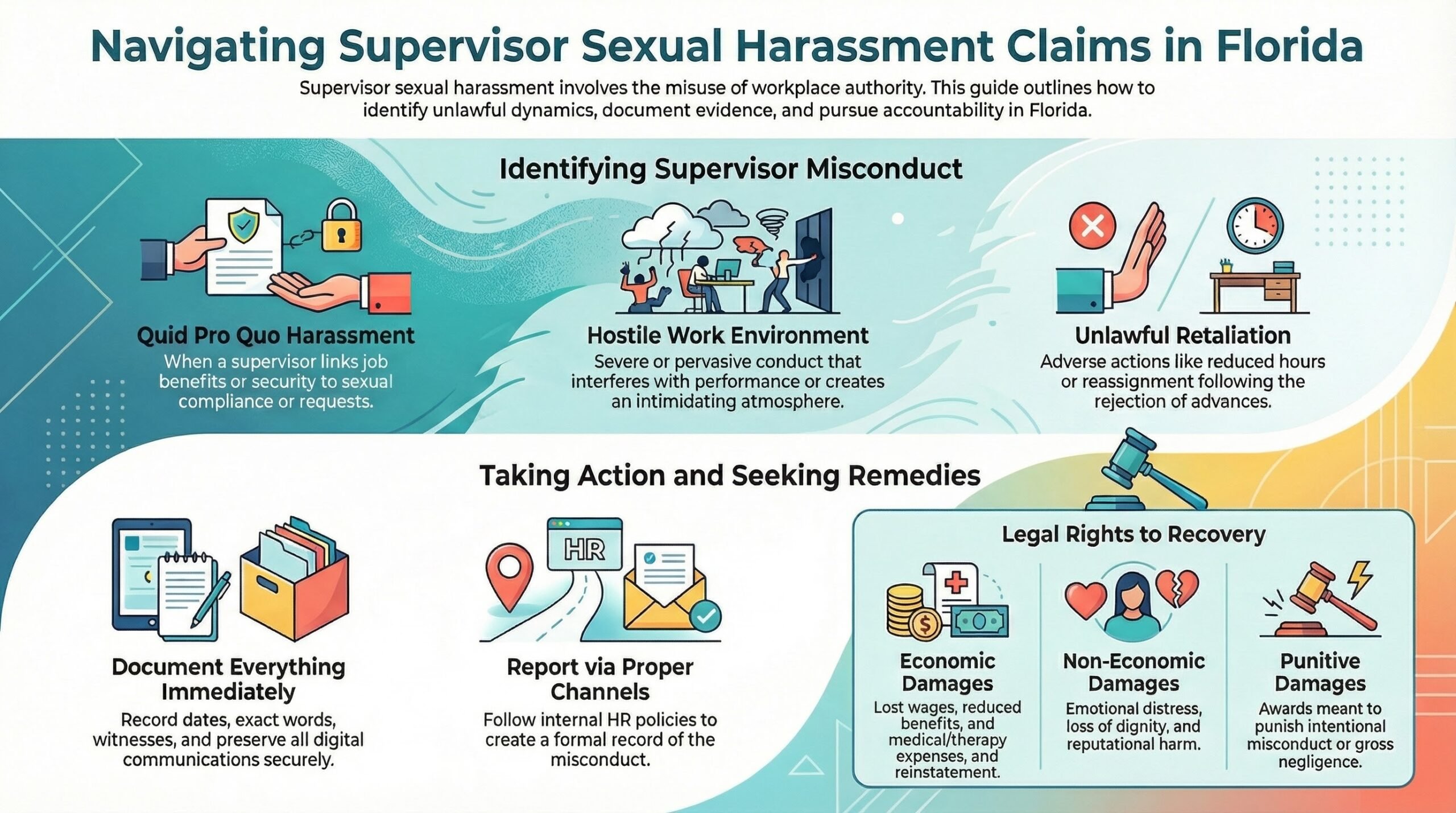
- Quid pro quo harassment occurs when a supervisor links sexual compliance to promotions, scheduling, pay, assignments, or continued job security.
- Strong claims often rely on documentation, including dates, exact words, messages, performance records, witness statements, and a clear timeline.
- Reporting through HR or designated channels and preserving records can strengthen internal complaints, administrative charges, leverage in settlements, or litigation options.
- Florida workers may seek remedies for harassment and retaliation, including accountability, workplace protections, and compensation for emotional, career, and financial harm.
How We Can Help With Your Florida Supervisor Sexual Harassment Claim
When a supervisor’s misconduct creates a hostile, intimidating, or abusive work environment, a Florida supervisor sexual harassment lawyer can help evaluate the facts, explain the employee’s legal options, and develop a strategy tailored to the claim. Counsel may organize records, identify corroborating evidence, and prepare clear communications that protect the employee’s position while preserving dignity and professionalism.
Support often includes guiding internal reporting, documenting harmful conduct, and addressing Workplace retaliation after a complaint or refusal of improper advances. Legal counsel may coordinate witness outreach, review employer policies, and assess whether corrective action was adequate. They may also help the employee avoid missteps that could weaken credibility or delay relief. Where appropriate, counsel can pursue negotiation and a settlement strategy focused on accountability, financial recovery, and practical workplace protections.
Throughout the process, representation remains centered on service, helping employees make informed decisions that protect their wellbeing, uphold professional values, and promote safer workplaces for others.
Understanding Supervisor Sexual Harassment Cases in Florida


Because claims involving a supervisor carry distinct legal consequences, understanding supervisor sexual harassment cases in Florida requires close attention to the nature of the conduct, the power imbalance at issue, and the employer’s response after notice. Florida employees may pursue remedies under federal and state law, depending on the facts, reporting history, and available evidence.
OUR CONSULTATIONSARE FREE
START YOUR FREE CASE REVIEW

Courts and agencies often assess whether the supervisor had authority over hiring, discipline, scheduling, pay, or advancement, because that authority can affect employer liability. They also examine whether the conduct was severe or pervasive, whether a reasonable person would view the environment as hostile, and whether retaliation followed a complaint. Documentation may include messages, performance records, prior reports, and statements from a Workplace witness.
An HR investigation can become central, especially when it reflects prompt action, neutrality, and meaningful corrective measures. For those committed to protecting others, understanding these legal standards helps support safer, more accountable workplaces for everyone statewide.
Common Scenarios When Supervisor Sexual Harassment Might Take Place in Florida
Supervisor sexual harassment in Florida may arise in several recurring workplace situations, often involving unwanted advances, explicit or implied quid pro quo demands, and improper conduct during evaluations. It may also occur when a supervisor responds negatively after rejection, including through retaliation that affects assignments, scheduling, promotion opportunities, or workplace conditions. Recognizing these common scenarios provides a practical framework for understanding how unlawful conduct may develop and affect employees.
Unwanted Advances At Work


Although sexual harassment can take many forms in the workplace, unwanted advances are among the most common situations involving a supervisor in Florida. These actions may include repeated personal comments, intrusive invitations, unnecessary touching, or suggestive messages that disregard workplace boundaries and create discomfort for employees trying to perform their duties.
When a supervisor persists after disinterest is shown, the conduct can become intimidating, distracting, and harmful to team morale. A service-minded workplace depends on respect, professionalism, and safety for every employee, regardless of position. Florida workers should understand that such behavior is not a minor misunderstanding when it interferes with daily responsibilities or creates a hostile environment.
In these cases, employer accountability becomes crucial because organizations have a duty to respond promptly, investigate fairly, and protect employees from further harm.
Quid Pro Quo Demands
When a supervisor conditions employment benefits or continued job security on compliance with sexual requests, the conduct may constitute quid pro quo harassment under Florida workplace law. This scenario often arises when hiring, promotions, scheduling, preferred assignments, or evaluations are tied to sexual cooperation rather than qualification or service.
Because supervisors control significant employment conditions, harmful power dynamics can pressure workers into enduring improper demands to protect their livelihoods. In service-oriented workplaces, this misuse of authority can undermine trust, dignity, and the mission of caring for others. Quid pro quo demands may be stated directly or implied through suggestive comments linked to workplace opportunities. A careful legal review may examine whether a supervisor used authority to seek sexual access in exchange for tangible job benefits or continued employment, in violation of state and federal protections.
Retaliation After Rejection
After a worker rejects unwelcome sexual advances, adverse treatment may follow in ways that are less explicit than a direct demand for compliance. A supervisor may suddenly reduce hours, reassign desirable duties, exclude the worker from meetings, or impose heightened scrutiny that is not applied to others. These actions can appear routine on the surface, yet they may reflect Workplace retaliation tied to the rejection.
In service-oriented workplaces, this pattern can harm both the individual and the mission of caring for others. Careful evidence preservation becomes important when schedules change without explanation, policies are unevenly enforced, or communication turns hostile after the rejection. Saved messages, shift records, witness names, and written complaints may help show a connection between the rejected conduct and the later adverse treatment or sustained isolation.
Harassment During Evaluations
Because performance evaluations often affect pay, promotion, scheduling, and job security, they can become a circumstance in which a supervisor abuses authority to introduce sexual comments, suggestive propositions, or pressure tied to favorable ratings. In Florida workplaces, this conduct may appear during private review meetings, written assessments, or discussions about advancement. A supervisor might imply that cooperation will improve an evaluation, while resistance could harm future opportunities or invite false claims of Employee misconduct.
Such behavior can distort objective review standards and undermine trust in workplace policies designed to protect fairness and dignity. Organizations committed to serving employees and the public should confirm evaluations are documented, consistently applied, and assessed through reliable reporting channels. Prompt investigation and corrective action help preserve accountability, support lawful treatment, and reduce the risk of continued harassment.
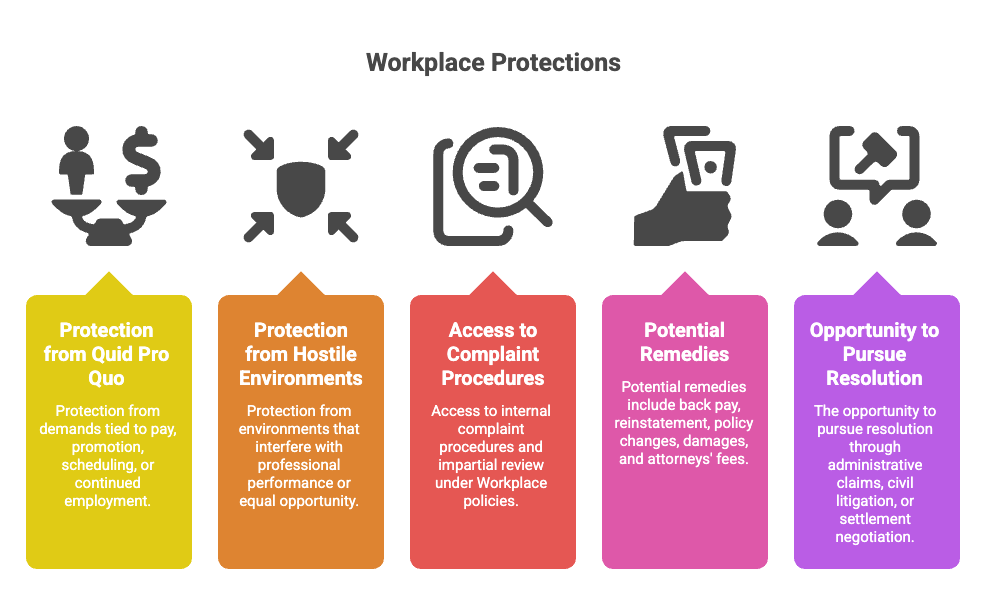
Legal Rights of Supervisor Sexual Harassment Victims in Florida
Although supervisor sexual harassment can create immediate fear and uncertainty in the workplace, Florida employees who experience this conduct retain important legal rights under both state and federal law.
These protections aim to preserve dignity, encourage accountability, and support fair treatment through established legal standards and Workplace policies.
- Protection from quid pro quo demands tied to pay, promotion, scheduling, or continued employment.
- Protection from hostile work environments that interfere with professional performance or equal opportunity.
- Access to internal complaint procedures and impartial review under the employer’s Workplace policies.
- Potential remedies include back pay, reinstatement, policy changes, damages, and attorneys’ fees.
- The opportunity to pursue resolution through administrative claims, civil litigation, or settlement negotiation.
When a supervisor uses authority to impose unwelcome sexual conduct, the employer may face significant liability. Florida victims also have rights against retaliation for asserting protected interests. These legal protections help workplaces better serve employees, promote lawful leadership, and reinforce respect across professional environments.
Steps to Take After a Supervisor’s Sexual Harassment Incident in Florida
After a supervisor’s sexual harassment incident in Florida, prompt and careful action can affect both workplace remedies and any future legal claim. Important measures generally include documenting the incident in detail, reporting the conduct through the employer’s designated channels, and preserving any related communications or records. It is also often advisable for an affected employee to consult a Florida lawyer to assess available options and protect important rights.
Document The Incident
When a supervisor’s sexual harassment incident occurs, prompt and thorough documentation can considerably strengthen any future internal complaint, administrative charge, or legal claim. The individual should record the date, time, location, persons present, exact words used, physical actions, and any immediate response. Notes should be created as soon as possible, while memories remain fresh and accurate.
Relevant emails, text messages, voicemails, schedules, photographs, and social media communications should be preserved in a secure location. A timeline summary can help organize repeated conduct and show patterns over time. If others observed the incident or related behavior, obtaining a witness statement may support credibility and context. Objective, consistent records often help advocates, investigators, and counsel assess the matter carefully, protect others in the workplace, and pursue informed next steps with confidence.
Report Through Proper Channels
Because internal procedures and legal deadlines can affect the strength of a claim, the individual should report sexual harassment by a supervisor through the employer’s designated channels as soon as reasonably possible. Prompt reporting helps create a formal record, allows the organization to respond, and may prevent further harm to others in the workplace.
The report should follow internal policies, including notice to human resources, a compliance officer, or another authorized recipient identified in the handbook. If the employer offers confidential reporting, that option may help protect privacy while still alerting leadership to the misconduct. The individual should provide clear facts, identify witnesses, and keep copies of submitted complaints and responses.
Consistent, good-faith reporting demonstrates diligence and supports a workplace culture centered on safety, accountability, respect, and service to every employee.
Consult A Florida Lawyer
Although internal reporting is often an important first step, consultation with a Florida lawyer can help an individual evaluate legal options, preserve key evidence, and avoid mistakes that may affect a future claim. Counsel can review timelines, explain protections under state and federal law, and advise on communications with management or human resources.
A lawyer may also guide careful evidence gathering, including texts, emails, schedules, witness names, and prior complaints. This support can strengthen credibility while reducing the risk of retaliation or accidental disclosure. During a workplace investigation, legal guidance may help an individual respond accurately, maintain professionalism, and protect confidential information. For those committed to serving others in the workplace, timely legal advice can support accountability, encourage safer environments, and promote fair treatment for employees and the broader organization.
How a Florida Supervisor Sexual Harassment Lawyer Can Help You Initiate a Case
If a supervisor’s conduct appears to constitute sexual harassment, a Florida supervisor sexual harassment lawyer can help initiate a case by evaluating the facts, identifying applicable state and federal protections, and outlining the procedural steps required to preserve the claim.
Counsel often guides clients through early actions that strengthen accountability and protect coworkers and the public interest, including:
- evidence preservation of messages, emails, schedules, and complaint records
- employer reporting consistent with workplace policy and legal deadlines
- gathering witness statements that corroborate patterns, comments, or retaliation
- documenting emotional distress and related treatment or workplace impact
- preparing agency filings and responses to internal investigations
A lawyer may also assess whether the employer knew or should have known of the misconduct, determine the proper forum, and explain available remedies. This structured assistance helps individuals move forward carefully, support safer workplaces, and begin the legal process with organized facts, timely filings, and a clear understanding of responsibilities, rights, and next steps.
Long-Term Effects of Supervisor Sexual Harassment Trauma
Supervisor sexual harassment can produce lasting trauma that extends well beyond the workplace, often causing significant emotional and psychological harm. Its effects may also disrupt a person’s career path and financial stability, particularly when job performance, opportunities for advancement, or continued employment are affected. In many cases, the trauma further contributes to difficulties in personal relationships and persistent struggles with trust in professional and private settings.
Emotional And Psychological Harm
The emotional and psychological harm caused by supervisor sexual harassment often extends well beyond the workplace and may persist long after the misconduct ends. Survivors may experience significant emotional distress, including shame, fear, distrust, and persistent hypervigilance that affects daily functioning and personal relationships. Some individuals develop PTSD symptoms, such as intrusive memories, sleep disruption, or heightened startle responses, especially when reminders trigger the original trauma.
These mental health effects can also include anxiety, depression, social withdrawal, loss of confidence, and difficulty feeling safe in ordinary settings. In service-oriented communities, understanding these injuries matters because compassionate support often begins with recognizing invisible harm. Appropriate legal guidance, trauma-informed counseling, and consistent advocacy may help survivors restore stability, protect dignity, and pursue accountability while recovering from prolonged psychological injury over time.
Career And Financial Impact
Because workplace abuse frequently disrupts more than an employee’s immediate job conditions, the long-term career and financial impact of supervisor sexual harassment may be substantial and difficult to treat. Ongoing workplace stress can reduce concentration, confidence, attendance, and productivity, leading to missed promotions, weakened evaluations, or unwanted transfers. In many cases, the employee leaves a position to preserve health and safety, creating career disruption that affects future earnings and professional growth.
Financial harm may continue well after separation from the employer. Lost wages, diminished benefits, interrupted retirement contributions, and costs for medical or therapeutic care can create lasting instability. Resume gaps or altered references may also hinder reemployment. For those committed to serving others, these effects can limit the ability to provide reliable support to family, clients, patients, students, or communities.
Relationship And Trust Struggles
Although the misconduct occurs in a work setting, its effects often extend into personal relationships and a person’s general ability to trust others. A survivor may become guarded, withdrawn, or unusually alert to signs of manipulation, even among supportive family members, friends, or future supervisors. The original violation of Workplace boundaries can alter expectations of safety and respect in every setting.
Because harassment by a supervisor involves a clear power imbalance, survivors may struggle to believe that authority can be exercised ethically. They may question motives, avoid closeness, or experience conflict when ordinary disagreements feel threatening. These patterns can burden marriages, parenting, friendships, and community involvement. With informed support, however, survivors can gradually restore trust, strengthen boundaries, and restore healthier ways of relating to others over time with patience.
What to Expect During a Florida Supervisor Sexual Harassment Claim Process
A Florida supervisor’s sexual harassment claim process typically begins with filing an initial complaint through the employer’s internal procedures or the appropriate state or federal agency. It then involves gathering crucial evidence, such as written communications, witness accounts, and employment records, followed by an investigation and the employer’s formal response. Depending on the findings, the matter may result in corrective action, negotiated resolution, financial recovery, or other remedies available under Florida and federal law.
Filing Your Initial Complaint
When filing an initial complaint in a Florida supervisor sexual harassment claim, an employee typically begins by documenting the alleged conduct in clear, specific terms, including dates, locations, witnesses, and any relevant communications. The complaint is often submitted through internal reporting channels, such as human resources, compliance personnel, or a designated supervisor outside the accused person’s chain of authority.
At this stage, the employer generally outlines reporting procedures, expected timelines, and confidentiality protections available under workplace policy. The employee may be asked to identify potential witness statements, describe the impact of the conduct on work duties, and confirm whether prior reports were made. A careful, accurate initial complaint helps responsible organizations respond promptly, support workplace integrity, and create a record that may guide later administrative review under applicable Florida and federal standards.
Gathering Key Evidence
Because evidence often determines how a Florida supervisor’s sexual harassment claim is evaluated, the fact-gathering stage usually focuses on preserving materials that can confirm what occurred, who was involved, and how the employer responded. Helpful records may include emails, text messages, voicemails, screenshots, calendars, work schedules, and prior written complaints. Contemporaneous notes can strengthen credibility when they capture dates, locations, exact statements, and timeline details.
Witness accounts from coworkers, clients, or others who observed conduct or immediate reactions may also provide important context. Medical records, therapy notes, or documentation of missed work can help show effects on the employee’s well-being and job performance. A careful, organized approach often serves both truth and accountability, allowing advocates and decision-makers to assess the claim with a clearer understanding of the underlying events and their documented impact.
Investigation And Employer Response
Although each workplace handles complaints under its own policies, an employer in Florida is generally expected to respond promptly, begin a reasonable investigation, and take steps designed to prevent further misconduct while the facts are being reviewed. This often includes Confidential reporting channels, interviews with the complaining employee, the accused supervisor, and relevant coworkers.
Investigators may collect documents, messages, schedules, and witness statements to compare accounts and assess consistency. Employers commonly remind participants about anti-retaliation rules, limit unnecessary disclosure, and maintain order during the review. In many settings, human resources, outside counsel, or another neutral decision maker oversees the process. A thoughtful response reflects a commitment to dignity, workplace safety, and respectful service to others, while helping the organization evaluate allegations carefully and responsibly under Florida employment standards.
Potential Outcomes And Remedies
If a complaint is substantiated, the outcome of a Florida supervisor sexual harassment claim may include internal corrective action, negotiated resolution, or formal legal relief through an administrative agency or court. Remedies often aim to protect the affected worker while promoting a safer workplace for others. Corrective measures may involve discipline, reinstatement, policy changes, training, or separation from the harassing supervisor.
When liability is established, Available Damages may include lost wages, front pay, and Legal Compensation for Emotional Distress. In some cases, a Workplace Settlement resolves the matter through confidential terms, compensation, and commitments to prevent future harm. If settlement efforts fail, a judge or jury may award relief permitted by state or federal law. Each result depends on the evidence, employer conduct, and the documented impact on the employee.
Compensation for Florida Supervisor Sexual Harassment Damages
In Florida supervisor sexual harassment cases, compensation may include both economic and non-economic damages, depending on the nature of the misconduct and the harm suffered. Courts and agencies evaluate losses carefully, often relying on evidence of emotional distress and employment retaliation to measure impact and support accountability.
This process helps restore dignity, encourage safer workplaces, and protect those committed to serving others.
| Factor | Why It Matters | Common Support |
|---|---|---|
| Severity | Shows overall harm | Witness accounts |
| Duration | Reflects ongoing misconduct | Messages, notes |
| Retaliation | Connects adverse actions | Discipline records |
| Emotional impact | Demonstrates personal suffering | Therapy records |
| Credibility | Strengthens the claim | Consistent statements |
Compensation may also reflect medical needs, counseling costs, reputational harm, and the seriousness of abuse by a supervisor. Strong documentation, prompt reporting, and corroborating records often improve a claimant’s ability to obtain meaningful relief through settlement, administrative action, or civil litigation under Florida and federal law.
Economic vs Non-Economic Damages in Florida Supervisor Sexual Harassment Cases
Florida supervisor sexual harassment cases may involve both economic damages, such as lost wages and medical expenses, and non-economic damages, including emotional distress, humiliation, and pain and suffering. This distinction matters because each category addresses a different form of harm and may require different types of supporting evidence. In Florida, proving these damages often depends on employment records, medical documentation, witness statements, and other evidence that connects the supervisor’s conduct to the claimed losses.
Economic Damages Overview
A clear understanding of economic damages is crucial in supervisor sexual harassment cases because these losses can often be measured in concrete financial terms. In Florida, such damages may include lost wages, reduced benefits, medical expenses, and other out-of-pocket costs tied directly to the misconduct.
Proving losses usually requires careful documentation, including wage verification, payroll records, treatment bills, and employment histories. These materials help show how harassment caused missed work, demotion, resignation, or career disruption. Economic damages may also cover future income loss when the evidence shows lasting harm to earning capacity. For those committed to helping others, understanding these categories supports informed guidance and responsible advocacy. A thorough financial review can strengthen a claim and clarify what compensation may be available under applicable Florida and federal law.
Non-Economic Harm Categories
While economic damages address measurable financial loss, non-economic harm reflects the personal impact of supervisor sexual harassment that does not appear on a pay stub or medical invoice. In Florida cases, these categories often include emotional distress, anxiety, humiliation, loss of dignity, and diminished enjoyment of daily life. They also may include reputational damage when workplace misconduct alters how colleagues, clients, or future employers perceive the affected employee.
A service-minded perspective recognizes that these harms can disrupt families, erode trust, and weaken a person’s sense of safety within a workplace and community. Non-economic harm accordingly concerns the human cost of abuse, not just the financial aftermath. Careful legal evaluation helps identify how harassment affected personal well-being, relationships, and professional standing, so the full scope of injury receives serious consideration under Florida law.
Proving Damages In Florida
In many supervisor sexual harassment cases, proving damages in Florida requires more than a general account of mistreatment, because each claimed loss must be tied to credible evidence and a legally recognized form of harm. Economic damages may include lost wages, reduced benefits, medical costs, and diminished earning capacity, usually supported by payroll records, tax documents, and treatment bills.
Non-economic damages address pain, humiliation, anxiety, and loss of dignity, but these claims often depend on consistent testimony, corroborating witnesses, and strong Emotional distress evidence. Courts and juries examine whether the harm was foreseeable, substantial, and connected to the supervisor’s conduct. In some cases, punitive awards may be considered, yet punitive damages standards require proof of intentional misconduct or gross negligence under applicable Florida law and federal authority.
When a Florida Supervisor Sexual Harassment Case Goes to Trial vs Settlement
Although many supervisor sexual harassment claims in Florida are resolved through negotiated settlement, some proceed to trial when the parties sharply dispute liability, damages, or the credibility of pivotal witnesses. Settlement may be favored when evidence is strong, losses are documented, and both sides seek a prompt, private resolution that limits disruption and respects workplace privacy concerns.
Trial becomes more likely when an employer raises substantial employment defenses, denies notice, challenges causation, or contests the severity of harm. In those cases, a judge or jury may need to weigh testimony, internal records, digital communications, and policy compliance. Settlement discussions often continue alongside litigation, especially after depositions clarify strengths and weaknesses.
From a service-centered perspective, the decision is not merely financial. It also involves accountability, emotional burden, confidentiality, timing, and the claimant’s goals for workplace safety. Careful legal evaluation helps determine whether resolution through agreement or courtroom adjudication better serves justice and long-term well-being.
The Statute of Limitations for Florida Supervisor Sexual Harassment Cases
Because filing deadlines can determine whether a supervisor’s sexual harassment claim will be heard at all, the statute of limitations is a key part of any assessment of a Florida case. In many matters, the available time depends on the law invoked, the employer’s size, and agency coverage under state or federal anti-discrimination rules. Accurate calendar review helps protect rights and supports orderly service to affected workers and workplaces.
Florida claims may involve administrative prerequisites before any lawsuit proceeds. EEOC timing often requires a charge to be filed within 300 days when federal law applies, while state procedures may involve different limits and steps. Missing even one deadline can bar relief regardless of the underlying conduct. For that reason, Evidence preservation is also important, since emails, texts, schedules, complaints, and witness accounts may become harder to obtain as time passes.
A careful limitations analysis promotes accountability, preserves useful information, and helps communities respond lawfully and responsibly to workplace misconduct.
When to Contact a Supervisor Sexual Harassment Lawyer in Florida
When warning signs of supervisor sexual harassment appear, prompt legal guidance can help a worker understand available protections, preserve crucial evidence, and avoid procedural missteps that may weaken a claim. Early contact is often appropriate after unwelcome comments, touching, threats, retaliation, or pressure tied to job benefits or continued employment.
A timely consultation may also be important when internal reporting has failed, when human resources minimizes concerns, or when a worker fears records may disappear. Counsel can help a person organize an Evidence timeline, identify relevant emails or messages, and secure witness statements before memories fade. Prompt action is especially prudent if the conduct continues, escalates, or affects health, attendance, or performance.
Reaching out sooner rather than later can support informed decisions that protect the worker and others in the workplace. It also helps ensure that reporting steps, documentation, and deadlines are handled carefully and consistently with Florida and federal requirements.
Why You Need an Experienced Florida Supervisor Sexual Harassment Lawyer
If supervisor sexual harassment is involved, an experienced Florida lawyer offers more than general legal knowledge, as these claims often hinge on nuanced questions about employer liability, reporting procedures, retaliation, and the preservation of evidence. Experience matters because supervisor misconduct can trigger unique rules under federal and state standards, especially when a worker suffers tangible job harm or fears reporting abuse.
An experienced advocate helps protect both the individual and the broader workplace by identifying essential facts early, strengthening evidence preservation, and addressing Witness credibility before memories fade or records disappear. Skilled legal analysis also clarifies whether an employer responded appropriately, ignored warning signs, or created conditions that enabled continued misconduct. In service-oriented communities, this guidance supports accountability, safer work environments, and fair treatment for others who may be vulnerable.
By framing the claim accurately, anticipating defenses, and documenting losses carefully, experienced counsel improves the ability to pursue meaningful remedies under Florida and federal law.
How to Choose the Right Supervisor Sexual Harassment Lawyer for Your Case in Florida
How should a worker evaluate counsel in a supervisor sexual harassment case in Florida, where legal standards, employer defenses, and evidentiary issues can be highly case-specific? A careful review should focus on whether the lawyer has handled harassment matters involving power imbalances, internal complaints, and disputed facts. Experience with Florida employment law, deadlines, and agency procedures can materially affect case direction and community impact.
A prudent selection process also considers communication, strategy, and discipline in building proof. The lawyer should explain Evidence preservation steps, assess employer policies, and identify useful witness statements without overstating likely outcomes. Attention to retaliation-proof is especially important when a worker fears reduced hours, termination, or hostile treatment after reporting misconduct. Reviews, disciplinary history, and professional standing may help confirm reliability.
Fee structure, responsiveness, and willingness to prepare thoroughly for negotiation or trial can further indicate whether counsel is equipped to protect the worker’s interests and support accountability.
About The Law Offices of Anidjar & Levine
The Law Offices of Anidjar & Levine represent workers in Florida who need legal guidance in serious employment matters, including claims involving supervisor sexual harassment.
The firm approaches these cases with careful attention to legal rights, personal dignity, and the broader need for safe workplaces that benefit employees, families, and the communities they serve.
Its attorneys assist clients by evaluating facts, explaining options, and preparing claims with discipline and care.
This includes guidance during a workplace investigation, strategic evidence preservation, and communication with employers or agencies when appropriate.
The firm seeks to build clear, well-supported cases that reflect both the harm suffered and the remedies available under Florida and federal law.
Frequently Asked Questions
Can I File Anonymously in a Florida Supervisor Sexual Harassment Case?
Yes, a person may begin with confidential reporting in a Florida supervisor sexual harassment matter, but full anonymous filing is often restricted. Agency investigations and court proceedings usually involve anonymity limitations, especially when due process requires identifying the complainant. Practical options may include internal reports, counsel-assisted communications, and protected disclosures. Those seeking to serve others well should understand that privacy protections exist, yet complete anonymity cannot always be guaranteed throughout the legal process.
Does Immigration Status Affect Supervisor Sexual Harassment Claims in Florida?
Immigration status generally does not bar a worker from bringing sexual harassment claims in Florida. Courts and agencies often focus on the employer’s conduct, including Workplace Retaliation, rather than the worker’s status. However, immigration issues can affect evidence, strategy, and certain Remedies Damages available in a case. Careful legal guidance helps protect vulnerable workers, preserve rights, and support accountability, while reducing fear that often prevents timely reporting and action.
Can Men File Supervisor Sexual Harassment Claims Against Female Supervisors in Florida?
Yes, men may file supervisor sexual harassment claims against female supervisors in Florida. Cross Gender Claims are recognized when unlawful conduct is based on sex and creates a hostile work environment or involves quid pro quo demands. Title VII Coverage generally protects employees regardless of gender, and Florida law offers similar remedies. A careful legal review helps determine whether the facts support liability, damages, and appropriate steps toward workplace accountability.
Are Remote Workers Covered for Supervisor Sexual Harassment in Florida?
Yes, remote workers in Florida are generally covered when a supervisor’s sexual harassment affects employment, communications, or work conditions. Protection may arise under federal law and applicable workplace policy, even when misconduct occurs through email, messaging, video meetings, or other remote platforms. Employers serving their workforce should maintain reporting procedures, investigate promptly, and enforce standards consistently. Remote employees may also have retaliation protections when they report harassment or participate in an internal inquiry.
Can Social Media Posts Be Used as Evidence in Florida Harassment Cases?
Yes, social media posts can be used as evidence in Florida harassment cases when they are relevant, lawfully obtained, and properly preserved. Courts often require authentication methods to confirm authorship, timing, and accuracy before admitting such material. Digital forensics may strengthen reliability by recovering metadata or deleted content. Those seeking to serve and protect others should promptly document posts, avoid alteration, and present them to qualified legal counsel when needed.
—————————
Supervisor sexual harassment claims in Florida require prompt action, clear documentation, and a careful understanding of state and federal protections.
Victims may benefit from legal guidance that addresses employer liability, evidentiary requirements, and available remedies.
The Florida Sexual Assault Lawyer team at The Law Offices of Anidjar & Levine assists individuals in evaluating their circumstances and pursuing appropriate legal action.
With informed representation, claimants may be better positioned to protect their rights, hold employers accountable, and seek meaningful relief under the law.