A Florida workplace sexual assault lawyer, including Law Offices of Anidjar and Levine, evaluates the incident, preserves critical evidence, and assesses whether the employer, a supervisor, or another party may be legally responsible.
Counsel can guide internal reporting, law enforcement contact, and potential claims under Title VII, the Florida Civil Rights Act, or related civil laws.
Legal support also helps address retaliation, damages, and workplace safety concerns.
The sections that follow explain common scenarios, legal rights, and practical next steps in greater detail.
For broader injury-related legal support, you can also learn more from a Florida Personal Injury Lawyer.
Main Takeaways
- A Florida workplace sexual assault lawyer evaluates evidence, witness accounts, HR records, and employer failures to determine viable civil, employment, and related claims.
- Victims may have rights under Title VII, the Florida Civil Rights Act, and negligence law, depending on the assault and employer response.
- Promptly preserve texts, emails, reports, medical records, photos, and names of witnesses to strengthen credibility and support your claim.
- Reporting options can include HR, management, law enforcement, and administrative agencies, and retaliation after reporting may create separate legal claims.
- A lawyer can seek damages for emotional harm, lost income, medical costs, and employer accountability for negligent supervision or ignored complaints.
How We Can Help With Your Florida Workplace Sexual Assault Claim
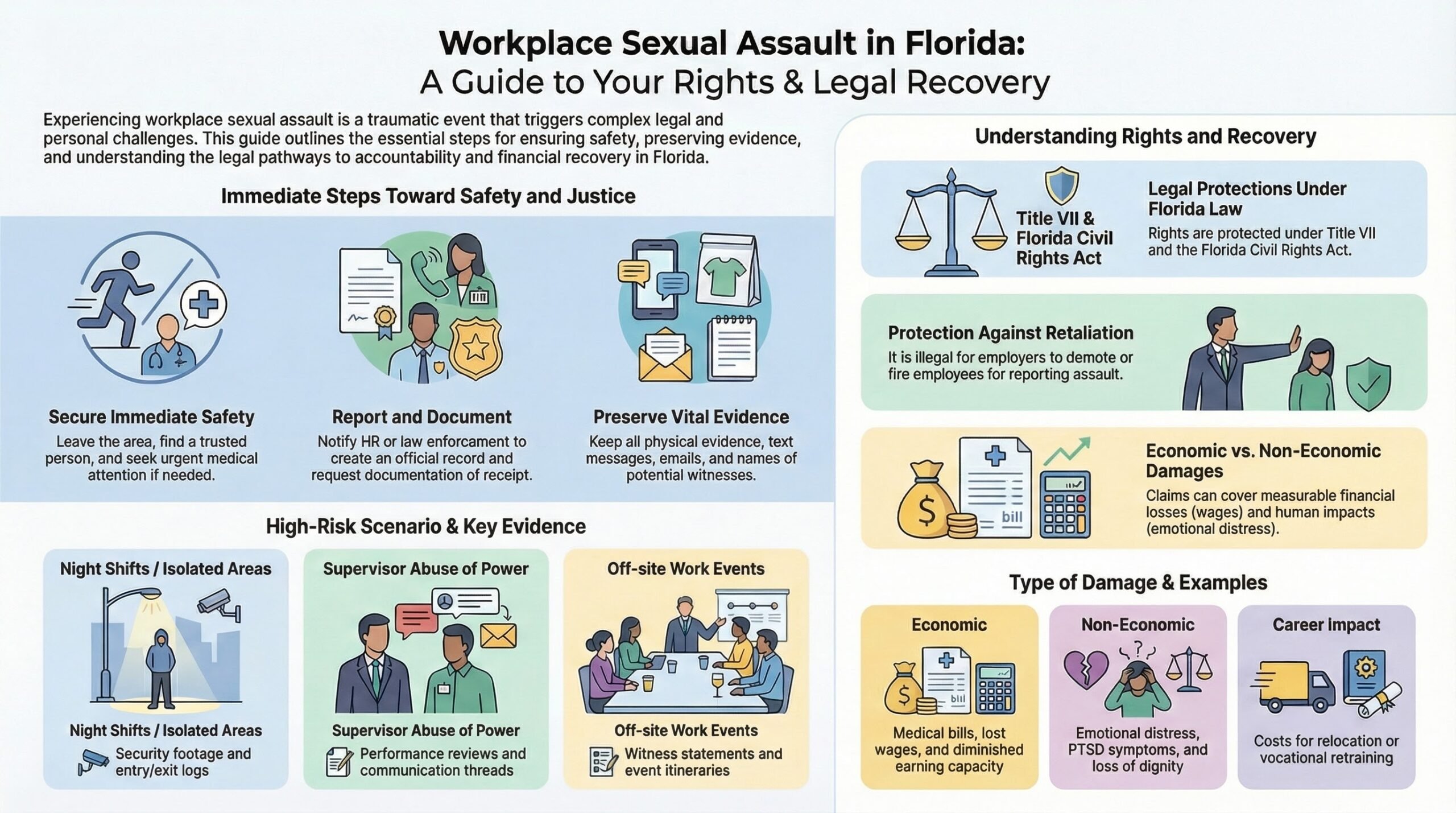
When a workplace sexual assault claim arises in Florida, effective legal assistance begins with a careful evaluation of the facts, the available evidence, and the employer’s role in the events at issue. Counsel can support survivors by organizing records, identifying deadlines, and preserving materials that may strengthen a claim while reducing avoidable setbacks.
That assistance often includes gathering Witness testimony, reviewing HR documentation, and evaluating whether workplace policies were followed or ignored. A thorough approach also examines corporate liability, including whether supervision, reporting procedures, or prior complaints reveal broader failures in protecting employees. In service to those seeking accountability, counsel can communicate with insurers, employers, and investigators while preparing a clear presentation of damages and requested relief.
Careful preparation also anticipates employer defenses, allowing a response grounded in documented facts rather than assumptions. Throughout the process, legal guidance can provide structure, protect dignity, and help claimants pursue a path toward safety, accountability, and meaningful recovery.
Understanding Workplace Sexual Assault Cases in Florida


A clear understanding of workplace sexual assault cases in Florida helps frame how these matters are evaluated by employers, investigators, and the courts. These cases often involve overlapping employment, civil, and criminal considerations, each with different standards, timelines, and evidentiary requirements. A careful review of records, witness statements, communications, and workplace policies is often necessary to assess credibility, notice, and organizational response.
OUR CONSULTATIONSARE FREE
START YOUR FREE CASE REVIEW

Florida employees may have several reporting options, including internal complaints, law enforcement reports, and administrative filings. The appropriate path can depend on the facts, the urgency of safety concerns, and whether the conduct also implicates discrimination laws. Employer retaliation is a serious concern because adverse actions after a complaint may create separate legal issues. Organizations committed to serving others benefit from understanding these cases with diligence, respect, and procedural fairness.
Prompt documentation, informed guidance, and trauma-aware handling can support accountability while protecting workplace integrity and the rights of all involved parties.
Common Scenarios When Workplace Sexual Assault Might Take Place in Florida
Workplace sexual assault in Florida may arise in several recurring circumstances that reflect both opportunity and abuse of authority. Common examples include supervisor abuse of power, harassment during night shifts, misconduct at work-related events, and incidents occurring in isolated areas of the workplace. Identifying these scenarios helps clarify how such conduct can develop and why prompt legal review may be necessary.
Supervisor Abuse Of Power


Although authority is intended to support oversight and productivity, it can become a vehicle for sexual assault when a supervisor exploits control over schedules, job assignments, evaluations, promotions, or continued employment to isolate or pressure an employee. In these cases, harmful power dynamics may silence reporting and deepen fear.
A supervisor may imply quid pro quo demands, suggesting that compliance will protect a position or improve advancement, while refusal could invite discipline, reduced hours, or employer retaliation. Abuse may also occur during private meetings, work travel, or one-on-one training arranged without a legitimate business need. When coercive conduct, intimidation, or unwanted sexual contact is tied to supervisory authority, the workplace can quickly become a hostile environment.
Careful documentation and prompt reporting often help preserve evidence and support accountability, safety, and informed legal action.
Harassment During Night Shifts
Night shifts often present conditions that can increase the risk of sexual harassment or assault, especially when staffing is limited, supervision is reduced, and employees are expected to work in isolated areas. In healthcare, hospitality, retail, and custodial settings, workers may encounter repeated unwanted attention in hallways, stockrooms, parking areas, or service corridors.
Some incidents involve covert harassment, such as inappropriate messages, lingering observation, or manipulative requests made when colleagues are absent. Other situations resemble Night shift stalking, where an individual repeatedly follows, monitors, or corners a worker during breaks or closing duties. For organizations committed to protecting others, these patterns warrant immediate review, careful documentation, and responsive intervention.
Prompt reporting channels, adequate lighting, security presence, and consistent supervisory oversight can help reduce vulnerability and support safer working environments for all.
Assault At Work Events
When employers sponsor conferences, holiday parties, off-site trainings, or networking gatherings, the setting can create opportunities for sexual assault that may be overlooked because the event appears informal or social. Alcohol, relaxed supervision, travel, and blurred professional boundaries may increase risk, especially when managers or colleagues misuse authority or access.
In Florida, Workplace event harassment may occur during receptions, shared transportation, hotel stays tied to business travel, or after-hours functions connected to employment. Even when an assault happens outside regular office space, the conduct may still relate directly to work responsibilities and employer oversight. Those seeking to protect others often recognize the value of prompt reporting, careful documentation, and the preservation of communications.
Coworker witness statements, event records, and security footage may help clarify what occurred and support accountability for misconduct.
Isolated Areas In Workplaces
Because many workplaces contain storage rooms, stairwells, loading areas, parking structures, and other low-traffic spaces, sexual assault may occur in locations where visibility is limited and immediate assistance is less likely. In these environments, a perpetrator may exploit routine tasks, isolated assignments, or after-hours access to separate a coworker from others. Risks may increase when Security camera visibility is poor, entrances are unsecured, or supervision is inconsistent.
Concerns can also arise around breakroom privacy, rest areas, or locker spaces if boundaries are ignored and monitoring is inadequate. Employers that seek to protect workers and the public should assess secluded zones, improve reporting pathways, and strengthen safety practices. Careful site design, reliable lighting, and accountable oversight may reduce opportunities for misconduct and support a safer workplace for everyone involved.
Legal Rights of Workplace Sexual Assault Victims in Florida
Although each case turns on its specific facts, workplace sexual assault victims in Florida generally have important legal rights under both state and federal law. These protections may arise through employment statutes, civil claims, and, in some matters, criminal enforcement. Employers may have duties to address misconduct, prevent Employee retaliation, and conduct fair workplace investigations.
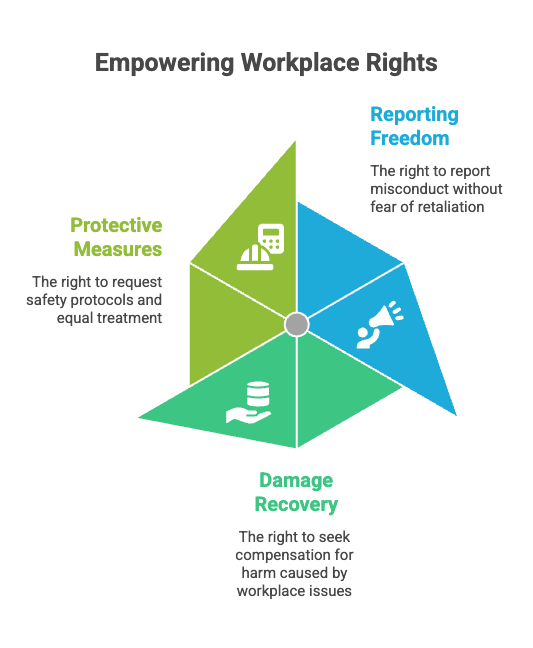
Key legal rights often include:
- the right to report prohibited conduct without unlawful reprisal
- the right to pursue damages for harm caused by assault, harassment, or negligent supervision
- the right to seek protective measures and equal treatment in the workplace
Florida victims may also have rights under Title VII, the Florida Civil Rights Act, and other laws that prohibit sex-based discrimination. Depending on the circumstances, an employer’s failure to respond appropriately can create legal exposure. A careful legal review can help clarify available remedies, timelines, and responsibilities, while supporting safer workplaces and more accountable organizational practices for everyone involved.
Steps to Take After a Workplace Sexual Assault Incident in Florida
After a workplace sexual assault incident in Florida, the priority is to make certain immediate safety and seek medical attention if needed. The incident should then be reported through appropriate workplace channels and, when warranted, to law enforcement to create an official record. It is also important to preserve vital evidence, including clothing, messages, photographs, and written notes, as these materials may support any future legal or administrative action.
Ensure Immediate Safety
When a workplace sexual assault occurs, the first priority is to secure immediate safety by leaving the area if possible and moving to a location where the individual is protected from further contact with the assailant. A trusted coworker, supervisor, security officer, or a nearby public space may provide temporary protection while immediate risks are carefully assessed.
If injury is suspected, urgent medical attention should be obtained without delay. Workplace protective measures may include requesting an escort, limiting access to the person involved, or arranging safe transportation home. If the threat remains active or violence appears likely, contacting law enforcement may be necessary to prevent further harm.
Personal safety should remain central, and any steps taken should focus on stabilizing the situation, preserving wellbeing, and ensuring the individual is no longer isolated or vulnerable.
Report The Incident
A prompt report creates an official record of the workplace sexual assault and can be important to both personal protection and any later legal action. The affected worker should notify a supervisor, human resources representative, or another designated employer contact as soon as it is safe to do so.
If internal reporting channels are unavailable, compromised, or unresponsive, the worker should contact authorities without delay. A concise account should include timeline details, the location, the identities of involved parties, and any immediate responses by management. Witness statements may support the report when others observed relevant conduct or its aftermath. The worker should request secure documentation confirming receipt of the complaint, including dates, names, and next steps.
Clear reporting helps organizations respond responsibly and strengthens accountability for everyone involved and community safety.
Preserve Key Evidence
Preserving vital evidence should begin as soon as immediate safety and reporting concerns have been addressed, because contemporaneous proof can strongly affect both a criminal investigation and any civil or employment-related claim in Florida. Clothing, messages, emails, security footage, and written recollections may all become important. Photo preservation should include visible injuries, damaged property, and the surrounding area, with dates noted clearly.
Careful handling also supports the chain of custody, which helps protect the integrity of items later reviewed by law enforcement, counsel, or employers. Digital forensics may assist in recovering deleted texts, access logs, or metadata that clarify timelines. Names and contact information for witnesses should be recorded promptly, since delays can weaken witness credibility and memory. Organized documentation often strengthens efforts to protect others and pursue accountability through proper legal channels.
How a Florida Workplace Sexual Assault Lawyer Can Help You Initiate a Case
Because the first steps after workplace sexual assault often determine the strength of a legal claim, guidance from a Florida workplace sexual assault lawyer can be important at the outset.
Counsel may explain reporting options, legal deadlines, and practical measures that protect both the individual and the integrity of the case.
A lawyer often helps initiate a case through:
- Confidential consultations that clarify facts, identify possible claims, and outline next steps.
- Evidence preservation strategies include securing messages, records, clothing, and witness statements before details are lost.
- Retaliation protection guidance when an employer reduces hours, changes duties, or threatens termination after a report.
Long-Term Effects of Workplace Sexual Assault Trauma
Workplace sexual assault can produce lasting harm that extends well beyond the initial incident, affecting a person’s emotional stability and psychological health for years. Its effects may also disrupt career progress and financial security, particularly when job performance, workplace attendance, or continued employment becomes difficult to maintain. In many cases, the trauma further strains personal relationships and undermines trust, creating challenges that reach into both professional and private life.
Emotional And Psychological Impact
Although the physical incident may end quickly, the emotional and psychological effects of workplace sexual assault often persist for months or years, disrupting a person’s sense of safety, trust, and stability. Many survivors experience Trauma triggers in ordinary settings, including voices, rooms, or routine interactions. PTSD symptoms may include flashbacks, hypervigilance, numbness, and difficulty concentrating. Workplace anxiety can develop even when no immediate threat is present, making daily responsibilities feel overwhelming and isolating.
Sleep disturbances are also common, as intrusive memories, nightmares, and fear may interrupt rest and prevent recovery. Over time, these effects can strain relationships, reduce self-confidence, and alter how a person engages with others. Compassionate support, trauma-informed counseling, and consistent legal guidance often play an important role in helping survivors regain emotional balance, dignity, and personal security.
Career And Financial Consequences
The effects of workplace sexual assault often extend beyond emotional distress and into a person’s long-term career path and financial stability. Survivors may miss work, decline promotions, transfer departments, or leave valued professions altogether to restore safety and preserve dignity. These disruptions can slow advancement, reduce earnings, and limit future opportunities.
Retaliation Risks may further burden a survivor’s career, especially when reporting misconduct leads to isolation, negative evaluations, reduced hours, or termination. Even when retaliation is unlawful, the practical damage can be significant and lasting. The Financial Impact may include lost wages, diminished benefits, interrupted retirement contributions, and costs for medical care, counseling, or relocation. For service-minded individuals, these losses can also limit their ability to support their families, participate in community work, and pursue meaningful professional goals over time.
Relationship And Trust Challenges
Because sexual assault in a professional setting can alter a person’s sense of safety far beyond the immediate event, its long-term effects often reach into personal relationships and the ability to trust others. Survivors may struggle with intimacy, communication, and healthy boundaries, even with supportive family members, friends, or partners. A workplace assault often involves a power imbalance, which can make ordinary interactions feel unsafe or controlling long afterward.
Concerns about victim credibility may also deepen isolation, especially when a survivor fears disbelief, blame, or professional retaliation. In many cases, trust in supervisors, coworkers, and institutions becomes seriously damaged. This erosion of trust can affect caregiving roles, community involvement, and the survivor’s capacity to seek help. Compassionate legal guidance can support accountability while honoring dignity, safety, and long-term recovery for survivors.
What to Expect During a Florida Workplace Sexual Assault Claim Process
A Florida workplace sexual assault claim process typically begins with prompt reporting, careful documentation, and an initial review of the available facts. As the matter proceeds, investigators may assess statements, records, and other evidence to determine the scope of the allegations and the viability of legal action. The process may conclude through internal resolution, settlement negotiations, or litigation, with the timeline varying according to the complexity of the claim and the evidence involved.
Initial Claim Steps
Many workplace sexual assault claims in Florida begin with a careful review of the incident, the available evidence, and the reporting history within the employer’s organization. Early legal guidance often helps a claimant understand potential civil claims, time limits, and the practical decisions that may follow. During this stage, counsel may explain confidential consultation options and the protections of the attorney-client privilege, which can support informed, service-minded decision-making.
An attorney typically assesses whether the facts suggest employer liability, third-party responsibility, or additional legal avenues. Initial claim steps may also include identifying immediate safety concerns, preserving relevant communications, and evaluating employment status or the risk of retaliation. This early assessment helps shape a thoughtful strategy, allowing the claimant and counsel to proceed with greater clarity, purpose, and regard for others’ well-being.
Reporting And Documentation
When a workplace sexual assault claim moves into the reporting and documentation phase, close attention to detail often becomes central to the strength and direction of the case. Survivors are often advised to record dates, times, locations, communications, and any immediate effects on work duties or personal wellbeing.
In Florida, employers may provide Confidential reporting options through human resources, compliance channels, or designated supervisors. Accurate written records can help create a clear timeline and support informed legal guidance. Relevant materials may include emails, text messages, schedules, medical records, and internal complaints. Witness statement preservation is also important, especially when coworkers observed conduct, changes in behavior, or prior reports.
Careful documentation can serve not only the individual claimant, but also broader workplace accountability and the protection of others from similar harm.
Investigation And Evidence
After a report is made, the investigation phase typically focuses on gathering and evaluating evidence that can confirm what occurred, who had knowledge of the conduct, and whether the employer responded appropriately under Florida law and workplace policy. This stage may include Witness statements from coworkers, supervisors, and security personnel, along with a review of emails, texts, personnel files, and complaint records.
Investigators often seek video surveillance footage, entry logs, and digital records, while emphasizing the preservation of metadata to protect accuracy and authenticity. Physical items, if any, should be documented and handled through a clear chain of custody. A careful investigation also examines prior complaints, reporting channels, and response steps taken by management. A thorough evidence review helps responsible advocates support accountability, protect workplace safety, and serve the broader interests of dignity, trust, and institutional integrity.
Potential Outcomes Timeline
Although no two claims proceed on exactly the same schedule, a Florida workplace sexual assault matter often unfolds in stages that may include internal reporting, evidence preservation, administrative review, civil litigation, settlement discussions, and, in some situations, parallel criminal proceedings. This timeline can span months or longer, depending on the depth of the investigation, witness availability, employer response, and court scheduling.
Early phases often focus on safety planning, documentation, and agency filings, while later stages may involve discovery, motion practice, and settlement negotiation. Some claims resolve before trial through negotiated agreements, while others require hearings or jury determination. The overall case duration varies widely, and informed legal guidance may help survivors make decisions that support accountability, financial recovery, workplace change, and emotional recovery while respecting personal readiness, privacy concerns, and long-term service to others.
Compensation for Florida Workplace Sexual Assault Damages
Because workplace sexual assault can inflict profound physical, emotional, and financial harm, compensation in a Florida civil claim may extend well beyond immediate medical expenses. Courts may consider treatment needs, safety planning, and other losses tied to the assault’s aftermath.
Careful Evidence timeline management can help preserve records, while victim privacy protections may reduce added harm during the legal process.
| Consideration | Role in Compensation |
|---|---|
| Medical care | Supports recovery documentation |
| Counseling needs | Reflects ongoing therapeutic support |
| Safety measures | Addresses relocation or protection costs |
A lawyer serving survivors and families often evaluates how the assault disrupted daily stability, personal security, and access to supportive services. In some cases, compensation may also address future care reasonably expected after trauma. Each claim depends on facts, available proof, and the connection between the assault and the resulting harm. A thorough review helps present a clear, respectful request for meaningful civil accountability and survivor-centered support.
Economic vs Non-Economic Damages in Florida Workplace Sexual Assault Cases
Florida workplace sexual assault cases may involve both economic damages, such as medical expenses and lost income, and non-economic damages, including pain and suffering and emotional distress. A clear understanding of these categories helps distinguish measurable financial losses from the personal harm that often follows an assault. The discussion also addresses how the value of compensation is established through records, testimony, and other evidence relevant under Florida law.
Economic Damages Explained
When workplace sexual assault results in measurable financial losses, economic damages are intended to compensate the survivor for those specific costs, while non-economic damages address the personal harm that does not come with a fixed price tag. In Florida cases, these damages commonly include medical bills, counseling expenses, lost wages, reduced earning capacity, and other documented out-of-pocket costs.
A lawyer serving survivors will focus on quantifying losses through records, invoices, employment files, and expert analysis. Careful documentation can show how the assault disrupted work, required treatment, or caused missed opportunities for advancement. Economic damages may also involve proving future earnings when trauma-related limitations affect long-term employment prospects. By identifying each financial consequence with precision, counsel helps survivors pursue accountability and secure resources that support stability, recovery, and continued service to their families and communities.
Non-Economic Losses Overview
Although economic damages reimburse measurable financial losses, non-economic damages are intended to address the human impact of workplace sexual assault that cannot be captured by bills, wage records, or receipts. These losses may include pain, emotional distress, anxiety, humiliation, loss of dignity, and diminished enjoyment of daily life. In Florida workplace sexual assault cases, trauma damages recognize that survivors often carry lasting psychological and relational harm affecting family, community, and service-oriented work.
Because these harms are deeply personal, careful evidence documentation may help illustrate their presence without reducing them to simple numbers. Courts and counsel may review therapy records, personal journals, witness observations, and medical assessments to understand the broader effect on well-being. This category reflects the law’s effort to acknowledge suffering, restore personal stability, and support meaningful recovery.
Proving Compensation Value
Assigning a compensation value to workplace sexual assault harm requires more than identifying categories of loss, because each form of damage must be supported by evidence that shows both its existence and its extent. Economic damages often rely on employment records, payroll data, treatment invoices, and future care estimates. Non-economic damages, including pain, trauma, and diminished quality of life, require careful proof through medical documentation, therapist observations, and credible testimony.
In Florida cases, Evidence preservation can strongly affect valuation, especially when messages, reports, and timelines confirm what occurred. Witness credibility also matters because consistent accounts from coworkers, supervisors, or family members can strengthen the connection between the assault and resulting losses. A well-supported claim helps decision-makers assess compensation fairly, seriously, and with respect for the survivor’s recovery needs.
When a Florida Workplace Sexual Assault Case Goes to Trial vs Settlement
Because each workplace sexual assault claim presents different facts, evidence, and legal risks, the decision to proceed to trial or pursue a settlement in Florida usually depends on a careful evaluation of liability, damages, witness credibility, and the employer’s likely defenses. Counsel typically conducts a risk assessment, reviews evidence timelines, and develops a Trial strategy that reflects both legal strength and the client’s broader goals of accountability, safety, and practical recovery.
Settlement may be appropriate when liability is reasonably clear, damages are substantial, and early negotiation creates meaningful leverage for settlement. A negotiated resolution can reduce delay, privacy concerns, and the burden of testimony, while still advancing justice and institutional change. Trial may become necessary when the employer denies responsibility, challenges credibility, or refuses fair compensation.
In those circumstances, presenting witnesses, documents, and expert testimony before a jury may offer the strongest path toward full accountability. The appropriate course is shaped by facts, preparation, and informed judgment.
The Statute of Limitations for Florida Workplace Sexual Assault Cases
Determining the statute of limitations is a major early step in any Florida workplace sexual assault case, since filing deadlines can affect whether a claim may proceed at all. Florida law may impose different deadlines depending on whether the matter involves civil claims, employment law violations, or related criminal conduct, and each pathway can carry separate procedural requirements.
Because these timelines can be strict, careful attention to dates, records, and reporting history is critical. Evidence preservation often becomes especially important, since documents, electronic communications, surveillance footage, and witness recollections may fade or disappear over time. In some situations, emotional trauma may affect how quickly an individual is able to report or fully describe what occurred, yet legal deadlines may still continue to run.
For organizations and individuals committed to protecting others, understanding these time limits supports accountability, informed decision-making, and a more effective pursuit of justice within the boundaries established by Florida law.
When to Contact a Workplace Sexual Assault Lawyer in Florida
When workplace sexual assault is suspected or disclosed, contacting a Florida lawyer as early as possible can help protect both legal rights and crucial evidence. Early legal guidance may be appropriate after a harmful incident, after threats or coercive conduct, or when an employer fails to respond to a report. Prompt action can help preserve messages, surveillance footage, medical records, witness accounts, and internal complaints.
A lawyer may also be contacted before speaking with human resources, signing workplace documents, or participating in an internal investigation. This can be especially important when there are concerns about Confidential Consultation, privacy, or Workplace Retaliation. If a worker experiences demotion, schedule changes, termination, intimidation, or pressure to remain silent, legal counsel may help clarify immediate options.
Families, faith leaders, and advocates who seek to support others often encourage timely legal contact so informed decisions can be made carefully, respectfully, and with attention to safety, documentation, and accountability.
Why You Need an Experienced Florida Workplace Sexual Assault Lawyer
Early contact with counsel often raises a second question, namely why experience matters in a Florida workplace sexual assault case. An experienced lawyer understands how trauma, employment rules, and civil remedies intersect. That knowledge helps protect a survivor’s dignity while preserving evidence, meeting deadlines, and avoiding preventable mistakes that can weaken a claim.
Experienced counsel also recognizes patterns that less seasoned practitioners may miss, including subtle forms of coercion, failures in supervision, and signs of employer retaliation after a report is made. In service to those seeking justice for themselves and safer workplaces for others, such counsel can frame the harm in a clear, credible way for agencies, insurers, and courts. Strong representation also includes thoughtful Confidentiality strategies, careful witness coordination, and informed communication with employers.
These measures reduce unnecessary exposure, support compliance with legal procedures, and improve the likelihood that accountability, compensation, and workplace reform will be pursued effectively and lawfully.
How to Choose the Right Workplace Sexual Assault Lawyer for Your Case in Florida
Because the quality of legal representation can shape both the process and the outcome, selecting the right workplace sexual assault lawyer in Florida requires careful attention to experience, judgment, and professional approach. Effective attorney selection begins with reviewing the lawyer’s background in employment claims, trauma-informed advocacy, and case preparation involving sensitive workplace misconduct.
A careful evaluation should also consider communication style, responsiveness, and willingness to explain options clearly. Lawyers who value dignity and accountability often help clients pursue justice in ways that may protect others from future harm. During consultations, it is useful to ask about strategy, timelines, and methods for evidence preservation, including messages, reports, personnel records, and witness statements.
Professional reputation, courtroom readiness, and negotiation skills should also be weighed. Fee structure, available resources, and the ability to manage intricate employer defenses may further influence the decision. A thoughtful process can support informed choices and strengthen the path toward meaningful legal relief.
About The Law Offices of Anidjar & Levine
Serving clients across Florida, The Law Offices of Anidjar & Levine provides legal representation for individuals seeking accountability after workplace sexual assault and related misconduct. The firm approaches these matters with seriousness, discretion, and a clear commitment to protecting Victim Confidentiality throughout each stage of the legal process.
Its attorneys evaluate reports of assault, harassment, coercion, and employer inaction, then develop strategies tailored to the facts and the client’s needs. The firm also addresses related claims involving Workplace Retaliation, including demotion, termination, intimidation, or other adverse actions that may follow a report. By gathering evidence, communicating with employers and insurers, and preparing cases for negotiation or litigation, the firm seeks practical results that support safety, dignity, and long-term stability.
The Law Offices of Anidjar & Levine serves those who want not only personal justice, but also stronger workplace standards that protect coworkers and promote responsible conduct across Florida communities statewide.
Frequently Asked Questions
Can Workplace Sexual Assault Affect Professional Licensing or Future Background Checks?
Yes, workplace sexual assault can affect professional licensing and future background checks. Licensing boards often review allegations of misconduct, especially when they involve safety, trust, or abuse of authority. If an incident leads to criminal records, arrests, or convictions, those findings may appear during employment screening and regulatory review. Even without conviction, documented investigations can influence decisions. Careful reporting and lawful response help protect workplaces, support victims, and uphold professional standards.
Are Undocumented Workers Protected in Florida Workplace Sexual Assault Cases?
Yes. Undocumented workers are generally protected under Florida and federal laws addressing workplace sexual assault, regardless of immigration status. They may report misconduct, seek protective measures, and pursue certain legal remedies. However, confidentiality limits can affect how personal information is disclosed during investigations or litigation. Service providers and counsel often help victims understand reporting options, preserve safety, and protect rights while minimizing unnecessary exposure to immigration-related concerns and retaliation.
Can Workplace Sexual Assault Claims Involve Third-Party Contractors or Clients?
Yes, workplace sexual assault claims can involve third-party contractors or clients when their conduct causes harm or an employer fails to take reasonable protective action. Third-party liability may arise if the employer knew, or should have known, about risks and did not respond appropriately. Claims involving client misconduct often examine supervision, reporting procedures, prior complaints, and whether meaningful steps were taken to protect workers and prevent further abuse.
How Do Remote or Off-Site Incidents Impact Workplace Sexual Assault Claims?
Remote or off-site incidents can still support workplace sexual assault claims when a sufficient connection exists to employment duties, employer-sponsored events, or work-related communications. Such cases often present Evidentiary Challenges because witnesses, records, and physical proof may be limited or dispersed. They may also raise Jurisdiction Limits, especially when the conduct occurred across state lines. Careful documentation helps those seeking accountability protect others, strengthen credibility, and support informed legal evaluation.
Can Workplace Sexual Assault Allegations Intersect With Workplace Defamation Claims?
Yes, workplace sexual assault allegations can intersect with defamation claims when false statements are published and cause reputational harm. Courts generally examine defamation standards, including falsity, fault, and resulting damages, while also weighing privileges associated with internal reporting or investigations. Truthful complaints usually receive stronger protection. A careful review helps employers and employees respond responsibly, protect others, and distinguish good faith reporting from knowingly false accusations or reckless public statements.
—————————
Workplace sexual assault claims in Florida require prompt action, careful documentation, and a clear understanding of applicable legal protections.
Victims may have grounds to pursue compensation and hold employers or individuals accountable under certain circumstances.
A qualified workplace sexual assault lawyer can evaluate the facts, explain available options, and help protect a claimant’s rights throughout the process.
Florida Sexual Assault Lawyer services are available through the Law Offices of Anidjar and Levine, which represents clients with focused advocacy and a practical, informed approach to these serious matters.