

The Law Offices of Anidjar and Levine can investigate whether truck driver fatigue, distraction, speeding, impairment, unsafe actions, or inadequate training contributed to a crash in Brevard County.
The investigation may also examine employer supervision, scheduling, vehicle maintenance, roadway conditions, electronic logs, GPS data, phone records, surveillance footage, and witness accounts.
A Brevard County Personal Injury Lawyer can preserve evidence, document medical treatment and financial losses, assess comparative negligence under Florida law, and pursue compensation for recognized damages.
Main Takeaways
- Investigate truck driver behavior, including distraction, fatigue, speeding, impairment, unsafe lane changes, and aggressive driving.
- Examine employer responsibility, including negligent hiring, inadequate training, unrealistic schedules, supervision failures, and vehicle maintenance.
- Preserve electronic evidence such as electronic logs, GPS data, dashcam footage, dispatch records, and engine control module information.
- Document injuries, treatment, lost income, property damage, witness accounts, photographs, and crash-scene conditions.
- Evaluate comparative negligence and pursue compensation for medical expenses, future care, lost wages, pain, and other legally recognized losses.
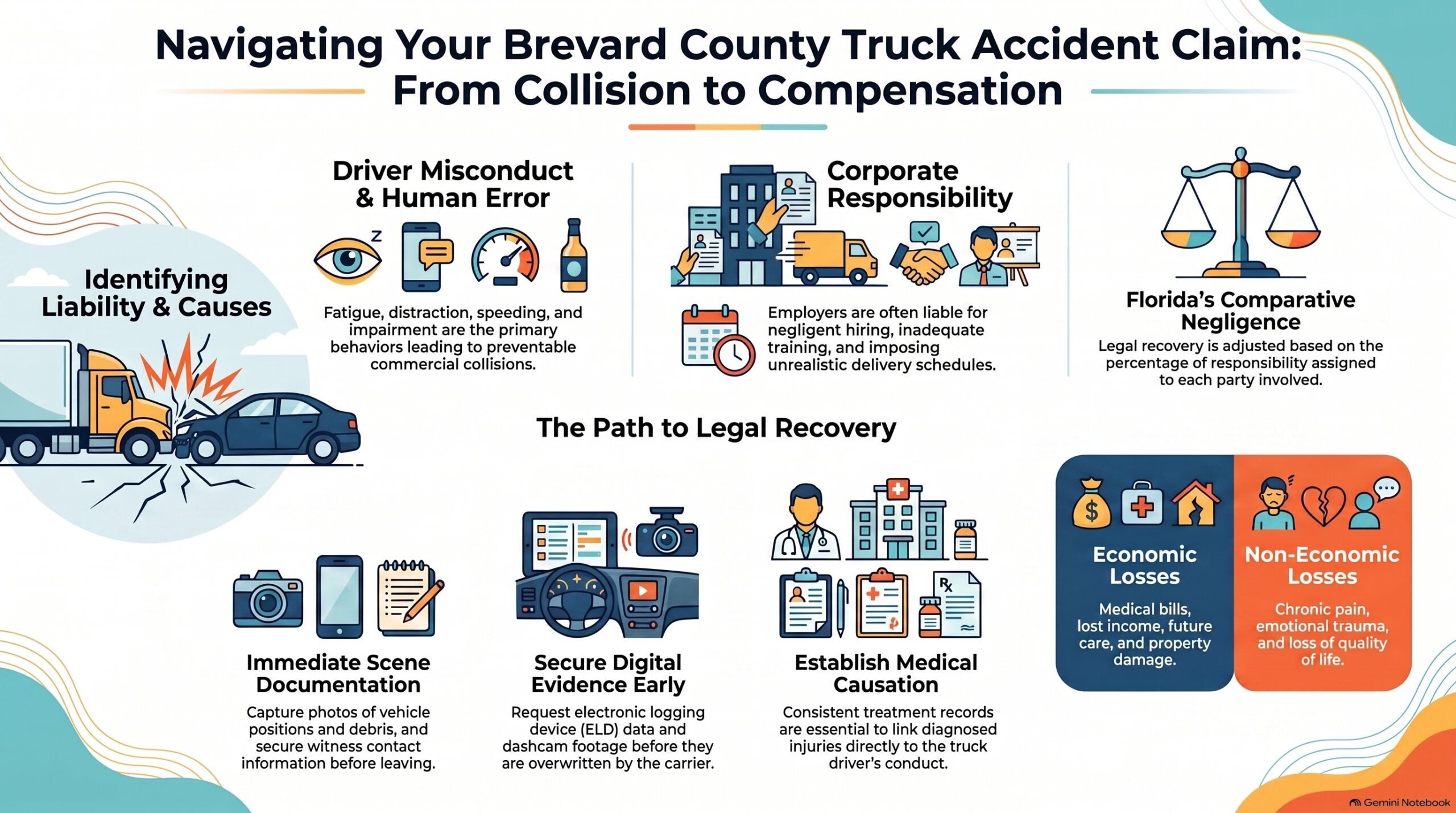


How We Can Help With Your Brevard County Truck Driver Behavior Injury Claim
When a truck driver’s unsafe conduct contributes to a collision, an injured person may face complicated questions involving negligence, employer responsibility, insurance coverage, and the extent of recoverable damages. Assistance can begin with a focused liability investigation that examines driver decisions, company policies, vehicle maintenance, roadway conditions, and available electronic records. This process helps identify responsible parties while preserving evidence that could otherwise disappear.
The claim may also require careful post-crash documentation, including medical records, employment information, photographs, witness accounts, and communications with insurers. A thorough damages evaluation can address treatment costs, lost income, future care, physical limitations, and other legally recognized losses. Comparative negligence may affect recovery if another party is alleged to share responsibility, making accurate fact development particularly important.
OUR CONSULTATIONSARE FREE
START YOUR FREE CASE REVIEW

Understanding Brevard County Truck Driver Behavior Injury Cases
Understanding a Brevard County truck driver behavior injury case requires examining how the driver’s conduct contributed to the collision and whether other parties may share legal responsibility. The evaluation typically begins with Crash scene evidence, including photographs, vehicle damage, roadway conditions, witness accounts, and available electronic records. These materials may help establish the sequence of events and identify inconsistencies in reported conduct.
Medical documentation is equally important because treatment records connect diagnosed injuries to the incident, describe limitations, and support the scope of needed care. Consistent documentation can also clarify how injuries affect work, family responsibilities, and daily activities.
Insurance delays may complicate access to treatment and financial stability during the liability investigation. A careful settlement strategy considers documented losses, future medical needs, applicable coverage, and the strength of available proof. Professionals serving injured individuals can help preserve evidence, communicate with insurers, and pursue a fair resolution while treating each person’s circumstances with attention and respect.
Common Causes of Brevard County Truck Driver Behavior
Several behaviors commonly contribute to truck-related collisions in Brevard County, including distracted driving, aggressive driving, fatigued driving, and impaired driving. Each may reduce a driver’s reaction time, judgment, or ability to safely control a commercial vehicle. Identifying these contributing factors is important when evaluating liability and the circumstances surrounding an injury claim.
Distracted Driving
Distracted driving is a significant form of misconduct among truck drivers in Brevard County, particularly because commercial vehicles require constant attention, longer stopping distances, and careful control. Common distractions include texting while driving, reviewing navigation instructions, adjusting dispatch equipment, eating, or reaching for items inside the cab. Cell phone distraction can divert a driver’s eyes, hands, and concentration from traffic conditions, creating hazards for motorists, cyclists, and pedestrians.
Even brief inattention may prevent timely recognition of stopped vehicles, changing signals, or roadway obstacles. Employers and drivers have responsibilities to promote safe practices, including compliance with federal restrictions on handheld devices and texting. When distraction contributes to a collision, injured individuals may need medical care, clear information, and legal assistance to understand available remedies and protect their interests.
Aggressive Driving
Aggressive driving presents another form of truck driver misconduct that can cause serious collisions in Brevard County. It may involve tailgating, unsafe lane changes, sudden braking, improper passing, or confrontational behavior toward surrounding motorists. Commercial truck drivers operate vehicles with substantial weight and limited mobility, making these actions especially dangerous for occupants of smaller vehicles. Speeding Violations can reduce reaction time, increase stopping distances, and amplify the force of an impact.
Cell Phone Use may further intensify aggressive conduct when a driver responds impulsively to traffic conditions while attention is divided. Evidence can include dashcam recordings, electronic driving data, witness statements, and law enforcement reports. Identifying these behaviors helps injured individuals and their families understand potential negligence and pursue appropriate support after a preventable truck collision.
Fatigued Driving
Fatigued driving is a common cause of truck driver behavior that can contribute to serious collisions in Brevard County. Long routes, inadequate rest, irregular schedules, and pressure to meet delivery deadlines may reduce alertness and delay a driver’s reaction time. Sleep Apnea Symptoms, including loud snoring, interrupted breathing, and persistent daytime drowsiness, can further impair safe vehicle operation when untreated. Overcapacity Risks may also increase fatigue, as overloaded trucks require greater concentration, braking effort, and physical control.
A fatigued driver may drift across lanes, miss traffic signals, misjudge distances, or fail to recognize developing hazards. Employers and carriers have a responsibility to support compliance with lawful hours-of-service regulations, appropriate scheduling, and medical evaluation when warning signs appear. Identifying these conditions can help protect motorists, passengers, and communities throughout Brevard County.
Impaired Driving
Impaired driving is a serious behavior among truck drivers that can cause preventable collisions throughout Brevard County. Alcohol, illegal substances, and certain prescription medications may reduce alertness, coordination, judgment, and reaction time. Commercial drivers who operate vehicles while impaired can endanger motorists, passengers, pedestrians, and emergency responders.
Impairment may also prevent a driver from responding appropriately to Weather hazards, road conditions, congestion, construction zones, or sudden traffic changes. A compromised driver may misjudge stopping distance, drift out of their lane, or overlook warning signs. In addition, impaired decision-making can contribute to Improper loading, cargo securement failures, excessive speed, and unsafe passing. Investigators may review toxicology results, employer records, surveillance footage, and witness statements when determining whether impairment contributed to a collision. Prompt evidence preservation supports accountability and helps affected individuals pursue appropriate assistance.
Don’t Wait. Call Our Florida Personal Injury Lawyers Now!


Legal Rights of Brevard County Truck Driver Behavior Injury Victims
When a truck driver’s behavior contributes to a crash, injured victims may have the right to pursue compensation under Florida law. A claim may address medical expenses, lost income, property damage, pain, and other losses caused by the collision. Florida’s comparative negligence rules can affect recovery, making careful legal evaluation important.
Victims and their families may benefit from prompt assistance with:
- Driver negligence proof, including records, witness accounts, surveillance, and applicable company documentation.
- Evidence preservation steps include photographing injuries and vehicles, obtaining medical records, and requesting relevant electronic data before it disappears.
- Timely insurance notices, claim preparation, and communication with responsible parties through appropriate representatives.
A qualified legal professional can investigate the crash, identify potentially liable parties, and protect a victim’s interests during negotiations or litigation. Victims generally should avoid recorded statements or settlement agreements until the consequences of the injury are understood. Florida deadlines may restrict the time available to file a lawsuit, so early consultation supports informed decisions and helps preserve evidence needed to serve the injured person’s interests.
Why Do Brevard County Truck Driver Behavior Injuries Happen?
Truck driver behavior injuries often arise from decisions or conditions that impair a driver’s ability to operate a commercial vehicle safely. Fatigue, distraction, speeding, aggressive driving, and impaired judgment can increase collision risks on Brevard County roads. Tight delivery schedules or pressure to meet quotas may encourage drivers to disregard traffic rules, rest requirements, or prudent following distances.
Inadequate Workplace Training can also leave drivers unprepared to handle heavy vehicles, changing weather conditions, construction zones, and emergency situations. A weak Safety Culture may allow unsafe conduct to continue when supervisors fail to monitor performance, enforce policies, or address repeated violations. In some cases, Vehicle Maintenance problems contribute to dangerous behavior by creating guiding, braking, tire, or lighting issues that demand sudden corrective actions.
These injuries may also result from negligent hiring, insufficient supervision, or unrealistic scheduling by trucking companies. Identifying the contributing factors requires a careful examination of driver conduct, company practices, vehicle condition, and surrounding circumstances to determine how the preventable harm occurred.
What Should You Do After a Brevard County Truck Driver Behavior Injury?
After a Brevard County truck driver behavior injury, the injured person should seek immediate medical care, even if symptoms initially appear minor. The crash scene should be documented through photographs, witness information, police records, and medical documentation. Consulting a truck injury lawyer can help preserve evidence, assess liability, and protect the individual’s legal rights.
Seek Immediate Medical Care
Prompt medical evaluation should be obtained immediately following an injury involving alleged truck driver misconduct, even if symptoms appear minor or delayed. A qualified clinician can identify conditions that may worsen without treatment, establish appropriate care, and create contemporaneous medical records. Following professional instructions and attending scheduled appointments support recovery while clarifying the injury’s seriousness.
Medical personnel should receive complete, accurate information about symptoms, medications, and the circumstances known at that time. If wrongful impairment is suspected, prompt evaluation may help identify injuries requiring specialized care, without requiring the injured person to determine fault. Treatment should not be postponed while waiting for an insurer’s response. Insurance delays can complicate access to care and allow symptoms to progress. Emergency services should be used for severe pain, breathing difficulty, loss of consciousness, neurological changes, or other urgent warning signs.
Document The Crash Scene
When conditions permit, the injured person or a companion should document the crash scene before vehicles, debris, weather conditions, or roadway markings change. Safety remains the priority, and no one should enter traffic or approach unstable vehicles to obtain images. Photographs should show vehicle damage, skid marks, lighting, lane placement, and surrounding conditions from multiple angles. Photograph debris, including broken parts or cargo, without moving anything. Individuals should document road signs, signals, construction warnings, and visible obstructions that may clarify the circumstances.
Record vehicle positions before relocation, noting travel lanes and final resting locations. Names and phone numbers of people who witnessed the collision should be collected when possible. Preserve witness contact information accurately, and retain photographs, videos, notes, and relevant observations in their original form for reliable documentation.
Consult A Truck Injury Lawyer
Consulting a truck injury lawyer can help an injured person understand available legal options and protect important evidence following a Brevard County collision involving driver misconduct. A lawyer can evaluate medical records, witness accounts, photographs, and Truck Crash Evidence that may clarify whether speeding, distraction, fatigue, impairment, or other violations contributed to the injury. Early legal assistance may also support preservation requests for electronic logging data, onboard camera footage, maintenance records, and dispatch communications before routine retention periods erase them.
Through Legal Strategy Planning, counsel can identify potentially responsible parties, assess insurance coverage, and determine whether settlement discussions or litigation best serve the injured person’s interests. A lawyer may also coordinate with medical providers and investigators, helping the person pursue necessary care while preserving a well-documented claim and supporting accountability for affected families and the wider community.
Critical Evidence in a Brevard County Truck Driver Behavior Injury Case
A Brevard County truck driver behavior injury case may depend on evidence showing what the driver did before and during the collision.
- Driver log records and electronic data may reveal hours of service, speed, braking, and route information.
- Dashcam or surveillance footage, witness statements, and official reports may help establish the sequence of events and identify inconsistencies.
Together, these materials can clarify responsibility and support the injured party’s claim.
Driver Log Records
Driver log records can provide vital evidence in a Brevard County truck driver behavior injury case by showing whether the driver complied with federal hours-of-service requirements before the collision. These records may identify excessive driving, insufficient rest, or inconsistencies between recorded activities and delivery schedules. Such information can help establish patterns of driver negligence, particularly when fatigue, hurried travel, or repeated violations contributed to unsafe conduct.
Electronic logging device data, supporting entries, and required certifications may also reveal whether records were altered or maintained inaccurately. Investigators can compare the logs with dispatch communications, fuel receipts, toll records, and maintenance documentation to assess their reliability. Records may further indicate whether trucking company policies encouraged unrealistic deadlines or failed to address known violations. Promptly preserving this evidence supports a fair evaluation of responsibility and available compensation.
Dashcam and Surveillance Footage
When available, dashcam and surveillance footage can provide objective evidence of a truck driver’s conduct before, during, and after a collision in Brevard County. Recordings may show Phone use, texting violations, lane departures, unsafe following distances, speeding, or delayed reactions that clarify how the crash occurred. Video from nearby businesses, traffic cameras, residences, or other vehicles may also establish roadway conditions and identify events that witness reports describe differently.
Prompt preservation is important because systems may overwrite recordings or businesses may retain them only briefly. Footage can assist in evaluating liability, explaining injuries, and connecting the collision to necessary medical care. Attorneys and support teams may seek relevant recordings through appropriate requests while respecting privacy and evidentiary requirements. Clear video can help serve injured individuals by presenting reliable facts during settlement discussions or litigation.
Electronic Data Evidence
Electronic data evidence can reveal pivotal information about a commercial truck driver’s conduct, vehicle operation, and compliance with safety requirements before a collision in Brevard County. Electronic logging devices may record driving hours, rest periods, speed, braking, and duty status changes. Engine control modules can preserve data concerning acceleration, mechanical warnings, and other operational conditions. Dispatch records, GPS histories, onboard cameras, and mobile-device records may help establish routes, timing, communications, or possible distractions.
Investigators should promptly identify where relevant information is maintained and request preservation before routine deletion or alteration occurs. Because records may exist in cloud storage or proprietary systems, careful collection and authentication are necessary. Cybersecurity safety also matters; secure handling protects private information while preserving reliable evidence for those seeking accountability and assistance.
Witness Statements and Reports
Witness statements and incident reports can provide an independent account of a commercial truck driver’s conduct before and during a collision in Brevard County. Observers may describe speeding, unsafe lane changes, distracted driving, fatigue, aggressive behavior, or efforts to avoid the impact. Their accounts can help establish a timeline when physical evidence is limited or disputed. Attorneys may conduct Witness credibility checks by examining each person’s location, visibility, relationship to the parties, consistency, and opportunity to perceive events accurately.
Police reports can preserve statements, roadway observations, citations, diagrams, and initial conclusions, although they do not determine civil liability. A careful review may reveal inconsistencies in police reports, omitted details, or discrepancies between recorded accounts. Preserving contact information and obtaining statements promptly can help protect injured individuals and support a fair investigation.
Long-Term Effects of Brevard County Truck Driver Behavior Injuries
Long-term injuries caused by truck driver behavior may result in chronic pain, permanent disability, or reduced ability to work and perform daily activities. Emotional and psychological trauma, including anxiety, depression, and post-traumatic stress, may also persist after physical recovery. Ongoing medical expenses for treatment, rehabilitation, medication, and assistive care can create substantial financial burdens for injured individuals and their families.
Chronic Pain and Disability
When truck driver behavior causes a collision, the resulting injuries may produce chronic pain, reduced mobility, and permanent disability that extend well beyond the initial recovery period. Affected individuals may require continuing medical evaluations, physical therapy, assistive devices, or surgical treatment to preserve function and independence. Medication management can help control symptoms, but long-term treatment may involve monitoring, adjustments, and protection against complications.
Persistent limitations can interfere with employment, household responsibilities, transportation, and the ability to provide care for others. Documentation from physicians, therapists, and vocational experts may establish how the injuries affect daily activities and future earning capacity. Eligible individuals may pursue disability benefits and compensation for medical expenses, lost income, adaptive equipment, and necessary personal assistance. Legal guidance can help protect these interests and support an informed claim.
Emotional and Psychological Trauma
Truck collisions caused by negligent driver behavior can result in emotional and psychological trauma that persists after physical injuries begin to heal. Survivors may experience anxiety, intrusive memories, irritability, or heightened fear when traveling near commercial vehicles. Some develop post-traumatic stress symptoms that interfere with concentration, relationships, and ordinary responsibilities. Workplace stress can intensify when a person struggles to return to prior duties or feels unsafe commuting.
Sleep deprivation may follow recurring nightmares, physical tension, or persistent concern about another collision, further affecting judgment and emotional stability. Family members may observe withdrawal, mood changes, or difficulty participating in activities once enjoyed. Compassionate support from qualified mental health professionals can help identify these effects and establish appropriate coping strategies. Recognizing psychological harm also helps preserve an accurate understanding of the injury’s long-term impact.
Ongoing Medical Expenses
Medical treatment for injuries caused by a negligent truck driver may continue well after initial emergency care and rehabilitation. Ongoing medical expenses can include consultant visits, prescription medications, physical therapy, diagnostic testing, assistive equipment, and future surgeries. Some injuries also require home modifications, transportation assistance, or continuing personal care, creating financial obligations that may persist for years.
A careful assessment should distinguish past bills from reasonably anticipated costs. Physicians and other qualified professionals can document limitations, projected treatment, and likely expenses, helping establish the long-term impact of the collision. Insurance negotiation strategies should account for these future needs rather than focusing only on current invoices.
An Evidence preservation checklist can help maintain medical records, billing statements, treatment plans, employment documentation, and receipts. Organized evidence supports accurate compensation requests and helps protect injured individuals from avoidable financial hardship.
Proving Liability in Brevard County Truck Driver Behavior Injury Cases
Proving liability in a Brevard County truck driver behavior injury case requires evidence that connects the driver’s conduct to the collision and resulting harm. Relevant proof may include traffic-camera footage, electronic logging data, cellphone records, vehicle inspections, crash reports, and photographs from the scene. Evidence preservation should begin promptly because video systems may overwrite recordings and physical conditions can change. Investigators may examine whether speeding, distraction, fatigue, impairment, aggressive driving tactics, or other unsafe behavior violated traffic rules or commercial driving standards. Witness statements can clarify road conditions, vehicle movements, and the driver’s actions before impact.
Witness credibility reviews help assess consistency, opportunities for observation, potential bias, and agreement with independent records. Medical documentation then establishes the injuries and treatment associated with the crash, while employment and dispatch records may identify relevant scheduling or supervision issues. A careful liability analysis organizes these materials into a clear, fact-based account that supports accountability and helps protect an injured person’s legal interests.
Dealing With Insurance Companies After a Brevard County Truck Driver Behavior Injury
After a Brevard County truck driver behavior injury, communications with insurers should be handled carefully because early statements may influence how liability and damages are evaluated. An injured person should provide accurate basic information while avoiding speculation, recorded statements without guidance, or assumptions about fault. Insurers may seek details that minimize unsafe driving, fatigue, distraction, impairment, or other conduct contributing to the collision.
A careful case evaluation should address medical records, wage losses, vehicle damage, witness accounts, inspection materials, and applicable coverage. Evidence challenges can arise when records are incomplete, surveillance footage is unavailable, or opposing accounts conflict. Organized documentation helps clarify the harm and supports a fair review.
Skilled representatives may apply negotiation tactics that distinguish reasonable settlement discussions from premature concessions. If an insurer undervalues the claim or denies responsibility, appeal strategies can include submitting additional evidence, correcting factual errors, and explaining applicable policy provisions. Prompt, respectful communication protects the injured person’s interests while supporting a just resolution.
What to Expect During a Brevard County Truck Driver Behavior Injury Claim Process
A Brevard County truck driver behavior injury claim generally begins with an initial case evaluation and evidence collection to establish liability and document damages. The process may then proceed to insurance negotiations, where the available records and applicable coverage are assessed. If negotiations do not produce a satisfactory resolution, the matter may proceed to court or be resolved through another formal settlement process.
Initial Case Evaluation
When a Brevard County truck driver behavior injury claim begins, the initial case evaluation provides a structured review of the accident, the resulting injuries, and the evidence that may establish liability. A qualified legal professional discusses the client’s account, the truck driver’s conduct, applicable traffic duties, and the relationship between the collision and claimed harm. Medical documentation helps clarify diagnoses, treatment needs, prognosis, and potential financial losses.
The evaluation also considers available insurance coverage, comparative fault concerns, and insurance deadlines that may affect timely notice or negotiations. Clients may receive an explanation of potential legal options, expected procedures, and decisions requiring their authorization. This early consultation is intended to identify immediate priorities, protect the injured person’s interests, and determine whether pursuing a claim can responsibly support recovery and accountability.
Evidence Collection
Evidence collection establishes the factual foundation of a Brevard County truck driver behavior injury claim. Counsel may obtain crash reports, photographs, surveillance footage, vehicle data, driver logs, employment records, and applicable safety documentation. Medical records and billing statements help connect reported injuries to the collision and support damage calculations. Investigators may interview passengers, motorists, pedestrians, first responders, and nearby businesses that possess relevant recordings.
Witness credibility is carefully evaluated based on consistency, vantage point, impartiality, and agreement with physical evidence. The injured person may be asked to preserve messages, photographs, treatment records, and a personal account of symptoms and limitations. Counsel may also inspect the roadway, vehicles, and collision scene before conditions change. This organized process helps protect accurate information and serves the interests of affected individuals.
Insurance Negotiations
How insurers respond to a truck driver behavior injury claim depends on the available evidence, the reported injuries, and the policy coverage involved. Adjusters typically review crash reports, witness accounts, driver records, photographs, medical documentation, and employer information before evaluating responsibility and damages. Prompt notice and organized records can reduce delays, while Spoliation prevention helps preserve electronic logs, video, messages, and other evidence that may clarify conduct.
The insurer may request statements, authorizations, or additional medical information, but claimants should provide accurate, relevant materials without speculating about disputed facts. Negotiations often begin with an initial offer that may not reflect future treatment, lost income, or other recoverable losses. Counsel can assess policy limits, challenge unsupported reductions, and develop settlement leverage through documented liability and damages. Communications should remain professional and consistent throughout.
Court And Resolution
Court proceedings may follow if insurance negotiations do not result in a fair resolution or if liability and damages remain in dispute. During trial preparation, counsel may organize medical records, employment documentation, vehicle data, witness statements, and expert opinions to establish how the driver’s behavior caused the collision and the resulting losses. The claimant may need to provide testimony, attend medical evaluations, and respond to formal discovery requests.
In court, courtroom evidence is presented through documents, photographs, testimony, and qualified experts, while the opposing parties may challenge its reliability or relevance. Resolution timelines vary according to case complexity, court schedules, and settlement discussions. Settlement outcomes may occur before trial, during mediation, or after litigation begins. Any proposed agreement should be reviewed carefully to guarantee it addresses medical expenses, lost income, ongoing care, and other legally supported damages.
Compensation for Brevard County Truck Driver Behavior Injury Damages
Compensation for injuries caused by truck driver behavior may cover medical treatment, lost income, reduced earning capacity, property damage, and other documented financial losses. The available recovery depends on the facts, the severity of the harm, and proof connecting the driver’s conduct to the incident.
A claim may also address necessary transportation, rehabilitation, assistive services, and costs incurred while a person supports family or community responsibilities during recovery. Complete records, invoices, wage statements, employment documentation, and medical reports can help establish the requested amount. Evidence preservation is important because vehicle data, inspection records, communications, and witness accounts may become unavailable over time.
An injured person or a supporting family member should monitor legal deadlines governing notice, filing, and insurance claims. Prompt consultation with a qualified Brevard County attorney may clarify responsible parties, available coverage, and required documentation. Careful preparation allows a claim to present the injury’s practical consequences accurately while supporting a fair resolution for those affected.
Don’t Wait. Call Our Florida Personal Injury Lawyers Now!
Economic vs Non-Economic Damages in Brevard County Truck Driver Behavior Cases
Truck driver behavior injury claims may include economic damages, such as medical expenses, lost income, and future treatment costs. Non-economic damages can address pain, emotional distress, diminished quality of life, and other lasting effects that lack a fixed price. Calculating total compensation requires evaluating documented financial losses alongside the injury’s broader personal impact.
Economic Damages
When a truck driver’s negligent behavior causes an injury in Brevard County, economic damages address the measurable financial losses resulting from the crash. These damages may include emergency transportation, hospital care, surgery, medication, rehabilitation, medical equipment, and reasonably anticipated future treatment. They can also cover wages lost during recovery, reduced earning capacity, and documented expenses for necessary household or attendant services.
Careful records, employment information, medical opinions, and testimony may help establish the amount of each loss and its connection to the collision. In a Wrongful Death claim, recoverable economic damages may include funeral and burial costs, lost financial support, and the value of services the deceased provided. Loss of Consortium may involve different categories, so its treatment should be evaluated separately from strictly financial losses under applicable Florida law.
Non-Economic Damages
Non-economic damages address the personal effects of a truck collision that cannot be measured through bills or income records. They may include physical pain, emotional distress, disfigurement, loss of enjoyment, and disruption of family relationships. In Brevard County cases involving alleged truck driver behavior, testimony from the injured person, relatives, medical professionals, and other witnesses may help establish the daily impact of those injuries.
Witness credibility can influence how decision-makers evaluate subjective harm, particularly when symptoms are difficult to document. Comparative fault may also affect whether damages are recoverable and, under applicable Florida law, may reduce an award according to the injured person’s assigned share of responsibility. A careful presentation should thus connect the collision, the driver’s conduct, and the lasting human consequences without overstating the claim.
Calculating Total Compensation
In Brevard County truck driver behavior cases, total compensation is generally evaluated by separating economic damages from non-economic damages and then considering how the evidence supports each category. Economic damages may include emergency treatment, ongoing medical care, rehabilitation, lost income, reduced earning capacity, property damage, and anticipated future expenses. Non-economic damages address pain, emotional distress, disability, disfigurement, loss of companionship, and diminished quality of life.
Documentation, expert opinions, employment records, and testimony help establish reasonable values. Punitive damages may be available when particularly reckless or intentional conduct warrants additional punishment, although they are distinct from compensatory recovery. Related issues, including insurance bad faith or medical negligence that worsens injuries, may affect separate claims. In wrongful death claims, recoverable losses can include funeral costs, financial support, and survivors’ lost companionship.
When a Brevard County Truck Driver Behavior Injury Case Goes to Trial vs Settlement
The decision to resolve a Brevard County truck driver behavior injury case through settlement or trial depends on the strength of the evidence, the severity of the injuries, and the parties’ willingness to accept an informed valuation of the claim. Settlement may provide timely compensation, reduce uncertainty, and spare an injured person and family the demands of courtroom testimony. Negotiations can address medical expenses, lost income, ongoing care, and the documented consequences of unsafe driving.
A trial may become necessary when liability, damages, or responsibility remains disputed. A trial preparation strategy typically includes organizing records, securing qualified witnesses, evaluating testimony, and presenting a clear account of how the conduct caused harm. Comparative fault impacts can influence negotiations and the presentation of evidence, particularly when opposing parties attribute some responsibility to the injured person. The final decision should reflect the client’s needs, risk tolerance, and long-term interests, with counsel providing candid guidance while protecting the person’s opportunity for meaningful recovery.
Florida Laws That May Affect Your Brevard County Truck Driver Behavior Case
Florida law can affect a Brevard County truck driver’s behavior injury case through rules governing negligence, commercial vehicle operations, evidence, and compensation. Federal and state requirements may overlap, particularly when federal motor carrier regulations supplement Florida statutes.
Investigators may examine whether a driver, carrier, or contractor violated traffic safety rules, hours-of-service requirements, licensing obligations, or maintenance duties.
- Employment drug testing records may help establish impairment, policy violations, or negligent supervision, subject to applicable privacy and evidentiary rules.
- OSHA compliance standards may inform workplace-safety expectations, although their applicability depends on the parties and circumstances.
- Commercial records, onboard data, inspection reports, training materials, and witness accounts may clarify responsibility and support an injured person’s claim.
Florida negligence principles generally require proof of a duty, breach, causation, and legally recognized damages. Comparative fault may reduce recovery when an injured person contributed to the incident. Insurance requirements and vicarious liability rules can also affect the available sources of compensation. Counsel can help preserve evidence and present the matter responsibly.
The Statute of Limitations for Brevard County Truck Driver Behavior Injury Cases
Because filing deadlines can determine whether an otherwise valid claim proceeds, the statute of limitations is a pivotal issue in Brevard County truck driver behavior injury cases. Florida deadlines generally require an injured person to file a negligence lawsuit within a specified period after the injury occurs. The applicable period may differ depending on the defendant, the nature of the claim, governmental involvement, or whether the injured person is a minor.
Statute timing requires careful attention because waiting too long can permanently bar recovery, even when evidence supports the claim. Certain circumstances may pause, extend, or otherwise affect the limitations period, but such exceptions are narrowly interpreted and should not be assumed.
Filing requirements also include identifying the proper parties, stating legally sufficient allegations, and serving filed documents in accordance with procedural rules. Court deadlines may arise after filing and govern responses, motions, disclosures, and other required steps. Promptly preserving records, medical documentation, and crash evidence supports accurate evaluation of these time-sensitive obligations.
Don’t Wait. Call Our Florida Personal Injury Lawyers Now!
How a Brevard County Truck Driver Behavior Injury Lawyer Can Help You
Timely legal guidance can help protect a truck driver’s behavior injury claim from procedural errors and preventable delays. A Brevard County truck driver behavior injury lawyer can investigate the driver’s conduct, identify responsible parties, and organize evidence supporting accountability.
This assistance may include:
- Preserving post-crash evidence, such as electronic logs, vehicle data, photographs, and witness statements.
- Reviewing medical documentation to connect diagnosed injuries, treatment needs, and future care to the collision.
- Addressing an insurance claim denial through coverage analysis, factual responses, and preparation for formal legal action.
Counsel can also communicate with insurers and opposing representatives, reducing pressure on an injured person or family member serving as an advocate. During settlement negotiations, the lawyer can evaluate medical expenses, lost income, property damage, and non-economic harm, then pursue compensation consistent with the documented losses. If negotiations do not produce a fair resolution, counsel can prepare the claim for litigation while maintaining accurate records and protecting the client’s interests throughout the process. This structured support promotes informed decisions and responsible advocacy for those affected.
When to Contact a Brevard County Truck Driver Behavior Injury Lawyer
After a truck collision involving unsafe or unlawful driver conduct, an injured person should consult a Brevard County truck driver behavior injury lawyer as soon as practical. Early guidance can help preserve relevant evidence, identify reporting deadlines, and prevent statements from being misunderstood during an investigation. A consultation is particularly important when injuries require continuing treatment, wages are lost, or the trucking company and its insurer request recorded statements or extensive Insurance paperwork.
Legal assistance may also be appropriate when fault is disputed, multiple vehicles are involved, or the driver’s conduct includes distraction, fatigue, speeding, impairment, or violations of safety rules. A lawyer can explain available options without requiring an immediate decision about litigation. Understanding the settlement timeline may help an injured person plan for medical expenses and other obligations while the claim develops. Prompt contact supports organized communication and informed decision-making, allowing the injured person to focus on recovery and family responsibilities while the matter is evaluated.
Why You Need an Experienced Brevard County Truck Driver Behavior Injury Lawyer
An experienced Brevard County truck driver behavior injury lawyer can examine how a driver’s conduct, the trucking company’s practices, and applicable safety regulations contributed to the collision. This analysis may reveal fatigue, distraction, speeding, impairment, inadequate training, or pressure to violate required driving limits. Experienced counsel can preserve electronic logs, vehicle data, surveillance footage, and witness accounts before evidence disappears or becomes difficult to obtain.
A knowledgeable lawyer can also communicate with insurers, evaluate medical and financial losses, and challenge tactics that minimize responsibility. Insurance denial appeals may be necessary when a carrier improperly rejects coverage or mischaracterizes the crash. Counsel can organize the evidence into a clear claim that supports fair compensation while protecting the injured person from unnecessary procedural burdens. If negotiations continue, a carefully developed mediation strategy may help resolve disputed issues efficiently. These efforts serve injured individuals and families by promoting accountability, preserving resources, and supporting recovery without sacrificing legal precision or fairness.
How to Choose the Right Brevard County Truck Driver Behavior Injury Lawyer for Your Case
Selecting the right Brevard County truck driver behavior injury lawyer requires careful evaluation of the attorney’s experience, investigative resources, and approach to complex liability disputes. A qualified lawyer should understand how speeding, distraction, fatigue, impairment, or aggressive driving may contribute to a collision and should know how to preserve evidence before it disappears.
Potential clients should ask how the attorney handles trucking records, electronic data, witness interviews, medical documentation, and expert analysis. Clear Client communication is also vital. The lawyer should explain legal options, likely challenges, timelines, and case developments in terms the injured person and family can understand.
A thoughtful case strategy should address liability, damages, insurance coverage, and the long-term effects of an injury. The attorney should demonstrate preparation without promising a specific outcome. Reviewing professional credentials, relevant results, client feedback, and consultation practices can help families choose representation focused on accountability, careful service, and the protection of an injured person’s rights.
About The Law Offices of Anidjar & Levine
For individuals evaluating legal representation, The Law Offices of Anidjar & Levine provides counsel for people injured in collisions involving suspected truck driver misconduct.
Its attorneys examine crash circumstances, commercial driving records, company policies, and available evidence to identify factors that may have contributed to a collision.
This review can help clients understand the Truck accident process and make informed decisions about potential claims.
The firm may assist with communication involving insurers, evidence preservation, liability analysis, and litigation when negotiations do not adequately address a client’s losses.
Its approach can include an insurance claim strategy that accounts for medical expenses, lost income, property damage, and other legally recognized harms.
By organizing information and explaining procedural options, the legal team seeks to support injured individuals and their families during a demanding period.
Prospective clients can evaluate the firm’s experience, communication practices, and resources during a consultation to determine whether its services align with their circumstances and objectives.

Frequently Asked Questions
Can I Sue the Truck Driver’s Employer for Negligent Hiring or Supervision?
Yes, an injured person may sue a truck driver’s employer for negligent hiring or supervision if evidence shows the company knew, or should have known, of a driver’s unfitness, inadequate training, unsafe history, or policy violations. The employer’s duty of care depends on Florida law and the case-specific facts. Workers’ compensation generally covers employee workplace injuries, while third-party claims may still be available. Evidence should be preserved, and qualified legal counsel can evaluate responsibility and deadlines.
What Happens if Multiple Vehicles Contributed to My Brevard County Truck Accident?
When multiple vehicles contribute to a Brevard County truck accident, investigators and insurers assess each driver’s conduct, evidence, and causal role. Comparative fault may reduce an injured person’s recovery based on that person’s assigned responsibility under Florida law. Joint liability can allow claims against parties sharing legal responsibility, although allocation rules may limit collection. A qualified attorney can identify negligent drivers, employers, manufacturers, and other responsible parties while preserving evidence and protecting the injured person’s interests.
Can Undocumented Immigrants File Truck Accident Injury Claims in Florida?
Undocumented immigrants can file truck accident injury claims in Florida; immigration status generally does not bar them from seeking compensation for medical expenses, lost income, and other legally recognized damages. Evidence collection should begin promptly and include photographs, medical records, witness information, and police reports. A qualified Florida personal injury attorney can protect the claimant’s interests, explain confidentiality concerns, and address insurance negotiations without requiring citizenship or lawful immigration status.
Are Truck Accident Settlements Taxable Under Federal or Florida Law?
Truck accident settlements are generally not taxable under federal tax rules when they compensate a person for physical injuries or physical sickness. However, portions allocated to emotional distress without physical injury, lost wages, punitive damages, or accrued interest may be taxable, depending on the settlement structure. Florida law imposes no state individual income tax, but federal tax obligations remain. A qualified tax professional should review the agreement before distribution.
Can Family Members Pursue Damages After a Fatal Truck Driver Behavior Accident?
Family members may pursue damages after a fatal truck driver accident through wrongful survivor claims, provided Florida law recognizes their relationship and losses. Eligible survivors may seek compensation for medical and funeral expenses, lost financial support, lost companionship, and emotional suffering, while the estate may pursue additional damages. Evidence must establish negligence or misconduct, causation, and damages. Florida evidence rules govern the admissibility of records, testimony, and relevant driver conduct.
—————————
Victims injured by negligent truck driver behavior in Brevard County may face substantial medical expenses, lost income, and lasting physical consequences.
Understanding available legal rights and pursuing timely action can help protect potential compensation.
An experienced Brevard County Personal Injury Lawyer can investigate the collision, identify responsible parties, address insurer challenges, and manage the legal process.
The Law Offices of Anidjar and Levine evaluates each claim carefully and works to pursue a fair, informed resolution.

